Join MikeLigalig.com!

Why Just Read When You Can Join, Post, and Read!

Menu

Show posts

This section allows you to view all posts made by this member. Note that you can only see posts made in areas you currently have access to.

Show posts Menu

Messages - hofelina

#301
Bible Study / Re: Saints Of The Day
August 09, 2014, 02:53:59 PM
St. Teresa Benedicta of the Cross (Edith Stein)
(1891-1942)


A brilliant philosopher who stopped believing in God when she was 14, Edith Stein was so captivated by reading the autobiography of Teresa of Avila (October 15) that she began a spiritual journey that led to her Baptism in 1922. Twelve years later she imitated Teresa by becoming a Carmelite, taking the name Teresa Benedicta of the Cross.

Born into a prominent Jewish family in Breslau (now Wroclaw, Poland), Edith abandoned Judaism in her teens. As a student at the University of Göttingen, she became fascinated by phenomenology, an approach to philosophy. Excelling as a protégé of Edmund Husserl, one of the leading phenomenologists, Edith earned a doctorate in philosophy in 1916. She continued as a university teacher until 1922 when she moved to a Dominican school in Speyer; her appointment as lecturer at the Educational Institute of Munich ended under pressure from the Nazis.

After living in the Cologne Carmel (1934-38), she moved to the Carmelite monastery in Echt, Netherlands. The Nazis occupied that country in 1940. In retaliation for being denounced by the Dutch bishops, the Nazis arrested all Dutch Jews who had become Christians. Teresa Benedicta and her sister Rosa, also a Catholic, died in a gas chamber in Auschwitz on August 9, 1942.

Blessed John Paul II beatified Teresa Benedicta in 1987 and canonized her 12 years later.


Comment:

The writings of Edith Stein fill 17 volumes, many of which have been translated into English. A woman of integrity, she followed the truth wherever it led her. After becoming a Catholic, Edith continued to honor her mother’s Jewish faith. Sister Josephine Koeppel, O.C.D. , translator of several of Edith’s books, sums up this saint with the phrase, “Learn to live at God’s hands.”

Quote:

In his homily at the canonization Mass, Pope John Paul II said: “Because she was Jewish, Edith Stein was taken with her sister Rosa and many other Catholics and Jews from the Netherlands to the concentration camp in Auschwitz, where she died with them in the gas chambers. Today we remember them all with deep respect. A few days before her deportation, the woman religious had dismissed the question about a possible rescue: ‘Do not do it! Why should I be spared? Is it not right that I should gain no advantage from my Baptism? If I cannot share the lot of my brothers and sisters, my life, in a certain sense, is destroyed.’”

Addressing himself to the young people gathered for the canonization, the pope said: “Your life is not an endless series of open doors! Listen to your heart! Do not stay on the surface but go to the heart of things! And when the time is right, have the courage to decide! The Lord is waiting for you to put your freedom in his good hands.”

#303
Bible Study / Re: Minute Meditations
August 09, 2014, 02:51:53 PM
Mature Prayer Life    Minute Meditations
Most of us have had experiences when we knew God was saying something specific to us, even though we heard the words only in our hearts. God can speak in this way even when we are not at prayer. But a mature prayer life will make our souls more sensitive to these direct inspirations, and create more room for God to speak directly more often.
#305
Bible Study / Re: Saints Of The Day
August 08, 2014, 02:02:15 PM
St. Dominic
(1170-1221)


If he hadn’t taken a trip with his bishop, Dominic would probably have remained within the structure of contemplative life; after the trip, he spent the rest of his life being a contemplative in active apostolic work.

Born in old Castile, Spain, he was trained for the priesthood by a priest-uncle, studied the arts and theology, and became a canon of the cathedral at Osma, where there was an attempt to revive the apostolic common life described in the Acts of the Apostles.

On a journey through France with his bishop, he came face to face with the then virulent Albigensian heresy at Languedoc. The Albigensians (Cathari, “the pure”) held to two principlesâ€"one good, one evilâ€"in the world. All matter is evilâ€"hence they denied the Incarnation and sacraments. On the same principle, they abstained from procreation and took a minimum of food and drink. The inner circle led what some people regarded as a heroic life of purity and asceticism not shared by ordinary followers.

Dominic sensed the need for the Church to combat this heresy, and was commissioned to be part of the preaching crusade against it. He saw immediately why the preaching was not succeeding: the ordinary people admired and followed the ascetical heroes of the Albigenses. Understandably, they were not impressed by the Catholic preachers who traveled with horse and retinues, stayed at the best inns and had servants. Dominic therefore, with three Cistercians, began itinerant preaching according to the gospel ideal. He continued this work for 10 years, being successful with the ordinary people but not with the leaders.

His fellow preachers gradually became a community, and in 1215 he founded a religious house at Toulouse, the beginning of the Order of Preachers (Dominicans).

His ideal, and that of his Order, was to link organically a life with God, study and prayer in all forms, with a ministry of salvation to people by the word of God. His ideal: contemplata tradere: “to pass on the fruits of contemplation” or “to speak only of God or with God."


Stories:

Legend has it that Dominic saw the sinful world threatened by God’s anger but saved by the intercession of Mary, who pointed out to her Son two figures: One was Dominic himself, the other a stranger. In church the next day he saw a ragged beggar enterâ€"the man in the vision. He went up to him, embraced him and said, “You are my companion and must walk with me. If we hold together, no earthly power can withstand us.” The beggar was Francis of Assisi. The meeting of the two founders is commemorated twice a year, when on their respective feast days Dominicans and Franciscans celebrate Mass in each other’s churches and afterward sit at the same table “to eat the bread which for seven centuries has never been wanting” (Butler’s Lives of the Saints).


Comment:

The Dominican ideal, like that of all religious communities, is for the imitation, not merely the admiration, of the rest of the Church. The effective combining of contemplation and activity is the vocation of truck driver Smith as well as theologian Aquinas. Acquired contemplation is the tranquil abiding in the presence of God, and is an integral part of any full human life. It must be the wellspring of all Christian activity.

Patron Saint of:

Astronomers
Dominican Republic
#306
Bible Study / Re: Minute Meditations
August 08, 2014, 02:01:25 PM
Repelled by Sin    Minute Meditations
The idea of the ugliness of sin and the feeling of sorrow for my personal sins are a response to God’s action in my mind as He guides my mind’s eye to perceive certain aspects of His truth while I listen to Him speaking through His revealed Word in the Bible.
#307
Bible Study / Re: Saints Of The Day
August 07, 2014, 02:30:31 PM
St. Cajetan
(1480-1557)

Like most of us, Cajetan seemed headed for an “ordinary” lifeâ€"first as a lawyer, then as a priest engaged in the work of the Roman Curia.

His life took a characteristic turn when he joined the Oratory of Divine Love in Rome, a group devoted to piety and charity, shortly after his ordination at 36. When he was 42 he founded a hospital for incurables at Venice. At Vicenza, he joined a “disreputable” religious community that consisted only of men of the lowest stations of lifeâ€"and was roundly censured by his friends, who thought his action was a reflection on his family. He sought out the sick and poor of the town and served them.

The greatest need of the time was the reformation of a Church that was “sick in head and members.” Cajetan and three friends decided that the best road to reformation lay in reviving the spirit and zeal of the clergy. (One of them later became Paul IV.) Together they founded a congregation known as the Theatines (from Teate [Chieti] where their first superior-bishop had his see). They managed to escape to Venice after their house in Rome was wrecked when Emperor Charles V’s troops sacked Rome in 1527. The Theatines were outstanding among the Catholic reform movements that took shape before the Protestant Reformation. He founded a monte de pieta (“mountain [or fund] of piety”) in Naplesâ€"one of many charitable, nonprofit credit organizations that lent money on the security of pawned objects. The purpose was to help the poor and protect them against usurers. Cajetan’s little organization ultimately became the Bank of Naples, with great changes in policy.


Stories:

When Cajetan was sent to establish a house of his congregation in Naples, a count tried to prevail upon him to accept an estate in lands. He refused. The count pointed out that he would need the money, for the people of Naples were not as generous as the people of Venice. “That may be true,” replied Cajetan, “but God is the same in both cities.”


Comment:

If Vatican II had been summarily stopped after its first session in 1962, many Catholics would have felt that a great blow had been dealt to the growth of the Church. Cajetan had the same feeling about the Council of Trent (1545-63). But, as he said, God is the same in Naples as in Venice, with or without Trent or Vatican II. We open ourselves to God’s power in whatever circumstances we find ourselves, and God’s will is done. God’s standards of success differ from ours.

#308
Bible Study / Re: Minute Meditations
August 07, 2014, 02:29:50 PM
The Gift of Consolation    Minute Meditations
First of all, God can speak to us by giving us what spiritual writers call consolation. Through consolation, he touches the soul and allows it to be comforted and strengthened by a felt awareness of His love, His presence, His goodness, His power, and His beauty.
#311
Bible Study / Re: Saints Of The Day
August 06, 2014, 02:26:59 PM
Transfiguration of the Lord


All three Synoptic Gospels tell the story of the Transfiguration (Matthew 17:1-8; Mark 9:2-9; Luke 9:28-36). With remarkable agreement, all three place the event shortly after Peter’s confession of faith that Jesus is the Messiah and Jesus’ first prediction of his passion and death. Peter’s eagerness to erect tents or booths on the spot suggests it occurred during the Jewish weeklong, fall Feast of Booths.

In spite of the texts’ agreement, it is difficult to reconstruct the disciples’ experience, according to Scripture scholars, because the Gospels draw heavily on Old Testament descriptions of the Sinai encounter with God and prophetic visions of the Son of Man. Certainly Peter, James and John had a glimpse of Jesus’ divinity strong enough to strike fear into their hearts. Such an experience defies description, so they drew on familiar religious language to describe it. And certainly Jesus warned them that his glory and his suffering were to be inextricably connectedâ€"a theme John highlights throughout his Gospel.

Tradition names Mt. Tabor as the site of the revelation. A church first raised there in the fourth century was dedicated on August 6. A feast in honor of the Transfiguration was celebrated in the Eastern Church from about that time. Western observance began in some localities about the eighth century.

On July 22, 1456, Crusaders defeated the Turks at Belgrade. News of the victory reached Rome on August 6, and Pope Callistus III placed the feast on the Roman calendar the following year.


Comment:

One of the Transfiguration accounts is read on the second Sunday of Lent each year, proclaiming Christ’s divinity to catechumens and baptized alike. The Gospel for the first Sunday of Lent, by contrast, is the story of the temptation in the desertâ€"affirmation of Jesus’ humanity. The two distinct but inseparable natures of the Lord were a subject of much theological argument at the beginning of the Church’s history; it remains hard for believers to grasp.

Quote:

“At his Transfiguration Christ showed his disciples the splendor of his beauty, to which he will shape and color those who are his: ‘He will reform our lowness configured to the body of his glory’” (Philippians 3:21) (St. Thomas Aquinas, Summa Theologiae).

#312
Bible Study / Re: Minute Meditations
August 06, 2014, 02:26:19 PM
Patiently Waiting    Minute Meditations
Waiting patiently is a matter of receiving and responding to the challenging, inviting, and appealing gift that life is. To wait upon the splendor of the ordinary at table and elsewhere is to wait for the gift of maturing in wisdom and grace.
#315
Bible Study / Re: Saints Of The Day
August 05, 2014, 02:23:46 PM
Dedication of St. Mary Major Basilica


First raised at the order of Pope Liberius in the mid-fourth century, the Liberian basilica was rebuilt by Pope Sixtus III shortly after the Council of Ephesus affirmed Mary’s title as Mother of God in 431. Rededicated at that time to the Mother of God, St. Mary Major is the largest church in the world honoring God through Mary. Standing atop one of Rome’s seven hills, the Esquiline, it has survived many restorations without losing its character as an early Roman basilica. Its interior retains three naves divided by colonnades in the style of Constantine’s era. Fifth-century mosaics on its walls testify to its antiquity.

St. Mary Major is one of the four Roman basilicas known as patriarchal cathedrals in memory of the first centers of the Church. St. John Lateran (November 9) represents Rome, the See of Peter; St. Paul Outside the Walls, the See of Alexandria, allegedly the see presided over by Mark (April 25); St. Peter’s, the See of Constantinople; and St. Mary’s, the See of Antioch, where Mary is supposed to have spent most of her life.

One legend, unreported before the year 1000, gives another name to this feast: Our Lady of the Snows. According to that story, a wealthy Roman couple pledged their fortune to the Mother of God. In affirmation, she produced a miraculous summer snowfall and told them to build a church on the site. The legend was long celebrated by releasing a shower of white rose petals from the basilica’s dome every August 5.


Comment:

Theological debate over Christ’s nature as God and man reached fever pitch in Constantinople in the early fifth century. The chaplain of Bishop Nestorius began preaching against the title Theotokos, “Mother of God,” insisting that the Virgin was mother only of the human Jesus. Nestorius agreed, decreeing that Mary would henceforth be named “Mother of Christ” in his see. The people of Constantinople virtually revolted against their bishop’s refutation of a cherished belief. When the Council of Ephesus refuted Nestorius, believers took to the streets, enthusiastically chanting, “Theotokos! Theotokos!"

Quote:

“From the earliest times the Blessed Virgin is honored under the title of Mother of God, in whose protection the faithful take refuge together in prayer in all their perils and needs. Accordingly, following the Council of Ephesus, there was a remarkable growth in the cult of the People of God towards Mary, in veneration and love, in invocation and imitation...” (Vatican II, Dogmatic Constitution on the Church, 66).
#316
Bible Study / Re: Minute Meditations
August 05, 2014, 02:22:50 PM
In Awe of Life    Minute Meditations
For now, begin to look at your body and your soul with wonder. With every morsel you eat, do not presume to understand the mystery that you are. Instead be in awe of each moment of life that courses through your veins, of each breath you inhale and exhale.
#318
Bible Study / Re: Saints Of The Day
August 04, 2014, 06:20:25 PM
St. John Vianney
(1786-1859)


A man with vision overcomes obstacles and performs deeds that seem impossible. John Vianney was a man with vision: He wanted to become a priest. But he had to overcome his meager formal schooling, which inadequately prepared him for seminary studies.

His failure to comprehend Latin lectures forced him to discontinue. But his vision of being a priest urged him to seek private tutoring. After a lengthy battle with the books, John was ordained.

Situations calling for “impossible” deeds followed him everywhere. As pastor of the parish at Ars, John encountered people who were indifferent and quite comfortable with their style of living. His vision led him through severe fasts and short nights of sleep. (Some devils can only be cast out by prayer and fasting.)

With Catherine Lassagne and Benedicta Lardet, he established La Providence, a home for girls. Only a man of vision could have such trust that God would provide for the spiritual and material needs of all those who came to make La Providence their home.

His work as a confessor is John Vianney’s most remarkable accomplishment. In the winter months he was to spend 11 to 12 hours daily reconciling people with God. In the summer months this time was increased to 16 hours. Unless a man was dedicated to his vision of a priestly vocation, he could not have endured this giving of self day after day.

Many people look forward to retirement and taking it easy, doing the things they always wanted to do but never had the time. But John Vianney had no thoughts of retirement. As his fame spread, more hours were consumed in serving God’s people. Even the few hours he would allow himself for sleep were disturbed frequently by the devil.

Who, but a man with vision, could keep going with ever-increasing strength? In 1929, Pope Pius XI named him the patron of parish priests worldwide.


Comment:

Indifference toward religion, coupled with a love for material comfort, seem to be common signs of our times. A person from another planet observing us would not likely judge us to be pilgrim people, on our way to somewhere else. John Vianney, on the other hand, was a man on a journey with his goal before him at all times.

Quote:

Recommending liturgical prayer, John Vianney would say, “Private prayer is like straw scattered here and there: If you set it on fire, it makes a lot of little flames. But gather these straws into a bundle and light them, and you get a mighty fire, rising like a column into the sky; public prayer is like that.”

Patron Saint of:

Parish priests
Priests
#319
Bible Study / Re: Minute Meditations
August 04, 2014, 06:19:50 PM
Living Sacrifice    Minute Meditations
As Scripture tells us, our body is to become nothing less than a living sacrifice, holy and pleasing to God, whose only Son became one of us in the flesh in all things but sin. The incarnation is the greatest testimony to the union of body and soul.
#320
Bible Study / Re: Saints Of The Day
August 03, 2014, 04:00:55 PM
St. Peter Julian Eymard
(1811-1868)


Born in La Mure d'Isère in southeastern France, Peter Julian's faith journey drew him from being a priest in the Diocese of Grenoble (1834) to joining the Marists (1839) to founding the Congregation of the Blessed Sacrament (1856).

In addition to those changes, Peter Julian coped with poverty, his father's initial opposition to Peter's vocation, serious illness, a Jansenistic overemphasis on sin and the difficulties of getting diocesan and later papal approval for his new religious community.

His years as a Marist, including service as a provincial leader, saw the deepening of his eucharistic devotion, especially through his preaching of Forty Hours in many parishes.Inspired at first by the idea of reparation for indifference to the Eucharist, Peter Julian was eventually attracted to a more positive spirituality of Christ-centered love. Members of the men's community, which Peter founded, alternated between an active apostolic life and contemplating Jesus in the Eucharist. He and Marguerite Guillot founded the women's Congregation of the Servants of the Blessed Sacrament.

Peter Julian Eymard was beatified in 1925 and canonized in 1962, one day after Vatican II's first session ended.


Comment:

In every century, sin has been painfully real in the life of the Church. It is easy to give in to despair, to speak so strongly of human failings that people may forget the immense and self-sacrificing love of Jesus, as his death on the cross and his gift of the Eucharist make evident. Peter Julian knew that the Eucharist was key to helping Catholics live out their Baptism and preach by word and example the Good News of Jesus Christ.

Quote:

“The Eucharist is the life of the people. The Eucharist gives them a center of life. All can come together without the barriers of race or language in order to celebrate the feast days of the Church. It gives them a law of life, that of charity, of which it is the source; thus it forges between them a common bond, a Christian kinship” (Peter Julian Eymard).
#322
Bible Study / Re: Minute Meditations
August 03, 2014, 03:57:41 PM
St. Peter Julian Eymard
(1811-1868)


Born in La Mure d'Isère in southeastern France, Peter Julian's faith journey drew him from being a priest in the Diocese of Grenoble (1834) to joining the Marists (1839) to founding the Congregation of the Blessed Sacrament (1856).

In addition to those changes, Peter Julian coped with poverty, his father's initial opposition to Peter's vocation, serious illness, a Jansenistic overemphasis on sin and the difficulties of getting diocesan and later papal approval for his new religious community.

His years as a Marist, including service as a provincial leader, saw the deepening of his eucharistic devotion, especially through his preaching of Forty Hours in many parishes.Inspired at first by the idea of reparation for indifference to the Eucharist, Peter Julian was eventually attracted to a more positive spirituality of Christ-centered love. Members of the men's community, which Peter founded, alternated between an active apostolic life and contemplating Jesus in the Eucharist. He and Marguerite Guillot founded the women's Congregation of the Servants of the Blessed Sacrament.

Peter Julian Eymard was beatified in 1925 and canonized in 1962, one day after Vatican II's first session ended.


Comment:

In every century, sin has been painfully real in the life of the Church. It is easy to give in to despair, to speak so strongly of human failings that people may forget the immense and self-sacrificing love of Jesus, as his death on the cross and his gift of the Eucharist make evident. Peter Julian knew that the Eucharist was key to helping Catholics live out their Baptism and preach by word and example the Good News of Jesus Christ.

Quote:

“The Eucharist is the life of the people. The Eucharist gives them a center of life. All can come together without the barriers of race or language in order to celebrate the feast days of the Church. It gives them a law of life, that of charity, of which it is the source; thus it forges between them a common bond, a Christian kinship” (Peter Julian Eymard).

#323
Bible Study / Re: Minute Meditations
August 03, 2014, 03:56:59 PM
Social Justice Minute Meditations
Social justice, understood theologically, helps a person to become a saint! And between now and the time the person gets to heaven, it actually brings about more balance between the body of Christ’s hurting and non-hurting members.
#325
Bible Study / Re: Saints Of The Day
August 02, 2014, 07:54:31 PM
St. Eusebius of Vercelli
(283?-371)


Someone has said that if there had been no Arian heresy denying Christ's divinity, it would be very difficult to write the lives of many early saints. Eusebius is another of the defenders of the Church during one of its most trying periods.

Born on the isle of Sardinia, he became a member of the Roman clergy and is the first recorded bishop of Vercelli in Piedmont in northwest Italy. He is also the first to link the monastic life with that of the clergy, establishing a community of his diocesan clergy on the principle that the best way to sanctify his people was to have them see a clergy formed in solid virtue and living in community.

He was sent by Pope Liberius to persuade the emperor to call a council to settle Catholic-Arian troubles. When it was called at Milan, Eusebius went reluctantly, sensing that the Arian block would have its way, although the Catholics were more numerous. He refused to go along with the condemnation of St. Athanasius; instead, he laid the Nicene Creed on the table and insisted that all sign it before taking up any other matter. The emperor put pressure on him, but Eusebius insisted on Athanasius’ innocence and reminded the emperor that secular force should not be used to influence Church decisions. At first the emperor threatened to kill him, but later sent him into exile in Palestine. There the Arians dragged him through the streets and shut him up in a little room, releasing him only after his four-day hunger strike. They resumed their harassment shortly after.

His exile continued in Asia Minor and Egypt, until the new emperor permitted him to be welcomed back to his see in Vercelli. He attended the Council of Alexandria with Athanasius and approved the leniency shown to bishops who had wavered. He also worked with St. Hilary of Poitiers against the Arians.

He died peacefully in his own diocese at an advanced age.


Comment:

Catholics in the U.S. have sometimes felt penalized by an unwarranted interpretation of the principle of separation of Church and state, especially in the matter of Catholic schools. Be that as it may, the Church is happily free today from the tremendous pressure put on it after it became an “established” Church under Constantine. We are happily rid of such things as a pope asking an emperor to call a Church council, Pope John I being sent by the emperor to negotiate in the East, the pressure of kings on papal elections. The Church cannot be a prophet if it’s in someone’s pocket.

Quote:

"To render the care of souls more efficacious, community life for priests is strongly recommended, especially for those attached to the same parish. While this way of living encourages apostolic action, it also affords an example of charity and unity to the faithful" (Vatican II, Decree on the Bishops' Pastoral Office, 30).

#326
Bible Study / Re: Minute Meditations
August 02, 2014, 07:53:50 PM
Become Like Jesus    Minute Meditations
We become more like Jesus, not just by imitating what He ate, but by eating His very Flesh and Blood in the Eucharist.
#327
Tira-Pasagad | Saksak-Sinagol / Re: But-anay ba diay
August 01, 2014, 06:16:24 PM
Quote from: hubag bohol on July 04, 2014, 02:28:12 PM


:P

ganahan jud ko nimo Bay hubs, kay maka hagakhak jud ko, ibawal rah ba ni sa public sa Turkey. Women are forbidden to laugh loud.
#329
Bible Study / Re: Saints Of The Day
August 01, 2014, 02:28:47 PM
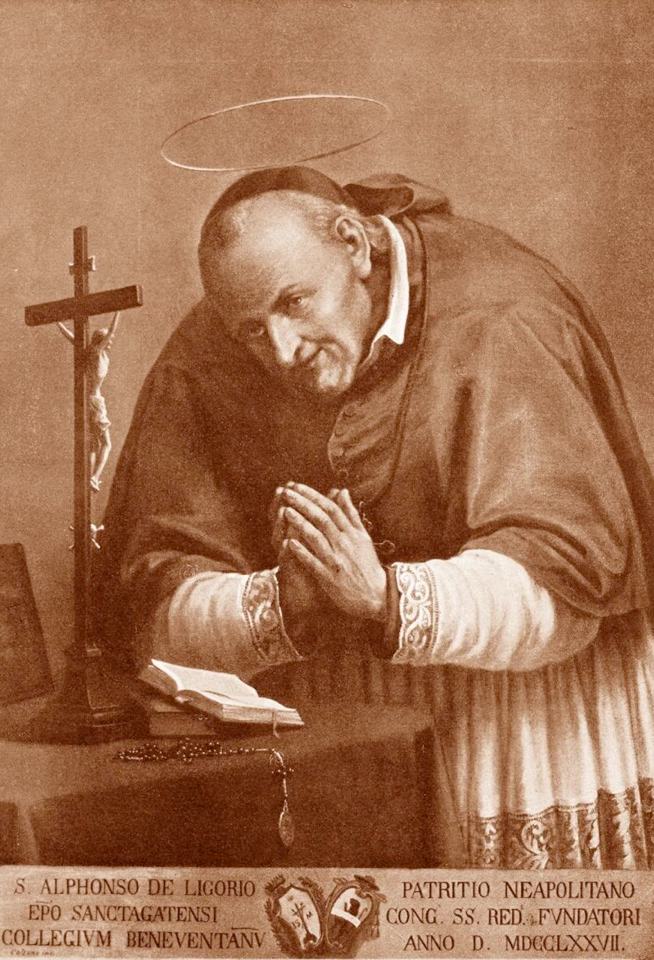
St. Alphonsus Liguori
(1696-1787)


Moral theology, Vatican II said, should be more thoroughly nourished by Scripture, and show the nobility of the Christian vocation of the faithful and their obligation to bring forth fruit in charity for the life of the world. Alphonsus, declared patron of moral theologians by Pius XII in 1950, would rejoice in that statement.

In his day, Alphonsus fought for the liberation of moral theology from the rigidity of Jansenism. His moral theology, which went through 60 editions in the century following him, concentrated on the practical and concrete problems of pastors and confessors. If a certain legalism and minimalism crept into moral theology, it should not be attributed to this model of moderation and gentleness.

At the University of Naples he received, at the age of 16, a doctorate in both canon and civil law by acclamation, but she oon gave up the practice of law for apostolic activity. He was ordained a priest and concentrated his pastoral efforts on popular (parish) missions, hearing confessions, forming Christian groups.

He founded the Redemptorist congregation in 1732. It was an association of priests and brothers living a common life, dedicated to the imitation of Christ, and working mainly in popular missions for peasants in rural areas. Almost as an omen of what was to come later, he found himself deserted, after a while, by all his original companions except one lay brother. But the congregation managed to survive and was formally approved 17 years later, though its troubles were not over.

Alphonsus’ great pastoral reforms were in the pulpit and confessionalâ€"replacing the pompous oratory of the time with simplicity, and the rigorism of Jansenism with kindness. His great fame as a writer has somewhat eclipsed the fact that for 26 years he traveled up and down the Kingdom of Naples, preaching popular missions.

He was made bishop (after trying to reject the honor) at 66 and at once instituted a thorough reform of his diocese.

His greatest sorrow came toward the end of his life. The Redemptorists, precariously continuing after the suppression of the Jesuits in 1773, had difficulty in getting their Rule approved by the Kingdom of Naples. Alphonsus acceded to the condition that they possess no property in common, but a royal official, with the connivance of a high Redemptorist official, changed the Rule substantially. Alphonsus, old, crippled and with very bad sight, signed the document, unaware that he had been betrayed. The Redemptorists in the Papal States then put themselves under the pope, who withdrew those in Naples from the jurisdiction of Alphonsus. It was only after his death that the branches were united.

At 71 he was afflicted with rheumatic pains which left incurable bending of his neck; until it was straightened a little, the pressure of his chin caused a raw wound on his chest. He suffered a final 18 months of “dark night” scruples, fears, temptations against every article of faith and every virtue, interspersed with intervals of light and relief, when ecstasies were frequent.

Alphonsus is best known for his moral theology, but he also wrote well in the field of spiritual and dogmatic theology. His Glories of Mary is one of the great works on that subject, and his book Visits to the Blessed Sacrament went through 40 editions in his lifetime, greatly influencing the practice of this devotion in the Church.


Comment:

St. Alphonsus was known above all as a practical man who dealt in the concrete rather than the abstract. His life is indeed a “practical” model for the everyday Christian who has difficulty recognizing the dignity of Christian life amid the swirl of problems, pain, misunderstanding and failure. Alphonsus suffered all these things. He is a saint because he was able to maintain an intimate sense of the presence of the suffering Christ through it all.

Quote:

Someone once remarked, after a sermon by Alphonsus, "It is a pleasure to listen to your sermons; you forget yourself and preach Jesus Christ."

Patron Saint of:

Theologians
Vocations
#330
Bible Study / Re: Minute Meditations
August 01, 2014, 02:27:27 PM
Food for Strength    Minute Meditations
Those who want to participate more fully in salvation history are comforted by the fact that Jesus wants to walk with us in our suffering and wants to break bread to give us strength on our way.
#331
Photos Unlimited / Re: "Don't ever leave me!"
July 31, 2014, 07:44:36 PM
#333
Bible Study / Re: Minute Meditations
July 31, 2014, 02:27:32 PM
Feed the Hungry    Minute Meditations
Jesus’s humanity and His biological need to be fed Himself gives power and personal force to His teaching that when we feed the hungry and give drink to the thirsty, we do it to Him.
#334
Bible Study / Re: Saints Of The Day
July 31, 2014, 02:27:04 PM
St. Ignatius of Loyola
(1491-1556)


The founder of the Jesuits was on his way to military fame and fortune when a cannon ball shattered his leg. Because there were no books of romance on hand during his convalescence, Ignatius whiled away the time reading a life of Christ and lives of the saints. His conscience was deeply touched, and a long, painful turning to Christ began. Having seen the Mother of God in a vision, he made a pilgrimage to her shrine at Montserrat (near Barcelona). He remained for almost a year at nearby Manresa, sometimes with the Dominicans, sometimes in a pauper’s hospice, often in a cave in the hills praying. After a period of great peace of mind, he went through a harrowing trial of scruples. There was no comfort in anythingâ€"prayer, fasting, sacraments, penance. At length, his peace of mind returned.

It was during this year of conversion that Ignatius began to write down material that later became his greatest work, the Spiritual Exercises.

He finally achieved his purpose of going to the Holy Land, but could not remain, as he planned, because of the hostility of the Turks. He spent the next 11 years in various European universities, studying with great difficulty, beginning almost as a child. Like many others, his orthodoxy was questioned; Ignatius was twice jailed for brief periods.

In 1534, at the age of 43, he and six others (one of whom was St. Francis Xavier, December 2) vowed to live in poverty and chastity and to go to the Holy Land. If this became impossible, they vowed to offer themselves to the apostolic service of the pope. The latter became the only choice. Four years later Ignatius made the association permanent. The new Society of Jesus was approved by Paul III, and Ignatius was elected to serve as the first general.

When companions were sent on various missions by the pope, Ignatius remained in Rome, consolidating the new venture, but still finding time to found homes for orphans, catechumens and penitents. He founded the Roman College, intended to be the model of all other colleges of the Society.

Ignatius was a true mystic. He centered his spiritual life on the essential foundations of Christianityâ€"the Trinity, Christ, the Eucharist. His spirituality is expressed in the Jesuit motto, ad majorem Dei gloriamâ€"“for the greater glory of God.” In his concept, obedience was to be the prominent virtue, to assure the effectiveness and mobility of his men. All activity was to be guided by a true love of the Church and unconditional obedience to the Holy Father, for which reason all professed members took a fourth vow to go wherever the pope should send them for the salvation of souls.


Comment:

Luther nailed his theses to the church door at Wittenberg in 1517. Seventeen years later, Ignatius founded the Society that was to play so prominent a part in the Catholic Reformation. He was an implacable foe of Protestantism. Yet the seeds of ecumenism may be found in his words: “Great care must be taken to show forth orthodox truth in such a way that if any heretics happen to be present they may have an example of charity and Christian moderation. No hard words should be used nor any sort of contempt for their errors be shown.” One of the greatest 20thh-century ecumenists was Cardinal Bea, a Jesuit.

Quote:

Ignatius recommended this prayer to penitents: “Receive, Lord, all my liberty, my memory, my understanding and my whole will. You have given me all that I have, all that I am, and I surrender all to your divine will, that you dispose of me. Give me only your love and your grace. With this I am rich enough, and I have no more to ask.”

Patron Saint of:

Retreats
#335
Bible Study / Re: Saints Of The Day
July 30, 2014, 06:03:15 PM
St. Peter Chrysologus
(406-450?)

A man who vigorously pursues a goal may produce results far beyond his expectations and his intentions. Thus it was with Peter of the Golden Words, as he was called, who as a young man became bishop of Ravenna, the capital of the empire in the West.

At the time there were abuses and vestiges of paganism evident in his diocese, and these he was determined to battle and overcome. His principal weapon was the short sermon, and many of them have come down to us. They do not contain great originality of thought. They are, however, full of moral applications, sound in doctrine and historically significant in that they reveal Christian life in fifth-century Ravenna. So authentic were the contents of his sermons that, some 13 centuries later, he was declared a doctor of the Church by Pope Benedict XIII. He who had earnestly sought to teach and motivate his own flock was recognized as a teacher of the universal Church.

In addition to his zeal in the exercise of his office, Peter Chrysologus was distinguished by a fierce loyalty to the Church, not only in its teaching, but in its authority as well. He looked upon learning not as a mere opportunity but as an obligation for all, both as a development of God-given faculties and as a solid support for the worship of God.

Some time before his death, St. Peter returned to Imola, his birthplace, where he died around A.D. 450.


Stories:

Eutyches, the leader of the heresy denying the humanity of Christ, sought support from church leaders, Peter Chrysologus among them, after his condemnation in ad 448. Peter frankly told him: “In the interest of peace and the faith, we cannot judge in matters of faith without the consent of the Roman bishop.” He further exhorted Eutyches to accept the mystery of the Incarnation in simple faith. Peter reminded him that if the peace of the church causes joy in heaven, then divisions must give birth to grief.


Comment:

Quite likely, it was St. Peter Chrysologus’s attitude toward learning that gave substance to his exhortations. Next to virtue, learning, in his view, was the greatest improver of the human mind and the support of true religion. Ignorance is not a virtue, nor is anti-intellectualism. Knowledge is neither more nor less a source of pride than physical, administrative or financial prowess. To be fully human is to expand our knowledgeâ€"whether sacred or secularâ€"according to our talent and opportunity.

#336
Bible Study / Re: Minute Meditations
July 30, 2014, 06:02:24 PM
Listening to God    Minute Meditations
Prayer should be more listening than speaking. God gave you two ears and one mouth...use them proportionately.
#339
Bible Study / Re: Minute Meditations
July 29, 2014, 05:02:24 PM
The Ten Commandments    Minute Meditations
The commandments are a gift, not a curse. Sin is less about breaking the rules and more about breaking the Father’s heart.
#340
Bible Study / Re: Saints Of The Day
July 29, 2014, 07:45:13 AM
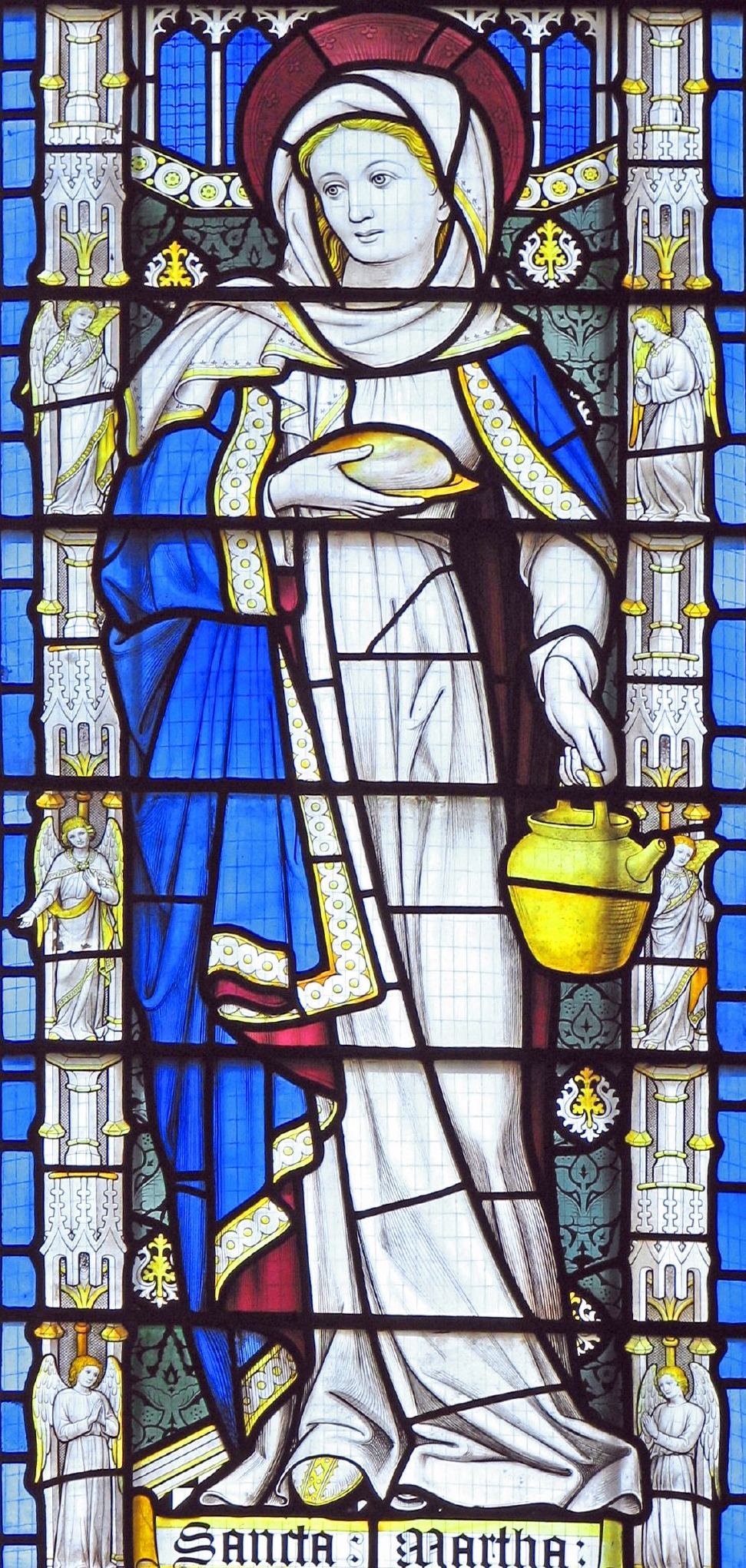
St. Martha


Martha, Mary and their brother Lazarus were evidently close friends of Jesus. He came to their home simply as a welcomed guest, rather than as one celebrating the conversion of a sinner like Zacchaeus or one unceremoniously received by a suspicious Pharisee. The sisters feel free to call on Jesus at their brother’s death, even though a return to Judea at that time seems almost certain death.

No doubt Martha was an active sort of person. On one occasion (see Luke 10:38-42) she prepares the meal for Jesus and possibly his fellow guests and forthrightly states the obvious: All hands should pitch in to help with the dinner.

Yet, as biblical scholar Father John McKenzie points out, she need not be rated as an “unrecollected activist.” The evangelist is emphasizing what our Lord said on several occasions about the primacy of the spiritual: “...[D]o not worry about your life, what you will eat [or drink], or about your body, what you will wear…. But seek first the kingdom [of God] and his righteousness” (Matthew 6:25b, 33a); “One does not live by bread alone” (Luke 4:4b); “Blessed are they who hunger and thirst for righteousness…” (Matthew 5:6a).

Martha’s great glory is her simple and strong statement of faith in Jesus after her brother’s death. “Jesus told her, ‘I am the resurrection and the life; whoever believes in me, even if he dies, will live, and everyone who lives and believes in me will never die. Do you believe this?’ She said to him, ‘Yes, Lord. I have come to believe that you are the Messiah, the Son of God, the one who is coming into the world’” (John 11:25-27).


Comment:

Scripture commentators point out that in writing his account of the raising of Lazarus, St. John intends that we should see Martha’s words to Mary before tLazarus was raised as a summons that every Christian must obey. In her saying “The teacher is here and is asking for you,” Jesus is calling every one of us to resurrectionâ€"now in baptismal faith, forever in sharing his victory over death. And all of us, as well as these three friends, are in our own unique way called to special friendship with him.

Quote:

“Encouraged by so great a cloud of witnesses, we may run as victors in the race before us and win with them the imperishable crown of glory through Christ our Lord" (Roman Missal, Preface of Saints I).

Patron Saint of:

Housewives
Waiters, waitresses
#341
Bible Study / Re: Minute Meditations
July 29, 2014, 07:44:22 AM
The Ten Commandments    Minute Meditations
The commandments are a gift, not a curse. Sin is less about breaking the rules and more about breaking the Father’s heart.
#343
Quote from: bugsay on July 27, 2014, 10:01:44 PM
dia ra'ng ako'a bay Hubs....hapit na mahurot..;D


disente Jamo! Bahal ray aho.
#345
Bible Study / Re: Saints Of The Day
July 27, 2014, 10:13:26 PM
Blessed Antonio Lucci
(1682-1752)


Antonio studied with and was a friend of St. Francesco Antonio Fasani, who after Antonio Lucci’s death testified at the diocesan hearings regarding the holiness of Lucci.

Born in Agnone in southern Italy, a city famous for manufacturing bells and copper crafts, he was given the name Angelo at Baptism. He attended the local school run by the Conventual Franciscans and joined them at the age of 16. Antonio completed his studies for the priesthood in Assisi, where he was ordained in 1705. Further studies led to a doctorate in theology and appointments as a teacher in Agnone, Ravello and Naples. He also served as guardian in Naples.

Elected minister provincial in 1718, the following year he was appointed professor at St. Bonaventure College in Rome, a position he held until Pope Benedict XIII chose him as bishop of Bovino (near Foggia) in 1729. The pope explained, "I have chosen as bishop of Bovino an eminent theologian and a great saint."

His 23 years as bishop were marked by visits to local parishes and a renewal of gospel living among the people of his diocese. He dedicated his episcopal income to works of education and charity. At the urging of the Conventual minister general, Bishop Lucci wrote a major book about the saints and blesseds in the first 200 years of the Conventual Franciscans.

He was beatified in 1989, three years after his friend Francesco Antonio Fasani was canonized.


Comment:

As Pope Paul VI wrote in 1975, people today "are more impressed by witnesses than by teachers, and if they listen to these it is because they also bear witness" (Evangelization in the Modern World, #41).

Quote:

When Francis of Assisi learned that Anthony of Padua was teaching theology to the friars in Bologna, Francis wrote: "It pleases me that you teach sacred theology to the brothers, as long asâ€"in the words of the Ruleâ€"you do not extinguish the spirit of prayer and devotion with study of this kind."
#346
Bible Study / Re: Minute Meditations
July 27, 2014, 10:12:40 PM
Through Mary’s Eyes    Minute Meditations
Many Christians are confused as to why Catholics honor Mary the way that we do. She is different, however. She was set apart. One of the greatest things a Christian can do is to contemplate the life of Christ through Mary’s eyes. As we see in sacred Scripture, she pondered things “in her heart” (Luke 2:19).
#348
Bible Study / Re: Saints Of The Day
July 25, 2014, 02:21:23 PM
St. James


This James is the brother of John the Evangelist. The two were called by Jesus as they worked with their father in a fishing boat on the Sea of Galilee. Jesus had already called another pair of brothers from a similar occupation: Peter and Andrew. “He walked along a little farther and saw James, the son of Zebedee, and his brother John. They too were in a boat mending their nets. Then he called them. So they left their father Zebedee in the boat along with the hired men and followed him” (Mark 1:19-20).

James was one of the favored three who had the privilege of witnessing the Transfiguration, the raising to life of the daughter of Jairus and the agony in Gethsemani.

Two incidents in the Gospels describe the temperament of this man and his brother. St. Matthew tells that their mother came (Mark says it was the brothers themselves) to ask that they have the seats of honor (one on the right, one on the left of Jesus) in the kingdom. “Jesus said in reply, ‘You do not know what you are asking. Can you drink the cup that I am going to drink?’ They said to him, ‘We can’” (Matthew 20:22). Jesus then told them they would indeed drink the cup and share his baptism of pain and death, but that sitting at his right hand or left was not his to giveâ€"it “is for those for whom it has been prepared by my Father” (Matthew 20:23b). It remained to be seen how long it would take to realize the implications of their confident “We can!”

The other disciples became indignant at the ambition of James and John. Then Jesus taught them all the lesson of humble service: The purpose of authority is to serve. They are not to impose their will on others, or lord it over them. This is the position of Jesus himself. He was the servant of all; the service imposed on him was the supreme sacrifice of his own life.

On another occasion, James and John gave evidence that the nickname Jesus gave themâ€"“sons of thunder”â€"was an apt one. The Samaritans would not welcome Jesus because he was on his way to hated Jerusalem. “When the disciples James and John saw this they asked, ‘Lord, do you want us to call down fire from heaven to consume them?’ Jesus turned and rebuked them...” (Luke 9:54-55).

James was apparently the first of the apostles to be martyred. “About that time King Herod laid hands upon some members of the church to harm them. He had James, the brother of John, killed by the sword, and when he saw that this was pleasing to the Jews he proceeded to arrest Peter also” (Acts 12:1-3a).

This James, sometimes called James the Greater, is not to be confused with James the Lesser (May 3) or with the author of the Letter of James and the leader of the Jerusalem community.


Comment:

The way the Gospels treat the apostles is a good reminder of what holiness is all about. There is very little about their virtues as static possessions, entitling them to heavenly reward. Rather, the great emphasis is on the Kingdom, on God’s giving them the power to proclaim the Good News. As far as their personal lives are concerned, there is much about Jesus’ purifying them of narrowness, pettiness, fickleness.

Quote:

“...Christ the Lord, in whom the entire revelation of the most high God is summed up (see 2 Corinthians 1:20; 3:16â€"4:6), having fulfilled in his own person and promulgated with his own lips the Gospel promised by the prophets, commanded the apostles to preach it to everyone as the source of all saving truth and moral law, communicating God’s gifts to them. This was faithfully done: it was done by the apostles who handed on, by oral preaching, by their example, by their dispositions, what they themselves had receivedâ€"whether from the lips of Christ, from his way of life and his works, or by coming to know it through the prompting of the Holy Spirit” (Vatican II, Constitution on Divine Revelation, 7).

Patron Saint of:

Chile
Laborers
Nicaragua
Rheumatism
Spain
#349
Bible Study / Re: Minute Meditations
July 25, 2014, 02:19:59 PM
Our Job    Minute Meditations
We don’t need so much to talk about God but to allow people to feel how God lives within us, that’s our work.
#351
Bible Study / Re: Minute Meditations
July 24, 2014, 06:34:40 PM
Nonviolence    Minute Meditations
You cannot claim to be ‘for Christ’ and espouse a political cause that implies callous indifference to the needs of millions of human beings and even cooperate in their destruction.
#352
Bible Study / Re: Saints Of The Day
July 24, 2014, 06:33:32 PM
St. Sharbel Makhluf
(1828-1898)

Although this saint never traveled far from the Lebanese village of Beka-Kafra, where he was born, his influence has spread widely.

Joseph Zaroun Makluf was raised by an uncle because his father, a mule driver, died when Joseph was only three. At the age of 23, Joseph joined the Monastery of St. Maron at Annaya, Lebanon, and took the name Sharbel in honor of a second-century martyr. He professed his final vows in 1853 and was ordained six years later.

Following the example of the fifth-century St. Maron, Sharbel lived as a hermit from 1875 until his death. His reputation for holiness prompted people to seek him to receive a blessing and to be remembered in his prayers. He followed a strict fast and was very devoted to the Blessed Sacrament. When his superiors occasionally asked him to administer the sacraments to nearby villages, Sharbel did so gladly.

He died in the late afternoon on Christmas Eve. Christians and non-Christians soon made his tomb a place of pilgrimage and of cures. Pope Paul VI beatified him in 1965 and canonized him 12 years later.


Comment:

Blessed John Paul II often said that the Church has two lungs (East and West) and it must learn to breathe using both of them. Remembering saints like Sharbel helps the Church to appreciate both the diversity and unity present in the Catholic Church. Like all the saints, Sharbel points us to God and invites us to cooperate generously with God's grace, no matter what our situation in life may be. As our prayer life becomes deeper and more honest, we become more ready to make that generous response.

Quote:

When Sharbel was canonized in 1977, Bishop Francis Zayek, head the U.S. Diocese of St. Maron, wrote a pamphlet entitled “A New Star of the East.” Bishop Zayek wrote: “St. Sharbel is called the second St. Anthony of the Desert, the Perfume of Lebanon, the first Confessor of the East to be raised to the Altars according to the actual procedure of the Catholic Church, the honor of our Aramaic Antiochian Church, and the model of spiritual values and renewal. Sharbel is like a Cedar of Lebanon standing in eternal prayer, on top of a mountain.”

The bishop noted that Sharbel's canonization plus other beatification cases prove “that the Aramaic Maronite Antiochian Church is indeed a living branch of the Catholic Church and is intimately connected with the trunk, who is Christ, our Savior, the beginning and the end of all things.”
#353
Bible Study / Re: Saints Of The Day
July 24, 2014, 06:31:24 PM
Ms Isles, if you happened to skip a day you can pray twice to compensate...God is great. I´m already in my 8 years. I met an Italian lady a co-pilgrim, she says this prayer 5:00 early in the morning regularly.
#355
Bible Study / Re: Minute Meditations
July 23, 2014, 02:33:10 PM
Prayer and Contemplation    Minute Meditations
In prayer we discover what we already have. You start where you are and you deepen what you already have and you realize that you are already there. We already have everything, but we don’t know it and we don’t experience it.
#356
Bible Study / Re: Saints Of The Day
July 23, 2014, 02:32:37 PM
St Bridget's Prayer for Twelve Years


These prayers are to be said each day for one year, with an Our Father and Hail Mary attached to each of the fifteen prayers. When the year is up, the person would have honored each of the 5,480 blows and wounds to Jesus' Body. The prayers had wonderful promises attached to them.

Each of the seven prayers honors a particular wound on Jesus' Body and the Precious Blood that flowed from it. Jesus' first wound was the Circumcision. The six other wounds honored are all part of his passion and death. If the person dies before the twelve years are completed, the Lord promises to accept them as having been prayed in their entirety.

Here are the promises:

1. The soul who prays them suffers no Purgatory.

2. The soul who prays them will be accepted among the Martyrs, as though he had spilled his blood for his faith.

3. The soul who prays them can chose three others whom Jesus will then keep in a state of grace sufficient to become holy.

4. No one in the four successive generations of the soul who prays them will be lost.

5. The soul who prays them will be made conscious of his death one month in advance.

O Jesus, now I wish to pray the Lord's Prayer seven times in unity with the love with which You sanctified this prayer in Your heart. Take it from my lips into Your Divine Heart. Improve and complete it so much that it brings as much honour and joy to the Trinity as You granted it on earth with this prayer. May these pour upon Your Holy Humanity in Glorification to Your Painful Wounds and the Precious Blood that You spilled from them.

1. The Circumcision Our Father .... Hail Mary ....

Eternal Father, through Mary's unblemished hands and the Divine Heart of Jesus, I offer You the first wounds, the first pains and the first Bloodshed as atonement for my and all of humanity's sins of youth, as protection against the first mortal sin, especially among my relatives.

2. The Suffering on the Mount of Olives Our Father .... Hail Mary ..

Eternal Father, through Mary's unblemished hands and the Divine Heart of Jesus, I offer You the terrifying suffering of Jesus' Heart on the Mount of Olives and every drop of His Bloody Sweat as atonement for my and all of humanity's sins of the heart, as protection against such sins and for the spreading of Divine and brotherly love.

3. The Flogging Our Father .... Hail Mary ....

Eternal Father, through Mary's unblemished hands and the Divine Heart of Jesus, I offer You the many thousands of wounds, the gruesome pains and the Precious Blood of the Flogging as atonement for my and all of humanity's sins of the Flesh, as protection against such sins and the preservation of innocence, especially among my relatives.

4. The Crowning of Thorns Our Father .... Hail Mary ....

Eternal Father, through Mary's unblemished hands and the Divine Heart of Jesus, I offer You the wounds, the pains and the Precious Blood of Jesus' Holy Head from the Crowning of Thorns as atonement for my and all of humanity's sins of the Spirit, as protection against such sins and for the spreading of Christ's Kingdom here on earth.

5. The Carrying of the Cross Our Father .... Hail Mary ....

Eternal Father, through Mary's unblemished hands and the Divine Heart of Jesus, I offer You the sufferings on the Way of The Cross, especially His Holy Wound on His Shoulder and its precious Blood as atonement for my and all of humanity's rebellion against the Cross, every grumbling against Your Holy Arrangements and all other sins of the tongue, as protection against such sins and for true love of the Cross.

6. The Crucifixion of Jesus Our Father .... Hail Mary ....

Eternal Father, through Mary's unblemished hands and the Divine Heart of Jesus, I offer You Your Son on the Cross, His Nailing and Raising, His Wounds on the Hands and Feet and the three streams of His Precious Blood that poured from these for us, His extreme tortures of the Body and Soul, His precious death and its non-bleeding Renewal in all Holy Masses on earth as atonement for all wounds against vows and regulations within the Orders, as reparaion for my and all of the world's sins, for the sick and the dying, for all holy priests and laymen, for the Holy Father's intentions toward the restoration of Christian Families, for the strengthening of Faith, for our country and unity among nations in Christ and His Church as well as for the Diaspora.

7. The Piercing of the Side of Jesus Our Father .... Hail Mary ....

Eternal Father, accept as worthy, for the needs of the Holy Church and as atonement for the sins of all Mankind, the Precious Blood and Water which poured from the wound of Jesus' Divine Heart. Be gracious and merciful toward us. Blood of Christ, the last precious content of His Holy Heart, wash me of all my and other's guilt of sin! Water from the Side of Christ; wash me clean of all punishments for sin and extinguish the flames of Purgatory for me and for all the Poor Souls. AMEN

July 23
Saint Bridget, Religious

St. Bridget was born in 1303 in Uppland, Sweden. Her father was a knight, one of the wealthiest landowners in the region, and her mother was related to Swedish kings. Her education focused on religious piety and noble duties and at age 14, St. Bridget married Ulf Gudmarsson. They had 8 children, including the future St. Catherine of Sweden. St. Bridget’s wealth allowed her to be extremely generous. After her husband’s death, she formed the Order of the Most Holy Savior. She experienced many visions, which she wrote down and asked clerics to translate into Latin. They were widely read. To get her Order canonically approved, she traveled to Rome where she supported a return of the papacy from Avignon to Rome. St. Bridget was canonized in 1391 by Boniface IX and is patron saint of Sweden. [1]

Written by Sarah Ciotti
#357
Tira-Pasagad | Saksak-Sinagol / Re: Pastilan...
July 22, 2014, 05:54:43 PM
bentaha na kay dili mahago!
#358


he is wearing a latex.
#360
Bible Study / Re: Saints Of The Day
July 22, 2014, 02:01:30 PM
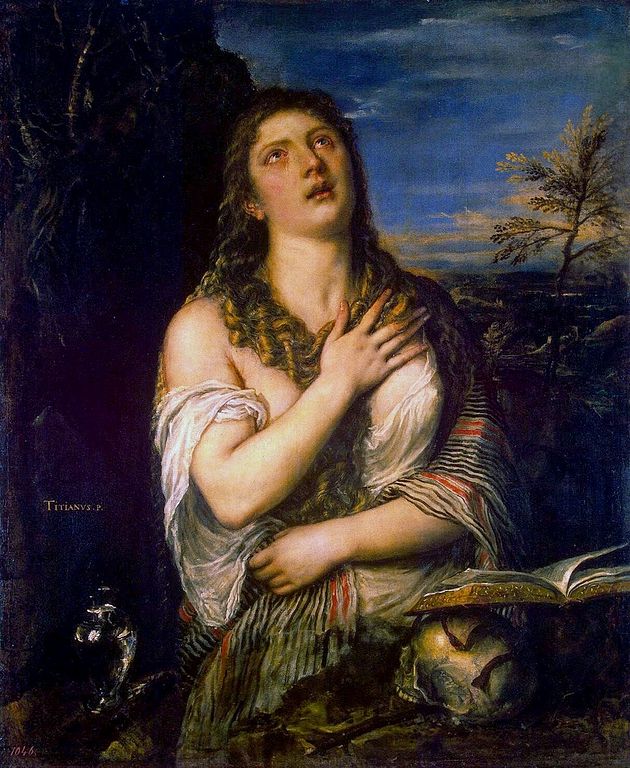
St. Mary Magdalene

Except for the mother of Jesus, few women are more honored in the Bible than Mary Magdalene. Yet she could well be the patron of the slandered, since there has been a persistent legend in the Church that she is the unnamed sinful woman who anointed the feet of Jesus in Luke 7:36-50.

Most Scripture scholars today point out that there is no scriptural basis for confusing the two women. Mary Magdalene, that is, “of Magdala,” was the one from whom Christ cast out “seven demons” (Luke 8:2)â€"an indication, at the worst, of extreme demonic possession or, possibly, severe illness.

Father Wilfrid J. Harrington, O.P., writing in the New Catholic Commentary, says that “seven demons” “does not mean that Mary had lived an immoral lifeâ€"a conclusion reached only by means of a mistaken identification with the anonymous woman of Luke 7:36.” Father Edward Mally, S.J., writing in the Jerome Biblical Commentary, agrees that she “is not...the same as the sinner of Luke 7:37, despite the later Western romantic tradition about her.”

Mary Magdalene was one of the many “who were assisting them [Jesus and the Twelve] out of their means.” She was one of those who stood by the cross of Jesus with his mother. And, of all the “official” witnesses that might have been chosen for the first awareness of the Resurrection, she was the one to whom that privilege was given. She is known as the "Apostle to the Apostles."


Stories:

Today’s Gospel (John 20:1â€"2, 11â€"18) shows Mary at first not recognizing the risen Jesus in the garden, then knowing him as he spoke her name. Her great love bursts forth, echoing the First Reading, “I took hold of him and would not let him go” (Song 3:4b). Jesus says, “Stop holding on to me, for I have not yet ascended to the Father” (John 20:17a). The meaning probably is that there is an entirely new relationship nowâ€"a much deeper one, resting in faith rather than the former relationship that was possible because of his visible body. Saint John may also be stressing the fact that Jesus’ exaltation at the right hand of the Father is the completion of the Resurrection.


Comment:

Mary Magdalene has been a victim of mistaken identity for almost 20 centuries. Yet she would no doubt insist that it makes no difference. We are all sinners in need of the saving power of God, whether our sins have been lurid or not. More importantly, we are all, with her, “unofficial” witnesses of the Resurrection.

Patron Saint of:

Penitents
Perfumers
#361
Bible Study / Re: Minute Meditations
July 22, 2014, 02:00:13 PM
Lord, Save Your People    Minute Meditations
Jesus does not save us as individuals, but as members of His Body. We are not just peopleâ€"unconnected and isolated arms and legs. We are a peopleâ€"in fact, the People of God.
#362
the worst thing is that they are all proud before the camera to show to the world, their status
#363
this so called Body modifications is a trend nowadays, what is extremely alarming is this tattoos. ....
#365
Bible Study / Re: Saints Of The Day
July 21, 2014, 02:28:22 PM
St. Lawrence of Brindisi
(1559-1619)


At first glance perhaps the most remarkable quality of Lawrence of Brindisi is his outstanding gift of languages. In addition to a thorough knowledge of his native Italian, he had complete reading and speaking ability in Latin, Hebrew, Greek, German, Bohemian, Spanish and French.

He was born on July 22, 1559, and died exactly 60 years later on his birthday in 1619. His parents William and Elizabeth Russo gave him the name of Julius Caesar, Caesare in Italian. After the early death of his parents, he was educated by his uncle at the College of St. Mark in Venice.

When he was just 16 he entered the Capuchin Franciscan Order in Venice and received the name of Lawrence. He completed his studies of philosophy and theology at the University of Padua and was ordained a priest at 23.

With his facility for languages he was able to study the Bible in its original texts. At the request of Pope Clement VIII, he spent much time preaching to the Jews in Italy. So excellent was his knowledge of Hebrew, the rabbis felt sure he was a Jew who had become a Christian.

In 1956 the Capuchins completed a 15-volume edition of his writings. Eleven of these 15 contain his sermons, each of which relies chiefly on scriptural quotations to illustrate his teaching.

Lawrence’s sensitivity to the needs of peopleâ€"a character trait perhaps unexpected in such a talented scholarâ€"began to surface. He was elected major superior of the Capuchin Franciscan province of Tuscany at the age of 31. He had the combination of brilliance, human compassion and administrative skill needed to carry out his duties. In rapid succession he was promoted by his fellow Capuchins and was elected minister general of the Capuchins in 1602. In this position he was responsible for great growth and geographical expansion of the Order.

Lawrence was appointed papal emissary and peacemaker, a job which took him to a number of foreign countries. An effort to achieve peace in his native kingdom of Naples took him on a journey to Lisbon to visit the king of Spain. Serious illness in Lisbon took his life in 1619.


Comment:

His constant devotion to Scripture, coupled with great sensitivity to the needs of people, present a lifestyle which appeals to Christians today. Lawrence had a balance in his life that blended self-discipline with a keen appreciation for the needs of those whom he was called to serve.

Quote:

“God is love, and all his operations proceed from love. Once he wills to manifest that goodness by sharing his love outside himself, then the Incarnation becomes the supreme manifestation of his goodness and love and glory. So, Christ was intended before all other creatures and for his own sake. For him all things were created and to him all things must be subject, and God loves all creatures in and because of Christ. Christ is the first-born of every creature, and the whole of humanity as well as the created world finds its foundation and meaning in him. Moreover, this would have been the case even if Adam had not sinned” (St. Lawrence of Brindisi, Doctor of the Universal Church, Capuchin Educational Conference, Washington, D.C.).
#366
Bible Study / Re: Minute Meditations
July 21, 2014, 02:27:29 PM
Part of a Community    Minute Meditations
God saves the world by undoing Babel, which happened when a people became just people, all doing their own thing. They did not love each other so they did not love God. They did not love God, so they did not love each other. Babel babblesâ€"no communication because no community.
#367
the idea that it was precisely calculated........not random pick, now words fit this barbaric act
#368
there was a report this morning in german radio that maneuvering this BUK system needs a high technical expertise and practice.
#369
adunay ginatawag nga skin-cuttings...kamo nay motan-aw sa Google kay gikabuhi na ko
#371
Bible Study / De Colores
July 20, 2014, 04:58:16 PM
this is a religious movement which started in Mallorca. I became a member forty years ago in Davao City. Here in Germany this is revived. Any member here of this Cursillo movement?
http://www.cursillos.ca/en/faq/f12-decolores.htm
#372
Photos Unlimited / Re: I'm sexy and I know it!
July 20, 2014, 03:20:31 PM

100,000 US dollars spent on 14 body modifications simply to look like this.
#374
Bible Study / Re: Saints Of The Day
July 20, 2014, 03:09:45 PM
St. Apollinaris
(1st century)

According to tradition, St. Peter sent Apollinaris to Ravenna, Italy, as its first bishop. His preaching of the Good News was so successful that the pagans there beat him and drove him from the city. He returned, however, and was exiled a second time. After preaching in the area surrounding Ravenna, he entered the city again. After being cruelly tortured, he was put on a ship heading to Greece. Pagans there caused him to be expelled to Italy, where he went to Ravenna for a fourth time. He died from wounds received during a savage beating at Classis, a suburb of Ravenna. A beautiful basilica honoring him was built there in the sixth century.

Comment:

Following Jesus involves risksâ€"sometimes the supreme risk of life itself. Martyrs are people who would rather accept the risk of death than deny the cornerstone of their whole life: faith in Jesus Christ. Everyone will die eventuallyâ€"the persecutors and those persecuted. The question is what kind of a conscience people will bring before the Lord for judgment. Remembering the witness of past and present martyrs can help us make the often-small sacrifices that following Jesus today may require.

Quote:

During his remarks prior to the Regina Caeli on May 7, 2000, Blessed John Paul II noted that later that day at Rome's Colosseum he would participate in an ecumenical service honoring 20th-century martyrs. He said, “It is the same paschal light that shines in them. Indeed, it is from Christ's resurrection that the disciples receive the strength to follow the Master in their hour of trial.” What the pope said of those martyrs is true of all martyrs for Christ, including today's saint.

#375
Bible Study / Re: Minute Meditations
July 20, 2014, 03:09:00 PM
Invited By God    Minute Meditations
Our human tendency is to congratulate ourselves on the great they things we do for God. The fact is, we could not approach or partake in the Eucharist if we were not invited and empowered by God. Our covenant-friendship with God is God’s gift, not our achievement.
#377
Bible Study / Re: Minute Meditations
July 19, 2014, 08:50:41 PM
The Sacrament of God    Minute Meditations
Recall the tremendously important fact that Jesus is the Sacrament of God. In Him we see God in human flesh. We know what God is like by looking at Jesus, by listening to Him.
#378
Bible Study / Re: Saints Of The Day
July 19, 2014, 08:50:04 PM
St. Mary MacKillop
(1842-1909)


If St. Mary MacKillop were alive today, she would be a household name. It’s not that she sought the limelight. On the contrary, she simply wanted to serve the poor wherever she found them in her native Australia. But along the way, she managed to arouse the ire of some rather powerful churchmen. One even excommunicated her for a time.

Born in Melbourne in 1842 to parents who had emigrated from Scotland, Mary grew up in a family that faced constant financial struggles. As a young woman she was drawn to religious life but could not find an existing order of Sisters that met her needs. In 1860 she met Father Julian Woods, who became her spiritual director. Together they founded a new community of womenâ€"the Sisters of St. Joseph of the Sacred Heart, also known as the Josephite Sisters. Its members were to staff schools especially for poor children, as well as orphanages, and do other works of charity.

As the congregation grew, so did Mary MacKillop’s problems. Her priest-friend proved unreliable in many ways and his responsibilities for direction of the Sisters were removed. Meanwhile, Mary had the support of some local bishops as she and her Sisters went about their work. But the bishop in South Australia, aging and relying on others for advice, briefly excommunicated Maryâ€"charging her with disobedienceâ€"and dispensed 50 of her Sisters from their vows. In truth, the bishop’s quarrel was about power and who had authority over whom. He ultimately rescinded his order of excommunication.

Mary insisted that her congregation should be governed by an elected mother general answerable to Rome, not to the local bishop. (There were also disputes about whether or not the congregation could own property.) In the end, Rome proved to be Mary’s best source of support. After a long wait, official approval of the congregationâ€"and how it was to be governedâ€"came from Pope Leo XIII.

Despite her struggles with Church authorities, Mary MacKillop and her Sisters were able to offer social services that few, if any, government agencies in Australia could. They served Protestants and Catholics alike. They worked among the aborigines. They taught in schools and orphanages and served unmarried mothers.

Money, actually the lack of it, was a constant worry. But the Sisters, who begged from door to door, were bolstered by faith and by the conviction that their struggles were opportunities to grow closer to God.

By the time Mary was approaching the end of her life, the congregation was thriving. She died in 1909 at the age of 67. Pope John Paul II beatified her in 1995. In 2010, when Pope Benedict XVI canonized her, she became Australia’s first saint.


Quote:

“ Have courage no matter what your crosses are.”--Mother Mary of the Cross (St. Mary MacKillop)
#379
Bible Study / Re: Minute Meditations
July 19, 2014, 04:00:16 AM
Love Thy Neighbor    Minute Meditations
Small, local acts of neighborliness can move us toward loving our neighbor. As that happens, we’ll widen the scope of our care until we finally begin to love as God loves: all creatures, all places, always. â€"Kyle Kramer
#380
Bible Study / Re: Saints Of The Day
July 19, 2014, 03:59:26 AM
St. Camillus de Lellis
(1550-1614)

Humanly speaking, Camillus was not a likely candidate for sainthood. His mother died when he was a child, his father neglected him, and he grew up with an excesive love for gambling. At 17 he was afflicted with a disease of his leg that remained with him for life. In Rome, he entered the San Giacomo Hospital for Incurables as both patient and servant, but was dismissed for quarrelsomeness after nine months. He served in the Venetian army for three years. Then in the winter of 1574, when he was 24, he gambled away everything he hadâ€"savings, weapons, literally down to his shirt. He accepted work at the Capuchin friary at Manfredonia, and was one day so moved by a sermon of the superior that he began a conversion that changed his whole life. He entered the Capuchin movitiate, but was dismissed because of the apparently incurable sore on his leg. After another stint of service at San Giacomo, he came back to the Capuchins, only to be dismissed again, for the same reason.

Again, back at San Giacomo, his dedication was rewarded by his being made superintendent. He devoted the rest of his life to the care of the sick, and has been named, along with St. John of God, patron of hospitals, nurses and the sick. With the advice of his friend St. Philip Neri, he studied for the priesthood and was ordained at the age of 34. Contrary to the advice of his friend, he left San Giacomo and founded a congregation of his own. As superior, he devoted much of his own time to the care of the sick.

Charity was his first concern, but the physical aspects of the hospital also received his diligent attention. He insisted on cleanliness and the technical competence of those who served the sick. The members of his community bound themselves to serve prisoners and persons infected by the plague as well as those dying in private homes. Some of his men were with troops fighting in Hungary and Croatia in 1595, forming the first recorded military field ambulance. In Naples, he and his men went onto the galleys that had plague and were not allowed to land. He discovered that there were people being buried alive, and ordered his brothers to continue the prayers for the dying 15 minutes after apparent death.

He himself suffered the disease of his leg through his life. In his last illness he left his own bed to see if other patients in the hospital needed help.


Stories:

A doctor in Philadelphia is a modern-day Camillus. An AP news story reports that the 31-year-old bachelor does not have an office, and gave up a lucrative health center job to treat the chronically ill in the inner city who cannot get to a clinic. He limits his practice to house calls in that inner city neighborhood.


Comment:

Saints are created by God. Parents must indeed nurture the faith in their children; husbands and wives must cooperate to deepen their baptismal grace; friends must support each other. But all human effort is only the dispensing of divine power. We must all "try" as if everything depended on us. But only the power of God can fulfill the plan of Godâ€"to make us like himself.

Quote:


Patron Saint of:

Hospitals
Nurses
#382
Bible Study / Re: Saints Of The Day
July 17, 2014, 04:59:27 PM
St. Francis Solano
(1549-1610)

Francis came from a leading family in Andalusia, Spain. Perhaps it was his popularity as a student that enabled Francis in his teens to stop two duelists. He entered the Friars Minor in 1570, and after ordination enthusiastically sacrificed himself for others. His care for the sick during an epidemic drew so much admiration that he became embarrassed and asked to be sent to the African missions. Instead he was sent to South America in 1589.

While working in what is now Argentina, Bolivia and Paraguay, Francis quickly learned the local languages and was well received by the indigenous peoples. His visits to the sick often included playing a song on his violin.

Around 1601 he was called to Lima, Peru, where he tried to recall the Spanish colonists to their baptismal integrity. Francis also worked to defend the indigenous peoples from oppression. He died in Lima and was canonized in 1726.


Comment:

Francis of Solano knew from experience that the lives of Christians sometimes greatly hinder the spread of the gospel of Jesus Christ. Francis lived an exemplary life himself, and urged his fellow Spaniards to make their lives worthy of their Baptism.

Quote:

"When Francis Solano was about to die, one of the friars asked him, 'Father, when God takes you to heaven remember me when you enter the everlasting kingdom.' With joy Francis answered, 'It is true, I am going to heaven but this is so because of the merits of the passion and death of Christ; I am the greatest of sinners. When I reach our homeland, I will be your good friend'" (contemporary biography of St. Francis Solano).
#383
Bible Study / Re: Minute Meditations
July 17, 2014, 04:58:37 PM
Our Father    Minute Meditations
Joseph showed through his care of Jesus what being a father truly means. Jesus, in turn, would show the world the Father. â€"Fr. Gary Caster
#385
Salamat Bay Hubs imong  gi-apil ang Bohol
#386
Bible Study / Re: Saints Of The Day
July 16, 2014, 02:30:02 PM
Our Lady of Mount Carmel


Hermits lived on Mount Carmel near the Fountain of Elijah (northern Israel) in the 12th century. They had a chapel dedicated to Our Lady. By the 13th century they became known as “Brothers of Our Lady of Mount Carmel.” They soon celebrated a special Mass and Office in honor of Mary. In 1726 it became a celebration of the universal Church under the title of Our Lady of Mount Carmel. For centuries the Carmelites have seen themselves as specially related to Mary. Their great saints and theologians have promoted devotion to her and often championed the mystery of her Immaculate Conception.

St. Teresa of Avila (October 15) called Carmel “the Order of the Virgin.” St. John of the Cross (December 14) credited Mary with saving him from drowning as a child, leading him to Carmel and helping him escape from prison. St. Theresa of the Child Jesus (October 1) believed that Mary cured her from illness. On her First Communion, she dedicated her life to Mary. During the last days of her life she frequently spoke of Mary.

There is a tradition (which may not be historical) that Mary appeared to St. Simon Stock, a leader of the Carmelites, and gave him a scapular, telling him to promote devotion to it. The scapular is a modified version of Mary’s own garment. It symbolizes her special protection and calls the wearers to consecrate themselves to her in a special way. The scapular reminds us of the gospel call to prayer and penanceâ€"a call that Mary models in a splendid way.


Comment:

The Carmelites were known from early on as “Brothers of Our Lady of Mount Carmel.” The title suggests that they saw Mary not only as “mother,” but also as “sister.” The word “sister” is a reminder that Mary is very close to us. She is the daughter of God and therefore can help us be authentic daughters and sons of God. She also can help us grow in appreciation of being sisters and brothers to one another. She leads us to a new realization that all human beings belong to the family of God. When such a conviction grows, there is hope that the human race can find its way to peace.

Quote:

“The various forms of piety toward the Mother of God, which the Church has approved within the limits of sound and orthodox doctrine, according to the dispositions and understanding of the faithful, ensure that while the mother is honored, the Son through whom all things have their being (cf. Colossians 1:15â€"16) and in whom it has pleased the Father that all fullness should dwell (cf. Colossians 1:19) is rightly known, loved and glorified and his commandments are observed” (Vatican II, Dogmatic Constitution on the Church, 66).

Patron Saint of:

Chile
#387
Bible Study / Re: Minute Meditations
July 16, 2014, 02:28:15 PM
Silent Communication Minute Meditations
The best kind of friend is the one with whom you can spend time without having to say anything. You can just share the moment and enjoy each other’s company, knowing your relationship is deeper than the spoken word. That kind of silent communication is what takes place between you and Jesus when you participate in Eucharistic Adoration.
#389
LGU Philippines / Re: Duterte for President 2016
July 15, 2014, 08:27:43 PM
If he says yes, will he deliver?
#390
Biñan City, Laguna
Biñan, also referred to as Binyang by local townsfolk, is famous for its mouth-watering Puto Biñan â€" a kind of rice cake topped with cheese, butter or salted egg mostly produced in Brgy. San Vicente and for its custom-made hats found in Brgy. Platero.
A modern city in the eyes of many, not many know that there are beautiful ancestral houses hidden in the heart of the city. Rows of Spanish homes have survived the past decades and can be found on the streets along San Isidro de Labrador Parish Church.
Binan Laguna
Dr. Jose Rizal, the Philippine National Hero, had his early education here in Biñan in which the nearby City of Sta. Rosa used to be a part of. He hails from Biñan through his mother’s side, Doña Teodoro Alonso.
Recently, the Alberto House, the ancestral home of Dr. Rizal’s mother, was recently stopped from being demolished. Sadly, it was sold off by one of the descendants of Teodora and was scheduled to be transferred to a resort in Bagac, Bataan. Fortunately, the local government and the people of Biñan are trying to prevent the transfer from happening.
#391
Silay City, Negros Occidental
Dubbed as the Little Paris, Silay City was named after Kansilay trees due to its abundance in the area during the early days. There are more than thirty well-preserved ancestral homes here which have been declared as historical landmarks.
Silay City Negros Occidental
Photo by Angel Enero
Similar to the coffee industry of Batangas, the advent of sugarcane plantations in Negros grew Silay City’s economy, giving rise to its exuberant collection of old homes. One of the most famous of these homes is the Gaston Mansion or more popularly known as Balay Negrense (balay meaning house).
Gaston Mansion Silay Negros Occidental
#392
Pila, Laguna
Unlike the neighboring towns of Pagsanjan and Sta. Cruz, Pila’s pride comes to the fact that its ancestral homes survived the turmoil of World War II.
The town itself was declared as a National Historical Landmark by the NHCP or National Historical Commission of the Philippines (formerly NHI or National Historical Institute) on May 17, 2000.
It’s also considered as one of the oldest settlements in the country since archeologists have found artifacts dating back to the late Tang Dynasty. The town was built with the St. Anthony of Padua Parish Church as the center with the old houses, town hall and the plaza grounds surrounding it â€" giving off a very laid-back feel.
Pila Laguna
The old homes of Pila are still being occupied by private residents. A visit to the town museum is recommended to know more about the Pila’s history. It’s no surprise that this quaint town was chosen a film location for some scenes in the popular daytime Philippine series Be Careful With My Heart.
St. Anthony of Padua Parish
#393
From Manila, ride a bus going to Lipa City, Batangas then hop on a jeepney bound for Taal Town. You will know you are in Taal when you notice the steep road and get a glimpse of the imposing church right ahead.
Vigan, Ilocos Sur
Calle Crisologo Vigan Ilocos Sur
Calle Crisologo, Vigan, Ilocos Sur
The capital city of Ilocos Sur, Vigan, is a UNESCO World Site and is also one of the remaining intact Hispanic towns in the country. Its old homes showcase a fusion of Chinese, Filipino and European colonial architecture.
A former Philippine President, Elpidio Quirino and Padre Jose Burgos, a Philippine National Hero, both call Vigan City their home.
History lovers will definitely enjoy walking along the cobblestone street of Calle Crisologo. Animal lovers can visit Baluarte â€" a mini zoo owned by former Ilocos Sur Governor Chavit Singson. For the prayerful, St. Paul Metropolitan Cathedral is not hard to miss since it is located in the heart of the city, fronting Plaza Salcedo.
St. Paul Metropolitan Cathedral Vigan Ilocos Sur
St. Paul Metropolitan Cathedral, Vigan, Ilocos Sur
For old romantics, the tale of Vigan is the perfect explanation to the old saying “love conquers all.” The story behind the survival of Vigan during WWII is a love story in itself. A former Japanese commander fell in love with a Bigueña (a female local) and thus ordered Vigan to be spared from the war.

#394
Travel and Tours / Mga nindot nga lunsod sa Pinas
July 15, 2014, 07:54:35 PM
 BY PAULA O. ON JUNE 17, 2014
Being under the Spanish rule for more than 300 years, almost every town or city in the Philippines has architectural gems. While most have been sold off, or deeply neglected, or are already in ruins, some have thankfully survived through the centuries and are still intact and relatively well-preserved.
For the history buffs, these five heritage towns are worth visiting more than once.
Taal, Batangas
The charming town of Taal, 112 kilometers (70 miles) south of Manila, is more known for what is said to be the world’s smallest volcano of the same name. But there is more to discover here like the grand ancestral homes lining up its main street and the church of Basilica de San Martin de Tours, which is the largest in Asia.
In the late 19th century, the local coffee industry boomed. Due to the growing financial prosperity of middle class businessmen, numerous Bahay na Bato (stone houses) were built which we can all see still standing in the town today.
Taal Town Batangas
Taal Town | Photo by Jherson Jaya
Taal town is a marvel. Photography enthusiasts will surely have a great time paying Galleria Taal a visit. This is an ancestral house turned into a museum , which houses a collection of antique cameras and old photos.
For those who yearn for a taste of the past, Villa Tortuga offers a dinner package where you get to wear period dresses and have your pictures taken with faded photographs as your souvenirs. It is a perfect way to experience the life of the elite during the Spanish regime.
Basilica de San Martin de Tours Batangas
Basilica de San Martin de Tours Church, Taal, Batangas
Don’t miss visiting the mansion of local heroine, Marcela Agoncillo. She was one of the three women who produced the very first hand-sewn official Philippine flag which was unveiled during the announcement of Philippine independence from Spanish rule on June 12, 1898 in Kawit, Cavite.


#395
Bible Study / Re: Saints Of The Day
July 15, 2014, 07:52:03 PM
St. Bonaventure
(1221-1274)


Bonaventure, Franciscan, theologian, doctor of the Church, was both learned and holy. Because of the spirit that filled him and his writings, he was at first called the Devout Doctor; but in more recent centuries he has been known as the Seraphic Doctor after the “Seraphic Father” Francis because of the truly Franciscan spirit he possessed.

Born in Bagnoregio, a town in central Italy, he was cured of a serious illness as a boy through the prayers of Francis of Assisi. Later, he studied the liberal arts in Paris. Inspired by Francis and the example of the friars, especially of his master in theology, Alexander of Hales, he entered the Franciscan Order, and became in turn a teacher of theology in the university. Chosen as minister general of the Order in 1257, he was God’s instrument in bringing it back to a deeper love of the way of St. Francis, both through the life of Francis which he wrote at the behest of the brothers and through other works which defended the Order or explained its ideals and way of life.


Stories:

The morning of the fifteenth of July, 1274, in the midst of the Second Council of Lyons, Pope Gregory X and the Fathers of the Council were shocked to learn that toward dawn Brother Bonaventure, bishop of Albano, had sickened and died. An unknown chronicler provides his impression of the Franciscan cardinal: “A man of eminent learning and eloquence, and of outstanding holiness, he was known for his kindness, approachableness, gentleness and compassion. Full of virtue, he was beloved of God and man. At his funeral Mass that same day, many were in tears, for the Lord had granted him this grace, that whoever came to know him was forthwith drawn to a deep love of him.”


Comment:

Bonaventure so united holiness and theological knowledge that he rose to the heights of mysticism while yet remaining a very active preacher and teacher, one beloved by all who met him. To know him was to love him; to read him is still for us today to meet a true Franciscan and a gentleman.

#396
Bible Study / Re: Minute Meditations
July 15, 2014, 07:50:02 PM
Harmony and Peace Minute Meditations
At Eucharist we meet Christ and are challenged by Him in the assembly of His people. He is there to bring harmony and peace into our lives, our families, our country, our world. He comes to make us experience ourselves as His body in the world.
#399
#400
Bible Study / Re: Saints Of The Day
July 14, 2014, 07:46:07 AM
St. Kateri Tekakwitha
(1656-1680)


The blood of martyrs is the seed of saints. Nine years after the Jesuits Isaac Jogues and John de Brébeuf (October 19) were tomahawked by Iroquois warriors, a baby girl was born near the place of their martyrdom, Auriesville, New York.

Her mother was a Christian Algonquin, taken captive by the Iroquois and given as wife to the chief of the Mohawk clan, the boldest and fiercest of the Five Nations. When she was four, Kateri lost her parents and little brother in a smallpox epidemic that left her disfigured and half blind. She was adopted by an uncle, who succeeded her father as chief. He hated the coming of the Blackrobes (Jesuit missionaries), but could do nothing to them because a peace treaty with the French required their presence in villages with Christian captives. She was moved by the words of three Blackrobes who lodged with her uncle, but fear of him kept her from seeking instruction. She refused to marry a Mohawk brave and at 19 finally got the courage to take the step of converting. She was baptized with the name Kateri (Catherine) on Easter Sunday.

Now she would be treated as a slave. Because she would not work on Sunday, she received no food that day. Her life in grace grew rapidly. She told a missionary that she often meditated on the great dignity of being baptized. She was powerfully moved by God’s love for human beings and saw the dignity of each of her people.

She was always in danger, for her conversion and holy life created great opposition. On the advice of a priest, she stole away one night and began a 200-mile walking journey to a Christian Indian village at Sault St. Louis, near Montreal.

For three years she grew in holiness under the direction of a priest and an older Iroquois woman, giving herself totally to God in long hours of prayer, in charity and in strenuous penance. At 23 she took a vow of virginity, an unprecedented act for an Indian woman, whose future depended on being married. She found a place in the woods where she could pray an hour a dayâ€"and was accused of meeting a man there!

Her dedication to virginity was instinctive: She did not know about religious life for women until she visited Montreal. Inspired by this, she and two friends wanted to start a community, but the local priest dissuaded her. She humbly accepted an “ordinary” life. She practiced extremely severe fasting as penance for the conversion of her nation. She died the afternoon before Holy Thursday. Witnesses said that her emaciated face changed color and became like that of a healthy child. The lines of suffering, even the pockmarks, disappeared and the touch of a smile came upon her lips. She was beatified in 1980 and canonized in 2012..


Comment:

We like to think that our proposed holiness is thwarted by our situation. If only we could have more solitude, less opposition, better health. Kateri repeats the example of the saints: Holiness thrives on the cross, anywhere. Yet she did have what Christiansâ€"all peopleâ€"need: the support of a community. She had a good mother, helpful priests, Christian friends. These were present in what we call primitive conditions, and blossomed in the age-old Christian triad of prayer, fasting and alms: union with God in Jesus and the Spirit, self-discipline and often suffering, and charity for her brothers and sisters.

Quote:

Kateri said: “I am not my own; I have given myself to Jesus. He must be my only love. The state of helpless poverty that may befall me if I do not marry does not frighten me. All I need is a little food and a few pieces of clothing. With the work of my hands I shall always earn what is necessary and what is left over I’ll give to my relatives and to the poor. If I should become sick and unable to work, then I shall be like the Lord on the cross. He will have mercy on me and help me, I am sure.”