Depende sa babae!
This section allows you to view all posts made by this member. Note that you can only see posts made in areas you currently have access to.
#2501
Love Talk / Re: When you like someone how do you get a date with him/her?
August 29, 2007, 04:26:04 AM #2503
Travel and Tours / Re: Eating Ginger (luy-a) Can Cure Motion Sickness (goodbye Bonamine)
August 29, 2007, 03:40:32 AM
Makanindot pa gyud ug tingog! salabat!
#2504
General Topic / Re: Most Hated Pinay
August 29, 2007, 12:25:41 AM
Didto unta siya sa moon nag bakasyon para ikaduhang lunar eclipse na sad! ahahahahahahhahaha!
#2505
General Topic / Re: I love Snowhite
August 29, 2007, 12:19:56 AM
kana si snowhite mao na tag-iya sa University of Bohol!
#2506
General Topic / Re: Most Hated Pinay
August 29, 2007, 12:17:45 AM
Malu Fernandez, baboy ka! oink! oink! oink!
#2507
Philippine Business News / Re: Guard killed in Tagbilaran bank heist
August 29, 2007, 12:05:36 AM
Kun tulison man gani mo, dapat proud gihapon mo at least nagpasabot na na kwartahan mo! eheheheheheh!
#2508
Philippine Laws / Re: American Congressman wants more military aid to the Philippines
August 28, 2007, 11:49:15 PM
Dako kaayo nang sagpa sa AFP!
#2509
Business and Economy / Re: Q3 2007: The Philippine Peso and The Philippine Stock Exchange
August 28, 2007, 11:32:07 PM
sa 56 Pesos against 1 dollar nalang ko!
#2511
Introduce Yourself / Re: Mo apil Jud Ko Diri
August 28, 2007, 10:59:57 PM
paladunggab diay ha, mopahulay lang ug dinunggabay kun magba-id!
#2512
Health and Food / Re: Coffee, Found to Be the Secret of a Healthy Skin
August 28, 2007, 10:57:05 PM
isog kaayo na turkish coffee...
#2513
Talk of the Town / Re: No More Coyote Dancing on Loboc River
August 28, 2007, 11:12:59 AM
i was there last year!
#2514
Talk of the Town / Re: No More Coyote Dancing on Loboc River
August 27, 2007, 11:46:49 PM
naa pa baya na el mundo!
#2515
Facts and Trivia / Re: Sex Dolls
August 27, 2007, 07:49:37 PM
mafih mushkillah! means no problem
wha ahla!!! haram kater!!! muskila...oh my God! too much illegal...problem
wha ahla!!! haram kater!!! muskila...oh my God! too much illegal...problem
#2516
Bohol Latest News / Re: Kinsay kinalamian moluto?
August 27, 2007, 06:58:25 PM
mas labaw pa ang muttawa ana!
#2517
Bohol Latest News / Re: Kinsay kinalamian moluto?
August 27, 2007, 06:30:28 PM
muttawa kanang mga religious police na dire sa saudi...sila ang nag enforce sa mga teachings sa islam. lahi sad ng ordinary police lang.
#2518
Philippine History / Re: Congratulations,Ms Nathalim Rose Nalupa, Crowned Ms Central Visayas Corn Fes
August 27, 2007, 05:20:48 PM
She's pretty!
#2519
Philippine History / Re: CONGRATULATIONS,MISS NATHALIM ROSE NALUPA,CROWNED MISS CENTRAL VISAYAS CORN FEST
August 27, 2007, 03:20:49 PM
sayang walay picture!
#2521
Bible Study / Re: Islam
August 26, 2007, 12:08:38 PM
sa doctrina pre! for sunni last prophet si muhammed whereas sa shi'te si ali ang last prophet then shi'te believe na ang spirit of Allah nisulod kang ali. then sa form of prayers sad naay variations...basta daghan kalainan sa doctrine...mo duty sa ko...just leave your questions and ill try to answer tonight after work.
#2522
Bible Study / Re: Islam
August 26, 2007, 11:24:19 AM
sunni is the traditinal and the original one and the religion of most muslim originated from saudi arabia.
shi'ite is the modern and revised form of islam which is originated somewhere in iraq or iran. this is the 2nd largest denomination of islam
druze also a revision of the traditional islam originated in syria/lebanon.
shi'ite is the modern and revised form of islam which is originated somewhere in iraq or iran. this is the 2nd largest denomination of islam
druze also a revision of the traditional islam originated in syria/lebanon.
#2523
Bible Study / Re: Islam
August 26, 2007, 11:17:14 AM
do you know that there are 3 major sects of islam?
#2524
Family & Parenting / Re: Bedtime doesn't end at old age
August 26, 2007, 04:16:21 AM
sleep na ka? wala na ba kay customer? hahahaahaha! ako daghan pa!
#2525
Family & Parenting / Re: Bedtime doesn't end at old age
August 26, 2007, 03:58:25 AMQuote from: buenavista on August 25, 2007, 10:48:52 AMwise talaga yang mga foreigner! may asawa ka na, may nurse,alalay at maid ka pa! hahahahaha!
mao diay na daghan tigulang na Amerikano maminyo ug mga batan-ong Filipina..

#2526
Family & Parenting / Re: Old crush in the workplace
August 26, 2007, 03:55:43 AM
ako nalay panguyab anang bayhana dot para nimo!
#2527
Anonymous Diary Blog / Re: Tubag Bohol reunion: 7 requirements
August 26, 2007, 03:50:06 AM
kunsabagay, walang panget na babae sa paningin ng isang lasing na lalake! mao na magdala nalang ta leo ug daghang wine and spirits or tuba nalang! hahahahaha!
#2528
Technology / Re: What is your favorite computer anti-virus?
August 26, 2007, 03:34:21 AM
if dili mo gusto magka virus, gamit nalang mog "deep freeze"...
#2529
Anonymous Diary Blog / Re: Tubag Bohol reunion: 7 requirements
August 26, 2007, 03:30:08 AM
naay e provide sa mga moderators pero mga bisaya mag dagway! hahahahaha!
#2530
Anonymous Diary Blog / Re: Tubag Bohol reunion: 7 requirements
August 26, 2007, 02:52:23 AM
BYOP! bring your own partner!
#2531
General Topic / Re: b***t ug tomboy sa mata ng Diyos
August 26, 2007, 02:51:17 AM
homosexuality is just a genetic abnormality of the hormones producing glands! its not a big deal! kana mga b***t ug tomboy mga mutant na sila!
#2532
Family & Parenting / Re: Old crush in the workplace
August 26, 2007, 12:15:40 AM
kidnapa dayon unya reypa!
#2533
Bohol Latest News / Re: Boom-Boom Bautista Gets New Master
August 26, 2007, 12:14:25 AM
panghilot iya tun-an!
#2534
General Topic / Re: b***t ug tomboy sa mata ng Diyos
August 26, 2007, 12:13:34 AM
wala nasuko si lord ana kay abnormality man na pagkabayot or pagkatomboy! inborn defect na siya sama sa pagka mongoloid or pagka abno! hahahahaha! naa sad na silay purpose na gipakatao sa kalibutan!
#2535
Philippine Daily News / Re: Pinoys living abroad - What can you say about Racism?
August 26, 2007, 12:09:43 AM
weather2x raman na...ila karon...ato ugma...mangandam tang tanan!
#2536
LGU Philippines / Re: Vote Now...BOHOL Governor in 2010... VOTE NOW!
August 25, 2007, 11:47:43 PM
linabompat...how are you related to richard bompat jr.?
#2537
Philippine Education / Re: UB anybody???
August 25, 2007, 04:51:21 AM
Miss na sad nako ang ST building sa UB sa una! ST as in "Science and Technology Building" also known as "Sex Trip building" kay daghan kaayo manggi date inig kagabii! hahahahahah!
#2538
General Topic / Re: Cars, Cars and More Cars
August 25, 2007, 04:00:24 AM
Cars cars cars! Cariton ra gyud makaya nako! hahahaahha!
#2539
Philippine Business News / Re: Rebels in Bohol to be forgiven?
August 25, 2007, 03:53:30 AM
naa man gani koy kaila na Doctor sa mga rebelde sa una na taga antequera! naa sad mga abogado sa mga rebelde taga antequera gihapon! hahahaahaha! mga prof na mga rebelde uy!
#2540
Technology / Re: How can you retrieve instant messages.
August 25, 2007, 03:41:50 AM
mura mag walay option ana.
#2541
Philippine Business News / Re: A doctor gitulis sa McJack restaurant
August 25, 2007, 02:04:20 AM
basta kwartahan ka, angayan gyud ka mahadlok!
#2542
Weird and Extreme / Re: How to Have Real Sex with Virtual, In-Game Characters?
August 24, 2007, 11:51:06 PM
mga madre ug mga pare number 1 customer! hahahahahahaha!
#2543
Philippine Daily News / Re: Zamboanga City bombed by Abu Sayyaf
August 24, 2007, 11:48:10 PMQuote from: Onicul85 on August 24, 2007, 11:06:24 PMmao raba gyud na kinaham sa mga muslim extremist ang mopatay ug mga amerikano! dili sad pwede bombahan ang mga abu sayyaf ug MILF kay they are living together with the innocent civilians. Mao nay isa sa mga strategy nila na mosagol permi sa mga civilian para dili sila mahilabtan sa AFP.
I totally agree with you Franklin, I truly believe in my heart that the Philippine government should allow the United States military to cooperate with the Armed Forces of the Republic of the Philippines in active/live military operations against these rebel terrorists. I say bomb them to hell and back to the stone ages--theres no way in dealing with these people--and Malacanang should completely cease dialogue with Malaysia in this so called 'peace process' BS! We all know that Malaysia hides the Jeemah Islamiyah--and that the Abu Sayaff and MILF groups are funded by radical supporters in Malaysia and Indonesia.
God Bless USA for always being there when we need them.
#2544
Philippine Business News / Re: A doctor gitulis sa McJack restaurant
August 24, 2007, 11:38:38 PMQuote from: Happy on August 24, 2007, 10:09:36 PMnormally ang mga tao mataranta man gyud in situations like that...
asa naman diay gibutang ang panggitabangon sa mga bol-anon..
Kun nahadlok sila mo-bogbog sa tulisan, tawag unta sila pulis kay naa raman kaha na sa duol ang police station, if dili sila makadagan ug gawas unsa may gamit sa mga cellphone, imposeble pud kung walay naay cellphone didto.
#2545
Talk of the Town / Re: Tagbilaran Mayor Dan Lim threatens to end Health Program
August 24, 2007, 08:42:48 PM
take care bambi kay basig magbitik ka sa imong utot one of these days! hahahahahah!
#2546
Philippine Business News / Re: Rebels in Bohol to be forgiven?
August 24, 2007, 08:41:11 PM
wie Sie bambi sind! guten Tag! just be friends with the government nalang!
#2547
Philippine Daily News / Re: Zamboanga City bombed by Abu Sayyaf
August 24, 2007, 07:07:06 PM
they are not hiding!
#2548
Philippine History / Re: CONGRATULATIONS,MISS NATHALIM ROSE NALUPA,CROWNED MISS CENTRAL VISAYAS CORN FEST
August 24, 2007, 01:02:28 PM
sayang walay picture...
#2549
Science and Research / Re: To Circumcise or Not to Circumcise (tuli or way tuli, which is which?)
August 24, 2007, 11:36:57 AM
naa pay labaw pa sa clitoris leo!
#2550
Health and Food / Re: 3 cups coffee a day may keep colon cancer away
August 24, 2007, 04:18:50 AM
unsa may tamang paagi sa pag timpla ug coffee?
#2551
Bohol Tourism | Bohol Travel & Tour / Re: Where are Tubag Bohol movers and shakers from?
August 24, 2007, 03:58:32 AMQuote from: Bambi on August 24, 2007, 12:56:01 AMim a born muslim but i do so many of those so called haram (forbidden) things in islam like drinking alcoholic drinks, eating baboy and etc...si Allah nay bahala! heheheheheh!
oh boy.... it is a good idea "fasting" otherwise, if we are home busy eating again.
by the way, you both (MB) are in Midlle East, what could you say to Muslims who are drinking alcohol? i thought this is absolutely not allowed.
got friends in this belief but they are Palahubogs man.
#2552
Love Talk / Re: Often in Love? What to hell is that?
August 24, 2007, 12:29:42 AM
Love is like a rosary, that full of mystery!
#2553
General Topic / Re: What College do you attend/ did attend?
August 24, 2007, 12:23:52 AM
si kanhing engr. piquero gyud perteng kusoga moinom ug tuba sa kainggit apil sad na si maam calacat!
#2554
Book Reviews / Re: Do You Still Read Books?
August 24, 2007, 12:16:07 AM
Purpose Driven Life nindot!
#2555
Bohol Tourism | Bohol Travel & Tour / Re: Where are Tubag Bohol movers and shakers from?
August 24, 2007, 12:13:38 AM
hapit na ramadan! mosamot nasad kadaghang muk mafihs kay gutom!
#2556
Bohol Tourism | Bohol Travel & Tour / Re: Where are Tubag Bohol movers and shakers from?
August 24, 2007, 12:07:29 AM
muk mafih means brainless,,,makatakod raba gyud na pagka muk mafih dire! hehehehheh!
#2557
Bohol Tourism | Bohol Travel & Tour / Re: Where are Tubag Bohol movers and shakers from?
August 23, 2007, 11:49:37 PM
Saudi Arabia is not only rich of oil and gas but also rich of muk mafihs! hahahaahhaha!
#2558
Question and Answer / Re: How Important is Virginity to you?
August 23, 2007, 11:31:10 PM
pwede gihapon na gamiton ibutang sa kural!
#2559
Introduce Yourself / Re: WHO AM I?
August 23, 2007, 11:23:54 PM
daghan gyud bitaw mga balimbing!
#2560
Introduce Yourself / Re: WHO AM I?
August 23, 2007, 11:12:59 PM
how about the edge of the coin?
#2561
Philippine Business News / Re: A doctor gitulis sa McJack restaurant
August 23, 2007, 10:47:43 PMQuote from: Happy on August 23, 2007, 09:51:11 PMsa pelikula lang na nimo makita na naay motabang nimo if tulison ka!
grabe napud nag gitulis sa atubangan sa daghang tawo, walay nitabang? pila man diay kabuok tulisan? nya babae pa jud ang gitulis.
#2562
Bible Study / Re: On the Road to Armageddon
August 23, 2007, 08:00:00 PM
hapit na ang judgement day!
#2563
Science and Research / Do Animals Commit Suicide?
August 23, 2007, 07:52:36 PM
Do Animals Commit Suicide? - They experience psychological pain and depression
By: Stefan Anitei, Science Editor - Softpedia
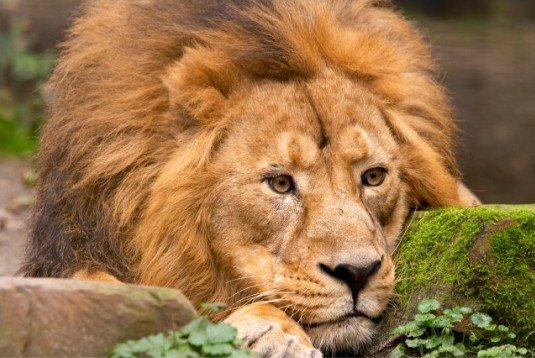
Animals, too, experience a profound feeling of sadness when their play/hunt/sex partner dies. Those studying the behavior of wild and domestic animals come with an increasing number of cases proving that animals are capable of pure sorrow when they lose someone close to them. Somehow, this behavior is linked to self-conscience, thus only "brainy" animals, like mammals and some birds, consciously commit suicide.
It is hard to say if animals commit suicide. An animal will not do this because of a sudden dread, or an excessive emotion. As they cannot ... speak, it's difficult to assess if there is a true suicide.
But when a dog or a cat, following the death of their master, refuse food dying of hunger, we can conclude that this is an unwitting consequence of the pain they feel. But when the animal throws itself from a height, it's hard to believe this is a casual act or the effect of its anxiety.
This case was seen in a natural reserve in Zimbabwe: chased from their pride, the luck seemed to have encountered a pair of old hungry male lions. They cornered a warthog, but the animal escaped in the last moment in a den. One of the lions, pushed by the hunger, tried to follow it, but he got trapped in the narrow hole. His partner tried to help him, pulling him out with the paw, but when the trapped lion started roaring of pain, he stopped.
The trapped lion died asphyxiated, and the next day, his partner hardly managed to pull out his corpse. Sooner, the second lion was found dead next to the body of the other. He had refused to go hunting, and died
of hunger.
Dogs are known for their strong affection feelings, and stories with suicidal dogs abound. Dogs grown together get so bound one to each other, that often do not survive to the loss of one of them. One owner had an airdale and a fox-terrier, who were always hanging together.
One day, the fox-terrier was crashed by a car and died. The owner buried it in the garden. The playful airdale changed its behavior, did not leave the tomb, refused food, and was haunting like a phantom during the night like looking for its friend. Few days later, the airdale was found dead next to the tomb of its friend.
But this attachment of the dogs is also applied to their human masters. This story occurred in Rome: the owner of Shastra, a Spanish cockerel, died. When the corpse was pulled out of the house, the dog tossed itself from the third level. It just broke one leg. It was brought to the veterinarian but once again home, the pulled out itself from the leash and threw itself again.
This time it died. Perhaps, the places in which the dog played so many times with its master could have recalled the dog such painful records that it could not resist and suicided.
This case occurred in Ostiglia (also Italy): Franz, a German shepherd dog, was laying on the railways line, near the railway station. Workers always chased away with stones the dog, but soon after the dog returned, and one day, the dog met with the Verona-Bologna train...
Franz had lost his master, condemned two weeks before to one year in jail. Since she had disappeared, the animal refused food, haunting through the city, like a suffering soul missing a beloved one.
This case occurred in the Farnese palace (Paris): a white Angora tomcat chased restlessly a pussy cat next door. But the female was indifferent to his advances, and one day the tomcat threw himself through the windows and died. The owner said because of the unshared love...
An 8-year-old girl had a cat which she surrounded with all her care and affection. The two were very bound. But the child died of a sudden condition, and everybody forgot in a such a difficult moment about the cat. When they remembered about the animal, it was gone.
Three months later, a scratch was heard at the door. It was the cat, weakened and with sad eyes. The cat refused food or caresses; it went to the girl's room, looked around, went to the open window and tossed itself: it died with the skull crashed on the pavement.
Monkeys too react in the same manner when losing a partner. Many times in Zoos, when one monkey in a pair dies, the partner refuses food, dying a few days later. Monkeys are highly intelligent, and form strong bounds with the partner.
Of course, the suicide also occurs amongst dolphins, animals considered the second after apes in what concerns intelligence level. In a Greek gulf, a pair of dolphins had been living for years. But one day the fishermen noticed that the male could not swim properly and floated with the belly up. Few days later, the male died. The female pushed the corpse, trying to keep it to the surface to "breathe".
When a storm begun, the body was taken and smashed to the rocks. Then, the female threw herself to the rocks, sharing the same faith with her partner.
As said, some birds, with a more complex behavior, can suicide, like parrots.
In a pair of pet love birds, the male got an injury that killed him in one hour. The female, witnessing the sufferance of her partner till he died, imitated all his movements, like she would have suffered the same way like him. She kept on imitating this even after her partner died, and this had a harming effect on her inner organs. Her vitality dropped, and she died soon.
But sometimes animals seem to suicide linked to depression, when serotonin ("happiness levels") drop to dangerous low levels, which is a much more common cause of suicide in humans, than longing.
A giraffe at Paris Zoo broke its head wittingly by the walls of its shelter, after a period of several days in which manifested signs of sadness and depression.
A 12-year-old lioness in an American Zoo had remained pregnant thrice, but each time she gave birth to weak cubs, which died soon. After the last pregnancy, she failed in the most severe depression. For several days she had refused food, and suddenly, she experienced a desperation crisis, starting to chew her tail as long as she reached. Than she started to chew one of her paws, and none could say the final results, if the keepers had not killed her. Post-partum depression is common also in women ...
In a English case, a farmer, renown for his brutality, bought a horse. The seller warned him not to use the whip for driving the horse. But two days later, the farmer bit violently the horse. Suddenly, the animal started running on a meadow surrounded from three parts by fences, and on a fourth side, there was a cliff dominating the sea shore. The horse galloped directly to the cliff, smashing itself on the rocks below.
In some animals, sex is pure suicidal, at least for the males. In praying mantis the female starts eating the male while still copulating, head first! And in some spiders, in which the male is a pygmy compared to female, sex is followed by its own sacrifice in the jaws of the female. In the end, males are just a piece of protein for the hungry eggs developing females. Is this a suicidal act of the male? Rather no, as he primarily has sex on his mind.
Another issue: Lemmings do not commit suicide! Each 4 years there is a cyclic demographical boom of the lemmings (small arctic rodents) followed by a desperate massive migration during which many die throwing themselves into the rivers, lakes and sea.
It has been regarded as a collective suicide, conscious or involuntary, caused by over-population. In reality, being solitary rodents by nature, when the population booms, the stronger lemmings drive the weaker and younger ones off long before the food is depleted.
The young lemmings disperse in random directions looking for vacant territory. Geographical features constrain their movements and channel them into a relatively narrow corridor and large numbers can build up leading to social friction, distress and eventually a mass panic can follow and they flee in all directions, but they do not deliberately march into the sea; this is just pure fantasy.
By: Stefan Anitei, Science Editor - Softpedia
Animals, too, experience a profound feeling of sadness when their play/hunt/sex partner dies. Those studying the behavior of wild and domestic animals come with an increasing number of cases proving that animals are capable of pure sorrow when they lose someone close to them. Somehow, this behavior is linked to self-conscience, thus only "brainy" animals, like mammals and some birds, consciously commit suicide.
It is hard to say if animals commit suicide. An animal will not do this because of a sudden dread, or an excessive emotion. As they cannot ... speak, it's difficult to assess if there is a true suicide.
But when a dog or a cat, following the death of their master, refuse food dying of hunger, we can conclude that this is an unwitting consequence of the pain they feel. But when the animal throws itself from a height, it's hard to believe this is a casual act or the effect of its anxiety.
This case was seen in a natural reserve in Zimbabwe: chased from their pride, the luck seemed to have encountered a pair of old hungry male lions. They cornered a warthog, but the animal escaped in the last moment in a den. One of the lions, pushed by the hunger, tried to follow it, but he got trapped in the narrow hole. His partner tried to help him, pulling him out with the paw, but when the trapped lion started roaring of pain, he stopped.
The trapped lion died asphyxiated, and the next day, his partner hardly managed to pull out his corpse. Sooner, the second lion was found dead next to the body of the other. He had refused to go hunting, and died
of hunger.
Dogs are known for their strong affection feelings, and stories with suicidal dogs abound. Dogs grown together get so bound one to each other, that often do not survive to the loss of one of them. One owner had an airdale and a fox-terrier, who were always hanging together.
One day, the fox-terrier was crashed by a car and died. The owner buried it in the garden. The playful airdale changed its behavior, did not leave the tomb, refused food, and was haunting like a phantom during the night like looking for its friend. Few days later, the airdale was found dead next to the tomb of its friend.
But this attachment of the dogs is also applied to their human masters. This story occurred in Rome: the owner of Shastra, a Spanish cockerel, died. When the corpse was pulled out of the house, the dog tossed itself from the third level. It just broke one leg. It was brought to the veterinarian but once again home, the pulled out itself from the leash and threw itself again.
This time it died. Perhaps, the places in which the dog played so many times with its master could have recalled the dog such painful records that it could not resist and suicided.
This case occurred in Ostiglia (also Italy): Franz, a German shepherd dog, was laying on the railways line, near the railway station. Workers always chased away with stones the dog, but soon after the dog returned, and one day, the dog met with the Verona-Bologna train...
Franz had lost his master, condemned two weeks before to one year in jail. Since she had disappeared, the animal refused food, haunting through the city, like a suffering soul missing a beloved one.
This case occurred in the Farnese palace (Paris): a white Angora tomcat chased restlessly a pussy cat next door. But the female was indifferent to his advances, and one day the tomcat threw himself through the windows and died. The owner said because of the unshared love...
An 8-year-old girl had a cat which she surrounded with all her care and affection. The two were very bound. But the child died of a sudden condition, and everybody forgot in a such a difficult moment about the cat. When they remembered about the animal, it was gone.
Three months later, a scratch was heard at the door. It was the cat, weakened and with sad eyes. The cat refused food or caresses; it went to the girl's room, looked around, went to the open window and tossed itself: it died with the skull crashed on the pavement.
Monkeys too react in the same manner when losing a partner. Many times in Zoos, when one monkey in a pair dies, the partner refuses food, dying a few days later. Monkeys are highly intelligent, and form strong bounds with the partner.
Of course, the suicide also occurs amongst dolphins, animals considered the second after apes in what concerns intelligence level. In a Greek gulf, a pair of dolphins had been living for years. But one day the fishermen noticed that the male could not swim properly and floated with the belly up. Few days later, the male died. The female pushed the corpse, trying to keep it to the surface to "breathe".
When a storm begun, the body was taken and smashed to the rocks. Then, the female threw herself to the rocks, sharing the same faith with her partner.
As said, some birds, with a more complex behavior, can suicide, like parrots.
In a pair of pet love birds, the male got an injury that killed him in one hour. The female, witnessing the sufferance of her partner till he died, imitated all his movements, like she would have suffered the same way like him. She kept on imitating this even after her partner died, and this had a harming effect on her inner organs. Her vitality dropped, and she died soon.
But sometimes animals seem to suicide linked to depression, when serotonin ("happiness levels") drop to dangerous low levels, which is a much more common cause of suicide in humans, than longing.
A giraffe at Paris Zoo broke its head wittingly by the walls of its shelter, after a period of several days in which manifested signs of sadness and depression.
A 12-year-old lioness in an American Zoo had remained pregnant thrice, but each time she gave birth to weak cubs, which died soon. After the last pregnancy, she failed in the most severe depression. For several days she had refused food, and suddenly, she experienced a desperation crisis, starting to chew her tail as long as she reached. Than she started to chew one of her paws, and none could say the final results, if the keepers had not killed her. Post-partum depression is common also in women ...
In a English case, a farmer, renown for his brutality, bought a horse. The seller warned him not to use the whip for driving the horse. But two days later, the farmer bit violently the horse. Suddenly, the animal started running on a meadow surrounded from three parts by fences, and on a fourth side, there was a cliff dominating the sea shore. The horse galloped directly to the cliff, smashing itself on the rocks below.
In some animals, sex is pure suicidal, at least for the males. In praying mantis the female starts eating the male while still copulating, head first! And in some spiders, in which the male is a pygmy compared to female, sex is followed by its own sacrifice in the jaws of the female. In the end, males are just a piece of protein for the hungry eggs developing females. Is this a suicidal act of the male? Rather no, as he primarily has sex on his mind.
Another issue: Lemmings do not commit suicide! Each 4 years there is a cyclic demographical boom of the lemmings (small arctic rodents) followed by a desperate massive migration during which many die throwing themselves into the rivers, lakes and sea.
It has been regarded as a collective suicide, conscious or involuntary, caused by over-population. In reality, being solitary rodents by nature, when the population booms, the stronger lemmings drive the weaker and younger ones off long before the food is depleted.
The young lemmings disperse in random directions looking for vacant territory. Geographical features constrain their movements and channel them into a relatively narrow corridor and large numbers can build up leading to social friction, distress and eventually a mass panic can follow and they flee in all directions, but they do not deliberately march into the sea; this is just pure fantasy.
#2564
Love Talk / How Much Suffering Causes a 'Broken Heart'?
August 23, 2007, 07:47:13 PM
How Much Suffering Causes a 'Broken Heart'? - Four times less than you think
By: Stefan Anitei, Science Editor - Softpedia
Can you think of some lyrics that are more common than "Don't break my heart" or "Unbreak my heart"? Still, a new research at the Northwestern University reveals that lovers, even when deeply in love, recover much better, almost immediately, following a breakup than they could have thought, experiencing much less distress than they had forecast before the end of the relationship.
Even if love-crazed
subjects predicted a "Romeo and Juliet" drama, the real-life breakups seem to be much less tragic. "Our research shows that a breakup is not nearly as bad as people imagine, and the more you are in love with your partner, the more wrong you are about how upset you are going to be when the dreaded loss actually occurs," said co-author Eli Finkel, assistant professor of psychology in Northwestern’s Weinberg College of Arts and Sciences.
"But the overestimates of the most-in-love participants, of how badly they would feel after a breakup, were much greater than the predictions of participants less in love. Their levels of distress were nowhere near their catastrophic predictions," said lead author Paul Eastwick, a graduate student in psychology at Northwestern.
This confirms previous research showing that people have remarkably poor insight when predicting the level of their distress in the evening of emotional events. When forecasting a breakup, people seem to miss the good outcomes following a breakup, like the benefits of living alone.
Each subject in the research was involved in a dating relationship for over two months. The subjects completed a set of questionnaires twice monthly for 38 weeks, a total of 20 online sessions. The questionnaires assessed predicted and actual stress, and if the subjects were very much in love.
The data came from 26 people (10 female and 16 male) who finished their relationships in the first six months of the study. The predicted distress reported two weeks before the breakup was four points higher than that experienced in the initial weeks and months following the event. "People tend to be pretty resilient, often more so than they realize. No one is saying that breaking up is a good time. It's just that people bounce back sooner than they predict.", Eastwick said.
By: Stefan Anitei, Science Editor - Softpedia
Can you think of some lyrics that are more common than "Don't break my heart" or "Unbreak my heart"? Still, a new research at the Northwestern University reveals that lovers, even when deeply in love, recover much better, almost immediately, following a breakup than they could have thought, experiencing much less distress than they had forecast before the end of the relationship.
Even if love-crazed
subjects predicted a "Romeo and Juliet" drama, the real-life breakups seem to be much less tragic. "Our research shows that a breakup is not nearly as bad as people imagine, and the more you are in love with your partner, the more wrong you are about how upset you are going to be when the dreaded loss actually occurs," said co-author Eli Finkel, assistant professor of psychology in Northwestern’s Weinberg College of Arts and Sciences.
"But the overestimates of the most-in-love participants, of how badly they would feel after a breakup, were much greater than the predictions of participants less in love. Their levels of distress were nowhere near their catastrophic predictions," said lead author Paul Eastwick, a graduate student in psychology at Northwestern.
This confirms previous research showing that people have remarkably poor insight when predicting the level of their distress in the evening of emotional events. When forecasting a breakup, people seem to miss the good outcomes following a breakup, like the benefits of living alone.
Each subject in the research was involved in a dating relationship for over two months. The subjects completed a set of questionnaires twice monthly for 38 weeks, a total of 20 online sessions. The questionnaires assessed predicted and actual stress, and if the subjects were very much in love.
The data came from 26 people (10 female and 16 male) who finished their relationships in the first six months of the study. The predicted distress reported two weeks before the breakup was four points higher than that experienced in the initial weeks and months following the event. "People tend to be pretty resilient, often more so than they realize. No one is saying that breaking up is a good time. It's just that people bounce back sooner than they predict.", Eastwick said.
#2565
Science and Research / HIV Infection Boosted by Washing the Penis Soon After Having Sex
August 23, 2007, 07:43:38 PM
HIV Infection Boosted by Washing the Penis Soon After Having Sex - At least in uncircumcised men
By: Stefan Anitei, Science Editor - Softpedia

Well, cleaning the penis minutes after sex does not wash away the HIV. On the contrary, for uncircumcised men, it even increases the risk of getting infected.
The team at the Makerere University Institute of Public Health made the research on 2,552 uncircumcised, HIV-negative men aged 15 to 29 from the Rakai district, Uganda. 83 % of the subjects told they washed their penises with all sex
partners.
They were asked when and how they washed their penises, even if they washed it with or without clothes, at the start of the research and at 6, 12 and 24 months after that. Still, the researchers did not questioned the subjects about the type of used soap, and this is an important issue, as some African soaps are more irritating than soaps coming from other places.
Men who washed within 3 minutes after sex had a 2.3% risk of HIV infection, while those who delayed washing 10 minutes or more had a risk of just 0.4%. Scientists believe that delaying washing means a longer exposure to vaginal secretions, that could be involved in lower viral infectivity.
The vaginal secretions have a low pH (under 7 or acid) and this decreases HIV's survival capacity on the penis, while water has a neutral pH, around 7, increasing HIV's survival and the man’s possible infection. "HIV likely needs to be in a fluid to cross the mucosa and infect cells. If HIV-infected fluid dries, its infectivity could decrease.", said co-author Ronald Gray, professor of population and family planning at Johns Hopkins Bloomberg School of Public Health.
Thus, soaking the penis with water reactivates the HIV. "There ought to be a little time left for postcoital cuddling before you go and wash. Don't just finish and jump out of bed.", added Gray.
"The findings are counterintuitive and show why you have to do the studies, because until you do them, you just don't know. There is still so much we don't understand about the complex factors that influence HIV transmission in the genital tract, but this important study will help," said Merle Sande, an infectious disease expert at the University of Washington-Seattle and president of the Academic Alliance Foundation, that trains health workers to treat HIV/AIDS and other infectious diseases in Uganda.
By: Stefan Anitei, Science Editor - Softpedia
Well, cleaning the penis minutes after sex does not wash away the HIV. On the contrary, for uncircumcised men, it even increases the risk of getting infected.
The team at the Makerere University Institute of Public Health made the research on 2,552 uncircumcised, HIV-negative men aged 15 to 29 from the Rakai district, Uganda. 83 % of the subjects told they washed their penises with all sex
partners.
They were asked when and how they washed their penises, even if they washed it with or without clothes, at the start of the research and at 6, 12 and 24 months after that. Still, the researchers did not questioned the subjects about the type of used soap, and this is an important issue, as some African soaps are more irritating than soaps coming from other places.
Men who washed within 3 minutes after sex had a 2.3% risk of HIV infection, while those who delayed washing 10 minutes or more had a risk of just 0.4%. Scientists believe that delaying washing means a longer exposure to vaginal secretions, that could be involved in lower viral infectivity.
The vaginal secretions have a low pH (under 7 or acid) and this decreases HIV's survival capacity on the penis, while water has a neutral pH, around 7, increasing HIV's survival and the man’s possible infection. "HIV likely needs to be in a fluid to cross the mucosa and infect cells. If HIV-infected fluid dries, its infectivity could decrease.", said co-author Ronald Gray, professor of population and family planning at Johns Hopkins Bloomberg School of Public Health.
Thus, soaking the penis with water reactivates the HIV. "There ought to be a little time left for postcoital cuddling before you go and wash. Don't just finish and jump out of bed.", added Gray.
"The findings are counterintuitive and show why you have to do the studies, because until you do them, you just don't know. There is still so much we don't understand about the complex factors that influence HIV transmission in the genital tract, but this important study will help," said Merle Sande, an infectious disease expert at the University of Washington-Seattle and president of the Academic Alliance Foundation, that trains health workers to treat HIV/AIDS and other infectious diseases in Uganda.
#2566
Weird and Extreme / 10 Weird Types of Sleeping
August 23, 2007, 07:40:37 PM
10 Weird Types of Sleeping - During flight and even underwater
By: Stefan Anitei, Science Editor - Softpedia
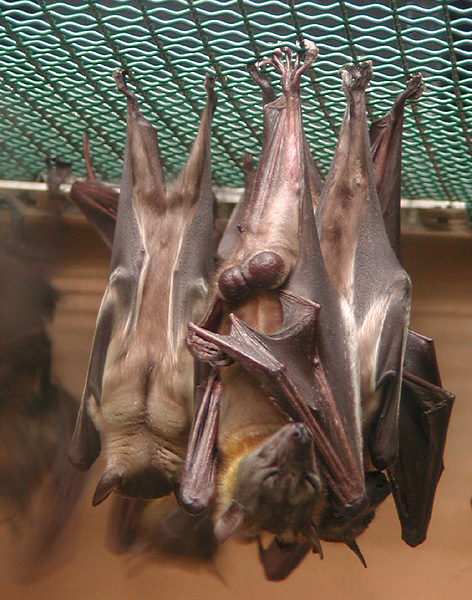
Fruit bats sleeping
All vertebrates sleep, from fish to mammals. And even some invertebrates, like the insects. During sleep, the body enters in a predominantly anabolic phase, when it develops, grows, heals and builds muscle; the immune system is at its peak (that's why, when we’re ill, we wake up without the cold).
The lack of sleep impairs the functioning of the brain. Sleep is necessary to organize the memories we amass during the day and to give our bodies time to rest.
Here are some types of sleep, sleep behavior and sleep beliefs that can be odd, different or just false.
1. Birds can sleep while flying! During the migration, birds take hundreds of naps during the day, each lasting only 9 seconds on average, to compensate the night sleep loss. Many song birds travel mostly during the night to avoid birds of prey and often for long hours at a time, leaving little time for sleep.
The scientists discovered also two other forms of sleep besides the shut-eye type. The unilateral eye closure (UEC) means the birds rested one eye and one half of the brains while the other eye and brain hemisphere remained open and active, keeping them semi-alert to danger.
Other process, named drowsiness, are characterized by partially shutting both eyes, which still allows some visual processing.
By alternating between naps, UEC and drowsiness, migratory birds can reap some of the benefits of sleep while only marginally increasing their risks of being caught by prey birds.
2. Even if you won't see a fish with the eyes shut down, fish do sleep! Physiological measurements showed that fish pass through periods of drowsiness accompanied by low responses to environmental factors. It is a very primitive type of sleep, not related
to drowsiness in mammals.
3. There is one widespread belief: Snakes do not sleep! That's false: they do sleep, but the ‘no sleep’ myth comes from the fact that their eyelids are joined and transparent, so they sleep with their eyes open...
4. On the other hand, hares do not sleep with their eyes open. This false belief comes from the next behavior: during hunt, the hare won't start running at the slightest signal of danger. It will wait for its covering and camouflage to make it undetectable. If the hounds spot it, the hare starts running as if waken up from a deep sleep while its eyes are wide open.
5. After the primates, dolphins and whales have the largest brains. These brains need resting, just like ours do. But in their sea environment, whales and dolphins must be conscious breathers: They have to actively decide when to breathe. This requires the individual to be awake, which is quite a problem, since during sleep the brain is in an unconscious state.
Catnaps are not an option. The solution found by whales and dolphins is to let one half of the brain sleep at a time. This way, the animal is never completely asleep, but it gets the necessary rest. Electroencephalograms (EEGs) of dolphin brains showed that while sleeping, half of the dolphin's brain does indeed "shut down" while the other half is active. This state lasts about 8 hours a day.
Dolphins and whales must sleep near the surface of the ocean so they can come up for breathing easily. Dolphins are frequently seen "logging," swimming slowly at the surface, making very few movements.
6. Sea otters also sleep in the sea. To solve the problem, they sleep wrapped in algae so that they can float and not be carried away by the water currents while sleeping.
Seals sleep much in the same manner.
7. The currents and twirls of the Indus river are so strong that the dolphin species inhabiting this river must swim ceaselessly so as not to drawn. That's why they don’t sleep more than about... one minute. It is the shortest sleep time seen in a mammal.
8. The only animals known to sleep upside down are the bats, the sloths and ...the hanging parrots (Loriculus species), tiny birds living in Southeastern Asia, from Indonesia to New Guinea.
9. Bears, skunks and other carnivores do not really hibernate. They can wake up very quickly from their winter sleep if disturbed and their temperature, heart beat and pulse do not drop significantly.
10. Have you heard about sexsomnia? These are sleep-related disorders linked with abnormal sexual behaviors and experiences while sleeping.
For some people, this might sound funny, but it can actually be disturbing, annoying, embarrassing and a potentially serious problem for some individuals and couples.
These problems include parasomnias (sleepwalking and confusional arousals with or without obstructive sleep apnea) connected with abnormal sleep-related sexual behaviors (sexual vocalizations, masturbation, fondling the other person, sexual intercourse with or without orgasm, aggressive sexual behaviors), sleep-related sexual seizures (sexual vocalizations, libidinal hyperarousal, genital arousal, ictal orgasm, sexual automatisms, aggressive sexual behaviors), sleep conditions connected with abnormal sexual behaviors occurring during wakefulness and wake-sleep transitions (Kleine-Levin syndrome, a rare condition characterized by recurrent hypersomnia, connected with hypersexual and deviant sexual arousal and behaviors; severe chronic insomnia linked to high libido, genital arousal, compulsive sexual behaviors or restless legs syndrome combined with masturbation, rhythmic pelvic/coital-like movements)
Other special conditions of sexsomnia are narcolepsy (frequent and uncontrollable periods of deep sleep) displaying sexual hypnagogic (drowsiness)/hypnopompic (semiconscious state prior to complete wakefulness), cataplectic (muscle weakness) orgasm; sleep exacerbation of persistent sexual arousal syndrome without high sex drive or sexual behaviors; sleep-related painful erections and increased sexual activity (masturbation and intercourse); sleep-related dissociative disorders: pelvic movements and other sexualized comportments, reenactments of past sexual/physical abuses; night psychotic disorders like sexual delusions/hallucinations after awakenings and various sleep and sex connections like masturbation, sexual intercourse, sexual hypnagogic/hypnopompic hallucinations with sleep paralysis
By: Stefan Anitei, Science Editor - Softpedia
Fruit bats sleeping
All vertebrates sleep, from fish to mammals. And even some invertebrates, like the insects. During sleep, the body enters in a predominantly anabolic phase, when it develops, grows, heals and builds muscle; the immune system is at its peak (that's why, when we’re ill, we wake up without the cold).
The lack of sleep impairs the functioning of the brain. Sleep is necessary to organize the memories we amass during the day and to give our bodies time to rest.
Here are some types of sleep, sleep behavior and sleep beliefs that can be odd, different or just false.
1. Birds can sleep while flying! During the migration, birds take hundreds of naps during the day, each lasting only 9 seconds on average, to compensate the night sleep loss. Many song birds travel mostly during the night to avoid birds of prey and often for long hours at a time, leaving little time for sleep.
The scientists discovered also two other forms of sleep besides the shut-eye type. The unilateral eye closure (UEC) means the birds rested one eye and one half of the brains while the other eye and brain hemisphere remained open and active, keeping them semi-alert to danger.
Other process, named drowsiness, are characterized by partially shutting both eyes, which still allows some visual processing.
By alternating between naps, UEC and drowsiness, migratory birds can reap some of the benefits of sleep while only marginally increasing their risks of being caught by prey birds.
2. Even if you won't see a fish with the eyes shut down, fish do sleep! Physiological measurements showed that fish pass through periods of drowsiness accompanied by low responses to environmental factors. It is a very primitive type of sleep, not related
to drowsiness in mammals.
3. There is one widespread belief: Snakes do not sleep! That's false: they do sleep, but the ‘no sleep’ myth comes from the fact that their eyelids are joined and transparent, so they sleep with their eyes open...
4. On the other hand, hares do not sleep with their eyes open. This false belief comes from the next behavior: during hunt, the hare won't start running at the slightest signal of danger. It will wait for its covering and camouflage to make it undetectable. If the hounds spot it, the hare starts running as if waken up from a deep sleep while its eyes are wide open.
5. After the primates, dolphins and whales have the largest brains. These brains need resting, just like ours do. But in their sea environment, whales and dolphins must be conscious breathers: They have to actively decide when to breathe. This requires the individual to be awake, which is quite a problem, since during sleep the brain is in an unconscious state.
Catnaps are not an option. The solution found by whales and dolphins is to let one half of the brain sleep at a time. This way, the animal is never completely asleep, but it gets the necessary rest. Electroencephalograms (EEGs) of dolphin brains showed that while sleeping, half of the dolphin's brain does indeed "shut down" while the other half is active. This state lasts about 8 hours a day.
Dolphins and whales must sleep near the surface of the ocean so they can come up for breathing easily. Dolphins are frequently seen "logging," swimming slowly at the surface, making very few movements.
6. Sea otters also sleep in the sea. To solve the problem, they sleep wrapped in algae so that they can float and not be carried away by the water currents while sleeping.
Seals sleep much in the same manner.
7. The currents and twirls of the Indus river are so strong that the dolphin species inhabiting this river must swim ceaselessly so as not to drawn. That's why they don’t sleep more than about... one minute. It is the shortest sleep time seen in a mammal.
8. The only animals known to sleep upside down are the bats, the sloths and ...the hanging parrots (Loriculus species), tiny birds living in Southeastern Asia, from Indonesia to New Guinea.
9. Bears, skunks and other carnivores do not really hibernate. They can wake up very quickly from their winter sleep if disturbed and their temperature, heart beat and pulse do not drop significantly.
10. Have you heard about sexsomnia? These are sleep-related disorders linked with abnormal sexual behaviors and experiences while sleeping.
For some people, this might sound funny, but it can actually be disturbing, annoying, embarrassing and a potentially serious problem for some individuals and couples.
These problems include parasomnias (sleepwalking and confusional arousals with or without obstructive sleep apnea) connected with abnormal sleep-related sexual behaviors (sexual vocalizations, masturbation, fondling the other person, sexual intercourse with or without orgasm, aggressive sexual behaviors), sleep-related sexual seizures (sexual vocalizations, libidinal hyperarousal, genital arousal, ictal orgasm, sexual automatisms, aggressive sexual behaviors), sleep conditions connected with abnormal sexual behaviors occurring during wakefulness and wake-sleep transitions (Kleine-Levin syndrome, a rare condition characterized by recurrent hypersomnia, connected with hypersexual and deviant sexual arousal and behaviors; severe chronic insomnia linked to high libido, genital arousal, compulsive sexual behaviors or restless legs syndrome combined with masturbation, rhythmic pelvic/coital-like movements)
Other special conditions of sexsomnia are narcolepsy (frequent and uncontrollable periods of deep sleep) displaying sexual hypnagogic (drowsiness)/hypnopompic (semiconscious state prior to complete wakefulness), cataplectic (muscle weakness) orgasm; sleep exacerbation of persistent sexual arousal syndrome without high sex drive or sexual behaviors; sleep-related painful erections and increased sexual activity (masturbation and intercourse); sleep-related dissociative disorders: pelvic movements and other sexualized comportments, reenactments of past sexual/physical abuses; night psychotic disorders like sexual delusions/hallucinations after awakenings and various sleep and sex connections like masturbation, sexual intercourse, sexual hypnagogic/hypnopompic hallucinations with sleep paralysis
#2567
Facts and Trivia / Top 10 Issues that Make You Grow Old Earlier
August 23, 2007, 07:37:14 PM
Top 10 Issues that Make You Grow Old Earlier - From stress to sugar
By: Stefan Anitei, Science Editor
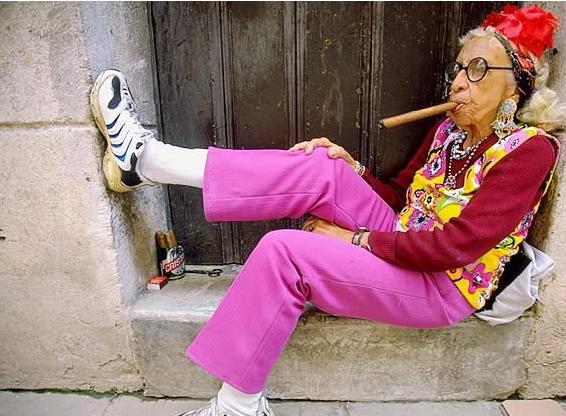
The knife cannot solve everything and it is not the elixir of youth. A healthy life style is much cheaper and more effective. Bad habits make you grow old too soon. These, however, are the worst:
1. Stress. People who are not able to get rid of it get older earlier. It decreases our immunity (thus infection resistance) and increases
the risk of heart conditions. Too much stress means and older immune system.
2. Alcohol: too much or ... too little. One (for women) - two (for men) cups of wine daily can decrease the risk of heart disease. More than that means increased risk for heart diseases, and cancers of liver, throat and breast.
3. Sedentary lifestyle. Movement prolongs life, reduces the risk of obesity and stress, but also of conditions like Alzheimer (the most common form of old age dementia).
4. Eating too much saturated fats (from meat and dairy products). These fats increase the bad cholesterol, leaving us exposed to heart diseases. These fats must not overcome 10 % of the total fat volume ingested daily. The Mediterranean diet, even if it does not help losing weight, is better.
5. Smoking. That's more than cancer: smoking, even cannabis, is the enemy of the skin. If you look at smokers, their skin looks 20 years older: wrinkled, with a yellowish hue, and with exploded pores.
6. Polluted air. It can induce breathing diseases. When contamination level is high, you’d better stay home.
7. Too much sun exposure. It can induce skin cancer, unlike limited exposure, translated to lower risk of skin cancer and wrinkle development.
8. Lack of sleep. It is connected with obesity, diabetes, higher blood pressure, and memory impairment, regardless of age.
9. Obesity. It’s a well known fact that fat people look older (behind the physiological issue, namely feeling that they’re old): higher risk for heart disease, diabetes and cancer.
10. Too much sugar. You should not consume over 12 little spoons of sugar daily (including that from the cookies), at a diet of 2.200 calories daily. Fruits and vegetables are a healthier choice when it comes to sugar sources.
By: Stefan Anitei, Science Editor
The knife cannot solve everything and it is not the elixir of youth. A healthy life style is much cheaper and more effective. Bad habits make you grow old too soon. These, however, are the worst:
1. Stress. People who are not able to get rid of it get older earlier. It decreases our immunity (thus infection resistance) and increases
the risk of heart conditions. Too much stress means and older immune system.
2. Alcohol: too much or ... too little. One (for women) - two (for men) cups of wine daily can decrease the risk of heart disease. More than that means increased risk for heart diseases, and cancers of liver, throat and breast.
3. Sedentary lifestyle. Movement prolongs life, reduces the risk of obesity and stress, but also of conditions like Alzheimer (the most common form of old age dementia).
4. Eating too much saturated fats (from meat and dairy products). These fats increase the bad cholesterol, leaving us exposed to heart diseases. These fats must not overcome 10 % of the total fat volume ingested daily. The Mediterranean diet, even if it does not help losing weight, is better.
5. Smoking. That's more than cancer: smoking, even cannabis, is the enemy of the skin. If you look at smokers, their skin looks 20 years older: wrinkled, with a yellowish hue, and with exploded pores.
6. Polluted air. It can induce breathing diseases. When contamination level is high, you’d better stay home.
7. Too much sun exposure. It can induce skin cancer, unlike limited exposure, translated to lower risk of skin cancer and wrinkle development.
8. Lack of sleep. It is connected with obesity, diabetes, higher blood pressure, and memory impairment, regardless of age.
9. Obesity. It’s a well known fact that fat people look older (behind the physiological issue, namely feeling that they’re old): higher risk for heart disease, diabetes and cancer.
10. Too much sugar. You should not consume over 12 little spoons of sugar daily (including that from the cookies), at a diet of 2.200 calories daily. Fruits and vegetables are a healthier choice when it comes to sugar sources.
#2568
Talk of the Town / Re: Aumentado a Big Disgrace to the Boholanos, says Boom-boom fans
August 23, 2007, 07:17:01 PM
mao gud pod na ilang strategy sa debate gud! sa maglagot lang! heheheehehe!
#2569
Bohol Latest News / Re: Kinsay kinalamian moluto?
August 23, 2007, 03:41:13 AM
mga new generation sa mga muslim karon kay broad minded naman! dili na parehas sa mga narrow minded na muttawa!
#2570
Bohol Latest News / Re: Kinsay kinalamian moluto?
August 23, 2007, 03:33:19 AMQuote from: Ginger on August 23, 2007, 03:28:35 AMyup! i was born a muslim and raise as a christian! ahhahahahah!
yes, naa may daghan. sama ni Ban-alam...hehe
#2571
Bohol Latest News / Re: Kinsay kinalamian moluto?
August 23, 2007, 03:22:43 AM
sa saudi raman guinabawal ang baboy!
#2572
Bohol Tourism | Bohol Travel & Tour / Re: Imagine a universe without a Bol-anon
August 23, 2007, 03:21:18 AM
walay daug daugon...walay trademark na ija2x aho2x!
#2573
Bohol Latest News / Re: Kinsay kinalamian moluto?
August 23, 2007, 03:18:47 AM
ng karneng baboy pwede man na isagol sa karneng baka pero kuhaan lang ug tambog para di halata!
#2574
Travel and Tours / Re: Bohol is famous for?
August 23, 2007, 03:15:31 AM
Bohol is famous for having so many virgin people like me! hahahahahah!
#2575
Question and Answer / Re: What would you do if you suddenly lost all your money?
August 23, 2007, 02:46:06 AM
magpa jes jes nalang! hahaahahhhaha!
#2576
Question and Answer / Re: How Important is Virginity to you?
August 23, 2007, 02:41:22 AM
PWEDE MAN e recycle ang glass!
#2577
Bohol Tourism | Bohol Travel & Tour / Re: The Shy Tarsier
August 23, 2007, 01:38:21 AM
maayo if naay riches na pwede kuhaan! hehehehhe!
#2578
Bohol Tourism | Bohol Travel & Tour / Re: Tubag Bohol round-Bohol tour for Free
August 23, 2007, 01:27:59 AM
tibook lechon apil mga lama-loob!
#2579
Bohol Latest News / Re: Kinsay kinalamian moluto?
August 23, 2007, 01:24:59 AM
gibawal man gyud na si bibliya ang pagkaon ug dugo...kanang dugo na giula.
sa science, dili sad advisable mokaon ug dugo kay sa dugo nimo makuha ang daghang mga sakit...di ba if magpa medical ka kuhaan man kag blood sample to examine if healthy ba ka or dili...
sa science, dili sad advisable mokaon ug dugo kay sa dugo nimo makuha ang daghang mga sakit...di ba if magpa medical ka kuhaan man kag blood sample to examine if healthy ba ka or dili...
#2581
Bohol Tourism | Bohol Travel & Tour / Re: Tubag Bohol round-Bohol tour for Free
August 22, 2007, 11:42:08 PM
murag first week sa august na gyud ko makauli b4 sa pista sa amoa sa aug 10...
#2582
Bohol Tourism | Bohol Travel & Tour / Re: Where are Tubag Bohol movers and shakers from?
August 22, 2007, 11:38:54 PM
taga sta cruz calape na si yoyoy!
#2583
Weird and Extreme / Re: Meet the Best Stud of Our Times: 15 Wives, 80 Children now and 100 by 2015!
August 22, 2007, 11:25:06 PM
im a born muslim!
#2584
Guindulman - Bohol / Re: shabu sa guindulman???
August 22, 2007, 11:15:50 PM
bisag asa naman na shabu karon...
#2585
Weird and Extreme / Meet the Best Stud of Our Times: 15 Wives, 80 Children now and 100 by 2015!
August 22, 2007, 11:10:47 PM
Meet the Best Stud of Our Times: 15 Wives, 80 Children now and 100 by 2015! And Just One Leg! - From the Emirates
By: Stefan Anitei, Science Editor - Softpedia
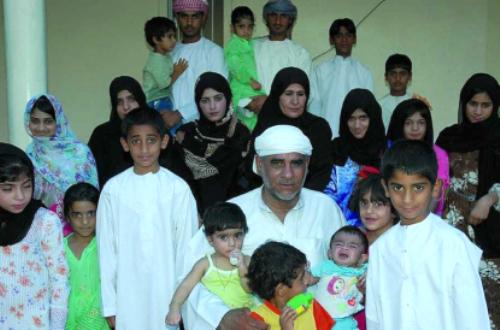
Daad surrounded by his 3 current wives and part of his kids
We struggle to pay the cost of living and study taxes for one or two kids (when it comes to the third, we already have an odd case) and look what a 60-years-old "daddy" with only one leg was able to do: he had 15 wives, now has 78 children (80 if the count the two on the way).
But his target in less than 10
years is to have 100 children. "In 2015 I will be 68 years old and will have 100 children," Daad Mohammed Murad Abdul Rahman told Emirates Today. "After that I will stop marrying. I have to have at least three more marriages to hit the century."
You could not even say he hurried up, as he started ‘mass producing’ children when he was 24. His youngest child is 20 days and his oldest 36 years.
His wives and ex-wives are Bedouin women from the UAE but also women from India, Pakistan, Bangladesh, Iran and Oman. He has now 15 grandchildren. "After Ramadan, I will go to Jaipur to get an artificial leg and marry a beautiful Rajasthani girl. I have had seven Indian brides.", said the retired truck driver/cop/soldier, victim of a traffic accident in which he lost his leg.
One wedding has already been arranged in Balochistan, southwestern Pakistan.
The Islam law (and that of the UAE) permits only four wives at a time, so Daad Mohammed has to divorce one whenever Cupido's poisoned arrow shoots him.
How does he manage to keep 15 households and feed so many mouths? Government support for housing and cash. Plus a military pension of $ 6,534. "Even though my family is big, I don’t have any problem managing the budget. I take care of their requirements â€" and pay pocket money to each and every child." said Daad. "If I buy fish for the entire family I have to spend a minimum of Dh500 ($ 136) per day. If the menu includes mutton at least Dh1,000 ($ 272) per day is required, and that’s just for the meat."
By: Stefan Anitei, Science Editor - Softpedia
Daad surrounded by his 3 current wives and part of his kids
We struggle to pay the cost of living and study taxes for one or two kids (when it comes to the third, we already have an odd case) and look what a 60-years-old "daddy" with only one leg was able to do: he had 15 wives, now has 78 children (80 if the count the two on the way).
But his target in less than 10
years is to have 100 children. "In 2015 I will be 68 years old and will have 100 children," Daad Mohammed Murad Abdul Rahman told Emirates Today. "After that I will stop marrying. I have to have at least three more marriages to hit the century."
You could not even say he hurried up, as he started ‘mass producing’ children when he was 24. His youngest child is 20 days and his oldest 36 years.
His wives and ex-wives are Bedouin women from the UAE but also women from India, Pakistan, Bangladesh, Iran and Oman. He has now 15 grandchildren. "After Ramadan, I will go to Jaipur to get an artificial leg and marry a beautiful Rajasthani girl. I have had seven Indian brides.", said the retired truck driver/cop/soldier, victim of a traffic accident in which he lost his leg.
One wedding has already been arranged in Balochistan, southwestern Pakistan.
The Islam law (and that of the UAE) permits only four wives at a time, so Daad Mohammed has to divorce one whenever Cupido's poisoned arrow shoots him.
How does he manage to keep 15 households and feed so many mouths? Government support for housing and cash. Plus a military pension of $ 6,534. "Even though my family is big, I don’t have any problem managing the budget. I take care of their requirements â€" and pay pocket money to each and every child." said Daad. "If I buy fish for the entire family I have to spend a minimum of Dh500 ($ 136) per day. If the menu includes mutton at least Dh1,000 ($ 272) per day is required, and that’s just for the meat."
#2586
Science and Research / Playing God: Scientists Could Create Synthetic Life in the Next 3 Years
August 22, 2007, 10:56:35 PM
Playing God: Scientists Could Create Synthetic Life in the Next 3 Years - 10 at most
By: Stefan Anitei, Science Editor
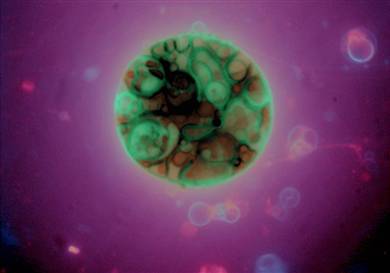
This photo from ProtoLife shows vesicles, artificial membranes for cells, made from scratch
Some scientists are playing God, and they're getting increasingly closer to actually succeeding in this game. Within 3 to 10 years, some research team could even create man-assisted "wet artificial life."
"We’re talking about a technology that could change our world in pretty fundamental ways â€" in fact, in ways that are impossible to predict," said Mark Bedau, chief operating officer of ProtoLife of Venice, Italy, involved in a such research.
"Creating protocells has the potential to shed new life on our place in the universe. This will remove one of the few fundamental mysteries about creation in the universe and our role." said Bedau.
Some scientist believe that cells of synthetic life could one day fight a wide array of issues, from diseases to absorbing greenhouse gases and destroying toxic waste.
3 major barriers must be surmounted in creating synthetic life: a membrane, keeping bad molecules out, allowing only beneficial good ones, and able to multiply; a genetic code controlling the cell's functions, from reproduction to environmental changes, but also able to mutate; and metabolism, feeding on chemicals from the environment to get energy.
Jack Szostak at Harvard Medical School, a leader in the field, forecasts 6 months for creating a cell membrane, based on fatty acids.
Szostak believes that once the membrane is ready, just by adding nucleotides, the building blocks of DNA, in the proper proportion, the Darwinian evolution will simply occur. "We aren’t smart enough to design things, we just let evolution do the hard work and then we figure out what happened," Szostak said.
DNA is made of four nucleotide bases â€" adenine, cytosine, guanine and thymine (A,C,G,T). In Gainesville, Fla., Steve Benner, a biological chemist at the Foundation for Applied Molecular Evolution wants to create a synthetic genetic code made of 8 nucleotides.
"There are legitimate worries about creating life that could "run amok," but there are ways of addressing it, and it will be a very long time before that is a problem. When these things are created, they’re going to be so weak, it’ll be a huge achievement if you can keep them alive for an hour in the lab. But them getting out and taking over, never in our imagination could this happen.", Bedau said.
By: Stefan Anitei, Science Editor
This photo from ProtoLife shows vesicles, artificial membranes for cells, made from scratch
Some scientists are playing God, and they're getting increasingly closer to actually succeeding in this game. Within 3 to 10 years, some research team could even create man-assisted "wet artificial life."
"We’re talking about a technology that could change our world in pretty fundamental ways â€" in fact, in ways that are impossible to predict," said Mark Bedau, chief operating officer of ProtoLife of Venice, Italy, involved in a such research.
"Creating protocells has the potential to shed new life on our place in the universe. This will remove one of the few fundamental mysteries about creation in the universe and our role." said Bedau.
Some scientist believe that cells of synthetic life could one day fight a wide array of issues, from diseases to absorbing greenhouse gases and destroying toxic waste.
3 major barriers must be surmounted in creating synthetic life: a membrane, keeping bad molecules out, allowing only beneficial good ones, and able to multiply; a genetic code controlling the cell's functions, from reproduction to environmental changes, but also able to mutate; and metabolism, feeding on chemicals from the environment to get energy.
Jack Szostak at Harvard Medical School, a leader in the field, forecasts 6 months for creating a cell membrane, based on fatty acids.
Szostak believes that once the membrane is ready, just by adding nucleotides, the building blocks of DNA, in the proper proportion, the Darwinian evolution will simply occur. "We aren’t smart enough to design things, we just let evolution do the hard work and then we figure out what happened," Szostak said.
DNA is made of four nucleotide bases â€" adenine, cytosine, guanine and thymine (A,C,G,T). In Gainesville, Fla., Steve Benner, a biological chemist at the Foundation for Applied Molecular Evolution wants to create a synthetic genetic code made of 8 nucleotides.
"There are legitimate worries about creating life that could "run amok," but there are ways of addressing it, and it will be a very long time before that is a problem. When these things are created, they’re going to be so weak, it’ll be a huge achievement if you can keep them alive for an hour in the lab. But them getting out and taking over, never in our imagination could this happen.", Bedau said.
#2587
Bohol Tourism | Bohol Travel & Tour / Re: Where are Tubag Bohol movers and shakers from?
August 22, 2007, 10:37:44 PM
From Pangangan Island, Calape, currently working in Riyadh
#2588
Science and Research / Re: To Circumcise or Not to Circumcise (tuli or way tuli, which is which?)
August 22, 2007, 04:24:48 AM
a woman's satisfaction in sex is not limited to her clitoris! bisan pag putlon ng tinggil naa pay mas labaw pa ka sensitive ana na wala pa na discover sa mga ordinaryong tao!
#2589
Introduce Yourself / Re: WHO AM I?
August 22, 2007, 04:20:10 AMQuote from: Ginger on August 22, 2007, 04:17:36 AMdi man na sila mangagda pero ug mangayo ka kay manghatag man sad na sila!
bitaw no, ang mga puti di kamao mangagda! ug wa ta maanad, maka pungot..hahaha labi na gutom!
#2590
Science and Research / Re: To Circumcise or Not to Circumcise (tuli or way tuli, which is which?)
August 22, 2007, 04:14:52 AM
nganong bawal man daw girger?
#2591
Bohol Tourism | Bohol Travel & Tour / Re: The Shy Tarsier
August 22, 2007, 04:12:06 AM
affordable isnt enough for me girger! a want free, free, free, and absolutely free!
#2592
Science and Research / Re: To Circumcise or Not to Circumcise (tuli or way tuli, which is which?)
August 22, 2007, 04:10:56 AM
sa muslim kay pati mga babae guinatuli!
#2593
Science and Research / Re: To Circumcise or Not to Circumcise (tuli or way tuli, which is which?)
August 22, 2007, 04:03:56 AM
Dili baya guinatuli ang mga jews!
#2594
Philippine Business News / Re: A doctor gitulis sa McJack restaurant
August 22, 2007, 03:54:34 AM
kun diha pa ka adto na time girger, motabang kaha ka? basig ikaw una modagan! hahahaahahha!
#2595
Weird and Extreme / A Web-Footed Shark! - Run from the shark!
August 22, 2007, 03:52:37 AM
A Web-Footed Shark! - Run from the shark!
By: Stefan Anitei, Science Editor

Looi showing the webbed feet of the baby shark
You may have heard about cats with "wings", two-headed tortoises, snakes, piglets and even humans, extra-limbed lambs, pigs, deer, cows or humans, but this is far odder: a footed shark. This is extremely weird as sharks do not have and never had feet in their whole evolution. Maybe one day, the Great White will be running after us on the beach ...
A worker of the Malaysian Fisheries Development Board (LKIM) in Batu Maung, Penang, made this strange discovery when she received the 1.7kg fish from a fisherman. "I only realized the shark was different when I wanted to cook tomyam fish for lunch for my family. It was only when I was about to cut the shark the day after I received it that I found two webbed feet sticking out from the lower part of the body. The shark is 1m (3 ft) long," said Mary Looi, 48.
Looi did not dare to cook the fish after her husband Gooi Man Kaw, 57, told her that the Chinese belief says that consuming fish with strange traits could bring disaster or ill luck. "Immediately, I returned the fish to the fisherman that night at about 10pm. He threw it back into the sea," said Looi, who had never encountered such an oddity before.
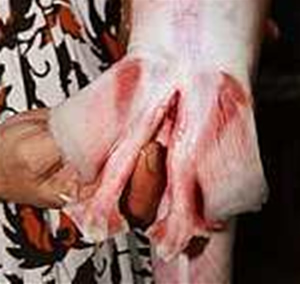
Close-up of the webbed feet
"This is the first time I have heard of fish with legs found in the Malaysian waters. There is a possibility that the fish could have swum from other waters into Malaysian waters. As far as I am concerned, fish species with legs or bony fins can only be discovered in the waters of North Sulawesi in Indonesia or South Africa," said Prof Dr Zulfigar Yasin, head of the marine research station at the Universiti Sains Malaysia (USM).
But Yasin makes a confusion between a real shark with a strange development and coelacanths, a type of relict fishes, from which land vertebrates evolved, and which have limb-like fins.
More probably, the shark's "feet" are claspers (or penises) that suffered some developmental impairment, due to trauma, mutation or contamination, which might have given them this strange appearance.
By: Stefan Anitei, Science Editor
Looi showing the webbed feet of the baby shark
You may have heard about cats with "wings", two-headed tortoises, snakes, piglets and even humans, extra-limbed lambs, pigs, deer, cows or humans, but this is far odder: a footed shark. This is extremely weird as sharks do not have and never had feet in their whole evolution. Maybe one day, the Great White will be running after us on the beach ...
A worker of the Malaysian Fisheries Development Board (LKIM) in Batu Maung, Penang, made this strange discovery when she received the 1.7kg fish from a fisherman. "I only realized the shark was different when I wanted to cook tomyam fish for lunch for my family. It was only when I was about to cut the shark the day after I received it that I found two webbed feet sticking out from the lower part of the body. The shark is 1m (3 ft) long," said Mary Looi, 48.
Looi did not dare to cook the fish after her husband Gooi Man Kaw, 57, told her that the Chinese belief says that consuming fish with strange traits could bring disaster or ill luck. "Immediately, I returned the fish to the fisherman that night at about 10pm. He threw it back into the sea," said Looi, who had never encountered such an oddity before.
Close-up of the webbed feet
"This is the first time I have heard of fish with legs found in the Malaysian waters. There is a possibility that the fish could have swum from other waters into Malaysian waters. As far as I am concerned, fish species with legs or bony fins can only be discovered in the waters of North Sulawesi in Indonesia or South Africa," said Prof Dr Zulfigar Yasin, head of the marine research station at the Universiti Sains Malaysia (USM).
But Yasin makes a confusion between a real shark with a strange development and coelacanths, a type of relict fishes, from which land vertebrates evolved, and which have limb-like fins.
More probably, the shark's "feet" are claspers (or penises) that suffered some developmental impairment, due to trauma, mutation or contamination, which might have given them this strange appearance.
#2596
Facts and Trivia / How to Avoid Being Struck by Lightning?
August 22, 2007, 03:44:43 AM
How to Avoid Being Struck by Lightning - What you may not know about ducking the lightning
By: Lucian Dorneanu, Science Editor - Softpedia
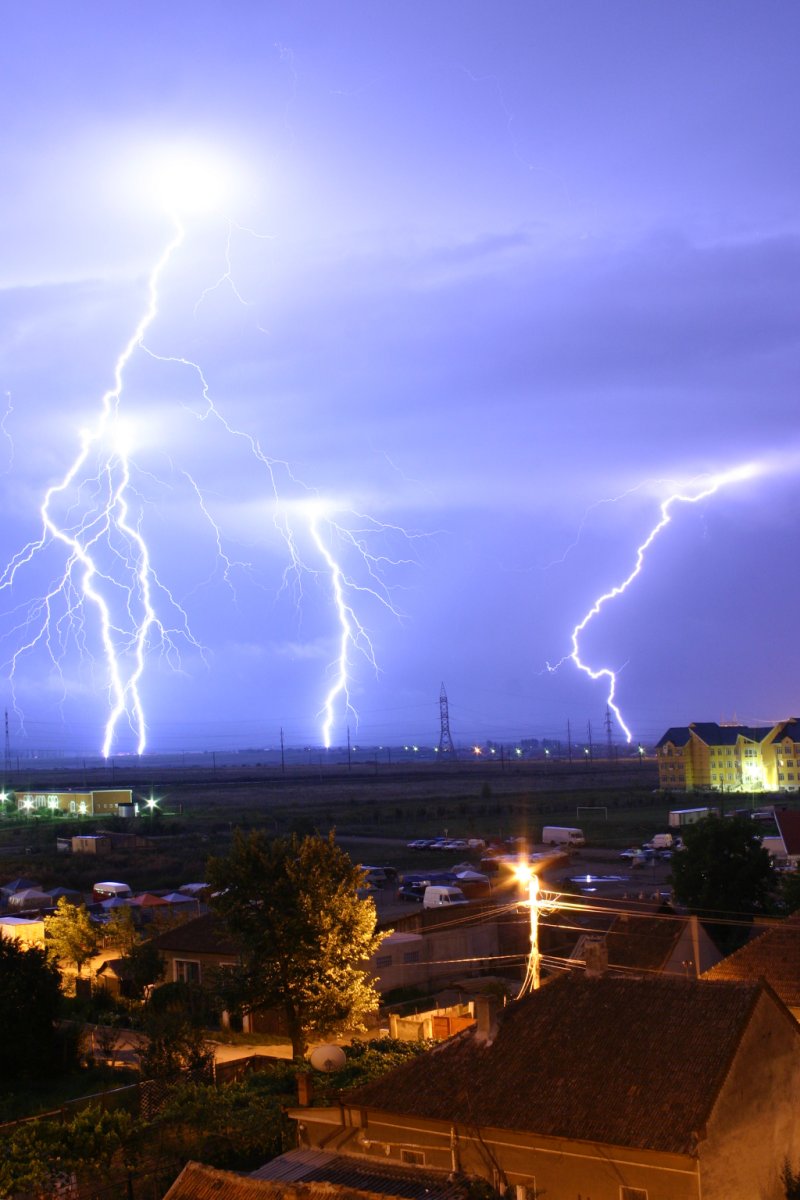
Four simultaneous lightnings over Oradea, Romania, in 2005
You've probably heard than when a lightning storm catches you on open ground, you shouldn't take cover under a tree. That's true. Since lighting often strikes the highest spot in an area, ducking below a tall tree is definitely not a good idea, since you'll probably be struck in the same time.
If you're caught in an open area, with no places to take cover (a lonely wooden tool shed is not recommended) you are the tallest spot, so the chances of being struck increase. You shouldn't lie on the ground either!
The best solution is to crouch, in a fetal position, only vertical, and to stand on your toes, the idea being to minimize the contact area with the ground. You should also lose all metal objects, like watches, metal lighters, belt buckles and metallic jewelry.
This may not be the ideal situation to be in, since a lightning storm can last for some time, but at least it's a good temporary solution.
The ideal hiding place is a car. Any car in the world, except for the soft-top convertibles. Nothing will happen to you when lightning strikes the car with you inside. No, it's not the rubber tires that isolate the electric charge from the ground, it's just the fact that the body of the car has a wide surface, thus dissipating the electrical current and acting like a protective cage.
However, if you don't have a car, try to take cover long before lightning can form directly above you. A good way to calculate how close to you the last lightning was is the following thunder.
Since sound travels at 340 meters per second (1,115 feet) you should count the delay between the lightning and the thunder, in seconds, and multiply with the distance, to give you an estimate of the distance, in straight line.
So, a 5 second delay means that the lightning struck at 1.7 km (around 1 mile) which is not much. If the delay decreases rapidly and consecutively, then it's time you got the hack out of there, as fast as you can!
By: Lucian Dorneanu, Science Editor - Softpedia
Four simultaneous lightnings over Oradea, Romania, in 2005
You've probably heard than when a lightning storm catches you on open ground, you shouldn't take cover under a tree. That's true. Since lighting often strikes the highest spot in an area, ducking below a tall tree is definitely not a good idea, since you'll probably be struck in the same time.
If you're caught in an open area, with no places to take cover (a lonely wooden tool shed is not recommended) you are the tallest spot, so the chances of being struck increase. You shouldn't lie on the ground either!
The best solution is to crouch, in a fetal position, only vertical, and to stand on your toes, the idea being to minimize the contact area with the ground. You should also lose all metal objects, like watches, metal lighters, belt buckles and metallic jewelry.
This may not be the ideal situation to be in, since a lightning storm can last for some time, but at least it's a good temporary solution.
The ideal hiding place is a car. Any car in the world, except for the soft-top convertibles. Nothing will happen to you when lightning strikes the car with you inside. No, it's not the rubber tires that isolate the electric charge from the ground, it's just the fact that the body of the car has a wide surface, thus dissipating the electrical current and acting like a protective cage.
However, if you don't have a car, try to take cover long before lightning can form directly above you. A good way to calculate how close to you the last lightning was is the following thunder.
Since sound travels at 340 meters per second (1,115 feet) you should count the delay between the lightning and the thunder, in seconds, and multiply with the distance, to give you an estimate of the distance, in straight line.
So, a 5 second delay means that the lightning struck at 1.7 km (around 1 mile) which is not much. If the delay decreases rapidly and consecutively, then it's time you got the hack out of there, as fast as you can!
#2597
Science and Research / Mothers Eating Junk Food Whilst Pregnant and Breastfeeding Will Have Obese Child
August 22, 2007, 03:37:52 AM
Mothers Eating Junk Food Whilst Pregnant and Breastfeeding Will Have Obese Children - "Eating for two" does not work
By: Stefan Anitei, Science Editor - Softpedia

For many women who wrongly starve to maintain their body contour, pregnancy is the best mental motivation for unleashing their obsession for food and start pigging out with all kinds of crap.
But a new research made at the Royal Veterinary College, London, has shown that eating junk food, rich in fat, sugars and salt, during pregnancy and breastfeeding could expose the child to overeating and obesity. The old assumption that they are "eating for two" appears to be obsolete.
The researchers fed rats on a diet of processed junk food
made of doughnuts, muffins, biscuits, crisps and sweets during pregnancy and lactation. Their offspring overate and chose the junk foods compared to the rat offspring whose mothers were fed on regular food.
These discoveries could have human implications and are crucial in our era of obesity pandemics, linked with a boom of type 2 diabetes, heart disease and cancer. In 2005, about 1.6 billion humans were overweight and 400 million obese. Over 20 million children younger than 5 are overweight.
"Our study has shown that eating large quantities of junk food when pregnant and breastfeeding could impair the normal control of appetite and promote an exacerbated taste for junk food in offspring. This could send offspring on the road to obesity and make the task of teaching healthy eating habits in children even more challenging." said lead author Dr Stéphanie Bayol.
Eating is not just a matter of hormones and energy balance; it also involves brains' "reward centers" and addiction to feeding can overcome satiety regulation.
Previous studies revealed that junk food turns off the satiety centers while boosting hunger and turning on the reward centers.
"Exposure to a maternal junk food diet during their fetal and suckling life might help explain why some individuals might find it harder than others to control their junk food intake even when given access to healthier foods later in life," explained Bayol.
"Our research shows that healthy eating habits need to start during the fetal and suckling life of an individual. Giving children better school dinners is very good, but more needs to be done to raise awareness in pregnant and breastfeeding women as well. Future mothers should be aware that pregnancy and lactation are not the time to over-indulge on fatty-sugary treats on the misguided assumption that they are 'eating for two'." warned co-author Professor Neil Stickland, head of the Royal Veterinary College.
By: Stefan Anitei, Science Editor - Softpedia
For many women who wrongly starve to maintain their body contour, pregnancy is the best mental motivation for unleashing their obsession for food and start pigging out with all kinds of crap.
But a new research made at the Royal Veterinary College, London, has shown that eating junk food, rich in fat, sugars and salt, during pregnancy and breastfeeding could expose the child to overeating and obesity. The old assumption that they are "eating for two" appears to be obsolete.
The researchers fed rats on a diet of processed junk food
made of doughnuts, muffins, biscuits, crisps and sweets during pregnancy and lactation. Their offspring overate and chose the junk foods compared to the rat offspring whose mothers were fed on regular food.
These discoveries could have human implications and are crucial in our era of obesity pandemics, linked with a boom of type 2 diabetes, heart disease and cancer. In 2005, about 1.6 billion humans were overweight and 400 million obese. Over 20 million children younger than 5 are overweight.
"Our study has shown that eating large quantities of junk food when pregnant and breastfeeding could impair the normal control of appetite and promote an exacerbated taste for junk food in offspring. This could send offspring on the road to obesity and make the task of teaching healthy eating habits in children even more challenging." said lead author Dr Stéphanie Bayol.
Eating is not just a matter of hormones and energy balance; it also involves brains' "reward centers" and addiction to feeding can overcome satiety regulation.
Previous studies revealed that junk food turns off the satiety centers while boosting hunger and turning on the reward centers.
"Exposure to a maternal junk food diet during their fetal and suckling life might help explain why some individuals might find it harder than others to control their junk food intake even when given access to healthier foods later in life," explained Bayol.
"Our research shows that healthy eating habits need to start during the fetal and suckling life of an individual. Giving children better school dinners is very good, but more needs to be done to raise awareness in pregnant and breastfeeding women as well. Future mothers should be aware that pregnancy and lactation are not the time to over-indulge on fatty-sugary treats on the misguided assumption that they are 'eating for two'." warned co-author Professor Neil Stickland, head of the Royal Veterinary College.
#2598
Bohol Tourism | Bohol Travel & Tour / Re: The Shy Tarsier
August 22, 2007, 03:23:31 AM
mahal internet sa atoa uy! Maayo dire abroad kay libre internet anytime anywhere anyhow!
#2599
Bible Study / Re: Non Christians
August 22, 2007, 12:28:28 AM
The Council of Nicaea and the Bible
There seem to be a number of legends about the First Council of Nicaea (325AD) in circulation on the internet, presented as fact. Some people seem to think that the council, which was the first council of all the Bishops of the Christian Church, either invented the New Testament, or edited it to remove references to reincarnation (or whatever) or burned large numbers of heretical works, or whatever. These are in error. This page documents the problem and provides links to all the ancient source material in order to allow everyone to check the truth for themselves.
Here's my first example, from usenet:
> In tracing the origin of the Bible, one is led to AD 325, when
> Constantine the Great called the First Council of Nicaea, composed of
> 300 religious leaders. Three centuries after Jesus lived, this council
> was given the task of separating divinely inspired writings from those
> of questionable origin.
> The actual compilation of the Bible was an incredibly complicated
> project that involved churchmen of many varying beliefs, in an
> atmosphere of dissension, jealousy, intolerance, persecution and
> bigotry.
> At this time, the question of the divinity of Jesus had split the
> church into two factions. Constantine offered to make the little-known
> Christian sect the official state religion if the Christians would
> settle their differences. Apparently, he didn't particularly care what
> they believed in as long as they agreed upon a belief. By compiling a
> book of sacred writings, Constantine thought that the book would give
> authority to the new church.
Here's a second version of the same idea:
> The references in the Christian religion of reincarnation, I am told,
> were removed by the Council of Nicea. (See Note A)
Here's a third version of this idea:
> Also, we do know that there were many books of supposed prophets
> floating around up until 312 CE when the Council of Nicea decided
> which books were scripture and which ones were burned. Thanks to
> the notorious habit of early Christian leaders of destroying
> books/scrolls, we may never know what doctrine existed before the
> Council of Nicea.
And another even more extreme example:
Author: Laulak Siddique <laulak@home.com>
Date: 2000/12/06
Forum: alt.religion.islam
In article <USiX5.110265$a7.1794610@news1.rdc1.il.home.com>,
"Laulak Siddique" <laulak@home.com> wrote:
> Christianity consisted of many sects. By converting Constantine
> (The Great) the Paul heresy triumphed as the concept of trinity and the ending of the
> Mosaic law (which made swine flesh permissible) brought this version of
> Christianity very close to the Hellenic paganism that was practiced in Rome
> and Greece. At Nicea Constantine had 300 versions of the Bible burnt, thus
> legitimising and patronizing only the Paulic heresy.
And another (I'm not making any of these up):
Subject: Re: Snipper continues trying to shift the burden of proof to the atheists
From: "St. Clarence" <kschneid@students.uiuc.edu>
Date: 2001/01/07
Newsgroups: alt.atheism,alt.agnosticism,alt.christnet.atheism,alt.christnet.calvinist ...
>Actually, legend has it that at the Council of Nicea, Constantine was
>unsure of what else to include as a holy scripture (which later the batch
>became the Bible). He threw the batch that he was to choose from onto a
>table. Those that remained on the table were in, those that fell off were
>out.
(See Note B)
The most
common source
of the misinformation
at the moment is the Da Vinci code:
A new version of the story (June 2001), which also includes a very confused version of the 'Secret Mark' theory of Morton Smith (not 480, obviously):
Dave Crisp <...> wrote in message news:<thi0ufl82rj0b3@corp.supernews.co.uk>...
> There are one or two places where there is evidence of which is 'right',
> the most famous example perhaps being the account of the raising of Lazarus
> which was removed from Mark on the instructions of the Council of Nicea as
> it hat overtones of a 'mystery cult'.
[source queried - answer:]
> If you could give me a couple of days, I could probably dig out the entire
> text, which was contained in a letter sent in 480 by the Bishop of
> Alexandria to one of his underlings; who was involved it trying to stamp
> out a group of 'Heretics' who were still using the original version.
And another:
Newsgroups: soc.culture.jewish, (etc)
Date: 1996/05/08
> The Roman Catholic Church created the canon of Christian
> scripture at the Council of Nicea, at the same time that they determined
> the doctrine of Trinity (through the assasination of a few of the voting
> bishops, by one vote). (See Note D)
And the legend reappears in the Da Vinci Code.
These all sound individually quite confident and authoritative. But how do we find out if they are true? The answer must be to assemble all the primary data; any documents issued by the council, and any ancient accounts of its proceedings.
Documents Issued by the Council
The 318 bishops issued a creed (Symbolum), 20 canons, and a letter to the church of Alexandria. An English translation of these is available from http://www.newadvent.org/fathers/3801.htm
Ancient Accounts of the Council
I admit that I was a little stumped as to what these might be. However I searched the internet. I also went through Quasten's Patrology looking for any references, and drew up a table of references from that.
From http://www.newadvent.org/cathen/11044a.htm :
The adhesion [to the creed] was general and enthusiastic. All the bishops save five declared themselves ready to subscribe to this formula, convince that it contained the ancient faith of the Apostolic Church. The opponents were soon reduced to two, Theonas of Marmarica and Secundus of Ptolemais, who were exiled and anathematized. Arius and his writings were also branded with anathema, his books were cast into the fire, and he was exiled to Illyria.
But the accounts of Eusebius, Socrates, Sozomen, Theodoret, and Rufinus may be considered as very important sources of historical information, as well as some data preserved by St. Athanasius, and a history of the Council of Nicaea written in Greek in the fifth century by Gelasius of Cyzicus.
(Leclerq, H)
Other information about the council is available from the church historians, which also detail action taken by the Emperor Constantine to enforce uniformity after the council. (The works of many of the Nicene and Post-Nicene Fathers are available online at http://www.ccel.org/fathers2) I have these references for accounts of the council, all of which I have read (see Note C):
* Theodoret, Historia Ecclesia, Book I, ch.6-13. This mentions that the definitions of Nicaea were drawn up with reference to Scripture; and the argument about whether phrase x or y was or was not in scripture formed the basis of much of the argument.
* Socrates, Historia Ecclesia, Book I, ch.8. This mentions that Constantine exiled Arius and some of his supporters for refusing to submit to the decisions of the council. It also quotes an letter by Constantine ordering the destruction of all works composed by Arius on pain of death to any found holding them, and referring to a similar past order regarding the works of Porphyry.
* Sozomen, Historia Ecclesia, Book 1, ch.21. This describes the results of the council. (Chapter 17 onwards describes the council). Constantine writes to all the cities ordering the destruction of the works of Arius and his followers, and the penalty of death for any who refused to destroy them. The letter is not quoted. There is also an anecdote where a Novatianist bishop is interviewed by the emperor. The bishop agrees to sign the creed but not to resume communion with the Catholics. Constantine tells him to get a ladder and ascend into heaven alone, then; but there is no mention of action against the Novatianists.
* Eusebius, Vita Constantini, Book III, ch.6ff. This describes the council without mentioning Arius and concentrates on the harmonisation of the date of Easter. Later it gives the text of an edict by Constantine against heretics and schismatics, 'Novatians, Valentinians, Marcionites, Paulians, you who are called Cataphrygians', banning their meetings and confiscating their buildings. Eusebius goes on to say without quoting that a search was also decreed for their books in order to identify the heretics (although no details are given of what happened to the books).
* Eusebius, On the Feast of Easter/De solemnitate paschalis/Peri\ th~j tou~ pa&sxa e(orth~j, 8 (PG. 24.701) Checked. According to Quasten 3 p.339 the work is not extant but a substantial fragment exists in the Catena on Luke by Nicetas of Heraclea. The text of this appears in Migne, 24, cols. 693-706, and so, in Latin translation, which I have. It does not seem to exist in English, but a kind gentleman has made us a translation from the Greek, which is now online. As can be seen, chapter 8 does mention the decision of the synod about Easter, but says nothing of interest to us. The text contains no other references.
* Athanasius, De decretis synodis, A general discussion of some of the issues, rather than the acts of the council, and the arguments about whether the council exceeded what scripture says.
* Athanasius, Ep. ad episcopos Africae, 5.ff. More about Arius at Nicaea and against the Council of Sirmium.
* Epiphanius, Haereses or Panarion, 69, on Arius. Nothing more than we have from other sources. Since this text has only just been translated into English, it isn't in the online collection of Nicene and Post-Nicene Fathers, so I've placed all the material online myself.
* Philostorgius, HE I.7, 7a. Checked. This writer is only extant in fragments in Photius and the Suida. Apparently he was an Arian, born in 368. There is an English version; E. Walford, The Ecclesiastical History of Sozomen ... also the Ecclesiastical History of Philostorgius as epitomized by Photius,[ONLINE] London (1855). However it contains nothing new about the council. I have a copy of this and hope to place it online sometime. It would seem to derive from a single MS. The Nicaea portions are now online.
* Rufinus, Historia Ecclesiastica 10,1-6 Checked. Only recently put into English: The Church History of Rufinus of Aquileia by Rufinus, Philip R., S.J. Amidon (Translator), September 1997, Oxford Univ Press; ISBN: 0195110315. Reviewed in Journal of Early Christian Studies 7.1 (1999) by C.H.Gowans. I have now seen this, and this also has no discussion of the canon of scripture. (It does contain the fascinating description of the destruction of the Temple of Serapis at Alexandria). I just wish the volume was cheaper. There is a useful bibliography. The Nicaea portion is now online.
* Gelasius of Cyzicus, Historia Concilii Nicaeni. This does not seem to exist in English, but is in J.P.Migne, Patrologia Graeco-Latina, vol. 85, cols. 1185-1360, in Greek and Latin. There are three books; book I deals with the historical events leading to the accession of Constantine, book II with the council and its canons, and book III with letters issued by Constantine to various persons. The work seems to date from about 480-500, so is rather late, and some of it appears to be fictionalised. The debates are given verbatim, and, as the introduction notes, issues that contemporary writers explicitly deny are an issue (e.g. the Holy Spirit, as seen by the pneumatomachoi in the 5th century) are given as part of the heresies of the Arians. However it still makes no reference to decisions about books of the bible. The work is said to use the now lost text of Gelasius of Caesaria, which continued the HE of Eusbius.
* NEW: Jerome, Biblical Preface to Judith. No English translation of this has been published, but it reads as follows:
"Among the Jews, the book of Judith is counted/considered [legitur] among the apocrypha; the basis for affirming those [apocryphal texts] which have come into dispute is deemed less than sufficient. Moreover, since it was written in the Chaldean [he means Old Aramaic] language, it is counted among the historical books. But the Nicene Council is considered to have counted this book among the number of sacred Scriptures, I have acquiesced to your [pl.] request (or should I say demand!): and, my other work set aside, from which I was vehemently restrained, I have given a single night's work (lucubratiuncula), translating according to sense rather than verbatim. I have cut back the most error-ridden of many codices: I was able to discover only one with coherent expression in Chaldean words, to be expressed in Latin. ..."
However, this only indicates that people at the Council had an idea that books might be considered scripture, or not. This is not different from the use of works in the fathers, discussing individual works rather than canon as a whole. It does not state that lists were drawn up, or necessarily that any debate on canon went on. But it does suggest some action by the council in discussing whether the Old Testament apocrypha were canonical. Or is Jerome merely confused here with the Council of Laodicea? If the Council did discuss books in general, why do none of the councils like Laodicea which include canon lists mention it? It is possible that the wide circulation of this preface is responsible for the idea, though.
[The following authors do not mention the council at all, although I checked them in case they might: Zosimus, The New History(Byzantina Australensia 2, tr. Ronald T. Ridley, 1982); Aurelius Victor, De Caesaribus (ed. H.W.Bird, 1994, Liverpool University Press); Eutropius, Breviarum (ed. H.W.Bird, 1993, Liverpool University Press)]
From all of which we learn that the council made a ruling on the date of Easter and condemned the views of Arius. After the council, Constantine ordered the burning of the works of Arius and his sympathisers, and the exile of himself and his supporters, and followed this later in his reign by action against Christian schismatics and gnostic heretics.
From these there appears almost no evidence that the council of Nicaea made any pronouncements on which books go in the Bible, with the ambivalent exception of Jerome, or about the destruction of heretical writings, or reincarnation. However it did condemn Arius and his teachings, and the Emperor Constantine did take the usual Late Roman steps to ensure conformity afterwards. However these were not put into effect; and Arianism made an almost immediate comeback. Even Arius was recalled by Constantine.
Bibliography
1. Those who wish to check further may wish to consult the standard reference collection (in Latin) of all the known documentation of councils of every kind:
Mansi, J.D., Sacrorum Concilium Nova et Amplissima Collectio, 31 volumes, 1759-98. Reprinted and continued 1899-1927. Not checked.
This includes not merely general councils but local ones also.
2. Hefele, C. and Leclerq, H., Histoire des conciles, I, Paris 1907. Not checked
3. Barnes, T.D., Constantine and Eusebius, Harvard 1981. This does discuss the council of Nicaea. Checked.
4. Tanner, Norman P., SJ, ed., Decrees of the Ecumenical Councils, (London: Sheed and Ward; Washington. D.C: Georgetown University Press. 1990). 2 vols. v. 1. Nicaea I to Lateran V -- v. 2. Trent to Vatican II. -includes the documents in the original Greek and/or Latin text, a reproduction of Conciliorum oecumenicorum decreta, and English translations. Checked.
Here is a short bibliography of useful material assembled by the author of the Medieval Source book:
Denzinger, Heinrich, ed., Enchiridion Symbolorum Definitionem et Declarationum de Rebus Fidei et Morum. Editio 37. (Friburgi Brisgoviae :
Herder, 1991) -often cited as just "Denzinger" this includes both conciliar and papal pronouncements. The new edition is easier to use than older
versions.
For conciliar decrees in particular see:-
Conciliorum oecumenicorum decreta, ed. Josepho Alberigo et al, 3rd edition, (Bologna: Istituto per le scienze religiose, 1973) -this covers all Ecumenical councils including Vatican II. The older 1962 edition is useful for the councils before this.
Some libraries may not have [Tanner] yet, in which case the much older Schroeder edition may be used:-
Disciplinary Decrees of the General Councils: Text, Translation, and Commentary, by Rev. H. J. Schroeder, O.P., (St. Louis, Mo.: London: B. Herder, 1937) -this gives the Greek and Latin texts and should be available in any Catholic university library, but may be a little hard to find elsewhere.
An easily available, and trustworthy, English translation of the various canons and decrees of the first seven councils usually called "ecumenical",
along with the full texts of a number of other important early councils is available in:-
Henry R. Percival, ed., The Seven Ecumenical Councils of the Undivided Church, their canons and dogmatic decrees, together with the canons of all the local synods which have received ecumenical acceptance, in Nicene and Post-Nicene Fathers 2nd Series, Vol. XIV, general editor Philip Schaff, (Edinburgh: T&T Clark; Grand Rapids, MI: Wm. B. Eerdmans, repr. 1988) -despite its long title and citation this book is easily available at a very reasonable $24.95, sometimes less. (And is online at http://www.ccel.org/fathers2).
The following councils' documents are included:-
"ECUMENICAL" "LOCAL"
1. Nicea I 325AD
Ancyra 314AD
Neocaesarea c. 315AD
Gangra c.325-381AD
Antioch in Encaenis 341AD
Laodicea c.343-383AD
2. Constantinople I 381AD
3. Ephesus 431AD
-- these three only accepted by the "monophysite" churches
4. Chalcedon 451AD
-- these four accepted by Anglicans [?]
5. Constantinople II 553AD
6. Constantinople III 680-681AD
*Council in Trullo/Quinisext 692AD
-This supplies canons missing from the 5th and 6th councils. Its decrees were accepted at the 7th, and form the basis of Orthodox canon law. Not strictly an "ecumenical" or "local" council.
Sardica 343 or 344AD
Code of African Church/Carthage 419AD
Constantinople 394AD
Carthage 257AD
[Canons received by Quinsext and Ratified by Nicea II] Canon 2 of the Quinsext also accepted disciplinary rulings of a number of fathers - these also are printed.
7. Nicea II 787AD
Footnotes
Note A. This idea may derive from some confused statements in Shirley MacLaine, Out on a Limb, Elm Tree Books, London (1983), ISBN p-241-11106-6. Unfortunately the book seems to be a fictionalised autobiography, so all the personae are more or less fictional, as a note on the frontispiece makes clear. (MacLaine is apparently a New Age propagandist). The book is without any footnotes, index or bibliography. Quotations are typed from the original.
"So, are you religious, Kevin?" I asked.
He choked involuntarily on his tea. "Are you kidding? What church would have me? I'm treading on their territory. I say folks have God inside them. The Church says it has God inside of it. There's a phrase in the Bible which states that one should never countenance spiritual entities other than God. Most Christians go by that. But then the Bible says nothing about reincarnation either and it's quite well known that the Council of Nicea voted to strike the teaching of reincarnation from the Bible."
"How do you know that?" I asked.
"Well, most serious metaphysical students of the Bible know that. The Council of Nicea altered many of the interpretations of the Bible. The man Jesus studied for eighteen years in India before he returned to Jerusalem. He was studying the teaching of Buddha and became an adept yogi himself. He obviously had complete control over his body and understood that the body was only the house for a soul. Each soul has many mansions. Christ taught that a person's behavior would determine future events--as karma, as the Hindus say. What one sows, so shall he reap."
I didn't question these rather sweeping assumptions. I offered Kevin a cookie. He seemed to like sugar. He ate it in two bites. (p.182. 'I' is MacLaine's persona - 'Kevin' is a medium).
And another later on:
"... He said that when Christ returned to Israel he taught what he had learned from the Indian masters, that is, the theory of reincarnation.
"But David," I said, "why aren't these teachings recorded in the Bible?"
"They are," he said. "The theory of reincarnation is recorded in the Bible. But the proper interpretations were struck from it during an Ecumenical Council meeting of the Catholic Church in Constantinople sometime around 553 A.D., called the Council of Nicea. The Council members voted to strike those teachings from the Bible in order to solidify Church control.
"The Church needed to be the sole authority where the destiny of man was concerned, but Christ taught that every human being was responsible for his or her own destiny -- now and future. Christ said there was only one judge--God--and he was very opposed to the formation of a church of any kind, or any other kind of ceremonial religion that might enslave man's free will or his struggle for truth."
This confirmed what Kevin had said, but it seemed logical that anyone heavily into reincarnation would have read about that famous Council.
The sun began to set behind the waves now, sweeping a pink-purple slash across the clouds above the Pacific. (pp.236-7. 'David' is another persona, identified earlier only as 'a painter and a poet').
The occasion referred to here is clearly not the First Ecumenical Council - the First Council of Nicaea - but the Fifth Ecumenical Council (the Second Council of Constantinople). This council condemned the propositions known as Origenism, and with them the pagan idea of the transmigration of souls (not reincarnation), which some writers had picked up as a technical idea from Greek philosophy without realising all the implications. The idea that the bible was edited to remove the idea in 553 is not consistent with the extensive manuscript evidence for the text (including complete codices) from the 3rd century onwards.
It would seem reasonable to propose that a hazy recollection of these passages lies at the root of this legend.
Note B. I have managed to trace the source of this strange idea a bit further, to Voltaire, in fact. In his Dictionnaire Philosophique, in the section Conciles, we find what must be the original. (The work is online - here is a link to the page on Councils). The idea is repeated in each of the three sections of this article, of which these are extracts:
Section I ...
"Heureusement, pour remplacer leurs signatures et conserver le nombre mystérieux de trois cent dix-huit, on imagina de mettre le livre où étaient ces actes divisés par sessions, sur le tombeau de Chrysante et de Misonius, qui étaient morts pendant la tenue du concile; on y passa la nuit en oraison, et le lendemain il se trouva que ces deux évêques avaient signé(59).
"Ce fut par un expédient à peu près semblable que les Pères du même concile firent la distinction des livres authentiques de l’Écriture d’avec les apocryphes(60): les ayant placés tous pêle-mêle sur l’autel, les apocryphes tombèrent d’eux-mêmes par terre.(etc)
Note_59 Nicéphore, livre VIII, chapitre xxiii. Baronius et Aurelius Peruginus sur l’année 325. (Voltaire.)
Note_60 Conciles de Labbé, tome I, page 84. (Voltaire.)
Section II ...
"En 325, grand concile dans la ville de Nicée, convoqué par Constantin. La formule de la décision est: « Nous croyons Jésus consubstantiel au Père, Dieu de Dieu, lumière de lumière, engendré et non fait. Nous croyons aussi au Saint-Esprit(65). »
"Il est dit dans le supplément, appelé appendix, que les Pères du concile, voulant distinguer les livres canoniques des apocryphes, les mirent tous sur l’autel, et que les apocryphes tombèrent par terre d’eux-mêmes.(etc)
Note_65 Voyez l’article Arianisme. (Voltaire.)
SECTION III.
(70)Tous les conciles sont infaillibles, sans doute: car ils sont composés d’hommes.
Il est impossible que jamais les passions, les intrigues, l’esprit de dispute, la haine, la jalousie, le préjugé, l’ignorance, règnent dans ces assemblées.
Mais pourquoi, dira-t-on, tant de conciles ont-ils été opposés les uns aux autres? C’est pour exercer notre foi; ils ont tous eu raison chacun dans leur temps.
On ne croit aujourd’hui, chez les catholiques romains, qu’aux conciles approuvés dans le Vatican; et on ne croit, chez les catholiques grecs, qu’à ceux approuvés dans Constantinople. Les protestants se moquent des uns et des autres; ainsi tout le monde doit être content.
Nous ne parlerons ici que des grands conciles; les petits n’en valent pas la peine.
Le premier est celui de Nicée. Il fut assemblé en 325 de l’ère vulgaire, après que Constantin eut écrit et envoyé par Ozius cette belle lettre au clergé un peu brouillon d’Alexandrie: « Vous vous querellez pour un sujet bien mince. Ces subtilités sont indignes de gens raisonnables. » Il s’agissait de savoir si Jésus était créé ou incréé. Cela ne touchait en rien la morale, qui est l’essentiel. Que Jésus ait été dans le temps, ou avant le temps, il n’en faut pas moins être homme de bien. Après beaucoup d’altercations, il fut enfin décidé que le Fils était aussi ancien que le Père, et consubstantiel au Père. Cette décision ne s’entend guère; mais elle n’en est que plus sublime. Dix-sept évêques protestent contre l’arrêt, et une ancienne chronique d’Alexandrie, conservée à Oxford, dit que deux mille prêtres protestèrent aussi; mais les prélats ne font pas grand cas des simples prêtres, qui sont d’ordinaire pauvres. Quoi qu’il en soit, il ne fut point du tout question de la Trinité dans ce premier concile. La formule porte: « Nous croyons Jésus consubstantiel au Père, Dieu de Dieu, lumière de lumière, engendré et non fait; nous croyons aussi au Saint-Esprit. » Le Saint-Esprit, il faut l’avouer, fut traité bien cavalièrement.
Il est rapporté dans le supplément du concile de Nicée que les Pères étaient fort embarrassés pour savoir quels étaient les livres cryphes ou apocryphes de l’Ancien et du Nouveau Testament, les mirent tous pêle-mêle sur un autel; et les livres à rejeter tombèrent par terre. C’est dommage que cette belle recette soit perdue de nos jours. (etc)
Note_70 Ce fut dans l’édition de 1767 du Dictionnaire philosophique que parut un article Conciles, composé de ce qui forme aujourd’hui cette troisième section. (B.)
The substance of these is the same; "Il est rapporté dans le supplément du concile de Nicée que les Pères étaient fort embarrassés pour savoir quels étaient les livres cryphes ou apocryphes de l’Ancien et du Nouveau Testament, les mirent tous pêle-mêle sur un autel; et les livres à rejeter tombèrent par terre." -- "It is reported in the Supplement of the Council of Nicaea that the Fathers were very embarassed to learn that there were secret or apocryphal books of the Old and New Testament, putting them on a altar; and the books to be rejected threw themselves to the ground".
The source of this remarkable story is given as an appendix in Fr. Labbé's Conciles vol I, p. 84, which I gather first appeared ca. 1690. [It would be nice to place this online also].
The story preceding it in Section I rather gives the game away - that two bishops died, and the Fathers, not wishing to alter the miraculous number of 318, placed the creed for signature in their tombs overnight, whereupon miraculously their signatures were also added. None of this is in the primary material, and sounds rather like folklore of the middle ages, as indeed does the story about the apocrypha.
'Chinese whispers' no doubt accounts for the rather different tone of the two reports.
See also Note E, which discusses Voltaire's source.
By chance I came across this remark about Voltaire in the Collected Essays and Addresses of Augustine Birrell (London, 1922), vol. 1 p.49; "Voltaire, who knew Pope, asserts that he could not speak a word of French, and could hardly read it; but Voltaire was not a truthful man, and on one occasion told lies in an affidavit."
Note C. This page is a work in progress, although I had not intended it so when I originally wrote it on 26th August 2000. Some time later I obtained a copy of T.D.Barnes, Constantine and Eusebius, which made mention of other writers who are not in the Nicene and Post-Nicene Fathers collection and may have said something about Nicaea. These are difficult of access, often late or fragmentary. As I have obtained access to them, I have made it available. I add all the information I have, to assist recovering the data.
These are the additional possible references:
*
[None, currently]
I have received an email pointing out that, since I have not been able to consult these works, it is untrue to say that I have read all the evidence that exists. Obviously this may be true - provided that these writers do in fact have anything to say! However as may be seen most of the references so far have been trivial or repetitive, and I really do not believe that we will find anything in these scraps, where the contemporary writers are silent. I would be delighted to have the opportunity to learn otherwise, of course.
Note D. This idea - that the bible contents were voted on at Nicaea - seems to be derived from the 18th century writer Thomas Paine. A series of statements on this subject -- apparently from his imagination -- appear in his work The Age of Reason. Of course it would be unfair to pillory a writer of the pre-scientific era, relying on memory of other mens' books while in prison.
It would seem that Paine is still remembered in the United States as a propagandist in their revolution. No doubt this accounts for the continued dissemination of the idea. The relevant section of his work is online here.
Note E. Andrew R. kindly sent me a further note on the origins of the legend:
Andrew Hunwick, in his critical edition of Ecce Homo by Baron D'Holbach (Mouton de Gruyter, 1995) seems to have made an exhaustive effort to unwind this tangled thread (pp. 48-49, footnote 25):
QUOTE: "The question of authentic and spurious gospels was not discussed at the first Nicene Council: the anecdote is fictitious. It occurs in the clandestine text La Religion chretienne analysée ('Christianity Analyzed', ascribed to Dumarsais, and published by Voltaire in an abridged form in the Recueil necessaire ('Essential Collection,' 1765), where the source is given as the Sanctissima concilia (1671-1672, Paris, vol II, pp 84-85) of Pierre Labbe (1607-1667), which purports to follow the Year 325 § 158 of the Annales ecclesiasti (1559-1607) of Baronius (1538-1607), though be it noted that Baronius, while recording the adoption of certain gospels, and the rejection of others as spurious, does not recount by what means the distinction was made.
Voltaire repeated the fictitious anecdote several times, giving Labbe as his source: see B. E. Schwarzbach, p. 329 & n. 81. Doubts had earlier been expressed, notably by Tillemont (see L. S. Le Nain de Tillemont, Memoires pour servir a l'histoire ecclesiastique ['Memoirs by way of church history', 1701-14, 2nd ed., Paris, Robustel - Arsenal 4° H.5547], vol VI, p .676.)
In fact the anecdote pre-dates Baronius by over six hundred years: it occurs in an anonymous Synodikon containing brief surveys of 158 Councils of the first nine centuries. Brought from Greece in the sixteenth century by Andreas Darmasius, this document was purchased and edited by the Lutheran theologian Johannes Pappus (1549-1610). It was subsequently reprinted, notably in the Bibliotheca graeca… of Fabricius, the first edition of which was published in 1705-1707, and which D'Holbach may well have consulted. The anecdote may be found in Synodicon vetus section 34, 'Council of Nicaea' (Johannes Albert Fabricius, Biblioteca graeca… [1790-1809, Hamburg: Bohn], Vol XII, pp. 370-371.)" -END QUOTE-
This is very interesting, although I have not as yet looked at these references. However, the Vetus Synodicon has been issued in a critical edition recently, with notes and English translation, based on manuscripts rather older than those written by the notorious trickster Darmarios:
John DUFFY & John PARKER (ed.), The Synodicon Vetus. Washington : Dumbarton Oaks, Center for Byzantine Studies (1979). Series: Dumbarton Oaks texts 5 / Corpus fontium historiae Byzantinae. Series Washingtonensis 15. ISBN 0884020886.
The Vetus Synodicon dates from after 887 AD, the latest events recorded in it. The work lists every ecclesiastical synod that has ever been held from the beginning, giving a chapter to each. Early material is derived from Eusebius, and then from other church historians. However the compiler adds small details not recorded by these historians -- the number of bishops attending synods, etc -- which the editors suggest he invented himself. Some of the synods are doubtful or imaginary. "In his zeal ... the writer was anything but a careful researcher, and although in places his sources or copyists may be at fault, he himself must be held responsible for most of those numerous errors which in the past have prevented scholars from treating the SV as a historical document above suspicion." (p. xv)
Here is the section on Nicaea, chapter 35 (p.29.)
35. The divine and sacred First Ecumenical Council of three hundred and eighteen God-inspired fathers was convened at Nicaea, metropolis of the province of Bithynia. Its presiding leaders were the presbyters Vito and Vicentius taking the place of Rome's Pope Sylvester and his successor Julius, Alexander of Alexandria, Macarius of Jerusalem, Eustathius of Antioch, the presbyter Alexander representing Metrophanes of Constantinople, Hosius the bishop of Cordoba, and Constantine the apostle among Christian emperors. This holy council attached the term "consubstantial" to the Holy Trinity, fixed the time of the divine and mystical Passover, and set forth the divinely inspired teaching of the Creed against all heretics, Arius, Sabellius, Photinus, Paul of Samosata, Manes, Valentinus, Marcion, and their followers. It condemned also Meletius of Thebais, along with those ordained by him, and Eusebius of Nicomedia. The canonical and apocryphal books it distinguished in the following manner: in the house of God the books were placed down by the holy altar; then the council asked the Lord in prayer that the inspired works be found on top and--as in fact happened--the spurious on the bottom.36
36 Since the story is related only by SV, it is not possible to know if it belongs to an older tradition or where our author might have come across it.
Note that 'Apocryphal' (a)pokru&fouj) and 'spurious' (kibde&louj) works in Eusebius HE do not mean heretical ones -- they refer to works which are orthodox but not part of the canon. The footnote tells us that the story is first recorded here, in the late 9th century. Is this perhaps the origin of the whole fairy-tale?
#2600
Bible Study / Re: Non Christians
August 22, 2007, 12:25:37 AM
kana man council of nicaea maoy naghimo ug mga crucial changes sa roman catholic church