Join MikeLigalig.com!

Why Just Read When You Can Join, Post, and Read!

Menu

Show posts

This section allows you to view all posts made by this member. Note that you can only see posts made in areas you currently have access to.

Show posts Menu

Messages - Lorenzo

#9101
Answer: Generally speaking, you are permitted to do all that lay Catholics are permitted to do, with the exception of receiving Communion. Some Protestants and other non-Catholics and non-Christians are not comfortable with specifically Catholic gestures such as genuflection and the sign of the cross, and should not participate in them if those gestures are not in keeping with their own beliefs. But, if you are comfortable performing them, you are welcome to join in.

Blessings instead of Communion: If your priest offers them, you are free to go forward to receive them. Just be aware that since such blessings are not part of the liturgical rubrics, some parishes do not offer them.


Raise hands/hold hands during Lord's prayer: Even lay Catholics are not supposed to be doing this because it is not part of the liturgical rubrics. The correct posture is to stand quietly without doing anything special with your hands. However, if people near you tend to grab at your hands, you may clasp your own hands together to indicate that you do not wish to hold hands.

http://forums.catholic.com/showthread.php?t=129571
#9102
Question and Answer / What can Protestants do at Mass?
November 09, 2012, 05:45:47 PM
What can Protestants do at Mass?
#9103
Quote from: hubag bohol on November 09, 2012, 05:21:35 PM
Speaking of minimalist...


angay ko ani! hehe, palit ko ani para ni anastasia. pero kadtong christmas tree, mo palit pod ko ana sa living room. ;D
#9104
The Catholic Church calls this situation “disparity of cult”. Here is what the Catechism of the Catholic Church (CCC) teaches about disparity of cult and mixed marriage (marriage between a Catholic and a baptized non-Catholic):

“Difference of confession between the spouses does not constitute an insurmountable obstacle for marriage, when they succeed in placing in common what they have received from their respective communities, and learn from each other the way in which each lives in fidelity to Christ. But the difficulties of mixed marriages must not be underestimated. They arise from the fact that the separation of Christians has not yet been overcome. The spouses risk experiencing the tragedy of Christian disunity even in the heart of their own home. Disparity of cult can further aggravate these difficulties. Differences about faith and the very notion of marriage, but also different religious mentalities, can become sources of tension in marriage, especially as regards the education of children. The temptation to religious indifference can then arise.

“According to the law in force in the Latin Church, a mixed marriage needs for liceity the express permission of ecclesiastical authority. In case of disparity of cult an express dispensation from this impediment is required for the validity of the marriage. This permission or dispensation presupposes that both parties know and do not exclude the essential ends and properties of marriage; and furthermore that the Catholic party confirms the obligations, which have been made known to the non-Catholic party, of preserving his or her own faith and ensuring the baptism and education of the children in the Catholic Church.

“Through ecumenical dialogue Christian communities in many regions have been able to put into effect a common pastoral practice for mixed marriages. Its task is to help such couples live out their particular situation in the light of faith, overcome the tensions between the couple's obligations to each other and towards their ecclesial communities, and encourage the flowering of what is common to them in faith and respect for what separates them.

“In marriages with disparity of cult the Catholic spouse has a particular task: "For the unbelieving husband is consecrated through his wife, and the unbelieving wife is consecrated through her husband." It is a great joy for the Christian spouse and for the Church if this "consecration" should lead to the free conversion of the other spouse to the Christian faith. Sincere married love, the humble and patient practice of the family virtues, and perseverance in prayer can prepare the non-believing spouse to accept the grace of conversion” (CCC 1633-1637).


http://forums.catholic.com/showthread.php?t=28095
#9105
Can a Catholic marry a Non-Christian?
#9106
The Catechism cites the 1983 Code of Canon Law:


Can. 1176 §3 The Church earnestly recommends that the pious custom of burial be retained; but it does not forbid cremation, unless this is chosen for reasons which are contrary to Christian teaching.
#9107
Question and Answer / Does the Church allow cremation?
November 09, 2012, 05:33:38 PM
Does the Church allow cremation?
#9108
Question and Answer / Re: What does INRI mean?
November 09, 2012, 05:30:09 PM
Answer:

It is an acronym from the Latin that, translated, means "Jesus of Nazareth, King of the Jews." The original Latin phrase is Iesus Nazarenus Rex Iudaeorum.

The original purpose of the placard on the cross with the INRI inscribed on it was to inform passerby as to the nature of the crime for which Jesus was being executed (cf. John 19:18-22). For Christians the acronym has become a symbol of Jesus as the Messiah.


http://forums.catholic.com/showthread.php?t=103625


#9109
Question and Answer / What does INRI mean?
November 09, 2012, 05:29:01 PM
What does INRI mean?
#9110
Question and Answer / Is Yoga contrary to our faith?
November 09, 2012, 05:25:42 PM
While the physical aspects of Yoga can be beneficial, the spiritual aspects may be harmful as they flow into "New Age" religiosity. The Church’s reflection on the New Age, Jesus Christ: The Bearer of the Water of Life, warns us:


Yoga, zen, transcendental meditation and tantric exercises lead to an experience of self-fulfilment or enlightenment. Peak-experiences (reliving one's birth, travelling to the gates of death, biofeedback, dance and even drugs â€" anything which can provoke an altered state of consciousness) are believed to lead to unity and enlightenment. Since there is only one Mind, some people can be channels for higher beings. Every part of this single universal being has contact with every other part. The classic approach in New Age is transpersonal psychology, whose main concepts are the Universal Mind, the Higher Self, the collective and personal unconscious and the individual ego. The Higher Self is our real identity, a bridge between God as divine Mind and humanity. Spiritual development is contact with the Higher Self, which overcomes all forms of dualism between subject and object, life and death, psyche and soma, the self and the fragmentary aspects of the self. Our limited personality is like a shadow or a dream created by the real self. The Higher Self contains the memories of earlier (re-)incarnations.


Retrieved from:
http://forums.catholic.com/showthread.php?t=39690
#9111
A:

Latin text of Pope Paul VI's apostolic constitution Paenitemini we find the following:

QuoteAbstinentiae lex vetat carne vesei, non autem ovis, lacticiniis et quibuslibet condimentis etiam ex adipe animalium [III:1].

(Translation): The law of abstinence forbids the use of meat, but not of eggs, the products of milk, or condiments made of animal fat [III:1].

The word used for meat is carnis. In modern English, the word meat can refer to any animal flesh. But, in the Latin cited here, it refers to mammals and birds only. So, fish, seafood, amphibians, and insects are permitted (assuming you want to eat some of them); but mammals and fowls are not.

http://forums.catholic.com/showthread.php?t=38104

#9112
Why must we abstain from meat but not from fish?
#9113
3. "Third, there are bright, happy spirits of dead friends and family, especially spouses, who appear unbidden, at God's will, not ours, with messages of hope and love. They seem to come from Heaven. Unlike the purgatorial ghosts who come back primarily for their own sakes, these bright spirits come back for the sake of us the living, to tell us all is well. They are aped by evil spirits who say the same, who speak 'peace, peace, when there is no peace'. But the deception works only one way: the fake can deceive by appearing genuine, but the genuine never deceives by appearing fake. Heavenly spirits always convince us that they are genuinely good. Even the bright spirits appear ghostlike to us because a ghost of any type is one whose substance does not belong in or come from this world. In Heaven these spirits are not ghosts but real, solid and substantial because they are at home there: One can't be a ghost in one's own country."

“That there are all three kinds of ghosts is enormously likely. Even taking into account our penchant to deceive and be deceived, our credulity and fakery, there remain so many trustworthy accounts of all three types of ghosts - trustworthy by every ordinary empirical and psychological standard - that only a dogmatic prejudice against them could prevent us from believing they exist. As Chesterton says, 'We believe an old apple woman when she says she ate an apple; but when she says she saw a ghost, we say 'But she's only an old apple woman.' A most undemocratic and unscientific prejudice."


Reference:
http://forums.catholic.com/showthread.php?t=14715
#9114
2. Second, there are malicious and deceptive spiritsâ€"and since they are deceptive, they hardly ever appear malicious. These are probably the ones who respond to conjurings at seances. They probably come from Hell. Even the chance of that happening should be sufficient to terrify away all temptations to necromancy."
#9115
1. First, the Church forbids us to conjure up the dead (Catechism 2116-2117). Peter Kreeft in his book Everything You Ever Wanted To Know About Heaven (pgs 34-35) says the reason for “this stricture is probably protection against the danger of deception by evil spirits. We are out of our depth, our knowledge, and our control once we open the doors to the supernatural. The only openings that are safe for us are the ones God has approved: revelation, prayer, His own miracles, sacraments, and primarily Christ Himself…The danger is not physical but spiritual, and spiritual danger always centers on deception.”

“Nevertheless, without our action or invitation, the dead often do appear to the living. There is enormous evidence of “ghosts” in all cultures. What are we to make of them?” He goes on to say “We can distinguish three kinds of ghosts, I believe. First, the most familiar kind: the sad ones, the wispy ones. They seem to be working out some unfinished earthly business, or suffering some purgatorial purification until released from their earthly business. These ghosts would seem to be the ones who just barely made it to Purgatory, who feel little or no joy yet and who need to learn many painful lessons about their past lives on earth.
#9116
He he he, minimalist kaayo. Mo angay gayod ahoang nobya ana. :)
#9117
What's the Catholic theory behind such phenomena as ghosts?
#9118

ing ani ba..;)
#9119
Friends,

Did  you buy a Christmas tree already? Planning to?
#9120
hahaha. sure ba ka dili to si isles ning hiluthilut nimo? cat paw massage technique kon maohon. ;D
#9121
Photos Unlimited / Gorgeous Filipiniana
November 09, 2012, 04:54:10 PM

The insurmountable Filipiniana Beauty.8)
#9122
Quote from: hubag bohol on November 09, 2012, 03:42:05 PM
Sapli man oud ta ani... :P

Ug sakit imong likod, Bai Hubs, pwede ni sila mag hiluthilut nimo. Soft or hard ba. 8)
#9123
Quote from: hubag bohol on November 09, 2012, 03:47:27 PM
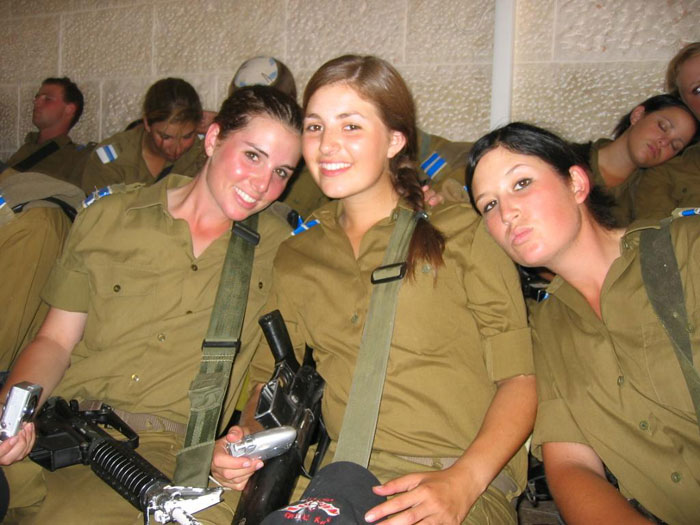
Israeli female soldiers na lang kaha...


8)

Hahay! Shalom Israel... :)

Israeli women are truly , truly beautiful. Lionesses of the tribe of Judah...8)
#9124
Quote from: Vistabel on November 09, 2012, 01:47:45 PM
I think lang ha..the price of American blood is most valuable among the rest bloods around the world because Americans pay with their blood for FREEDOM, LIFE, LIBERTY AND THE PURSUIT OF HAPPINESS not just for them but for all of us.

Americans paid with their blood for the liberty of the Philippines from the Japanese Imperial Army.

Americans paid with their blood so that South Korea could not be taken over by communism.

The price of freedom is not cheap. So, American blood is not cheap but it is given to those in need.

1. Yes, they did. The United States sacrificed 60,000 of its young boys to liberate the Philippines from Japanese occupation, in fact, they launched the largest naval invasion ever in the history of mankind to retake the Philippines.

The United States had a moral and political obligation. The Philippines was still an American protectorate, and as such, was bound to American military and political intervention.

2. Tho the United States did pulverize the Japanese into submission, it would not have been possible without the help of the Philippine Scouts, and the Filipino Guerrilla movement that made strategic hits on Japanese targets. In addition, Filipino guerrillas were invaluable to American landing throughout the archipelago and in locating hidden Japanese bases. The liberation of the Philippines was a combined movement-- of both the Filipino and American resources. The sacrifices of the men and women who served in the Philippine Army Scouts or in the guerrilla movement cannot be ignored. They are heroes of the Republic.


#9125
Quote from: Vistabel on November 09, 2012, 02:11:02 PM
our filipino blood is lesser in value and that's the truth because we are just doing the role as being subordinate. Bakit ganito ang Filipino lagi nalang gunit-gunit sa Saya sa USA? kong may threat pasok sa loob ng Saya sa USA hehehe..::) 

No, that's not true. Filipinos are not inferior to anyone, please, Bai Vist, don't allow colonial mentality to influence your judgment.

Please don't forget what General D. MacArthur once said about the Filipino soldier, "Give me ten thousand Filipino soldiers and I will conquer the world.”

#9126
He he he, btw, Mary, the reason why they say "Rh" is because of the Rhesus monkeys. ;)

Reading this thread, I can't help but think back of my rotations in Hematology & Oncology.

And the good times with the beautiful med techs. he he he.
#9127
Quote from: fdaray on November 09, 2012, 03:08:42 PM
Compatible ba ang dugo sa Pure Pinoy ug Pure Kano labi na kadtong Black American kon pareha sila og type.


I want to clear something up here lang. Blood compatability is not based on race or ethnicity, but the presence of antigens in the blood.
#9128
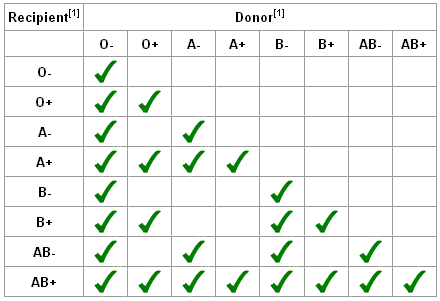
Quote from: Lorenzo on November 09, 2012, 04:04:44 PM

A very good reference chart.

This is why Type O- is called Universal Donor.

Type AB is called Universal Acceptor.
#9129
Quote from: Lorenzo on November 09, 2012, 04:04:44 PM

A very good reference chart.

If you are an 0- patient, and someone decides to give you O+, patay ka.

:)
#9130
Quote from: hubag bohol on November 09, 2012, 03:58:11 PM
The approximate distribution of blood types in the Philippines population is as follows (though distribution may be different for specific racial and ethnic groups):

O Rh-positive --- 44-46 percent
A Rh-positive --- 22-23 percent
B Rh-positive --- 24-25 percent
AB Rh-positive --- 4-6 percent
Rh-negative group --- Less than 1 percent

-- http://www.redcross.org.ph/

Ah, a good one, too. This brings to mind a journal I was reading regarding a disease called: erythroblastosis fetalis or known as HDN (hemolytic disease of the newborn), in which there is RH incompatability between the mother and the child. The mother's antibodies attacks the Rh incompatible child.

This is preventable, however. We inject a drug called RHOGAM. This is why it is imperative for pregnant mothers submit for amniocentesis or amniotic villi sampling to accurately make sure that there is no RH incompatibility.

#9131

A very good reference chart.
#9132
Type O+ is considered common, as common as Type A or B, but types O-, that is very rare. You're right tho, Mary, in regards to the importance of transfusion and hyperacute rejection in the event there is an accidental transfusion of the wrong type of blood. If this happens, knocking on wood ta diri, it is important for the M.D to order the nursing staff to transfuse 1-2 units of FFP (fresh frozen plasma)to prevent further systemic damage. It is advised that we also transfuse a bolus of immunosuppressants just in case. I usually prefer to give IV interferon B.
#9133
Quote from: fdaray on November 09, 2012, 03:08:42 PM
Compatible ba ang dugo sa Pure Pinoy ug Pure Kano labi na kadtong Black American kon pareha sila og type.

Of course they are compatible. Mr. Daray, you have 99.99999 ad infinitum % of the same genes as an African-American.

#9134
Quote from: maryhazel on November 09, 2012, 03:02:24 PM
I'm sorry but Type O is not the rarest of the blood group but AB hehehhe

O- is one of the rarest, actually. But, you're right, AB is also considered rare.

O- is one of the rarest because only 7% of all humans in the world have O-.

AB is considered the universal acceptors and type O (- or +) are considered universal donors.

:)
#9135
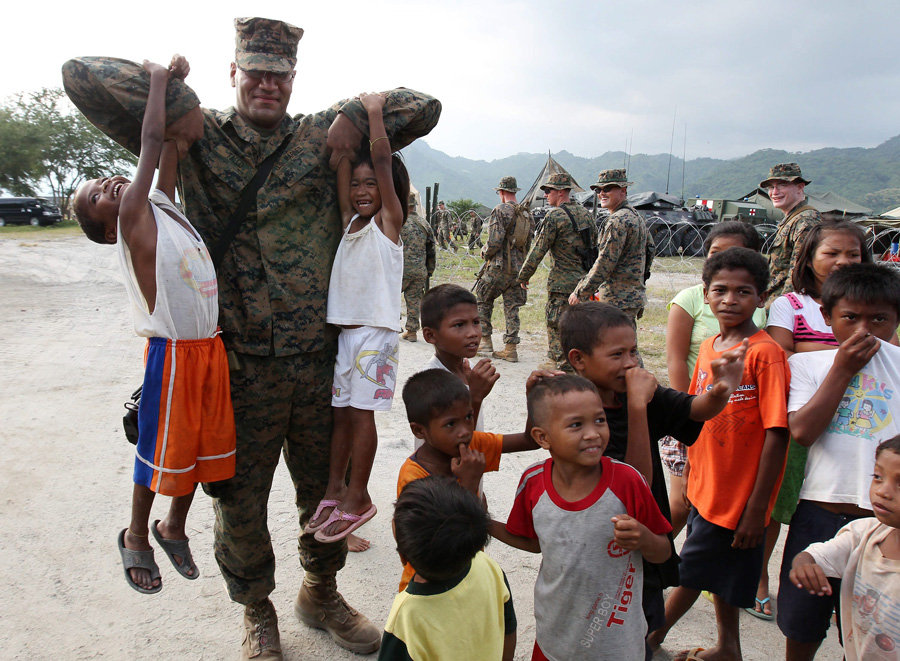
Photos Unlimited / Re: High Five!
November 09, 2012, 02:15:42 PM
He he he! God Bless the kids...8)
#9136

American Marine. :D
#9137

I woder if she's strong in bed, too...
:)
#9138

These strong American marines need loving, too. 8)
#9139
Question and Answer / Would you date a female soldier?
November 09, 2012, 02:08:10 PM
Mga laki ,

Would you consider dating a female soldier?


;D
#9140
Quote from: bugsay on November 09, 2012, 01:59:56 PM
aw o diay, kaliwat man diay nimo ang mga lim....8)


hahahaha. silent lang ko kai sure ko mo basa sila diri. basa galing si doc plinz...:P
#9141
Photos Unlimited / Re: The Philippine Marines
November 09, 2012, 02:02:22 PM

The Jungle Fighters. Philippine Marines.
#9142
Photos Unlimited / The Philippine Marines
November 09, 2012, 01:59:35 PM

Philippine Marines. Hooraah! 8)
#9143
hahaha buyag! di pod ko interesado sa politiko, bai bugs. ma suko ang mga lim. :P
#9144
Photos Unlimited / Re: High Five!
November 09, 2012, 01:55:01 PM
#9145
Photos Unlimited / High Five!
November 09, 2012, 01:53:09 PM


8)
#9146
Loyalist diay ni si bai bugsay uy. Bai Bugsay, loyalist ka ni Gan or ni Olegario? ;D
#9147
Quote from: islander on November 08, 2012, 12:34:25 PM
whenever i have the chance, i do.  very soothing in an ethereal kind of way.

He he he! Eucharistic adoration starts prior to morning mass. We have early morning mass at 8am, and just 30 minutes prior to that is a eucharistic adoration held every day. It's beautiful.

Its quiet, the smell of incense permeates the air. Even the air, the atmosphere just smells and feels "Holy".

It is , truly, a sacred place. The Eucharistic adoration...the body and blood of our Lord Jesus Christ...
#9149
Cars and Automotive / Re: Toyota Corolla 78 SR
November 09, 2012, 01:28:47 PM
Quote from: bugsay on November 09, 2012, 08:03:43 AM
wa'y corolla didto sa tsayna....naa hinoon sila'y "tolola"...;D

Bwahahaha!;D
#9150
Quote from: islander on November 09, 2012, 11:28:10 AM

by the way, i thought all along that type AB is the rarest blood type.  it's type O after all?

Type AB = Universal acceptors

Type O = Universal donors

People who are Type AB have antigens A & B in their blood, which means that they can accept blood from Types A, B, or O. Type O blood has no antigens in the blood, which means that people with Types A, B or AB can accept Type O blood, but people with Type O blood cannot accept blood from Type A, B, or AB. Individuals with Type O blood can only accept Type O blood.

It is important to be aware of patient blood types. If a patient is accidentally given the wrong blood type, then a hemolytic reaction might occur, in which the host's body will attack the donor blood. This is a systemic emergency.

So to reiterate, Isles, people who are type O are considered universal donors, and people with type AB are considered universal acceptors. Type O- is the rarest.

I hope that helped. 8)
#9151
Quote from: islander on November 09, 2012, 11:28:10 AM
flying segs really has a way of putting forward the strangest of questions.  fly on and land here as often as you can, segs. ;D


I always smile and am amazed by the creativity of Bai Vistabel's questions. He has a very creative mind. :D
#9152
Quote from: islander on November 09, 2012, 11:38:10 AM
no choice.  tb is the only account i know, hahaha!  it's best not to complicate my life with many accounts.  nagkayuring man gani ko sa atm kay na-interchange nako ang mga passwords... ;D

Be honest, Isles, you are evading TB because you don't want all your former courtiers to get in contact with you again. 8)  :)
#9153
Quote from: islander on November 09, 2012, 11:35:45 AM
νησιώÏ,,ηÏ, δεν είχε ποÏ,,έ.

βÏ...γσαψ έχει. ;D

Bwahahahaha ! Ami! Pax Vobis In Nominae Tubagus Boholicus ! ;D
#9154
Introduce Yourself / Re: Hi
November 09, 2012, 01:11:40 PM
Welcome to Tubag Bohol, Tarsier. Welcome Home! 8)
#9155
One has to examine the multifactorial processes that influence medical sales and medical cost. I hope that helps.


Best,
Lorenz
#9156
In a hypothetical situation, let's say 1 unit of blood in the United States is $150. And a unit of blood in the Philippines was 1,000 pesos. The average American's annual income is around $45,000 a year. So that 1 unit of blood is not so expensive for an American. However, for a Filipino whos annual income is probably anywhere around 144,000 pesos, that 1 unit of blood is quite expensive. Imagine, 1 unit of blood for the Filipino will be equal to almost 1/12th of his monthly earnings.

So in that context, the Pinoy blood is more expensive than the Yank's. :)
#9157
Quote from: Vistabel on November 09, 2012, 06:46:49 AM
so, pareho lang presyo Doc Lorenz sa tibook kalibutan ma-african blood or American blood or Filipino blood basta iisang type lang sila.

As far as I know, the factors that affect price, Bai Vistabel, include transportation and preservation cost. If let's say a Filipino hospital requests 500 units of type O- blood from Ethiopia, the cost of transporting said blood to the Philippines will be significant. If the said hospital were to purchase Type O- blood locally, then it would be cost-effective for the hospital.

Factors that influence the cost of blood include: 1) type of blood, 2) transportation cost, 3) processing fee, 4) preservation costs and 5) taxes.

One also cannot judge one being "more expensive" than the other based on the currency. One has to examine the cost of the blood unit in context to that particular nation's cost of living.
#9158
Quote from: lakandula on November 09, 2012, 06:16:24 AM
motoo ko ani. man has already achieved immortality. some yogis in india live to be hundreds of years old

Mao ba? Wa diay sila gi affected sa age-related pathologies?

Man's body is finite and by physiological and biochemical law, will experience inevitable senescence and ultimately death.

Immortality is not a physical reality. Spiritual, perhaps, but physical? No.
#9159
A Swedish man who is type O blood can receive an Ethiopian woman's type O blood.

A Filipina who is type AB can receive a Bulgarian man's type AB blood.

What will be cheaper, the AB blood or the O-?

The AB.

Type O- is the rarest..hence, the most expensive, if we apply the law of supply and demand. 8)

#9160
That's a silly question. The national origin of blood does not determine cost, but the type of blood. There are four different blood types: A, B, AB, O. The rarest of the said 4 types is type O. Hence, that will be the most "expensive".

Vistabel, it is proven , through the Human Genome Project, that all human beings share 99.9999999 ad infinitum % of the same genes. National identity is but a man-made construct. Genetically, all members of the species HOMO SAPIEN are interrelated. All equally breed-able. 8)
#9161
Quotable Quotes / Re: Quote For The Day
November 09, 2012, 03:03:18 AM
"The moment I saw you, I fell in love with you..." :P

korniks gid haw...
#9162
Cars and Automotive / Re: Toyota Corolla 78 SR
November 09, 2012, 02:58:41 AM
Quote from: BolBuhol on November 03, 2012, 04:45:37 PM
pamangkot ko gid kon sin o gid ang may ara na sakjanang pareho gid sang toyota corolla 78, kag bakalon ko gid, masking na kung karaang na gid.


;)


No, not that , but a 2012 Land Rover LR 4


hehehe!  8)
#9163
Question and Answer / Re: Dir Nanay, Tatay pod.
November 09, 2012, 02:50:35 AM
;D
#9164
Introduce Yourself / Re: proud to be Bisaya abai!!!
November 09, 2012, 02:45:14 AM
Quote from: BolBuhol on November 08, 2012, 06:02:57 PM
way gid ka skolmet diri sang tb bay ronzz_eco? 

wilkam gid sang amon na siksyon.....

sila sir hubag, bugsay lorenz itsidira, kag madam isles itsidira pirs siksyon na sila bay, pilian mo lang gid kong hain ka gusto magsulod sulod haw....


;D

Brad Bol,

Indi gid si hubag , si bugsay, ako kag si isles sa pirs siksyon, sang middle siksyon lang haw. Nag kumadlaw gid ako.... 8) ;D
#9165
Quote from: islander on November 08, 2012, 10:08:06 PM
you're all speaking greek. ;D

Νησιά, δεν έχεÏ,,ε ένα λογαριασμό FB ? 8)
#9166
Love Talk / Re: Men never listen?
November 09, 2012, 02:36:27 AM
#9167
Anonymous Diary Blog / Re: Ipagawas Ang Inyung Gibati
November 09, 2012, 02:17:34 AM
Quote from: Lollapalooza on November 08, 2012, 08:39:54 PM
I was having a good time with my foot massage when my phone rang...naaksidente akong papa sa motor.. nikalit lang ug tabok ang iro wala na kahimo ug break akong papa..so natumba siya ang left shoulder niya ang napuruhan.. at the hospital, the doctor said kelangan i.semento ang iyang shoulder kay nagcrack bitaw ang bone niya.. salamat na lang kay overall okay ra akong papa.. thank you Lord!!!

Jenneth, I'm sorry! I hope your papa is doing okay...!
#9168
Music and Video / Re: Sade - The Sweetest Taboo
November 08, 2012, 10:04:34 PM
Have this playing in my ipod right now. Heading out to work with this song in my head. :D
#9170
Bible Study / Re: Daily Scriptural Verse
November 08, 2012, 09:59:03 PM
Some spiritual food for the day.....!


“But you not so: but he that is the greater among you, let him become as the younger: and he that is the leader, as he that serveth. For which is greater, he that sitteth at table or he that serveth? Is not he that sitteth at table? But I am in the midst of you, as he that serveth.”

Luke 22.26-27


8)
#9171
I am tempted to re-activate my old facebook account to test this out. ;D
#9172


"A mother's arms are made of tenderness and children sleep soundly in them."
-- Victor Hugo
#9173
Photos Unlimited / Re: The Heroism of Mother's Love
November 08, 2012, 02:05:05 PM
Palangga ko ikaw, Ma! 8)
#9174
Photos Unlimited / Re: The Heroism of Mother's Love
November 08, 2012, 02:03:21 PM
Mahal Kita, Nay! :)
#9175
Photos Unlimited / Re: The Heroism of Mother's Love
November 08, 2012, 02:02:02 PM
Wo Ai Nee, Mama...8)
#9176
Photos Unlimited / The Heroism of Mother's Love
November 08, 2012, 02:01:37 PM


"No language can express the power and beauty and heroism of a mother's love."
-Edwin Chapin
#9178
Bible Study / Re: Knowing the heresies
November 08, 2012, 01:50:57 PM
Pelagianism

It is named after the British monk, Pelagius, who was contemporary with St. Augustine and St. Jerome. In the early 5th century, he denied Original Sin as well as the need for God's saving grace. According to his heresy, the guilt of Adam's sin was not passed on to us. Adam's sin only harmed Adam and not us. It was merely an evil example. Likewise, the Redemption of Christ was merely instruction and example for us to follow in order to counter the evil example of Adam.

Pelagius taught that by natural means, such as an austere lifestyle, we could over come our personal sins. We could merit heaven by a natural faith without God's supernatural help - that is grace. According to him, the Law of Moses was as effective as the Gospel for salvation. Both St. Augustine and St. Jerome opposed him. As a result of his work against Pelagius, St. Augustine became known as the "Doctor of Grace."

Pelagius was finally condemned in 418 by the Council of Carthage approved by Pope Zosimus. This Council taught: 1) That Adam's death was the result of sin. 2) As a result of Original Sin, new-born babies need Baptism. 3) By God's grace, we not only know His Commandments but also have the strength to obey them. 4) Without grace, good works are impossible for us. 5) And finally, we and all the saints confess ourselves as sinners in honesty and not merely out of humility. We are justified (saved) by God's grace (Acts 15:11; 18:27; Rom. 3:24; Gal. 2:21; Eph. 1:7; 2:5; 2:8; 2 Tim. 1:9; Titus 3:7; Heb. 4:16). Faith and its associated good works are our positive responses or cooperation with that grace. "Moved by grace, man turns toward God and away from sin, and so accepts forgiveness and righteousness from on high." [CCC 2018]


Reference:
http://www.catholicnewsagency.com/resources/apologetics/heresies/pelagianism/
#9179
Bible Study / Re: Knowing the heresies
November 08, 2012, 01:43:43 PM
Sola Fides


The Protestant Revolt had many causes including state politics. Also the worldly lifestyle of certain popes, bishops and priests of that time helped to fuel the fire. However, the doctrine, Justification by Faith Alone, was the spark.

This heresy exaggerates the truth concerning salvation by faith in Jesus Christ. Even though some members of the Church at that time, such as Tetzel and Erasmus, may not have fully understood the doctrine of salvation, this does not excuse this heresy. It claims that Christians are saved by faith alone. As biblical support, St. Paul is usually cited: "For we hold that a man is justified by faith apart from works of law." [Romans 3:28] Now this verse does not contain the word "alone."

Martin Luther actually added "alone" to this verse in his Bibles in order to promote this new doctrine. According to the RSV and NAB Bible translations, the phrase, "by faith alone", only occurs once in the Bible, and that verse condemns this doctrine: "You see that a man is justified by works and not by faith alone." [James 2:24] The other error is interpreting the "works of law" in Romans 3:28 as all good works. From the context, it is obvious that St. Paul is referring to the Law of Moses, and the "works of law" are circumcision, eating kosher and other Jewish practices (Acts 15:1-21). St. Paul writes elsewhere in the Bible: "For in Christ Jesus neither circumcision nor uncircumcision is of any avail, but faith working through love." [Galatians 5:6] St. Paul’s understanding of faith, as expressed in the Bible, includes more than a confident trust in God, but also obedience to God (Romans 1:5). Also according to Catholic understanding, good works are not what I do but what God does through me by grace (Eph. 2:10; 1 Cor. 15:10; Rom 2:7), so there is no reason to boast (Eph. 2:9).

Even though Martin Luther still understood salvation in terms of grace, some later Christians did not. With the loss of focus on grace, this heresy eventually led to a "faith-alone" version of Pelagianism. This is the reason that some (not all) Protestants reject some or all of the Sacraments, sometimes even Baptism (Mark 16:16; Acts 2:38; 22:16; Rom. 6:3; 1 Peter 3:21).


Reference:
http://www.catholicnewsagency.com/resources/apologetics/heresies/sola-fides/
#9180
Bible Study / Re: Knowing the heresies
November 08, 2012, 01:40:32 PM
Gnosticism


The name for this heresy originated from the Greek word, gnosis, meaning "knowledge." The Greeks were the first, after the Jews, to be evangelized for Christ. With their great tradition of thinkers, like Socrates, Plato and Aristotle, the Greeks were very attracted to human knowledge and speculation. This infatuation led to the first major heresy to plague the Church. St. John’s Epistles in the Bible already appear to be speaking against it. St. Irenaeus of Lyons in 190 A.D. wrote against it in his book, Against Heresies. His first volume is devoted to describing its many differing sects and their beliefs. Manicheism in the 4th century and Albigensism in the 12th century were later manifestations of this heresy. Even today the "New Age Movement" has many similarities. Basically this heresy exaggerated the importance of knowledge over faith. It also considered the body and matter to be evil; whereas, the soul and ideas were good. As a result, it denied the Incarnation of Christ, and even some sects claimed that the Creator was evil. Also marriage and sex were considered evil since their purpose was to make more "bodies." In a perverted twist in logic, the abuses of sex: contraception, adultery, fornication and sodomy, were considered good according to some sects. The Gnostics spent more time speculating on the succession of "angels" between God and man, than in meditating on God’s Commandments. Their focus was more on thinking rather than on living a good Christian life.


http://www.catholicnewsagency.com/resources/apologetics/heresies/gnosticism/
#9181
Bible Study / Re: Knowing the heresies
November 08, 2012, 01:35:47 PM
Secularism


It is a modern movement to minimize the sacred and holy. Unfortunately this movement has infected Christianity. One version ("Cream-Puffism") is quite popular among Christians today. This heresy exaggerates the truth that "God is Love" by undermining the truth that "God is Holy and Just." Its promoters claim that since God loves us, we can continue committing our personal sins without any fear of punishment. The Bible verse, "The fear of the LORD is the beginning of wisdom." [Psalm 111:10], is either ignored or wished away, along with Hell and Purgatory. Now it is absolutely true that God continues to love thieves and murderers, but He also loves those people who are robbed and killed. Our sins offend God’s love. God loves us so much that He does not force us to love Him in return. He gives us free will. God loves us so much that He allows us to mortally sin and thus freely choose Hell. But God the Father also loves us so much that He sent His only Son to die on the Cross to set us free from our personal sins (John 3:16 & 36). "He (Jesus) Himself bore our sins in His body on the tree (Cross), that we might die to sin and live to righteousness. By His wounds you have been healed." [1 Peter 2:24] It is our choice. That is the reason why we call Good Friday, good!


Reference:
http://www.catholicnewsagency.com/resources/apologetics/heresies/secularism/
#9182
Bible Study / Knowing the heresies
November 08, 2012, 01:35:14 PM
Friends,

Do you know the heresies that are propagated in the world today?


According to the Catechism of the Catholic Church (CCC), "Heresy is the obstinate post-baptismal denial of some truth which must be believed with divine and catholic faith, or it is likewise an obstinate doubt concerning the same; apostasy is the total repudiation of the Christian faith." [CCC 2089] According to Hilaire Belloc, "Heresy is the dislocation of some complete and self-supporting scheme by the introduction of a novel denial of some essential part therein...Heresy means, then, the warping of a system by 'Exception'..." [The Great Heresies (TAN Books, 1991) p. 2]. A heresy is not the total rejection of the Christian faith but a distortion of it. One essential truth is denied or exaggerated at the expense of another essential truth. For example, knowledge about the teachings of Christ is important, but the Gnostic heretics claimed that such knowledge was more important than faith. They taught that salvation came through knowledge and not by faith in Jesus Christ. Even though heresies are bad, we can better appreciate the true faith by knowing what to avoid.

http://www.catholicnewsagency.com/resources/apologetics/heresies/definition/
#9183
Bible Study / Re: Do you know the five cardinal virtues?
November 08, 2012, 01:29:59 PM
The fifth and final cardinal virtue is -- Temperance


Temperance prevents us from acting on these dangerous urges. It allows us to govern our desires, instead allowing our desires to govern us. For an intemperate person - that is, someone who permits their impulses to run rampant - it is much harder to see the truth, and much harder to do what is right. One's life is run by emotional drives, instead of by prudence, justice, and fortitude. But temperance takes the reigns from the urges and gives it back to the first three virtues. In a way, one could say that temperance allows the other virtues to get their job done.

Also, temperance safeguards whatever good it is that we are pursuing. If a person pursues a good in a disordered way, he is sure to end up hating that good. For example, alcohol is a good thing, but nobody hates alcohol more than an alcoholic; he hates it because it's separated him from everything else: his family, his job, his self-respect, etc...

http://www.catholicnewsagency.com/resources/virtue/cardinal-virtues/temperance/
#9184
Bible Study / Re: Do you know the five cardinal virtues?
November 08, 2012, 01:26:52 PM
The fourth cardinal virtue is -- Fortitude


Fortitude helps us to overcome any dangers, obstacles, and fears; it enables a person to withstand whatever difficulties may block him from attaining his true goal. Classically, fortitude was that virtue which made a man willing to fight and even potentially die in battle. It was seen as the virtue of the soldier, who was determined to offer his life for the sake of a greater good. Now, we Catholics believe that we too are soldiers, that we too are engaged in battle, although the battle is not a physical one, but rather spiritual. We too, must be willing to offer our lives for the greatest good, namely, the glory of God. In early Christian times, and even in parts of the world today, this possibility of being killed for the sake of the faith was and is very present, and so the Church has been provided with the most shining examples of fortitude, namely, the martyrs.

All the cardinal virtues exist as forms of balance, and so must be carefully distinguished from the various excesses which threaten to substitute for virtue. This is especially true in the case of fortitude, with can easily degenerate into one of the following extremes:

Firstly, Brashness. Brashness is the vice of lacking a proper awareness of or concern for real danger. A brash man, an excessively bold man, foolishly charges into dangers and difficulties that could have been avoided. He is the one who goes looking for trouble, who enjoys risk for its own sake. But there is nothing virtuous about needlessly courting danger; such an attitude is foolhardy, not brave.

Secondly, Cowardice. Cowardice is the vice of refusing to take a prudent risk or making a prudent sacrifice because of fear. It is the abandonment of the greater good due to the terror of sustaining loss and hurt. The coward is so concerned with total self-preservation that he becomes crippled in relation to the world; the world presents itself not as an opportunity for attaining goods, but rather as a collection of personal threats.

Such a person is incapable of take advantage of the joy and happiness of life. The virtue of fortitude helps steer a middle course, as it helps overcome fear and yet restrains excessive boldness. It is interesting to note that someone who is brash or cowardly will be unable to comprehend courage. The too-fearful person tells the courageous man, "You're crazy! Always taking risks! What a daredevil!" Whereas the too-bold person tells the courageous man, "You're a wimp! Always playing it careful, like a frightened chicken." One can always tell a balanced, virtuous person, because all those around him will be accusing him of opposite extremes. As G.K. Chesterton pointed out, if half the people declare a certain man to be too tall, and the other half declare him to be too short, one can reasonably assume that man is just the right height.1  This is the balanced life that every Christian must strive for, an integral dimension of which is fortitude.

Fortitude is lived out in different ways, according to different conditions of the concrete situation. The first of these involves a direct attack on whatever evil is attempting to hinder the promotion of goodness. This kind of courage is sometimes called holy wrath. Holy wrath is frequently neglected in the life of the Christian, since many believers make the mistake of identifying anger as an un-Christian feeling. They forget that there can be holy anger, an outrage which rises up against some atrocity. They forget that it is sometimes proper for us to get "fed up" about evil, and that if we just stay even keel, we will never do anything to change it. Our Lord certainly manifested this holy wrath on various occasions. For instance, in His diatribes against the Pharisees, or in His violently casting the money-changers out of the temple. He encountered evil, grew angry, and directed His anger in an attack upon that evil. We too must sometimes respond this way to evil in the world, by taking the offensive against it. Things like abortion, pornography, prostitution, blasphemy, etc... are not going to go away on their own, and only when we finally get upset about it will we get involved in the fight against these things.
#9185
Bible Study / Re: Do you know the five cardinal virtues?
November 08, 2012, 01:25:05 PM
The third cardinal virtue is -- Social Justice

The most basic and fundamental of all human societies is the family. Oftentimes the family as such is disregarded, and moral attention is either restricted to the level of the individual, or is expanded to the level of larger communities. This is a grave mistake, for without the solid foundation of healthy families, both the individual (who is originally formed within the family) and the larger society (which is constituted by a multitude of families) will become disordered and dysfunctional. Consequently, it is crucial to look at what we each owe our families.

Firstly, what are the obligations of children in families? A common error is to assume that all children are mere recipients of familial benefits, without duties of their own. On the contrary, children have a debt to their family which must be paid as well as possible. Children owe their parents gratitude, respect, and deference, which should, under normal circumstances express itself through obedience. Children owe their siblings a special affection and loyalty. They especially owe their families time, for only by making time to be present can children contribute to the solidification of family relationships.

There is currently a popular misconception about families that presumes children will be estranged from their parents and rude to them, and that they will resent their siblings and only interact with them through quarrelling. Children are expected to take their family members for granted, or treat their families as an embarrassment. This model of the family goes directly against justice, and it is every Catholic's obligation to try and reform this image of the family, beginning with their own.

Secondly, what do mothers owe their families? In answer this question it is well to call upon the authority and insight of the late Pope John Paul II, in his treatment on the rights and role of women in society, in his apostolic exhortation, Familiaris Consortio.1 The Holy Father begins by stating that the perfect model for women is to be found in Our Lady. She is the ideal of femininity. He goes on to affirm the right of women to be admitted to public positions and offices.

However, he also states that the good of women will never be truly promoted before clear recognition is "given to the value of their maternal and family role, by comparison with all other public roles and all other professions." John Paul explicitly emphasizes the "original and irreplaceable meaning of work in the home and in rearing children. Finally he declares that "the mentality which honors women more for their work outside the home than for their work within the family must be overcome... society should create and develop conditions favoring work in the home."

To summarize, the Holy Father is calling attention to the nobility and absolute necessity of those women who dedicate themselves to rearing children and creating a family environment. How different is the Pope's perspective from the usual one which greets "stay at home moms" in today's mentality! Today full-time motherhood is considered tantamount to a failed life. "What does your Mom do?" "Oh, she doesn't do anything. She's just a stay-home mom. She doesn't have a job." Work as a housewife and mother is regarded as insignificant.

On the contrary, experience shows that this work is absolutely indispensable to the flourishing of family life and to the civilization as a whole. Stay at home mothers therefore have the most important and most difficult jobs; after all, whether society succeeds or collapses depends on the family, and the mother takes care of the family.

The Catechism of the Catholic Church also sheds light on the important obligations of mothers to their families. It states that the prime educators of children are the parents, and that it's practically impossible to substitute for them. It says that a home must be created where virtue, love, and holiness are going to flourish.2  So who's going to do all this? Who's going to care for the children, educate and form them, and create a proper home for them?

This is not to say that mothers must never seek work outside the home. Certainly, there are instances when this choice is inevitable. Nonetheless, ideally the focus of mothers should be on that challenging task of home and family life. We must all do what we can to make society more conducive to and supportive of mothers carrying out their sacred vocation.

Thirdly, what do fathers owe their families? Like mothers, fathers must share in the role of forming and educating their children. To quote again from John Paul II: "Where social and cultural conditions so easily encourage a father to be less concerned with his family, or at any rate less involved in the work of education, efforts must be made to restore socially the conviction that the place and task of the father in and for the family is of unique and irreplaceable importance."3

In other words, fathers owe it to their families, to their wives and children, to be present to them, and concerned with their personal (not just material!) well-being. This age has often been called an age without fathers, due to the common failure of fathers to assume their responsibilities towards their families. For a father to forsake his family, or become uninvolved in his family, is not only a sin of cowardice; it is a sin of injustice, and one that brings great harm. "As experience teaches, the absence of a father causes psychological and moral imbalance and notable difficulties in family relationships."4

Fathers must make time for their families. Certainly, fathers are normally called to work outside the home, but this work is never to be a cause of division or abandoning the family. Rather, career work is to be moderate, and always directed towards the promotion of the family's stability and unity.

Finally, what are the obligations of spouses towards each other? Spouses owe each other a debt of committed service and devotion.
#9186
Bible Study / Re: Do you know the five cardinal virtues?
November 08, 2012, 01:23:05 PM
The second cardinal virtue is -- Individual Justice

Justice is the virtue which is primarily concerned with the other. This is what makes justice so important, and the reason why it comes right after prudence in the order of primacy. With justice, we don't just realize our own private good, but are also enabled to cultivate the good of relationships. Because it focuses on other persons, it is a broader, more-encompassing virtue than Fortitude and Temperance, which focus primarily on the self.

Justice is therefore absolutely essential if we want to be happy. Without it we will fail in building relationships with those around us, and what is more pitiful, more miserable, than a human being left only with himself? Such a person is trapped and stifled within the narrow limits of himself; he is self-enclosed, lonely, and unfulfilled.

Now there are three different kinds of relationship which justice promotes: relationship with God, relationships with individuals, and relationships with societies. These are the various "others" to whom we must give what is due. This lesson will focus on the first of these two groups, while the next lecture will deal with the third aspect of justice, or "social justice."

Justice concerns what we owe to others, so the question at this point becomes, what do we owe to God? Well, quite obviously, we owe Him everything! He has given us our very life, our existence, our salvation, and all our other blessings. So right from the beginning, we can never attain to a level of pure justice with God, because we can never repay our massive debt to Him. "Man can never say to God: we are even."

What does it take to develop and encourage good relationships with other persons? Another way of asking this question is, "What do I owe my neighbor?" Surely, there are many things we owe to our neighbors, many things to which they have a right. Let's look at just a few of them.

Innocent persons have a right to their lives. Murder is the violation of that right, and so is unjust.

Before engaging in any sexual activity, our partner has a right to a full, personal commitment, which can only take place through marriage. Fornication and adultery is the violation of that right, and so is unjust.

Persons have a right to certain material possessions. Theft or swindling is the violation of that right. (Note: this includes any kind of scam, where profit for one party depends on the loss of another party).

Others have a right to a good name, a good reputation. Gossip or slander is the violation of that right, and so is unjust.

Everyone has the right to be treated courteously. Rudeness is the violation of that right, and so is unjust.

Each person has the right to be respected. Malicious mockery (that is, to make fun of someone with the purpose of belittling him) is the violation of that right, and so is unjust.

Persons have the right to their spiritual dignity, that is, to be appreciated for their full personal value (as opposed to being treated as a merely physical object). Pornography is the violation of that right, and so is unjust.

Others have the right to our good example. Scandal is the violation of that right, and so is unjust.

Others have the right to truth. Lying is the violation of that right, and so it is unjust.

Of course, there are many more kinds of injustice than those listed here: in our pursuit of the virtue of justice, it is beneficial to consider which kinds of injustice most characterize our dealings with others, in order that we may more effectively root them out. Remember, justice and injustice aren't simply about rules and rule-breaking. They're about being able to form and sustain genuine community with the people in our lives. Only once we realize this fact will we be able to rid our lives of the various impediments to justice.

Further, as our faith teaches us, there could be no justice without mercy. After all, if God hadn't created human beings - which was more than He owed us (i.e., mercy) - then there wouldn't be any issues of human justice, since humans wouldn't even exist! And if He hadn't come down from Heaven to redeem us - which was also more than He owed us (i.e., mercy) - then we'd never have been freed from the slavery of sinful injustice. This shows us that God's mercy comes before and goes far beyond his justice.

The Father, Son, and Holy Spirit have always been merciful to humanity, most especially when the Second Person of the Trinity became incarnate and died in order to restore the proper relationship between God and man. We are expected to do the same: we must go beyond the strict limits of justice and be generous, merciful, and forgiving.

Divine mercy is to be our model, as the parable of the Unmerciful servant so eloquently expresses. "Forgive us our trespasses, as we forgive those who trespass against us." Every Christian must give to others more than they are owed if he would follow Christ's commandments. In the words of the Gospel: "You have heard that it was said, ‘an eye for an eye and a tooth for a tooth.' But I say to you, offer no resistance to one who is evil. When someone strikes you on your cheek, turn the other one to him as well. If anyone wants to go to law with you over your tunic, hand him your cloak as well. Should anyone press you into service for mile, go with him for two miles. Give to the one who asks of you, and do not turn your back on one who wants to borrow."6 The devoted disciple of Our Lord will never be satisfied with mere justice; he will recognize the need to go further and delve into mercy.

#9187
Bible Study / Re: Do you know the five cardinal virtues?
November 08, 2012, 01:15:53 PM
The first cardinal virtue is -- PRUDENCE.


Prudence is the first of the cardinal virtues because it is the ability to look at a concrete situation and know what ought to be done. It is the ability to make right judgments. Prudence gives us the knowledge of what must be done, when it must be done, and how it must be done. There is often a great misunderstanding about the real nature of prudence, so let's begin by saying what prudence is not. Prudence is not timidity, an avoidance of all danger, cowardice, lack of initiative, self-preservation, never spending any money, or an excessive focus on manners (e.g., the term "prude"). On the contrary, sometimes true prudence could lead one to dive on a grenade, fight courageously, say things which are very awkward or politically incorrect, make a huge investment venture, or be open to having a fifth, maybe even a tenth child.

Prudence is the art of taking moral principles and applying them to concrete situations. Let's take some examples. We all know the maxim: "Love your neighbor as yourself." This is a general moral principle. But even after we learn this principle, the question still remains, "How do I love this neighbor, here and now?" We still have to take the general moral principle and make it concrete in particular situations. To take a second case, the Church teaches that drunkenness is a grave sin, which we should avoid. But how do I avoid drunkenness, here and now? Prudence tells me when I should stop drinking; what beer or glass of wine should be my last. Or what about the principle that sexual activity must be reserved for marriage? Practically speaking, how do I protect my sexuality from misuse? Well, prudence tells me that I probably shouldn't be alone with my girlfriend in her bedroom, as it may lead to serious sin. Prudence therefore demands two aspects:

Firstly, knowing the principles, that is, knowing what the goods of human nature are, and that we must work towards them and never against them. Consequently, it is never prudent, regardless of the situation, to act against the moral principles. There is no such thing as a prudent abortion, because it always violates the good of innocent human life. There is no such thing as prudent contraception, because it always goes against the good of human life and against the good of the marital relationship. There is no such thing as prudent pornography, because it goes against the good of human relationships.

Secondly, knowing how to apply the principles to the concrete situation. The first part is knowing the goals; the second part is knowing how to choose the means for obtaining the goal. In the words of St. Thomas Aquinas: "The prudent man considers things afar off, insofar as they tend to be a help or a hindrance to that which has to be done at the present time. Hence it is clear that those things which prudence considers stand in relation to the end." With prudence, we look at every decision in light of the ultimate goal, that is, goodness and happiness.

Lastly, there are certain times when it is prudent to avoid decision-making. We have to be very careful that our judgments and actions are the result of an honest examination of reality, and in certain situations, it is very difficult for us to keep a proper perspective. It is important that our judgments and actions are not reactions to strong emotions like:

Anger. A prudent person will, whenever possible, avoid making a decision while he is angry. He will sleep on it, postpone it or put it aside until he can weigh things calmly and coolly.

Lust. Lust can be a very powerful feeling, with the potential to negatively influence our ability to think clearly. In fact, there is nothing like desire to interfere with the proper working of our reason. St. Thomas Aquinas goes so far as to say that imprudence is caused chiefly by lust.2 The prudent person will step back and give himself space and time before allowing himself to be ruled by lust.

Discouragement. When we are close to despair, our view on reality will be skewed. We will be overly pessimistic, and so the decisions we make will be based on error. Having suffered a failure, or fallen in sin, or having made a stupid move; all these things discourage us, and so we should avoid decisions at such times.

Remember, prudence is about allowing the truth, not feelings, to determine our choices.
#9188
Bible Study / Do you know the five cardinal virtues?
November 08, 2012, 01:13:38 PM
Friends,

Do you know the five cardinal virtues?
#9189
12. Each moment you spend with Jesus in the Blessed Sacrament brings joy, pleasure, and delight to his Sacred Heart!
"My joy, my pleasure, my delight is to be with you." (Prov 8:31)
#9190
11. Jesus will bless you, your family and the whole world for this hour of faith you spend with Him in the Blessed Sacrament.
"Blessed are they who do not see and yet believe..." "Faith can move mountains..." " What is needed is trust... " "Behold I come to make all things new." (Jn 20:29; Mk 11:23; Mk 5:36; Rev 21:5)
#9191
10. Each hour you spend with Jesus on earth will leave your soul everlastingly more beautiful and glorious in heaven!
"They who humble themselves shall be exalted...." "All of us, gazing on the Lord’s glory with unveiled faces, are being transformed from glory to glory into his very image." (Lk 18:14; 2Cor 3:18)
#9192
9. For peace in our country!
"When my people humble themselves and seek my presence... I will revive their land." (2Chr 7:14)
#9193
8. Jesus is infinitely deserving of our unceasing thanksgiving and adoration for all he has done for our salvation.
"Worthy is the Lamb that was slain to receive honor, glory and praise." (Rev. 5:12)
#9194
7. Jesus will give you all the graces you need to be happy!
"The Lamb on the throne will shepherd them. He will lead them to the springs of life-giving water." (Rev 7:17)
#9195
6. Each hour you spend with Jesus will deepen his divine peace in your heart.
"Come to me all of you who are weary and find life burdensome and I will refresh you..." "Cast all of you anxieties upon the one who cares for you..." "My Peace is My Gift to you." (Mt 11:28; Pt 5:7; Jn 14:17)
#9196
5. Each moment that you spend in His Eucharistic Presence will increase his divine life within you and deepen your personal relationship and friendship with him.
"I have come that you may have life, and have it more abundantly." "I am the vine and you are the branches. Whoever remains in me and I in him shall bear much fruit because without me, you can do nothing." (Jn 15:5)
#9197
4. When you look upon the Sacred Host, you look upon Jesus, the Son of God.
"Indeed, this is the will of my Father, that everyone who looks upon the Son and believes in him shall have eternal life. Him I will raise up on the last day." (Jn 6:40)
#9198
3. The specific way that Jesus asks you to love him in return is to spend one quiet hour with him in the Blessed Sacrament.
"Where your treasure is, there is your heart...." "Could you not watch one hour with me?" (Mt 6:21; 26:40)
#9199
2. Day and night Jesus dwells in the Blessed Sacrament because of his Infinite love for you!
"Behold I will be with you always even to the end of the world," because "I have loved you with an everlasting love, and constant is my affection for you." (Mt 28:20; Jer 31:3)
#9200
1. He is really there!
"I myself am the living bread come down from heaven." (John 6:35)