This section allows you to view all posts made by this member. Note that you can only see posts made in areas you currently have access to.
Pages 1 2 3 4 5 6 7 8 9 10 11 12 13 14 15 16 17 18 19 20 21 22 23 24 25 26 27 28 29 30 31 32 33 34 35 36 37 38 39 40 41 42 43 44 45 46 47 48 49 50 51 52 53 54 55 56 57 58 59 60 61 62 63 64 65 66 67 68 69 70 71 72 73 74 75 76 77 78 79 80 81 82 83 84 85 86 87 88 89 90 91 92 93 94 95 96 97 98 99 100 101 102 103 104 105 106 107 108 109 110 111 112 113 114 115 116 117 118 119 120 121 122 123 124 125 126 127 128 129 130 131 132 133 134 135 136 137 138 139 140 141 142 143 144 145 146 147 148 149 150 151 152 153 154 155 156 157 158 159 160 161 162 163 164 165 166 167 168 169 170 171 172 173 174 175 176 177 178 179 180 181 182 183 184 185 186 187 188 189 190 191 192 193 194 195 196 197 198 199 200 201 202 203 204 205 206 207 208 209 210 211 212 213 214 215 216 217 218 219 220 221 222 223 224 225 226 227 228 229 230 231 232 233 234 235 236 237 238 239 240 241 242 243 244 245 246 247 248 249 250 251 252 253 254 255 256 257 258 259 260 261 262 263 264 265 266 267 268 269 270 271 272 273 274 275 276 277 278 279 280 281 282 283 284 285 286 287 288 289 290 291 292 293 294 295 296 297 298 299 300 301 302 303 304 305 306 307 308 309 310 311 312 313 314 315 316 317 318 319 320 321 322 323 324 325 326 327 328 329 330 331 332 333 334 335 336 337 338 339 340 341 342 343 344 345 346 347 348 349 350 351 352 353 354 355 356 357 358 359 360 361 362 363 364 365 366 367 368 369 370 371 372 373 374 375 376 377 378 379 380 381 382 383 384 385 386 387 388 389 390 391 392 393 394 395 396 397 398 399 400 401 402 403 404 405 406 407 408 409 410 411 412 413 414 415 416 417 418 419 420 421 422 423 424 425 426 427 428 429 430 431 432 433 434 435 436 437 438 439 440 441 442 443 444 445 446 447 448 449 450 451 452 453 454 455 456 457 458 459 460 461 462 463 464 465 466 467 468 469
#4601
Photos Unlimited / Re: When New York Trains Banned Dogs Unless They Fit In A Bag...
October 10, 2016, 11:36:20 PM
#4602
Photos Unlimited / Re: When New York Trains Banned Dogs Unless They Fit In A Bag...
October 10, 2016, 11:35:05 PMStill getting used to this.

#4603
Photos Unlimited / Re: When New York Trains Banned Dogs Unless They Fit In A Bag...
October 10, 2016, 11:34:12 PMBackpack or nap sack?

#4604
Photos Unlimited / Re: When New York Trains Banned Dogs Unless They Fit In A Bag...
October 10, 2016, 11:33:11 PMThe best.

#4605
Photos Unlimited / Re: When New York Trains Banned Dogs Unless They Fit In A Bag...
October 10, 2016, 11:32:22 PMComfy as can be.

#4606
Photos Unlimited / Re: When New York Trains Banned Dogs Unless They Fit In A Bag...
October 10, 2016, 11:31:33 PMCatching the m-train.

#4607
Photos Unlimited / Re: When New York Trains Banned Dogs Unless They Fit In A Bag...
October 10, 2016, 11:30:30 PMCrushed it.

#4608
Photos Unlimited / Re: When New York Trains Banned Dogs Unless They Fit In A Bag...
October 10, 2016, 11:28:47 PMYes.

#4609
Photos Unlimited / Re: When New York Trains Banned Dogs Unless They Fit In A Bag...
October 10, 2016, 11:27:53 PMJust too good.

#4610
Photos Unlimited / Re: When New York Trains Banned Dogs Unless They Fit In A Bag...
October 10, 2016, 11:26:56 PMBalto in a bag!

#4611
Photos Unlimited / Re: When New York Trains Banned Dogs Unless They Fit In A Bag...
October 10, 2016, 11:25:53 PMI could get used to this.

#4612
Photos Unlimited / Re: When New York Trains Banned Dogs Unless They Fit In A Bag...
October 10, 2016, 11:25:06 PMSitting pretty.

#4613
Photos Unlimited / Re: When New York Trains Banned Dogs Unless They Fit In A Bag...
October 10, 2016, 11:10:56 PMLittle floof.

#4614
Photos Unlimited / Re: When New York Trains Banned Dogs Unless They Fit In A Bag...
October 10, 2016, 11:09:09 PMTraveling in style.

#4615
Photos Unlimited / Re: When New York Trains Banned Dogs Unless They Fit In A Bag...
October 10, 2016, 11:06:09 PMPit bull in a duffle bag!

#4616
Photos Unlimited / When New York Trains Banned Dogs Unless They Fit In A Bag...
October 10, 2016, 11:02:26 PMNYC Subway Banned Dogs Unless They Fit In A Bag, So These 15 Owners Got Creative.
Josh Starling
Oct 6, 2016
When New York City decided to implement policies to ban large dogs from the subway system, pet parents decided to take things into their own hands. The rule stated that dogs must fit into a bag to be deemed travel worthy in the underground. Challenge accepted.
On the surface it seemed that any dog over 10 pounds would not make the cut, but these very resourceful city dwellers beat the system in the best way.
Check out the wonderful result below!
#4617
Tira-Pasagad | Saksak-Sinagol / Re: OMG! President Digong is now in Listverse!
October 10, 2016, 06:56:46 PM1 He Promised To Pardon Himself For Murder

Duterte knows he’s going to have a hard time when he gets out of officeâ€"but he’s ready. He has explained to the public that, as president, he has the power to pardon any criminal he wants. He has already promised to “issue 1,000 pardons a day†to police charged with brutality and human rights abuses.
Duterte might need to pardon himself as well. Duterte has publicly boasted that he shot a classmate in college for hitting him in the nose. He was expelled for the shooting but never faced prison.
In the Philippines, the President does have the power to pardon himself. “Pardon given to Rodrigo Duterte for the crime of multiple murder,†he joked in front of a crowd. “Signed, Rodrigo Duterte.â€
Mark Oliver is a regular contributor to Listverse. His writing also appears on a number of other sites, including The Onion's StarWipe and Cracked.com. His website is regularly updated with everything he writes.
https://listverse.com/
#4618
Tira-Pasagad | Saksak-Sinagol / Re: OMG! President Digong is now in Listverse!
October 10, 2016, 06:53:05 PM2 He Promised To Kill His Children If They Took Drugs

Photo credit: ABS-CBN
A reporter asked Duterte what he would do if he caught his own children taking drugs. He probably thought he’d catch Duterte off-guard, but Duterte didn’t hesitate. He replied, “I will kill him.â€
He hasn’t had to kill his own children yetâ€"but he has killed other people’s kids. Four-year-old Althea Barbon was gunned down by Duterte’s police because her father was on a suspect list. She was sitting on the back of her father’s motorcycle, hugging him tightly as he took her to get popcorn, when police spotted her father.
Duterte’s “shoot-to-kill†order meant that the police didn’t have to ask questions or pull their suspect overâ€"they could just open fire. A five-year-old was gunned down shortly later, this time by vigilantes head-hunting her grandfather.
#4619
Tira-Pasagad | Saksak-Sinagol / Re: OMG! President Digong is now in Listverse!
October 10, 2016, 06:50:07 PM3 He Encouraged Civilians To Murder Drug Addicts

Photo credit: King Rodriguez
“If you know of any addicts, go ahead and kill them yourself,†Duterte told his people. “Getting their parents to do it would be too painful.
â€People on his list get anonymous threats from strangers. One showed a reporter a text message from an unknown number, reading nothing more than, “Bro, just wait. You’ll be next.â€
On the streets, dead bodies are piling up, not all of them killed by police. The corpses are often found with the faces bound up in duct tape. Lying on their chests are cardboard signs that read, “I’m a drug pusher. Don’t be like me.â€
#4620
Tira-Pasagad | Saksak-Sinagol / Re: OMG! President Digong is now in Listverse!
October 10, 2016, 06:45:58 PM4 He Called The Pope A ‘Son Of A Whore’

Photo credit: Casa Rosada
After getting trapped in a traffic jam in Manila, the country’s capital, Duterte asked who could be coming to town that would cause so much gridlock. “They said it was the pope,†Duterte reported. “I wanted to say, Pope, son of a whore, go home. Don’t visit anymore.â€
Duterte considered apologizing for a while, but he changed his mind. Instead, he went back on the attack. He went into a tirade against the church, criticizing them for claiming that priests can give absolution for sin. He promised to limit families to three children to go against Catholic doctrines, and declared, “The most hypocritical institution is the Catholic Church.â€
Duterte has claimed that he was sexually abused by a priest when he was 14. He told the press, “It was a case of fondlingâ€"you know whatâ€"he did during confession.â€
#4621
Tira-Pasagad | Saksak-Sinagol / Re: OMG! President Digong is now in Listverse!
October 10, 2016, 06:42:47 PM5 He Threatened To Quit The UN And Start His Own Group With China

When the UN criticized Duterte’s take on crime, he got hostile. With his trademark eloquence, Duterte declared, “You do not just go out and give a shâ€"tting statement against a country.â€
He went on to call the UN expert who wanted to investigate him “a very stupid expert†and gave them his list of 10 bad things he can say about the group. He started with calling them inutile. “Fâ€"k you UN, you can’t even solve the Middle East carnage,†Duterte said. “Shut up all of you.â€
By the end, Duterte decided he’d go his own way. “Maybe we’ll just have to decide to separate from the United Nations,†he said, before proposing starting his own union and inviting China to join.
#4622
Tira-Pasagad | Saksak-Sinagol / Re: OMG! President Digong is now in Listverse!
October 10, 2016, 06:38:45 PM6 He Told Obama, ‘Son Of A Bitch, I Will Swear At You’

Barack Obama had planned to meet and talk to Duterte in person, but it didn’t happen. Duterte, anticipating their meeting, publicly warned Obama not to bring up human rights issues. “I do not have any master except the Filipino people. Nobody but nobody,†he declared. “‘You must be respectful. Do not just throw questions.’ Son of a bitch, I will swear at you in that forum.â€
In public, Obama laughed it off, saying, “Clearly, he’s a colorful guy,†and he canceled the meeting.
Duterte didn’t back down. Later, at the East Asia summit, he went off his prepared speech and into a tirade about American hypocrisy. While he yelled, he held up pictures of bodies of killed Filipinos from when the country was a US colony.
#4623
Tira-Pasagad | Saksak-Sinagol / Re: OMG! President Digong is now in Listverse!
October 10, 2016, 06:35:33 PM7 He Compared Himself To Hitler And Idi Amin

When people started to protest against Duterte’s plans to massacre thousands of Filipino people, he didn’t shy from the legacy he knew he’d leave. “Hitler massacred three million Jews,†Duterte told his supporters. “Now, there are three million drug addicts . . . I’d be happy to slaughter them.â€
It wasn’t even the only time he gleefully compared himself to a tyrant. Later, he said, “I will retire with the reputation of Idi Amin. I am not afraid of human rights. I will not allow my country to go to the dogs.â€
Hitler, of course, killed more than six million Jewsâ€"but Duterte’s still committed to keeping up. He’s so determined, in fact, the he has set up a public scoreboard so that everyone can keep track of just how many people his police force have killed.
#4624
Tira-Pasagad | Saksak-Sinagol / Re: OMG! President Digong is now in Listverse!
October 10, 2016, 06:34:57 PM8 ‘I Don’t Care About Human Rights’

Photo credit: Ryan Lim
“Forget the laws on human rights,†Duterte told his voters. If elected, he promised, he would execute 100,000 people in the first months. “It’s going to be bloody.â€
The people loved it. Duterte won the election by a landslide, with nearly 15 million votes, and he went through with his promise. Shortly after taking office, he introduced a shoot-to-kill order allowing police to gun down any suspected drug dealers on sight.
He promised that he would dump so many bodies in the water that “the fish will grow fat.†Bounties were placed on drug dealer’s heads. Any officer who killed a drug lord, he promised, would be paid $28,500â€"and he’s gone through with his promise to pay cops who kill.
#4625
Tira-Pasagad | Saksak-Sinagol / Re: OMG! President Digong is now in Listverse!
October 10, 2016, 06:27:21 PM9 He Promised To Pay For His Mistresses Himself

“If you want me to become your president, you should know everything about me,†Duterte told his supporters. “They are telling me that they heard I am a womanizer. That is very true.â€
Duterte had more than one wife, he told the crowd. There was another woman he’d gotten pregnant on a trip to the United States, and he had two other girlfriends on the side. “I do not support them with the money from the government,†he promised, “but from my own money and allowances.â€
His mistresses, he said, weren’t expensive. “When I was young, I could do overnight [stays at a hotel], which is more expensive.†Today, though, he “could do a short time only . . . After one erection, that’s it. No more.â€
#4626
Tira-Pasagad | Saksak-Sinagol / Re: OMG! President Digong is now in Listverse!
October 10, 2016, 06:20:06 PM10 He Complained That Gang-Rapists Didn’t Let Him Have A Turn

While campaigning for the President, Duterte shared a story about a hostage situation that happened while he was mayor.
“They raped all of the women,†Duterte said. “There was this Australian lay minister . . . I saw her face and I thought, ‘Son of a bitch. What a pity.’ †He wasn’t upset because she was raped, thoughâ€"he was upset because he wasn’t invited. “The mayor should have been first.â€
He was talking about Jacqueline Hamill, an Australian woman taken hostage by a group of escaped convicts. She was brutally raped and murdered, killed by a gunshot to the back.
His daughter later told the press that she had been a rape victim herself. Duterte, though, just rolled his eyes when the press brought it up. “She is a drama queen,†Duterte said, brushing off his daughter’s rape as a made-up story. “She can’t be raped. She carries a gun.â€
#4627
Tira-Pasagad | Saksak-Sinagol / OMG! President Digong is now in Listverse!
October 10, 2016, 06:16:27 PM10 Reasons The Philipines Has The Craziest President On Earth
MARK OLIVER OCTOBER 9, 2016
Rodrigo Duterte is full of quotable lines that delight the pages of newspapers around the world. But Duterte is more than a few quipsâ€"he’s a historical atrocity in the making. Behind every joke that makes a headline, there’s a dark reality in the Philippines, and it’s much more terrifying than you might imagine.
#4628
Philippine Archive / Re: Malacañang Favors revival of Spanish subject in High School
October 10, 2016, 04:38:58 PMabout time. as part of humanistic studies, which must lead formal education, language and culture just can't be set aside.
#4629
Talk of the Town / Re: Reuters SPECIAL REPORT: Duterte's war on drugs
October 07, 2016, 03:57:51 PM"One barangay chairman runs out of luck!" added Caramat, laughing. He described the man as "a well-known drug pusher and user" who had not included himself on his barangay's watch list.
The dead captain, Damaso Santiago, was a drug user, not a dealer, said his younger brother Arman Santiago. "Anyone you ask, they will say he does not peddle drugs. He was just a victim of drug use," said Arman.
Police chief Caramat described his province's 17,000 drug dealers and users as "a walking time bomb". For him, the death toll in his province is a measure of the campaign's success.
"It will be bloody," he said. "You have a problem with dengue. You think you can solve it without killing mosquitos?"
(Additional reporting by Clare Baldwin, Manuel Mogato and Neil Jerome Morales in Manila; Editing by Martin Howell)
http://news.trust.org/
#4630
Talk of the Town / Re: Reuters SPECIAL REPORT: Duterte's war on drugs
October 07, 2016, 03:56:53 PMThe barangay captains are under pressure from the president himself. Duterte has vowed to publish a list of a thousand elected officials suspected of drug ties. Prominent among them are captains who have connived with terrorists and drug lords, he told reporters on Sept. 18.
But not all barangays have toed the line. Police in central Luzon told Reuters that 31 of the region's 3,100 barangays had not supplied a watch list.
Romeo Caramat, police chief of Bulacan province in central Luzon, said these barangay officials were probably either allied to Duterte's political opponents or bankrolled by drug traffickers.
"Actually, one of the barangay captains who was uncooperative got killed," said Caramat. The man was shot in early August in San Jose Del Monte city by unidentified assassins on a motorbike, he said.
#4631
Talk of the Town / Re: Reuters SPECIAL REPORT: Duterte's war on drugs
October 07, 2016, 03:56:23 PM"IT WILL BE BLOODY"
Some local leaders plead with the police to spare lives.
In the Manila slum of Tondo, barangay captain Erick Simbiling said two policemen recently told him they had "scheduled to kill" a local man who was a small-time but persistent drug dealer.
"I spoke to the policemen and said, 'Please give him a chance,'" Simbiling said.
He then visited the dealer and urged him to surrender to the authorities. The dealer did so, like hundreds of thousands of others nationwide, and then fled the barangay.
#4632
Talk of the Town / Re: Reuters SPECIAL REPORT: Duterte's war on drugs
October 07, 2016, 03:55:45 PMSapitula said family members shouldn't be afraid to file a formal complaint, but only "if they're innocent" and not involved in criminal activities.
The Celestinos told Reuters there was little point appealing to the same people who had killed their relative. Zandey said she feared not only for the safety of her children, but for other members of her extended family who, like Celestino, had "surrendered" to authorities.
Her older son, Cedric, 19, was so traumatised by the killing that he has stopped talking, she said.
#4633
Talk of the Town / Re: Reuters SPECIAL REPORT: Duterte's war on drugs
October 07, 2016, 03:54:32 PM"There are some on the watch list who surrender but continue their nefarious activities," he said. "They pretend to embrace the programme, but in reality ... they are still doing their old thing. And there are some who surrender as users when they're really pushers."
Sapitula confirmed the operation was carried out by seven or eight members of the anti-narcotics police. He rejected the family's claim that drugs were planted on Celestino. An internal investigation, he said, had concluded that the police opened fire in self-defence because Celestino had "opted to shoot it out".
#4634
Talk of the Town / Re: Reuters SPECIAL REPORT: Duterte's war on drugs
October 07, 2016, 03:53:53 PM"NEFARIOUS ACTIVITIES"
Celestino was on the watch list as a drug dealer, confirmed Chief Superintendent Romulo Sapitula, director of the Eastern Police District of Manila.
"The information came from the community," he said. "It was given by barangay officials and validated by the police."
The "best information" comes from the neighbourhood itself, he added. "Most of the watch lists which came from that place are true and correct."
Celestino's surrender as a drug user didn't put him above suspicion, said Sapitula.
#4635
Talk of the Town / Re: Reuters SPECIAL REPORT: Duterte's war on drugs
October 07, 2016, 03:08:09 PMHe told them his father was unarmed and begged them not to shoot. But one gunman fired three rounds into the room, and the teenager heard his father gasp with pain.
The gunman then ordered John Patrick to flee. As he ran downstairs, he heard five more shots.
Police said they found a .22 revolver and three sachets of shabu on Celestino. His wife Zandey, 38, denies this was the case.
"My husband had already surrendered, so why did they kill him?" she asked. "Why didn't they give him one more chance?"
Sitting around his coffin, relatives told a Reuters reporter of a long-running feud with another family, who they blamed for telling the police that Celestino was a drug dealer. Reuters was unable to independently verify this claim.
#4636
Talk of the Town / Re: Reuters SPECIAL REPORT: Duterte's war on drugs
October 07, 2016, 03:07:38 PMJohn Patrick Celestino, 17, one of Celestino's four children, trembled as he recalled the night his father died.
The dogs began barking at about 9 p.m. There were armed men at the door who showed John Patrick a photo on a cellphone. "Is this your father?" they demanded.
When he said it was, according to John Patrick, the men rushed upstairs and kicked open the door to a small room where Celestino was hiding.
John Patrick, who had followed them to the room, said: "The men kept shouting, 'Where's the shabu?' Where's the shabu?'" referring to the local name for crystal methamphetamine, a highly addictive drug widely available in the Philippines.
#4637
Talk of the Town / Re: Reuters SPECIAL REPORT: Duterte's war on drugs
October 07, 2016, 03:06:13 PMINTENDED TO CHANGE
Former barangay leader Eriberto Guevarra said he tried to avert the killing of pedicab driver Celestino. The dead man, Guevarra said, was just a small-time dealer and user, not the "notorious pusher" police dubbed him.
"He was endangered because he was on the watch list," he said.
Guevarra said he had warned Celestino to stop dealing and using drugs. Three days before his death Celestino had attended a three-hour "drug awareness" seminar run by police and barangay officials.
"It was his intention to change," said Guevarra.
#4638
Talk of the Town / Re: Reuters SPECIAL REPORT: Duterte's war on drugs
October 07, 2016, 03:05:01 PMThe process resembles a mass arrest. The so-called "surrenderers" are questioned by police, who ask for details of their dealers and fellow users. This information can be used to identify other drug suspects, police said. The names of surrenderers are later added to a national database so they can be watched even if they move to another barangay.
After the questioning, the users are fingerprinted and pose for a mugshot holding a whiteboard bearing their name and that day's date. Raising their right hands, they then swear to stay away from drugs and support "the government and the police in their noble campaign."
In the following weeks, said barangay captain Vivero, surrenderers are expected to do community service such as painting walls, unclogging sewers or picking up trash.
#4639
Talk of the Town / Re: Reuters SPECIAL REPORT: Duterte's war on drugs
October 07, 2016, 03:04:31 PMFour officers involved in the case have been moved to administrative positions pending an investigation by the National Bureau of Investigation, the Philippines equivalent of the FBI. Culata's death was raised as a possible extrajudicial killing in a Philippines Senate hearing on Oct. 3.
Police told Reuters that watch lists are confidential. But so-called "knock and plead" operations, in which police visit drug suspects at their homes and urge them to mend their ways, means inclusion on a list is often public knowledge.
Drug pushers and users are also urged to "surrender" to the police at barangay meetings that are, again, public. Their names are added to the watch list.
#4640
Talk of the Town / Re: Reuters SPECIAL REPORT: Duterte's war on drugs
October 07, 2016, 02:51:18 PM"It's an environment conducive to someone with a grudge and a gun to hunt you down," she said.
In one high-profile case, the bullet-riddled body of Mark Culata was found in Cavite, a province south of Manila, on Sept. 9. It bore a placard identifying him as a drug dealer.
Culata's mother Eva told local media that her 27-year-old son had nothing to do with drugs and had been heading overseas to start a job. Police told Reuters in a statement that investigators were considering the "illegal drug trade and love triangle" as a possible motive.
#4641
Talk of the Town / Re: Reuters SPECIAL REPORT: Duterte's war on drugs
October 07, 2016, 02:50:47 PM"A GRUDGE AND A GUN"
Officials say the watch lists are not arbitrary hit lists.
Metro Manila's list of 11,700 users and dealers has been "validated and revalidated by intelligence", said Kimberley Molitas, police spokeswoman for a region that has seen more than a quarter of the drug-war deaths.
Human rights monitors and some officials counter that the process is open to abuse.
Lists have included the names of people "who are not even drug users, never mind pushers," said Karen Gomez-Dumpit, a commissioner at the Philippines' Commission on Human Rights.
#4642
Talk of the Town / Re: Reuters SPECIAL REPORT: Duterte's war on drugs
October 07, 2016, 02:49:28 PMFirst created by the government in 1998, BADACs were meant to convene every month, but for years many did little or existed only on paper. Duterte not only revived the BADACs, he made them the lynchpin of his war on drugs.
Duterte pioneered the nationwide campaign in the southern city of Davao, where he was mayor for 22 years.
There, barangay leaders and police compiled similar lists that were used by death squads to assassinate hundreds of alleged drug dealers, petty criminals and street children, said Human Rights Watch in a 2009 report. Duterte denied any involvement in the killings.
#4643
Talk of the Town / Re: Reuters SPECIAL REPORT: Duterte's war on drugs
October 07, 2016, 02:48:58 PM"DRUG PERSONALITIES"
The Barangay Anti-Drug Action Committees (BADACs) play a key role in helping the police identify alleged drug dealers and users in each district.
Each BADAC's 6-10 members are chosen by the barangay captain, who also chairs the committee. They might be teachers, church workers, youth leaders or members of other civil society groups.
Each BADAC provides the names of what police term "drug personalities", meaning suspected users or dealers, most of them small-time. Police say they then "validate" these names in consultation with national anti-narcotics and intelligence officials. They also add names of their own.
#4644
Talk of the Town / Re: Reuters SPECIAL REPORT: Duterte's war on drugs
October 07, 2016, 02:48:07 PMBarangay captains routinely attend the weddings, baptisms and funerals of constituents, and even victims of serious crimes will sometimes report to them first rather than the police.
"They trust us more and get an immediate response," said Eriberto Guevarra, who for 11 years was captain of Palatiw.
His wife Dinah now occupies the position, while Eriberto works at her side as a self-styled "peace and order czar".
#4645
Talk of the Town / Re: Reuters SPECIAL REPORT: Duterte's war on drugs
October 07, 2016, 02:47:37 PMOFTEN A FAMILY AFFAIR
The origins of the barangay system predate the arrival of Spanish colonisers in the 16th century. In Manila, a barangay can consist of just two densely populated streets; in the countryside, it can sprawl for miles.
Each has a barangay captain and six kagawad, or councillors, who are elected in polls often dogged by allegations of corruption. And as with more senior posts in the Philippines, the barangay captaincy often passes between members of the same family.
The barangay office sits at the heart of the community and, on any given day, its hallways are clogged with people seeking so-called "clearances." These are certificates, signed by the captain, for people needing to establish residency, set up a business, apply for a job or enroll a child at a local school.
#4646
Talk of the Town / Re: Reuters SPECIAL REPORT: Duterte's war on drugs
October 07, 2016, 02:46:54 PMThe night before, said Vivero, motorbike-riding assassins killed two men who had been named as pushers on the barangay's watch list. Vivero said she sympathised with the victims' families but didn't feel responsible for the deaths.
People weren't included on the watch list with "the objective of killing them, or asking the police or authorities to kill them," she said. "Our objective is to guide them, to direct their lives to the better - not to kill."
Asked if people named on the watch list were more likely to get killed, Vivero replied: "No, I don't think so."
There were 323 suspected users and dealers on Pinagbuhatan's watch list, according to a computer print-out seen by Reuters. It had been swelled by people who had gone to the barangay office to admit to police they were users, a process known as "surrendering".
#4647
Talk of the Town / Re: Reuters SPECIAL REPORT: Duterte's war on drugs
October 07, 2016, 02:46:20 PMMOTORBIKE-RIDING ASSASSINS
Interviews with local police, residents and barangay officials reveal the mechanics of an anti-drugs crusade that the popular Duterte has vowed to wage until next June in the face of global condemnation.
Barangay leaders, known as "captains", have been instrumental in drawing up the lists, say police.
Maricar Asilo Vivero is the captain of Pinagbuhatan, a Manila barangay with about 145,000 people, and says she is an enthusiastic supporter of Duterte's campaign.
"The war on drugs is good," she said. "It lowers crime. It identifies those who want to change."
#4648
Talk of the Town / Re: Reuters SPECIAL REPORT: Duterte's war on drugs
October 07, 2016, 02:45:17 PMMost of the 1,377 people shot by the police had appeared on the lists, according to national police chief Ronald Dela Rosa. It was unclear how many of the remaining 2,275 victims, who human rights activists suspect were mostly killed by vigilantes, were on the lists.
The campaign draws its momentum from President Duterte: Last Friday, he seemed to compare himself to Hitler and said he would be "happy to slaughter" three million drug addicts in the Philippines. But the campaign's efficiency depends on the lowliest officials in the country's barangays - its districts and villages.
"They are on the forefront of this fight," Dela Rosa told Reuters. "They can identify the drug users and pushers in their barangays. They know everyone."
#4649
Talk of the Town / Reuters SPECIAL REPORT: Duterte's war on drugs
October 07, 2016, 02:44:32 PMSPECIAL REPORT-In Duterte's war on drugs, local residents help draw up hit lists
Reuters
Friday, 7 October 2016
* Most of the people killed by police were on lists - police chief
* Barangay leaders and anti-drug committees contribute to lists
* Human-rights monitors say lists system is open to abuse
* Some local leaders plead with police to spare lives
* Barangay officials can become targets if they don't cooperate
By Andrew R.C. Marshall and John Chalmers
MANILA, Oct 7 (Reuters) - There are two versions of how Manila pedicab driver Neptali Celestino died.
According to Philippines police, he shot at plainclothes officers during a sting operation on Sept. 12, and they returned fire. His family says police burst into their ramshackle home, cornered an unarmed Celestino and shot him in front of his teenage sons.
Whatever the case, Celestino's days seem to have been numbered. His name had appeared on a police "watch list" of drug suspects drawn up with the help of community leaders and other people who lived alongside him in Palatiw, a frenetic, traffic-choked area on the eastern side of the nation's capital.
The local officials who help cops draw up these lists are foot soldiers in a war on drugs that has led to the killing of more than 3,600 people since President Rodrigo Duterte took office on June 30.
#4650
Photos Unlimited / Re: Interspecies Loving Care
October 05, 2016, 07:50:40 PM17. A tiny kitten is getting some love from a Gorilla. Look how gentle the gorilla is!

video link for more:
https://www.youtube.com/watch?v=iiqbmqLOF1o
http://www.heroviral.com/
#4651
Photos Unlimited / Re: Interspecies Loving Care
October 05, 2016, 07:49:56 PM16. A little monkey rescued by a dog. That monkey isn’t going to let go!

#4652
Photos Unlimited / Re: Interspecies Loving Care
October 05, 2016, 07:42:16 PM15. The water buffalo gave their canine friend a lift.

#4653
Photos Unlimited / Re: Interspecies Loving Care
October 05, 2016, 07:41:48 PM14. These piglets are nursing from a dog.


#4655
Photos Unlimited / Re: Interspecies Loving Care
October 05, 2016, 07:34:48 PM12. Wow, this cat is raising her very own ducklings!

#4656
Photos Unlimited / Re: Interspecies Loving Care
October 05, 2016, 07:24:44 PM11. Bottle feeding a baby lamb.

#4657
Photos Unlimited / Re: Interspecies Loving Care
October 05, 2016, 07:22:19 PM10. Aww, orphaned bunnies being taken care of by a loving dog.

#4658
Photos Unlimited / Re: Interspecies Loving Care
October 05, 2016, 07:16:28 PM9. The two babies nursing here are Red Panda Cubs.

#4659
Photos Unlimited / Re: Interspecies Loving Care
October 05, 2016, 07:14:33 PM8. These orphaned lion cubs are being cared for by their adopted mom, a dog.

#4660
Photos Unlimited / Re: Interspecies Loving Care
October 05, 2016, 07:13:08 PM7. Definitely not naturally compatible. Piglets with their tiger momma.

#4661
Photos Unlimited / Re: Interspecies Loving Care
October 05, 2016, 07:10:28 PM6. A raccoon is giving his buddy a quick bath.

#4662
Photos Unlimited / Re: Interspecies Loving Care
October 05, 2016, 07:04:52 PM5. A mom is a mom, this dachshund has her own piglet!

#4663
Photos Unlimited / Re: Interspecies Loving Care
October 05, 2016, 06:57:06 PM5. A mom is a mom, this dachshund has her own piglet!
#4664
Photos Unlimited / Re: Interspecies Loving Care
October 05, 2016, 06:55:26 PM4. Wow, tiger cubs nursing from a dog!

#4665
Photos Unlimited / Re: Interspecies Loving Care
October 05, 2016, 06:53:23 PM3. No one will mess with this lamb!

#4666
Photos Unlimited / Re: Interspecies Loving Care
October 05, 2016, 06:50:24 PM2. This monkey has his own puppy!
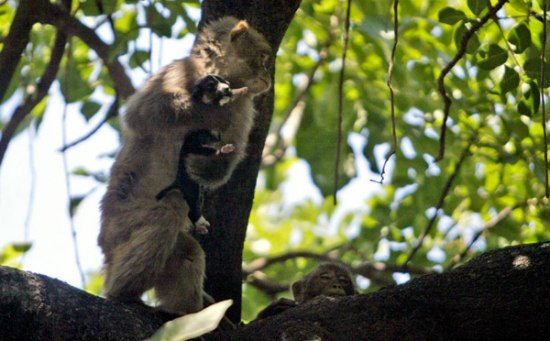
#4667
Photos Unlimited / Re: Interspecies Loving Care
October 05, 2016, 06:47:25 PM1. Not naturally friendly in the wild, a chimp and a tiger cub.

#4668
Photos Unlimited / Interspecies Loving Care
October 05, 2016, 06:41:00 PMIf Animals Can Take Care Of One Another Maybe We Can Too, Here Are 17 Examples Of Animals Caring For Other Animals!
"A Simple Act Of Caring Is Heroic."
Animals can teach humans a lot about compassion and overcome differences. Although we are humans, and technically we should have humanity, but let’s agree that animals are better than us. The kind of torture some people expose animals to, it’s only fair to say that they’re far more advanced than we’d ever be.
The animals pictured below are helping each other out â€" and they will make you feel all warm and fuzzy inside!
#4669
Photos Unlimited / Re: Hawk walking...like a boss
October 05, 2016, 06:38:44 PMhahaha! arang gajod...


#4670
Technology / Re: What drives millennials’ 'strange' technology habits?
October 05, 2016, 01:48:44 PM"My parents think I only use my phone to exchange snaps with my friends, but it’s actually important for schoolwork,†says Selina, a 19 year-old Psychology major. She testifies, “Google apps (Docs, Sheets, Slides) are really helpful. Meanwhile the calendar app has replaced my planner, so now I get alerts for upcoming tests.â€
There’s certainly a new culture that revolves around the massive accessibility brought forth by this generation’s device of choice, and it’s not at all bad. Ours is an age where technology has meshed with life in a way that enables maximum productivity, as well as social engagement.
As for “strange millennial habits,†well, Gen X-ers once thought beepers were cool before they started forwarding quotes via SMS. â€" Rappler.com
#4671
Technology / Re: What drives millennials’ 'strange' technology habits?
October 05, 2016, 01:47:39 PM
Are millennials creating the culture, or are they being led to it?
Some would argue that the constant connection provided by technology is actually making people more social. We get to talk to more people more frequently, and often concurrently. Millennials find value in faster correspondence, which is why even brands are shifting to marketing strategies that work with this new generation.
Before the mobile app boom, employers relied on good old recruitment practices to collect applications. Apps like LinkedIn and newcomer GrabJobs have established a new platform for both employer and jobseeker to interact and get to know each other without an initial face-to-face. This is the norm now. You can secure a job interview while fiddling on your phone.
Even students who are fortunate enough to possess a smartphone have found a use for it beyond games and social connectivity.
#4672
Technology / Re: What drives millennials’ 'strange' technology habits?
October 05, 2016, 01:44:34 PM
Event documentation
According to Billboard’s survey, at least 30% of millennials with smartphones would use their devices half the time during an event or concert, while less than 15% of them wouldn’t even pull out their gadgets.
Theo, 27 year-old content designer and programmer, believes that whipping out recording devices takes him away from the moment and dilutes his experience. “Your eyes end up on your screen,†he adds.
On the other hand, the tendency to document everything seems to come naturally to some millennials, possibly because there’s no better person to document events in your life than yourself.
App stores themselves are stuffed with documentation and sharing platforms, echoing the modern adage “pics or it didn’t happen.â€
#4673
Technology / Re: What drives millennials’ 'strange' technology habits?
October 05, 2016, 01:43:40 PMBringing gadgets to the toilet
Despite the risk of dropping phones and tablets down the toilet, Nielsen also reports that 32% of millennials check social media in the bathroom while relieving themselves.
25 year-old magazine editor, Therese, shares that she uses time in the bathroom to catch up on social media. Watching videos and even creeping on friend’s profiles sometimes make her lose track of time and spend more minutes in the bathroom than necessary. She adds that the tiles even enhance her auditory experience.
Whether it’s for productivity or for watching funny videos shared on Facebook, it seems that some millennials want no time wasted. So, they multitask. Besides, it was common for older people to read their broadsheets in the loo. Only the medium has changed.
#4674
Technology / Re: What drives millennials’ 'strange' technology habits?
October 05, 2016, 01:42:45 PM
Sleeping next to our phones
According to Nielsen, 83% of millennials have their phones in close proximity while they sleep. It seems that the presumed dangers of having a mobile phone close to your person for prolonged periods are no deterrents.
John, a 28 year-old health insurance specialist says, “I use my phone as my alarm clock and I take comfort in knowing I can hear it in case of an emergency call.â€
A lot of people also check social media, messages, e-mail, and Clash Royale before sleeping and as soon as they wake up so it makes sense to have their phones nearby. Meanwhile, self-quantifying apps such as sleep monitors and trackers require to be at a certain distance from users while they sleep.
#4675
Technology / Re: What drives millennials’ 'strange' technology habits?
October 05, 2016, 01:41:39 PMBy the turn of the millennium, Internet connectivity became integral to anyone with a personal computing device. The mobile phone evolved from single-line analog displays to touchscreens. It is the device to see the most rapid and dramatic changes. Now, most people are connected to the Internet via their smartphones. When we say ‘most people’, we mean millennials.
It would appear that in more developed countries, the younger millennials don’t know a world that isn’t connected to the Internet. Gadgets and Internet usage are now entrenched in our culture, and the 18-34 bracket apparently possess some habits that leave some of their older peers baffled.
Business Insider compiled statistics from several sources that highlight some of the millennial generation’s technology practices.
Are these habits really all that strange?
#4676
Technology / What drives millennials’ 'strange' technology habits?
October 05, 2016, 01:40:25 PMWhat drives millennials’ 'strange' technology habits?
Gadgets and Internet usage are now entrenched in our culture, and the 18-34 bracket apparently possess some habits that leave some older peers baffled

Anne Mari Ronquillo
October 04, 2016
The personal computer was introduced in the 1980’s, the decade in which the first wave of millennials were born. Back then, there wasn’t much to this shared home computer that allowed you to print documents and play games.
The following decade saw an increase in personal computer use. Public schools in the United States provided more computers in classrooms. Home Internet connections became more common and the purpose of personal computing expanded to include things like education, graphics design, and communication. Laptops, as well as PDAs (Personal Digital Assistants), were business tools that soon found a purpose in the hands of yuppies and students. It was the mobile phone, however, that would see a steady rise in ownership.
#4677
Talk of the Town / Re: Aquino, Duterte, and the West Philippine Sea
October 04, 2016, 09:31:52 PMOur diplomacy must be anchored on the Hague decision affirming our rights in the West Philippine Sea, but this must be combined with our distancing ourselves from Washington’s military containment strategy, very close cooperation with our ASEAN neighbors, and a willingness and patience to go the distance in dealing with Beijing. We are, after all, both Asians, peoples separated by colonialism, imperialism, the Cold War, and the continuing hegemonic schemes of forces external to the region. It is time both sides commit to bridge that separation, no matter how difficult initially that process might be. The time for flag-waving and false solutions is over. It’s time for serious engagement.
http://www.interaksyon.com/
#4678
Talk of the Town / Re: Aquino, Duterte, and the West Philippine Sea
October 04, 2016, 09:30:56 PMThird, should these two confidence-building measures achieve some success, ASEAN and China could move on to negotiations to achieve significant demilitarization and denuclearization of the South China Sea, with the goal of coming up with a multilateral treaty that would be binding on all parties, including third parties like the United States. Such an agreement would, of course, necessitate abandoning EDCA on the part of the Philippines and dismantling of military structures in the South China Sea on the part of China. This agreement would be complementary to two earlier ASEAN agreements, the agreement to make ASEAN a Zone of Peace, Freedom, and Neutrality, and the Southeast Asia Nuclear Weapons Free Zone Agreement. It could also be the forerunner of an East Asia-wide collective security treaty that would replace the dangerous and volatile balance of power politics that simply promotes an uncontrollable arms race.
Finally, again depending on the success of the previous confidence-building measures, ASEAN and China could begin the process of resolving claims on EEZ’s and continental shelves and discussing joint development of fisheries and other resources. Given political sensitivities, these might be de facto arrangements instead of full-blown treaties or agreements and will not necessitate China’s formally abandoning its Nine-Dash-Line claim, at least not in the short term. Face, as they say, is important, and the art of diplomacy is often the art of allowing your negotiating partner to save face while making grudging concessions.
#4679
Talk of the Town / Re: Aquino, Duterte, and the West Philippine Sea
October 04, 2016, 09:30:24 PMFirst, since it is the military element that is fundamentally driving China’s behavior, the Philippines and China can agree to have bilateral talks on how to bring down the tension between the countries. The aim of the these talks will not be to settle the territorial issue but to negotiate military deescalation. One possible proposal could be a freeze in China’s base-building activities in exchange for a freeze in the implementation of EDCA. Though the focus of the talks would not be the territorial dispute, some mention of it would be inevitable, which is why it would be wrong for China and unacceptable to the Philippines to make no reference to it a precondition for the negotiations.
Second, perhaps simultaneously with the Philippine-China bilateral talks, ASEAN and China can start the long postponed multilateral talks on a Code of Conduct to govern the maritime behavior of all parties with claims to the South China Sea that they agreed to have in 2002.
#4680
Talk of the Town / Re: Aquino, Duterte, and the West Philippine Sea
October 04, 2016, 09:29:50 PMLet me go on. I do not believe in the inevitability of trends. A combination of openness to reexamining our premises, experimenting with a different strategy, and luck could turn things around, though one must admit it’s not going to be easy. The two things I am banking on as enabling conditions are first, that Beijing is concerned about its international image and that, being pragmatic, the Chinese leadership might reach the point where they will see that the disadvantages of being intransigent outweigh its advantages, especially as it seeks to be respected as a superpower that is not bent on destabilizing the global status quo; and second, that China would prefer a future of peace with its neighbors to one of endless tension that could occasionally break out in open conflict.
Having said this, let me outline the steps towards a possible settlement.
#4681
Talk of the Town / Re: Aquino, Duterte, and the West Philippine Sea
October 04, 2016, 09:29:20 PMWhere Do We Go From Here?
The Duterte administration has been rightfully sober in its response to Hague decision, welcoming it but not furiously waving the flag. It is right to be circumspect since it received a problematic legacy from the previous administration: a successful legal appeal compromised by a provocative military alliance. How should it approach China on the South China Sea issue?
Before I offer my two-cents worth, however, I want to make a full disclosure in the interest of transparency: I have very serious differences with President Rodrigo Duterte on the issue of human rights and due process and consider myself to be in the opposition. However, when it comes to securing the national interest of the Philippines, I stand fully behind him.
#4682
Talk of the Town / Re: Aquino, Duterte, and the West Philippine Sea
October 04, 2016, 09:28:27 PMI communicated all this to Mr. Aquino and his subordinates, but he told me I was being too hard on the United States or I was being “more opposition than the opposition,†and went on in his usual stubborn way. At times, I simply wanted to scream in frustration at administration officials briefing us on EDCA: “This is China we are dealing with, one of the most skilled governments in the art of diplomacy, not a fourth-rate government. Do we really think its attitude towards our peaceful legal challenge would not be affected by our entering into a formal military alliance with its strategic rival that was directed at it?â€
Persevering in the legal-diplomatic route was the only viable way to go, but having deviated from this by entering into a military alliance with a state determined to contain it, the moral force and diplomatic credibility we should have gained from our legal victory in the Hague have been compromised. Even with our complete legal ascendancy, we can still lose the propaganda war, with Beijing besmirching our legal triumph by branding us as Washington’s gofer in carrying out its grand strategy of encircling China.
#4683
Talk of the Town / Re: Aquino, Duterte, and the West Philippine Sea
October 04, 2016, 09:27:56 PMSo what did the Philippines gain? Well, military aid, mainly in the form of World War II-era refitted US coast guard cutters. Amazingly, the Aquino administration chose to forego even asking for rent for the bases the US would use, whereas two decades back we extracted $180 million a year for the Americans’ renting Subic Naval Base, Clark Air Force Base, and several other installations.
But, in my view, there was a bigger problem with EDCA. Prior to the agreement, I warned Mr. Aquino in the few times he ran into me, via his subordinates, and through the media that not only would we get no guarantee of defense of our South China Sea possessions from Washington, but we would be farther away from a resolution of the territorial issue if we signed on to EDCA. Why? Because the dynamics of superpower competition would marginalize the territorial question owing to our entry into an overtly anti-China military alliance with the US. Before EDCA, we were small but we were significant. Through EDCA we would transform ourselves into the pawn of one party in a superpower struggle. Vietnam and Malaysia had their differences with China -- and even outright skirmishes in the case of Vietnam -- but China saw them as neighbors, perhaps troublesome neighbors from its perspective, but neighbors nevertheless. By signing on to EDCA, we would graduate or be demoted into a different category: that of an ally of its strategic enemy.
#4684
Talk of the Town / Re: Aquino, Duterte, and the West Philippine Sea
October 04, 2016, 09:27:15 PMThe Aquino administration sold EDCA to the Philippine public as a way of getting the United States to protect the territories we claimed in the South China Sea and our Exclusive Economic Zone. EDCA did not, in fact, provide this, and there was deception in the way administration propaganda deliberately and conveniently omitted this fact. As far as Washington was concerned, it could not give the Spratly islands and terrestrial formations claimed by the Philippines defense coverage like it did to the Senkaku Islands claimed by Japan. Washington’s reasoning went this way: the Senkaku Islands were included as Japanese territory covered by the US-Japan Mutual Defense Treaty of 1960 whereas the Philippines’ Spratly possessions did not come under the ambit of the 1951 US-Philippine Mutual Defense Treaty since the Philippines acquired them only in the 1970s. In fact, the US’ oft-repeated response to the question if it recognized Philippine sovereignty over the islands we hold is that it “does not interfere in sovereignty issues.†It might be pointed out here that Obama’s silence on the Spratlys during his visit to Manila in April 2014 contrasted with his explicit commitment to defend the Senkakus when he was in Japan just a few days earlier.
#4685
Talk of the Town / Re: Aquino, Duterte, and the West Philippine Sea
October 04, 2016, 09:24:44 PMThe Philippines and the United States signed the Enhanced Defense Cooperation Agreement during President Obama’s visit to Manila in April 2014. This agreement of indefinite duration allowed the US not only to rotate troops in the Philippines for training purposes but to deploy troops, weapons, and materiel in fixed bases that would be nominally Philippine bases but where full operational control would be in the hands of the United States. The Philippines’ main value to the US has always been its being an ideal site for projecting power onto the Asian mainland, and Washington got this advantage again, over twenty years after Clark Air Base and Subic Naval Base were forced out of the county by a combination of a volcanic explosion and rising nationalism. With containment of China being Washington’s new Grand Strategy, the Philippines became one of the three prongs of US strategy, the others being the US bases in Japan and the mobile naval base known as the Seventh Fleet.
#4686
Talk of the Town / Re: Aquino, Duterte, and the West Philippine Sea
October 04, 2016, 09:22:37 PMFatal Contradiction: Aquino’s response to China
The Aquino administration was right to bring our case to the Permanent Court of Arbitration in The Hague in January 2013 since the appropriate international legal instruments were present to resolve the case in accordance with the 1982 Convention on the Law of the Seas and other legal precedents. For many intimately involved in the issue, it was clear that the law was overwhelmingly on the Philippines’ side. We realized that while it was unlikely that China would immediately submit to a ruling by a Hague tribunal whose jurisdiction it did not recognize, we saw gaining international legal recognition of our rights and the moral authority that went with that as important assets in a struggle that would last for many more years.
Where the Aquino administration went off the rails was to allow itself to be suckered into a military agreement with the United States that would again make the Philippines a major launching pad for the projection of US power onto the East Asian land mass -- to become part of the grand strategy proclaimed by the Obama Administration as the “Pivot to Asia.†I still have to figure out what went on in the minds of Mr. Aquino and his Foreign Secretary Albert del Rosario to account for their simultaneously pursuing a peaceful legal track in The Hague and a provocative military track aimed at containing the actor we wanted to convince to respect international law. Maybe they thought these two prongs were complementary. If this was the case, then it was a costly misjudgment.
#4687
Talk of the Town / Re: Aquino, Duterte, and the West Philippine Sea
October 04, 2016, 09:21:54 PMThere are a number of complementary reasons why China has behaved the way it has, but the central one is the strategic decision to make the area part of its defensive perimeter against Washington’s encirclement. To achieve this goal, however, China resorted to the Big Power behavior it has so often criticized when displayed by the West, treating its neighbors as nothing but collateral damage of its increasingly sharp geopolitical rivalry with Washington. It could have acted differently, for instance appealing to and working with ASEAN to craft a multilateral treaty to seal off the area from big power rivalry, along with the initiation of talks on a Code of Conduct to govern the behavior of parties with claims in the region, something that China and the ASEAN countries had, in fact, agreed to negotiate in 2002.
Instead, Beijing chose the American way of unilateralism, cooking up nonexistent rights based on the most dubious documents.
#4688
Talk of the Town / Re: Aquino, Duterte, and the West Philippine Sea
October 04, 2016, 09:21:18 PMWhere China Went Wrong
A central element in Beijing’s response to what it regarded as “American encirclement†was to view the South China Sea as part of its defensive perimeter. Where China went wrong was in its unilateral moves to implement this view. Beijing knew that these were waters with no agreed upon lines of demarcation that it shared with at least six other littoral states, including Taiwan. It was all too aware that the ASEAN countries had long been pressing for multilateral talks to define these borders. And it was not ignorant of the fact that detailed rules for the demarcation of territorial waters and exclusive economic zones and for navigation in these waters had already been incorporated into international law with the coming into force of the 1982 Convention on the Law of the Seas, which Beijing had ratified.
But despite knowing all this, Beijing began to move unilaterally, first slicing off and fortifying Mischief Reef, which lies within the 200-mile Exclusive Economic Zone of the Philippines, in the mid-1990’s, on the pretext of building shelters for Chinese fishermen. Then salami tactics with crude justifications were followed by a comprehensive claim of territorial sovereignty that Beijing submitted to the United Nations as a note verbale on May 7, 2009. This unilaterally asserted China’s “indisputable sovereignty†over all the islands and terrestrial formations in the South China Sea and their “adjacent waters/relevant waters.†Accompanying the note was the infamous “Nine-Dash Line†map. No official explanation for the Nine-Dash Line was provided at that time or since, though there have been unofficial references to the islands and waters of the West Philippine Sea being ancestral Chinese territories or to their inclusion in old maps of the defunct Nationalist Chinese regime that date back to the late 1940s.
#4689
Talk of the Town / Re: Aquino, Duterte, and the West Philippine Sea
October 04, 2016, 09:20:19 PMChina’s apprehensions deepened when the next administration headed by George W. Bush, Jr. came out, prior to September 11, 2001, with the National Security Strategy Directive redefining China, from a “strategic partner†to a “strategic competitor.†A lot of the practical implications flowing from that redefinition were, however, put on hold following September 11, as Bush tried hard to enlist Chinese cooperation in the War on Terror. In fact, many people at the Pentagon, the State Department, and the White House thought the War on Terror and the Middle East adventures of Bush were a distraction from what they felt should have been the real strategic thrust of US policy, which was to focus on China as the US’ strategic rival. They finally got their wish when towards the end of the first term of the Obama administration, the “Pivot to Asia,†also known as the Containment of China, emerged as the US’s grand strategy.
#4690
Talk of the Town / Re: Aquino, Duterte, and the West Philippine Sea
October 04, 2016, 09:19:40 PMWhere is China Coming From?
The first thing I’d like to say is that having long studied the relations between East Asia and the United States, I fully understand where the Chinese are coming from, and that is from fear and a desire for security. Let me explain.
One cannot understand why China has acted the way it has without referring to the big shock the Chinese leadership received in 1996, when after a period of 24 years of thawing and friendly relations with the United States, it was treated to a show of force of two aircraft carrier battle groups sent by the Clinton administration to warn it to back off during the Taiwan Strait Crisis. One of the carriers, the USS Nimitz, sailed provocatively through the Taiwan Strait. This was the largest display of US military force since the Vietnam War.
#4691
Talk of the Town / Re: Aquino, Duterte, and the West Philippine Sea
October 04, 2016, 09:19:04 PMI had the opportunity to be a bit player -- or an “extra,†as they say in Hollywood -- in this maritime drama while I was still a member of the Philippine Congress. In 2011, I sponsored the House of Representatives resolution renaming the South China Sea the West Philippine Sea, a proposal that was later adopted by the Department of Foreign Affairs and the Office of the President. That same year, I led a congressional delegation that made the first visit of a civilian aircraft to Pag-asa Island in the Spratlys to show support from the legislative branch for our sovereign rights to the islands under Philippine jurisdiction and to our 200 mile Exclusive Economic Zone. This visit was strongly condemned by China.
I mention this not to “bring my own bench to stand on†(magbuhat ng sariling bangko), to use a Pilipino saying, but to emphasize where my loyalties lie as I explain what some have seen as an ambivalent if not “unpatriotic†stand on an issue that they feel I should be waving the flag on.
#4692
Talk of the Town / Re: Aquino, Duterte, and the West Philippine Sea
October 04, 2016, 09:18:22 PM-rendered null and void China’s Nine-Dash-Line claim to some 90 per cent of the South China Sea
-rejected China’s claim that the land formations and waters in the area have historically fallen exclusively under the ambit of the Chinese state
-dismissed the view that the terrestrial formations in the area are habitable islands, which could generate 200 mile Exclusive Economic Zones (EEZs) for their claimants
-faulted China for violating the fishing rights of Filipino fisherfolk in Scarborough Shoal
-criticized China for causing severe damage to the fragile environment of the area with its land reclamation and dredging activities
It is said that The Hague judgment benefits not only the Philippines but all the other Southeast Asian countries that have claims to different parts of the South China Sea. And that it establishes very important precedents for settling maritime disputes among countries in all parts of the globe.
But for reasons I will touch on below, The Hague verdict is not an undiluted victory for the Philippines, and at least in the short term, it will not unlock the door to peace in the region.
#4693
Talk of the Town / Aquino, Duterte, and the West Philippine Sea
October 04, 2016, 09:15:27 PMa look at the other side's opinion that has gravitas...
OPINION
A Flawed Strategy and How to Rectify it: Aquino, Duterte, and the West Philippine Sea
By: Walden Bello (special to InterAksyon.com)
July 19, 2016

Filipino and US troops rush across a beach during a Balikatan training exercise. FILE PHOTO FROM PHILIPPINE STAR
InterAksyon.com
The online news portal of TV5
Walden Bello served as a member of the House of Representatives from 2009 to 2015. He broke with the Daang Matuwid Coalition of President Benigno Aquino III over the Mamasapano Tragedy and the Disbursement Acceleration Program Scandal. His resignation from the House in March 2015 is said to be the only resignation on principle in the history of the Congress of the Philippines. This article is adapted from a presentation he prepared on the implications of the Hague decision for a forthcoming seminar sponsored by Focus on the Global South and the Chulalongkorn University Social Research Institute in Bangkok, Thailand.
(UPDATED) We won in The Hague but our legal victory has been compromised by the ill-advised entry of the Aquino administration into a military alliance with the United States aimed at containing China. Moving beyond the volatile stalemate in the West Philippine Sea requires another strategy from the new Duterte administration.
Reports on The Hague Tribunal decision on the maritime dispute between the Philippines and China have described it as an overwhelming victory for the Philippines. Let me sum up the key points of the judgment. The Permanent Court of Arbitration:
#4694
Talk of the Town / Re: Recent development surrounding the South China Sea
October 03, 2016, 06:33:03 PM
___
Singapore calls for practical ways to defuse South China Sea incidents
Singapore's defense minister said that countries need to look for practical ways to defuse incidents in the South China Sea, where China is pitted against smaller neighbors in multiple disputes over islands.
Singapore Defense Minister Ng Eng Hen told reporters on the sidelines of a meeting in Hawaii that incidents may not necessarily involve military ships. He noted that navies have established protocols for when they encounter each other at sea.
Instead, confrontations may develop between fishing vessels or other civilian ships, Ng said. Defense ministers from the Association of Southeast Asian Nations and U.S. Defense Secretary Ash Carter talked at their Hawaii meeting about ways to prevent such incidents from escalating, Ng said.
Singapore doesn't have any claims to disputed islands, but Ng said it's interested in the issue because the South China Sea is a major shipping route and many economies depend on it.
China claims virtually the entire South China Sea as its own, citing historical reasons. That has pitted it against the Philippines, Vietnam, Malaysia and Brunei, all members of ASEAN.
___
Associated Press writers Gillian Wong in Beijing, Jim Gomez in Manila, Philippines, Robert Burns in San Diego and Audrey McAvoy in Honolulu contributed to this report.
http://www.philstar.com/
#4695
Talk of the Town / Re: Recent development surrounding the South China Sea
October 03, 2016, 06:31:43 PM
___
Pentagon chief says U.S. to 'sharpen military edge' in Asia
Defense Secretary Ash Carter said the U.S. will "sharpen our military edge" in Asia and the Pacific in order to remain a dominant power in a region feeling the effects of China's rising military might.
Carter made the pledge in a speech aboard the aircraft carrier USS Carl Vinson in port in San Diego.
The Pentagon chief described what he called the next phase of a U.S. pivot to Asia â€" a rebalancing of American security commitments after years of heavy focus on the Middle East.
His speech was aimed at reassuring allies unsettled by China's behavior in the South China Sea.
With a broad complaint that China is "sometimes behaving aggressively," Carter alluded to Beijing's building of artificial islands in disputed areas of the South China Sea.
"Beijing sometimes appears to want to pick and choose which principles it wants to benefit from and which it prefers to try to undercut," he said. "For example, the universal right to freedom of navigation that allows China's ships and aircraft to transit safely and peacefully is the same right that Beijing criticizes other countries for exercising in the region. But principles are not like that. They apply to everyone, and every nation, equally."
#4696
Talk of the Town / Re: Recent development surrounding the South China Sea
October 03, 2016, 06:30:47 PM
___
Duterte says he'll end joint drills with United States
Philippine President Rodrigo Duterte said he was giving notice to the United States, his country's long-standing ally, that joint exercises between Filipino and American troops this week will be the last such drills.
He told the Filipino community in Hanoi, Vietnam's capital, last week that he will maintain the military alliance with the U.S. because of the countries' 1951 defense treaty. But he said this week's exercises will proceed only because he did not want to embarrass his defense secretary.
Duterte said during a two-day visit to meet Vietnam's leaders that he wants to establish new trade and commercial alliances with China and Russia, and that the war games were something Beijing does not want.
"I would serve notice to you now that this will be the last military exercise," he said. "Jointly, Philippines-U.S., the last one."
His foreign secretary quickly said the decision was not final. Such a step would impede Washington's plans to expand the footprint of U.S. forces in Southeast Asia to counter China.
The U.S. Embassy in Manila said Washington had not been formally notified by the Philippines of any cancellation of combat drills after this week's maneuvers, called Phiblex. The Philippine Defense Department has yet to clarify Duterte's remarks.
The previous Philippine government signed a 2014 defense pact to give the U.S. forces access to five Philippine military bases. That reflected Manila's anxiety over the territorial ambitions of China, with which it has competing claims in the disputed South China Sea.
Duterte, however, said Sunday that the accord was only signed by the Philippine defense chief then and not by the president, suggesting the accord can still be pushed back.
#4697
Talk of the Town / Re: Recent development surrounding the South China Sea
October 03, 2016, 06:29:51 PM
---
Singapore says Chinese newspaper 'fabricated' report
Singapore accused a nationalist Chinese state-run newspaper of fabricating details in a news report that it said falsely depicted the city-state's conduct at a recent summit in Venezuela.
The Global Times report, published on its Chinese-language website, said that Singapore requested that the final document of the 17th Non-Aligned Movement summit include an endorsement for an international arbitration panel's July ruling favoring the Philippines in its dispute with China over the South China Sea. The report cited unnamed sources it said "had knowledge of the situation."
The report said that most of the countries objected to the Singaporean delegation's request, angering the delegation. The newspaper said the delegation also spoke rudely to those countries' officials.
The report triggered an unusually public dispute between Singapore's ambassador to China and the chief editor of the tabloid newspaper, which is published by the ruling Communist Party's mouthpiece People's Daily. The outspoken paper targets a domestic audience for whom nationalistic appeals resonate strongly.
In an open letter to the Global Times' editor-in-chief, the ambassador, Stanley Loh, said that the report "attributed actions and words to Singapore which are false and unfounded."
In the letter, Loh said that "the proposal to update the Southeast Asia paragraphs in the NAM Final Document was not done at the last minute nor by any single ASEAN country. There was a common and united ASEAN position."
It said that Singapore was "disappointed that an established newspaper published this irresponsible report replete with fabrications and unfounded allegations with no regard for the facts," and noted that Singapore was represented at the summit, while China was not.
The editor-in-chief of the Global Times, Hu Xijin, stood his ground against Loh's accusations, saying that the report "was based on a serious and reliable source who attended the summit," according to the newspaper.
The ambassador wrote a second letter aimed at refuting Hu's response.
Singapore doesn't have any claims to disputed islands in the South China Sea and its officials say it is interested in safeguarding the stability of the region's waterways.
#4698
Talk of the Town / Recent development surrounding the South China Sea
October 03, 2016, 06:28:29 PMRecent developments surrounding the South China Sea
By Michael Rubin (Associated Press)
October 3, 2016

In this Friday, Sept. 16, 2016 photo released by Xinhua News Agency, Chinese Navy fleet replenishment ship Junshanhu, center, and Chinese Navy destroyer Guangzhou, top left, are seen in a joint naval drill at sea off south China's Guangdong Province. The Chinese and Russian navies launched eight days of war games in the South China Sea, in a sign of growing cooperation between their armed forces against the backdrop of regional territorial disputes. Zha Chunming/Xinhua via AP
A look at recent developments in the South China Sea, where China is pitted against smaller neighbors in multiple disputes over islands, coral reefs and lagoons in waters crucial for global commerce and rich in fish and potential oil and gas reserves:
#4699
Health and Food / Re: Diabetes Symptoms: 5 Signs You Should Not Ignore
October 03, 2016, 02:22:30 PM5. Blurry vision

Blurred vision is an early warning sign of diabetes | Source: iStock
One of the early warning signs of diabetes is blurred vision. In high-sugar environments like untreated type 2 diabetes, the lens of the eye’s ability to bend is altered. The lens is not damaged, but the muscles of the eye have to work harder to focus, especially when there are rapid changes in blood sugar and the eye muscles have not yet adapted to it. There is a window of time when this symptom will show itself as over time your body will adapt to the increased sugar levels and your vision will return to normal.
http://www.cheatsheet.com/
#4700
Health and Food / Re: Diabetes Symptoms: 5 Signs You Should Not Ignore
October 03, 2016, 02:20:01 PM4. Foot pain and numbness
Over time, abnormally high blood sugar levels will cause damage to the body’s nerves, a condition called diabetic neuropathy. While not all people experience this symptom, more advanced cases of diabetes may notice numbness, tingling, or pain in their extremities, typically starting with the feet. This symptom is most common in people who have had type 2 diabetes for 25 years or more, but it can occur in people who are in the early stages as well.
Pages 1 2 3 4 5 6 7 8 9 10 11 12 13 14 15 16 17 18 19 20 21 22 23 24 25 26 27 28 29 30 31 32 33 34 35 36 37 38 39 40 41 42 43 44 45 46 47 48 49 50 51 52 53 54 55 56 57 58 59 60 61 62 63 64 65 66 67 68 69 70 71 72 73 74 75 76 77 78 79 80 81 82 83 84 85 86 87 88 89 90 91 92 93 94 95 96 97 98 99 100 101 102 103 104 105 106 107 108 109 110 111 112 113 114 115 116 117 118 119 120 121 122 123 124 125 126 127 128 129 130 131 132 133 134 135 136 137 138 139 140 141 142 143 144 145 146 147 148 149 150 151 152 153 154 155 156 157 158 159 160 161 162 163 164 165 166 167 168 169 170 171 172 173 174 175 176 177 178 179 180 181 182 183 184 185 186 187 188 189 190 191 192 193 194 195 196 197 198 199 200 201 202 203 204 205 206 207 208 209 210 211 212 213 214 215 216 217 218 219 220 221 222 223 224 225 226 227 228 229 230 231 232 233 234 235 236 237 238 239 240 241 242 243 244 245 246 247 248 249 250 251 252 253 254 255 256 257 258 259 260 261 262 263 264 265 266 267 268 269 270 271 272 273 274 275 276 277 278 279 280 281 282 283 284 285 286 287 288 289 290 291 292 293 294 295 296 297 298 299 300 301 302 303 304 305 306 307 308 309 310 311 312 313 314 315 316 317 318 319 320 321 322 323 324 325 326 327 328 329 330 331 332 333 334 335 336 337 338 339 340 341 342 343 344 345 346 347 348 349 350 351 352 353 354 355 356 357 358 359 360 361 362 363 364 365 366 367 368 369 370 371 372 373 374 375 376 377 378 379 380 381 382 383 384 385 386 387 388 389 390 391 392 393 394 395 396 397 398 399 400 401 402 403 404 405 406 407 408 409 410 411 412 413 414 415 416 417 418 419 420 421 422 423 424 425 426 427 428 429 430 431 432 433 434 435 436 437 438 439 440 441 442 443 444 445 446 447 448 449 450 451 452 453 454 455 456 457 458 459 460 461 462 463 464 465 466 467 468 469