Join MikeLigalig.com!

Why Just Read When You Can Join, Post, and Read!

Menu

Show posts

This section allows you to view all posts made by this member. Note that you can only see posts made in areas you currently have access to.

Show posts Menu

Messages - Lorenzo

#4001
Quote from: hubag bohol on July 27, 2013, 08:35:51 AM
Lupad, Bay Borobs, lupad! 8)
Quote from: chicogon on July 27, 2013, 08:58:42 AM
;D

Bwahahaha! Mura lagi ang posing ni Jack sa movie Titanic. "I am the king of the world!"

;D
#4002
Anonymous Diary Blog / Re: Botoy is back!
July 27, 2013, 12:08:32 PM
Welcome Back Nong! Kini ay ilustrasyon sa among kamingawan sa imo:

#4003
Anonymous Diary Blog / Re: Botoy is back!
July 27, 2013, 12:01:00 PM
Quote from: hubag bohol on July 27, 2013, 08:16:36 AM
Botoy is back! Padaplin mga unggoy! ;D

Bwahahaha! Welcome back Mr. Botoy! Kummusta man pod si Botoyitot? ;D  ;)
#4004
Bible Study / Re: Augustine on Evil
July 27, 2013, 11:56:01 AM
Quote from: wardiflex on July 27, 2013, 10:27:51 AM
salamat bai doc, now i know...makalibog lang.

Wa'y Sapayan, Bai Wards! 8)
#4005
Help & Support / Re: i am coming
July 27, 2013, 11:54:35 AM
#4007
Help & Support / Re: i am coming
July 27, 2013, 03:48:20 AM
God sends people our way for a reason, Nong Balong. So there is a reason why God willed that you and Hubag met each other here in Tubag Bohol. Perhaps, just perhaps, to learn a lesson. Perhaps to learn patience, humility, and acceptance to live with people with different points of view.


God Bless All of Us!
#4008
Best movie, ever. 8)
#4009
Anonymous Diary Blog / Re: What Did You Do Today?
July 27, 2013, 12:35:33 AM
uwawertz.... ;D
#4010
hahaha!
#4011


Hmmmm. Now ain't that the truth? he he he... ::)
#4012
#4013

Now ain't that the truth? he he he ... ;D
#4014
This is for my mom, and for all the moms here !

Yup! So true.


#4015


:)
#4016
#4017
For the mothers out there....

#4018

Now ain't that the truth? he he he..
#4019
#4020
#4021
This is for the single ladies out there....


;)
#4022
#4023


8)
#4024
#4025
#4026
#4027

;)
#4028
#4029
#4030
#4031
Love Talk / Love, truth, and friendship in pictures
July 26, 2013, 01:03:44 PM
:D
#4032
Anonymous Diary Blog / Re: What Did You Do Today?
July 26, 2013, 01:00:54 PM
Enjoy your trip , Fr. Roel. :)
#4033
#4034
#4035
#4036
Toshiro Mifune (三船 敏郎 Mifune Toshirō?, April 1, 1920 - December 24, 1997) was a Japanese actor who appeared in almost 170 feature films. He is best known for his 16-film collaboration with filmmaker Akira Kurosawa, from 1948 to 1965, in works such as Rashomon, Seven Samurai, Throne of Blood, and Yojimbo. He also portrayed Musashi Miyamoto in Hiroshi Inagaki's Samurai Trilogy.

Toshiro Mifune was born in Tsingtao, China, and grew up in the Chinese city of Dalian with his parents and two siblings. On Thursday, 1 April, 1920, their first child, Toshiro was born. When he was 4 years old, the family moved to Manchuria. They were Christians of the Methodist sect. In his youth, Mifune worked in the photography shop of his father Tokuzo, a commercial photographer and importer who had emigrated from northern Japan. After spending the first 19 years of his life in China, as a Japanese citizen he was drafted into the Imperial Japanese Army Aviation division, where he served in the Aerial Photography unit during World War II.

His imposing bearing, acting range, facility with foreign languages and lengthy partnership with acclaimed director Akira Kurosawa made him the most famous Japanese actor of his time, and easily the best known to Western audiences. He often portrayed a samurai or ronin, who was usually coarse and gruff (Kurosawa once explained that the only weakness he could find with Mifune and his acting ability was his "rough" voice), inverting the popular stereotype of the genteel, clean-cut samurai. In such films as Seven Samurai and Yojimbo, he played characters who were often comically lacking in manners, but replete with practical wisdom and experience, understated nobility, and, in the case of Yojimbo, unmatched fighting prowess. Sanjuro in particular contrasts this earthy warrior spirit with the useless, sheltered propriety of the court samurai. Kurosawa highly valued Mifune for his effortless portrayal of unvarnished emotion, once commenting that he could convey in only three feet of film an emotion for which the average Japanese actor would require ten feet.
#4037
Anonymous Diary Blog / Re: What Did You Do Today?
July 26, 2013, 06:07:26 AM
Quote from: chicogon on July 26, 2013, 04:53:58 AM
You're just a kid! ;D Oh btw, happy birthday! ;)


he he he, Thank You Fr. Roel! Btw, enjoy the Paring Bol-anon event this summer! ;D
#4039
Bible Study / Re: Augustine on Evil
July 26, 2013, 04:46:07 AM
Spoiled Goodness


Augustine knew that evil was real. Independent evidence (natural theology) was enough to convince him that God existed and that everything He created would be good. Evil, then, must be something real, but not a "thing" in the conventional sense. Evil is not a created thing, but spoiled goodness made possible by the free moral agency of rational creatures. Evil is not something present, but something missing, a privation.

The challenge that God could have created a world of free-will creatures immutable in their goodness is answered by the notion of plenitude, the greatest good. The possibility of evil also makes a greater good possible. God made a world in which true moral decision-making and development of virtues is possible in humans, manifest by persons whose character is formed through growth and struggle.

There's a sound reason why God has allowed evil. It doesn't conflict with His goodness. God is neither the author of evil, nor its helpless victim. Rather, precisely because of His goodness He chooses to co-exist with evil for a time.
#4040
Bible Study / Re: Augustine on Evil
July 26, 2013, 04:45:28 AM
A Heavenly Twist


This observation reveals an interesting twist in this problem. If morality freely chosen can only happen in a world where evil is possible, then heaven will be a place where there will be no moral growth, where moral choices will not be possible because all the inhabitants of heaven will be immutably good. There is a type of soulish growth only available to inhabitants of a fallen world.

Two Scriptural observations lend credibility to this view. First, in recounting the great heroes of faith, the writer of Hebrews mentions that some were rescued by faith, but others endured by faith "...in order that they might obtain a better resurrection."9 (Heb. 11:35) Second, Paul tells Timothy that "...godliness is profitable for all things, since it holds promise for the present life and also for the life to come." (1 Tim. 4:8)

Both of these verses indicate that conditions in this life affect conditions in the next. Bearing up under evil in this life improves our resurrection in the next. Godliness in this life brings profit in the next. These benefits are not available after this life or there would be little urgency to grow now; all eternity would be left in which to catch up.

It appears that a deeper, more profound good results when virtue is won by free, moral souls struggling with evil, rather than simply granted to them as an element of their constitution.
#4041
Bible Study / Re: Augustine on Evil
July 26, 2013, 04:44:32 AM
The Best of All Worlds


A world that had never been touched by evil would be a good place, but it wouldn't be the best place possible. The best of all worlds would be a place where evil facilitated the development of virtues that are only able to exist where evil flourishes for a time. This would produce a world populated by souls that were refined by overcoming evil with good. The evil is momentary. The good that results is eternal.

What good comes out of a drive-by killing, someone might ask, or the death of a teenager through overdose, or a daughter's rape, or child abuse? The answer is that a commensurate good doesn't always come out of those individual situations, though God is certainly capable of redeeming any tragedy. Rather, the greater good results from having a world in which there is moral freedom, and moral freedom makes moral tragedies like these possible.
#4042
Bible Study / Re: Augustine on Evil
July 26, 2013, 04:44:04 AM
Flawed Perfection

Augustine's solution has not been satisfying to some. Friedrich Schleiermacher snorted at the concept that God gave good creatures the freedom to do bad. If a being is perfect in its goodness, he held, it would never sin even if it were free to. Evil would then have to create itself ex nihilo, which is ridiculous.7

However, it doesn't follow that moral perfection necessarily entails immutability. That's a different type of perfection, a perfection in being. Schleiermacher's objection confuses the two. The fact that a perfectly beautiful vase is capable of being broken doesn't take away from its aesthetic perfections. In the same way, it makes sense to say that man was created morally perfect (morally whole or complete, at his proper level of goodness), even though he wasn't immutable in this perfection.

The objections raised by atheist philosophers J.L. Mackie and Antony Flew are more substantial.8 Isn't it possible that God could have created man immutable in his goodness, yet still have the opportunity to freely choose in other areas? Won't man have immutable goodness in heaven? And will he not also have freedom to choose among certain options? Why not here on earth? Couldn't God construct man's nature such that evil simply was not an option?

Mackie and Flew are right in one regard. God could have created such a world. Freedom in the larger sense (the ability to make choices) does not require freedom in the narrow sense (the ability to make moral choices).

They miss the big picture, though: God would not have accomplished a second purpose. He not only wanted free creatures; He also wanted plenitude, that is, the greatest good possible. Plenitude - the highest good, the best of all possible worlds - requires more than just general freedom; it requires moral freedom, and that necessarily entails the possibility of evil.

Since all that God made is good, even those things which appear evil only appear that way because of a limited context or perspective. When viewed as a whole, that which appears to be evil ultimately contributes to the greater good.

For example, certain virtues couldn't exist without evil: courage, mercy, forgiveness, patience, the giving of comfort, heroism, perseverance, faithfulness, self-control, long-suffering, submission and obedience, to name a few. These are not virtues in the abstract, but elements of character that can only be had by moral souls. Just as evil is a result of acts of will, so is virtue. Acts of moral choice accomplish both.
#4043
Bible Study / Re: Augustine on Evil
July 26, 2013, 04:41:14 AM
Digging a Hole in Goodness


Central to Augustine's idea of goodness (and, consequently, evil) was the notion of being. To Augustine, anything that had being was good. God as the ground of being was perfectly good, along with everything he brought into being. This goodness was a property that came in varying degrees.

With this foundation Augustine was now prepared to answer the key issue: "Where is evil then, and whence, and how crept it in hither? What is its root, and what its seed? Or hath it no being?"1 To this Augustine answered: "Evil has no positive nature; but the loss of good has received the name 'evil.'"2

Augustine observed that evil always injures, and such injury is a deprivation of good. If there were no deprivation, there would be no injury. Since all things were made with goodness, evil must be the privation of goodness: "All which is corrupted is deprived of good."3

The diminution of the property of goodness is what's called evil. Good has substantial being; evil does not. It is like a moral hole, a nothingness that results when goodness is removed. Just as a shadow is no more than a "hole" in light, evil is a hole in goodness.

To say that something is evil, then, is a shorthand way of saying it either lacks goodness, or is a lower order of goodness than what ought to have been. But the question remains: "Whence and how crept it in hither?"

Augustine observed that evil could not be chosen because there is no evil thing to choose. One can only turn away from the good, that is from a greater good to a lesser good (in Augustine's hierarchy) since all things are good. "For when the will abandons what is above itself, and turns to what is lower, it becomes evil--not because that is evil to which it turns, but because the turning itself is wicked."4

Evil, then, is the act itself of choosing the lesser good. To Augustine the source of evil is in the free will of persons: "And I strained to perceive what I now heard, that free-will was the cause of our doing ill."5 Evil was a "perversion of the will, turned aside from...God" to lesser things
#4044
Bible Study / Re: Augustine on Evil
July 26, 2013, 04:40:45 AM
Two Aspects of the Problem


The problem of evil can be phrased in several ways. One approach addresses the origin of evil, prompting the syllogism (a series of statements that form a reasoned argument): 1) God created all things; 2) evil is a thing; 3) therefore, God created evil. If the first two premises are true, the conclusion is inescapable.

This formulation, if sustained, is devastating for Christianity. God would not be good if He knowingly created evil.

Augustine realized that the solution was tied to the question: What is evil? The argument above depends on the idea that evil is a thing (note the second premise). But what if evil is not a "thing" in that sense? Then evil did not need creating. If so, our search for the source of evil will take us in a another direction

Augustine approached the problem from a different angle. He asked: Do we have any convincing evidence that a good God exists? If independent evidence leads us to conclude that God exists and is good, then He would be incapable of creating evil. Something else, then, must be its source.

If Augustine's approach is fair, it prompts a pair of syllogisms that lead to a different conclusion. First: 1) All things that God created are good; 2) evil is not good; 3) therefore, evil was not created by God. Second: 1) God created every thing; 2) God did not create evil; 3) therefore, evil is not a thing.

The key to success here, is the truthfulness of two premises. If Augustine can offer evidence through natural theology that God exists as Creator and also that God is good, making everything He created also good, then the conclusion - evil is not a thing - automatically follows.

This is Augustine's strategy. If evil is not a thing, then the case against Christianity stated in the original syllogism is unsound because one of its premises is false. The critical question is: What is evil?
#4045
Bible Study / Augustine on Evil
July 26, 2013, 04:40:17 AM


One doesn't need a Ph.D. in theology to look around the world and realize something is desperately wrong. The existence of evil is one of the most vexing challenges a Christian - or any person, for that matter - must grapple with. It's occupied the minds of great Christian thinkers since the beginning, including St. Augustine (354-430). For much of his life he worked hard at a solution.

Augustine's approach was not just brilliant; it was practical. His insight is intellectually credible and emotionally satisfying in that it gives hope and offers meaning to the Christian trying to make sense out of life in a fallen world.
#4046
Answer

There are two primary categories of grace: actual and sanctifying. Actual grace is extrinsic to the soul, meaning that it is an impulse to do good or avoid evil that is sent by God and acts upon the soul much like a tugboat gently nudges an ocean liner to move in a certain direction. Sometimes the nudges aren't very subtle, as in the case of Saul who received a massive blast of actual grace on the road to Damascus in Acts 9:1-8. This actual grace "nudged" him to convert to the Catholic faith. Sanctifying grace, on the other hand, is intrinsic to the soul, meaning that it inheres or takes up residence in the soul. When Saul surrendered his heart to Christ and entered the Church the Holy Spirit infused his soul with sanctifying grace.

Sanctifying grace refers to that in Christians by which they are transformed into the adopted children of God. The share in divine life which God offers created persons is a real regeneration, a second birth. Christians possess a new life which is their own (see Rom 6:4); they are new creatures (see 2 Cor 5:17), new men and men re-created in justice, holiness, and truth (see Eph 4:24). This new life is "grace" because it is a divine gift, "sanctifying" because it really transforms a person with the holiness of divine life. . . .

The expression actual grace is used in various contexts with diverse references. The common element lies in the fact that the various realities referred to move people to act in ways which positively contribute to God's redemptive work. Thus, actual grace can refer to God's causality, insofar as God brings sinners to conversion and causes the good deeds of the saints. It can refer specifically to the work of the Holy Spirit in Christians, helping them in their weakness and nourishing their holiness. Sometimes "grace," in the sense of "actual grace," refers to created entities conducive to anyone's salvation or the good of the Church. A pious thought, a chance encounter, or even a difficulty which conduces to holiness is called a "grace." (Christian Moral Principles [Chicago: Franciscan Herald Press 1983], 1:614)


Reference:
http://www.catholic.com/quickquestions/can-you-explain-the-difference-among-sanctifying-sacramental-and-actual-grace
#4047
Question taken from Catholic.com:

As an Evangelical Protestant, I'm not accustomed to hearing about different kinds of grace. As far as I'm concerned, based on what I read in Scripture, there's only one kind of grace: God's free gift of eternal life. Yet Catholics refer to sanctifying, sacramental, and actual grace. How do they differ?
#4048
Bible Study / Re: The Forgiveness of Sins
July 26, 2013, 03:43:27 AM
Is the Catholic who confesses his sins to a priest any better off than the non-Catholic who confesses directly to God? Yes. First, he seeks forgiveness the way Christ intended. Second, by confessing to a priest, the Catholic learns a lesson in humility, which is avoided when one confesses only through private prayer. Third, the Catholic receives sacramental graces the non-Catholic doesn’t get; through the sacrament of penance sins are forgiven and graces are obtained. Fourth, the Catholic is assured that his sins are forgiven; he does not have to rely on a subjective "feeling." Lastly, the Catholic can also obtain sound advice on avoiding sin in the future.

During his lifetime Christ sent out his followers to do his work. Just before he left this world, he gave the apostles special authority, commissioning them to make God’s forgiveness present to all people, and the whole Christian world accepted this, until just a few centuries ago. If there is an "invention" here, it is not the sacrament of penance, but the notion that the sacramental forgiveness of sins is not to be found in the Bible or in early Christian history.

NIHIL OBSTAT: I have concluded that the materials
presented in this work are free of doctrinal or moral errors.
Bernadeane Carr, STL, Censor Librorum, August 10, 2004

IMPRIMATUR: In accord with 1983 CIC 827
permission to publish this work is hereby granted.
+Robert H. Brom, Bishop of San Diego, August 10, 2004
#4049
Bible Study / Re: The Forgiveness of Sins
July 26, 2013, 03:42:53 AM
God had sent Jesus to forgive sins, but after his resurrection Jesus told the apostles, "‘As the Father has sent me, even so I send you.’ And when he had said this, he breathed on them, and said to them, ‘Receive the Holy Spirit. If you forgive the sins of any, they are forgiven; if you retain the sins of any, they are retained’" (John 20:21â€"23). (This is one of only two times we are told that God breathed on man, the other being in Genesis 2:7, when he made man a living soul. It emphasizes how important the establishment of the sacrament of penance was.)
#4050
Bible Study / Re: The Forgiveness of Sins
July 26, 2013, 03:42:37 AM
Since he would not always be with the Church visibly, Christ gave this power to other men so the Church, which is the continuation of his presence throughout time (Matt. 28:20), would be able to offer forgiveness to future generations. He gave his power to the apostles, and it was a power that could be passed on to their successors and agents, since the apostles wouldn’t always be on earth either, but people would still be sinning.
#4051
Bible Study / Re: The Forgiveness of Sins
July 26, 2013, 03:42:23 AM
For sins committed after baptism, a different sacrament is needed. It has been called penance, confession, and reconciliation, each word emphasizing one of its.aspects. During his life, Christ forgave sins, as in the case of the woman caught in adultery (John 8:1â€"11) and the woman who anointed his feet (Luke 7:48). He exercised this power in his human capacity as the Messiah or Son of man, telling us, "the Son of man has authority on earth to forgive sins" (Matt. 9:6), which is why the Gospel writer himself explains that God "had given such authority to men" (Matt. 9:8).
#4052
Bible Study / Re: The Forgiveness of Sins
July 26, 2013, 03:42:13 AM
Baptism was given to take away the sin inherited from Adam (original sin) and any sins we personally committed before baptismâ€"sins we personally commit are called actual sins, because they come from our own acts. Thus on the day of Pentecost, Peter told the crowds, "Repent, and be baptized every one of you in the name of Jesus Christ for the forgiveness of your sins; and you shall receive the gift of the Holy Spirit" (Acts 2:38), and when Paul was baptized he was told, "And now why do you wait? Rise and be baptized, and wash away your sins, calling on his name" (Acts 22:16). And so Peter later wrote, "Baptism . . . now saves you, not as a removal of dirt from the body but as an appeal to God for a clear conscience, through the resurrection of Jesus Christ" (1 Pet. 3:21).
#4053
Bible Study / The Forgiveness of Sins
July 26, 2013, 03:23:54 AM
All pardon for sins ultimately comes from Christ’s finished work on Calvary, but how is this pardon received by individuals? Did Christ leave us any means within the Church to take away sin? The Bible says he gave us two means.
#4054
Padayona ni!
#4055
Help & Support / Re: i am coming
July 26, 2013, 01:03:13 AM
There is a saying by Gandhi, which i think is pertinent for this situation, my friend, "Be the change you want to see in the world."

God Bless you, Nong.

#4056
Help & Support / Re: i am coming
July 26, 2013, 12:42:22 AM
Life is too sweet, too generous, too wonderful to harbor grudges and anger. Nong Balong, count the blessings in your life and move forward.

Remember in scripture, the Apostle Peter asked Jesus Christ how many times should we forgive a brother who wronged us. Do you know what Jesus Christ said?


"Then came Peter to him, and said, Lord, how oft shall my brother sin against me, and I forgive him? till seven times? Jesus said to him, I say not to you, Until seven times: but, Until seventy times seven."

-Matthew 18: 21-22


What is Our Lord Jesus telling us? He tells us to FORGIVE always. Be generous in Forgiving, even if others talk ill of you, Forgive anyways. Blessings will come back to you. Don't curse, but Bless. Don't resent, but Forgive. Don't hate, but LOVE.


May the Peace of Our Lord , a peace that surpasses any worldly understanding, be with you. I'll pray for you to find joy and happiness.


God Bless!
#4057
Talk of the Town / Re: Make LOVE, not WAR
July 26, 2013, 12:29:32 AM
Quote from: islander on July 25, 2013, 11:26:53 PM
Make love, not war is an anti-war slogan commonly associated with the American counterculture of the 1960s. It was used primarily by those who were opposed to the Vietnam War, but has been invoked in other anti-war contexts since.

The phrase's origins are unclear; some credit Louis Abolafia. Radical activists Penelope and Franklin Rosemont helped to popularize the phrase by printing thousands of "Make Love, Not War" buttons at the Solidarity Bookshop in Chicago, Illinois and distributing them at the Mother's Day Peace March in 1965. They were the first to print the slogan.

wikipedia/
Approb!
#4058
Photos Unlimited / Re: Mirror of calm
July 26, 2013, 12:24:25 AM
Stunning!
#4059
Photos Unlimited / The daily conundrums
July 25, 2013, 09:53:55 PM


:P
#4060
By: Albrando L. Lucino Jr, M.D, Ph.D-c, M.A.


There are benefits to functional analysis in the field of industrial and organizational psychology. I would like to add that functional data analysis is being used to better analyze, model and predict a series of data. Some of the key features that we have to deal with include the choice of smoothing technique, data reduction, adjustment for clustering, functional linear modeling (Ullah and Finch, 2013).

There was a study conducted by Ullah and Finch (2013) that took 84 functional data analysis articles. The paper describes the FDA and its important features as applied to the time series data from various fields. Functional data analysis provides a relatively good modeling and prediction approach, with the potential for many applications in many fields ranging from public health, biomedical applications. Functional data analysis can also be used in other sectors such as marketing and business because it can definitely measure series of information collected from these sources.

#4061
By: Albrando L. Lucino Jr, M.D, Ph.D-c, M.A.


Abstract:

Consciousness does play an important role in communicating information between professionals in a work setting. In order for employees to learn new methods, new systems to increase work efficiency and collaboration with different departments in an organization, they must have the capacity to understand concepts. This depends on their conscious awareness and conscious learning. De Sousa (2013) conducted a study of consciousness that focused on the neurobiological correlates of consciousness in relation to structures such as the ascending reticular activating system, the amygdala, the cerebellum, the thalamus, the frontoparietal circuits, the prefrontal cortex and the precuneus. These organic studies in relation to the brain and its relation to the human individual’s consciousness is connected with that individual’s ability to learn and to communicate with colleagues.

That said, there are times where individuals will not have an effective way of addressing issues at work because of an aberration in their neurobiological structures. One has to take into consideration the issue of Phineas Gauge, an English man who suffered a trauma to the cerebral cortex and this trauma drastically changed his mood, his consciousness and as a result his relationship with colleagues in the work setting (Macmillan and Lena, 2010).

This paper will set out to conduct a dual quantitative and qualitative analysis of behavioral changes due to cognition changes secondary to stress. The relational changes in work stress and proper biofeedback mechanism is analyzed.
#4062
The times we are living is filled with constant changes due to the economic cycles in the United States as well as abroad. As the economic in the United States suffered a minor recession in 2008, a great many people lost jobs and organizations closed, those that survived were lucky to have effective worker retention. The role of the I/O psychologist has increased in importance because an effective I/O staff can mean sustained development for an organization, and possibly outcompete competitors through worker efficiency and effective marketing tools (Levy, 2013).  An article written by Cooper (2013) states that many organizations that have focused on globalizing their interests were able to grow tremendously; organizations that have failed to focus on globalization usually have perished. The complexities in managing organizations that operate in a global sphere have to take into consideration diverse cultures of the bases of operations, have to take consideration  in the coordination of working across language and cultural boundaries. I/O psychologists have to implement testing strategies to properly train and select proper employees in these bases. An organization should also employ qualified I/O psychologists who are capable of working in a multiethnic organization and  delegating information to a host of employees with different culture, languages, religion, and ways of life (Rahimli, 2012; Khahan and Peerapong, 2013).
#4063
Another role of an organizational psychologist in an organization is to adhere to the assessment and measurement of the skills of employees and applicants. Oswald and Hough (2008) noted how there is a multidimensional model for job performance, personality measurement, and taxonomic issues. I/O psychologists use statistics in quantitative analysis when analyzing the results of intelligence tests in hiring processes, in employee testing. The statistical process allows the I/O psychologist to identify areas of weakness, and to implement necessary strategies to alleviate said weaknesses and/or to make necessary actions to remove weak links in the organizational structure. The results of these tests are given to the managerial levels; strategic, tactical and operational. Sometimes, it is necessary for I/O psychologists to dismiss low performing employees based on the results of these tests (Oswald and Hough, 2008).
#4064
An article written by Boudreau (2012) indicated how I/O psychology and I/O psychologists are now more than ever required to bring dynamic and effective employees to the organizational structure. The need for competitive positioning is necessary as a way to maintain sustained development. I/O psychologists, as invaluable members of the human resources department of an organization are necessary to bring in qualified personnel, by investing in personnel, one directly invests on the success of the organization. Without an effective I/O psychologist, there will be poor retention of personnel, failure to bring in dynamic employees and thus, theoretically speaking, loss in sustained development.
#4065
The duty of the I/O psychologist is to develop new strategies in how to increase worker efficiency within an organization, reduce worker tension, and to provide a mechanism to retain efficient workers. In this regard, it is important to note that many Industrial and Organiational psychologists usually are responsible for talent acquisition. In order to bring in qualified individuals to fill in available positions, hiring managers interview qualified applicants and screen them. An article written by Rahimli (2012) indicates how many industries in Malaysia implement questionnaires to rate how employees are performing and how they are able to communicate with each other, the level of effective communication and what tools are necessary to improve it. The article indicates that interviews are then conducted to talk to employee and then observe them on the floor to demonstrate their skills performance. By interviewing the candidates, hiring managers can literally see the strengths of the individual, observe their interpersonal skills, their oratory skills and demonstrate their knowledge during the interview process. The Interview process provides the basis for selection and later on, if the candidates succeed could be placed in an observational role. So in that regard, the role for interviews is for screening purposes and observation for differentiating and selection of the best candidate.
#4066
The terminal degree is preferred, either a Ph.D or Psy.D in Psychology with a focus in Industrial and Organizational Psychology. The Society of Industrial and Organizational Psychologists published some specific guidelines for doctoral training in I/O psychology and these guidelines stress the Scientist and Practitioner Model (Levy, 2013). Doctoral programs in I/O psychology puts a strong emphasis on theory and application of information. There is also emphasis on research and the ability to conceptualize and implement the theory learned in the work setting. This is why it’s quite common to have Industrial Organizational psychologists who are Ph.D. holders work in the academic field as instructors, as well as working in the corporate field as strategic managers (Henson, 2012). In this regard, it is important to note that I/O psychologists manifest this consumption and generation of knowledge through constant research. I/O psychology journals provide a way for communicating the new discoveries in the profession, identifying new issues that arise as the economy and demographic changes. These journals provide a way for the education of I/O psychologists and I/O psychology students on new scientific findings and to identify what practices are effective and what practices are ineffective in the organizational structure. One major organization is SIOP, which stands for Society for Industrial and Organizational Psychologists (Silzer and Parson, 2010).
#4067
A major component of Industrial and Organizational Psychology is how there is a close relationship and communication between science and practice within the profession. This so called effective application of the science and practice model is known as the science practitioner method (Silzer and Parson, 2010). The Scientist and Practitioner Model maintains that Industrial and Organizational psychologists are responsible for both consuming and generating knowledge (Levy, 2013). The educational requirements for those who want to go into Industrial and Organizational Psychology holds that individuals should receive a Bachelor’s degree in Psychology and then go onto the graduate level in completing a Masteral degree in Industrial and Organizational Psychology.
#4068
I/O psychology covers a plethora of topics and has seen a rather dynamic change from its humble beginnings. Originally, IO psychology is actually the fusion of two different subsets of psychology, which is industrial psychology and organizational psychology. These two subsets focused on assessment, measurement and selection of different personnel for positions in an organizational structure (Levy, 2013). Organizational psychology covered topics that focused on areas that affected relationship elements within an organization. Such elements included leadership capabilities, motivational processes, the relationship between employee and employer and attitudes of the employees for their respective jobs (Levy, 2013). Industrial psychology focused more on  issues that were more technical, such as the assessment of employee performance, measurement of said performance, and selection of qualified personnel for jobs.
#4069
By: Albrando L. Lucino Jr,M.D.,Ph.D-c, M.A.


The field of Psychology is a broad one with many specialized fields ranging from Behavioral Psychology, Cognitive Psychology, however there is a specialized field of psychology known as Industrial and Organizational Psychology. Industrial and Organizational Psychology applies psychological principles and theories to the workplace either it be in the corporate setting, the educational setting or even in the research setting. This field of psychology emphasizes the study of the attitudes of employees, and the behavior they have to each other. In that regard, I/O psychologists are responsible for analyzing and observing interpersonal relationships in the work setting, the motivational process within the rank and file and what issues can be done to increase motivation if it is too low (Levy, 2013).
#4070
I would like to add that for most people, the interview portion of the selection process can be the most difficult part and can be quite intimidating as well. Individuals can develop interview anxiety which has symptoms of increased heart rate and increased oxygen delivery to the body, widening of the lungs and bronchial tubes to meet the demand for more oxygen, narrowing of arteries, allowing increased blood flow to primary organs such as the brain. There can also be increased muscle tension, dilated pupils and reduction in the motility in the intestine, temporarily ceasing digestion as well. Individuals who are interviewed who undergoe anxiety can be easily upset and overly emotional, can even shake, and can even be confused by the questions asked.

Luckily there are solutions to interview anxiety and these is through therapeutic cognitive therapy. The step includes identifying the erroneous perception of threats that lead to the anxiety. The second step is having the person access real information that will challenge and modify the fearful thoughts.


Reference:

Crawford, B. A. (2004). ROADBLOCK TO SUCCESS: INTERVIEW ANXIETY If you liken a job interview to being held up at gunpoint, you're suffering from this malady, but there's a cure. Fire Engineering, 15763-66.
#4071
Do you have interview anxiety?
#4072
Anonymous Diary Blog / Re: What Did You Do Today?
July 25, 2013, 09:23:05 PM
Good Morning ! I submitted my paper for grading and now just relaxing for a bit, sipping my cup of Nescafe coffee as I prepare for a work day.

;)
#4073
Photos Unlimited / Re: The night before an exam
July 25, 2013, 03:28:03 PM
he he he, delikado bitaw sa night before an exam. Ma stress out ta. Pwede ipahiloton. ;D
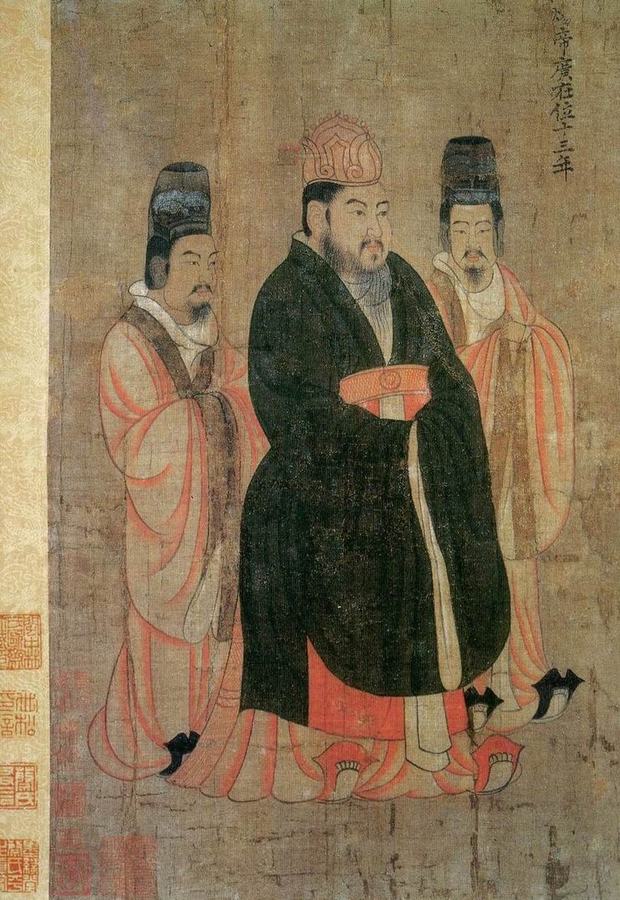
#4074

The Emperor of Zhou, with ministers.
#4075
The Zhou Dynasty was a Chinese dynasty that followed the Shang Dynasty and preceded the Qin Dynasty. Although the Zhou Dynasty lasted longer than any other dynasty in Chinese history (from 1046 BC to 256 BC).

During the Zhou Dynasty, the use of iron was introduced to China, though this period of Chinese history produced what many consider the zenith of Chinese bronze-ware making. The dynasty also spans the period in which the written script evolved into its modern form with the use of an archaic clerical script that emerged during the late Warring States period.

Mandate of Heaven

In the Chinese historical tradition, the Zhou defeated the Shang and oriented the Shang system of ancestor worship towards a universalized worship, away from the worship of Shangdi and to that of Tian or "heaven". They legitimized their rule by invoking the "Mandate of Heaven," the notion that the ruler (the "Son of Heaven") governed by divine right and that his dethronement would prove that he had lost the Mandate. Disasters and successful rebellions would thus show that the ruling family had lost this Mandate.

The doctrine explained and justified the demise of the Xia and Shang dynasties and, at the same time, supported the legitimacy of present and future rulers.

Philosophy

During the Zhou Dynasty, the origins of native Chinese philosophy developed, its initial stages beginning in the 6th century BC. The greatest Chinese philosophers, those who made the greatest impact on later generations of Chinese, were Confucius, founder of Confucianism, and Laozi, founder of Taoism. Other philosophers, theorists, and schools of thought in this era were Mozi, founder of Mohism; Mencius, a famous Confucian who expanded upon Confucius' legacy; Shang Yang and Han Fei, responsible for the development of ancient Chinese Legalism (the core philosophy of the Qin Dynasty); and Xun Zi, who was arguably the center of ancient Chinese intellectual life during his time, even more so than iconic intellectual figures such as Mencius.
#4076

Illustrated painting of the Yellow Emperor, one of the greatest sovereigns of the Shang Dynasty
#4077
The Shang Dynasty according to traditional historiography, ruled in the Yellow River valley in the second millennium BC, succeeding the Xia Dynasty and followed by the Zhou Dynasty. The classic account of the Shang comes from texts such as the Classic of History, Bamboo Annals and Records of the Grand Historian. According to the traditional chronology based upon calculations made approximately 2,000 years ago by Liu Xin, the Shang ruled from 1766 BC to 1122 BC, but according to the chronology based upon the "current text" of Bamboo Annals, they ruled from 1556 BC to 1046 BC. The Xiaâ€"Shangâ€"Zhou Chronology Project dated them from c. 1600 BC to 1046 BC.

Archaeological work at the Ruins of Yin (near modern day Anyang), which has been identified as the last Shang capital, uncovered eleven major Yin royal tombs and the foundations of palaces and ritual sites, containing weapons of war and remains from both animal and human sacrifices. Tens of thousands of bronze, jade, stone, bone, and ceramic artifacts have been obtained. The workmanship on the bronzes attests to a high level of civilization.

The Anyang site has yielded the earliest known body of Chinese writing, mostly divinations inscribed on oracle bones â€" turtle shells, ox scapulae, or other bones. More than 20,000 were discovered in the initial scientific excavations during the 1920s and 1930s, and over four times as many have been found since. The inscriptions provide critical insight into many topics from the politics, economy, and religious practices to the art and medicine of this early stage of Chinese civilization.


Lands ruled by the Shang Dynasty


#4078

An illustration of Emperor Yu, Sovereign of the Xia Dynasty.
He reigned some 4,000 years ago.
The picture is over 4,000 years ago.
#4079
The Xia Dynasty (Chinese: 夏朝; pinyin: Xià Cháo; c. 2070 â€" c. 1600 BCE)is the first dynasty in China to be described in ancient historical chronicles.

According to the traditional chronology based upon calculations by Liu Xin, the Xia ruled between 2205 and 1766 BCE; according to the chronology based upon the Bamboo Annals, it ruled between 1989 and 1558 BCE. The Xiaâ€"Shangâ€"Zhou Chronology Project concluded that the Xia existed between 2070 and 1600 BCE. The tradition of tracing Chinese political history from heroic early emperors to the Xia to succeeding dynasties comes from the idea of the Mandate of Heaven, in which only one legitimate dynasty can exist at any given time, and was promoted by the Confucian school in the Eastern Zhou period, later becoming the basic position of imperial historiography and ideology. Although the Xia is an important element in early Chinese history, reliable information on the history of China before 13th century BCE can only come from archaeological evidence since China's first established written system on a durable medium, the oracle bone script, did not exist until then.


Proposed location of the Xia Dynasty


Source: Wiki
#4080
This thread will be for the study of the dynamic growth and development of the Chinese civilization(s). Enjoy this study !

8)
#4081
Anonymous Diary Blog / Re: What Did You Do Today?
July 25, 2013, 01:16:33 PM
Oh the beauty of citation, specifically APA format, haha! I hope Dr. Dana will like this paper... 8)
#4082
Meditation for Day 4

Dearest Holy Mother, you are generous with all who seek you, have mercy on me. I entrust into your hands this knot which robs the peace of my heart, paralyzes my soul and keeps me from going to my Lord and serving Him with my life.
Undo this knot in my love...., O mother, and ask Jesus to heal my paralytic faith which gets down hearted with the stones on the road. Along with you, dearest Mother, may I see these stones as friends. Not murmuring against them anymore but giving endless thanks for them, may I smile trustingly in your power.

Mary, Undoer of Knots, pray for me.

Mary is the Sun and no one is deprived of her warmth.


PRAYER TO MARY, UNDOER OF KNOTS (Closing Prayer)

Virgin Mary, Mother of fair love, Mother who never refuses to come to the aid of a child in need, Mother whose hands never cease to serve your beloved children because they are moved by the divine love and immense mercy that exists in your heart, cast your compassionate eyes upon me and see the snarl of knots that exist in my life.
You know very well how desperate I am, my pain and how I am bound by these knots.
Mary, Mother to whom God entrusted the undoing of the knots in the lives of his children, I entrust into your hands the ribbon of my life.
No one, not even the evil one himself, can take it away from your precious care. In your hands there is no knot that cannot be undone.
Powerful Mother, by your grace and intercessory power with Your Son and My Liberator, Jesus, take into your hands today this knot...I beg you to undo it for the glory of God, once for all, You are my hope.
O my Lady, you are the only consolation God gives me, the fortification of my feeble strength, the enrichment of my destitution and with Christ the freedom from my chains.
Hear my plea.
Keep me, guide me, protect me, o safe refuge!

Mary, Undoer of Knots, pray for me


#4083
Quote from: islander on July 25, 2013, 11:38:05 AM
thanks for the prayer, lorenz.  you must know that every evening i search this forum for specific prayers you've posted.  every time something tugs at me, i open this forum and search for your prayers that i feel are appropriate for my hour of need.  and those needs are myriad! 

i see to it that i read hofelina's posts on saints and meditations too.  thanks to both of you.  we may have been strangers living now in different continents.  thanks to tb, we are one after all.

You're most welcome, Tita. I will continue to pray for your sister.
#4084
Quote from: islander on July 25, 2013, 11:32:47 AM
god is kind.  in him nothing is impossible.  we thought of a better solution---it's easier to relocate one person than 35 animals.  we thought of possible convents for my sister.  then a neighbor who is abroad offered her vacant house, for free.  wow!  my sister would be near enough for her food to be taken care of yet far enough from pets.  we all sighed in relief.   

He is so good, and so kind. All the time !
#4085
Quote from: islander on July 25, 2013, 11:26:26 AM
on the home front, my sister is going to have her chemo sessions in less than a week.  guess what the requirements are... absolutely no pets in the house or in the immediate surroundings.  our houses are attached, like a duplex.  we even have a common garage.  imagine the proximity of 31 cats and 4 dogs (2 are hers).  we have been advised to let go.  that left me sleepless for weeks.  maybe the dogs may have takers, but the cats would take an eternity. 

i've been crying day in, day out, not only for my sister but at the prospect that we may have to put our pets down, the way some families did when a member went through chemo.  we take them all to a shelter or veterinarian and have them put to sleep forever.   

Say this prayer before you go to sleep tonight, and place your worries to Jesus Christ. Let him lessen the burden in your heart and soul, dear Tita.

Lord Jesus, may everything I do begin with You,
continue with Your help,
and be done under Your guidance.
May my sharing in the Mass free me from my sins,
and make me worthy of Your healing.
May I grow in Your Love and Your service,
and become a pleasing offering to You;
and with You to Your Father.
May the mystery I celebrate help me
to reach eternal life with you.


Amen.
#4086
Photos Unlimited / Re: The night before an exam
July 25, 2013, 11:24:40 AM
#4087
Photos Unlimited / The night before an exam
July 25, 2013, 11:22:34 AM
#4088
Photos Unlimited / Re: A beautiful reader
July 25, 2013, 11:21:38 AM

#4089
Photos Unlimited / Re: A beautiful reader
July 25, 2013, 11:20:53 AM
#4090
Photos Unlimited / Re: A beautiful reader
July 25, 2013, 11:19:59 AM
#4091
Photos Unlimited / A beautiful reader
July 25, 2013, 11:16:47 AM

A beautiful reader
#4092
Anonymous Diary Blog / Re: What Did You Do Today?
July 25, 2013, 11:13:22 AM
Right now I am working on a doctoral paper. Editing and making some last minute revisions.

Making some last additions on some statistical model I will be using for quantitative purposes in the graphical data.

Multivariate statistics strikes back. Just love this (emphasis on the sarcasm)

:P
#4093
Anonymous Diary Blog / Re: What Did You Do Today?
July 25, 2013, 11:10:02 AM
Yesterday I celebrated my 28th birthday with my sister and her bf. Wow, it feels so odd to be "28". 2 years away from being 30. Ngeks. :P

Cheers to all Leo Babies !  :D
#4094
Quote from: islander on July 25, 2013, 11:06:27 AM
our vet here in manila had told us that an 80-year-old woman had given up her cat and gave some donations to the vet clinic.  she said she wants to see to it that her cat is truly cared for, because she could go anytime at her age.

very noble !
#4095
The Lord's presence satisfies our goals and our worries, removes doubt and instills a spirit of confidence when we need it. How sweet, how beautiful is His presence...all the days of our lives.
#4096
I've accepted the internship offer at Mercy Hospital. I tendered my resignation from the University as Director of the Allied Health and General Education Department, effective on August 30, 2013.

I am now currently training my replacement, so far, so good.

8)
#4097
Inspiration & Hope / Re: Words of Confucius
July 25, 2013, 10:59:53 AM
 â€œLearning without thought is labor lost; thought without learning is perilous.”
#4098
Inspiration & Hope / Re: Words of Confucius
July 25, 2013, 10:54:30 AM
 â€œThe superior man thinks always of virtue; the common man thinks of comfort.”
#4099
Inspiration & Hope / Re: Words of Confucius
July 25, 2013, 10:53:27 AM
 â€œReal knowledge is to know the extent of one's ignorance.”

:P
#4100
Inspiration & Hope / Re: Words of Confucius
July 25, 2013, 10:52:20 AM
“When you see a good person, think of becoming like her/him. When you see someone not so good, reflect on your own weak points.”