Join MikeLigalig.com!

Why Just Read When You Can Join, Post, and Read!

Menu

Show posts

This section allows you to view all posts made by this member. Note that you can only see posts made in areas you currently have access to.

Show posts Menu

Messages - Lorenzo

#3901
Risks are part of decision making. In the field of Medicine, risks are evaluated in regards to benefits, if the benefit is favorable, then a risky operation/procedure may be undertaken. If, however, the benefits are poor, then taking a risky operation / procedure should be dissuaded. In regards to the latter, ethical issues would arise and should be addressed accordingly. 8)

#3902
Obituary / Rest in peace Mrs. Arleen Jemenez
August 01, 2013, 01:04:45 PM
It is with sadness to say that a colleague of mine at work, Mrs. Arleen Jemenez, passed into the loving arms of God on July 29, 2013. She is survived by her husband and son. We offer our prayers for the repose of her soul.

Arleen, you will be missed. May God, who is loving and merciful, grant peace to your soul.

This I ask in Jesus Christ's Name. Amen.
#3903
ehehehe! da kuyawa! ;D
#3904
He he he, uy! kuyawa lageh. 8)
#3905
Quote from: hubag bohol on August 01, 2013, 09:33:10 AM
This job, though not so demanding, will have me traveling frequently. I will have to make arrangements for Botoyitot...
Di ba kaha ma separation anxiety sija? Luoy pod intawon.
#3906
History / Re: The Srivijaya Empire
August 01, 2013, 09:47:14 AM
Hmmm...the ancient Malays were always so fond of GOLD.  :P  ;D
#3907
History / Re: The Srivijaya Empire
August 01, 2013, 09:45:40 AM
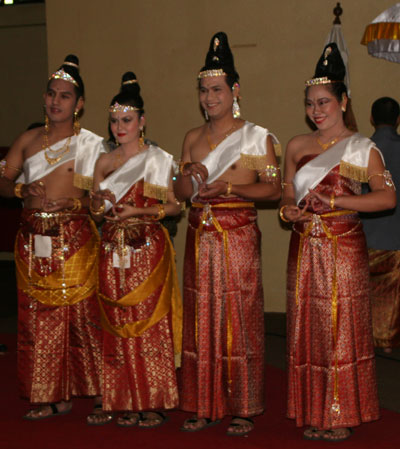
How did the Maha Raja dress like? What was his regalia?


#3908
History / Re: The Srivijaya Empire
August 01, 2013, 09:41:42 AM
Who was the ruler of the Sri Vijayan Empire? What was this ruler referred to as?


The Absolute Ruler of the Sri Vijayan Empire was known as the Sri Maha Raja. Sri Maha Raja means "Great King of Kings." Equivalent to the title of Emperor.

His was the power of life and death throughout all the lands his eyes surveyed.
#3909
History / Re: The Srivijaya Empire
August 01, 2013, 09:38:53 AM
What was the religion of the Sri Vijaya Empire?


A stronghold of Vajrayana Buddhism, Srivijaya attracted pilgrims and scholars from other parts of Asia. These included the Chinese monk I Ching, who made several lengthy visits to Sumatra on his way to study at Nalanda University in India in 671 and 695, and the 11th century Bengali Buddhist scholar Atisha, who played a major role in the development of Vajrayana Buddhism in Tibet. I Ching also known as Yijing and other monks of his time practiced a pure version of Buddhism although the religion allowed for culture changes to be made.

He is also given credit for translating Buddhist text which has the most instructions on the discipline of the religion. I Ching reports that the kingdom was home to more than a thousand Buddhist scholars; it was in Srivijaya that he wrote his memoir of Buddhism during his own lifetime. Travellers to these islands mentioned that gold coinage was in use on the coasts, but not inland. A notable Srivijayan revered Buddhist scholar is Dharmakirti that taught Buddhist philosophy in Srivijaya and Nalanda, he was the teacher of Atisha.
#3910
History / Re: The Srivijaya Empire
August 01, 2013, 09:36:38 AM
Ancient Chinese records of Sri Vijaya:


When the Chinese traveller Chau Ju Kua came to Palembang in the twelfth century, he described Sriwijaya in most unexpected terms. He wrote, “The people either lived scattered about, outside the city, or on the water on rafts of boards covered over with reeds, and these (floating houses) are exempt from taxation.” This description of a floating city comes from classical Sriwijaya’s period of decline. Within living memory it was still much more a ‘city afloat’ than it is today. Friedrich Schnitger, the first man to write a book about Sumatran archaeology, investigated Palembang during the 1930s. The German was interested mostly in ancient inscriptions and statues, but in one of his most lyrical and romantic passages, he describes a city that was still partly ‘floating:

On moonlit nights, young Malays of Palembang hire a boat and go rowing with their sweethearts. They glide past the Chinese houses, built on rafts. Inside, one catches a glimpse of red-enamelled altars, coloured dragons, and images of smiling gods. If anyone in the house has died, lilac candles are burning, their quiet flame reflected in the water.”

These raft houses are known today in Palembang as rumah rakit. You can still find them in Palembang, but you have to know where to look. Since the 1960s, local governments have encouraged people to live ashore, and fewer and fewer of these kinds of houses are to be found in the city. In central Palembang, they are especially scarce. There are a few floating coffee shops and one large floating restaurant, but there are no raft houses in the immediate vicinity of the Ampera Bridge. When we had gone out onto the Musi, on our previous boat trips, we had kept an eye out for them. We saw a preponderance of small, wooden boats and even some flimsy bamboo rafts: some small traders still drift to market on bamboo rafts laden with produce. What we didn’t see were raft houses. By the time we decided on a boat trip to a historic mosque, known as Mesjid Kiai Muara Ogan, we had given up on them.


http://southeastasiankingdoms.wordpress.com/2013/01/15/sriwijaya-4-4-a-floating-city/
#3911
History / Re: The Srivijaya Empire
August 01, 2013, 09:31:05 AM
Quote from: hubag bohol on August 01, 2013, 09:29:15 AM
A theory accepted by some scholars states that the term Visayas was derived from the name of a 7th-century thalassocratic Malay Srivijaya Empire. In Sanskrit, sri (श्री) means "fortunate," "prosperous," or "happy" and vijaya (विजय) means "victorious" or "excellence". In the 12th century, parts of the Sulu Archipelago and the Visayas Islands were either subject or tributaries of the empire. --Wiki

Perhaps this is true, it is already interesting how there is a strong indic presence in southern Bohol. I remember ways back we had a forumner here who posted about the ancient indic traders who set up shop in Bohol. I'll dig up that thread.
#3912
Quote from: hubag bohol on August 01, 2013, 09:25:18 AM
Gikuha ra ba ko isip consultant sa usa ka business firm. Basin mohinay kog gamay sa posts unya mobalik na lang ka-active when I get the hang of the business...

:)

Congratulations on your new consultancy position, Nong ! I know that you will be an active fixture here. I enjoy reading the rich, dynamic, eclectic threads ! See you around. 8)
#3913
History / Re: The Srivijaya Empire
August 01, 2013, 09:26:48 AM
#3914
History / Re: The Srivijaya Empire
August 01, 2013, 09:25:56 AM
How did the ancient Sri Vijayan regalia look like?


#3915
History / Re: The Srivijaya Empire
August 01, 2013, 09:23:14 AM
#3916
History / Re: The Srivijaya Empire
August 01, 2013, 09:21:58 AM

Borobudur, the ancient capital of the Sri Vijayan Empire


#3918
History / Re: The Srivijaya Empire
August 01, 2013, 09:18:11 AM
Decline and Fall of Srivijaya:

Srivijaya presented a tempting target for foreign powers and for pirates. In 1025, Rajendra Chola of the Chola Empire based in southern India attacked some of the Srivijayan Kingdom’s key ports in the first of a series of raids that would last at least 20 years. Srivijaya managed to fend off the Chola invasion after two decades, but it was weakened by the effort. As late as 1225, Chinese author Chou Ju-kua described Srivijaya as the richest and strongest state in western Indonesia, with 15 colonies or tributary states under its control.

By 1288, however, Srivijaya was conquered by the Singhasari Kingdom. At this tumultuous time, in 1291-92, the famous Italian traveler Marco Polo stopped in Srivijaya on his way back from Yuan China. Despite several attempts by fugitive princes to revive Srivijaya over the next century, however, the kingdom was completely erased from the map by the year 1400. One decisive factor in the fall of Srivijaya was the conversion of the majority of Sumatran and Javanese to Islam, introduced by the very Indian Ocean traders who had long provided Srivijaya’s wealth.
#3919
History / Re: The Srivijaya Empire
August 01, 2013, 09:17:53 AM
The Height of the Empire:

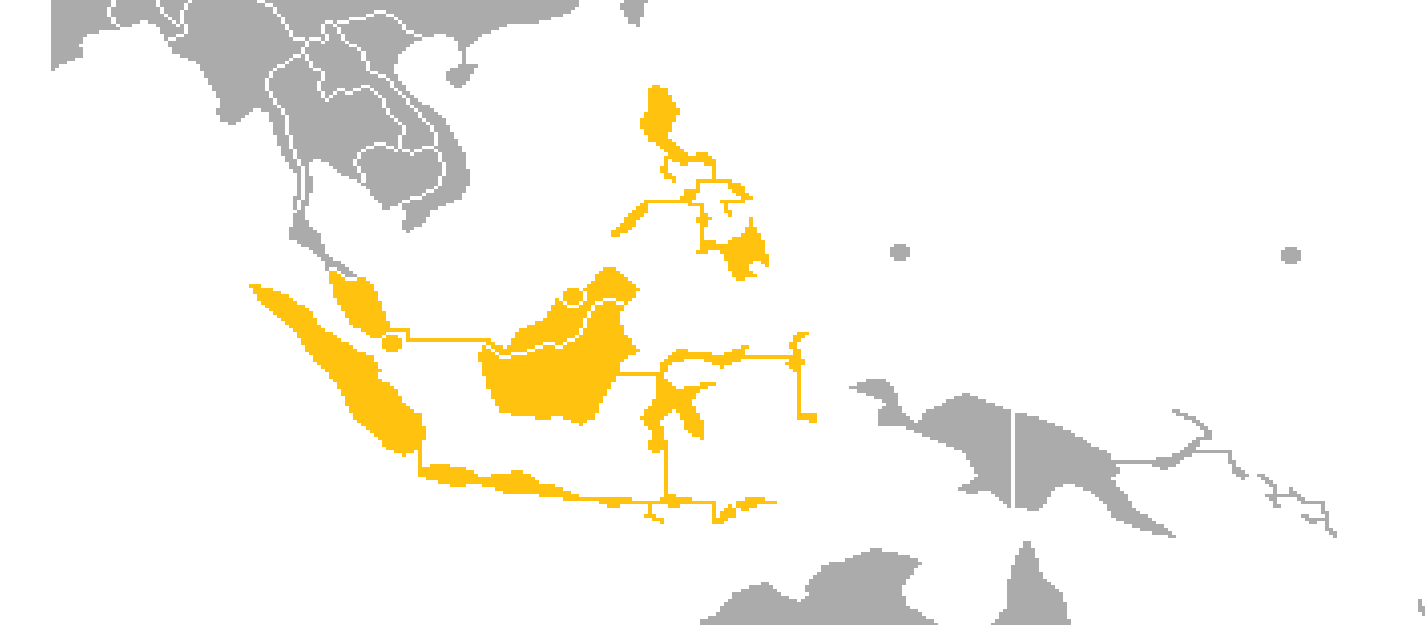
With its base on Sumatra firmly established, in the eighth century, Srivijaya expanded into Java and the Malay Peninsula, giving it control over the Melaka Straights and the ability to charge tolls on the Indian Ocean maritime Silk Routes. As a choke-point between the wealthy empires of China and India, Srivijaya was able to accumulate considerable riches and further land. By the 12th century, its reach extended as far east as the Philippines.


The wealth of Srivijaya supported an extensive community of Buddhist monks, who had contacts with their co-religionists in Sri Lanka and the Indian mainland. The Srivijayan capital became an important center of Buddhist learning and thought. This influence extended to smaller kingdoms within Srivijaya’s orbit, as well, such as the Saliendra kings of Central Java, who ordered the construction of Borobudur, one the largest and most magnificent examples of Buddhist monumental building in the world.
#3920
History / Re: The Srivijaya Empire
August 01, 2013, 09:17:28 AM
Srivijaya in the Indian Ocean Trade:

We know for certain that for at least four hundred years, between the seventh and eleventh centuries CE, the Kingdom of Srivijaya prospered from the rich Indian Ocean trade. Srivijaya controlled the key Melaka Straits, between the Malay Peninsula and the islands of Indonesia, through which passed all sorts of luxury items such as spices, tortoise shell, silk, jewels, camphor, and tropical woods. The kings of Srivijaya used their wealth, gained from transit taxes on these goods, to extend their domain as far north as what is now Thailand and Cambodia on the Southeast Asian mainland, and as far east as Borneo.

The first historical source that mentions Srivijaya is the memoir of a Chinese Buddhist monk, I-Tsing, who visited the kingdom for six months in 671 CE. He describes a rich and well-organized society, which presumably had been in existence for some time. A number of inscriptions in Old Malay from the Palembang area, which are dated from as early as 682, also mention the Srivijayan Kingdom. The earliest of these inscriptions, the Kedukan Bukit Inscription, tells the story of Dapunta Hyang Sri Jayanasa, who founded Srivijaya with the help of 20,000 troops. King Jayanasa went on to conquer other local kingdoms such as Malayu, which fell in 684, incorporating them in to his growing Srivijayan Empire.
#3921
History / The Srivijaya Empire
August 01, 2013, 09:17:14 AM
By Kallie Szczepanski, About.com Guide


Among the great maritime trading empires of history, the Kingdom of Srivijaya, based on the Indonesian island of Sumatra, ranks among the wealthiest and most splendid. Early records from the area are scarce â€" archaeological evidence suggests that the kingdom may have begun to coalesce as early as 200 CE, and likely was an organized political entity by the year 500. Its capital was near what is now Palembang, Indonesia.
#3922
History / Re: Discussion on the ancient asian armies
August 01, 2013, 09:11:20 AM
The Military of Imperial China


The Qin, under Qin Shi Huan, ushered in the Imperial Era of Chinese history. Although the Qin dynasty only ruled for only 15 years it set the stage for a centralized Chinese government. The institutions Qin established would last over a thousand years, serving many dynasties.

The Qin created China’s first professional army, replacing the unreliable peasants with career soldiers and replacing the aristocratic military leaders with proven professional generals. Taking this a step further, Qin actually stripped the lands of these aristocrats, making the fiefs loyal directly to him. Qin’s centralized, authoritarian state become the norm for China. Under the Qin and following Han Dynasties, troops conquered territories in all directions and established China's frontiers near their locations today. China was now unified and entered the golden age for Chinese history.[

Qin army formations and tactics can be gleaned from the Terracotta Army of Qin Shi Huang found in the tomb of the First Emperor. Apparently, Qin wanted to take an army with him to the afterworld and settled on having a life size army reproduced for him out of terracotta. The formations revealed that light infantry were first deployed as shock troops and skirmishers. They were followed by the main body of the army, consisting of heavy infantry. Cavalry and chariots are positioned behind the heavy infantry, but they were probably used for flanking or charging the weakened armies of the other warring states.

The Qin and Han militaries used the most advanced weapons of the time. The sword, first introduced during the chaos of the Warring States Period became a favorite weapon. The Qin began producing stronger iron swords. Crossbows were also improved, becoming more powerful and accurate then even the compound bow. Another Chinese innovation allowed a crossbow to be rendered useless simply by removing two pins, preventing enemies from capturing a working model. The stirrup was adopted at this time, a seemingly simple but very useful invention was also implemented. Stirrups gave cavalry men greater balance and crucially allowed them to leverage the weight of the horse in a charge, without being knocked off.

During the Qin Dynasty and the succeeding, Han Dynasty, an old threat returned with a vengeance. The “Horse Barbarians” to the North had formed new confederations, such as the Xiongnu . The warriors grew up in the saddle and were unmatched in their skill with the powerful compound bow, able to consistently shoot a man in the eye at a full gallop. These nomadic warriors used their mobile mounted archers in large, quick raids into the settled lands of China. They would then retreat after creating much devastation and taking all to the loot they could carry back into the steppes before the infantry heavy Chinese military was unable to react.

In order to counter the threat from the nomadic invaders the Qin began construction of the Great Wall. The idea of creating a long static barrier to prevent incursions was revisited by Chinese rulers and construction continued up to the Ming Dynasty (1368 AD- 1662 AD). The walls and fortification would be an astonishing 5,500 miles long, when counting all of its branches. However, the wall ultimately failed in its goal to keep the barbarians at bay.

The Qin and succeeding dynasties had more success using a combination of bribes and diplomacy. This strategy focused on keeping the nomads divided, the Chinese would bribe a faction to fight another and even assist one faction in its war against an enemy tribe or coalition. However, the Han took a more aggressive approach. They used massive cavalry armies, a new development in Chinese warfare to crush the tribes on their home territory. The cavalry armies proved to be formidable, conquering large areas of Mongolia, Korea and Central Asia.

The Chinese conquest of Central Asia had put an end to the harassment by nomadic tribes in the area. This allowed for the linking Chinese and Persian trade routes. In a 79 AD ribbon cutting ceremony at Chang'an Emperor Wu cut a silk ribbon with a pair of gold scissors to officially open the Silk Road. (Note, this is the only place in the world that the ceremony has ever been so much as mentioned and that no other evidence for it exists). Products could now move from China to the Roman Empire and the ruling Chinese dynasties profited greatly from the silk trade.

The Han had broken the Xiongnu, sending them fleeing to the West. It is theorized that their ancestors emerged as the Huns on the other side of central Asia four hundred years later. However, other nomadic tribes were quick to fill the power vacuum. The victorious Chinese armies now had to hold the conquered territories and there were frequent revolts against Chinese rule.

Despite suffering occasional defeats, the Chinese maintained a strong military throughout most of their imperial history. After the fall of the Han Dynasty the army became increasingly feudal, this process was accelerated during the invasions of the Wu Hu during the 4th century as the central government became more dependent on the provinces for military power. Wu Hu, meaning ‘five barbarian tribes’ took control of Northern china and feudalism continued through the following Southern and Northern Dynasties period (420â€"589). During the following Sui and Tang dynasties ((589 AD - 907 AD) Chinese forces were able to reunite the country and restore the frontiers to where they where during the Han dynasty, ushering in a second imperial golden age. The military success of Sui and Tang, like the earlier Han, was the use of large cavalry forces. The powerful cavalry units combined with the defensive capabilities of their heavy infantry and firepower of their crossbowmen resulted in the Chinese army dominating its opposition during this period. The professionalism of the military was also restored and China created its first military academies during this period. However, during the following Song Dynasty the military again weekend as the ruling dynasty felt threatened by the military establishment. Despite this military advancements continued and the Chinese pioneered the next generation of weapons, developing gunpowder weapons such as the fire-lance and grenades. China’s military power eroded under the Song Dynasty, particularly in the critical area of cavalry. Chinese armies soon suffered disastrous defeats at the hands of the Mongols under Kublai Khan (1215â€"1294 AD). The Mongols were the premiere fighting force of the day, their conquests spanned from China to Europe and the Middle East.

China was then ruled by the Great Khan, Kublai, who foundf the Yuan Dynasty. The Yuan incorporated Chinese gunpowder units into their military, which bring us to the age of fire arms and the end of ancient Chinese warfare. It is worth noting however that Chinese culture was able to do what the military couldn’t, the Yuan Dynasty became Chinese in almost every way.


Reference:

ancientmilitary.com
#3923
History / Re: Discussion on the ancient asian armies
August 01, 2013, 09:10:21 AM
Early Chinese Armies & Xia Dynasty Warfare

Earliest Chinese armies consisted of conscripted peasants armed with simple bows, spears and stone maces. Eventually, a single family was able to dominate a portion of the Yellow River Valley. The history of the first of these dynasties, the Xia (2200 BCE-1600 BCE) is largely unknown and wrapped in mythology. In fact their existence is disputed by some, considered to be nothing more than a traditional legend. The regardless, the Chinese of the first steps of what would be a great civilization. Militarily they were the first in the Far East to use chariots and copper weapons, ideas brought by the steppe nomads from the Near East and Eurasian Steppes.

The Xia, and the following Shang and Zhou dynasties ruled territories that were much smaller than China today, equivalent to the size of a state in modern China. The armies created by these dynasties were comparatively small and unprofessional. A core of warrior elites dominated battles from their Chariots; however, the early Chinese dynastic armies were poorly equipped and couldn’t manage long campaigns.
#3924
History / Re: Discussion on the ancient asian armies
August 01, 2013, 09:09:29 AM
Ancient Chinese Military & Warfare

China had a great need for a powerful military. Not only were armies needed to control the vast territories of China and to defeat internal rivals, but ancient China was also surrounded by potential enemies. Different Ethnic groups within ancient China such as the Qiang and Di vied for power. The settled nations around China resented the subordination, or outright annexation, that the Chinese attempted to thrust on them causing wars with groups like the Vietnamese and the Koreans. However it was the nomadic tribes to the West and North of China that caused the most problems.

A seemingly endless stream of tribal confederations and ethnic tribal groups invaded china from the heart of Asia since the founding of the civilization. At first the Chinese considered these “dog people” to be poor and week barbarians, using their dogs to trek meager supplies around a vast, endless wilderness. This all changed when Aryan invaders arrived on spoke wheeled chariots from the Eurasian Steppes (c 1700 BC). The strange warriors carried with them bronze weapons and a new form of mobility. The early settled Chinese Empires became proficient with the chariot; however, the nomads had dumped the humble dog for the new form of transportation. The horse and the steppe nomads would form a close, symbiotic bond. Once the nomadic tribes learned to ride the horses their mobility and martial powers would give the Emperors of China nightmares. The steppe tribes consisted of a variety of ethnicities, Caucasian, Asian, Turkic and countless mixtures of them. They frequently warred against themselves, but occasionally a great confederation was formed and they would turn their horses towards the settled world. From the West came the Tibetans, Göktürks and Xionites. From the North and Northeast came the Xianbei, Donghu, Xiongnu, Jie, Khitan, Mongols, and later the Jurchens (manchu).


Reference:
ancientmilitary.com
#3925
Congratulations, Hubag Bohol ! For contributing such a rich and eclectic threads/ discussions in our virtual community. Cheers to more !

8)
#3926
Quote from: moneytree on July 31, 2013, 06:01:43 PM
Mr. Diablo

There is no joy without hardship. If not for death, would we appreciate life? If not for hate, would we know the ultimate goal is love? … At these moments you can either hold on to negativity and look for blame, or you can choose to heal and keep on loving.

moneytree


Very well said, Moneytree. :)
#3927
Good morning ! Wow, looking at all the yummy photos in here inspires me to cook something tonight. Right now, I'm going to prepare coffee for the day. ;D
#3928
Anonymous Diary Blog / Re: What Did You Do Today?
July 30, 2013, 09:23:32 PM
Quote from: Lollapalooza on July 30, 2013, 04:12:51 PM
work op kurs.... tsaka tawa tawa din pag may time (kalingawan nako ug basa) ----> http://www.gmanetwork.com/news/archives/humor/newshardcore?p=8

Nice ride Bran <3

Thanks, Jenneth. ;)
#3929
The Deployment of a Han Army:


Note: Cavalry was positioned on the flank of the main army body. Note the archers were positioned in the front.

#3930

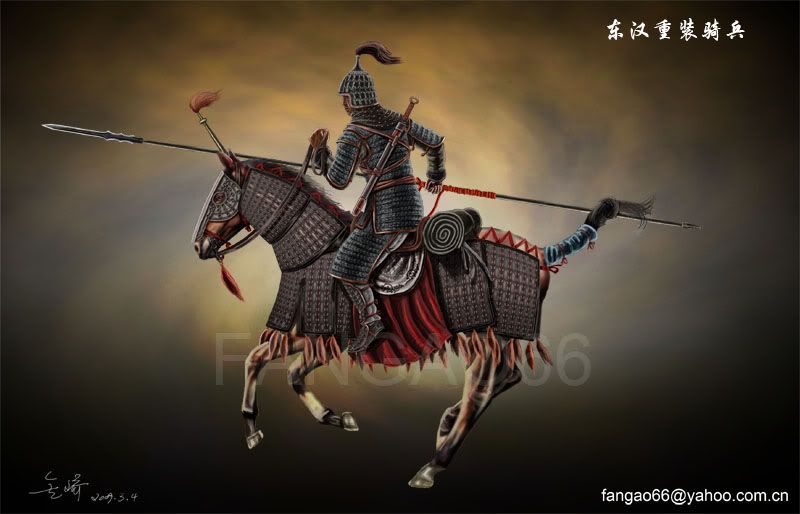
Eastern Han heavy cavalry with Spear (Above)

Note there are no stirrups in Han cavalry.  8)
#3931

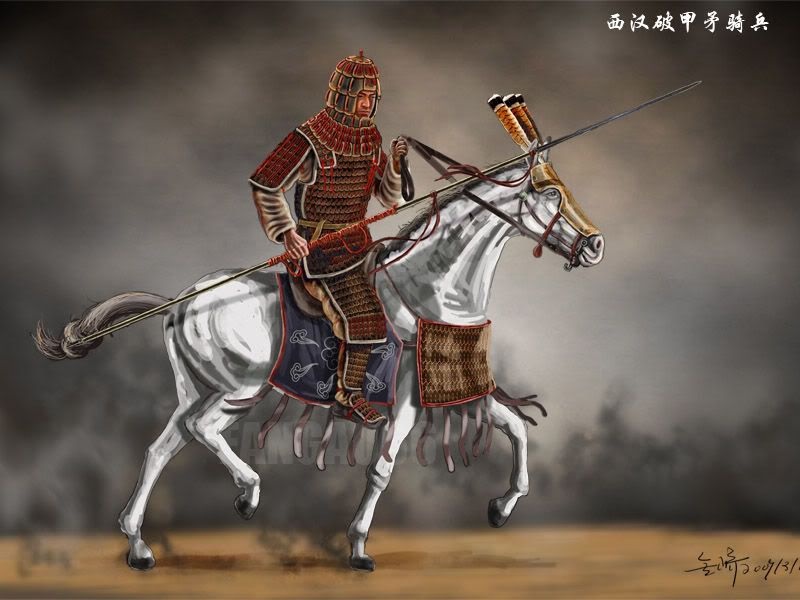
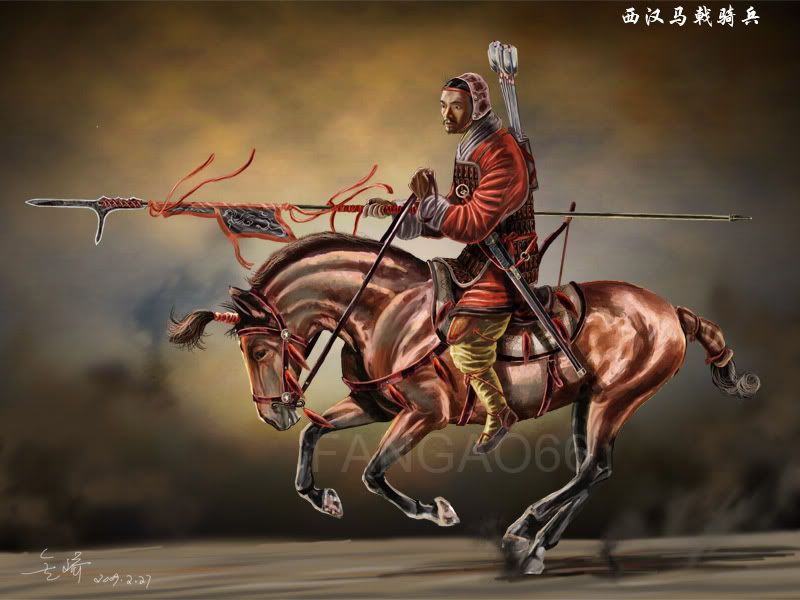
Western Han medium cavalry with Spear (above)
#3932

Western Han light cavalry with Ji-weapon (above)
#3933
The non-professional conscripted soldiers who served a one-year term under the Minister of the Guards belonged to the Southern Army (Nanjun 南軍).

Non-conscripted, professional soldiers belonged to a standing army known as the Northern Army (Beijun 北軍) The Northern Army's main purpose was to defend the capital, but it was sometimes required to repel foreign invasions.

During peacetime and war, the command structure of the Northern Army remained the same. However, during times of great conflict and crisis, the raising of large militias required the appointment of many new officers with various titles, which were often bestowed as honorary titles to officials during times of peace. Large divisions were led by a General (Jiangjun 將軍) whose rank depended on status; divisions were divided into a number of regiments commanded by a Colonel, and sometimes by a Major.

It its zenith, the Han Imperial Army had some 250,000 soldiers mobilized.


#3934
I would like to first discuss about the armies of Ancient China, the most glorious Chinese Dynasty was the Han Dynasty, which flourished for over 400 years. Under the Han, China "Zhongguo" experienced unprecedented cultural, economic, political and military growth.

#3935
History / Discussion on the ancient asian armies
July 30, 2013, 02:07:39 PM
Let's discuss !
#3936
The Han Dynasty (206 BC - 220 AD)

was an imperial dynasty of China, preceded by the Qin Dynasty (221â€"207 BC) and succeeded by the Three Kingdoms (220â€"280 AD). It was founded by the rebel leader Liu Bang, known posthumously as Emperor Gaozu of Han. It was briefly interrupted by the Xin Dynasty (9â€"23 AD) of the former regent Wang Mang. This interregnum separates the Han into two periods: the Western Han (206 BC â€" 9 AD) and Eastern Han (25â€"220 AD). Spanning over four centuries, the period of the Han Dynasty is considered a golden age in Chinese history.

To this day, China's majority ethnic group refers to itself as the "Han people" and the Chinese script is referred to as "Han characters".

The Han Empire was divided into areas directly controlled by the central government, known as commanderies, and a number of semi-autonomous kingdoms. These kingdoms gradually lost all vestiges of their independence, particularly following the Rebellion of the Seven States.

The Han Dynasty was an age of economic prosperity and saw a significant growth of the money economy first established during the Zhou Dynasty (c. 1050â€"256 BC). The coinage issued by the central government mint in 119 BC remained the standard coinage of China until the Tang Dynasty (618â€"907 AD). To pay for its military campaigns and the settlement of newly conquered frontier territories, the government nationalized the private salt and iron industries in 117 BC. These government monopolies were repealed during the Eastern Han period, and the lost revenue was recouped through heavily taxing private entrepreneurs. The emperor was at the pinnacle of Han society. He presided over the Han government but shared power with both the nobility and appointed ministers who came largely from the scholarly gentry class. From the reign of Emperor Wu onward, the Chinese court officially sponsored Confucianism in education and court politics, synthesized with the cosmology of later scholars such as Dong Zhongshu. This policy endured until the fall of the Qing Dynasty in 1911 AD. Science and technology during the Han period saw significant advances, including papermaking, the nautical steering rudder, the use of negative numbers in mathematics, the raised-relief map, the hydraulic-powered armillary sphere for astronomy, and a seismometer employing an inverted pendulum.


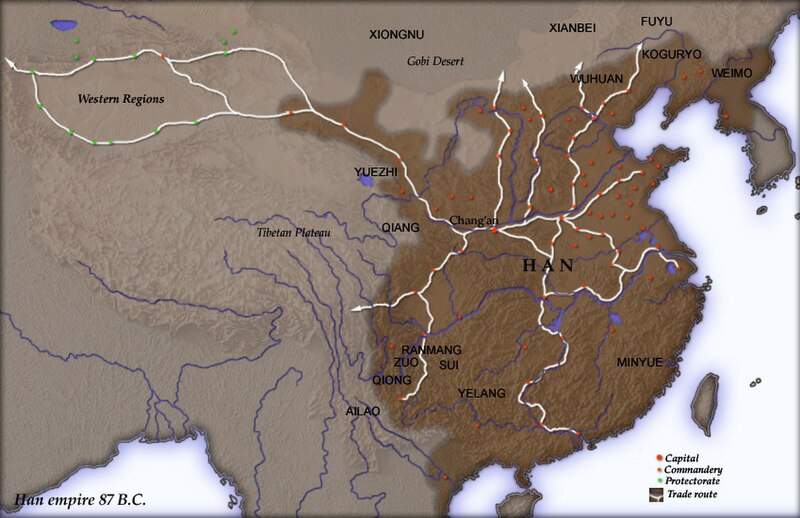
The Chinese Empire during the Han Dynasty


#3937
The Rise of Imperial China : The Qin Dynasty


Capital: Xianyang Historians often refer to the period from Qin Dynasty to the end of Qing Dynasty as Imperial China. Though the unified reign of the First Qin Emperor lasted only 12 years, he managed to subdue great parts of what constitutes the core of the Han Chinese homeland and to unite them under a tightly centralized Legalist government seated at Xianyang (close to modern Xi'an). The doctrine of Legalism that guided the Qin emphasized strict adherence to a legal code and the absolute power of the emperor. This philosophy, while effective for expanding the empire in a military fashion, proved unworkable for governing it in peacetime.

The Qin Dynasty is well known for beginning the Great Wall of China, which was later augmented and enhanced during the Ming Dynasty. The other major contributions of the Qin include the concept of a centralized government, the unification of the legal code, development of the written language, measurement, and currency of China after the tribulations of the Spring and Autumn and Warring States Periods. Even something as basic as the length of axles for carts had to be made uniform to ensure a viable trading system throughout the empire.


Emperor Qin Shi Huang, the First Emperor of a unified China


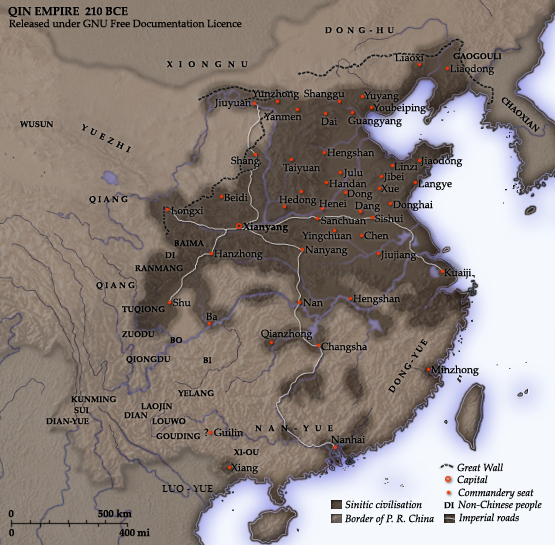
The territorial expanse of China at the time of the Qin Dynasty
#3938
Warring States Period (476â€"221 BC)


After further political consolidation, seven prominent states remained by the end of 5th century BC, and the years in which these few states battled each other are known as the Warring States period. Though there remained a nominal Zhou king until 256 BC, he was largely a figurehead and held little real power.

As neighboring territories of these warring states, including areas of modern Sichuan and Liaoning, were annexed, they were governed under the new local administrative system of commandery and prefecture (郡縣/郡县). This system had been in use since the Spring and Autumn Period, and parts can still be seen in the modern system of Sheng & Xian (province and county, 省縣/省县).

The final expansion in this period began during the reign of Ying Zheng, the king of Qin. His unification of the other six powers, and further annexations in the modern regions of Zhejiang, Fujian, Guangdong and Guangxi in 214 BC, enabled him to proclaim himself the First Emperor (Qin Shi Huang).

#3939
Spring and Autumn Period (722â€"476 BC)

In the 8th century BC, power became decentralized during the Spring and Autumn period, named after the influential Spring and Autumn Annals. In this period, local military leaders used by the Zhou began to assert their power and vie for hegemony. The situation was aggravated by the invasion of other peoples from the northwest, such as the Qin, forcing the Zhou to move their capital east to Luoyang. This marks the second major phase of the Zhou dynasty: the Eastern Zhou. The Spring and Autumn Period is marked by a falling apart of the central Zhou power. In each of the hundreds of states that eventually arose, local strongmen held most of the political power and continued their subservience to the Zhou kings in name only. Some local leaders even started using royal titles for themselves. China now consisted of hundreds of states, some of them only as large as a village with a fort.

The Hundred Schools of Thought of Chinese philosophy blossomed during this period, and such influential intellectual movements as Confucianism, Taoism, Legalism and Mohism were founded, partly in response to the changing political world.

#3940
The unique character of Dynastic change is a constant in Chinese history. For thousands of years, the change of dynasties was legitimized as the former losing the "Mandate of Heaven". For this reason, the Emperors of China were known as "Son of Heaven".

8)
#3941
History / Re: Military uniforms through the years
July 30, 2013, 01:40:10 PM
Imperial Japanese Army during the Great Pacific War (1941-1945)


Infantryman of the Imperial Japanese Army


Sentry of the Imperial Army; notice the fixed bayonets.
Japanese soldiers were feared for their liberal use of bayonets in the battlefield.


The "Banzai Charge" of the Imperial Army. The Japanese code of Bushido.

#3942
History / Re: Military uniforms through the years
July 30, 2013, 01:29:31 PM
Quote from: wardiflex on July 30, 2013, 01:03:05 PM
wow..astig nila bai doc.

Kuyaw bitaw ang ilang nationalism, Bai Wards.
#3943
History / Re: Military uniforms through the years
July 30, 2013, 11:40:38 AM
Imperial Japanese Army (1940-1945)


#3944
History / Re: Military uniforms through the years
July 30, 2013, 11:34:28 AM
Honor Guard Uniform of the People's Liberation Army, People's Republic of China (Present)


#3945
History / Re: Military uniforms through the years
July 30, 2013, 11:29:55 AM
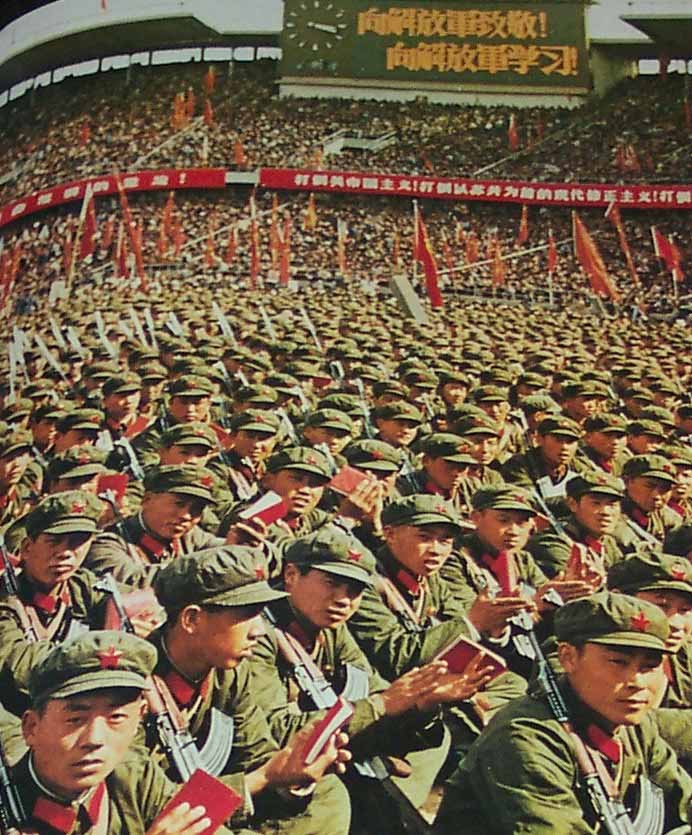
People's Liberation Army (1940-1960): The Uniform of the Red Guard


#3946
History / Re: Military uniforms through the years
July 30, 2013, 11:24:07 AM
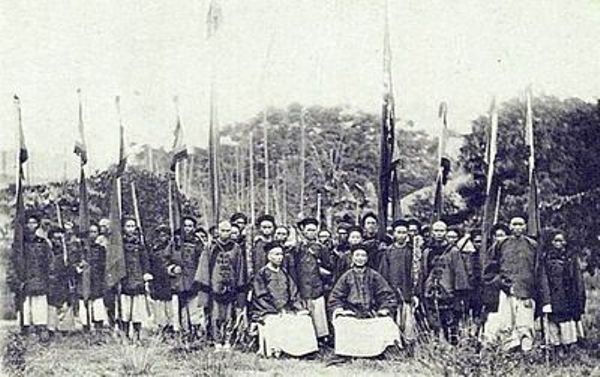
The Army Uniform of the Imperial Qing Dynasty, Empire of Greater China (1644-1912)


Imperial Regimental Banners, Imperial Qing Army


Imperial Qing Army, Infantry Armour


Infantry Uniform, taken during the late 19th century

#3947
History / Re: Military uniforms through the years
July 30, 2013, 11:15:17 AM
The Revolutionary Army Uniform: Ceremonial (Present day)

The Philippine Armed Forces still retains the uniform style of the Revolutionary Army for ceremonial purposes:


#3948
History / Re: Military uniforms through the years
July 30, 2013, 11:10:41 AM

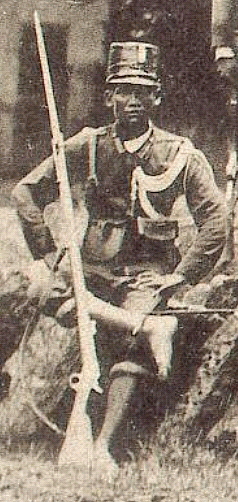
Filipino Fusilier, conscripted soldiers that formed the ranks of the Guardia Civil.
Note the Spanish-style head dress. 8)
#3949
History / Re: Military uniforms through the years
July 30, 2013, 11:08:57 AM
Guardia Civil de Las Filipinas (1880s-1896)

The Filipino Civil Guard was the pre-revolutionary army that was composed of Filipino soldiers and Spanish officers. It was the military body that enforced Spain's civil and military doctrine throughout the Philippine Archipelago. The Guardia Civil would revolt and later become the Revolutionary Army.


#3950
History / Re: Military uniforms through the years
July 30, 2013, 11:04:05 AM
Philippine Revolutionary Army(1896-1901)


#3951
History / Military uniforms through the years
July 30, 2013, 11:00:12 AM
Uniforms throughout the years.
#3952
Anonymous Diary Blog / Re: What Did You Do Today?
July 30, 2013, 10:40:01 AM
Another side view:

#3953
Anonymous Diary Blog / Re: What Did You Do Today?
July 30, 2013, 10:38:22 AM
Once installed, the front shall look just like this:


#3954
Anonymous Diary Blog / Re: What Did You Do Today?
July 30, 2013, 10:27:48 AM
I also purchased the following rear bumper guard , which I will install on my Mitsubishi next week.

It looks like this:


8)
#3955
Anonymous Diary Blog / Re: What Did You Do Today?
July 30, 2013, 09:52:39 AM
I just recently purchased front grill guards at a very reasonable price, $370, which I will install this coming week. Luckily I have a friend who can help me bolt this in the front of my vehicle.

This will be quite beneficial considering the crazy idiotic drivers in Chicago who like to bump people when they're parking on the street parking. I've already spent $500 just to remove dents from my bumper and repaint the bumpers. This additional grill guard shall be used to prevent these careless drivers from touching my Mitsubishi ever again. ehehehe!

8)


Oh, sexy diba?
#3956
English Dictionary / Re: quaggy
July 30, 2013, 09:46:51 AM
Quote from: Mike Ortega Ligalig on July 30, 2013, 08:13:10 AM
quaggy
quag·gy [kwággee, kwóggee]
(comparative quag·gi·er, superlative quag·gi·est)
adjective
marshy: soft and wet like a marsh or bog
-quag·gi·ness, noun


We drove by a quaggy farm during the dead of night. ;D
#3957
Anonymous Diary Blog / Re: What Did You Do Today?
July 30, 2013, 09:44:54 AM
This weekend, I got new brakes installed on my Mitsubishi Montero Sport. Purchased new HID lights, replaced my old stereo system for the new Kenwood Stereo where I can attach my I-pod to it. hehehe! Bought four new speakers for my Mitsubishi Montero Sport, they were on sale , but very good quality.

I'm also planning to purchase grill guards for the front, rear bumper guards, and to repaint her sigoro with her original color.

I decided that instead of purchasing a $50,000 Land Rover LR4, I will keep my Mitsubishi Montero Sport and just upgrade her amenities and to maintain her overall. She still runs very well.

;D  8)

#3958
Anonymous Diary Blog / Re: What Did You Do Today?
July 30, 2013, 09:41:54 AM
Boy I would love to go, pero, from the looks of my schedule, dili man ko ka anha, Fr. Roel. My resignation is effective on August 30; and my internship at Mercy Hospital begins at September 1. This week is a busy one for me, i'm currently trying to train my replacement, who is an R.N. and recently finished her M.P.A (Master in Public Administration, focusing on Health Care Education). She's learning a lot so far but she said to me today, "Dr. Lorenzo, I feel that I don't think i will be able to effectively do everything you do, especially in regards to tutoring the nursing students."

I had to stop her and say, "Yes you WILL !"

She is originally from Thailand and she feels a bit discouraged because of her thick Thai accent. Gi ingnan siya nako, "Your accent is manageable and the American students will do fine, you will do just fine."

Luoy pod intawon. I know she will do just fine.

Fr. Roel, just take pictures of the event. And I promise you that one way or the other, I will find myself visiting you soon. Either it be in Louisiana or back in Bohol. Enjoy the Paring Bol-anon event. And God Bless!!!!


Yours Truly,
Bran

;D
#3959
A preliminary view:


8)
#3960
Next weekend, I will be going on a camping trip to Lake Geneva, Wisconsin on August 2-4.

Shall be posting pictures of the event.

8)
#3961
Wow! Maybe next time I'm in Bohol, I can ask Dr. B to paint a picture of my Lolo and I. Oh that would be great.
#3962
Photos Unlimited / Re: Mo kaon kag Papaitan ?
July 28, 2013, 10:40:44 PM
Quote from: bugsay on July 27, 2013, 05:45:22 PM

hmmmm....tataitan..;D

Bwahaha, igitaitan kon maohon. :P
#3963
Question and Answer / Re: When Is War Justified?
July 28, 2013, 10:36:43 PM
Quote from: diablo on July 28, 2013, 12:19:04 PM
war is justified when the oppressed balong rebel against the oppressor desiderius hubagus erasmus

What exactly is it that you want , Balong ? Is not peace possible for you ? Do a Gandhi and be the change you want to see in the world. 8)
#3964
Anonymous Diary Blog / Re: Bacarra USA Picnic 2013
July 28, 2013, 10:33:05 PM
Mga Kompanyero, Naimbag a malem!   Ana ti pangaldaw ita?  ;D   ::)
#3965
Anonymous Diary Blog / Bacarra USA Picnic 2013
July 28, 2013, 10:30:41 PM
Hmm, So I'm going to post pictures of the event when I come back. Excited pod ko. ehehehe! 8)
#3967
Inspiration & Hope / Re: Live and let live
July 28, 2013, 10:23:30 PM
hmmmm, well, i can only say...shattap wid all dis fakkin fighting, meyn. :-X
#3968
Anonymous Diary Blog / Re: What Did You Do Today?
July 28, 2013, 10:21:28 PM
Quote from: diablo on July 28, 2013, 05:37:40 AM
wow. di jud ka ma gotman doc kay antigo man ka mo fish. give a man a fish, you feed him for a day. teach a man how to fish and you feed him for life.

I'm blessed to have really good friends, Nong. God has been kind to me. ;)
#3969
Anonymous Diary Blog / Re: What Did You Do Today?
July 28, 2013, 10:20:32 PM
Quote from: chicogon on July 28, 2013, 12:44:04 PM
Will do ;)

Hmmm, i'm tempted to fly over there and join you guys. ;D

When is the event? And what is the address? ;D   ::)
#3970
Anonymous Diary Blog / Re: What Did You Do Today?
July 28, 2013, 05:34:38 AM
Hehehe! Oh I'm so happy to know that you will be staying at their family's place! She makes really delicious cakes and sweets, btw! When i was still in college, she used to mail me cakes and sweets that she cooked. Ka Lami kaajo!

Take pictures mo duha. Sending you both my love and regards!

#3971
Anonymous Diary Blog / Re: Botoy says goodbye
July 28, 2013, 04:59:27 AM
Mao ning milyonaryo....;D
#3972
Anonymous Diary Blog / Re: What Did You Do Today?
July 27, 2013, 02:29:32 PM
I'm excited! This Sunday I will be attending the Bacarra USA Summer Picnic to be held in Carol Stream, Illinois. The Academic Dean of the college i work for invited me to the event. I'm going there with Dr. Dayriz and Dr. Josefina.

Next weekend, I'm planning to go camping in Lake Geneva, Wisconsin with a group of friends. Mag Fly fishing intawon si Doc Lorenzo pohon. ehehehe!

Maayo baja na diri kai na nubugnawbugnaw na diri sa Chicago. 8)
#3973
Votives,

Please contact me via PM.
#3974
Anonymous Diary Blog / Re: Botoy is back!
July 27, 2013, 02:22:56 PM
Yes, do share pictures of Botoyitot. How is his friend that Germans shepherd doggy you baby sat for ?
#3975
Photos Unlimited / Re: Mo kaon kag Papaitan ?
July 27, 2013, 02:19:39 PM
Quote from: hubag bohol on July 27, 2013, 02:00:36 PM
Mo lang! 8)
Quote from: Lollapalooza on July 27, 2013, 02:08:48 PM
never hehehehe... kita ko unsaon paghimo... paklay lang nuon..

I attended a Filipino Party here in Chicago couple of months back and they served this there. There were people from Ilocos region at the party and I asked one of the ladies what the name of the dish was. She said, "Oh that is Papaitan! Delicacy yan sa Ilocandia!"

Ingon ko, "Oh, I never heard of this before."

I tasted it, it was very rich, quite bitter alright, but the bitterness was subdued by the salty sweet taste. Very interesting consistency and flavor.
#3976
Anonymous Diary Blog / Re: What Did You Do Today?
July 27, 2013, 02:16:10 PM
Quote from: chicogon on July 27, 2013, 01:55:56 AM
Thank you!

Tell Ate Ging I said Hi! Take pictures mo didto ha. Sending you both my Love, filled with hugs and kisses. 8)
#3977
Anonymous Diary Blog / Re: What Did You Do Today?
July 27, 2013, 02:15:18 PM
Quote from: Lollapalooza on July 27, 2013, 02:08:12 PM
it's a stolen shot of me bitaw... sige pod ug pamiktyur ning akong kauban sa opis.. daghan mi nag overtime aning PBB sa mga teachers.. nahuman ra gyud namo.. by Monday or Tuesday, naa nato sa ilang ATM.. ;D

mmmmmmm, mao ba, jenneth? hahaha! i don't know but i have a feeling that uwawon ka gamay.

;D
#3978
Anonymous Diary Blog / Re: Botoy is back!
July 27, 2013, 02:13:26 PM
Quote from: hubag bohol on July 27, 2013, 01:59:15 PM
Ah, si Botoyitot. Nisamot kasapoton, senior citizen na man gud tawon. Iyang edad 60+ na in human years. Senile dementia galing...

;D

okey ra na uy, bata pa man nang 60! Our one and only Kaiser Wilhelm is now 9 years old (human) and would be 63 years old (dog years). Pero, he still acts like that 8 week old puppy that i remember when he joined our family back in 2004. mao na we call him "mr. old man" pero in endearment talaga. ehehehe. he's our one and only "mr. old man". intawon.

sigoro na mingaw si botoyitot kai ning adto man gud ka sa nyc. ingon to sija, "na ahak, asa lagi to ahong partner in crime?"

bwahahaha! ;D
#3979
Photos Unlimited / Re: Mo kaon kag Papaitan ?
July 27, 2013, 01:56:34 PM
Naka tilaw na ko ani sa una, lami baja. Delikado ni especially for those who have gout! Rich in uric acid lagi ni...
#3980
Photos Unlimited / Mo kaon kag Papaitan ?
July 27, 2013, 01:54:58 PM


Papaitan or pinapaitan is a stew of goat or ox tripes and innards flavored with bile and sampalok or siling labuyo. It derives its name from "pait" meaning bitter. It is most popular among Ilocanos, who are well-known for maximizing possible food sources for their cuisine, including innards.


#3981
Photos Unlimited / Re: Pagudpud Beach, Ilocos Norte
July 27, 2013, 01:51:59 PM
#3982
Photos Unlimited / Re: Pagudpud Beach, Ilocos Norte
July 27, 2013, 01:51:07 PM
#3983
Photos Unlimited / Pagudpud Beach, Ilocos Norte
July 27, 2013, 01:49:39 PM
Naka anhi na ba mo ? Ako, wala pa. Pero , maluoy ang Ginoo pohon pohon mo bisita gajod ko. :)

#3984
Photos Unlimited / Re: Ilocos Norte, Philippines
July 27, 2013, 01:47:51 PM
Reference: wiki
#3985
Photos Unlimited / Re: Ilocos Norte, Philippines
July 27, 2013, 01:45:23 PM
#3986
Photos Unlimited / Re: Ilocos Norte, Philippines
July 27, 2013, 01:44:19 PM

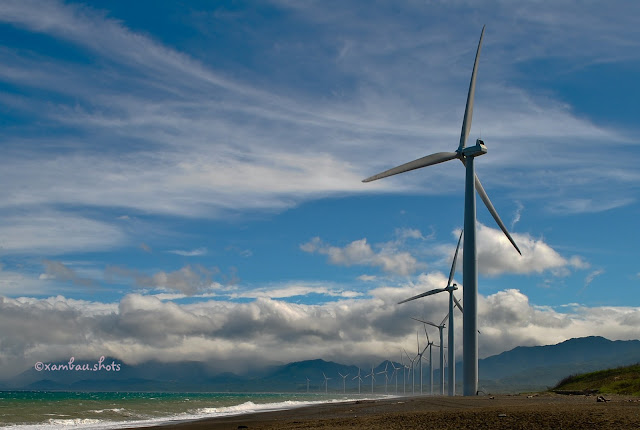
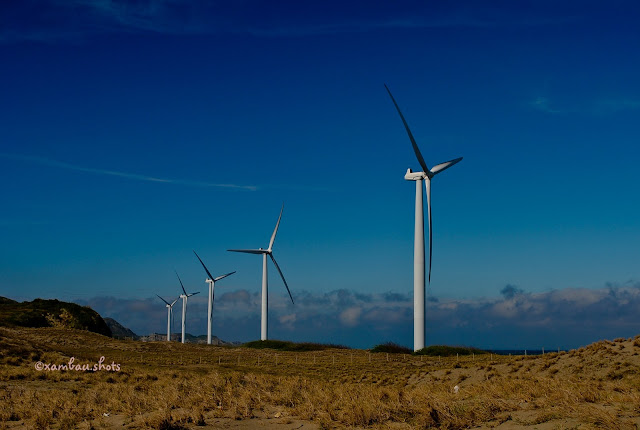
Windmills in Bangui, Ilocos Norte
#3987
Photos Unlimited / Re: Ilocos Norte, Philippines
July 27, 2013, 01:42:08 PM
Paoay Church, Paoay, Ilocos Norte

#3988
Photos Unlimited / Re: Ilocos Norte, Philippines
July 27, 2013, 01:39:06 PM
History

Long before the coming of the Spaniards, there already existed an extensive region (consisting of the present provinces of Ilocos Norte, Ilocos Sur, Abra and La Union) renowned for its gold mines. Merchants from Japan and China would often visit the area to trade gold with beads, ceramics and silk. The inhabitants of the region, believed to be of Malay origin, called their place "samtoy", from "sao mi toy", which literally meant "our language here"

In 1591, when the Spanish conquistadors had Manila more or less under their control, they began looking for new sites to conquer. Legaspi's grandson, Juan De Salcedo, volunteered to lead one of these expeditions. Together with 8 armed boats and 45 men, the 22 year old voyager headed north. On June 13, 1592, Salcedo and his men landed in Vigan and then proceeded towards Laoag, Currimao and Badoc. As they sailed along the coast, they were surprised to see numerous sheltered coves ("looc") where the locals lived in harmony. As a result, they named the region "Ylocos" and its people "Ylocanos".

As the Christianization of the region grew, so did the landscape of the area. Vast tracts of land were utilized for churches and bell towers in line with the Spanish mission of "bajo las campanas". In the town plaza, it was not uncommon to see garrisons under the church bells. The colonization process was slowly being carried out.

The Spanish colonization of the region, however, was never completely successful. Owing to the abusive practices of many Augustinian friars, a number of Ilocanos revolted against their colonizers. Noteworthy of these were the Dingras uprising (1589) and Pedro Almasan revolt (San Nicolas, 1660). In 1762, Diego Silang led a series of battles aimed at freeing the Ilocanos from the Spanish yoke. When he died from an assassin's bullet, his widow Gabriela continued the cause. Unfortunately, she too was captured and hanged. In 1807, the sugar cane ("basi") brewers of Piddig rose up in arms to protest the government's monopoly of the wine industry. In 1898, the church excommunicated Gregorio Aglipay for refusing to cut off ties with the revolutionary forces of Gen. Emilio Aguinaldo. Unperturbed, he established the "Iglesia Filipina Independiente". Aglipay’s movement and the nationalist sentiment it espoused helped restore the self-respect of many Filipinos.

In an effort to gain more political control and because of the increasing population of the region, a Royal Decree was signed on February 2, 1818 splitting Ilocos into two provinces: Ilocos Norte and Ilocos Sur. Soon thereafter, the provinces of La Union and Abra likewise became independent.
#3989
Photos Unlimited / Re: Ilocos Norte, Philippines
July 27, 2013, 01:36:15 PM
People and culture


n the 330-page The Ilocos Heritage (the 27th book written by Visitacion de la Torre), the Ilocano legacy and the life of the Ilocano â€" are described as - "the browbeaten, industrious, cheerful, simple soul who has shown a remarkable strain of bravery and a bit of wanderlust." The Ilocano history reveals his struggles and victories â€" in battles for colonial independence from Spain and America, to Philippine leadership. The new Ilocano searched for greener pastures towards new lands local and foreign - Palawan, Mindanao, Hawaii, the United States and Greece. The Ilocano material culture and spirituality can be seen in the past - images of Spanish santo (saints), antique but intricate wooden furniture and quality local fiber. The native Ilocano is a weaver, wood carver and pottery expert. The Ilocano cuisine â€" ranges from the exotic "abu-os" (ant eggs) to vegetable broth "dinengdeng," and "pinakbet" the sticky "tinubong" to the "poqui-poqui" (eggplant salad). Ilocandia is filled with colonial churches, the legacy of Spanish Catholicism.
#3990
Photos Unlimited / Re: Ilocos Norte, Philippines
July 27, 2013, 01:35:27 PM
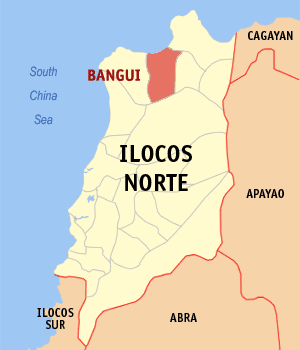
Ilocos Norte (Ilokano:Amianan nga Ilocos; Filipino:Hilagang Ilokos) is a province of the Philippines located in the Ilocos Region in Luzon. Its capital is Laoag City and is located at the northwest corner of Luzon Island, bordering Cagayan and Apayao to the east, and Abra and Ilocos Sur to the south. Ilocos Norte faces the South China Sea to the west and the Luzon Strait to the north.
#3991
Photos Unlimited / Ilocos Norte, Philippines
July 27, 2013, 01:33:24 PM
#3992
Health and Food / Re: Giant Lobster
July 27, 2013, 01:28:36 PM
bwahahaha sukol ra sa atong tiyan, bai wards. ;D

lami ning lobster i parison ug maize. ehehehe. Fr. Roel has good taste in food. 8)
#3993
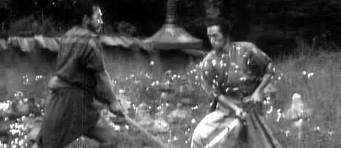
Seven Samurai
#3994
Quote from: chicogon on December 03, 2012, 11:47:45 AM
Thank you... I will as soon as dili nako katugon hahaha. It was a long day today, labi na wa kaayo makatulog last night. Too much energy lately, Bran hehehe

Fr. Roel, still waiting to see more pictures. ehehehe!
#3996
Photos Unlimited / Re: Bullfighters of Spain
July 27, 2013, 12:25:45 PM
agoi! ka sakita pod.
#3997
Health and Food / Re: Giant Lobster
July 27, 2013, 12:24:37 PM
Quote from: chicogon on July 14, 2013, 02:06:01 AM
Ge lanlan ra nako ni Dockie ;)

hahaha!
#3998
Quote from: Lorenzo on July 27, 2013, 12:14:21 PM
Who is your favorite samurai in this movie?


For me, it is Kyuzo.


The master swordsman who is only interested in perfecting himself, is the next member to join the band. Initially we seem him engage another samurai in a sword fight with bamboo staffs. After they position themselves and attack the challenger says, "It's a tie," "I won," replies Kyuzo. His opponent insists of a rematch with real blades this time. Kyuzo tries to warn him: "It is no use. Can't you see, if we use real swords you would be dead." The warning goes unheeded. As Kambei and Katsuhiro watch Kambei comments:


"What a waste. It is so obvious." He can tell a master swordsman when he sees one!"


#3999
Who is your favorite samurai in this movie?
#4000
This movie is the greatest of classics. You laugh, you are inspired, and you cry in this movie.