haha! enjoy the Philippines, amigo.
This section allows you to view all posts made by this member. Note that you can only see posts made in areas you currently have access to.
Pages 1 2 3 4 5 6 7 8 9 10 11 12 13 14 15 16 17 18 19 20 21 22 23 24 25 26 27 28 29 30 31 32 33 34 35 36 37 38 39 40 41 42 43 44 45 46 47 48 49 50 51 52 53 54 55 56 57 58 59 60 61 62 63 64 65 66 67 68 69 70 71 72 73 74 75 76 77 78 79 80 81 82 83 84 85 86 87 88 89 90 91 92 93 94 95 96 97 98 99 100 101 102 103 104 105 106 107 108 109 110 111 112 113 114 115 116 117 118 119 120 121 122 123 124 125 126 127 128 129 130 131 132 133 134 135 136 137 138 139 140 141 142 143 144 145 146 147 148 149 150 151 152 153 154 155 156 157 158 159 160 161 162 163 164 165 166 167 168 169 170 171 172 173 174 175 176 177 178 179 180 181 182 183 184 185 186 187 188 189 190 191 192 193 194 195 196 197 198 199 200 201 202 203 204 205 206 207 208 209 210 211 212 213 214 215 216 217 218 219 220 221 222 223 224 225 226 227 228 229 230 231 232 233 234 235 236 237 238 239 240 241 242 243 244 245 246 247 248 249 250 251 252 253 254 255 256 257 258 259 260 261 262 263 264 265 266 267 268 269 270 271 272 273 274 275 276 277 278 279 280 281 282 283 284 285 286 287 288 289 290 291 292 293 294 295 296 297 298 299 300 301 302 303 304 305 306 307 308 309 310 311 312 313 314 315 316 317 318 319 320 321 322 323 324 325 326 327 328 329 330 331 332 333 334 335 336 337 338 339 340 341 342 343 344 345 346 347 348 349 350 351 352 353 354 355 356 357 358 359 360 361 362 363 364 365 366 367 368 369 370 371 372 373 374 375 376 377 378 379 380 381 382 383 384 385 386 387 388 389 390 391 392 393 394 395 396 397 398 399 400 401 402 403 404 405 406 407 408 409 410 411 412 413 414 415 416 417 418 419 420 421 422 423 424 425 426 427 428 429 430 431 432 433 434 435 436 437 438 439 440 441 442 443 444 445 446 447 448 449 450 451 452 453 454 455 456 457 458 459 460 461 462 463 464 465 466 467 468 469 470 471 472 473 474 475 476 477 478 479 480 481 482 483 484 485 486 487 488 489 490 491 492 493 494 495 496 497 498 499 500 501 502 503 504 505 506 507 508 509 510 511 512 513 514 515 516 517 518 519 520 521 522 523 524 525 526 527 528 529 530 531 532 533 534 535 536 537 538 539
#35902
Music and Video / Re: Somebody's Baby
September 01, 2009, 04:38:24 AM
Lyrics
Well, just - a look at that girl with the lights comin' up in her eyes.
She's got to be somebody's baby.
She must be somebody's baby.
All the guys on the corner stand back and let her walk on by.
She's got to be somebody's baby.
She must be somebody's baby.
She's got to be somebody's baby.
She's so fine.
She's probably somebody's only light.
Gonna shine tonight.
Yeah, she's probably somebody's baby, all right.
I heard her talkin' with her friend when she thought nobody else was around.
She said she's got to be somebody's baby; she must be somebody's baby.
'Cause when the cars and the signs and the street lights light up the town,
She's got to be somebody's baby;
She must be somebody's baby;
She's got to be somebody's baby.
She's so....
She's gonna be somebody's only light.
Gonna shine tonight.
Yeah, she's gonna be somebody's baby tonight.
I try to shut eyes, but I can't get here outta my sight.
I know I'm gonna know her, but I gotta get over my fright.
We'll, I'm just gonna walk up to her.
I'm gonna talk to her tonight.
Yeah, she's gonna be somebody's only light.
Gonna shine tonight.
Yeah, she's gonna be somebody's baby tonight.
Gonna shine tonight, make her mine tonight.
#35903
Love Talk / Re: Spain Conquors
September 01, 2009, 04:11:45 AM
amigo, c'mon man, you need to introduce me to the chica de chicas hehe. you like filipina girls eh? hehehe
#35904
Introduce Yourself / Re: Picture of Yourself
September 01, 2009, 04:02:33 AM
Phantom of the Opera style,


#35905
Question and Answer / Re: What Is Your Favorite Beverage?
September 01, 2009, 03:53:38 AM
hehe! cheers!
I have an open bottle of Italian Sauvignon in my fridge. Treated myself to a glass or two after surviving our 3rd semester.
California red wine is exquisitely sweet. What brand?
I have an open bottle of Italian Sauvignon in my fridge. Treated myself to a glass or two after surviving our 3rd semester.
California red wine is exquisitely sweet. What brand?
#35906
Philippine Photo Gallery / Re: The Filipino Doctor
September 01, 2009, 02:43:24 AM
The Doctors.


Pictures from: Dr. C. Aguilar, M.D
Thanks Doc!
Pictures from: Dr. C. Aguilar, M.D
Thanks Doc!
#35907
Philippine Photo Gallery / The Filipino Doctor
September 01, 2009, 02:40:59 AM
My tribute to all the Filipino Physician/Surgeons that are abroad. In the service of the common man. In the service of life and the preservation of said life.
May our tribes increase! May our numbers rise. By the Grace of God...
May our tribes increase! May our numbers rise. By the Grace of God...
#35908
Youtube Replay / 500th Annversary Swiss Guards
September 01, 2009, 02:20:29 AM
For over 500 years the Swiss Guards have protected and guarded the Vatican and His Holiness, The Pope and Patron of the Holy Roman Catholic Church.
They celebrate their 500th year of existence in service to the Defense of the Church.
http://www.youtube.com/watch?v=i7CT7mejyss&feature=PlayList&p=D3F2607A7BF36E62&index=7
They celebrate their 500th year of existence in service to the Defense of the Church.
http://www.youtube.com/watch?v=i7CT7mejyss&feature=PlayList&p=D3F2607A7BF36E62&index=7
#35909
Youtube Replay / The United States Army Anthem: West Point March
September 01, 2009, 02:11:12 AM
United States Military Academy at West Point
Cadets in Full March
http://www.youtube.com/watch?v=i5YXzneNwKs
Cadets in Full March
http://www.youtube.com/watch?v=i5YXzneNwKs
#35910
Philippine Showcase / Full Military Honors for Corazon Aquino
September 01, 2009, 02:08:55 AM #35911
Youtube Replay / Re: British Grenadier March: Commentary
September 01, 2009, 02:04:07 AM
When one examines the military precision of the Royal British Army and the British Grenadiers, one realizes where the United States inherits its military prowess from.
Long Live the Queen!
Long Live to Her Royal Majesty's British Armed Forces!
Long Live the Queen!
Long Live to Her Royal Majesty's British Armed Forces!
#35912
Question and Answer / Re: Who is the greatest general in history?
September 01, 2009, 01:56:25 AM
Very nice, very nice!
#35913
Question and Answer / Re: What Is Your Favorite Beverage?
September 01, 2009, 01:55:14 AM
very suave and classy na imung choice, pre.
#35914
Anonymous Diary Blog / Re: Blowing Some Steam
September 01, 2009, 01:50:09 AM
Today I talked to my clinical instructor for PDI. It appears that we will not only be giving injections to each other (saline), but will also be injecting ourselves, and learning how to draw blood and basics of phlebotomy.
whoa. injecting myself? hahaha!
I'm excited. yo. hardcore.
whoa. injecting myself? hahaha!
I'm excited. yo. hardcore.
#35915
Anonymous Diary Blog / Re: Blowing Some Steam
September 01, 2009, 01:48:05 AM
I was worried earlier that my medical kit would not arrive in time for the beginning of this coming 4th semester. But it came. hehe.
Thanks be to God!
My new Littman Cardiology Stethoscope, medical blood pressure kit, reflex hammer, orthoscope, medical tuning fork and a whole bag of 'goodies' lol.
PDI here I come! (patient diagnosis interxn)
Thanks be to God!
My new Littman Cardiology Stethoscope, medical blood pressure kit, reflex hammer, orthoscope, medical tuning fork and a whole bag of 'goodies' lol.
PDI here I come! (patient diagnosis interxn)
#35916
Loon - Bohol / Re: September 8, 2009: 256th Feast of Our Lady of Light in Loon, Bohol
September 01, 2009, 01:43:52 AM
Thanks for the information. Happy Fiesta for the town of Loon!
Viva Virgen Santa Maria!
Viva Virgen Santa Maria!
#35917
Question and Answer / Re: What Is Your Favorite Beverage?
September 01, 2009, 01:41:59 AM
Pare, from hard to smoothe.
I like it!
I like it!
#35918
Youtube Replay / Re: Jennifer's Body
September 01, 2009, 01:40:42 AM
This epitomizes Megan Fox,

Hello there,

Hello there,
#35919
Youtube Replay / Re: Jennifer's Body
September 01, 2009, 01:38:06 AM
hahaha. she's one beautiful piece of womanhood. eh?
gorgeous woman. yo tengo hambre..
gorgeous woman. yo tengo hambre..
#35920
Anonymous Diary Blog / Re: Picture Of The Day 2009
September 01, 2009, 01:36:29 AM


Netherlands Antilles
#35921
Anonymous Diary Blog / Picture Of The Day 2009
September 01, 2009, 01:33:11 AM
The New Picture Of The Day Thread.
#35922
Duero - Bohol / Re: AHAPI FREE MEDICAL CLINIC Coming to Duero
September 01, 2009, 01:24:43 AM
Nice nice! Priscilla, please post pictures?
Give our regards to Dr. E. Lim.
Give our regards to Dr. E. Lim.
#35923
Love Talk / Re: How to find a Husband?
September 01, 2009, 01:23:53 AM
Its painful, btw.
I was circumcised when I was 6 years old and the physician who had the honor of 'tuli-ing' me did not give me enough analgesics. I felt every single cut, every single snip.
I was circumcised when I was 6 years old and the physician who had the honor of 'tuli-ing' me did not give me enough analgesics. I felt every single cut, every single snip.
#35924
Love Talk / Re: Spain Conquors
September 01, 2009, 01:19:38 AM
hahaha well then, Keks, maybe you can introduce me to the more conservative Spanish girls?
he he or we can go to Venezuela....lol!
he he or we can go to Venezuela....lol!
#35925
Philippine Showcase / Re: TV commercial in Tagalog in Spain
September 01, 2009, 01:18:30 AM
interesting information, keko and Mr. Koddi.
#35926
General Topic / Re: Native Filipino Delicacies, what have you?
September 01, 2009, 01:15:36 AMQuote from: Mari on August 29, 2009, 08:41:09 PM
Here are some of the native filipino delicacies at the booth which were shared for free.






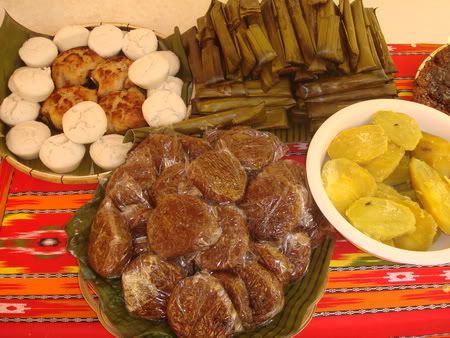

Mari, these pictures are so tempting. hehe
I love the picturesque preparations.
#35927
Question and Answer / Re: Unsay Imong Gikaon Karon?
September 01, 2009, 01:12:29 AM
breakfast: oatmeal w/ evaporated milk
lunch: italian sub w/ lemonade
lunch: italian sub w/ lemonade
#35928
Question and Answer / Re: Do You Think Best Learner Would Also A Best Earner?
September 01, 2009, 01:07:22 AM
hehe, I do hope he teaches someday, Justin did mention an interest in teaching classes in the future. I had the pleasure of making his acquaintance in a Lincoln-Douglass Collegiate Debate Forum, back in fall of 2005. 'twas held at Carnegie-Mellon University in Pittsburgh, Pennsylvania.
Some men have that ability to speak with words and instill statutes and dictates with such a whim.
I, then a 1st year History Major, was left on the floor with my defense on the subject matter (justification for the United States' invasion of Nicaragua) totally in pieces.
At the end of our debate, we had a nice talk on American policy in Iraq (then it was still a 'popular' war). Brilliant man. I would have expected him to pursue Law, but a Ph.D on International Politics does suit him. Some men are born to live and teach within the prestigious pillars of Academia.
To such brilliant men, I can only marvel at their intellectual...brilliance..hehehe
#35929
Question and Answer / Re: Unsay Imong Gipang Apply saw Nawong sa Una? Pampagwapa/Pampagwapo
September 01, 2009, 01:00:18 AM
Raquel and Jenneth, you two ladies do not lead any make up or powder, as your radiant beauty shines the halls that you two walk in. hehe
Natural beauty hehe!
Natural beauty hehe!
#35930
Question and Answer / Re: What Is Your Favorite Beverage?
September 01, 2009, 12:58:23 AM
lol, then I am in good company, Mr. Koddi.
As my father would say, "amongst great men, is their humble nature."
Come, sir, let us drink to our good health, and continued intellectual discourse!
hehe
As my father would say, "amongst great men, is their humble nature."
Come, sir, let us drink to our good health, and continued intellectual discourse!
hehe
#35931
Bible Study / Re: Hell Is REAL
September 01, 2009, 12:54:11 AM
To quote the Roman Catholic Church's views,
"The damned are confirmed in evil; every act of their will is evil and inspired by hatred of God. This is the common teaching of theology; St. Thomas sets it forth in many passages. Nevertheless, some have held the opinion that, although the damned cannot perform any supernatural action, they are still able to perform, now and then, some naturally good deed; thus far the Church has not condemned this opinion. The author of this article maintains that the common teaching is the true one; for in hell the separation from the sanctifying power of Divine love is complete. Many assert that this inability to do good works is physical, and assign the withholding of all grace as its proximate cause; in doing so, they take the term grace in its widest meaning, i.e. every Divine co-operation both in natural and in supernatural good actions. The damned, then, can never choose between acting out of love of God and virtue, and acting out of hatred of God. Hatred is the only motive in their power; and they have no other choice than that of showing their hatred of God by one evil action in preference to another. The last and the real cause of their impenitence is the state of sin which they freely chose as their portion on earth and in which they passed, unconverted, into the next life and into that state of permanence (status termini) by nature due to rational creatures, and to an unchangeable attitude of mind. Quite in consonance with their final state, God grants them only such cooperation as corresponds to the attitude which they freely chose as their own in this life. Hence the damned can but hate God and work evil, whilst the just in heaven or in purgatory, being inspired solely by love of God, can but do good. Therefore, too, the works of the reprobate, in as far as they are inspired by hatred of God, are not formal, but only material sins, because they are performed without the liberty requisite for moral imputability. Formal sin the reprobate commits then only, when, from among several actions in his power, he deliberately chooses that which contains the greater malice. By such formal sins the damned do not incur any essential increase of punishment, because in that final state the very possibility and Divine permission of sin are in themselves a punishment; and, moreover, a sanction of the moral law would be quite meaningless."
...But if the damned are impenitent, how can Scripture (Wisdom 5) say they repent of their sin? They deplore with the utmost intensity the punishment, but not the malice of sin; to this they cling more tenaciously than ever. Had they an opportunity, they would commit the sin again, not indeed for the sake of its gratification, which they found illusive, but out of sheer hatred of God. They are ashamed of their folly which led them to seek happiness in sin..
http://www.newadvent.org/cathen/07207a.htm
#35932
Bible Study / Re: Minute Meditations
September 01, 2009, 12:48:57 AM
On Renewing Your Faith
Faith must be augmented. The natural inclination to question is an innate trait of being human, a trait one has inherited since the fall of man after the transgression of Adam and Eve. The instance of questioning Divine Precepts is the temptation of satan and his devils, may the Lord God rebuke them.
Faith must be augmented and strengthened by reading The Blessed Word and enriching one's life through religious embrace.
Faith will be tempted. It is up to the individual to wage war against sin and the devil.
#35933
Bible Study / Re: Hell Is REAL
September 01, 2009, 12:44:28 AM
Good points, Misty.
The state of hell is an eternal state of emptiness and separation from God and all that is expressed and felt as good by the Divine Presence. When one examines, ecclesiastic writings written by the Great Saints and Church Fathers, Church Theologians and in humble observation and studying of the Blessed Word, one understands this:
1. The damnation of a soul to eternal perdition is due to the impenitence of the damned.
The reason for their damnation is their inability to reason with the Divine Will; meaning, it is their own pride and their own lasciviousness for sin and separation and inability to comply with Divine precepts that condemns them to hell.
The Eternal and One Living God has made it priority that salvation be available to all. All who are alive, for all sin. Romans 3:23, "For all have Fallen Short of the Glory of God."
The pride of sin, the inability to recognize one's wrongs, all that is considered abomination before the eyes of God and all actions that are reprobate before His Divine Presence will warrant damnation.
Repentance is utmost and stressed.
Not giving Lip Service, but to prostrate one before the Power of Divine Providence and accept His Mercy.
God does not put us to Hell. It is the impenitence of the damned that predestines one to damnation.
#35934
Youtube Replay / United States Navy: Beautiful Commercial
August 31, 2009, 03:30:01 PM #35935
Youtube Replay / United States Marines: A Tribute
August 31, 2009, 03:28:29 PM
Go Marines!
The Few
The Proud
The United States Marines
http://www.youtube.com/watch?v=UFeHoMhuz7A&feature=related
The Few
The Proud
The United States Marines
http://www.youtube.com/watch?v=UFeHoMhuz7A&feature=related
#35936
Youtube Replay / Re: British Grenadier March: Commentary
August 31, 2009, 03:13:21 PM
Her British Royal Majesty's British Grenadiers.
Full March.
http://www.youtube.com/watch?v=zAJskH_AWv4&feature=related
Excellent
Full March.
http://www.youtube.com/watch?v=zAJskH_AWv4&feature=related
Excellent
#35937
Youtube Replay / British Grenadier March: Commentary
August 31, 2009, 03:11:14 PM
Military parade of the British Grenadier. Troup of Colours.
http://www.youtube.com/watch?v=oVZzkzSPUac
Excellent precision.
http://www.youtube.com/watch?v=oVZzkzSPUac
Excellent precision.
#35938
Youtube Replay / Transformers: Revenge of The Fallen
August 31, 2009, 02:01:12 PM #35939
Philippine Showcase / Re: TV commercial in Tagalog in Spain
August 31, 2009, 01:42:22 PM
Yo Gusto! hehe!
Vamos!
Vamos!
#35940
Philippine Showcase / Magellan (Remix)
August 31, 2009, 01:39:35 PM #35941
Philippine Showcase / Usahay
August 31, 2009, 01:26:37 PM #35942
Question and Answer / Re: Who is the greatest general in history?
August 31, 2009, 01:04:59 PM
Ancient: Gaius Julius Caesar
Classical: Napoleon Bonaparte
Modern: Erwin Rommel (The Desert Fox)
Classical: Napoleon Bonaparte
Modern: Erwin Rommel (The Desert Fox)
#35943
Question and Answer / Re: What Is Your Favorite Get-Away Spot?
August 31, 2009, 01:02:34 PM
For me: Church.
I can sit in church for hours, if I'm stressed, I go to church. Going to mass calms my mind. One gets an unexplainable sense of peace.
I can sit in church for hours, if I'm stressed, I go to church. Going to mass calms my mind. One gets an unexplainable sense of peace.
#35944
Question and Answer / What's Your Favorite Movie Genre?
August 31, 2009, 01:00:05 PM
Horror, suspense, action, romance, fantasy, science fiction etc etc
#35945
Bible Study / Re: The Eucharist
August 31, 2009, 12:53:38 PM
Transubstantiation
Before proving dogmatically the fact of the substantial change here under consideration, we must first outline its history and nature.
(a) The scientific development of the concept of Transubstantiation can hardly be said to be a product of the Greeks, who did not get beyond its more general notes; rather, it is the remarkable contribution of the Latin theologians, who were stimulated to work it out in complete logical form by the three Eucharistic controversies mentioned above, The term transubstantiation seems to have been first used by Hildebert of Tours (about 1079). His encouraging example was soon followed by other theologians, as Stephen of Autun (d. 1139), Gaufred (1188), and Peter of Blois (d. about 1200), whereupon several ecumenical councils also adopted this significant expression, as the Fourth Council of the Lateran (1215), and the Council of Lyons (1274), in the profession of faith of the Greek Emperor Michael Palæologus. The Council of Trent (Sess. XIII, cap. iv; can. ii) not only accepted as an inheritance of faith the truth contained in the idea, but authoritatively confirmed the "aptitude of the term" to express most strikingly the legitimately developed doctrinal concept. In a closer logical analysis of Transubstantiation, we find the first and fundamental notion to be that of conversion, which may be defined as "the transition of one thing into another in some aspect of being". As is immediately evident, conversion (conversio) is something more than mere change (mutatio). Whereas in mere changes one of the two extremes may be expressed negatively, as, e.g., in the change of day and night, conversion requires two positive extremes, which are related to each other as thing to thing, and must have, besides, such an intimate connection with each other, that the last extreme (terminus ad quem) begins to be only as the first (terminus a quo) ceases to be, as, e.g., in the conversion of water into wine at Cana. A third element is usually required, known as the commune tertium, which, even after conversion has taken place, either physically or at least logically unites one extreme to the other; for in every true conversion the following condition must be fulfilled: "What was formerly A, is now B." A very important question suggests itself as to whether the definition should further postulate the previous non-existence of the last extreme, for it seems strange that an existing terminus a quo, A, should be converted into an already existing terminus ad quem, B. If the act of conversion is not to become a mere process of substitution, as in sleight-of-hand performances, the terminus ad quem must unquestionably in some manner newly exist, just as the terminus a quo must in some manner really cease to exist. Yet as the disappearance of the latter is not attributable to annihilation properly so called, so there is no need of postulating creation, strictly so called, to explain the former's coming into existence. The idea of conversion is amply realized if the following condition is fulfilled, viz., that a thing which already existed in substance, acquires an altogether new and previously non-existing mode of being. Thus in the resurrection of the dead, the dust of the human bodies will be truly converted into the bodies of the risen by their previously existing souls, just as at death they had been truly converted into corpses by the departure of the souls. This much as regards the general notion of conversion. Transubstantiation, however, is not a conversion simply so called, but a substantial conversion (conversio substantialis), inasmuch as one thing is substantially or essentially converted into another. Thus from the concept of Transubstantiation is excluded every sort of merely accidental conversion, whether it be purely natural (e.g. the metamorphosis of insects) or supernatural (e.g. the Transfiguration of Christ on Mount Tabor). Finally, Transubstantiation differs from every other substantial conversion in this, that only the substance is converted into another â€" the accidents remaining the same â€" just as would be the case if wood were miraculously converted into iron, the substance of the iron remaining hidden under the external appearance of the wood.
The application of the foregoing to the Eucharist is an easy matter. First of all the notion of conversion is verified in the Eucharist, not only in general, but in all its essential details. For we have the two extremes of conversion, namely, bread and wine as the terminus a quo, and the Body and Blood of Christ as the terminus ad quem. Furthermore, the intimate connection between the cessation of one extreme and the appearance of the other seems to be preserved by the fact, that both events are the results, not of two independent processes, as, e.g. annihilation and creation, but of one single act, since, according to the purpose of the Almighty, the substance of the bread and wine departs in order to make room for the Body and Blood of Christ. Lastly, we have the commune tertium in the unchanged appearances of bread and wine, under which appearances the pre-existent Christ assumes a new, sacramental mode of being, and without which His Body and Blood could not be partaken of by men. That the consequence of Transubstantiation, as a conversion of the total substance, is the transition of the entire substance of the bread and wine into the Body and Blood of Christ, is the express doctrine of the Church (Council of Trent, Sess. XIII, can. ii). Thus were condemned as contrary to faith the antiquated view of Durandus, that only the substantial form (forma substantialis) of the bread underwent conversion, while the primary matter (materia prima) remained, and, especially, Luther's doctrine of Consubstantiation, i.e. the coexistence of the substance of the bread with the true Body of Christ. Thus, too, the theory of Impanation advocated by Osiander and certain Berengarians, and according to which a hypostatic union is supposed to take place between the substance of the bread and the God-man (impanatio = Deus panis factus), is authoritatively rejected. So the Catholic doctrine of Transubstantiation sets up a mighty bulwark around the dogma of the Real Presence and constitutes in itself a distinct doctrinal article, which is not involved in that of the Real Presence, though the doctrine of the Real Presence is necessarily contained in that of Transubstantiation. It was for this very reason that Pius VI, in his dogmatic Bull "Auctorem fidei" (1794) against the Jansenistic pseudo Synod of Pistoia (1786), protested most vigorously against suppressing this "scholastic question", as the synod had advised pastors to do.
(b) In the mind of the Church, Transubstantiation has been so intimately bound up with the Real Presence, that both dogmas have been handed down together from generation to generation, though we cannot entirely ignore a dogmatico-historical development. The total conversion of the substance of bread is expressed clearly in the words of Institution: "This is my body". These words form, not a theoretical, but a practical proposition, whose essence consists in this, that the objective identity between subject and predicate is effected and verified only after the words have all been uttered, not unlike the pronouncement of a king to a subaltern: "You are a major", or, "You are a captain", which would immediately cause the promotion of the officer to a higher command. When, therefore, He Who is All Truth and All Power said of the bread: "This is my body", the bread became, through the utterance of these words, the Body of Christ; consequently, on the completion of the sentence the substance of bread was no longer present, but the Body of Christ under the outward appearance of bread. Hence the bread must have become the Body of Christ, i.e. the former must have been converted into the latter. The words of Institution were at the same time the words of Transubstantiation. Indeed the actual manner in which the absence of the bread and the presence of the Body of Christ is effected, is not read into the words of Institution but strictly and exegetically deduced from them. The Calvinists, therefore, are perfectly right when they reject the Lutheran doctrine of Consubstantiation as a fiction, with no foundation in Scripture. For had Christ intended to assert the coexistence of His Body with the Substance of the bread, He would have expressed a simple identity between hoc and corpus by means of the copula est, but would have resorted to some such expression as: "This bread contains my body", or, "In this bread is my Body." Had He desired to constitute bread the sacramental receptacle of His Body, He would have had to state this expressly, for neither from the nature of the case nor according to common parlance can a piece of bread be made to signify the receptacle of a human body. On the other hand, the synecdoche is plain in the case of the Chalice: "This is my blood", i.e. the contents of the Chalice are my blood, and hence no longer wine.
Regarding tradition, the earliest witnesses, as Tertullian and Cyprian, could hardly have given any particular consideration to the genetic relation of the natural elements of bread and wine to the Body and Blood of Christ, or to the manner in which the former were converted into the latter; for even Augustine was deprived of a clear conception of Transubstantiation, so long as he was held in the bonds of Platonism. On the other hand, complete clearness on the subject had been attained by writers as early as Cyril of Jerusalem, Theodoret of Cyrrhus, Gregory of Nyssa, Chrysostom, and Cyril of Alexandria in the East, and by Ambrose and the later Latin writers in the West. Eventually the West became the classic home of scientific perfection in the difficult doctrine of Transubstantiation. The claims of the learned work of the Anglican Dr. Pusey (The Doctrine of the Real Presence as contained in the Fathers, Oxford, 1855), who denied the cogency of the patristic argument for Transubstantiation, have been met and thoroughly answered by Cardinal Franzelin (De Euchar., Rome, 1887, xiv). The argument from tradition is strikingly confirmed by the ancient liturgies, whose beautiful prayers express the idea of conversion in the clearest manner. Many examples may be found in Renaudot, "Liturgiæ orient." (2nd ed., 1847); Assemani, "Codex liturg." (13 vols., Rome 1749-66); Denzinger, "Ritus Orientalium" (2 vols., Würzburg, 1864), Concerning the Adduction Theory of the Scotists and the Production Theory of the Thomists, see Pohle, "Dogmatik" (3rd ed., Paderborn, 1908), III, 237 sqq.
http://www.newadvent.org/cathen/05573a.htm#section2
#35946
Bible Study / Re: The Eucharist
August 31, 2009, 12:52:59 PM
The totality of the real presence
In order to forestall at the very outset, the unworthy notion, that in the Eucharist we receive merely the Body and merely the Blood of Christ but not Christ in His entirety, the Council of Trent defined the Real Presence to be such as to include with Christ's Body and His Soul and Divinity as well. A strictly logical conclusion from the words of promise: "he that eateth me the same also shall live by me", this Totality of Presence was also the constant property of tradition, which characterized the partaking of separated parts of the Savior as a sarcophagy (flesh-eating) altogether derogatory to God. Although the separation of the Body, Blood, Soul, and Logos, is, absolutely speaking, within the almighty power of God, yet then actual inseparability is firmly established by the dogma of the indissolubility of the hypostatic union of Christ's Divinity and Humanity. In case the Apostles had celebrated the Lord's Supper during the triduum mortis (the time during which Christ's Body was in the tomb), when a real separation took place between the constitutive elements of Christ, there would have been really present in the Sacred Host only, the bloodless, inanimate Body of Christ as it lay in tomb, and in the Chalice only the Blood separated from His Body and absorbed by the earth as it was shed, both the Body and the Blood, however, hypostatically united to His Divinity, while His Soul, which sojourned in Limbo, would have remained entirely excluded from the Eucharistic presence. This unreal, though not impossible, hypothesis, is well calculated to throw light upon the essential difference designated by the Council of Trent (Sess, XIII, c. iii), between the meanings of the words ex vi verborum and per concomitantiam. By virtue of the words of consecration, or ex vi verborum, that only is made present which is expressed by the words of Institution, namely the Body and the Blood of Christ. But by reason of a natural concomitance (per concomitantiam), there becomes simultaneously present all that which is physically inseparable from the parts just named, and which must, from a natural connection with them, always be their accompaniment. Now, the glorified Christ, Who "dieth now no more" (Romans 6:9) has an animate Body through whose veins courses His life's Blood under the vivifying influence of soul. Consequently, together with His Body and Blood and Soul, His whole Humanity also, and, by virtue of the hypostatic union, His Divinity, i.e. Christ whole and entire, must be present. Hence Christ is present in the sacrament with His Flesh and Blood, Body and Soul, Humanity and Divinity.
This general and fundamental principle, which entirely abstracts from the duality of the species, must, nevertheless, be extended to each of the species of bread and wine. For we do not receive in the Sacred Host one part of Christ and in the Chalice the other, as though our reception of the totality depended upon our partaking of both forms; on the contrary, under the appearance of bread alone, as well as under the appearance of wine alone, we receive Christ whole and entire (cf. Council of Trent, Sess. XIII, can. iii). This, the only reasonable conception, finds its Scriptural verification in the fact, that St. Paul (1 Corinthians 11:27, 29) attaches the same guilt "of the body and the blood of the Lord" to the unworthy "eating or drinking", understood in a disjunctive sense, as he does to "eating and drinking", understood in a copulative sense. The traditional foundation for this is to be found in the testimony of the Fathers and of the Church's liturgy, according to which the glorified Savior can be present on our altars only in His totality and integrity, and not divided into parts or distorted to the form of a monstrosity. It follows, therefore, that supreme adoration is separately due to the Sacred Host and to the consecrated contents of the Chalice. On this last truth are based especially the permissibility and intrinsic propriety of Communion only under one kind for the laity and for priests not celebrating Mass (see COMMUNION UNDER BOTH KINDS). But in particularizing upon the dogma, we are naturally led to the further truth, that, at least after the actual division of either Species into parts, Christ is present in each part in His full and entire essence. If the Sacred Host be broken into pieces or if the consecrated Chalice be drunk in small quantities, Christ in His entirety is present in each particle and in each drop. By the restrictive clause, separatione factâ the Council of Trent (Sess. XIII, can. iii) rightly raised this truth to the dignity of a dogma. While from Scripture we may only judge it improbable that Christ consecrated separately each particle of the bread He had broken, we know with certainty, on the other hand, that He blessed the entire contents of the Chalice and then gave it to His disciples to be partaken of distributively (cf. Matthew 26:27 sq.; Mark 14:23). It is only on the basis of the Tridentine dogma that we can understand how Cyril of Jerusalem (Mystagogical Catechesis 5, no. 21) obliged communicants to observe the most scrupulous care in conveying the Sacred Host to their mouths, so that not even "a crumb, more precious than gold or jewels", might fall from their hands to the ground; how Cæsarius of Arles taught that there is "just as much in the small fragment as in the whole"; how the different liturgies assert the abiding integrity of the "indivisible Lamb", in spite of the "division of the Host"; and, finally, how in actual practice the faithful partook of the broken particles of the Sacred Host and drank in common from the same cup.
While the three foregoing theses contain dogmas of faith, there is a fourth proposition which is merely a theological conclusion, namely, that even before the actual division of the Species, Christ is present wholly and entirely in each particle of the still unbroken Host and in each drop of the collective contents of the Chalice. For were not Christ present in His entire Personality in every single particle of the Eucharistic Species even before their division took place, we should be forced to conclude that it is the process of dividing which brings about the Totality of Presence, whereas according to the teaching of the Church the operative cause of the Real and Total Presence is to be found in Transubstantiation alone. No doubt this last conclusion directs the attention of philosophical and scientific inquiry to a mode of existence peculiar to the Eucharistic Body, which is contrary to the ordinary laws of experience. It is, indeed, one of those sublime mysteries, concerning which speculative theology attempts to offer various solutions [see below under (5)].
#35947
Bible Study / The Eucharist
August 31, 2009, 12:50:09 PM
Proof from Scripture
This may be adduced both from the words of promise (John 6:26 sqq.) and, especially, from the words of Institution as recorded in the Synoptics and St. Paul (1 Corinthians 11:23 sqq.).
The words of promise (John 6)
By the miracles of the loaves and fishes and the walking upon the waters, on the previous day, Christ not only prepared His hearers for the sublime discourse containing the promise of the Eucharist, but also proved to them that He possessed, as Almighty God-man, a power superior to and independent of the laws of nature, and could, therefore, provide such a supernatural food, none other, in fact, than His own Flesh and Blood. This discourse was delivered at Capharnaum (John 6:26-72), and is divided into two distinct parts, about the relation of which Catholic exegetes vary in opinion. Nothing hinders our interpreting the first part [John 6:26-48 (51)] metaphorically and understanding by "bread of heaven" Christ Himself as the object of faith, to be received in a figurative sense as a spiritual food by the mouth of faith. Such a figurative explanation of the second part of the discourse (John 6:52-72), however, is not only unusual but absolutely impossible, as even Protestant exegetes (Delitzsch, Kostlin, Keil, Kahnis, and others) readily concede. First of all the whole structure of the discourse of promise demands a literal interpretation of the words: "eat the flesh of the Son of man, and drink his blood". For Christ mentions a threefold food in His address, the manna of the past (John 6:31, 32, 49,, 59), the heavenly bread of the present (John 6:32 sq.), and the Bread of Life of the future (John 6:27, 52). Corresponding to the three kinds of food and the three periods, there are as many dispensers â€" Moses dispensing the manna, the Father nourishing man's faith in the Son of God made flesh, finally Christ giving His own Flesh and Blood. Although the manna, a type of the Eucharist, was indeed eaten with the mouth, it could not, being a transitory food, ward off death. The second food, that offered by the Heavenly Father, is the bread of heaven, which He dispenses hic et nunc to the Jews for their spiritual nourishment, inasmuch as by reason of the Incarnation He holds up His Son to them as the object of their faith. If, however, the third kind of food, which Christ Himself promises to give only at a future time, is a new refection, differing from the last-named food of faith, it can be none other than His true Flesh and Blood, to be really eaten and drunk in Holy Communion. This is why Christ was so ready to use the realistic expression "to chew" (John 6:54, 56, 58: trogein) when speaking of this, His Bread of Life, in addition to the phrase, "to eat" (John 6:51, 53: phagein). Cardinal Bellarmine (De Euchar., I, 3), moreover, calls attention to the fact, and rightly so, that if in Christ's mind the manna was a figure of the Eucharist, the latter must have been something more than merely blessed bread, as otherwise the prototype would not substantially excel the type. The same holds true of the other figures of the Eucharist, as the bread and wine offered by Melchisedech, the loaves of proposition (panes propositionis), the paschal lamb. The impossibility of a figurative interpretation is brought home more forcibly by an analysis of the following text: "Except you eat the flesh of the Son of man, and drink his blood, you shall not have life in you. He that eateth my flesh and drinketh my blood, hath everlasting life: and I will raise him up in the last day. For my flesh is meat indeed: and my blood is drink indeed" (John 6:54-56). It is true that even among the Semites, and in Scripture itself, the phrase, "to eat some one's flesh", has a figurative meaning, namely, "to persecute, to bitterly hate some one". If, then, the words of Jesus are to be taken figuratively, it would appear that Christ had promised to His enemies eternal life and a glorious resurrection in recompense for the injuries and persecutions directed against Him. The other phrase, "to drink some one's blood", in Scripture, especially, has no other figurative meaning than that of dire chastisement (cf. Isaiah 49:26; Apocalypse 16:6); but, in the present text, this interpretation is just as impossible here as in the phrase, "to eat some one's flesh". Consequently, eating and drinking are to be understood of the actual partaking of Christ in person, hence literally.
This interpretation agrees perfectly with the conduct of the hearers and the attitude of Christ regarding their doubts and objections. Again, the murmuring of the Jews is the clearest evidence that they had understood the preceding words of Jesus literally (John 6:53). Yet far from repudiating this construction as a gross misunderstanding, Christ repeated them in a most solemn manner, in John (6:54 sqq.). In consequence, many of His Disciples were scandalized and said: "This saying is hard, and who can hear it?" (John 6:61); but instead of retracting what He had said, Christ rather reproached them for their want of faith, by alluding to His sublimer origin and His future Ascension into heaven. And without further ado He allowed these Disciples to go their way (John 6:62 sqq.). Finally He turned to His twelve Apostles with the question: "Will you also go away?
Then Peter stepped forth and with humble faith replied: "Lord, to whom shall we go? thou hast the words of eternal life. And we have believed and have known, that thou art the Christ, the Son of God" (John 6:68 sqq.). The entire scene of the discourse and murmurings against it proves that the Zwinglian and Anglican interpretation of the passage, "It is the spirit that quickeneth", etc., in the sense of a glossing over or retractation, is wholly inadmissible. For in spite of these words the Disciples severed their connection with Jesus, while the Twelve accepted with simple faith a mystery which as yet they did not understand. Nor did Christ say: "My flesh is spirit", i.e. to be understood in a figurative sense, but: "My words are spirit and life". There are two views regarding the sense in which this text is to be interpreted. Many of the Fathers declare that the true Flesh of Jesus (sarx) is not to be understood as separated from His Divinity (spiritus), and hence not in a cannibalistic sense, but as belonging entirely to the supernatural economy. The second and more scientific explanation asserts that in the Scriptural opposition of "flesh and blood" to "spirit", the former always signifies carnal-mindedness, the latter mental perception illumined by faith, so that it was the intention of Jesus in this passage to give prominence to the fact that the sublime mystery of the Eucharist can be grasped in the light of supernatural faith alone, whereas it cannot be understood by the carnal-minded, who are weighed down under the burden of sin. Under such circumstances it is not to be wondered at that the Fathers and several Ecumenical councils (Ephesus, 431; Nicæa, 787) adopted the literal sense of the words, though it was not dogmatically defined (cf. Council of Trent, Sess. XXI, c. i). If it be true that a few Catholic theologians (as Cajetan, Ruardus Tapper, Johann Hessel, and the elder Jansenius) preferred the figurative interpretation, it was merely for controversial reasons, because in their perplexity they imagined that otherwise the claims of the Hussite and Protestant Utraquists for the partaking of the Chalice by the laity could not be answered by argument from Scripture. (Cf. Patrizi, "De Christo pane vitæ", Rome, 1851; Schmitt, "Die Verheissung der Eucharistie bei den Vütern", 2 vols., Würzburg, 1900-03.)
The words of Institution
The Church's Magna Charta, however, are the words of Institution, "This is my body â€" this is my blood", whose literal meaning she has uninterruptedly adhered to from the earliest times. The Real Presence is evinced, positively, by showing the necessity of the literal sense of these words, and negatively, by refuting the figurative interpretations. As regards the first, the very existence of four distinct narratives of the Last Supper, divided usually into the Petrine (Matthew 26:26 sqq.; Mark 14:22 sqq.) and the double Pauline accounts (Luke 22:19 sq.; 1 Corinthians 11:24 sq.), favors the literal interpretation. In spite of their striking unanimity as regards essentials, the Petrine account is simpler and clearer, whereas Pauline is richer in additional details and more involved in its citation of the words that refer to the Chalice. It is but natural and justifiable to expect that, when four different narrators in different countries and at different times relate the words of Institution to different circles of readers, the occurrence of an unusual figure of speech, as, for instance, that bread is a sign of Christ's Body, would, somewhere or other, betray itself, either in the difference of word-setting, or in the unequivocal expression of the meaning really intended, or at least in the addition of some such mark as: "He spoke, however, of the sign of His Body." But nowhere do we discover the slightest ground for a figurative interpretation. If, then, natural, literal interpretation were false, the Scriptural record alone would have to be considered as the cause of a pernicious error in faith and of the grievous crime of rendering Divine homage to bread (artolatria) â€" a supposition little in harmony with the character of the four Sacred Writers or with the inspiration of the Sacred Text. Moreover, we must not omit the important circumstance, that one of the four narrators has interpreted his own account literally. This is St. Paul (1 Corinthians 11:27 sq.), who, in the most vigorous language, brands the unworthy recipient as "guilty of body and of the blood of the Lord". There can be no question of a grievous offense against Christ Himself unless we suppose that the true Body and the true Blood of Christ are really present in the Eucharist. Further, if we attend only to the words themselves their natural sense is so forceful and clear that Luther wrote to the Christians of Strasburg in 1524: "I am caught, I cannot escape, the text is too forcible" (De Wette, II, 577). The necessity of the natural sense is not based upon the absurd assumption that Christ could not in general have resorted to use of figures, but upon the evident requirement of the case, which demand that He did not, in a matter of such paramount importance, have recourse to meaningless and deceptive metaphors. For figures enhance the clearness of speech only when the figurative meaning is obvious, either from the nature of the case (e.g. from a reference to a statue of Lincoln, by saying: "This is Lincoln") or from the usages of common parlance (e.g. in the case of this synecdoche: "This glass is wine"), Now, neither from the nature of the case nor in common parlance is bread an apt or possible symbol of the human body. Were one to say of a piece of bread: "This is Napoleon", he would not be using a figure, but uttering nonsense. There is but one means of rendering a symbol improperly so called clear and intelligible, namely, by, conventionally settling beforehand what it is to signify, as, for instance, if one were to say: "Let us imagine these two pieces of bread before us to be Socrates and Plato". Christ, however, instead of informing His Apostles that he intended to use such a figure, told them rather the contrary in the discourse containing the promise: "the bread that I will give, is my flesh, for the life of the world" (John 6:52), Such language, of course, could be used only by a God-man; so that belief in the Real Presence necessarily presupposes belief in the true Divinity of Christ, The foregoing rules would of themselves establish the natural meaning with certainty, even if the words of Institution, "This is my body â€" this is my blood", stood alone, But in the original text corpus (body) and sanguis (blood) are followed by significant appositional additions, the Body being designated as "given for you" and the Blood as "shed for you [many]"; hence the Body given to the Apostles was the self same Body that was crucified on Good Friday, and the Chalice drunk by them, the self same Blood that was shed on the Cross for our sins, Therefore the above-mentioned appositional phrases directly exclude every possibility of a figurative interpretation.
We reach the same conclusion from a consideration of the concomitant circumstances, taking into account both the hearers and the Institutor. Those who heard the words of Institution were not learned Rationalists, possessed of the critical equipment that would enable them, as philologists and logicians, to analyze an obscure and mysterious phraseology; they were simple, uneducated fishermen, from the ordinary ranks of the people, who with childlike naïveté hung upon the words of their Master and with deep faith accepted whatever He proposed to them, This childlike disposition had to be reckoned with by Christ, particularly on the eve of His Passion and Death, when He made His last will and testament and spoke as a dying father to His deeply afflicted children. In such a moment of awful solemnity, the only appropriate mode of speech would be one which, stripped of unintelligible figures, made use of words corresponding exactly to the meaning to be conveyed. It must be remembered, also, that Christ as omniscient God-man, must have foreseen the shameful error into which He would have led His Apostles and His Church by adopting an unheard-of metaphor; for the Church down to the present day appeals to the words of Christ in her teaching and practice. If then she practices idolatry by the adoration of mere bread and wine, this crime must be laid to the charge of the God-man Himself. Besides this, Christ intended to institute the Eucharist as a most holy sacrament, to be solemnly celebrated in the Church even to the end of time. But the content and the constituent parts of a sacrament had to be stated with such clearness of terminology as to exclude categorically every error in liturgy and worship. As may be gathered from the words of consecration of the Chalice, Christ established the New Testament in His Blood, just as the Old Testament had been established in the typical blood of animals (cf. Exodus 24:8; Hebrews 9:11 sqq.). With the true instinct of justice, jurists prescribe that in all debatable points the words of a will must be taken in their natural, literal sense; for they are led by the correct conviction, that every testator of sound mind, in drawing up his last will and testament, is deeply concerned to have it done in language at once clear and unencumbered by meaningless metaphors. Now, Christ, according to the literal purport of His testament, has left us as a precious legacy, not mere bread and wine, but His Body and Blood. Are we justified, then, in contradicting Him to His face and exclaiming: "No, this is not your Body, but mere bread, the sign of your Body!"
The refutation of the so-called Sacramentarians, a name given by Luther to those who opposed the Real Presence, evinces as clearly the impossibility of a figurative meaning. Once the manifest literal sense is abandoned, occasion is given to interminable controversies about the meaning of an enigma which Christ supposedly offered His followers for solution. There were no limits to the dispute in the sixteenth century, for at that time Christopher Rasperger wrote a whole book on some 200 different interpretations: "Ducentæ verborum, 'Hoc est corpus meum' interpretationes" (Ingolstadt, 1577). In this connection we must restrict ourselves to an examination of the most current and widely known distortions of the literal sense, which were the butt of Luther's bitter ridicule even as early as 1527. The first group of interpreters, with Zwingli, discovers a figure in the copula est and renders it: "This signifies (est = significat) my Body". In proof of this interpretation, examples are quoted from scripture, as: "The seven kine are seven years" (Genesis 41:26) or: "Sara and Agar are the two covenants" (Galatians 4:24), Waiving the question whether the verb "to be" (esse, einai) of itself can ever be used as the "copula in a figurative relation" (Weiss) or express the "relation of identity in a metaphorical connection" (Heinrici), which most logicians deny, the fundamental principles of logic firmly establish this truth, that all propositions may be divided into two great categories, of which the first and most comprehensive denominates a thing as it is in itself (e.g. "Man is a rational being"), whereas the second designates a thing according as it is used as a sign of something else (e.g, "This picture is my father"). To determine whether a speaker intends the second manner of expression, there are four criteria, whose joint concurrence alone will allow the verb "to be" to have the meaning of "signify". Abstracting from the three criteria, mentioned above, which have reference either to the nature of the case, or to the usages of common parlance, or to some convention previously agreed upon, there remains a fourth and last of decisive significance, namely: when a complete substance is predicated of another complete substance, there can exist no logical relation of identity between them, but only the relation of similarity, inasmuch as the first is an image, sign, symbol, of the other. Now this last-named criterion is inapplicable to the Scriptural examples brought forward by the Zwinglians, and especially so in regard to their interpretation of the words of Institution; for the words are not: "This bread is my Body", but indefinitely: "This is my Body". In the history of the Zwinglian conception of the Lord's Supper, certain "sacramental expressions" (locutiones sacramentales) of the Sacred Text, regarded as parallelisms of the words of Institution, have attracted considerable attention. The first is to be found in 1 Corinthians 10:4: "And the rock was [signified] Christ", Yet it is evident that, if the subject rock is taken in its material sense, the metaphor, according to the fourth criterion just mentioned, is as apparent as in the analogous phrase "Christ is the vine". If, however, the word rock in this passage is stripped of all that is material, it may be understood in a spiritual sense, because the Apostle himself is speaking of that "spiritual rock" (petra spiritalis), which in the Person of the Word in an invisible manner ever accompanied the Israelites in their journeyings and supplied them with a spiritual fountain of waters. According to this explanation the copula would here retain its meaning "to be". A nearer approach to a parallel with the words of Institution is found apparently in the so-called "sacramental expressions": "Hoc est pactum meum" (Genesis 17:10), and "est enim Phase Domini" (Exodus 12:11). It is well known how Zwingli by a clever manipulation of the latter phrase succeeded in one day in winning over to his interpretation the entire Catholic population of Zurich. And yet it is clear that no parallelism can be discerned between the aforesaid expressions and the words of Institution; no real parallelism, because there is question of entirely different matters. Not even a verbal parallelism can be pointed out, since in both texts of the Old Testament the subject is a ceremony (circumcision in the first case, and the rite of the paschal lamb in the second), while the predicate involves a mere abstraction (covenant, Passover of the Lord). A more weighty consideration is this, that on closer investigation the copula est will be found to retain its proper meaning of "is" rather than "signifies". For just as the circumcision not only signified the nature or object of the Divine covenant, but really was such, so the rite of the Paschal lamb was really the Passover (Phase) or Pasch, instead of its mere representation. It is true that in certain Anglican circles it was formerly the custom to appeal to the supposed poverty of the Aramaic tongue, which was spoken by Christ in the company of His Apostles; for it was maintained that no word could be found in this language corresponding to the concept "to signify". Yet, even prescinding from the fact that in the Aramaic tongue the copula est is usually omitted and that such an omission rather makes for its strict meaning of "to be", Cardinal Wiseman (Horæ Syriacæ, Rome, 1828, pp. 3-73) succeeded in producing no less than forty Syriac expressions conveying the meaning of "to signify" and thus effectually exploded the myth of the Semitic tongue's limited vocabulary.
A second group of Sacramentarians, with Å'colampadius, shifted the diligently sought-for metaphor to the concept contained in the predicate corpus, giving to the latter the sense of "signum corporis", so that the words of Institution were to be rendered: "This is a sign [symbol, image, type] of my Body". Essentially tallying with the Zwinglian interpretation, this new meaning is equally untenable. In all the languages of the world the expression "my body" designates a person's natural body, not the mere sign or symbol of that body. True it is that the Scriptural words "Body of Christ" not infrequently have the meaning of "Church", which is called the mystical Body of Christ, a figure easily and always discernible as such from the text or context (cf. Colossians 1:24). This mystical sense, however, is impossible in the words of Institution, for the simple reason that Christ did not give the Apostles His Church to eat, but His Body, and that "body and blood", by reason of their real and logical association, cannot be separated from one another, and hence are all the less susceptible of a figurative use. The case would be different if the reading were: "This is the bread of my Body, the wine of my Blood". In order to prove at least this much, that the contents of the Chalice are merely wine and, consequently, a mere sign of the Blood, Protestants have recourse to the text of St. Matthew, who relates that Christ, after the completion of the Last Supper, declared: "I will not drink from henceforth of this fruit of the vine [genimen vitis]" (Matthew 26:29). It is to be noted that St. Luke (22:18 sqq.), who is chronologically more exact, places these words of Christ before his account of the Institution, and that the true Blood of Christ may with right still be called (consecrated) wine, on the one hand, because the Blood was partaken of after the manner in which wine is drunk and, on the other, because the Blood continues to exist under the outward appearances of the wine. In its multifarious wanderings from the old beaten path being consistently forced with the denial of Christ's Divinity to abandon faith in the Real Presence, also, modern criticism seeks to account for the text along other lines. With utter arbitrariness, doubting whether the words of Institution originated from the mouth of Christ, it traces them to St. Paul as their author, in whose ardent soul something original supposedly mingled with his subjective reflections on the value attached to "Body" and on the "repetition of the Eucharistic banquet". From this troubled fountain-head the words of Institution first found their way into the Gospel of St. Luke and then, by way of addition, were woven into the texts of St. Matthew and St. Mark. It stands to reason that the latter assertion is nothing more than a wholly unwarrantable conjecture, which may be passed over as gratuitously as it was advanced. It is, moreover, essentially untrue that the value attached to the Sacrifice and the repetition of the Lord's Supper are mere reflections of St. Paul, since Christ attached a sacrificial value to His Death (cf. Mark 10:45) and celebrated His Eucharistic Supper in connection with the Jewish Passover, which itself had to be repeated every year. As regards the interpretation of the words of Institution, there are at present three modern explanations contending for supremacy â€" the symbolical, the parabolical, and the eschatological. According to the symbolical interpretation, corpus is supposed to designate the Church as the mystical Body and sanguis the New Testament. We have already rejected this last meaning as impossible. For is it the Church that is eaten and the New Testament that is drunk? Did St. Paul brand the partaking of the Church and of the New Testament as a heinous offense committed against the Body and Blood of Christ? The case is not much better in regard to the parabolical interpretation, which would discern in the pouring out of the wine a mere parable of the shedding of the Blood on the Cross. This again is a purely arbitrary explanation, an invention, unsupported by any objective foundation. Then, too, it would follow from analogy, that the breaking of the bread was a parable of the slaying of Christ's Body, a meaning utterly inconceivable. Rising as it were out of a dense fog and laboring to take on a definite form, the incomplete eschatological explanation would make the Eucharist a mere anticipation of the future heavenly banquet. Supposing the truth of the Real Presence, this consideration might be open to discussion, inasmuch as the partaking of the Bread of Angels is really the foretaste of eternal beatitude and the anticipated transformation of earth into heaven. But as implying mere symbolical anticipation of heaven and a meaningless manipulation of unconsecrated bread and wine the eschatological interpretation is diametrically opposed to the text and finds not the slightest support in the life and character of Christ.
http://www.newadvent.org/cathen/05573a.htm#section2
#35948
Bible Study / Re: Union of Christendom
August 31, 2009, 12:45:35 PM
As resisted by the earliest heretics
To claim this wonderful unity as distinctive of the followers of Jesus Christ in the Apostolic days is not to forget that there were sad exceptions to the general rule. There were indeed no rival communions then which, whilst claiming to be Christian, were maintained in formal opposition to the Church of the Apostles. It is expressly stated by Tertullian (Adv. Marcion., IV, v) that the Marcionites, in the middle of the second century, were the first who, when expelled from the Church Catholic, created an opposition Church for the expression of their peculiar views. Before that time the dissentients contented themselves with forming parties and schools of thought, and of this mode of separation, which sufficed to put men outside the Church, we find clear traces in the New-Testament writings together with predictions that the evil thus originating would become more pronounced in after times. Men of what would nowadays be called independent temperament were dissatisfied with the Apostles' teaching in some particulars, and refused to accept it without further warrant than the mere "word of an Apostle." Thus we may gather from the Epistle to the Galatians that, in spite of the decision of the Council of Jerusalem, there continued to be a party which insisted that the observance of the Jewish Law was obligatory on Gentile Christians, and from the Epistle to the Colossians that there was likewise a Jewish party, probably of Hellenistic origin, which mingled insistence on Jewish legalities with a superstitious worship of the angels (Colossians 2:18). At Ephesus we may detect the adepts of an incipient Gnosticism in St. Paul's warnings against giving heed to "fables and endless genealogies" (1 Timothy 1:4) and against "profane and vain babblings and oppositions of 'gnosis' falsely so-called" (1 Timothy 6:20). Hymenæus and Alexander are mentioned by name as denying the resurrection of the flesh at the last day (2 Timothy 2:18. Cf. 1 Corinthians 15:12). St. John, in the Apocalypse (ii, 6, 15), tells us of the Nicolaites who seem to have fallen into some kind of Oriental admixture of immorality with worship, and in his second Epistle (verse 7. Cf. 1 John 4:2) he warns his readers that many "deceivers are entered into the world" who confess not that Jesus Christ has come in the flesh, which the church historians refer to the Docetism of Cerinthus.
Our modern admirers of comprehensive Churches would regard the coexistence side by side of these beliefs with those of the Apostles as a healthy sign of mental activity in those early Christian communities, and it is instructive to compare such modern judgments with those of the Apostles, because the comparison enables us to realize better how strong was the feeling of the latter as to the essential importance of basing unity of communion on adherence to the Apostles' doctrine, and as to the exceeding sinfulness of dissenting from it. Thus St. Paul calls these alien doctrines "old wives' fables" (1 Timothy 4:7), "doctrines of devils" (ibid., 2), and "profanities the preaching of which will spread and devour like gangrene" (2 Timothy 2:17). St. Peter calls them "fables skillfully made up" (2 Peter 1:16), and, in a passage where the word heresy under Christian influences has already acquired its traditional meaning, "damnable heresies", or "heresies leading to damnation" (ibid., ii, 1). The preachers of these heresies St. Paul calls "men of corrupt minds" (1 Timothy 6:5), who "speak falsehood in their hypocrisy, and have consciences seared with a red-hot iron" (1 Timothy 4:2). St. Peter calls them "false teachers who deny the Lord that bought them and bring upon themselves speedy damnation" (2 Peter 2:1), and St. John calls them "antichrists" (2 John 7; 1 John 2:18; 4:3). Moreover, so far from wishing to tolerate such persons in the Church, St. Paul warns the faithful to avoid them (Romans 16:17), calls upon those who are set over Churches to cast out the recalcitrant heretic, as one who is "subverted and self-condemned" (Titus 3:10-11), and, in a particular instance, tells St. Timothy that he has "delivered" two such heretics "to Satan" â€" that is, cast them out of the Church â€" "that they may learn not to blaspheme" (1 Timothy 1:20). Finally, St. John is most severe towards the Christians of Pergamos for neglecting to expel from their midst the two classes of heretics whom he describes (Revelation 11, 14, 15).
Summary
In short, according to the teaching and record of the Scriptures, the Church is one everywhere with a oneness which is desired by Christ on its own account as befitting the obedient children of one God, one Lord, and one Spirit, and likewise as the necessary outcome of faithful adherence on the part of its members to the concordant teaching of those whom He appointed to be its rulers, and whom the Holy Spirit preserves in all truth. Still, inasmuch as each is left free to accept or reject this one teaching, this wholesome doctrine, there were, side by side with the general body of the true believers, some apparently small groups who held alien doctrines, for which they had been rejected from the communion of the one Church and these were regarded as having placed themselves outside the pale of salvation. There is not a trace, however, of any third class, separated from the communion of their brethren, but still regarded as members of the true Church.
http://www.newadvent.org/cathen/15132a.htm
#35949
Bible Study / Re: Union of Christendom
August 31, 2009, 12:44:40 PM
As understood by the apostles and their disciples
In the Acts and the Epistles we have a record of the way in which the Apostles understood their commission, and it is obvious that the two things correspond. After receiving the promised gift of the Spirit, the Apostles go forth confidently and commence their preaching. Peter is their leader and, in those early days, so far their spokesman as for the moment to throw his fellow-Apostles almost entirely into the shade. Even St. John, great as he was, and, as we may gather from a comparison of the writings of the two, greatly St. Peter's intellectual superior, accompanies him as a silent companion, thus illustrating the completeness of the union that bound together the Apostolic band. In his preaching St. Peter follows an easily recognizable plan. First he seeks to accredit himself and his colleagues by appealing to the character of their Master, Whose life had been led before the eyes of the people of Jerusalem. He was Jesus of Nazareth, "a man approved by God among you by miracles and wonders and signs which God wrought through him in the midst of you" (Acts 2:22), One, therefore, to Whose teaching the people were bound to attend and Whose representatives they were bound to receive. It was true that He who had thus been approved by God among them had afterwards fallen into the hands of wicked men who had taken and slain Him, thereby appearing to show signs of weakness hard to reconcile with such stupendous claims. But the Twelve, who were now addressing the people, were also known to them as having each and all been the companions of the Lord Jesus all the time He went in and out from the Baptism of John (Acts 1:21-22); and these could testify from their own immediate experience that what had befallen their Master, so far from being a real sign of weakness, had been ordained for His glorification "by the determinate counsel and foreknowledge of God", Who, after thus permitting His Son's death for our sakes, had "raised him up" from the dead, whereof they, the Apostles, were the witnesses (Acts 2:33), as they were also of His subsequent Ascension.
Having thus declared and authenticated their commission, and having received a further confirmation of it by the miracles wrought through their intercession (Acts 4:10, 29, 30; 5:12, 16), which made a, deep impression on the people, they take up a position of the utmost authority (Acts 5:32), proclaim their Master's teaching, and, on the faith of their sole word, demand credence for it and obedience to its requirements. "Therefore let the House of Israel know that God hath made this same Jesus whom you crucified both Lord and Christ. Repent and be baptized every one of you in the name of Jesus Christ for the remission of sins, and you shall receive the gift of the Holy Ghost" (Acts 2:36, 38). Thus did they teach and claim to be believed, and thus did they call upon their hearers to enter the nascent Church by Baptism and to place themselves as disciples under the Apostolic instruction and rule. And this is what the hearers did in large numbers. On the day of Pentecost itself there were added to the Church, we are told, three thousand souls (ibid., 11, 41), a number which a few days later, after another discourse from St. Peter, swelled into five thousand, and from thence the multitude steadily grew, not only in Jerusalem but in Judæa, and Samaria, and unto the ends of the earth (iv, 4). In strict conformity with the words of Christ (make disciples of all nations. . . . He that believeth and is baptized shall he saved), those who thus join themselves to the Apostles are described invariably as "believers" (pistoi, Acts 10:45), or again as "disciples" (mathetai, Acts 9:1; 11:26; 16:1), or in other places as "those who are being saved" (sozomenoi, Acts 2:47; 1 Corinthians 1:18). On these principles the Church was founded, and from these principles unity of faith and communion resulted. "They continued", we read, "steadfastly in the Apostles' teaching and communion, and in the breaking of bread and in prayer" (Acts 11:42); and again "the multitude of them that believed were of one heart and one soul" (iv, 32). Later indeed disputes arose and led to critical situations. That was to be expected, for human minds necessarily approach subjects that challenge their attention from the standpoint of their own antecedents, which means that their judgments are apt to be one-sided and to differ. But the point to note is that in those times the authority of the Apostles was universally recognized as competent to decide such controversies and to require obedience to its decrees. Accordingly, they were controversies which led to no breach of communion, but rather to a strengthening of the bonds of communion by eliciting clearer statements of the truths to which all believers were committed by their faith. One instance of a controversy thus happily terminated we have in the fifteenth chapter of the Acts. It is a valuable illustration of what has been said, for it was settled by the authority of the Apostles, who met together to consider it, and ended by affirming the equality of Jews and Gentiles in the Christian Church, together with the non-necessity of circumcision as a condition of participating in ifs full benefits; and by recommending to the Gentile converts a certain (apparently temporary) concession to Jewish feelings which might soften the difficulties of their mutual intercourse. "It has seemed good to the Holy Ghost and to us" (xv, 28) was the ground on which those Apostles claimed obedience to their decree, thereby setting a type of procedure and language which subsequent rulers of the Church have consistently followed.
From the second part of the Acts and from the remaining books of the New Testament we have the means of ascertaining how St. Paul and the other Apostles conceived of their mission and authority. It is clear that they, too, regarded themselves as clothed by Jesus Christ with authority both to teach and to rule, that they, too, expected and received in every place a like assent to their teaching and a like obedience to their commands from their disciples, who just by this means were held together in the unity of the one undivided and indivisible Church which the Apostles had founded. The following texts may be consulted on this point, but it is not necessary for our present purpose to do more than refer to them: Acts 15:28; Romans 1:5, 15:18-19 and 16:19-26; 1 Corinthians 4:17-21; 5:1-5; 15:11; 2 Corinthians 3:5-9; 10:5-8; 13:2-10; Ephesians 2:20; 4:4-6, 11, 12; 1 Thessalonians 2:13 and 4:1-8; 2 Timothy 2:2; Titus 2:15; Hebrews 13:7-9; 1 John 4:6; 3 John 10; Jude 17-20. We must not, however, pass over St. Paul's jubilant description of this unity in his Epistle to the Ephesians, standing out so conspicuously as it does in the New-Testament writings, to convince us of its deep significance, its all-penetrating character, and the firm foundations on which it was set: "One body, one Spirit, one Hope, one Lord, one Faith, one Baptism, one God and Father of us all, Who is over all and through us all, and in us all." Such was the spectacle of Christian unity born of the Apostolic preaching which presented itself to the eyes of the enraptured Apostle some thirty years from the time when St. Peter preached his first sermon on the day of Pentecost.
#35950
Bible Study / Union of Christendom
August 31, 2009, 12:43:10 PM
The Catholic Church is by far the largest, the most widespread, and the most ancient of Christian communions in the world, and is moreover the mighty trunk from which the other communions claiming to be Christian have broken off at one time or another. If, then, we limit the application of the term Christendom to this, its most authentic expression, the unity of Christendom is not a lost ideal to be recovered, but a stupendous reality which has always been in stable possession. For not only has this Catholic Church ever taught that unity is an essential note of the true Church of Christ, but throughout her long history she has been, to the amazement of the world, distinguished by the most conspicuous unity of faith and government, and this notwithstanding that she has at all times embraced within her fold nationalities of the most different temperaments, and has had to contend with incessant oscillations of mental speculation and political power. Still, in another and broader sense of the term, which is also the more usual and is followed in the present article, Christendom includes not merely the Catholic Church, but, together with it, the many other religious communions which have either directly or indirectly, separated from it, and yet, although in conflict both with it and among themselves as to various points of doctrine and practice agree with it in this: that they look up to our Lord Jesus Christ as the Founder of their Faith, and claim to make His teaching the rule of their lives. As these separated communities when massed together, indeed in some cases even of themselves, count a vast number of souls, among whom many are conspicuous for their religious earnestness, this extension of the term Christendom to include them all has its solid justification. On the other hand, if it is accepted, it becomes no longer possible to speak of the unity of Christendom but rather of a Christendom torn by divisions and offering the saddest spectacle to the eyes. And then the question arises: Is this scandal always to continue? The Holy See has never tired of appealing in season and out of season for its removal but without meeting with much response from a world which had learnt to live contentedly within its sectarian enclosures. Happily a new spirit has lately come over these dissentient Christians, numbers of whom are becoming keenly sensitive to the paralyzing effects of division and an active reunion movement has arisen which, If far from being as widespread and solid as one could wish, is at least cherished on all sides by devout minds.
As determined by Christ
It is to the Gospels we must go in the first place if we desire to know what in the intentions of its Founder were to be the fundamental elements in the constitution of the Church, nor do the instructions He gave to His Apostles leave us in doubt on the subject. His last words, as reported by St. Matthew, are: "All power is given to Me in heaven and on earth. Going therefore make disciples (matheteusate) of all nations, baptizing them in the name of the Father, and of the Son, and of the Holy Ghost, teaching them to observe all things whatsoever I have commanded you, and, lo, I am with you all days until the consummation of the world" (28:19-20). St. Mark's account is to the same effect, but adds important details: "Going into all the world, proclaim the Gospel to every creature. He that believeth and is baptized shall be saved, he that disbelieveth (ho de apistedaz) shall be condemned. And these signs shall follow those that believe: in my name they shall cast out devils, speak with new tongues, and take up serpents, and if they shall drink any deadly drink it shall not hurt them; and they shall lay their hands on the sick and they shall be healed. . . . And they going forth preached everywhere, the Lord co-operating with them, and confirming their words by the signs that accompanied them" (16:15-20). St. Luke, in Acts 1:8, preserves words of Christ which fit in with these two accounts: "You shall receive the power of the Holy Ghost that will come down upon you, and you shall be My witnesses in Jerusalem, and in all Judæa and Samaria, and to the ends of the earth"; whilst in his Gospel this Evangelist has recorded how Jesus Christ in His post-Resurrection discourses to His disciples enumerated as among the primary doctrinal facts to be thus attested by the Apostles and preached throughout the world, the fulfilment in Jesus of the Old-Testament prophecies, and the remission of sins through His name: "These are the words which I have spoken to you whilst I am still with you, for it is necessary that all things which are written of Me in Moses and the Prophets and the Psalms be fulfilled; and He said to them: For thus it is written that the Christ must suffer and rise again from the dead on the third day, and repentance be preached in His name for the remission of sins to all nations, beginning from Jerusalem. And you shall be witnesses to these things. And I will send down upon you that [gift] which has been promised to you by My Father. Remain therefore in this city until you be endued with power from on high" (xxiv, 44-49).
Further, to go back to St. Matthew, this Evangelist tells us, in a most impressive passage intimately connected with the plan of his Gospel, that Christ made provision for unity of action among His Apostles by appointing one of them to be the leader of his brethren, and assigning to him a unique relation to the spiritual building He was raising. "And I say to thee that thou art Peter [i.e. the Rock], and upon this Rock I will build my Church, and the gates of hell shall not prevail against it; and I will give thee the keys of the kingdom of heaven, and whatsoever thou shalt bind on earth shall be bound in heaven, and whatsoever thou shalt loose on earth shall be loosed in heaven" (xvi, 18, 19). St. Luke (22:31-32) has words spoken in the supper-room which imply this previous appointment of St. Peter, by describing in other terms the same firm support which it would be his to communicate to the faith of the Church. "Simon, Simon, Satan hath desired to have you that he may sift you as wheat, but I have prayed for thee that thy faith may not fail, and do thou when thou art converted" (or it may mean, "do thou in thy turn") "confirm thy brethren." St. John, whose Gospel follows a different course from the Synoptics, and seems to select for narration previously unrecorded deeds and words of Christ which cast a fuller light on what the others had given, tells of Jesus Christ's final reiteration of the commission to St. Peter rendered necessary perhaps to reassure him after his fall and deep repentance, and entrusting him anew with the supreme pastoral charge of the entire flock. "Simon, Son of John, lovest thou me more than these . . . feed My lambs . . . be the shepherd of my sheep" (21:15-17). To St. John, too, we are indebted for our knowledge of a fact which accords well with the words, "Lo, I am with you always", reported by St. Matthew; for he testifies that on the occasion of the Last Supper Jesus Christ promised to send the Spirit of Truth, who proceeds from the Father, and "will bear testimony of me" (15:26) and "will lead you into all truth" (16:13); also that on the same occasion He prayed an effectual prayer for His disciples and "those who through their word should come to believe in him, that they all may be one, even as Thou, Father, art one in me, and I am one in Thee, so that they may be one in us, and thus the world may believe that thou hast sent me" (17:20-23).
Were we arguing with the Rationalistic critics we should have to meet their refusal to grant the authenticity of much that is in these passages, but the question of reunion is practical only for those who accept fully and in all respects the authority of the canonical Scriptures. If, then, we take these passages together as utterances of the same Divine voice, reaching us through these different channels, the conclusion is irresistible that the Church was founded by Christ on the principle of a revelation to which, as attested by the word of God, unquestioning assent is due from all to whom it is addressed; on the principle of an authority communicated by Christ to chosen representatives whom He set as teachers of the world, and to whom He requires that the world should render the obedience of faith; and on the principle of a single religious communion, under the rule of these teachers and their duly appointed successors, admission to which is through the gate of baptism and adherence to which is imposed on all under the most solemn sanctions. For:
the duty assigned to the hearers is simply to believe what the Apostles impart to them as teaching derived from Jesus Christ, no liberty being allowed for disbelief on the ground that the Apostolic teaching does not commend itself to the judgment of the disciple; and this duty is declared to be so imperative that the fulfilment of it places a man in the way of salvation, but disregard of it in the way of Divine condemnation â€" the implication being that, as this teaching comes ultimately from Christ, that fact in itself should be held to give the disciple a better guarantee of truth than any reasoning of his own could give.
The Apostles are sent by Christ in like manner as He was sent by His Father, and to the chief of them are given the keys of the kingdom of heaven with a far-reaching power to make binding laws which must mean that He sends them forth to continue the work He had begun, to make disciples as He had done, and to rule them in the spirit of the Good Shepherd as He had done; consequently, that He delegates to these Apostles such share of the authority given to Himself as He deemed necessary for the discharge of their world-wide commission.
The community thus formed out of the Apostolic teachers and their disciples was necessarily one by a twofold bond of union, inasmuch as the teaching, being from God, was necessarily one, and the faith with which it had to be received was correspondingly one, inasmuch too, as the visible society into which all were baptized was essentially one, being under the rule of a body of pastors united under the presidency of a single visible head.
The words, "I am with you always until the consummation of the world", prove, what indeed was presumable from the nature of the case, that Christ was then instituting a system not intended for the Apostolic generation only, but for all the generations to come, and hence that He was addressing His Apostles, not as eleven individual men only, but as men who, with their legitimate successors, formed a moral personality destined to last through the ages.
We may further gather from the texts above cited that the revelation thus brought down from heaven and imparted to the world to be the means of its salvation was not confined to a few ethical maxims, lit up by the splendour of a surpassing example and of such simplicity that all men in all ages could without difficulty reconcile them on intrinsic grounds with the dictates of their personal reason. On the contrary, it is expressed in terms of unlimited range â€" "teaching them all that I have commanded" â€" and is explicitly declared to contain first and foremost in its doctrinal whole the mystery which surpasses all others in baffling human speculation, namely, the mystery of the Holy Trinity â€" "baptizing them in the name of the Father, and of the Son, and of the Holy Ghost" â€" in other words, for this is the meaning, dedicating them by baptism to the worship of (eis to honoma), and therefore to belief in the Trinity in Unity.
At the same time, that the human mind, in thus giving its assent to doctrines so difficult for it to conceive may do no violence to its own rational nature, the above passages tell us of the promise of the Spirit to abide for ever in the Church, to guide at all times the mind of the teaching body, organized under its visible head, so that it may always be kept from corrupting the sacred doctrine, and presenting it for acceptance in a form foreign to its original purity.
Lastly, that we may understand the vital importance of this unity of communion, of this unity of truth, for the due carrying out of the Church's work, we have the prayer of Christ to His Father to teach us that the spectacle of it was intended by Him to furnish the world with the most signal and convincing proof of the divinity of the Christian religion: "That even as the Father is in Me, and I in Him, so they may be one in Us, that the world may believe that Thou hast sent Me." We can appreciate the character of this motive, we who live in an age when the divisions of Christendom are cast in our faces as evidence of the uncertainty on which the Christian pretensions rest. We can see how it would facilitate Christian work at home and in the mission field, if we could still say, as in the time of the Apostles, "The universality of those that believe are of one heart and one soul." We can understand how discerning observers, weighing the natural tendency of human minds to differ, would, in the presence of such a world-wide unity, be fain to exclaim, "This is something that surpasses the power of nature; the hand of God is here."
http://www.newadvent.org/cathen/15132a.htm
#35951
Bible Study / Re: Hell Is REAL
August 31, 2009, 12:36:20 PM
Characteristics of the pains of hell
(1) The pains of hell differ in degree according to demerit. This holds true not only of the pain of sense, but also of the pain of loss. A more intense hatred of God, a more vivid consciousness of utter abandonment by Divine goodness, a more restless craving to satisfy the natural desire for beatitude with things external to God, a more acute sense of shame and confusion at the folly of having sought happiness in earthly enjoyment â€" all this implies as its correlation a more complete and more painful separation from God.
(2) The pains of hell are essentially immutable; there are no temporary intermissions or passing alleviations. A few Fathers and theologians, in particular the poet Prudentius, expressed the opinion that on stated days God grants the damned a certain respite, and that besides this the prayers of the faithful obtain for them other occasional intervals of rest. The Church has never condemned this opinion in express terms. But now theologians are justly unanimous in rejecting it. St. Thomas condemns it severely (In IV Sent., dist. xlv, Q. xxix, cl. 1). [Cf. Merkle, "Die Sabbatruhe in der Hölle" in "Romische Quartalschrift" (1895), 489 sqq.; see also Prudentius.]
However, accidental changes in the pains of hell are not excluded. Thus it may be that the reprobate is sometimes more and sometimes less tormented by his surroundings. Especially after the last judgment there will be an accidental increase in punishment; for then the demons will never again be permitted to leave the confines of hell, but will be finally imprisoned for all eternity; and the reprobate souls of men will be tormented by union with their hideous bodies.
(3) Hell is a state of the greatest and most complete misfortune, as is evident from all that has been said. The damned have no joy whatever, and it were better for them if they had not been born (Matthew 26:24). Not long ago Mivart (The Nineteenth Century, Dec., 1892, Febr. and Apr., 1893) advocated the opinion that the pains of the damned would decrease with time and that in the end their lot would not be so extremely sad; that they would finally reach a certain kind of happiness and would prefer existence to annihilation; and although they would still continue to suffer a punishment symbolically described as a fire by the Bible, yet they would hate God no longer, and the most unfortunate among them be happier than many a pauper in this life. It is quite obvious that all this is opposed to Scripture and the teaching of the Church. The articles cited were condemned by the Congregation of the Index and the Holy Office on 14 and 19 July, 1893 (cf. "Civiltà Cattolica", I, 1893, 672).
Source:
http://www.newadvent.org/cathen/07207a.htm
#35952
Bible Study / Re: Hell Is REAL
August 31, 2009, 12:25:26 PM
The Roman Catholic Church's Teachings On Hell
Name and place of hell
The term hell is cognate to "hole" (cavern) and "hollow". It is a substantive formed from the Anglo-Saxon helan or behelian, "to hide". This verb has the same primitive as the Latin occulere and celare and the Greek kalyptein. Thus by derivation hell denotes a dark and hidden place. In ancient Norse mythology Hel is the ill-favoured goddess of the underworld. Only those who fall in battle can enter Valhalla; the rest go down to Hel in the underworld, not all, however, to the place of punishment of criminals.
Hell (infernus) in theological usage is a place of punishment after death. Theologians distinguish four meanings of the term hell:
hell in the strict sense, or the place of punishment for the damned, be they demons or men;
the limbo of infants (limbus parvulorum), where those who die in original sin alone, and without personal mortal sin, are confined and undergo some kind of punishment;
the limbo of the Fathers (limbus patrum), in which the souls of the just who died before Christ awaited their admission to heaven; for in the meantime heaven was closed against them in punishment for the sin of Adam;
purgatory, where the just, who die in venial sin or who still owe a debt of temporal punishment for sin, are cleansed by suffering before their admission to heaven.
The present article treats only of hell in the strict sense of the term.
The Latin infernus (inferum, inferi), the Greek Hades, and the Hebrew sheol correspond to the word hell. Infernus is derived from the root in; hence it designates hell as a place within and below the earth. Haides, formed from the root fid, to see, and a privative, denotes an invisible, hidden, and dark place; thus it is similar to the term hell. The derivation of sheol is doubtful. It is generally supposed to come from the Hebrew root meaning, "to be sunk in, to be hollow"; accordingly it denotes a cave or a place under the earth. In the Old Testament (Septuagint hades; Vulgate infernus) sheol is used quite in general to designate the kingdom of the dead, of the good (Genesis 37:35) as well as of the bad (Numbers 16:30); it means hell in the strict sense of the term, as well as the limbo of the Fathers. But, as the limbo of the Fathers ended at the time of Christ's Ascension, hades (Vulgate infernus) in the New Testament always designates the hell of the damned. Since Christ's Ascension the just no longer go down to the lower world, but they dwell in heaven (2 Corinthians 5:1). However, in the New Testament the term Gehenna is used more frequently in preference to hades, as a name for the place of punishment of the damned. Gehenna is the Hebrew gê-hinnom (Nehemiah 11:30), or the longer form gê-ben-hinnom (Joshua 15:8 ), and gê-benê-hinnom (2 Kings 23:10) "valley of the sons of Hinnom". Hinnom seems to be the name of a person not otherwise known. The Valley of Hinnom is south of Jerusalem and is now called Wadi er-rababi. It was notorious as the scene, in earlier days, of the horrible worship of Moloch. For this reason it was defiled by Josias (2 Kings 23:10), cursed by Jeremias (Jeremiah 7:31-33), and held in abomination by the Jews, who, accordingly, used the name of this valley to designate the abode of the damned (Targ. Jon., Gen., iii, 24; Henoch, c. xxvi). And Christ adopted this usage of the term. Besides Hades and Gehenna, we find in the New Testament many other names for the abode of the damned. It is called "lower hell" (Vulgate tartarus) (2 Peter 2:4), "abyss" (Luke 8:31 and elsewhere), "place of torments" (Luke 16:28), "pool of fire" (Revelation 19:20 and elsewhere), "furnace of fire" (Matthew 13:42, 50), "unquenchable fire" (Matthew 3:12, and elsewhere), "everlasting fire" (Matthew 18:8; 25:41; Jude 7), "exterior darkness" (Matthew 7:12; 22:13; 25:30), "mist" or "storm of darkness" (2 Peter 2:17; Jude 13). The state of the damned is called "destruction" (apoleia, Philippians 3:19 and elsewhere), "perdition" (olethros, 1 Timothy 6:9), "eternal destruction" (olethros aionios, 2 Thessalonians 1:9), "corruption" (phthora, Galatians 6:8 ), "death" (Romans 6:21), "second death" (Revelation 2:11 and elsewhere).
Where is hell? Some were of opinion that hell is everywhere, that the damned are at liberty to roam about in the entire universe, but that they carry their punishment with them. The adherents of this doctrine were called Ubiquists, or Ubiquitarians; among them were, e.g., Johann Brenz, a Swabian, a Protestant theologian of the sixteenth century. However, that opinion is universally and deservedly rejected; for it is more in keeping with their state of punishment that the damned be limited in their movements and confined to a definite place. Moreover, if hell is a real fire, it cannot be everywhere, especially after the consummation of the world, when heaven and earth shall have been made anew. As to its locality all kinds of conjectures have been made; it has been suggested that hell is situated on some far island of the sea, or at the two poles of the earth; Swinden, an Englishman of the eighteenth century, fancied it was in the sun; some assigned it to the moon, others to Mars; others placed it beyond the confines of the universe [Wiest, "Instit. theol.", VI (1789), 869]. The Bible seems to indicate that hell is within the earth, for it describes hell as an abyss to which the wicked descend. We even read of the earth opening and of the wicked sinking down into hell (Numbers 16:31 sqq.; Psalm 54:16; Isaiah 5:14; Ezekiel 26:20; Philippians 2:10, etc.). Is this merely a metaphor to illustrate the state of separation from God? Although God is omnipresent, He is said to dwell in heaven, because the light and grandeur of the stars and the firmament are the brightest manifestations of His infinite splendour. But the damned are utterly estranged from God; hence their abode is said to be as remote as possible from his dwelling, far from heaven above and its light, and consequently hidden away in the dark abysses of the earth. However, no cogent reason has been advanced for accepting a metaphorical interpretation in preference to the most natural meaning of the words of Scripture. Hence theologians generally accept the opinion that hell is really within the earth. The Church has decided nothing on this subject; hence we may say hell is a definite place; but where it is, we do not know. St. Chrysostom reminds us: "We must not ask where hell is, but how we are to escape it" (In Rom., hom. xxxi, n. 5, in P.G., LX, 674). St. Augustine says: "It is my opinion that the nature of hell-fire and the location of hell are known to no man unless the Holy Ghost made it known to him by a special revelation", (City of God XX.16). Elsewhere he expresses the opinion that hell is under the earth (Retract., II, xxiv, n. 2 in P.L., XXXII, 640). St. Gregory the Great wrote: "I do not dare to decide this question. Some thought hell is somewhere on earth; others believe it is under the earth" (Dial., IV, xlii, in P.L., LXXVII, 400; cf. Patuzzi, "De sede inferni", 1763; Gretser, "De subterraneis animarum receptaculis", 1595).
Existence of Hell
Existence of hell
There is a hell, i.e. all those who die in personal mortal sin, as enemies of God, and unworthy of eternal life, will be severely punished by God after death. On the nature of mortal sin, see SIN; on the immediate beginning of punishment after death, see PARTICULAR JUDGMENT. As to the fate of those who die free from personal mortal sin, but in original sin, see LIMBO (limbus parvulorum).
The existence of hell is, of course, denied by all those who deny the existence of God or the immortality of the soul. Thus among the Jew the Sadducees, among the Gnostics, the Seleucians, and in our own time Materialists, Pantheists, etc., deny the existence of hell. But apart from these, if we abstract from the eternity of the pains of hell, the doctrine has never met any opposition worthy of mention.
The existence of hell is proved first of all from the Bible. Wherever Christ and the Apostles speak of hell they presuppose the knowledge of its existence (Matthew 5:29; 8:12; 10:28; 13:42; 25:41, 46; 2 Thessalonians 1:8; Revelation 21:8, etc.). A very complete development of the Scriptural argument, especially in regard to the Old Testament, may be found in Atzberger's "Die christliche Eschatologie in den Stadien ihrer Offenbarung im Alten und Neuen Testament", Freiburg, 1890. Also the Fathers, from the very earliest times, are unanimous in teaching that the wicked will be punished after death. And in proof of their doctrine they appeal both to Scripture and to reason (cf. Ignatius, "Ad Eph.", v, 16; "Martyrium s. Polycarpi", ii, n, 3; xi, n.2; Justin, "Apol.", II, n. 8 in P.G., VI, 458; Athenagoras, "De resurr. mort.", c. xix, in P.G., VI, 1011; Irenaeus, Against Heresies V.27.2; Tertullian, "Adv. Marc.", I, c. xxvi, in P.L., IV, 277). For citations from this patristic teaching see Atzberger, "Gesh. der christl. Eschatologie innerhalb der vornicanischen Zeit" (Freiburg, 1896); Petavius, "De Angelis", III, iv sqq.
The Church professes her faith in the Athanasian Creed: "They that have done good shall go into life everlasting, and they that have done evil into everlasting fire" (Denzinger, "Enchiridion", 10th ed., 1908, n.40). The Church has repeatedly defined this truth, e.g. in the profession of faith made in the Second Council of Lyons (Denx., n. 464) and in the Decree of Union in the Council of Florence (Denz., N. 693): "the souls of those who depart in mortal sin, or only in original sin, go down immediately into hell, to be visited, however, with unequal punishments" (poenis disparibus).
If we abstract from the eternity of its punishment, the existence of hell can be demonstrated even by the light of mere reason. In His sanctity and justice as well as in His wisdom, God must avenge the violation of the moral order in such wise as to preserve, at least in general, some proportion between the gravity of sin and the severity of punishment. But it is evident from experience that God does not always do this on earth; therefore He will inflict punishment after death. Moreover, if all men were fully convinced that the sinner need fear no kind of punishment after death, moral and social order would be seriously menaced. This, however, Divine wisdom cannot permit. Again, if there were no retribution beyond that which takes place before our eyes here on earth, we should have to consider God extremely indifferent to good and evil, and we could in no way account for His justice and holiness. Nor can it be said: the wicked will be punished, but not by any positive infliction: for either death will be the end of their existence, or, forfeiting the rich reward of the good, they will enjoy some lesser degree of happiness. These are arbitrary and vain subterfuges, unsupported by any sound reason; positive punishment is the natural recompense of evil. Besides, due proportion between demerit and punishment would be rendered impossible by an indiscriminate annihilation of all the wicked. And finally, if men knew that their sins would not be followed by sufferings, the mere threat of annihilation at the moment of death, and still less the prospect of a somewhat lower degree of beatitude, would not suffice to deter them from sin.
Furthermore, reason easily understands that in the next life the just will be made happy as a reward of their virtue (see HEAVEN). But the punishment of evil is the natural counterpart of the reward of virtue. Hence, there will also be punishment for sin in the next life. Accordingly, we find among all nations the belief that evil-doers will be punished after death. This universal conviction of mankind is an additional proof for the existence of hell. For it is impossible that, in regard to the fundamental questions of their being and their destiny, all men should fall into the same error; else the power of human reason would be essentially deficient, and the order of this world would be unduly wrapt in mystery; this however, is repugnant both to nature and to the wisdom of the Creator. On the belief of all nations in the existence of hell cf. Lüken, "Die Traditionen des Menschengeschlechts" (2nd ed., Münster, 1869); Knabenbauer, "Das Zeugnis des Menschengeschlechts fur die Unsterblichkeit der Seele" (1878). The few men who, despite the morally universal conviction of the human race, deny the existence of hell, are mostly atheists and Epicureans. But if the view of such men in the fundamental question of our being could be the true one, apostasy would be the way to light, truth, and wisdom.
Impenitance of the Damned
Impenitence of the damned
The damned are confirmed in evil; every act of their will is evil and inspired by hatred of God. This is the common teaching of theology; St. Thomas sets it forth in many passages. Nevertheless, some have held the opinion that, although the damned cannot perform any supernatural action, they are still able to perform, now and then, some naturally good deed; thus far the Church has not condemned this opinion. The author of this article maintains that the common teaching is the true one; for in hell the separation from the sanctifying power of Divine love is complete. Many assert that this inability to do good works is physical, and assign the withholding of all grace as its proximate cause; in doing so, they take the term grace in its widest meaning, i.e. every Divine co-operation both in natural and in supernatural good actions. The damned, then, can never choose between acting out of love of God and virtue, and acting out of hatred of God. Hatred is the only motive in their power; and they have no other choice than that of showing their hatred of God by one evil action in preference to another. The last and the real cause of their impenitence is the state of sin which they freely chose as their portion on earth and in which they passed, unconverted, into the next life and into that state of permanence (status termini) by nature due to rational creatures, and to an unchangeable attitude of mind. Quite in consonance with their final state, God grants them only such cooperation as corresponds to the attitude which they freely chose as their own in this life. Hence the damned can but hate God and work evil, whilst the just in heaven or in purgatory, being inspired solely by love of God, can but do good. Therefore, too, the works of the reprobate, in as far as they are inspired by hatred of God, are not formal, but only material sins, because they are performed without the liberty requisite for moral imputability. Formal sin the reprobate commits then only, when, from among several actions in his power, he deliberately chooses that which contains the greater malice. By such formal sins the damned do not incur any essential increase of punishment, because in that final state the very possibility and Divine permission of sin are in themselves a punishment; and, moreover, a sanction of the moral law would be quite meaningless.
From what has been said it follows that the hatred which the lost soul bears to God is voluntary in its cause only; and the cause is the deliberate sin which it committed on earth and by which it merited reprobation. It is also obvious that God is not responsible for the reprobate's material sins of hate, because by granting His co-operation in their sinful acts as well as by refusing them every incitement to good, He acts quite in accordance with the nature of their state. Therefore their sins are no more imputable to God than are the blasphemies of a man in the state of total intoxication, although they are not uttered without Divine assistance. The reprobate carries in himself the primary cause of impenitence; it is the guilt of sin which he committed on earth and with which he passed into eternity. The proximate cause of impenitence in hell is God's refusal of every grace and every impulse for good. It would not be intrinsically impossible for God to move the damned to repentance; yet such a course would be out of keeping with the state of final reprobation. The opinion that the Divine refusal of all grace and of every incitement to good is the proximate cause of impenitence, is upheld by many theologians, and in particular by Molina. Francisco Suárez considers it probable. Scotus and Vasquez hold similar views. Even the Fathers and St. Thomas may be understood in this sense. Thus St. Thomas teaches (De verit., Q. xxiv, a.10) that the chief cause of impenitence is Divine justice which refuses the damned every grace. Nevertheless many theologians, e.g. Francisco Suárez, defend the opinion that the damned are only morally incapable of good; they have the physical power, but the difficulties in their way are so great that they can never be surmounted. The damned can never divert their attention from their frightful torments, and at the same time they know that all hope is lost to them. Hence despair and hatred of God, their just Judge, is almost inevitable, and even the slightest good impulse becomes morally impossible. The Church has not decided this question. The present author prefers Molina's opinion.
But if the damned are impenitent, how can Scripture (Wisdom 5) say they repent of their sin? They deplore with the utmost intensity the punishment, but not the malice of sin; to this they cling more tenaciously than ever. Had they an opportunity, they would commit the sin again, not indeed for the sake of its gratification, which they found illusive, but out of sheer hatred of God. They are ashamed of their folly which led them to seek happiness in sin, but not of the malice of sin itself (St. Thomas, Theol. comp., c. cxxv).
Source: http://www.newadvent.org/cathen/07207a.htm
#35953
Bible Study / Re: Minute Meditations
August 31, 2009, 12:19:18 PM
Seeking HIS Righteousness..
"Do not seek what you will eat and what you will drink, and do not keep worrying. For all these things the nations of the world eagerly seek; but your Father knows that you need these things. Seek His kingdom, and these things will be added to you."
Luke 12:29-30
"Do not seek what you will eat and what you will drink, and do not keep worrying. For all these things the nations of the world eagerly seek; but your Father knows that you need these things. Seek His kingdom, and these things will be added to you."
Luke 12:29-30
#35955
Bible Study / Hell Is REAL
August 31, 2009, 12:11:29 PM
People don't like to hear about hell. But I'm here to tell you that if Jesus is not your Lord and Savior, you are on your way to hell. Some of you will be upset at this bad news. You think that I'm all gloom and doom. Tell me this...if your house were on fire, would you want me to let you know? Of course you would. You'd probably thank me for telling you. Well, if you go to hell, YOU will be the one on fire.
Hell may not be a politically correct topic these days, but many people enter hell everyday. Out of the 120,000 people that die everyday, most end up in hell. Hell is a real place despite the fact that people laugh and say that they want to go there. They simply don't understand how terrible hell is. Just because you've never seen hell doesn't mean it doesn't exist. We have a searing, accurate description of what hell is like in God's word. (We'll get to some scriptures in a minute) Hell is awful and if you don't believe in Jesus, you'd better get on the stick or else that's going to be your eternal destination.
Satan, the god of this world, WILL NOT always cause havoc. His doom is already foretold, "And the devil that deceived them was cast into the lake of fire and brimstone, where the beast and the false prophet are, and shall be tormented day and night for ever and ever." (Revelation 20:10)
Did you know that if you do not belong to Jesus Christ you belong to Satan? You don't have to be a card carrying Satanist to serve Satan. You don't have to be a murderer, drunkard or drug addict, either. All you have to do is ignore Jesus Christ. If you don't have Jesus today, you are deceived and hell bound--you are a child of hell, a child of the devil.
How many times have I heard someone say, "A loving God wouldn't put His creatures in hell." Well I have news for you, friend, God doesn't put anyone in hell--their sins put them there. Know ye not that hell was not created for man? Hell was created for the devil and his angels--
Then shall he say also unto them on the left hand, Depart from me, ye cursed, into everlasting fire, PREPARED FOR THE DEVIL AND HIS ANGELS. (Matthew 25:41)
Men go to hell because they choose the devil's way and reject the Lord Jesus. God is holy and will not allow any sin in His kingdom. As a result, when people die in their sins they are forever banished from the presence of God to a place called hell--and it ain't pretty. Incidentally, Satan won't be ruling in the lake of fire. He'll be screamin' and hollerin' just like everybody else--
the devil...shall be tormented day and night for ever and ever. (Revelation 20:10)
Think about this...God, out of profound love for you--a vile sinner who has transgressed His commandments--let His own beautiful, dear Son be sacrificed for YOUR sins! Jesus wasn't a sinner. He didn't sin one time. He didn't die for Himself. He died for you. To save YOU. That's why He is called the Saviour. Because He SAVES from hell! If you reject His sacrifice and trod it underfoot it should not be too hard for you to understand that the same God who sacrificed His beloved Son will expeditiously cast your rebellious hind parts into hell and the lake of fire. NOTHING unclean will ever enter God's heaven--and all unregenerate people are unclean. I too was once dead in trespasses and sins, but one lovely day I turned my face to Jesus and got washed in the blood. You can too--no matter what you've done.
Come now, and let us reason together, saith the LORD: though your sins be as scarlet, they shall be as white as snow; though they be red like crimson, they shall be as wool. Isaiah 1:18
God does not want you in hell! Jesus came to save you from that horrible place! Don't lie and say God puts people in hell! Get right with Jesus and you won't go there! Look at these scriptures:
As I live, saith the Lord GOD, I have no pleasure in the death of the wicked; but that the wicked turn from his way and live: turn ye, turn ye from your evil ways; for why will ye die... (Ezekiel 33:11)
The Lord is...not willing that any should perish, but that all should come to repentance. (II Peter 3:9)
The Bible says that God loves you so much that the Creator of this universe (Jesus Christ) came to "taste death" for every man. Jesus wasn't just some baby for a manger scene. He is God come in the flesh to destroy the power of death and hell--He holds the keys, people! If you say yes to Jesus, hell won't be your final destination. If you say no to Jesus, hell will be your eternal home. There ain't no getting out and no comfort--it's everlasting.
Regardless of whether you believe it or not, hell exists and the Bible says that it is never full. I've heard folks say that hell is not mentioned in the Bible or that hell is just the grave. Well, let's take a look at what the Bible says. Here are a few scriptures that deal with hell and the lake of fire (at the final judgment, hell, death and those not written in the book of life will be cast into the lake fire):
Matthew 25:41 (Jesus speaking to people at final judgment), ...Depart from me, ye cursed, into everlasting fire, prepared for the devil and his angels.
Revelation 14:11, And the smoke of their torment ascendeth up for ever and ever: and they have no rest day nor night...
Revelation 20:12, 15, And I saw the dead, small and great, stand before God; and the books were opened: and another book was opened, which is the book of life...And whosoever was not found written in the book of life was cast into the lake of fire.
Matthew 10:28, And fear not them which kill the body, but are not able to kill the soul: but rather fear him which is able to destroy both soul and body in hell.
Luke 12:5, But I will forewarn you whom ye shall fear: Fear him, which AFTER he hath killed hath power to cast into hell; yea, I say unto you, Fear him.
Matthew 18:8, 9 Wherefore if thy hand or thy foot offend thee, cut them off, and cast them from thee: it is better for thee to enter into life halt or maimed, rather than having two hands or feet to be cast into everlasting fire. And if thine eye offend thee, pluck it out, and cast it from thee: it is better for thee to enter into life with one eye, rather than having two eyes to be cast into hell fire.
Matthew 25:46, And these shall go away into EVERLASTING punishment: but the righteous into life eternal.
II Thessalonians 1:9 Who shall be punished with EVERLASTING destruction from the presence of the Lord, and from the glory of his power.
Isaiah 66:24, And they shall go forth, and look upon the carcasses of the men that have transgressed against me: for their worm shall not die, neither shall their fire be quenched; and they shall be abhorring unto all flesh.
Mark 9:44 (speaking of hell), Where their worm dieth not, and the fire is not quenched.
Jude 7, Sodom and Gomorrha...are set forth for an example, suffering the vengeance of eternal fire.
Matthew 22:13, ...Bind him hand and foot, and take him away, and cast him into outer darkness; there shall be weeping and gnashing of teeth.
Matthew 13:41-42, The Son of man (Jesus) shall send forth his angels, and they shall gather out of his kingdom all things that offend, and them which do iniquity; and shall cast them into a furnace of fire: there shall be wailing and gnashing of teeth.
Revelation 21:8, But the fearful, and unbelieving, and the abominable, and murderers, and whoremongers, and sorcerers, and idolaters, and all liars, shall have their part in the lake which burneth with fire and brimstone: which is the second death.
Psalm 9:17, The wicked shall be turned into hell, and all the nations that forget God.
Isaiah 14:99-11, 15 (referring to Lucifer), Hell from beneath is moved for thee to meet thee at thy coming: it stirreth up the dead for thee...all they shall speak and say unto thee, Art thou also become weak as we? art thou become like unto us? Thy pomp is brought down to the grave, and the noise of thy viols: the worm is spread under thee, and the worms cover thee...thou shalt be brought down to hell, to the sides of the pit.
Daniel 12:2, And many of them that sleep in the dust of the earth shall awake, some to everlasting life, and some to shame and EVERLASTING contempt.
The following is a true story as told by the Lord Jesus in Luke 16:19-31:
19. There was a certain rich man, which was clothed in purple and fine linen, and fared sumptuously every day:
20. And there was a certain beggar named Lazarus, which was laid at his gate, full of sores,
21. And desiring to be fed with the crumbs which fell from the rich man's table: moreover the dogs came and licked his sores.
22. And it came to pass, that the beggar died, and was carried by the angels into Abraham's bosom: the rich man also died, and was buried;
23. And in hell he lift up his eyes, being in torments, and seeth Abraham afar off, and Lazarus in his bosom.
24. And he cried and said, Father Abraham, have mercy on me, and send Lazarus, that he may dip the tip of his finger in water, and cool my tongue; for I am tormented in this flame.
25. But Abraham said, Son, remember that thou in thy lifetime receivedst thy good things, and likewise Lazarus evil things: but now he is comforted, and thou art tormented.
26. And beside all this, between us and you there is a great gulf fixed: so that they which would pass from hence to you cannot; neither can they pass to us, that would come from thence.
27. Then he said, I pray thee therefore, father, that thou wouldest send him to my father's house:
28. For I have five brethren; that he may testify unto them, lest they also come into this place of torment.
29. Abraham saith unto him, They have Moses and the prophets; let them hear them.
30. And he said, Nay, father Abraham: but if one went unto them from the dead, they will repent.
31. And he said unto him, If they hear not Moses and the prophets, neither will they be persuaded, though one rose from the dead.
Sinner, you will either TURN from your sins to Jesus or you will BURN for your sins. If you reject the Lord Jesus Christ, you will be tormented in the flames forever without a single, solitary hope. The biggest fool in the world chooses hell. No need to argue with me about this. God said hell is real, your argument is with Him and you won't win that one. You have been warned. Repent or perish.
#35956
Bible Study / Re: God Wants You To Repent
August 31, 2009, 12:06:02 PM
Determine that you are sick of living under your own authority. You've lived the way YOU wanted to. You lived without regard for God's precepts. Understand in your mind that you've lived in sin and in the ways of death. Think it through. Determine that you want God to be your Father and not your enemy. Decide that you WANT the Lord and His ways. Satan ain't doing nothing but kicking your hind parts up and down the street. He will leave you destroyed. God will lift you up if you submit yourself to Him.
Friend, you have a choice to make,
keep on pursuing Satan and the fleeting pleasures of sin; or,
humble yourself under the mighty hand of God. Further the kingdom of God with power from above. In due time, He will lift you up to places you never experienced--much less knew they existed.
Friend, you have a choice to make,
keep on pursuing Satan and the fleeting pleasures of sin; or,
humble yourself under the mighty hand of God. Further the kingdom of God with power from above. In due time, He will lift you up to places you never experienced--much less knew they existed.
#35957
Bible Study / Re: God Wants You To Repent
August 31, 2009, 12:05:15 PM
And the times of this ignorance God winked at; but now commandeth all men every where to REPENT. (Acts 17:30)
...TURN TO GOD, AND DO WORKS MEET FOR REPENTANCE. (Acts 26:20)
Repentance ain't lip service. Are you prepared to live for the Lord? Jesus said this--
"And whosoever doth not bear his cross, and come after me, cannot be my disciple." (Luke 14:27)
...TURN TO GOD, AND DO WORKS MEET FOR REPENTANCE. (Acts 26:20)
Repentance ain't lip service. Are you prepared to live for the Lord? Jesus said this--
"And whosoever doth not bear his cross, and come after me, cannot be my disciple." (Luke 14:27)
#35958
Bible Study / God Wants You To Repent
August 31, 2009, 12:02:33 PM
As I live, saith the Lord GOD, I have no pleasure in the death of the wicked; but that the wicked turn from his way and live: turn ye, turn ye from your evil ways; for why will ye die...
(Ezekiel 33:11)
The Lord is...not willing that any should perish, but that all should come to repentance.
(II Peter 3:9)
Repent!
And Be Saved!
(Ezekiel 33:11)
The Lord is...not willing that any should perish, but that all should come to repentance.
(II Peter 3:9)
Repent!
And Be Saved!
#35959
Bible Study / The GREATEST Commandment
August 31, 2009, 12:00:23 PM
Matthew 22:36-38
Master, which is the great commandment in the law? Jesus said unto him, Thou shalt love the Lord thy God with ALL thy heart, and with ALL thy soul, and with ALL thy mind. THIS is the first and greatest commandment.
Master, which is the great commandment in the law? Jesus said unto him, Thou shalt love the Lord thy God with ALL thy heart, and with ALL thy soul, and with ALL thy mind. THIS is the first and greatest commandment.
#35960
Bible Study / No One Is Good, But God Alone
August 31, 2009, 11:56:22 AM
And Jesus said: "No one is good but God alone."
-Luke 18:19
-Luke 18:19
#35961
Bible Study / Teaching Children In The Lord
August 31, 2009, 11:53:14 AM
"But grow in the grace and knowledge of our Lord and Savior Jesus Christ. To him be glory both now and forever! Amen. "
2 Peter 3:18
Children, obey your parents in the Lord, for this is right."Honor your father and mother," which is the first commandment with promise:
"that it may be well with you
and you may live long on the earth."
Ephesians 6:1-3
2 Peter 3:18
Children, obey your parents in the Lord, for this is right."Honor your father and mother," which is the first commandment with promise:
"that it may be well with you
and you may live long on the earth."
Ephesians 6:1-3
#35962
Bible Study / Fear The Lord, Bless The Lord
August 31, 2009, 11:49:16 AM
Psalm 128
Blessed are all who fear the LORD, who walk in his ways. You will eat the fruit of your labor; blessings and prosperity will be yours. Your wife will be like a fruitful vine within your house; your sons will be like olive shoots around your table. Thus is the man blessed who fears the LORD. May the LORD bless you from Zion all the days of your life; may you see the prosperity of Jerusalem, and may you live to see your children's children. Peace be upon Israel.
Blessed are all who fear the LORD, who walk in his ways. You will eat the fruit of your labor; blessings and prosperity will be yours. Your wife will be like a fruitful vine within your house; your sons will be like olive shoots around your table. Thus is the man blessed who fears the LORD. May the LORD bless you from Zion all the days of your life; may you see the prosperity of Jerusalem, and may you live to see your children's children. Peace be upon Israel.
#35963
Bible Study / Jesus On Eternal Life
August 31, 2009, 11:46:35 AM
And a certain ruler questioned Him, saying, "Good Teacher, what shall I do to inherit eternal life?" And Jesus said to him, "Why do you call Me good? No one is good except God alone. You know the commandments, 'Do not commit adultery, do not murder, do not steal, do not bear false witness, honor your father and mother.'"
Luke 18:18-20
Luke 18:18-20
#35964
Bible Study / Blessed Are They
August 31, 2009, 11:40:51 AM
Blessed are the poor in spirit:
for theirs is the kingdom of heaven.
Blessed are they that mourn:
for they shall be comforted.
Blessed are the meek:
for they shall inherit the earth.
Blessed are they which do hunger and thirst after righteousness:
for they shall be filled.
Blessed are the merciful:
for they shall obtain mercy.
Blessed are the pure in heart:
for they shall see God.
Blessed are the peacemakers:
for they shall be called the children of God.
Blessed are they which are persecuted for righteousness' sake:
for theirs is the kingdom of heaven.
Matthew 5:3-10
for theirs is the kingdom of heaven.
Blessed are they that mourn:
for they shall be comforted.
Blessed are the meek:
for they shall inherit the earth.
Blessed are they which do hunger and thirst after righteousness:
for they shall be filled.
Blessed are the merciful:
for they shall obtain mercy.
Blessed are the pure in heart:
for they shall see God.
Blessed are the peacemakers:
for they shall be called the children of God.
Blessed are they which are persecuted for righteousness' sake:
for theirs is the kingdom of heaven.
Matthew 5:3-10
#35965
Music and Video / Re: Be Not Afraid
August 31, 2009, 11:37:07 AM
Another version.
The singer's voice is so beautiful.
Na kujawan ko..
http://www.youtube.com/watch?v=zeTpISSA5x8&feature=related
The singer's voice is so beautiful.
Na kujawan ko..
http://www.youtube.com/watch?v=zeTpISSA5x8&feature=related
#35966
Music and Video / Be Not Afraid
August 31, 2009, 11:32:21 AM
My favorite Church Song....
http://www.youtube.com/watch?v=hup6wQ17XRI&feature=related
You shall cross the barren desert,
but you shall not die of thirst.
You shall wander far in safety,
though you do not know the way.
You shall speak your words in foreign lands,
and all will understand,
You shall see the face of God and live.
Be not afraid,
I go before you always,
Come follow Me,
and I shall give you rest.
If you pass through raging waters
in the sea, you shall not drown.
If you walk amidst the burning flames,
you shall not be harmed.
If you stand before the pow’r of hell
and death is at your side,
know that I am with you, through it all
Be not afraid,
I go before you always,
Come follow Me,
and I shall give you rest.
Blessed are your poor,
for the Kingdom shall be theirs.
Blest are you that weep and mourn,
for one day you shall laugh.
And if wicked men insult and hate you, all because of Me,
blessed, blessed are you!
Be not afraid,
I go before you always,
Come follow Me,
and I shall give you rest.
#35967
Music and Video / Re: Canticle Of The Sun
August 31, 2009, 11:29:05 AM
Refrain: The heavens are telling the glory of God, and all creation is shouting for joy. Come, dance in the forest, come, play in the field, and sing, sing to the glory of the Lord.
Praise for the sun, the bringer of day, he carries the light of the Lord in his rays; the moon and the stars who light up the way unto your throne.
Praise for the wind that blows through the trees, the seas' mighty storms, the gentlest breeze; they blow where they will, they blow where they please to please the Lord.
Praise for the rain that waters our fields, and blesses our crops so all the earth yields; from death unto life her mystery revealed springs forth in joy.
Praise for the fire who gives us his light, the warmth of the sun to brighten our night; he dances with joy, his spirit so bright, he sings of you
#35969
Music and Video / Re: You Are Mine
August 31, 2009, 11:25:45 AM
I will come to you in the silence
I will lift you from all your fear
You will hear My voice
I claim you as My choice
Be still, and know I am near
I am hope for all who are hopeless
I am eyes for all who long to see
In the shadows of the night,
I will be your light
Come and rest in Me
Chorus:
Do not be afraid, I am with you
I have called you each by name
Come and follow Me
I will bring you home
I love you and you are mine
I am strength for all the despairing
Healing for the ones who dwell in shame
All the blind will see, the lame will all run free
And all will know My name
Chorus:
Do not be afraid, I am with you
I have called you each by name
Come and follow Me
I will bring you home
I love you and you are mine
I am the Word that leads all to freedom
I am the peace the world cannot give
I will call your name, embracing all your pain
Stand up, now, walk, and live
Chorus:
Do not be afraid, I am with you
I have called you each by name
Come and follow Me
I will bring you home
I love you and you are mine
#35971
Music and Video / He Is Exalted
August 31, 2009, 11:22:10 AM
http://www.youtube.com/watch?v=XEl-UoMVTfU
He is exalted
The King is exalted on high
I will praise him
He is exalted forever exalted
And I will praise His name
He is the Lord
Forever His truth shall reign
Heaven and earth rejoice in His Holy name
He is exalted
The King exalted on high
He is exalted
The King is exalted on high
I will praise him
He is exalted forever exalted
And I will praise His name
He is the Lord
Forever His truth shall reign
Heaven and earth rejoice in His Holy name
He is exalted
The King exalted on high
#35972
Music and Video / Glory
August 31, 2009, 11:16:50 AM
by: Hillsongs United
http://www.youtube.com/watch?v=G9FxiFlUXfw&feature=related
Lift up your hands!
hehe!
Amen, Jesus!
http://www.youtube.com/watch?v=G9FxiFlUXfw&feature=related
Lift up your hands!
hehe!
Amen, Jesus!
#35973
Music and Video / Re: Fire Falling Down
August 31, 2009, 11:14:18 AM
You bought my life with the
Blood that You shed on the cross
When You died for the sins of men
And You let out a cry
Crucified now alive in e
These hands are Yours
Teach them to serve as You please
And I'll reach out desperate to see
All the greatness of God
May my soul rest assured in You
I'll never be the same
No I'll never be the same
Cause I know that You're alive
You came to fix my broken life
And I'll sing to glorify
Your Holy Name
Jesus Christ
You changed it all
You broke down the wall
When I spoke and confessed
In You I'm blessed
Now I walk in the light
In victorious sight of You
Your fire fall down
Fall down
On us we pray
As we seek
Show me Your heart
Show me Your way
Show me Your glory
#35974
Music and Video / Fire Falling Down
August 31, 2009, 11:13:18 AM
by: Hillsongs United
I praise Your HOLY Name, Jesus!
Sing with me, folks!
http://www.youtube.com/watch?v=lsVXYZIijqM
I praise Your HOLY Name, Jesus!
Sing with me, folks!
http://www.youtube.com/watch?v=lsVXYZIijqM
#35976
Music and Video / Re: I See You Lord by Aiza Seguerra
August 31, 2009, 11:09:47 AM
I like it.
#35978
Bible Study / Re: Daily Scriptural Verse
August 31, 2009, 10:48:32 AM
23Whatever you do, work at it with all your heart, as working for the Lord, not for men, 24since you know that you will receive an inheritance from the Lord as a reward. It is the Lord Christ you are serving.
-Colossians 3:23-24
-Colossians 3:23-24
#35979
Family & Parenting / Re: Filipinas Marry Foreigners for Money, Not Love?
August 31, 2009, 10:38:37 AMQuote from: Keko on August 25, 2009, 04:19:01 PM
hahaha. In the springs ALL the people were staring at me and my gf and I like to pass unnoticed, so I went down to the sea, but well after 15 minutes there were lot of people in the edge of the springs staring again so we just ate and went to walk around before going back to tagbilaran lol.
The funniest thing is I had lot of crazy and funny experiences all around the island. And I did something the filipinos in spain told me not to do lol. I went in all the public trasports lol.
I remember this moment as if was yesterday. I am in the bus station of tagbilaran with my gf, she says "is that bus" and then I thought "omg I am gonna die XD" then I go inside and the driver says "you to the front, to the front" then he gets inside smiles me and I see how he turns the engine doing a bridge with the wires hahahaha. then I had another experience with the "stops"
SOmebody screams and hit the metal with keys or something and the bus brakes suddently, but after 30 meters another do that. and in 15 meter another one. so for a 3 km ride you need lot of time. then starts to rain but the bus has no windows. Solution have a kind of window made of wood so you do not see anything outside. But we had to go out soon so we say if the guy with the money call tell us when we arrive. He ask where and we do not really know if we do not see outside we said "when you see rice fields" cause is what we remember was after that and before the house so we were in the middle of nowhere with a huge storm and those wasn´t the rice fields we meant cause no houses at all. hahahaha
Was lot of fun.
Sorry for the offtopic.
Regards
My friend, I will be honest.
Ive dated many girls in my life, but the ones that I have found to match my interests have always been Spanish or Italian girls. In college I dated sicilian girls (hehe) and for a time had a long relationship with an argentinian-american girl. one thing that I admire about Spanish women is their: easy and homely personality, sexy nature ( of course), religious, easy to be at home with. Culturally, i am attracted to that.
Tho i do want to date a woman from Spain. hehe.
i hear the ladies of Seville are exceptionally beautiful and sweet.
#35980
Family & Parenting / Re: Filipinas Marry Foreigners for Money, Not Love?
August 31, 2009, 10:33:21 AM
Who cares who the Filipina marries. So long as the man is a decent human being, compassionate and able to support the family. Buutan ang laki, good for her.
I sure would not want anyone telling me who I can and cannot marry. If she happens to be Filipina or a foreigner, I leave that to my own discretion.
To his or her own. Please.
I sure would not want anyone telling me who I can and cannot marry. If she happens to be Filipina or a foreigner, I leave that to my own discretion.
To his or her own. Please.
#35981
Philippine Showcase / Re: Flawless Pinay Beauty
August 31, 2009, 10:28:14 AM
she's cute. typical pinay beauty, imho.
#35982
Anonymous Diary Blog / Re: Should Cory Aquino Be Declared National Hero?
August 31, 2009, 10:24:59 AM
Let me also add:
The reason why the Spaniards colonized the Philippines was to use it as a staging ground for an invasion and conquest of Cathay (China).
The Spaniards christianized the Philippines, and developed Hispanic agrarian models in the islands as a way to cultivate the population and to improve on colonial techniques. The Spaniards succeeded, on the most part. However, the Spaniards abandoned their original plan in invading China after it was made obvious that Spain's overseas empire was already too large.
Philip II, the man who the Philippines is named after, made a conservative policy after Spain's disasterous defeat to the English in the late 16th century, after the Great Spanish Armada was defeated off the English Channel.
The loss of so many Spanish Galleons, clearly, was one of the reasons why Spain abandoned any hopes of invading and conquering China and the Malaccas (Spice Islands of present day Indonesia/Malaysia).
FYI. hehe
#35983
Anonymous Diary Blog / Re: Should Cory Aquino Be Declared National Hero?
August 31, 2009, 10:19:54 AMQuote from: Keko on August 28, 2009, 11:47:36 PM
Don´t get me wrong.
Sorry if I did not explain properly.
Here, there are as Lorenzo showed a monument close to the subway station called "Islas Filipinas" in Madrid, but if you ask who is Rizal nobody knows him. I am speaking of normal people as you and me walking around Madrid if you ask almost nobody know him apart for the ones that have ties in Philippines.
Of course Philippines and Rizal is tied forever to the history of Spain and all that happened changed in the long run the model of Spain but as you said each place study different ways of the history.
Sorry if I get you think other way.
Regards from Madrid
PD: Would you beleive me if I tell you some people in Spain doesn´t know that Philippines,Guam or Taiwan(La formosa) were colonies of Spain?

Keko,
Good points, good points. You are right that not many know that present day Taiwan was once known as La Formosa, a Spanish territory.
Formosa was administered by the colonial government in Manila.
Las Filipinas included not only present day Philippines, but what is now northern Borneo, Palau, Marianas, Guam, present day Taiwan.
hehe.
#35984
Question and Answer / Re: What Is Your Favorite Beverage?
August 31, 2009, 10:00:33 AM
A recent favorite:
French Cognac (Cauv) and half a lime; then heat over a nice warm fire. Enjoy with Guantanamera cigar (Cuban). hehe
Perfect when its cold outside, and when you have good company inside.

French Cognac (Cauv) and half a lime; then heat over a nice warm fire. Enjoy with Guantanamera cigar (Cuban). hehe
Perfect when its cold outside, and when you have good company inside.
#35985
Question and Answer / Re: What Is Your Favorite Beverage?
August 31, 2009, 09:58:44 AM
Mr. Koddi,
so you're an analyst by profession and a drink afficionado in the side eh?
hehe, very classy.
so you're an analyst by profession and a drink afficionado in the side eh?
hehe, very classy.
#35986
Question and Answer / Re: Do You Think Best Learner Would Also A Best Earner?
August 31, 2009, 09:56:27 AM
I have a good friend, who graduated S.C.L from SUNY Stony Brook, and proceeded on a Ph.D on Sino-American Politics at Columbia University (an Ivy League College). He is now working on his post-doctorate at the prestigious Princeton University (another ivy league).
Brilliant man. Thoroughly brilliant..
Brilliant man. Thoroughly brilliant..
#35987
Question and Answer / Re: Hugger? Kisser? Silent?
August 31, 2009, 09:53:27 AM
hahaha, Concepcion, you are too cute!
If kisses could kill. hehe
If kisses could kill. hehe
#35988
Question and Answer / Re: What Are Your Hobbies?
August 31, 2009, 09:52:26 AM
Is this a new acquisition to a long list, Mr. Koddi?
hehe
hehe
#35989
Philippine Daily News / Re: Rizal Home Turned into Green House Draws Horrified Reaction
August 31, 2009, 09:50:21 AMQuote from: benelynne on August 30, 2009, 10:13:50 PM
This sounds like the limp argument of someone who refuses to own up to his mistake, and commits even more.
Why should Ambeth go into the etymology of "Rizal" to reconstruct a physical historical artifact? It's absurd to even think that Rizal--for all his polyglot ability--even thought of his name to decide on the color of his house.
Mr. Benne, I love your points. I cannot help but smile as I sip my cup of chai. hehe!
Ocampo has changed his status into a preservationist historian into a defense lawyer.
We are not asking Ocampo to define the name of Rizal. We are simply requesting that the home of Rizal be preserved in its original schematics. hehe
---
Un historiador no es constructor, no abogado, sino uno quien preserva historia. Mi dios, sea por favor sutil
#35990
Philippine Daily News / Re: Rizal Home Turned into Green House Draws Horrified Reaction
August 31, 2009, 09:46:28 AMQuote from: benelynne on August 30, 2009, 10:13:50 PM
This sounds like the limp argument of someone who refuses to own up to his mistake, and commits even more.
Why should Ambeth go into the etymology of "Rizal" to reconstruct a physical historical artifact? It's absurd to even think that Rizal--for all his polyglot ability--even thought of his name to decide on the color of his house.
Absolutely I agree. A poor defense, a poor explanation.
History students, historians can only chuckle at this poor excuse of an explanation.
In the words of Cicero, "Leaders of states are not the only ones to lie."
Viva Rizal!
#35991
Youtube Replay / Caesar's Speech to 13th Legion
August 30, 2009, 09:02:49 AM
http://www.youtube.com/watch?v=5PeN1k9AAMg&feature=related
A scene from a famous TV serie, Rome. Gaius Julius Caesar is talking to soldiers of 13th Legion. Here's the text of speech:
_______________________________________
- Soldiers! Pompey and the Senate have formally declared that Gaius Julius Caesar is an enemy of Rome.
- No!
- They have declared that I am a criminal. They have declared, in effect, that all of you also are criminals!
- No!
- The tribune's veto was not exercised. Peoples
tribune Mark Antony and 50 men of the 13th were assaulted by 1000 head of Pompeian scum.
- No !
- A tribune of the plebs assaulted on the steps of the Senate house! Can you imagine a more terrible sacrilege? Our beloved Republic is in the hands of madmen. This is a dark day, and I stand at a fork in the road. I can abide the law and surrender my arms to the Senate - and watch the Republic fall to tyranny and chaos. Or, I can go home with my sword in hand and run those maniacs to the Tarpean Rock!
- Yeah ! Yeah !
- Legionary Titus Pullo, step forward! Titus Pullo! ... When 50 brave men of the 13th fought Pompey's 1000 in the forum and saved the tribune, it was legionary Titus Pullo who drew first blood! Here is 500 denarii!
- Very grateful, sir.
- Are you with me, Titus Pullo? Will you come with me to Rome?
- Yes. Yes, sir! Certainly!
- Titus Pullo is with me! And you? Are you with me?
- Yeah! Yeah!
#35993
Youtube Replay / Re: Great Spanish Victories (series)
August 30, 2009, 08:54:53 AM #35996
Bible Study / Muslim Clerics leave Islam and embrace Christ !
August 30, 2009, 06:43:35 AM
http://www.youtube.com/watch?v=19FU7Yyx4D4&feature=related
Muslim clerics in the Middle East and North Africa are leaving Islam for Christianity, according to Father Zakaria Boutros.
Father Zakaria is an Egyptian Coptic priest who was kicked out of his country for converting Muslims to Christ. Today he has a ministry to the Muslim world through his satellite TV broadcast, 'Truth Talk.'
Broadcast daily into the Middle East, the program challenges Muslims to examine their faith and encourages them to discuss issues in an Internet chat room on Pal Talk.
#35997
Bible Study / How a Muslim lady found Truth. From Islam to Christ !
August 30, 2009, 06:41:19 AMPages 1 2 3 4 5 6 7 8 9 10 11 12 13 14 15 16 17 18 19 20 21 22 23 24 25 26 27 28 29 30 31 32 33 34 35 36 37 38 39 40 41 42 43 44 45 46 47 48 49 50 51 52 53 54 55 56 57 58 59 60 61 62 63 64 65 66 67 68 69 70 71 72 73 74 75 76 77 78 79 80 81 82 83 84 85 86 87 88 89 90 91 92 93 94 95 96 97 98 99 100 101 102 103 104 105 106 107 108 109 110 111 112 113 114 115 116 117 118 119 120 121 122 123 124 125 126 127 128 129 130 131 132 133 134 135 136 137 138 139 140 141 142 143 144 145 146 147 148 149 150 151 152 153 154 155 156 157 158 159 160 161 162 163 164 165 166 167 168 169 170 171 172 173 174 175 176 177 178 179 180 181 182 183 184 185 186 187 188 189 190 191 192 193 194 195 196 197 198 199 200 201 202 203 204 205 206 207 208 209 210 211 212 213 214 215 216 217 218 219 220 221 222 223 224 225 226 227 228 229 230 231 232 233 234 235 236 237 238 239 240 241 242 243 244 245 246 247 248 249 250 251 252 253 254 255 256 257 258 259 260 261 262 263 264 265 266 267 268 269 270 271 272 273 274 275 276 277 278 279 280 281 282 283 284 285 286 287 288 289 290 291 292 293 294 295 296 297 298 299 300 301 302 303 304 305 306 307 308 309 310 311 312 313 314 315 316 317 318 319 320 321 322 323 324 325 326 327 328 329 330 331 332 333 334 335 336 337 338 339 340 341 342 343 344 345 346 347 348 349 350 351 352 353 354 355 356 357 358 359 360 361 362 363 364 365 366 367 368 369 370 371 372 373 374 375 376 377 378 379 380 381 382 383 384 385 386 387 388 389 390 391 392 393 394 395 396 397 398 399 400 401 402 403 404 405 406 407 408 409 410 411 412 413 414 415 416 417 418 419 420 421 422 423 424 425 426 427 428 429 430 431 432 433 434 435 436 437 438 439 440 441 442 443 444 445 446 447 448 449 450 451 452 453 454 455 456 457 458 459 460 461 462 463 464 465 466 467 468 469 470 471 472 473 474 475 476 477 478 479 480 481 482 483 484 485 486 487 488 489 490 491 492 493 494 495 496 497 498 499 500 501 502 503 504 505 506 507 508 509 510 511 512 513 514 515 516 517 518 519 520 521 522 523 524 525 526 527 528 529 530 531 532 533 534 535 536 537 538 539