This section allows you to view all posts made by this member. Note that you can only see posts made in areas you currently have access to.
Pages 1 2 3 4 5 6 7 8 9 10 11 12 13 14 15 16 17 18 19 20 21 22 23 24 25 26 27 28 29 30 31 32 33 34 35 36 37 38 39 40 41 42 43 44 45 46 47 48 49 50 51 52 53 54 55 56 57 58 59 60 61 62 63 64 65 66 67 68 69 70 71 72 73 74 75 76 77 78 79 80 81 82 83 84 85 86 87 88 89 90 91 92 93 94 95 96 97 98 99 100 101 102 103 104 105 106 107 108 109 110 111 112 113 114 115 116 117 118 119 120 121 122 123 124 125 126 127 128 129 130 131 132 133 134 135 136 137 138 139 140 141 142 143 144 145 146 147 148 149 150 151 152 153 154 155 156 157 158 159 160 161 162 163 164 165 166 167 168 169 170 171 172 173 174 175 176 177 178 179 180 181 182 183 184 185 186 187 188 189 190 191 192 193 194 195 196 197 198 199 200 201 202 203 204 205 206 207 208 209 210 211 212 213 214 215 216 217 218 219 220 221 222 223 224 225 226 227 228 229 230 231 232 233 234 235 236 237 238 239 240 241 242 243 244 245 246 247 248 249 250 251 252 253 254 255 256 257 258 259 260 261 262 263 264 265 266 267 268 269 270 271 272 273 274 275 276 277 278 279 280 281 282 283 284 285 286 287 288 289 290 291 292 293 294 295 296 297 298 299 300 301 302 303 304 305 306 307 308 309 310 311 312 313 314 315 316 317 318 319 320 321 322 323 324 325 326 327 328 329 330 331 332 333 334 335 336 337 338 339 340 341 342 343 344 345 346 347 348 349 350 351 352 353 354 355 356 357 358 359 360 361 362 363 364 365 366 367 368 369 370 371 372 373 374 375 376 377 378 379 380 381 382 383 384 385 386 387 388 389 390 391 392 393 394 395 396 397 398 399 400 401 402 403 404 405 406 407 408 409 410 411 412 413 414 415 416 417 418 419 420 421 422 423 424 425 426 427 428 429 430 431 432 433 434 435 436 437 438 439 440 441 442 443 444 445 446 447 448 449 450 451 452 453 454 455 456 457 458 459 460 461 462 463 464 465 466 467 468 469 470 471 472 473 474 475 476 477 478 479 480 481 482 483 484 485 486 487 488 489 490 491 492 493 494 495 496 497 498 499 500 501 502 503 504 505 506 507 508 509 510 511 512 513 514 515 516 517 518 519 520 521 522 523 524 525 526 527 528 529 530 531 532 533 534 535 536 537 538 539
#22401
Music and Video / Kiniray-a Song: Pangabuhi sa uma
April 12, 2011, 05:19:32 AM #22402
Anonymous Diary Blog / Re: Videos in our Recent Vacation
April 12, 2011, 05:13:12 AMQuote from: lumine on April 12, 2011, 02:02:48 AM
Hello dong! A visit in Bohol is not complete if dili ko moadto sa Manga market to buy suwaki and lukot.
If you're going to be in Bohol next year, we should meet up and do dinner at my house. I'm planning to go back home next year, Ate Lumine. Maayo pood ug maka balik pood si Ate Ging.
I have yet to visit the beach in Cainggit and am excited to try that place next time.
PS. What is suwaki and lukot? I like this particular seaweed that i asked our house helper to buy for me there in Manga Fish Market. Tastes so good. And the tuna head they sell over there is perfect for fish tinola. Good eating.

#22403
Guindulman - Bohol / Re: St. Mary Academy Grand Alumni meeting in 2011
April 12, 2011, 05:07:48 AMQuote from: hofelina on April 11, 2011, 02:05:41 PM
Pohon, kay reunion sa Ateneo de Davao! Ok , we must see more TB people there.
I have never been to Davao, Manay, perhaps I might have to go visit Davao, Mindanao next year.
Guindulman is so close to my pinanggang Valencia. I'll just drive to visit you in Guindulman.
#22405
Bible Study / Re: Catholic Catechism on: The Morality of Human Acts
April 11, 2011, 02:25:55 PM
I. The Sources of Morality
1750
The morality of human acts depends on:
1. the object chosen;
2. the end in view or the intention;
3. the circumstances of the action.
The object, the intention, and the circumstances make up the "sources," or constitutive elements, of the morality of human acts.
1751
The object chosen is a good toward which the will deliberately directs itself. It is the matter of a human act. The object chosen morally specifies the act of the will, insofar as reason recognizes and judges it to be or not to be in conformity with the true good. Objective norms of morality express the rational order of good and evil, attested to by conscience.
1752
In contrast to the object, the intention resides in the acting subject. Because it lies at the voluntary source of an action and determines it by its end, intention is an element essential to the moral evaluation of an action. The end is the first goal of the intention and indicates the purpose pursued in the action. The intention is a movement of the will toward the end: it is concerned with the goal of the activity. It aims at the good anticipated from the action undertaken. Intention is not limited to directing individual actions, but can guide several actions toward one and the same purpose; it can orient one's whole life toward its ultimate end. For example, a service done with the end of helping one's neighbor can at the same time be inspired by the love of God as the ultimate end of all our actions. One and the same action can also be inspired by several intentions, such as performing a service in order to obtain a favor or to boast about it.
1753
A good intention (for example, that of helping one's neighbor) does not make behavior that is intrinsically disordered, such as lying and calumny, good or just. The end does not justify the means. Thus the condemnation of an innocent person cannot be justified as a legitimate means of saving the nation. On the other hand, an added bad intention (such as vainglory) makes an act evil that, in and of itself, can be good (such as almsgiving).39
1754
The circumstances, including the consequences, are secondary elements of a moral act. They contribute to increasing or diminishing the moral goodness or evil of human acts (for example, the amount of a theft). They can also diminish or increase the agent's responsibility (such as acting out of a fear of death). Circumstances of themselves cannot change the moral quality of acts themselves; they can make neither good nor right an action that is in itself evil.
http://www.usccb.org/catechism/text/pt3sect1chpt1art4.shtml
#22406
Bible Study / Catholic Catechism on: The Morality of Human Acts
April 11, 2011, 02:24:19 PM
1749
Freedom makes man a moral subject. When he acts deliberately, man is, so to speak, the father of his acts. Human acts, that is, acts that are freely chosen in consequence of a judgment of conscience, can be morally evaluated. They are either good or evil.
Freedom makes man a moral subject. When he acts deliberately, man is, so to speak, the father of his acts. Human acts, that is, acts that are freely chosen in consequence of a judgment of conscience, can be morally evaluated. They are either good or evil.
#22407
Bible Study / Re: Catholic Catechism on: Faith and Science
April 11, 2011, 02:22:26 PM
This is so beautiful. This statement from the Catholic Church.
#22408
Bible Study / Catholic Catechism on: "I Believe In Everlasting Life"
April 11, 2011, 02:18:17 PM
1020
The Christian who unites his own death to that of Jesus views it as a step towards him and an entrance into everlasting life. When the Church for the last time speaks Christ's words of pardon and absolution over the dying Christian, seals him for the last time with a strengthening anointing, and gives him Christ in viaticum as nourishment for the journey, she speaks with gentle assurance:
Go forth, Christian soul, from this world
in the name of God the almighty Father,
who created you,
in the name of Jesus Christ, the Son of the living God,
who suffered for you,
in the name of the Holy Spirit,
who was poured out upon you.
Go forth, faithful Christian!
May you live in peace this day,
may your home be with God in Zion,
with Mary, the virgin Mother of God,
with Joseph, and all the angels and saints. . . .
May you return to [your Creator]
who formed you from the dust of the earth.
May holy Mary, the angels, and all the saints
come to meet you as you go forth from this life. . . .
May you see your Redeemer face to face. . . .591
Reference: The Catechism of the Holy Roman Catholic Church
http://www.usccb.org/catechism/text/pt1sect2chpt3art12.shtml
#22409
Bible Study / Re: Catholic Catechism on: The Necessity of Faith in Jesus Christ
April 11, 2011, 02:13:00 PM
995
To be a witness to Christ is to be a "witness to his Resurrection," to "[have eaten and drunk] with him after he rose from the dead."549 Encounters with the risen Christ characterize the Christian hope of resurrection. We shall rise like Christ, with him, and through him.
To be a witness to Christ is to be a "witness to his Resurrection," to "[have eaten and drunk] with him after he rose from the dead."549 Encounters with the risen Christ characterize the Christian hope of resurrection. We shall rise like Christ, with him, and through him.
#22410
Bible Study / Re: Catholic Catechism on: The Necessity of Faith in Jesus Christ
April 11, 2011, 02:08:40 PM
166
Faith is a personal actâ€"the free response of the human person to the initiative of God who reveals himself. But faith is not an isolated act. No one can believe alone, just as no one can live alone. You have not given yourself faith as you have not given yourself life. The believer has received faith from others and should hand it on to others. Our love for Jesus and for our neighbor impels us to speak to others about our faith. Each believer is thus a link in the great chain of believers. I cannot believe without being carried by the faith of others, and by my faith I help support others in the faith.
Faith is a personal actâ€"the free response of the human person to the initiative of God who reveals himself. But faith is not an isolated act. No one can believe alone, just as no one can live alone. You have not given yourself faith as you have not given yourself life. The believer has received faith from others and should hand it on to others. Our love for Jesus and for our neighbor impels us to speak to others about our faith. Each believer is thus a link in the great chain of believers. I cannot believe without being carried by the faith of others, and by my faith I help support others in the faith.
#22411
Bible Study / Catholic Catechism on: The Necessity of Faith in Jesus Christ
April 11, 2011, 02:06:38 PM
161
Believing in Jesus Christ and in the One who sent Him for our salvation is necessary for obtaining that salvation.42 "Since ‘without faith it is impossible to please [God]' and to attain to the fellowship of his sons, therefore without faith no one has ever attained justification, nor will anyone obtain eternal life ‘but he who endures to the end.'"43
reference: http://www.usccb.org/catechism/text/pt1sect1chpt3.shtml#art1
#22412
Bible Study / Catholic Catechism on: Faith and Science
April 11, 2011, 02:03:45 PM
159
Faith and science: "Though faith is above reason, there can never be any real discrepancy between faith and reason. Since the same God who reveals mysteries and infuses faith has bestowed the light of reason on the human mind, God cannot deny himself, nor can truth ever contradict truth."37 "Consequently, methodical research in all branches of knowledge, provided it is carried out in a truly scientific manner and does not override moral laws, can never conflict with the faith, because the things of the world and the things of faith derive from the same God. The humble and persevering investigator of the secrets of nature is being led, as it were, by the hand of God in spite of himself, for it is God, the conserver of all things, who made them what they are.
reference: http://www.usccb.org/catechism/text/pt1sect1chpt3.shtml#art1
#22413
Bible Study / Re: Pax Vobis!
April 11, 2011, 01:55:04 PM
another good response:
Dominus vobiscum
(The LORD be with you)
Dominus vobiscum
(The LORD be with you)
#22414
Anonymous Diary Blog / Re: Blowing Some Steam
April 11, 2011, 12:55:26 PM
Outward and External stressors.
We tend to let external stressors affect us, and sometimes, it consumes our being and affects our health. This happens to all of us. This past week I talked to a good friend of mine, one whom I haven't talked to in a long while. A good friend from California.
As I called her, she answered the phone and introduced me to a friend of hers via 3-way phone call. A really good friend of hers; in all actuality, both of them are good friends to each other. Through thick or thin.
Anyways, to cut it to the main point, the friend that my Ate introduced me to is a cancer survivor. She had her breast tumor resected and is now undergoing chemotherapeutic regimen. All the while, she was telling me of her faith in God and in praying the rosary. The faith that she exhibited, truly, is a testament to living and healing faith. I was so very touched by talking to my ate on the phone and also being to meet her friend via 3-way phone call.
Her living testament tells me, and teaches me that faith and prayer strengthens us. When we are weak, we will be tempted, but it is in times of stress and dire need that our faith in God should be strengthened. He will provide, strengthen, and rescue-- always. Her experience in dealing with external stressors (the cancer) and fighting it not only through following medical regimen, but enlivening her spirituality and faith through sound prayer (and the prayer from friends).
God Bless these two women. These two women who taught me a valuable lesson (which i want to share with you all) in the importance of sticking up for each other, supporting a friend in need and in trouble. Additionally, they both taught me the power and beauty of Prayer.
Simple, Honest and Solemn Prayer.
#22415
Poems and Poets / Easter Poem
April 11, 2011, 12:45:21 PM- John Updike
Make no mistake: if He rose at all
it was as His body;
if the cells' dissolution did not reverse, the molecules reknit, the amino acids rekindle,
the Church will fall.
It was not as the flowers,
each soft Spring recurrent;
it was not as His Spirit in the mouths and fuddled eyes of the eleven apostles;
it was as His flesh: ours.
The same hinged thumbs and toes,
the same valved heart
that - pierced - died, withered, paused, and then regathered out of enduring Might
new strength to enclose.
Let us not mock God with metaphor, analogy, sidestepping, transcendence;
making of the event a parable, a sign painted in the faded credulity of earlier ages:
let us walk through the door.
The stone is rolled back, not papier-mache,
not a stone in a story,
but the vast rock of materiality that in the slow grinding of time will eclipse for each of us
the wide light of day.
And if we will have an angel at the tomb,
make it a real angel,
weighty with Max Planck's quanta, vivid with hair, opaque in the dawn light, robed in real linen
spun on a definite loom.
Let us not seek to make it less monstrous,
for our own convenience, our own sense of beauty,
lest, awakened in one unthinkable hour, we are
embarrassed by the miracle,
and crushed by remonstrance.
#22416
Quotable Quotes / Re: Quote For The Day
April 11, 2011, 12:41:33 PM
We are uncertain of the next step, but we are certain of God. Immediately we abandon to God, and do the duty that lies nearest, and He packs our life with surprises all the time.... Leave the whole thing to Him, it is gloriously uncertain how He will come in, but He will come.
- Oswald Chambers
- Oswald Chambers
#22417
Quotable Quotes / Re: Quote For The Day
April 11, 2011, 12:40:43 PM
There is still time for endurance, time for patience, time for healing, time for change. Have you slipped? Rise up. Have you sinned? Cease. Do not stand among sinners, but leap aside.
- St Basil
- St Basil
#22418
Music and Video / Re: Dancing with my father [Instrumental]
April 11, 2011, 12:37:27 PM #22419
Music and Video / Dancing with my father [Instrumental]
April 11, 2011, 12:36:35 PM #22420
Inspiration & Hope / Re: The life of Simon Peter Bar Jonah (St. Peter)
April 11, 2011, 11:38:48 AM
The Crucifixion of St. Peter. He felt unworthy of being crucified in the same manner as The Lord Jesus Christ, and so therefore requested to be crucified upside down.

#22421
Inspiration & Hope / Re: The life of Simon Peter Bar Jonah (St. Peter)
April 11, 2011, 11:37:09 AM
Jesus Christ our Lord washes the feet of Simon Peter

#22422
Inspiration & Hope / Re: The life of Simon Peter Bar Jonah (St. Peter)
April 11, 2011, 11:35:56 AM
#22423
Inspiration & Hope / Re: The life of Simon Peter Bar Jonah (St. Peter)
April 11, 2011, 11:35:22 AM
Activity and death in Rome; burial place
It is an indisputably established historical fact that St. Peter laboured in Rome during the last portion of his life, and there ended his earthly course by martyrdom. As to the duration of his Apostolic activity in the Roman capital, the continuity or otherwise of his residence there, the details and success of his labours, and the chronology of his arrival and death, all these questions are uncertain, and can be solved only on hypotheses more or less well-founded. The essential fact is that Peter died at Rome: this constitutes the historical foundation of the claim of the Bishops of Rome to the Apostolic Primacy of Peter.
St. Peter's residence and death in Rome are established beyond contention as historical facts by a series of distinct testimonies extending from the end of the first to the end of the second centuries, and issuing from several lands.
* That the manner, and therefore the place of his death, must have been known in widely extended Christian circles at the end of the first century is clear from the remark introduced into the Gospel of St. John concerning Christ's prophecy that Peter was bound to Him and would be led whither he would not â€" "And this he said, signifying by what death he should glorify God" (John 21:18-19, see above). Such a remark presupposes in the readers of the Fourth Gospel a knowledge of the death of Peter.
* St. Peter's First Epistle was written almost undoubtedly from Rome, since the salutation at the end reads: "The church that is in Babylon, elected together with you, saluteth you: and so doth my son Mark" (5:13). Babylon must here be identified with the Roman capital; since Babylon on the Euphrates, which lay in ruins, or New Babylon (Seleucia) on the Tigris, or the Egyptian Babylon near Memphis, or Jerusalem cannot be meant, the reference must be to Rome, the only city which is called Babylon elsewhere in ancient Christian literature (Revelation 17:5; 18:10; "Oracula Sibyl.", V, verses 143 and 159, ed. Geffcken, Leipzig, 1902, 111).
* From Bishop Papias of Hierapolis and Clement of Alexandria, who both appeal to the testimony of the old presbyters (i.e., the disciples of the Apostles), we learn that Mark wrote his Gospel in Rome at the request of the Roman Christians, who desired a written memorial of the doctrine preached to them by St. Peter and his disciples (Eusebius, Church History II.15, 3.40, 6.14); this is confirmed by Irenaeus (Against Heresies 3.1). In connection with this information concerning the Gospel of St. Mark, Eusebius, relying perhaps on an earlier source, says that Peter described Rome figuratively as Babylon in his First Epistle.
* Another testimony concerning the martyrdom of Peter and Paul is supplied by Clement of Rome in his Epistle to the Corinthians (written about A.D. 95-97), wherein he says (chapter 5): "Through zeal and cunning the greatest and most righteous supports [of the Church] have suffered persecution and been warred to death. Let us place before our eyes the good Apostles â€" St. Peter, who in consequence of unjust zeal, suffered not one or two, but numerous miseries, and, having thus given testimony (martyresas), has entered the merited place of glory". He then mentions Paul and a number of elect, who were assembled with the others and suffered martyrdom "among us" (en hemin, i.e., among the Romans, the meaning that the expression also bears in chapter 4). He is speaking undoubtedly, as the whole passage proves, of the Neronian persecution, and thus refers the martyrdom of Peter and Paul to that epoch.
* In his letter written at the beginning of the second century (before 117), while being brought to Rome for martyrdom, the venerable Bishop Ignatius of Antioch endeavours by every means to restrain the Roman Christians from striving for his pardon, remarking: "I issue you no commands, like Peter and Paul: they were Apostles, while I am but a captive" (Epistle to the Romans 4). The meaning of this remark must be that the two Apostles laboured personally in Rome, and with Apostolic authority preached the Gospel there.
* Bishop Dionysius of Corinth, in his letter to the Roman Church in the time of Pope Soter (165-74), says: "You have therefore by your urgent exhortation bound close together the sowing of Peter and Paul at Rome and Corinth. For both planted the seed of the Gospel also in Corinth, and together instructed us, just as they likewise taught in the same place in Italy and at the same time suffered martyrdom" (in Eusebius, Church History II.25).
* Irenaeus of Lyons, a native of Asia Minor and a disciple of Polycarp of Smyrna (a disciple of St. John), passed a considerable time in Rome shortly after the middle of the second century, and then proceeded to Lyons, where he became bishop in 177; he described the Roman Church as the most prominent and chief preserver of the Apostolic tradition, as "the greatest and most ancient church, known by all, founded and organized at Rome by the two most glorious Apostles, Peter and Paul" (Against Heresies 3.3; cf. 3.1). He thus makes use of the universally known and recognized fact of the Apostolic activity of Peter and Paul in Rome, to find therein a proof from tradition against the heretics.
* In his "Hypotyposes" (Eusebius, Church History IV.14), Clement of Alexandria, teacher in the catechetical school of that city from about 190, says on the strength of the tradition of the presbyters: "After Peter had announced the Word of God in Rome and preached the Gospel in the spirit of God, the multitude of hearers requested Mark, who had long accompanied Peter on all his journeys, to write down what the Apostles had preached to them" (see above).
* Like Irenaeus, Tertullian appeals, in his writings against heretics, to the proof afforded by the Apostolic labours of Peter and Paul in Rome of the truth of ecclesiastical tradition. In De Præscriptione 36, he says: "If thou art near Italy, thou hast Rome where authority is ever within reach. How fortunate is this Church for which the Apostles have poured out their whole teaching with their blood, where Peter has emulated the Passion of the Lord, where Paul was crowned with the death of John". In Scorpiace 15, he also speaks of Peter's crucifixion. "The budding faith Nero first made bloody in Rome. There Peter was girded by another, since he was bound to the cross". As an illustration that it was immaterial with what water baptism is administered, he states in his book (On Baptism 5) that there is "no difference between that with which John baptized in the Jordan and that with which Peter baptized in the Tiber"; and against Marcion he appeals to the testimony of the Roman Christians, "to whom Peter and Paul have bequeathed the Gospel sealed with their blood" (Against Marcion 4.5).
* The Roman, Caius, who lived in Rome in the time of Pope Zephyrinus (198-217), wrote in his "Dialogue with Proclus" (in Eusebius, Church History II.25) directed against the Montanists: "But I can show the trophies of the Apostles. If you care to go to the Vatican or to the road to Ostia, thou shalt find the trophies of those who have founded this Church". By the trophies (tropaia) Eusebius understands the graves of the Apostles, but his view is opposed by modern investigators who believe that the place of execution is meant. For our purpose it is immaterial which opinion is correct, as the testimony retains its full value in either case. At any rate the place of execution and burial of both were close together; St. Peter, who was executed on the Vatican, received also his burial there. Eusebius also refers to "the inscription of the names of Peter and Paul, which have been preserved to the present day on the burial-places there" (i.e. at Rome).
* There thus existed in Rome an ancient epigraphic memorial commemorating the death of the Apostles. The obscure notice in the Muratorian Fragment ("Lucas optime theofile conprindit quia sub praesentia eius singula gerebantur sicuti et semote passionem petri evidenter declarat", ed. Preuschen, Tübingen, 1910, p. 29) also presupposes an ancient definite tradition concerning Peter's death in Rome.
* The apocryphal Acts of St. Peter and the Acts of Sts. Peter and Paul likewise belong to the series of testimonies of the death of the two Apostles in Rome.
reference: Catholic Encyclopedia
http://www.newadvent.org/cathen/11744a.htm
#22424
Inspiration & Hope / The life of Simon Peter Bar Jonah (St. Peter)
April 11, 2011, 11:33:52 AM
St. Peter's true and original name was Simon, sometimes occurring in the form Symeon. (Acts 15:14; 2 Peter 1:1). He was the son of Jona (Johannes) and was born in Bethsaida (John 1:42, 44), a town on Lake Genesareth, the position of which cannot be established with certainty, although it is usually sought at the northern end of the lake. The Apostle Andrew was his brother, and the Apostle Philip came from the same town.
Simon settled in Capharnaum, where he was living with his mother-in-law in his own house (Matthew 8:14; Luke 4:38) at the beginning of Christ's public ministry (about A.D. 26-28). Simon was thus married, and, according to Clement of Alexandria (Stromata, III, vi, ed. Dindorf, II, 276), had children. The same writer relates the tradition that Peter's wife suffered martyrdom (ibid., VII, xi ed. cit., III, 306). Concerning these facts, adopted by Eusebius (Church History III.31) from Clement, the ancient Christian literature which has come down to us is silent. Simon pursued in Capharnaum the profitable occupation of fisherman in Lake Genesareth, possessing his own boat (Luke 5:3).
Like so many of his Jewish contemporaries, he was attracted by the Baptist's preaching of penance and was, with his brother Andrew, among John's associates in Bethania on the eastern bank of the Jordan. When, after the High Council had sent envoys for the second time to the Baptist, the latter pointed to Jesus who was passing, saying, "Behold the Lamb of God", Andrew and another disciple followed the Saviour to his residence and remained with Him one day.
Later, meeting his brother Simon, Andrew said "We have found the Messias", and brought him to Jesus, who, looking upon him, said: "Thou art Simon the son of Jona: thou shalt be called Cephas, which is interpreted Peter". Already, at this first meeting, the Saviour foretold the change of Simon's name to Cephas (Kephas; Aramaic Kipha, rock), which is translated Petros (Latin, Petrus) a proof that Christ had already special views with regard to Simon. Later, probably at the time of his definitive call to the Apostolate with the eleven other Apostles, Jesus actually gave Simon the name of Cephas (Petrus), after which he was usually called Peter, especially by Christ on the solemn occasion after Peter's profession of faith (Matthew 16:18; cf. below). The Evangelists often combine the two names, while St. Paul uses the name Cephas.
Among the Twelve Peter soon became conspicuous. Though of irresolute character, he clings with the greatest fidelity, firmness of faith, and inward love to the Saviour; rash alike in word and act, he is full of zeal and enthusiasm, though momentarily easily accessible to external influences and intimidated by difficulties. The more prominent the Apostles become in the Evangelical narrative, the more conspicuous does Peter appear as the first among them. In the list of the Twelve on the occasion of their solemn call to the Apostolate, not only does Peter stand always at their head, but the surname Petrus given him by Christ is especially emphasized (Matthew 10:2): "Duodecim autem Apostolorum nomina haec: Primus Simon qui dicitur Petrus. . ."; Mark 3:14-16: "Et fecit ut essent duodecim cum illo, et ut mitteret eos praedicare . . . et imposuit Simoni nomen Petrus"; Luke 6:13-14: "Et cum dies factus esset, vocavit discipulos suos, et elegit duodecim ex ipsis (quos et Apostolos nominavit): Simonem, quem cognominavit Petrum . . ." On various occasions Peter speaks in the name of the other Apostles (Matthew 15:15; 19:27; Luke 12:41, etc.). When Christ's words are addressed to all the Apostles, Peter answers in their name (e.g., Matthew 16:16). Frequently the Saviour turns specially to Peter (Matthew 26:40; Luke 22:31, etc.).
Very characteristic is the expression of true fidelity to Jesus, which Peter addressed to Him in the name of the other Apostles. Christ, after He had spoken of the mystery of the reception of His Body and Blood (John 6:22 sqq.) and many of His disciples had left Him, asked the Twelve if they too should leave Him; Peter's answer comes immediately: "Lord to whom shall we go? thou hast the words of eternal life. And we have believed and have known, that thou art the Holy One of God" (Vulgate "thou art the Christ, the Son of God"). Christ Himself unmistakably accords Peter a special precedence and the first place among the Apostles, and designates him for such on various occasions. Peter was one of the three Apostles (with James and John) who were with Christ on certain special occasions the raising of the daughter of Jairus from the dead (Mark 5:37; Luke 8:51); the Transfiguration of Christ (Matthew 17:1; Mark 9:1; Luke 9:28), the Agony in the Garden of Gethsemani (Matthew 26:37; Mark 14:33). On several occasions also Christ favoured him above all the others; He enters Peter's boat on Lake Genesareth to preach to the multitude on the shore (Luke 5:3); when He was miraculously walking upon the waters, He called Peter to come to Him across the lake (Matthew 14:28 sqq.); He sent him to the lake to catch the fish in whose mouth Peter found the stater to pay as tribute (Matthew 17:24 sqq.).
In especially solemn fashion Christ accentuated Peter's precedence among the Apostles, when, after Peter had recognized Him as the Messias, He promised that he would be head of His flock. Jesus was then dwelling with His Apostles in the vicinity of Caesarea Philippi, engaged on His work of salvation. As Christ's coming agreed so little in power and glory with the expectations of the Messias, many different views concerning Him were current. While journeying along with His Apostles, Jesus asks them: "Whom do men say that the Son of man is?" The Apostles answered: "Some John the Baptist, and other some Elias, and others Jeremias, or one of the prophets". Jesus said to them: "But whom do you say that I am?" Simon said: "Thou art Christ, the Son of the living God". And Jesus answering said to him: "Blessed art thou, Simon Bar-Jona: because flesh and blood hath not revealed it to thee, but my Father who is in heaven. And I say to thee: That thou art Peter [Kipha, a rock], and upon this rock [Kipha] I will build my church [ekklesian], and the gates of hell shall not prevail against it. And I will give to thee the keys of the kingdom of heaven. And whatsoever thou shalt bind upon earth, it shall be bound also in heaven: and whatsoever thou shalt loose on earth, it shall be loosed also in heaven". Then he commanded his disciples, that they should tell no one that he was Jesus the Christ (Matthew 16:13-20; Mark 8:27-30; Luke 9:18-21).
By the word "rock" the Saviour cannot have meant Himself, but only Peter, as is so much more apparent in Aramaic in which the same word (Kipha) is used for "Peter" and "rock". His statement then admits of but one explanation, namely, that He wishes to make Peter the head of the whole community of those who believed in Him as the true Messias; that through this foundation (Peter) the Kingdom of Christ would be unconquerable; that the spiritual guidance of the faithful was placed in the hands of Peter, as the special representative of Christ. This meaning becomes so much the clearer when we remember that the words "bind" and "loose" are not metaphorical, but Jewish juridical terms. It is also clear that the position of Peter among the other Apostles and in the Christian community was the basis for the Kingdom of God on earth, that is, the Church of Christ. Peter was personally installed as Head of the Apostles by Christ Himself. This foundation created for the Church by its Founder could not disappear with the person of Peter, but was intended to continue and did continue (as actual history shows) in the primacy of the Roman Church and its bishops.
Entirely inconsistent and in itself untenable is the position of Protestants who (like Schnitzer in recent times) assert that the primacy of the Roman bishops cannot be deduced from the precedence which Peter held among the Apostles. Just as the essential activity of the Twelve Apostles in building up and extending the Church did not entirely disappear with their deaths, so surely did the Apostolic Primacy of Peter not completely vanish. As intended by Christ, it must have continued its existence and development in a form appropriate to the ecclesiastical organism, just as the office of the Apostles continued in an appropriate form.
Objections have been raised against the genuineness of the wording of the passage, but the unanimous testimony of the manuscripts, the parallel passages in the other Gospels, and the fixed belief of pre-Constantine literature furnish the surest proofs of the genuineness and untampered state of the text of Matthew (cf. "Stimmen aus MariaLaach", I, 1896,129 sqq.; "Theologie und Glaube", II, 1910, 842 sqq.).
(part 1)

#22426
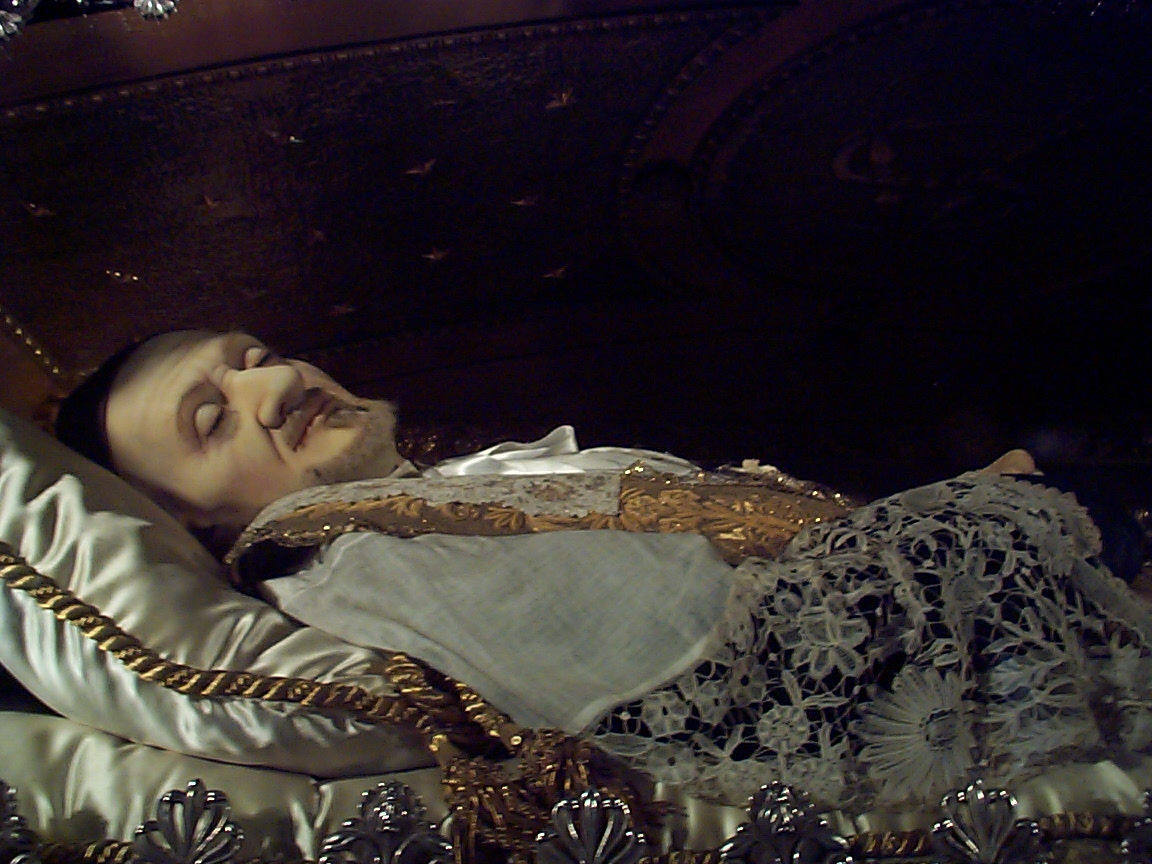
Inspiration & Hope / Re: The life of St. Vincent de Paul
April 11, 2011, 11:26:29 AM
The Incorruptible body of St. Vincent de Paul. He was never embalmed. His body has been perfectly preserved for over 350 years.
#22427
Inspiration & Hope / Re: The life of St. Vincent de Paul
April 11, 2011, 11:24:44 AM
St. Vincent de Paul and the daughters of Charity


#22430
Inspiration & Hope / The life of St. Vincent de Paul
April 11, 2011, 11:22:00 AM
St. Vincent was born of poor parents in the village of Pouy in Gascony, France, about 1580. He enjoyed his first schooling under the Franciscan Fathers at Acqs. Such had been his progress in four years that a gentleman chose him as subpreceptor to his children, and he was thus enabled to continue his studies without being a burden to his parents. In 1596, he went to the University of Toulouse for theological studies, and there he was ordained priest in 1600.
In 1605, on a voyage by sea from Marseilles to Narbonne, he fell into the hands of African pirates and was carried as a slave to Tunis. His captivity lasted about two years, until Divine Providence enabled him to effect his escape. After a brief visit to Rome he returned to France, where he became preceptor in the family of Emmanuel de Gondy, Count of Goigny, and General of the galleys of France. In 1617, he began to preach missions, and in 1625, he lay the foundations of a congregation which afterward became the Congregation of the Mission or Lazarists, so named on account of the Prioryof St. Lazarus, which the Fathers began to occupy in 1633.
It would be impossible to enumerate all the works of this servant of God. Charity was his predominant virtue. It extended to all classes of persons, from forsaken childhood to old age. The Sisters of Charity also owe the foundation of their congregation to St. Vincent. In the midst of the most distracting occupations his soul was always intimately united with God. Though honored by the great ones of the world, he remained deeply rooted in humility. The Apostle of Charity, the immortal Vincent de Paul, breathed his last in Paris at the age of eighty.
reference: http://www.catholic.org/saints/saint.php?saint_id=326
#22431
Inspiration & Hope / Re: The life of Padre Pio
April 11, 2011, 11:16:32 AM
Padre Pio, is one of many Incorruptible Catholic Saints. His body has not decayed, even after over 50 years.


#22432
Inspiration & Hope / Re: The life of Padre Pio
April 11, 2011, 11:14:28 AM
A beloved priest, and a venerated Saint of the Holy Roman Catholic Church,

(1968) Padre Pio was not embalmed.
(1968) Padre Pio was not embalmed.
#22433
Inspiration & Hope / Re: The life of Padre Pio
April 11, 2011, 11:11:39 AM
A priest for ever, a priest for always. Padre Pio celebrating Holy Mass in his golden years.

#22434
Inspiration & Hope / Re: The life of Padre Pio
April 11, 2011, 11:09:49 AM
Padre Pio, as a middle-aged Capuchin Catholic Priest. He is celebrating Holy Mass.

#22435
Inspiration & Hope / Re: The life of Padre Pio
April 11, 2011, 11:08:44 AM
Padre Pio, as an ordained young Catholic Capuchin Priest,


#22437
Inspiration & Hope / Re: The life of Padre Pio
April 11, 2011, 11:04:58 AM
In August 1917 Padre Pio was inducted into the service and assigned to the 4th Platoon of the 100th Company of the Italian Medical Corps. During this time he was very unhappy. By mid-October he was in the hospital, but was not discharged. Finally, in March 1918, he was dismissed and returned to San Giovanni Rotondo.
Upon his return, Padre Pio became a spiritual director and had many spiritual daughters and sons. He had five rules for spiritual growth: weekly confession, daily Communion, spiritual reading, meditation and examination of conscience. In explaining his spiritual growth rules, Padre Pio compared dusting a room, used or unused on a weekly basis, to weekly confession. He suggested two times of daily meditation and self-examination: in the morning to "prepare for battle" and in the evening to "purify your soul." Padre Pio’s motto, "Pray, Hope and Don’t Worry" is the synopsis of his application of theology into daily life. A Christian should recognize God in everything, offering everything to Him saying, "Thy will be done". In addition, all should aspire to heaven and put their trust in Him and not worry about what he is doing, as long as it is done with a desire to please God.
In July 1918, Pope Benedict XV urged all Christians to pray for an end to the World War. On July 27, Padre Pio offered himself as a victim for the end of the war. Days later between August 5 -7, Padre Pio had a vision in which Christ appeared and pierced his side. As a result of this experience, Padre Pio had a physical wound in his side. The experience has been identified as a "transverberation" or piercing of the heart indicating the union of love with God.
A few weeks later, on September 20, 1918, Padre Pio was praying in the choir loft in the Church of Our Lady of Grace, when the same Being who appeared to him on August 5, appeared again. It was the wounded Christ. When the ecstasy ended, Padre Pio had received the Visible Stigmata, the five wounds of Christ, which would stay with him for his remaining 50 years.
Padre Pio as a Young PriestBy early 1919, word about the stigmata began to spread to the outside world. Over the years countless people, including physicians, examined Padre Pio’s wounds. Padre Pio was not interested in the physicians’ attempts to explain his stigmata. He accepted it as a gift from God, though he would have preferred to suffer the pains of Christ’s Passion without the world knowing.
God used Padre Pio â€" especially the news of his stigmata â€" to give people hope as they began to rebuild their life after the war. Padre Pio and his spiritual gifts of the stigmata, perfume, prophecy and bilocation was a sign of God in their midst and led people back to their Faith. So life at the friary and the Church of Our Lady of Grace began to revolve around Padre Pio’s ministry. A room and priests were designated to handle the correspondence and the remaining friars heard confessions. San Giovanni Rotondo began to be filled with pilgrims. Since there were no hotels, people slept outdoors. A normal day for Padre Pio was a busy nineteen hours â€" Mass, hearing confessions and handling correspondence. He usually had less than two hours to sleep.
As his spiritual influence increased, so did the voices of his detractors. Accusations against Padre Pio poured in to the Holy Office (today the Congregation for the Doctrine of Faith). By June 1922, restrictions were placed on the public’s access to Padre Pio. His daily Mass time varied each day, without announcement to diminish the crowds, and he was ordered not to answer correspondence from people seeking spiritual direction. It was also rumored that plans were being developed to transfer Padre Pio. However, both local and Church authorities were afraid of public riots and decided that a more remote and isolated place than San Giovanni Rotondo could not be found.
Despite the restrictions and controversies, Padre Pio’s ministry continued. From 1924 â€" 1931 various statements were made by the Holy See that denied the supernaturality of Padre Pio’s phenomena. On June 9, 1931, the Feast of Corpus Christi, Padre Pio was ordered by the Holy See to desist from all activities except the celebration of the Mass, which was to be in private. By early 1933, Pope Pius XI ordered the Holy See to reverse its ban on Padre Pio’s public celebration of Mass, saying, "I have not been badly disposed toward Padre Pio, but I have been badly informed."
Padre Pio’s faculties were progressively restored. First, the confessions of men were allowed (March 25, 1934) and then women (May 12, 1934). Although he had never been examined for a preaching license, the Capuchin Minister General granted him permission to preach, honoris cuasa, and he preached several times a year. In 1939 when Pope Pius XII was elected pope, he began to encourage people to visit Padre Pio. More and more people began to make pilgrimages.
In 1940, Padre Pio convinced three doctors to move to San Giovanni Rotondo and he announced plans to build a Home to Relieve Suffering. As Padre Pio expressed to Pope Pius, " …a place that the patient might be led to recognize those working for his cure as God's helpers, engaged in preparing the way for the intervention of grace." The doctors were excited about the building, but were fearful that this was not the time to begin such a project with Europe being on the brink of another world war.
These fears did not stop Padre Pio and the project began. After the war, Barbara Ward, a British humanitarian, came to Italy to write an article on postwar reconstruction. She attended Padre Pio’s Mass and met one of the physicians who came to San Giovanni Rotondo to work with the Home to Relieve Suffering. Upon learning of the project, she asked that the Home to Relieve Suffering receive a part of the funds designated for reconstruction. Consequently, the United Nations Relief and Rehabilitation Administration (UNRRA) gave a grant of $325,000 for the project. The building opened its doors on May 5,1956. A year later, Padre Pio announced plans for a medical and religious center where doctors and interns could further their medical studies and Christian formation.
With the opening of the hospital, Padre Pio was truly now an international figure and his followers greatly increased. To accommodate all the pilgrims, a new, large church was constructed.
Padre PioIn the mid-1960s, Padre Pio’s health began to deteriorate, but he continued to say Daily Mass and hear fifty confessions a day. By July of 1968, he was almost bedridden. On the fiftieth anniversary of the stigmata (September 20,1968), Padre Pio celebrated Mass, attended the public recitation of the Rosary and Benediction. On the next day, he was too tired to say Mass or hear confessions. On September 22, he managed to say Mass and the attendees had to struggle to hear him. Just after midnight, in the early morning hours of September 23, Padre Pio called his superior and asked to make his confession. He then renewed his vows of poverty, chastity, and obedience. At 2:30am, Padre Pio died in his cell. As he foretold, Padre Pio lived sick but died healthy, with the stigmata healed.
On September 26, 1968, over a hundred thousand people gathered at San Giovanni Rotondo to pay their respects to this holy man. He was buried in the crypt prepared for him in the Church of Our Lady of Grace.
reference: http://www.ewtn.com/padrepio/man/biography2.htm
#22438
Inspiration & Hope / The life of Padre Pio
April 11, 2011, 11:04:27 AM
Padre Pio was born May 25, 1887 in Pietrelcina, Italy, a small country town located in southern Italy. His parents were Grazio Mario Forgione (1860-1946) and Maria Guiseppa de Nunzio Forgione (1859-1929). He was baptized the next day, in the nearby Castle Church, with the name of his brother, Francesco, who died in early infancy. Other children in the family were an older brother, Michele; three younger sisters: Felicita, Pellegrina and Grazia; and two children who died as infants. Pietrelcina, Italy
Religion was the center of life for both Pietrelcina and the Forgione family. The town had many celebrations throughout the year in honor of different saints and the bell in the Castle Church was used not for ringing the hour, but for daily devotional time. Friends have described the Forgione family as "the God-is-everything-people" because they attended Daily Mass, prayed the Rosary nightly and fasted three days a week from meat in honor of Our Lady of Mt. Carmel. Although Padre Pio’s grandparents and parents could not read and write, they memorized Sacred Scripture and told the children Bible stories. It was in this lovely family setting that the seeds of Faith were nurtured within Padre Pio.
From his early childhood, it was evident that Padre Pio had a deep piety. When he was five years old, he solemnly consecrated himself to Jesus. He liked to sing hymns, play church and preferred to be by himself where he could read and pray. As an adult, Padre Pio commented that in his younger years he had conversed with Jesus, the Madonna, his guardian angel, and had suffered attacks by the devil.
Padre Pio’s parents first learned of his desire to become a priest in 1897. A young Capuchin friar was canvassing the countryside seeking donations. Padre Pio was drawn to this spiritual man and told his parents, "I want to be a friar… with a beard." His parents traveled to Morcone, a community thirteen miles north of Pietrelcina, to investigate if the friars would be interested in having their son. The Capuchins were interested, but Padre Pio would need more education than his three years of public schooling.
Padre Pio at Age 14 In order to finance the private tutor needed to educate Padre Pio, his father went to America to find work. During this time, he was confirmed (September 27, 1899), studied with tutors and completed the requirements for entrance into the Capuchin order. At age 15, he took the Habit of the Order of Friars Minor Capuchin on January 22, 1903. On the day of his investiture, he took the name of Pio in honor of Saint Pius V, the patron saint of Pietrelcina, and was called Fra, for brother, until his priestly ordination.
A year later, on January 22, 1904, Fra Pio knelt before the altar and made his First Profession of the Evangelical Counsels of Poverty, Chastity, and Obedience. Then, he traveled by oxcart to the seventeenth-century friary of St. Francis of Assisi and began six years of study for the priesthood and continued his development in community life toward the profession of his solemn vows. After three years of temporary profession, Padre Pio took his final vows in 1907.
Then on August 10, 1910, the much-anticipated day finally arrived. The twenty-three year old Fra Pio was ordained a priest by Archbishop Paolo Schinosi at the Cathedral of Benevento. Four days later, he celebrated his first Mass at the parish church of Our Lady of the Angels.
Within a month of his ordination, (September 7, 1910), as Padre Pio was praying in the Piana Romana, Jesus and Mary appeared to him and gave him the wounds of Christ, the Stigmata. For Padre Pio’s doctors, the wounds created much confusion. He asked Jesus to take away "the annoyance," adding, " I do want to suffer, even to die of suffering, but all in secret." The wounds went away and the supernatural life of Padre Pio remained a secret...for a while.
On November 28, 1911, Padre Agostino, who was a contemporary, friend, and confidant, was advised that Padre Pio was ill. He rushed into Padre Pio’s room to care for him. Padre Agostino observed what he thought was a dying man and rushed to the chapel to pray. When he finished praying, he returned to Padre Pio’s room and found his friend alert and full of joy.
This was the beginning of Padre Pio’s documented ecstasies â€" all of which were "edifying, theologically correct and expressed a deep love for God. "
Due to Padre Pio’s on-going ill health, he was sent home to recuperate and was separated from his religious community from the end of 1911 â€" 1916. During this time, the Capuchin Constitution required a friar who was sent home because of illness had to maintain his friar life as much as possible. Padre Pio did this. He said Mass and taught school.
On September 4, 1916, Padre Pio was ordered to return to his community life and was assigned to San Giovanni Rotondo, an agricultural community, located in the Gargano Mountains. Our Lady Of Grace Capuchin Friary was approximately a mile from town and was not easy to reach. The Capuchins had a reputation for their holiness and simple life. When Padre Pio became a part of the community at Our Lady of Grace, there were seven friars.
With the outbreak of the war, only three friars stayed at Our Lady of Grace; the others were selected for military service. At the beginning, his responsibilities included teaching at the seminary and being the spiritual director of the students. He spent his free time reading the Bible and handling correspondence. When another friar was called into service, Padre Pio became in charge of the college.
(part 1)
#22439
Family & Parenting / Re: Filipinas Marry Foreigners for Money, Not Love?
April 11, 2011, 10:53:22 AM
Matthew Chapter 4 Verse 1-11:
1 Then Jesus was led up by the Spirit into the wilderness to be tempted by the devil. 2 And after fasting forty days and forty nights, he was hungry. 3 And the tempter came and said to him, “If you are the Son of God, command these stones to become loaves of bread.†4 But he answered, “It is written,
“‘Man shall not live by bread alone,
but by every word that comes from the mouth of God.’â€
5 Then the devil took him to the holy city and set him on the pinnacle of the temple 6 and said to him, “If you are the Son of God, throw yourself down, for it is written,
“‘He will command his angels concerning you,’
and
“‘On their hands they will bear you up,
lest you strike your foot against a stone.’â€
7 Jesus said to him, “Again it is written, ‘You shall not put the Lord your God to the test.’†8 Again, the devil took him to a very high mountain and showed him all the kingdoms of the world and their glory. 9 And he said to him, “All these I will give you, if you will fall down and worship me.†10 Then Jesus said to him, “Be gone, Satan! For it is written,
“‘You shall worship the Lord your God
and him only shall you serve.’â€
11 Then the devil left him, and behold, angels came and were ministering to him.
#22440
Family & Parenting / Re: Filipinas Marry Foreigners for Money, Not Love?
April 11, 2011, 10:50:41 AMQuote from: islander on April 10, 2011, 11:27:21 PM
mao gyod niy apan aning kantaha ni michael jackson. klarong wa kabasa sa tb online bible studies. nowhere in the bible baya gyod intawon ni nahitabo (in bold letters), or am i just missing something?

You are right, Isles. No where in the bible does it say that God turned stone into bread.
However, in the bible, it says that when Jesus went to fast and pray in the desert for 40 days and 40 nights he was tempted by the devil.
Satan tempted Jesus Christ the Lord Our God to turn the stone into bread to prove his power.
Satan then tempted Jesus to jump off a cliff saying that the angels will catch him and he will not suffer death.
Jesus responded to Satan's foolish queries / requests by saying, “‘You shall worship the Lord your God
and him only shall you serve.’”
Reference: Matthew Chapter 4
#22441
Bible Study / Catholic Catechism on: The Power of the Keys
April 11, 2011, 10:42:43 AM
981 After his Resurrection, Christ sent his apostles "so that repentance and forgiveness of sins should be preached in his name to all nations."526 The apostles and their successors carry out this "ministry of reconciliation," not only by announcing to men God's forgiveness merited for us by Christ, and calling them to conversion and faith; but also by communicating to them the forgiveness of sins in Baptism, and reconciling them with God and with the Church through the power of the keys, received from Christ:527
[The Church] has received the keys of the Kingdom of heaven so that, in her, sins may be forgiven through Christ's blood and the Holy Spirit's action. In this Church, the soul dead through sin comes back to life in order to live with Christ, whose grace has saved us.528
982 There is no offense, however serious, that the Church cannot forgive. "There is no one, however wicked and guilty, who may not confidently hope for forgiveness, provided his repentance is honest.529 Christ who died for all men desires that in his Church the gates of forgiveness should always be open to anyone who turns away from sin.530
983 Catechesis strives to awaken and nourish in the faithful faith in the incomparable greatness of the risen Christ's gift to his Church: the mission and the power to forgive sins through the ministry of the apostles and their successors:
The Lord wills that his disciples possess a tremendous power: that his lowly servants accomplish in his name all that he did when he was on earth.531
Priests have received from God a power that he has given neither to angels nor to archangels . . . . God above confirms what priests do here below.532
Were there no forgiveness of sins in the Church, there would be no hope of life to come or eternal liberation. Let us thank God who has given his Church such a gift.533
source: http://www.scborromeo.org/ccc/p123a10.htm
#22442
Bible Study / Catholic Catechism on: Penance
April 11, 2011, 10:40:18 AM
980 It is through the sacrament of Penance that the baptized can be reconciled with God and with the Church:
Penance has rightly been called by the holy Fathers "a laborious kind of baptism." This sacrament of Penance is necessary for salvation for those who have fallen after Baptism, just as Baptism is necessary for salvation for those who have not yet been reborn.
http://www.scborromeo.org/ccc/p123a10.htm
#22443
Bible Study / Re: Daily Scriptural Verse
April 11, 2011, 10:34:45 AM
O LORD, grant salvation!
O LORD, grant prosperity!
Blessed is he who comes in the name of the LORD;
we bless you from the house of the LORD.
The LORD is God, and he has given us light.
-Psalm 118:22-24
O LORD, grant prosperity!
Blessed is he who comes in the name of the LORD;
we bless you from the house of the LORD.
The LORD is God, and he has given us light.
-Psalm 118:22-24
#22444
Bible Study / Re: Daily Scriptural Verse
April 11, 2011, 10:32:39 AM
Glory in his holy name;
rejoice, O hearts that seek the LORD!
Look to the LORD in his strength;
seek to serve him constantly.
-Psalm 105: 3-4
rejoice, O hearts that seek the LORD!
Look to the LORD in his strength;
seek to serve him constantly.
-Psalm 105: 3-4
#22445
Bible Study / Re: Daily Scriptural Verse
April 11, 2011, 10:30:41 AM
For with the LORD is kindness
and with him is plenteous redemption;
And he will redeem Israel
from all their iniquities.
-Psalm 130: 7-8
and with him is plenteous redemption;
And he will redeem Israel
from all their iniquities.
-Psalm 130: 7-8
#22446
Guindulman - Bohol / Re: St. Mary Academy Grand Alumni meeting in 2011
April 11, 2011, 10:26:52 AM
Manay Tess, please post pictures of this event. Are you coming back to Bohol in 2012 as well? I'm planning to go back on 2012 (next summer). If you are there, mag kita ta ha? Maluuy ang Ginoo.
Regards and More Power!
Regards and More Power!
#22447
Anonymous Diary Blog / Re: Videos in our Recent Vacation
April 11, 2011, 10:21:37 AM
Ate Lumine thank you for sharing with us your video and stay in Bohol. How is everything in Manga, Tagbilaran? Did you get to visit the Manga Fish Market during your stay? That is my favorite place to buy fish when I'm in Tagbilaran City.
How are your parents?
How are your parents?
#22448
Music and Video / Re: Nothing's Gonna Stop Us Now [Instrumental Version]
April 11, 2011, 10:11:45 AM #22449
Philippine Showcase / Re: Ilonggo Song: Patadyong ni Inday
April 11, 2011, 09:56:02 AM
Guapo kaayo ning cantaha. Inspirasyonal ni para sang babaye gid.
#22450
LGU Philippines / Re: 4.1 M families hungry sa Pilipinas?
April 10, 2011, 10:32:56 AMQuote from: Raquelproud boholana on April 09, 2011, 11:27:33 PM
Ha? daghana naman diay ta hehehhe
Raquel, this is not including the millions of Filipinos abroad who are now citizens of other countries. In America, there are over 3 million Filipino-Americans.

#22452
Inspiration & Hope / Re: The Prophet Elijah
April 09, 2011, 03:25:55 PM
Indeed. Elisha was a prophet of God, and such was the mouthpiece of God for the Jews and Gentiles (at the particular point of time). If we read biblical history, those who persecuted the prophets and or condemned them and did not head their word suffered God's unquenchable wrath.
1. Every-time Israel sinned and did not follow the laws ; every time she killed and persecuted her prophets, God sent invaders to Israel to punish her
2. When King Saul did not follow the warnings of Prophet Samuel and turned his back to God; God punished Saul by abandoning Israel's army to the Philistines and eventually saw Saul's own death. (Until the coming of David, who would rescue Israel and received God's blessing...)
3. Every time Israel sinned God by not listening to His Prophets, it was God who scattered Israel amongst the nations...
#22453
Inspiration & Hope / Re: The Transfiguration: Jesus Speaks to Moses and Elijah
April 09, 2011, 03:19:48 PM
#22454
Inspiration & Hope / Re: The Transfiguration: Jesus Speaks to Moses and Elijah
April 09, 2011, 03:15:48 PM
#22455
Inspiration & Hope / Re: The Transfiguration: Jesus Speaks to Moses and Elijah
April 09, 2011, 03:15:17 PM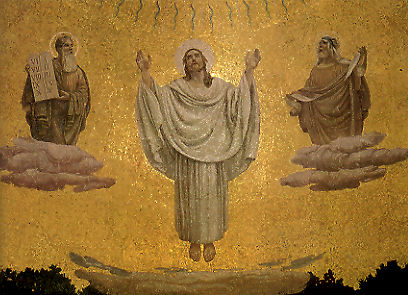
#22456
Inspiration & Hope / Re: The Transfiguration: Jesus Speaks to Moses and Elijah
April 09, 2011, 03:14:35 PM
#22457
Inspiration & Hope / The Transfiguration: Jesus Speaks to Moses and Elijah
April 09, 2011, 03:14:04 PM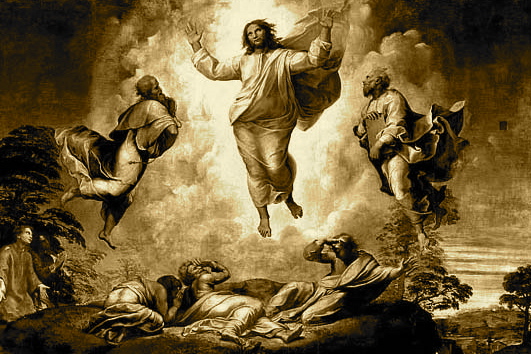
28 Now about eight days after these sayings he took with him Peter and John and James and went up on the mountain to pray. 29 And as he was praying, the appearance of his face was altered, and his clothing became dazzling white. 30 And behold, two men were talking with him, Moses and Elijah, 31 who appeared in glory and spoke of his departure, which he was about to accomplish at Jerusalem. 32 Now Peter and those who were with him were heavy with sleep, but when they became fully awake they saw his glory and the two men who stood with him. 33 And as the men were parting from him, Peter said to Jesus, “Master, it is good that we are here. Let us make three tents, one for you and one for Moses and one for Elijahâ€â€"not knowing what he said. 34 As he was saying these things, a cloud came and overshadowed them, and they were afraid as they entered the cloud. 35 And a voice came out of the cloud, saying, “This is my Son, my Chosen One; listen to him!†36 And when the voice had spoken, Jesus was found alone. And they kept silent and told no one in those days anything of what they had seen.
-Luke 9: 28-36
#22458
Music and Video / Re: Nothing's Gonna Stop Us Now [Instrumental Version]
April 09, 2011, 03:08:47 PM #22459
Music and Video / Nothing's Gonna Stop Us Now [Instrumental Version]
April 09, 2011, 03:04:45 PM
#22461
Inspiration & Hope / Re: The Prophet Elijah
April 09, 2011, 02:59:23 PM
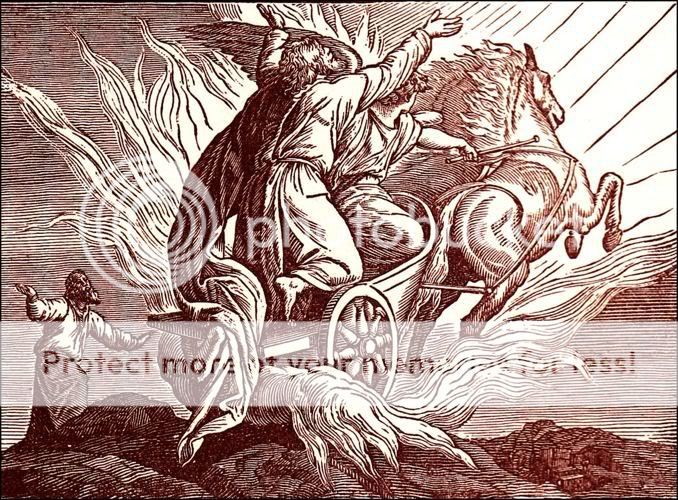
2 Kings 2: 6-12
6 Then Elijah said to him, “Please stay here, for the Lord has sent me to the Jordan.†But he said, “As the Lord lives, and as you yourself live, I will not leave you.†So the two of them went on. 7 Fifty men of the sons of the prophets also went and stood at some distance from them, as they both were standing by the Jordan. 8 Then Elijah took his cloak and rolled it up and struck the water, and the water was parted to the one side and to the other, till the two of them could go over on dry ground.
9 When they had crossed, Elijah said to Elisha, “Ask what I shall do for you, before I am taken from you.†And Elisha said, “Please let there be a double portion of your spirit on me.†10 And he said, “You have asked a hard thing; yet, if you see me as I am being taken from you, it shall be so for you, but if you do not see me, it shall not be so.†11 And as they still went on and talked, behold, chariots of fire and horses of fire separated the two of them. And Elijah went up by a whirlwind into heaven. 12 And Elisha saw it and he cried, “My father, my father! The chariots of Israel and its horsemen!†And he saw him no more.
#22463
Inspiration & Hope / Re: Jacob Wrestling with the Angel
April 09, 2011, 02:53:19 PM
Some say it was an angel of God, some say it was God whom Jacob wrestled with. Indeed, Jacob, was blessed for having seen God and did not die.
#22464
Inspiration & Hope / Re: Jacob Wrestling with the Angel
April 09, 2011, 02:50:26 PM
Genesis 32
In the course of the night, Jacob arose, took his two wives, children and servants and crossed the ford of the Jabbok. After he had taken them across the stream and had brought over all his possessions, Jacob was left there alone.
Then some man wrestled with him until the break of dawn. When the man saw that he could not prevail over him, he struck Jacob's hip at its socket, so that the hip socket was wrenched as they wrestled. The man then said, "Let me go, for it is daybreak." But Jacob said, "I will not let you go until you bless me." "What is your name?" the man asked. He answered, "Jacob." Then the man said, "You shall no longer be spoken of as Jacob, but as Israel, because you have contended with divine and human beings and have prevailed."
Jacob named the place Peniel, "Because I have seen God face to face," he said, "yet my life has been spared."
At sunrise, as he left Peniel, Jacob limped along because of his hip.
#22465
Asia | Middle East / Re: A mayor´s plea for help!
April 09, 2011, 02:19:53 PM
Thank you for sharing this Manay.
#22466
Bible Study / Re: Daily Scriptural Verse
April 09, 2011, 02:10:03 PM
4 Enter his gates with thanksgiving
and his courts with praise;
give thanks to him and praise his name.
5 For the LORD is good and his love endures forever;
his faithfulness continues through all generations.
- Psalm 100: 4-5
and his courts with praise;
give thanks to him and praise his name.
5 For the LORD is good and his love endures forever;
his faithfulness continues through all generations.
- Psalm 100: 4-5
#22467
Bible Study / Re: Daily Scriptural Verse
April 09, 2011, 02:08:10 PM
The Lord is king! Let the earth rejoice;
let the many coastlands be glad!
-Psalm 97:1
let the many coastlands be glad!
-Psalm 97:1
#22469
Music and Video / God of Wonders by Third Day
April 09, 2011, 02:05:00 PM #22470
LGU Philippines / Re: 4.1 M families hungry sa Pilipinas?
April 09, 2011, 02:02:53 PMQuote from: chicogon on April 09, 2011, 05:42:42 AM
Aw, it goes on to say nga nagka daghan ang tawo, nagka daghan sad ang gipang gutom kay magka daghan man sad ang pobre, ang mga way trabaho ug mga nagka-lisod in general. Ang yuta (farm sa Pinas) mao man lang gehapon (except sa farmville); ang abelabol nga trabaho wa man sad kaayo modaghan (very limited). And if the Philippines is roughly pila to ka million (72 or 78 million ba to), 4.1M families is relatively small... compared to, say, China, nga mako jamo ug dato kunohay. Superpower ang China pero mas daghan pa jud sila gipang gutom didto; same goes for the U.S., kinadatuan kuno pero kina daghanan pong unemployed, homeless and hungry families. Ngano? Kay mas daghan pa man sila kaysa ato ahihihihi

Fr. Roel, the populations of the Philippines is now over 96 Million.
#22471
Photos Unlimited / Re: Jewish Billionaires
April 09, 2011, 01:58:15 PM
If my memory serves me right, Jews were barred from owning land in Europe during the middle ages (as land ownership was a titular right for nobles; christian nobles) and were limited to working in the market, banking system, and jewelry work. That is why they are successful in business and marketing as for a time (a considerable one at that), jews were limited to financial fields of interest.
They brought that strength when they migrated abroad.
Jews are also exclusively Jewish-oriented. Jews help fellow Jews.
They brought that strength when they migrated abroad.
Jews are also exclusively Jewish-oriented. Jews help fellow Jews.
#22472
Photos Unlimited / Re: Jewish Billionaires
April 09, 2011, 01:53:33 PMQuote from: ms da binsi on April 09, 2011, 01:48:31 PM
I dont think gihunghongan to sila ni Lord on what to do...
My point was, kung mag salig lang tingali ta sigi ug unsay imando sa ginoo di jud tingali ta makamao ug unsaon pagka datu...
This is very true, Ms Da Binsi. In fact, being a sloth and lazy is frowned upon. Working hard and being fruitful in honest labor is encouraged. If I may share a verse from The Book of Proverbs:
"Lazy people want much but get little, but those who work hard will prosper and be satisfied."
Proverbs 13:4
#22473
Anonymous Diary Blog / Re: What Did You Do Today?
April 09, 2011, 01:48:19 PMQuote from: cujo on April 08, 2011, 02:51:29 AM
Every year some Filipinos gather in this festval held in Tampa ,Florida..This year April 8,9,10.There's some exhibits, dancing,eating etc.It is fun.May mga payag payag ginatukod for some province.Like Bohol every year they have a hut and they sell food speciality Bol-anon dish.So we met some Boholanos.
It is only an hour or so driving from where I live...Me and my friends hopefully Wolfie can go,we try to taste different Filipino native delicacies from other Provinces.Wolfie always looks for "Dinuguan."
hehehe wolfie likes diniguan eh? hehehe! kamusta naman si Krystal, Cujo?
Oh, can you post pictures of the event?
Please and Thank You.

#22474
Family & Parenting / Re: Filipinas Marry Foreigners for Money, Not Love?
April 09, 2011, 01:42:38 PM
We live in one world.
We all have one blood.
We all have one heart.
We all have One God.
We are all human beings.
Let's look past the limitations that keep us all apart.
We all have one blood.
We all have one heart.
We all have One God.
We are all human beings.
Let's look past the limitations that keep us all apart.
#22475
Family & Parenting / Re: Filipinas Marry Foreigners for Money, Not Love?
April 09, 2011, 01:41:10 PM
Such double standard. I am sure there are Filipino men marrying foreigners (for love , for money, or both).
Enough of this anti-Filipina bull-crap. I don't see alot of white women complaining about Russian-mail order brides etc.

Enough of this anti-Filipina bull-crap. I don't see alot of white women complaining about Russian-mail order brides etc.
#22476
Bible Study / Re: Daily Scriptural Verse
April 09, 2011, 01:37:27 PMQuote from: Lorenzo on April 09, 2011, 01:33:10 PM
The one who sows to please his sinful nature, from that nature will reap destruction; the one who sows to please the Spirit, from the Spirit will reap eternal life.
Galatians 6:8
This is definitely a verse that hits me to the core, which am sure it is for all of us. There are times that i find myself doing things , thinking of things that are contrary to Christian virtue, and to Christ's teachings of being repentant sinners. There are times in which i find myself falling into the sway of sin. But in such an instance, when being tempted, when feeling weak in the spirit...am reminded that God will never abandon us. Even when in a wretched state of being.
Did he not forgive Mary Magdalene? Even St. Paul?
So yes, we should (all of us) take time to sow and please the Spirit, for it is in the Spirit that we will reap eternal life in Christ Jesus.
Keep on fighting the good fight, brothers and sisters!
God Bless us all. ~
#22477
Bible Study / Re: Daily Scriptural Verse
April 09, 2011, 01:33:10 PM
The one who sows to please his sinful nature, from that nature will reap destruction; the one who sows to please the Spirit, from the Spirit will reap eternal life.
Galatians 6:8
Galatians 6:8
#22478
Music and Video / Knock You Down - Keri Hilson (COVER) Rin on the Rox
April 09, 2011, 01:29:55 PM #22480
Family & Parenting / Re: Filipinas Marry Foreigners for Money, Not Love?
April 09, 2011, 01:25:45 PMQuote from: ms da binsi on April 07, 2011, 11:06:14 AM
sus maka ulaw na jud! mo ingon na gud sila nganong mo adto pa man daw sila sa thailand nga naa man mas barato diri (pinas)? Oh emm gee!!!
lol @ "oh emm gee"
#22481
Real Estate Property / Re: Gorgeous homes in Moorestown, New Jersey
April 09, 2011, 01:23:24 PM
Typical bricked colonial home
Moorestown, New Jersey

Moorestown, New Jersey
#22482
Real Estate Property / Re: Gorgeous homes in Moorestown, New Jersey
April 09, 2011, 01:22:23 PM
A man's castle?

#22483
Real Estate Property / Re: Gorgeous homes in Moorestown, New Jersey
April 09, 2011, 01:20:21 PM
An exquisite colonial with a gorgeous deciduous view.
#22484
Real Estate Property / Gorgeous homes in Moorestown, New Jersey
April 09, 2011, 01:18:37 PM
Moorestown, New Jersey

#22485
Real Estate Property / Re: Mendham, New Jersey
April 09, 2011, 12:22:20 PM
A beautiful home in Mendham, New Jersey
#22486
Real Estate Property / Re: Winter In New Jersey
April 09, 2011, 12:20:21 PM
The Jersey Shore -- In Winter

#22487
Real Estate Property / Re: Winter In New Jersey
April 09, 2011, 12:19:52 PM
Northern New Jersey Winter
#22488
Question and Answer / Re: Are you a bike enthusiast?
April 09, 2011, 12:18:04 PM
enthusiastic to clean the bike. lather it up, girls, lather it up.

#22489
Question and Answer / Re: Are you a bike enthusiast?
April 09, 2011, 12:16:51 PM
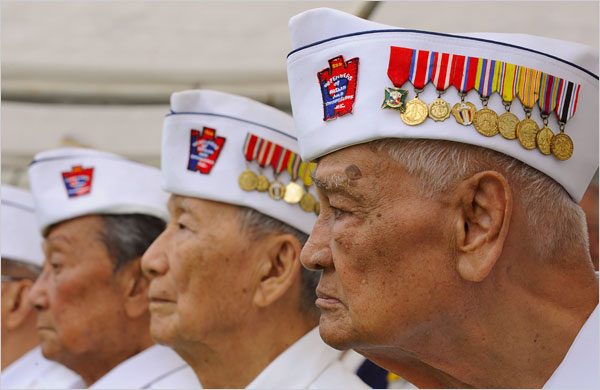
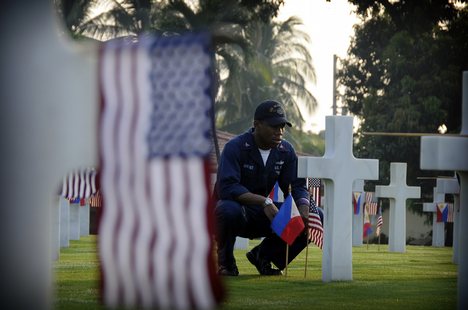
enthusiastic kaayo




#22499
Asia | Middle East / Re: Indian 'living god' in critical condition: hospital
April 07, 2011, 09:11:12 AMQuote from: hubag bohol on April 06, 2011, 06:31:35 AM
by P.S. Jayaram â€" Tue Apr 5, 8:04 am ET
File photo of Indian guru Satya Sai Baba
HYDERABAD, India (AFP) â€" One of India's best-known spiritual leaders, famous for his apparent miracles and long list of influential followers, is on life support in a southern hospital, officials said on Tuesday.
Satya Sai Baba, 85, who has devotees in more than 100 countries, was admitted to a hospital funded by his organisation in the town of Puttaparthi with lung and chest congestion on March 28.
His condition has since deteriorated and he is now on a ventilator and is receiving kidney dialysis, the most recent health bulletin from the hospital said on Tuesday.
He remains "critical," although his "level of consciousness has considerably improved" and his vital systems are "stable", said the update from the Sri Satya Sai Institute of Higher Medical Sciences.
Thousands of followers have begun arriving in Puttaparthi, home to Sai Baba's ashram in the southeastern state of Andhra Pradesh, with many agitated by conflicting information given out by local authorities.
Government officials have sought to play down the seriousness of his condition, while police are preventing groups from gathering in the town, according to local reports.
The wild-haired leader has a following of millions in India and abroad, many of whom believe him to be a living god, and the reincarnation of the great spiritual guru, Sai Baba of Shirdi, who died in 1918.
The guru, who claims to have performed several miracles including bringing men back to life, counts former Indian prime ministers, top businessmen and even the country's cricketers among his devotees.
His organisation funds health and education projects in India, including a string of hospitals that claim to be able to cure ailments beyond the capabilities of mainstream medicine.
He and Mata Amritanandamayi Devi, the so-called "hugging saint" of Kerala, are the best known of thousands of Hindu ascetics.
The swami's birth in Andhra Pradesh is shrouded in mystery.
One hagiographical account by a biographer claimed the mysterious sounding of drums signalled his impending birth.
In his teens he is said to have begun singing verses in Sanskrit, a language of which he had no prior knowledge, and then became able to materialise flowers and sweets to the astonishment of observers.
His devotees also credit him with an ability to remember his past lives, a frequent claim of Indian holy men, and he is believed to produce sacred ash every day.
His work in education and health have won him widespread acclaim and respectability, but his reputation has also been damaged by allegations of sexual abuse and paedophilia.
A BBC programme in 2004 called "The Secret Swami" featured interviews with former followers who claimed Sai Baba took advantage of them. The allegations were denied by the spiritual leader's organisation.
http://news.yahoo.com/


living god? hehe, murag cultist leader ning tawhana.
#22500
Philippine Business News / Re: US-China Sub Encounter Raises Questions
April 07, 2011, 09:05:29 AM
Chinese Fleet steaming across the South China Sea. 


Pages 1 2 3 4 5 6 7 8 9 10 11 12 13 14 15 16 17 18 19 20 21 22 23 24 25 26 27 28 29 30 31 32 33 34 35 36 37 38 39 40 41 42 43 44 45 46 47 48 49 50 51 52 53 54 55 56 57 58 59 60 61 62 63 64 65 66 67 68 69 70 71 72 73 74 75 76 77 78 79 80 81 82 83 84 85 86 87 88 89 90 91 92 93 94 95 96 97 98 99 100 101 102 103 104 105 106 107 108 109 110 111 112 113 114 115 116 117 118 119 120 121 122 123 124 125 126 127 128 129 130 131 132 133 134 135 136 137 138 139 140 141 142 143 144 145 146 147 148 149 150 151 152 153 154 155 156 157 158 159 160 161 162 163 164 165 166 167 168 169 170 171 172 173 174 175 176 177 178 179 180 181 182 183 184 185 186 187 188 189 190 191 192 193 194 195 196 197 198 199 200 201 202 203 204 205 206 207 208 209 210 211 212 213 214 215 216 217 218 219 220 221 222 223 224 225 226 227 228 229 230 231 232 233 234 235 236 237 238 239 240 241 242 243 244 245 246 247 248 249 250 251 252 253 254 255 256 257 258 259 260 261 262 263 264 265 266 267 268 269 270 271 272 273 274 275 276 277 278 279 280 281 282 283 284 285 286 287 288 289 290 291 292 293 294 295 296 297 298 299 300 301 302 303 304 305 306 307 308 309 310 311 312 313 314 315 316 317 318 319 320 321 322 323 324 325 326 327 328 329 330 331 332 333 334 335 336 337 338 339 340 341 342 343 344 345 346 347 348 349 350 351 352 353 354 355 356 357 358 359 360 361 362 363 364 365 366 367 368 369 370 371 372 373 374 375 376 377 378 379 380 381 382 383 384 385 386 387 388 389 390 391 392 393 394 395 396 397 398 399 400 401 402 403 404 405 406 407 408 409 410 411 412 413 414 415 416 417 418 419 420 421 422 423 424 425 426 427 428 429 430 431 432 433 434 435 436 437 438 439 440 441 442 443 444 445 446 447 448 449 450 451 452 453 454 455 456 457 458 459 460 461 462 463 464 465 466 467 468 469 470 471 472 473 474 475 476 477 478 479 480 481 482 483 484 485 486 487 488 489 490 491 492 493 494 495 496 497 498 499 500 501 502 503 504 505 506 507 508 509 510 511 512 513 514 515 516 517 518 519 520 521 522 523 524 525 526 527 528 529 530 531 532 533 534 535 536 537 538 539