
This section allows you to view all posts made by this member. Note that you can only see posts made in areas you currently have access to.
Pages 1 2 3 4 5 6 7 8 9 10 11 12 13 14 15 16 17 18 19 20 21 22 23 24 25 26 27 28 29 30 31 32 33 34 35 36 37 38 39 40 41 42 43 44 45 46 47 48 49 50 51 52 53 54 55 56 57 58 59 60 61 62 63 64 65 66 67 68 69 70 71 72 73 74 75 76 77 78 79 80 81 82 83 84 85 86 87 88 89 90 91 92 93 94 95 96 97 98 99 100 101 102 103 104 105 106 107 108 109 110 111 112 113 114 115 116 117 118 119 120 121 122 123 124 125 126 127 128 129 130 131 132 133 134 135 136 137 138 139 140 141 142 143 144 145 146 147 148 149 150 151 152 153 154 155 156 157 158 159 160 161 162 163 164 165 166 167 168 169 170 171 172 173 174 175 176 177 178 179 180 181 182 183 184 185 186 187 188 189 190 191 192 193 194 195 196 197 198 199 200 201 202 203 204 205 206 207 208 209 210 211 212 213 214 215 216 217 218 219 220 221 222 223 224 225 226 227 228 229 230 231 232 233 234 235 236 237 238 239 240 241 242 243 244 245 246 247 248 249 250 251 252 253 254 255 256 257 258 259 260 261 262 263 264 265 266 267 268 269 270 271 272 273 274 275 276 277 278 279 280 281 282 283 284 285 286 287 288 289 290 291 292 293 294 295 296 297 298 299 300 301 302 303 304 305 306 307 308 309 310 311 312 313 314 315 316 317 318 319 320 321 322 323 324 325 326 327 328 329 330 331 332 333 334 335 336 337 338 339 340 341 342 343 344 345 346 347 348 349 350 351 352 353 354 355 356 357 358 359 360 361 362 363 364 365 366 367 368 369 370 371 372 373 374 375 376 377 378 379 380 381 382 383 384 385 386 387 388 389 390 391 392 393 394 395 396 397 398 399 400 401 402 403 404 405 406 407 408 409 410 411 412 413 414 415 416 417 418 419 420 421 422 423 424 425 426 427 428 429 430 431 432 433 434 435 436 437 438 439 440 441 442 443 444 445 446 447 448 449 450 451 452 453 454 455 456 457 458 459 460 461 462 463 464 465 466 467 468 469 470 471 472 473 474 475 476 477 478 479 480 481 482 483 484 485 486 487 488 489 490 491 492 493 494 495 496 497 498 499 500 501 502 503 504 505 506 507 508 509 510 511 512 513 514 515 516 517 518 519 520 521 522 523 524 525 526 527 528 529 530 531 532 533 534 535 536 537 538 539


#19305
History / Re: Remembering 911 : 10 Years To The Day
September 11, 2011, 01:23:07 PM #19306
History / Re: Remembering 911 : 10 Years To The Day
September 11, 2011, 01:21:50 PM #19307
History / Re: Remembering 911 : 10 Years To The Day
September 11, 2011, 01:21:33 PM #19308
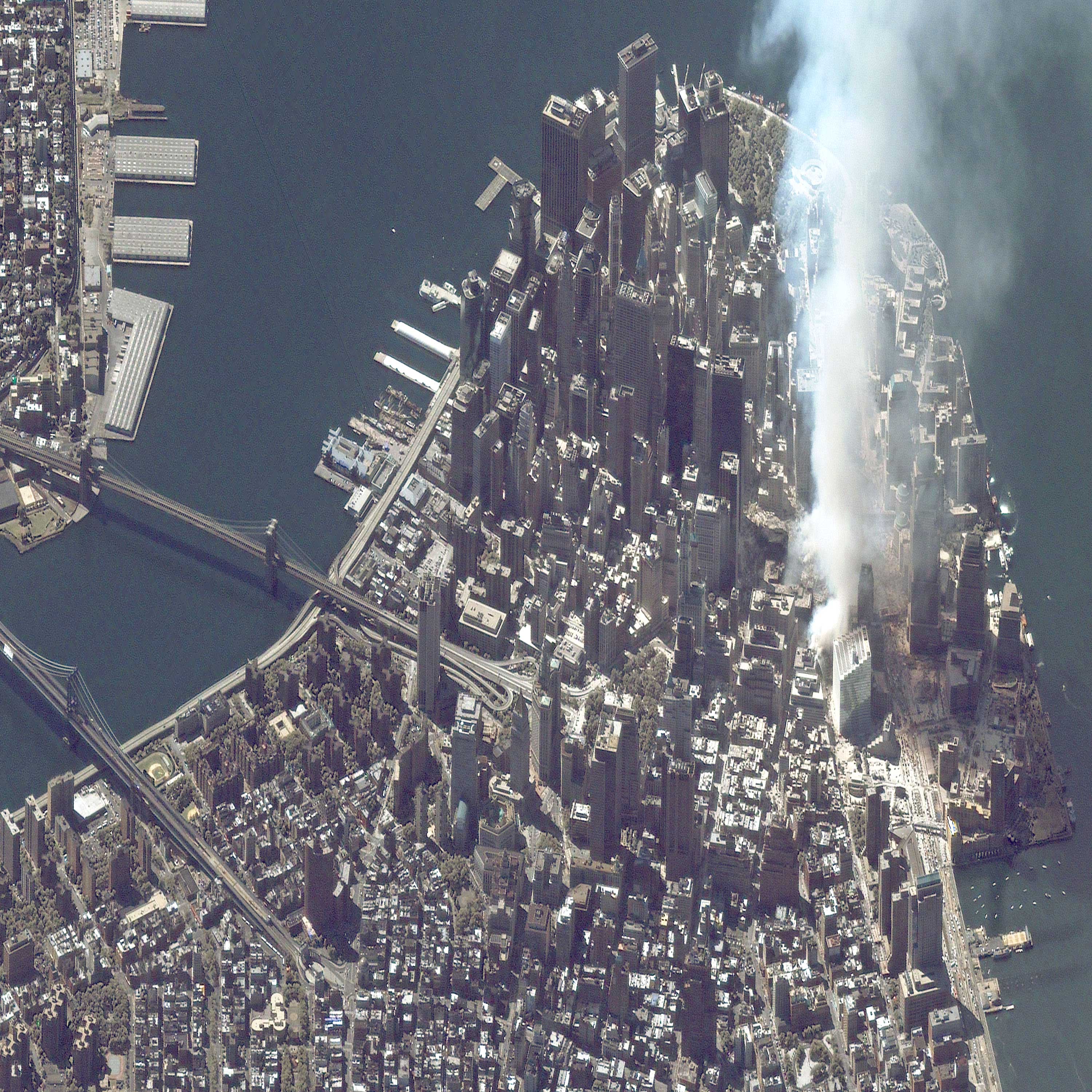
History / Remembering 911 : 10 Years To The Day
September 11, 2011, 01:20:32 PM
The September 11 attacks (called September 11, September 11th or 9/11), were a series of four coordinated suicide attacks upon the United States in New York City and the Washington, D.C. areas on September 11, 2001. On that morning, 19 terrorists from the Islamist militant group al-Qaeda hijacked four passenger jets.The hijackers intentionally crashed two planes into the Twin Towers of the World Trade Center in New York City; both towers collapsed within two hours. Hijackers crashed a third plane into the Pentagon in Arlington, Virginia. A fourth jet, United Airlines Flight 93, crashed into a field near Shanksville, Pennsylvania before it could reach its intended target in Washington, D.C. after the passengers attempted to take control. Nearly 3,000 died in the attacks.
source: wikipedia
source: wikipedia
#19309
Poems and Poets / Re: The cat in the hat on aging
September 11, 2011, 11:02:44 AM
luoy pood intawn ning tigulangang iring!







#19319
History / Re: The Religion of the Roman Empire
September 11, 2011, 10:48:43 AM
Maecenas prostrating before the divine Augustus, Emperor of the Roman Empire.
#19320
History / Re: The Religion of the Roman Empire
September 11, 2011, 10:45:15 AM
The Cult of Imperial Divinity
The Imperial cult of ancient Rome identified emperors and some members of their families with the divinely sanctioned authority of the Roman State. The framework for Imperial cult was formulated during the early Principate of Augustus, and was rapidly established throughout the Empire and its provinces, with marked local variations in its reception and expression.
A deceased Emperor held worthy of the honour could be voted a state divinity (divus, plural divi) by the Senate and elevated as such in an act of apotheosis. The granting of apotheosis served religious, political and moral judgment on Imperial rulers and allowed living Emperors to associate themselves with a well-regarded lineage of Imperial divi from which unpopular or unworthy predecessors were excluded.
It was common for the people to worship the Imperial Office , and the Imperial Person as a living, breathing god.
Source: wiki
#19321
History / Re: The Religion of the Roman Empire
September 11, 2011, 10:41:06 AM
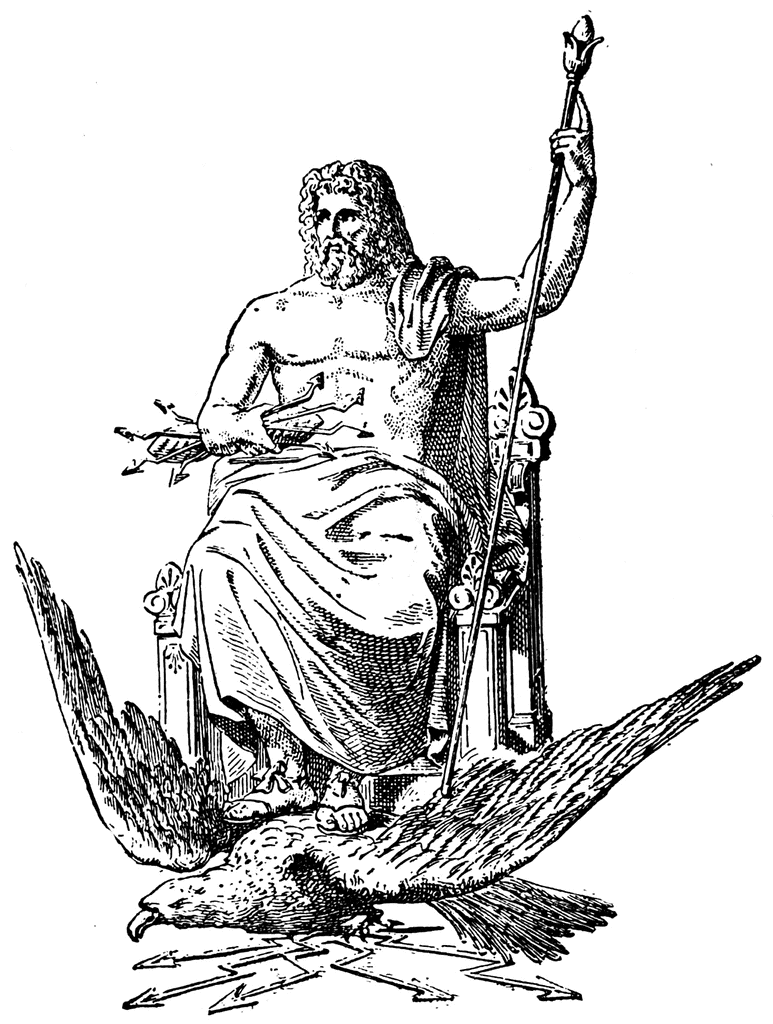
the Roman god of thunder and supreme deity, Jupiter.
#19322
History / Re: The Religion of the Roman Empire
September 11, 2011, 10:39:48 AM
Unlike most religions today, the Roman gods did not demand strong moral behavior. Roman religion involved cult worship. Approval from the gods did not depend on a person’s behavior, but on perfectly accurate observance of religious rituals. Each god needed an image â€" usually a statue or relief in stone or bronze â€" and an altar or temple at which to offer the prayers and sacrifices.
http://www.pbs.org/empires/romans/empire/religion.html
http://www.pbs.org/empires/romans/empire/religion.html
#19323
History / Re: The Religion of the Roman Empire
September 11, 2011, 10:39:28 AM
Divine blessing
The objective of Roman worship was to gain the blessing of the gods and thereby gain prosperity for themselves, their families and communities.
Emperors understood the central importance of religion to the lives of the Romans and used it for their own ends. Augustus appointed himself as the chief priest â€" or Pontifex Maximus â€" and used the appearance of Halley’s Comet to claim that he was, himself, the son of a god.
#19324
History / Re: The Religion of the Roman Empire
September 11, 2011, 10:38:59 AM
In Latin, “religio†means “something that binds.†For Romans, religion was a force that bound families together, bound subjects to their ruler and bound men to the gods.
Private and public
Roman religion was divided into two. Spirits watched over people, families and households, and the paterfamilias was in charge of the household worship that honored them.
Romans also had a set of public gods, such as Jupiter and Mars. State worship was much more formal: colleges of priests paid tribute to these gods on behalf of Rome itself.
#19325
History / Re: The Religion of the Roman Empire
September 11, 2011, 10:38:31 AM
Collegium pontificum
The collegium pontificum had four branches. The pontifices were by far the most important priests and controlled state religion. During the time of Julius Caesar, there were 16 of these priests, half of which were patrician, with the other half plebeian.
The pontifices determined festival dates, assisted the emperor in his religious duties, and determined which days were legal for conducting business. They were headed by the pontifex maximus (chief priest) who, from Augustus onwards, was always the emperor.
#19326
History / Re: The Religion of the Roman Empire
September 11, 2011, 10:38:04 AM
Roman priests
The two most important colleges for priests were the augures and the collegium pontificum. Augures were priests who had been elected for life. Only they had the authority to read and interpret signs from the gods.
Although they could not predict the future, augures would discover whether the gods were happy with a particular plan, such as a battle. To do this, they would watch natural phenomena, such as lightning or birds in flight. Specialists (called haruspices) were also employed to read the entrails of sacrificed animals.
#19327
History / Re: The Religion of the Roman Empire
September 11, 2011, 10:37:46 AM
Public worship
The public side of religion was more organized and more formal than the private. At home, the paterfamilias â€" head of the family â€" performed religious rituals for the household. Beyond the home, gods were worshipped by the state, which employed colleges of highly trained priests and priestesses.
The public side of religion was more organized and more formal than the private. At home, the paterfamilias â€" head of the family â€" performed religious rituals for the household. Beyond the home, gods were worshipped by the state, which employed colleges of highly trained priests and priestesses.
#19328
History / Re: The Religion of the Roman Empire
September 11, 2011, 10:37:28 AM
Quid pro quo
Requests and prayers were presented to gods as a trade: if the god did what was requested (the nuncupatio), then the worshipper promised to do a particular thing in return (the solutio). This trade was binding. To persuade the gods to favor the requests, a worshipper might make offerings of food or wine, or would carry out a ritual sacrifice of an animal before eating it.
The Romans believed that their gods or spirits were actively involved in their daily lives. As a result, sacred meals were held in their name during certain religious festivals. It was believed that the god actually took part in the meal: a place was set for him at the table, invitations were issued in his name, and a portion of the food served was set aside for him to enjoy.
#19329
History / The Religion of the Roman Empire
September 11, 2011, 10:37:07 AM
Roman worship was divided into the public and the private. Families would honor their household spirits while Rome had colleges of official priests to ensure that its actions met with divine approval.
Roman religion involved cult worship. Approval from the gods did not depend on a person’s behavior, but on accurate observance of religious rituals. Each god needed an image â€" usually a statue or relief in stone or bronze â€" and an altar or temple at which to offer prayers and sacrifices.
Roman religion involved cult worship. Approval from the gods did not depend on a person’s behavior, but on accurate observance of religious rituals. Each god needed an image â€" usually a statue or relief in stone or bronze â€" and an altar or temple at which to offer prayers and sacrifices.
#19330
Love Talk / Re: Share your heart-break stories here
September 11, 2011, 05:47:47 AM
During the course of the break up with her (Anna), she was so vindictive that during my birthday party (2 weeks after our break up) she brought her new 'bf' with her. I could not help but smirk at how pathetic she was in trying to make me jealous. For a bit it did work. But in the end, i did not let that get the best of me, especially on my birthday. So, what did I do?
My friends and I downed two bottles of Jose Cuervo while karaoking to some good, funny songs. Ah, that's one way of getting rid of a pesky head-ache, right?

My friends and I downed two bottles of Jose Cuervo while karaoking to some good, funny songs. Ah, that's one way of getting rid of a pesky head-ache, right?
#19331
Love Talk / Re: Share your heart-break stories here
September 11, 2011, 05:44:04 AM
During my 1st year of medicine, i dated a girl who i liked. After 5 months of going steady with her, it was apparent that dili man diay kami mo match. I broke up with her when she began to distract me from my studies, pero ang problema kai ahong amigo, iyaha pod. During the break up process, she was successful in turning some of my friends against me. In the end, her true colors came out. A lying and vindictive woman who scorned me because of splitting with her.
Tinuod gayod ang saying, "in the end, one's true colors come out..."
There is nothing scarier than a woman's scorn...
Tinuod gayod ang saying, "in the end, one's true colors come out..."
There is nothing scarier than a woman's scorn...
#19332
Love Talk / Re: Share your heart-break stories here
September 11, 2011, 05:21:04 AM
Before I went to medical school, I was dating a beautiful lady for several months. Maria was her name. Guwapa kaayo to siya buutan pod. I really wanted to keep in contact with her , but when I told her that I would be moving out of state for medicine, ning change siya, became more distant.
When I started 1st day of 1st year medicine proper (August 2008), she called me and our conversation ended up her asking me if i would be alright with just being 'friends' kono. I did not react negatively, ning katawa ra pod ko, and comforted her lang. Pero ang tinuod -- gi sakitan ahong kasingkasing.
She really was a good girl, and i was developing feelings of love for her during the last months with her. Haay, to this day we are still friends pero ma uwaw na ko mo tawag niya. I really did like her.
#19333
Love Talk / Re: Share your heart-break stories here
September 11, 2011, 05:15:19 AM #19334
Philippine Provinces / Re: Nagselos sa asawa, gitaktak sa trabaho, nadesperado, nahubog, naghikog, patay
September 10, 2011, 11:11:50 PM
This is very unfortunate. RIP.
#19335
Love Talk / Re: Share your heart-break stories here
September 10, 2011, 10:13:26 PM
Normally I can stand stress , and most of what life throws at me, but the thing that can reduce me to tears is the pain of a broken heart. 
#19336
Introduce Yourself / Re: Kumusta mong tanan?
September 10, 2011, 10:10:32 PM
Hey Ray,
Thanks for remembering us here, we all missed you and your posts here! Asa man diay ka based karon, Ray?
Thanks for remembering us here, we all missed you and your posts here! Asa man diay ka based karon, Ray?
#19337
Music and Video / She's like the wind
September 10, 2011, 10:20:55 AM #19340
Music and Video / Take My Breath Away by The Beat Street Band
September 10, 2011, 10:17:55 AM #19341
Bible Study / Re: Daily Scriptural Verse
September 10, 2011, 10:16:44 AM
Hear my voice when I call, O LORD; be merciful to me and answer me. ... Do not hide your face from me, do not turn your servant away in anger; you have been my helper. Do not reject me or forsake me, O God my Savior. Though my father and mother forsake me, the LORD will receive me.
Psalm 27:7,9-10
Psalm 27:7,9-10
#19342
Bible Study / Re: Daily Scriptural Verse
September 10, 2011, 10:14:12 AM
But in your hearts set apart Christ as Lord. Always be prepared to give an answer to everyone who asks you to give the reason for the hope that you have. But do this with gentleness and respect.
1 Peter 3:15
1 Peter 3:15
#19343
Bible Study / Re: Daily Scriptural Verse
September 10, 2011, 10:13:30 AM
"But I tell you who hear me: Love your enemies, do good to those who hate you, bless those who curse you, pray for those who mistreat you."
-Luke 6:27-28
-Luke 6:27-28
#19344
Love Talk / Share your heart-break stories here
September 10, 2011, 10:04:53 AM
Please share your heart-break stories here with all of us.
#19345
Music and Video / Re: It Must Have Been Love by Roxette
September 10, 2011, 10:03:41 AM
Lay a whisper on my pillow
Leave the winter on the ground
I wake up lonely,there's air of silence
In the bedroom and all around
Touch me now, I close my eyes
And dream away...
It must have been love, but it's over now
It must have been good, but I lost it somehow
It must have been love, but it's over now
From the moment we touched till the time had run out
Make believing we're together
That I'm sheltered by your heart
But in and outside I turn to water
Like a teardrop in your palm
And it's a hard winter's day
I dream away...
It must have been love, but it's over now
It was all that I wanted, now I'm living without
It must have been love, but it's over now
It's where the water flows, it's where the wind blows
It must have been love, but it's over now
It must have been good, but I lost it somehow
It must have been love, but it's over now
From the moment we touched till the time had run out
It must have been love, but it's over now
It was all that I wanted, now I'm living without
It must have been love, but it's over now
It's where the water flows, it's where the wind blows.
#19346
Music and Video / It Must Have Been Love by Roxette
September 10, 2011, 10:03:06 AM
#19347
Anonymous Diary Blog / Re: What Did You Do Today?
September 10, 2011, 01:00:03 AM
I'm feeling down on the dumps today. Ah, I hope it gets better.


#19350
Travel and Tours / Re: Hainan, China
September 09, 2011, 01:28:46 PM
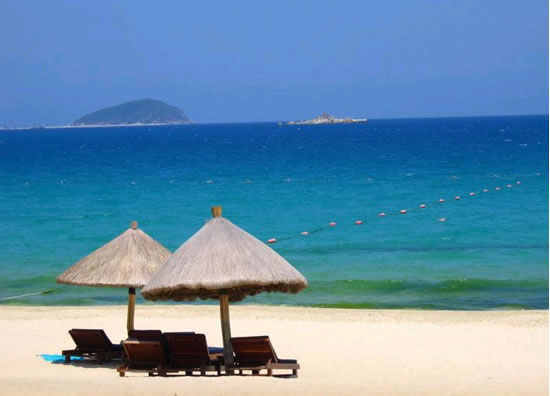
Beautiful Chinese model in Hainan's beach...


#19353
Travel and Tours / Re: Hainan, China
September 09, 2011, 01:26:37 PM
Tropical kaayo diay ning Hainan...

#19354
Travel and Tours / Hainan, China
September 09, 2011, 01:26:04 PM
Hainan Island of Southeastern China
#19355
Travel and Tours / Re: Fujian, China
September 09, 2011, 01:21:08 PM
Rice Terraces of Fujian, China


#19356
Travel and Tours / Re: Fujian, China
September 09, 2011, 01:16:34 PM
duol ra kaayo ang probinsya sa fujian sa pilipinas.
#19357
Travel and Tours / Re: Fujian, China
September 09, 2011, 01:13:34 PMQuote from: jorgeanna on September 09, 2011, 01:07:48 PM
too bad i only know very few chinese words.. its just too difficult to learn this language
i only know very little pod, anna, i can pick up some cantonese words and some hakka pero i do not understand mandarin gayod. the only reason why i know some cantonese kai when bata pa mi, lola nating would always sing cantonese songs to make us go to bed. hilig kaayo kadto si lola mo mix cantonese with bisaya. hehehe! bata pa ko, mo bisita to si mayor pablo "pabling" lim of valencia sa among balay. they used to 'chit-chat' in cantonese.
lisod bitaw ilang language. ma sakit ahong ulo when trying to read the calligraphy.

#19358
Travel and Tours / Re: Fujian, China
September 09, 2011, 01:05:20 PM
the peaks of Tailao Mountain within the Ningde Geopark in southeast China's Fujian Province
#19359
Travel and Tours / Re: Fujian, China
September 09, 2011, 12:53:44 PM
anna, ngi kon hak ga wa?
#19360
Travel and Tours / Re: Fujian, China
September 09, 2011, 12:45:55 PMQuote from: jorgeanna on September 09, 2011, 12:23:07 PM
Tianluokeng Group Earth Buildings, Shangban Village, Shuyang Town, Nanjing County, Zhangzhou, Fujian
inside the earth building
posing inside the century old earth building


o wow! these are the 'mini cities' they talked about. one of these earth buildings were home to one family clan kono. kuyaw'a kaayo! its good to see that these buildings have survived the test of time.
#19361
Travel and Tours / Re: Fujian, China
September 09, 2011, 12:44:39 PMQuote from: jorgeanna on September 09, 2011, 11:22:29 AM
went to this place last year and daku na gyud og improvement.. sa Ningde, Fujian pud ni cya which is dool sa capital sa Fujian Province and medyo layo2x ko.. beautiful place but mas mu-prefer ko og seaside...
Anna,
naka sud ka sa bridge? Ingon kono sila nga the bridge is almost 400 years old. dugay pod ang drive from ningde to the coastline?
#19362
Travel and Tours / Re: Fujian, China
September 09, 2011, 12:40:03 PM
naka basa bitaw ko nga ning bisita si PNOY dinha; iyang lolo ay inchik pero HAKKA. ang inchik nga ning settle sa ILOCOS region ay taga Fujian State. ilang entry port sa una ay sa Manila og sa Batanes Islands.
maka lingaw imong testimony, anna. all i know is that lolo Mariano (Tan Ngai He) used to do business with his relatives dinha sa Fujian og sa Guangdong before he left for the Philippines in 1903. kahibalo ko nga daghan kono mi nga paryente dinha sa Fujian. ang mama sa ahong great grandfather taga Fujian pero ang papa sa ahong great grandfather, taga Guangdong to siya.
My great-great grandfather was of the TAN family clan, which is from Guangdong. My great great grandmother was of the LIN family clan, who are from Fujian.
---
These pictures you shared with me are amazing!! That is my great-great grandmother's home province!!
#19363
History / Re: The Warring States Period of Ancient China
September 09, 2011, 12:28:59 PM
The Reforms

In 356 BC, with the support of Duke Xiao of Qin, Shang Yang enacted a series of reforms in the state. The content of the reforms include: creating the household register system to enhance management; implementing criminal responsibility sharing system; making the harboring of a criminal a crime as severe as surrendering to the enemy; awarding military exploits; imposing an outright ban on private wars; depriving nobles of hereditary privileges; awarding farming and weaving; promoting county system; abolishing the nine-square land system; opening crisscross footpaths between fields; allowing land trade; encouraging breaking up large family clans; taxing according to the numbers of household and people; unifying the system of weights and measures.
In 356 BC, with the support of Duke Xiao of Qin, Shang Yang enacted a series of reforms in the state. The content of the reforms include: creating the household register system to enhance management; implementing criminal responsibility sharing system; making the harboring of a criminal a crime as severe as surrendering to the enemy; awarding military exploits; imposing an outright ban on private wars; depriving nobles of hereditary privileges; awarding farming and weaving; promoting county system; abolishing the nine-square land system; opening crisscross footpaths between fields; allowing land trade; encouraging breaking up large family clans; taxing according to the numbers of household and people; unifying the system of weights and measures.
#19364
History / Re: The Warring States Period of Ancient China
September 09, 2011, 12:25:17 PM
Shang Yang - An Important Statesman during the Warring States Period

Shang Yang (商éž...; born Wei Yang, b.390 BC-d. 338 BC) was an important statesman of Qin in the Warring States Period of ancient China. With the support of Duke Xiao of Qin Yang enacted numerous reforms (in accordance with his legalist philosophy recorded in The Book of Lord Shang) in the state of Qin that helped to change Qin from a peripheral state into a militarily powerful and strongly centralized kingdom, changing the administration by emphasizing meritocracy and devolving power from the nobility.
Shang Yang (商éž...; born Wei Yang, b.390 BC-d. 338 BC) was an important statesman of Qin in the Warring States Period of ancient China. With the support of Duke Xiao of Qin Yang enacted numerous reforms (in accordance with his legalist philosophy recorded in The Book of Lord Shang) in the state of Qin that helped to change Qin from a peripheral state into a militarily powerful and strongly centralized kingdom, changing the administration by emphasizing meritocracy and devolving power from the nobility.
#19365
History / Re: The Warring States Period of Ancient China
September 09, 2011, 12:23:17 PM
Towards the end of the Warring States Period, the State of Qin became disproportionately powerful compared to the other six states. As a result, the policies of the six states became overwhelmingly oriented towards dealing with the Qin threat, with two opposing schools of thought: Hezong ; and Lianheng. There were some initial successes in Hezong, though it eventually broke down. Qin repeatedly exploited the Lianheng strategy to defeat the states one by one. During this period, many philosophers and tacticians travelled around the states recommending the rulers to put their respective ideas into use. These "lobbyists" were famous for their tact and intellect, and were collectively known as Zonghengjia, taking its name from the two main schools of thought.
In 316 BC, Qin conquers the Shu area. In 230 BC, Qin conquers Han. In 225 BC, Qin conquers Wei. In 223 BC, Qin conquers Chu . In 222 BC, Qin conquers Yan and Zhao. In 221 BC, Qin conquers Qi, completing the unification of China , and ushering in the Qin Dynasty.
In 316 BC, Qin conquers the Shu area. In 230 BC, Qin conquers Han. In 225 BC, Qin conquers Wei. In 223 BC, Qin conquers Chu . In 222 BC, Qin conquers Yan and Zhao. In 221 BC, Qin conquers Qi, completing the unification of China , and ushering in the Qin Dynasty.
#19366
History / Re: The Warring States Period of Ancient China
September 09, 2011, 12:23:00 PM
In 341 BC, Wei attacked Han, and Qi interfered again. The two generals from the previous Battle of Guiling met again, and due to the brilliant strategy of Sun Bin, Wei was again decisively defeated at the Battle of Maling.
The situation for Wei took an even worse turn when Qin, taking advantage of Wei series of defeats by Qi, attacked Wei in 340 BC under the advice of famous Qin reformer Shang Yang. Wei was devastatingly defeated and was forced to cede a large portion of its territory to achieve a truce. This left their capital Anyi vulnerable, so Wei was also forced to move their capital to Daliang.
After these series of events, Wei became severely weakened, and the Qi and Qin became two of the dominant states in China .
In 334 BC , the rulers of Wei and Qi agreed to recognize each other as Kings, formalizing the independence of the states and the powerlessness of the Zhou throne since the beginning of the Eastern Zhou Dynasty . The King of Wei and the King of Qi joined the ranks of the King of Chu , whose predecessors had been Kings since the Spring and Autumn Period . From this point on, all the other states eventually declare their Kingship, signifying the beginning of the end of the Zhou Dynasty.
#19367
History / Re: The Warring States Period of Ancient China
September 09, 2011, 12:22:44 PM
In 403 BC, the three major families of Jin, with the approval of the Zhou king, partition Jin into three states: the State of Han , the State of Zhao , and the State of Wei . The three family heads were given the title of Marquess. The State of Jin continued to exist with a tiny piece of territory until 376 BC when the rest of the territory was partitioned by the Three Jins.
In 371 BC, Marquess Wu of Wei passed away without specifying a successor, causing Wei to fall into an internal war of succession. After three years of civil war, Zhao and Han, sensing an opportunity, invaded Wei. On the verge of conquering Wei, the leaders of Zhao and Han fell into disagreement on what to do with Wei and both armies mysteriously retreated. As a result, King Hui of Wei was able to ascend onto the throne of Wei.
In 354 BC, King Hui of Wei initiated a large scale attack at Zhao. By 353 BC , Zhao was losing badly, and one of their major cities--Handan, a city that will eventually become Zhao's capital--was being besieged. As a result, the neighbouring State of Qi decided to help Zhao. The strategy Qi used, suggested by the famous tactician Sun Bin, who at the time was the Qi army advisor, was to attack Wei's territory while the main Wei army is busy sieging Zhao, forcing Wei to retreat. The strategy was a success; the Wei army hastily retreated, and encountered the Qi midway, culminating into the Battle of Guiling where Wei was decisively defeated. The event spawned the famous phrase " å›´éæ•'èµµ ", meaning attacking Wei to save Zhao.
#19368
History / Re: The Warring States Period of Ancient China
September 09, 2011, 12:22:28 PM
Warring States Period (403 BC â€" 221 BC)
The Warring States Period takes place from sometime in the 5th century BC to the unification of China by Qin in 221 BC. The date for the beginning of the Warring States Period is somewhat in dispute. While it is frequently cited as 475 BC, following the Spring and Autumn Period, 403 BC, the date of the tripartition of the State of Jin, is also sometimes considered as the beginning of the period. It is nominally considered to be the second part of the Eastern Zhou Dynasty, following the Spring and Autumn Period. Like the Spring and Autumn Period, the king of Zhou acted merely as a figurehead.
The Warring States Period, in contrast to the Spring and Autumn Period, was a period when regional warlords annexed smaller states around them and consolidated their rule. The process began in the Spring and Autumn Period, and by the 3rd century BC, seven major states had risen to prominence. These Seven Warring States, were the Qi, the Chu, the Yan, the Han, the Zhao, the Wei and the Qin.
The proliferation of iron working in China was seen by the Warring States Period, replacing bronze as the dominant metal used in warfare. Areas such as Shu and Yue were also brought into the Chinese cultural sphere during this time. Walls built by the states to keep out northern nomadic tribes and each other were the precursors of the Great Wall of China. Different philosophies developed into the Hundred Schools of Thought, including Confucianism (elaborated by Mencius), Taoism (elaborated by Zhuang Zi), Legalism (formulated by Han Feizi) and Mohism (formulated by Mozi). Military tactics also changed. Unlike the Spring and Autumn Period, most armies in the Warring States Period made combined use of infantry and cavalry, and the use of chariots gradually fell into disfavor.This was also around the time legendary military strategist Sun Wu wrote The Art of War which is recognized today as the most influential, and oldest known military strategy guide.
#19369
History / Re: The Warring States Period of Ancient China
September 09, 2011, 09:15:05 AM
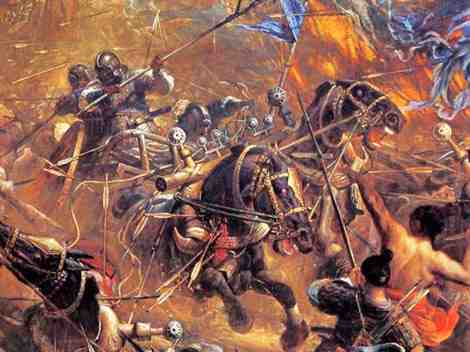
Qin Shi Huangdi, First Chinese Emperor
A ruler from the western state of Qin united and subjugated the Warring States and formed China in 221 B.C. He declared himself the first emperor of China and named himself Shi Huangdi (meaning First Emperor).
The Emperor standardized Chinese writing, bureaucracy, scholarship, law, currency, weights and measures. He expanded the Chinese empire, built a capital in Xian, a system of roads, and massive fortifications and palaces.


#19375
History / The Warring States Period of Ancient China
September 09, 2011, 09:08:03 AM
The period of the Warring States (Zhanguo or Chan-Kuo) refers to the era of about 475 BCE to 221 BCE. It commenced at a time of when the numerous petty city-state kingdoms of the Spring and Autumn period had been consolidated into seven major contenders and a few minor enclaves.
There was a larger state of Jin which broke up into the states of Han, Wu and Zhao. There also was to the south the state of Chu and to the east the states of Qi and Yan. These states, Han, Wu, Zhao, Chu, Qi and Yan, were thought to be the six major contenders for domination. As it turned out it was the state of Qin in the west that emerged victorious. Qin was not only not initially considered one of the contenders, it was not even considered fully Chinese. It had barbarian roots.
Advances in military technology gave superiority to larger states with the resources to take advantage of the newer technology. Part of this technology was the casting of individual weapons which allowed the arming of foot soldiers. In previous eras the fighting was done by aristocrats in chariots. Chariots were not produced on a mass production basis so participation in the battles was limited to a small proportion of the population, the ruling elite of the city-states. But with the development of the casting of individual weapons there was a marked advantage to states with the economic resources to produce the weapons and the population to provide large armies to use these weapons.
This military technology made the consolidation of smaller states into larger states an inevitability.
The Warring States period is usually interpreted as a time of endless brutal wars that came as a result of friction among the seven states and that this unfortunate state of affairs could end only with one state bringing all into one empire. This interpretation is probably propaganda for the "One China" policy. First of all the Warring States period was not so bleak. It was a time of great intellectual ferment. The Confucian philosophers Mencius and Hsun-tzu taught and wrote during the period. Administrative systems were developed for territorial states to replace the methods that worked only for relatively small city states. The wars that occured were not generally ones due to diplomatic or territorial frictions among the seven states but instead were wars stemming from one state attempting to conquer and control all of the states. In other words, the formation of the empire came not as a result of anarchy but as a result of greed and drive for power. The wasteful and bloody conquest of the separate states was justified as an unfortunate necessity to end the era of anarchy, but the wars were primarily those of empire-building.
The kingdom of Qin of the northwest finally conquered the southeastern kingdom of Chu in 223 BCE. The last opponents were conquered two years later in 221 BCE, thus creating the Empire of Qin (China).
http://www.sjsu.edu/faculty/watkins/warringstates.htm


#19378
Travel and Tours / Re: The Hakka Culture of Fujian Province
September 09, 2011, 09:01:54 AM
Hakka People

#19379
Travel and Tours / The Hakka Culture of Fujian Province
September 09, 2011, 09:00:11 AM
People who live in Fujian are Hakka-speaking people. Vestiges of the old Tang Imperial Dynasty.
#19380
Travel and Tours / Re: Fujian, China
September 09, 2011, 08:56:07 AM
Yongqing Bridge in Fujian Province, CHINA.

#19381
Travel and Tours / Re: Fujian, China
September 09, 2011, 08:54:09 AM
Hundreds of years old...
#19382
Travel and Tours / Re: Fujian, China
September 09, 2011, 08:49:27 AMQuote from: jorgeanna on September 09, 2011, 08:09:56 AM
Lorenz, the pictures here are located kung asa ko naka-base karon which is Zhangzhou .... kanang first pic mao na gitawag nila og Earth Buildings, which is 3 hours away sa city proper. i visited this place 2 years ago but sadly because of the booming tourism industry sa aning dapita, there were changes made ... luckily also, i was also able to see earth buildings nga centuries old and no changes were made ....
jiulong river is so near the school where i work. this is where we usually have our bbq party ...
gusto gayod ko mo bisita sa china pohon. gusto ko mo bisita sa fujian og guangdong (pronounced: kwang tong) kai mao man na ang ancestral link nako sa ahong inchik side.

#19383
Travel and Tours / Re: Fujian, China
September 09, 2011, 08:47:49 AM
Anna,
Kuyaw kaayo kai duol ra man diay ka ani! Ning post ko ani kai si Lolo Mariano (ang papa sa ahong maternal lola) taga Guangdong to siya pero ning bisita siya sa Fujian kalingaw sa una. Ahong Lola Nating (mama sa ahong mommy) ning bisita pod siya sa Fujian sa bata pa siya. My great-grandfather used to take my grandmother and her sisters and brothers with him when they visited Guangdong and some of our distant relatives who are living in Fujian.
Ang mga INCHIK sa Pilipinas, the ones that migrated to Pilipinas during the early 20th century og sa mid-20th century, they are from southern China. Ilang dialect ay: HAKKA (dialect sa Fujian) og CANTONESE (dialect sa Guangdong).
Naka hinomdom ko kai ahong lola nating ni ingon to siya "dili ko gusto mo poyo sa tsayna kai og mamatay ka, i-lubung ang tawo sa bukid!" bwahahaha. mao na ning balik si lola sa bohol, philippines.
addendum: daghan kono mga graves sa fujian og sa guangdong sa side of the mountains kono. ancient chinese practice kono to, ingon si lola namo.
#19384
Travel and Tours / Sunset at the Pearl River, Guangzhou, Guangdong
September 08, 2011, 11:38:52 PM
#19385
Travel and Tours / Crescent Moon Lake, Dunhuang, Gansu
September 08, 2011, 11:32:06 PM


Dunhuang (敦ç...Œ) is a city in Jiuquan, Gansu province, China. It is sited in an oasis. It has a population of 100,000. The Crescent Lake (also called Yueyaquan, 月牙泉) is within the Sand-Mountain. This lake is apparently an oasis surrounded by the highly sandy area composed of high dunes. The Mingsha Shan is so named for the sound of the wind whipping off the dunes. The area is very popular with tourists, the great majority of them Chinese. A street lined with souvenir stalls leads up to the entrance to the complex. Most tourists ride camels, organized by the complex operators, to reach the sand dunes. Typically the camels are guided by a local camel guide, who include both women and men. At the dunes, a popular activity for tourists is to ride sleds down the sand slopes, much like snow-sledding during winter in temperate zones. Along the side of the Crescent Lake is a pagoda in traditional Han Chinese architecture.


#19387
Travel and Tours / China House, Chifeng Dao (Heping District), Tianjin
September 08, 2011, 11:26:34 PM
The house, which has been under construction for six years, is decorated with 400 millions of ancient porcelain flakes, ancient bowls, dishes and vases, inlaid everywhere in the architecture.
The house opened to visitors on Monday, September 3, 2007 and his owner, businessman Zhang Lianzhi reportedly spent US$65 million on decorating the building with his wares collected over the past two decades.
#19388
Travel and Tours / Re: Fujian, China
September 08, 2011, 11:24:38 PM
Jiulong River, Fujian, CHINA

#19389
Travel and Tours / Re: Mount Emei Temple, Sichuan, CHINA
September 08, 2011, 11:23:25 PM
Beautiful China...


#19393
Travel and Tours / Fujian, China
September 08, 2011, 11:17:54 PM
FUJIAN is a province on the southeast coast of China. Fujian is bordered by Zhejiang to the north, Jiangxi to the west, and Guangdong to the south. The name Fujian came from the combination of Fuzhou and Jianzhou (a former name for Jian'ou) two cities in Fujian, during the Tang Dynasty. With a Han majority, it is one of the most culturally and linguistically diverse provinces in China.
The Provincial population is: 36 Million.


#19397
Photos Unlimited / Re: The 3 TB Musketeers?
September 08, 2011, 11:07:32 PMQuote from: chicogon on September 03, 2011, 11:38:07 AM
3 TB (Taga Balingsya) musketeers?
bwahahaha. i wonder who these three are.
#19398
Photos Unlimited / Re: Iro Nga Liwat Sa Tag-iya
September 08, 2011, 11:06:12 PMQuote from: hubag bohol on September 07, 2011, 05:30:08 PM
Klarex kinsay tag-iya ani...

maldito ning iro'a da!

Pages 1 2 3 4 5 6 7 8 9 10 11 12 13 14 15 16 17 18 19 20 21 22 23 24 25 26 27 28 29 30 31 32 33 34 35 36 37 38 39 40 41 42 43 44 45 46 47 48 49 50 51 52 53 54 55 56 57 58 59 60 61 62 63 64 65 66 67 68 69 70 71 72 73 74 75 76 77 78 79 80 81 82 83 84 85 86 87 88 89 90 91 92 93 94 95 96 97 98 99 100 101 102 103 104 105 106 107 108 109 110 111 112 113 114 115 116 117 118 119 120 121 122 123 124 125 126 127 128 129 130 131 132 133 134 135 136 137 138 139 140 141 142 143 144 145 146 147 148 149 150 151 152 153 154 155 156 157 158 159 160 161 162 163 164 165 166 167 168 169 170 171 172 173 174 175 176 177 178 179 180 181 182 183 184 185 186 187 188 189 190 191 192 193 194 195 196 197 198 199 200 201 202 203 204 205 206 207 208 209 210 211 212 213 214 215 216 217 218 219 220 221 222 223 224 225 226 227 228 229 230 231 232 233 234 235 236 237 238 239 240 241 242 243 244 245 246 247 248 249 250 251 252 253 254 255 256 257 258 259 260 261 262 263 264 265 266 267 268 269 270 271 272 273 274 275 276 277 278 279 280 281 282 283 284 285 286 287 288 289 290 291 292 293 294 295 296 297 298 299 300 301 302 303 304 305 306 307 308 309 310 311 312 313 314 315 316 317 318 319 320 321 322 323 324 325 326 327 328 329 330 331 332 333 334 335 336 337 338 339 340 341 342 343 344 345 346 347 348 349 350 351 352 353 354 355 356 357 358 359 360 361 362 363 364 365 366 367 368 369 370 371 372 373 374 375 376 377 378 379 380 381 382 383 384 385 386 387 388 389 390 391 392 393 394 395 396 397 398 399 400 401 402 403 404 405 406 407 408 409 410 411 412 413 414 415 416 417 418 419 420 421 422 423 424 425 426 427 428 429 430 431 432 433 434 435 436 437 438 439 440 441 442 443 444 445 446 447 448 449 450 451 452 453 454 455 456 457 458 459 460 461 462 463 464 465 466 467 468 469 470 471 472 473 474 475 476 477 478 479 480 481 482 483 484 485 486 487 488 489 490 491 492 493 494 495 496 497 498 499 500 501 502 503 504 505 506 507 508 509 510 511 512 513 514 515 516 517 518 519 520 521 522 523 524 525 526 527 528 529 530 531 532 533 534 535 536 537 538 539