Join MikeLigalig.com!

Why Just Read When You Can Join, Post, and Read!

Menu

Show posts

This section allows you to view all posts made by this member. Note that you can only see posts made in areas you currently have access to.

Show posts Menu

Messages - hubag bohol

#1901
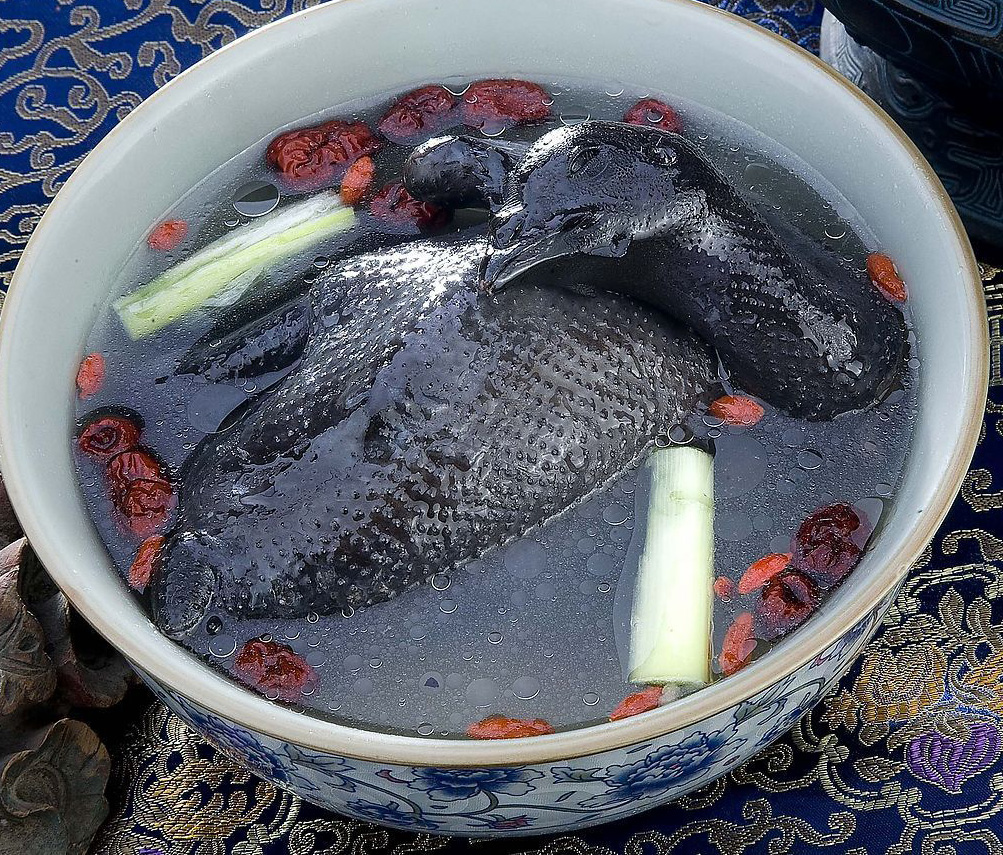
Photos Unlimited / Re: Ayam cemani
July 14, 2017, 03:57:47 PM


Kini jud kay tinola... 8)
#1902
Photos Unlimited / Re: Ayam cemani
July 14, 2017, 03:54:53 PM


Tambal sa bughat... ;D
#1903
Jokes and Humor / Elijah Wood and Macaulay Culkin
July 14, 2017, 03:46:27 PM


:P
#1904
Jokes and Humor / Caesar's salad
July 14, 2017, 03:42:22 PM
#1905
Jokes and Humor / Führer furor
July 14, 2017, 03:40:53 PM


:P
#1906
Inspiration & Hope / Re: Time. What is time?
July 14, 2017, 03:29:57 PM
#1907
Ni Le Phyllis F. Antojado (Banat) | Updated July 14, 2017 - 12:00am


CEBU, Philippines - Usa ka prison guard sa Cebu Provincial Detention and Rehabilitation Center (CPDRC) ang gipaubos karon sa imbestigasyon human nga nasakpan nga nagdala og manok igtatari sulod sa maong prisohan.

Matud ni Bobby Legaspi ang officer in charge sa CPDRC nga ikaduha na kini kahigayon nga ang maong gwardya nagdala og mga manok sulod sa provincial jail.

Ang pagdala og manok pansabong gikonsiderar kini nga kontrabando sulod sa prisohan.


Si Legaspi nagkanayon nga niadtong Marso, una niyang nasayran nga adunay mga manok sulod sa CPDRC, ug giangkon kini sa maong gwardya nga iya gibuhi ang 35 ka mga manok pansabong sulod sa prisohan .

Gimandoan kini ni Legaspi nga kuhaon apan sa ilang pag-inspeksyon niadtong Lunes adunay 11 ka mga manok gihapon sulod sa maong provincial jail.

Buot mahibaw-an sa kadagkuan sa CPDRC unsay katuyoan sa maong prison guard sa pagbuhi sa maong manok ug kun nganong nakalusot kini taliwala sa presensiya sa mga sakop sa Provincial Public Safety Company sa CPDRC.

Ang maong gwardya, usa kini ka regular nga empleyado sa Kapitolyo ug maoy mo-drive sa sakyanan pagkuha og supply sa pagkaon sa mga priso sa CPDRC.

Ang maong mga manok gisakmit na sa PPSC samtang ang prison guard nga wala usa panganli ni Legaspi gipaubos sa imbestigasyon sa Committee On Discipline and Investigation (CODI).

Sa pagkakaron, padayon pa gihapon nga nag-report ang maong prison guard apan anaa kini sa tower gi-assign karon. (BANAT NEWS)
#1908
#1909
#1910
#1911
Science and Research / Jupiter storm descending
July 14, 2017, 03:08:02 PM
#1912
Photos Unlimited / Re: Days in the life of Aylandil
July 14, 2017, 03:05:17 PM
Eating time!


8)
#1913


Bugsayitot strikes agaain... ;D
#1914


Calling Bugsay... ;D
#1915
#1916
Facts and Trivia / Re: OPTICAL ILLUSIONS GALLERY
July 12, 2017, 03:54:54 PM


8)
#1917
Photos Unlimited / Re: Days in the life of Aylandil
July 12, 2017, 03:49:49 PM


Sa gamay pa si Aylandil, with her two elder siblings... ;D
#1918
Photos Unlimited / Re: Pure joy
July 12, 2017, 03:44:30 PM
#1919
Quotable Quotes / Re: Grace under pressure
July 12, 2017, 03:41:25 PM
#1920


Kini maoy klarong mga photogenic... :)
#1921
Big Picture

Import demand in the Philippines is surging as the government powers ahead with an ambitious infrastructure program, boosting economic growth to more than 6 percent, among the fastest in the world.

As the nation’s current account balance swings from a surplus to a deficit, that’s removing a key support for the currency and the government’s credit rating. With remittances also volatile, the peso has become Asia’s worst-performing currency this year and dropped to its lowest level against the dollar since 2006 on Tuesday.

Economist Takeaway

“The deficit widening is something that’s really consistent with an economy that’s powering ahead and doing very well,” said Euben Paracuelles, an economist at Nomura Holdings Inc. in Singapore. “The deficit will probably stay large and that would imply more pressures on the currency, more depreciation pressure on the peso over that period.”

The bigger-than-expected trade deficit underscores that the currency’s underperformance this year “is a result of a confirmation of a more challenging current account,” Joey Cuyegkeng, ING Groep NV senior economist in Manila said in note.

Other Details

Electronics, led by semiconductors, remained the country’s top export product, increasing 18 percent in May from a year ago to $2.8 billion

The biggest increases in imports came from metal products, which climbed 44 percent, and transport equipment, which surged 38 percent

Biggest growth in imports came from South Korea, Indonesia and Japan
#1922
By Melissa Cheok
July 11, 2017, 1:06 AM EDT
https://www.bloomberg.com/


Trade shortfall was $2.8 billion, largest since 1980

Imports gained 17% from year earlier, exports rose 14%

The Philippines posted its biggest trade deficit since data became available, fueled by a rapidly expanding economy.

The currency slumped to its weakest level since 2006.

Key Points

The trade gap widened to $2.8 billion in May, the Philippine Statistics Authority said in a statement Tuesday. That’s the highest since at least January 1980.

The median estimate in a Bloomberg survey of nine economists was for a $1.5 billion shortfall

Exports rose 14 percent from a year ago to $5.5 billion; imports jumped 17 percent to $8.2 billion
#1923
Quote from: rogamz on May 15, 2017, 11:35:26 AM
QuoteAng nakaparat kay basin ganahan si Inday kon mapaakan kay sakit-sakit katol-katol man... ;D

morag ikaw mao giartehan ato nya bay hubz..wa lang kono ka nakasabot hehehe ::)::):P

He he, hubag-hubagan man pud ta anang estoryaha... ;D
#1924


8)
#1925
Facts and Trivia / Re: The original Shrek
July 12, 2017, 03:14:40 PM


:P
#1926
Photos Unlimited / Re: Thieving Paw strikes again
July 10, 2017, 08:40:26 AM
#1927


At least dili magutman... :(
#1930

Cool na daan si Botoy bisan sa gamay pa


8)
#1931
Photos Unlimited / Re: View from my Window
July 09, 2017, 06:58:00 PM
#1932
Photos Unlimited / Re: Budbod
July 09, 2017, 06:55:25 PM
#1933
Photos Unlimited / Re: Thieving Paw strikes again
July 09, 2017, 06:53:40 PM
#1934
Photos Unlimited / Re: "I'm sexy and I know it!"
July 09, 2017, 06:48:40 PM
#1935
Two other sites in Cambodia already have heritage status, including the popular Angkor Wat in Siem Reap province where parts of the Lara Croft: Tomb Raider film were shot.

Angkor Wat and Preah Vihear, an 11th century temple on the border between Thailand and Cambodia, were listed as World Heritage Sites in 2004 and 2008, respectively.

Sambor Prei Kuk was added to the list yesterday along with other sites in China and India.

Tibetan rights groups criticised Unesco’s decision to extend world heritage status to an extensive plateau area in a heavily Tibetan area, saying it reinforces Chinese control of the region. â€" Reuters
#1936

This photo taken on November 8, 2014 shows the Angkor Wat temple complex at sunrise in Cambodia's Angkor National Park, Siem Reap province. â€" AFP pic


PHNOM PENH, July 9 â€" The UN cultural organisation added an ancient temple site in Cambodia to its world heritage list, the government said today, bringing the number of heritage sites in the South-east Asian country to three.

Sambor Prei Kuk, or “temple in the richness of the forest” in the Khmer language, located 206 km (128 miles) north of the capital Phnom Penh, is home to numerous temples, ten of which are octagonal.

“Some of these elements, including lintels, pediments and colonnades, are true masterpieces,” Unesco said on its website.

Unesco said the area had been identified as Ishanapura, the capital of the ancient Chenla Empire, a Khmer civilisation that flourished in the late 6th and 7th centuries and preceded the Khmer Empire.

Its remains cover an area of 25 square kilometres. The site has become increasingly popular with foreign tourists.

“The decision of the Unesco’s World Heritage Committee is another massive pride for the nation,” the Ministry of Culture of Fine Arts said in a statement today.

Tourist arrivals in Cambodia rose 5 per cent to five million last year. About 5.5 million tourists are expected to visit the country this year.
#1938
As translated into English by Agence France Presse, which picked up the story, Pope Francis told La Repubblica: “I worry about very dangerous alliances between powers which have a distorted vision of the world: America and Russia, China and North Korea, (Russian President Vladimir) Putin and (Syria’s Bashar al-) Assad over the war in Syria.”

“The danger concerns immigration,” the pope continued to La Repubblica, as translated by AFP. “Our main and unfortunately growing problem in the world today is that of the poor, the weak, the excluded, which includes migrants.”

“This is why the G20 worries me: It mainly hits immigrants,” Pope Francis said, according to AFP.

In the same interview, according to La Repubblica, Pope Francis said that Europe must take on a "federal structure."

"I also thought many times to this problem and came to the conclusion that, not only but also for this reason, Europe must take as soon as possible a federal structure," the pope said, according to the Google translation of the La Repubblica article.
#1939
He said the pope wanted to see him at four that afternoon, according to a Google translation of the Italian report.

“Pope Francis told me to be very concerned about the meeting of the G20,” Scalfari wrote.

“I am afraid there are very dangerous alliances between powers who have a distorted view of the world: America and Russia, China and North Korea, Russia and Assad in the war in Syria,” the pope said.

As printed in Italian in La Repubblica, the pope said: "Temo che ci siano alleanze assai pericolose tra Potenze che hanno una visione distorta del mondo: America e Russia, Cina e Corea del Nord, Russia e Assad nella guerra di Siria."
#1940
By CNSNews.com Staff | July 8, 2017 | 10:17 AM EDT


Pope Francis with President Donald Trump in the Vatican, May 24, 2017. (Screen Capture)


(CNSNews.com) - Pope Francis told the Italian newspaper La Repubblica on Thursday that the United States of Americaâ€"and Russia, China, North Korea and Bashar al Assad's Syriaâ€"have “a distorted vision of the world"--("una visione distorta del mondo," as reported in Italian by La Repubblica).

The pope made the observation in an interview with La Repubblica reporter Eugenio Scalfari.

“Last Thursday, I got a call from Pope Francis,” Scalfari reported. “It was about noon, and I was at the newspaper when my phone rang.”
#1941
General Topic / America Ascendant
July 07, 2017, 09:06:06 PM


:P
#1942
Facts and Trivia / Re: OPTICAL ILLUSIONS GALLERY
July 07, 2017, 08:51:55 PM
#1943
Photos Unlimited / Re: The Lightsaber
July 07, 2017, 08:48:57 PM
#1944
Where does he live?

The Ryongsang Residence, known by locals as “Central Luxury Mansion,” is in Pyongyang, and is huge: 4.6 square miles.

Facilities at the palace include an Olympic-sized swimming pool, banquet facilities, a running track and athletics field, a shooting range and stables. Satellite images show the house also has a giant waterslide.

But Kim has plenty of alternatives to the Ryongsang palace, should he wish to leave the capital.

In 2013, Kim Jong Un chartered a $7 million, 95-foot luxury yacht around the North Korean coastline during a tour. He also calls a palatial complex on the coast near Wonsan his home. Rodman described Kim’s life in Wonsan as a “seven-star party,” and that it's like going to “visit Hawaii except [Kim] is the only one there.”

Foster-Carter tells Newsweek, “You certainly couldn’t describe him as a workaholic like his father, so I imagine he spends more of his time relaxing rather than being in the center of politics.”
#1945
Lifestyle, Culture and Arts / Re: Toasts, anyone?
July 07, 2017, 08:42:34 PM
Quote from: islander on July 06, 2017, 12:30:02 PM

To your very good health. May you live to be as old as your jokes.



:P
#1946
Aiden Foster-Carter, an expert on North Korea and honorary senior research fellow in Sociology and Modern Korea at Leeds University, attributes the secrecy around Kim Jong Un to life in North Korea being on a “need-to-know basis.” “We’ve actually seen his [Kim Jong Un’s] wife more than Kim Jong Il [his father] because he had a very complicated love life,” explains Foster-Carter.

It’s believed Kim Jong Un has a daughter, born in 2012, called Kim Ju-rae, but little is known about the child. In 2013, NBA star Dennis Rodman returned from North Koreaand confirmed that Kim Jong Un has a baby girl, but if she exists she has not yet been formally introduced to the nation. North Korean tradition holds that the children of leaders are not to be introduced formally until they are adults, which was the case for both Kim Sung Il and Kim Jong Un, explains Foster-Carter.
#1947
At home with the family

Kim Jong Un usually appears in photographs surrounded by adoring children, the military or his advisers, but is rarely seen with his wife. Ri Sol-ju, 27, married Kim in 2009. Very little is known about her; experts debate the date of her birth. It’s not known if Ri Sol-ju is even her real name.

Her family is from the political elite, and she is believed to have a Ph.D. in science. There has been much speculation about Ri in foreign media. Some say she is actually singer Hyon Song-wol, famous for tunes including “Excellent Horse-Like Lady,” and that the North Korean propaganda machine is simply trying to hush up her past.
#1948
The case of Otto Warmbier, the 22-year-old who was sent back from North Korea after spending a year in prison in a coma and who died upon his return to the U.S., has radically increased tension between President Donald Trump and Pyongyang. Trump called Kim Jong Un “irrational”; in return, North Korea’s state media said Trump was a "psychopath."

When he isn't sparring with Donald Trump or supervising missile launches, how does Kim Jong Un spend his week?
#1949
North Korea's Kim Jong Un Spends Most Of His Time Eating Cheese And Plotting Against The West
BY ELEANOR ROSS ON 6/26/17 AT 11:36 AM
http://www.newsweek.com/


When Kim Jong Un, leader of North Korea, isn’t busy setting off missiles and laughing gleefully at cameras, his day-to-day life is more mundane than might be expected.

North Korea is on everybody’s lips in 2017 after no fewer than 10 missile launches this year, some of which skirted dangerously close to other countriesâ€"including one in March that landed just 186 miles off the coast of Japan.

Across Asia and in the wider world, the concern is that Pyongyang will attach a nuclear warhead onto a long-distance missileâ€"something North Korea claims to be able to do (even if it has not been independently verified). North Korea's intercontinental ballistic missiles (ICBMs) may even be able to reach Alaska, which has prompted the United States to step up pressure on its only ally, China, to either increase sanctions against Pyongyang or be sanctioned itself.
#1950
Jokes and Humor / Re: Kilat na lay kuwang
July 06, 2017, 09:18:14 AM
Maayo gani kay porcelain cat diay...
#1952
Facts and Trivia / Re: OPTICAL ILLUSIONS GALLERY
July 06, 2017, 09:05:40 AM


:P
#1953
Photos Unlimited / Re: Supercute animals, part 2
July 06, 2017, 09:02:47 AM
#1954
Weird and Extreme / Re: Weird hairstyles...
July 06, 2017, 09:01:22 AM
#1955


Bwahaha!  ;D
#1957
The complaint said Aguirre’s “propensity to make unsubstantiated and even fabricated accusations render him unfit for public office since continued actions erode public trust in government and more particularly in our justice system.”

But beyond “skirting his duties as Justice Secretary and misleading the public with his outright lies,” Aguirre’s “refusal to publicly apologize for his actions amount to conduct unbecoming of a public officer and clearly indicate his lack of probity, and accountability,” it added.

Thus, “as head of the Department of Justice, Respondent falls short of the exacting standards required of a public office and thus must no less be removed from office in order to preserve the image of the justice system and restore the public’s trust in government,” it said.

The complaint against Aguirre was also filed by Andrei Buendia of the Ateneo Debate Society, Anna Mercaldi of the Student Council Alliance of the Philippines, Fatima Tolentino and Nikki Nicolas of the San Beda College of Law Student Government, Julie Corridor of UP Diliman University Student Council, sociology student Rae Emmanuel Echaveria and Jonna Roldan of the De La Salle University-Manila.
#1958
MAD also cited three previous instances of Aguirre allegedly spreading fake news:

His claim that some officials of the Korean embassy may have been compromised by their country’s mafia and could be involved in the abduction and murder of businessman Jee Ick Joo.

His claim that Lalaine Madrigal Martinez, wife of an inmate at the National Bilibid Prisons, had been ambushed despite denials by the Makati police.

His claim that former senator Jamby Madrigal, who he wrongly identified as a relative of Lalaine, allegedly tried to bribe NBP inmates to recant their testimonies against Senator Leila de Lima.
#1959
The complaint cited Aguirre’s press June 7 conference where he claimed Senators Paolo Benigno Aquino IV and Antonio Trillanes IV, along with Magdalo Representative Gary Alejano and Ronaldo Llamas, political adviser to then President Benigno Aquino III, met with members of prominent clans in Marawi City and hinted that this was linked to the subsequent outbreak of fighting between extremist gunmen and government forces.

Aguirre was forced to backtrack and also apologize to the Alonto and Lucman clans when his claim was proven to be false. He also came under fire from media groups when he tried to blame journalists for the faux pas.

Despite this, he ordered the National Bureau of Investigation to investigate the supposed meeting.
#1960
Youth group files ethics complaint vs ‘fake news factory’ Aguirre
By InterAksyon
Published: July 5, 2017, 12:27 PM


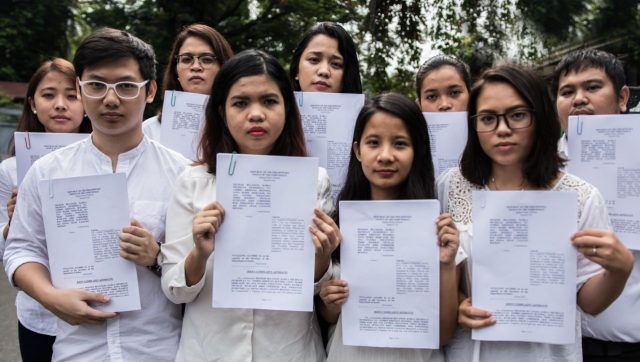
Members of the Millenials Against Dictators show the complaint they filed against Justice Sec Vitaliano Aguirre II. (contributed photo)


MANILA, Philippines â€" A youth group filed Wednesday an ethics complaint before the Office of the Ombudsman against Justice Secretary Vitaliano Aguiree II, accusing him of “repeatedly making false accusations and allegations” but refusing to “take responsibility for his actions.”

The “Millenials Against Dictators” also sought Aguirre’s removal from office, with one of the complainants, Shamah Bulagnis, calling him “a factory of fake news,” for violating Republic Act 6713, or the Code of Conduct and Ethical Standards for Public Officials and Employees.
#1961
Sa walay pupamilok, atong itigok kining lamian apan gilok nga mga tamilok!


:P
#1962
At 5 p.m. Tuesday, a spokeswoman for Time said that the magazine had asked the Trump Organization to remove the phony cover from the walls where it was on display.

So how did Trump â€" who spent an entire campaign and much of his presidency accusing the mainstream media of producing “fake news” â€" wind up decorating his properties with a literal piece of phony journalism?

The Trump Organization did not respond to questions this week about who made the cover and why it was displayed at Trump clubs. White House spokeswoman Sarah Huckabee Sanders declined to say whether Trump had known that the cover wasn’t real.

“We couldn’t comment on the decor at Trump Golf clubs one way or another,” Sanders wrote in an email.

The cover seems to fit a broader pattern for Trump, who has often boasted of his appearances on Time’s cover and adorned his Trump Tower office with images of himself from magazines and newspapers. Trump has made claims about himself â€" about his charitable giving, his business success, even the size of the crowd at his inauguration â€" that are not supported by the facts.
#1963
In fact, the cover on display at Trump’s clubs, observed recently by a reporter visiting one of the properties, contains several small but telling mistakes. Its red border is skinnier than that of a genuine Time cover, and, unlike the real thing, there is no thin white border next to the red. The Trump cover’s secondary headlines are stacked on the right side â€" on a real Time cover, they would go across the top.

And it has two exclamation points. Time headlines don’t yell.

“I can confirm that this is not a real TIME cover,” Kerri Chyka, a spokeswoman for Time Inc., wrote in an email to The Washington Post.


The real Time cover, left, and the fake Donald Trump cover. (Left: Time. Right: Angel Valentin for The Washington Post)
#1964
This cover â€" dated March 1, 2009 â€" looks like an impressive memento from Trump’s pre-presidential career. To club members eating lunch, or golfers waiting for a pro-shop purchase, it seemed to be a signal that Trump had always been a man who mattered. Even when he was just a reality TV star, Trump was the kind of star who got a cover story in Time.

But that wasn’t true.

The Time cover is a fake.

There was no March 1, 2009, issue of Time magazine. And there was no issue at all in 2009 that had Trump on the cover.
#1965
A Time magazine with Trump on the cover hangs in his golf clubs. It’s fake.
By David A. Fahrenthold June 27 at 6:28 PM
https://www.washingtonpost.com/politics/a-time-magazine-with-trump-on-the-cover-hangs-in-his-golf-clubs-its-fake/2017/06/27/0adf96de-5850-11e7-ba90-f5875b7d1876_story.html?utm_term=.7c31ea0b904c


The framed copy of Time magazine was hung up in at least five of President Trump’s clubs, from South Florida to Scotland. Filling the entire cover was a photo of Donald Trump.

“Donald Trump: The ‘Apprentice’ is a television smash!” the big headline said. Above the Time nameplate, there was another headline in all caps: “TRUMP IS HITTING ON ALL FRONTS . . . EVEN TV!”
#1966
How To Make Money Tips / How to NOT make money
June 27, 2017, 10:56:30 PM


If you marry a monkey for its wealth, the money goes and the monkey remains.
--Egyptian proverb


:P

#1967
Weird and Extreme / Re: Big Pussy!
June 27, 2017, 10:49:46 PM
#1969
Facts and Trivia / Re: OPTICAL ILLUSIONS GALLERY
June 27, 2017, 10:40:36 PM
#1970
The challenge to democracy

To the worried partisans of an endangered democracy, however, the choice between a presidential dictatorship and a military dictatorship is no choice at all. As Duterte’s reign enters its second year, they are faced with a tall order: how to make democracy, human rights, and due process attractive again to a skeptical population. It would be suicidal to allow themselves to be led by personalities associated with the old, discredited EDSA order. The Vice President, Leni Robredo, is a person of undoubted integrity but one devoid of the capacity for effective leadership, being mainly a creation of the Liberal Party capitalizing on the reformist image of her deceased husband. Once seen as a reformist force, the Liberals are damaged goods owing to their opportunism and cowardice, while the vocal Senator Antonio Trillanes IV, who wears his burning ambition on his sleeve, has even less credibility than the Liberals.

But beyond personalities, democrats must present a vision and a program that speak to the aspirations of the vast majority of impoverished and marginalized Filipinos and convince them that democratic competition is a more effective means of realizing their hopes than authoritarian rule. Only a party and program of the left can provide this leadership, but with the dominant sections of the left itself having been enmeshed in compromising, corrupt alliances with different factions of the elite, reinvigoration of the democratic alternative will demand a thoroughgoing reform of the left. Crisis, however, can spell opportunity, and Filipino progressives would do well to ponder the words of the great Italian opponent of fascism, Antonio Gramsci, at a not dissimilar moment in his nation’s history: “Pessimism of the intellect, optimism of the will.” â€" Rappler.com


Walden Bello, currently an international adjunct professor at the State University of New York, made the only recorded resignation-on-principle from the Philippine Congress. He is the author or co-author of 20 books on the Philippines, Asian economies, international political economy, and other topics.
#1971
With only 220,000 frontline troops, the AFP is one of the smallest standing armies in Southeast Asia and one of the most underequipped, having relied for so many years on hand-me-down weaponry from the United States. It has had its hands full battling several major insurgencies. Given its current strength, plus the fact that insurgencies demand principally political, not military solutions, the best it has been able to do is battle these insurgent movements to a stalemate, not eliminate them. Its failure over the last month to retake Marawi City from what some say are scarcely more than a hundred Muslim irregular fighters has drawn attention to its woeful fighting capabilities, with incidents like friendly fire from Philippine Air Force planes killing Philippine Army troops drawing universal dismay.

Even as the army is being outfought by Maute irregulars in Marawi, its commander in chief has added a massive new task, which is to perform police functions in a whole region, in preparation for exercising police functions nationwide in his design to establish a nation-wide dictatorial regime. Duterte, say some analysts, has provided a gift to the Communist New People's Army and the different insurgent Muslim groups by releasing AFP units now containing them to assume police functions regionally. This will simply encourage these groups to assume more offensive operations, leading to more AFP casualties.

The surest way to demoralize the military is to overextend it by pushing it to assume political and police functions for which it is ill-equipped. A politicized military that exercises police powers is a plague on the people, but it also stirs discontent and rebellion in its ranks, as happened during the Marcos dictatorship. Duterte fancies himself a general, but he may actually be unintentionally sowing the ground for future coup d'etat's. Like Marcos, he thinks he is riding the tiger, and like him, he may well end up inside it.
#1972
Duterte and the military

Interestingly, the one institution that could effectively undermine Duterte is the military. The President knows this, and to keep the Armed Forces of the Philippines (AFP) on his good side, Duterte has appointed several former generals to key positions in his Cabinet and takes every opportunity to visit military camps. The military is central to his agenda of imposing martial law nationwide. Yet, it may also prove to be the biggest obstacle.

Contrary to the perception of many, the military does not relish martial law. This is not because it loves civilian rule, but because it is overextended, severely overextended. This is the reason the AFP command was one of the strongest backers of the Bangsa Moro Basic Law, which promised a political conclusion to the nearly 50-year-old Muslim insurgency whose containment has been the military’s main preoccupation. The project collapsed when a US-supported raid into insurgent territory by Philippine police forces authorized by former President Aquino in January 2015 went awry and derailed the negotiations, much to the chagrin of many in the AFP high command.
#1973
What opposition there is comes from isolated figures, like Senator Leila de Lima, the former secretary of justice whom Duterte has jailed on trumped-up charges of being on the payroll of drug lords, from a section of the media, from human rights groups like the coalition I-Defend, and from new, refreshing youth formations such as the “Block Marcos Movement” that was formed to oppose the burial of the former dictator in the National Heroes’ Cemetery.


http://3.bp.blogspot.com/
#1974
The demoralized opposition

      
DEFIANT. Senator Leila de Lima waves to supporters before heading to her detention cell in Camp Crame on February 24, 2017. Photo by Alecs Ongcal/Rappler


For the moment, opposition to Duterte among the elite and state institutions is weak, and the Catholic Church hierarchy, which in the past was a strong advocate of human rights, is afraid to frontally take on the popular leader, saddled as it is with a lack of credibility owing to moral erosion in its ranks and its bull-headed, unpopular resistance to family planning. The Liberal Party, which controlled the government under the previous Aquino administration, has disintegrated, with most of its congressional representatives swearing fealty to Duterte.

Formerly in the opposition in previous administrations, the traditional left, as is well known, is now part of the Duterte government, provided with 3 Cabinet-level positions by a wily politician who gambled, correctly, that the left, whose fortunes had been declining in recent years, would bite at the offer. While the Communist Party and the New People’s Army continue to engage in off-and-on negotiations for a peace agreement with the government, the presence of personalities identified with them in Duterte’s Cabinet have provided “progressive” cover for its fascist policies.
#1975
Perhaps it is time we shed assumptions we have of our people as civilized beings and creatures with malasakit or compassion, and adopt toward contemporary Philippine society what the historian Daniel Goldhagen proposed to students of German society during the Nazi period: abandon all assumptions about your people, and instead approach them “with the critical eye of an anthropologist disembarking on unknown shores, open to meeting a radically different culture and conscious of the possibility that he might need to devise explanations not in keeping with, perhaps even contravening his own common-sense notions, in order to explain the culture’s constitution, its idiosyncratic patterns of practice, and its collective projects and products.”

This would admit the possibility that under certain circumstances, large numbers of people, especially from the middle class and elite, are willing to be advocates or accomplices of mass murder in the name of law and order.
#1976
Civilization’s thin veneer

While Duterte has an effective propaganda machine, it would be a big mistake to attribute his popularity to the work of “trolls” or paid internet keyboard warriors, as many of his critics are wont to do. The support for extra-judicial killings of drug users by large numbers of their compatriots is genuine, and this has perplexed many observers. It has underlined to some “what we see as the unalterable features of civilized life vanish in the blink of an eye,” as the philosopher John Gray puts it. Especially after the EDSA Uprising of 1986, the Philippines was regarded as the “showcase of liberal democracy” in Asia. An influential view was that in overthrowing Marcos, Filipinos were simply reasserting the longstanding value they put on individual rights, due process, and democracy that they had internalized during the American colonial period.

The liberal democratic Constitution of the EDSA Republic â€" the so-called “human rights Constitution” â€" was seen as the quintessential crystallization of these national political values. Then suddenly, in the space of less than a year, the majority of Filipinos have expressed strong support for a man whose central agenda is the extra-judicial execution of a certain category of human beings, drug users, with a large number of them not only justifying Duterte’s bloody campaign but cheering him on.
#1977
But while delivering social and economic reforms is going to be central in maintaining support for his authoritarian project in the long term, it is unlikely that the lack of progress so far will dent Duterte’s popularity with the masses in the short and medium term. As with Donald Trump’s base, hope springs eternal among a people steeped in frustration and desperation. Moreover, the middle class enrages who dominate the internet are not lacking in the ability to present the illusion of reform as actual reform or in their imputing lack of progress to obstruction by the dilawan, or yellows, which has become the term of choice for all those critical of Duterte.
#1978
Ersatz populism

Though much of his rhetoric is populist, Duterte’s approach is not a populist strategy of using the masses as a battering ram for redistributive reform. Rather, his is the classic fascist way of balancing different class forces while projecting an image of being above class conflict. His campaign promises of ending contractual labor, curbing the mining industry, and turning over to small coconut farmers the taxes collected from them by the Marcos regime have remained largely unfulfilled as the country’s key elites have positioned themselves as his allies to protect their interests. All significant labor groups have rejected his labor secretary’s order “banning” contractualization as a cosmetic move with little intended effect. No new legislation to push forward the stalled agrarian reform is entertained, which is not surprising given the fact that the Visayan bloc of landowners in the House of Representatives is one of his most solid backers.

A defining moment in the debate on whether Duterte was serious about a social agenda was the congressional confirmation hearings on his secretary of the environment, Gina Lopez, who shut down 22 mines, suspended 4, and issued show-cause orders to 77 others for encroaching on watersheds and destabilizing rural and forest communities. Her campaign had captured the public imagination, but Duterte’s allies in the mining industry ganged up on her, successfully pressuring the congressional Commission on Appointments not to confirm her, with the President sitting on the sidelines, refusing to personally lobby for her retention when a simple phone call would have made the difference. Duterte is not a tool of vested interests; indeed, many of the rich are scared of him and his unpredictability. But money does have its uses, and it is essential to furthering his authoritarian agenda.
#1979
Add to this the widespread perception of inept governance and the double standards of the anti-corruption campaign of the administration of President Benigno Aquino III, and it is not surprising that a resounding 16 million plus voters or some 40% of the electorate saw Duterte’s tough guy, authoritarian approach, which he had cultivated as mayor of the southern frontier city of Davao for over thirty years, as precisely what was needed. To borrow the novelist Anthony Doerr’s description of the state of mind of pre-war Germans, a large number of Filipinos were “desperate for someone who can put things right.” The Philippines may be headed toward a dictatorship, but it is, paradoxically, likely to a popular one, anchored in the country’s seething, frustrated middle class.
#1980
The revolt against liberal democracy

What is not in dispute is that Duterte’s promise to deal with the drug problem in a draconian fashion was a major factor in his being elected in a society where fear of crime is widespread among all sectors of the population. It is testimony to his political acumen that he was able to successfully latch onto an issue that most politicians had ignored. Yet there are more profound causes for his victory and his current popularity. One cannot understand Duterte’s hold on society without taking into consideration the deep disenchantment with the liberal democratic regime that came into being with the landmark “EDSA Uprising” that overthrew the dictator Ferdinand Marcos in February 1986 â€" EDSA being the acronym for the north-south highway that bisects Metro Manila, where the major mass actions took place. In fact, the failure of the “EDSA Republic” was a condition for Duterte’s success.

What destroyed the EDSA project and paved the way for Duterte was the deadly combination of elite monopoly of the electoral system, the continuing concentration of wealth, neoliberal economic policies, and the priority placed on foreign debt repayment imposed by Washington. By the time of the elections of 2016, there was a yawning gap between the EDSA Republic’s promise of popular empowerment and wealth redistribution and the reality of massive poverty, scandalous inequality, and pervasive corruption.
#1981
For psycho-stimulants like meth or shabu, there is also now available electronic acupuncture or “peripheral electrical stimulation,” which ameliorate withdrawal symptoms, allowing drug users to, among other things, overcome lack of sleep, which most complain of, increasing the chances of a patient not relapsing. While neuroscientists like Ma see addiction as something to be reversed mainly by treating specific neuro-substrates in the brain, receptivity to a cure is greatly enhanced by a supportive social atmosphere provided by both the community and government. Criminalizing drug users instead of treating drug use as a public health problem creates the worst possible context for rehabilitation.

These complexities of the drug issue are not, however, something that Duterte would entertain. He believes that he is the expert on all dimensions of the drug problem, which he estimated in May of this year as affecting some 4 million Filipinos, up from his earlier estimate of 3 million a few months earlier. The President’s figure would put the percentage of the population that are drug users at over 4%, a figure which not even the chairman of the government’s Dangerous Drugs Board, a Duterte ally, found credible, leading to his being fired by the President when he dared to come up with the alternative figure of 1.8 million drug users.
#1982
Duterte’s bloody campaign defies the consensus in the scientific community, much like Donald Trump brushes away the scientific consensus on climate change. Dr Yao Ying Ma of Binghamton University, one of the world’s leading neuroscientists working on the effects of drugs, said in an interview with the author that while drug addiction does involve modifications of the brain that lead to pathological alterations, this process is reversible, which is not only a theoretical hypothesis, but one that has received substantial confirmation in research laboratories and is broadly accepted in the field of neuroscience.

“Our brains, they are flexible. They have the chance to be reshaped, to be reorganized,” she says. “Through certain medical interventions, we can reorganize the brain back to its normal healthy state.” The focus of therapy is to prevent relapse into substance abuse, and here the problem to be addressed is the mitigation of severe withdrawal pains, the avoidance of which is the reason people go back to the drug. Whether for opiates or for psycho-stimulants, such as meth, such mitigating measures are now available which stimulate the brain to produce and release endorphins that significantly alleviate withdrawal symptoms.

Excitingly, vaccines have also been developed to block the responsive sites in the brain, leaving drugs with little chance to successfully attack it.
#1983
Duterte: Pharmacologist extraordinaire

Duterte’s signature program has been his war on drugs. This is no ordinary law-and-order campaign. It is being carried out with a fanaticism that borders on the ideological and with a justification that reminds one of the pseudo-scientific basis of Nazi racial theory. A whole sector of society, most of them poor, have been unilaterally stripped of their rights to life, due process, and membership in society. Drug users are consigned outside the borders of “humanity” since their brains have allegedly shrunk to the point where they are no longer being in command of their faculties to will and think.

In his speeches justifying the killings “in self-defense” by police, Duterte said that a year of more of the use of “shabu” â€" the local term for crystal meth or metamphetamine hydrochloride â€" “would shrink the brain of a person, and therefore he is no longer viable for rehabilitation.” Not only do these people turn to violent crime to slake their drug habit, but they are “paranoid” and could resist arrest, putting the lives of policemen in danger. Duterte has written them out of the human race.

With rhetorical flourish, he asked the security forces a few months ago: “Crime against humanity? In the first place, I’d like to be frank with you: are they humans? What is your definition of a human being?"
#1984
With his declaration of martial law in Mindanao, Duterte is now embarked on the next phase of his ascent to absolute power, which will most likely involve the curtailment and suppression of basic political rights. Like the conquistador Cortez, Duterte has burned his ships behind him. There is no going back. Yielding power when his 6-year term ends is a vanishing option since he would face prosecution for extra-judicial execution of thousands of people, not only locally but internationally, since charges of systematic human rights violations have been filed against him in the International Criminal Court. But the main thing propelling him forward is his sense that his large numbers of supporters, in fact, support his drive toward authoritarian rule.


https://d1clnn1l7s2lhf.cloudfront.net/
#1985
Indeed, rational discourse is an increasingly scarce commodity among Duterte’s partisans, who ape their leader’s penchant for outrageous and incendiary utterances. Perhaps the most appropriate name for them is the French Revolution term “enrages,” or the enraged ones.

Interpreting his mandate as a blank check to do whatever it takes to “defend the nation,” Duterte has reversed the usual model by which fascists and authoritarian populists come to power. In the Marcosian model of “creeping fascism,” the fascist personality begins with violations of civil and political rights, followed by the lunge for absolute power, after which follows indiscriminate repression. Duterte reverses the process. He starts with massive, indiscriminate repression, that is, the killing with impunity of thousands of drug users, leaving the violation of civil liberties and the grab for total power as mopping up operations in a political atmosphere where fear has largely neutralized opposition.


https://s.yimg.com/
#1986
Duterte’s middle class enrages

There is no doubt that he is popular, with over 75% to 83% of the people registering approval of his actions, according to recent polls. While he draws approval from all classes, his support is most aggressively displayed among the aspiring and downwardly mobile middle classes. The Philippines provides an interesting case study of the volatility of the middle class. At times, it can be a force for democracy, as the middle classes were in the late '80s, when they played a central role in the overthrow of Marcos and other authoritarian regimes throughout the global South. At other times, they provide the heated mass base for authoritarian rule, as they did for Hitler in Germany and as they do now for Duterte.

Duterte’s middle class base is not passive. Beginning with the presidential campaign in 2016, they have mobilized to dominate the social media, engaging in the worst kind of cyber-bullying of people who dare to criticize the President’s policies on line. Shortly after his declaration of martial law, for instance, one of the most prominent pro-Duterte bloggers publicly called for the execution of two women journalists. Another Duterte fanatic registered his hope online that a woman senator who had criticized Duterte’s martial law declaration, Risa Hontiveros, would be “brutally raped” by the insurgents in Marawi City.
#1987

Photo by Alecs Ongcal/Rappler
   

Kraisak Choonhavan, a prominent Thai politician, observed that, in a region where authoritarianism is once more on the rise, the Philippines is in the most perilous position since its authoritarian leader has come to power through a democratic vote. What he meant is that, although democracy may be the least objectionable of systems of rule, when democracy does screw up big time, the damage can be incalculable, greater perhaps than that which comes with the usual military coup, for which the region is notorious.

This is, of course, not the first time that a man determined to dismantle democracy has come to power through democratic means, Duterte’s most prominent predecessor being Hitler, who stepped into the chancellorship of Germany with his plurality victory in the 1932 elections. Like Hitler, Duterte won by a plurality, getting some 40% of the vote in the elections of May 9, 2016, and he has aggressively wielded that electoral mandate as his main instrument in reshaping the Philippine political system, though this process has been carried out less by plan than through improvisation guided by his acute political instincts.
#1988
The year of killing indiscriminately

Marawi was, however, a rare setback in a year where most things went swimmingly for the man from Davao.
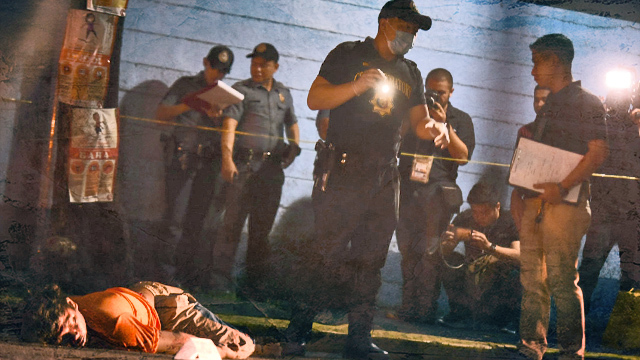
Most Filipinos do not remember having lived through a more tension-filled, nerve-wracking year since the overthrow of the dictatorship over 3 decades back. Unlike most politicians, Duterte delivered on his main promise, which he had described as “fattening the fish in Manila Bay” with the cadavers of criminals. Thousands of drug users have been slain either by the police or by police-controlled vigilante groups, with the police admitting that 2,600 deaths were attributable to police operations while another 1,400 were the work of vigilantes. Other, more reliable sources put the figure at above 7000 as of early May.

What is beyond doubt is that Duterte has brazenly encouraged the extra-judicial killings and discouraged due process. The very night of his taking his oath of office on June 30, 2016, he told an audience in one of Manila’s working class communities: "If you know of any addicts, go ahead and kill them yourselves as getting their parents to do it would be too painful." In October 2016, Duterte told the country, with characteristically sinister humor, that 20,000 to 30,000 more lives might have to be taken to cleanse the country of drugs. Having learned to take Duterte seriously even when he seems to be joking, many observers expect this figure to be an underestimate. More recently, to any policemen who might be convicted of killing drug users without justification, he has offered an immediate pardon “so you can go after the people who brought you to court.”
#1989
What Duterte did not anticipate was that the Mautes would hold on to Marawi, ferociously. As the stalemate continued, with soldiers dying, hundreds of civilians caught in the crossfire, and the ISIS-linked Islamist band extracting maximum propaganda globally for its cause, Marawi threatened to become the Vietnam of his presidency. Not only did it come to light that he had, in his trademark macho fashion, challenged the Mautes to carry through with their threat to burn Marawi to the ground a few months back.

The takeover exposed the fact that, with his single-minded focus on killing drug users, he had paid absolutely no attention to coming up with a political solution to one of the country’s most pressing problems: the smoldering Moro insurgency in his own region. Now, he had been forced into the dead-end of a military solution with US support, which was precisely what the radical Islamists wanted in pursuit of their dream of making Muslim Mindanao a second front of their struggle to establish a global Islamic caliphate.
#1990


To some other observers, however, Duterte’s move was not surprising, given that he had not hidden his intention to follow in the footsteps of his hero, Ferdinand Marcos, should the situation, in his judgment, require the imposition of martial law. In their view, Duterte saw the incident as an opportunity to take a step forward in his drive to consolidate authoritarian rule, much like Marcos had used a staged attack on one of his key subordinates as the pretext for his infamous move almost 50 years ago.

It provided an opportunity for a dress rehearsal for the nationwide imposition of military rule, and in the next few days, things seemed to unfold according to the script desired by the President. Controlled by his allies, Congress evinced no desire to meet in joint session to approve the declaration, as prescribed by the Constitution. Duterte also warned that should opponents of the declaration bring their case to the Supreme Court, he would simply disregard the Court’s decision, a brazen challenge that the Court responded to with silence.
#1991
A nation’s odyssey toward a popular dictatorship
Yielding power when his 6-year term ends is a vanishing option for Duterte, not least because he would face prosecution for extra-judicial execution of thousands

Walden Bello
Published 5:00 PM, June 26, 2017
Updated 6:18 PM, June 26, 2017


It has been a year since Rodrigo Duterte assumed the presidency of the Philippines. Davao’s favorite son began his reign on the offensive, going on a killing spree that would claim the lives of over 7,000 suspected drug users in the next 12 months. He ended his first year uncharacteristically on the defensive, removing himself from the public eye for almost a week as the Philippine Army repeatedly tried but failed to dislodge the so-called Maute Group that had taken over and terrorized Marawi, the cultural capital of Islam in the Philippines.

A month earlier, everything seemed to be going Duterte’s way. Using the Maute takeover of Marawi as an excuse, he finally delivered on his threat to declare martial law, which he had made several times over the last few months. The Mautes’ move had been in response to a failed attempt by the Philippine military to apprehend a much-wanted leader of the notorious Abu Sayyaf terrorist organization, to whom the group is allied, who was believed to be in the area. Duterte’s response â€" the declaration of martial law for the whole of Mindanao, the Philippines’ second largest island, to address a local incident â€" struck many as a case of overkill.
#1992
In the early 1990s, they found, thermal expansion accounted for fully half of the added millimeters. Two decades later, that figure was only 30 percent.

Andrew Shepherd, director of the Centre for Polar Observation and Modeling at the University of Leeds in England, urged caution in interpreting the results.

“Even with decades of measurements, it is hard to be sure whether there has been a steady acceleration in the rate of global sea level rise during the satellite era because the change is so small,” he said.

Disentangling single sources â€" such as the massive chunk of ice atop Greenland â€" is even harder.
But other researchers said the study should sound an alarm.

“This is a major warning about the dangers of a sea level rise that will continue for many centuries, even after global warming is stopped,” said Brian Hoskins, chair of the Grantham Institute at Imperial College London. CBB


http://newsinfo.inquirer.net/
#1993
‘A major warning’

The second was from satellite altimetry, which gauges heights on the Earth’s surface from space.

The technique measures the time taken by a radar pulse to travel from a satellite antenna to the surface, and then back to a satellite receiver.

Up to now, altimetry data showed little change in sea levels over the last two decades, even if other measurements left little doubt that oceans were measurably deepening.

“We corrected for a small but significant bias in the first decade of the satellite record,” co-author Xuebin Zhang, a professor at Qingdao National Laboratory of Marine Science and Technology in China’s Shandong Province, told AFP.

Overall, the pace of global average sea level rise went up from about 2.2 millimeters a year in 1993, to 3.3 millimeters a year two decades later.
#1994
“This result is important because the Intergovernmental Panel on Climate Change (IPCC)” â€" the UN science advisory body â€" “makes a very conservative projection of total sea level rise by the end of the century,” at 60 to 90 centimeters (24 to 35 inches), said Peter Wadhams, a professor of ocean physics at the University of Oxford who did not take part in the research.

That estimate, he added, assumes that the rate at which ocean levels rise will remain constant.

“Yet there is convincing evidence â€" including accelerating losses of mass from Greenland and Antarctica â€" that the rate is actually increasing, and increasing exponentially.”

Greenland alone contains enough frozen water to lift oceans by about seven meters (23 feet), though experts disagree on the global warming threshold for irreversible melting, and how long that would take once set in motion.

“Most scientists now expect total rise to be well over a meter by the end of the century,” Wadhams said.

The new study, published in Nature Climate Change, reconciles for the first time two distinct measurements of sea level rise.

The first looked one-by-one at three contributions: ocean expansion due to warming, changes in the amount of water stored on land, and loss of land-based ice from glaciers and ice sheets in Greenland and Antarctica.
#1995
Agence France-Presse / 08:09 AM June 27, 2017


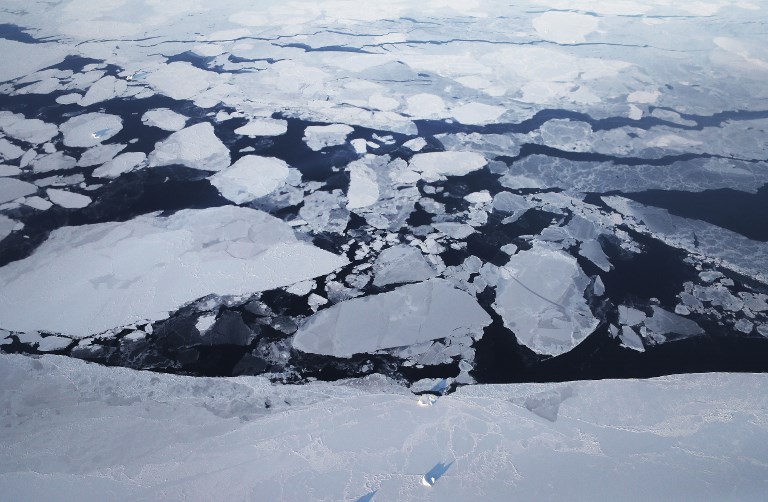
Sea ice is seen from NASA’s Operation IceBridge research aircraft off the northwest coast on March 30, 2017, above Greenland. AFP


PARIS, France â€" Ocean levels rose 50 percent faster in 2014 than in 1993, with meltwater from the Greenland ice sheet now supplying 25 percent of total sea level increase compared with just five percent 20 years earlier, researchers reported Monday.

The findings add to growing concern among scientists that the global watermark is climbing more rapidly than forecast only a few years ago, with potentially devastating consequences.

Hundreds of millions of people around the world live in low-lying deltas that are vulnerable, especially when rising seas are combined with land sinking due to depleted water tables, or a lack of ground-forming silt held back by dams.

Major coastal cities are also threatened, while some small island states are already laying plans for the day their drowning nations will no longer be livable.
#1996
#1997
USA and Canada / Re: Shakespeare it ain't
June 24, 2017, 11:05:01 AM
#1998
USA and Canada / Re: Shakespeare it ain't
June 24, 2017, 11:04:01 AM
#2000
Lifestyle, Culture and Arts / Re: Toasts, anyone?
June 24, 2017, 10:54:28 AM