
This section allows you to view all posts made by this member. Note that you can only see posts made in areas you currently have access to.
Pages 1 2 3 4 5 6 7 8 9 10 11 12 13 14 15 16 17 18 19 20 21 22 23 24 25 26 27 28 29 30 31 32 33 34 35 36 37 38 39 40 41 42 43 44 45 46 47 48 49 50 51 52 53 54 55 56 57 58 59 60 61 62 63 64 65 66 67 68 69 70 71 72 73 74 75 76 77 78 79 80 81 82 83 84 85 86 87 88 89 90 91 92 93 94 95 96 97 98 99 100 101 102 103 104 105 106 107 108 109 110 111 112 113 114 115 116 117 118 119 120 121 122 123 124 125 126 127 128 129 130 131 132 133 134 135 136 137 138 139 140 141 142 143 144 145 146 147 148 149 150 151 152 153 154 155 156 157 158 159 160 161 162 163 164 165 166 167 168 169 170 171 172 173 174 175 176 177 178 179 180 181 182 183 184 185 186 187 188 189 190 191 192 193 194 195 196 197 198 199 200 201 202 203 204 205 206 207 208 209 210 211 212 213 214 215 216 217 218 219 220 221 222 223 224 225 226 227 228 229 230 231 232 233 234 235 236 237 238 239 240 241 242 243 244 245 246 247 248 249 250 251 252 253 254 255 256 257 258 259 260 261 262 263 264 265 266 267 268 269 270 271 272 273 274 275 276 277 278 279 280 281 282 283 284 285 286 287 288 289 290 291 292 293 294 295 296 297 298 299 300 301 302 303 304 305 306 307 308 309 310 311 312 313 314 315 316 317 318 319 320 321 322 323 324 325 326 327 328 329 330 331 332 333 334 335 336 337 338 339 340 341 342 343 344 345 346 347 348 349 350 351 352 353 354 355 356 357 358 359 360 361 362 363 364 365 366 367 368 369 370 371 372 373 374 375 376 377 378 379 380 381 382 383 384 385 386 387 388 389 390 391 392 393 394 395 396 397 398 399 400 401 402 403 404 405 406 407 408 409 410 411 412 413 414 415 416 417 418 419 420 421 422 423 424 425 426 427 428 429 430 431 432 433 434 435 436 437 438 439 440 441 442 443 444 445 446 447 448 449 450 451 452 453 454 455 456 457 458 459 460 461 462 463 464 465 466 467 468 469 470 471 472 473 474 475 476 477 478 479 480 481 482 483 484 485 486 487 488 489 490 491 492 493 494 495 496 497 498 499 500 501 502 503 504 505 506 507 508 509 510 511 512 513 514 515 516 517 518 519 520 521 522 523 524 525 526 527 528 529 530 531 532 533 534 535 536 537 538 539


#16106
History / Re: Ancient Chinese-Filipino Trading History
February 24, 2012, 08:56:45 AM
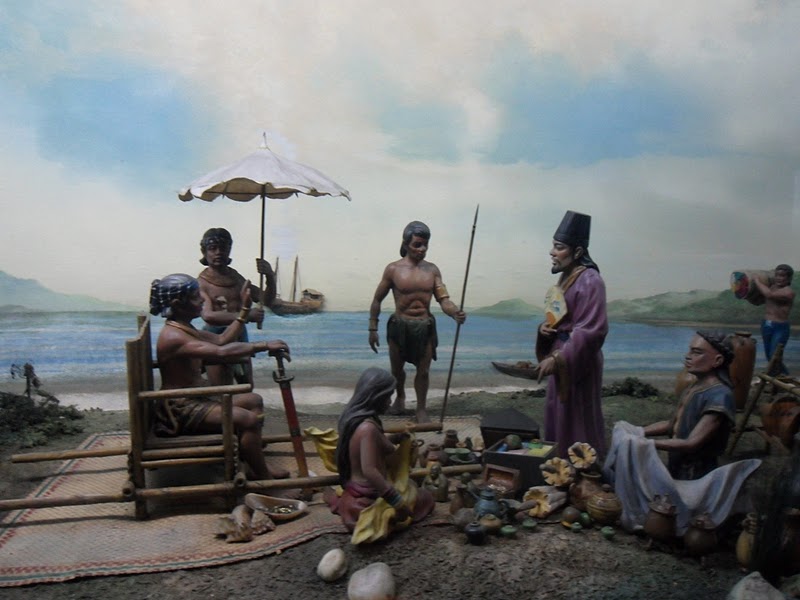
Pre-Spanish Filipinos trading with the Chinese for porcelain
#16107
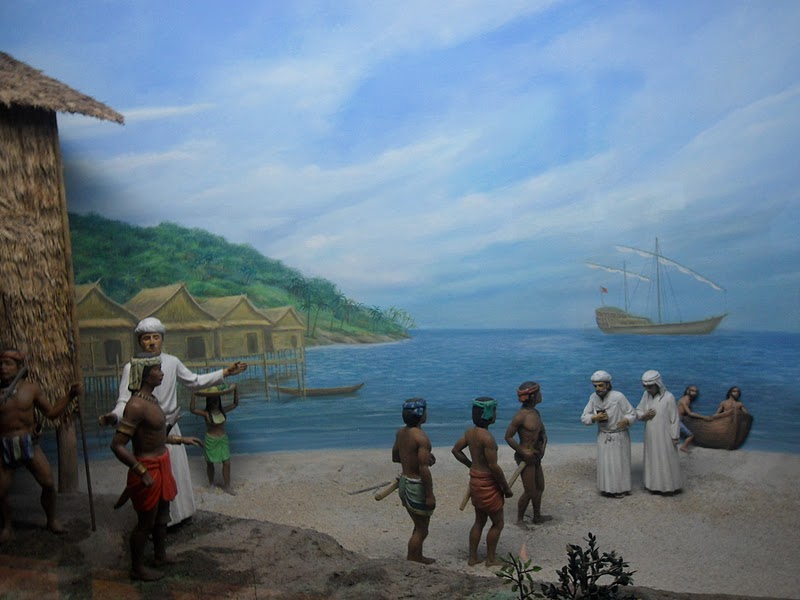
History / Ancient Chinese-Filipino Trading History
February 24, 2012, 08:51:37 AM
Chinese traders with Filipino datus exchanging goods during the pre-hispanic era:
#16109
History / Re: Papa Oom Mao Mao
February 24, 2012, 08:45:53 AMQuote from: hubag bohol on February 23, 2012, 06:04:38 PM
Lisod lagi ning gatuo nga brayt sa tanang butang. Hmm, Tsaynis trait ba kaha diay ni?

on the contrary, mao zedong was not the epitome of a scholar nor did he exude chinese confucian tenets. mao was a communist revolutionary who detested ancient chinese culture, ancient chinese tradition, and the scholars of the past. mao, with his cultural revolution, set out to erase the history of china by colluding with the red guards to burn old books and manuscripts from temples, libraries.
deng xiapeng , zhou enlai, sun yat sen were leaders who tried to maintain the traditional chinese cunfucian culture; the three represent the beauty of the chinese identity. mao was an extremist, akin to pol pot of khmer rouge cambodia.
#16110
Basketball | NBA-PBA / Re: Jeremy Lin: From Nothing to Greatness
February 24, 2012, 08:41:11 AM
hehehe, hen hao haiwai huaren ! 
#16111
History / Re: Papa Oom Mao Mao
February 24, 2012, 08:36:50 AM
Mao was a philosopher, sometimes his philosophies did not manifest according to plan. It took men such as Zhou Enlai and Deng Xiaopeng to finally stabilize China and prepare her for post-Mao era.
In my opinion, had Jiang Jieshi (Chiang Kai Shek) not ruled China with an iron fist , perhaps, just perhaps, history might have been different.
In my opinion, had Jiang Jieshi (Chiang Kai Shek) not ruled China with an iron fist , perhaps, just perhaps, history might have been different.
#16112
Boxing and Boxers / Re: The Greed of Floyd Mayweather Jr
February 24, 2012, 08:34:30 AM
Mayweather is afraid, he knows he cannot win.
#16113
Anonymous Diary Blog / Re: What Did You Do Today?
February 24, 2012, 03:02:25 AMQuote from: islander on February 24, 2012, 02:59:04 AM
i'll just try to hit the sack now because the witching hour is way past...
oh, lorenz, a doctor gave me sleeping pills before, with the admonition to use them only for extreme cases. they reached their expiry and i never got to use a single pill.
a friend told me that her best antidote is praying the rosary. this makes her very sleepy. ugh. i didn't take her advice either. my favorite time for rosaries is 6 pm.
as for counting sheep, i end up counting all the animals in the zoo.
nothing seems to work, really. funny, when i do get to sleep, even a fire in the neighborhood couldn't wake me up. those were the words of my father.
yes, i'll be off now. till tomorrow... ta-ta.
oh isles, you're too cute (referring to the zoo, lol, i'm going to be thinking about the zoo now while im checking patients today, ha ha ha). if you really cannot sleep next time, take sleeping pills just don't abuse it or use it chronically. make sure to buy new ones tomorrow when you wake up, don't use the expired ones..throw those old ones away. sige, go to bed na, sweat dreams and hope you see yoga dogs in your sleep

i'm going to head on out na. break time is over na baya diri.
till next time, dear.
#16114
Anonymous Diary Blog / Re: What Did You Do Today?
February 24, 2012, 02:55:42 AMQuote from: islander on February 24, 2012, 02:44:21 AM
i have, ever since i can remember. i have always been a night person, in the league of vampires. it got worse when the banana republic asked me to stop holding a day job. there was no more urgency for me to wake up early.
i just want to let you know that i woke up at 7:30 pm (some hours ago) after an afternoon nap that turned out to be a full sleep cycle, in another time zone.
this is insomnia, isles. the altered circadian rhythm is actually harmful to your health, dear. i know it is hard, considering the length of time you have been experiencing this, but it would be good to start a proper sleep pattern. go to bed at say around 11 or 12 pm your time, and be up and about by say 6-7 am. your body needs a least a full fledged 6-7 hours of recuperative sleep a day. its not good for your immune system if you don't sleep enough.
#16115
Music and Video / The Cure - Just Like Heaven
February 24, 2012, 02:41:29 AM #16116
Music and Video / Phantom Planet - Somebody's Baby
February 24, 2012, 02:39:57 AM #16117
Anonymous Diary Blog / Re: What Did You Do Today?
February 24, 2012, 02:37:21 AMQuote from: islander on February 24, 2012, 02:27:12 AM
why man di ko katulgon at this very unholy wee hours of the morning? nahuman na nakog kuskos ang mga kaldero, nahuman nag panilhig sa sawog ug pamilo sa mga linabhan, nahuman nag limpyo ang cat litter box, alive gihapon ko. hinaot unta nga di masuko nako si banana republic ugma kay iya na pod kong pukawon inig padung na niya sa opisina.
how long have you been experiencing the symptoms of difficulty initiating sleep, isles? sounds like you have insomnia.


#16123
History / Who was Zhou Enlai
February 24, 2012, 01:16:56 AM
Zhou Enlai (pinyin: ZhÅu Ä'nlái; Wade-Giles: Chou En-lai; IPA: [tÊ,oÌÊŠ É™Ìnlǎɪ]; 5 March 1898 â€" 8 January 1976) was the first Premier of the People's Republic of China, serving from October 1949 until his death in January 1976. Zhou served under Mao Zedong and was instrumental in consolidating the control of the Communist Party's rise to power, forming foreign policy, and developing the Chinese economy.
A skilled and able diplomat, Zhou served as the Chinese foreign minister from 1949 to 1958. Advocating peaceful coexistence with the West after the stalemated Korean War, he participated in the 1954 Geneva Conference and helped orchestrate Richard Nixon's 1972 visit to China. He helped devise policies regarding the bitter disputes with the U.S., Taiwan, the Soviet Union (after 1960), India and Vietnam. Zhou is best known as the long-time top aide to Mao Zedong, specializing in foreign policy. Their contrasting personalities made them an effective team, according to Henry Kissinger, the American diplomat who had extensive dealings with both men:
Mao dominated any gathering; Zhou suffused it. Mao's passion strove to overwhelm opposition; Zhou's intellect would seek to persuade or outmaneuver it. Mao was sardonic; Zhou penetrating. Mao thought of himself as a philosopher; Zhou saw his role as an administrator or a negotiator. Mao was eager to accelerate history; Zhou was content to exploit its currents.
Source: Wikipedia
#16124
Health and Food / Re: Hypothyroidism VS Hyperthyroidism
February 23, 2012, 03:49:22 PM
Hyperthyroidism
Symptoms: Heat intolerance (increased heat production), weight loss, increased appetite, hyperactivity, diarrhea, increased reflexes, chest pain, palpitations, arrhythmias, warm, most skin, fine hair
Lab Findings: Decreased TSH (if primary), increased total T4, increased free T4, increased T3 uptake
#16125
Health and Food / Hypothyroidism VS Hyperthyroidism
February 23, 2012, 03:47:23 PM
Hypothyroidism
Symptoms: Cold intolerance (decreased heat production), weight gain, decreased appetite, hypoactivity, lethargy, fatigue, weakness, constipation, decreased reflexes, myxedema (facial/periorbital), dry, cool skin; coarse , brittle hair
Lab findings: Increased TSH (sensitive test for primary hyperthyroidism), decreased total T4, decreased free T4, decreased T3 uptake
#16126
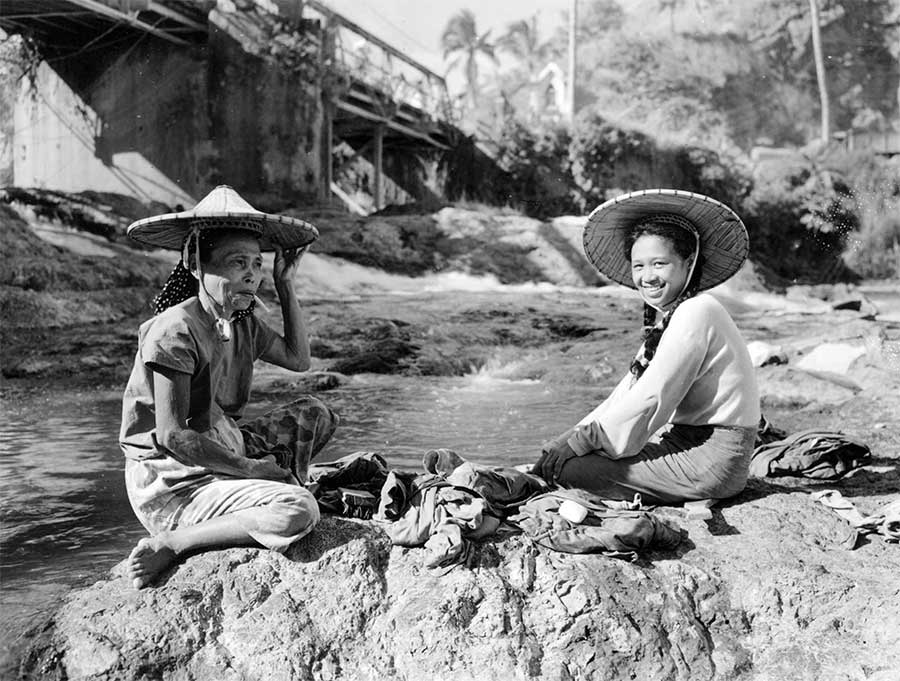
Tira-Pasagad | Saksak-Sinagol / Man riding a broom above the Boholano chocolate hills
February 23, 2012, 01:17:26 PM
hmm, kinsa lagi ni siya?

#16128
Philippine Photo Gallery / Re: A view of coastal Panaon Island, Southern Leyte
February 23, 2012, 01:10:48 PM
hehe form of transportation ni sa Panaon Island...

#16129
Philippine Photo Gallery / Re: A view of coastal Panaon Island, Southern Leyte
February 23, 2012, 01:07:51 PM
#16130
Philippine Photo Gallery / Re: A view of coastal Panaon Island, Southern Leyte
February 23, 2012, 01:07:14 PM
The hills of Panaon Island, Southern Leyte

#16131
Philippine Photo Gallery / Re: A view of coastal Panaon Island, Southern Leyte
February 23, 2012, 01:01:41 PM
When I took the pictures at the beach, I was accompanied by my cousin Jing and my Ate Aurora, within 5 minutes, there were some 10-15 children following us. One little baby boy came up to me and tugged on my shirt and looked at me. Na luoy gajud ko. My heart was so touched.
I gave the camera to my cousin Jing and I told the kids, all of them, "Mga bata, adto ta sa merkado ha, gusto mo og candy?" They did not say anything, but they followed me . I bought food for all of them , drinks, and candy, and dinner for them to take home to their family. Hehehe, let's say that that night, their parents came to the residence where I was staying and came to thank me. The next day, the same little kids were waiting for me. The little boy who tugged on my shirt came to me and hugged me. Those kids really left a lasting imprint on me.
Mao ni sila:

I gave the camera to my cousin Jing and I told the kids, all of them, "Mga bata, adto ta sa merkado ha, gusto mo og candy?" They did not say anything, but they followed me . I bought food for all of them , drinks, and candy, and dinner for them to take home to their family. Hehehe, let's say that that night, their parents came to the residence where I was staying and came to thank me. The next day, the same little kids were waiting for me. The little boy who tugged on my shirt came to me and hugged me. Those kids really left a lasting imprint on me.
Mao ni sila:
#16132
Philippine Photo Gallery / Re: A view of coastal Panaon Island, Southern Leyte
February 23, 2012, 12:56:28 PM
The 1st picture is taken in the beach in Barangay Catbauan, of Pintuyan , Southern Leyte. One thing that I noticed is that the beaches in Panaon Island are not made of sand, but rather black rocks. They are smooth black rocks, tho there is plentiful sharp rocks.
When I went there, I went swimming with my distant relatives there, the chinelas that i wore was destroyed the rocks underneath the water. Daghan kaayo sea urchin , one must be careful when swimming there.
At night, the fishermen hunt large squid that are 1-2 meters long. I remember going to the merkado the next day and bought a 1 meter long squid, that was our food for the day , gi sinugba, gi adobo, og gi kinilaw namo.
I notice gajud that ang mga Leyteno, mo angay ni sila og pait , they love salty food! Salty and spicy food. My one aunt, Tita Magda, who prepared food for me there used a lot of spices.
#16133
Philippine Photo Gallery / San Roque Chapel of Barangay Catbauan , Pintuyan Southern Leyte
February 23, 2012, 11:32:43 AM
Chapel de San Roque in Barangay Catbauan, Pintuyan, Southern Leyte
Taken in August 2010.
#16134
Anonymous Diary Blog / Re: What Did You Do Today?
February 23, 2012, 11:27:44 AM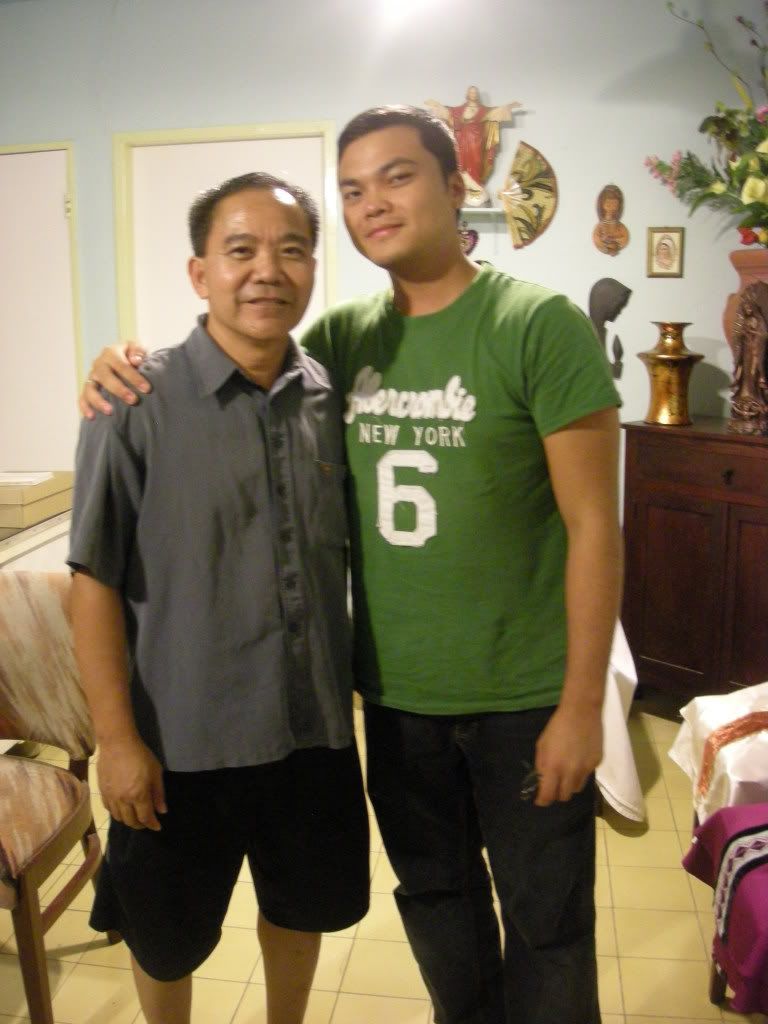
Fr. Ranulfo and Job
#16135
Anonymous Diary Blog / Re: What Did You Do Today?
February 23, 2012, 11:27:15 AM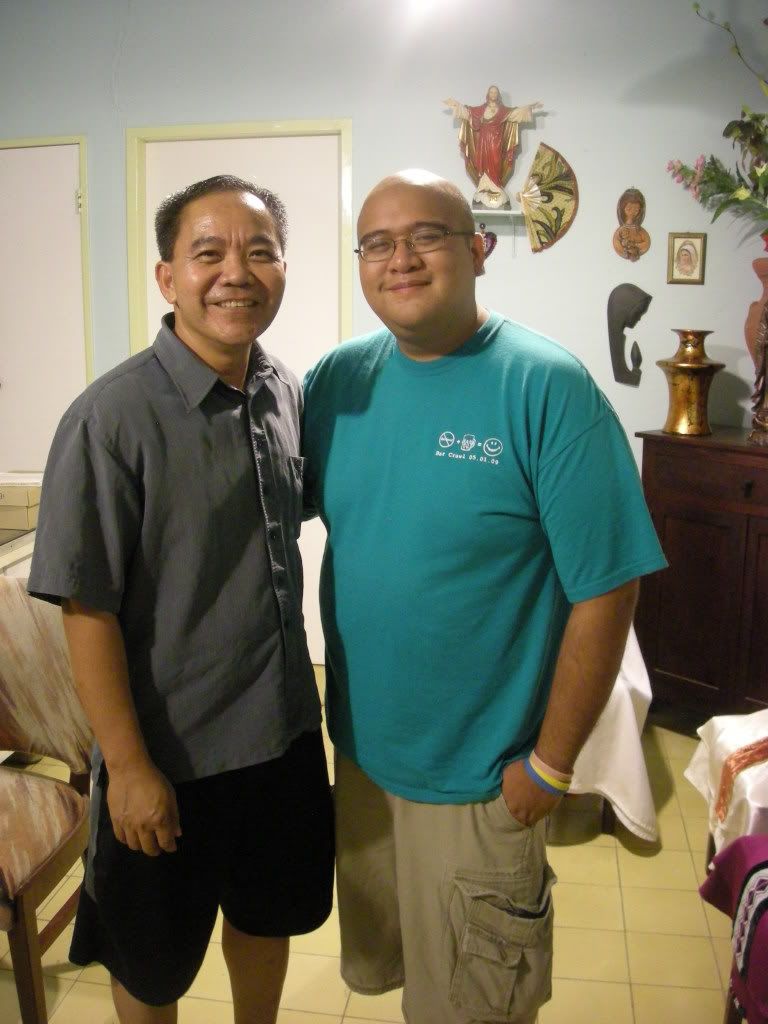
Fr. Ranulfo and Albert
#16136
Anonymous Diary Blog / Re: What Did You Do Today?
February 23, 2012, 11:26:29 AM
Posing with my favorite priest, Fr. Ranulfo

#16137
Music and Video / Re: The Way You Look Tonight (Michael Bublé)
February 23, 2012, 11:23:43 AM
hehe, very nice.
#16138
Poems and Poets / Re: Under Pressure by Tomas Transtromer
February 23, 2012, 11:23:11 AM
Beautiful..
#16139
Philippine Photo Gallery / Re: A view of coastal Panaon Island, Southern Leyte
February 23, 2012, 11:21:08 AM
Pictures taken in August 4, 2010.
#16140
Philippine Photo Gallery / A view of coastal Panaon Island, Southern Leyte
February 23, 2012, 11:20:21 AM
Panaon Island, Southern Leyte


#16141
Anonymous Diary Blog / Re: What Did You Do Today?
February 23, 2012, 11:12:36 AMQuote from: chicogon on February 22, 2012, 02:50:50 PM
Ssssh.... ajaw saba

Wowoweeee!
#16142
Help & Support / Re: Tabang!
February 23, 2012, 11:01:40 AMQuote from: taga tigbao on February 22, 2012, 02:59:38 PM
Sure Bro. Just keep me informed of your plans para kung makalugar ko, matour mo naho. God bless!
Brod. Vince, i'll make sure to buy your ticket , we'll take care of the cost for everything. Don't have to worry about that. Gusto lang ko maka kita sa ang remote areas of Leyte. Kanang wa jamo'y tourists ba. Sige , sige.
#16143
Help & Support / Re: Tabang!
February 23, 2012, 10:58:51 AMQuote from: taga tigbao on February 22, 2012, 02:59:38 PM
Sure Bro. Just keep me informed of your plans para kung makalugar ko, matour mo naho. God bless!
hehe, will definitely keep you updated. 2 years from now ra ba ni, ajaw'g pag minyo minyoa sa ha? hahahaha!
#16144
Science and Research / Re: Something About Parkinson's Disease
February 23, 2012, 10:55:43 AM
What is the underlying problem in Parkinson's Disease?
A: Decreased Dopamine Level
MOA: Damage to the substantia nigra
A: Decreased Dopamine Level
MOA: Damage to the substantia nigra
#16145
Help & Support / Re: Happy birthday, Inday Raquel!
February 23, 2012, 10:19:26 AM
Happy Birthday Raquel !
Wishing you a bright and wonderful birthday filled with God's Grace ! Enjoy it ! God Bless !
Lorenzo
Wishing you a bright and wonderful birthday filled with God's Grace ! Enjoy it ! God Bless !
Lorenzo
#16146
Kaliwat Bol-anon / Re: Tan Ancestry
February 22, 2012, 02:34:41 PMQuote from: Ricky Caluen on February 22, 2012, 12:23:04 PM
I'm very glad to come across postings re the origins of the Tan family in Bohol as my greatgrandfather was one of the Tan "originals" in the province. Based on the narrative written by my late grandfather (Jorge Salise, Sr of Valencia...who married Concepcion Tan of Guindulman), my greatgrandfather was believed to have arrived in Bohol around the mid-1870s. His name is Tan Pico, later baptized as Ruperto Tan-Roa. He settled in Tabajan, Guindulman where the folks at the time called him Insik Perto. It looks like my Oyong Perto had first come and then left the Philippines another time to fetch his brothers and cousins. These Tan relations had scattered to parts of Southern Leyte, different towns in Bohol, and as far as Jolo. In fact, it was a relative from Jolo who convinced my Oyong to return to China...which he finally did sometime 1948, on the eve of the Communist takeover in 1949.
Oyong Perto was a small-time gentleman farmer in Guindulman who later sold all his properties after the war...in order to pay for his steerage accommodation when he travelled back to China for the last time. Oyong was married to another Guindulman native, Rufina Basa Bernaldez, whose own roots, particularly on the Basa and Bernaldez side, I am also trying to trace. My Oyang Rufina's mother was Lorenza Basa who was married to Francisco Bernaldez. I am quite intrigued about my Basa origins because Lorenza Basa's father was named Jose Basa and according to my Lolo Jorge Jose Basa was originally from Cavite and was directly related to Jose Ma. Basa, the respected patriot from the said province who figured very prominently in the Propaganda Movement in the latter part of the Spanish administration of the country.
Going back to my Tan relations. When Oyong went back to China in 1948 he was accompanied by my mother's first cousin, Arsenio Roa, who was known to the older folks in Jagna as Arsing or Arce Roa, a very good-looking man who once figured in some Cebuano films in the 1950s. The family used to own a small carenderia at the Jagna Pier called Roa's Store ( I think). Oyong Perto had a cousin...a female who was called Shoga (or something like that). I remember seeing her for the first and only time when I was child in the late 1960s. Shoga wore a gray cheongsam and had really small but stubby feet --pak-kha. Shoga was married to another Chinese in Jagna by the name of A-be Uy.
We never heard from our Oyong after he left the Philippines in 1948. It is unfortunate that my Uncle Arsing never kept records or told older family members as to which village in Guangzhou he settled back in.
It would certainly be nice to hear from you, guys, in case we are related one way or the other because of our common Tan ancestry. Oyong and Oyang had 7 daughters and only 1 son. That is why very, very few in my family carried the Tan family name. The only Tan relations left in Tabajan, Guindulman are Maning Tan Tubig and his brother Elpidio. Other relatives in the area are the children and grandchildren of my late uncle, Ondoy Tan Fortich.
I will be going home to the Philippines in May and hope to attend the Tabajan fiesta on May 3rd. It would be nice to meet our Tan relatives
Ricky
Ricky,
I remember being told by my Lola Babing that one time sa una, she talked to some relatives in Guindulman (she referred to them as relatives of papa mariano). I am wondering if she was referring to your Lola Conching. I also know that my late grandmother, Fortunata Tan-Salvo, was in open communication with relatives in Guindulman. Sadly, the trace and links ended when she passed away in July 1998.
Best Regards,
Lorenzo
#16148
Bohol Directory / Re: 1880: The Chinese in Tagbilaran Were Already Part of the Body Politic
February 22, 2012, 01:58:22 PMQuote from: Ricky Caluen on July 26, 2009, 07:44:01 PM
Hi, Lorenzo. What a small world indeed. I visited my Mom at the nursing home yesterday and asked her if she has heard of a Mariano Tan. Guess what....without a moment's hesitation...she immediately said "yes". She said Mariano Tan was my Oyong's (Tan Pico, a.k.a. Ruperto Tan) cousin. Interestingly enough, a few days ago....she was telling me of an incident involving a certain Juliano Tan. She said Mariano was Juliano's father. She added yesterday that my Oyong himself told her that Mariano was his cousin. Mommy said Mariano had other children with nicknames of Balbing and Nating (she says Juliano was often called "Yanni"). Mommy says Nating has children in California.
Well, going over the names of your Chinese greatgrandpa's children as you wrote, I notice that the nicknames above in fact correspond to your grandmother's and grandauntie's and granduncle's names!
Looks like we are in fact related afterall! Now, I have a bit of tsismis to tell you about Juliano but which, obviously, I can not post here. So, better give me your email address if you want to know what this is
Further, if Tan Ngai and Tan Pico were close relations (as my Oyong had intimated)....how big do you think is the probability that they came from the same village in Guangzhou? Your family might just be able to help mine finally solve the mystery of our Oyong's circumstances when he returned to China in 1948, like where and when he died, if we are able to trace his direct relations, possibly through your family's help.
Cheers,
Ricky
Dearest Cousin Richard,
You asked me where Lolo Mariano was from, I will answer your question here. He was from Conghua, which is a very small farming community in Guangdong, it is some 40 miles northeast of Guangzhou. It is a mountainous community, that enjoys plentiful rivers and lakes. Your Oyong [Tan Pi Ko] was the 1st cousin of my great-grandfather. There is a large Tan community in Conghua, and I want you to know that Lolo Mariano left Conghua with a lot of relatives. Several cousins. Your Oyong was , indeed, related to my great-grandfather.
Your Oyong was forced to adopt a Spanish name , which was part of the assimilation procedure , which was forced on all Chinese coming to the Philippines during that time. He picked "Ruperto", hence he is known in public records as Ruperto Tan. During this time, the Colonial Government in the Philippines had a very racist policy towards Chinese.
Your lolo is actually my great-grand uncle. As he is the 1st cousin of my great-grand father. That means that we share the same great, great, great grandparents. (pure na pure nga inchik to sila hehehe )
To answer your second question, the way peopled in China back then was different to how it is now, people were not known to move from town to town , in fact, the diaspora of Chinese to the Philippines was due to political instability that China had been experiencing during that time (this is a topic worthy of another thread he he he
)Anyways, people of the same clan used to live in the same village. So, your Oyong was indeed from the same village as my great-grandfather, and i would say that i am 95% confident of this assumption. The reason why my great-grandfather left with several cousins was because to ensure: 1) safety (in numbers) 2) ensure success , 3) to make sure that no one gets lost.
Your Oyong left for China in 1948 because he had constant communication with his relatives in China at the time and even before the 1940's. My great-grandfather, tho he was based in Valencia for several years, wrote prolifically to his mother, his father, and to his relatives in Conghua. He actually left for Conghua in the 1930s and lived there with his wife (my great-grandmother, who was a Filipina-Mestiza , and a native of Valencia) they brought with them their 4 children. So it was actually very common for the original Chinese to travel back and forth from Bohol to China and back again. Lolo Mariano left in the mid 1930s, thank goodness, because the Japanese invaded china and would initiate a brutal war there. Your Oyong left in 1948 and that was during the Great Revolution , when the Nationalist forces of Jiang Jieshi (Chiang Kai Shek) were ousted by the Communist Forces led by Mao Zedong. The reason why you did not have communication with your Oyong afterwards was because Maoist China did not have open communication with the Philippines or opened borders until the 1970's. By then, your Oyong most probably had already passed away. As my Lolo Mariano had passed away in the mid 1960's.
Lolo Mariano was unable to visit China again because the Communist government in China did not allow open travel for Chinese or Filipinos to China during that time. "Closed Door Policy" during that time.
I would like to know also what happened to your Oyong, si Lolo Tan Pi Ko. I am sure, that he probably retired in Conghua. He would have had still a lot of relatives there. He is probably buried in Conghua in our family's funeral plot.
#16149
Bohol Directory / Re: 1880: The Chinese in Tagbilaran Were Already Part of the Body Politic
February 22, 2012, 01:44:16 PM
The Origin of the Tan Family of Bohol, Philippines
My great-grandfather, Mr. Mariano Tan [Chinese Name: Tan Ngai He], came from Canton region of China, a region that speaks not Mandarin , but Cantonese, instead. His ancestral province is in Guangdong, and the village that he comes from is called Conghua or sometimes written Kong-Hwa.
Tan Ngai He left Conghua for Guangzhou and from Guanzhou, which is a port city in Guangdong Province , located in Southern China. From Guangzhou, he sailed to the Philippines by way of Jolo Island, which is part of the Tawi-Tawi Island Group south of Mindanao.
From Jolo, which was a large port of entry for many Chinese going to the Philippines during the early 20th century, Tan Ngai He went through customs and documented himself as a resident Chinese. During the 'Filipinization' process, he was told to adopt a Spanish name , part of the requirement the Colonial Government enforced on all Chinese to assimilate into the local culture. He chose the name "Mariano" , hence he is referred to in public records as Mr. Mariano Tan. From Jolo he then traveled with his brother and several cousins to Bohol, Philippines.
A picture of how Conghua, Guangdong looks like:


The ancestral birthplace of my great-grandfather.
My great-grandfather, Mr. Mariano Tan [Chinese Name: Tan Ngai He], came from Canton region of China, a region that speaks not Mandarin , but Cantonese, instead. His ancestral province is in Guangdong, and the village that he comes from is called Conghua or sometimes written Kong-Hwa.
Tan Ngai He left Conghua for Guangzhou and from Guanzhou, which is a port city in Guangdong Province , located in Southern China. From Guangzhou, he sailed to the Philippines by way of Jolo Island, which is part of the Tawi-Tawi Island Group south of Mindanao.
From Jolo, which was a large port of entry for many Chinese going to the Philippines during the early 20th century, Tan Ngai He went through customs and documented himself as a resident Chinese. During the 'Filipinization' process, he was told to adopt a Spanish name , part of the requirement the Colonial Government enforced on all Chinese to assimilate into the local culture. He chose the name "Mariano" , hence he is referred to in public records as Mr. Mariano Tan. From Jolo he then traveled with his brother and several cousins to Bohol, Philippines.
A picture of how Conghua, Guangdong looks like:
The ancestral birthplace of my great-grandfather.
#16151
Bohol Directory / Re: 1880: The Chinese in Tagbilaran Were Already Part of the Body Politic
February 22, 2012, 01:25:14 PMQuote from: nilamaw on July 06, 2009, 12:06:48 AM
In those days, being Chinese was looked down upon. Many native Filipinos used to hold a racist and prejudiced outlook towards the Chinese. For being so successful.
Now a days, it's reverse, (here in chinese soil) thou they deny it, you can feel it.
This is very true, the original Chinese families that settled in Bohol during the 19th and 20th centuries had to experience a lot of prejudice during their day, but through hard work and through assimilation to the local culture, they made sure their offspring and decedents would have a bright future.
#16152
Bohol Directory / Re: 1880: The Chinese in Tagbilaran Were Already Part of the Body Politic
February 22, 2012, 01:22:57 PMQuote from: ZecurB on July 02, 2009, 10:09:10 AM
You can't blame the Chinese for succeeding since not only do they have those good qualities but the Chinese, are one of the ancient civilizations that provided the world the most crucial technological innovations which other ancient civilizations have ever surpassed...
ZecurB, yes you are right.
#16153
Bohol Directory / Re: 1880: The Chinese in Tagbilaran Were Already Part of the Body Politic
February 22, 2012, 01:17:50 PMQuote from: Lorenzo on February 22, 2012, 12:59:10 PM
Ceciliano Tan.
(the younger brother of my Lola Babing; my Grand Uncle)
According to the words of Lola Babing (Balbina Tan), her brother, Ceciliano, was a prolific academic. He was an intellectual when he studied in Valencia Elementary. He was a top student in the school and a constant honor's student. Since he lived in China for 4 years during the time when Lolo Mariano took the family back to Guangzhou, he actually assimilated into life in China. That is why he actually preferred to speak in his father's language. It was said by my Lola Babing that he and my Lola Nating were the favorites of Lolo Mariano's parents.
Ceciliano Tan was a polyglot. He was fluent in Cantonese (a southern Chinese dialect), Mandarin (a northern Chinese dialect), in Binisayang Bol-anon, Tagalog, Spanish, and English. He was a prolific writer. Because of my great-grandfather's influence, he was a delicate calligrapher kono and when he would write letters to my Lolo Mariano , he would write not in Filipino, but in Chinese.
Ceciliano Tan applied and was accepted to Zhongshan University, of Guangdong, China. He was a Finance and Business Student. And according to Lola Babing, was also an honors student there as well.
Pinangga to siya kaayo ni Lolo Mariano.
Lolo Ceciliano passed away suddenly during his collegiate studies in China due to acute renal infection. He was buried in China next to our ancestors in Lolo Mariano's home village. His death was a devastating blow to Lolo Mariano and Lola Gabina.
#16154
Bohol Directory / Re: 1880: The Chinese in Tagbilaran Were Already Part of the Body Politic
February 22, 2012, 01:02:34 PM
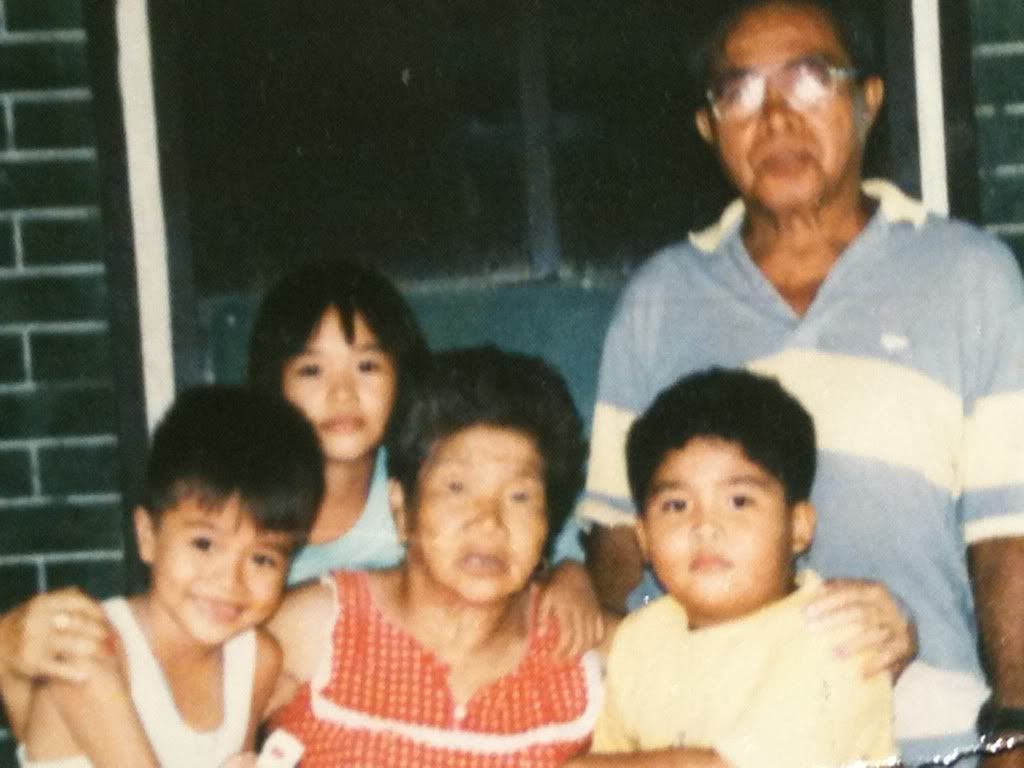
Lola Nating, Lolo Ciano, Joseph, Forlyn and Me:
#16155
Bohol Directory / Re: 1880: The Chinese in Tagbilaran Were Already Part of the Body Politic
February 22, 2012, 01:01:54 PM
Mrs. Fortunata Tan - Salvo
( eldest daughter of Tan Ngai He [Lolo Mariano] )
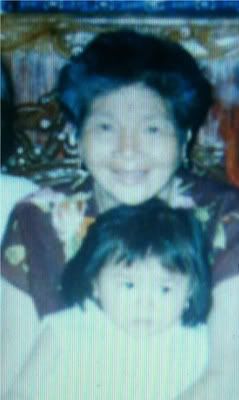
Lola Nating pictured with my cousin, Christian Grace.
Mrs. Fortunata Tan-Salvo was a decorated Filipino War Veteran and served with the Philippine Army during WWII. She braved with American and Filipino insurgents in fighting the Japanese during their occupation of Bohol Island.
After the war, Ms. Fortunata Tan married Mr. Casiano Salise Salvo Sr. They both had 5 children. Mrs. Fortunata Tan-Salvo passed away in July 18, 1998. She was a beloved mother and grandmother.
She's my grandmother.
( eldest daughter of Tan Ngai He [Lolo Mariano] )
Lola Nating pictured with my cousin, Christian Grace.
Mrs. Fortunata Tan-Salvo was a decorated Filipino War Veteran and served with the Philippine Army during WWII. She braved with American and Filipino insurgents in fighting the Japanese during their occupation of Bohol Island.
After the war, Ms. Fortunata Tan married Mr. Casiano Salise Salvo Sr. They both had 5 children. Mrs. Fortunata Tan-Salvo passed away in July 18, 1998. She was a beloved mother and grandmother.
She's my grandmother.
#16156
Bohol Directory / Re: 1880: The Chinese in Tagbilaran Were Already Part of the Body Politic
February 22, 2012, 12:59:10 PM
Ceciliano Tan.
(the younger brother of my Lola Babing; my Grand Uncle)
According to the words of Lola Babing (Balbina Tan), her brother, Ceciliano, was a prolific academic. He was an intellectual when he studied in Valencia Elementary. He was a top student in the school and a constant honor's student. Since he lived in China for 4 years during the time when Lolo Mariano took the family back to Guangzhou, he actually assimilated into life in China. That is why he actually preferred to speak in his father's language. It was said by my Lola Babing that he and my Lola Nating were the favorites of Lolo Mariano's parents.
Ceciliano Tan was a polyglot. He was fluent in Cantonese (a southern Chinese dialect), Mandarin (a northern Chinese dialect), in Binisayang Bol-anon, Tagalog, Spanish, and English. He was a prolific writer. Because of my great-grandfather's influence, he was a delicate calligrapher kono and when he would write letters to my Lolo Mariano , he would write not in Filipino, but in Chinese.
Ceciliano Tan applied and was accepted to Zhongshan University, of Guangdong, China. He was a Finance and Business Student. And according to Lola Babing, was also an honors student there as well.
Pinangga to siya kaayo ni Lolo Mariano.
#16157
Bohol Directory / Re: 1880: The Chinese in Tagbilaran Were Already Part of the Body Politic
February 22, 2012, 12:58:13 PM
A good family friend, Dr. Plinio Lim, a former Mayor of Valencia, shared some very warm stories with me concerning my great-grandfather, and my grandmother. After I was introduced to Dr. Lim by way of another family friend, Mr. Jan Palaca, I was amazed that Mayor Lim said to me, "Ondoy Bran, kahibalo ba ka sa imong Lolo Mariano?"
I smiled. Of course I knew, however, I was delighted to know more about him from another viewpoint. So I replied, "Oh, pero gamay lang..."
He said to me, as he put his arm on my shoulder, his eyes looking at mine, "Your Lolo Mariano was pure Chinese. You know that? He was from Guangdong. Strikto kaayo to imong Lolo."
Ning katawa ko. I replied back, "Mao ba diay?"
"Oo! Strikto to siya." "Do you know that when your Lola Nating was younger..she was very beautiful? Pure Chinese beauty...Pure Chinese beauty..." hahaha I could not help but smile when he said that.
It was apparent that close diay to ang pamilya ni Dr. Plinio Lim ni Lolo Mariano. In fact, Dr. Guido Lim and Dr. Plinio Lim were close friends with my Lola.
Dr. Plinio Lim shared more stories with me....it is really amazing how much you learn about your family just by going back to your hometown. Amazing, truly.
#16158
Bohol Directory / Re: 1880: The Chinese in Tagbilaran Were Already Part of the Body Politic
February 22, 2012, 12:57:57 PM
In the early 1930's, Lolo Mariano took the entire family back with him to Guangzhou, China. When I was talking to my Lola Babing about this , I asked her how the climate was like, how the environment in China was like compared to Bohol. Her response to me was, "Daghan kaayo og tawo didto, Ondoy. Ang mga tawo didto sa village ni Papa, puro sila tanan og TAN. Paryente sila namo."
So i asked her if she was able to see her grandparents, the mother and father of Lolo Mariano. Naka kita siya nila kono. When Lolo Mariano returned to China in the early 1930's, his father was already old, as so was his mother. When Lolo met his father for the first time since he left China in 1903, he kowtowed to his father and mother. Kowtow is the act of bowing / kneeling before the parent in act of reverence and filial piety. It was an ancient Chinese custom.
Lolo introduced his Filipino wife to his parents as well as his children. Strikto kono to ang Papa ni Lolo Mariano, pero ang Mama niya, dali kono to siya mo kogos sa mga bata. The favorite of Lolo Mariano's father was Ceciliano Tan, a boy. Ceciliano Tan was the younger brother of my maternal grandmother, Fortunata Tan.
After 4 years in China, the family returned back to Valencia, Bohol. When I asked Lola Babing why they returned back to Valencia, she cited the main reason was that her mother was becoming really homesick. For the sake of his wife, Mariano Tan, bid a final farewell to his mother and father and extend relatives, and brought his family back to Valencia, Bohol.
#16159
Bohol Directory / Re: 1880: The Chinese in Tagbilaran Were Already Part of the Body Politic
February 22, 2012, 12:57:20 PM
Back in January 1998, my Lola Babing (Mrs. Balbina Tan-Salingay) told me about the time when she was only 4-5 years old. She remembered the time where Lolo Mariano carried a bell to the top of the Valencia Church bell tower all by himself. As he was a friend of the church priest at the time. This was during the late 1920's - early 1930's.
It was really amazing to talk to Lola Babing (the younger sister of my maternal grand mother, Fortunata Tan-Salvo) about the yesteryears. In the time that she stayed with us, I was given information of how Lolo worked, what his personality was like. He was adamant kono that they all know how to speak, and write in Chinese (Cantonese). Sa balay nila, dili kono mo sulti si Lolo Mariano og Bisaya, Cantonese ra gajud.
Naka katawa ko kai it was so hardcore that the kids (Fortunata, Ceciliano, Balbina) would sometimes speak Cantonese when they were at school. Lola Babing told me that when she and my Lola Nating were in Valencia Elementary sa una, the kids would tease them kai inchik sila and inchikon ilang nawong. Not to mention, that they had a Chinese father. I asked Lola Babing why this was--and she explained to me that during the 1920's, 1930's, 1940's etc, the Filipino people looked down on Chinese kono.
Mo hilak daw kono si Lola Nating og si Lola Babing after school kai the local kids would tease them and say things like, 'Baho Inchik', 'Inchik Mata'.
They would cry to their father. Lolo Mariano told them as he dried their eyes, "Do not ever be ashamed of being Chinese. Be proud that you are Chinese. Just ignore them, and continue to study..." The natives of Valencia would tease and pick on my grandmother and my grand aunt for being Chinese. They would also tease my great-grandfather for being "inchik", as the people during that time were very racist towards Chinese people.
#16160
Bohol Directory / Re: 1880: The Chinese in Tagbilaran Were Already Part of the Body Politic
February 22, 2012, 12:36:28 PM
As you notice, Ricky, Lolo Mariano picture illustrates that he has the classic "Queue hair cut", a fashion style of the Chinese men during the 19th and early 20th century.
It was the Imperial Chinese style during the time:

they shave the front part of the head and forehead, and keep the back part long.
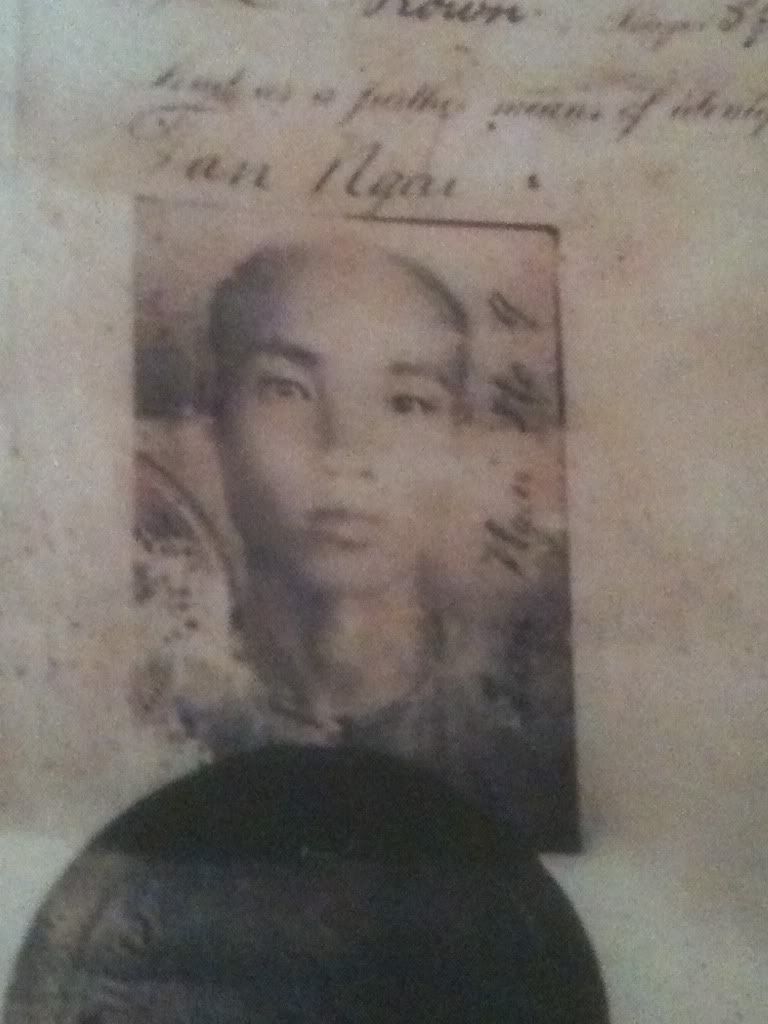
Si Lolo Mariano with a Queue hair style. Note his shaved head. He was born in 1881, during the Qing Dynasty's Reign...
It was the Imperial Chinese style during the time:
they shave the front part of the head and forehead, and keep the back part long.
Si Lolo Mariano with a Queue hair style. Note his shaved head. He was born in 1881, during the Qing Dynasty's Reign...
#16161
Kaliwat Bol-anon / Re: Tan Ancestry
February 22, 2012, 12:29:38 PMQuote from: Ricky Caluen on February 22, 2012, 12:23:04 PM
I'm very glad to come across postings re the origins of the Tan family in Bohol as my greatgrandfather was one of the "originals" in the province. Based on the narrative written by my late grandfather (Jorge Salise, Sr of Valencia...who married Concepcion Tan of Guindulman), my greatgrandfather was believed to have arrived in Bohol around the mid-1870s. His name is Tan Pico, later baptized as Ruperto Tan-Roa. He settled in Tabajan, Guindulman. It looks like my Oyong Perto had first come and the left the Philippines to fetch his brothers and cousins. These Tan relations had scattered to parts of Southern Leyte, different towns in Bohol, and as far as Jolo. In fact, it was a relative from Jolo who convinced my Oyong to return to China...which he finally did sometime 1948, on the eve of the Communist takeover in 1949.
Oyong Perto was a small-time gentleman farmer in Guindulman who later sold all his properties after the war...in order to pay for his steerage accommodation when he travelled back to China for the last time. Oyong was married to another Guindulman native, Rufina Basa Bernaldez, whose own roots, particularly on the Basa and Bernaldez side, I am also trying to trace. My Oyang Rufina's mother was Lorenza Basa who was married to Francisco Bernaldez. I am quite intrigued about my Basa origins because Lorenza Basa's father was named Jose Basa and according to my Lolo Jorge Jose Basa was originally from Cavite and was directly related to Jose Ma. Basa, the respected patriot from the said province who figured very prominently in the Propaganda Movement in the latter part of the Spanish administration of the country.
Going back to my Tan relations. When Oyong went back to China in 1948 he was accompanied by my mother's first cousin, Arsenio Roa, who was known to the older folks in Jagna as Arsing or Arce Roa, a very good-looking man who once figured in some Cebuano films in the 1950s. The family used to own a small carenderia at the Jagna Pier called Roa's Store ( I think). Oyong Perto had a cousin...a female who was called Shoga (or something like that). I remember seeing her for the first and only time when I was child in the late 1960s. Shoga wore a gray cheongsam and had really small but stubby feet --pak-kha. Shoga was married to another Chinese in Jagna by the name of A-be Uy.
We never heard from our Oyong after he left the Philippines in 1948. It is unfortunate that my Uncle Arsing never kept records or told older family members as to which village in Guangzhou he settled back in.
It would certainly be nice to hear from you, guys, in case we are related one way or the other because of our common Tan ancestry.
Ricky
Ricky,
It seems as if we are related verily much indeed. My great grandfather (father of my mother's mother) was Mr. Mariano Tan (Tan Ngai He), who was one of the ORIGNAL TANs who arrived in Bohol in 1903, and my other great-grandfather (the father of my mother's father) was a Mr. Ricardo Salise Sr. of Valencia.
Can you please post pictures of you ancestors? I would like to see their pictures. Seeing as your relatives are actually mine, also.
#16162
Bohol Directory / Re: 1880: The Chinese in Tagbilaran Were Already Part of the Body Politic
February 22, 2012, 12:25:18 PMQuote from: Ricky Caluen on July 01, 2009, 01:01:28 AM
This is a very interesting topic---the role the Chinese played in Bohol politics and society. I am particularly interested in this discussion because my roots are also Chinese. In fact, I have been trying to connect with any member of any Tan family in Bohol.
My greatgrandfather was named Tan Pico. His baptismal name was Ruperto Tan-Roa (as explained earlier, Roa was his native sponsor's name). He is believed to have migrated to Guindulman sometime in the 1880s. According to family lore, he came when he was only in his early teens, together possibly with other brothers and cousins of the same surname. They came by way of Leyte.
My Oyong (I suppose this is some Chinese rendering of "lolo") returned to China in 1947/48, at the height of the Chinese revolution. Presumably, he returned to Amoy. My late uncle, Arce Roa (who used to own Roa's store at the Jagna pier), was a teenager when he accompanied Oyong to China. Unfortunately, no one bothered to document things about our Chinese ancestor, until I started doing research on the subject, mainly because of my own specialization in History.
Ruperto Tan-Roa, a.k.a Tan Pico, married Rufina Basa Bernaldez of Guindulman. I have the genealogy of the Basa side of my family but only until Jose Basa, my Oyang's grandfather. I have been trying to establish the direct connection between my greatgreatgreatgrandfather Jose Basa with the noted Propagandist, his namesake, Jose Maria Basa of Cavite.
I am also interested in getting a reference to someone who has done research on the Philippine revolutionary and Fil-American war periods in Bohol. My other greatgrandfather, Fernando Salise (Valencia, Bohol), is believed to have been the youngest revolutionary to surrender to the Americans (presumably at least in the Valencia area).
My limitation is that I live in Toronto (Canada).
Any help would be appreciated.
Ricky
Your Oyong is, indeed, a 1st cousin of my Lolo Mariano Tan. Lolo Mariano actually came from a very wealthy family in Guangzhou Province, China. He , like his brothers who followed him, wanted to go abroad to set up business and also to follow the migration patterns of the Chinese into the Philippines. Because during that time, the Philippines, which was a very rich American Colony had recently reversed the Spanish Government's Anti-Chinese Immigration Policy. That is why such a large influx of Chinese came to Philippines during the early 20th century. My great-grandfather was about 22 years of age when he left Guangzhou , CHINA for Jolo and then Bohol in 1903. Literally 2 years after the ending of the Philippine-American War.
You said that your Oyong went back to China during the height of the CHINESE REVOLUTION , I would like to say that during the 1930's, my Great-Grandfather actually brought his Filipina/Spanish wife back to China and with them their 3 children (Fortunata, Ceciliano, Balbina) and lived in Guangzhou for some 4 years before going back to Valencia (the reason why was because my great-grandmother, who was a Spanish-Filipina native of Valencia was severely homesick, so lolo Mariano left China again) Tho, im happy that the family went back to BOHOL during the time because the Japanese invaded China in the late 1930's.
Do you still have relatives in Jagna and Guindulman, Ricky? I would like to touch base in mapping how many relatives i have in Guindulman and Jagna.
I am still trying to find the old family chart that Lolo Mariano had, which included the names of my great-great grandparents who were town officials in Guangzhou.
#16163
Bohol Directory / Re: 1880: The Chinese in Tagbilaran Were Already Part of the Body Politic
February 22, 2012, 12:15:29 PMQuote from: Ricky Caluen on July 26, 2009, 07:44:01 PM
Hi, Lorenzo. What a small world indeed. I visited my Mom at the nursing home yesterday and asked her if she has heard of a Mariano Tan. Guess what....without a moment's hesitation...she immediately said "yes". She said Mariano Tan was my Oyong's (Tan Pico, a.k.a. Ruperto Tan) cousin. Interestingly enough, a few days ago....she was telling me of an incident involving a certain Juliano Tan. She said Mariano was Juliano's father. She added yesterday that my Oyong himself told her that Mariano was his cousin. Mommy said Mariano had other children with nicknames of Balbing and Nating (she says Juliano was often called "Yanni"). Mommy says Nating has children in California.
Well, going over the names of your Chinese greatgrandpa's children as you wrote, I notice that the nicknames above in fact correspond to your grandmother's and grandauntie's and granduncle's names!
Looks like we are in fact related afterall! Now, I have a bit of tsismis to tell you about Juliano but which, obviously, I can not post here. So, better give me your email address if you want to know what this is
Further, if Tan Ngai and Tan Pico were close relations (as my Oyong had intimated)....how big do you think is the probability that they came from the same village in Guangzhou? Your family might just be able to help mine finally solve the mystery of our Oyong's circumstances when he returned to China in 1948, like where and when he died, if we are able to trace his direct relations, possibly through your family's help.
Cheers,
Ricky
haha, what a small world indeed. Your mommy is correct ! She even knows my grandmother and my grand aunt ! ha ha ha! kuyawa kaayo that you still retained the information.
Fortunata Tan Salvo (Nating) has 5 children : Romeo, Alex, Celeste, Liza, and Casiano Jr. (I am the child of Liza).
Si Balbina Tan , was my grand aunt, who lived in California since the 1950's. Both my Lola Babing and Lola Nating passed away in the summer of 1998.
#16164
Bohol Directory / Re: 1880: The Chinese in Tagbilaran Were Already Part of the Body Politic
February 22, 2012, 12:11:07 PM
Dear Ricky,
Please visit the thread that I dedicated to our dear Lolo Mariano.
http://tubagbohol.mikeligalig.com/index.php?topic=35875.0
Please visit the thread that I dedicated to our dear Lolo Mariano.
http://tubagbohol.mikeligalig.com/index.php?topic=35875.0
#16165
Bohol Directory / Re: 1880: The Chinese in Tagbilaran Were Already Part of the Body Politic
February 22, 2012, 12:08:05 PM
This is a tribute page for my late great-grandfather, Mr. Mariano Tan. Lolo Mariano, who was born in Guangzhou, China, immigrated to the Philippines in 1903 and would call Valencia, Bohol his home as he developed a life and a business in the Philippines.
His full Chinese (HAN) name was: Tan Ngai He. He was the husband of my late great-grandmother, Mrs. Gabina Ingnalan, a Spanish-Filipina mestiza. They would have 4 children and they will be named accordigly from eldest to youngest.
1. Fortunata Tan
2. Ceciliano Tan
3. Balbina Tan
4. Juliano Tan
Their oldest child, and first daughter, anhing Fortunata Tan-Salvo is my maternal grandmother. My Lola Nating.
This summer 2010, I was able, for the first time in my life (as an adult) to visit the grave site of Lolo Mariano and my late Lola Gabina. It was a heart pounding and tearful experience to visit the grave of my Chinese Lolo. To give and offer my homage to his memory, as is the custom, the Chinese custom, of a male Chinese son/grandson before the memory of his grandfather/grandmother. I offered onto his grave fresh flowers, and 24 candles. 12 candles for my Lolo Mariano and 12 candles for my lola Gabina. Each candle symbolized each year that I was unable to visit them. As I sat with them, a gush of cool breeze covered my face, and none of my candles, which were lit, were blown off. The wind touched the flowers I presented in offering for my great-grandparents. I could not help but smile and had this feeling that my Lolo Mariano was there watching me. It was a beautiful experience.
Thanks to the help of my uncle Romeo, I was able, through Grace of God, to see the face of my Lolo Mariano. I have always wanted to see how he looked like, but thought that all his pictures disappeared or were lost in time. It was not the case, apparently so.
My uncle saved a picture of our Lolo, one that was taken when he just arrived in the port of Jolo, Philippines in 1903. This picture was of my Lolo Mariano when he was only 22 years old. If you look closely, his dress attire and his hair cut style is that of the Qing-Dynasty China. It was a standardized by the Qing Emperors that all male Chinese would shave their top hair and keep the back long and tied in a knot. Seeing this picture makes me happy, to see how my Lolo looked like when he was my age, and also to see and reaffirm that I have such a long history, an undiscovered history in Guangzhou, CHINA.
Behold, my Great Grand Father, your Grand Uncle:
#16166
Bohol Directory / Re: 1880: The Chinese in Tagbilaran Were Already Part of the Body Politic
February 22, 2012, 12:05:52 PM
Please tell me about your Lolo Pico, please, because I remember my Lola Nating and Lola Babing (Anak ni sila ni Lolo Mariano; si Lola Nating, ahong lola gajud, mama na siya sa ahong mommy).
I remember Lola Nating and Lola Babing telling me kono nga that Lola Mariano had a lot of relatives who came from CHINA to BOHOL. Lolo Mariano had a brother who went on to Cebu, but he also had 1st degree cousins kono that came to Bohol. Now I know that Pico Tan was his cousins diay!!
I will give this information to my mom and our relatives. Good to see that our TAN CLAN still lives and that the blood line of our ancestors are rekindled. Will forward you my information.
God Bless You, dear Ricky! Cousins man diay ta.
#16167
Bohol Directory / Re: 1880: The Chinese in Tagbilaran Were Already Part of the Body Politic
February 22, 2012, 12:02:53 PMQuote from: Ricky Caluen on July 26, 2009, 07:44:01 PM
Hi, Lorenzo. What a small world indeed. I visited my Mom at the nursing home yesterday and asked her if she has heard of a Mariano Tan. Guess what....without a moment's hesitation...she immediately said "yes". She said Mariano Tan was my Oyong's (Tan Pico, a.k.a. Ruperto Tan) cousin. Interestingly enough, a few days ago....she was telling me of an incident involving a certain Juliano Tan. She said Mariano was Juliano's father. She added yesterday that my Oyong himself told her that Mariano was his cousin. Mommy said Mariano had other children with nicknames of Balbing and Nating (she says Juliano was often called "Yanni"). Mommy says Nating has children in California.
Well, going over the names of your Chinese greatgrandpa's children as you wrote, I notice that the nicknames above in fact correspond to your grandmother's and grandauntie's and granduncle's names!
Looks like we are in fact related afterall! Now, I have a bit of tsismis to tell you about Juliano but which, obviously, I can not post here. So, better give me your email address if you want to know what this is
Further, if Tan Ngai and Tan Pico were close relations (as my Oyong had intimated)....how big do you think is the probability that they came from the same village in Guangzhou? Your family might just be able to help mine finally solve the mystery of our Oyong's circumstances when he returned to China in 1948, like where and when he died, if we are able to trace his direct relations, possibly through your family's help.
Cheers,
Ricky
HELLO RICKY ! I just read this now! Long lost distant relative ta, Ricky!
#16168
Music and Video / On Eagle's Wings
February 22, 2012, 12:00:18 PM #16170
Bible Study / Re: 19th CFC-SFC International Conference (ICon)
February 22, 2012, 11:53:46 AMQuote from: taga tigbao on February 20, 2012, 05:23:19 PM
Gusto ko magshare ug usa ka kanta gikan sa misa sa Domingo sa buntag, last Feb 19, 2012 during the ICon, which filled us with the love of the Great God:
http://www.youtube.com/watch?v=8vMYP4uJAqY#
Mao ni ang lyrics:
I will come to you in the silence,
I will lift you from all your fear.
You will hear my voice,
I claim you as my choice,
Be still and know I am here.
Refrain: Do not be afraid, I am with you.
I have called you each by name.
Come and follow me
I will bring you home;
I love you and you are mine.
I am hope for all who are hopeless,
I am eyes for all who long to see.
In the shadows of the night,
I will be your light,
Come and rest in me.
I am strength for all the despairing,
Healing for the ones who dwell in shame
All the blind will see,
The lame will all run free,
And all will know my name.
I am the Word that leads all to freedom,
I am the peace the world cannot give.
I will call your name,
Embracing all your pain,
Stand up, now walk, and live!
#16171
Bible Study / Re: 19th CFC-SFC International Conference (ICon)
February 22, 2012, 11:52:26 AMQuote from: taga tigbao on February 20, 2012, 05:23:19 PM
Gusto ko magshare ug usa ka kanta gikan sa misa sa Domingo sa buntag, last Feb 19, 2012 during the ICon, which filled us with the love of the Great God:
http://www.youtube.com/watch?v=8vMYP4uJAqY#
This is a very beautiful offertory song, too, Brod Vince
#16172
Bible Study / Re: 19th CFC-SFC International Conference (ICon)
February 22, 2012, 11:51:48 AMQuote from: taga tigbao on February 20, 2012, 05:11:07 PM
Gahapon sa udto, February 19, 2012 mao ang katapusan sa gihimong International Conference sa SFC nga didto himoa sa Bohol.
The theme of the 19th ICon is "Great God", which is taken from Mama Mary's magnificat (Luke 1:46).
For me as a member of the SFC, this ICon is the best not only because of the venue, but because of the loving presence of the Lord all throughout our journey during the ICon. He gave us people to help through our journey and provided us with circumstances for us to reflect on His message on our individual life.
I am very happy to read your post, Brod. Vince, yes, it is a very rewarding and uplifting feeling to feel God's presence with you during a journey. I hope and pray the spiritual uplifting you received during this SFC seminar continues to reverberate in your work life, faith life and your personal life. Thank You, bro, for sharing your very beautiful post.
God Bless !
#16173
Health and Food / Re: Some tips on menopause
February 22, 2012, 09:19:23 AMQuote from: islander on February 22, 2012, 09:18:39 AM
tua, nag-menopause.
bwahahaha kulirezz ! tiguls na diay intawon sila duha?
#16174
Health and Food / Re: Some tips on menopause
February 22, 2012, 09:17:13 AMQuote from: bugsay on February 22, 2012, 09:13:23 AM
luoy pod tawon si iyo mikoy, gi buntong nalang pod tawon sa sungkod ang paggunit, kay ang itlog nipilit na sa singit.
bwa ha ha ha luoy bitaw...asa naman si minnie?
#16175
Health and Food / Re: Some tips on menopause
February 22, 2012, 09:09:11 AMmickypause aww..ka luoy pod intawn...

#16176
Health and Food / Re: Some tips on menopause
February 22, 2012, 09:07:33 AM
hahahahahahaha! salamat sa eksplenasyon, madame isles
#16177
Health and Food / Re: Some tips on menopause
February 22, 2012, 09:03:20 AMQuote from: bugsay on February 22, 2012, 08:48:26 AM
sa babaye man ang menopause, sir.......sa lalake, mekopause..
lisod na patuyboon kon nikupos na, bisag mokaon pag daghang nilarang nga bakasi sa Cordova.
hahahaha @ mekopause. buing buing phrase ni , bai bugsay?
#16178
Job Opportunity / Career: Industrial and Organizational Psychologists (Ph.D holders)
February 22, 2012, 08:00:54 AM
If you're interested in industrial-organizational psychology, you've chosen a field that offers an almost limitless number of career opportunities, and well paying salaries to match. Salaries for professionals working in the Industrial-Organizational Psychology (I/O) field are some of the highest paid among psychology careers, and higher than average salaries for all U.S. jobs
A 2006 Income and Employment Survey of the membership of the Society for Industrial and Organizational Psychology (SIOP) showed that members who live in Manhattan, other New York metro, San Francisco/San Jose metro, and Boston metro areas reported the highest median incomes. But government positions located in other cities also pay well, especially when adjusting for the cost-of-living in places like New York where housing costs 300 times the national average.
Mean Salary Range for PhDs in IOPsychology: $95,000 - $ 130,000
http://www.allpsychologycareers.com/salary/industrial-organizational-psychology-salary.html
#16179
Anonymous Diary Blog / Re: What Did You Do Today?
February 22, 2012, 07:56:39 AM
Tomorrow is another day of work. 8-1 shift. Then class from 2-10 pm. 
#16180
Health and Food / Re: What do you know about your brain?
February 22, 2012, 07:54:59 AM
Interesting tid bit: Neuroscientists say that the average human adult only uses 10% of the total capacity of the brain.
#16181
Health and Food / Re: What do you know about your brain?
February 22, 2012, 07:53:50 AM
hehe, kuyawa pod ang illustration. artistic. i like it. 
#16182
Health and Food / Re: What do you know about your brain?
February 22, 2012, 07:52:47 AM
One of the most sensitive organs in the body, yet, ironically, the most important.
#16183
Health and Food / Re: Depression & Heart Disease
February 22, 2012, 07:50:59 AM
Conclusion
Early detection and treatment of depression in heart patients are crucial to improve a patient’s quality of life and possibly prevent a recurrent coronary event. When left untreated, depression can worsen heart disease and increase the risk of a heart attack. Safe treatments are available to help you cope with depression and help you manage your heart disease.
The support and involvement of family and friends can be crucial in helping someone who is depressed. Living with a depressed person can be very difficult and stressful on family members and friends.
Reference:
Cleveland Clinic Journal Online
#16184
Health and Food / Re: Depression & Heart Disease
February 22, 2012, 07:50:37 AM
How do I know when to seek help?
If you’re recovering from heart surgery, a heart attack, or another heart condition, temporary feelings of sadness and a depressed mood are common for the first few weeks.
However, treatment is necessary when depression is severe and accompanied by other symptoms (including withdrawal from activities, not responding when visiting with family and friends, increased negative thoughts and tearfulness).
Without treatment, depression can become worse. For heart patients, depression can contribute to an increased risk of heart attack and coronary disease. Talk to your health care provide who can diagnose and start depression treatment with safe antidepressants. Your health care provider also can refer you to a mental health specialist who can provide other appropriate treatment when necessary.
When depression is negatively affecting your life â€" such as causing increased difficulties with relationships or performance at work or at home, it is important for you to get help to prevent things from getting worse.
#16185
Health and Food / Re: Depression & Heart Disease
February 22, 2012, 07:50:06 AM
What is the role of depression in patients with cardiovascular disease?
Up to 15 percent of patients with cardiovascular disease and up to 20 percent of patients who have undergone coronary artery bypass graft (CABG) surgery experience major depression.1
Studies have shown that mental stress has a negative effect on a person’s heart health. In particular:
Unmanaged stress can lead to high blood pressure, arterial damage, irregular heart rhythms and a weakened immune system.
Patients with depression have been shown to have increased platelet reactivity, decreased heart variability and increased proinflammatory markers (such as C-reactive protein or CRP), which are all risk factors for cardiovascular disease.
For people with heart disease, depression can increase the risk of an adverse cardiac event such as a heart attack or blood clots. For people who do not have heart disease, depression can also increase the risk of a heart attack and development of coronary artery disease.
In one landmark study, the continued presence of depression after recovery increased the risk of death (mortality) to 17 percent within 6 months after a heart attack (versus 3 percent mortality in heart attack patients who didn’t have depression).2
During recovery from cardiac surgery, depression can intensify pain, worsen fatigue and sluggishness, or cause a person to withdraw into social isolation. Patients who have had CABG and have untreated depression after surgery also have increased morbidity and mortality.
Patients with heart failure and depression have an increased risk of being readmitted to the hospital, and also have an increased mortality risk.
Early research findings have indicated there may be genetic factors that increase a patient’s risk of depression and risk of recurrent cardiac events after a heart attack.3
Patients with heart disease and depression also perceive a poorer health status, as manifested by Quality of Life (QoL) studies. Furthermore, heart disease patients with depression have worse treadmill exercise and medication adherence than that of patients with heart disease who do not have depression.4, 5, 6
Negative lifestyle habits associated with depression â€" such as smoking, excessive alcohol consumption, lack of exercise, poor diet and lack of social support â€" interfere with the treatment for heart disease.
Depression has been proven to be a such a risk factor in cardiac disease that the American Heart Association (AHA) has recommended that all cardiac patients be screened for depression using simple screening questions and an easy-to-administer survey called the Patient Health Questionnaire (PHQ-2).7
Depressive disorders result from a mix of factors that relate to:
A person’s family history, physical health, state of mind and environment.
High levels of stress, life transitions, loss and many other factors.
Imbalances in the chemicals that the body uses to control mood.
#16186
Health and Food / Depression & Heart Disease
February 22, 2012, 07:49:29 AM
Written with Leo Pozuelo, MD, Department of Psychiatry and Psychology
It is common for you to feel sad or depressed after a heart attack, cardiac surgery or procedure, recent hospitalization, or new diagnosis of heart disease. These emotions may be the result of not knowing what to expect or not being able to do simple tasks without becoming overly tired.
Temporary feelings of sadness are normal, and should gradually go away within a few weeks, as you get back to your normal routine and activities.
Sometimes, however, a depressed mood can prevent you from leading a normal life. When a depressed mood is severe and accompanied by other symptoms that persist every day for 2 or more weeks, treatment is necessary to help you cope and recover.

#16188
Anonymous Diary Blog / Re: What Did You Do Today?
February 22, 2012, 07:44:51 AM
Today, I took my sister out for her 25th Birthday. We had lunch at a nice sushi house in Lincoln Park, Chicago.
#16189
Health and Food / Re: What do you know about your brain?
February 22, 2012, 07:41:33 AM #16190
Health and Food / Re: What do you know about your brain?
February 22, 2012, 07:41:01 AM
The Basal Ganglia

The basal ganglia are a group of large nuclei that partially surround the thalamus. These nuclei are important in the control of movement. The red nucleus and substantia nigra of the midbrain have connections with the basal ganglia.
The basal ganglia are a group of large nuclei that partially surround the thalamus. These nuclei are important in the control of movement. The red nucleus and substantia nigra of the midbrain have connections with the basal ganglia.
#16191
Health and Food / Re: What do you know about your brain?
February 22, 2012, 07:40:06 AMThe occipital lobe : is located at the back portion of the brain and is associated with interpreting visual stimuli and information. The primary visual cortex, which receives and interprets information from the retinas of the eyes, is located in the occipital lobe. Damage to this lobe can cause visual problems such as difficulty recognizing objects, an inability to identify colors and trouble recognizing words.
#16192
Health and Food / Re: What do you know about your brain?
February 22, 2012, 07:39:45 AM
The temporal lobe : is located on the bottom section of the brain. This lobe is also the location of the primary auditory cortex, which is important for interpreting sounds and the language we hear. The hippocampus is also located in the temporal lobe, which is why this portion of the brain is also heavily associated with the formation of memories. Damage to the temporal lobe can lead to problems with memory, speech perception and language skills.
#16193
Health and Food / Re: What do you know about your brain?
February 22, 2012, 07:39:20 AM
The parietal lobe : is located in the middle section of the brain and is associated with processing tactile sensory information such as pressure, touch, and pain. A portion of the brain known as the somatosensory cortex is located in this lobe and is essential to the processing of the body's senses. Damage to the parietal lobe can result in problems with verbal memory, an impaired ability to control eye gaze and problems with language.
#16194
Health and Food / Re: What do you know about your brain?
February 22, 2012, 07:38:59 AM
The Frontal Lobe: is located at the front of the brain and is associated with reasoning, motor skills, higher level cognition, and expressive language. At the back of the frontal lobe, near the central sulcus, lies the motor cortex. This area of the brain receives information from various lobes of the brain and utilizes this information to carry out body movements. Damage to the frontal lobe can lead to changes in sexual habits, socialization and attention as well as increased risk-taking.
#16195
Health and Food / What do you know about your brain?
February 22, 2012, 07:38:25 AM
The 4 Lobes of the Brain

#16196
Health and Food / Re: Oral Jer-jer Makadaot
February 22, 2012, 06:21:21 AM
For women who are receiving oral sex from men who have oral herpes (or even some women), a result is HSV-2 infection. Women who have vaginal herpes experience excruciating pain during the blistering and ulceration of the infection site. Again, there is also a high risk of cancer formation in the area of ulcer formation.

#16197
Health and Food / Re: Oral Jer-jer Makadaot
February 22, 2012, 06:15:14 AMQuote from: fdaray on January 26, 2012, 03:03:19 PM
Mag masturbate na lang kay dili makadaot.
Hehehe, bitaw, better that than getting oral sex from an infected person. Lami lagi, pero sayang kai ma sakitan ang tawo afterwards.
Ayawg lang mag masturbate nga manyakis style, naa pod koy patiente nga mo masturbate 8-10 times a day, na inflammed ilang penis. ka grabeh pod.
#16198
Health and Food / Re: Oral Jer-jer Makadaot
February 22, 2012, 06:12:17 AMQuote from: TUBAGBOHOL.com on January 26, 2012, 10:59:26 AM
by Jocelyn Uy
PDI
Health and dental experts on Tuesday warned Filipinos that oral sex with a partner with genital warts can increase the risk of cancerâ€"even more than smoking and drinking.
The finding linking a virus that causes genital warts to oral cancer was tackled at a recent joint scientific conference of the Philippine Medical Association (PMA) and the Philippine Dental Association (PDA) as part of this year’s celebration of National Cancer Consciousness Week.
People who have had more than five oral sex partners were nine times more likely to have cancer of the tonsils, tongue or throat, said the PMA, referring to a study published in the New England Journal of Medicine.
In a statement Tuesday, the PMA cited studies showing that the human papilloma virus (HPV), mainly responsible for cervical cancer among women, can also cause oral cancer in both men and women who engage in unprotected oral sex.
Not only genital warts, a person can also get HSV-2, Herpes Simplex Virus 2 , if receiving oral sex from someone who has Herpes Simplex Virus Type 1 or 2 in the mouth (oral herpetical ulcers)

Penile herpetical blisters erupt frequently and cause massive pain. It literally is the "gift that keeps on giving". Bantay mo!
#16199
Health and Food / Re: Some tips on menopause
February 22, 2012, 06:06:58 AM
1. Estrogen replacement therapy
2. Calcium supplement
3. Vitamin D intake
4. Monitor alkaline phosphate levels
5. In case of most-menopausal depression, suggest cognitive behavioral psychotherapy , or anti-depressant RX
2. Calcium supplement
3. Vitamin D intake
4. Monitor alkaline phosphate levels
5. In case of most-menopausal depression, suggest cognitive behavioral psychotherapy , or anti-depressant RX
#16200
Health and Food / Re: The top 5 most stressful things in life
February 22, 2012, 06:03:46 AMQuote from: islander on February 21, 2012, 05:09:39 PM
1. Relationship Problems
Marriage and other relationship stresses are a massive cause of stress and are associated with increased risk for coronary heart disease. And among women with heart disease, the risk of having a heart attack is increased 3-fold for those who experience severe stress in their marriages or live-in relationships, far more so than other types of stress, including that caused by work. Several studies have come to the surprising conclusion that marriage protects against the effects of stress. People in solid relationships, who feel supported, simply suffer less anxiety, depression and fatigue than the average single, widowed or divorced person. A stable relationship, it is argued, provides a shoulder to cry on and a form of emotional support.


tsk tsk tsk, stressing bitaw ning relationship drama.
Pages 1 2 3 4 5 6 7 8 9 10 11 12 13 14 15 16 17 18 19 20 21 22 23 24 25 26 27 28 29 30 31 32 33 34 35 36 37 38 39 40 41 42 43 44 45 46 47 48 49 50 51 52 53 54 55 56 57 58 59 60 61 62 63 64 65 66 67 68 69 70 71 72 73 74 75 76 77 78 79 80 81 82 83 84 85 86 87 88 89 90 91 92 93 94 95 96 97 98 99 100 101 102 103 104 105 106 107 108 109 110 111 112 113 114 115 116 117 118 119 120 121 122 123 124 125 126 127 128 129 130 131 132 133 134 135 136 137 138 139 140 141 142 143 144 145 146 147 148 149 150 151 152 153 154 155 156 157 158 159 160 161 162 163 164 165 166 167 168 169 170 171 172 173 174 175 176 177 178 179 180 181 182 183 184 185 186 187 188 189 190 191 192 193 194 195 196 197 198 199 200 201 202 203 204 205 206 207 208 209 210 211 212 213 214 215 216 217 218 219 220 221 222 223 224 225 226 227 228 229 230 231 232 233 234 235 236 237 238 239 240 241 242 243 244 245 246 247 248 249 250 251 252 253 254 255 256 257 258 259 260 261 262 263 264 265 266 267 268 269 270 271 272 273 274 275 276 277 278 279 280 281 282 283 284 285 286 287 288 289 290 291 292 293 294 295 296 297 298 299 300 301 302 303 304 305 306 307 308 309 310 311 312 313 314 315 316 317 318 319 320 321 322 323 324 325 326 327 328 329 330 331 332 333 334 335 336 337 338 339 340 341 342 343 344 345 346 347 348 349 350 351 352 353 354 355 356 357 358 359 360 361 362 363 364 365 366 367 368 369 370 371 372 373 374 375 376 377 378 379 380 381 382 383 384 385 386 387 388 389 390 391 392 393 394 395 396 397 398 399 400 401 402 403 404 405 406 407 408 409 410 411 412 413 414 415 416 417 418 419 420 421 422 423 424 425 426 427 428 429 430 431 432 433 434 435 436 437 438 439 440 441 442 443 444 445 446 447 448 449 450 451 452 453 454 455 456 457 458 459 460 461 462 463 464 465 466 467 468 469 470 471 472 473 474 475 476 477 478 479 480 481 482 483 484 485 486 487 488 489 490 491 492 493 494 495 496 497 498 499 500 501 502 503 504 505 506 507 508 509 510 511 512 513 514 515 516 517 518 519 520 521 522 523 524 525 526 527 528 529 530 531 532 533 534 535 536 537 538 539