Join MikeLigalig.com!

Why Just Read When You Can Join, Post, and Read!

Menu

Show posts

This section allows you to view all posts made by this member. Note that you can only see posts made in areas you currently have access to.

Show posts Menu

Messages - Lorenzo

#10601
Anonymous Diary Blog / Re: Ipagawas Ang Inyung Gibati
September 24, 2012, 04:25:45 PM
Quote from: Pikoy on September 24, 2012, 04:21:52 PM
thnks doc,, ok2x na sya akong gidihugan ug olive oil, vics, omega dayon  gitumar nkog biogesic ug alaxan dayon 2log  pagmata nako kalooy sa Ginoo nawa na ang sakit pero naapay gamay hubag, pwd napod ni e kiat ug usab,,heheh :D ;D


hehehe! i am amazed at your knowledge of over-the-counter medicinal drugs, bai piks. maayo kai na healed na imong tiil. rest gayod.
#10602
"Nation will rise against nation, and kingdom against kingdom. There will be earthquakes in various places, and famines. These are the beginning of birth pains."


-Mark 13:8
#10603
"You will hear of wars and rumors of wars, but see to it that you are not alarmed. Such things must happen, but the end is still to come."


-Matthew 24:6
#10604
Quote from: Pikoy on September 24, 2012, 04:14:01 PM


kulang raning gidaghanuna kung ilang ipagawas ang ilang tinaguang tsunami...;D ;D

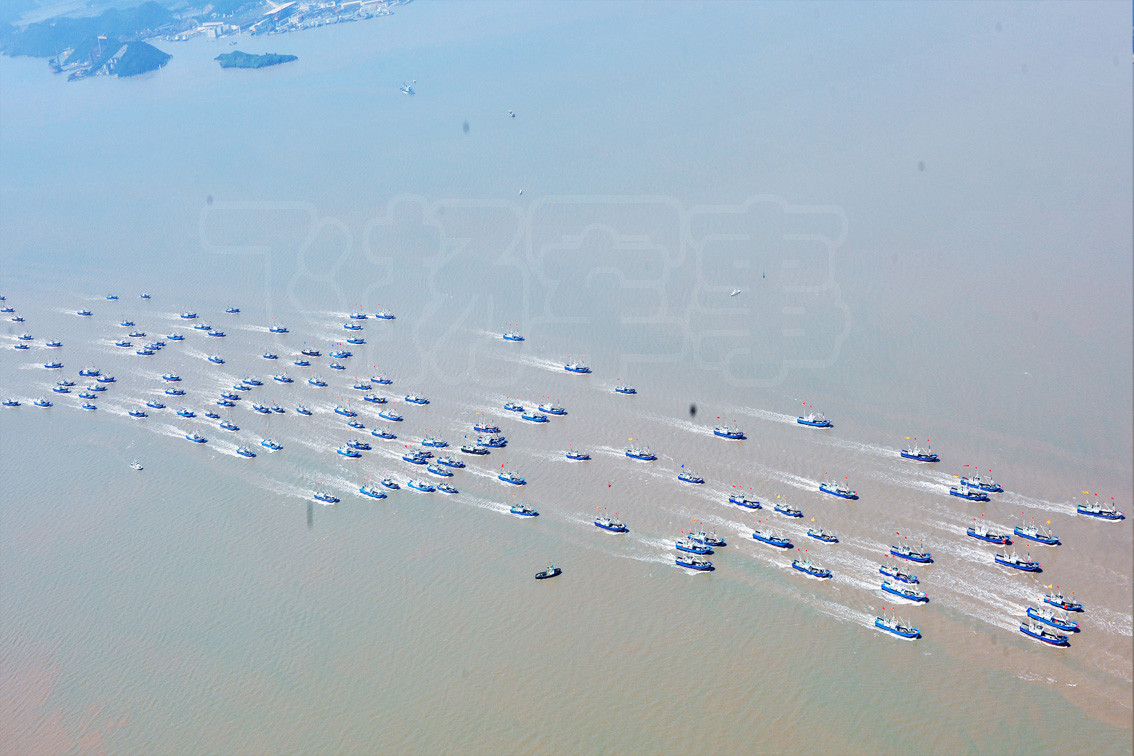
hahaha ! mao pod, bai piks. i just can't believe how persistent the chinese government is..and quite nefarious they are in their tactics. they send civilian fishermen to japanese-owned waters in the attempt to incite the japanese self defense naval force in acting.

if the japanese self defense naval forces shoot at or sink even 1 chinese fishing ship, the Chinese Military High Command will use that as pretext for war.

The Philippines must be wary in these times as we do not want to engage the Chinese in a full frontal naval assault. We must bide our time to build up our military defenses.

Hahay...all this is very biblical...gi prophesized naman diay ning panahona.


#10606
Anonymous Diary Blog / Re: Ipagawas Ang Inyung Gibati
September 24, 2012, 04:08:41 PM
My other roommate, Lee, moved in today. Now I have 2 room mates in my apartment. One, a Ph.D student, and the other is an Interior Designer. We have an interesting dynamic here. :)
#10607
Asia | Middle East / Re: Brunei royal wedding
September 24, 2012, 04:06:37 PM
Quote from: Pikoy on September 24, 2012, 04:04:29 PM
cost $20 million. The wedding took place today in the Throne Hall of the Sultan’s 1,700-room palace in front of 2,000 guests.. whew!!


Bai, sa una, Brunei was controlled by Philippine Sultanate of Sulu. The English Imperialists stole our territory and gave it to Malaysia. Kining mga Bruneian, were mere slaves of Sulu Sultanate sa unang panahon. The natural resources they have once belonged to Filipino Sulu Sultanate.
#10608
Arang daghana pod. How can Japan challenge the will of 1.4 Billion people? I think war is close...
#10613
Around 1,000 fishing boats have been mobilised by China to sail to an island chain controlled by Japan, as the quarrel between the two countries fuelled a seventh day of protests.

reference:
http://www.telegraph.co.uk/news/worldnews/asia/china/9548059/China-sends-1000-boats-armada-to-disputed-island-chain.html
#10614
Asia | Middle East / Re: Brunei royal wedding
September 24, 2012, 03:55:59 PM
A historical note: The Sultanate of Brunei was a mere vassal to the mightier overlord, the Sultanate of Sulu, some 3 centuries ago. The princesses of the Sultan of Brunei were part of the harem of the greater Sultan of Sulu, who ruled a vast Empire (Half of Mindanao, all of Palawaan, and most of Northeastern Borneo)


#10615
Asia | Middle East / Re: Brunei royal wedding
September 24, 2012, 03:53:17 PM
#10616
Asia | Middle East / Re: Brunei royal wedding
September 24, 2012, 03:52:03 PM
#10617
Asia | Middle East / Re: Brunei royal wedding
September 24, 2012, 03:51:27 PM
#10618
Bible Study / Re: Catholic? Where’s the evidence?
September 24, 2012, 10:42:22 AM
My boss, si Dr. Maria, said it best, "LEAVE TO GOD WHAT IS GOD'S!"


8)
#10619
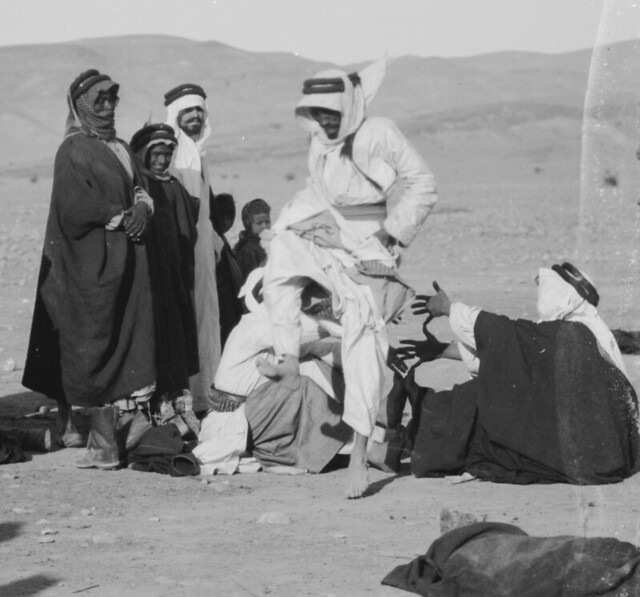
Photos Unlimited / Re: Bedouin Dancers
September 24, 2012, 10:37:51 AM
#10620
Photos Unlimited / Re: Bedouin Dancers
September 24, 2012, 10:36:11 AM
#10621
Photos Unlimited / Bedouin Dancers
September 24, 2012, 10:34:20 AM
#10624
The same country that tried selling moth-filled, moldy rice to the Philippines couple of years back in an attempt to take advantage of our country's situation.

You reap what you sowe...!
#10625
Music and Video / Re: A beautiful arabic song: A'isha
September 24, 2012, 10:28:31 AM
Original version by: Cheb Khaled


http://www.youtube.com/watch?v=3OnWQeQKiG8#ws
#10626
Music and Video / Re: A beautiful arabic song: A'isha
September 24, 2012, 10:27:19 AM
Version sung by Yassin   8)


http://www.youtube.com/watch?v=QabX6T9eqYI#
#10627
Music and Video / Re: A beautiful arabic song: A'isha
September 24, 2012, 10:24:39 AM
#10628
Showbiz & Celebrity / Re: Nicki Minaj
September 24, 2012, 09:52:39 AM
hmmm, are  you saying you won't wear those kinds of shoes, isles? :P
#10629
Introduce Yourself / Re: Picture of Yourself
September 24, 2012, 09:47:16 AM
Quote from: islander on September 24, 2012, 09:21:12 AM
you must be very strong to be able to carry a guy that size, lorenz. ;D

He he he, he is not that heavy. He weighs 200 lbs, but I can bench press 225 lbs. :)
#10630
Introduce Yourself / Re: Picture of Yourself
September 24, 2012, 09:46:19 AM


#10631
Introduce Yourself / Re: Picture of Yourself
September 24, 2012, 09:43:55 AM


Carabao from Valencia, Bohol   ;D


Carabao from Lucena  ;D
#10632
Introduce Yourself / Re: Picture of Yourself
September 24, 2012, 09:41:34 AM

crazy times on the back of a toyota hillux pickup. ;D


Jim, another batch mate, the driver of our truck ;D
#10633
Introduce Yourself / Re: Picture of Yourself
September 24, 2012, 09:19:22 AM
Quote from: enadespinosa on July 06, 2012, 06:01:44 PM

Love of my life....

Beautiful Family ! :)
#10634
Introduce Yourself / Re: Picture of Yourself
September 24, 2012, 09:15:12 AM
Quote from: LanggamTamsi2 on September 17, 2012, 04:08:25 PM
Mememe-I iiiii ----Hope you like it.


Wow! I like your glasses and your hat, Tita Sol. :)
#10635
Introduce Yourself / Re: Picture of Yourself
September 24, 2012, 09:13:14 AM
Quote from: islander on September 24, 2012, 09:10:36 AM
rudolf nureyev and margot fonteyn, terroristic version? ;D

Isles, kanang lake sa blue shirt, ahoang amigo og batch mate sa Medical School. Emergency Medicine Intern na sija karon. ;D

Kanang lake nga naay scarf sa ijang nawong,  taga BALINGSYA nang lakeha...hahahaha!
#10636
Introduce Yourself / Re: Picture of Yourself
September 24, 2012, 09:10:19 AM
Quote from: islander on September 24, 2012, 09:07:23 AM
aruy, arang liwata sa iyaan.  like auntie, like niece.  puro lamorok ug aping.  morag natarantar ani si pikoy da. ;D

he he he! kyut bitaw si Jenneth og iyang baby niece. Na kujapan si Bai Piks ani. ;D
#10637
Introduce Yourself / Re: Picture of Yourself
September 24, 2012, 09:09:09 AM
Quote from: islander on September 24, 2012, 09:06:03 AM
dakog lower hip, lorenz.  ang lubot di makita sa picture, hehe. ;D

You're right , Isles. Salamat sa koreksyon. ;D
#10638
Bible Study / Re: Catholic? Where’s the evidence?
September 24, 2012, 07:15:35 AM
Quote from: chicogon on September 18, 2012, 01:03:35 AM
Not all true... when you're younger medyo attractive ug humot pa. But God makes straight crooked ways... He created old age, bwahaha. Ampo lang jud nga maka survive... but no one's immune from temptation and sin. Salamat nga naa tay non-comdemning but all-merciful God!!!

Amen, Father !
#10639
I CONFESS - CONFITEOR

English
I confess to Almighty God, to blessed Mary ever Virgin, to blessed Michael the Archangel, to blessed John the Baptist, to the holy Apostles Peter and Paul, and to all the Saints, that I have sinned exceedingly, in thought, word, and deed, through my fault, through my fault, through my most grievous fault.

Therefore I beseech blessed Mary ever Virgin, blessed Michael the Archangel, blessed John the Baptist, the holy Apostles Peter and Paul, and all the Saints to pray to the Lord our God for me.
Amen.

Latin
Confiteor Deo omnipotenti, beatae Mariae semper Virgini, beato Michaeli Archangelo, beato Ioanni Baptistae, sanctis Apostolis Petro et Paulo, et omnibus Sanctis, quia peccavi nimis cogitatione, verbo et opere: mea culpa, mea culpa, mea maxima culpa.

Ideo precor beatam Mariam semper Virginem, beatum Michaelem Archangelum, beatum Ioannem Baptistam, sanctos Apostolos Petrum et Paulum, et omnes Sanctos, orare pro me ad Dominum Deum nostrum.
Amen.
#10640
ACT OF CHARITY - ACTUS CARITATIS


English
O my God, I love Thee above all things, with my whole heart and soul, because Thou art all-good and worthy of all love. I love my neighbor as myself for the love of Thee. I forgive all who have injured me, and ask pardon of all whom I have injured.
Amen

Latin
Domine Deus, amo te super omnia proximum meum propter te, quia tu es summum, infinitum, et perfectissimum bonum, omni dilectione dignum. In hac caritate vivere et mori statuo.
Amen.
#10641
ACT OF HOPE - ACTUS SPEI


English
O my God, relying on Thy infinite goodness and promises, I hope to obtain pardon of my sins, the help of Thy grace, and life everlasting, through the merits of Jesus Christ, my Lord and Redeemer.
Amen

Latin
Domine Deus, spero per gratiam tuam remissionem omnium peccatorum, et post hanc vitam æternam felicitatem me esse consecuturum: quia tu promisisti, qui es infinite potens, fidelis, benignus, et misericors. In hac spe vivere et mori statuo.
Amen.
#10642
ACT OF FAITH - ACTUS FIDEI


English
O my God, I firmly believe that Thou art one God in three Divine persons, Father, Son, and Holy Ghost; I believe that Thy Divine Son became man, and died for our sins, and that he will come to, judge the living and the dead. I believe these and all the truths which the Holy Catholic Church teaches, because Thou hast revealed them, who canst neither deceive nor be deceived.
Amen

Latin
Domine Deus, firma fide credo et confiteor omnia et singula quæ sancta ecclesia Catholica proponit, quia tu, Deus, ea omnia revelasti, qui es aeterna veritas et sapientia quae nec fallere nec falli potest. In hac fide vivere et mori statuo.
Amen.
#10643
ACT OF CONTRITION - ACTUS CONTRITIONIS


English
O my God, I am heartily sorry for having offended Thee and I detest all my sins because of Thy just punishments, but most of all because they offend Thee, my God, who art all good and deserving of all my love. I firmly resolve, with the help of Thy grace, to sin no more and avoid the near occasions of sin. Amen.

Latin
Deus meus, ex toto corde poenitet me omnium meorum peccatorum, eaque detestor, quia peccando, non solum poenas a Te iuste statutas promeritus sum, sed praesertim quia offendi Te, summum bonum, ac dignum qui super omnia diligaris. Ideo firmiter propono, adiuvante gratia Tua, de cetero me non peccaturum peccandique occasiones proximas fugiturum.
Amen.
#10644
PRAYER TO SAINT MICHAEL - ORATIO AD SANCTUM MICHAEL


English
St. Michael the Archangel, defend us in battle; be our safeguard against the wickedness and snares of the Devil. May God rebuke him, we humbly pray, and do Thou, O Prince of the Heavenly Host, by the power of God, cast into Hell, Satan and all the other evil spirits, who wander throughout the world, seeking the ruin of souls.
Amen.

Latin
Sancte Michael Archangele, defende nos in proelio, contra nequitiam et insidias diaboli esto praesidium. Imperet illi Deus, supplices deprecamur: tuque, Princeps militiae coelestis, Satanam aliosque spiritus malignos, qui ad perditionem animarum pervagantur in mundo, divina virtute, in infernum detrude.
Amen.
#10645
FATIMA PRAYER - ORATIO FATIMAE


This prayer was given to the three children at Fatima by the Blessed Virgin to be prayed after each Glory Be during the Rosary.

English
O my Jesus, forgive us our sins, save us from the fires of Hell, lead all souls to Heaven, especially those in most need of Thy mercy.
Amen.

Latin
Oh mi Jesu, dimitte nobis debita nostra, libera nos ab igne inferni, conduc in caelum omnes animas, praesertim illas quae maxime indigent misericordia tua.
Amen.
#10646
QUEEN OF HEAVEN - REGINA COELI


The Regina Coeli replaces the Angelus prayer during Paschaltide.

When prayed with more then two people, one person will say the Versicle while everyone else will say the Responsory. When prayed individually, the person prays both the Versicle and Responsory.


English
Queen of Heaven rejoice, alleluia: For He whom you merited to bear, alleluia, Has risen as He said, alleluia. Pray for us to God, alleluia.
Versicle. Rejoice and be glad, O Virgin Mary, alleluia.
Response. Because the Lord is truly risen, alleluia.
V. Let us pray: O God, who by the Resurrection of Thy Son, our Lord Jesus Christ, granted joy to the whole world: grant we beg Thee, that through the intercession of the Virgin Mary, His Mother, we may lay hold of the joys of eternal life. Through the same Christ our Lord.
R. Amen.

Latin
Regina coeli, laetare, alleluia: Quia quem meruisti portare, alleluia. Resurrexit sicut dixit, alleluia. Ora pro nobis Deum, alleluia.
Versicle. Gaude et laetare, Virgo Maria, Alleluia.
Response. Quia surrexit Dominus vere, alleluia.
V. Oremus: Deus qui per resurrectionem Filii tui, Domini nostri Iesu Christi, mundum laetificare dignatus es: praesta, quaesumus, ut per eius Genetricem Virginem Mariam, perpetuae capiamus gaudia vitae. Per eundem Christum Dominum nostrum.
R. Amen.
#10647
ANGELUS DOMINI


The Angelus is traditionaly prayed at 6am, noon and 6pm (and by some, midnight). During Paschaltide it is replaced by the Regina Coeli.

When prayed with more then two people, one person will say the Versicle while everyone else will say the Responsory. When prayed individually, the person ways both the Versicle and Responsory.


English
Versicle. The Angel of the Lord declared unto Mary.
Response. And she conceived of the Holy Ghost. Hail Mary...
V. Behold the handmaid of the Lord.
R. Be it done unto me according to thy word. Hail Mary...
V. And the Word was made Flesh.
R. And dwelt among us. Hail Mary...
V. Pray for us, O Holy Mother of God.
R. That we may be made worthy of the promises of Christ.
V. Let us pray: Pour forth, we beseech Thee, O Lord, Thy grace into our hearts; that, we to whom the Incarnation of Christ, Thy Son, was made known by the message of an Angel, may by His Passion and Cross, be brought to the glory of His Resurrection. Through the same Christ our Lord.
R. Amen.

Latin
Versicle. Angelus Domini nuntiavit Mariae.
Response. Et concepit de Spiritu Sancto. Ave Maria...
V. Ecce ancilla Domini.
R. Fiat mihi secundum verbum tuum. Ave Maria...
V. Et Verbum caro factum est.
R. Et habitavit in nobis. Ave Maria...
V. Ora pro nobis, sancta Dei Genetrix.
R. Ut digni efficiamur promissionibus Christi.
V. Oremus: Gratiam tuam, quaesumus, Domine, mentibus nostris infunde; ut qui, Angelo nuntiante, Christi Filii tui incarnationem cognovimus, per passionem eius et crucem, ad resurrectionis gloriam perducamur. Per eundem Christum Dominum nostrum.
R. Amen.
#10648
HAIL HOLY QUEEN - SALVE REGINA

English
Hail holy Queen, mother of mercy, our life, our sweetness, and our hope. To thee do we cry, poor banished children of Eve. To thee do we send up our sighs, mourning and weeping in this valley of tears. Turn then, most gracious Advocate, thine eyes of mercy toward us. And after this our exile show unto us the blessed Fruit of thy womb, Jesus. O clement, O loving, O sweet Virgin Mary.
Amen.

Latin
Salve, Regina, mater misericordiae: vita, dulcedo, et spes nostra, salve. Ad te clamamus exsules filii Hevae. Ad te suspiramus, gementes et flentes in hac lacrimarum valle. Eia, ergo, advocata nostra, illos tuos misericordes oculos ad nos converte. Et Iesum, benedictum fructum ventris tui, nobis post hoc exsilium ostende. O clemens, O pia, O dulcis Virgo Maria.
Amen.
#10649
NICENE CREED - SYMBOLORUM NICAENUM


English
I believe in one God, the Father Almighty, maker of Heaven and earth, of all things visible and invisible.

And in one Lord, Jesus Christ, the only-begotten Son of God. Born of the Father before all ages. God of God, Light of Light, true God of true God. Begotten, not made: consubstantial with the Father; by Whom all things were made. Who for us men and for our salvation, came down from Heaven: and was incarnate by the Holy Ghost of the Virgin Mary: and was made man. He was crucified also for us, suffered under Pontius Pilate, and was buried. And on the third day He rose again according to the Scriptures. And He ascended into Heaven and sitteth at the right hand of the Father. And He shall come again with glory to judge the living and the dead: of Whose kindgom there shall be no end.

And in the Holy Ghost, the Lord and Giver of life: Who proceedeth from the Father and the Son. Who together with the Father and the Son is adored and glorified: Who spoke through the Prophets.

And in One, Holy, Catholic and Apostolic Church. I confess one Baptism for the remission of sins. And I look for the resurrection of the dead, and the life of the world to come.
Amen.

Latin
Credo in unum Deum, Patrem omnipotentem, factorem caeli et terrae, visibilium omnium et invisibilium.

Et in unum Dominum Iesum Christum, Filium Dei unigenitum, et ex Patre natum ante omnia saecula. Deum de Deo, Lumen de Lumine, Deum verum de Deo vero, genitum non factum, consubstantialem Patri; per quem omnia facta sunt. Qui propter nos homines et propter nostram salutem descendit de caelis. Et incarnatus est de Spiritu Sancto ex Maria Virgine, et homo factus est. Crucifixus etiam pro nobis sub Pontio Pilato, passus et sepultus est, et resurrexit tertia die, secundum Scripturas, et ascendit in caelum, sedet ad dexteram Patris. Et iterum venturus est cum gloria, iudicare vivos et mortuos, cuius regni non erit finis.

Et in Spiritum Sanctum, Dominum et vivificantem, qui ex Patre Filioque procedit. Qui cum Patre et Filio simul adoratur et conglorificatur: qui locutus est per prophetas.

Et unam, sanctam, catholicam et apostolicam Ecclesiam. Confiteor unum baptisma in remissionem peccatorum. Et expecto resurrectionem mortuorum, et vitam venturi saeculi.
Amen.
#10650
APOSTLES CREED - SYMBOLORUM APOSTOLORUM


English
I believe in God, the Father almighty, Creator of Heaven and earth, and in in Jesus Christ, His only Son, our Lord. He was conceived by the Holy Ghost, and born of the Virgin Mary. He suffered under Pontius Pilate, was crucified, died and was buried. He descended into Hell. On the third day He rose again. He ascended into Heaven, and is seated at the right hand of God the Father Almighty. He will come again to judge the living and the dead. I believe in the Holy Spirit, the Holy Catholic Church, the communion of saints, the forgiveness of sins, the resurrection of the body, and life everlasting.
Amen.

Latin
Credo in Deum Patrem omnipotentem, Creatorem caeli et terrae. Et in Iesum Christum, Filium eius unicum, Dominum nostrum, qui conceptus est de Spiritu Sancto, natus ex Maria Virgine, passus sub Pontio Pilato, crucifixus, mortuus, et sepultus, descendit ad inferos, tertia die resurrexit a mortuis, ascendit ad caelos, sedet ad dexteram Dei Patris omnipotentis, inde venturus est iudicare vivos et mortuos. Credo in Spiritum Sanctum, sanctam Ecclesiam Catholicam, sanctorum communionem, remissionem peccatorum, carnis resurrectionem, vitam aeternam.
Amen.
#10651
MINOR DOXOLOGY - DOXOLOGIA MINOR
GLORY BE - GLORIA


English
Glory be to the Father and to the Son and to the Holy Spirit. As it was in the begining, is now, and ever shall be, world without end.
Amen.

Latin
Gloria Patris et Filio et Spiritui Sancto. Sicut erat in principio, et nunc, et semper, et in saecula saeculorum.
Amen.
#10652
HAIL MARY - AVE MARIA

English
Hail Mary, full of grace, the Lord is with thee. Blessed art thou amongst women, and blessed is the Fruit of thy womb, Jesus. Holy Mary, Mother of God, pray for us sinners, now and at the hour of our death.
Amen.

Latin
Ave Maria, gratia plena, Dominus tecum. Benedicta tu in mulieribus, et benedictus fructus ventris tui, Iesus. Sancta Maria, Mater Dei, ora pro nobis peccatoribus, nunc, et in hora mortis nostrae.
Amen.
#10653
THE LORD'S PRAYER - ORATIO DOMINICA
OUR FATHER - PATER NOSTER


English
Our Father who art in Heaven, hallowed be Thy name. Thy kingdom come, They will be done on earth, as it is in Heaven. Give us this day our daily bread, and forgive us our trespasses as we forgive those who trespass against us. And lead us not into tempation, but deliver us from evil.
Amen.

Latin
Pater noster, qui es in caelis, sanctificetur Nomen tuum. Adveniat regnum tuum. Fiat voluntas tua, sicut in caelo et in terra. Panem nostrum quotidianum da nobis hodie, et dimitte nobis debita nostra sicut et nos dimittimus debitoribus nostris. Et ne nos inducas in tentationem, sed libera nos a malo.
Amen.
#10654
SIGN OF THE CROSS - SIGNUM CRUCIS

English
In the name of the Father and of the Son and of the Holy Ghost.
Amen.

Latin
In nomine Patris et Filii et Spiritus Sancti.
Amen.
#10655
Pope John Paul II 1978

"We address especially the young people: In an epoch when in some areas, as you know, the Latin language and the human values are less appreciated, you must joyfully accept the patrimony of the language which the Church holds in high esteem and must, with energy, make it fruitful. The well-known words of Cicero, “It is not so much excellent to know Latin, as it is a shame not to know it” [Non tam praeclarum est scire Latine, quam turpe nescire (Brutus, xxxvii.140)] in a certain sense are directed to you. We exhort you all to lift up high the torch of Latin which is even today a bond of unity among peoples of all nations."
#10656
Pope Paul VI, Sacrificium Laudis, 1966


“The Latin language is assuredly worthy of being defended with great care instead of being scorned; for the Latin Church it is the most abundant source of Christian civilization and the richest treasury of piety… we must not hold in low esteem these traditions of your fathers which were your glory for centuries.”

"We cannot permit something that could be the cause of your own downfall, that could be the source of serious loss to you, and that surely would afflict the Church of God with sickness and sadness…. The same Church gives you the mandate to safeguard the traditional dignity, beauty, and gravity of the choral office in both its language [Latin] and its chant…. Obey the commands that a great love for your own ancient observances itself suggests…."


Pope Pius XII, a few days before his death, 1958

"The day the Church abandons her universal tongue [Latin] is the day before she returns to the catacombs"
#10657
Pope John XXIII (the pope who convened Vatican II) Apostolic Constitution Veterum Sapientia, 1962

"But amid this variety of languages a primary place must surely be given to that language which had its origins in Latium, and later proved so admirable a means for the spreading of Christianity throughout the West.

And since in God's special Providence this language united so many nations together under the authority of the Roman Empire -- and that for so many centuries -- it also became the rightful language of the Apostolic See. Preserved for posterity, it proved to be a bond of unity for the Christian peoples of Europe.

"Of its very nature Latin is most suitable for promoting every form of culture among peoples. It gives rise to no jealousies. It does not favor any one nation, but presents itself with equal impartiality to all and is equally acceptable to all."

"The Latin language 'can be called truly catholic.' It has been consecrated through constant use by the Apostolic See, the mother and teacher of all Churches, and must be esteemed 'a treasure ... of incomparable worth.' ... It is also a most effective bond, binding the Church of today with that of the past and of the future in wonderful continuity."

“The Catholic Church has a dignity far surpassing that of every merely human society, for it was founded by Christ the Lord. It is altogether fitting, therefore, that the language it uses should be noble, majestic and non-vernacular.”

"[Latin] exercises, matures and perfects the principal faculties of mind and spirit. It sharpens the wits and gives keenness of judgment. It helps the y
oung mind to grasp things accurately and develop a true sense of values. It is also a means for teaching highly intelligent thought and speech."

"We also, impelled by the weightiest of reasons … are fully determined to restore this language to its position of honor and to do all We can to promote its study and use. The employment of Latin has recently been contested in some quarters, and many are asking what the mind of the Apostolic See is in this matter. We have therefore decided to issue the timely directives contained in this document, so as to ensure that the ancient and uninterrupted use of Latin be maintained and, where necessary, restored."

"Finally, in virtue of Our apostolic authority, We will and command that all the decisions, decrees, proclamations and recommendations of this Our Constitution remain firmly established and ratified, notwithstanding anything to the contrary, however worthy of special note."
#10658
Pope Benedict XVI, Presentation of the Compendium, 2005

"Precisely in the multiplicity of languages and cultures, Latin, for so many centuries the vehicle and instrument of Christian culture, not only guarantees continuity with our roots but continues to be as relevant as ever for strengthening the bonds of unity of the faith in the communion of the Church".
#10659
Latin Prayer is still the officially preferred prayer of the Roman Catholic Church


Contrary to popular opinion and propoganda, the Second Vatican Council did not outlaw the use of the Latin Language! In fact, the Constitution on the Sacred Liturgy said, "Particular law remaining in force, the use of the Latin language is to be preserved in the Latin rites."

The Council allowed the use of the vernacular; it did not mandate the vernacular.

In short, praying in Latin is still the preferred form of Roman Catholic prayer.
#10660
Bible Study / Turn Back To Traditional Roman Catholicism
September 24, 2012, 06:46:37 AM
Pope presents summary of catechism, urges memorizing Latin prayers


VATICAN CITY (CNS) -- Presenting the new "Compendium of the Catechism of the Catholic Church," Pope Benedict XVI urged Catholics around the world to memorize the most common Catholic prayers in Latin.

Learning the prayers in Latin as well as in one's own language "will help Christian faithful of different languages pray together, especially when they gather for special circumstances," the pope said June 28 as he distributed the Italian version of the compendium, which included an appendix with the Latin texts of many traditional prayers, including the Sign of the Cross, the Gloria, the Hail Mary and Come, Holy Spirit.

The pope said he hoped the compendium, a 200-page synthesis of the voluminous 1992 catechism, would give Catholics and non-Catholics easy access to the basic and essential tenets of the Catholic faith.

Then-Cardinal Joseph Ratzinger, president of the commission Pope John Paul II named to compile the volume, signed the introduction March 20, and then -- as Pope Benedict -- signed the official document promulgating the Italian text June 28.

He said "numerous attempts" had been made around the world to compile a simplified version of the catechism, "which presented various problems regarding not only fidelity and respect for its structure and content, but also the completeness and integrity of Catholic doctrine."

The new compendium, he said, is "an authoritative, certain and complete text regarding the essential aspects of the faith of the church," and it is "in harmony with the catechism approved by the pope and destined for the whole church."

"It is not a new catechism, but a compendium which faithfully reflects the 'Catechism of the Catholic Church,' which remains the source to draw from," particularly when looking for a "harmonious and authentic explanation of Catholic faith and morals," Pope Benedict said.

Pope Benedict presented the volume during a prayer service in the Vatican's Clementine Hall. Cardinals and bishops who work at the Vatican, visiting cardinals from various parts of the world and representatives of the laity and religious orders participated in the liturgy.

In addition to U.S. prelates working at the Vatican, Cardinals Theodore E. McCarrick of Washington and Justin Rigali of Philadelphia attended the ceremony.

The text was available only in Italian. National bishops' conferences will be responsible for translating and publishing the text in their own languages.

Although using a question-and-answer format, the compendium followed the structure of the 1992 catechism with chapters devoted to the profession of faith; the celebration of the Christian mystery; life in Christ; and Christian prayer.

The only additions in the text are the inclusion of 15 works of art, an appendix with traditional catechetical formulas -- like the three theological virtues or the seven deadly sins -- and the appendix with the texts of traditional Catholic prayers in Latin and Italian. The only prayers not presented in Latin are selections from the Coptic, Maronite and Byzantine traditions.

Pope Benedict reminded those gathered for the prayer service what he had said about Latin formulations when he presented the Latin edition of the "Catechism of the Catholic Church" to Pope John Paul in 1997: "Latin, for centuries the vehicle and instrument of Christian culture, guarantees not only continuity with our roots, but remains as relevant as ever for strengthening the bonds of the unity of the faith in the communion of the church."

The first of the 598 questions in the book is: "What is God's design for man?"

The answer: "God, infinitely perfect and blessed, in a design of pure goodness freely created man to have him participate in his blessed life. In the fullness of time, God the Father sent his Son as the redeemer and savior of men, who had fallen into sin, gathering them in his church and making them adopted sons by the work of the Holy Spirit and heirs of his eternal beatitude."

The compendium affirmed the dignity of every human person, created in the image and likeness of God and, therefore, condemned murder, abortion, euthanasia, suicide and the destruction of human embryos.

It explained the obligation to promote the common good and social justice as responsibilities flowing from human dignity and human freedom.

The compendium repeated Pope John Paul's strong doubts about the need of modern societies to use the death penalty to protect the public.

While insisting that the fullness of Christ's grace and salvation is found only in the Catholic Church, the compendium said elements of sanctification and truth can be found in other churches and Christian communities as well.

"The members of these churches and communities are incorporated into Christ through baptism; therefore we recognize them as brothers and sisters," it said.

Regarding non-Christians, the compendium reaffirmed church teaching that Christians have a special and unique relationship with the Jewish people, the first to respond to God's call. It also insisted that neither all Jews of Jesus' time nor Jews today can be blamed for the death of Jesus.

As for other non-Christian religions, the compendium repeated church teaching that Christians recognize that what is good and true in their faith comes from God and "can prepare for the acceptance of the Gospel."


Retrieved from: http://www.catholicnews.com/data/stories/cns/0503776.htm
#10662
Conclusion


We have seen the roots of Islamic violence in the life and teachings of Mohammed. We have seen that world events have conspired to place Islam and Christianity in a conflict of civilizations that has stretched from the sixth to the twenty-first century.
What the future holds is unknown. What is known is that Islamic civilization has a strong tendency to violence that stretches back to the days of Mohammed and that has begun to flare up in resurgent terrorist and revolutionary movements.

The conflict with militant Islam may last a long timeâ€"centuries, potentiallyâ€"since even if curing Muslim society of its violent tendencies is possible, it would involve ripping out or otherwise neutralizing a tendency that has dominated Muslim culture since the days of its founder.

This is not an easy task, for Muslims willing to make the change would be portrayed as traitors to their religion, amid renewed calls to practice Islam in its original, pure, and more violent form in order to regain the favor of God. The signs of the times suggest that we are, indeed, in for a "clash of civilizations" that will be neither brief nor bloodless.

But what also is known is that God has a plan for history and that his grace can work miracles. It is yet possible thatâ€"through one means or anotherâ€"God will bring about a more peaceful world in which militant Islam either is not a threat or nowhere near the threat that it is today.

If this is to happen, our cooperation with God’s grace will require prayer, courage, resourcefulness, and a realistic understanding of the threat we are facing. Until then there can be no illusions about Islam and its endless jihad.
#10663
The Roots of Muslim Violence


It is simplistic to characterize any of the major religions as being strictly "of violence" or "of peace." As Solomon pointed out, "For everything there is a season; a time to kill, and a time to heal; a time for war, and a time for peace" (Eccles. 3:1, 3, 8 ). That’s the way life works in a fallen world, and every religion capable of serving as the basis of a culture has recognized both the need for peace and the need for the use of force in certain circumstances.
Sects that are totally pacifistic have to rely on the good graces of others who are willing to use force to protect them, while sects that are totally given over to violence do not survive long since they kill themselves off or are broken up by their neighbors as a matter of self-protection. For a religion to serve as the basis of a culture, it must seek to preserve peace but also be willing to use force. All major religions tend toward this mean.

Yet some religions are far more prone to violence than others. Among the major religions, Islam is by far the most violent. This may be seen by comparing it to the religions most closely related to it, Judaism and Christianity.

Though belief in the true God goes back to the dawn of mankind, Judaism in its traditional form was founded by Moses, who, if evaluated politically, could be considered a warlord, leading the tribes of Israel toward the Promised Land and the conquest that would follow. The Old Testament contains numerous commands to use violence to protect and promote the nation of Israel. This potential for violence is reigned in, though, by the fact that Judaism is a religion for just one ethnic group confined to one territory.

Christianity, by contrast, is a universal religion, meant for all peoples in all countries. It has much greater breadth, and much lower intrinsic potential for violence. Its founderâ€"Christâ€"was a martyr, who refused to fight to save his life. Though the New Testament acknowledges that the Old Testament revelation is from God, it does not contain new commands to use violence, as Christianity was not to be allied from its birth to a state in the way Judaism was.

The fact that in Christianity church and state are distinct means that as a religion Christianity has less potential for violence since it is not called upon to use force in the way a state is. This, coupled with Jesus’ own example and his "love thy enemy" teachings (e.g., Matt. 5:44), gives Christianity less innate potential for violence.

In contrast, Islam’s founder was a warlord who rose from nowhere and who by his death was the undisputed master of Arabia Peninsula. The holy book he produced is filled with commands to use violence in the service of its religion and nation. This potential for violence is similar to that possessed by Judaism except it is immensely augmented by the fact that Islam views itself, like Christianity, as a universal religion meant for all peoples in all countries. It also makes no distinction between church and state and is thus a political as well as religious ideology.

As a result, Islam has been willing to employ violence on a massive scale, as illustrated by the first century of its existence, when the Islamic Empire exploded outward and conquered much of the known world.

The attitude of Islam toward using violence against non-Muslims is clear. Regarding pagans, the Quran says, "Slay the idolaters wherever you find them. Arrest them, besiege them, and lie in ambush everywhere for them. If they repent and take to prayer and render the alms levy, allow them to go their way. God is forgiving and merciful" (Surah 9:5). This amounts to giving pagans a convert-or-die choice.

Regarding violence against Jews and Christians, the Quran says, "Fight against those to whom the Scriptures were given as believe in neither God nor the last day, who do not forbid what God and his messenger have forbidden, and who do not embrace the true faith, until they pay tribute out of hand and are utterly subdued" (Surah 9:29). In other words, violence is to be used against Jews and Christians unless they are willing to pay a special tax and live in subjection to Muslims as second-class citizens. For them the choice is convert, die, or live in subjection.

The Quran also has stern words for Muslims who would be slow and reluctant to attack unbelievers: "Believers, why is it that when you are told: ‘March in the cause of God,’ you linger slothfully in the land? Are you content with this life in preference to the life to come? . . . If you do not go to war, he [God] will punish you sternly, and will replace you by other men" (Surah 9:38-39).

And, of course, there is the promise of reward in the afterlife for waging jihad in this one: "Believers! Shall I point out to you a profitable course that will save you from a woeful scourge? Have faith in God and his messenger, and fight for God’s cause with your wealth and with your persons. . . . He will forgive you your sins and admit you to gardens watered by running streams; he will lodge you in pleasant mansions in the gardens of Eden. This is the supreme triumph" (Surah 61:10-12).

It must be pointed out that there are people of peace and people of violence in all religions. There are violent Christians. There are peace-loving Muslims. Changing historical circumstances do much to bring out tendencies toward violence and peace among the followers of different religions. Yet, even when these qualifications are made, it is clear that Islam as a religion and an ideology has by far the greatest tendency to violence.

There are, indeed, many Muslims who desire peace, but, their views often do not count for much in Muslim society. Author Serge Trifkovic notes: "Some critics may object that this account of Islam in the modern world does not pay much attention to Islamic moderation, to the everyday wish of everyday Muslims for a quiet life. This is not because such moderates are rare, but because they are rarely important. Religions, like political ideologies, are pushed along by money, power, and tiny vocal minorities. Within Islam, the money and the power are all pushing the wrong way. So are the most active minorities. The urgent need is to recognize this. Our problem is not prejudice about Islam, but folly in the face of its violence and cruelty. And in any case, the willingness of moderates to be what are objectively bad Muslims, because they reject key teachings of historical Islam, may be laudable in human terms but does nothing to modify Islam as a doctrine."

The prospect of modifying Islam’s doctrine regarding violence is problematic. Although some Muslims in history have tried to "spiritualize" the Quran’s declarations regarding violence, there is always a countervailing fundamentalist push to return to the sources of Islam and take them literally.

Indeed, this reaction is what characterizes the Wahhabite movement that dominates Saudia Arabia and inspired Osama bin Laden’s ideology. Philosopher Roger Scruton notes that in the Wahhabite view, "whoever can read the Quran can judge for himself in matters of doctrine."

This attitude, which is tantamount to an Islamic version of sola scriptura, is likely to prove as durable in Muslim circles as it has been in Protestant Fundamentalist circles. As long as that is the case, there will be fresh waves of Muslim "martyrs" willing to take the Quran’s statements on killing literally, apply them to today, and then hurl themselves into combat with whomever they perceive as "the Great Satan."
#10664
Paradise and Power


Can the historic connection between Islam and violence be broken?
Some would argue that it can. After all, our own forebears in Christendom were more violent than we are. Europe was riven by conflict between petty kingdoms for centuries, but eventually a society developed from it that is stable and not at constant war with either itself or its neighbors. Perhaps Muslim society could be led or forced down the same path.

Perhaps. But the proposition is not quick, easy, or certain.

The development of a stable Europe took centuries of bloody conflict that finally wore out the resolve of Europeans to keep killing each other and prompted them to try a different path. This was not achieved until, in the first half of the twentieth century, Europe underwent two massive convulsions of violence, the First and Second World Wars. Key to both of these was the intervention of the United States, which at the end of the Second World War pacified Europe and refused to let its states continue to pursue their bitter, historic rivalries in ways that could destabilize Europe and lead to another war.

Post-war Europe also was united by an outside threat: Soviet Communism, which dominated Eastern Europe. It was the continued presence of U.S. forces in Western Europe during the Cold War that helped protect it from Soviet invasion while new, more healthy political and economic ties were developing between its states as they sought to form a united front against the Soviet threat.

The sequence of events that led to the current state of affairs in Europe is unique and may not be repeatable. Trying to force the Muslim world down the same path is an uncertain proposition, and, even if it could succeed, it might well require the same dramatic military interventions and conflicts as the pacification of Europe. It might require world wars and cold wars.

And then there is a factor that makes the pacification of Islam less likely than the pacification of Europe.
#10665
Taming the Dragon?


Within the Muslim world, government officials have been trying to cling to power in the face of rising anger on their streets. Trying to buy time, they have funded radical Islamic schools, media establishments, and even the terrorists themselves, hoping to direct and diffuse ineffectual Muslim rage toward the West as a scapegoat.
The West has responded with the war against terrorism, which Muslim governments would like to see succeed in ridding their society of its most radical elements, which seek their overthrow. Yet they hesitate to support the war too much lest they hasten their own demise through coup d’ etats.

Some in the West have suggested trying to cure the economic roots of the dissatisfaction and despair in Muslim society that contribute to radicalism and terrorism. The problem is not lack of wealth. Many Muslim countries are oil-rich and have had money in abundance for decades, yet the elites have refused to pursue policies leading to greater economic prosperity for their populaces. Instead, they have enriched themselves and shut their own people out of economic development.

Many in the West have proposed trying to spread freedom and democracy in the Muslim world, thinking that greater political involvement and opportunity would help dry up the roots of terrorism.

While democracies generally have done better helping secure economic development for their populations, it is unclear how freedom and democracy could be brought to the Muslim world. It would mean effective regime change in the countries in question, and it is unlikely that many countries would change their own regimes voluntarily, though some might be pressured into making reforms in this direction. To introduce any form of truly representative government in many countries would require armed intervention, as it did in Afghanistan.

There is then the question of how democracy could be sustained in the Muslim world. Muslims have no historical experience of Western freedom and democracy. Middle Eastern society is still largely dominated by tribalism, which has a tendency to subvert the democratic process, with one tribe coming into power and then brutally suppressing its rivals.

The only halfway democratic Muslim country is Turkey, which actually is a country where the military holds power but does not govern. It allows political parties to vie for and exercise governance within Turkey, but only on condition that they do not transgress limits set by the military.

If genuine democracy were achievable, what would the results be? Given the current state of the Arab street, the results would not be pretty. In his analysis, Samuel Huntington argued:

"Many Arab countries, in addition to the oil exporters, are reaching levels of economic and social development where autocratic forms of government become inappropriate and efforts to introduce democracy become stronger. Some openings in Arab political systems have already occurred. The principal beneficiaries of these openings have been Islamist movements. In the Arab world, in short, Western democracy strengthens anti-Western political forces."

The introduction of freedom and democracy to the Muslim world is thus fraught with problems and, in any event, is not a solution to problems in the short term.

One thing that can be done in the short termâ€"as illustrated by the interventions in Afghanistan and Iraqâ€"is the use of military force. Could this help? It certainly has dealt a tremendous blow to the al-Qaeda terrorist network, even though that organization is not yet out of business.

Some have argued that the use of military force will inflame Muslim hatreds and produce a new crop of terrorists. Undoubtedly some Muslims will become terrorists on the pretext that the West has used force. But then some Muslims would become terrorists if the West didn’t use force. Indeed, to a significant degree the al-Qaeda terrorists of September 11 were the product of the view that the United States was a faltering, weak superpower that could be defeated just as the Soviet Union had been humiliated in Afghanistan.

Muslims respect strength. They cheer whoever displays it. Regardless of how many times their towns change hands during an armed conflict, the populace will turn out to cheer their newest liberators, whether they are genuinely on a mission of liberation or not.

Due to its effectiveness in dealing at least temporarily with problems in the Muslim world, the use of military force in finding a long-term solution is likely to be essential. It certainly must be wielded with discretion and in keeping with the Church’s just war doctrine, but its use is likely unavoidable. It also is certainly not sufficient. Military force will have to be used in conjunction with other initiatives, including diplomatic and economic ones.

But is a solution achievable?
#10666
The Clash of Civilizations


European domination of the Muslim world was short-lived, ending in the 1960s with the close of the de-colonialization that followed World War II. Yet it had an enormous effect on the Muslim psyche.
This effect was somewhat muffled by the Cold War and the tense balance of power between the Western and Soviet spheres. The new Muslim statesâ€"the borders of which had been largely and not always skillfully drawn by the withdrawing colonial powersâ€"were too weak to be assertive and fell into the orbits of either of the United States or the Soviet Union. Nationalistic assertiveness was subsumed during the tense, global standoff.

But with the collapse of the Soviet Union and the end of the Cold War, matters changed. At first, some hailed the event as "the end of history," but other, wiser observers pointed to new dangers in the world, including Islamic militancy.

Samuel Huntington, director of Harvard University’s John M. Olin Institute for Strategic Studies, presciently warned that the end of the Cold War would lead to a period he referred to as "the clash of civilizations." A major flash point he envisioned in this conflict, unsurprisingly, was between Islam and the West.

"After World War II, the West, in turn, began to retreat; the colonial empires disappeared; first Arab nationalism and then Islamic fundamentalism manifested themselves. . . . [The] centuries-old military interaction between the West and Islam is unlikely to decline. It could become more virulent. The Gulf War left some Arabs feeling proud that Saddam Hussein had attacked Israel and stood up to the West. It also left many feeling humiliated and resentful of the West’s military presence in the Persian Gulf, the West’s overwhelming military dominance, and their apparent inability to shape their own destiny."

Huntington noted a common consensus that an inevitable clash between Islam and the West, a clash initiated by the former, was soon to come: "On both sides the interaction between Islam and the West is seen as a clash of civilizations. The West’s ‘next confrontation,’ observes M. J. Akbar, an Indian Muslim author, ‘is definitely going to come from the Muslim world. It is in the sweep of the Islamic nations from the Maghreb to Pakistan that the struggle for a new world order will begin.’"

That confrontation came with the terrorist attacks of September 11, 2001 and the inauguration of the war against terrorism.

What did the terrorists hope for?

They hoped for a conflict with the West that would end the long, dark winter that Islam has experienced. They hoped that the fortunes of their religion and civilization would be reversed. They hoped for a war that would smash the might of the West and allow a wave Islamic revolutions to sweep away the worldly tyrants ruling Muslim nations. They hoped for a return to purer, stricter Islam, free of Western corruption and values. They hoped that the blessings of God would descend upon their civilization, allowing it to return to its rightful place at the head of nations, with a resurgence of Muslim nationalism that would give birth to the Islamic superstate that long had eluded them.

And they hoped for a new wave of expansion that would allow Islam to establish its destiny of bringing the entire world under Muslim control. In the famous al-Qaeda "dinner conversation" found on videotape in Afghanistan, Osama bin Laden expressed the view that the war he initiated would lead to a wave of Muslim expansion not seen since the religion’s first century, when it consumed half of Christian civilization.

These dreams of a renewed, purified Islam, of the overthrow of existing Muslim governments, of a triumphant smashing of the West, and of expansion through a newjihad are far from confined to bin Laden and his terrorists. They are the dreams that inspire the seething rage of "the Arab street," which so often breaks forth into violent demonstrations at political events beyond its control.
#10667
Shock and Awe


In the seventeenth century it had begun to sink into Muslim consciousness that something was desperately wrong in the world. Though Muslim society had previously been more advanced economically and in some ways culturally than European society, it began to dawn on Muslim leaders that the barbarian infidels of Europe were catching up and in certain ways were ahead of Muslim society.
It is difficult for Westerners to realize just how crushing a realization this was, but it was devastating given Muslim self-perception.

The triumphal advance of Islam seemed to confirm to Muslim minds that they were the chosen of God and that civilization itself was identical with Islam, with only ignorant barbarians and infidels outside its borders.

In What Went Wrong?: Western Impact and Middle Eastern Response, Bernard Lewis notes that Christian Europe was seen "as an outer darkness of barbarism and unbelief from which there was nothing to learn and little even to be imported, except slaves and raw materials. For both the northern [European] and southern [African] barbarians, their best hope was to be incorporated into the empire of the caliphs, and thus attain the benefits of religion and civilization."

Shock and awe thus were the responses of Muslims as they saw their civilization collapsing and their former enemiesâ€"Christian Europeansâ€"seizing control of their homelands. How could this happen? How could God’s people suffer such a reversal of fortune? How could their former might be so completely outclassed by the overwhelming economic and military might of Christendom, whose religion was their only serious rival for the role of a world faith?

Angry about the present and fearful of the future, Muslims began a process of introspection, explains Lewis.

"When things go wrong in a society, in a way and to a degree that can no longer be denied or concealed, there are various questions that one can ask. A common one, particularly in continental Europe yesterday and today in the Middle East, is: ‘Who did this to us?’ The answer to a question thus formulated is usually to place the blame on external or domestic scapegoatsâ€"foreigners abroad or minorities at home. The Ottomans, faced with the major crisis in their history, asked a different question: ‘What did we do wrong?’"

A debate followed, with various Muslims trying to analyze and propose remedies for the developing situation. "The basic fault, according to most of these memoranda, was falling away from the good old ways, Islamic and Ottoman; the basic remedy was a return to them. This diagnosis and prescription still command wide acceptance in the Middle East."

These twin explanations for the recent misfortune of Islamâ€"that it was caused by a failure to observe Islam in its pure form and by the malicious meddling of foreigners (first Europeans and now Americans)â€"bode ill for tomorrow.
#10668
Ideology Meets History


The fact that Muslims are not united under a single government is due to a variety of historical factors. As Muslim territory expanded the problems with the idea of uniting all Muslim peoples under a single government became all too obvious. Islam grew from a tribal base, and tribal societies are not known for stability. The factions and rivalries that are inherent in such societies manifested as Islam grew and made it difficult to keep Muslims under a single head.
Another factor that kept a stable Muslim superstate from developing is the fact thatâ€"especially in a pre-technological worldâ€"local areas have to be governed locally. Large empires have had to cede large amounts of autonomy to local governments, and therein lay the seeds of their eventual dissolution. As local governments grew in power, they desired more and more autonomy, desiring eventually to throw off the yoke of their masters and to be truly independent.

As a result, even in the classical period of Islam the Muslim community was divided politically, with rivalries between various partiesâ€"for example, between the Ottomans and the Persians, who maintained a tense and sometimes violent rivalry for centuries. The conflicts within the Muslim community helped slow its expansion and helped lead to stagnation and decay.

A threat also was growing in the non-Muslim world.

Europe for centuries had been terrified by the Muslim advance, with continual warfare on its borders to the west and to the east as Christians struggled at first to check the Muslim advance and later to reclaim their homelands.

The fight was not easy for Europe and, for a long time, it did not go well. Lewis notes of medieval Christendom: "Split into squabbling, petty kingdoms, its churches divided by schism and heresy, with constant quarrels between the churches of Rome and the East, it was disputed between two emperors and for a while even two popes. After the loss of the Christian shores of the eastern and southern Mediterranean to the Muslim advance, Christendom seemed even more local, confided in effect to a small peninsula on the western edge of Asia which becameâ€"and was by this confinement defined asâ€"Europe. For a timeâ€"indeed, for a very long timeâ€"it seemed that nothing could prevent the ultimate triumph of Islam and the extension of the Islamic faith and Muslim power to Europe."

As chronicler of Muslim expansion Paul Fregosi notes, "‘From the fury of the Mohammedan, spare us, O Lord’ was a prayer heard for centuries in all the churches of central and southern Europe. Fear of the jihad has not entirely vanished even now, particularly among peoples who have known Muslim domination." Muslims conducted raids to capture slaves as far west as England and Ireland. They attacked Iceland. And they plunged deep into Europe.

They captured Sicily and invaded the Italian mainland. "Naples, Genoa, Ravenna, Ostia, and even Rome itself were all for a time pillaged or occupied by the Saracens. Human beings became a cheap and abundant commodity. In Rome, in 846 . . . the Muslims even looted the churches of St. Peter and St. Paul, and the pope had to buy off the invaders with the promised tribute of 25,000 silver coins a year. Pope Leo IV then ordered the construction of the Leonine Wall around the city to protect St. Peter’s from further assault."

The threat continued for centuries, with Muslim forces laying siege in 1529 and 1683 to Vienna, the capital of the Holy Roman Empire, located in the heart of Europe.

But as Islam stagnated, new doors opened to Europe, particularly through the discovery of the New World and the vast material resources it offered. As Europe grew economically, technologically, and militarily through its colonies and the rise of global trade, the balance of power shifted, and the Islamic world became vulnerable.

Even before the discovery of the New World, Christians in both western and eastern Europe had begun to reclaim their conquered homelands from Muslim dominion, and the tremendous new resources that Europe had at its disposal as a result of the Age of Exploration only made things worse for Muslim.aspirations to world political supremacy. Their own governmental structuresâ€"particularly the Ottoman empireâ€"began to lose power and disintegrate, with Europeans stepping in to take control as colonialization progressed.

For three centuries the Muslim world lost ground, and by the first half of the twentieth century almost all of it had been reduced to being colonies or protectorates of European powers.

Lewis notes, "By 1920 it seemed that the triumph of Europe over Islam was total and final. The vast territories and countless millions of the Muslim peoples of Asia and Africa were firmly under the control of the European empiresâ€"some of them under a variety of native princes, most under direct colonial administration. Only a few remote mountain and desert areas, too poor and too difficult to be worth the trouble of acquiring, retained some measure of sovereign independence."

What was the Muslim reaction to this alarming sequence of developments?
#10669
Islam as Ideology


That Islam sees itself as a theocracy has enormous ramifications for how it regards itself and for the behavior of Muslims.
First, it means that Islam is not only a religion. It is also a political ideology. If the government of the Muslim community simply is God’s government, then no other governments can be legitimate. They are all at war with God. As a result, Muslims have typically divided the world into two spheres, known as the Dar al-Islamâ€"the "house of Islam" or "house of submission" to Godâ€"and the Dar al-Harb, or "house of war"â€"those who are at war with God.

Second, it means that Muslims have believed themselves to have a "manifest destiny." Since God must win in the end, the Dar al-Harb must be brought under the control of Muslim government and made part of the Dar al-Islam.

Third, since the Dar al-Harb by its nature is at war with God, it is unlikely that it will submit to God without a fight. Individual groups might be convinced to lay down their arms and join the Muslim community by various forms of pressureâ€"economic or militaryâ€"that fall short of war. In history some groups have become Muslim in this way, either fearing Muslim conquest, desiring Muslim military aid against their own enemies, or.aspiring to good trade relations with the Muslim world. But many peoples would rather fight than switch. This has been particularly true of Christians, who have put up more resistance to the Muslim advance than have pagan and animistic tribes.

Because of the need to expand God’s dominion by wars of conquest, Islam’s ideology imposes on Muslims the duty to fight for God’s community. This duty is known as jihad (Arabic, "struggle, fight"). Although it is binding on all Muslims, it has been particularly incumbent on those on the edges of the Muslim world, where there was room for expansion. Only by continual jihad could the manifest destiny of Islam to bring the world into submission to God be fulfilled.

As eminent French sociologist Jacques Ellul notes, "Jihad is a religious obligation. It forms part of the duties that the believer must fulfill; it is Islam’s normal path to expansion."

A fourth and final consequence of Islam’s view of itself as a theocracy is that in theory all Muslims should not only form one religious community but should be subject to one government as wellâ€"God’s government, a kind of Muslim superstate. Yet this has not happened. Muslims have been ruled by different governments since the early days of Islam.
#10670
The Muslim Worldview


To understand the connection between Islam and violence, one must understand certain facets of the Muslim worldview. One of the most important is the fact that, according to the historic Muslim understanding, there is no separation between religion and governmentâ€"what in Christianity would be called the separation of church and state.
We are not speaking here of the secularist idea that the state should marginalize religion and discourage people from voting their consciences as Christians. We are talking about the idea that church and state are not the same thing and that they have different spheres of activity.

This idea of a separation between religion and government is not characteristic of most peoples in world history. It is a contribution to the world of ideas that was made by Christiansâ€"indeed, by Christ himself. In his book Islam and the West, historian Bernard Lewis explains:

"The notion that religion and political authority, church and state, are different and that they can or should be separated is, in a profound sense, Christian. Its origins may be traced to the teachings of Christ, notably in the famous passage in Matthew 22:21, in which Christ is quoted as saying: ‘Render therefore unto Caesar the things which are Caesar’s; and unto God the things that are God’s.’ This notion was confirmed by the experience of the first Christians; its later development was shaped and in a sense even imposed by the subsequent history of Christendom. The persecutions endured by the early Church made it clear that a separation between the two was possible."

During much of Christian history church and state were united in that each Christian state had an official church, whether it was the Catholic Church or one of the Orthodox or Protestant churches. In many countries that is still the case. Nevertheless, the awareness remained that the two institutions were distinct and had different functions and different spheres of legitimate authority. They could in principle disagree and go their separate ways when necessary.

Most peoples in world history have not shared this understanding. In most societies, religion and government have been inseparably linked. This is true in Muslim society as well. Lewis explains:

"In pagan Rome, Caesar was God. Christians were taught to differentiate between what is due to Caesar and what is due to God. For Muslims of the classical age, God was Caesar, and the sovereignâ€"caliph or sultanâ€"was merely his viceregent on earth. This was more than a simple legal fiction. For Muslims the state was God’s state, the army God’s army, and, of course, the enemy was God’s enemy. Of more practical importance, the law was God’s law, and in principle there could be no other. The question of separating church and state did not arise, since there was no church, as an autonomous institution, to be separated. Church and state were one and the same."

This means that, in the historic Muslim understanding, Islamic society is or should be a theocracyâ€"a society in which God himself is the monarch, reigning on earth through subordinates.

In the earliest days of Islam, the subordinate was the prophet Mohammed, who founded Islam and conquered the Arabian Peninsula. Thereafter the subordinate was the caliphs and in the centuries after Mohammed’s death they expanded Muslim society by conquering peoples as far west as Spain and as far east as India. In the process, they absorbed half of Christian civilization. Eventually, the power of the caliphs waned, and new leadersâ€"such as the Ottoman sultansâ€"were the subordinates. Throughout it all, God himself was regarded as the ruler of Islamic civilization.
#10671
Jihad.

It was once a word unfamiliar to American ears. But in recent years it has become all too familiar. The actions of Muslim militants and terrorists have seared the word into American consciousness.

Yet even with thousands of innocent civilians killed on American soil by Islamic terrorists, the full significance of the Muslim concept of jihad has not been g.asped by the American public.

In the days after September 11, 2001, American leaders rushed to portray Islam as a peaceful religion that had been "hijacked" by a fanatical band of terrorists. One hopes that these assurances were merely tacticalâ€"that nobody was meant to believe them and that they were meant to assure the Muslim world that the inevitable American reprisals were not directed at their religion as a whole.

If the world Muslim community perceived America as attacking Islam in general then the duty of every Muslim to fight for his religionâ€"the duty of jihadâ€"would have been invoked on a broad scale. The war against terrorism, instead of simmering with occasional flare-ups, like the Cold War, would have boiled over into a global conflagration, with the Muslim countries of the worldâ€"1.2 billion strongâ€"mobilizing against America and the West.

Muslim apologists also rushed forward to assure the public that Islam was a peaceful religion. They disingenuously declared that the word Islam means "peace." And they tried to portray the terrorists as a fringe group outside the mainstream of Islam.

These were lies.

The usual meaning of Islam in Arabic is not "peace" but "submission." And if the terrorists were so far outside the mainstream, why did Muslims all over the world burst into joyful, spontaneous celebrations when the hijacked jetliners slammed into the World Trade Center and the Pentagon? Why are Islamic governments afraid to show "too much" public support for the war against terrorism? Further, why are all the governments that covertly support terrorism centered in the Muslim world?

The truth is that Islam is not a religion of peace. This is not to say that every Muslim is violent at heart. Many are not. Muslims have the same.aspirations for living peaceful lives that people have the world over. But they also have the same potential for violence as others, and Islam as a religion and an ideology seeks to exploit that potential.

Though there are millions of Muslims who want peaceful relations with the West, millions who.aspire to live in free societies like America, there nevertheless remains a deep and powerful strain of violence within Islam, and it is important that Americans understand it.

They will have to face it in the future.
#10672
Bible Study / Re: The Great Heresies
September 24, 2012, 06:19:15 AM
NIHIL OBSTAT: I have concluded that the materials
presented in this work are free of doctrinal or moral errors.
Bernadeane Carr, STL, Censor Librorum, August 10, 2004

IMPRIMATUR: In accord with 1983 CIC 827
permission to publish this work is hereby granted.
+Robert H. Brom, Bishop of San Diego, August 10, 2004


Reference
Catholic Answers
Retrieved from: http://www.catholic.com/tracts/the-great-heresies
#10673
Bible Study / Re: The Great Heresies
September 24, 2012, 06:18:11 AM
Jansenism (17th Century)


Jansenius, bishop of Ypres, France, initiated this heresy with a paper he wrote on Augustine, which redefined the doctrine of grace. Among other doctrines, his followers denied that Christ died for all men, but claimed that he died only for those who will be finally saved (the elect). This and other Jansenist errors were officially condemned by Pope Innocent X in 1653.

Heresies have been with us from the Church’s beginning. They even have been started by Church leaders, who were then corrected by councils and popes. Fortunately, we have Christ’s promise that heresies will never prevail against the Church, for he told Peter, "You are Peter, and on this rock I will build my Church, and the gates of hell will not prevail against it" (Matt. 16:18). The Church is truly, in Paul’s words, "the pillar and foundation of the truth" (1 Tim. 3:15).
#10674
Bible Study / Re: The Great Heresies
September 24, 2012, 06:17:37 AM
Protestantism (16th Century)


Protestant groups display a wide variety of different doctrines. However, virtually all claim to believe in the teachings of sola scriptura ("by Scripture alone"â€"the idea that we must use only the Bible when forming our theology) and sola fide ("by faith alone"â€" the idea that we are justified by faith only).

The great diversity of Protestant doctrines stems from the doctrine of private judgment, which denies the infallible authority of the Church and claims that each individual is to interpret Scripture for himself. This idea is rejected in 2 Peter 1:20, where we are told the first rule of Bible interpretation: "First of all you must understand this, that no prophecy of Scripture is a matter of one’s own interpretation." A significant feature of this heresy is the attempt to pit the Church "against" the Bible, denying that the magisterium has any infallible authority to teach and interpret Scripture.

The doctrine of private judgment has resulted in an enormous number of different denominations. According to The Christian Sourcebook, there are approximately 20-30,000 denominations, with 270 new ones being formed each year. Virtually all of these are Protestant.


#10675
Bible Study / Re: The Great Heresies
September 24, 2012, 06:16:33 AM
Catharism (11th Century)


Catharism was a complicated mix of non-Christian religions reworked with Christian terminology. The Cathars had many different sects; they had in common a teaching that the world was created by an evil deity (so matter was evil) and we must worship the good deity instead.

The Albigensians formed one of the largest Cathar sects. They taught that the spirit was created by God, and was good, while the body was created by an evil god, and the spirit must be freed from the body. Having children was one of the greatest evils, since it entailed imprisoning another "spirit" in flesh. Logically, marriage was forbidden, though fornication was permitted. Tremendous fasts and severe mortifications of all kinds were practiced, and their leaders went about in voluntary poverty.
#10676
Bible Study / Re: The Great Heresies
September 24, 2012, 06:16:02 AM
Iconoclasm (7th and 8th Centuries)


This heresy arose when a group of people known as iconoclasts (literally, "icon smashers") appeared, who claimed that it was sinful to make pictures and statues of Christ and the saints, despite the fact that in the Bible, God had commanded the making of religious statues (Ex. 25:18â€"20; 1 Chr. 28:18â€"19), including symbolic representations of Christ (cf. Num. 21:8â€"9 with John 3:14).
#10677
Bible Study / Re: The Great Heresies
September 24, 2012, 06:15:35 AM
Monophysitism (5th Century)


Monophysitism originated as a reaction to Nestorianism. The Monophysites (led by a man named Eutyches) were horrified by Nestorius’s implication that Christ was two people with two different natures (human and divine). They went to the other extreme, claiming that Christ was one person with only one nature (a fusion of human and divine elements). They are thus known as Monophysites because of their claim that Christ had only one nature (Greek: mono = one; physis = nature).

Orthodox Catholic theologians recognized that Monophysitism was as bad as Nestorianism because it denied Christ’s full humanity and full divinity. If Christ did not have a fully human nature, then he would not be fully human, and if he did not have a fully divine nature then he was not fully divine.
#10678
Bible Study / Re: The Great Heresies
September 24, 2012, 06:14:54 AM
Nestorianism (5th Century)


This heresy about the person of Christ was initiated by Nestorius, bishop of Constantinople, who denied Mary the title of Theotokos (Greek: "God-bearer" or, less literally, "Mother of God"). Nestorius claimed that she only bore Christ’s human nature in her womb, and proposed the alternative title Christotokos ("Christ-bearer" or "Mother of Christ").

Orthodox Catholic theologians recognized that Nestorius’s theory would fracture Christ into two separate persons (one human and one divine, joined in a sort of loose unity), only one of whom was in her womb. The Church reacted in 431 with the Council of Ephesus, defining that Mary can be properly referred to as the Mother of God, not in the sense that she is older than God or the source of God, but in the sense that the person she carried in her womb was, in fact, God incarnate ("in the flesh").

There is some doubt whether Nestorius himself held the heresy his statements imply, and in this century, the Assyrian Church of the East, historically regarded as a Nestorian church, has signed a fully orthodox joint declaration on Christology with the Catholic Church and rejects Nestorianism. It is now in the process of coming into full ecclesial communion with the Catholic Church.

#10679
Bible Study / Re: The Great Heresies
September 24, 2012, 06:14:23 AM
Semi-Pelagianism (5th Century)


After Augustine refuted the teachings of Pelagius, some tried a modified version of his system. This, too, ended in heresy by claiming that humans can reach out to God under their own power, without God’s grace; that once a person has entered a state of grace, one can retain it through one’s efforts, without further grace from God; and that natural human effort alone can give one some claim to receiving grace, though not strictly merit it.
#10680
Bible Study / Re: The Great Heresies
September 24, 2012, 06:13:54 AM
Pelagianism (5th Century)


Pelagius denied that we inherit original sin from Adam’s sin in the Garden and claimed that we become sinful only through the bad example of the sinful community into which we are born. Conversely, he denied that we inherit righteousness as a result of Christ’s death on the cross and said that we become personally righteous by instruction and imitation in the Christian community, following the example of Christ. Pelagius stated that man is born morally neutral and can achieve heaven under his own powers. According to him, God’s grace is not truly necessary, but merely makes easier an otherwise difficult task.
#10681
Bible Study / Re: The Great Heresies
September 24, 2012, 06:13:24 AM
Arianism (4th Century)


Arius taught that Christ was a creature made by God. By disguising his heresy using orthodox or near-orthodox terminology, he was able to sow great confusion in the Church. He was able to muster the support of many bishops, while others excommunicated him.

Arianism was solemnly condemned in 325 at the First Council of Nicaea, which defined the divinity of Christ, and in 381 at the First Council of Constantinople, which defined the divinity of the Holy Spirit. These two councils gave us the Nicene creed, which Catholics recite at Mass every Sunday.
#10682
Bible Study / Re: The Great Heresies
September 24, 2012, 06:12:55 AM
Sabellianism (Early 3rd Century)


The Sabellianists taught that Jesus Christ and God the Father were not distinct persons, but two.aspects or offices of one person. According to them, the three persons of the Trinity exist only in God’s relation to man, not in objective reality.
#10683
Bible Study / Re: The Great Heresies
September 24, 2012, 06:12:29 AM
Montanism (Late 2nd Century)


Montanus began his career innocently enough through preaching a return to penance and fervor. His movement also emphasized the continuance of miraculous gifts, such as speaking in tongues and prophecy. However, he also claimed that his teachings were above those of the Church, and soon he began to teach Christ’s imminent return in his home town in Phrygia. There were also statements that Montanus himself either was, or at least specially spoke for, the Paraclete that Jesus had promised would come (in reality, the Holy Spirit).
#10684
Bible Study / Re: The Great Heresies
September 24, 2012, 06:12:02 AM
Gnosticism (1st and 2nd Centuries)


"Matter is evil!" was the cry of the Gnostics. This idea was borrowed from certain Greek philosophers. It stood against Catholic teaching, not only because it contradicts Genesis 1:31 ("And God saw everything that he had made, and behold, it was very good") and other scriptures, but because it denies the Incarnation. If matter is evil, then Jesus Christ could not be true God and true man, for Christ is in no way evil. Thus many Gnostics denied the Incarnation, claiming that Christ only appeared to be a man, but that his humanity was an illusion. Some Gnostics, recognizing that the Old Testament taught that God created matter, claimed that the God of the Jews was an evil deity who was distinct from the New Testament God of Jesus Christ. They also proposed belief in many divine beings, known as "aeons," who mediated between man and the ultimate, unreachable God. The lowest of these aeons, the one who had contact with men, was supposed to be Jesus Christ.
#10685
Bible Study / Re: The Great Heresies
September 24, 2012, 06:11:28 AM
The Circumcisers (1st Century)


The Circumcision heresy may be summed up in the words of Acts 15:1: "But some men came down from Judea and were teaching the brethren, ‘Unless you are circumcised according to the custom of Moses, you cannot be saved.’"

Many of the early Christians were Jews, who brought to the Christian faith many of their former practices. They recognized in Jesus the Messiah predicted by the prophets and the fulfillment of the Old Testament. Because circumcision had been required in the Old Testament for membership in God’s covenant, many thought it would also be required for membership in the New Covenant that Christ had come to inaugurate. They believed one must be circumcised and keep the Mosaic law to come to Christ. In other words, one had to become a Jew to become a Christian.

But God made it clear to Peter in Acts 10 that Gentiles are acceptable to God and may be baptized and become Christians without circumcision. The same teaching was vigorously defended by Paul in his epistles to the Romans and the Galatiansâ€"to areas where the Circumcision heresy had spread.
#10686
Bible Study / Re: The Great Heresies
September 24, 2012, 06:10:34 AM
What Is Heresy?


Heresy is an emotionally loaded term that is often misused. It is not the same thing as incredulity, schism, apostasy, or other sins against faith. The Catechism of the Catholic Church states, "Incredulity is the neglect of revealed truth or the willful refusal to assent to it. Heresy is the obstinate post-baptismal denial of some truth which must be believed with divine and Catholic faith, or it is likewise an obstinate doubt concerning the same; apostasy is the total repudiation of the Christian faith; schism is the refusal of submission to the Roman Pontiff or of communion with the members of the Church subject to him" (CCC 2089).

To commit heresy, one must refuse to be corrected. A person who is ready to be corrected or who is unaware that what he has been saying is against Church teaching is not a heretic.

A person must be baptized to commit heresy. This means that movements that have split off from or been influenced by Christianity, but that do not practice baptism (or do not practice valid baptism), are not heresies, but separate religions. Examples include Muslims, who do not practice baptism, and Jehovah’s Witnesses, who do not practice valid baptism.

Finally, the doubt or denial involved in heresy must concern a matter that has been revealed by God and solemnly defined by the Church (for example, the Trinity, the Incarnation, the Real Presence of Christ in the Eucharist, the sacrifice of the Mass, the pope’s infallibility, or the Immaculate Conception and Assumption of Mary).

It is important to distinguish heresy from schism and apostasy. In schism, one separates from the Catholic Church without repudiating a defined doctrine. An example of a contemporary schism is the Society of St. Pius Xâ€"the "Lefebvrists" or followers of the late Archbishop Marcel Lefebvreâ€"who separated from the Church in the late 1980s, but who have not denied Catholic doctrines. In apostasy, one totally repudiates the Christian faith and no longer even claims to be a Christian.

With this in mind, let’s look at some of the major heresies of Church history and when they began.
#10687
Bible Study / The Great Heresies
September 24, 2012, 06:09:49 AM
Introduction


From Christianity’s beginnings, the Church has been attacked by those introducing false teachings, or heresies.

The Bible warned us this would happen. Paul told his young protégé, Timothy, "For the time is coming when people will not endure sound teaching, but having itching ears they will accumulate for themselves teachers to suit their own likings, and will turn away from listening to the truth and wander into myths" (2 Tim. 4:3â€"4).
#10688
Quote from: islander on September 23, 2012, 12:20:08 PM
sa una pa pod ni siya di mo-give up.  human atong mga oic-oic after the edsa revolution, nangambisyon ni siya nga molansar as governor of bohol.  akong kaila iyang gi-recruit nga runningmate, nga nibalibad.  matod pa kuno aning also-ran, bahalag mapildi, sakto na ang funding from danding cojuangco, or something like that.  ambot tinuod ba ni.


a very interesting point worthy of discernment, isles. :)

i wonder how people would like it if people without any medical training will start operating on people in hospitals. ;D

#10689
Anonymous Diary Blog / Re: Unsay Akong Gikaon Karon?
September 24, 2012, 05:58:20 AM
fruitshake lang karon. :)
#10690
Quote from: taga tigbao on September 23, 2012, 09:34:06 AM


Fr. Fausto Tentorio of the Pontifical Institute for Foreign Missions (PIME), an Italian Catholic missionary living among the Manobo tribe was shot dead on October 17, 2011 inside the Mother of Perpetual Help parish in Arakan Valley, North Cotabato.

Sources:
http://bulatlat.com/main/2011/10/17/italian-priest-who-served-indigenous-peoples-of-mindanao-killed/
politika2013.wordpress.com

May he be granted mercy and entrance into the Kingdom of the Most High. We offer our prayers for the many missionary priests , and holy people of God who go unto the nations to preach and spread the Gospel. For the salvation of souls, and for the salvation of their own soul.

Eternal Rest be granted unto the holy martyrs of God. Blessed Virgin Mary, Mother of God, Mother of Hope , Mother of Mercy Eternal, usher our prayers to the Divine Throne of Jesus Christ, your Son and Our Lord and Savior.

Amen.
#10691
Bible Study / Re: Ara gid ba Porgatoryo?
September 24, 2012, 05:28:15 AM
Nothing Unclean


Purgatory makes sense because there is a requirement that a soul not just be declared to be clean, but actually be clean, before a man may enter into eternal life. After all, if a guilty soul is merely "covered," if its sinful state still exists but is officially ignored, then it is still a guilty soul. It is still unclean.

Catholic theology takes seriously the notion that "nothing unclean shall enter heaven." From this it is inferred that a less than cleansed soul, even if "covered," remains a dirty soul and isn’t fit for heaven. It needs to be cleansed or "purged" of its remaining imperfections. The cleansing occurs in purgatory. Indeed, the necessity of the purging is taught in other passages of Scripture, such as 2 Thessalonians 2:13, which declares that God chose us "to be saved through sanctification by the Spirit." Sanctification is thus not an option, something that may or may not happen before one gets into heaven. It is an absolute requirement, as Hebrews 12:14 states that we must strive "for the holiness without which no one will see the Lord."


Retrieved from: http://www.catholic.com/tracts/purgatory
#10692
Bible Study / Re: Ara gid ba Porgatoryo?
September 24, 2012, 05:25:04 AM
No Contradiction


The Fundamentalist resistance to the biblical doctrine of purgatory presumes there is a contradiction between Christ’s redeeming us on the cross and the process by which we are sanctified. There isn’t. And a Fundamentalist cannot say that suffering in the final stage of sanctification conflicts with the sufficiency of Christ’s atonement without saying that suffering in the early stages of sanctification also presents a similar conflict. The Fundamentalist has it backward: Our suffering in sanctification does not take away from the cross. Rather, the cross produces our sanctification, which results in our suffering, because "[f]or the moment all discipline seems painful rather than pleasant; later it yields the peaceful fruit of righteousness" (Heb. 12:11).


Retrieved from:
http://www.catholic.com/tracts/purgatory
#10693
Bible Study / Why Go To Purgatory?
September 24, 2012, 05:22:52 AM
Why Go To Purgatory?


Why would anyone go to purgatory? To be cleansed, for "nothing unclean shall enter [heaven]" (Rev. 21:27). Anyone who has not been completely freed of sin and its effects is, to some extent, "unclean." Through repentance he may have gained the grace needed to be worthy of heaven, which is to say, he has been forgiven and his soul is spiritually alive. But that’s not sufficient for gaining entrance into heaven. He needs to be cleansed completely.

Fundamentalists claim, as an article in Jimmy Swaggart’s magazine, The Evangelist, put it, that "Scripture clearly reveals that all the demands of divine justice on the sinner have been completely fulfilled in Jesus Christ. It also reveals that Christ has totally redeemed, or purchased back, that which was lost. The advocates of a purgatory (and the necessity of prayer for the dead) say, in effect, that the redemption of Christ was incomplete. . . . It has all been done for us by Jesus Christ, there is nothing to be added or done by man."

It is entirely correct to say that Christ accomplished all of our salvation for us on the cross. But that does not settle the question of how this redemption is applied to us. Scripture reveals that it is applied to us over the course of time through, among other things, the process of sanctification through which the Christian is made holy. Sanctification involves suffering (Rom. 5:3â€"5), and purgatory is the final stage of sanctification that some of us need to undergo before we enter heaven. Purgatory is the final phase of Christ’s applying to us the purifying redemption that he accomplished for us by his death on the cross.


Retrieved from:
http://www.catholic.com/tracts/purgatory
#10694
Bible Study / Re: Ara gid ba Porgatoryo?
September 24, 2012, 05:17:54 AM
The Lord answered, "Who then is the faithful and wise manager, whom the master puts in charge of his servants to give them their food allowance at the proper time? It will be good for that servant whom the master finds doing so when he returns. I tell you the truth, he will put him in charge of all his possessions. But suppose the servant says to himself, 'My master is taking a long time in coming,' and he then begins to beat the menservants and maidservants and to eat and drink and get drunk. The master of that servant will come on a day when he does not expect him and at an hour he is not aware of. He will cut him to pieces and assign him a place with the unbelievers. "That servant who knows his master's will and does not get ready or does not do what his master wants will be beaten with many blows. But the one who does not know and does things deserving punishment will be beaten with few blows. From everyone who has been given much, much will be demanded; and from the one who has been entrusted with much, much more will be asked.”


Luke 12:42-48


---


Notice that there are not two but three categories of servants in this parable: 1) the “wise and faithful manager” who is rewarded (heaven); 2) the unfaithful servant who knows his master’s will but does not do it and who is “cut to pieces and assigned a place with the unbelievers (hell)l; and 3) the one “who does not know and does things deserving punishment.” This final servant is beaten with “few blows” (purgatory).


Taken from Catholic Answer Forum
Retrieved from: http://forums.catholic.com/showthread.php?t=368701
#10695
Bible Study / Re: Ara gid ba Porgatoryo?
September 24, 2012, 05:11:51 AM
1 Corinthians 3:11-15 For no other foundation can anyone lay than that which is laid, which is Jesus Christ. Now if any one builds on the foundation with gold, silver, precious stones, wood, hay, stubble - each man's work will become manifest; for the Day will disclose it, because it will be revealed with fire, and the fire will test what sort of work each one has done. If the work which any man has built on the foundation survives, he will receive a reward. If any man's work is burned up, he will suffer loss, though he himself will be saved, but only as through fire.


---

This is a clear and obvious allusion to purgatory, or at least, even for the most skeptical person, something exceedingly similar to it. Thus thought the Fathers, such as St. Cyprian, [25] St. Ambrose, [26] St. Jerome, [27] St. Gregory the Great, [28] Origen, [29] and St. Augustine:

Lord, rebuke me not in Your indignation, nor correct me in Your anger [Psalm 38:1]. . . . In this life may You cleanse me and make me such that I have no need of the corrective fire, which is for those who are saved, but as if by fire . . . For it is said: He shall be saved, but as if by fire [1 Corinthians 3:15]. And because it is said that he shall be saved, little is thought of that fire. Yet plainly, though we be saved by fire, that fire will be more severe than anything a man can suffer in this life. [30]


St. Francis de Sales observes:

The Apostle uses two similitudes. The first is of an architect who with solid materials builds a valuable house on a rock: the second is of one who on the same foundation erects a house of boards, reeds, straw. Let us now imagine that a fire breaks out in both the houses. That which is of solid material will be out of danger, and the other will be burnt to ashes. And if the architect be in the first he will be whole and safe; if he be in the second, he must, if he would escape, rush through fire and flame, and shall be saved yet so that he will bear the marks of having been in fire . . . The fire by which the architect is saved can only be understood of the fire of Purgatory . . . . . .

When he . . . speaks of him who has built on the foundation, wood, straw, stubble, he shows that he is not speaking of the fire which will precede the day of judgment, since by this will pass not only those who have built with these light materials, but also those who shall have built in gold, silver, etc. All this interpretation, besides that it agrees very well with the text, is also most authentic, as having been followed with common consent by the ancient Fathers. [31]


Retrieved from: http://socrates58.blogspot.com/2008/02/biblical-evidence-for-purgatory.html
#10696
Bible Study / Re: Ara gid ba Porgatoryo?
September 24, 2012, 05:08:48 AM
Quote from: fdaray on September 23, 2012, 08:49:48 AM
Unya sa panahon sa paghukom, Revelation 20:15,  Ug kon ang ngalan ni bisan kinsa dili makaplagan sa basahon sa kinabuhi, siya itambog sa linaw ng kalayo sa imperno. Duha lang ka destinasyon ang padulngan sa mga kalag, ang nakita sa lista adto sa langit. Unsa may basihan kon kinsa ang moadto sa purgatoryo. Wala. Mabaw kaayo nga pagtulun-an, dili Biblical, kay walay verse nga magpamatuod.


Matthew 12:32 And whoever says a word against the Son of man will be forgiven; but whoever speaks against the Holy Spirit will not be forgiven, either in this age or in the age to come.


If sins can be pardoned in the "age to come" (the afterlife), again, in the nature of things, this must be in purgatory. We would laugh at a man who said that he would not marry in this world or the next (as if he could in the next -- see Mark 12:25). If this sin cannot be forgiven after death, it follows that there are others which can be. Accordingly, this interpretation was held by St. Augustine, [17] St. Gregory the Great, [18] Bede, [19] and St. Bernard, [20] among others.


Reference
Retrieved from: http://socrates58.blogspot.com/2008/02/biblical-evidence-for-purgatory.html
#10697
Bible Study / Re: Ara gid ba Porgatoryo?
September 24, 2012, 05:07:48 AM
Quote from: fdaray on September 23, 2012, 08:49:48 AM
Unya sa panahon sa paghukom, Revelation 20:15,  Ug kon ang ngalan ni bisan kinsa dili makaplagan sa basahon sa kinabuhi, siya itambog sa linaw ng kalayo sa imperno. Duha lang ka destinasyon ang padulngan sa mga kalag, ang nakita sa lista adto sa langit. Unsa may basihan kon kinsa ang moadto sa purgatoryo. Wala. Mabaw kaayo nga pagtulun-an, dili Biblical, kay walay verse nga magpamatuod.


Matthew 5:25-26 Make friends quickly with your accuser, while you are going with him to court, lest your accuser hand you over to the judge, and the judge to the guard, and you be put in prison; truly, I say to you, you will never get out till you have paid the last penny.


St. Francis de Sales:

Origen, St. Cyprian, St. Hilary, St. Ambrose, St. Jerome, and St. Augustine say that the way which is meant in the whilst thou art in the way [while you are going with him to court] is no other than the passage of the present life: the adversary [accuser] will be our own conscience, . . . as St. Ambrose expounds, and Bede, St. Augustine, St. Gregory [the Great], and St. Bernard. Lastly, the judge is without doubt Our Lord . . . The prison, again, is . . . the place of punishment in the other world, in which, as in a large jail, there are many buildings; one for those who are damned, which is as it were for criminals, the other for those in Purgatory, which is as it were for debt. The farthing, [penny] . . . are little sins and infirmities, as the farthing is the smallest money one can owe.

Now let us consider a little where this repayment . . . is to be made. And we find from most ancient Fathers that it is in Purgatory: Tertullian, [11] Cyprian, [12] Origen, [13] . . . St. Ambrose, [14] St. Jerome [15] . . . Who sees not that in St. Luke the comparison is drawn, not from a murderer or some criminal, who can have no hope of escape, but from a debtor who is thrown into prison till payment, and when this is made is at once let out? This then is the meaning of Our Lord, that whilst we are in this world we should try by penitence and its fruits to pay, according to the power which we have by the blood of the Redeemer, the penalty to which our sins have subjected us; since if we wait till death we shall not have such good terms in Purgatory, when we shall be treated with severity of justice. [16]


Reference
Retrieved from: http://socrates58.blogspot.com/2008/02/biblical-evidence-for-purgatory.html
#10698
Quotable Quotes / Re: Quote For The Day
September 24, 2012, 05:01:46 AM
The words that escape a friend's mouth are "I'll be there when you say you need me" but the words that are unheard from a true friend's heart are "I'll be there... whether you say you need me or not."
#10699
Quotable Quotes / Re: Quote For The Day
September 24, 2012, 05:01:26 AM
A friend is someone who knows the song in your heart and can sing it back to you when you have forgotten the words.

:)
#10700
Quotable Quotes / Re: Quote For The Day
September 24, 2012, 05:00:41 AM
A friend is someone who can see the truth and pain in you even when you are fooling everyone else.