Join MikeLigalig.com!

Why Just Read When You Can Join, Post, and Read!

Menu

Show posts

This section allows you to view all posts made by this member. Note that you can only see posts made in areas you currently have access to.

Show posts Menu

Messages - hubag bohol

#10201
Showbiz & Celebrity / Re: Way angay kon dili upaw
November 09, 2014, 12:54:44 PM
Sir Ben Kingsley


BuzzFeed/Kevin Winter/Chris Jackson / Getty


BuzzFeed/Kevin Winter/Chris Jackson / Getty BuzzFeed/Kevin Winter/Chris Jackson / Getty
#10202
Showbiz & Celebrity / Re: Way angay kon dili upaw
November 09, 2014, 12:52:42 PM
Jason Statham


BuzzFeed/David Becker/Jason Merritt / Getty


BuzzFeed/David Becker/Jason Merritt / Getty BuzzFeed/David Becker/Jason Merritt / Getty
#10203
Showbiz & Celebrity / Way angay kon dili upaw
November 09, 2014, 12:49:18 PM
Patrick Stewart


BuzzFeed/Ilya S. Savenok/Stuart C. Wilson / Getty


BuzzFeed/Ilya S. Savenok/Stuart C. Wilson / Getty BuzzFeed/Ilya S. Savenok/Stuart C. Wilson / Getty
#10204
#10205
Health and Food / Re: Want a healthy liver? Drink coffee!
November 09, 2014, 12:36:25 PM
Hmm, di ba kaha Starbucks ang nag-sponsor sa research... :P
#10206
Ni Raymond Abarcas, EIM (Banat) | Updated November 9, 2014 - 12:00am


CEBU, Philippines - Emosyonal ang mga kabanay sa lalaki nga gipatay nga giputlan sa ulo ug kinatawo atol sa paglubong kaniya sa kataposang pahulayan sa usa ka sam-ang sa Tuburan kagahapon.

Si Alonie Olasiman, brutal nga gipatay ug ang lawas nakit-an diha sa sityo Makatol, Barangay Biga dakbayan sa Toledo.

Ang paryente sa iyang kapuyo nga si Glenn Versaga, 21, maoy miangkong mihimo sa maong linoog nga krimen ug nadakpan niadto lang adlaw nga Biyernes.

Gikonsiderar sa kapolisan nga sirado na ang kaso tungod kay nadakpan na ang suspek. Gihangop usab sa kabanay ni Olasiman ang kalamboan sa kaso human nadakpan ang suspek.

Nasikop ang maong suspek human dunay testigo nga misumbong sa awtoridad kabahin sa maong krimen nga matud pa binuhatan sa suspek, ug kay nakonsensya kini, gisuginlan niya ang mga opisyal sa barangay hinungdan sa pagkasikop sa suspek.

Apan buot paladman pa ni Senior Superintendent Noel Gillamac sa Cebu Provincial Police Office (CPPO) ang imbestigasyon sa maong krimen tungod sa pagduda nga aduna pa kini laing kauban.

Ang suspek gikatakdang pasakaan ugmang adlawa og kasong murder diha sa piskalya. Ang suspek miinsister nga giunhan ra niya ang biktima tungod kay gibaharan siya buk-an niini og ulo. (BANAT NEWS)
#10207
At a meeting of bishops from around the world last month, Burke was the flag-bearer for conservatives opposed to the Church adopting a more welcoming attitude toward homosexuals.

Burke has publicly clashed with the pope several times since the Argentine pontiff's election in 2013 and Vatican sources have said the pope saw Burke's outspokenness as part of the so-called "culture wars" among Catholics that he wants to avoid.

During the synod, Burke assailed German Cardinal Walter Kasper, who had argued that the Church should modify teachings that ban Catholics who have divorced and then remarried in civil services from receiving communion.

Burke was also highly critical of an interim synod document that had talked more positively of homosexuals than ever before in Church history.

Shocked by the language, Burke and other conservative bishops spearheaded a campaign that led to a much watered-down version in the gathering's final statement.

It was the second time in less than a year that the pope had sidelined Burke, the former archbishop of St. Louis. Last December he removed Burke from the board of the influential Vatican department that handles the appointment of bishops.

Burke said last month he would be disappointed to leave his post at the top Vatican court, which oversees the administration of justice in the Church and hears appeals from lower Church tribunals, but would obey the pope's orders. --Reuters
#10208
Cardinal Raymond Burke, 66, was removed as head of the Vatican's highest court and appointed to the ceremonial post of chaplain of the charity group Knights of Malta on Saturday


By Philip Pullella
8:29 am, November 9, 2014


Pope Francis on Saturday demoted an outspoken conservative American cardinal who has been highly critical of the pontiff's reformist leadership of the Roman Catholic Church.

Cardinal Raymond Burke, 66, was removed as head of the Vatican's highest court and appointed to the ceremonial post of chaplain of the charity group Knights of Malta.

The move, which the Vatican announced on Saturday without comment, had been expected. Burke said last month he had been told he would move to a new job, but did not know when.

Burke, who until Saturday was the highest-ranking American in the Vatican, gave a series of recent interviews criticizing the pope and had emerged as the face of conservative opposition to Francis' reform agenda.

In an interview with a Spanish magazine last month, Burke, known for his unbending interpretation of doctrine, compared the Catholic Church under Francis to "a ship without a rudder."
#10209
Photos Unlimited / Re: Thieving Paw strikes again
November 09, 2014, 12:27:30 PM


:)
#10210
Aw, pwede transgender si Inday unya berdeg dugo diay si Ondoy... :P
#10211
Hmm, gikuot aron makapanguot... :P
#10212
Naa pud diay ingon ani sa supposedly civilized world...
#10214
Ni Jojo C. Ugdol (Banat) | Updated November 5, 2014 - 12:00am


CEBU, Philippines â€" Love triangle ug personal nga bikil ang gitutukan sa kapolisan sa dakbayan sa Toledo nga hinungdan sa linuog nga pagpatay sa usa ka lalaki nga giputlan sa ulo ug kinatawo sa sitio Makatol, barangay Biga sa maong siyudad.

Matud ni Supt. Ricky Delelis, hepe sa Toledo City Police, nga ang pamahayag sa igsuon sa biktima ang usa sa ilang gisubay apan wala sab nila gipadaplin ang anggulo nga may personal nga gikaaway ang biktima. Subayon sa kapolisan ang rekord sa 39-anyos nga namatay nga si Alonie Olasiman nga taga lungsod sa Tuburan diin sugdan ang imbestigasyon.

Nangita usab ang kapolisan og dugang ebidensiya ug testigos sa kaso. Gipangita pa usab ang gitagoan ug gilubngan sa ulo sa biktima. “Kung makuha nato ang mga suspek posible mahibaloan nato kung asa ang ulo,” sigun pa ni Delelis.

Napalgan nga wala’y sapot ug wala na’y ulo ug kinatawo ang lawas ni Olasiman sa usa ka lungag sa maong lugar ug duha ka igsuon ang niila sa patay’ng lawas pinaagi sa bukol sa iyang tudlo. â€" /GMR) (BANAT NEWS)
#10215
Quote from: islander on November 04, 2014, 02:14:54 PM
curious lang ko kun kinsay mas angay kahadlokan, the spirits of the dead or those who are still alive?
Quote from: Chongki on November 04, 2014, 03:28:31 PM
si nognog


#10216
Quote from: hubag bohol on November 05, 2014, 12:57:48 PM
In a new profile of Dwayne “The Rock” Johnson in Fortune, the actor-wrestler-marketing machine pulls back the curtain on his growing empire. At the center of it is 7 Bucks Productions. Johnson runs the Florida-based production company with his ex-wife, Dany Garcia.
Quote from: hubag bohol on November 05, 2014, 12:58:45 PM
In fact, they’re so cool that while Johnson has been living with his girlfriend Lauren Hashian, Garcia married trainer Dave Rienzi, who’s now Johnson’s strength and conditioning coach â€" and you know how much time The Rock must spend with that guy.

Hmm, kaya ba kaha sa Pinoy ang ingon ani nga arrangement? :-\
#10217
 

"Life is amazing. Life is f--king messy. Life is what you make of it,” Johnson told Fortune, inadvertently creating a new quote for edgy Pinterest users around the world. “I’m happy to say we’re all together working nicely, but it took a lot of work. With Dany, it was going through the sludge of divorce and then having the clarity to say, ‘We’re still friends, we respect each other, let’s do business. And let’s do big business.’”


Johnson and his longtime girlfriend Lauren Hashian at the Hercules premiere in July


In fact, they’re so cool that while Johnson has been living with his girlfriend Lauren Hashian, Garcia married trainer Dave Rienzi, who’s now Johnson’s strength and conditioning coach â€" and you know how much time The Rock must spend with that guy.
#10218
One of the Secrets to Dwayne Johnson's Success? His Ex-Wife
https://www.yahoo.com/
Jordan Zakarin
November 4, 2014


Dwayne “The Rock” Johnson and ex-wife/business partner Dany Garcia in 2009


In a new profile of Dwayne “The Rock” Johnson in Fortune, the actor-wrestler-marketing machine pulls back the curtain on his growing empire. At the center of it is 7 Bucks Productions. Johnson runs the Florida-based production company with his ex-wife, Dany Garcia. (The 7 Bucks name comes from the amount of money he had in his pocket before he started wrestling.)

Johnson and Garcia, who have a 13-year-old daughter, divorced in 2007, after ten years of marriage. "We will continue to advance and manage our business interests, our philanthropic efforts and most importantly the raising of our child together, as a loving team," the pair told People magazine at the time. “We’ve been fortunate enough to spend the last 17 years together as a couple and look forward to spending the rest our lives together as best friends and business partners.”

They kept their word, too, founding 7 Bucks in 2012. Business is booming for Johnson and Garcia, with several TV series on the way. Perhaps most notably, they’re executive-producing an HBO show with Mark Wahlberg called Ballers, in which Johnson will play an athlete working to become an agent. Between that series, the Fast & Furious saga, his role as Black Adam in DC’s Shazam, and his lead role in the Baywatch reboot, Johnson will be busy for quite a while.
#10219
Quote from: islander on November 04, 2014, 02:02:50 PM
not so fast, guys.  transgender na si inday. :P

Bwahaha! Hmm, posible pud baya diay...
#10220
Photos Unlimited / Re: Into The Eyes of a Child
November 04, 2014, 02:13:34 PM


Ang pinakakyut sa tanan... :)
#10221

Photo by Roland A Nagy
#10222

Photo by Roland A Nagy
#10223

Photo by Roland A Nagy
#10224

Photo by Roland A Nagy
#10225

Photo by Roland A Nagy
#10226

Photo by Roland A Nagy
#10227

Photo by Roland A Nagy
#10228

Photo by Roland A Nagy
#10233

Photo by Martin Kurt Haglund
#10234
Hidden from view, the cemetery is a thriving city with vast and complex network of streets and alleys, tightly lined by tens of thousands of mausoleums and tombs. There are now basketball hoops, fast-food stalls serving snacks and cigarettes to the residents and those attending funerals or visiting loved ones. There are karaoke parlours, restaurants and even Internet cafes. Yet, this is still a fully functioning cemetery, with up to 80 funerals taking place each day.

Many of the cemetery residents have found work among the dead. Teenagers carry coffins for 50 Filipino pesosâ€"about 50 American cents. Children collect scrap metal, plastic, and other garbage to sell. Others look over graves, keeping them clean and protecting them from robbers, who have been known to steal the bones and the ornaments off the tombs.

It is hard to know when the first people moved in. Those who arrived in the 1950s say there were already lots of residents by then. There appears to have been a population increase in the 1990s as the Philippines urbanized and migrants flocked to cities. As of 2012, an estimated 6,000 people live in the cemetery.
#10235

Photo by Kate McGeown for BBC
#10236
The Living Residents of Manila’s North Cemetery
http://www.amusingplanet.com/
By Kaushik
Thursday, May 02, 2013 


Housing is such scarce in the Filipino capital of Manila, that thousands of residents have found an alternative to their housing woes by making the cemetery their home.

Metro Manila is a bustling city with a population of around 12 million. It ranks as the world’s eleventh largest metropolitan area and the fifth largest urban area by population. It is also ranked as one of the most densely populated cities in the world. But the vast majority of the city’s residents are poor. As much as 40% of the population lives below the poverty line, often squatting in shantytowns, unable to afford anything better.

Manila's North Cemetery, the oldest and the largest in Metro Manila with an area covering 54 acres, provides the city’s bottom rung dwellers ample space to live undisturbed. Wooden and corrugated iron shack perched on top of hundreds of stacked tombs against the back wall forms their living quarters. Stone and marble sarcophaguses inside the mausoleums became beds. Electricity is supplied from a nearby street, while drinking water comes from one of a dozen wells dug around the cemetery grounds.
#10237
Quote from: islander on November 04, 2014, 01:33:58 PM
sayon ra pod para nila nga mahiluna ra pod kun mahikatulog sa dayon. :(

Hmm, naa na galing napilian nga luna... :P
#10238
Quote from: hubag bohol on November 03, 2014, 12:49:57 PM
WALA nay ulo ug kinatawo ang nakit-an nga usa ka hubong lawas sa lalaki nga gilabay sa kalibunan kagahapon sa alas 7:00 sa buntag sa bukirang lugar sa Sitio Makatol, Barangay Biga, dakbayan sa Toledo.
Quote from: hubag bohol on November 03, 2014, 12:51:11 PM
Wala sab niya isalikway nga posibling “love triangle” ang motibo sa krimen kay mahulagway nga grabi ang kasuko sa nagbuhat niini unya giapil sa pagputol ang kinatawo niini.

“Malaking posibilidad na itong biktima mayroong ka relasyon na may asawa, so sa sobrang galit sa (suspect) pati kanyang ari pinutol nito. Galit na galit talaga,” dugang ni Delelis.

Hmm, love triangle? Kinawat-kawat nga kalipay? Unya ang dapit nga nahitaboan mao ang Sitio Makatol, Barangay Biga? Makaingon man pud ta nga minaomao ning balitaa...

:P
#10239
Giputlan og ulo nailhan na
SuperBalita Cebu
Ni Guam P. Logroño
Monday, November 3, 2014


NAILHAN na ang tawo nga hubo nga giputlan sa ulo ug kinatawo nga gilabay sa kalibunan sa bukirang lugar sa Sitio Makatol, Barangay Biga, dakbayan sa Toledo, niadtong Dominggo.

Si Alony Fernandez Ola­siman, 39, ulitawo, way trabaho, taga Barangay Camelo, Tuburan, Sug­bo gi-claim sa iyang mga kabanay kagahapon sa udto.

Si Supt. Ricky Delelis, hepe sa Toledo Police Station nga nahinabi sa dySS ug Sun.Star Superbalita, nagkanayon nga ang biktima giila sa iyang igsuong babaye nga si Marites Abellana, ingon man sa igsuong si Ariel Olasiman.

Matod pa ni Delelis nga ang mga igsuon niila sa tattoo ni Olasiman sa iyang tuong dughan nga ulo sa bitin nga bag-ohay lang gipabutang niini.

Ang mga igsuon mibutyag nga panagsa nalang mopauli si Alony sa Tuburan human dunay gikapuyo sa Barangay Biga.

Si Delelis nipadayag nga gumikan sa pag-ila sa mga kabanay sa biktima, duna na silay lead karon nga gisubay sa posibling mga responsabli sa krimen.

Nagpabilin nga love triangle ang ilang gitutokan nga motibo sa krimen.

Ilang nasayran nga sila si Alony ug kapuyo niini taudtaud nang nagkabuwag, apan ilang kuhaan og pamahayag ang biktima.

Matod ni Deleis nga dunay kasuko sa biktima ang nipatay kaniya.

Paningkamutan nila nga makakuhag dugang impormasyon sa lakaw sa biktima diin siya nakit-an nga buhi pa niadtong miaging mga adlaw nga niadto sa lugar.
#10240
Hmm, onsikantot, basin diay gipaypayan sa sayal aron mapukaw. (Gipaalisbohan sa ginamos smell...)

:P
#10241
Photos Unlimited / Re: Into The Eyes of a Child
November 03, 2014, 07:34:51 PM
Hala, kuyawa! How hypnotic! Atong atbangan, bi, aron masumpa...


8) - Botoy wearing dark glasses

#10242
http://uk.reuters.com/
BY RICHARD VALDMANIS
BOSTON Fri Sep 19, 2014 1:38am BST


(Reuters) - Researchers who measured the slipperiness of banana peels, the ability of pork strips to stop nosebleeds, and the reactions of reindeer to humans in polar bear suits were among the winners of this year's Ig Nobel prizes for comical scientific achievements.

The annual prizes, meant to entertain and encourage global research and innovation, are awarded by the Annals of Improbable Research as a whimsical counterpart to the Nobel Prizes which will be announced next month.

Among the 10 awards, four went to researchers that took a peculiar interest in food. A team of Japanese scientists earned the Ig Nobel Physics Prize, for example, for detailing the hazards of stepping on a banana peel in their paper titled "Frictional Coefficient under Banana Skin."

Other teams earned prizes for studying what happens in the brains of people who see the face of Jesus in their toast, how infant poop can be used in the production of fermented sausages, and how pork strips can be stuffed into peoples' nostrils to stop severe nosebleeds.

Ig Nobel prizes this year also went to researchers who measured the relative pain people suffer while looking at an ugly painting, investigated whether cat ownership can be mentally hazardous, and studied how people who routinely stay up late can be more psychopathic.

Former winners of real Nobels handed out the spoof awards at a ceremony at Harvard University in Cambridge, Massachusetts, on Thursday. The ceremony included a three-act mini-opera about people who stop eating food and instead nourish themselves entirely with pills, inspired by the pill-heavy diet of Google engineering director Ray Kurzweil.

A personal favourite of Marc Abrahams, editor of the Annals and architect of the Ig Nobels, was a study by a team of Norwegian and German researchers who tested how reindeer react to seeing humans wearing polar bear costumes.

"I’ve never in my life met anyone who disguised himself as a polar bear to frighten a reindeer," Abrahams said.

Thursday's winners also included scientists from the Czech Republic, Germany and Zambia who determined that dogs prefer to align their body axis with the Earth's north-south geomagnetic field lines while defecating, and the Italian government's National Institute of Statistics for increasing the official size of the economy by including revenues from prostitution, drugs dealing, smuggling and other crimes.

(Writing by Richard Valdmanis; Editing by Mohammad Zargham)
#10243

Jovelyn Luana (L) cooks rice with Joel Aradana in their house in Tacloban.
#10244

Joel Aradana rides on his fishing boat along the shore in Tacloban.
#10245

Jovelyn Luana washes rice before cooking it at her house in Tacloban, which was devastated by typhoon Haiyan in 2013, on the eastern island of Leyte, on October 14, 2014.
#10246
- A new family -

But the rebuilding has begun.

They are planning to get married, and Luana is expecting their first child in May next year.

"I am so happy I am pregnant," Luana said as she stood holding hands with Aradana on the concrete slab of a typhoon-destroyed house next to their shanty.

"I am longing for a big family. Just like before... I miss the noise of the children."

When asked his thoughts on Luana's pregnancy, Aradana expressed another form of haunted joy.

"I am hoping it will be a boy because I lost my only son," he said.
#10247
- Deeper poverty -

Haiyan also crippled Aradana and Luana financially.

The couple's new home is in one of the typhoon-affected areas' newly declared "danger zones" in which people are not legally allowed to live but where tens of thousands of the poorest Haiyan survivors do.

Luana could not return to her job as an appliance sales woman and a year later the only work she can find is giving pedicures, manicures or massages to neighbours in their slum community for the equivalent of about one dollar a session.

Aradana occasionally gets construction work for about eight dollars a day, or if not goes fishing using a boat donated by an aid group then sells his meagre catches at the local market.

They rent their hut, made of scavenged typhoon debris and a tarpaulin from an international relief group, for 200 pesos ($4.5) a month.

The government plans to relocate hundreds of thousands of people from danger zones, but no-one has told Luana and Aradana if they will be included.

An initial flood of food and other relief goods dried up months ago.

For a recent breakfast of noodles and vegetables, Luana added a single prawn given to her by a neighbour.

"It is really hard for us to rebuild again, we lost everything... it is as if we are back to zero," Luana said as she sat outside after breakfast on a small stool painting a neighbour's toenails a shiny purple, earning enough for one more meal.
#10248
- Sharing pain -

Their shared experiences have indeed proved a vital adhesive in the early months of their relationship.

"We talk to each other about our losses," Luana said. "There is a lot of sharing. We share both happiness and loneliness."

Luana's lost children were aged from 19 months to 12 years. Her mother, a sister, three nieces and nephews, as well as her best friend, also died in the storm.

Most of the bodies of Luana's dead family members were found in the days and weeks after the typhoon, discoveries which she said helped her heal.

Aradana's pain has been exacerbated by not finding the bodies of his wife, his only son, aged 7, and a 13-year-old daughter.

He still has two younger daughters, living then and now with grandparents in another province, and an elder daughter who is working elsewhere.
"I would have wanted to kill myself too, if it wasn't for them," Aradana said.
#10249
- Power of two -

They met at a cash-for-work programme run by a foreign aid group six months ago, with a joke from the incomprehensibly effervescent Luana borne from their similar first names and shared tragedies an unlikely icebreaker.

"I told him: 'I am a Jo, you are a Jo. I am a widow and you are also a widower. So we were meant for each other'," Luana said with a big smile as they stood outside their shanty hut recently just a few metres (yards) from the sea on the outskirts of Tacloban, one of the worst hit cities.

Luana, 31, said she unexpectedly felt hope after meeting Aradana, nine years her senior.

"I realised we both had similar values... and he is loving, he is caring, he is responsible," Luana said, pointing out Aradana worked hard as a fisherman and construction worker, yet also helped do the laundry and cook.

"He would make a good father."

Aradana cited companionship and the power of two over one as initial attractions.

"Since she likes me and I like her, I told her it is much better that we live together so we can move on with our lives together, rather than doing it alone," said Aradana, who speaks much more quietly than Luana and is seemingly less able to mask sadness.
#10250
By Karl Malakunas | AFP News â€" Sun, Nov 2, 2014


Jovelyn Luana and Joel Aradana plan to light candles at a mass grave to mark one year since Super Typhoon Haiyan stole both their families, but they will do it hand-in-hand, sharing a new love that promises fresh dreams.

Luana lost all of her six children and her husband of 13 years when Haiyan, one of the most powerful storms ever recorded, thundered across her coastal town in the central Philippines.

About one kilometre (half a mile) away, the same immense storm surges that savaged Luana's future also destroyed Aradana's shanty fishing home as they carried his wife and two of his children to oblivion.

The storm on November 8 killed or left missing more than 7,350 people, the world's deadliest natural disaster last year, as it laid to waste dozens of already poor farming and fishing communities.

For the next few months, Luana and Aradana endured with hundreds of thousands of other typhoon survivors tormenting grief.

Luana would have killed herself except she could not find anywhere high enough to tie a rope that had been scavenged from rubble.

Then they found each other.
#10251
Hmm, malinawon jud hinuon ang ilang katulog didto... :P
#10252
By AIE BALAGTAS SEE | Philippine Star â€" Sun, Nov 2, 2014


The Manila North Cemetery, which is the burial ground for prominent personalities in Philippine history and ordinary citizens alike, has been turned into a haven for criminals who hide in the area and live with the dead.

Every All Saints’ Day, the 54-hectare cemetery bustles with people visiting their dead relatives.

The path of the living and the dead literally meet as the public pay respect to their dead.

Yesterday, Superintendent Aldrine Gran of Manila Police District Station 3 that has jurisdiction inside the Manila North Cemetery estimated the number of visitors to be one million for the whole day and night.

Authorities said 60 children were reported missing but their parents, with the help of the police and cemetery guards, recovered them all yesterday.

Gran said the number of visitors peaked at around 11 a.m., adding that the figure has been like that every year. But after the November holidays, the cemetery goes back to being pitch dark and empty, an atmosphere condusive for those hiding from authorities.

A source told The STAR that the cemetery, where several former presidents and top government officials were buried, has been turned into a haven for snatchers, robbers and drug pushers.

The source said culprits that have committed crimes outside the cemetery in La Loma, Quezon City hide inside the cemetery at night.
#10253

Christian's mother, 2014


His relationship with his mother has been damaged. "These events have completely torn my family apart," he says. His mother agrees. "I would say we have grown apart, we don't really have much in common," she says. "It's very difficult, even now."

Christian says the experiences of his childhood have left huge scars.

"You understand you are different, but you don't want to be different, you'd somehow like to be normal, you'd like to pretend this had somehow never happened."

Archive photos of verdingkinder courtesy of Paul Senn (1901-1953), Bern Switzerland; Bernese Foundation of Photography, Film and Video, Kunstmuseum Bern, deposit Gottfried Keller Foundation. © Gottfried Keller Foundation, Bern.
#10254
Sarah's home is covered with pictures of her children and grandchildren. She has a happy marriage. Her family know nothing of her childhood. She keeps the file containing her records away from the house so there is no risk of it being discovered. She attends contract children support meetings in a different city so she won't be recognised.

"I don't want to stand in my children's way - I don't want them to be snubbed because of me because of my past," she says. "Contract children still haven't found their place in society, we're still considered to be on a lower level, or even in the basement. That's why I'd rather the neighbours didn't know."

David Gogniat used to be Bern president of the Hauliers Association, and some members found out recently that he had been a contract child. "It then turned out some people I had done business with had grown up just like me," he says. "They later founded a club and a few weeks ago they invited me to visit, so I am now a member."

His goal is to get compensation for former contract children. "I was lucky to be healthy so I was able to work and managed to make a life for myself," he says. "But many were not that fortunate."

Christian, now 42, is an artist. His home is decorated with his sculptures and pictures. His career choice is no coincidence. "My brother and I were never encouraged to put our feelings into words, to describe them, and of course to express them without fear," he says. "Somehow I felt in art I learned to talk about my inner thoughts, the images inside me and also about the external impressions and images, so this path was very, very important for me."
#10257
It infuriates him when I say Christian said he felt as if he were a contract child. "No, he wasn't a contract child, he was no contract child, we had them as if they were our own children," says the farmer.

I ask how it feels three decades on to have these allegations made against them. "It's a saddening feeling, very sad," says the farmer. His wife adds: "I was so attached to those two."

But they refuse to see Christian. "We congratulate him on those lies he cooked up!" she says. The farmer adds: "I wouldn't even look at such a person with my backside."

Afterwards, I tell Christian there will be no meeting. "In some ways it makes me very, very sad because I was here, he had the opportunity to speak to me… I had prepared myself to talk to him and I would like to have confronted him with these questions in person and seen whether he would also have told me it was lies."

Christian walks back to the car, limping because of his arthritis. On the way back he is silent. Just before reaching home he tells me he has the same feeling of dread he used to have when going back to the farm. He seems fragile.

"I don't know where my journey will take me, I just know I want to fight for something that needs to be done," he says. "And I want to take responsibility not just for my brother and myself but for others in my generation as well."

Because it all happened so long ago, it is no longer possible for charges to be brought against the farmer, should the authorities have wanted to. Very few prosecutions have ever taken place against the foster parents of contract children, or the social workers who failed them.
#10258

Farmhouses have been erected at the museum to show traditional rural life in Switzerland
#10259
Christian's foster parents agree to meet me - and are open to meeting him. One early morning we make the journey to the countryside.

Before we get in the car, Christian tells me he doesn't expect an apology, but by talking about what happened, he thinks, maybe they will reflect on how they behaved. As we drive into the countryside the views are breathtaking. Christian looks out of the window. "I am feeling very complex emotions. The landscape that used to give comfort to me as a child is giving me comfort now, but I'm also a bit speechless. It's difficult... I am feeling nervous as I have no idea what will happen there."

As we enter the village, Christian points out the village shop where he used to steal chocolate as a child. It's had a makeover three decades on. He becomes palpably anxious as we approach the farm. He wants to be left at a nearby river while we conduct the interview.

I approach the picture-postcard farmhouse. After some time, the farmer and his wife emerge. They agree to talk but on the condition of anonymity. They deny all of Christian's allegations - describing them as "lies". They say he never worked before or after school… maybe during the holidays he swept the stables. And they insist they were never violent towards Christian or his brother.

"No. You shouldn't hit children," says the farmer. "On the contrary" says his wife "with hugs, we tried with love." I mention the mock-castration, "Ha, castrate!" the farmer shouts. "What else? Those are some memories he has!"
#10260

Two unidentified contract children
#10262
Sarah, now 51, left her foster family at 15 for an apprenticeship and never went back. She too has her file, though she was shocked at some significant omissions. Letters from her school doctor and teacher expressing concern about the way she was treated are not there, she says. Neither is a letter from the local authority apologising for placing her with an inappropriate family, which she says she was only ever allowed to read and not keep. With the help of the Verdingkinder network she is trying to trace them.

"What's also missing is the bit explaining why I was placed in that family in the first place, who made the decision, how it even came to that, so my files are anything but complete," she says. "And that's a shame. All we want is our story, and then we can draw a line under it… I am by no means certain whether the authorities aren't just putting up a front when they say they're helping us. For me there is a question mark."

Christian got his files back in July. "It's very very important. It's my life. It's also important for coming to terms with it in a historical and scientific way," he says. He has many questions: why they were taken away, and why so far away from their mother? Did the authorities know about the work they were doing. Did they know about the polio-arthritis he began to suffer from while living with the foster family? He says the report from a psychologist that triggered his removal from the farm is missing. He is still studying the 700 pages.

He shows me letters from his mother documenting her concern about her sons' health and the fact that they were not allowed to go to secondary school.

There is a contract with the farmer showing his parents' contribution to the foster family of 900 Swiss Francs a month, later increased.

But some former contract children find that no files remain. "Either they have been destroyed a long time ago, or more recently," says historian Loretta Seglias. "Some get answers… others don't."
#10263
Many people have big gaps in their knowledge, says Pfaffli. They may remember being taken away in a black car, without ever having known why.

"They didn't know that it might be the result of something like their parents' divorce," she says. "These are very big questions, and many are nervous, and many are probably afraid to read those files because they don't know what to expect, but on the other hand they are hugely grateful that these files exist."

The documents have usually been written by social services staff and their perspective may be very different from the child's. There tends to be no mention of abuse.


Yvonne Pfaffli with files from the archive
#10264
David Gogniat, who left his foster family when he was 16, is now 75. He runs a successful trucking business. He arrives with his wife at the Bern archive. Since July, former contract children have had the right to access their childhood files.

David started the search into his past two months ago. He waits nervously outside in the autumn sunshine.

"To me it feels as though there was some sort of an agreement between the farmers and child services to provide children as cheap labour," he says. But he only wants to know one thing: "Who was responsible for the fact we were taken away?"

He accepts that he may end up feeling disappointed, but he also thinks this could help him move on.

Once inside, he waits in a modern glass room. Yvonne Pfaffli, who has found his records, arrives with two files. I leave David in private to absorb it all. A while later, earlier than I expect, he emerges.

"Things came to light that I hadn't heard of or seen before, and I think I need to look at it again some other time," he says. Later, he tells me he learned something about his father, and some intriguing financial information - but he doesn't divulge details. He just seems relieved to have held the files of his childhood in his hands.

Over many more visits to the archive he will now try to piece together the mysteries of his past.
#10267
The Farmers Union agrees with the principle of compensation, but is adamant that farmers should not have to contribute. You have to understand the times in which these children were placed into foster care, says union president Markus Ritter. Councils and churches had no money. Farming families were asked to take children who had fallen on difficult times or had one parent so the farmers were fulfilling a social function. Does he acknowledge abuse occurred? "We received a lot of feedback from children who were treated really well… But we are also aware that some children were not treated properly."

Guido Fluri says this social re-examination is liberating for some former contract children. Many elderly people come on crutches and in wheelchairs to his office to discuss their stories with him. The other day he found a poem left on his desk. For others, public discussion is too much to bear, and Fluri has received death threats. "Many who have experienced such severe suffering feel that wounds are being reopened," he says. "You can understand. They are completely overwhelmed by the situation."

It's taken a long time for the drive for compensation to reach this point, and there could still be many years of parliamentary discussion more before it becomes a reality. Loretta Seglias says the issue of restitution is a complicated one in Switzerland. "There is this fear of having to pay compensation... Some will say who else will come forward?" The experience of war reparations has left a scar.
#10269
In recent years there has been a process of national soul-searching. Last year an official apology was made to contract children, and other victims of the state's compulsory measures - people who had been forcibly sterilised, or unlawfully detained.

The Swiss Parliament, the Bundeshaus is buzzing. The campaigner Guido Fluri has just got the 100,000 signatures for a petition that could put the question of compensation to a national referendum. It's calling for a restitution package of about 500 million Swiss Francs (£327m) for the 10,000 contract children estimated to be alive today, as well as others wronged by the state's coercive measures. The petition was launched in April. Fluri says its success shows how strongly the Swiss people sympathise with the contract children.

He is in parliament lobbying politicians to win their support for the petition. He explains to parliamentarians the plight of survivors - "people who suffered for decades, who fought, who were never able to leave their trenches, who hid away, who were ashamed of their story… some of whom are living in neglect". It's not just money, he says. "What's important is to point the way towards acknowledging that huge suffering."
#10271
An exhibition which opened five years ago, and is still running today at the Ballenberg open-air museum, awoke modern Switzerland with a shock to its dark past of child exploitation. The man behind it, Basil Rogger, says that from the 1920s on there was a constant flow of pamphlets, autobiographies, and newspaper articles about the plight of the contract children. Their history was not a secret. If you wanted to know about it you could.

By the time of the exhibition, a generation had passed since the practice had died out, and there was enough distance to cope with it. Crucially, he says, the state was prepared to address the issue. Contract children who thought their experiences were isolated realised they were not alone, and began to share their stories.

Visitors also began to ask questions within their own family - Rogger says when he met people weeks after the exhibition they would tell him someone in their family was a contract child. "So people became aware of the omnipresence of this system, because almost any Swiss person knows someone placed in a foster family."
#10273
Sarah too remembers that visits were announced and that social workers were always welcomed with cake, biscuits and coffee. "I used to sit at the table too. It was always lovely, ironically speaking, but at least I knew I was being left in peace, that nothing was going to happen." She never spoke alone to a social worker during her stay with the family.

Christian doesn't remember seeing a social worker alone either. In his documents, social workers wrote that he was "happy". In one of the letters, a visit is announced, saying it doesn't matter if the children are at school. Christian shows me letters written by his mother, detailing her concern that they were being beaten, were malnourished, and doing agricultural labour. His mother organised a medical assessment, on one of his rare visits home, and the doctor's conclusion was that he was psychologically and physically exhausted. This triggered his removal from the farm in 1985, when he was 14. His older brother, left at the same time. They were then sent to a state-run institution.
#10274
In her studies, and speaking to former contract children she finds recurring themes. The lack of information comes up again and again.

"Children didn't know what was happening to them, why they were taken away, why they couldn't go home, see their parents, why they were being abused and no-one believed them," she says.

"The other thing is the lack of love. Being in a family where you are not part of the family, you are just there for working." And it left a devastating mark for the rest of the children's lives. Some have huge psychological problems, difficulties with getting involved with others and their own families. For others it was too much to bear. Some committed suicide after such a childhood.

Social workers did make visits. David Gogniat says his family had no telephone, so when a social worker called a house in the village to announce that she was coming, a white sheet was hung out of a window as a warning to the foster family. On the day of this annual visit David didn't have to work, and was allowed to have lunch with the family at the table. "That was the only time I was treated as a member of the family… She sat at the table with us and when she asked a question I was too scared to say anything, because I knew if I did the foster family would beat me."


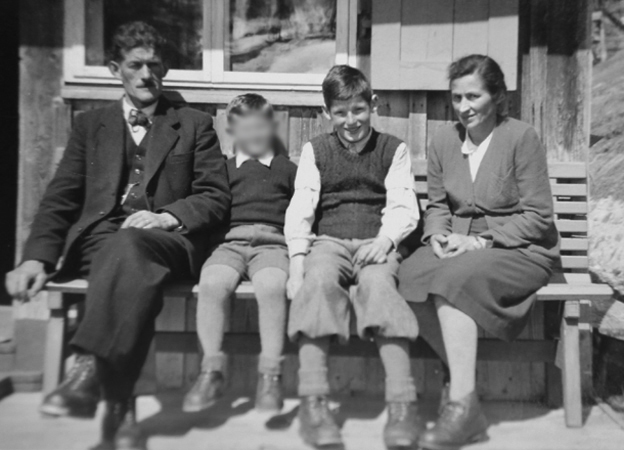
David with his foster family and another unidentified boy
#10275
Historians estimate there were hundreds of thousands such children. For one year alone in the 1930s, records show 30,000 children were placed in foster families across Switzerland.

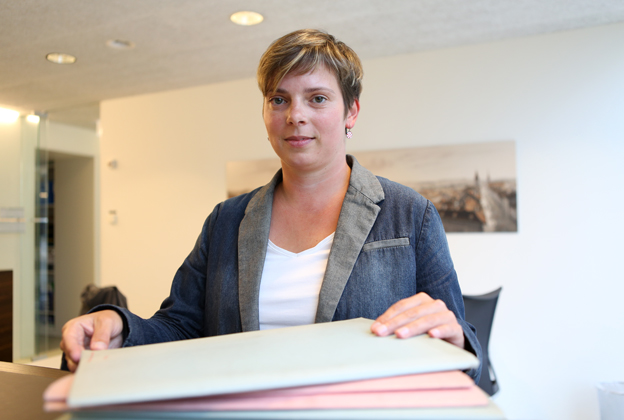
"It's hard to know precisely how many contract children there were as records were kept locally, and sometimes not at all," says Loretta Seglias. "Some children were also placed by private organisations, or their own families."

The extent to which these children were treated as commodities is demonstrated by the fact that there are cases even in the early 20th Century where they were herded into a village square and sold at public auction.

Seglias shows me some photographs. One child looks barely two - surely she couldn't be a contract child? "She could, she would be brushing floors bringing in the milk. Sometimes they came as babies on to the farms, and the bigger they grew the more work they would do," Seglias says.
#10278
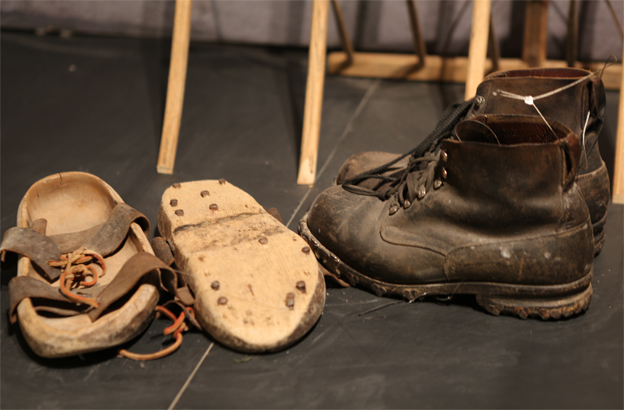
On the first day they were given overalls and perfectly fitting rubber boots, "because before the placement the woman from social services had even asked what size shoes we wore… When I think back I do believe there was an awareness that my brother and I would be made to work there."

Christian says there was work before and after school, at weekends and all year round. He remembers one incident, at a silo where cut grass was kept to make into silage. "In winter it was pretty frozen and I had to hack quite hard with the pitchfork and I was put under pressure and then this accident happened and the fork went through my toe."

He says work accidents were never reported to his mother or social services. And if the boys didn't work hard enough there were repercussions. Food was withheld as a form of punishment.

"My brother and I just went hungry at the time. When I think back there were five years during which we constantly went hungry. That's why my brother and I used to steal food," Christian says. He remembers they stole chocolate from the village shop - though he now thinks the owners knew the boys were hungry and let them take the goodies. A former teacher of Christian's at the local school says with hindsight he looked malnourished.

But Christian remembers there were also more serious consequences if he didn't work hard enough, including violence. "We were pretty much being driven to work," he says. "There were many beatings, slaps in the face, pulling of hair, tugging of ears - there was also one incident involving something like a mock castration."

Christian has no doubt why he and his brother were placed with the farmer. "I believe it was about cheap labour... we were profitable," he says. "They expanded the farm... it was five years of hard work."
#10279
There was no official decision to end the use of contract children. Seglias says it just naturally started to die out in the 1960s and 70s. As farming became mechanised, the need for child labour vanished. But Switzerland was changing too. Women got the vote in 1971 and attitudes towards poverty and single mothers moved on.

I found an exceptionally late case in a remote part of Switzerland. In 1979, Christian's mother was struggling. Recently divorced from a violent husband she needed support.


Christian with his mother


The state intervened and took her seven and eight-year-old sons to a farm many hours away by car. Christian remembers getting out of the car and watching his mother and the woman from social services driving off.

"My brother and I stood in front of the house feeling very lost and didn't know what to do… it was a strange moment, a moment you never forget," he says.
#10280
Dealing with the poor in this way she says was social engineering. If a parent dared to object, they could face measures themselves. "They could be put in prison or an institution where you would be made to work, so you could always put pressure on the parents."

Mostly it was farms that children were sent to, but not always. Sarah (not her real name) had been in institutions from birth, but in 1972, at the age of nine, she was sent to a home in a village, where she was expected to clean the house. She did that before and after school, and at night cleaned offices in nearby villages for her foster mother. She was beaten regularly by the mother, she says, and from the age of 11 was sexually abused by the sons at night.

This is the first time she has spoken about her story and her hands shake as she remembers. "The worst thing is that one sister, their daughter, once caught one of those boys... while I was asleep and she told the woman... [who said] that it didn't matter, I was just a slag anyway," Sarah says. A teacher and the school doctor wrote to the authorities, to express concern about her, but nothing was done.
#10282
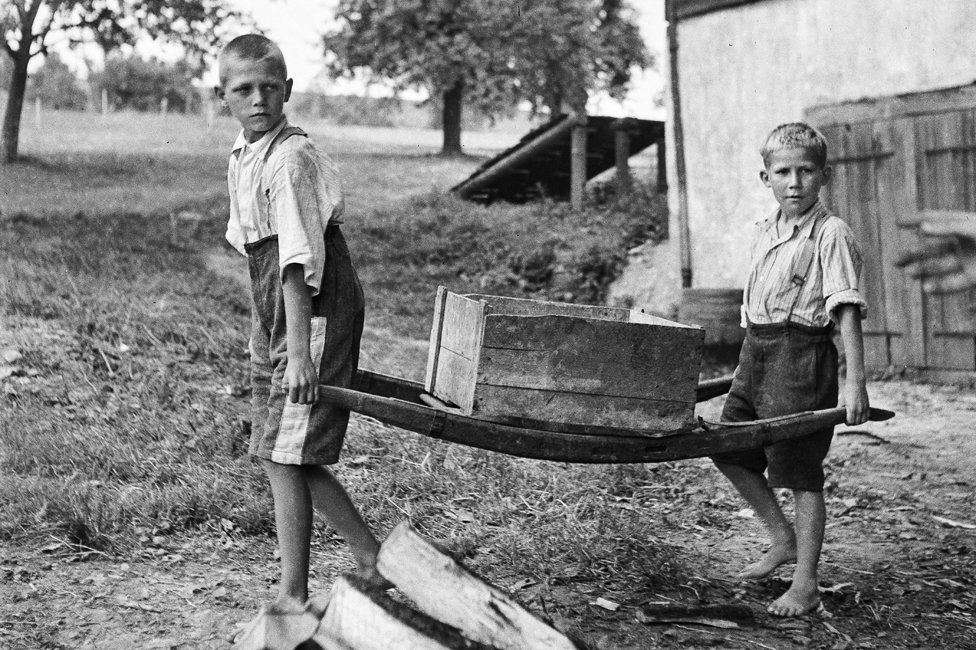
Gogniat, his brother and two sisters were "contract children" or verdingkinder as they are known in Switzerland. The practice of using children as cheap labour on farms and in homes began in the 1850s and it continued into the second half of the 20th Century. Historian Loretta Seglias says children were taken away for "economic reasons most of the time… up until World War Two Switzerland was not a wealthy country, and a lot of the people were poor". Agriculture was not mechanised and so farms needed child labour.


David Gogniat with his younger sister before they were taken away from their mother


If a child became orphaned, a parent was unmarried, there was fear of neglect, or you had the misfortune to be poor, the communities would intervene. Authorities tried to find the cheapest way to look after these children, so they took them out of their families and placed them in foster families.

"They wanted to take these children out of the poor family and put them somewhere else where they could learn how to work, as through work they could support themselves as adults," says Seglias.

#10284
He was taken to an old farmhouse and became the farmhand. He would wake before 06:00 and worked before and after school. His day finished after 22:00. This physically imposing man in his 70s looks vulnerable as he remembers the frequent violence from the foster father. "I would almost describe him as a tyrant... I was afraid of him. He had quite a temper and would hit me for the smallest thing," Gogniat says.

On one occasion, when he was older, he remembers he snapped, grabbed his foster father, pushed him against the wall and was about to hit him. The man threatened him: "If you hit me, I'll have you sent to an institution." David backed off.

His siblings were living with families in the nearby village, though he rarely saw them. He missed his mother desperately. They wrote and there were occasional visits. One day his mother made an audacious attempt to get her children back. She came up with an Italian couple in a Fiat Topolino and said she was taking his siblings for a walk. David wasn't there but it was the talk of the village when he came back that night. The police brought the children back three days later.

"The fact that my mother arranged to kidnap her own children and take them back home to Bern with her just goes to show how much she was struggling against the authorities," Gogniat says. On his mother's death he made a shocking discovery. He found papers which showed she had been paying money to the foster families for the upkeep of her four children, who had been forcibly taken away from her and were working as indentured labourers.
#10285
http://www.bbc.com/
29 October 2014
By Kavita Puri
Switzerland


Thousands of people in Switzerland who were forced into child labour are demanding compensation for their stolen childhoods. Since the 1850s hundreds of thousands of Swiss children were taken from their parents and sent to farms to work - a practice that continued well into the 20th Century.

David Gogniat heard a loud knock on the door. There were two policemen.

"I heard them shouting and realised something was wrong. I looked out and saw that my mother had pushed the policemen down the stairs," he says.

"She then came back in and slammed the door. The next day three policemen came. One held my mother and the other took me with them."

At the age of eight, he was in effect kidnapped and taken away to a farm. To this day he has no idea why.

For the first years of his life, he and his older brother and sisters lived alone with their mother. They were poor, but his childhood was happy until one day in 1946, when he came home from school to find his siblings had disappeared.

A year later it was his turn.
#10286
Philippine Photo Gallery / Re: Philippine news images
November 03, 2014, 01:36:34 PM

DAVAO. Nahinanok ang batang lalaki ibabaw sa pantiyon sa Catholic Cemetery kay bugnaw ang marmol nga iyang gihigdaan kagahapon. (Seth Delos Reyes)
#10287
Sa porma lang daan, morag lisod pildehon tawhana. Bisag si Bay Bugsay pa, maglisod ani niya...
#10288

Monday, October 27, 2014


Alabama â€" Matthew and Patricia Ayers will live out the rest of their lives in prison after having been given the maximum sentence of a combined 2,340 years, following their conviction for over 100 counts of producing child pornography.

U.S. District Judge L. Scott Coogler, who ruled in the couple’s case, called this “the worst case I have personally dealt with, including murders.”

The Alabama couple pleaded guilty to child pornography charges in June after victimizing a minor in their custody for three and a half years â€" between the summer of 2010 to January 2013, the Conservative Tribune reported.

Patricia Ayers was given 1,590 years in prison for 53 counts of producing child pornography and Matthew was sentenced to 750 years for 25 counts of the same crime.

In their plea agreement both Ayers acknowledged that they photographed the child in lewd and lascivious poses and that each took turns engaging in sex acts with the child while the other photographed the sick interactions, according to the report.
#10289
Philippine Photo Gallery / Grace under pressure
November 03, 2014, 01:20:33 PM

Post-demolition scene
#10291
Quote from: hubag bohol on November 03, 2014, 12:51:11 PM
Wala sab niya isalikway nga posibling “love triangle” ang motibo sa krimen kay mahulagway nga grabi ang kasuko sa nagbuhat niini unya giapil sa pagputol ang kinatawo niini.

“Malaking posibilidad na itong biktima mayroong ka relasyon na may asawa, so sa sobrang galit sa (suspect) pati kanyang ari pinutol nito. Galit na galit talaga,” dugang ni Delelis.

Maingon tang punga nga nag-alintabo jud ang kaligutgot. Tiaw moy ang duha jud ka ulo ang giabis ug gibulag gikan sa lawas.
#10292
Problema nila karon kay ang doktor dili mo-autopsy sa lawas sa biktima kon walay tagtungod.

Si PO3 Alfredo Barquin, imbestigador sa Toledo Police Station mibutyag sa Sun.Star Superbalita nga usa ka Paulin Versaga, uban sa iyang asawa maoy nakakita sa lawas.

Matod pa ni Versaga, nga padulong sila sa iyang asawa nga mamukot og tilapia sa usa ka “linaw” sa dapit dihang nakabantay silang dunay daghang pat-ak-pat-ak sa dugo diha sa dalan.

Gisubay nila ang maong dugo hangtod nga naabot sila sa kalibunan ug natultulan nila sa usa ka lungag nga may tulo ka tiil ang gilawmon diin ang biktima nag-ubo.

Ang lawas sa biktima gipahiluna karon sa Saint Francis Funeral Parlor sa dakbayan sa Toledo.
#10293
Wala sab niya isalikway nga posibling “love triangle” ang motibo sa krimen kay mahulagway nga grabi ang kasuko sa nagbuhat niini unya giapil sa pagputol ang kinatawo niini.

“Malaking posibilidad na itong biktima mayroong ka relasyon na may asawa, so sa sobrang galit sa (suspect) pati kanyang ari pinutol nito. Galit na galit talaga,” dugang ni Delelis.

Giklaro niini nga ilang ipadayon ang pagpangita sa ulo sa biktima aron kini mailhan sa mga tagtu­ngod. Nagtuo si Delelis nga gilabay ang kinatawo niini sa dakong linaw sa dam duol sa maong dapit.

Nanghinaot siya nga kadtong mga tawo nga dunay kaba­nay nga nawala mosusi niini sa usa ka punerarya diha sa dak­ayan sa Toledo aron ilang mailhan ang patayng lawas.

Gituohan usab nga niadtong Sabado sa gabii (adlaw sa mga Santos) gipatay ang biktima kay sa bana-bana nila mokabat na sa walo ka oras ang patayng lawas.
#10294
SuperBalita Cebu
Ni Guam P. Logroño
Sunday, November 2, 2014


WALA nay ulo ug kinatawo ang nakit-an nga usa ka hubong lawas sa lalaki nga gilabay sa kalibunan kagahapon sa alas 7:00 sa buntag sa bukirang lugar sa Sitio Makatol, Barangay Biga, dakbayan sa Toledo.

Si Supt. Ricky Delelis, hepe sa Toledo Police Station nga nahinabi sa dySS/Sun.Star Superbalita, nagkanayon nga ang biktima gibana-banang 30-50 anyos ug may lima ka tiil ang gitas-on nga dunay ta­ttoo nga bitin sa tuong dughan.

Samtang daghang mga samad dinunggaban sa lawas lakip sa bukobuko, ug nahabwa ang tina-i kay nakaangkog dakog samad diha sa tiyan nga daw sama sa usa ka baboy nga lapaunon.

Matod pa nga usa ka concerned citizen nitawag sa buhatan sa kapulisan ug mipahibalo kabahin sa usa ka tawong hubo, walay ulo ug wala na usay kinatawo nga napuno sa dinunggaban ang lawas.

Sumala ni Delelis nga maglisod sila sa pag-ila sa biktima sanglit walay identity ug way mi-claim hangtud ning pagsuwat.

Gituohan nga gipatay ang biktima sa laing dapit ug didto lang kini gilabay sa kalibunan sa nahisgutang lugar sanglit pwerting mingawa ang maong dapit.
#10295
Love Talk / Re: Mushy!
November 02, 2014, 06:35:19 PM


Agoroi, kagilok! ;D
#10296
Jokes and Humor / Bulaklak at paruparo
November 02, 2014, 06:21:28 PM
Mga Pinoy, Insik ug Hapon sa Saudi nagpustahay kon kinsay maka pronounce sa "Bulaklak at Paruparo".
Ang mga Pinoy mipusta ug dako sa ilang paisano.
Insik: "Bulaklak at Palupalo". Ang Insik pildi kay dili makalitok sa letra nga "R".
Hapon: "Burakrak at Paruparo". Ang hapon pildi kay dili makalitok sa letra nga "L".
Pinoy: "Buyakyak at Payupayo". Labaw pang pildi kay taga Surigao man diay ang kanahan.

Pastiyan! ;D
#10297
#10298
Family & Parenting / Re: 50 Payo Para sa Mag Asawa
November 02, 2014, 05:37:12 PM
Daghana pud ning 50, oi. Wa bay 1 o 2 lang? :P
#10299
Tira-Pasagad | Saksak-Sinagol / Tagam ang uwagon
November 02, 2014, 05:30:18 PM


:P
#10300
Tira-Pasagad | Saksak-Sinagol / Re: 3 Easy Ways To Die
November 02, 2014, 05:28:29 PM
Hmm, mushy! :)