 some political enemies simply fight better than others.
This section allows you to view all posts made by this member. Note that you can only see posts made in areas you currently have access to.
Pages 1 2 3 4 5 6 7 8 9 10 11 12 13 14 15 16 17 18 19 20 21 22 23 24 25 26 27 28 29 30 31 32 33 34 35 36 37 38 39 40 41 42 43 44 45 46 47 48 49 50 51 52 53 54 55 56 57 58 59 60 61 62 63 64 65 66 67 68 69 70 71 72 73 74 75 76 77 78 79 80 81 82 83 84 85 86 87 88 89 90 91 92 93 94 95 96 97 98 99 100 101 102 103 104 105 106 107 108 109 110 111 112 113 114 115 116 117 118 119 120 121 122 123 124 125 126 127 128 129 130 131 132 133 134 135 136 137 138 139 140 141 142 143 144 145 146 147 148 149 150 151 152 153 154 155 156 157 158 159 160 161 162 163 164 165 166 167 168 169 170 171 172 173 174 175 176 177 178 179 180 181 182 183 184 185 186 187 188 189 190 191 192 193 194 195 196 197 198 199 200 201 202 203 204 205 206 207 208 209 210 211 212 213 214 215 216 217 218 219 220 221 222 223 224 225 226 227 228 229 230 231 232 233 234 235 236 237 238 239 240 241 242 243 244 245 246 247 248 249 250 251 252 253 254 255 256 257 258 259 260 261 262 263 264 265 266 267 268 269 270 271 272 273 274 275 276 277 278 279 280 281 282 283 284 285 286 287 288 289 290 291 292 293 294 295 296 297 298 299 300 301 302 303 304 305 306 307 308 309 310 311 312 313 314 315 316 317 318 319 320 321 322 323 324 325 326 327 328 329 330 331 332 333 334 335 336 337 338 339 340 341 342 343 344 345 346 347 348 349 350 351 352 353 354 355 356 357 358 359 360 361 362 363 364 365 366 367 368 369 370 371 372 373 374 375 376 377 378 379 380 381 382 383 384 385 386 387 388 389 390 391 392 393 394 395 396 397 398 399 400 401 402 403 404 405 406 407 408 409 410 411 412 413 414 415 416 417 418 419 420 421 422 423 424 425 426 427 428 429 430 431 432 433 434 435 436 437 438 439 440 441 442 443 444 445 446 447 448 449 450 451 452 453 454 455 456 457 458 459 460 461 462 463 464 465 466 467 468 469
#901
Talk of the Town / Re: On Jim Paredes and Apo Hiking Society
April 25, 2019, 05:17:38 PM some political enemies simply fight better than others.
#902
Asia | Middle East / Re: Duterte threatens 'suicide mission' if Beijing oversteps in South China Sea
April 06, 2019, 06:09:13 PMAMTI noted that Thitu is only about 12 nautical miles (22 kilometers) from Subi Reef, one of the main places China has fortified in its recent buildup in the South China Sea.
The Philippines Foreign Ministry said on Thursday if the Chinese government didn't repudiate the actions of the fishing vessels in the vicinity of Thitu, it would be assumed to have directed them.
"The presence of Chinese vessels within the (island group), whether military, fishing or other vessels, will thus continue to be the subject of appropriate action by the Philippines," the statement said.
Duterte's administration has made threats of military action against Chinese troops in the South China Sea before which have come to nothing. In May 2018, his foreign minister threatened "war" if Beijing attempted to access the oil and gas reportedly buried beneath the sea.
https://edition.cnn.com/
#903
Asia | Middle East / Re: Duterte threatens 'suicide mission' if Beijing oversteps in South China Sea
April 06, 2019, 06:07:54 PM
Fishing vessels and naval ships
Philippines armed forces spokesperson Edgard Arevalo cautioned on Monday that it was difficult to quantify how many ships are around the island at any one time, as Chinese vessels "come and go" from the area.
In an article published in February, the Asia Maritime Transparency Initiative said the sudden increase in the number of ships between December and January appeared to be a response to reclamation and construction by the Philippines government.
"The fishing boats have mostly been anchored between 2 and 5.5 nautical miles west of Thitu, while the naval and coast guard ships operate slightly farther away to the south and west," the AMTI said in an article.
"The fishing vessels display all the hallmarks of belonging to China's maritime militia, including having no gear in the water that would indicate fishing activity and disabling their Automatic Identification System (AIS) transceivers to hide their activities."
#904
Asia | Middle East / Re: Duterte threatens 'suicide mission' if Beijing oversteps in South China Sea
April 06, 2019, 06:02:58 PMCompared with his predecessors, Duterte has viewed the dispute in the South China Sea as more negotiable than a matter of principle.
But China has been strengthening its hold over the region. In May 2018, Beijing announced it had successfully landed bombers on islands under its control for the first time, a big step in the militarization of the region.
The United States has also ramped up its freedom of navigation exercises in the region under US President Donald Trump, in an apparent attempt to hold back Chinese influence.
In a defiant statement to then-US Secretary of Defense James Mattis during a Beijing meeting in June 2018, President Xi Jinping said China wouldn't give up "any inch of territory."
#905
Asia | Middle East / Re: Duterte threatens 'suicide mission' if Beijing oversteps in South China Sea
April 06, 2019, 06:00:47 PMDiplomacy and intimidation
To reinforce its claims to the South China Sea, China has built and militarized artificial islands and has attempted to undermine other countries' positions through a combination of diplomacy and intimidation.
Its aggressive moves in the region had antagonized previous Philippine administrations, which took Beijing to court to prove its claims over the sea.
But relations between China and the Philippines have warmed considerably since the 2016 inauguration of Duterte, who has pushed for a closer economic relationship with Beijing.
"I need China. More than anybody else at this point, I need China," Duterte said before flying to China in April 2018.
#906
Asia | Middle East / Re: Duterte threatens 'suicide mission' if Beijing oversteps in South China Sea
April 06, 2019, 05:56:33 PMIndependent analysis by the Asia Maritime Transparency Initiative (AMTI) of the hundreds of vessels which have appeared around Thitu Island since January has determined they are composed of dozens of fishing vessels, as well as China Coast Guard ships and People's Liberation Army Navy ships.
When asked about the disputed island on Wednesday, Chinese Foreign Ministry spokesman Geng Shuang pointed to a meeting between Philippine and Chinese representatives to discuss a bilateral consultation mechanism to avoid South China Sea conflicts.
"I believe that the consensus reached by the two sides through discussion in this meeting is the best answer to your question," he said.
#907
Asia | Middle East / Re: Duterte threatens 'suicide mission' if Beijing oversteps in South China Sea
April 06, 2019, 05:53:08 PM
A satellite photo from December 20, 2018, showing the fleet of Chinese ships in the area around Thitu Island.
Tensions have risen since the start of 2019 in the South China Sea, one of the world's most disputed regions and an important shipping lane.
The Philippines and China each claim overlapping areas of the vast sea, along with multiple other countries including Vietnam, Malaysia and Brunei. The area where Thitu is located is also claimed by China as part of its territory.
The latest arrival of Chinese vessels around Thitu Island has provoked a stern response from Manila.
The Philippines Department of Foreign Affairs in a statement Thursday said their presence was "illegal" and a "clear violation of Philippine sovereignty."
"It has been observed that Chinese vessels have been present in large numbers and for sustained and recurring periods — what is commonly referred to as 'swarming' tactics — raising questions about their intent as well as concerns over their role in support of coercive objectives," the Philippine statement said.
#908
Asia | Middle East / Re: Duterte threatens 'suicide mission' if Beijing oversteps in South China Sea
April 06, 2019, 05:48:22 PMDuterte said his words were not a warning, but rather "advice to my friends."
"I will not plead or beg, but I'm just telling you that lay off the Pag-asa because I have soldiers there," he said, according to CNN Philippines.
CNN has reached out to the Philippines government for further comment.
A small Philippine military garrison as well as about 100 civilians are based on Thitu, which lies about 500 kilometers (310 miles) from Palawan, one of the islands that make up the Philippines.
#909
Asia | Middle East / Duterte threatens 'suicide mission' if Beijing oversteps in South China Sea
April 06, 2019, 05:47:43 PMDuterte threatens 'suicide mission' if Beijing oversteps in South China Sea
By Ben Westcott and Brad Lendon, CNN
April 5, 2019
Hong Kong (CNN)- Philippine President Rodrigo Duterte has threatened to send his troops on a "suicide mission" if Beijing doesn't "lay off" a Manila-occupied island in the South China Sea.
Duterte's speech at a rally in the city of Puerto Princesa in Palawan came days after the Philippine government claimed as many as 275 Chinese boats and ships had been spotted in recent months around Manila's Thitu Island in the Spratly Island chain.
"Let us be friends, but do not touch Pagasa Island and the rest," Duterte said, according to CNN Philippines, using the Philippine word Pagasa for Thitu.
"If you make moves there, that's a different story. I will tell my soldiers, 'Prepare for suicide mission'."


#913
Facts and Trivia / Re: The Takin of Bhutan
April 01, 2019, 01:03:19 PM
In height, takin stand 97 to 140 cm (38 to 55 in) at the shoulder, but measure a relatively short 160–220 cm (63–87 in) in head-and-body length, with the tail adding only an additional 12 to 21.6 cm (4.7 to 8.5 in). Measurements of weights vary, but according to most reports, the males are slightly larger, weighing 300–350 kg (660–770 lb) against 250–300 kg (550–660 lb) in females. Sources including Betham (1908) report that females are larger, with the largest captive takin known to the author, at 322 kg (710 lb), having been female. Takin can weigh up to 400 kg (880 lb) or 600 kg (1,300 lb) in some cases. (wikipedia)


#916
Facts and Trivia / The Takin of Bhutan
April 01, 2019, 12:47:43 PM
Takin is the largest goat antelope and is the national animal of Bhutan, found in the forested valleys of eastern Himalayas of India and Bhutan. Takin are found in small family groups and considered Vulnerable due to overhunting and the destruction of their natural habitat.
walkthroughindia.com/
#917
Inspiration & Hope / Re: The adorable blind dog with his own seeing-eye puppy
March 27, 2019, 02:03:43 AMThe new best friends have been documented sleeping, eating and playing together, and their owners Chelsea and Adam Stipe said they were instant friends.
"They're both pretty crazy and special. They're definitely our entertainment," Chelsea told NBC.

Chelsea said Maverick learnt quickly to adapt how he played to accommodate Charlie.
"Maverick would realise that Charlie would lose the toy sometimes, so he would pick it up and put it back in front of him to re-engage playtime."
https://www.newshub.co.nz
#918
Inspiration & Hope / The adorable blind dog with his own seeing-eye puppy
March 27, 2019, 01:50:58 AMThe adorable blind dog with his own seeing-eye puppy
26/03/2019
Alice Webb-Liddall

They're best pals. Photo credit: Instagram/Charlieandmav.
An adorable blind dog now has a seeing-eye pup of his own after losing both his eyes to glaucoma.
Charlie is an 11-year-old golden retriever who has become a social media sensation with his new friend, four-month-old pup, Maverick.
The two dogs are from North Carolina, and have amassed 92,700 followers on their shared Instagram page.
#919
Inspiration & Hope / Re: Return of the cat man of Aleppo
March 16, 2019, 01:36:36 PM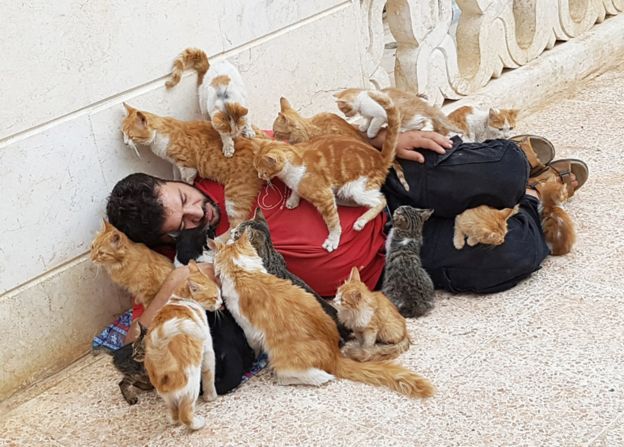
"It seems the world cannot solve wars and conflicts these days. That's why there are now so many refugees around the world, but especially here in the Middle East.
"I do not want to be a refugee. I want to stay in my country, in Syria. I want to help people in any way I can."
Diana Darke is the author, with Alaa Aljaleel, of The Last Sanctuary in Aleppo.
https://www.bbc.com/
#920
Inspiration & Hope / Re: Return of the cat man of Aleppo
March 16, 2019, 01:34:32 PM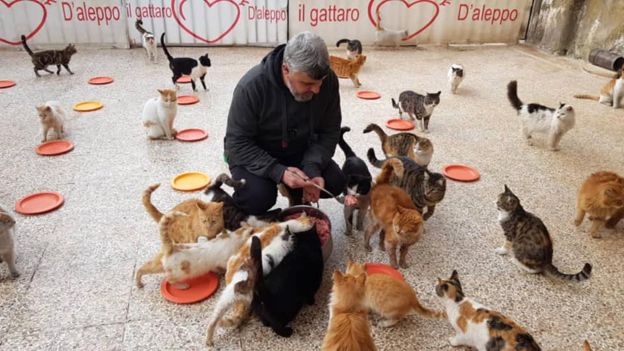
"I blame all fighting parties equally - no matter who they are or why they say they're fighting - for the killing of civilians," Alaa says.
"We are rebuilding our communities and my role in that is to rebuild my sanctuary for cats. Friendship between animals is a great thing and we should learn from them. I'll stay with them no matter what happens.
#921
Inspiration & Hope / Re: Return of the cat man of Aleppo
March 16, 2019, 01:33:30 PM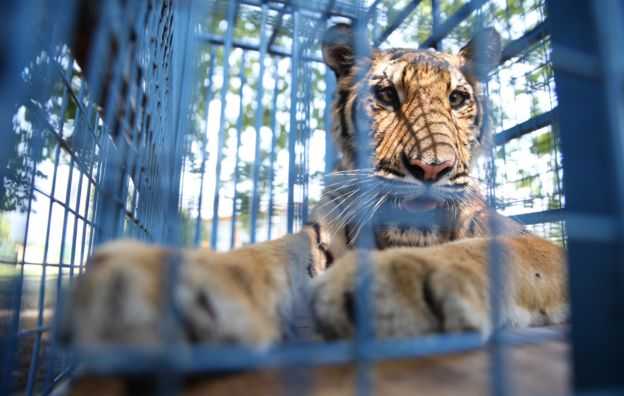
GETTY IMAGES
One of the rescued tigers, in transit through Turkey
In the new sanctuary he looks after 105 children, of whom 85 are "orphans" (in Syria the word covers children who have lost a breadwinner, as well as those who have lost both parents). Only 11 children actually sleep in the orphanage at present, because it isn't finished, but all receive education, food and clothes, for which Alaa pays 25 euros per month.
The biggest risk is the instability in the region. Clashes break out periodically, as it's close to the border with Idlib province, which is controlled by rebel groups who often fight each other. No-one knows what will happen next to that part of Syria and who will end up in charge.
#922
Inspiration & Hope / Re: Return of the cat man of Aleppo
March 16, 2019, 01:31:50 PM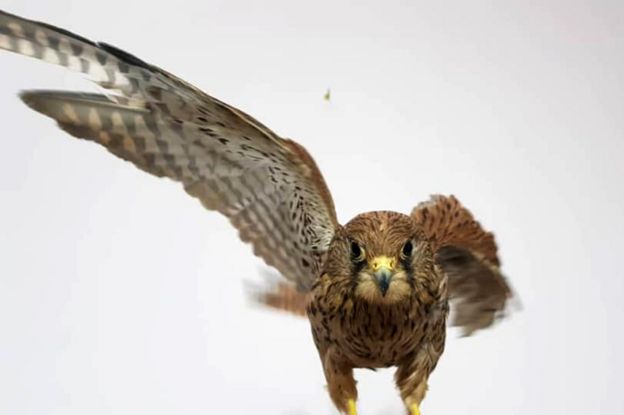
... and a resident bird of prey
In 2017 he was called by the Magic World Zoo, south of Aleppo, which asked desperately for his help to feed the neglected lions, tigers and bears - which he did, despite the dangers of the journey which involved passing through Jabhat al-Nusra checkpoints. While there, he discovered he had been recommended by the Syrian Ministry of Agriculture.
"It was funny that the ministry knew about us and was handing over responsibility for the zoo animals to us," he says. "The Magic World Zoo gave me a lot of headaches."
Alaa was eventually able to negotiate a solution for the animals with a charity called Four Paws, which arranged for the animals that hadn't died to be transported out of Syria to new homes in Belgium, the Netherlands and Jordan.
#923
Inspiration & Hope / Re: Return of the cat man of Aleppo
March 16, 2019, 01:30:06 PM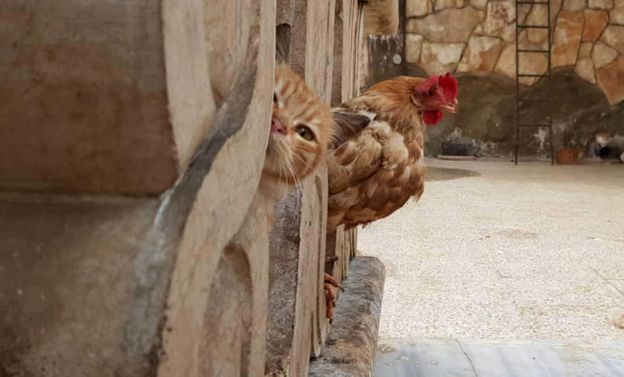
... a cockerel that behaves like a cat...
A large ginger tomcat was given a Trump hairstyle and christened The Orange President of the Sanctuary. A pair of speedy acrobatic cats were called Sukhoi 25 and Sukhoi 26, after Russian fighter jets.
"They're old planes, but effective enough for the job required of them in Syria. We always knew when the Russians were coming to bomb us because of their very loud engine noise. We'd shout: 'Watch out! A Sukhoi is coming!'"
Alaa's reputation inside Syria has travelled far and wide, and the government is well aware of his activities.
#924
Inspiration & Hope / Re: Return of the cat man of Aleppo
March 16, 2019, 01:28:28 PM"There are so few thoroughbred horses left inside Syria now that I worry about finding him a mare to breed with. I plan to perform the role of a traditional Syrian mother and try to find him a wife, so that he can have children and start building up the population of thoroughbred horses in Syria again," Alaa says.
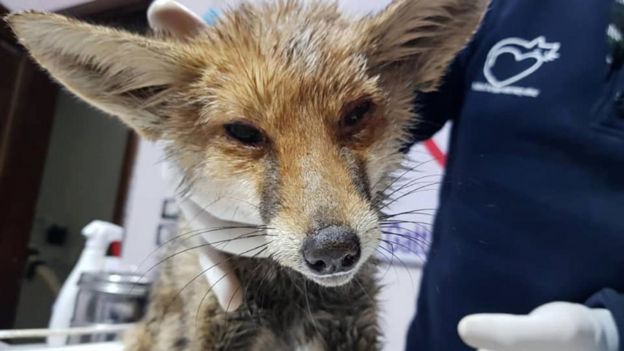
An injured fox, rescued by the sanctuary...
All the animals have names, generally awarded by Alaa. An aggressive black-and-white cat who came to the sanctuary, stole food and terrified all the other cats was nicknamed al-Baghdadi, after the Iraqi leader of Islamic State (IS).
"Of course, this cat was a million times better than that evil murderer al-Baghdadi, but this name came to mind because his presence in the sanctuary coincided with the arrival of IS gangs in Aleppo," Alaa says.
#925
Inspiration & Hope / Re: Return of the cat man of Aleppo
March 16, 2019, 01:21:05 PMAlaa wears a T-shirt with "Maxi's Slave" written on it, and gets ticked off for smoking too much or for not cooking gourmet meals. He admits his shortcomings. "We submit to Maxi's authority as the ruler of his kingdom. But even with Maxi's leadership it wasn't easy to launch the new sanctuary," he says.
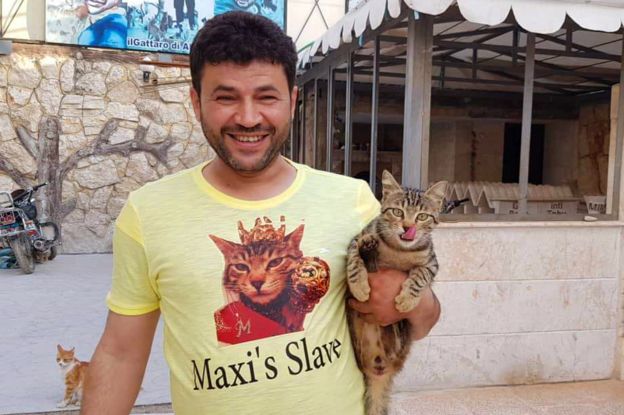
This is an understatement. The rebel-held area where Alaa now lives is semi-lawless and when powerful gangs realised he was receiving funds for the sanctuary, they attempted to kidnap him. He was no longer being bombed, but his life was still at risk.
As well as cats, the new sanctuary has dogs, monkeys, rabbits, a chicken that thinks it's a cat, and an Arabian thoroughbred horse.
#926
Inspiration & Hope / Re: Return of the cat man of Aleppo
March 16, 2019, 01:17:58 PM"Our Prophet Muhammad was good to everybody. He spoke with all Christians and Jews. I believe in Moses, Jesus and Muhammad, because all of them had a noble aim. I'm a Muslim, but I am not a fanatic. I just take from religion everything that's good and that I can learn things from," Alaa says.
Despite the difficulties he has endured, Alaa has always maintained a wicked sense of humour. At the new sanctuary, a tabby called Maxi the Marketing King is chief fundraiser, soliciting "green kisses" in the form of dollar bills via social media accounts.
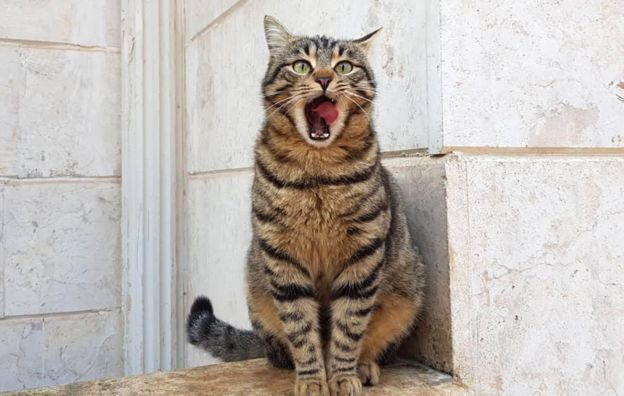
Maxi, chief fundraiser
#927
Inspiration & Hope / Re: Return of the cat man of Aleppo
March 16, 2019, 01:15:33 PM"Of course I would never have wished for a war in order to make my dream come true. I wish I could have achieved these things without the suffering I have seen," he says.
"God blessed me by putting me in a position where I could help people by being a rescue man, but in my worst nightmares I never imagined a war like this for my people or for my country, or even for a single animal."
During the siege in Aleppo he used to visit both Christian and Muslim old people's homes, distributing food. Extremist groups such as al-Qaeda-affiliated Jabhat al-Nusra regularly chided him, calling him a kaafir, an unbeliever, but he continued regardless.
GETTY IMAGES
#928
Inspiration & Hope / Re: Return of the cat man of Aleppo
March 16, 2019, 01:14:09 PMHe worked hard and he learned how to get things done. "May the dust turn to gold in your hands, Alaa," his mother used to say.
His dream was to become a fireman like his father and work in search and rescue, but such jobs were handed out only to those with connections, and the connection through his father was not enough. So for years his applications were rejected.
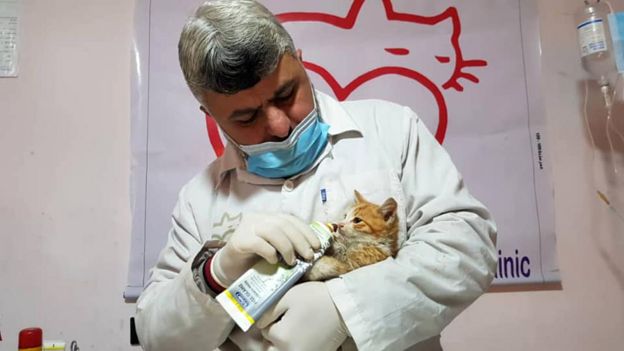
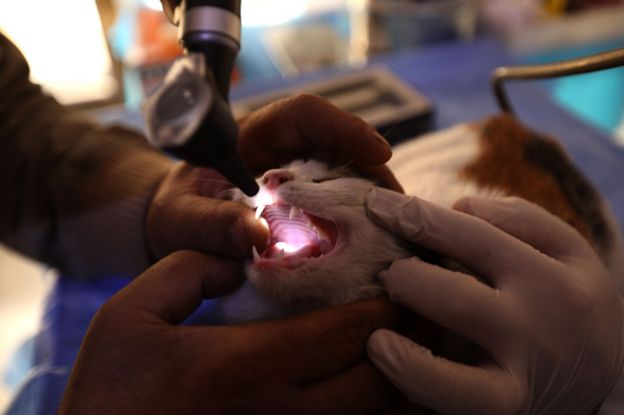
The sanctuary's vet, Dr Youssef
#929
Inspiration & Hope / Re: Return of the cat man of Aleppo
March 16, 2019, 01:12:46 PMAs a boy growing up in Aleppo, Alaa had always looked after cats, spurring his friends to do likewise, even though keeping cats and dogs as pets is not customary in Syria or the rest of the Arab world.
He started working aged 13, as an electrician, but also turned his hand to many other jobs - painter, decorator, IT expert, satellite-dish installer... he even traded toys between Lebanon and Syria.
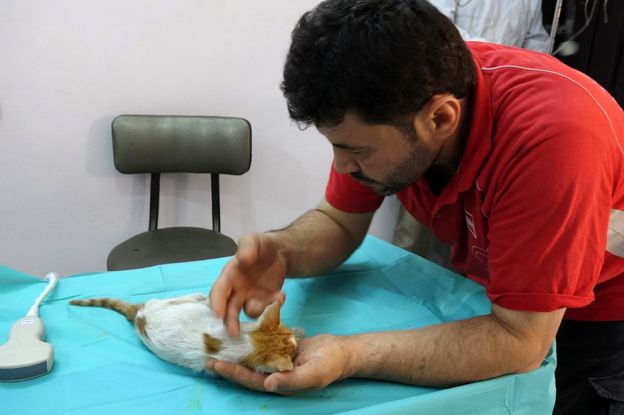
GETTY IMAGES
#930
Inspiration & Hope / Re: Return of the cat man of Aleppo
March 16, 2019, 01:09:45 PMThe new sanctuary has expanded to include an orphanage, a kindergarten and a veterinary clinic. Alaa and his team resemble a small development agency, providing services that government and international charities cannot or will not. He strongly believes that helping children to look after vulnerable animals teaches them the importance of kindness to all living creatures, and helps to heal their own war traumas.
"Children and animals are the big losers in the Syrian war," he says. "It's the adults who so often behave badly."
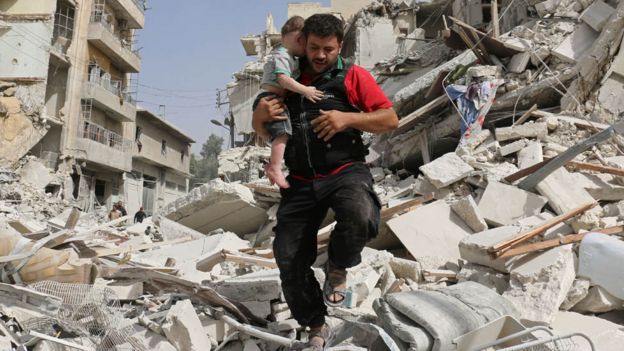
GETTY IMAGES
Alaa rescues a child from rubble in Aleppo in 2016
#931
Inspiration & Hope / Re: Return of the cat man of Aleppo
March 16, 2019, 01:07:15 PMUsing the same crowdfunding model employed successfully in east Aleppo, funds were sent in by cat-lovers from all over the world via Facebook and Twitter.
But Alaa has always worked for the benefit of the community, as well as the cats themselves.
In Aleppo, he and his team of helpers bought generators, dug wells and stockpiled food. Even at the height of the bombing, they ran animal welfare courses for children, to develop their empathy. They also set up a playground next to the sanctuary where children could briefly escape from the apocalyptic events taking place all around them.
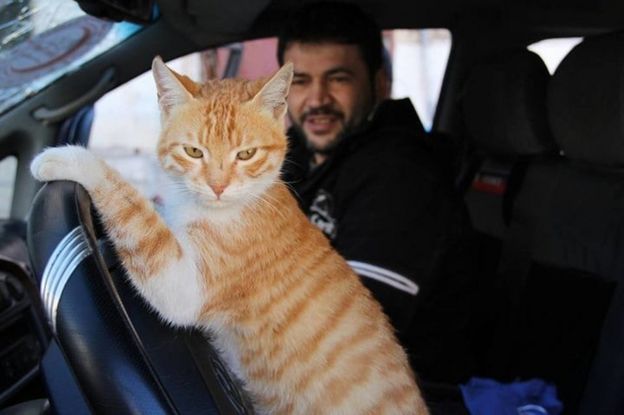
Alaa and a cat called Ernesto
#932
Inspiration & Hope / Re: Return of the cat man of Aleppo
March 16, 2019, 01:05:43 PMWhen the city fell in December 2016, he left in a convoy, his van crammed full of injured people and the last six cats from the sanctuary.
"I've always felt it's my duty and my pleasure to help people and animals whenever they need help," Alaa says. "I believe that whoever does this will be the happiest person in the world, besides being lucky in his life."
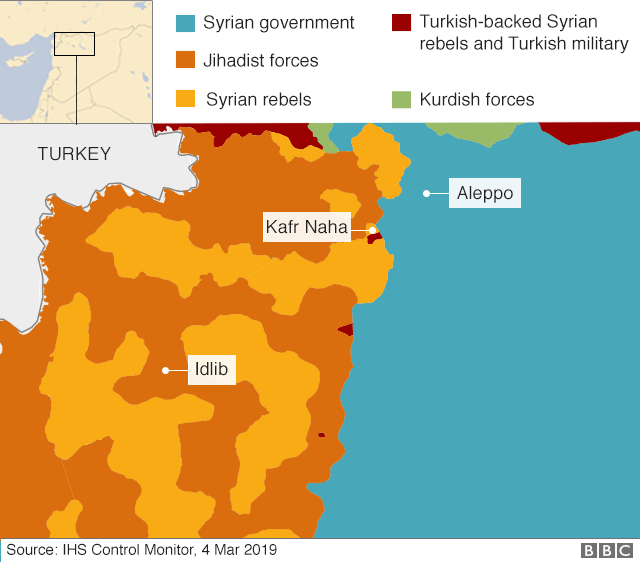
After a brief recuperation in Turkey, he smuggled himself back into Syria - bringing a Turkish cat with him for company - and established a new cat sanctuary, bigger and better than the first one, in Kafr Naha, a village in opposition-held countryside west of Aleppo.
#933
Inspiration & Hope / Return of the cat man of Aleppo
March 16, 2019, 01:02:31 PMReturn of the cat man of Aleppo
7 March 2019
The cat man of Aleppo, Mohammad Aljaleel, touched the hearts of millions when his sanctuary featured in a BBC video in 2016 (above). He had to leave the city when it fell to Syrian government forces, but he's now back - in an area nearby - and helping children as well as animals, reports Diana Darke.
Just weeks after the video was filmed, Mohammad Aljaleel (known to everyone as Alaa) watched helplessly as his cat sanctuary was first bombed, then chlorine-gassed, during the intense final stages of the siege of Aleppo.
GETTY IMAGES
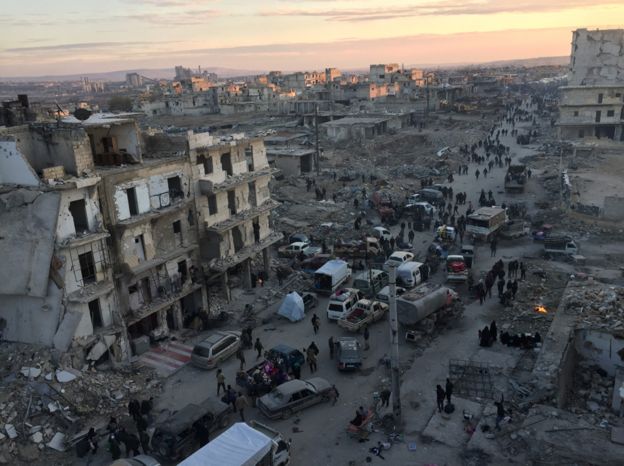
The evacuation of east Aleppo in December 2016
Most of his 180 cats were lost or killed. Like thousands of other civilians he was trapped in the eastern half of the city under continuous bombardment from Russian and Syrian fighter jets.
As the siege tightened, he was forced from one Aleppo district to another, witnessing unimaginable scenes of devastation. Yet throughout, he continued to look after the few surviving cats and to rescue people injured in the bombing, driving them to underground hospitals.


#935
Tira-Pasagad | Saksak-Sinagol / Re: 8 of History's Greatest Cat Ladies
March 14, 2019, 01:27:05 PM8. Harriet Beecher Stowe

Getty Images (Stowe) / iStock (Cat)
The famous author of Uncle Tom's Cabin owned an assertive Maltese cat named after her husband, Calvin. According to Stowe's friend and fellow writer, Charles Dudley Warner, Calvin "walked into her house one day out of the great unknown and became at once at home." Stowe was immensely attached to Calvin the cat, and supposedly she even allowed him to perch on her shoulder while she wrote. When Stowe and her husband had to move, she gave Calvin to Warner, and the cat went on to become the star of Warner's essay, "Calvin (A Study in Character)."
http://mentalfloss.com/
#936
Tira-Pasagad | Saksak-Sinagol / Re: 8 of History's Greatest Cat Ladies
March 14, 2019, 01:25:25 PM7. Louisa May Alcott

Getty Images (Alcott) / iStock (Cat)
Louisa May Alcott once jokingly listed an "inordinate love of cats" among her vices, and her fondness of felines shone through her writing. In Little Women, the March sisters have a pet cat, and at one point in the story Beth is seen playing with the cat and her kittens. The book even includes a poem called "A Lament (For S.B. Pat Paw)" eulogizing a beloved pet cat: "We mourn the loss of our little pet, / And sigh o'er her hapless fate, / For never more by the fire she'll sit, / Nor play by the old green gate."
#937
Tira-Pasagad | Saksak-Sinagol / Re: 8 of History's Greatest Cat Ladies
March 14, 2019, 01:23:26 PM6. Florence Nightingale

Getty Images (Nightingale) / iStock (Cat)
Florence Nightingale, often regarded as the founder of modern nursing, took the term "cat lady" to new levels. Nightingale once said that "cats possess more sympathy and feeling than human beings," and throughout her lifetime she owned over 60 cats—perhaps as many as 17 at once. Nightingale was a devoted caretaker for her feline friends, who ate specially prepared food off of china plates in her room. Evidence of Nightingale's affection for her cats can still be seen today, as some of her kitties left ink paw prints on her letters.
#938
Tira-Pasagad | Saksak-Sinagol / Re: 8 of History's Greatest Cat Ladies
March 14, 2019, 01:20:14 PM3., 4., and 5. Charlotte, Emily, and Anne Bronte

Getty Images (Bronte Sisters) / (Cat)
The famous Bronte sisters not only shared a love of writing, but also a love of cats. Felines are featured in many of the sisters' writings, including Agnes Grey and Wuthering Heights, as well as in the personal diaries of Anne and Charlotte. Emily Bronte even wrote a French essay entitled "Le Chat" ("The Cat"), in which she defends cats against those who argue that they are selfish and cruel, asserting that the disposition of cats is quite similar to that of humans and even arguing that the self-reliance of cats is better than the hypocrisy of humanity.
#939
Tira-Pasagad | Saksak-Sinagol / Re: 8 of History's Greatest Cat Ladies
March 14, 2019, 01:16:27 PM2. Clara Barton

Wikimedia Commons (Barton) / iStock (Cat)
Clara Barton, the famous nurse and founder of the Red Cross, was an animal lover with a particular affinity for felines. During the Civil War, Barton earned the nickname "Angel of the Battlefield," and in appreciation for her selfless work, U.S. Senator Schuyler Colfax sent Barton a kitten. Barton's most beloved cat was the black and white Tommy, who kept her company for 17 years. A portrait of Tommy painted by Barton's friend and fellow nurse Antoinette Margot still hangs in the Barton house in Glen Echo, Maryland.
#940
Tira-Pasagad | Saksak-Sinagol / Re: 8 of History's Greatest Cat Ladies
March 14, 2019, 01:14:12 PM1. Vivien Leigh
Vivien Leigh, the English actress who starred in the 1939 adaptation of Gone with the Wind, owned multiple cats throughout her life. She was particularly fond of Siamese cats, and she is quoted as saying, "Once you have kept a Siamese cat you would never have any other kind." Leigh's first Siamese, called New Boy, was a gift from her husband, actor Laurence Olivier. New Boy (named after London's New Theatre) wore a custom collar imported from Paris and appears in many photographs with Leigh. Poo Jones, the seal point Siamese she adopted after New Boy's death, was Leigh's favorite cat. He traveled with her everywhere (with his own luggage) and napped in her dressing room whenever she was working onstage or in front of the camera.
#941
Tira-Pasagad | Saksak-Sinagol / 8 of History's Greatest Cat Ladies
March 14, 2019, 01:12:39 PM8 of History's Greatest Cat Ladies
COLLEGE WEEKEND

GETTY IMAGES (VIVIEN LEIGH) / ISTOCK (CAT)
by Kalli Damschen
When most people think of the stereotypical cat lover, they may picture someone resembling the character from The Simpsons known simply as the Crazy Cat Lady—an insane, grizzled old woman who speaks in gibberish and throws cats at innocent passersby. And although the stereotype of the crazy cat lady is far from flattering, several of history's most successful women were devoted to their furry friends. Here are eight of history's greatest cat ladies.
#942
Health and Food / Re: Fifteen natural ways to lower your blood pressure
March 09, 2019, 01:32:00 PMTake Home Message
High blood pressure affects a large proportion of the world's population.
While drugs are one way to treat the condition, there are many other natural techniques that can help.
Controlling your blood pressure through the methods in this article may, ultimately, help you lower your risk of heart disease.
https://www.medicalnewstoday.com/
#943
Health and Food / Re: Fifteen natural ways to lower your blood pressure
March 09, 2019, 01:30:45 PM15. Eat foods rich in magnesium
Magnesium is an important mineral that helps blood vessels relax.
While magnesium deficiency is pretty rare, many people don't get enough.
Some studies have suggested that getting too little magnesium is linked with high blood pressure, but evidence from clinical studies has been less clear.
Still, eating a magnesium-rich diet is a recommended way to ward off high blood pressure.
You can incorporate magnesium into your diet with vegetables, dairy products, legumes, chicken, meat and whole grains.
Bottom Line: Magnesium is an important mineral that helps regulate blood pressure. Find it in whole foods, such as legumes and whole grains.
#944
Health and Food / Re: Fifteen natural ways to lower your blood pressure
March 09, 2019, 01:27:23 PM14. Take natural supplements
Some natural supplements may also help lower blood pressure. Here are some of the main supplements that have evidence behind them:
Aged garlic extract: Aged garlic extract has been used successfully as a stand-alone treatment and along with conventional therapies for lowering blood pressure.
Berberine: Traditionally used in Ayurvedic and Chinese medicine, berberine may increase nitric oxide production, which helps decrease blood pressure.
Whey protein: A 2016 study found that whey protein improved blood pressure and blood vessel function in 38 participants.
Fish oil: Long credited with improving heart health, fish oil may benefit people with high blood pressure the most.
Hibiscus: Hibiscus flowers make a tasty tea. They're rich in anthocyanins and polyphenols that are good for your heart and may lower blood pressure.
Bottom Line: Several natural supplements have been investigated for their ability to lower blood pressure.
#945
Health and Food / Re: Fifteen natural ways to lower your blood pressure
March 09, 2019, 01:24:11 PM13. Eat calcium-rich foods
People with low calcium intake often have high blood pressure.
While calcium supplements haven't been conclusively shown to lower blood pressure, calcium-rich diets do seem linked to healthy levels.
For most adults, the calcium recommendation is 1,000 mg per day. For women over 50 and men over 70, it's 1,200 mg per day.
In addition to dairy, you can get calcium from collard greens and other leafy greens, beans, sardines and tofu.
Bottom Line: Calcium-rich diets are linked to healthy blood pressure levels. Get calcium through dark leafy greens and tofu, as well as dairy.

#946
Health and Food / Re: Fifteen natural ways to lower your blood pressure
March 09, 2019, 01:18:07 PM12. Try meditation or deep breathing
While these two behaviors could also fall under "stress reduction techniques," meditation and deep breathing deserve specific mention.
Both meditation and deep breathing are thought to activate the parasympathetic nervous system. This system is engaged when the body relaxes, slowing the heart rate and lowering blood pressure.
There's quite a bit of research in this area, with studies showing that different styles of meditation appear to have benefits for lowering blood pressure.
Deep breathing techniques can also be quite effective.
In one study, participants were asked to either take six deep breaths over the course of 30 seconds or to simply sit still for 30 seconds. Those who took breaths lowered their blood pressure more than those who just sat.
Try guided meditation or deep breathing. Here's a video to get you started.
Bottom Line: Both meditation and deep breathing can activate the parasympathetic nervous system, which helps slow your heart rate and lower blood pressure.
#947
Health and Food / Re: Fifteen natural ways to lower your blood pressure
March 09, 2019, 01:16:24 PM11. Eat berries
Berries are full of more than just juicy flavor.
They're also packed with polyphenols, natural plant compounds that are good for your heart.
One small study had middle-aged people eat berries for eight weeks.
Participants experienced improvements in different markers of heart health, including blood pressure.
Another study assigned people with high blood pressure to a low-polyphenol diet or a high-polyphenol diet containing berries, chocolate, fruits and vegetables.
Those consuming berries and polyphenol-rich foods experienced improved markers of heart disease risk.
Bottom Line: Berries are rich in polyphenols, which can help lower blood pressure and the overall risk of heart disease.
#948
Health and Food / Re: Fifteen natural ways to lower your blood pressure
March 09, 2019, 01:14:52 PM10. Cut added sugar and refined carbs
There's a growing body of research showing a link between added sugar and high blood pressure.
In the Framingham Women's Health Study, women who drank even one soda per day had higher levels than those who drank less than one soda per day.
Another study found that having one less sugar-sweetened beverage per day was linked to lower blood pressure.
And it's not just sugar - all refined carbs, such as the kind found in white flour, convert rapidly to sugar in your bloodstream and may cause problems.
Some studies have shown that low-carb diets may also help reduce blood pressure.
One study on people undergoing statin therapy found that those who went on a six-week, carb-restricted diet saw a greater improvement in blood pressure and other heart disease markers than people not on a diet.
Bottom Line: Refined carbs, especially sugar, may raise blood pressure. Some studies have shown that low-carb diets may help reduce your levels.
#949
Health and Food / Re: Fifteen natural ways to lower your blood pressure
March 09, 2019, 01:12:29 PM9. Quit smoking
Among the many reasons to quit smoking is that the habit is a strong risk factor for heart disease.
Every puff of cigarette smoke causes a slight, temporary increase in blood pressure. The chemicals in tobacco are also known to damage blood vessels.
Surprisingly, studies haven't found a conclusive link between smoking and high blood pressure. Perhaps this is because smokers develop a tolerance over time.
Still, since both smoking and high blood pressure raise the risk of heart disease, quitting smoking can help reverse that risk.
Bottom Line: There's conflicting research about smoking and high blood pressure, but what is clear is that both increase the risk of heart disease.

#950
Health and Food / Re: Fifteen natural ways to lower your blood pressure
March 09, 2019, 01:03:22 PM8. Lose weight
If you're overweight, losing weight can make a big difference for your heart health.
According to a 2016 study, losing 5% of your body mass could significantly lower high blood pressure.
In previous studies, losing 17 pounds (7.7 kg) was linked to lowering systolic blood pressure by 8.5 mm Hg and diastolic blood pressure by 6.5 mm Hg.
To put that in perspective, a healthy reading should be less than 120/80 mm Hg.
The effect is even greater when weight loss is paired with exercise.
Losing weight can help your blood vessels do a better job of expanding and contracting, making it easier for the left ventricle of the heart to pump blood.
Bottom Line: Losing weight can significantly lower high blood pressure. This effect is even greater when you exercise.
#951
Health and Food / Re: Fifteen natural ways to lower your blood pressure
March 09, 2019, 01:01:37 PM7. Eat dark chocolate or cocoa
Here's a piece of advice you can really get behind.
While eating massive amounts of chocolate probably won't help your heart, small amounts may.
That's because dark chocolate and cocoa powder are rich in flavonoids, plant compounds that cause blood vessels to dilate.
A review of studies found that flavonoid-rich cocoa improved several markers of heart health over the short term, including lowering blood pressure.
For the strongest effects, use non-alkalized cocoa powder, which is especially high in flavonoids and has no added sugars.
Bottom Line: Dark chocolate and cocoa powder contain plant compounds that help relax blood vessels, lowering blood pressure.
#952
Health and Food / Re: Fifteen natural ways to lower your blood pressure
March 09, 2019, 12:59:52 PM6. Learn to manage stress
Stress is a key driver of high blood pressure.
When you're chronically stressed, your body is in a constant fight-or-flight mode. On a physical level, that means a faster heart rate and constricted blood vessels.
When you experience stress, you might also be more likely to engage in other behaviors, such as drinking alcohol or eating unhealthy food, that can negatively affect blood pressure.
Several studies have explored how reducing stress can help lower blood pressure. Here are two evidence-based tips to try:
Listen to soothing music: Calming music can help relax your nervous system. Research has shown it's an effective complement to other blood pressure therapies.
Work less: Working a lot, and stressful work situations in general, are linked to high blood pressure.
Bottom Line: Chronic stress can contribute to high blood pressure. Finding ways to manage stress can help.
#953
Health and Food / Re: Fifteen natural ways to lower your blood pressure
March 09, 2019, 12:56:16 PM5. Cut back on caffeine
If you've ever downed a cup of coffee before you've had your blood pressure taken, you'll know that caffeine causes an instant boost.
However, there's not a lot of evidence to suggest that drinking caffeine regularly can cause a lasting increase.
In fact, people who drink caffeinated coffee and tea tend to have a lower risk of heart disease, including high blood pressure, than those who don't.
Caffeine may have a stronger effect on people who don't consume it regularly.
If you suspect you're caffeine-sensitive, cut back to see if it lowers your blood pressure.
Bottom Line: Caffeine can cause a short-term spike in blood pressure, although for many people it does not cause a lasting increase.
#954
Health and Food / Re: Fifteen natural ways to lower your blood pressure
March 09, 2019, 12:53:36 PM4. Eat more potassium-rich foods
Potassium is an important mineral.
It helps your body get rid of sodium and ease pressure on your blood vessels.
Modern diets have increased most people's sodium intake while decreasing potassium intake.
To get a better balance of potassium to sodium in your diet, focus on eating fewer processed foods and more fresh, whole foods.
Foods that are particularly high in potassium include:
#Vegetables, especially leafy greens, tomatoes, potatoes and sweet potatoes
#Fruit, including melons, bananas, avocados, oranges and apricots
#Dairy, such as milk and yogurt
#Tuna and salmon
#Nuts and seeds
#Beans
Bottom Line: Eating fresh fruits and vegetables, which are rich in potassium, can help lower blood pressure.
#955
Health and Food / Re: Fifteen natural ways to lower your blood pressure
March 09, 2019, 12:45:18 PM3. Drink less alcohol
Drinking alcohol can raise blood pressure. In fact, alcohol is linked to 16% of high blood pressure cases around the world.
While some research has suggested that low-to-moderate amounts of alcohol may protect the heart, those benefits may be offset by negative effects.
In the US, moderate alcohol consumption is defined as no more than one drink a day for women and two for men. If you drink more than that, cut back.
Bottom Line: Drinking alcohol in any quantity may raise your blood pressure. Limit your drinking to no more than one drink a day for women, two for men.
#956
Health and Food / Re: Fifteen natural ways to lower your blood pressure
March 09, 2019, 12:43:45 PM2. Reduce your sodium intake
Salt intake is high around the world. In large part, this is due to processed and prepared foods.
For this reason, many public health efforts are aimed at lowering salt in the food industry.
In many studies, salt has been linked to high blood pressure and heart events, like stroke.
However, more recent research indicates that the relationship between sodium and high blood pressure is less clear.
One reason for this may be genetic differences in how people process sodium. About half of people with high blood pressure and a quarter of people with normal levels seem to have a sensitivity to salt.
If you already have high blood pressure, it's worth cutting back your sodium intake to see if it makes a difference. Swap out processed foods with fresh ones and try seasoning with herbs and spices, rather than salt.
Bottom Line: Most guidelines for lowering blood pressure recommend lowering sodium intake. However, that recommendation might make the most sense for people who are salt-sensitive.
#957
Health and Food / Re: Fifteen natural ways to lower your blood pressure
March 09, 2019, 12:34:36 PM1. Walk and exercise regularly
Exercise is one of the best things you can do to lower high blood pressure.
Regular exercise helps make your heart stronger and more efficient at pumping blood, which lowers the pressure in your arteries.
In fact, 150 minutes of moderate exercise, such as walking, or 75 minutes of vigorous exercise, such as running, per week can help lower blood pressure and improve your heart health.
What's more, doing even more exercise reduces your blood pressure even further, according to the National Walkers' Health Study.
Bottom Line: Walking just 30 minutes a day can help lower your blood pressure. More exercise helps reduce it even further.

#958
Health and Food / Fifteen natural ways to lower your blood pressure
March 09, 2019, 12:24:34 PMFifteen natural ways to lower your blood pressure
Kerri-Ann Jennings, MS, RD
High blood pressure is a dangerous condition that can damage your heart. It affects one in three people in the US and 1 billion people worldwide.
If left uncontrolled, it raises your risk of heart disease and stroke.
Fifteen remedies
But there's good news. There are a number of things you can do to lower your blood pressure naturally, even without medication.
Here are 15 natural ways to combat high blood pressure.
#959
Philippine Government / Re: Marcos as Paul Manafort client
March 09, 2019, 09:01:59 AMRick Davis declared their firm to be mostly "in the deal business," according to James Harding's 2008 book, Alpha Dogs: The Americans Who Turned Political Spin Into a Global Business. "The thing I love," Davis said, "is that the political elites and the economic elites in every other country but the United States of America are the same." The elected officials and the people "running the elections are the richest people in the country, who own all the assets."
https://www.theatlantic.com/
#960
Philippine Government / Re: Marcos as Paul Manafort client
March 09, 2019, 08:48:39 AM
Ferdinand Marcos (left), Viktor Yanukovych (center), and Jonas Savimbi (right) are among the many strongmen whom Manafort has advised and assisted. (AP; Dmitry Azarov / Kommersant Photo; Selwyn Tait / Getty)
https://www.theatlantic.com/
#961
Philippine Government / Marcos as Paul Manafort client
March 09, 2019, 01:41:44 AMSourced from "Paul Manafort, American Hustler", The Atlantic March 2019 issue:
[...]The firm's international business accelerated when the Philippines became a client, in 1985. President Ferdinand Marcos desperately needed a patina of legitimacy: The 1983 assassination of the chief opposition leader, Benigno Aquino Jr., had imperiled U.S. congressional support for his regime. Marcos hired Manafort to lift his image; his wife, Imelda, personally delivered an initial payment of $60,000 to the firm while on a trip to the States. When Marcos called a snap election to prove his democratic bona fides in 1986, Manafort told Time, "What we've tried to do is make it more of a Chicago-style election and not Mexico's." The quip was honest, if unintentionally so. In the American political lexicon, Chicago-style elections were generally synonymous with mass voter fraud. The late pollster Warren Mitofsky traveled to the Philippines with CBS News to set up and conduct an exit poll for the election. When he returned, he told the political scientist Sam Popkin the story of how a representative of Manafort's firm had asked him, "What sort of margin might make a Marcos victory legitimate?" The implication was clear, Popkin told me: "How do we rig this thing and still satisfy the Americans?"
https://www.theatlantic.com/magazine/archive/2018/03/paul-manafort-american-hustler/550925/
#962
Philippine Government / Re: Which ‘patrimonial assets’?
March 06, 2019, 08:27:59 PMWhy agree to placing the Philippines in a subordinate position where it would have to submit to the laws of the very country that has displayed hostile, aggressive designs on its national interests?
Whether for "media mileage" or not, Colmenares did right by bringing the deal to the public's attention and seeking greater scrutiny of it.
Malacañang and the DOF will simply have to do more to explain the devil seemingly lurking in the details of this deal, instead of unleashing vituperation on concerned citizens who are bothered enough to raise legitimate questions about it.
https://opinion.inquirer.net/
#963
Philippine Government / Re: Which ‘patrimonial assets’?
March 06, 2019, 08:27:27 PMWhy the inordinate secrecy?
And the most flabbergasting provision of all: Section 8.4 says, "This agreement, as well as the rights and obligations of the parties hereunder, shall be governed by and construed in accordance with the laws of China."
If this deal was thoroughly vetted as Lambino et al. say it was, what were the economic managers thinking in the first place when they acquiesced to have the contract carry such a patently lopsided provision in favor of China?
#964
Philippine Government / Re: Which ‘patrimonial assets’?
March 06, 2019, 08:26:13 PMIf something unanticipated does happen within the 20-year span of the China deal that renders the Philippines unable to settle its debt, the provision on "patrimonial assets" as payment kicks in.
So what will the Philippines give up? Or, more properly, what has this administration committed the next Philippine governments and generations to fork over in case of a loan default? (In drawing up this proviso, were the DOF's army of vetters and analysts perhaps living under a rock to not have heard of the unfortunate fates of Sri Lanka, Djibouti, Maldives and other countries that had to give up their own strategic national assets on the back of Chinese loans?)
There's also Section 8.8, which demands that "all the terms, conditions and the standard of fees hereunder ..." be kept "strictly confidential."
#965
Philippine Government / Re: Which ‘patrimonial assets’?
March 06, 2019, 08:24:53 PMBut the Philippines can pay the debt, argued Assistant Finance Secretary Antonio Lambino. The country's debt to China stands at only 4.5 percent of the total debt, compared to 9.5 percent with Japan.
"Kayang-kaya nating bayaran ang mga utang na ito" (We can easily repay this loan), he said, and so any worries to the contrary are "hypothetical."
That, of course, hardly answers the question. What IF something unexpected happens and the Philippines finds itself unable to pay? The DOF, take note, also failed to foresee and forestall the painful inflation spike last year due, in part, to the sudden rise in world crude prices.
#966
Philippine Government / Re: Which ‘patrimonial assets’?
March 06, 2019, 08:23:53 PMIndeed, in the copy of the deal obtained by Colmenares, the project has an interest rate of 2 percent. While higher than Japan's rates of 0.25 percent to 0.75 percent, in no way can that be called "exorbitant."
But Colmenares is on to something in raising the alarm over a number of provisions. Section 8.1 of the contract, for example, stipulates that the Philippine government "irrevocably waives any immunity on the grounds of sovereign ..." on its "patrimonial assets and assets dedicated to commercial use."
What are these "patrimonial assets" that are set to serve as collateral for the loan? Territory? Natural resources? Which ones, and how will they be valued? And why such cryptic language on so critical an issue as the potential appropriation of parts of the national patrimony by a foreign government?
#967
Philippine Government / Re: Which ‘patrimonial assets’?
March 06, 2019, 08:23:13 PMImputing ill motives to such an inquiry, rather than answering the issues raised and welcoming the opportunity to clarify the matter with the public, is about the basest response there is.
The loan agreement with China for the Chico River Pump Irrigation Project in Kalinga, the first Chinese-funded flagship project under the administration's "Build, build, build" infrastructure program, is completely aboveboard, according to the Department of Finance — "reviewed, negotiated and approved" by the DOF, the Department of Justice and the Bangko Sentral ng Pilipinas, and likewise greenlighted by the Monetary Board.
Considering all factors such as project cost and foreign exchange risks, the effective rates between recently signed Japanese and Chinese loan agreements "are actually quite close to each other," the DOF said.
#968
Philippine Government / Which ‘patrimonial assets’?
March 06, 2019, 08:22:04 PMEDITORIAL
Which 'patrimonial assets'?
Philippine Daily Inquirer
March 06, 2019
Senatorial candidate Neri Colmenares "is just desperately seeking media mileage" in calling out the Duterte administration for its allegedly "onerous" $62.09-million loan agreement with China.
That's according to presidential spokesperson Salvador Panelo, and it's exactly the wrong thing to say about the issue.
Any citizen, whether it's Colmenares or an ordinary person who can read and understand contracts and their implications, has the right to question the government about the deals it enters into with foreign governments or entities on the people's behalf.


#970
General Topic / Re: Love these policemen
March 06, 2019, 08:08:39 PMCol. Eliseo Tanding, Baguio police director, said the policemen's antics seemed effective, given the almost zero cases of pickpocketing or theft during the weekend.
Only one case was reported by a complainant who lost a cell phone while watching the parade. The suspect was arrested.
Sarmiento and Balinte performed their skits 13 times on Saturday and 10 times on Sunday in sections of the parade routes where most people gathered.
At the end of each performance, Balinte appealed to parents: "Please do not use the police to scare your children when you can't stop them from crying."
https://newsinfo.inquirer.net/
#971
General Topic / Re: Love these policemen
March 06, 2019, 08:06:55 PMSarmiento, who was introduced as the "Robin Padilla of the Baguio City police," demonstrated how his mobile telephone fit into the same front pocket, when Balinte said, "We all know your telephone is expensive. You want to show it around. But after you take your selfie, put it in your front pocket so you don't lose it."
Almost zero
Balinte said their skits were presented for the first time to the public during the Panagbenga parades.
Miming the safety techniques also helped communicate the precautions with foreign tourists. "Action speaks louder than words," Balinte said.

ON DUTY Patrolman Elyson Sarmiento demonstrates security techniques against theft before a crowd that gathered for the Panagbenga street dancing and float parades over the weekend. —EV ESPIRITU
#972
General Topic / Re: Love these policemen
March 06, 2019, 08:00:50 PMConscious
"We grew up together. We were both schooled at SLU from elementary to college," Balinte said.
Both agreed that there was a better way to encourage people to be more conscious about their safety during public events. Although the tips they shared were from a police manual, the two policemen sprinkled their reminders with amusing banter.
"Your wallet — which is thick because it is filled with listings of all your debts — should be tucked in your front pocket," Balinte said, adding, "I don't understand why you keep your wallet in your back pocket."
#973
General Topic / Re: Love these policemen
March 06, 2019, 07:58:45 PMBaguio police officers were tasked with sharing safety tips, as part of an information drive against petty crimes during the festival season, especially on pickpocket.
But Balinte and Sarmiento decided to improvise, and had become online stars in their own right during the weekend event.
Before they joined the police force, they were members of a theater group at Saint Louis University (SLU) here. Balinte graduated with a Bachelor of Science degree in Psychology while Sarmiento completed a BS Finance Management degree.
#974
General Topic / Love these policemen
March 06, 2019, 07:56:42 PMPANAGBENGA PRECAUTION
Cops show how to beat pickpockets at festival
By: Kimberlie Quitasol
Correspondent / Philippine Daily Inquirer
March 06, 2019

COLOR BURST Baguio City bursts with color as floats adorned with fresh flowers went around the summer capital's business district for this year's Panagbenga (Baguio flower festival) grand float parade. —EV ESPIRITU
BAGUIO CITY — All eyes were on Patrolman Elyson Sarmiento, hours before this year's Baguio Flower Festival parade started on Session Road here last weekend.
Simulating what airline attendants or cabin crew do to demonstrate safety tips on a flight, Sarmiento pulled out a backpack and showed how it should be strapped around the chest to protect personal belongings.
"Embrace your bag like it is your 'forever,'" Cpl. Brishelle Balinte, using the sound system of a patrol car, said in Filipino, drawing laughter from the crowd.
#975
Science and Research / Re: 150 years ago, science changed forever
March 05, 2019, 10:15:29 PMWhile Mendeleev is not a household name, his impact on modern science is immeasurable and it is entirely appropriate that the world recognizes his contribution to our understanding of the world around us.
So, happy birthday to the periodic table. Rather than the traditional celebratory tune, let's all just sing Moffit's song instead, shall we?
"There's hydrogen and helium, then lithium, beryllium, boron, carbon everywhere nitrogen all through the air ..."
https://edition.cnn.com/
#976
Science and Research / Re: 150 years ago, science changed forever
March 05, 2019, 09:47:00 PMTo celebrate this momentous scientific achievement, the United Nations General Assembly and UNESCO have proclaimed 2019 the "International Year of the Periodic Table of Chemical Elements (IYPT2019)."
And it is hard to overstate just how important it was to work out the details of the chemical periodic table. It was a big inspiration for the development of quantum mechanics. Quite literally, the periodic table and quantum mechanics explain everything that is familiar about the world. They explain water and rock and people. They explain how the air we breathe oxygenates our lungs. They explain how fires burn and why diamonds are what they are.
Though I'm a particle physicist and I'm fascinated by the rules that govern the particles found inside atoms, it's hard to argue against the claim that it is chemistry that has the biggest impact on our day to day lives. Even biology is explainable in terms of the chemical properties that govern the interactions of atoms. It may pain me to say it, but the study of chemistry is incredibly important to all of us. (I hope the chemistry student with whom I was housemates in graduate school doesn't read this. He'll never let me live it down.)
#977
Science and Research / Re: 150 years ago, science changed forever
March 05, 2019, 09:45:25 PMOf course, since there were undiscovered elements, sometimes he would leave a blank space where an element should be. For instance, according to the patterns he saw, there should have been elements which were chemically similar to both aluminum and silicon, but heavier. But no such elements were known.
Mendeleev published his work in 1869, first in an obscure Russian journal, which was then reprinted in the more prestigious German journal Zeitschrift für Chemie. Mendeleev's original table is almost unrecognizable compared to the modern periodic table, but it encoded all of the key components.
Many scientists of his time were not convinced, especially because of the missing elements. Mendeleev insisted that they would be discovered and he was vindicated when gallium (the heavy version of aluminum) was discovered in 1875 and germanium (the heavy version of silicon) was discovered in 1886. Mendeleev also predicted the element that we now call scandium, which was discovered in 1879. Thus, scientists came to accept that Mendeleev was right.
#978
Science and Research / Re: 150 years ago, science changed forever
March 05, 2019, 09:43:07 PMThe periodic table is organized in neat rows and columns that spell out the hidden structure of atoms and the rules that govern them. Each column represents a class of elements that react similarly. The leftmost column contains hydrogen, lithium, sodium, potassium, and other very reactive chemical elements. Mix them with water and they react violently. On the other hand, the rightmost column consists of helium, neon, argon, and a series of other elements collectively called the noble gasses. They don't interact with other elements, which is how they got their name. The other columns each have a characteristic reactivity.

Periodic table of elements
As one goes from the top row to the bottom row, the atoms of each element get heavier and heavier. This organization -- the columns of similarly-reactive elements and the increase in atomic mass -- are both hugely powerful clues that eventually led to our modern understanding of the atom and, indeed, of chemistry.
It was 1869 when Russian chemist Dmitri Mendeleev first figured it all out. He used to take what were effectively playing cards, one for each of the elements known at the time, and lay them out in different ways, trying to figure out the key patterns. He was hampered by the fact that not all of the elements had been discovered when he did his momentous work. In fact, only 63 were known at the time. Over and over again, he laid out the cards until he came upon the pattern we recognize today.
#979
Science and Research / 150 years ago, science changed forever
March 05, 2019, 09:36:45 PM150 years ago, science changed forever
By Don Lincoln

Don Lincoln
February 20, 2019
(CNN)In October 2015, YouTube host Mitchell Moffit released a song called "The Periodic Table Song" on the AsapScience channel, which started with the catchy lyrics: "There's hydrogen and helium, then lithium, beryllium ..." The song then went on through the entire litany of chemical elements, and science students everywhere began learning it as a helpful way to get them through their chemistry exams.
This wasn't the first time a jingle has been written about the elements. In fact, a similar song was written in 1959 by Tom Lehrer. But, apart from being fun study tools, this year we have even more reason to sing songs that celebrate the chemical elements.
2019 marks the 150th anniversary of the invention of the periodic table of elements, which epitomizes our modern understanding of chemistry. Displayed on the wall of chemistry classrooms, it is a vast chart of over 100 elements, which is to say the chemical building blocks of every substance you've ever seen.
#980
Philippine Daily News / Re: 10 provinces to experience drought this March
March 05, 2019, 05:05:09 PMTemperature during the summer could reach 40.7 degree celsius, particularly in Tuguegarao, Cagayan and up to 38.2 degree celsius in Metro Manila.
Around 14 to 18 tropical cyclones are forecast to develop this year—down from the usual 20 tropical cyclones annually. — Gaea Katreena Cabico
https://www.philstar.com/
#981
Philippine Daily News / Re: 10 provinces to experience drought this March
March 05, 2019, 05:04:15 PMThe weather condition associated with reduced rainfall is also expected to hit Ilocos Sur, La Union, Occidental Mindoro, Oriental Mindoro and Palawan this month.
Drought is defined by PAGASA as three consecutive months of way below normal or five consecutive months of below normal rainfall condition.
Last month, the weather agency issued El Niño Advisory No. 1. Warmer temperatures, below normal rainfall conditions and delayed onset of rainy season are expected.
#982
Philippine Daily News / 10 provinces to experience drought this March
March 05, 2019, 04:57:26 PM
File photo shows a farm in Jaen, Nueva Ecija hit by drought as a result of El Niño.
The STAR/Boy Santos, File
10 provinces to experience drought this March
(philstar.com) - March 5, 2019
MANILA, Philippines — Ten provinces will experience drought this March, state weather bureau PAGASA said Tuesday.
In an interview on DZMM, PAGASA climate monitoring chief Analiza Solis said that the number of provinces grappling with meteorological drought will increase from five to 10 this month.
Ilocos Norte, Cebu, Zamboanga Del Sure, Zamboanga Sibugay and Mindanao have been experiencing drought since February.
#983
Philippine Government / Re: Where there’s a sitting judge there’s justice
March 04, 2019, 10:23:31 PMIn other words, the fight is not theirs alone. This is the fight of every freedom-loving and fair-minded citizen of this country. To leave Rappler and Maria Ressa alone, to leave their chances at justice where justice may well be guaranteed by the mere presence of a sitting judge is to surrender to the wishes of a sick-minded regime. – Rappler.com
#984
Philippine Government / Re: Where there’s a sitting judge there’s justice
March 04, 2019, 10:21:45 PMTake away press freedom and other freedoms become useless. Freedom of speech and freedom of assembly make for nothing more than a free market of chatter and gossip. The press is replaced by one lone self-interested, self-installed sanctifying voice.
How real is that prospect for us?
Rappler and Maria Ressa are the test case: they are press freedom under siege personified. Mocked and beaten with a bent law, they won't be intimidated, for they know only too well what the stakes are, and these stakes are not merely professional; these are moral.
#985
Philippine Government / Re: Where there’s a sitting judge there’s justice
March 04, 2019, 10:17:17 PMLegal deterrents have been installed precisely to prevent a repeat of the Marcos experience, and Duterte has yet to be able to go past them. To be sure, he's been trying to go around them by coopting counterweight institutions like Congress and the courts. In the meantime, it seems to suit him to do his murder piecemeal (except in his properly declared war on drugs), to choose his targets, to pick on Rappler and Ressa.
Being the mere lesser half of the evil genius that Marcos was and being indeed a certified narcissist, with only his ego to serve, how can Duterte be expected to grasp, let alone grant, the principle of press freedom?
Press freedom may only derive from the more general one of freedom of expression, but, because of its institutional nature, it has a practical primacy over the other. It is relied upon not only to facilitate the search for truth but, by some process of distillation, to sort through the controversies attending that search. The intent is to afford the individual beneficiaries of the freedom of expression, the citizens themselves, a more or less informed mind before they even attempt to speak or act it.
#986
Philippine Government / Re: Where there’s a sitting judge there’s justice
March 04, 2019, 10:15:49 PMAnd if anything is proved by what's happening to Rappler and Ressa it is the opposite of freedom; it is persecution. It is persecution pursued with cold-bloodedness and impunity, such vicious sense as reflected in the mockery and weaponization of the law.
Given the institutional role of the press as watchdog on the powers that be, it must have crossed the minds of even the most normal of leaders to restrict press freedom. What more in the case of a leader with a sociopathic compulsion to rule as a dictator?
Forty-six years ago, Rodrigo Duterte's own professed idol, Ferdinand Marcos, killed press freedom. It happened on the very first night of his martial law, the crackdown itself serving as his surprise announcement. Duterte himself is now killing press freedom, and he's also doing it without an officially declared emergency, although not for the same strategic reason as was the case with Marcos.
#987
Philippine Government / Re: Where there’s a sitting judge there’s justice
March 04, 2019, 10:13:05 PMDuterte has been threatening to close Rappler, although, probably to ease his impatience, he has been made to realize that, while yet remaining in business, Rappler has some use to him. Sure enough, the thinking fits the line of argument his apologists advance about press freedom:
If press freedom no longer exists, why does the press still do?
Of course, not only is it a simpleminded argument, it is an absolutely smart-assed one. The relationship between press and freedom is not anything like the cause-and-effect relationship between smoke and fire, such that where there's a press there's freedom. Press freedom is not automatically proved alive by the ability of the press to exercise its democratic right to publish without state interference; true proof lies in what happens to the press after exercising that right.
#988
Philippine Government / Where there’s a sitting judge there’s justice
March 04, 2019, 10:11:51 PM[OPINION | Newspoint]
Where there's a sitting judge there's justice
Press freedom is not automatically proved alive by the ability of the press to exercise its democratic right to publish without state interference; true proof lies in what happens to the press after exercising that right.
Vergel O. Santos
March 02, 2019
The question has been often asked since Rodrigo Duterte, upon becoming President, began demonizing and bullying it:
Is the Philippine press really free?
These days, that is asked with particular alarm, occasioned by a slew of implausible allegations — Securities Act offenses, tax evasion, and libel — either brought directly or incited by the Duterte regime against Rappler and its CEO, Maria Ressa. For herself alone, Ressa has had to post bail six times to remain free, at least while under prosecution.
#989
Science and Research / Re: Stunning images from NASA's first 60 years
March 02, 2019, 02:19:58 AMMany NASA photographs have made history, but there's one that -- perhaps more than any other -- has given us Earthlings some cosmic perspective.
"Everybody on Earth said 'A-ha! -- if I was flying around the moon, that's what I would see.'" said Bizony. "And so we shared that perspective."

View of the Earth as seen by the Apollo 17 crew traveling toward the moon, known as "Blue Marble." Credit: nasa
"This image of the Earth floating on an absolute infinite blackness, as seen by human beings, was incredibly important."
"The NASA Archives: 60 Years in Space" is out now.
Top image: Mothership "Balls Three" overflies an X-15 in 1961.
https://edition.cnn.com/
#990
Science and Research / Re: Stunning images from NASA's first 60 years
March 02, 2019, 02:14:34 AM"NASA is uncertain about its future direction," said Bizony. "They've been trying to talk about going to Mars and putting humans on Mars for a long time. But the truth is: That's just not possible in the current generation, because we don't really know how to solve a lot of the problems that come with that.
"Going back to the moon would be much more realistic, but whether or not there's the money to put humans back on the moon -- I'm not sure."

Apollo 11 Command Module Pilot Michael Collins inspects NASA's Lunar Receiving Laboratory at the Manned Spacecraft Center in Houston. Credit: NASA
#991
Science and Research / Re: Stunning images from NASA's first 60 years
March 02, 2019, 02:11:23 AM"But having said that, we've gone from the earliest days of black and white pictures, with few pixels of resolution, to the ultra-high-resolution images we're getting from the surface of Mars.
"You can see the progress that's been made, and it's amazing just how clear the images are. It's almost as though Mars is just around the corner."
NASA hasn't launched a program capable of manned spaceflight since the retirement of its Space Shuttle fleet in 2011. Trips to and from the International Space Station have been operated by Russia using the country's Soyuz spacecraft.

The rover Curiosity in a self-portrait taken on Aug. 5, 2015 on Mars. Credit: NASA
#992
Science and Research / Re: Stunning images from NASA's first 60 years
March 02, 2019, 02:06:43 AMJames Webb will be much more powerful than Hubble (and its primary mirror much larger), representing the technological advancements of nearly three decades. Over time, the imaging technology used on NASA probes and telescopes has improved vastly, although the nature of space exploration means the agency often relies on outdated equipment.
"Even the most high-tech NASA space probe is using technology from 10 years ago, because it takes 10 years to develop and build a complex space program," said Bizony.

Astronaut Ed White, photographed by commander Jim McDivitt, in June 1965 aboard Gemini 4, NASA's first spacewalk mission. Credit: NASA
#993
Science and Research / Re: Stunning images from NASA's first 60 years
March 02, 2019, 02:03:24 AMThe Hubble Space Telescope has been another source of astonishing images, although when it first launched in 1990, the initial photographs sent back were all blurry due to a fault with the main mirror (it was fixed after three years following a special 11-day mission).
Hubble's successor, the James Webb Space Telescope, is scheduled to launch in 2021, after several delays.
"James Webb is going to operate at a very great distance from the Earth, and it's not going to be easy -- if indeed possible at all -- for astronauts to service it if something goes wrong," said Bizony. "That's why everybody's being so cautious about getting it in good order before it launches."

Astronaut Dave Scott looks at planet Earth from the hatch of Apollo 9 in March 1969. Credit: NASA
#994
Science and Research / Re: Stunning images from NASA's first 60 years
March 02, 2019, 01:09:55 AMCameras made by Swedish manufacturer Hasselblad were used in several historic NASA missions, including Apollo 11, the moon landing. Peculiarly, most of the photographs from that mission -- including the most iconic one -- didn't feature the first man on the moon, Neil Armstrong, but the second, Buzz Aldrin.
"It just happened to be Armstrong holding the camera most of the time," said Bizony. "So although Buzz Aldrin didn't have the satisfaction of being the first man on the moon, it's his image that represents that great achievement."

Buzz Aldrin's foot on the moon. It's likely that the footprint is still intact, because the moon has no atmosphere or rain to erode it. Credit: NASA
#995
Science and Research / Re: Stunning images from NASA's first 60 years
March 02, 2019, 01:05:01 AM"Photography was not actually one of the early priorities," he said in a phone interview. "There was even an early proposal for the first human-carrying capsule, the Mercury, to not have a window at all. It was the astronauts who started taking Hasselblad cameras with them to see what they would get.
"NASA hadn't really planned for this, but they realized that pictures were a very important part of the message," he added, "and that people back on Earth wanted to see what was going on up there."

Jupiter's moon Io as seen by the Cassini spacecraft, launched in 1997. Credit: NASA
#996
Science and Research / Re: Stunning images from NASA's first 60 years
March 02, 2019, 12:58:33 AMSome 400 of the best, including a selection of lesser-known images, have been collected in the book "The NASA Archives: 60 Years in Space," a visual celebration of NASA from its inception to its near future.

The Mercury Control Center at Cape Canaveral, from which seven human spaceflights were supervised between May 1961 and March 1965. Credit: NASA
But NASA didn't initially intend to keep such a detailed and vast visual record, according to the book's author and editor, Piers Bizony.
#997
Science and Research / Stunning images from NASA's first 60 years
March 02, 2019, 12:52:27 AMStunning images from NASA's first 60 years of space exploration

Credit: NASA
Written by Jacopo Prisco, CNN
01 March 2019
NASA marked its 60th anniversary last year, and will celebrate the 50th anniversary of the moon landing in July.
One thing that ties together these decades of scientific discovery and intrepid missions is the amazing photographs the agency has distributed -- for free and in abundance -- as part of its mission.
#998
Philippine Daily News / Re: This seemed hardly in the news...
February 28, 2019, 04:06:54 PMMost importantly, who is Yan Ming? If a Chinese national, how could he act like a general and why is a battalion seemingly under his command? What or who makes the alien so powerful?
The issues need to be resolved fast. Peace-loving Homonhon islanders deserve answers and security. Making things more urgent is that barely two weeks from now, on Mar. 16, Homonhon will commemorate the 498th year of Magellan's landing. In 1521 the natives were alarmed by the appearance of musket-wielding white men from eerie huge vessels. They must have wondered about the strangers' intentions, just as today's villagers are anxious about armed intruders on their shores.
Read more at https://www.philstar.com/opinion/2019/02/27/1897066/do-pnp-ghq-comelec-know-about-these-armed-moves#YIsOGHLhDHWtBAs6.99
#999
Philippine Daily News / Re: This seemed hardly in the news...
February 28, 2019, 04:06:24 PMThe incidents raise questions too. One, why does the Guiuan police allow armed men to enforce a court order without a sheriff? Cops are duty-bound to assist in enforcing valid court orders, but must be accompanied by court-appointed reps. For yet unknown reasons, the Guiuan police aided and provided armed support to unauthorized process servers, not once but twice. Two, why were there unidentified armed civilians with the police? Serving court orders is a job usually reserved to the court sheriff, who deputizes the police and at times National Bureau of Investigation agents. Higher-ups at the Philippine National Police need to look into the incidents.
Three, if the Jan. 16 and Feb. 8 commotions were logged, why is there no investigation at the PNP provincial or regional levels, much more, sanctions against erring personnel? Are they afraid of or protecting someone?
Four, were the armed movements in Homonhon known to the Commission on Elections? With the Comelec-imposed gun ban during the election campaign, did the police check whether their armed civilian companions had Comelec exemptions? Otherwise, they should have been arrested for illegally carrying firearms.
#1000
Philippine Daily News / Re: This seemed hardly in the news...
February 28, 2019, 04:02:45 PMHours of tense discussions ensued between the two sides, witnessed by the barangay officials. Unable to present the court sheriff or any authorization to enforce the Taguig court order, Yan Ming and his armed contingent backed down and left the island.
From accounts, it was not the first time that armed civilians and police attempted to "liquidate" the mining firm with no court-appointed rep. Residents noted a similar incident on Jan. 16 forcibly to take over the mine.
But the Feb. 8 trouble so frightened the barrio folk that their officials issued resolutions condemning it. Yan Ming was declared persona non grata, an unwelcome person. He may not set foot in the two barangays without seeking their or the municipal hall's permission.nused to seeing gun-wielding strangers are naturally terror-stricken.
Pages 1 2 3 4 5 6 7 8 9 10 11 12 13 14 15 16 17 18 19 20 21 22 23 24 25 26 27 28 29 30 31 32 33 34 35 36 37 38 39 40 41 42 43 44 45 46 47 48 49 50 51 52 53 54 55 56 57 58 59 60 61 62 63 64 65 66 67 68 69 70 71 72 73 74 75 76 77 78 79 80 81 82 83 84 85 86 87 88 89 90 91 92 93 94 95 96 97 98 99 100 101 102 103 104 105 106 107 108 109 110 111 112 113 114 115 116 117 118 119 120 121 122 123 124 125 126 127 128 129 130 131 132 133 134 135 136 137 138 139 140 141 142 143 144 145 146 147 148 149 150 151 152 153 154 155 156 157 158 159 160 161 162 163 164 165 166 167 168 169 170 171 172 173 174 175 176 177 178 179 180 181 182 183 184 185 186 187 188 189 190 191 192 193 194 195 196 197 198 199 200 201 202 203 204 205 206 207 208 209 210 211 212 213 214 215 216 217 218 219 220 221 222 223 224 225 226 227 228 229 230 231 232 233 234 235 236 237 238 239 240 241 242 243 244 245 246 247 248 249 250 251 252 253 254 255 256 257 258 259 260 261 262 263 264 265 266 267 268 269 270 271 272 273 274 275 276 277 278 279 280 281 282 283 284 285 286 287 288 289 290 291 292 293 294 295 296 297 298 299 300 301 302 303 304 305 306 307 308 309 310 311 312 313 314 315 316 317 318 319 320 321 322 323 324 325 326 327 328 329 330 331 332 333 334 335 336 337 338 339 340 341 342 343 344 345 346 347 348 349 350 351 352 353 354 355 356 357 358 359 360 361 362 363 364 365 366 367 368 369 370 371 372 373 374 375 376 377 378 379 380 381 382 383 384 385 386 387 388 389 390 391 392 393 394 395 396 397 398 399 400 401 402 403 404 405 406 407 408 409 410 411 412 413 414 415 416 417 418 419 420 421 422 423 424 425 426 427 428 429 430 431 432 433 434 435 436 437 438 439 440 441 442 443 444 445 446 447 448 449 450 451 452 453 454 455 456 457 458 459 460 461 462 463 464 465 466 467 468 469