What did Jesus Christ say about Caesar?
This section allows you to view all posts made by this member. Note that you can only see posts made in areas you currently have access to.
Pages 1 2 3 4 5 6 7 8 9 10 11 12 13 14 15 16 17 18 19 20 21 22 23 24 25 26 27 28 29 30 31 32 33 34 35 36 37 38 39 40 41 42 43 44 45 46 47 48 49 50 51 52 53 54 55 56 57 58 59 60 61 62 63 64 65 66 67 68 69 70 71 72 73 74 75 76 77 78 79 80 81 82 83 84 85 86 87 88 89 90 91 92 93 94 95 96 97 98 99 100 101 102 103 104 105 106 107 108 109 110 111 112 113 114 115 116 117 118 119 120 121 122 123 124 125 126 127 128 129 130 131 132 133 134 135 136 137 138 139 140 141 142 143 144 145 146 147 148 149 150 151 152 153 154 155 156 157 158 159 160 161 162 163 164 165 166 167 168 169 170 171 172 173 174 175 176 177 178 179 180 181 182 183 184 185 186 187 188 189 190 191 192 193 194 195 196 197 198 199 200 201 202 203 204 205 206 207 208 209 210 211 212 213 214 215 216 217 218 219 220 221 222 223 224 225 226 227 228 229 230 231 232 233 234 235 236 237 238 239 240 241 242 243 244 245 246 247 248 249 250 251 252 253 254 255 256 257 258 259 260 261 262 263 264 265 266 267 268 269 270 271 272 273 274 275 276 277 278 279 280 281 282 283 284 285 286 287 288 289 290 291 292 293 294 295 296 297 298 299 300 301 302 303 304 305 306 307 308 309 310 311 312 313 314 315 316 317 318 319 320 321 322 323 324 325 326 327 328 329 330 331 332 333 334 335 336 337 338 339 340 341 342 343 344 345 346 347 348 349 350 351 352 353 354 355 356 357 358 359 360 361 362 363 364 365 366 367 368 369 370 371 372 373 374 375 376 377 378 379 380 381 382 383 384 385 386 387 388 389 390 391 392 393 394 395 396 397 398 399 400 401 402 403 404 405 406 407 408 409 410 411 412 413 414 415 416 417 418 419 420 421 422 423 424 425 426 427 428 429 430 431 432 433 434 435 436 437 438 439 440 441 442 443 444 445 446 447 448 449 450 451 452 453 454 455 456 457 458 459 460 461 462 463 464 465 466 467 468 469 470 471 472 473 474 475 476 477 478 479 480 481 482 483 484 485 486 487 488 489 490 491 492 493 494 495 496 497 498 499 500 501 502 503 504 505 506 507 508 509 510 511 512 513 514 515 516 517 518 519 520 521 522 523 524 525 526 527 528 529 530 531 532 533 534 535 536 537 538 539
#8602
Question and Answer / Re: Who was Caesar of the Roman Empire when Jesus Christ was alive in Judea?
November 27, 2012, 03:20:22 AM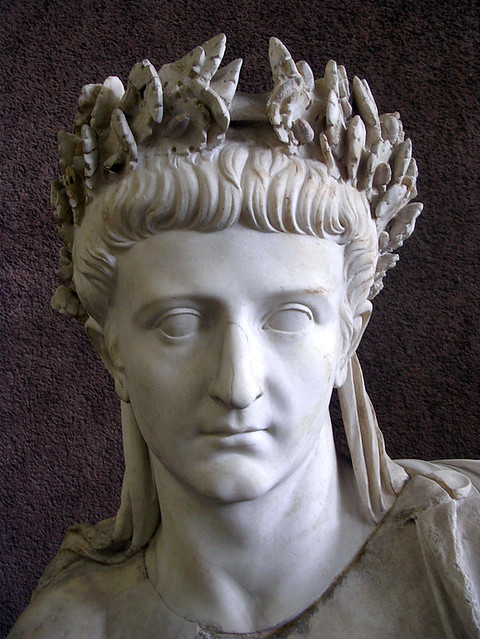
A bust of Tiberius Caesar, Emperor of the Roman Empire.
#8603
Question and Answer / Re: Who was Caesar of the Roman Empire when Jesus Christ was alive in Judea?
November 27, 2012, 03:17:46 AM
Tiberius Caesar, Emperor of the Roman Empire, and Ruler of the Province of Judea.
#8604
Question and Answer / Re: Who was Caesar of the Roman Empire when Jesus Christ was alive in Judea?
November 27, 2012, 03:15:45 AM
Answer:
"Now in the fifteenth year of the reign of Tiberius Caesar, Pontius Pilate being governor of Judaea, and Herod being tetrarch of Galilee, and his brother Philip tetrarch of Ituraea and of the region of Trachonitis, and Lysanias the tetrarch of Abilene, Annas and Caiaphas being the high priests, the word of God came unto John the son of Zacharias in the wilderness."
- Luke 3:1-2
#8605
Question and Answer / Who was Caesar of the Roman Empire when Jesus Christ was alive in Judea?
November 27, 2012, 03:14:02 AM
Who was Caesar of the Roman Empire when Jesus Christ was alive in Judea?
#8606
Photos Unlimited / A Roman Centurion
November 27, 2012, 03:05:06 AM
In the Imperial Roman infantry, centurions initially commanded a centuria or "century". Centuries, or centuriae, developed from the Roman tribal system under the Servian reforms and could contain 200 to 1000 men.
Later, generals and Caesars further manipulated these numbers with double and half-strength units. Gaius Julius Caesar, for instance, made the first century double strength.
Centurions seemed to receive a much higher pay than the average legionaire. Sometimes as much as twice the pay. Veteran legionaires often worked as tenants of their former centurions.

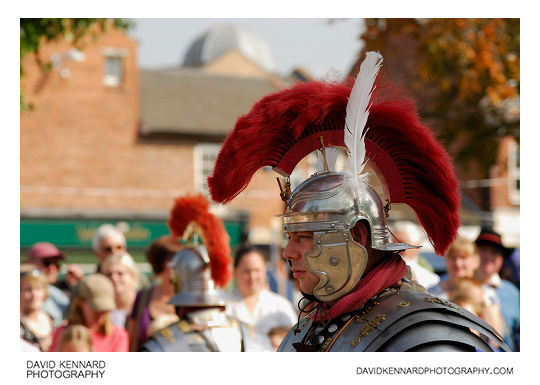
A Centurion of the Imperial Roman Army
Later, generals and Caesars further manipulated these numbers with double and half-strength units. Gaius Julius Caesar, for instance, made the first century double strength.
Centurions seemed to receive a much higher pay than the average legionaire. Sometimes as much as twice the pay. Veteran legionaires often worked as tenants of their former centurions.
A Centurion of the Imperial Roman Army
#8607
Photos Unlimited / A Roman Legionnaire
November 27, 2012, 03:01:19 AM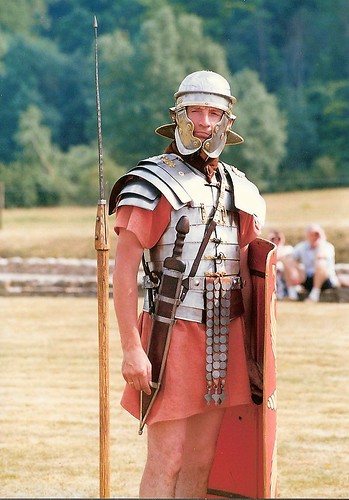
A soldier of the Imperial Roman Army.
#8608
Photos Unlimited / Where heaven touches the earth
November 27, 2012, 02:56:58 AM
Heaven touches the earth.
#8609
Photos Unlimited / A tunnel in the woods
November 27, 2012, 02:56:03 AM
A tunnel in the woods.
#8610
Anonymous Diary Blog / Re: What Did You Do Today?
November 27, 2012, 02:53:20 AMQuote from: chicogon on November 27, 2012, 01:19:57 AM
Happy birthday, Votives!
Hi Fr. Roel! Musta ka na?
#8611
Bible Study / Re: Daily Scriptural Verse
November 27, 2012, 01:13:46 AM
“And whatever you do, whether in word or deed, do it all in the name of the Lord Jesus, giving thanks to God the Father through him.â€
-Colossians 3:17
#8612
Bible Study / Re: Memorare
November 27, 2012, 01:10:12 AMQuote from: islander on November 26, 2012, 12:47:19 AM
a priest had advised me to pray this, eight times a day, especially during desperate times.
(i think lorenz had already posted this somewhere, but let me post this again anyway.)
this is the prayer that i feel had bestowed on me and my family untold graces, like being snatched from the jaws of despair.
Memorare
Remember, O most gracious Virgin Mary, that never was it known that anyone who fled to your protection, implored your help, or sought your intercession, was left unaided.
Inspired with this confidence, I fly to you, O Virgin of virgins, my Mother. To you I come, before you I stand, sinful and sorrowful.
O Mother of the Word Incarnate, despise not my petitions, but in your mercy, hear and answer me. Amen.
Beautiful prayer!!! And a powerful one at that!!!
#8613
Bible Study / Re: The story of the Mother of Perpetual Help icon
November 27, 2012, 01:09:14 AM
Ave Maria! Mater Dei!

#8615
Photos Unlimited / Re: Beautiful works of mercy
November 27, 2012, 01:06:35 AM
Taking care of senior citizens


#8616
Introduce Yourself / Re: Picture of Yourself
November 27, 2012, 01:02:28 AMQuote from: Lollapalooza on November 19, 2012, 02:03:00 PM
Baby Akira's Birthday Party (aguuuy kalimot ko ug hiyak.. busog keu ko)
Yoj, Grace, Jenn, Maridel, Baby Akira, Sherilove and Patz

oy! cute kaayo imong smile, Jenneth!
#8617
Introduce Yourself / Re: Picture of Yourself
November 27, 2012, 01:02:00 AM
hehehe biker diay ka, bai radz?
#8618
Inspiration & Hope / Re: The doctor who became a Priest
November 27, 2012, 12:24:21 AMQuote from: Votives on November 26, 2012, 07:23:06 PM
my fraternity brod also become a priest, graduate na og mechanical engineering... cya ang nag mesa during the 50th anniversary of our fraternity Kappa Mu Tri-Epsilon at University of San Carlos Technological Center...
Really, Bai Vots? Kuyawa noh?
My good friend JR, who was a Physics major in college. He was interested in getting his Ph.D in Nuclear Physics, pero, he entered the seminary after graduating with his B.S Physics. I will share more about him later, Bai Vots.
#8619
Obituary / Re: Please Pray for My Friend Robert Matson
November 27, 2012, 12:20:21 AMQuote from: islander on November 26, 2012, 08:35:46 AM
Eternal rest grant unto Robert Matson, O Lord,
And let perpetual light shine upon him.
May he rest in peace. Amen.
Thank You, Isles.
#8620
Photos Unlimited / Re: Beautiful works of mercy
November 27, 2012, 12:16:57 AMQuote from: Votives on November 26, 2012, 07:18:47 PM
nice...
Nice bitaw noh, Bai Vots?

#8622
Anonymous Diary Blog / Re: Unsay Akong Gikaon Karon?
November 27, 2012, 12:13:58 AMQuote from: hubag bohol on November 25, 2012, 07:17:24 PM
Kanay healthy. Klarong limpyo ang pandesal...
hahahahaha!
#8623
Anonymous Diary Blog / Re: What Did You Do Today?
November 27, 2012, 12:12:41 AMQuote from: Votives on November 26, 2012, 05:52:35 PM
It's my bday today but wala pako kauli naa pa intawn sa work... OT ang tirada kay daghan dinalian.....
Happy Birthday, Bai Vots!
#8624
Bible Study / Re: The Catechism's Teachings on Death & Resurrection
November 25, 2012, 02:36:50 PM
ARTICLE 11
"I BELIEVE IN THE RESURRECTION OF THE BODY"
988 The Christian Creed - the profession of our faith in God, the Father, the Son, and the Holy Spirit, and in God's creative, saving, and sanctifying action - culminates in the proclamation of the resurrection of the dead on the last day and in life everlasting.
989 We firmly believe, and hence we hope that, just as Christ is truly risen from the dead and lives for ever, so after death the righteous will live for ever with the risen Christ and he will raise them up on the last day.534 Our resurrection, like his own, will be the work of the Most Holy Trinity:
If the Spirit of him who raised Jesus from the dead dwells in you, he who raised Christ Jesus from the dead will give life to your mortal bodies also through his Spirit who dwells in you.535
990 The term "flesh" refers to man in his state of weakness and mortality.536 The "resurrection of the flesh" (the literal formulation of the Apostles' Creed) means not only that the immortal soul will live on after death, but that even our "mortal body" will come to life again.537
991 Belief in the resurrection of the dead has been an essential element of the Christian faith from its beginnings. "The confidence of Christians is the resurrection of the dead; believing this we live."538
How can some of you say that there is no resurrection of the dead? But if there is no resurrection of the dead, then Christ has not been raised; if Christ has not been raised, then our preaching is in vain and your faith is in vain. . . . But in fact Christ has been raised from the dead, the first fruits of those who have fallen asleep.539
#8625
Bible Study / The Catechism's Teachings on Death & Resurrection
November 25, 2012, 02:35:17 PM
Let us study what the Catechism of the One, Holy, Roman Catholic Church has to say about death & the resurrection.
#8626
Obituary / Re: Please Pray for My Friend Robert Matson
November 25, 2012, 02:20:46 PM
Absolve, we beseech Thee, O Lord,
the soul of Thy servant Robert Matson,
from every bond of sin,
that being raised in the glory of the resurrection,
he may be refreshed among the Saints and Elect.
Through Christ our Lord.
Amen.
the soul of Thy servant Robert Matson,
from every bond of sin,
that being raised in the glory of the resurrection,
he may be refreshed among the Saints and Elect.
Through Christ our Lord.
Amen.
#8627
Obituary / Re: Please Pray for My Friend Robert Matson
November 25, 2012, 02:17:45 PM
Rob,
I thought of you during our Thanksgiving Dinner and in my prayer for the things that I am thankful for. When I thought of the friends that have made a positive contribution to my life, I thought of you and the friendship we had in our college days. My dear, sweet, and beloved Robert, I cannot believe that you left us 5 years ago. I can still remember that fateful November , 2007 when I found out that you left us. The questions that kept on reverberating my mind ... "why? how? is this true? is this possible?"
God alone knows why you did what you did, and I trust that the mercy of God has rested on you now. I miss you, Rob. I miss your voice, I miss your laugh. I miss being around you, my friend.
Forever I shall remain,
Your Friend,
"AL"

http://www.youtube.com/watch?v=kd07loOpcjw#
I thought of you during our Thanksgiving Dinner and in my prayer for the things that I am thankful for. When I thought of the friends that have made a positive contribution to my life, I thought of you and the friendship we had in our college days. My dear, sweet, and beloved Robert, I cannot believe that you left us 5 years ago. I can still remember that fateful November , 2007 when I found out that you left us. The questions that kept on reverberating my mind ... "why? how? is this true? is this possible?"
God alone knows why you did what you did, and I trust that the mercy of God has rested on you now. I miss you, Rob. I miss your voice, I miss your laugh. I miss being around you, my friend.
Forever I shall remain,
Your Friend,
"AL"
http://www.youtube.com/watch?v=kd07loOpcjw#
#8628
Music and Video / Re: Mary Did You Know ?
November 25, 2012, 02:05:48 PM
Mary, did you know
that your baby boy will one day walk on water?
Mary, did you know
that your baby boy will save our sons and daughters?
Did you know,
that your baby boy has come to make you new?
This child that you've delivered,
will soon deliver you.
Mary, did you know
that your baby boy will give sight to a blind man?
Mary, did you know
your baby boy will calm a storm with his hand?
Did you know,
that your baby boy has walked where angels trod?
When you kiss your little baby,
you've kissed the face of God.
The blind will see
The deaf will hear
The dead will live again.
The lame will leap
The dumb will speak
The praises of The Lamb.
Mary, did you know
that your baby boy is Lord of all creation?
Mary, did you know
that your baby boy will one day rule the nations?
Did you know,
that your baby boy is heaven's perfect lamb?
This sleeping child you're holding, is the great I AM.
#8629
Music and Video / Re: Mary Did You Know ?
November 25, 2012, 02:05:29 PM #8630
Music and Video / Mary Did You Know ?
November 25, 2012, 02:04:09 PM #8631
Music and Video / Christmas Morning
November 25, 2012, 02:02:35 PM #8632
Question and Answer / Re: Are you ready for Christmas Season?
November 25, 2012, 02:01:36 PM
Para nako, I have started to purchase gifts, it's been a bit slow on my part. Tho I need to start getting on it. 
The goal is to finish shopping before I drive home to New Jersey on the 20th.
I need to go shopping "hardcore" mode this week. Hapit na man diay ang pasko.
The goal is to finish shopping before I drive home to New Jersey on the 20th.
I need to go shopping "hardcore" mode this week. Hapit na man diay ang pasko.
#8633
Question and Answer / Are you ready for Christmas Season?
November 25, 2012, 01:59:16 PM
Friends,
Are you ready for Christmas Season?
Are you ready for Christmas Season?
#8634
Health and Food / Re: The New Plague of Autism
November 25, 2012, 01:49:30 PM
Safety and correctness
It is hardly a model demonstration of the scientific method to extrapolate from what is known about those other vaccine components and pronounce that all is therefore well if the safety of administering human DNA fragments through otherwise vindicated vaccines has to this day simply not been definitively determined. This would be like pronouncing BLT sandwiches are just fine after properly determining that the bacon, lettuce and tomatoes are all fine while shying away from looking into the mayonnaise, made with a new recipe, which many perceive to be routinely inclined to spoiling.
The repetitiveness of such imprecise assurances seems intended in part to discredit a legitimate line of inquiry â€" to label those who clamour for any further, properly thorough investigation as irrational reactionaries. But acknowledging on the one hand that there have been historical episodes of unfounded anti-vaccine hysteria is not incompatible with deeming this particular issue to be eminently worthy of investigation. In fact, what properly disinterested scientist would not be interested in actually examining it?
As it stands now, a real scare â€" whether justified or not â€" has led to downturns in vaccination coverage; resurgences of epidemics such as measles in the UK and whooping cough in California have been the unfortunate result. If compliance rates were to dip too low, the desired effect of vaccination programs â€" population-level or “herd†immunity â€" would be compromised. To insist on an honest and rigorous scientific investigation of this specific and unresolved question, far from being anti-vaccine, is fundamentally consistent with valuing their enormous contribution to public health.
We lionize scientists who supposedly leave no rock unturned in the search for truth and for the benefit of their fellow man. Nothing â€" and especially nothing with any religious overtones â€" will deter them from this noble pursuit.
But this is too touchy.
Scarce are the funds made available to investigate this matter; rare and easily ignored are the studies, such as a thorough 2011 review in the Journal of Immunotoxicology, which concluded that this matter is a legitimate concern. Apparently there are indeed limits to what the scientific establishment will pursue, and these limits happen to correspond to certain ideological standpoints (not moral precepts or religious injunctions) which are not to be questioned much less contradicted in polite society.
Safety today passes as a synonym for correctness or permissibility. Safety serves as an indispensible ally if not an outright justification for the modern project of absolute freedom. Rectitude or objective morality is, to many modern minds (particularly in the fields of science), a thing of the past; that which can be done safely or legally can’t be wrong. The flip side of this form of rationalization, of course, is that any evidence of a given practice’s harm jeopardizes its claim to legitimacy.
This is why any hint of such harm must be kept under wraps. To take but one example, we already know â€" strike that: most people do not know â€" that abortion is a major risk factor for breast cancer, even if scientific and governmental bodies have gone to great lengths to deny it. Or who can fail to see that this same type of ideological undercurrent accounted for the enormous disparity between our approaches to human embryonic stem cell research and adult stem cell research. The former received the lion’s share of funding and favourable media reporting â€" even as evidence mounted that the latter was proving safer and more effective. Yet deep down we still know that giving cover, either by commission or omission, to any side of an ethical debate is not what we typically associate with the job description of scientists.
We also know that stem-cell treatments derived from human embryos have led to tumours or were at times otherwise not well tolerated by the patients taking them. Is it utterly inconceivable that vaccines containing residual human DNA from aborted human foetal cells might have some adverse consequences, even if only as a trigger to those with a genetic predisposition for autism?
It appears that many in positions of influence and authority, particularly within the scientific establishment, need there to be no link between the aborted human foetal matter in vaccines and autism for reasons having nothing to do with science. Pro-lifers, on the other hand, do not need to establish such a linkage or indeed any other type of linkage in order to validate their position on the sanctity, dignity, and inviolability of human life; their arguments are moral and philosophical and do not depend on utilitarian reasoning â€" that is, on the various potential consequences of abortion. (Having an induced abortion, it is known but not widely broadcast, leads to premature deliveries in subsequent pregnancies, and pre-term babies are at greater risk for autism as well as cerebral palsy and other conditions).
They will always prefer vaccines that have not utilized human foetal cell lines â€" even if from a pragmatic perspective those vaccines that have used them end up proving to have no adverse consequences. Only those whose ethical stances depend on consequences could be threatened by getting to the bottom of this â€" not counting, of course, the unscrupulous driven strictly by financial incentives.
The real question, then, is: do the scientific establishment and their funders have such little regard for the suffering of their fellow man â€" the devastation endured by children and families with autism â€" that they simply refrain from investigating this specific question head on, with the urgency it deserves, just because it relates to abortion, even if remotely, and therefore might undermine it?
It is possible that there is another explanation for the meteoric rise in autism rates â€" that human DNA fragments in these vaccines are not the culprit â€" or is even likely that a diverse combination of factors is to blame. We can only hope that science will uncover and bring to light (for those are different things) whatever is behind this tragic epidemic. But those presently framing and perpetuating the narrative that the case is closed â€" the verdict of safety is safely in â€" seem not so much to be purely pro-vaccine as they are anti anti-abortion.
Predetermined politicized positions are precisely what science supposedly repudiates.
Retrieved from:
http://catholicexchange.com/the-new-plague-of-autism/
#8635
Health and Food / Re: The New Plague of Autism
November 25, 2012, 01:48:48 PM
Intriguing and compelling correlations
By any reasonable measure, these are intriguing and indeed compelling correlations â€" and as such this theory should not be ruled out. Neither should it be conflated with other vaccine-related theories because this is a distinct issue. It has been established that both the mercury and the attenuated measles virus component within the MMR vaccine have not led to the spikes in autism. (A representative literature review, for example, provided by UpToDate â€" a professional clinical service used by medical practitioners â€" covers this ground). This is important.
Yet that’s not all that is in the vaccine. Existing epidemiological studies (indicating little evidence of a link) have not yet properly accounted for vaccines specifically derived from human foetal cell lines as an isolated or co-variable. The stock phrase that the vaccine is not linked to autism â€" a generality repeated in the popular media and the scientific community â€" may therefore be excessively broad.
It should also be noted that a 2009 FDA publication regarding the safety of vaccines containing residual DNA cites the same expert studies from the early 1990s that were used as a basis for alleging the safety of a gene therapy trial (SCID-X1) which, in drastic contrast to their extremely low risk appraisal, resulted in four out of nine successfully treated patients subsequently developing cancer (T cell leukaemia); if nothing else, this should give us pause. Incidentally, the virus used to deliver the gene therapy is a close family member of another virus which contaminates the MMR II and Varivax (chickenpox) vaccines.
Furthermore, with knowledge gained over the last several decades from the fields of immunology and gene therapy, the unequivocal assertion that contaminants from human foetal cell lines pose no danger cannot be credibly made. There are also a series of other findings might reasonably raise some suspicion: we know that injected naked DNA can be transported to the brain, that shorter DNA fragments have a higher probability of entering the nucleus of a cell, and that present levels of residual human DNA in several vaccines far exceed limits recommended by the FDA.
Again, none of this is nearly enough to demonstrate anything conclusively. We are still in the realm of speculation. But as much as we do not know at present, there does seem to be sufficient biological plausibility â€" in addition to the ecological correlation â€" to reinforce the conclusion that further investigation is warranted. In fact, to leave this matter unstudied in the face of what authorities are calling a national emergency would seem to require a greater explanation. A front page story in the USA Today highlighted the need for better early diagnosis and treatment in light of the latest, alarming CDC report. (A subsequent storyreassured readers that vaccines are definitively not implicated but saw fit to mention the traffic and air pollution theory). Wouldn’t it also be a good idea to pursue with due diligence the identification of whatever may reasonably be deemed to be a possible and preventable trigger?
#8636
Health and Food / Re: The New Plague of Autism
November 25, 2012, 01:48:28 PM
Some vaccines are made with cell lines from aborted foetuses
I’m referring to the introduction of vaccines manufactured with electively aborted human foetal cell lines; these contain residual human foetal DNA and human retroviruses â€" contaminants known to prompt gene mutations which, in turn, can lead to autism. The previous, original vaccines used animal cells. I venture to say that few are even aware of this profound alteration of standard vaccine composition. Most “consumers†are not informed about this in plain language, either in public campaigns or at the point of vaccination.
Dr Theresa Deisher â€" a PhD in molecular and cellular physiology from Stanford University and an expert in the field of adult stem cell therapies â€" notes that this is the “only environmental event correlating with these statistical autism trend ‘change points’ which would impact almost all childrenâ€.
Deisher further notes that “similar change points, associated with the introduction of human foetal DNA contaminants in childhood vaccines, are also evident for Canada, the UK, and Denmarkâ€. In the early 1980s, the MMR vaccine (measles, mumps, rubella) derived from aborted human foetal cell lines became the only one available in the United States, and by the end of the decade the incidence rate of severe autism had increased more than 15-fold; the same general pattern of elevated autism incidence was observed once this type of vaccine was introduced in the UK a few years later.
Autism rates have also gone up recently (particularly since 2001) in several developing countries which, compared to the United States, have radically different environments â€" different diets, different standards of hygiene and sanitation, and much less exposure to the modern western gadgets some have viewed with suspicion. Exposure to these types of vaccines â€" those with residual human DNA â€" is one thing, however, that children from dramatically dissimilarcountries do have in common.
None of this is to say that we can positively claim a causal relationship; that would be premature. There is currently no known basis for making a stronger statement, just as there isn’t with respect to air pollution as a potential risk-factor. Yet if you were doling out funds for research, which of these two variables would you judge to have the greater claim to prioritization?
Overlooking for a moment that only one variable exhibits a striking temporal association and supposing, just for the sake of argument, that aborted human foetal matter in vaccines and traffic jams both proved to contribute equally to rising autism rates, which of these two factors would translate more easily, quickly, inexpensively, and effectively into an intervention to prevent autism: supplying vaccines that don’t come from human foetal cell lines, as was originally the case, or imposing complex, invasive and authoritarian measures to micro-manage traffic and housing patterns?
#8637
Health and Food / Re: The New Plague of Autism
November 25, 2012, 01:48:10 PM
The astounding rise in autism
An astounding one out of every 88 American children (and one in 54 boys) now has autism â€" a 78 percent increase in just the last decade â€" according to the latest CDC estimate just released last month. By contrast, that figure stood at less than five per 10,000 children in 1980. In the UK, the prevalence rate has reached one out of every 64 children. This sharp rise over the past couple decades is all the more terrifying since so much about its causes remains shrouded in mystery. Even if some share of the increase might be attributable to changing diagnostic criteria, we are still dealing with an alarming epidemic. Only the full force of science â€" properly deployed and free from ideological shackles â€" can meet the pressing need for answers to this devastating condition.
At least one reason (not mentioned in the Wall Street Journal article) we should probably be sceptical of the theory that air pollution is a major driver of autism is that it does not correlate well to certain points in time, such as 1988, after which autism rates dramatically spiked. Was there some radically distinct and widespread event related to pollution in, say, 1981, 1988, and 1995, which might have triggered noticeable spikes in autism? If so, I cannot think of it.
Other commonly suggested explanations for the colossal increase in autism related disorders, such as television and other technological gadgetry â€" microwave ovens, cell phones, video games â€" or improved diagnostic capability similarly fail to match up neatly with the distinct spikes in autism rates observed following those years.
There is, however, another particular variable intimately associated with precisely those years after which autism rates skyrocketed, and for that reason alone â€" by appealing to that very same concept of ecological correlation â€" clearly seems to warrant further scientific evaluation. And yet most scientists won’t touch it. It is so highly sensitive, I dare not even say it. OK, if you force me to: vaccines.
Wait a minute: no, I don’t mean vaccines qua vaccines; as one of the most potent tools in the public health arsenal â€" having eradicated smallpox and now nearly polio, having controlled an array of childhood diseases, and having boosted life expectancy â€" vaccines coexisted quite well with steadily low rates of autism long before autism ever began to skyrocket.
I mean that something is different in many vaccines nowadays. And I’m not referring to mercury in vaccines. That too has been proposed as a culprit â€" and more or less dismissed as investigations have not conclusively established any linkage. Mercury couldn’t explain the dramatic explosion of autism in any event, since its levels did not increase in corresponding fashion over time; indeed, autism rates continued to climb even when and where mercury was no longer present in the vaccines.
#8638
Health and Food / The New Plague of Autism
November 25, 2012, 01:47:49 PM
by Matthew Hanley
Back in November, the Wall Street Journal featured a prominent article with the following headline: “The Hidden Toll of Traffic Jams; Scientists Increasingly Link Vehicle Exhaust With Brain-Cell Damage, Higher Rates of Autismâ€. It was careful to point out that current evidence is circumstantial; no one is certain about such a connection between traffic, exhaust, brain-cell damage and autism. After all, vehicles today put out far, far less pollution than those operating decades ago, when autism rates were far, far lower.
It highlighted one study published in Environmental Health Perspectives which found that children born to mothers within 1,000 feet of a freeway in three major California cities were twice as likely to have autism. One of the researchers says “it looks like air pollution might be a risk factor for autism,†but sensibly cautions that “it is too soon for alarm†since there are so many possible genetic and environmental factors.
This type of finding is classified, in the field of epidemiology, as an ecological correlation. It is necessarily the first but weakest of all observations, since merely establishing a correlation between two variables is not nearly enough to prove causality. Nonetheless, it is still useful â€" even if an initial hypothesis with intuitive value later falls apart.
This is what science does; it moves from one form of observation to the next, using its own internally consistent methods, until something can be determined with reliability. What would we think of scientists who would abandon the line of inquiry between traffic and autism if, say, the automobile industry raised objections? Or who were content with a prevailing though unwritten “understanding†that even, say, modifications of previous automotive standards over the years warrant no research funding to determine if vehicle exhaust is any more dangerous than it used to be?
People would draw the obvious inference: they refrain from such a line of inquiry because an industry might take a hit, and a whole way of life might come under scrutiny.
I only need to observe my own mood souring while stuck in traffic to appreciate some of its infelicitous effects; I’m open to the concept that pollution might also affect our brains somehow. Still, I’m sceptical about this finding â€" or at least that this factor, if it is a factor, is a major factor. I could easily be wrong, and perhaps these authors will eventually be vindicated by the science. But I don’t object to the research in and of itself; I commend the Wall Street Journal for presenting one possible explanation, while not jumping the gun with statements that cannot be verified scientifically at this stage.
We only kid ourselves, however, if we think that all reasonable potential factors are all pursued with reasonably similar curiosity and urgency. Pollution and the automobile industry is one thing. But if another industry were to be even implicated â€" say, the abortion/bio-tech industry â€" scientists tend to run for the hills.
#8639
Health and Food / Should We Allow Jehovah’s Witnesses to Die?
November 25, 2012, 01:43:24 PM
by Michael Cook
Two cases involving Jehovah Witnesses who refused blood transfusions are in the news: a 22-year-old with sickle cell anaemia who died in the UK and a 4-year-old girl in Australia who lived after a court-ordered transfusion.
In Britain, a 22-year-old man refused a blood transfusion. After consulting lawyers, his doctors decided to respect his decision and he passed away after about three weeks in hospital. There were concerns that the man’s mother, who was with him when he died, and an elder from his church were exerting an undue influence. However, a doctor assessed him and declared that he was fully aware of what he was doing.
At the moment there are no substitutes for blood transfusions that can be offered to Jehovah’s Witnesses although researchers predict that a product will be available in 5 to 10 years.
In Adelaide, the parents of a four-year-old with leukaemia refused to allow her to have the blood transfusion she needed. Her father told the media: “We adhere to strict Bible principles and one of those is to abstain from blood. We want the best possible treatment for (her) and the hospital are doing a great job. The only thing we don’t consent to is the issue of blood.â€
The South Australian Supreme Court ordered the hospital to give her a transfusion, which had a 90% chance of saving her life. “I’m satisfied that there are no alternatives to the provision of a blood transfusion. I’m satisfied that it’s in (the girl’s) best interest to received [sic] the blood transfusion despite her parents’ objections,†said Justice Richard White.
Retrieved from:
http://catholicexchange.com/should-we-allow-jehovahs-witnesses-to-die/
#8640
Inspiration & Hope / Re: Charity Knows No Bounds
November 25, 2012, 01:33:27 PM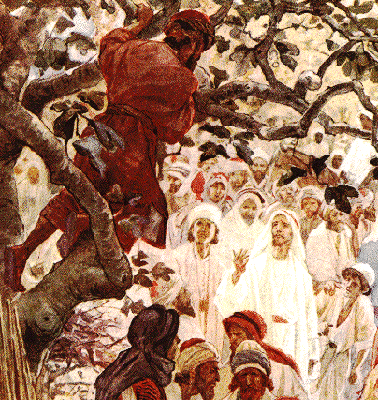
Christ calls on Zaccheus to come down from the tree.
#8641
Inspiration & Hope / Charity Knows No Bounds
November 25, 2012, 01:32:06 PM
Reading 1 Rv 3:1-6, 14-22
Responsorial Psalm Ps 15:2-3a, 3bc-4ab, 5
Gospel Lk 19:1-10
Zaccheus was a rich and dishonest tax collector. He was visited by Christ and the encounter caused a radical change. Zaccheus experienced the mercy and forgiveness of Christ.
God calls us to enter into communion with Him. The call is for everybody to witness His glory and to humble ourselves before Him. We are invited to walk towards God, to clean our hearts as we fix our eyes on Him. To respond to the call requires an awareness of our sins,
defects and weaknesses, such that we meet God when He grants His mercy
for us sinners.
Conversion brings about in us an experience similar to Zaccheus, from a repentant attitude, to a change in heart, and a change in how we conduct ourselves with others. Salvation comes to our house when we welcome Jesus Christ.
#8643
Bible Study / Re: Reflections Today
November 25, 2012, 01:20:34 PM
The Kingdom of God is not a kingdom of soldiers, armies, taxes, money etc. It is a kingdom of Faith, Hope and Love. The Kingdom of God is not of this world. This is what Christ Jesus meant when he was questioned by Pilate whether or not he was a King. He was the King of the Kingdom of God.
It is truly sad to see that Pilate could not recognize that The Truth was in front of him when he was questioning Jesus. Pilate was too busy consumed by the preoccupation of his loyalty to the Roman government and on military matters than to search within himself who Jesus Christ really was.
It is truly sad to see that Pilate could not recognize that The Truth was in front of him when he was questioning Jesus. Pilate was too busy consumed by the preoccupation of his loyalty to the Roman government and on military matters than to search within himself who Jesus Christ really was.
#8644
Photos Unlimited / Re: Love at first sight
November 25, 2012, 01:17:47 PMQuote from: Lollapalooza on November 24, 2012, 05:25:08 PM
ma remember nako ni nga movie...

I remember seeing this movie sa una. Cute bitaw ni sila duha. he he!
#8645
Tira-Pasagad | Saksak-Sinagol / Re: Reklamo ka? Bigyan ta ka ron...
November 25, 2012, 01:11:32 PM
#8646
Question and Answer / Re: How did the Church Fathers explain the perpetual virginity of Mary?
November 25, 2012, 12:57:27 PMQuote from: bisdakangdako on November 24, 2012, 04:35:32 AM
It is quite irresistible to make an argument about what God can and cannot do. but be that as it may, with God all things are possible.
I may have to stick with my appraisal though that Mary is first and foremost a human being. That she underwent what the rest of us feel and go through in the rigorous biological process called life. It is only when God intervened that her life was exalted, but i believe that God is a reasonable God. He won't take away what Mother Mary was as a human being from the outset. Regardless of what God can do, he won't do something like a magician's trick to make a fool of ourselves into thinking that Mary was a product from heaven and all of these was already a hatch out plan from the beginning.
Because the Good Lord is wise and because His providence echoes from age to age, it was already prepared that Mary, the daughter of Anne, would bear the Christ Child. Because of her role as Co-Redemptrix, bearing the Christ Child, played a pivotal role in Salvation History, Mary was conceived without sin.
From her breast, the Creator of The Universe, Jesus Christ, would suckle on and be fed. From her womb, the Divine Word entered the world. Hers is the role of great importance in God's Salvation Plan.
It cannot be stressed enough of the pertinence of Mary in Salvation History. This is the reason why Holy Mother Church reserves the right to venerate Mary, The Mother of God. This is the very reason why Holy Mother Church has time and time again teaches of the Perpetual Virginity of Mother Mary for the past 2 millennia. Because of Mary's role and importance, this is why Holy Mother Church also educates the faithful on Mary's Assumption (Body and Soul) to heaven, which is celebrated on August 15.
Blessings and Peace.
#8647
Question and Answer / Re: How did the Church Fathers explain the perpetual virginity of Mary?
November 25, 2012, 12:47:30 PMQuote from: Mike Ortega Ligalig on November 24, 2012, 05:36:13 AM
After the birth of Jesus, Joseph and Mary bore other sons, who are the human brothers of Jesus. This has been mentioned in the Bible several times.
The Greek word for brother in the New Testament is adelphos. The well-known Protestant linguistic reference An Expository Dictionary of New Testament Words [by W. E. Vine], defines it as follows:
Adelphos: denotes a brother, or near kinsman; in the plural, a community based on identity of origin or life. It is used of:
1. male children of the same parents . . .
2. male descendants of the same parents, Acts 7:23, 26; Hebrews 7:5; . . .
4. people of the same nationality, Acts 3:17, 22; Romans 9:3 . . .
5. any man, a neighbour, Luke 10:29; Matthew 5:22, 7:3;
6. persons united by a common interest, Matthew 5:47;
7. persons united by a common calling, Revelation 22:9;
8. mankind, Matthew 25:40; Hebrews 2:17;
9. the disciples, and so, by implication, all believers, Matthew 28:10; John 20:17;
10. believers, apart from sex, Matthew 23:8; Acts 1:15; Romans 1:13; 1 Thessalonians 1:4; Revelation 19:10 (the word sisters is used of believers, only in 1 Timothy 5:2) . . . 202
[202 Vine, An Expository Dictionary of New Testament Words, Vol. 1, 154-155.]
It is evident, therefore, from the range of possible definitions of adelphos, that Jesus' "brothers" need not necessarily be siblings of Jesus on linguistic grounds, as many commentators, learned and unlearned, seem to assume uncritically. By examining the use of adelphos and related words in Hebrew, and by comparing Scripture with Scripture ("exegesis"), one can determine the most sensible explanation of all the biblical data taken collectively. Many examples prove that adelphos has a very wide variety of meanings:
* In the King James Version, Jacob is called the "brother" of his Uncle Laban (Gen. 29:15; 29:10). The same thing occurs with regard to Lot and Abraham (Gen. 14:14 / 11:26-27). The Revised Standard Version uses "kinsman" at 29:15 and 14:14.
* Use of brother or brethren for mere kinsmen: Deuteronomy 23:7, 2 Samuel 1:26, 1 Kings 9:13, 20:32, 2 Kings 10:13-14, Jeremiah 34:9, Amos 1:9.
* Neither Hebrew nor Aramaic has a word for cousin. Although the New Testament was written in Greek, which does have such a word, the literal rendering of the Hebrew word ach, which was used by the first disciples and Jesus, is indeed adelphos, the literal equivalent of the English "brother." But even in English, brother has multiple meanings as well.
----------
Moving on to more direct biblical evidences of the perpetual virginity of Mary, we discover the following facts:
* In Luke 2:41-51: the story of Mary and Joseph taking Jesus to the Temple at the age of twelve, it is fairly obvious that Jesus is the only child. Since everyone agrees he was the first child of Mary, if there were up to five or more siblings, as some maintain (arguing, for example, from Matthew 13:55), they were nowhere to be found at this time. This passage alone furnishes a strong argument for the implausibility of the "literal brothers" theory.
* Jesus Himself uses brethren in the larger sense. In Matthew 23:8 He calls the "crowds" and His "disciples" (23:1) "brethren." In other words, they are each other's "brothers" (that is, the brotherhood of Christians). In Matthew 12:49-50 he calls his disciples and all who do the will of his Father "my brothers."
* By comparing Matthew 27:56, Mark 15:40, and John 19:25, we find that James and Joseph -- mentioned in Matthew 13:55 with Simon and Jude as Jesus' "brothers" -- are also called sons of Mary, wife of Clopas. This other Mary (Matthew 27:61, 28:1) is called Our Lady's adelphe in John 19:25 (it isn't likely that there were two women named "Mary" in one family -- thus even this usage apparently means "cousin" or more distant relative). Matthew 13:55-56 and Mark 6:3 mention Simon, Jude and "sisters" along with James and Joseph, calling all adelphoi. Since we know for sure that at least James and Joseph are not Jesus' blood brothers, the most likely interpretation of Matthew 13:55 is that all these "brothers" are cousins, according to the linguistic conventions discussed above. At the very least, the term brother is not determinative in and of itself.
* Firstborn: the use of this term to assert that Mary had "second-borns" and "third-borns" proves nothing, since the primary meaning of the Greek prototokos is "pre-eminent". To illustrate: David is described by God as the firstborn, the highest of the kings of the earth (Ps. 89:27). Likewise, God refers to Ephraim (Jeremiah 31:9) and the nation Israel (Exod. 4:22) as "my firstborn." Jesus is called "the firstborn of all creation" in Colossians 1:15, meaning, according to all reputable Greek lexicons, that he was pre-eminent over creation, that is, the Creator. The Jewish rabbinical writers even called God the Father Bekorah Shelolam, meaning "firstborn". Similarly, God is called the "first" in Scripture (Isa. 41:4; 44:6; 48:12; cf. Rev. 1:8; 21:6-7). Christians are called "the firstborn" in Hebrews 12:23. Literally speaking, however, among the Jews, the firstborn was ordinarily the child who was first to open the womb (Exod. 13:2), whether there were other children or not. This is probably the meaning of Matthew 1:25, in which case hypothetical younger children of Mary are not implied at all, contrary to the standard present-day Protestant assertions.
* Mary is committed to the care of the Apostle John by Jesus from the Cross (John 19:26-27). Many Protestant interpreters agree with the Catholic view that Jesus likely would not have done this if he had brothers (who would all have been younger than he was). Many Church Fathers held this interpretation, including St. Athanasius, St. Epiphanius, St. Hilary, St. Jerome, and St. Ambrose, and used it in the defense of Mary's perpetual virginity.
* Catholics believe that Mary's reply to the angel Gabriel's announcement that she would bear the Messiah, at the Annunciation -- "How can this be, since I have no husband?" (Luke 1:34) -- indicates a prior vow of perpetual virginity. St. Augustine, in his work Holy Virginity (4, 4), wrote: "Surely, she would not say, 'How shall this be?' unless she had already vowed herself to God as a virgin . . . If she intended to have intercourse, she wouldn't have asked this question!"
Reference:
http://socrates58.blogspot.com/2010/02/biblical-evidence-for-perpetual.html
#8648
History / Re: The Warrior Pope
November 25, 2012, 12:37:43 PM
Michaelangelo in his studio being visited by Pope Julius II
#8649
History / Re: The Warrior Pope
November 25, 2012, 12:36:09 PM
Pope Julius II and Michaelangelo
#8650
History / Re: The Warrior Pope
November 25, 2012, 12:28:22 PM
Holy League
In 1508, events so favoured the plans of Julius that he was able to conclude the League of Cambrai with Louis XII, King of France, Maximilian I, Holy Roman Emperor, and Ferdinand II, King of Aragon. The League fought against the Republic of Venice during the "War of the Holy League", also known as the "War of the League of Cambrai". Among other things, Julius wanted the Venetian possession of Romagna; Emperor Maximilian I wanted Friuli and Veneto; Louis XII wanted Cremona; and Ferdinand II wanted the Apulian ports.This war was a conflict in what was collectively known as the "Italian Wars".
Julius thereupon entered into the "Holy League of 1511". He allied with Ferdinand II and the Venetians against France. In short time, both Henry VIII, King of England (1509â€"47), and Maximilian I also joined the "Holy League of 1511."
Julius also convened a general council (that afterwards was known as the Fifth Council of the Lateran) to be held at Rome in 1512, which, according to an oath taken on his election, he had bound himself to summon, but which had been delayed, he affirmed, because of the occupation of Italy by his enemies.
Reference: Wikipedia
#8651
History / Re: The Warrior Pope
November 25, 2012, 12:27:12 PM
Papacy
Giuliano Della Rovere thenceforth took the name of his fourth century predecessor, Julius I. He was pope from 1503-1513(10 years) From the beginning, Julius II set himself with a courage and determination rarely equaled, to rid himself of the various powers under which his temporal authority was almost overwhelmed. By a series of complicated stratagems he first succeeded in rendering it impossible for the Borgias to retain their power over the Papal States. He then used his influence to reconcile the two powerful Roman families of Orsini and Colonna, and, by decrees made in their interest, he also attached to himself the remainder of the Roman nobility.
Being thus secure in Rome and the surrounding country, he next set himself to oust the Republic of Venice from Faenza, Rimini, and the other towns and fortresses of Italy which it occupied after the death of Pope Alexander. In 1504, finding it impossible to succeed with the Doge of Venice by remonstrance, he brought about a union of the conflicting interests of France and the Holy Roman Empire, and sacrificed temporarily to some extent the independence of Italy to conclude with them an offensive and defensive alliance against Venice. The combination was, however, at first little more than nominal, and was not immediately effective in compelling the Venetians to deliver up more than a few unimportant places in the Romagna.
But, by a brilliant campaign in 1506, Julius succeeded in freeing Perugia and Bologna from their despots (Giampolo Baglioni and Giovanni II Bentivoglio, respectively), and raised himself to such a height of influence as to render his friendship of prime importance both to Louis XII of France and the Holy Roman Emperor.
In December 1503, Julius issued a dispensation allowing Henry VIII to marry Katharine of Aragon who had previously been briefly married to Henry's brother Prince Arthur Tudor who had died some years before. Katharine maintained she had remained a virgin for the six months of her first marriage, allowing Julius to issue the dispensation, as church law would have forbidden the union if Katherine had admitted to sleeping with Arthur. Years later, when Henry was in love with Anne Boleyn and seeking to replace Katharine as his Queen, Henry would cite that the union had been consummated, and that the dispensation should never have been issued. The issue of whether Katharine and Arthur's marriage had been consummated is a question still puzzled over by historians to this day.
In 1506 he officially founded the Swiss Guard to provide a constant corps of soldiers to protect the Pope.
#8652
History / The Warrior Pope
November 25, 2012, 12:25:15 PM
Pope Julius II (5 December 1443 â€" 21 February 1513), nicknamed "The Fearsome Pope" (Il Papa Terribile) and "The Warrior Pope" (Il Papa Guerriero), born Giuliano della Rovere, was Pope from 1503 to 1513. His papacy was marked by an active foreign policy, ambitious building projects, and patronage for the arts.
Cardinalate
He was promoted to cardinal, taking the same title formerly held by his uncle, Cardinal of San Pietro in Vincula. With his uncle as Pope, he obtained great influence, and he held no fewer than eight bishoprics, including Lausanne from 1472, and Coutances from 1476, along with the archbishopric of Avignon.
In the capacity of papal legate he was sent to France in 1480, where he remained four years, and acquitted himself with such ability that he soon acquired a paramount influence in the College of Cardinals, an influence which increased rather than diminished during the pontificate of Pope Innocent VIII. Shortly after in 1483 an illegitimate daughter was born, Felice della Rovere.
Rivalry grew over time between him and Cardinal Rodrigo Borgia, and on the death of Innocent VIII in 1492 Borgia was elected Pope Alexander VI. Della Rovere, jealous and angry, accused Borgia of being elected over him by means of simony and a secret agreement with Ascanio Sforza.[12] He at once determined to take refuge from Borgia's wrath at Ostia, and a few months afterwards went to Paris, where he incited Charles VIII of France to undertake a conquest of Naples.
Accompanying the young King on his campaign, he entered Rome along with him, and endeavoured to instigate the convocation of a council to inquire into the conduct of the pontiff with a view to his deposition; but Pope Alexander, having gained a friend in Charles VIII's minister Guillaume Briçonnet by offering him the position of cardinal, succeeded in defeating the machinations of his enemy.
Pope Alexander died in 1503, and his son, Cesare fell ill at the same time. Della Rovere did not support the candidature of Cardinal Piccolomini of Siena, who was (on 8 October 1503) consecrated under the name of Pope Pius III, but who died twenty-six days afterwards.
#8653
Anonymous Diary Blog / Re: Unsay Akong Gikaon Karon?
November 25, 2012, 11:26:50 AM
sabao and noodles. 
#8654
Anonymous Diary Blog / Re: Ipagawas Ang Inyung Gibati
November 25, 2012, 11:23:39 AM
Anna, extend this prayer to your friend, thank you.
My Lord, if I may be walking through fields that are rough with grief and care, may I have the courage to continue on to the smooth pastures, where I may walk with comfort and peace. May I not let the weariness and sorrow that may come to my heart to-day dwarf my hope and enjoyment of the future. Amen.
The Good Lord will always guide us and be there for us, during times of good, and during times of pain. Rest assured that the mercy of God is infinite!!!!
#8655
Question and Answer / Re: Have Pro-Abortion Politicians Excommunicated Themselves?
November 25, 2012, 11:11:28 AM #8656
Question and Answer / Re: Have Pro-Abortion Politicians Excommunicated Themselves?
November 25, 2012, 11:11:08 AM
So does this mean that every Catholic politician who supports abortion “rights†has excommunicated himself? Not so fast. As we saw at the beginning of this column, no penalty of any kind is incurred if any of the conditions listed in canon 1323 are missing. The item on the list which is most relevant to the case at hand is the requirement that the perpetrator not be ignorant that he is violating the law by his action (c. 1323 n. 2). In other words, the politician has to know and appreciate the theological and canonical implications of his pro-abortion stance. If he doesn’tâ€"if, in his ignorance, he erroneously thinks that he has some wiggle-room on this issue, or if he sincerely yet wrongly feels he can take the “personally opposed, but†line of defense as a way outâ€"he incurs no penalty.
Before readers scoff at this notion, let’s acknowledge frankly the abysmal lack of sound catechetical formation of so many Catholics, both children and adults, here in the US. Countless Catholics have attended public schools as children, and received little or no education in CCD programsâ€"perhaps because of parental negligence, perhaps because those programs were devoid of solid Catholic content. Other Catholics have been educated in Catholic schools where the religious instruction was either inadequate or of questionable orthodoxy. Many converts to the Catholic faith have received poor catechesis in their RCIA programs before they became Catholics. If we wanted to engage in recriminations, we could probably point accusing fingers in numerous directions here; but the sad fact remains, a huge number of American Catholics simply don’t understand even the most basic truths of our faith!
There is an obvious remedy for this problem, in the case of our Catholic politicians. By teaching clearly and unequivocally, our clergy can (and often do) explain the grave consequences of supporting abortion. In some cases, pastors and bishops have apparently judged it most prudent to meet with politicians who live in their parishes/dioceses on an individual basis, in order to counsel them about the implications of their actions, and to warn them of the spiritual consequences. We know that the Pope himself has met with Catholic politicians from the US on occasion, and the issue may have been addressed in the course of these private meetings as well. At issue here is not only the legal status of unborn children in our country; the spiritual well-being of these politicians must also be of great concern to those clergy who are responsible for their care.
And as angry as we may get with some of our political representatives, the fact remains that we should never lose sight of the importance of the salvation of their souls! Let’s return to the earlier observation that excommunication is a medicinal penalty. The whole purpose of excommunicating a Catholic is to ensure that he strives to get himself out of that state as soon as possible! After all, a member of the Catholic faithful should want to remain a member of the faithful, shouldn’t he? That’s why excommunication is intended to serve as a kind of alarm-bell, to tell a Catholic that he has overstepped his boundaries and needs to come backâ€"sooner rather than later.
So what is the final answer to Patti’s question? It has several parts. First, it is indeed possible to excommunicate oneself; under certain circumstances church authorities do not need to make any declaration whatsoever. Second, asserting that politicians who promote abortion are excommunicated is not clear-cut under the Code of Canon Law, although an argument can certainly be made that they have in so doing obstinately denied a truth which constitutes a key component of the Catholic faith, and have thus fallen into heresy. It would certainly be helpful to all of us Catholics in the US for our bishops to provide us, publicly and repeatedly, with consistent, authoritative teaching on this matter. Next, for any penalty to apply, the politician would have to fully understand that holding his pro-abortion position constitutes a rejection of Catholic teaching that is heretical, and that this is an excommunicable offense. And finally, nobody should ever gleefully rejoice that a Catholic has been excommunicated; we should save that joy for the moment when that Catholic makes the prayerful decision that he needs to change his ways… and come home.
#8657
Question and Answer / Re: Have Pro-Abortion Politicians Excommunicated Themselves?
November 25, 2012, 11:10:28 AM
Canon 750.1 definitely does not apply to any Catholic who disagrees about non-doctrinal positions like the legislation-example just mentioned. It definitely does apply to denial of Christ’s Resurrection. But there are a whole host of Catholic teachings in between those two extremes that for years left both canonists and theologians scratching their heads. That’s why in 1998, Pope John Paul II issued a motu proprio document, Ad Tuendam Fidem, in order to better clarify some of the grey areas and rewrite a couple of canons in the code. Soon after, Cardinal Ratzinger, then Prefect of the Congregation for the Doctrine of the Faith, issued a Commentary designed to complement the Pope’s document by providing some concrete examples.
Much of the (very complex) content of Ad Tuendam Fidem and the accompanying commentary is outside the scope of this article, but to sum up, the two documents created and explained somewhat clearer categories showing the different levels of Catholic beliefs. The commentary cited the example of “the doctrine on the grave immorality of direct and voluntary killing of an innocent human being (11)†as being one of those doctrines to which
[e]very believer… is required to give firm and definitive assent…, based on faith in the Holy Spirit’s assistance to the Church’s Magisterium, and on the Catholic doctrine of the infallibility of the Magisterium in these matters. Whoever denies these truths would be in a position of rejecting a truth of Catholic doctrine and would therefore no longer be in full communion with the Catholic Church (emphasis in the original Latin). (6)
This appears to indicate that someone who denies that directly, deliberately killing unborn children is gravely immoral would be in heresy. It means that he has rejected a Catholic teaching that is so fundamental to the faith, that denying it renders him a heretic. Whether he is a politician or not is actually irrelevant; for any Catholic who willfully rejects this teaching is essentially in the same boat.
Note that nowhere has the Pope explicitly said that consistently voting pro-abortion means that a Catholic politician has fallen into heresy; but it can be deduced fairly logically from both the canons and the Vatican documents described above. For a Catholic, this is very serious business. A heretic incurs excommunication latae sententiae, so he has brought upon himself the gravest penalty that the Church has to offer.
#8658
Question and Answer / Re: Have Pro-Abortion Politicians Excommunicated Themselves?
November 25, 2012, 11:10:08 AM
Canon 751 defines as concretely as possible what these three terms mean in general. Heresy is the obstinate denial after baptism of a truth which must be believed with divine and Catholic faith. Apostasy is the total repudiation of the Christian faith. Schism is the withdrawal of submission to the Pope, or from communion with the faithful who are subject to him. Can we apply any of these to pro-abortion Catholic politicians?
For starters, any politician who insists that he is still a practicing Catholic in good standing apparently does not fit the definition of an apostate. We can eliminate that label right away. We are left with heresy and schism as possible options.
Schism can be eliminated too. Since these politicians insist that they are good Catholics, they imply with that statement that they recognize the authority of the Pope and the bishops who are successors to the Apostles. This leaves only heresy. Can we hold that a pro-abortion politician is a heretic? Let’s look closely at how the term is defined.
Heresy only applies to those Catholic truths which, the canon states, must be believed “with divine and Catholic faith.†This is explained in canon 750: Those things that are to be believed with divine and Catholic faith are contained in the word of God as it has been written or handed down by tradition, that is, in the deposit of faith entrusted to the Church, and are proposed as divinely revealed either by the solemn magisterium of the Church, or by its ordinary and universal magisterium.
So what does that mean? In a nutshell, there are different levels of Catholic beliefs. Some directly involve divine revelation, like the Resurrection of Christ from the dead. Others are less direct, but follow inescapably from these revelations, like the sanctity of human life. There are some which have caused legitimate disagreements among well meaning and certainly orthodox Catholic theologians, like the ban on ordaining women to the priesthoodâ€"all may very well agree that Catholics must accept this, but where does this teaching fit into the hierarchy of beliefs? Still other church positions may not necessarily involve “belief†at all: a bishop might (for example) publicly oppose for ethical reasons the wording of a particular piece of tax legislation under consideration by the government. A Catholic who disagrees with some of these may have crossed the line and entered heretical territory, but that is certainly not true of all of them! One can, in countless cases, hold a position that is at variance with the public statements of our Catholic leaders, without automatically being a heretic.
#8659
Question and Answer / Re: Have Pro-Abortion Politicians Excommunicated Themselves?
November 25, 2012, 11:09:38 AM
One could perhaps try to argue that pro-abortion politicians, by voting to keep abortion legal, should fall under this canon…but given its precise wording, it would be difficult to find a canonist who would agree. And in any case, the mere fact of the uncertainty of the question would automatically oblige us to conclude that the canon does not apply in this case: canon 18 states that laws that prescribe a penalty are to be interpreted strictly. If there is any doubt about whether a Catholic should be punished under a particular canon, he is not to be punishedâ€"period. This is a fundamental legal principle that the Church has held for generations, and it admits of no exceptions. We can see how carefully the Catholic Church guards against unjust application of its lawsâ€"it prefers, if necessary, to permit a perpetrator to go unpunished, rather than to unfairly penalize someone who is not guilty of a crime!
Thus we cannot say that a pro-abortion politician is excommunicable under canon 1398â€"but there are certainly other canons that might better apply, and that would lead to exactly the same outcome. A stronger argument could be made that repeatedly voting to support legalized abortion, in the face of countless public statements by Popes and Bishops that this is contrary to Catholic teaching, might constitute heresy. Let’s take a look.
Canon 1364.1 states that an apostate, a heretic or a schismatic incurs a latae sententiae excommunication. If this can be applied to a pro-abortion politician, then he can indeed be excommunicated. Once again, this may sound very straightforward on the surface. Surely someone who votes for legalized abortion is violating church teachings, which must mean that he has to be a heretic, an apostate, or a schismatic by definition, right?
And once again, we must tread very cautiously before reaching the conclusion that the canonical “nuclear option†applies here. The principles determining what constitutes apostasy, heresy or schism are at their origin theological rather than canonical, and as such they are more nuanced than a canon lawyer, who tends to think more in concrete, black-and-white terms, might like them to be. In fact, the difficulty in “translating†these theological concepts into legalese suitable for the code proved to be so confusing that Pope John Paul II found it necessary (as we’ll see in a moment) to subsequently rewrite some of the canons in order better to clarify them.
#8660
Question and Answer / Re: Have Pro-Abortion Politicians Excommunicated Themselves?
November 25, 2012, 11:09:23 AM
Now we’ve seen that the priest who preached the homily which Patti describes was correct, for it is indeed possible for Catholics to excommunicate themselves. What, then, are the implications for Catholic politicians who support abortion “rights�
Theologically speaking, this seems like it should be extremely straightforward. It’s pretty difficult for even the simplest Catholic in the pew to rationalize that one can repeatedly vote for the legalization (and maybe also the funding) of the willful murder of unborn children, and yet remain a Catholic in good standing!
Canonically, however, it’s a bit more complexâ€"not because canon law is in conflict with Catholic theology in this case (for the two can never contradict each other), but because there are so many steps that must be taken, and conditions that must be met, before one can say with certainty that Senator X or Representative Y is under excommunication. The fact is, excommunication can sort of be seen as the Church’s “nuclear option.†It is only used as absolutely the last possible resort, when all warnings have failed and it is crystal-clear that the perpetrator truly knows all the ramifications of what he is doingâ€"and freely chooses to do it anyway. Let’s walk our way through the canons in the code that might logically apply in this case, and examine the wording before making any assumptions or jumping to conclusions about our politicians.
First of all, there is no canon in the code that specifically says that voting to support abortion is an excommunicable offense. In fact, there is nothing explicit in the code that even says it is a crime at all! The lone canon that mentions abortion (c. 1398) states that someone who actually procures an abortion incurs a latae sententiae excommunication. It’s a canon of few words, but they are carefully crafted to pertain only to persons directly involved in a particular abortionâ€"the doctor, the nurse(s), a husband/boyfriend who pressures a woman to abort and may threaten her or even physically take her to the clinic and pay for the procedure, and obviously the woman herself are all potentially up for excommunication if they are Catholics. Once again, all the conditions in the abovementioned canon 1323 must be met before any of these people can be considered excommunicated.
But the taxi-driver who takes the woman to the doctor without knowing what she intends to do, or the friend who loans her the money to pay for the abortion without realizing what she wants it for, are not. By extension, the plumber or electrician who ensures that the doctor’s office can function, the staffer at the phone company who accepts a yellow-pages ad for the doctor’s “abortion services,†or the pizza deliveryman who brings lunch to the doctor and his staff so that they can continue working through the afternoon, are not culpable at all (although one can easily understand that many Catholic plumbers and other workers would balk at being asked to help an abortionist in even an indirect way!). The point is, there is a strict limitation to the persons who are covered by canon 1398.
#8661
Question and Answer / Re: Have Pro-Abortion Politicians Excommunicated Themselves?
November 25, 2012, 11:09:04 AM
We can see here the spiritual side of the Church’s penal system. If you commit a delict that is punishable by a latae sententiae penalty, and you know what you are doing and freely do it anyway, you are, ipso facto, under that penalty, whether church authorities formally declare it or not. It may very well be that the only ones who actually realize this are our imaginary priest, and God Himselfâ€"but that in no way changes the reality of the situation. In this case, the bishop doesn’t have to actually impose a thing. This imaginary priest has excommunicated himself.
So, assuming that our fictitious priest has incurred a latae sententiae excommunication under 1388.1, what is he supposed to do now? Since he is a priest, trained in theology, we may hope that he realizes that excommunication is (as noted in c. 1312.1 n. 1) a medicinal penalty. Its whole purpose is to warn a Catholic who falls under this penalty that he has removed himself by his actions from communion with the Catholic Church.
Unless an excommunicated Catholic truly doesn’t care any more about maintaining communion with the Church, he logically will seek to restore that communion. The procedure for lifting an excommunication can in certain circumstances be a bit complicated, but in general, a safe bet is to go to confession and confess the crime (which by definition is also sinful, so it bears confessing in any case!).The confessor may very well be able to lift the excommunication himself, on the spot, along with granting the penitent sacramental absolution.
In some casesâ€"like the delict committed by our imaginary priest, who violated the sealâ€"lifting the censure may be reserved to the Holy See. That may require the confessor to petition the Vatican on behalf of the penitent (without ever identifying the penitent, of course), and the excommunication will be lifted in that way. The situation may vary depending on the delict, on the faculties a particular bishop grants to the priests who hear confessions in his diocese, or even on the confessor himselfâ€"Jesuits, for example, have very broad authority in the confessional to lift censures, an authority which other priests normally do not have. But in general, an excommunicated Catholic should always start by entering the confessional.
#8662
Question and Answer / Re: Have Pro-Abortion Politicians Excommunicated Themselves?
November 25, 2012, 11:08:48 AM
First of all, it has to be determined whether all the conditions of canon 1323 have been met. This canon provides a whole list of situations, any one of which will render a person not liable to a penalty. These conditions were addressed in greater detail in both the January 25, 2008 and March 7, 2008 columns, but briefly, no Catholic is subject to any penalty if he is under the age of 16; was ignorant that his action was a violation of the law; was forced to commit the crime, or committed it under fear; acted in self-defense or in the defense of another; or lacked the use of reason (as is the case with mentally ill, mentally handicapped, and senile persons).
If even one of these conditions applies to the imaginary confessor-priest we are talking about here, he is not subject to the penalty found in canon 1388.1. As horrible as his actions might be, he would notâ€"could notâ€"be punished.
But let’s now imagine that this priest did not fall into any of these categories. Let’s say he acted knowingly, freely, and deliberately when he broke the seal of the confessional, and knew the penalty attached to that crime. What happens to him now?
Well, it is possible that the penitent, or some other person, may complain about this priest’s conduct to his bishop. If the bishop (with, for this particular crime, the involvement of the Vatican as well) is able to establish after an investigation that the priest did indeed violate the sacramental seal, and was fully responsible for his actions, he may declare that this priest is excommunicated. But if there is insufficient evidence to prove it, we lay-Catholics naturally assume that no penalty is incurred. And this is where we are wrong.
Because a latae sententiae penalty is incurred whether the crime can be proven or not. In fact, a latae sententiae punishment is incurred even if nobody else on earth ever finds out about the crime! Nobody has to complain to the bishop about our fictitious priest’s violation of the seal, and no investigation need ever take place. The fact is, whether or not anyone besides the priest himself realizes it, the priest is excommunicated.
#8663
Question and Answer / Re: Have Pro-Abortion Politicians Excommunicated Themselves?
November 25, 2012, 11:08:30 AM
Even if you’re a Latin scholar, canon 1314 is far from clear, isn’t it? Our first difficulty involves translation of the technical terms. The English language unfortunately has no clean, simple way to translate either ferendae or latae sententiae, which is why we find ourselves obliged to use the Latin words, even when talking about canon law in our native tongue. But basically, a penalty that is specified in the code as being ferendae sententiae has to be formally imposed by competent authority. We saw an example of a delict that is punishable by a ferendae sententiae penalty back in the September 25, 2008 column, which discussed the fact that membership in Masonic organizations is forbidden to Catholics. Canon 1374 states that a person who joins an association that plots against the Church is to be punished with a just penalty. The wording of the last part of that sentence tells us that we are dealing here with a ferendae sententiae punishment. Competent authorityâ€"most commonly a diocesan bishopâ€"learns that a Catholic in his diocese has joined such an organization, does some investigating, and then can, if he determines it is just, impose a punishment on that Catholic.
This is the type of penalty that we Americans can relate to! In this situation, the bishop essentially is acting like a court judge. The imposition of a penalty is akin to being sentenced by a judge after getting convicted. In other words, the general method of imposing ferendae sententiae penalties is quite comprehensible to us.
But it’s the other type, the latae sententiae penalties, that creates the most confusion. Our criminal justice system has absolutely nothing like themâ€"because this is where the spiritual element of the Church’s penal system kicks in. As we just saw, canon 1314 notes that latae sententiae penalties are incurred ipso facto if the law says so. Let’s look at a concrete example so that we can see how the system is designed to work when this type of penalty is involved.
Canon 1388.1 states that a priest who directly violates the sacramental seal, revealing what a penitent told him in the confessional, incurs a latae sententiae excommunication. (This particular delict was in fact discussed in more detail in the December 4, 2008 column.) By the grace of God, this crime rarely happens; but let’s nevertheless imagine a priest who repeats the contents of a confession in a manner that directly identifies the penitent. What happens next?
#8664
Question and Answer / Re: Have Pro-Abortion Politicians Excommunicated Themselves?
November 25, 2012, 11:08:14 AM
A: The issue of excommunication, as noted back in the January 25, 2008 column, is greatly misunderstood in general, and thus is always worth a closer look. But Patti’s question is especially relevant at this time, since important elections are looming in this country in the next couple of weeks. Let’s look first at some of the general features of the Church’s system of imposing penalties, and then focus more specifically on the politicians whom Patti mentions.
Even if most of us have no personal experience of the American criminal justice system, we all know at least basically how it works. Laws are passed by our legislators; if someone violates those laws, he is arrested and tried in a court proceeding; and eventually he is either convicted or exonerated. If he is convicted, the criminal is then sentenced to a specific punishment. It’s a logical system that we all take for grantedâ€"and many other countries do too.
But the Catholic Church, as we know, operates in a more spiritual sphere. True, there are laws promulgated by competent legislators (generally the Pope or the diocesan bishop), and there is certainly a process that can be employed when someone is accused of violating one of those laws. There are also punishments that can be, and sometimes are, meted out. But the Church’s penal system is in some ways fundamentally different from the American legal system, which is why American Catholics frequently find it so bewildering. We assume that it works in a certain way… and it often doesn’t.
Canon 1314 describes two basic types of penalties. Penalties that are ferendae sententiae are not binding on the perpetrator until they are actually imposed. Latae sententiae penalties, however, are incurred ipso facto upon the commission of a delict (i.e., a crime), if the law specifies this.
#8665
Question and Answer / Have Pro-Abortion Politicians Excommunicated Themselves?
November 25, 2012, 11:06:50 AM
Q: We heard a priest give a homily around the time of the last election, talking about “Catholic†politicians who always vote pro-abortion. He said that these politicians have already excommunicated themselves. But he didn’t explain that. Is that right? How on earth can you excommunicate yourself? â€"Patti
#8666
Question and Answer / Re: What does canon law really say about divorced people receiving Holy Communion?
November 25, 2012, 11:04:39 AM #8667
Question and Answer / Re: What does canon law really say about divorced people receiving Holy Communion?
November 25, 2012, 11:04:19 AM
A: The issue of who may, and who may not, receive the Eucharist lawfully is a canonical question with deep theological roots. Consequently, the Church has spoken on this matter not merely in the Code of Canon Law, but also in the Catechism and in other theological contexts. As always, canon law follows theology, and the two are consistent, for they can never contradict each other.
The code states that Catholics are not to be allowed to receive Holy Communion if they are under the penalty of excommunication or interdict, or obstinately persist in manifest grave sin (c. 915). Canon 916 notes that as a rule, anyone who is conscious of grave sin may not celebrate Mass (in the case of a priest) or receive the Eucharist without previously having been to sacramental confession. This is entirely in keeping with the Catechism’s teaching that “anyone conscious of a grave sin must receive the sacrament of Reconciliation before coming to Communion†(1385).
It is important to note that at issue here is not only a Catholic’s own personal, internal spiritual state, which might very well be known to him alone; but also his external, visible status in the Church, that may be known by other members of the faithful as well. The Church is therefore concerned simultaneously with three different, although interrelated issues: (a) an individual Catholic’s personal spiritual wellbeing; (b) the need to maintain reverence toward the Most Holy Eucharist; and (c) the need to avoid public scandal.
With regard to divorced Catholics, let’s try as best we can to examine these issues separately, beginning with a divorced person’s spiritual state. Theologically, we Catholics know that we should not receive the Eucharist when we are in a state of grave sin. Does the fact that a Catholic is divorced, in and of itself, constitute a mortal sin?
The answer, of course, is no. The Catechism of the Catholic Church does, it is true, give us a general theological norm about divorce in general, noting rightly that “Divorce is a grave offense against the natural law…. Divorce does injury to the covenant of salvation, of which sacramental marriage is the sign†(2384). Yet while the Catholic Church teaches that marriage is, by its very nature, intended to last until death, it acknowledges that being divorced is not necessarily sinful. If, for example, one spouse is divorced by the other, it is obviously possible for a Catholic to find himself divorced entirely against his will! The Catechism makes a very clear and necessary distinction:
It can happen that one of the spouses is the innocent victim of a divorce decreed by civil law; this spouse therefore has not contravened the moral law. There is a considerable difference between a spouse who has sincerely tried to be faithful to the sacrament of marriage and is unjustly abandoned, and one who through his own grave fault destroys a canonically valid marriage (2386).
Therefore one can and certainly does encounter sincerely devout, practicing Catholics who happen to be divorced. Such persons are hardly excluded from the sacraments simply because their spouses chose to divorce them.
There are other situations in which a Catholic spouse might very well find that divorce is, unfortunately, the best way to resolve a difficult situation. To cite the Catechism again, “if civil divorce remains the only possible way of ensuring certain legal rights, the care of the children, or the protection of inheritance, it can be tolerated and does not constitute a moral offense†(2383). In circumstances involving abuse and violence, for example, the Church certainly understands that a divorce may be legally necessary. A battered wife, or a spouse seeking to protect children from an abusive situation by taking the means required under civil law to keep the abuser away, can hardly be considered morally culpable for obtaining a divorce for reasons of physical safety. Similarly, a divorce may be civilly necessary if one spouse is bankrupting the family with compulsive gambling. In such a case a Catholic might need to obtain a divorce in order to safeguard the financial wellbeing of the rest of the family.
So we can see that it is entirely possible for a good Catholic to be divorced! Since this is the case, why is it that we hear the Church teaching that divorced Catholics cannot receive the Eucharist?
The fact is, the Church does not teach that Catholics are forbidden to receive Holy Communion if they are divorced. Rather, it teaches that a Catholic who has been divorced and remarried, without having first obtained an annulment of the first marriage, is not permitted to receive the Eucharist.
For those of us who believe what the Catholic Church teaches about the sacraments, the logic of this position is actually quite straightforward. A Christian marriage lasts until the death of one of the spousesâ€"unless a Catholic marriage tribunal has ruled that the marriage was null from the beginning (see the July 26, 2007 column, among many others, for further discussion of Catholic marriage annulments). If a Catholic obtains a civil divorce, but does not have a declaration from the Church that his marriage was null, he is still married in the eyes of the Churchâ€"even if civil law asserts that his marriage has ended. A person in this situation cannot remarry in the Catholic Church; he is impeded from doing so because he is already married to someone else (c. 1085).
Consequently, if a Catholic does remarry under these circumstances, he necessarily does so outside the Catholic Church, either in a non-Catholic religious ceremony, or in a civil proceeding (before a justice of the peace, for example). The Catholic Church naturally does not accept that this second marriage is valid! Instead, the Catechism teaches that the remarried Catholic is living in a state of sin with the new spouse:
Today there are numerous Catholics in many countries who have recourse to civil divorce and contract new civil unions. In fidelity to the words of Jesus Christâ€"“Whoever divorces his wife and marries another, commits adultery against her; and if she divorces her husband and marries another, she commits adulteryâ€â€"the Church maintains that a new union cannot be recognized as valid, if the first marriage was. If the divorced are remarried civilly, they find themselves in a situation that objectively contravenes God’s law. Consequently, they cannot receive Eucharistic communion as long as this situation persists. (1650).
In other words, society reasonably presumes that a husband and wife are engaging in sexual relations. Consequently, the Church regards the relationship between a Catholic and a second spouse as adulterous, if the first spouse is still living. And since adultery constitutes a grave moral evil, a Catholic who is living in this situation is not permitted to receive the Eucharist. To quote the Catechism yet again, “The sexual act must take place exclusively within marriage. Outside of marriage it always constitutes a grave sin and excludes one from sacramental communion†(2390).
If a divorced and remarried Catholic wishes to receive Holy Communion, what can he do? Catholic sacramental theology is unequivocal on this point, and so it doesn’t give him a lot of options. This is where the reverence due to the Most Blessed Sacrament fits directly into the picture. In order to safeguard the dignity of the sacrament, the Church will never, ever condone the reception of the Eucharist by a Catholic who persists in an adulterous union. Therefore, if a divorced and remarried Catholic wishes to receive the Eucharist, he must first repent of his adultery, and receive sacramental absolution. But in order to be truly sorry for his sins, a Catholic must have the resolution to avoid them in future. Thus the adultery has to endâ€"it’s as simple as that.
This is why paragraph 1650 of the Catechism, noted above, concludes as follows: “Reconciliation through the sacrament of Penance can be granted only to those who have repented for having violated the sign of the covenant and of fidelity to Christ, and who are committed to living in complete continence.†A remarried Catholic must resolve that he will no longer engage in sexual relations with his second spouseâ€"ever. This means that he must either separate from the second spouse altogether; or they must henceforth live together as brother and sister, rather than as husband and wife.
The number of married couples who would willingly agree to the latter arrangement, in order to receive the Eucharist, is presumably slimâ€"and yet it is a fact that they do indeed exist. There definitely are Catholics among us who remarried outside the Church, but subsequently wished to rectify their situation for spiritual reasons. They have made a good confession, firmly resolving to sin no more. With their spouses in agreement with their decision, these remarried Catholics are still living with their second spouses, but in total continence. (In many cases, the presence of minor children in the house has led the couple to decide to continue living together, for the good of the children.) Catholics like these are, spiritually speaking, once again entitled to receive the Eucharist.
The relative rarity of this situation, however, leads us to yet another issue: the possibility of public scandal. If the Catholic faithful see a divorced and remarried Catholic receiving Holy Communion, what will they think? Will they immediately assume that the Catholic has agreed with his second spouse to abstain permanently from all sexual relations? Or will they instead be more likely to conclude that the remarried Catholic is living in sin with his second spouse, and nevertheless is being permitted to receive Holy Communion?
Canon 915, already cited above, notes that a Catholic cannot receive the Eucharist if he persists in manifest grave sin. The point is, if the Catholic faithful see that a priest gives the Eucharist to someone whom they know is living in a gravely sinful manner, they might naturallyâ€"and wronglyâ€"conclude that such a sinful lifestyle must be morally acceptable. In such a situation, the need to avoid public scandal is crucial!
There is tremendous need for tact and diplomacy in situations like these, on the part of both the remarried Catholic and his pastor. It might, depending on the circumstances, be preferable for these Catholics to refrain from receiving Holy Communion at large Masses, where their action can easily be seen and totally misunderstood by others in the congregation. An understanding parish priest can make an effort to ensure that these parishioners can receive the Eucharist in a more discreet way.
In other cases, some remarried Catholics have been known to speak rather openly about their now-continent relationship with their second spouses. This certainly should clarify their fellow parishioners’ potential confusion; but such public frankness about this very private matter is understandably not something which all remarried Catholics are obliged to embrace! We Catholics have no right to know the internal spiritual status of our fellow Catholicsâ€"but at the same time we should not be given reason to believe, rightly or wrongly, that the sacraments are being abused, by our fellow parishioners and with the apparent consent of the parish priest.
We can see that the Catholic Church tries her best to balance multiple concerns simultaneously. The right of Catholics to receive the sacraments must be assessed in light of the very real need for reverence toward the Most Blessed Sacrament. The need to uphold publicly the dignity of Christian marriage, and the Church’s consequent opposition to divorce in principle, must be weighed against the legitimate spiritual needs of the Catholic faithful, who may very well be divorcedâ€"and even remarried!â€"and yet entitled to receive the Eucharist.
#8668
Question and Answer / What does canon law really say about divorced people receiving Holy Communion?
November 25, 2012, 11:03:46 AM
What does canon law really say about divorced people receiving Holy Communion? â€"Sean
#8669
Quotable Quotes / Re: Daily Catholic Quotes to Meditate On
November 25, 2012, 11:01:47 AM
Sanctity is made up of heroic acts. Therefore in our work we are asked for the heroism of finishing properly the tasks committed to us, day after day, even though they are the same tasks. If we don’t, then we do not want to be saints.
-St. Josemaria Escriva
-St. Josemaria Escriva
#8670
Quotable Quotes / Daily Catholic Quotes to Meditate On
November 25, 2012, 10:59:38 AM
“The age of casual Catholicism is over, the age of heroic Catholicism has begun. We can no longer be Catholics by accident but instead we must be Catholics by conviction.â€
-Fr. Terrence Henry, TOR, Franciscan University of Steubenville
-Fr. Terrence Henry, TOR, Franciscan University of Steubenville
#8671
Inspiration & Hope / This Sunday’s Gospel: The Return of the Lord
November 25, 2012, 10:57:05 AM
by MARCELLINO D'AMBROSIO, PH.D
Whenever I lead a trip to the Holy Land, the question inevitably comes, “Will we visit Armageddon?’ This refers, of course, to the battlefield surrounding the ancient city of Megiddo where some think the final confrontation will take place before the end of the world (Rev 16:16). Catholics and Protestants alike have a fascination with the Scriptural accounts of the cataclysmic events associated with the end.
The church, following the Scriptures, indeed teaches that Jesus will return in glory and this world as we know it will indeed come to a screeching halt, but not before a fierce, cosmic battle in which the Enemy makes his final bid for world domination (CCC 675-677).
But the last battle will not be the only battle.
The truth is that though nature’s four seasons continue to cycle serenely throughout the ages, and men and women, as in the days of Noah, continue to marry and be given in marriage, there is at the heart of history a continual battle going on. In fact, the battle began before human history, when Michael and his forces swept the legions of Lucifer out of heaven. There is a reason that we never get tired of love storiesâ€"love is of the essence of human life. There is also a reason that we never get tired of war storiesâ€"war has been our constant companion and will be so till the last trumpet.
Many are puzzled when trying to interpret passages like this Sunday’s gospel, not to mention the entire book of Revelation. Are Jesus and the inspired writers referring to the end of the world, or rather to the events happening in their own day, such as the destruction of Jerusalem and the persecution of the Church by the pagan Romans?
The answer is not an either/or but rather both/and. The Antichrist is a future figure who will come at the end. But he has also worn various masks over the course of time such as the Emperor Nero, Adolph Hitler, and Josef Stalin. Under the surface of history, the battle is raging. At certain moments, the fight takes center-stage in the evening news and battlelines become very clearâ€"as in World War II or today’s abortion holocaust.
There are two big mistakes we could make here. One would be to smugly deny this view of things as just so much apocalyptic hysteria. The other would be to preoccupy ourselves with speculation over the future battle while neglecting to engage in the battle at hand. Innocent pre-born babies are being slaughtered on a daily basis; thousands of Christians are imprisoned and tortured worldwide because of their faith, millions are exploited economically, and a secularist propaganda machine mounts a relentless attack on marriage and chastity. Are we combatants in this struggle or do we sit by the sidelines reading the headlines?
Apocalyptic speculation is a waste of valuable time and energy. Jesus clearly says “as to the exact day or hour, no one knows it†(Mark 13:32). It is futile to try to figure it out. But denying the reality of the current conflict or leaving the combat to others is also a waste of precious time.
We pray for the glorious return of the Lord, for him to come and right all wrongs and bring deliverance and eternal reward. But our second reading says that “now he waits until his enemies are placed beneath his feet.†(Heb 10:13). Often a sneaky enemy will not show his true colors and unleash his full might until his back is up against the wall. The final victory will be something that only the Lord himself will accomplish. But it would seem that he will only come for the coup de grace when we, the members of his body, by the power of his grace, have helped to paint the enemy into a corner through our evangelization, intercession, works of mercy, and social activism.
Retrieved from:
http://catholicexchange.com/this-sundays-gospel-the-return-of-the-lord/
#8672
Photos Unlimited / Re: A Royal Calling
November 25, 2012, 10:48:44 AM
Clare Ainsworth, 24, was at her cousin's wedding in August. She had joined a convent in Norfolk the year before and this was the first time she had seen her wider family since leaving her home in Lancashire. "They were pleased I had made the decision but they were a bit disappointed. They said I had so much going for me... that there might be a nice lad waiting around the corner and didn't I want kids?"
Clare is not alone in choosing poverty, chastity and obedience over careers, relationships and motherhood. She is one of a small but growing number of young women entering religious life. The trend is the subject of a BBC documentary, Young Nuns.
Producer Vicky Mitchell spent six months filming women such as Clara, 24, as they prepared to become nuns. A language and philosophy graduate, Clara, from the north-east of England, was raised a Catholic. "We've always taken our faith seriously. It's not just one aspect of our life, it frames our whole worldview," she says. "I've always been encouraged to foster my relationship with God." She was 18 and about to leave home for university when she began thinking about her future. "I was thinking about marriage and what God wanted me to do with my life. I got a niggling feeling that maybe God wanted me to be a nun. That feeling never left me." In the programme, Clara is seen graduating, socialising, praying and shopping for long-sleeved, blue nightdresses and slippers that won't squeak in the convent's corridors.
She visited the cloistered community, staying there a few times as a way of helping her to decide if she was ready to become a nun. There are an increasing number of ways young people can dip their toes into religious life, such as discernment weekends, taster courses and retreats. A festival, Invocation, was launched last year to attract 16- to 35-year-old men and women into monasteries, orders and seminaries. And Youth 2000, a five-day retreat for Catholics aged 16 to 30, was held at Walsingham last year, with around 1,000 attendees.
The Catholic church's National Office for Vocations (NOV) says the age range of people showing an interest in entering the priesthood or becoming part of a religious community is getting younger. They are now 16-18, but 10 years ago they would have been 30 or 40. NOV's Sister Cathy Jones has witnessed this change: "There seems to be a momentum but it's quite difficult to get to the bottom of what's motivating it. There are lots of young women inquiring. At Invocation they were as young as 16, going independently, saying they thought God was calling them. Of the 40 young women, 20 were very young."
Before she researched Young Nuns, Mitchell assumed that the current generation of women would be looking for a more "relaxed" and "modern" style of religious life. "What was surprising was that most were actively seeking something much more traditional. They wanted a lifestyle radically and distinctively different to everyday life." But, she adds, they didn't meet the pious stereotype. The women had friends, strong family bonds and active social lives. They dated and had career prospects. "What surprised me was how much like me they were."
Sister Jacinta Pollard, 37, who joined St Joseph's Convent in Leeds nine years ago, also features in the programme. She understands why people struggle with the idea of a young woman entering religious life: "It seemed so radical and so different to what a lot of my peers were doing and all those who I'd gone to college with."
Ainsworth doesn't appear in the documentary. She claims to be shy, although when we speak, she cannot stop talking effusively about life in a convent. She works as a teaching assistant at Sacred Heart boarding school in Swaffham, Norfolk, founded by the Daughters of Divine Charity, an apostolic order that performs social work in the wider community. Although Clare leaves the convent to fulfil her duties, she has taken vows of chastity, poverty and obedience.
"I wanted to help people," she says. "People ask why I don't become a teacher or a nurse instead but I feel God has called on me to do it this way."
Ainsworth has not led a sheltered life. She is not running away from anything. But she has had a mixed experience of religion and faith, experiencing "dark times" as a teenager. An only child, she was raised a Catholic but was never passionate about it until high school: "A lot of people frowned on me for practising my faith, they labelled me but that made me cling on to it more. When everything falls apart you realise what's important to you, I know God helped me through the difficult times."
She didn't discuss entering religious life with her dad, she says, but "he must have had an idea. I was always asking him to take me to convents or talking about sisters." From the age of 16 she embarked on a spiritual journey as well as a literal one, volunteering with apostolic orders from Kenya to Kendal, and joining retreats offering time for reflection and prayer to help her decide whether she was suited to religious life. She has been to Lourdes five times, four of them as a helper.
She was scared of telling her dad about her decision to join the convent â€" and she felt guilty that there would be no grandchildren. She was so worried about speaking to him that she wrote a letter. "He was amazing. He rang me up, in tears. He wasn't shocked at all.
"You grow up thinking that you'll get married and have kids. To think anything other than that is hard to get used to. You do wonder what your children will look like, you do long for someone to love and for someone to love you. But another person could never fulfil what I long for. Only God can. I owe him everything."
The youngest sister in the convent, apart from her, is 33, the next is 42. In all the other convents she visited, they were mostly in their 50s. "I did find it hard; there weren't that many young women to talk to," she says. "It can be quite isolating. The convent hadn't had an English-born candidate for 40 years. It was quite a rocky start. There was learning from both parties about what young people need today. Now I'm here as a young person I want to attract other young people. Young people bring life and energy."
#8673
Photos Unlimited / Re: A Royal Calling
November 25, 2012, 10:46:11 AM
One Friday after school in 2009, Ashley Vola met up with her two best friends for an evening of girl talk, popcorn and a movie, then ended the night with a 45-minute drive back to her suburban St. Louis home, listening to country music on the radio. Like most teens she started surfing the Internet when she couldn't sleep. Ashley wasn't looking for news on her favorite celebrity but for information on something close to her heart that she rarely shared: joining a religious order. For years Ashley had wondered if God had been sending her signs asking her to become a nun, but she always dismissed the idea. "Why me?" she recalls asking herself. But on this winter night, as she read an article by a priest urging young people to follow their hearts, Ashley's doubts disappeared. "I felt this overwhelming peace, like a wave washing over me," she recalls. "And I said out loud, 'Yes, Lord. I'll do it.'"
That night Ashley began a transformation that eventually took the bubbly 18-year-old from the life of a carefree suburban teenager who loved to rock-climb and backpack to a contemplative novice who now devotes several hours a day studying the teachings of Jesus Christ. She dropped out of college, shut down her Facebook page, abandoned the Internet and traded in her jeans for a calf-length grey habit and a new name: Sister Caterina, in honor of Catherine of Siena, a 14th-century Italian saint who devoted her life to caring for the poor and sick. Though she now sees her family only eight times a year, "this is the model that I felt Christ was calling me to imitate," says Ashley, now 20. Her day begins at 4:35 a.m., when she wakes up to pray, clean, and help organize the Sisters of St. Francis of the Martyr St. George convent in Alton, Ill., which she shares with 50 other nuns ranging in age from 20 to 85. Though Ashley is one of only an estimated dozen American teenagers entering the convent in any given year [see box], experts say queries from teens curious about vocations have doubled in recent years, spurred in part by religious websites such as anunslife.org and vocationmatch.com. The reason for the renewed interest? "The younger generation tends to be more traditional," explains Brother Paul Bednarczyk of the National Religious Vocation Conference. Also, "younger people want to do something radical with their lives."
By the age of 5 Ashley felt drawn to the nuns in her life. Raised by devout Catholic parents, she attended parochial schools and admired the sisters' kind and loving nature. "There was just something about their presence," she says. "They were fun." As the outgoing tyke grew older, she drew inspiration from the nuns, at times staging imaginary Masses with neighborhood kids. "We realized there was something unique about Ashley," says her father, Steve, 57, a contractor.
But years would pass before she actually embarked on her spiritual journey. The self-proclaimed tomboy had originally set her sights on college and a career as a speech therapist. Like many high school students her age, she loved to listen to Rascal Flatts and wear high heels-and, at 16, cried herself to sleep when she and her boyfriend broke up. "I was heartbroken," she says. "I thought I would marry him." So even when she felt the familiar tug at her heart calling her to the convent, she held on to her dream of one day becoming a wife with a brood of kids. "What about my dad walking me down the aisle?" she recalls thinking.
That is, until that Friday night in 2009. As she began to seriously imagine a life of contemplation, "I started letting go of those things," she recalls. "Once I did, I could see the love God had for me." For her parents the decision was a mixed blessing. "Grandkids would have been nice," says her mom, Susan, 57, a nurse, "but I wanted her to do what's right for her." Her father worried that she might regret joining the convent and urged her to complete her education. "I told her to get a few more miles under her belt," he recalls.
But after one year at the University of Missouri, where she shared a dorm room with a high school pal, she headed off to the convent. "I felt like God was waiting for me to respond," she says. Now permitted to send one letter a week and make phone calls only on holidays, Ashley usually goes to bed at 8 or 9 p.m. Visitors are allowed every six weeks for a four-hour period on Sundays. "It really makes you appreciate your family," she says. As for the lifelong commitment to celibacy? "I don't struggle with that at all," she says. "It's actually obedience that's a lot harder."
Though Ashley is not allowed to leave the convent, she doesn't feel confined. "I just feel so free here," says Ashley, who still peppers her speech with words such as "like" and "randomly." "She's a completely normal person," says her best friend Megan Schmidt, 21, who visited Ashley in August. "The convent is where she wants to be." These days, she enjoys lively games of touch football with other nuns and watching films on saints or movies such as Secretariat. "We have times that we laugh and play together," she says, "but then we all gather to pray." Though Ashley has four more years before she takes her final vows, she insists she's in it for the long haul. "There's no doubt in my mind I was meant to be here," she says. "I feel very much at peace."
http://www.people.com/people/archive/article/0,,20559417,00.html


#8681
Inspiration & Hope / Re: Angelic Trisagion
November 25, 2012, 10:25:36 AM
Beautiful prayer, truly!
For more prayers, please visit the EWTN prayer page:
http://www.ewtn.com/Devotionals/prayers/Spiritual_Enemies.htm
For more prayers, please visit the EWTN prayer page:
http://www.ewtn.com/Devotionals/prayers/Spiritual_Enemies.htm
#8682
Inspiration & Hope / Angelic Trisagion
November 25, 2012, 10:15:57 AM
Angelic Trisagion

This devotion to the Blessed Trinity is the official prayer of the Order of the Blessed Trinity, otherwise known as the Trinitarians.
The devotion has been recited by them and their affiliates for centuries in praise of the Trinity.
In the name of the Father, and of the Son, and of the Holy Spirit. Amen.
V. Lord, open my lips.
R. And my mouth shall declare Thy praise.
V. O God, come to my assistance.
R. O Lord, make haste to help me.
V. Glory be to the Father, and to the Son, and to the Holy Spirit,
R. As it was in the beginning, is now and will be forever. Amen.
The decade below is recited three times, once for each member of the Trinity.
All: Holy God! Holy Strong One! Holy Immortal One, have mercy upon us.
V. Our Father, Who art in heaven, hallowed be Thy name. Thy kingdom come. Thy will be done, on earth as it is in heaven. Give us this day our daily bread and forgive us our trespasses as we forgive those who trespass against us. And lead us not into temptation, but deliver us from evil. Amen.
The following part of the decade is repeated nine times
V. To Thee, O Blessed Trinity, be praise, and honor, and thanksgiving, for ever and ever!
R. Holy, holy, holy Lord, God of hosts. Heaven and earth are filled with Thy glory.
V. Glory be to the Father, and to the Son, and to the Holy Spirit,
R. As it was in the beginning, is now and will be forever. Amen.
End of Decade
Antiphon
God the Father unbegotten, only-begotten Son, and Holy Spirit, the Comforter; holy and undivided Trinity, with all our hearts we acknowledge Thee: Glory to Thee forever.
V. Let us bless the Father, and the Son with the Holy Spirit.
R. Be praised and exalted above all things forever.
Let us pray,
Almighty, ever-living God, who has permitted us Thy servants, in our profession of the true faith, to acknowledge the glory of the eternal Trinity, and in the power of that majesty to adore the Unity, grant, that by steadfastness in this same faith, we may be ever guarded against all adversity: through Christ our Lord.
All: Amen
All: Set us free, save us, vivify us, O Blessed Trinity!
#8683
Inspiration & Hope / A Prayer for Generosity by St. Ignatius of Loyola
November 25, 2012, 10:13:22 AM
Teach us, Good Lord, To Serve Thee as Thou deservest;
To give and not to count the cost;
To fight and not to heed the wounds;
To toil and not to seek for rest;
To labor and not to ask for any reward,
save that of knowing that we do Thy will.
Through Jesus Christ Our Lord, Amen.
To give and not to count the cost;
To fight and not to heed the wounds;
To toil and not to seek for rest;
To labor and not to ask for any reward,
save that of knowing that we do Thy will.
Through Jesus Christ Our Lord, Amen.
#8684
Inspiration & Hope / Suscipe – A Prayer of Self-Offering by St. Ignatius of Loyola
November 25, 2012, 10:10:53 AM
Receive, Lord, my entire freedom.
Accept the whole of my memory,
my intellect and my will.
Whatever I have or possess,
it was you who gave it to me;
I restore it to you in full,
and I surrender it completely
to the guidance of your will.
Give me only love of you
together with your grace,
and I am rich enough
and ask for nothing more.
Amen
#8685
Quotable Quotes / Re: Quote For The Day
November 25, 2012, 10:04:31 AM
“In the twilight of life, God will not judge us on our earthly possessions and human successes, but on how well we have loved.â€
(Saint John of the Cross, Doctor of the Church)
#8686
Quotable Quotes / Re: Quote For The Day
November 25, 2012, 10:01:53 AM
“We cultivate a very small field for Christ, but we love it, knowing that God does not require great achievements but a heart that holds back nothing for self…. The truest crosses are those we do not choose ourselves…. He who has Jesus has everything.â€
(St. Rose Philippine Duchesne)
#8687
Quotable Quotes / Re: Quote For The Day
November 25, 2012, 09:58:34 AM
“On the question of relating to our fellowman â€" our neighbor’s spiritual need transcends every commandment. Everything else we do is a means to an end. But love is an end already, since God is love.â€
(St. Edith Stein â€" Teresa Benedicta of the Cross)
#8688
Health and Food / Re: Health Prayer: Should Religion and Faith Have Roles in Medicine?
November 25, 2012, 09:55:45 AM
Similarly, Ken Pargement of Bowling Green State University compared the benefits of spiritual meditation to secular meditation on headache sufferers. In a study published in August, he and his colleagues asked a group of people who suffer migraines to meditate 20 minutes each day by repeating a spiritual mantra, such as "God is good. God is peace. God is love." Another group was instructed to use a nonspiritual mantra: "Grass is green. Sand is soft." After a month, the spiritual meditators reported a greater decline in the number of headachesâ€"as well as a greater increase in pain tolerance. "There seems to be something special that spiritual resources offer in times of trouble," says Pargament. His approach of randomly assigning one treatment to some patients and another to others is considered the gold standard of medical research.
Yet religious acts have come up short in other randomized tests. A widely publicized 2006 study of some 1,800 people concluded that "intercessory prayer"â€"prayer by other people for someone else's welfareâ€"did not help patients recover after cardiac surgery. A group of about 600 patients who unknowingly received prayer had no fewer complications than a group that wasn't prayed for; a third group of patients, who knew they were being prayed for, actually fared worse. The study set off a firestorm of controversy about howâ€"and whetherâ€"to test faith.
"One of the problems is what's being studied is different from what most people believe about intercessory prayer," says David Hufford, who teaches spirituality and health at the University of Pennsylvania. Providing a random group of people "a particular dose of prayer to get better faster, administered by people they don't know" may miss the point of the deeper meaning and purpose behind the prayers, he says.
http://health.usnews.com/health-news/articles/2008/12/22/health-prayer-should-religion-and-faith-have-roles-in-medicine?page=2
#8689
Health and Food / Health Prayer: Should Religion and Faith Have Roles in Medicine?
November 25, 2012, 09:55:15 AM
When Carrol Duggins-Diggs was diagnosed with breast cancer in 2002, she trusted her doctors to choose the best treatment. But she credits her survival to another source. "I believe God heard my prayers and that he healed me," says the retired human resource specialist from Accokeek, Md., who is now cancer free.
Still, she thought of her religion and her treatment as two separate realms until her doctor, Christina Puchalski, asked about her faith and the support it might provide during a health crisis. "I was pleasantly surprised," says Duggins-Diggs. "It's about time doctors realized that God is the true healer here."
While most doctors aren't about to hand their stethoscopes over to a higher power, more and more medical professionals are taking seriously the relationship between spirituality and physical health. "There's been a sea change in the way the medical community looks at spirituality," says Puchalski, an internist who founded the George Washington University Institute for Spirituality and Health in 2001 to promote research and education on the topic. In recent years, a growing number of rigorous studies have shown that spiritualityâ€"including prayer, meditation, and attendance at religious servicesâ€"benefits health in ways that science hasn't fully explained. Among other effects, regular worship and other spiritual acts appear to lengthen life expectancy, strengthen immunity, improve the body's response to stress, and boost other measures of physical health.
"In the past eight years, there has probably been more research and discussion on the topic of religion and spirituality and health than was conducted from 1800 through the year 2000," says Harold Koenig, a doctor and codirector of the Duke Center for Spirituality and Health.
Partly as a result of new research, medical schools across the country have started requiring students to take courses in spirituality and health. Academic centers dedicated to the study of religion and medicine have sprung up at Duke University, the University of Florida, the University of Minnesota, and elsewhere. And some doctors are becoming more willing to talk about spirituality with their patients.
At the same time, however, doctors and patients must explore difficult new questions about the role of spirituality in healthcare. Should faith be promoted like diet and exercise? Should doctors encourage their patients to prayâ€"or even pray with them? While the answers are far from straightforward, renewed attention to the questions may ultimately result in more compassionate care. "When you address spiritual, cultural, and religious beliefs," says Puchalski, "you're thinking about how to engage hope."
Healthcare and religion, of course, have been intertwined for most of recorded history, from ancient Roman healing temples to the ministries of Mother Teresa. But throughout the 1970s and 1980s, the role of faith in physical health was not widely accepted as a subject of serious medical inquiry. "For a long time, this kind of research has been called the 'antitenure track,' " says Koenig.
By the 1990s, however, the field was gaining momentum, as an accumulation of rigorous studies gave the subject new legitimacy among mainstream scientists. Dozens of studies showed, for example, that people who attended services regularly or identified themselves as religious tended to live longer than nonreligious types of similar age and healthâ€"by as much as seven years, according to some studies.
But such findings seemed to raise more questions than it answered.
"Researchers were left with a puzzle as to what is it about religious attendance" that benefits the body, says Chris Ellison, a sociologist as the University of Texas. "Is it a proxy for social support? Is it shaping health behaviors and lifestyle factors? Is it the experience of being with people who believe the same things you do? Or is it really something about the spiritual experience itself?"
The answer may be all of the above.
Scientists have long known that having social support is good for a person's health and that churchgoers tend to have healthier habits than nonchurchgoers. Recent studies show the benefits of spirituality go above and beyond those of social support. A 2006 study by Neal Krause of the University of Michigan, for example, showed that people who received social support for stress through their church had better self-reported health than those who received similar degrees of support through secular sources.
#8690
Health and Food / Americans Increasingly Turn to Prayer for Health, Study Says
November 25, 2012, 09:53:25 AM
The number of people praying for their health jumped dramatically between 1999 and 2007, a study published by the American Psychological Association shows.
Health-related prayer increased by 36 percentage points, according to research printed in the May issue of the APA journal Psychology of Religion and Spirituality.
Comparing data from national health surveys given by the Center for Disease Control and Prevention in 1999, 2002 and 2007, researchers found that prayer in response to health concerns rose to 49 percent in 2007, up from 43 percent in 2002 and just 13 percent in 1999.
The study’s lead author, Amy Wachholtz, noted that unlike attendance of worship services, which surged in 2002 after the September 11, 2011, terrorist attacks, then returned to form, increase in prayer proved no flash in the pan. Prayer’s upward trend continued through 2007.
People who experienced sharp declines or sudden improvements in health reported praying more than those whose health remained stable. Researchers posited that individuals who went through acute changes in health use prayer to help come to terms with their shifting circumstances, referring to prayer as a “complementary treatment†for coping with both physical and mental conditions.
People on the high end of the income spectrum were 15 percent less likely to pray about health than those at the lower end. Still, Wachholtz noted, prayer about health issues is not a split between haves and have-nots.
“We’re seeing a wide variety of prayer use among people with good income and access to medical care,†Wachholtz said. “People are not exchanging health insurance for prayer.â€
In fact, people whose educations continued beyond high school were more likely to pray about health concerns than others.
Those who prayed about their health were more likely to take steps to protect their physical well-being, from abstaining from smoking and drinking alcohol to regularly seeing their doctors.
Curiously, though, people who exercised regularly were 25 percent less likely to pray in response to health issues than others.
The study could not say what types of prayer people used in relation to their health, or how much people actively prayed separate from their health concerns.
Still, according to authors Wachholtz and Usha Sambamoorthi, health care providers should not only take note of increased use of health-related prayer but also try to understand how prayer can affect patients’ physical and mental well-being.
http://www.christianpost.com/news/americans-increasingly-turn-to-prayer-for-health-study-says-50475/
#8693
Photos Unlimited / A Royal Priesthood, a Holy Nation
November 25, 2012, 09:38:34 AM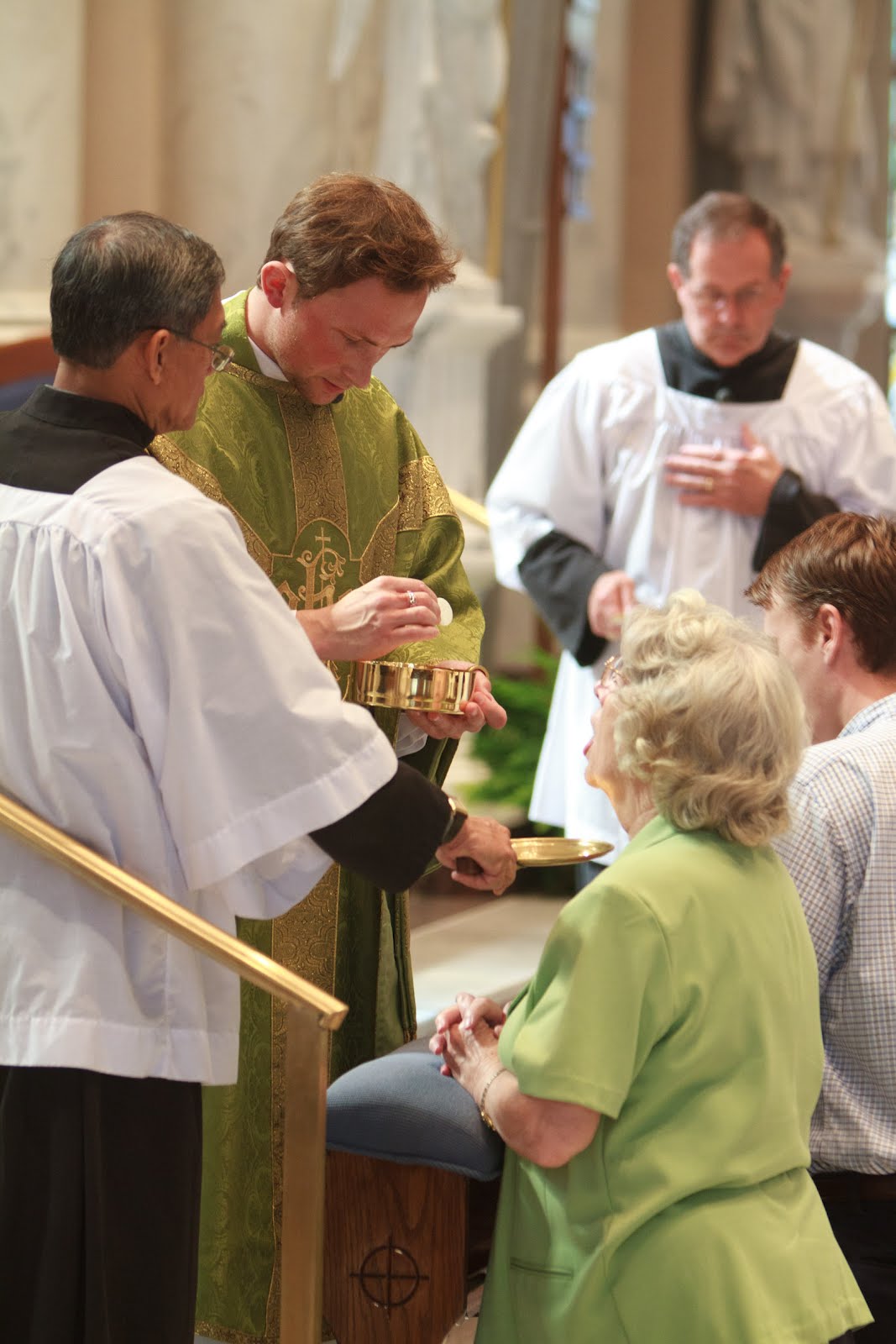
“But you are a chosen people, a royal priesthood, a holy nation, God’s special possession, that you may declare the praises of him who called you out of darkness into his wonderful light.â€
1 Peter 2:9
#8694
Bible Study / Re: Daily Scriptural Verse
November 25, 2012, 09:32:06 AM
“[Spiritual Fullness in Christ] So then, just as you received Christ Jesus as Lord, continue to live your lives in him, rooted and built up in him, strengthened in the faith as you were taught, and overflowing with thankfulness.â€
-Colossians 2:6-7
#8695
Inspiration & Hope / Re: Jesuit MDs: Walking with Ignatius on Their Medical Rounds
November 25, 2012, 09:23:02 AM
Beloved Loyola Physician and Dean, Father Dr. Myles N. Sheehan, to Take-up Position as Provincial of New England.
#8696
Inspiration & Hope / Re: Jesuit MDs: Walking with Ignatius on Their Medical Rounds
November 25, 2012, 09:17:49 AM
Like the cardinal’s doctor, Fr. John Siberski, SJ, MD,
specializes in geriatrics, though his field is psychiatry.
He sees patients two days a week at Georgetown University
Hospital, otherwise serving as associate professor
of psychiatry and assistant dean for student life at
Georgetown’s medical school. He celebrates Mass regularly
at both the school and the hospital chapel, and his bedside
manner extends to hearing confession.
At 58, Fr. Siberski was one of three men ordained as
Jesuits in the New England Province last June. He says
he never knowingly met a Jesuit until 1989, while in
Georgetownâ€"that’s Guyana, not Washington, D.C.
At the time, he had closed a family medical practice
founded by his late father in Plymouth, Pa., and he was
volunteering at a Sisters of Mercy hospital in Guyana,
before beginning a psychiatric residency at Temple
University Hospital in Philadelphia. In Guyana, he got to
know Jesuit chaplains and novices who were nurses’ aides,
working with them during the day, playing Scrabble with
them at night.
“Looking back, what inspired me was their lived
spirituality,†the priest recalls, speaking of how these
Jesuits carried the Ignatian spirit of service and friendship
with them, whether in the hospital, at the altar or on the
rugby field. Three years later, he saw
the same qualities in Jesuits working
at Massachusetts General Hospital,
where he pursued advanced psychiatric
training.
Asked how the Ignatian spirit
follows him on his medical rounds,
Fr. Siberski mentioned something
that had just happened that day. After
11 grueling hours at the hospital, the
daughter of one of his Alzheimer’s
patients called to say her father had passed
out at a supermarket and was being rushed by ambulance
to the emergency room. Fr. Siberski could have easily
dispatched an intern to the ER, as many specialists do.
But he said to himself at the time, “I know Ignatius is up
there thinking, ‘You better go over there’.†He did, and the
patient was okay.
In moments like that, Fr. Siberski said he also hears the
words of Jerome Nadal, a member of St. Ignatius’s original
band of brothers, who urged fellow Jesuits “to pray as if
everything depended on God, and work as if everything
depended on you.â€
In Chicago, Fr. Sheehan, 50, says he has buried more than
a few of his geriatric patients, and he has anointed many of
them during house calls that he makes in his “free time.â€
Boston-born and ordained in 1994, Fr. Sheehan doesn’t
dwell on being a Jesuit physician, as distinct from any other
sort of Jesuit.
“I love being a doctor, but I don’t think this ministry is
any more exciting than teaching high school,†he said. “As
Jesuits, we go all-out for the Lord and the Church, using
the gifts that are given to us.â€
#8697
Inspiration & Hope / Jesuit MDs: Walking with Ignatius on Their Medical Rounds
November 25, 2012, 09:17:07 AM
The name embroidered on his white coat
reads “Myles N. Sheehan, SJ, MD,â€
but that’s not why many of his patients
at a suburban Chicago hospital know
he’s a Jesuit. They know the face. When
Cardinal Francis George of Chicago was
diagnosed with bladder cancer this past
summer, it was Fr. Sheehan, in white collar
and white coat, who stepped in front of
television cameras at press conferences.
As Cardinal George’s personal physician,
Fr. Sheehan (who doesn’t normally wear
his clerical collar at the hospital because
he says it could confuse patients) briefed
reporters on the churchman’s bodily and
spiritual condition. He reflected on how
his illustrious patient was getting to know
the Lord who accompanies us on journeys
through disease and recovery
#8698
Anonymous Diary Blog / Re: What Did You Do Today?
November 25, 2012, 09:15:55 AM
Good Evening Tubag Bohol!
I hope everyone is in good health, mind, body and spirit! May the Peace of Our Lord Jesus Christ be with you all! I trust that everyone had a wonderful Thanksgiving Weekend , filled with the love and comfort of friends and family. Thanks be to God, my Thanksgiving was blessed! Truly, I have a lot to be thankful for, one of which is the friendships that I have made here in Tubag Bohol Dot Com. So , to all of you my virtual friends and family, I give you my peace ! Know that I love you all, and that I hope the friendships here will continue to blossom and to grow and bear fruit. Through Christ Our LORD, I pray. Amen.

With Love Always,
Bran Lorenzo
I hope everyone is in good health, mind, body and spirit! May the Peace of Our Lord Jesus Christ be with you all! I trust that everyone had a wonderful Thanksgiving Weekend , filled with the love and comfort of friends and family. Thanks be to God, my Thanksgiving was blessed! Truly, I have a lot to be thankful for, one of which is the friendships that I have made here in Tubag Bohol Dot Com. So , to all of you my virtual friends and family, I give you my peace ! Know that I love you all, and that I hope the friendships here will continue to blossom and to grow and bear fruit. Through Christ Our LORD, I pray. Amen.
With Love Always,
Bran Lorenzo
#8699
Bible Study / Re: The Order of the Servants of the Sick
November 25, 2012, 09:10:46 AM
Introduction to the Order of St. Camillus
Welcome to the Camillian Web Site.
We are happy you have chosen to look at us. We are a
group of Roman Catholic religious men dedicated to caring
for the sick. Today's health care world is a challenging field
to enter into but basically we are following the teaching
of Jesus who said: "Blessed are you, for I was sick and
you visited me" and "What you have done to the least of
my brothers and sisters you have done to me". To carry
out this teaching we are also following in the footsteps of
our Founder, Saint Camillus de Lellis, who encouraged his
followers to love the sick as a mother would love her only
sick child. We invite you if you are a warm and caring person
to continue to read about us and we pray that the Lord will
guide you to us, if it is His will. We pray that your heart may
be a warm and docile one capable of following His promptings
to wherever He may lead you. Thanks for giving us the opportunity
to share a little bit about ourselves with you and we look forward
to hearing from you too.
Fr. Richard O'Donnell
Provincial
http://beta.camillians.org/homepage.php
#8700
Bible Study / The Order of the Servants of the Sick
November 25, 2012, 09:08:31 AM
The Order of the Servants of the Sick
"The Order of the Servants of the Sick, a living part of the Church, has received from God, through the founder St. Camillus, the gift of witnessing to the world the ever-present love of the merciful Christ to the sick.
Through the ministry of mercy towards the sick, we contribute toward the welfare and promotion of the whole human family, whose joys, hopes, grief's and anxieties find an echo in our hearts, and we cooperate in the building up and growth of the whole Body of Christ. Therefore, following the example of our holy Father Camillus, we take it upon ourselves to esteem evermore, to love with all our heart and to practice with all our strength the service of the sick, even at the risk of our life."

http://beta.camillians.org/homepage.php
"The Order of the Servants of the Sick, a living part of the Church, has received from God, through the founder St. Camillus, the gift of witnessing to the world the ever-present love of the merciful Christ to the sick.
Through the ministry of mercy towards the sick, we contribute toward the welfare and promotion of the whole human family, whose joys, hopes, grief's and anxieties find an echo in our hearts, and we cooperate in the building up and growth of the whole Body of Christ. Therefore, following the example of our holy Father Camillus, we take it upon ourselves to esteem evermore, to love with all our heart and to practice with all our strength the service of the sick, even at the risk of our life."
http://beta.camillians.org/homepage.php
Pages 1 2 3 4 5 6 7 8 9 10 11 12 13 14 15 16 17 18 19 20 21 22 23 24 25 26 27 28 29 30 31 32 33 34 35 36 37 38 39 40 41 42 43 44 45 46 47 48 49 50 51 52 53 54 55 56 57 58 59 60 61 62 63 64 65 66 67 68 69 70 71 72 73 74 75 76 77 78 79 80 81 82 83 84 85 86 87 88 89 90 91 92 93 94 95 96 97 98 99 100 101 102 103 104 105 106 107 108 109 110 111 112 113 114 115 116 117 118 119 120 121 122 123 124 125 126 127 128 129 130 131 132 133 134 135 136 137 138 139 140 141 142 143 144 145 146 147 148 149 150 151 152 153 154 155 156 157 158 159 160 161 162 163 164 165 166 167 168 169 170 171 172 173 174 175 176 177 178 179 180 181 182 183 184 185 186 187 188 189 190 191 192 193 194 195 196 197 198 199 200 201 202 203 204 205 206 207 208 209 210 211 212 213 214 215 216 217 218 219 220 221 222 223 224 225 226 227 228 229 230 231 232 233 234 235 236 237 238 239 240 241 242 243 244 245 246 247 248 249 250 251 252 253 254 255 256 257 258 259 260 261 262 263 264 265 266 267 268 269 270 271 272 273 274 275 276 277 278 279 280 281 282 283 284 285 286 287 288 289 290 291 292 293 294 295 296 297 298 299 300 301 302 303 304 305 306 307 308 309 310 311 312 313 314 315 316 317 318 319 320 321 322 323 324 325 326 327 328 329 330 331 332 333 334 335 336 337 338 339 340 341 342 343 344 345 346 347 348 349 350 351 352 353 354 355 356 357 358 359 360 361 362 363 364 365 366 367 368 369 370 371 372 373 374 375 376 377 378 379 380 381 382 383 384 385 386 387 388 389 390 391 392 393 394 395 396 397 398 399 400 401 402 403 404 405 406 407 408 409 410 411 412 413 414 415 416 417 418 419 420 421 422 423 424 425 426 427 428 429 430 431 432 433 434 435 436 437 438 439 440 441 442 443 444 445 446 447 448 449 450 451 452 453 454 455 456 457 458 459 460 461 462 463 464 465 466 467 468 469 470 471 472 473 474 475 476 477 478 479 480 481 482 483 484 485 486 487 488 489 490 491 492 493 494 495 496 497 498 499 500 501 502 503 504 505 506 507 508 509 510 511 512 513 514 515 516 517 518 519 520 521 522 523 524 525 526 527 528 529 530 531 532 533 534 535 536 537 538 539