
This section allows you to view all posts made by this member. Note that you can only see posts made in areas you currently have access to.








#822
Help & Support / Re: $20 prize
April 26, 2013, 07:40:52 PM
sir balong, lain pa nga tigmo2x para maka-bibo diri pud bah
#823
Anonymous Diary Blog / Re: What Did You Do Today?
April 26, 2013, 07:38:32 PMQuote from: islander on April 26, 2013, 07:37:07 PM
taking advantage of my more than average internet connection today. wa na mag-tantrums unlike the last few days nga maayo na lang kun makasulod ko sa tubagbohol ug pila ka minutes.
aw parehas diay ta hahahaha
#824
Question and Answer / Re: What do you do if you can’t sleep at night?
April 26, 2013, 07:36:17 PMQuote from: taga tigbao on April 26, 2013, 06:44:52 PM
Ah, TB diay tambaw ug dili maka tug? Hehehe
aw mao ni tambal nako
#825
Health and Food / Re: Top 10 Symbolic Chinese Foods : From Fish to Fowl
April 26, 2013, 06:37:59 PM
10. Symbolic Recipes
Here are recipes featuring symbolic Chinese food for you to enjoy:
Kung Pao Chicken
Longevity Noodles
Peking Duck
Red Cooked Chicken or Soy Sauce Chicken
Sago Tarts
Sweet and Sour Fish
Tea Eggs

Here are recipes featuring symbolic Chinese food for you to enjoy:
Kung Pao Chicken
Longevity Noodles
Peking Duck
Red Cooked Chicken or Soy Sauce Chicken
Sago Tarts
Sweet and Sour Fish
Tea Eggs
#826
Health and Food / Re: Top 10 Symbolic Chinese Foods : From Fish to Fowl
April 26, 2013, 06:37:15 PM
9. Don't Forget the Vegetables!
Chinese garlic chives symbolize eternity, while cone-shaped winter bamboo shoots are a symbol of wealth.
"Do not dismiss the dish saying that it is just, simply food. The blessed thing is an entire civilization in itself." (Abdulhak Sinasi )


Chinese garlic chives symbolize eternity, while cone-shaped winter bamboo shoots are a symbol of wealth.
"Do not dismiss the dish saying that it is just, simply food. The blessed thing is an entire civilization in itself." (Abdulhak Sinasi )
#827
Health and Food / Re: Top 10 Symbolic Chinese Foods : From Fish to Fowl
April 26, 2013, 06:36:04 PM
8. Cake
And what about the sweet, steamed cakes that are so popular during the Chinese New Year season? Cakes such as Sticky Rice Cake have symbolic significance on many levels. Their sweetness symbolizes a rich, sweet life, while the layers symbolize rising abundance for the coming year. Finally, the round shape signifies family reunion.

And what about the sweet, steamed cakes that are so popular during the Chinese New Year season? Cakes such as Sticky Rice Cake have symbolic significance on many levels. Their sweetness symbolizes a rich, sweet life, while the layers symbolize rising abundance for the coming year. Finally, the round shape signifies family reunion.
#828
Health and Food / Re: Top 10 Symbolic Chinese Foods : From Fish to Fowl
April 26, 2013, 06:35:17 PM
7. Fruit - Tangerines, Oranges and Pomelos
Tangerines and oranges are passed out freely during Chinese New Year as the words for tangerine and orange sound like luck and wealth, respectively. As for pomelos, this large ancestor of the grapefruit signifies abundance, as the Chinese word for pomelo sounds like the word for "to have."

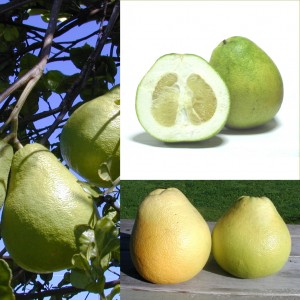
Tangerines and oranges are passed out freely during Chinese New Year as the words for tangerine and orange sound like luck and wealth, respectively. As for pomelos, this large ancestor of the grapefruit signifies abundance, as the Chinese word for pomelo sounds like the word for "to have."
#829
Health and Food / Re: Top 10 Symbolic Chinese Foods : From Fish to Fowl
April 26, 2013, 06:33:56 PM
6. Seeds (lotus seeds, watermelon seeds, etc)
Visit an Asian bakery during the Chinese New Year, and you're likely to find a wide assortment of snacks with different types of seeds in them. The seed-filled treats represent bearing many children in Chinese culture.


Visit an Asian bakery during the Chinese New Year, and you're likely to find a wide assortment of snacks with different types of seeds in them. The seed-filled treats represent bearing many children in Chinese culture.
#830
Health and Food / Re: Top 10 Symbolic Chinese Foods : From Fish to Fowl
April 26, 2013, 06:32:31 PM
5. Chicken
In Chinese culture, chicken forms part of the symbolism of the dragon and phoenix. At a Chinese wedding, chicken's feet (sometimes referred to as phoenix feet) are often served with dragon foods such as lobster. Chicken is also popular at Chinese New Year, symbolizing a good marriage and the coming together of families (serving the bird whole emphasizes family unity).

In Chinese culture, chicken forms part of the symbolism of the dragon and phoenix. At a Chinese wedding, chicken's feet (sometimes referred to as phoenix feet) are often served with dragon foods such as lobster. Chicken is also popular at Chinese New Year, symbolizing a good marriage and the coming together of families (serving the bird whole emphasizes family unity).
#831
Health and Food / Re: Top 10 Symbolic Chinese Foods : From Fish to Fowl
April 26, 2013, 06:31:56 PM
4. Duck
If you are ever invited to a Chinese wedding banquet, don't be surprised to spot a mouthwatering platter of Peking duck on the banquet table. Ducks represent fidelity in Chinese culture. Also, red dishes are featured at weddings as red is the color of happiness. (You'll find them served at New Year's banquets for the same reason.)

If you are ever invited to a Chinese wedding banquet, don't be surprised to spot a mouthwatering platter of Peking duck on the banquet table. Ducks represent fidelity in Chinese culture. Also, red dishes are featured at weddings as red is the color of happiness. (You'll find them served at New Year's banquets for the same reason.)
#832
Health and Food / Re: Top 10 Symbolic Chinese Foods : From Fish to Fowl
April 26, 2013, 06:31:13 PM
3. Fish
Although westerners sometimes balk at the sight of a entire fish lying on a plate, in China a fish served whole is a symbol of prosperity. In fact, at a banquet it is customary to serve the whole fish last, pointed toward the guest of honor. Fish also has symbolic significance because the Chinese word for fish, yu, sounds like the word for riches or abundance, and it is believed that eating fish will help your wishes come true in the year to come.

Although westerners sometimes balk at the sight of a entire fish lying on a plate, in China a fish served whole is a symbol of prosperity. In fact, at a banquet it is customary to serve the whole fish last, pointed toward the guest of honor. Fish also has symbolic significance because the Chinese word for fish, yu, sounds like the word for riches or abundance, and it is believed that eating fish will help your wishes come true in the year to come.
#833
Health and Food / Re: Top 10 Symbolic Chinese Foods : From Fish to Fowl
April 26, 2013, 06:30:06 PM
2. Noodles
Noodles are a symbol of longevity in Chinese culture. They are as much a part of a Chinese birthday celebration as a birthday cake with lit candles is in many countries. Since noodles do symbolize long life, it is considered very unlucky to cut up a strand.

Noodles are a symbol of longevity in Chinese culture. They are as much a part of a Chinese birthday celebration as a birthday cake with lit candles is in many countries. Since noodles do symbolize long life, it is considered very unlucky to cut up a strand.
#834
Health and Food / Top 10 Symbolic Chinese Foods : From Fish to Fowl
April 26, 2013, 06:29:36 PM
http://www.cultural-china.com/
Is there any major holiday that isn't celebrated with a special festive food? Given the important role food plays in Chinese culture, it is not surprising that many foods have symbolic meaning. The symbolic significance of a food may be based on its appearance or on how the Chinese word for it sounds. Here are several symbolic Chinese foods:
1. Eggs
Eggs hold a special symbolic significance in many cultures, and China is no exception. The Chinese believe eggs symbolize fertility. After a baby is born, parents may hold a "red egg and ginger party," where they pass out hard boiled eggs to announce the birth. (In some regions of China the number of eggs presented depends on the sex of the child: an even number for a girl, and an odd number if a boy has been born).
#835
Tira-Pasagad | Saksak-Sinagol / Re: Top Ten Brands of Wine in China
April 26, 2013, 06:26:27 PM
Dong Wine is produced in Donggong Temple, Zunyi City, Guizhou. Zunyi is famous for its long winemaking history that can be traced back to the Wei and Jin dynasties. Dong Wine is colorless, crystal clear, and has a delicate and pleasing aroma accompanied by quietly elegant drug fragrance and a refreshing tartish flavor. A taste of the mellow and full-bodied wine can leave a pleasant lingering aftertaste.

#836
Tira-Pasagad | Saksak-Sinagol / Re: Top Ten Brands of Wine in China
April 26, 2013, 06:25:51 PM
Like Fen Wine that has been famous for a thousand years, Zhuyeqing Liquor was also produced in Xinghua Village, Fenyang. It has enjoyed high reputation ever since the ancient times, when it was first prepared by distilling rice wine together with bamboo leaves. It also became an imperial wine a long time ago.
The liquor assumes a golden transparency with tints of bluish green in color. It features a unique and mellow aroma formed together by Fen Wine and medicinal materials. The mild liquor serves to warm your stomach, harmonize liver and spleen, activate and enrich the blood, normalize Qi and remove fatigue while improving digestion and generating saliva.

The liquor assumes a golden transparency with tints of bluish green in color. It features a unique and mellow aroma formed together by Fen Wine and medicinal materials. The mild liquor serves to warm your stomach, harmonize liver and spleen, activate and enrich the blood, normalize Qi and remove fatigue while improving digestion and generating saliva.
#837
Tira-Pasagad | Saksak-Sinagol / Re: Top Ten Brands of Wine in China
April 26, 2013, 06:25:08 PM
Gujing Gongjiu is produced in Gujing Town, Haozhou City, Anhui. According to textual research, it was originated in 196 A.D., when Cao Cao dedicated "Jiu Yun Chun Jiu", the specialty from his hometown Haozhou, and its winemaking technique to Xian Emperor of Han Dynasty. The liquor has become the imperial tribute of all dynasties ever since then, hence the name "Gujing Gongjiu".

#838
Tira-Pasagad | Saksak-Sinagol / Re: Top Ten Brands of Wine in China
April 26, 2013, 06:24:43 PM
Like Fen Wine that has been famous for a thousand years, Zhuyeqing Liquor was also produced in Xinghua Village, Fenyang. It has enjoyed high reputation ever since the ancient times, when it was first prepared by distilling rice wine together with bamboo leaves. It also became an imperial wine a long time ago.
The liquor assumes a golden transparency with tints of bluish green in color. It features a unique and mellow aroma formed together by Fen Wine and medicinal materials. The mild liquor serves to warm your stomach, harmonize liver and spleen, activate and enrich the blood, normalize Qi and remove fatigue while improving digestion and generating saliva.
Luzhou, as the cradle of strong aromatic Chinese spirits, has fostered the Luzhou Laojiao of long standing in the history. It has the National Treasured Wine Vaults of 1573, which are the earliest wine vaults constructed in 1573, and also the ones continuously in use for the longest time and best preserved in China. In 2006, State Cultural Relics Bureau listed the site into the Tentative List of World Cultural Heritage. The "Traditional winemaking technique of Luzhou Laojiao" was also listed into the first "List of National Intangible Cultural Heritage" in May, 2006.
#839
Tira-Pasagad | Saksak-Sinagol / Re: Top Ten Brands of Wine in China
April 26, 2013, 06:24:07 PM
The Mianzhu Jiannanchun is produced in Mianzhu County, Sichuan. Famed as "the Hometown of Wines", Mianzhu County was so named because of its engagement in bamboo planting and wine making. The famous wine "Jian Nan Shao Chun" (early Jian Nan Chun) known far and near was produced as early as in Tang Dynasty. It's said that the famous poet Li Bai once sold his fur-lined jacket here for the wine, thus leaving our later generations a much-told story of "trading ermine for a drink".

#840
Tira-Pasagad | Saksak-Sinagol / Re: Top Ten Brands of Wine in China
April 26, 2013, 06:23:39 PM
Produced in Fengxiang County, Baoji City, Mei County and Qishan County in Shaanxi Province, it is one of the oldest wines at home and abroad with a long history of over 2600 years. Moderate drinking of it will help promote blood circulation and dispel cold, as well as refresh oneself and remove fatigue.

#841
Tira-Pasagad | Saksak-Sinagol / Re: Top Ten Brands of Wine in China
April 26, 2013, 06:23:18 PM
Fen Wine has a long historical standing. According to evidences found in excavated cultural relics, the winemaking history of Fen Wine in Xinghua Village, Shanxi can be traced back to the prehistoric period of Longshan Culture over 4000 years ago. Fen Wine is a typical mild aromatic Chinese spirit featuring consummating technique and a long history. It has always been famous for its softness, sweetness and good lingering aftertaste.

#842
Tira-Pasagad | Saksak-Sinagol / Re: Top Ten Brands of Wine in China
April 26, 2013, 06:22:49 PM
According to historical records, Dukang was the originator who distilled liquor out of grains during the Spring and Autumn Period. It's said that the site of his early winemaking activity locates at the Dukang Village in Caidian Township, Ruyang County. The spring here for making Dukang is crystal clear like green jade, with a flavor sweet and pure. Since Dukang was the originator of all winemakers, he has become the incarnation of all liquors today.

#843
Tira-Pasagad | Saksak-Sinagol / Re: Top Ten Brands of Wine in China
April 26, 2013, 06:22:09 PM
Wu Liang Ye is distilled out of five grains: red sorghum, rice, sticky rice, wheat and corn. It has won the praise of "three cups of it will make you invigorating all over, and a drop of it will give off a mouthful of aroma". The Yibin City in Sichuan, which is famed as "the Hometown of Top Wines", is the cradle of Yibin Wu Liang Ye.

#844
Tira-Pasagad | Saksak-Sinagol / Re: Top Ten Brands of Wine in China
April 26, 2013, 06:21:35 PM
Moutai has a mysterious and distant history in China and is also liquor for state banquets. Ever since the establishment of the PRC, Moutai has been presented to foreign leaders as a national gift in numerous grand occasions. It features a taste refined and delicate and a rich and mellow body. A taste of it will leave a long aftertaste and lingering aroma.

#845
Tira-Pasagad | Saksak-Sinagol / Top Ten Brands of Wine in China
April 26, 2013, 06:21:07 PM
http://www.cultural-china.com/

China is the hometown of wine, the cradle of wine culture, and one of the first winemaking countries in the world. According to archaeological discoveries, special wine vessels were found in Neolithic pottery wares that have been unearthed in modern and contemporary days.
Rice wine is one of oldest wines in the world. About over 3000 years ago in Shang and Zhou dynasties, the Chinese originated the Compound Fermentation Method by Yeast and began to volume produce rice wine. In Song Dynasty about 1000 years ago, the distillation method was invented, making distilled spirit the major liquor drunk by Chinese. The winemaking history in China is of long standing and rich in wine varieties, covering various famous wines known by people at home and abroad.
#846
Lifestyle, Culture and Arts / Winter Solstice
April 26, 2013, 06:17:31 PM
Winter solstice is a solar term in Chinese lunar calendar, and a traditional festival as well. It falls on December 22 or 23 (solar calendar) every year. It is the day when the Northern Hemisphere has the shortest daytime and longest nighttime in the whole year. After winter solstice, the daytime will grow increasingly longer. Early in the Spring and Autumn Period over 2500 years ago, winter solstice was mensurated by the Chinese by observing the sun with a gnomon shadow template. It is the earliest among the 24 solar terms being stipulated. After winter solstice, the coldest period comes to the northern part of the globe, which is commonly called "JinJiu", suggesting that once winter solstice comes, we will meet the coldest time ahead.
Commonly known as "Potlatch", "Changzhi Festival" and "Yasui", etc., winter solstice is a rather big festival attached with great importance by the Chinese people, thus the saying "Winter solstice is as important as the Spring Festival". It is a custom to celebrate the arrival of winter solstice, which is regarded as worthy since it is the beginning of a solar term circulation. Also it is an auspicious day deserving celebration. It is said that winter solstice was considered as New Year's Day in the Zhou Dynasty. Such a saying is still going round in the south of the Yangtze River that "People will be one year older after finishing the winter solstice dinner", which is commonly called "tiansui" (growing older). In the Tang and Song Dynasties, it was on winter solstice that heaven and ancestor worship was performed. On this day, the emperor would hold a solemn heaven worship ceremony in the suburbs and common people would offer sacrifice to their late parents and ancestors.
The tradition of winter solstice has been handed down until now. On this day, people in North China will butcher goats and eat dumplings and wontons, while southerners will have winter solstice rice balls and long noodles. And all across China, sacrifice to heaven and ancestors is offered on this day.
http://www.cultural-china.com/
#847
Lifestyle, Culture and Arts / Mid-Autumn Festival
April 26, 2013, 06:16:31 PM
The 15th day of every 8th lunar month is the traditional Chinese Mid-Autumn Festival. It is the most important festival after the Chinese Lunar New Year. The moon on the night of the 15th day of lunar August is believed to be fuller and brighter than in other months. A full moon is a symbol of togetherness. As such, the Mid-Autumn Festival is a time for family reunion. It's also called "Reunion Festival". Those unable to get home to join the get-together miss their family even more on the festival. The origin of the Mid-Autumn Festival derived from the tradition of worshipping the Goddess of Moon. The festival is also a time to celebrate a good autumn harvest. It dates back thousands of years and the modern-day festive customs were gradually formed over the years. Generally speaking, eating moon cakes, enjoying the moon and lighting up lanterns are common traditions on the festival.
In addition, various parts of the country and all ethnic minorities have different Mid-Autumn Festival customs. In Nanjing, the festival coincides with the blooming season of sweet-scented osmanthus flowers. Local people like to pick fresh osmanthus flowers for delicious food preparing. They traditionally eat osmanthus flower ducks and drink the flower juice. In Zhejiang, the Mid-Autumn Festival is an ideal time for tide watching. Fire dragon dances are usually performed in Hong Kong on the festival and people in Anhui do a game called "pagoda building" and the Dai ethnic people pay tribute to the moon and the Gaoshan ethic people usually perform ball-holding dance. All these interesting customs are an indication of people's love of life and good wishes for a better future.
There are lots of Chinese legends about the moon. The story of Goddess Chang'e, Wu Gang and the Jade Rabbit living on the moon is still popular today. There have been numerous poems about the Mid-Autumn Festival since ancient times, the most famous piece being Shui Diao Ge Tou by the Northern Song Dynasty poet Su Dongpo. Although he lamented by writing "Men have sorrow and joy, they part or meet again; the moon may be bright or dim, she may wax or wane. There has been nothing perfect since the olden days", he also expressed his wishes by writing "So let us wish that man will live long as he can; though miles apart, we'll share the beauty she displays.", reflecting how much those far away from home would like to reunite with their families and how deeply they missed their hometowns.

http://www.cultural-china.com/
#848
Lifestyle, Culture and Arts / Dragon Boat Festival
April 26, 2013, 06:14:34 PM
The Dragon Boat Festival, also named "Chongwu Festival", "Calamus Festival" or "Daughter's Festival", takes place in May 5 in the lunar calendar. It is a folk festival widely passed down with a history of over two thousand years, and one of the most important festivals as well. There are various celebrating activities on the day of Dragon Boat Festival, among which eating rice dumplings (zongzi, the steamed glutinous rice wrapped in bamboo leaves) and dragon boat race are important customs.
There are many legends on the origin of the Dragon Boat Festival. Some people say it is to commemorate the poet Qu Yuan, while some people think it is to memorialize Wu Zixu, a famous official in the Warring States Period, still there are some others regarding May 5 in the lunar calendar as the date when the Wuyue people held a memorial totem ceremony in ancient times. However, the legend on Qu Yuan is the most widely spread. People praise highly the lofty sentiment and outstanding talent toward this patriotic poet and take more pity on the finale that he drowned himself in a river. In the mind of most Chinese people, the conventions of eating rice dumplings and Dragon Boat Race in the Festival are all closely related to the commemoration of Qu Yuan. Besides, there are also different conventions like drinking realgar wine and wearing sachet.

http://www.cultural-china.com/
#849
Lifestyle, Culture and Arts / Tomb Sweeping Day
April 26, 2013, 06:12:15 PM
Tomb Sweeping Day, also called "Cold Food Day", is the most important day for people to offer sacrifice to ancestors. It started from the Zhou Dynasty, with a history of over 2500 years. Qingming is one of the 24 solar terms in China, indicating the coming of late spring, thus the best plowing and growing time, while "Cold Food Day" is a day when folks sweep the ancestors' tombs and eat cold food. Qingming was adjacent to Cold Food Day, so later on they gradually became one festival, and thus "Cold Food" became another name for Qingming, and dusting the tomb and eating cold food turned into the customs of Qing Ming. Qing Ming has evolved into a culture-rich and meaning-deep remembrance day.
Since people with weak constitutions might get hurt by eating cold raw food on Qingming, when the weather is still cold, various activities were invented for body-building, like stepping-the-green outgoing, swing, Chinese football, polo, willow-planting, tug-of-war, and rooster-fighting, etc.
Since the ancient times, there have been a lot of works of art and poems about Qingming, manifesting the emphasis and passing-on of the Chinese people on Qingming. Of these, Tomb Sweeping Day by Du Mu in the Tang Dynasty is a poem of household fame.
http://www.cultural-china.com/
#850
Lifestyle, Culture and Arts / Double-Ninth Day
April 26, 2013, 06:10:41 PM
Each ninth day of September in Chinese lunar calendar is the Double-Ninth Day, a traditional festival of China. Having undergone a history of more than 2,000 years, the Double-Ninth Day was formally set down as a folk festival in the Tang Dynasty and both Emperors and civilians alike should celebrate the festival following the etiquette and custom. As time goes by, the Double-Ninth Day has gradually formed the celebrating conventions of going on a journey, ascending height, inserting cornel, appreciating chrysanthemum, eating Double-Nine cake, and drinking chrysanthemum wine. On that day, people always gather the whole family to spend the festival together, while those far from their homes will generally become more homesick on that day. As the figure "9" also stands for longevity and health in the traditional concept of Han people, the Chinese government set September 9 in the lunar calendar as "the Elder's Festival" in 1989. Now, the Double-Ninth Day has been enlisted as Intangible Cultural Heritage of China.
http://www.cultural-china.com/
#851
Lifestyle, Culture and Arts / Double Seventh Festival
April 26, 2013, 06:08:18 PM
In China, the Double Seventh Festival, or Ingenuity-begging Festival (the festival to plead for skills) falls on the seventh day of the seventh month of the lunar calendar. The festival originates from the legend of the loyal love between Niulang (cowherd) and Zhinv (weaving girl).
On the festival, girls beg for bright heart and knitting and needlecraft skills from the goddess in heaven. There are various folk customs of ingenuity tests in ancient China. And the maids in palace also paid great attention to the activities, which are usually supported by the emperor. Celebrations are also held in the theme of the Double Seventh Festival everywhere in China, such as the customs of "seed plant for child", "catch dew" and "sworn sisterhood under the moon". In the romantic evening, girls prepare melons and seasonal foods under the moon before worship and prayers for skills and a good marriage.
The food customs in each place for the festival are not necessarily the same but are all called having propitious food. Dumplings, noodles, deep-fried twisted dough sticks and wontons are mostly included, among which the most famous is the Qiaoguo (Fried Thin Paste).
As China's Valentine's Day, the Double Seventh Festival is the most romantic one among all traditional Chinese festivals, and also a day most valued by girls in the past. Today, it is still one of our favorite festivals under evolvement and innovation based on the traditional culture.
http://www.cultural-china.com/


#864
Fashion Trend / Re: Take your pick of these wearables, TB ladies
April 26, 2013, 05:30:49 PMQuote from: islander on April 26, 2013, 03:59:29 PM
Eva Mendes

kani murag musoot ko ani
#865
LGU Philippines / Re: Vote-buying has started — Comelec
April 26, 2013, 05:28:29 PMQuote from: taga tigbao on April 26, 2013, 04:40:30 PM
Naa bas injo ingani?
Naay mga pulitiko nga magarkila ug bus pauli sa probinsiya para makabotar tong mga tawo nga dias Manila. Hehehe.Of course, given na kung kinsa kinahanglan butaran.
naa man pud na sa tagbilaran nga libre sakay padung sa botaranan para sure nga maka-botar ka
#866
Inspiration & Hope / Re: How to Live on $1.50 a Day, by Ben Affleck
April 26, 2013, 05:25:16 PM
ajo nalang pud diri kay misag magbagtas ko og 45 minutes padung sa akong part time job kay dli man init kay ting-tugnaw pa ...
#867
Talk of the Town / Re: Wanted: The top five fugitives in PH
April 26, 2013, 05:23:29 PM
sayang pud kay they made wrong choices in life
#868
Inspiration & Hope / Re: How to Live on $1.50 a Day, by Ben Affleck
April 26, 2013, 02:13:12 PMQuote from: islander on April 26, 2013, 02:10:55 PM
way to go, ann! kalami diay dinha kay barato ang pagkaon ikomparar sa ato. healthy diet pa gyod.
yes barato ra dri unya paki-utan gyud sila oi. halos gani itakwil ang meat. basta cafeteria food, unlimited rice plus free soup gyud na
#870
Inspiration & Hope / Re: How to Live on $1.50 a Day, by Ben Affleck
April 26, 2013, 01:48:17 PM
i challenged myself to a week of spending only less than 5rmb a day (around P32)
breakfast:
1 yuan - coffee sachet
.5 yuan - steam bread
lunch @ cafeteria with free soup:
rice - .6
vegetables - .8
supper @ cafeteria with free soup:
rice - .6
vegetables - .8
drank boiled water
walked to school and other places
Moral Lesson of the Story: Anyone can survive if he/she wants to.
breakfast:
1 yuan - coffee sachet
.5 yuan - steam bread
lunch @ cafeteria with free soup:
rice - .6
vegetables - .8
supper @ cafeteria with free soup:
rice - .6
vegetables - .8
drank boiled water
walked to school and other places
Moral Lesson of the Story: Anyone can survive if he/she wants to.
#871
Fashion Trend / Re: Beauty clones
April 26, 2013, 01:40:43 PM
hahahaha true gyud nga mao2x ra og mga dagway
#880
Anonymous Diary Blog / Re: Food Food Food
April 26, 2013, 01:33:15 PMhalo halo at the bee farm
#899
Panglao Island - Bohol / Re: Alona Beach in Panglao
April 26, 2013, 12:47:35 PM
mao gyud ni sige ask nako nga why go to boracay when in fact its the same as panglao
#900
Tira-Pasagad | Saksak-Sinagol / Re: The 10 Funniest Missing Pet Signs Of All Time
April 26, 2013, 12:43:46 PM