This section allows you to view all posts made by this member. Note that you can only see posts made in areas you currently have access to.
#801
Philippine Business News / Re: German national shot dead in causeway
November 19, 2013, 05:55:53 AM #802
Bible Study / Re: Saints Of The Day
November 18, 2013, 03:44:57 PM
Dedication of Churches of Sts. Peter and Paul
St. Peter’s is probably the most famous church in Christendom. Massive in scale and a veritable museum of art and architecture, it began on a much humbler scale. Vatican Hill was a simple cemetery where believers gathered at St. Peter’s tomb to pray. In 319 Constantine built on the site a basilica that stood for more than a thousand years until, despite numerous restorations, it threatened to collapse. In 1506 Pope Julius II ordered it razed and reconstructed, but the new basilica was not completed and dedicated for more than two centuries.
St. Paul’s Outside the Walls stands near the Abaazia delle Tre Fontane, where St. Paul is believed to have been beheaded. The largest church in Rome until St. Peter’s was rebuilt, the basilica also rises over the traditional site of its namesake’s grave. The most recent edifice was constructed after a fire in 1823. The first basilica was also Constantine’s doing.
Constantine’s building projects enticed the first of a centuries-long parade of pilgrims to Rome. From the time the basilicas were first built until the empire crumbled under “barbarian†invasions, the two churches, although miles apart, were linked by a roofed colonnade of marble columns.
Comment:
Peter, the rough fisherman whom Jesus named the rock on which the Church is built, and the educated Paul, reformed persecutor of Christians, Roman citizen and missionary to the Gentiles, are the original odd couple. The major similarity in their faith-journeys is the journey’s end: Both, according to tradition, died a martyr’s death in Romeâ€"Peter on a cross and Paul beneath the sword. Their combined gifts shaped the early Church and believers have prayed at their tombs from the earliest days.
Quote:
“It is extraordinarily interesting that Roman pilgrimage began at an…early time. Pilgrims did not wait for the Peace of the Church [Constantine’s edict of toleration] before they visited the tombs of the Apostles. They went to Rome a century before there were any public churches and when the Church was confined to the tituli [private homes] and the catacombs. The two great pilgrimage sites were exactly as todayâ€"the tombs, or memorials, of St. Peter upon the Vatican Hill and the tomb of St. Paul off the Ostian Way†(H.V. Morton, This Is Rome).
#803
Bible Study / Re: Minute Meditations
November 18, 2013, 03:44:18 PM
Minute Meditations
Pray With Confidence
We believe that Jesus heals. We believe that Jesus wants good things for us. And so we make our prayers with the confidence and the fervent expectation that something wondrous, something powerful, something life-giving will happen.
Pray With Confidence
We believe that Jesus heals. We believe that Jesus wants good things for us. And so we make our prayers with the confidence and the fervent expectation that something wondrous, something powerful, something life-giving will happen.
#804
Philippine Business News / Re: German national shot dead in causeway
November 18, 2013, 04:03:36 AM
Day Isles, kining balita-a diha sa FB account ni Mike LIgalig....breakingnews pa, ambot unsay follow-up. Ugma tingali sa Bild Zeitung molagbas ning balita-a. Such burtal killing can be accredited to drugs and money laundering. Where did he got so much at his age 30? I will post any updates soon when I get one.
#805
Philippine Business News / Re: German national shot dead in causeway
November 17, 2013, 08:17:22 PM #806
Philippine Business News / Re: German national shot dead in causeway
November 17, 2013, 08:03:41 PM
he made headlines a few months ago for beating his GF black and blue.
#807
Philippine Business News / Re: German national shot dead in causeway
November 17, 2013, 07:57:21 PM
a very serious looking businessman
#808
Philippine Business News / Re: German national shot dead in causeway
November 17, 2013, 07:41:20 PM
if you google his name this will come out....http://visionimprenta.com/Aggensteineok/index.php?option=com_content&view=article&id=2&Itemid=3
#809
Philippine Business News / German national shot dead in causeway
November 17, 2013, 07:38:41 PM
Benjamin Aggenstein
This certified swindler's biodata comes with it ...(get ready....) Honorary Consul to Sierra Leone, International Lawyer, United Nations human rights advocate, and a Doctor ...doing bogus businesses in Bohol and yet takes his daily flights to Cebu "via Air Aggerstein". But what a way to die - sa Causeway!
#810
Bible Study / Re: Saints Of The Day
November 17, 2013, 04:04:42 PM
St. Elizabeth of Hungary
(1207-1231)
In her short life Elizabeth manifested such great love for the poor and suffering that she has become the patroness of Catholic charities and of the Secular Franciscan Order. The daughter of the King of Hungary, Elizabeth chose a life of penance and asceticism when a life of leisure and luxury could easily have been hers. This choice endeared her in the hearts of the common people throughout Europe.
At the age of 14 Elizabeth was married to Louis of Thuringia (a German principality), whom she deeply loved; she bore three children. Under the spiritual direction of a Franciscan friar, she led a life of prayer, sacrifice and service to the poor and sick. Seeking to become one with the poor, she wore simple clothing. Daily she would take bread to hundreds of the poorest in the land, who came to her gate.
After six years of marriage, her husband died in the Crusades, and she was grief-stricken. Her husband’s family looked upon her as squandering the royal purse, and mistreated her, finally throwing her out of the palace. The return of her husband’s allies from the Crusades resulted in her being reinstated, since her son was legal heir to the throne.
In 1228 Elizabeth joined the Secular Franciscan Order, spending the remaining few years of her life caring for the poor in a hospital which she founded in honor of St. Francis. Elizabeth’s health declined, and she died before her 24th birthday in 1231. Her great popularity resulted in her canonization four years later.
Comment:
Elizabeth understood well the lesson Jesus taught when he washed his disciples' feet at the Last Supper: The Christian must be one who serves the humblest needs of others, even if one serves from an exalted position. Of royal blood, Elizabeth could have lorded it over her subjects. Yet she served them with such a loving heart that her brief life won for her a special place in the hearts of many. Elizabeth is also an example to us in her following the guidance of a spiritual director. Growth in the spiritual life is a difficult process. We can play games very easily if we don't have someone to challenge us or to share experiences so as to help us avoid pitfalls.
Quote:
"Today, there is an inescapable duty to make ourselves the neighbor of every individual, without exception, and to take positive steps to help a neighbor whom we encounter, whether that neighbor be an elderly person, abandoned by everyone, a foreign worker who suffers the injustice of being despised, a refugee, an illegitimate child wrongly suffering for a sin of which the child is innocent, or a starving human being who awakens our conscience by calling to mind the words of Christ: 'As long as you did it for one of these, the least of my brethren, you did it for me' (Matthew 25:40)" (Vatican II, Pastoral Constitution on the Church in the Modern World, 27, Austin Flannery translation).
Patron Saint of:
Bakers
#811
Bible Study / Re: Minute Meditations
November 17, 2013, 04:03:52 PM
Minute Meditations
Our Daily Bread
Bread refers not only to our earthly nourishment but also to our eternal nourishment: Jesus is the Bread of Life. We ask for what we need today for our bodies and our souls.
Our Daily Bread
Bread refers not only to our earthly nourishment but also to our eternal nourishment: Jesus is the Bread of Life. We ask for what we need today for our bodies and our souls.
#812
Bible Study / Re: Saints Of The Day
November 16, 2013, 02:19:20 PM
St. Margaret of Scotland
(1050?-1093)
Margaret of Scotland was a truly liberated woman in the sense that she was free to be herself. For her, that meant freedom to love God and serve others.
Not Scottish by birth, Margaret was the daughter of Princess Agatha of Hungary and the Anglo-Saxon Prince Edward Atheling. She spent much of her youth in the court of her great-uncle, the English king, Edward the Confessor. Her family fled from William the Conqueror and was shipwrecked off the coast of Scotland. King Malcolm befriended them and was captivated by the beautiful, gracious Margaret. They were married at the castle of Dunfermline in 1070.
Malcolm was good-hearted, but rough and uncultured, as was his country. Because of Malcolm’s love for Margaret, she was able to soften his temper, polish his manners and help him become a virtuous king. He left all domestic affairs to her and often consulted her in state matters.
Margaret tried to improve her adopted country by promoting the arts and education. For religious reform she encouraged synods and was present for the discussions which tried to correct religious abuses common among priests and lay people, such as simony, usury and incestuous marriages. With her husband, she founded several churches.
Margaret was not only a queen, but a mother. She and Malcolm had six sons and two daughters. Margaret personally supervised their religious instruction and other studies.
Although she was very much caught up in the affairs of the household and country, she remained detached from the world. Her private life was austere. She had certain times for prayer and reading Scripture. She ate sparingly and slept little in order to have time for devotions. She and Malcolm kept two Lents, one before Easter and one before Christmas. During these times she always rose at midnight for Mass. On the way home she would wash the feet of six poor persons and give them alms. She was always surrounded by beggars in public and never refused them. It is recorded that she never sat down to eat without first feeding nine orphans and 24 adults.
In 1093, King William Rufus made a surprise attack on Alnwick castle. King Malcolm and his oldest son, Edward, were killed. Margaret, already on her deathbed, died four days after her husband.
Comment:
There are two ways to be charitable: the "clean way" and the "messy way." The "clean way" is to give money or clothing to organizations that serve the poor. The "messy way" is dirtying your own hands in personal service to the poor. Margaret's outstanding virtue was her love of the poor. Although very generous with material gifts, Margaret also visited the sick and nursed them with her own hands. She and her husband served orphans and the poor on their knees during Advent and Lent. Like Christ, she was charitable the "messy way."
Quote:
"When [Margaret] spoke, her conversation was with the salt of wisdom. When she was silent, her silence was filled with good thoughts. So thoroughly did her outward bearing correspond with the staidness of her character that it seemed as if she has been born the pattern of a virtuous life" (Turgot, St. Margaret's confessor).
#813
Bible Study / Re: Minute Meditations
November 16, 2013, 02:18:44 PM
Thy Will Be Done
We want what God wants, knowing that His will is the best for us and for the world.
We want what God wants, knowing that His will is the best for us and for the world.
#814
Tira-Pasagad | Saksak-Sinagol / pahaloka ko Day...
November 15, 2013, 04:25:43 AM
Back on January 9th, a group of Wadesboro, North Carolina bikers were riding east on Hwy 74 when they saw a girl about to jump off the Pee Dee River Bridge.
So they stopped.
George, their leader, a big burly man of 53, gets off his Harley, walks through a group of
gawkers, past the State Trooper who was trying to talk her down off the railing, and says, "Hey Baby - whatcha doin' up there on that railin'?"
She says tearfully, "I'm going to commit suicide!"
While he didn't want to appear too "insensitive," George also didn't want to miss this "be-a-legend" opportunity either. So, he asked: "Well, before you jump, Honey-Babe, why don't you give ol' George here your best last kiss?"
So with no hesitation at all, she leaned back over the railing and did just that, and it was a long, deep, lingering kiss followed immediately by another even better one. After they breathlessly finished, George gets a big thumbs-up approval from his biker-buddies, the onlookers, and even the State Trooper, and then says, "Wow! That was the best kiss I have
ever had! That's a real talent you're wasting there, Sugar Shorts. You could be famous if you rode with me. Why are you committing suicide?"
"My parents don't like me dressing up like a girl."
..It's still unclear whether he jumped or was pushed.

So they stopped.
George, their leader, a big burly man of 53, gets off his Harley, walks through a group of
gawkers, past the State Trooper who was trying to talk her down off the railing, and says, "Hey Baby - whatcha doin' up there on that railin'?"
She says tearfully, "I'm going to commit suicide!"
While he didn't want to appear too "insensitive," George also didn't want to miss this "be-a-legend" opportunity either. So, he asked: "Well, before you jump, Honey-Babe, why don't you give ol' George here your best last kiss?"
So with no hesitation at all, she leaned back over the railing and did just that, and it was a long, deep, lingering kiss followed immediately by another even better one. After they breathlessly finished, George gets a big thumbs-up approval from his biker-buddies, the onlookers, and even the State Trooper, and then says, "Wow! That was the best kiss I have
ever had! That's a real talent you're wasting there, Sugar Shorts. You could be famous if you rode with me. Why are you committing suicide?"
"My parents don't like me dressing up like a girl."
..It's still unclear whether he jumped or was pushed.
#815
European Union EU / dual citizenship in Europe, a ray of hope!
November 15, 2013, 04:20:52 AM
http://www.spiegel.de/international/germany/german-coalition-talks-move-closer-to-new-dual-citizenship-law-a-933523.html
For the first time in Germany, politicians seem close to a deal that would extend the right to dual citizenship to children of immigrants and naturalized Germans. The national identity of thousands of young people hangs in the balance.
The subject of dual citizenship has long been a political flashpoint in Germany. In recent years, calls have mounted from the left for the country to overturn its prohibitive approach and make it easier for people to hold two passports. Yet heavy opposition, including from Chancellor Angela Merkel, kept it from becoming a reality.
" I will avail of this if pushed trough"
#816
Bible Study / Re: Minute Meditations
November 14, 2013, 08:22:38 PM
Minute Meditations
Hallowed be Thy Name
We live in a culture that uses the name of God a lot but usually not for sacred things! The word hallow in this context is “to recognize as holy.†We want the world to know that God’s name is holy.
Hallowed be Thy Name
We live in a culture that uses the name of God a lot but usually not for sacred things! The word hallow in this context is “to recognize as holy.†We want the world to know that God’s name is holy.
#817
Bible Study / Re: Saints Of The Day
November 14, 2013, 08:22:04 PM
St. Gertrude
(1256?-1302)
Gertrude, a Benedictine nun in Helfta (Saxony), was one of the great mystics of the 13th century. Together with her friend and teacher St. Mechtild, she practiced a spirituality called "nuptial mysticism," that is, she came to see herself as the bride of Christ. Her spiritual life was a deeply personal union with Jesus and his Sacred Heart, leading her into the very life of the Trinity.
But this was no individualistic piety. Gertrude lived the rhythm of the liturgy, where she found Christ. In the liturgy and in Scripture, she found the themes and images to enrich and express her piety. There was no clash between her personal prayer life and the liturgy.
Comment:
Gertrude's life is another reminder that the heart of the Christian life is prayer: private and liturgical, ordinary or mystical, always personal.
Quote:
"Lord, you have granted me your secret friendship by opening the sacred ark of your divinity, your deified heart, to me in so many ways as to be the source of all my happiness; sometimes imparting it freely, sometimes as a special mark of our mutual friendship. You have so often melted my soul with your loving caresses that, if I did not know the abyss of your overflowing condescensions, I should be amazed were I told that even your Blessed Mother had been chosen to receive such extraordinary marks of tenderness and affection" (Adapted from The Life and Revelations of Saint Gertrude).
Patron Saint of:
West Indies
#818
Bible Study / Re: Saints Of The Day
November 13, 2013, 01:26:22 AM
St. Josaphat
(1580?-1623)
In 1964, newspaper photos of Pope Paul VI embracing Athenagoras I, the Orthodox patriarch of Constantinople, marked a significant step toward the healing of a division in Christendom that has spanned more than nine centuries.
In 1595, when today’s saint was a boy, the Orthodox bishop of Brest-Litovsk (famous in World War I) in present-day Belarus and five other bishops representing millions of Ruthenians, sought reunion with Rome. John Kunsevich (Josaphat became his name in religious life) was to dedicate his life and die for the same cause. Born in what is now Ukraine, he went to work in Wilno and was influenced by clergy adhering to the Union of Brest (1596). He became a Basilian monk, then a priest, and soon was well known as a preacher and as an ascetic.
He became bishop of Vitebsk (now in Belarus) at a relatively young age, and faced a difficult situation. Most monks, fearing interference in liturgy and customs, did not want union with Rome. By synods, catechetical instruction, reform of the clergy and personal example, however, Josaphat was successful in winning the greater part of the Orthodox in that area to the union.
But the next year a dissident hierarchy was set up, and his opposite number spread the accusation that Josaphat had "gone Latin" and that all his people would have to do the same. He was not enthusiastically supported by the Latin bishops of Poland.
Despite warnings, he went to Vitebsk, still a hotbed of trouble. Attempts were made to foment trouble and drive him from the diocese: A priest was sent to shout insults to him from his own courtyard. When Josaphat had him removed and shut up in his house, the opposition rang the town hall bell, and a mob assembled. The priest was released, but members of the mob broke into the bishop’s home. He was struck with a halberd, then shot and his body thrown into the river. It was later recovered and is now buried in St. Peter’s Basilica in Rome. He was the first saint of the Eastern Church to be canonized by Rome.
His death brought a movement toward Catholicism and unity, but the controversy continued, and the dissidents, too, had their martyr. After the partition of Poland, the Russians forced most Ruthenians to join the Russian Orthodox Church.
Stories:
Surrounded by an angry mob shortly before his death, Josaphat said, “You people of Vitebsk want to put me to death. You make ambushes for me everywhere, in the streets, on the bridges, on the highways and in the marketplace. I am here among you as your shepherd and you ought to know that I should be happy to give my life for you. I am ready to die for the holy union, for the supremacy of Saint Peter and of his successor the Supreme Pontiff.â€
Comment:
The seeds of separation were sown in the fourth century when the Roman Empire was divided into East and West. The actual split came over customs such as using unleavened bread, Saturday fasting and celibacy. No doubt the political involvement of religious leaders on both sides was a large factor, and doctrinal disagreement was present. But no reason was enough to justify the present tragic division in Christendom, which is 64 percent Roman Catholic, 13 percent Eastern Churches (mostly Orthodox) and 23 percent Protestant, and this when the 71 percent of the world that is not Christian should be experiencing unity and Christ-like charity from Christians!
#819
Bible Study / Re: Minute Meditations
November 13, 2013, 01:25:25 AM
Sharing Our Pain Minute Meditations
After the cross, we know that God is not watching human pain, nor apparently always stopping human pain, as much as God is found hanging with us alongside all human pain. Jesus’s ministry of healing and death, of solidarity with the crucified of history, forever tells us that God is found wherever the pain is.
After the cross, we know that God is not watching human pain, nor apparently always stopping human pain, as much as God is found hanging with us alongside all human pain. Jesus’s ministry of healing and death, of solidarity with the crucified of history, forever tells us that God is found wherever the pain is.
#820
Bible Study / Re: Saints Of The Day
November 11, 2013, 06:24:38 PM
St. Martin of Tours
(316?-397)
A conscientious objector who wanted to be a monk; a monk who was maneuvered into being a bishop; a bishop who fought paganism as well as pleaded for mercy to hereticsâ€"such was Martin of Tours, one of the most popular of saints and one of the first not to be a martyr.
Born of pagan parents in what is now Hungary and raised in Italy, this son of a veteran was forced at the age of 15 to serve in the army. He became a Christian catechumen and was baptized at 18. It was said that he lived more like a monk than a soldier. At 23, he refused a war bonus and told his commander: "I have served you as a soldier; now let me serve Christ. Give the bounty to those who are going to fight. But I am a soldier of Christ and it is not lawful for me to fight." After great difficulties, he was discharged and went to be a disciple of Hilary of Poitiers (January 13).
He was ordained an exorcist and worked with great zeal against the Arians. He became a monk, living first at Milan and later on a small island. When Hilary was restored to his see after exile, Martin returned to France and established what may have been the first French monastery near Poitiers. He lived there for 10 years, forming his disciples and preaching throughout the countryside.
The people of Tours demanded that he become their bishop. He was drawn to that city by a ruseâ€"the need of a sick personâ€"and was brought to the church, where he reluctantly allowed himself to be consecrated bishop. Some of the consecrating bishops thought his rumpled appearance and unkempt hair indicated that he was not dignified enough for the office.
Along with St. Ambrose (December 7), Martin rejected Bishop Ithacius’s principle of putting heretics to deathâ€"as well as the intrusion of the emperor into such matters. He prevailed upon the emperor to spare the life of the heretic Priscillian. For his efforts, Martin was accused of the same heresy, and Priscillian was executed after all. Martin then pleaded for a cessation of the persecution of Priscillian’s followers in Spain. He still felt he could cooperate with Ithacius in other areas, but afterwards his conscience troubled him about this decision.
As death approached, his followers begged him not to leave them. He prayed, "Lord, if your people still need me, I do not refuse the work. Your will be done."
Stories:
On a bitterly cold day, a famous legend goes, Martin met a poor man, almost naked, trembling in the cold and begging from passersby at the city gate. Martin had nothing but his weapons and his clothes. He drew his sword, cut his cloak into two pieces, gave one to the beggar and wrapped himself in the other half. Some of the bystanders laughed at his now odd apearance; others were ashamed at not having relieved the man's misery. That night in his sleep Martin saw Christ dressed in the half of the garment he had given away, and heard him say, "Martin, still a catechumen, has covered me with his garment."
Comment:
Martin's worry about cooperation with evil reminds us that almost nothing is either all black or all white. The saints are not creatures of another world: They face the same perplexing decisions that we do. Any decision of conscience always involves some risk. If we choose to go north, we may never know what would have happened had we gone east, west or south. A hypercautious withdrawal from all perplexing situations is not the virtue of prudence; it is, in fact, a bad decision, for "not to decide is to decide."
Quote:
Patron Saint of:
Horses
Soldiers
#821
Bible Study / Re: Minute Meditations
November 11, 2013, 06:23:57 PM
Recognizing Humility Minute Meditations
Truly holy people are always humble. If you are not humble, you have not experienced the Holy One. If you don’t see humility and patience in religion, you know it’s not on the right course.
Truly holy people are always humble. If you are not humble, you have not experienced the Holy One. If you don’t see humility and patience in religion, you know it’s not on the right course.
#822
Tira-Pasagad | Saksak-Sinagol / Computer tech or gitik?
November 10, 2013, 04:34:48 PMTech support: What kind of computer do you have?
Customer: A white one...
Tech support: Click on the 'my computer' icon on to the left of the screen.
Customer: Your left or my left?
****************************
Customer: Hi, good afternoon, this is Martha, I can't print. Every time I try, it says 'Can't find printer'. I've even lifted the printer and placed it in front of the monitor, but the computer still says he can't find it..
****************************
Tech support: What's on your monitor now, ma'am?
Customer: A teddy bear my boyfriend bought for me at the 7-11.
****************************
Customer: My keyboard is not working anymore.
Tech support: Are you sure it's plugged into the computer?
Customer: No. I can't get behind the computer.
Tech support: Pick up your keyboard and walk 10 paces back.
Customer: ! OK
Tech support: Did the keyboard come with you?
Customer: Yes
Tech support: That means the keyboard is not plugged in.
****************************
Customer: I can't get on the Internet.
Tech support: Are you sure you used the right password?
Customer: Yes, I'm sure. I saw my colleague do it.
Tech support: Can you tell me what the password was?
Customer: Five dots.
****************************
Tech support: What anti-virus program do you use?
Customer: Netscape.
Tech support: That's not an anti-virus program.
Customer: Oh, sorry... Internet Explorer..
****************************
Customer: I have a huge problem. A friend has placed a screen saver on my computer, but every time I move the mouse, it disappears.
****************************
Tech support: How may I help you?
Customer: I'm writing my first email.
Tech support: OK, and what seems to be the problem?
Customer: Well, I have the letter 'a' in the address, but how do I get the little circle around it?
****************************
This one and the next are our personal favorites!
A woman customer called the Canon help desk with a problem with her printer.
Tech support: Are you running it under windows?
Customer: 'No, my desk is next to the door, but that is a good point. The man sitting in the cubicle next to me is under a window, and his printer is working fine.'
****************************
And last but not least!
Tech support: 'Okay Bob, let's press the control and escape keys at the same time. That brings up a task list in the middle of the screen. Now type the letter 'P' to bring up the Program Manager.'
Customer: I don't have a P.
Tech support: On your keyboard, Bob.
Customer: What do you mean?
Tech support: 'P'.....on your keyboard, Bob.
Customer: I'M NOT GOING TO DO THAT!
#823
Bible Study / Re: Saints Of The Day
November 10, 2013, 04:31:48 PM
St. Leo the Great
(d. 461)
With apparent strong conviction of the importance of the Bishop of Rome in the Church, and of the Church as the ongoing sign of Christ’s presence in the world, Leo the Great displayed endless dedication as pope. Elected in 440, he worked tirelessly as "Peter’s successor," guiding his fellow bishops as "equals in the episcopacy and infirmities."
Leo is known as one of the best administrative popes of the ancient Church. His work branched into four main areas, indicative of his notion of the pope’s total responsibility for the flock of Christ. He worked at length to control the heresies of Pelagianism (overemphasizing human freedom), Manichaeism (seeing everything material as evil) and others, placing demands on their followers so as to secure true Christian beliefs. A second major area of his concern was doctrinal controversy in the Church in the East, to which he responded with a classic letter setting down the Church’s teaching on the two natures of Christ. With strong faith, he also led the defense of Rome against barbarian attack, taking the role of peacemaker.
In these three areas, Leo’s work has been highly regarded. His growth to sainthood has its basis in the spiritual depth with which he approached the pastoral care of his people, which was the fourth focus of his work. He is known for his spiritually profound sermons. An instrument of the call to holiness, well-versed in Scripture and ecclesiastical awareness, Leo had the ability to reach the everyday needs and interests of his people. One of his sermons is used in the Office of Readings on Christmas.
It is said of Leo that his true significance rests in his doctrinal insistence on the mysteries of Christ and the Church and in the supernatural charisms of the spiritual life given to humanity in Christ and in his Body, the Church. Thus Leo held firmly that everything he did and said as pope for the administration of the Church represented Christ, the head of the Mystical Body, and St. Peter, in whose place Leo acted.
Stories:
It is said of Leo that his true significance rests in his doctrinal insistence on the mysteries of Christ and the church and in the supernatural charisms of the spiritual life given to humanity in Christ and in his body, the church. Thus Leo held firmly that everything he did and said as pope for the administration of the church represented Christ, the head of the Mystical Body, and Saint Peter, in whose place Leo acted.
Comment:
At a time when there is widespread criticism of Church structures, we also hear criticism that bishops and priestsâ€"indeed, all of usâ€"are too preoccupied with administration of temporal matters. Pope Leo is an example of a great administrator who used his talents in areas where spirit and structure are inseparably combined: doctrine, peace and pastoral care. He avoided an "angelism" that tries to live without the body, as well as the "practicality" that deals only in externals.
#824
Bible Study / Re: Minute Meditations
November 10, 2013, 04:31:09 PM
Mystery of Forgiveness Minute Meditations
When we forgive, we have to let go of our own feelings, our own ego, our own offended identity, and find our identity at a completely different levelâ€"the divine level. I even wonder if it is possible to know God at allâ€"outside of the mystery of forgiveness.
When we forgive, we have to let go of our own feelings, our own ego, our own offended identity, and find our identity at a completely different levelâ€"the divine level. I even wonder if it is possible to know God at allâ€"outside of the mystery of forgiveness.
#825
Philippine Business News / Re: Aquino walks out of Tacloban briefing
November 10, 2013, 04:20:27 PM
Does he got low-threshold this time?
#826
Bible Study / Re: Saints Of The Day
November 08, 2013, 03:23:17 PM
Blessed John Duns Scotus
(c. 1266-1308)
A humble man, John Duns Scotus has been one of the most influential Franciscans through the centuries.
Born at Duns in the county of Berwick, Scotland, John was descended from a wealthy farming family. In later years he was identified as John Duns Scotus to indicate the land of his birth; Scotia is the Latin name for Scotland.
John received the habit of the Friars Minor at Dumfries, where his uncle Elias Duns was superior. After novitiate John studied at Oxford and Paris and was ordained in 1291. More studies in Paris followed until 1297, when he returned to lecture at Oxford and Cambridge. Four years later he returned to Paris to teach and complete the requirements for the doctorate.
In an age when many people adopted whole systems of thought without qualification, John pointed out the richness of the Augustinian-Franciscan tradition, appreciated the wisdom of Aquinas, Aristotle and the Muslim philosophersâ€"and still managed to be an independent thinker. That quality was proven in 1303 when King Philip the Fair tried to enlist the University of Paris on his side in a dispute with Pope Boniface VIII. John Duns Scotus dissented and was given three days to leave France.
In Scotus’s time, some philosophers held that people are basically determined by forces outside themselves. Free will is an illusion, they argued. An ever practical man, Scotus said that if he started beating someone who denied free will, the person would immediately tell him to stop. But if Scotus didn’t really have a free will, how could he stop? John had a knack for finding illustrations his students could remember!
After a short stay in Oxford he returned to Paris, where he received the doctorate in 1305. He continued teaching there and in 1307 so ably defended the Immaculate Conception of Mary that the university officially adopted his position. That same year the minister general assigned him to the Franciscan school in Cologne where John died in 1308. He is buried in the Franciscan church near the famous Cologne cathedral.
Drawing on the work of John Duns Scotus, Pope Pius IX solemnly defined the Immaculate Conception of Mary in 1854. John Duns Scotus, the "Subtle Doctor," was beatified in 1993.
Comment:
Father Charles Balic, O.F.M., the foremost 20th-century authority on Scotus, has written: "The whole of Scotus's theology is dominated by the notion of love. The characteristic note of this love is its absolute freedom. As love becomes more perfect and intense, freedom becomes more noble and integral both in God and in man" (New Catholic Encyclopedia, Vol. 4, p. 1105).
Quote:
Intelligence hardly guarantees holiness. But John Duns Scotus was not only brilliant, he was also humble and prayerfulâ€"the exact combination St. Francis wanted in any friar who studied. In a day when French nationalism threatened the rights of the pope, Scotus sided with the papacy and paid the price. He also defended human freedom against those who would compromise it by determinism.
Ideas are important. John Duns Scotus placed his best thinking at the service of the human family and of the Church.
#827
Bible Study / Re: Minute Meditations
November 08, 2013, 03:22:26 PM
Interior Journeys Minute Meditations
Prayer is not a technique for getting things, a pious exercise that somehow makes God happy, or a requirement for entry into heaven. It is much more like practicing heaven now.
Prayer is not a technique for getting things, a pious exercise that somehow makes God happy, or a requirement for entry into heaven. It is much more like practicing heaven now.
#828
Philippine Business News / Re: Typhoon Yolanda lashing: Images
November 08, 2013, 03:18:29 PM
the Holy Infant church of Anda is damaged. Wow Isles up to date jud kah.
#829
Bible Study / Re: Minute Meditations
November 07, 2013, 05:16:16 PM
A Person of Virtue Minute Meditations
St. Joseph is a sign of hope that everyone who cooperates with the Holy Spirit and frequents the sacraments can become a person of exceeding virtue. A virtuous life is not the honor of a few but a promise for the many.
â€" from Joseph: The Man Who Raised Jesus
St. Joseph is a sign of hope that everyone who cooperates with the Holy Spirit and frequents the sacraments can become a person of exceeding virtue. A virtuous life is not the honor of a few but a promise for the many.
â€" from Joseph: The Man Who Raised Jesus
#830
Bible Study / Re: Saints Of The Day
November 07, 2013, 05:14:27 PM
St. Didacus
(1400-1463)
Didacus is living proof that God "chose what is foolish in the world to shame the wise; God chose what is weak in the world to shame the strong" (1 Corinthians 1:27).
As a young man in Spain, Didacus joined the Secular Franciscan Order and lived for some time as a hermit. After Didacus became a Franciscan brother, he developed a reputation for great insight into God’s ways. His penances were heroic. He was so generous with the poor that the friars sometimes grew uneasy about his charity.
Didacus volunteered for the missions in the Canary Islands and labored there energetically and profitably. He was also the superior of a friary there.
In 1450 he was sent to Rome to attend the canonization of St. Bernardine of Siena. When many friars gathered for that celebration fell sick, Didacus stayed in Rome for three months to nurse them. After he returned to Spain, he pursued a life of contemplation full-time. He showed the friars the wisdom of God’s ways.
As he was dying, Didacus looked at a crucifix and said: "O faithful wood, O precious nails! You have borne an exceedingly sweet burden, for you have been judged worthy to bear the Lord and King of heaven" (Marion A. Habig, O.F.M., The Franciscan Book of Saints, p. 834).
San Diego, California, is named for this Franciscan, who was canonized in 1588.
Comment:
We cannot be neutral about genuinely holy people. We either admire them or we consider them foolish. Didacus is a saint because he used his life to serve God and God’s people. Can we say the same for ourselves?
Quote:
"He was born in Spain with no outstanding reputation for learning but was like our first teachers and leaders unlettered as men count wisdom, an unschooled person, a humble lay brother in religious life. [God chose Didacus] to show in him the abundant riches of his grace to lead many on the way of salvation by the holiness of his life and by his example and to prove over and over to a weary old world almost decrepit with age that God's folly is wiser than men, and his weakness is more powerful than men" (Bull of Canonization).
#831
Philippine Daily News / Re: New Typhoon About to Enter Philippine Area of Responsibility
November 06, 2013, 06:28:16 AM
http://newsinfo.inquirer.net/520917/potential-supertyphoon-threatens-ph-pagasa
SUPERSTORM COMING. Tropical Storm “Haiyan,†which is expected to strengthen in 48 hours into a supertyphoon with peak intensity of 241 kilometers per hour, is forecast to make landfall in the Samar-Leyte area by Friday afternoon. It will be named “Yolanda†when it enters the Philippine area of responsibility. DOST-PAGASA MAP
Tropical Storm “Haiyan†will likely turn into a supertyphoon as it enters the Philippine area of responsibility in the next 48 hours, US meteorologists said on Tuesday.
“Due to very favorable environmental conditions, rapid intensification is forecast over the next 48 hours with a peak intensity of 130 knots (241 kilometers per hour),†said a forecast by the Hawaii-based Joint Typhoon Warning Center (JTWC).
The JTWC of the US Department of Defense categorizes storms with wind speeds of 241 kph as a supertyphoon. The Philippine Atmospheric, Geophysical and Astronomical Services Administration (Pagasa) officially uses no such classification.
Haiyan, which will be named “Yolanda†when it enters the Philippine area of responsibility, is expected to arrive on Thursday morning and make landfall in the Samar-Leyte area by Friday afternoon, Pagasa said.
It will have turned into a typhoon once it comes in, moving westward at 25 kph, weather forecasting section chief Rene Paciente said.
“It will cut through Visayas and exit through Mindoro. If it maintains its westward track, it has a low chance of hitting Metro Manila. But it may also go west-northwest,†he said.
The JTWC echoed the Pagasa forecast, saying Haiyan will make landfall over central Philippines.
It “will then weaken as it tracks across the Philippine islands but should emerge over the South China Sea at near 115 knot intensity (214 kph).
Pagasa uses a different method in calculating wind speeds and its numbers tend to be more conservative than the JTWC’s.
Disaster councils activated
The disaster councils in Eastern and Central Visayas are being activated to prepare for Yolanda.
The Office of Civil Defense (OCD) in Region 7 has instructed all local disaster risk reduction management councils to implement preemptive evacuations of people living in danger areas.
“We have issued advisories to all local disaster risk reduction management councils across the region that we aim for zero casualty and preemptive evacuation must be done if necessary,†said OCD 7 admin officer Flor Gaviola.
Gaviola said people living on riverbanks, and in landslide-and flood-prone areas would be monitored.
Alternative evacuation centers, such as schools, gymnasiums or multipurpose halls must be identified, she said.
In case these were damaged by the recent 7-magnitude quake, local and disaster officials must find another venue like the basketball court, according to Gaviola.
In Mandaue City, Mayor Jonas Cortes activated the five clusters of 27 barangays (villages), with each head tasked with disseminating information to the public about the incoming typhoon.
Mandaue information officer Roger Paller said Cortes also had directed forced evacuation of families living near the Mahiga creek once the river reached the critical level.
“If in case Yolanda makes landfall in the region, the people should seek temporary shelter in a sturdy building or on high ground,†said Rey Gozon, the regional director of the OCD and chair of the Regional Disaster Risk Reduction and Management Council.
Gozon appealed to fishermen not to venture to the open seas during this time to avoid getting lost or, worse, getting killed.
On alert in Bicol
Most local disaster officials in Bicol on Tuesday went on alert as they brace for Yolanda.
In Albay province, Gov. Joey Salceda, in a text message, declared Albay in a “state of heightened alert and close monitoring.â€
He said the advisory was “in view of prevailing models of the weather system†which might greatly affect the province.
In Catanduanes province, Ramil Soliveres, public information officer of the provincial government, in a phone interview, said the local government had “pre-positioned†plans and rescue forces.
100 bags of rice
He said the province initially bought 100 bags of rice before noon on Tuesday so it could have available stock of relief items for towns difficult to reach in case of landslides.
In Masbate province, Gov. Rizalina Seachon-Lanete, in a phone interview, said she was meeting with the Provincial Disaster Risk Reduction and Management Council (PDRRMC).
Dennis Fernandez, officer in charge of Research and Planning Department of the Masbate PDRRMC, said the council was closely coordinating with the Department of Social Welfare and Development to ensure there would be relief stocks in evacuation centers.
Prayers
Other local officials like Mayor Alexis San Luis of Pili, Camarines Sur province, in a message over Facebook, appealed for prayers and cooperation from netizens.
He said Yolanda might cause waters to rise from Bicol River, which traverses the coastal areas of Camarines Sur.
Wilma
As for the weather disturbance formerly known as “Wilma,†which has turned into a low-pressure area, it was some 160 kilometers northeast of Puerto Princesa City as of Tuesday morning, Pagasa said.
But it may still strengthen once over the West Philippine Sea, Pagasa said.
Based on Pagasa’s 24-hour outlook, Mimaropa (Mindoro, Marinduque, Romblon and Palawan) will experience cloudy skies with moderate to occasionally heavy rains and thunderstorms, which may trigger flash floods and landslides.
Western Visayas and Bicol province will have cloudy skies with light to moderate rain showers and thunderstorms, it said.
“Metro Manila and the rest of the country will be partly cloudy to cloudy with isolated rain showers or thunderstorms,†Pagasa said.
Moderate to strong winds blowing from the northeast will prevail over Luzon and Western Visayas and the coastal waters along these areas will be moderate to rough.
Elsewhere, winds will be light to moderate coming from the northeast with slight to moderate seas, it said.â€"With reports from Joey Gabieta and Jhunnex Napallacan, Inquirer Visayas; Shiena M. Barrameda, Inquirer Southern Luzon; and Frances Mangosing, INQUIRER.net
Read more: http://newsinfo.inquirer.net/520917/potential-supertyphoon-threatens-ph-pagasa#ixzz2joScs4eK
Follow us: @inquirerdotnet on Twitter | inquirerdotnet on Facebook
#832
Philippine Daily News / Re: Imelda Marcos hospitalised
November 04, 2013, 03:38:00 PM
she is campaigning in advance to promote her son Bong Marcos for 2016 elections...as President! Her waray friends her in Germany are so mataray, very proud saying she will donate more than 20 M pesos to the victims of the earthquake in Bohol. I said "kinawat ang kwarta". They are now angry with me.
#833
Bible Study / Re: Minute Meditations
November 04, 2013, 03:35:14 PM
Behold the Face of God Minute Meditations
Joseph was content to serve God’s plan by serving Mary and Jesus. Through them and in them, Joseph daily beheld the face of God, and from that he never looked away.
Joseph was content to serve God’s plan by serving Mary and Jesus. Through them and in them, Joseph daily beheld the face of God, and from that he never looked away.
#834
Bible Study / Re: Saints Of The Day
November 04, 2013, 03:34:41 PM
November 4
Saint Charles Borromeo, bishop
Memorial
Memorial, 1969 Calendar, celebration November 4.
1955 Calendar, celebration November 4.
Today we celebrate the memorial of St. Charles Borromeo, Archbishop of Milan, Cardinal-Priest of the Title of St. Prassede, Papal Secretary of State under Pius IV.
St. Charles Borromeo was born in the Castle of Arona, in a noble family, 1538 and he died at Milan on 1584.
Charles Borromeo was the nephew of Pope Pius IV, who made him his secretary of state and his assistant in governing the Church. Later Pope Pius IV named him Cardinal of Romagna, March of Ancona and supervisor of the Franciscans, Carmelites and Knights of Malta.
He was highly regarded at the papal court and his accomplishments and dedication to the Church determined Pius IV to raise him to the rank of Archbishop of Milan.
St. Charles Borromeo established the Academy of the Vatican Nights, founded a college at Pavia, he facilitated the final deliberations of the Council of Trent and he was extremely active in the creation of the Tridentine Catechism.
His work and reforms were dedicated to the improvement in learning and education of priests for the benefit of their congregations. Borromeo founded the fraternity of Oblates of St. Ambrose.
In 1576, an epidemic of the bubonic plague devastated Milan. St. Charles Borromeo led continues efforts to care for the sick and bury the dead. During that epidemic, he walked barefooted in the public streets carrying a cross with a rope around his neck, offering himself as a victim to God for the transgressions of his people. He prayed the Little Office of the Blessed Virgin daily.
His reforms were met with much opposition and he was fired upon in the archiepiscopal chapel, his survival was a miracle.
St. Charles Borromeo was a model bishop who died on November 3, 1584. He was canonized in 1610.
He is the patron saint of seminarians, spiritual directors, spiritual leaders, stomach diseases and many others.
Prayer:
Ever keep Thy Church, O Lord, we beseech Thee, under the abiding protection of St. Charles, Thy Confessor and Bishop: that as his watchful care over his flock won him glory, so his intercession may always make us fervent in Thy love. Through our Lord.
Prayer source: 1962 Roman Catholic Daily Missal
Image source: Carlo Borromeo, by Giovanni Ambrogio Figino (Public Domain)
#835
Photos Unlimited / Re: Austin Firefighters Rescue Dog From Flash Floods
November 03, 2013, 07:00:06 PM
this is touching, dogs are real honest friends
#836
Bible Study / Re: Saints Of The Day
November 03, 2013, 06:49:22 PM
St. Martin de Porres
(1579-1639)
"Father unknown" is the cold legal phrase sometimes used on baptismal records. "Half-breed" or "war souvenir" is the cruel name inflicted by those of "pure" blood. Like many others, Martin might have grown to be a bitter man, but he did not. It was said that even as a child he gave his heart and his goods to the poor and despised.
He was the son of a freed woman of Panama, probably black but also possibly of Native American stock, and a Spanish grandee of Lima, Peru. His parents never married each other. Martin inherited the features and dark complexion of his mother. That irked his father, who finally acknowledged his son after eight years. After the birth of a sister, the father abandoned the family. Martin was reared in poverty, locked into a low level of Lima’s society.
When he was 12, his mother apprenticed him to a barber-surgeon. He learned how to cut hair and also how to draw blood (a standard medical treatment then), care for wounds and prepare and administer medicines.
After a few years in this medical apostolate, Martin applied to the Dominicans to be a "lay helper," not feeling himself worthy to be a religious brother. After nine years, the example of his prayer and penance, charity and humility led the community to request him to make full religious profession. Many of his nights were spent in prayer and penitential practices; his days were filled with nursing the sick and caring for the poor. It was particularly impressive that he treated all people regardless of their color, race or status. He was instrumental in founding an orphanage, took care of slaves brought from Africa and managed the daily alms of the priory with practicality as well as generosity. He became the procurator for both priory and city, whether it was a matter of "blankets, shirts, candles, candy, miracles or prayers!" When his priory was in debt, he said, "I am only a poor mulatto. Sell me. I am the property of the order. Sell me."
Side by side with his daily work in the kitchen, laundry and infirmary, Martin’s life reflected God’s extraordinary gifts: ecstasies that lifted him into the air, light filling the room where he prayed, bilocation, miraculous knowledge, instantaneous cures and a remarkable rapport with animals. His charity extended to beasts of the field and even to the vermin of the kitchen. He would excuse the raids of mice and rats on the grounds that they were underfed; he kept stray cats and dogs at his sister’s house.
He became a formidable fundraiser, obtaining thousands of dollars for dowries for poor girls so that they could marry or enter a convent.
Many of his fellow religious took him as their spiritual director, but he continued to call himself a "poor slave." He was a good friend of another Dominican saint of Peru, Rose of Lima (August 23).
Comment:
Racism is a sin almost nobody confesses. Like pollution, it is a "sin of the world" that is everybody's responsibility but apparently nobody's fault. One could hardly imagine a more fitting patron of Christian forgiveness (on the part of those discriminated against) and Christian justice (on the part of reformed racists) than Martin de Porres.
Quote:
In 1962, Blessed John XXIII remarked at the canonization of Martin: "He excused the faults of others. He forgave the bitterest injuries, convinced that he deserved much severer punishments on account of his own sins. He tried with all his might to redeem the guilty; lovingly he comforted the sick; he provided food, clothing and medicine for the poor; he helped, as best he could, farm laborers and Negroes, as well as mulattoes, who were looked upon at that time as akin to slaves: thus he deserved to be called by the name the people gave him: 'Martin of Charity.'"
Patron Saint of:
African-Americans
Barbers
Hairdressers
Race relations
Social justice
#837
Bible Study / Re: Minute Meditations
November 03, 2013, 06:48:45 PM
Living God’s Will Minute Meditations
Joseph is a worthy disciple of his son: He knows that human freedom comes only by carrying out the Father’s will. His free gift of his life in obedience to the Father foretells Jesus’s own.
Joseph is a worthy disciple of his son: He knows that human freedom comes only by carrying out the Father’s will. His free gift of his life in obedience to the Father foretells Jesus’s own.
#838
Photos Unlimited / Re: Bongot mo diha - Bart-WM in Echterdingen-Leinfelden
November 03, 2013, 06:47:29 PM
naay bongot nga wig Hubs, pwede na siguro
#839
Photos Unlimited / Re: Bongot mo diha - Bart-WM in Echterdingen-Leinfelden
November 03, 2013, 06:44:49 AM


#840
Photos Unlimited / Re: Bongot mo diha - Bart-WM in Echterdingen-Leinfelden
November 03, 2013, 06:44:08 AM

#841
Photos Unlimited / Re: Bongot mo diha - Bart-WM in Echterdingen-Leinfelden
November 03, 2013, 06:43:30 AM

#842
Photos Unlimited / Bongot mo diha - Bart-WM in Echterdingen-Leinfelden
November 03, 2013, 06:42:26 AM

#843
Photos Unlimited / test on dementia
November 02, 2013, 09:28:49 PM
Our Yearly Dementia Test-- only 4 questions
Our Yearly Dementia Test
It's that time of year for us to take our annual senior citizen test.
Exercise of the brain is as important as exercise of the muscles. As we grow older, it's important to keep mentally alert. If you don't use it, you lose it!
Below is a very private way to gauge how your memory compares to the last test. Some may think it is too easy but the ones with memory problems may have difficulty.
Take the test presented here to determine if you're losing it or not.
The spaces below are so you don't see the answers until you've made your answer.
OK, relax, clear your mind and begin.
1. What do you put in a toaster?
Answer: 'bread.' If you said 'toast' give up now and do something else..
Try not to hurt yourself.
If you said, bread, go to Question 2.
2. Say 'silk' five times. Now spell 'silk.' What do cows drink?
Answer: Cows drink water. If you said 'milk,' don't attempt the next question. Your brain is over-stressed and may even overheat. Content yourself with reading more appropriate literature such as Auto World.
However, if you said 'water', proceed to question 3.
3. If a red house is made from red bricks and a blue house is made from blue bricks and a pink house is made from pink bricks and a black house is made from black bricks, what is a green house made from?
Answer: Greenhouses are made from glass. If you said 'green bricks,' why are you still reading these??? If you said 'glass,' go on to Question 4.
4. Without using a calculator - You are driving a bus from London to
Milford Haven in Wales . In London , 17 people get on the bus.
In Reading , 6 people get off the bus and 9 people get on.
In Swindon , 2 people get off and 4 get on.
In Cardiff , 11 people get off and 16 people get on.
In Swansea , 3 people get off and 5 people get on.
In Carmathen, 6 people get off and 3 get on.
You then arrive at Milford Haven ..
Without scrolling back to review, how old is the bus driver?
Answer: Oh, for crying out loud!
Don't you remember your own age?
It was YOU driving the bus!!
If you pass this along to your friends, pray they do better than you.
PS: 95% of people fail most of the questions!!
#844
Bohol Tourism | Bohol Travel & Tour / Re: Aerial View of the World-Famous Chocolate Hills
November 02, 2013, 07:52:26 PMQuote from: hofelina on October 23, 2013, 05:20:02 AM
noong alaw yan Doy Lorz...here it is now
this was taken by a military helicopter a day after the earhquake

#845
Bible Study / Re: Saints Of The Day
November 02, 2013, 07:44:01 PM
Commemoration of All the Faithful Departed
The Church has encouraged prayer for the dead from the earliest times as an act of Christian charity. "If we had no care for the dead," Augustine noted, "we would not be in the habit of praying for them." Yet pre-Christian rites for the deceased retained such a strong hold on the superstitious imagination that a liturgical commemoration was not observed until the early Middle Ages, when monastic communities began to mark an annual day of prayer for the departed members.
In the middle of the 11th century, St. Odilo, abbot of Cluny (France), decreed that all Cluniac monasteries offer special prayers and sing the Office for the Dead on November 2, the day after the feast of All Saints. The custom spread from Cluny and was finally adopted throughout the Roman Church.
The theological underpinning of the feast is the acknowledgment of human frailty. Since few people achieve perfection in this life but, rather, go to the grave still scarred with traces of sinfulness, some period of purification seems necessary before a soul comes face-to-face with God. The Council of Trent affirmed this purgatory state and insisted that the prayers of the living can speed the process of purification.
Superstition easily clung to the observance. Medieval popular belief held that the souls in purgatory could appear on this day in the form of witches, toads or will-o’-the-wisps. Graveside food offerings supposedly eased the rest of the dead.
Observances of a more religious nature have survived. These include public processions or private visits to cemeteries and decorating graves with flowers and lights. This feast is observed with great fervor in Mexico.
Comment:
Whether or not one should pray for the dead is one of the great arguments which divide Christians. Appalled by the abuse of indulgences in the Church of his day, Martin Luther rejected the concept of purgatory. Yet prayer for a loved one is, for the believer, a way of erasing any distance, even death. In prayer we stand in God's presence in the company of someone we love, even if that person has gone before us into death.
Quote:
“We must not make purgatory into a flaming concentration camp on the brink of hellâ€"or even a ‘hell for a short time.’ It is blasphemous to think of it as a place where a petty God exacts the last poundâ€"or ounceâ€"of flesh.... St. Catherine of Genoa, a mystic of the 15th century, wrote that the ‘fire’ of purgatory is God’s love ‘burning’ the soul so that, at last, the soul is wholly aflame. It is the pain of wanting to be made totally worthy of One who is seen as infinitely lovable, the pain of desire for union that is now absolutely assured, but not yet fully tasted†(Leonard Foley, O.F.M., Believing in Jesus).
#846
Bible Study / Re: Minute Meditations
November 02, 2013, 07:43:19 PM
Never Despair Minute Meditations
It sometimes seems impossible to repair the bridge between the Church and the world. Pope Francis admonished us to never give way to discouragement. Our hope is founded on the knowledge that Jesus carries us on his shoulders.
It sometimes seems impossible to repair the bridge between the Church and the world. Pope Francis admonished us to never give way to discouragement. Our hope is founded on the knowledge that Jesus carries us on his shoulders.
#847
Bohol Earthquake 2013 / Re: Scores of sinkholes found in Bohol
November 01, 2013, 09:00:46 PM
whoever authorities are in charge of this job, they should work diligently and proclaim which areas are habitable or non-habitable at all. May Cousin whose house is not far from the St Joseph cathedral has a nervous breakdown now.
#848
Bible Study / Re: Saints Of The Day
November 01, 2013, 05:02:43 PM
Solemnity of All Saints
The earliest certain observance of a feast in honor of all the saints is an early fourth-century commemoration of "all the martyrs." In the early seventh century, after successive waves of invaders plundered the catacombs, Pope Boniface IV gathered up some 28 wagonloads of bones and reinterred them beneath the Pantheon, a Roman temple dedicated to all the gods. The pope rededicated the shrine as a Christian church. According to Venerable Bede, the pope intended "that the memory of all the saints might in the future be honored in the place which had formerly been dedicated to the worship not of gods but of demons" (On the Calculation of Time).
But the rededication of the Pantheon, like the earlier commemoration of all the martyrs, occurred in May. Many Eastern Churches still honor all the saints in the spring, either during the Easter season or immediately after Pentecost.
How the Western Church came to celebrate this feast, now recognized as a solemnity, in November is a puzzle to historians. The Anglo-Saxon theologian Alcuin observed the feast on November 1 in 800, as did his friend Arno, Bishop of Salzburg. Rome finally adopted that date in the ninth century.
Comment:
This feast, first honored martyrs. Later, when Christians were free to worship according to their conscience, the Church acknowledged other paths to sanctity. In the early centuries the only criterion was popular acclaim, even when the bishop's approval became the final step in placing a commemoration on the calendar. The first papal canonization occurred in 993; the lengthy process now required to prove extraordinary sanctity took form in the last 500 years. Today's feast honors the obscure as well as the famousâ€"the saints each of us have known.
Quote:
“After this I had a vision of a great multitude, which no one could count, from every nation, race, people, and tongue. They stood before the throne and before the Lamb, wearing white robes and holding palm branches in their hands.... [One of the elders] said to me, ‘These are the ones who have survived the time of great distress; they have washed their robes and made them white in the blood of the Lamb’†(Revelation 7:9,14).
Related St. Anthony Messenger article(s)
#849
Bible Study / Re: Minute Meditations
November 01, 2013, 05:01:59 PM
Come and Follow Me Minute Meditations
Jesus said to his disciples, “Come, and you will see.†It is by sharing his life, by following him on his journey, that bit by bit we become believers and witnesses.
Jesus said to his disciples, “Come, and you will see.†It is by sharing his life, by following him on his journey, that bit by bit we become believers and witnesses.
#850
General Topic / Re: some ideas on re-using old tires as garten deco
October 31, 2013, 08:45:26 PM
15. Dotted Tire Wreath
#851
General Topic / Re: some ideas on re-using old tires as garten deco
October 31, 2013, 08:44:26 PM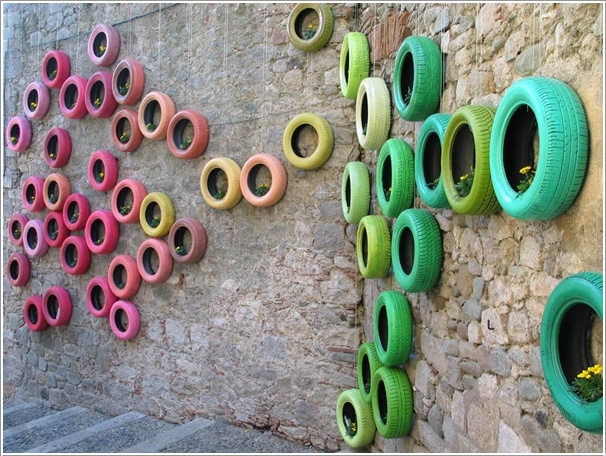
13. Ombre Tires Wall

14. Coffee Table
#852
General Topic / Re: some ideas on re-using old tires as garten deco
October 31, 2013, 08:43:15 PM
11. Colorific Outdoor Table

12. Chandelier for Outdoor
#853
General Topic / Re: some ideas on re-using old tires as garten deco
October 31, 2013, 08:42:04 PM
9. Painted Tire Totter
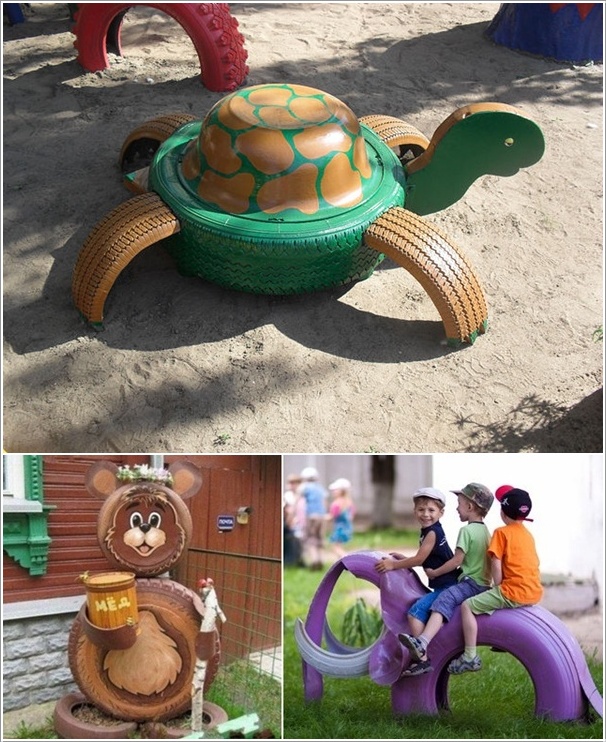
10. Animals Crafted from Tires
#854
General Topic / Re: some ideas on resusing old tires as garten deco
October 31, 2013, 08:40:11 PM
7. Rope Covered Tire Ottoman

8. Tire Inner Tube Wrapped Seat
#855
General Topic / Re: some ideas on resusing old tires as garten deco
October 31, 2013, 08:38:33 PM
5. Tropical Parrot Planter

6. Cool Grass Tire Stools
#856
General Topic / Re: some ideas on resusing old tires as garten deco
October 31, 2013, 08:36:50 PM
3. Beautiful Outdoor Planters

4. Painted Tire Sofas
#857
General Topic / some ideas on re-using old tires as garten deco
October 31, 2013, 08:26:40 PM
1. Fun Filled Tire Swings

22. DIY Tire Pond for Your Garden
#858
Bible Study / Re: Saints Of The Day
October 31, 2013, 03:27:01 PM
St. Wolfgang of Regensburg
(c. 924-994)
Wolfgang was born in Swabia, Germany, and was educated at a school located at the abbey of Reichenau. There he encountered Henry, a young noble who went on to become Archbishop of Trier. Meanwhile, Wolfgang remained in close contact with the archbishop, teaching in his cathedral school and supporting his efforts to reform the clergy.
At the death of the archbishop, Wolfgang chose to become a Benedictine monk and moved to an abbey in Einsiedeln, now part of Switzerland. Ordained a priest, he was appointed director of the monastery school there. Later he was sent to Hungary as a missionary, though his zeal and good will yielded limited results.
Emperor Otto II appointed him Bishop of Regensburg (near Munich). He immediately initiated reform of the clergy and of religious life, preaching with vigor and effectiveness and always demonstrating special concern for the poor. He wore the habit of a monk and lived an austere life.
The draw to monastic life never left him, including the desire for a life of solitude. At one point he left his diocese so that he could devote himself to prayer, but his responsibilities as bishop called him back.
In 994 he became ill while on a journey; he died in Puppingen near Linz, Austria. His feast day is celebrated widely in much of central Europe. He was canonized in 1052.
Comment:
Wolfgang could be depicted as a man with rolled-up sleeves. He even tried retiring to solitary prayer, but taking his responsibilities seriously led him back into the service of his diocese. Doing what had to be done was his path to holinessâ€"and ours.
#859
Bible Study / Re: Minute Meditations
October 31, 2013, 03:26:02 PM
True Happiness Minute Meditations
Happiness ultimately never depends on material possessions, or even on success in life. It stems from the inner knowledge that you are who God wants you to be, that you are doing what he wants you to do.
â€" from Geekpriest
Happiness ultimately never depends on material possessions, or even on success in life. It stems from the inner knowledge that you are who God wants you to be, that you are doing what he wants you to do.
â€" from Geekpriest
#860
Bible Study / Re: Minute Meditations
October 29, 2013, 07:02:00 PM
Be Humble Minute Meditations
Life is not about honor and prestige; it is about becoming a servant to others, about humility in all you do because everything you are and the talents you have received have been given to you as a gift.
â€" from Geekpriest
Life is not about honor and prestige; it is about becoming a servant to others, about humility in all you do because everything you are and the talents you have received have been given to you as a gift.
â€" from Geekpriest
#861
Bible Study / Re: Saints Of The Day
October 29, 2013, 07:00:48 PM
St. Narcissus of Jerusalem
(d. 215)
Life in second- and third-century Jerusalem couldn’t have been easy, but St. Narcissus managed to live well beyond 100. Some even speculate he lived to 160.
Details of his life are sketchy, but there are many reports of his miracles. The miracle for which he is most remembered was turning water into oil for use in the church lamps on Holy Saturday when the deacons had forgotten to provide any.
We do know that Narcissus became bishop of Jerusalem in the late second century. He was known for his holiness, but there are hints that many people found him harsh and rigid in his efforts to impose church discipline. One of his many detractors accused Narcissus of a serious crime at one point. Though the charges against him did not hold up, he used the occasion to retire from his role as bishop and live in solitude. His disappearance was so sudden and convincing that many people assumed he had actually died.
Several successors were appointed during his years in isolation. Finally, Narcissus reappeared in Jerusalem and was persuaded to resume his duties. By then, he had reached an advanced age, so a younger bishop was brought in to assist him until his death.
#862
Bible Study / Re: Saints Of The Day
October 28, 2013, 07:14:13 PM
Sts. Simon and Jude
Jude is so named by Luke and Acts. Matthew and Mark call him Thaddeus. He is not mentioned elsewhere in the Gospels, except, of course, where all the apostles are mentioned. Scholars hold that he is not the author of the Letter of Jude. Actually, Jude had the same name as Judas Iscariot. Evidently because of the disgrace of that name, it was shortened to "Jude" in English.
Simon is mentioned on all four lists of the apostles. On two of them he is called "the Zealot." The Zealots were a Jewish sect that represented an extreme of Jewish nationalism. For them, the messianic promise of the Old Testament meant that the Jews were to be a free and independent nation. God alone was their king, and any payment of taxes to the Romansâ€"the very domination of the Romansâ€"was a blasphemy against God. No doubt some of the Zealots were the spiritual heirs of the Maccabees, carrying on their ideals of religion and independence. But many were the counterparts of modern terrorists. They raided and killed, attacking both foreigners and "collaborating" Jews. They were chiefly responsible for the rebellion against Rome which ended in the destruction of Jerusalem in A.D. 70.
Comment:
As in the case of all the apostles except for Peter, James and John, we are faced with men who are really unknown, and we are struck by the fact that their holiness is simply taken to be a gift of Christ. He chose some unlikely people: a former Zealot, a former (crooked) tax collector, an impetuous fisherman, two "sons of thunder" and a man named Judas Iscariot.
It is a reminder that we cannot receive too often. Holiness does not depend on human merit, culture, personality, effort or achievement. It is entirely God's creation and gift. God needs no Zealots to bring about the kingdom by force. Jude, like all the saints, is the saint of the impossible: Only God can create his divine life in human beings. And God wills to do so, for all of us.
Quote:
"Just as Christ was sent by the Father, so also he sent the apostles, filled with the Holy Spirit. This he did so that, by preaching the gospel to every creature (cf. Mark 16:15), they might proclaim that the Son of God, by his death and resurrection, had freed us from the power of Satan (cf. Acts 26:18) and from death, and brought us into the kingdom of his Father" (Vatican II, Constitution on the Sacred Liturgy).
#863
Bible Study / Re: Minute Meditations
October 28, 2013, 07:13:35 PM
The Next Generation Minute Meditations
“You are the Church of tomorrow. You can be proud of that, but you also have to feel responsible for it. Christ is counting on you. It will be your task to pass on the message of Christ.†â€"Pope John Paul II
â€" from Geekpriest
“You are the Church of tomorrow. You can be proud of that, but you also have to feel responsible for it. Christ is counting on you. It will be your task to pass on the message of Christ.†â€"Pope John Paul II
â€" from Geekpriest
#864
Travel and Tours / Re: hofelina´s travel 28 September-5 October 2013
October 27, 2013, 06:04:14 PM
molaag ko karon sa Steyl, Holland. Tenth year sainthood of St Arnold Janssen and St Joseph Freinademtz will be celebrated, I´ll share the pics. I will also meet some Bol-anons whose houses and churches are damaged namely Loboc and Maribojoc. Have a blessed Sunday folks
#865
Inspiration & Hope / the cure of our present predicament
October 27, 2013, 05:49:15 PM
http://en.forwardtherevolution.net/
this is about a modern movement where we always run after Mammon. One of the pioneers Rafael Fellmers is making clear that our present society is sick. The rich getting richer and the poor, poorer. This social imbalance must be fought.
this is about a modern movement where we always run after Mammon. One of the pioneers Rafael Fellmers is making clear that our present society is sick. The rich getting richer and the poor, poorer. This social imbalance must be fought.
#866
Bible Study / Re: Saints Of The Day
October 27, 2013, 05:05:11 AM
Blessed Bartholomew of Vicenza
(c. 1200-1271)
Dominicans honor one of their own today, Blessed Bartholomew of Vicenza. This was a man who used his skills as a preacher to challenge the heresies of his day.
Bartholomew was born in Vicenza around 1200. At 20 he entered the Dominicans. Following his ordination he served in various leadership positions. As a young priest he founded a military order whose purpose was to keep civil peace in towns throughout Italy.
In 1248, Bartholomew was appointed a bishop. For most men, such an appointment is an honor and a tribute to their holiness and their demonstrated leadership skills. But for Bartholomew, it was a form of exile that had been urged by an antipapal group that was only too happy to see him leave for Cyprus. Not many years later, however, Bartholomew was transferred back to Vicenza. Despite the antipapal feelings that were still evident, he worked diligentlyâ€"especially through his preachingâ€"to rebuild his diocese and strengthen the people’s loyalty to Rome.
During his years as bishop in Cyprus, Bartholomew befriended King Louis the Ninth of France, who is said to have given the holy bishop a relic of Christ’s Crown of Thorns.
Bartholomew died in 1271. He was beatified in 1793.
#867
Bible Study / Re: Minute Meditations
October 27, 2013, 05:04:12 AM
Seeing Clearly Minute Meditations
Many of us cannot distinguish navy blue, black, or dark brown socks inside our room. Only when we get into the sunlight do we see the color distinctions clearly. So also, when we sinners are among ourselves, we do not notice our faults; but in the sunlight of God’s presence, we notice them far more clearly.
Many of us cannot distinguish navy blue, black, or dark brown socks inside our room. Only when we get into the sunlight do we see the color distinctions clearly. So also, when we sinners are among ourselves, we do not notice our faults; but in the sunlight of God’s presence, we notice them far more clearly.
#868
Bible Study / Re: Saints Of The Day
October 25, 2013, 02:29:43 PM
St. Antônio de Sant’Anna Galvão
(1739-1822)
God’s plan in a person’s life often takes unexpected turns which become life-giving through cooperation with God’s grace.
Born in Guarantingueta near São Paulo (Brazil), Antônio attended the Jesuit seminary in Belem but later decided to become a Franciscan friar. Invested in 1760, he made final profession the following year and was ordained in 1762.
In São Paulo, he served as preacher, confessor and porter. Within a few years he was appointed confessor to the Recollects of St. Teresa, a group of nuns in that city. He and Sister Helena Maria of the Holy Spirit founded a new community of sisters under the patronage of Our Lady of the Conception of Divine Providence. Sister Helena Maria’s premature death the next year left Father Antônio responsible for the new congregation, especially for building a convent and church adequate for their growing numbers.
He served as novice master for the friars in Macacu and as guardian of St. Francis Friary in São Paulo. He founded St. Clare Friary in Sorocaba. With the permission of his provincial and the bishop, he spent his last days at the Recolhimento de Nossa Senhora da Luz, the convent of the sisters’ congregation he had helped establish.
He was beatified in Rome on October 25, 1998, and canonized in 2007.
Comment:
Holy women and men cannot help calling our attention to God, to God’s creation and to all the people whom God loves. The lives of holy people are so oriented toward God that this has become their definition of "normal." Do people see my life or yours as a living sign of God’s steadfast love? What might have to change for that to happen?
Quote:
During the beatification homily, Pope John Paul II quoted from the Second Letter to Timothy (4:17), "The Lord stood by me and gave me strength to proclaim the word fully," and then said that Antônio "fulfilled his religious consecration by dedicating himself with love and devotion to the afflicted, the suffering and the slaves of his era in Brazil." The pope continued, "His authentically Franciscan faith, evangelically lived and apostolically spent in serving his neighbor, will be an encouragement to imitate this ‘man of peace and charity.’"
#869
Bible Study / Re: Minute Meditations
October 25, 2013, 02:29:08 PM
Serving Our Lord Minute Meditations
May we seek to serve our Lord and our brothers and sisters, yet may we also desire to be nourished by the word of Jesus, which strengthens our souls. May action and contemplation fill our lives in proportion to the call of Christ.
May we seek to serve our Lord and our brothers and sisters, yet may we also desire to be nourished by the word of Jesus, which strengthens our souls. May action and contemplation fill our lives in proportion to the call of Christ.
#870
Bible Study / Re: Saints Of The Day
October 24, 2013, 02:32:29 PM
St. Anthony Claret
(1807-1870)
The "spiritual father of Cuba" was a missionary, religious founder, social reformer, queen’s chaplain, writer and publisher, archbishop and refugee. He was a Spaniard whose work took him to the Canary Islands, Cuba, Madrid, Paris and to the First Vatican Council.
In his spare time as weaver and designer in the textile mills of Barcelona, he learned Latin and printing: The future priest and publisher was preparing. Ordained at 28, he was prevented by ill health from entering religious life as a Carthusian or as a Jesuit, but went on to become one of Spain’s most popular preachers.
He spent 10 years giving popular missions and retreats, always placing great emphasis on the Eucharist and devotion to the Immaculate Heart of Mary. Her rosary, it was said, was never out of his hand. At 42, beginning with five young priests, he founded a religious institute of missionaries, known today as the Claretians.
He was appointed to head the much-neglected archdiocese of Santiago in Cuba. He began its reform by almost ceaseless preaching and hearing of confessions, and suffered bitter opposition mainly for opposing concubinage and giving instruction to black slaves. A hired assassin (whose release from prison Anthony had obtained) slashed open his face and wrist. Anthony succeeded in getting the would-be assassin’s death sentence commuted to a prison term. His solution for the misery of Cubans was family-owned farms producing a variety of foods for the family’s own needs and for the market. This invited the enmity of the vested interests who wanted everyone to work on a single cash cropâ€"sugar. Besides all his religious writings are two books he wrote in Cuba: Reflections on Agriculture and Country Delights.
He was recalled to Spain for a job he did not relishâ€"being chaplain for the queen. He went on three conditions: He would reside away from the palace, he would come only to hear the queen’s confession and instruct the children and he would be exempt from court functions. In the revolution of 1868, he fled with the queen’s party to Paris, where he preached to the Spanish colony.
All his life Anthony was interested in the Catholic press. He founded the Religious Publishing House, a major Catholic publishing venture in Spain, and wrote or published 200 books and pamphlets.
At Vatican I, where he was a staunch defender of the doctrine of infallibility, he won the admiration of his fellow bishops. Cardinal Gibbons of Baltimore remarked of him, "There goes a true saint." At the age of 63, he died in exile near the border of Spain.
Stories:
Queen Isabella II once said to Anthony, “No one tells me things as clearly and frankly as you do.†Later she told her chaplain, “Everybody is always asking me for favors, but you never do. Isn’t there something you would like for yourself?†He replied, “that you let me resign.†The queen made no more offers.
Comment:
Jesus foretold that those who are truly his representatives would suffer the same persecution as he did. Besides 14 attempts on his life, Anthony had to undergo such a barrage of the ugliest slander that the very name Claret became a byword for humiliation and misfortune. The powers of evil do not easily give up their prey. No one needs to go looking for persecution. All we need to do is be sure we suffer because of our genuine faith in Christ, not for our own whims and imprudences.
Quote:
Patron Saint of:
Savings
Weavers
#871
Bible Study / Re: Minute Meditations
October 24, 2013, 02:31:41 PM
Stay Faithful to God Minute Meditations
Dear Blessed Mother Mary, you suffered in various ways precisely because you love Jesus and obeyed God. We come to you in your sorrows, especially as you stood at the cross of Jesus, and ask you to help us gain wisdom about our own suffering, difficulties, and challenges of life.
Dear Blessed Mother Mary, you suffered in various ways precisely because you love Jesus and obeyed God. We come to you in your sorrows, especially as you stood at the cross of Jesus, and ask you to help us gain wisdom about our own suffering, difficulties, and challenges of life.
#872
Bible Study / Re: Saints Of The Day
October 23, 2013, 02:23:24 PM
St. John of Capistrano
(1386-1456)
It has been said the Christian saints are the world’s greatest optimists. Not blind to the existence and consequences of evil, they base their confidence on the power of Christ’s redemption. The power of conversion through Christ extends not only to sinful people but also to calamitous events.
Imagine being born in the 14th century. One-third of the population and nearly 40 percent of the clergy were wiped out by the bubonic plague. The Western Schism split the Church with two or three claimants to the Holy See at one time. England and France were at war. The city-states of Italy were constantly in conflict. No wonder that gloom dominated the spirit of the culture and the times.
John Capistrano was born in 1386. His education was thorough. His talents and success were great. When he was 26 he was made governor of Perugia. Imprisoned after a battle against the Malatestas, he resolved to change his way of life completely. At the age of 30 he entered the Franciscan novitiate and was ordained a priest four years later.
His preaching attracted great throngs at a time of religious apathy and confusion. He and 12 Franciscan brethren were received in the countries of central Europe as angels of God. They were instrumental in reviving a dying faith and devotion.
The Franciscan Order itself was in turmoil over the interpretation and observance of the Rule of St. Francis. Through John’s tireless efforts and his expertise in law, the heretical Fraticelli were suppressed and the "Spirituals" were freed from interference in their stricter observance.
He helped bring about a reunion with the Greek and Armenian Churches, unfortunately only a brief arrangement.
When the Turks captured Constantinople in 1453, he was commissioned to preach a crusade for the defense of Europe. Gaining little response in Bavaria and Austria, he decided to concentrate his efforts in Hungary. He led the army to Belgrade. Under the great General John Hunyadi, they gained an overwhelming victory, and the siege of Belgrade was lifted. Worn out by his superhuman efforts, Capistrano was an easy prey to an infection after the battle. He died October 23, 1456.
Comment:
John Hofer, a biographer of John Capistrano, recalls a Brussels organization named after the saint. Seeking to solve life problems in a fully Christian spirit, its motto was: "Initiative, Organization, Activity." These three words characterized John's life. He was not one to sit around, ever. His deep Christian optimism drove him to battle problems at all levels with the confidence engendered by a deep faith in Christ.
Quote:
On the saint's tomb in the Austrian town of Villach, the governor had this message inscribed: "This tomb holds John, by birth of Capistrano, a man worthy of all praise, defender and promoter of the faith, guardian of the Church, zealous protector of his Order, an ornament to all the world, lover of truth and religious justice, mirror of life, surest guide in doctrine; praised by countless tongues, he reigns blessed in heaven." That is a fitting epitaph for a real and successful optimist.
Patron Saint of:
Judges
#873
Bible Study / Re: Minute Meditations
October 23, 2013, 02:22:39 PM
Lord, Set Us Free Minute Meditations
Lord, righteous Judge of the living and the dead, in order to prevent the condemnation of the world you allowed the world to condemn you. By your condemnation free us from the sentence our sins deserve. Give us the grace to be patient with those who judge us, and free us from proudly judging the people around us.
Lord, righteous Judge of the living and the dead, in order to prevent the condemnation of the world you allowed the world to condemn you. By your condemnation free us from the sentence our sins deserve. Give us the grace to be patient with those who judge us, and free us from proudly judging the people around us.
#874
Bohol Tourism | Bohol Travel & Tour / Re: Aerial View of the World-Famous Chocolate Hills
October 23, 2013, 05:20:02 AM
noong alaw yan Doy Lorz...here it is now

this was taken by a military helicopter a day after the earhquake
this was taken by a military helicopter a day after the earhquake
#875
LGU Philippines / Re: The sad politics of relief efforts
October 22, 2013, 07:13:50 PM
mang gawas lagi ning mga oprtunista...dili man mahadlok sila sa Kahitas-an.
#876
Philippine Business News / Re: atong mga kaigsoonan nga na-apil ilang lungsod sa linog
October 20, 2013, 05:10:09 PM
I was adviced that the work of Rotary Club is a lot efficient and well coordinated, we should consider their efforts as worth supporting.
#877
Anonymous Diary Blog / Re: Thank you, TB
October 20, 2013, 05:05:44 PM
I love Tubag Bohol, i might be hibernating sometime but I always return...here we find the true Bol-anon spirit. Have a blessed Sunday everyone.
#878
Philippine Business News / Re: atong mga kaigsoonan nga na-apil ilang lungsod sa linog
October 20, 2013, 04:25:26 PM
Ramil Granada is also a member here. He is a businessman/ in Tagbi (duhay kurso architect and registered nurse), he said yes that he can manage whatever we could share for this humble fundraising campaign per Facebook. I trust him and I am waiting for the details about sending the money that will be spent in buying stuff for the victims. To those who have facebook accounts his name is Ramson Maxwell.
#879
Help & Support / Re: OPEN LETTER TO MIKE ORTEGA LIGALIG
October 20, 2013, 04:19:48 PM
I am speechless. I will miss you Hubs and it is my dream to see you personally one day. Please make my dream come true.
#880
Bible Study / Re: Saints Of The Day
October 20, 2013, 04:16:39 PM
St. Maria Bertilla Boscardin
(1888-1922)
If anyone knew rejection, ridicule and disappointment, it was today’s saint. But such trials only brought Maria Bertilla Boscardin closer to God and more determined to serve him.
Born in Italy in 1888, the young girl lived in fear of her father, a violent man prone to jealousy and drunkenness. Her schooling was limited so that she could spend more time helping at home and working in the fields. She showed few talents and was often the butt of jokes.
In 1904 she joined the Sisters of St. Dorothy and was assigned to work in the kitchen, bakery and laundry. After some time Maria received nurses’ training and began working in a hospital with children suffering from diphtheria. There the young nun seemed to find her true vocation: nursing very ill and disturbed children. Later, when the hospital was taken over by the military in World War I, Sister Maria Bertilla fearlessly cared for patients amidst the threat of constant air raids and bombings.
She died in 1922 after suffering for many years from a painful tumor. Some of the patients she had nursed many years before were present at her canonization in 1961.
#881
Bible Study / Re: Minute Meditations
October 20, 2013, 04:16:01 PM
Christian Community Minute Meditations
To be a Christian is to be in community, working, praying, learning, and serving with others. We learn by doing. As a community we are on a mission to serve our God by serving each other and the world around us.
To be a Christian is to be in community, working, praying, learning, and serving with others. We learn by doing. As a community we are on a mission to serve our God by serving each other and the world around us.
#882
Philippine Business News / Re: atong mga kaigsoonan nga na-apil ilang lungsod sa linog
October 19, 2013, 06:22:12 PMQuote from: islander on October 19, 2013, 03:52:05 PM#I talked to a german priest about the crumbled churches, he said it is sad we have big empty churches in Germany, kung pwede ibalhin sa Bohol. The concerned priests should contact...Kirche-in-Not. This is the best institution who could help.
i came across this in a broadsheet here, hof, in an article about gardy labad. a good lead:
How to help Bohol
FOR ASSISTANCE in Bohol’s heritage rehabilitation work, please direct inquiries and aid to Fr. Ted Torralba at 0917-3040103 or Fr. Val Pinlac at 0917-6209988. For relief aid, please contact the following: for Loon, Reigh Monreal 0919-4842779; for Maribojoc, 0920-7495843 (Maryanne Jabines) or 0928-5078279 (Mayor Jun Evasco); for Baclayon, 0926-2055360 (Lovely Mayor’s office); for Loboc, 0946-1722194 (Nerea Jimenez of the Loboc Children’s Choir); or call the landline of the Governor’s Mansion 038-4113573.
http://tubagbohol.mikeligalig.com/index.php?topic=76342.0#.UmMazFNi2KE
#883
Bible Study / Re: Saints Of The Day
October 19, 2013, 02:21:45 PM
St. Isaac Jogues, Jean de Brébeuf and Companions
Isaac Jogues (1607-1646): Isaac Jogues and his companions were the first officially recognized martyrs of the North American continent officially recognized by the Church. As a young Jesuit, Isaac Jogues, a man of learning and culture, taught literature in France. He gave up that career to work among the Huron Indians in the New World, and in 1636 he and his companions, under the leadership of John de Brébeuf, arrived in Quebec. The Hurons were constantly warred upon by the Iroquois, and in a few years Father Jogues was captured by the Iroquois and imprisoned for 13 months. His letters and journals tell how he and his companions were led from village to village, how they were beaten, tortured and forced to watch as their Huron converts were mangled and killed.
An unexpected chance for escape came to Isaac Jogues through the Dutch, and he returned to France, bearing the marks of his sufferings. Several fingers had been cut, chewed or burnt off. Pope Urban VIII gave him permission to offer Mass with his mutilated hands: "It would be shameful that a martyr of Christ be not allowed to drink the Blood of Christ." Welcomed home as a hero, Father Jogues might have sat back, thanked God for his safe return and died peacefully in his homeland. But his zeal led him back once more to the fulfillment of his dreams. In a few months he sailed for his missions among the Hurons.
In 1646 he and Jean de Lalande, who had offered his services to the missioners, set out for Iroquois country in the belief that a recently signed peace treaty would be observed. They were captured by a Mohawk war party, and on October 18 Father Jogues was tomahawked and beheaded. Jean de Lalande was killed the next day at Ossernenon, a village near Albany, New York.
The first of the Jesuit missionaries to be martyred was René Goupil who, with Lalande, had offered his services as an oblate. He was tortured along with Isaac Jogues in 1642, and was tomahawked for having made the Sign of the Cross on the brow of some children.
Jean de Brébeuf (1593-1649): Jean de Brébeuf was a French Jesuit who came to Canada at the age of 32 and labored there for 24 years. He went back to France when the English captured Quebec (1629) and expelled the Jesuits, but returned to his missions four years later. Although medicine men blamed the Jesuits for a smallpox epidemic among the Hurons, Jean remained with them.
He composed catechisms and a dictionary in Huron, and saw 7,000 converted before his death. He was captured by the Iroquois and died after four hours of extreme torture at Sainte Marie, near Georgian Bay, Canada.
Father Anthony Daniel, working among Hurons who were gradually becoming Christian, was killed by Iroquois on July 4, 1648. His body was thrown into his chapel, which was set on fire.
Gabriel Lalemant had taken a fourth vowâ€"to sacrifice his life for the Native Americans. He was horribly tortured to death along with Father Brébeuf.
Father Charles Garnier was shot to death as he baptized children and catechumens during an Iroquois attack.
Father Noel Chabanel was killed before he could answer his recall to France. He had found it exceedingly hard to adapt to mission life. He could not learn the language, the food and life of the Indians revolted him, plus he suffered spiritual dryness during his whole stay in Canada. Yet he made a vow to remain until death in his mission.
These eight Jesuit martyrs of North America were canonized in 1930.
Comment:
Faith and heroism planted belief in Christ's cross deep in our land. The Church in North America sprang from the blood of martyrs. Are we as eager to keep that cross standing in our midst? Do we bear witness to deep-seated faith in us, the Good News of the cross (redemption) into our home, our work, our social world?
Quote:
"My confidence is placed in God who does not need our help for accomplishing his designs. Our single endeavor should be to give ourselves to the work and to be faithful to him, and not to spoil his work by our shortcomings" (from a letter of Isaac Jogues to a Jesuit friend in France, September 12, 1646, a month before he died).
Patron Saint of:
North America
#884
Bible Study / Re: Minute Meditations
October 19, 2013, 02:21:04 PM
Importance of Prayer Minute Meditations
Prayer and ritual are kindling that sets our hearts burning. Whenever possible, take time to sit in silence. Open your heart to the Holy Spirit, the gentle breath that ignites the kindling and sets our hearts on fire.
â€" from When You Are a Catechist
Prayer and ritual are kindling that sets our hearts burning. Whenever possible, take time to sit in silence. Open your heart to the Holy Spirit, the gentle breath that ignites the kindling and sets our hearts on fire.
â€" from When You Are a Catechist
#885
General Topic / Re: Pray for MARIBOJOC
October 18, 2013, 05:20:14 AM
my prayers are with you, to those who perished...may they rest in Peace!
#886
Philippine Business News / Re: atong mga kaigsoonan nga na-apil ilang lungsod sa linog
October 17, 2013, 08:43:43 PM
We need somebody that could be trusted and the amount be evenly distributed. Sa mga litrato na lang dili nako katulog.
#887
Philippine Business News / Re: atong mga kaigsoonan nga na-apil ilang lungsod sa linog
October 17, 2013, 05:18:24 PM
I was thinking of a fundraising campaign which we will call " Friends of Tubag Bohol" . Let us respond to our kapatids who are victims of this calamity. Mike asa ra man ka Doy? Sugot mo sa akong idea? Can anyone suggest somebody who will take care of this, Simplylee maybe or Gelyn.
#888
Philippine Business News / atong mga kaigsoonan nga na-apil ilang lungsod sa linog
October 17, 2013, 04:47:06 PM
Balong and David (Mr Bean) with Simply lee are from Maribojoc. Monreals, Reigh and Gwargz..are prayers are with you and your families. These two towns are worst hit and difficult to reach as of this writing.
Ang Kahitas-an ang nasayud sa atong mga kasubo, ug tua kaniya ang atong pagla-om.
Ang Kahitas-an ang nasayud sa atong mga kasubo, ug tua kaniya ang atong pagla-om.
#889
Help & Support / Re: Messages re Bohol earthquake from FB
October 17, 2013, 04:35:24 PM
Loon and Maribojoc are badly damaged, Maribojoc is not accessible by car since the road is not passable. Agi lang sa dagat, busa si Simplylee ninghangyo kon kinsay adunay pumpboat nga mgakatabang hatag ug tubig ug food supply. Reaching Loon is circuitous and the fare is high. Maayo unta kung ipagamit sa gobyerno ang ilang mga helicopter.
#890
Travel and Tours / Re: hofelina´s travel 28 September-5 October 2013
October 17, 2013, 04:27:00 PM

to see the most of this church you need almost a day, ticket is good for only one hour,he he he
and to see Barcelona you need almost a week. Sad to say our trip was a compact one. Ganahan pa ba mo ug tan-aw kay morag daghan na kaayo?
#891
Travel and Tours / Re: hofelina´s travel 28 September-5 October 2013
October 17, 2013, 04:24:34 PM
CR


#892
Travel and Tours / Re: hofelina´s travel 28 September-5 October 2013
October 17, 2013, 04:23:18 PM


it still needs 30 years to finish this Basilica
#893
Travel and Tours / Re: hofelina´s travel 28 September-5 October 2013
October 17, 2013, 04:21:23 PM


#894
Travel and Tours / Re: hofelina´s travel 28 September-5 October 2013
October 17, 2013, 04:20:27 PM


#895
Travel and Tours / Re: hofelina´s travel 28 September-5 October 2013
October 17, 2013, 04:19:07 PM


#896
Travel and Tours / Re: hofelina´s travel 28 September-5 October 2013
October 17, 2013, 04:17:33 PM
Sagrada Familia, Barcelona
much has been written and said about this cathedral but visiting this place and appreciating this work , an architectural masterpiece, words are lacking to describe it´s uniqeness


much has been written and said about this cathedral but visiting this place and appreciating this work , an architectural masterpiece, words are lacking to describe it´s uniqeness
#897
Travel and Tours / Re: hofelina´s travel 28 September-5 October 2013
October 17, 2013, 04:04:38 PM
sa likod sa Mahal nga Birhen kay adunay halokan, a part of the pillar. I was not able to picture it clearly....

I was contained in my thoughts about friends who are very sick and inner joy that I was able to made it in this place where others are only dreaming to visit.

I was contained in my thoughts about friends who are very sick and inner joy that I was able to made it in this place where others are only dreaming to visit.
#898
Travel and Tours / Re: hofelina´s travel 28 September-5 October 2013
October 17, 2013, 03:59:14 PM
lo and behold here is She..Our Lady of Pillar!

the oldest Marian apparition , the story goes...

for more infos folks...http://en.wikipedia.org/wiki/Basilica_of_Our_Lady_of_the_Pillar
the oldest Marian apparition , the story goes...
for more infos folks...http://en.wikipedia.org/wiki/Basilica_of_Our_Lady_of_the_Pillar
#899
Travel and Tours / Re: hofelina´s travel 28 September-5 October 2013
October 17, 2013, 03:46:35 PM
there are lots of local stores with confectionaries all hand-made. Tam-is kaayo, lupib bay balikotsa.


the police are still in control on the area, this place is full since Our Lady´s feast is coming 12 October.

famous churros to be dipped in hot chocolate (morag sikwate espiso) both are so sweet
#900
Travel and Tours / Re: hofelina´s travel 28 September-5 October 2013
October 17, 2013, 03:46:13 PM
Saragossa, this was really memorable because we arrived just a few minutes a bomb exploded the Cathedral of Saragossa. Luckily it was only a home made bomb using a gas cylinder ( like one used in campings) and the next day we were allowed to visit the Virgen del Pillar


