One of the most striking features of this hugely complex issue, however, is that it pits two views of the world in a head on collision. Very broadly, the Philippines are claiming that international law is dominant, and that it needs to be the common language by which to resolve all these issues. For China, however, the prime claims are historic, and these take precedence. While not wishing to over-simplify this issue, this is the fundamental challenge for the South China Sea disputes â€" its contesting parties are operating in different conceptual universes and are unwilling, or unable, to speak the same language to each other. This makes resolution, as things stand at the moment, almost impossible. China is likely to simply dismiss an unfavourable judgment from The Hague this month, if it comes, as illegitimate because history, not modern law, takes precedence here.
This section allows you to view all posts made by this member. Note that you can only see posts made in areas you currently have access to.
Pages 1 2 3 4 5 6 7 8 9 10 11 12 13 14 15 16 17 18 19 20 21 22 23 24 25 26 27 28 29 30 31 32 33 34 35 36 37 38 39 40 41 42 43 44 45 46 47 48 49 50 51 52 53 54 55 56 57 58 59 60 61 62 63 64 65 66 67 68 69 70 71 72 73 74 75 76 77 78 79 80 81 82 83 84 85 86 87 88 89 90 91 92 93 94 95 96 97 98 99 100 101 102 103 104 105 106 107 108 109 110 111 112 113 114 115 116 117 118 119 120 121 122 123 124 125 126 127 128 129 130 131 132 133 134 135 136 137 138 139 140 141 142 143 144 145 146 147 148 149 150 151 152 153 154 155 156 157 158 159 160 161 162 163 164 165 166 167 168 169 170 171 172 173 174 175 176 177 178 179 180 181 182 183 184 185 186 187 188 189 190 191 192 193 194 195 196 197 198 199 200 201 202 203 204 205 206 207 208 209 210 211 212 213 214 215 216 217 218 219 220 221 222 223 224 225 226 227 228 229 230 231 232 233 234 235 236 237 238 239 240 241 242 243 244 245 246 247 248 249 250 251 252 253 254 255 256 257 258 259 260 261 262 263 264 265 266 267 268 269 270 271 272 273 274 275 276 277 278 279 280 281 282 283 284 285 286 287 288 289 290 291 292 293 294 295 296 297 298 299 300 301 302 303 304 305 306 307 308 309 310 311 312 313 314 315 316 317 318 319 320 321 322 323 324 325 326 327 328 329 330 331 332 333 334 335 336 337 338 339 340 341 342 343 344 345 346 347 348 349 350 351 352 353 354 355 356 357 358 359 360 361 362 363 364 365 366 367 368 369 370 371 372 373 374 375 376 377 378 379 380 381 382 383 384 385 386 387 388 389 390 391 392 393 394 395 396 397 398 399 400 401 402 403 404 405 406 407 408 409 410 411 412 413 414 415 416 417 418 419 420 421 422 423 424 425 426 427 428 429 430 431 432 433 434 435 436 437 438 439 440 441 442 443 444 445 446 447 448 449 450 451 452 453 454 455 456 457 458 459 460 461 462 463 464 465 466 467 468 469
#6001
Talk of the Town / Re: South China Sea’s judgement day
March 14, 2016, 04:51:19 PMOne of the most striking features of this hugely complex issue, however, is that it pits two views of the world in a head on collision. Very broadly, the Philippines are claiming that international law is dominant, and that it needs to be the common language by which to resolve all these issues. For China, however, the prime claims are historic, and these take precedence. While not wishing to over-simplify this issue, this is the fundamental challenge for the South China Sea disputes â€" its contesting parties are operating in different conceptual universes and are unwilling, or unable, to speak the same language to each other. This makes resolution, as things stand at the moment, almost impossible. China is likely to simply dismiss an unfavourable judgment from The Hague this month, if it comes, as illegitimate because history, not modern law, takes precedence here.
#6002
Talk of the Town / Re: South China Sea’s judgement day
March 14, 2016, 04:50:55 PMThis alone means that no country involved is going to lie down and simply concede on this issue. At the moment, a complex series of claims, based on different arguments, spreads across the various features of the area. What constitutes an island has become important because of the stipulation under UNCLOS that this gives rights to extensive maritime areas around it â€" up to 200 nautical miles. Thus the attempts to define even features which most of the time are submerged under water as islands. Since 2009, spats between contesting parties, some of them including the Philippines, have increased. Most of these have involved fishing or lifeguard vessels. But everyone knows they are proxy for harder, military assets. Even the United States has been increasingly sucked in, protesting neutrality but evidently keen to see China’s space pinned back and its grand claims circumscribed. More’s the pity, however, that the US is not a signatory to UNCLOS, somewhat eroding its moral authority here.
#6003
Talk of the Town / Re: South China Sea’s judgement day
March 14, 2016, 04:50:09 PMThe most benign interpretation of the nine-dash line is that it is a hangover from an era in which maritime law was non-existent and which understanding of sovereign borders was in its infancy. The historic origin of the line comes more from the Republic of China (in charge of the Mainland up to 1949, and now based in Taiwan) rather than the People’s Republic, something that creates an extra layer of confusion. It is not even certain where the precise extent of this line is. The one thing everyone can agree on is that it lays symbolic claim to a huge territory of strategically very important waters, with trade and military routes crisscrossing it in an area that is fast becoming the world’s most dynamic economic region.
#6004
Talk of the Town / Re: South China Sea’s judgement day
March 14, 2016, 04:49:44 PMThis is because, with the Philippines, they share one major bone of contention, which this judgment might clear up a little more â€" and that is about the now infamous nine-dash line asserted by China, which stretches almost 1,500 kms from the coast of Hainan, China’s most southerly point. This violates the principle of Exclusive Economic Zones (EEZ) allowing separate countries 200 Nautical Miles of space around their coastal regions, skirting the edges of Malaysian, Vietnamese, Philippine and, at some point, Indonesian, territory. Broadly, the Philippines is stating that the nine-dash line violates this and needs to be questioned, and, even better for them, shown to be invalid.
#6005
Talk of the Town / Re: South China Sea’s judgement day
March 14, 2016, 04:48:46 PMNot that anyone should expect UNCLOS’s judgment, when rendered, will do much to clear things up overnight, or even in the short to medium term. Firstly, China is not offering a counter-submission and will not recognize the current process if a judgment is issued against it. Secondly, this court has no decision-making powers over territorial rights. That needs to be done through the International Court of Justice, and all the disputing parties have to agree to bring a case to this body â€" something that has so far proved impossible.
The main likely outcome of this current case will be to strengthen the principle that international law has a role to play in the ultimate resolution of the contesting claims. Whether Vietnam, Japan, Malaysia, Taiwan and other actors in this issue will line up with the Philippines and agree with this, let alone China, is a moot point. All of them have different agendas. But for all of them, except China, it is in their interests to do so.
#6006
Talk of the Town / South China Sea’s judgement day
March 14, 2016, 04:48:14 PMSouth China Sea’s judgement day
Ruling on dispute between China and the Philippines will be meaningful, even if it doesn’t quickly lead to resolution
KERRY BROWN
16 JULY 2015
An important ruling is imminent on contesting claims in the South China Sea between China and the Philippines. But will it hold any water, and what is the significance?
A significant judgement is expected some time this month in the Arbitral Tribunal in The Hague under the United Nations Convention on the Law of the Sea (UNCLOS). Brought by the Philippines against China, it will be the first time that legal experts in an international court will opine on matters related to the contesting claims in the South China Sea.


#6010
Talk of the Town / Re: Anatomy of a (central) bank robbery
March 14, 2016, 03:15:12 AMSuch certificates can be copied and used by impostors if they are not properly secured, he said.
And this is not the first time such a crime has been attempted.
In a round of robberies disclosed last year, a group dubbed the Carbanak gang hacked into a number of banks around the world, seized control of computers that access Swift, then ordered fraudulent transfers.
“The genius of the attacker in the Carbanak case is taking the time to learn directly from the victim and thus bypass fraud prevention measures through sheer mimicry,†Juan Guerrero, a researcher with Kaspersky Lab which studied the campaign, told Reuters.
http://www.dhakatribune.com/bangladesh/
#6011
Talk of the Town / Re: Anatomy of a (central) bank robbery
March 14, 2016, 03:14:24 AMSecurity experts said the cyber criminals had to gather information about Bangladesh Bank’s transfer order procedures so that their actions would go unnoticed.
They had to have stolen credentials for processing transfers and “probably spied on BB staff to get a deep understanding of the central bank’s operations,†according to experts in banking fraud.
Kayvan Alikhani, a senior director with security firm RSA, told Reuters that in addition to user names and passwords for accessing Swift, the hackers likely needed to obtain cryptographic keys that authenticated the senders.
#6012
Talk of the Town / Re: Anatomy of a (central) bank robbery
March 14, 2016, 03:13:41 AMA minor tit for tat between the New York Fed and BB ensued, with Finance Minister AMA Muhith saying on March 8 that a case would be filed against the Federal Reserve, a day after the US institution denied its systems had been breached.
The Fed said it followed normal procedures when responding to requests that appeared to be from Bangladesh Bank, which were made and authenticated over Swift, Reuters reported.
Belgian-based Swift, a member-owned cooperative that banks use for account transfer requests and other secure messages, declined to comment on specifics of the case, the report added.
#6013
Talk of the Town / Re: Anatomy of a (central) bank robbery
March 14, 2016, 03:12:50 AMAnother payment worth $19m was supposedly from Bheramara Combined Cycle Power Plant Development Project with Vergara as a beneficiary, citing “engineering consulting fees.â€
It remains to be seen how the fraudulent orders slipped past the US financial system.
The transactions involved the New York Fed, where BB is an account holder, and US correspondent banks Citibank, The Bank of New York Mellon and Wells Fargo Bank.
#6014
Talk of the Town / Re: Anatomy of a (central) bank robbery
March 14, 2016, 03:12:22 AMThe amount was remitted to the account of Vasquez purportedly for the payment of a “loan†from Japan International Cooperation Agency (Jica).
A payment for $30m to Lagrosas, an IT professional, likewise under a Jica “loan,†was supposedly ordered on behalf of Dhaka Mass Rapid Trans Dev project.
A $6m payment order on behalf of an IPFF project cell was supposedly to pay for Cruz’s consultancy fees.
#6015
Talk of the Town / Re: Anatomy of a (central) bank robbery
March 14, 2016, 03:11:48 AMDeep knowledge
The fraudulent transfer orders made by the electronic swindlers who looted $81m of Bangladesh Bank money show that the fraudsters evidently did their homework.
Every one of the false payment instructions was made in the name of big-ticket Bangladeshi development projects, the PDI reported.
For example, one transaction for $25m was supposedly ordered by Bangladesh Bank on behalf of the government’s The Kanchpur, Meghna and Gumti 2nd Bridges Construction project.
#6016
Talk of the Town / Re: Anatomy of a (central) bank robbery
March 14, 2016, 03:07:16 AMThe resulting halt in transfers totalled funds worth $850m and $870m, one of the officials said.
Approximately $81m was successfully transferred to the Philippines and has still not been retrieved.
The scale of the crime and the involvement of so many business entities in the scam has so alarmed the financial services industry that the Philippine Senate is scheduled to hold a public hearing on the matter on March 14.
#6017
Talk of the Town / Re: Anatomy of a (central) bank robbery
March 14, 2016, 03:06:49 AMThe full name of the non-profit could not be learned.
But one of the officials said the hackers misspelled “foundation†in the NGO’s name as “fandation,†prompting a routing bank, Deutsche Bank, to seek clarification from the Bangladesh central bank, which stopped the transaction.
The Reuters report said the recovered amount referred to by BB officials was the halted payment.
#6018
Talk of the Town / Re: Anatomy of a (central) bank robbery
March 14, 2016, 03:06:14 AMSpelling mistake
About $20m was retrieved from Sri Lanka, Bangladesh Bank Executive Director Subhankar Saha recently said.
But a Reuters report filed yesterday suggests the Sri Lankan story could have a twist to it.
A spelling mistake on one fraudulent bank transfer instruction for $20m to be sent to a Sri Lankan non-profit organisation was held up because the hackers misspelled the name of the NGO.
#6019
Talk of the Town / Re: Anatomy of a (central) bank robbery
March 14, 2016, 03:03:06 AMThe next day, the Court of Appeals in the Philippines, acting on an urgent petition from the AMLC, ordered four Philippine banks RCBC, East West Bank, Banco de Oro and Philippine National Bank â€" to freeze for six months the bank accounts of Michael Francisco Cruz, Jessie Christopher Lagrosas, Alfred Santos Vergara, Enrico Teodoro Vasquez, William So Go, Centurytex Trading, Kam Sin Wong (aka Kim Wong) and all related accounts.
Over a month after the fraudulent transfer was made, BB issued a press statement saying its Financial Intelligence Unit had been working with the AMLC to retrieve the money.
Finance Minister Muhith said he had been unaware of the lost funds.
In the end, the fraudsters successfully got their hands on $81m and pulled off one of the biggest bank heists in history.
#6020
Talk of the Town / Re: Anatomy of a (central) bank robbery
March 14, 2016, 03:01:42 AMOn February 16, BB Governor Atiur Rahman sought the assistance of Philippine counterpart, Governor Amando Tetangco Jr of Bangko Sentral ng Pilipinas, PDI reports.
Three days later, the Philippines’ Anti-Money Laundering Council (AMLC) began a probe of bank accounts relating to Weikang Xu (believed to be a junket operator), Eastern Hawaii Leisure Co and Solaire Resorts.
The Philippine Daily Inquirer broke the story of a possible $100m digital bank robbery of BB funds on February 29.
#6021
Talk of the Town / Re: Anatomy of a (central) bank robbery
March 14, 2016, 02:59:10 AMBetween February 5 and 13, remittance company Philrem remitted the funds, now converted into Philippine pesos, to the bank accounts of Chinese national Weikang Xu, Eastern Hawaii Leisure Co and Bloomberry Hotels Inc (Solaire Resorts).
By the time Dhaka sent off frantic messages to halt the transaction, there was nobody in the office in Manila to respond.
On February 9, RCBC received a Swift message from BB requesting payment to be stopped and the accounts to be frozen for investigation. But withdrawals from the accounts totalling $58.15m had already been processed by RCBC.
Some $15.2m was deposited in the account of Philrem, $42.93m in Go’s dollar account and another $20m in Philrem, PDI reports.
#6022
Talk of the Town / Re: Anatomy of a (central) bank robbery
March 14, 2016, 02:57:49 AMThe heist
On February 4, a Thursday, $81m from the account of Bangladesh Bank at the New York Fed was ordered to be transferred to the four RCBC accounts â€" $30m was transferred to Lagrosas, $19.99m to Vergara, $25m to Vasquez and $6m to Cruz.
The funds were credited to the accounts via straight-through process after the transactions passed internal validation criteria. The funds were cleared through US-based correspondent banks Citibank, The Bank of New York Mellon and Wells Fargo.
The same day, Lagrosas withdrew $22.73m and deposited it in the US dollar account of William Go DBA Centurytex Trading, an account which was opened that day, PDI reports.
#6023
Talk of the Town / Re: Anatomy of a (central) bank robbery
March 14, 2016, 02:55:25 AMThe perpetrators of the robbery certainly “had deep knowledge of [Bangladesh Bank’s] internal workings, likely gained by spying on bank workers,†Reuters quoted security experts as saying.
They managed to steal payment transfer credentials which were used to order transfers out of a New York Fed account held by Bangladesh Bank, Reuters reports.

#6025
Talk of the Town / Re: Anatomy of a (central) bank robbery
March 14, 2016, 02:53:31 AMOn May 15, 2015, Enrico Teodoro Vasquez, Alfred Santos Vergara, Michael Francisco Cruz and Jessie Christopher Lagrosas opened US dollar bank accounts at Rizal Commercial Banking Corporation (RCBC), a Philippine bank.
The accounts remained untouched until February 4, 2016, the Philippine Daily Inquirer (PDI) reports.
The fraudulent transfer orders were timed for February 4 this year, a Thursday, so that the next day Bangladesh Bank would be closed for the weekend.
Saturday is a common weekend for Bangladesh and the Philippines, Sunday is a weekend there and Monday, February 8, fell on Chinese New Year, a non-working holiday in the Philippines.
It mostly went according to plan.
#6026
Talk of the Town / Anatomy of a (central) bank robbery
March 14, 2016, 02:52:33 AMAnatomy of a bank robbery
Tribune Desk
March 12, 2016

The suspected perpetrators of the $100 million heist of Bangladesh Bank funds deposited at the Federal Reserve Bank of New York this February opened dollar-denominated accounts last May.
And then they sat and waited.
For what? A long weekend.
#6027
Talk of the Town / Re: 80 Percent of Zero: China’s Phantom South China Sea Claims
March 14, 2016, 01:29:20 AMAnd so the ultimate danger is if both the U.S. and China begin believing their own posturingâ€"or worse, the posturing of media and commentators, which is disconnected from official strategy. It seems clear for now that neither the U.S. nor China wants to risk a confrontation in the South China Sea, even if neither likes the way the other is behaving. But at what point does keeping up appearances require you to actually do the things you are talking aboutâ€"or really just seem to be talking aboutâ€"even if neither side wants to?
Steven Stashwick is a writer and analyst based in New York City. He spent 10 years on active duty as a U.S. naval officer with multiple deployments to the Western Pacific. He writes about maritime affairs in East Asia and serves in the U.S. Navy Reserve. The views expressed are his own.
http://thediplomat.com/
#6028
Talk of the Town / Re: 80 Percent of Zero: China’s Phantom South China Sea Claims
March 14, 2016, 01:27:48 AMBut this strategy becomes problematic at home to the degree that Chinese nationalists make the same (or greater) over-inference about the territorial claims and security posture that are intended for foreign audiences. Then China could face significant pressure from domestic forces that do not appreciate the careful nuance of its official positions. Foreign Policy magazine reported on Chinese nationalists’ “frustration at what they see as the Chinese government tendency to issue protests rather than take military action†against the Lassen’s FON transit. Reassuringly, analysis by Nhung Bui, an expert on Chinese media and nationalism, still sees enough popular calls for moderation to give the Chinese government political space to resist nationalistic demands for more aggressive responses to the U.S.
#6029
Talk of the Town / Re: 80 Percent of Zero: China’s Phantom South China Sea Claims
March 14, 2016, 01:27:00 AMChina clearly had no intention to actually escalate an incident with the U.S. Navy, but just as clearly wished to cultivate the impression that it could or would, as media coverage of a follow-on conference between the top Admirals of the two navies dutifully reported. The depth of contrast between reality and reporting shows China’s preference to consolidate its South China Sea gains by bolstering the impression that it is willing to fight to convince American audiences that the U.S. government should not “risk†intervention, rather than actually risking a fight themselves.
#6030
Talk of the Town / Re: 80 Percent of Zero: China’s Phantom South China Sea Claims
March 14, 2016, 01:26:05 AMChina’s banal physical response to the transit only reinforces the conclusion that Chinese rhetoric is really targeted at domestic audiences and the international press. The media impression of the response was that an “angry†China sent warships to shadow the Lassen and “warn†against the “illegal†and “coercive†U.S. transit. The reality of the Chinese navy’s response, as relayed by the captain of the Lassen, was that the shadowing warship was one the Lassen had interacted with frequently and cordially for weeks while patrolling the region, and that after communicating the “warnings†the Foreign Ministry referred to, they wished the U.S. ship a “pleasant voyage†and relayed their hope to “see them again†before proceeding home.
#6031
Talk of the Town / Re: 80 Percent of Zero: China’s Phantom South China Sea Claims
March 14, 2016, 01:24:56 AMI have written before about the strategic flexibility maritime disputes and naval incidents-at-sea permit governments that do not want to be too specific about what they do and do not actually claim. Maritime ambiguity allows a state to try to get away with as much as possible by establishing customary practice while still leaving itself a politically acceptable “out†from unwanted military escalation. Not wanting to give away the game, China’s Foreign Ministry called the Lassen’s transit illegal, damaging to “China-U.S. relations and regional peace and stability,†and admonished the U.S. to “refrain from any dangerous or provocative actions.†The Chinese Defense Ministry went on to insist that the Chinese Navy performed all necessary “duties and missions to unswervingly safeguard national sovereignty, maritime rights and interests, and peace and stability in the South China Seaâ€. But as Rep. Randy Forbes, influential chair of the U.S. House Seapower Subcommittee explained, “China’s bark is usually worse than its bite. Their statements on foreign policy are often really intended for consumption by domestic audiences, and I think Beijing’s reaction to the Freedom of Navigation operations should be viewed in this context.â€
#6032
Talk of the Town / Re: 80 Percent of Zero: China’s Phantom South China Sea Claims
March 14, 2016, 01:24:15 AMThis context is consistent with careful reading of official statements by the Chinese Foreign Ministry and President Xi Jinping, which always refer to sovereignty over the islands, not the sea. But by pairing circumscribed specificity (e.g. “China has indisputable sovereignty over the [Spratly] Islandsâ€) with generic rhetoric about sovereignty and security in the abstract (e.g. “[China] is steadfast in safeguarding its territorial sovereignty and securityâ€), the impression is of a far more expansive claim and assertive posture. After the Lassen’s FON passage, Graham Webster, a researcher at Yale Law School, showed just how careful Chinese officials are in their use of language, noting that despite rhetorical condemnation of the transit, China nonetheless “[avoided] taking an explicit or implied position on: whether Subi Reef can produce a 12 nm territorial sea, whether the U.S. Navy violated Chinese sovereignty, what specific maritime areas China claims sovereignty over, and what if any escalation thresholds may exist in any future encounters.â€
#6033
Talk of the Town / Re: 80 Percent of Zero: China’s Phantom South China Sea Claims
March 14, 2016, 01:22:23 AMA detailed analysis prepared by the U.S. State Department determined the map lacked geographic, legal, or historic basis to form a maritime claim. Though the Nine-Dash map now typically appears as a standalone graphic in the media, the context of the note it accompanies suggests that the map at best describes a territorial claim over the islands of the South China Sea, not the sea itself. Claims over those islands are contested, and though the note articulates the official Chinese position on those islands, it probably does not constitute a useful legal claim itself. In any case, the United States does not recognize China’s or any other states’ claims while sovereignty over the Spratlys remains in dispute, and as James Kraska and Pete Pedrozo, both former U.S. Navy Law of the Sea attorneys, point out, until the sovereignty of the islands is resolved, the territorial sea issue is legally moot.
#6034
Talk of the Town / Re: 80 Percent of Zero: China’s Phantom South China Sea Claims
March 14, 2016, 01:21:50 AMThe infamous Nine-Dash Line (which occasionally appears with ten or even eleven dashes) is probably China’s most successful piece of over-inferred strategic communication to be taken up by the media. It first appeared officially in a note verbale to the UN articulating China’s opposition to a joint claim made by Vietnam and Malaysia. Circumscribing almost the entire South China Sea, it is the likely source of media and commentator assertions that China claims all or most (or “80 percentâ€) of the region. But notes are informal diplomatic communications, not signed official claims. Further, the map does not meet the standard of geographic specificity required in Article 16 to communicate territorial sea claims.
#6035
Talk of the Town / Re: 80 Percent of Zero: China’s Phantom South China Sea Claims
March 14, 2016, 01:20:22 AMInstead of making a legal claim to the South China Sea, China has sought to build a de facto position, using its construction projects and marine law enforcement to convince others to recognize Chinese control practically if not legally. Perhaps uncertain of how much of the region it can credibly control, China has chosen not to circumscribe what it can get away with by making its legal boundaries and claims explicit. A careful public relations kabuki seeks to make mass media reporting unknowingly complicit in normalizing the idea that China controls, or thinks it should control, the entire region by inducing frequent repetition of that unofficial claim.
#6036
Talk of the Town / Re: 80 Percent of Zero: China’s Phantom South China Sea Claims
March 14, 2016, 01:19:26 AMIn their 1958 declaration on territorial seas, China claimed a baseline existed around the Spratlys and other islands, but did not identify what it considered the extent of those islands or provide the geographic coordinates of the baselines. The absence of specifics for mariners, cartographers, or lawyers to work with meant that in practice, China’s baselines, and thus its territorial seas, only existed to whatever extent those parties chose to respect. Leaving compliance up to the geographic guesswork of others is not a firm legal foundation, and in 1996 China finally provided the U.N. geographic coordinates for its claimed baselines. This included coordinates around two major contested island chains, the Paracel Islands in the South China Sea and the Senkaku/Diaoyu Islands in the East China Sea. But while competing parties at least have something concrete to argue over with respect to the Paracels and Senkakus, the 1996 UN submission did not include references or data for the Spratly islands, or any other groups in the South China Sea.
#6037
Talk of the Town / Re: 80 Percent of Zero: China’s Phantom South China Sea Claims
March 14, 2016, 01:17:16 AMSo what is China’s claim? Contrary to the impressions it has cultivated in the media, China has not claimed anything near what most accounts ascribe. A few commentators note that there is substantial uncertainty about Chinese claims in the South China Sea because China has not formalized or clarified those claims. Article 16 of the United Nations Law of the Sea requires states to publicize their claimed territorial seas and baselines (boundaries that maritime claims are measured from) and provide them to the UN either on “charts… adequate for ascertaining their position†or in a “list of geographical coordinates of points.†But for all the contentiousness, China’s deposits to the UN contain few such explicit claims.
#6038
Talk of the Town / Re: 80 Percent of Zero: China’s Phantom South China Sea Claims
March 14, 2016, 01:08:26 AMReporting that China “claims 80 percent of the South China Sea†is commonly provided as context in news on the region, a “fact†the Chinese government no doubt welcomes and does nothing to explicitly discourage. (For a sense of the statistic’s media saturation, a recent internet search returned almost 2 million results). Coverage of the Lassen’s FON passage also frequently noted that China claims 12 nautical miles (nm) of territorial seas around the Spratlys. When those two ideas appear together in the same reporting (and they often do), it should be clear there is a problem with the popular narrative. For China to claim 80 percent of the South China Sea, it would also have to claim most of the water far beyond 12 nautical miles from any of those islands, artificial or not.
#6039
Talk of the Town / Re: 80 Percent of Zero: China’s Phantom South China Sea Claims
March 14, 2016, 01:07:06 AMIn the wake of the Lassen transit, coverage featured contradictory posturing over whether the transit was conducted as innocent passage (the U.S. secretary of defense only recently clarified that while it was not explicitly innocent passage, the transit was consistent with innocent passage’s requirements) to analysis based on incorrect geographic features, and even early confusion over which features the Lassen actually transited (Subi Reef but not Mischief Reef). But whatever the particulars, it was generally agreed that the Lassen’s transit was intended as a “challenge to China’s territorial claims†since China “claims most of the South China Sea†as its own.
Except that it does not, technically.
#6040
Talk of the Town / Re: 80 Percent of Zero: China’s Phantom South China Sea Claims
March 14, 2016, 01:06:09 AMBut the limits of this strategy are showing. The extraordinary media coverage leading up to the USS Lassen’s Freedom of Navigation (FON) operation through the Spratly islands in October of last year focused unprecedented front-page attention on the territorial, legal, and strategic issues in the South China Sea. That public pressure strained China’s ability to respond in a way that balanced the constraints of its official legal positions with its need to maintain the popular global impressions it has cultivated and placate the expectations of its own nationalists. While its rhetoric sounds steadfast, China clearly does not want to risk even low-level antagonism with the U.S. military over its South China Sea claims.
#6041
Talk of the Town / 80 Percent of Zero: China’s Phantom South China Sea Claims
March 14, 2016, 01:05:00 AM80 Percent of Zero: China’s Phantom South China Sea Claims
After the U.S. FONOPs, how long can China get away with “enforcing†claims it hasn’t made?
By Steven Stashwick
February 09, 2016
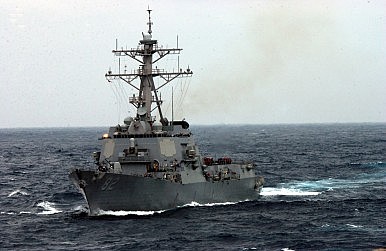
Image Credit: U.S. Navy
Baudelaire said the devil’s best trick was convincing us he did not exist. China’s best trick might be convincing us its claims over the South China Sea do exist. Official rhetoric about its “indisputable sovereignty over the South China Sea islands†certainly sounds like a definitive Chinese position. And, of course, China occupies many islands in the area, its Coast Guard chases off foreign fishing vessels, and massive Chinese land reclamation projects provide new, persistent regional presence. But with the notable exception of the Paracel islands between Hainan Island and Vietnam, China has made no valid legal claim over the South China Sea. Instead, China’s official ambiguity appears carefully calibrated to produce international media coverage that proselytizes far more expansive claims than really exist. That popular narrative (like the perennial “fact†that it claims 80 percent of the South China Sea) helps China legitimate its increasingly assertive activity in the region without having to expand its legal positions in kind. Without those formal legal stakes, China has so far skillfully avoided painting itself into a strategic corner over the South China Sea with no need to militarily defend claims it has not actually made.
#6042
World Daily News / Re: Trump in the eyes of the rest of the world
March 13, 2016, 09:19:47 PMManny Francisco (Manila):

by Manny Francisco / The Manila Times (courtesy of Cagle Cartoons / Cagle.com 2016)
Writer/artist/visual storyteller Michael Cavna is creator of the "Comic Riffs" column and graphic-novel reviewer for The Post's Book World. He relishes sharp-eyed satire in most any form.
https://www.washingtonpost.com/
#6043
World Daily News / Re: Trump in the eyes of the rest of the world
March 13, 2016, 09:17:52 PMDario Castillejos (Mexico):

by Dario Castillejos / Diario La Crisis (courtesy of Cagle Cartoons / Cagle.com 2016)


#6049
World Daily News / Re: Trump in the eyes of the rest of the world
March 13, 2016, 09:01:12 PMChristo Komarnitski (Bulgaria):

by Christo Komarnitski (courtesy of Cagle Cartoons / Cagle.com 2016)


#6054
World Daily News / Re: Trump in the eyes of the rest of the world
March 13, 2016, 08:38:24 PMRiber Hansson (Sweden):

(courtesy of Cagle Cartoons / Cagle.com 2016)
by Riber Hansson / Sydsvenskan (used by permission of Cagle Cartoons.com 2016)
#6055
World Daily News / Trump in the eyes of the rest of the world
March 13, 2016, 08:09:49 PMComic Riffs
Here’s how the rest of the world views Trump and campaign nastiness
By Michael Cavna
March 11
LAST NIGHT, at the GOP debate at the University of Miami, CNN moderator Jake Tapper asked Sen. Ted Cruz whether he cared about how the rest of the world views the United States, given the nastiness of the current presidential campaigning.
“Colin Powell this week said that the nasty tone of this presidential election is hurting the image of the U.S. abroad,†Tapper quoted. “He said, ‘Foreigners of the world looking at this are distressed.’ â€
Well, since Tapper raised the question, we have visual answers. Here’s how some of the globe sees our fair republic, as viewed through the prism of more than a dozen editorial cartoonists who draw for foreign and overseas publications.
#6056
Facts and Trivia / Re: The original Shrek
March 13, 2016, 08:00:49 PM
Shrek was voice by Mike Myers, but the role originally went to Chris Farley, who recorded nearly 90% of the film before he passed away of a drug overdose in 1997. The Chris Farley version of Shrek had a different plotline and Shrek was originally much sweeter. His love interest Princess Fiona was to be voiced by Janeane Garofalo, but when the movie was reworked she was fired from the film. “I was never told why. I assume because I sound like a man sometimes? I don’t know why,†Janeane told Film.com in 2007. “Nobody told me… But, you know, the movie didn’t do anything, so who cares?†As much as we love Janeane, she’s wrong about that. Shrek, was was released in 2001, made $484.4 million at the box office and launched a successful movie franchise for Dreamworks.
Here’s some early Shrek artwork compared the the Shrek that ended up looking strikingly like Maurice Tillet:

http://starcasm.net/
#6057
Facts and Trivia / Re: The original Shrek
March 13, 2016, 07:56:47 PMMaurice wrestled in Europe and the U.S. in the 30s and 40s. In 1950 sculptor Louis Linck made several busts of Maurice, which have a greenish tinge. Two of the masks are on display at The Weightlifting Hall of Fame and York Barbell Museum.

An anonymous blogger who says he worked at Dreamworks art department during the time that Shrek was being developed says he had photos of oddballs, including wrestlers like “‘The Swedish Angel’,’Irish Angel’ and the ‘French Angel’. They may well have inspired the modelers who sculpted Shrek.†The modeler and artist who worked on Shrek have remained quiet about their inspiration, but there has been no flat-out denial that Maurice inspired Shrek.
#6058
Facts and Trivia / Re: The original Shrek
March 13, 2016, 07:54:06 PMDid You Know? Shrek was based on a real person, Maurice Tillet
MAY. 29, 2014 | Author : STARCASM STAFF
Shrek is such a cartoon exaggeration that it seems like if he were based on a real person, it would be loosely, but it turns out that the artists who worked on Shrek had a real life model that looked exactly like their green ogre with a heart of gold.
Russian-born French professional wrestler Maurice Tillet, also known as “The French Angel†is the real life Shrek. Tillet has such exaggerated features because in his twenties he developed acromegaly, a condition where the body has took much growth hormone, and the bones and tissue continue to get larger.
Here he is at age 13 before developing the disorder:

#6059
LGU Philippines / Re: Thread For Our Next National Administration
March 13, 2016, 05:05:54 PMWell, what was Binay’s legacy to Makati? Mercado: the free movies for senior citizens, the P2,000 doles to them, their birthday cakes, and the free bags and school supplies. Former mayors Yabut and Maximo Estrella were responsible for the Makati Polytechnic (the forerunner of the University of Makati), the free medicines and hospitalization (there was a contract with Makati Medical Center). He did build the University of Makati building and the Makati Hospital (at great personal benefit, according to the COA). Even the cakes he made money on.
The question to us: Can the country afford a Binay presidency?
http://opinion.inquirer.net/
#6060
LGU Philippines / Re: Thread For Our Next National Administration
March 13, 2016, 05:05:29 PMAnd while we’re at it, Mercado emphatically states: All other property Binay has, he acquired when he was mayor of Makati. Which, if true, confirms the corruption, because no way could he buy that property on a mayor’s salary, with a large family to support.
How did the corruption start? Mercado: When he took over as Makati mayor, there were contractors with receivables from his predecessor, Nemesio Yabut. They knew they had no chance of getting those receivables. So when they were offered payment so long as 50 percent was given to “SOP,†they grabbed the offer. Better 50 percent than nothing. It is interesting that apparently, Binay didn’t really go “big time†until he linked up with Gerry Limlingan. His SOP, which started at 15 percent, climbed to 28 percent (of which 13 percent was his).
How much did Binay make from corruption? Mercado: Not less than P15 billion.
#6061
LGU Philippines / Re: Thread For Our Next National Administration
March 13, 2016, 05:04:49 PMAside from the supposed corruption amounting to plunder magnified ten- or twenty-fold, Binay has been caught red-handed with lying. He has a political ad where his mother is said to have died because she had no money for medicines. Then in the first presidential debate held in Cagayan de Oro and in other occasions, he claimed that the land he owns was inheritedâ€"from both parents. How can he claim to have been so poor that his mother died for lack of medicine, and at the same time claim to have inherited valuable land from both his father and mother? Which is the truth?
Former vice mayor Ernesto Mercado supplied me with the following information (remember that he and Binay parted ways after 20 years of being closer than kin):
Binay did inherit a 2-hectare farm lot in Cabagan, Isabela, from his mother (present value: about P500,000 to P700,000 per hectare), and a 7-hectare lot in San Pascual, Batangas, from his father (present value: P3 million per hectare). So that puts paid to his poverty story.
#6062
LGU Philippines / Re: Thread For Our Next National Administration
March 13, 2016, 05:04:02 PMIsn’t it ironic that a lifetime ban on government service has been imposed on Binay fils by Ombudsman Carpio Morales, while Binay pere who has been there much longer is allowed to run for president? The Ombudsman says that he cannot be charged even if she wanted to, by virtue of his position as Vice President and the fact that it is so close to Election Day.
What if, heaven forbid, he is elected president? Who will have the courage to press charges against him? And if anyone who should be so brave arises, there is also the fact that as president, he will be appointing 10 associate justices of the Supreme Court up to 2022. Kindatan will raise its ugly head again. And corruption will enter a new phase never before felt in the Philippines. Binay’s mastery of turning “prosecution†into “persecution†will once again have triumphed.
#6063
LGU Philippines / Re: Thread For Our Next National Administration
March 13, 2016, 05:03:14 PMBut what should give us pause, particularly those who think he should be president, is his management style: “But soon enough, former supporters of Binay began parting ways with him, insisting that the mayor didn’t welcome criticism, controlled the council, and entered into corrupt deals. One of them lamented the absence of debates in the council, saying, ‘Walang debate, kindatan lang’ (We don’t debate, we just wink at each other).â€
If we were applying the MGG (Movement for Good Governance) Scorecard on that kind of leadership, he would get a very low score. And that was circa 1995.
Comes now another COA report, 2016 this time. Which states that Binay pere and fils unlawfully approved at least P14 billion worth of supplemental budgets that were for multimillion-peso infrastructure projects that were not contained in the city’s annual procurement plan. I guess this is an example of kindatan at its most lucrative, and he has had all those years to perfect it.
#6064
LGU Philippines / Re: Thread For Our Next National Administration
March 13, 2016, 05:02:36 PMGET REAL
Binay according to Mercado

By: Solita Collas-Monsod
@inquirerdotnet
Philippine Daily Inquirer
March 12th, 2016
Jojo Binay had every chance, since the Senate blue ribbon subcommittee hearings started in mid-2014, to face his accusers and give the public a chance to determine for itself whether he was a corrupt city executive or not. He turned down those chances in favor of press conferences where he entertained no questions. That was his way of exhibiting his vice-presidential airs: How dare the rabble, or anyone else, question the Vice President?
Charges of corruption have hounded him since 1988â€"28 years agoâ€"when Makati Councilor Roberto Brillante, reportedly an erstwhile friend and supporter, filed graft charges against him based on a 1988 Commission on Audit report regarding “ghost†employees and unexplained cash donations (then Vice Mayor Conchitina Bernardo resigned because she couldn’t stomach what was going on). The Ombudsman then was not as fast as Conchita Carpio Morales is now. It wasn’t until 1994 that Binay and six aides were charged with graft at the Sandiganbayan. True to its reputation for slowness, plus the fact that Binay kept going to the Supreme Court on every legal toehold he could use, the Sandiganbayan, I think (it’s hard for a nonlawyer to go through the legal maze), finally resolved the case after 12 years. And guess what? There was a dismissal. Why am I not surprised?
#6065
Philippine Daily News / Re: Jovito R. Salonga, 95
March 13, 2016, 04:41:36 PMi voted for him in 1992. president fidel ramos won, and he turned out to be the right man for the moment. of course, i never believed that salonga wouldn't have been the right man for the moment too.
#6066
Philippine Daily News / Re: Jovito R. Salonga, 95
March 13, 2016, 04:38:02 PMSome books by Jovito R. Salonga:
“The Senate that Said No: A four-year record of the first post-Edsa Senate†(1995)
“Presidential Plunder: The quest for the Marcos ill-gotten wealth†(2000)
“A Journey of Struggle and Hope: The Memoir of Jovito R. Salonga†(2001)
“The Intangibles that Make a Nation Great†(2003)
“Presidential Plunder 2: Erap, the crime of plunder and other offenses†(2008)
http://opinion.inquirer.net/
#6067
Philippine Daily News / Re: Jovito R. Salonga, 95
March 13, 2016, 04:34:48 PM“Guide to heaven and hellâ€
As Inquirer columnist Conrado de Quiros once said, “You can’t have a better guide to the heaven and hell that has been the 20th century Philippines than Salonga. He is not an obtrusive observer, preferring to show the way rather than draw too much attention to himself…He does not need to put himself on a pedestal. Others will do it for him.â€
Confined to his sick bed for several years, Salonga waited. Words were rarely spoken. Ideas were no longer flowing. The mind was quiet, the heart beat softly but was full. The body, with countless shrapnel still imbedded in it, was limp but kept warm by the touch of family, friends, comrades, colleagues and those who had shared his faith in himself, the Filipino people and his God.
In the gleaming twilight, the patriot waited in silence until the call finally came.
http://opinion.inquirer.net/
#6068
Philippine Daily News / Re: Jovito R. Salonga, 95
March 13, 2016, 04:34:11 PMHeroes and martyrs
Bantayog honorees in 2015 brought to 268 the names etched on the black granite Wall of Remembrance near the 45-foot bronze monument by renowned sculptor Eduardo Castrillo that depicts a defiant mother holding a fallen son. The Bantayog Memorial Center is located near the intersection of Edsa and Quezon Avenue.
During the unveiling of Bantayog’s Wall of Remembrance in 1992, Salonga stressed: “A nation is measured by the quality of men and women it honors. Because of these heroes and martyrs, we can stand up with pride and work together, with heads unbowed, knowing that we are honoring ourselves and our nation, more than we are honoring them.â€
Bantayog’s 1.5 hectare property was donated by the Cory Aquino government, through Landbank, the year after the Marcos dictatorship was toppled and Aquino became president in 1986.
The Bantayog ng mga Bayani Foundation Inc. is chaired by Alfonso T. Yuchengco, with Salonga as chair emeritus. The Bantayog building that houses the museum-archives-library, the Yuchengco auditorium and the Silliman University’s Center for Law and Development are all named after Salonga, and feature his countless awards and citations from here and abroad.
Now in Bantayog’s safekeeping are Salonga’s other memorabilia, a treasure trove of historical materials, drafts, planners, news clippings, and other keepsakes related to his legal and political career. The RM Award Foundation has digitalized many of these and put them online. A click, a tap and the young generation could instantly have access to Salonga’s amazing life and times.
#6069
Philippine Daily News / Re: Jovito R. Salonga, 95
March 13, 2016, 04:33:38 PMRainbow coalition
According to his nephew, former Sen. Rene Saguisag, Salonga as senate president successfully put together a “rainbow coalition, a polka dot group from the extreme left to the far right†which voted to oust the U.S. bases.
In his book “The Senate that Said No,†Salonga wrote: “Independence, like freedom, is never granted. It is always asserted and affirmed. Its defense is an everyday endeavorâ€"sometimes in the field of battle, oftentimes in the contest of conflicting wills and ideas. It is a daily struggle that may never endâ€"for as long as we live.â€
A prolific writer, Salonga authored more than a dozen books, a number of them first-hand accounts of major national events that he had witnessed or been part of. Never a fence sitter, he participated in and wrote history. (See list of titles below).
After his failed bid for the presidency in 1992, Salonga returned to private life and continued his advocacies through NGOs he founded: Bantay Katarungan (Justice Watch) and Kilosbayan (People’s Action).
But an enduring and concrete proof of Salonga’s work for justice and freedom is the Bantayog ng mga Bayani (Monument for Heroes) Foundation with its memorial grounds for heroes and martyrsâ€"Ninoy and Cory Aquino and young activists among themâ€"who fought during the dark days of martial rule.
#6070
Philippine Daily News / Re: Jovito R. Salonga, 95
March 13, 2016, 04:32:52 PMMarcos’ ill-gotten wealth
Salonga was still in exile when the Aug. 21, 1983 assassination of homecoming former senator and firebrand Benigno S. Aquino Jr. ignited national rage and created a groundswell of protest never seen before anywhere at that time.
Salonga came home in 1985, shortly before the 1986 snap elections that heralded the doom of the Marcos dictatorship and the rise of Corazon C. Aquino to the presidency.
With freedom restored through the People Power Revolt, Salonga was given the daunting task of searching for the Marcoses’ ill-gotten wealth, a task that remains unfinished to this day. He participated in the democratic elections in 1987 and topped, for the third time, the senatorial polls. He authored laws protecting the state from plunder, military coups and corrupt officials.
In 1991, during Salonga’s term as senate president, majority of the senators, the so-called “Magnificent 12,†voted for the removal of the U.S. military bases on Philippine soil.
#6071
Philippine Daily News / Re: Jovito R. Salonga, 95
March 13, 2016, 04:32:17 PM‘Borrowed life’
It was during a political rally in Plaza Miranda when Salonga’s life took a bloody turn. A bomb was exploded (by elements who remained unknown for decades until Salonga spoke the unspoken), causing death, injuries and mayhem. Salonga, the most severely wounded, survived.
On a “borrowed life,†he continued his crusades, diminished hearing, ruined eyesight and gnarled fingers notwithstanding. He had long forgiven the authors of the bombing, he said.
Marcos’ imposition of martial law in 1972 was, to Salonga, a death knell for democracy. Ever the freedom fighter, he joined the anti-dictatorship movement and worked for the release of political prisoners. (Before this writer answered the stern military summons for an interrogation in 1980 because of an article she had written, she clandestinely went to Salonga to seek advice. “Go!†he admonished. ) In 1980 he was himself detained without charges. After his release, he went into exile for four years.
Recalled Pres. Cory: “It was a very happy reunion for the four of us, Jovy and Lydia and Ninoy and me in Boston, during our years in exile.â€
#6072
Philippine Daily News / Re: Jovito R. Salonga, 95
March 13, 2016, 04:31:34 PMBar topnotcher
Early in life Salonga felt the longing to see his country freed. When he was 12, he listened to freedom advocate Manuel Roxas (who would later become the first President of the Philippine Republic) speak in his hometown. The boy was instantly moved to do his part by pursuing a career in law.
A product of public schools, Salonga went to the University of the Philippines for law studies. When World War II broke out, Salonga ran afoul of the Japanese occupiers and was tortured and jailed for nearly a year. After his release, he reviewed for the bar exams and, in 1944, emerged the topnotcher.
After the war, Salonga strongly advocated for Philippine independence and denounced the so-called parity rights and other ties to the U.S. He boosted his legal prowess by pursuing graduate studies in Harvard and Yale universities. In the U.S. he wooed and married Lydia Busuego, a graduate of St. Scholastica’s College who would become the mother of their four children. Salonga has a son from an earlier relationship.
His studies over, Salonga buckled down to work and became a known lawyer, scholar and educator. In 1961, the Liberal Party recruited him to run for Congress representing a district of Rizal province. The Senate beckoned and, twice, Salonga topped the polls and became known as a die-hard nationalist, crusader for good government and supporter of public education. He opposed the Philippines’ involvement in the Vietnam War and other acts of “puppetry.â€
#6073
Philippine Daily News / Re: Jovito R. Salonga, 95
March 13, 2016, 04:30:14 PMFruits of spiritual faith
There is something the former senator, senate president and chair of the Presidential Committee on Good Government (PCGG), one-time presidential aspirant, lawyer par excellence, teacher, human-rights advocate and nationalist had said that explains why he is what he is.
In his response after receiving the prestigious Ramon Magsaysay Award for Government Service in 2007, Salonga revealed: “(W)hat separates me from other political leaders is not known to many people here in the Philippines. It is the fact that I do not separate my religion from my political beliefs and from public service. As Mahatma Gandhi, the great teacher of peace and non-violence in a non-Christian nation, said many years ago, ‘Those who say that politics and religion do not mix do not know the meaning of religion.'â€
A confounding statement especially because it comes from a man known for his brilliance, erudition and eloquence. To paraphrase his words: one’s religious faith and spiritual beliefs must bear fruit in service of others.
Salonga was born in Rizal Province on June 22, 1920, 22 years after the Spanish colonizers of 400 years left and the United States began to rule the Philippines. Being born to a Presbyterian pastor and a mother of deep religious faith, Salonga said “it was inevitable that my Christian beliefs and values should motivate and influence my thinking.
#6074
Philippine Daily News / Re: Jovito R. Salonga, 95
March 13, 2016, 04:29:25 PMCory Aquino’s tutor
In her introduction to Salonga’s memoir, the late President Cory Aquino wrote with gratitude: “Ninoy and I had known Jovy quite well in those challenging and eventful years. In 1967, Ninoy ran for senator and Jovy was his lawyer, who successfully defended him in the ‘under-age’ question.
“From 1972 to 1980, Ninoy suffered incarceration as a political prisoner. Again we turned to Jovy for his legal expertise and for his invaluable support. Of course, we were well aware of Jovy’s tremendous sacrifice in defending Ninoy and other human rights victims….We certainly appreciated Jovy’s visits to Ninoy in the detention center at Fort Bonifacio. And I would visit Jovy often to deliver Ninoy’s messages and to listen attentively to whatever Jovy would advise Ninoy. In a way, without my realizing it, I was being tutored on the law by the great legal luminary, Jovy Salonga.
“Ninoy fondly called Jovy ‘Prof’ and Jovy in turn would refer to Ninoy as his ‘bunso’ (youngest brother).â€
Few men and women can stand up to Salonga’s achievements as a statesman and his determination to serve despite wounds that maimed his body but not his spirit, despite the human cruelty and tyranny that battered the nation that he loved.â€
Martyrdom may not be Salonga’s crown, but blood he had copiously spilled while in pursuit of dreams for his homeland. In his youth he tasted blood in his mouth and faced execution by an occupying enemy, Japan. He was in the high noon of his political life in 1971 when a bomb tore through his body and left him and scores of others wounded, dying and dead.
But he lived. Bravely he carried on despite disabilities and countless scars that cried out for justice. He confronted the plagues of graft and corruption; he searched for the country’s stolen treasures and worked to totally reclaim the country’s sovereignty.

#6075
Philippine Daily News / Jovito R. Salonga, 95
March 13, 2016, 04:24:59 PMJovito R. Salonga, 95: Where, what does this quintessential statesman and patriot leave us?
By: Ma. Ceres P. Doyo
@inquirerdotnet
Philippine Daily Inquirer
March 12th, 2016

Where, and what does this quintessential statesman leave us? Would that the youth of this land become eager enough to look upon his life and draw inspiration from his legacy!
Patriot par excellence, former Senate President Jovito Salonga, passed on March 10 at the age of 95.
Salonga outlived many who had walked the same path he had taken. Ailing and infirm for several years, he waited patiently for the final call. With the proverbial vigil lamp all lit, he waited in the gentle shadows cast by monuments standing tall against a blazing sunset.
#6076
Philippine Daily News / Re: Duterte-Cayetano to distribute coco levy fund to farmers
March 13, 2016, 04:16:18 PMparehang borit. isog lang kay kandidato pah. maybe it's because usa lang ka boto si cojuangco whereas and coconut farmers are in the thousands.
while the coconut levy funds had always been questionable and unfair like the cocofed scholars, come on, who's kidding who? the finance world is more complicated than a campaign bluster.
#6077
Inspiration & Hope / Re: Penguin reunites with his best human friend
March 13, 2016, 04:09:25 PM"This is because Dindim stays in Ilha Grande (where Proveta Beach is located) at the same time all other Magellanic penguins are breeding in Patagonia and other islands down South," said Krajewski.
"When these penguins finish breeding and moulting, they migrate and spend months feeding in the sea."
This year, Krajewski said, they were able to tell that Dindim is about 6 years old by the measurements of his bill. Researchers with Brazil's Ubatuba Aquarium also took a blood sample and tagged him for future research.
"Professionals who work with animal rescues make the most to avoid relationships like this so they are able to reintroduce the animal into the wild," said Krajewski. "But this isolated case in Brazil certainly allowed Dindim to live and was the best this humble and kind man could do for the penguin."
http://edition.cnn.com/2016/03/12/world/
#6078
Inspiration & Hope / Re: Penguin reunites with his best human friend
March 13, 2016, 04:08:48 PMOne day in February, Dindim simply disappeared. It is unknown where the black and white creature ventured off to, but months later he returned.
"Because penguins are usually very loyal to their pair and breeding site, where they spend the summer, they tend to come back to the same place every year," said Krajewski.
Pereira de Souza heard a loud squeak coming from his back yard that June and Dindim was there, waiting for him. The two were reunited again. This has happened every year since: The penguin returns in late June and stays until mid-February.
Krajewski says they don't know where Dimdim goes the rest of the year, but the biologist says it's extremely unlikely that he travels to Patagonia, which is thousands of miles away.
#6079
Inspiration & Hope / Re: Penguin reunites with his best human friend
March 13, 2016, 04:07:59 PMMagellanic penguins are known for their loud, mournful calls, similar to those of a donkey.
https://www.youtube.com/watch?v=GdSb5Zttg-Q
Dindim took up temporary residence in Pereira de Souza's backyard until February 2012. Pereira de Souza's grandson, who was about 2 years old, also grew attached to the penguin and is the inspiration behind Dindim's name.
The grandson "could not properly pronounce the word 'pinguim,' Portuguese for penguin," said Krajewski. Instead the toddler would pronounce it "dindim."
#6080
Inspiration & Hope / Re: Penguin reunites with his best human friend
March 13, 2016, 04:06:10 PMMagellanic penguins live off the coast of Patagonian South America. They can live in the ocean as long as five months at a time before returning to the coast. These penguins are known to breed off the coast of Argentina, but have been spotted occasionally as far north as Rio de Janeiro.

When Dindim seemed strong enough, Pereira de Souza took him to a nearby island and released the bird into the sea. Later that day, Pereira de Souza heard squeaking in his backyard. Much to his surprise, he saw the penguin had returned and was calling out for him.
#6081
Inspiration & Hope / Re: Penguin reunites with his best human friend
March 13, 2016, 04:05:06 PM"It is a beautiful story because the penguin was in very bad shape and about to die when it was first found and the men gave him a second chance," Krajewski told CNN.
Here is the real story behind Dindim, the traveling penguin from South America.
In May 2011, Dindim was caught in an oil spill. The Magellanic penguin could barely move. Joao Pereira de Souza found the helpless creature in his backyard, which opens up onto Proveta Beach in Rio de Janeiro State, Brazil.
The 71-year-old retired mason cared for the penguin by washing the oil off of Dindim's body and fed the bird sardines over the next few days.
Dindim stayed outside while Pereira de Souza nursed him back to health.
#6082
Inspiration & Hope / Re: Penguin reunites with his best human friend
March 13, 2016, 03:52:21 PM
CNN reached out to biologist Joao Paulo Krajewski, who documented this story for Globo TV, a media network in Brazil, in February.
"I am happy to see the story I presented spread all over the world, but I am also concerned by the amount of misconceptions spread and by some articles changing my statements," Krajewski posted on Facebook.
Ever since Krajewski's story was published online on March 6, there have been duplicate reports that the penguin travels over 5,000 miles to visit the man, but Krajewski says this is false.
photo link: http://globoplay.globo.com/v/4864050/
#6083
Inspiration & Hope / Penguin reunites with his best human friend
March 13, 2016, 03:51:49 PMPenguin reunites with his best human friend
By Amanda Jackson, CNN
March 13, 2016

Story highlights
A man in Brazil helped save a penguin when it was covered in oil
Ever since then the penguin returns each year to reunite with him
(CNN)You may have heard a fantastic story about how a penguin swims 5,000 miles every year to see the man who saved his life.
It's a heartwarming story that's almost too good to be true.
This story has been circulating on social media throughout this week. While there's some truth behind it, it's also filled with plenty of misinformation.
#6084
Philippine History / Re: Happy Birthday Chicogon
March 11, 2016, 01:40:05 PMbirthday greetings to fr chic!

#6085
Photos Unlimited / Re: Solar Eclipse, 08/09 March 2016
March 11, 2016, 03:05:00 AM #6086
Photos Unlimited / Re: Solar Eclipse, 08/09 March 2016
March 11, 2016, 02:48:03 AMAnd Jakarta:

Source: Achmad Ibrahim/AP
#6087
Photos Unlimited / Re: Solar Eclipse, 08/09 March 2016
March 11, 2016, 02:47:36 AMMyanmar:

Source: Aung Shine Oo/AP
#6088
Photos Unlimited / Re: Solar Eclipse, 08/09 March 2016
March 11, 2016, 02:43:43 AMThe Philippines:

Source: Aaron Favila/AP
#6089
Photos Unlimited / Re: Solar Eclipse, 08/09 March 2016
March 11, 2016, 02:42:32 AMBangladesh again:

Source: A.M. Ahad/AP
#6090
Photos Unlimited / Re: Solar Eclipse, 08/09 March 2016
March 11, 2016, 02:41:30 AMCambodia:

Source: Heng Sinith/AP
#6091
Photos Unlimited / Re: Solar Eclipse, 08/09 March 2016
March 11, 2016, 02:40:26 AMOver Indonesia:

Source: Ulet Ifansasti/Getty Images
#6092
Photos Unlimited / Solar Eclipse, 08/09 March 2016
March 11, 2016, 02:39:35 AMThe Must-See Photos of Last Night's Big Event
Over Bangladesh:

Source: AP
#6093
Philippine Provinces / Re: Dalaga mireklamo kay gisinggitan atubangan sa daghang tawo nga wala siyay panty
March 11, 2016, 02:28:35 AMmabutdan tawon ug tiyan. arang uwawa kun motingog ang tambutso. abi pa lang mahalon ang panty kay naay pakapin nga soundtrack.

#6095
Philippine Provinces / Re: Dalaga mireklamo kay gisinggitan atubangan sa daghang tawo nga wala siyay panty
March 10, 2016, 08:06:22 PMmosukol na man lang gyod ug iyaan, purya sad kabastos iyaana, bawos na lang unta si inday ug siyagit ug "kay ang akong mga panty imong gikawat tanaaaannn!"
#6096
Photos Unlimited / Re: Days in the life of Aylandil
March 10, 2016, 08:01:00 PM
hubag encounters his downy self 

#6097
Lifestyle, Culture and Arts / Re: The Fifth Beatle Dies
March 09, 2016, 10:00:13 PM
Over his long career, Martin won pretty much every honor that could be given in the music world -- and elsewhere. "Sgt. Pepper" was the Grammy winner for 1967's album of the year; Martin was later given a Grammy Foundation Leadership Award. He was inducted into the Rock and Roll Hall of Fame in 1999.
Twenty-three Martin productions hit No. 1 in the United States. Thirty did so in the UK.
And he was knighted in 1996. Indeed, when it came time for someone to serve as musical director for Queen Elizabeth's Golden Jubilee in 2002, Martin was the choice.
Throughout his life, Martin generally played down his accomplishments. But that wasn't to say he didn't know how much he had achieved.
"Would I like to do something again? No, I wouldn't want to do anything again. I'm not a person to look back," he told Rock Cellar in 2013. "I don't honestly think I could do anything better than what we did."
CNN's Cheri Mossburg and Madison Park contributed to this report.
http://edition.cnn.com/
#6098
Lifestyle, Culture and Arts / Re: The Fifth Beatle Dies
March 09, 2016, 09:56:56 PM
The Beatles, however, were never far away. When the surviving members of the group embarked on the "Anthology" project in the mid-'90s, Martin was back in the producer's chair, overseeing all the old recordings. He brought in his son, Giles, to help with such projects as "The Beatles Love," the soundtrack to a Cirque du Soleil show that mixed and matched snippets to Beatles songs.
By that time, his ears weren't what they used to be, he admitted. Indeed, he became the vice-president of Deafness Research UK, a charity dedicated to hearing issues.
He finally retired, officially, about 2009, when he was 83. Three years later, Giles Martin said he was "enjoying early retirement."
#6099
Lifestyle, Culture and Arts / Re: The Fifth Beatle Dies
March 09, 2016, 09:55:20 PMA legendary career
After the Beatles' breakup in 1970, Martin worked with a wide variety of artists. He had particular success with the group America, producing their Top 10 hits "Tin Man," "Lonely People" and "Sister Golden Hair."
He also produced Jeff Beck, Cheap Trick, UFO, Ultravox, the original cast recording of the Who's "Tommy" and the movie soundtrack of "Sgt. Pepper's Lonely Hearts Club Band." Elton John had Martin produce his updated version of "Candle in the Wind," done in honor of Princess Diana, in 1997.
Martin also maintained his relationship with Paul McCartney, overseeing the explosive James Bond theme "Live and Let Die" and one of McCartney's most highly praised solo albums, "Tug of War."
#6100
Lifestyle, Culture and Arts / Re: The Fifth Beatle Dies
March 09, 2016, 09:52:31 PMThe "Sgt. Pepper" album was an even bigger challenge. Though overflowing with multitracked harmonies and clever arrangements, it was recorded on a four-track console. Martin would mix four tracks down to one and then record more, careful to limit distortion.
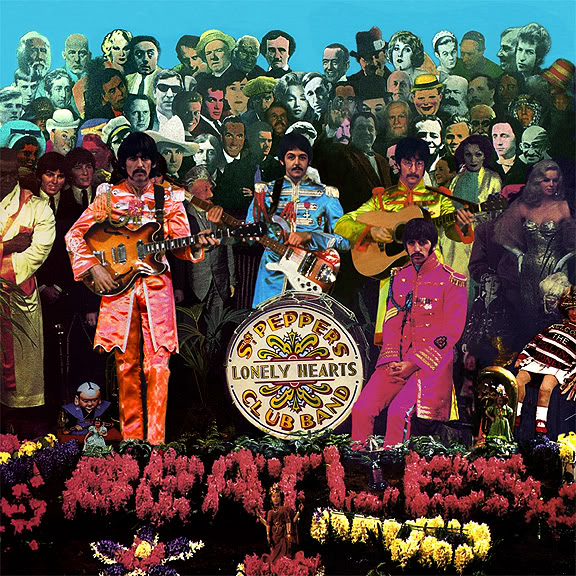
Yet, out of this rudimentary setup came songs such as "A Day in the Life," with its rumbling piano, tweaked Lennon vocal and explosive crescendos.
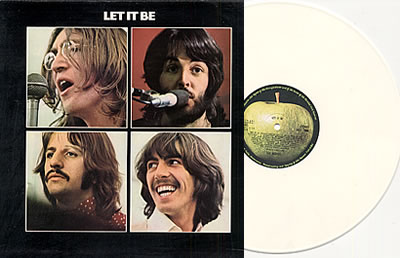
As the Beatles, beset by legal issues and differing philosophies, started splitting apart, Martin grew weary of the atmosphere. He sat out a number of the "White Album" sessions, entrusting the work to assistants such as Emerick and Ken Scott. He was left out of the troubled "Let It Be" sessions entirely and returned for "Abbey Road" only after assurances that the group would put aside its bickering.
It was the last album he would do with the full band, though the single version of "Let It Be" released in 1970 bears his credit.
Pages 1 2 3 4 5 6 7 8 9 10 11 12 13 14 15 16 17 18 19 20 21 22 23 24 25 26 27 28 29 30 31 32 33 34 35 36 37 38 39 40 41 42 43 44 45 46 47 48 49 50 51 52 53 54 55 56 57 58 59 60 61 62 63 64 65 66 67 68 69 70 71 72 73 74 75 76 77 78 79 80 81 82 83 84 85 86 87 88 89 90 91 92 93 94 95 96 97 98 99 100 101 102 103 104 105 106 107 108 109 110 111 112 113 114 115 116 117 118 119 120 121 122 123 124 125 126 127 128 129 130 131 132 133 134 135 136 137 138 139 140 141 142 143 144 145 146 147 148 149 150 151 152 153 154 155 156 157 158 159 160 161 162 163 164 165 166 167 168 169 170 171 172 173 174 175 176 177 178 179 180 181 182 183 184 185 186 187 188 189 190 191 192 193 194 195 196 197 198 199 200 201 202 203 204 205 206 207 208 209 210 211 212 213 214 215 216 217 218 219 220 221 222 223 224 225 226 227 228 229 230 231 232 233 234 235 236 237 238 239 240 241 242 243 244 245 246 247 248 249 250 251 252 253 254 255 256 257 258 259 260 261 262 263 264 265 266 267 268 269 270 271 272 273 274 275 276 277 278 279 280 281 282 283 284 285 286 287 288 289 290 291 292 293 294 295 296 297 298 299 300 301 302 303 304 305 306 307 308 309 310 311 312 313 314 315 316 317 318 319 320 321 322 323 324 325 326 327 328 329 330 331 332 333 334 335 336 337 338 339 340 341 342 343 344 345 346 347 348 349 350 351 352 353 354 355 356 357 358 359 360 361 362 363 364 365 366 367 368 369 370 371 372 373 374 375 376 377 378 379 380 381 382 383 384 385 386 387 388 389 390 391 392 393 394 395 396 397 398 399 400 401 402 403 404 405 406 407 408 409 410 411 412 413 414 415 416 417 418 419 420 421 422 423 424 425 426 427 428 429 430 431 432 433 434 435 436 437 438 439 440 441 442 443 444 445 446 447 448 449 450 451 452 453 454 455 456 457 458 459 460 461 462 463 464 465 466 467 468 469