Join MikeLigalig.com!

Why Just Read When You Can Join, Post, and Read!

Menu

Show posts

This section allows you to view all posts made by this member. Note that you can only see posts made in areas you currently have access to.

Show posts Menu

Messages - islander

#5801
Talk of the Town / Re: China v the rest
March 25, 2016, 12:23:42 PM

The latest fight China has picked is with a country with whichâ€"unlike Brunei, Malaysia, the Philippines, Taiwan and Vietnamâ€"it has no territorial dispute: Indonesia. On March 21st the chargé d’affaires at China’s embassy in Jakarta was hauled in to receive a stiff protest. A Chinese coastguard vessel had rammed free a Chinese fishing boat as it was towed into port after being caught allegedly fishing in Indonesian waters. The crew of eight was already in detention. In a similar incident three years ago, Indonesia released detained crew members when confronted by an armed “maritime law-enforcement” vessel belonging to China’s fisheries bureau. 

Since that incident Indonesia has elected a new president, Joko Widodo, one of whose trumpeted policies has been to look after the interests of fishermen. To deter illegal interlopers, Indonesia now impounds and blows up foreign vessels caught poaching. In this case, it seems clear that the Chinese were in Indonesian waters. Indonesia claims that the boat was just four kilometres off the Natuna islands, well within Indonesia’s 12 nautical-mile territorial limit, let alone its 200-nautical-mile “exclusive economic zone” (EEZ).
#5802
Talk of the Town / China v the rest
March 25, 2016, 12:21:15 PM

The South China Sea

China v the rest

As the sea becomes more militarised, the risks of conflict grow

Mar 26th 2016 | From the print edition


FOR years China has sought to divide and rule in the South China Sea. It worked hard to prevent the countries challenging it over some or all of its absurdly aggrandising territorial claims in the sea from ganging up against it. So when tensions with one rival claimant were high, it tended not to provoke others.

Not any more. In a kind of united-front policy in reverse, it now seems content to antagonise them all at the same time. This is both encouraging closer co-operation among neighbours and driving them closer to external powers including India, Australia, Japan and, above all, America.
#5803
Bible Study / Re: O sweet Virgin Mary
March 25, 2016, 12:18:29 PM

my all-time favorite---MEMORARE. 

thanks much for posting it here, bai hubs.
#5804


Andrew Wakefield (pictured) falsified elements of research that wrongly linked autism to MMR vaccines, leading him to be struck off the medical register (Credit: Getty Images)

Newman agrees it’s a helpful strategy. For instance, when considering the fears that MMR vaccines may be linked to autism, she suggests it would be better to build a narrative around the scientific fraud that gave rise to the fears â€" rather than the typical “myth-busting” article that unwittingly reinforces the misinformation. Whatever story you choose, you need to increase the cognitive fluency with clear language, pictures, and good presentation. And repeating the message, a little but often, will help to keep it fresh in their minds. Soon, it begins to feel as familiar and comfortable as the erroneous myth â€" and the tide of opinion should begin to turn.

At the very least, staying conscious of these flaws in your thinking will help you to identify when you may be being deceived. Both Newman and Lewandowsky point out that there is a flurry of misinformation flying around the forthcoming US presidential elections, as seen in Donald Trump’s claims that Mexican immigrants bring sexual violence and drug trafficking and Hillary Clinton’s opinion that Isis are using videos of Trump to recruit terrorists. (Neither statement held up to fact-checking.)

It’s always worth asking whether you have thought carefully about the things you are reading and hearing. Or are you just being a cognitive miser, persuaded by biased feelings rather than facts? Some of your dearest opinions may have no more substance than the great banana hoax of the year 2000.

http://www.bbc.com/
#5805

Fraying beliefs

As a result of these frailties, we are instantly drawn to the juicier details of a story â€" the original myth â€" while forgetting the piddling little fact that it’s been proven false. Worse still, by repeating the original myth, the correction will have increased the familiarity of the claim â€" and as we’ve seen, familiarity breeds believability. Rather than uprooting the myth, the well-intentioned correction has only pushed it deeper.

A debunked myth may also leave an uncomfortable gap in the mind. Lewandowsky explains that our beliefs are embedded in our “mental models” of the way the world works; each idea is interlinked with our other views. It’s a little like a tightly bound book: once you tear out one page, the others may begin to fray as well. “You end up with a black hole in your mental representation, and people don’t like it.” To avoid that discomfort, we would often rather cling to the myth before our whole belief system starts unravelling.

Fortunately, there are more effective ways to set people straight and make the truth stick. For a start, you should avoid repeating the original story (where possible) and try to come up with a whole alternative to patch up the tear in their mental model. “If I tell you the Moon is not made of cheese, then you find it difficult to give up on the belief â€" but if I say it’s not cheese but rock, you say ‘OK, fine’, because you still have an idea of what the Moon is like,” explains Lewandowsky.
#5806

In light of these discoveries, you can begin to understand why the fear of the flesh-eating bananas was so infectious. For one thing, the chain emails were coming from people you inherently trust â€" your friends â€" increasing the credibility of the claim, and making it appear more popular. The concept itself was vivid and easy to picture â€" it had high cognitive fluency. If you happened to distrust the FDA and the government, the thought of a cover-up would have fitted neatly into your worldview.


It's true: we would rather hide our heads in the sand than listen to evidence questioning our beliefs, even if the facts are solid (Credit: Getty Images)

That cognitive miserliness can also help explain why those attempts to correct a myth have backfired so spectacularly, as the CDC found to their cost. Lab experiments confirm that offering counter-evidence only strengthens someone’s conviction. “In as little as 30 minutes, you can see a bounce-back effect where people are even more likely to believe the statement is true,” says Newman.

The problem, she says, emerges from our deeply flawed memories. Correcting the facts “would work very well if we could play back our memories as if they were recorded on video, but years of research show the memory is not perfect â€" we fill in gaps and we lose information,” she says.
#5807

Sticky nuggets

Then there’s the “cognitive fluency” of a statement â€" essentially, whether it tells a good, coherent story that is simple to imagine. “If something feels smooth and easy to process, then our default is to expect things to be true,” says Newman. This is particularly true if a myth easily fits with our expectations. “It has to be sticky â€" a nugget or soundbite that links to what you know, and reaffirms your beliefs,” agrees Stephan Lewandowsky at the University of Bristol in the UK, whose work has examined the psychology of climate change deniers.

A slick presentation will instantly boost the cognitive fluency of a claim, while raising its believability. In one recent study, Newman presented participants with an article (falsely) saying that a well-known rock singer was dead. The subjects were more likely to believe the claim if the article was presented next to a picture of him, simply because it became easier to bring the singer to mind â€" boosting the cognitive fluency of the statement. Similarly, writing in an easy-to-read font, or speaking with good enunciation, have been shown to increase cognitive fluency; indeed, Newman has shown that something as seemingly inconsequential as the sound of someone’s name can sway us; the easier it is to pronounce, the more likely we are to accept their judgement.
#5808

Crucially, our responses to each of these points can be swayed by frivolous, extraneous, details that have nothing to do with the truth.

Consider the questions of whether others believe a statement or not, and whether the source is credible. We tend to trust people who are familiar to us, meaning that the more we see a talking head, the more we will begrudgingly start to believe what they say. “The fact that they aren’t an expert won’t even come into our judgement of the truth,” says Newman. What’s more, we fail to keep count of the number of people supporting a view; when that talking head repeats their idea on endless news programmes, it creates the illusion that the opinion is more popular and pervasive than it really is. Again, the result is that we tend to accept it as the truth.
#5809

Known as the “Moses illusion”, this absentmindedness illustrates just how easily we miss the details of a statement, favouring the general gist in place of the specifics. Instead, we normally just judge whether it “feels” right or wrong before accepting or rejecting its message. “Even when we ‘know’ we should be drawing on facts and evidence, we just draw on feelings,” says Eryn Newman at the University of Southern California, whose forthcoming paper summarises the latest research on misinformation.

Based on the research to date, Newman suggests our gut reactions swivel around just five simple questions:

*Does a fact come from a credible source?

*Do others believe it?

*Is there plenty of evidence to support it?

*Is it compatible with what I believe?

*Does it tell a good story?
#5810


According to conspiracy theorists, the actress Megan Fox has died and been replaced by lookalikes - not once, but twice (Credit: Getty Images)

One, somewhat humbling, explanation is that we are all “cognitive misers” â€" to save time and energy, our brains use intuition rather than analysis.

As a simple example, quickly answer the following questions:

“How many animals of each kind did Moses take on the Ark?”
“Margaret Thatcher was the president of what country?”

Between 10 and 50% of study participants presented with these questions fail to notice that it was Noah, not Moses, who built the Ark, and that Margaret Thatcher was the prime minster, not the president â€" even when they have been explicitly asked to note inaccuracies.
#5811

Did it help? Did it heck. Rather than quelling the rumour, they had only poured fuel on its flames. Within weeks, the CDC was hearing from so many distressed callers it had to set up a banana hotline. The facts became so distorted that people eventually started to quote the CDC as the source of the rumour. Even today, new variants of the myth have occasionally reignited those old fears.

"The banana apocalypse may seem comical in hindsight, but the same cracks in our rational thinking can have serious, even dangerous, consequences."

We may laugh at these far-fetched urban myths â€" as ridiculous as the ongoing theory that Paul McCartney, Miley Cyrus and Megan Fox have all been killed and replaced with lookalikes. But the same cracks in our logic allow the propagation of far more dangerous ideas, such as the belief that HIV is harmless and vitamin supplements can cure AIDS, that 9/11 was an ‘inside job’ by the US government, or that a tinfoil hat will stop the FBI from reading your thoughts.

Why do so many false beliefs persist in the face of hard evidence? And why do attempts to deny them only add grist to the rumour mill? It's not a question of intelligence â€" even Nobel Prize winners have fallen for some bizarre and baseless theories. But a series of recent psychological advances may offer some answers, showing how easy it is to construct a rumour that bypasses the brain’s deception filters.
#5812

Why are people so incredibly gullible?

Our brains don’t let piddling little facts get in the way of a good story, allowing lies to infect the mind with surprising ease.

By David Robson
24 March 2016


If you ever need proof of human gullibility, cast your mind back to the attack of the flesh-eating bananas. In January 2000, a series of chain emails began reporting that imported bananas were infecting people with “necrotizing fasciitis” â€" a rare disease in which the skin erupts into livid purple boils before disintegrating and peeling away from muscle and bone.

According to the email chain, the FDA was trying to cover up the epidemic to avoid panic. Faced with the threat, readers were encouraged to spread the word to their friends and family.

The threat was pure nonsense, of course. But by 28 January, the concern was great enough for the US Centers for Disease Control and Prevention to issue a statement decrying the rumour.
#5813
QuoteNow a new study published in the American Journal of Preventative Medicine finds sitting for more than three hours a day is to blame for 3.8% of all worldwide deaths.

3 hours only?  how possible can this be?
#5814

More Proof That Too Much Sitting Can Kill

We have published several stories about the health dangers of sitting too much and its link to the onset of some chronic diseases and early death.

Now a new study published in the American Journal of Preventative Medicine finds sitting for more than three hours a day is to blame for 3.8% of all worldwide deaths.

The study authors also found that moderate or even vigorous physical exercise might not be able to offset the negative effects of sitting for too long.

They suggest that reducing daily sitting time to less than three hours a day would add an average of .2 years to a person’s life expectancy.

The researchers say the link between sitting and death was highest in Western Pacific nations, followed by European, Eastern Mediterranean, American, and then Southeast Asian countries.

Lately, more office workers are using work stations that allow them to alternate between sitting and standing throughout the day.


Man at his sit/stand workstation. (John M via Flickr/Creative Commons)

http://blogs.voanews.com/
#5815

The family said it had also started distributing street flyers.

"Keeping cats indoors isn't common in New Zealand," said Ms Nathan.

"Brigit doesn't hunt birds or wildlife so it seems unnecessary and our neighbours have been very good natured about it.

"But we are moving to the country soon so hopefully she will run out of opportunity!"

http://www.bbc.com/
#5816

Ms Nathan told the BBC that the trouble first began when she started discovering "odd pieces" of underwear among her washing.


Facebook: Sarah Nathan
Brigit's hunt has claimed 11 pairs of men's underpants and more than 50 socks

"They didn't belong to anyone in the house and one day Brigit walked into our lounge carrying a sock like a kitten," she said, adding that Brigit's unlucky victims were probably a nearby flat "full of blokes".
#5817

New Zealand 'cat burglar' caught stealing men's underwear

21 March 2016


Photo:Mark Taylor
Brigit poses with her haul

A nocturnal "cat burglar" has been stealing dozens of socks and men's underwear in New Zealand.

In two months, six-year-old Tonkinese cat Brigit from Hamilton city brought back 11 pairs of underpants and more than 50 socks.

Her owner, Sarah Nathan, has documented her feline's strange obsession on a widely shared Facebook post.

"Now it's getting silly. Someone must be missing this stuff," she said in a post shared close to 500 times.
#5818
Photos Unlimited / Re: 2016 News Images
March 24, 2016, 08:50:45 PM


While Rome's Capitoline Hill also projected a tribute to those affected (EPA)
#5819
Photos Unlimited / Re: 2016 News Images
March 24, 2016, 08:49:12 PM


City Hall in the Portuguese capital Lisbon was illuminated in Belgian national colours (EPA)
#5820
Photos Unlimited / Re: 2016 News Images
March 24, 2016, 06:54:45 PM


And these flowers were laid outside the Belgian embassy in Washington DC (AFP)
#5821
Photos Unlimited / Re: 2016 News Images
March 24, 2016, 06:53:35 PM


The Eiffel Tower was illuminated in the national colours of Belgium (EPA)
#5822
Photos Unlimited / Re: 2016 News Images
March 24, 2016, 06:52:23 PM


There is sorrow in the city but also defiance against those responsible (EPA)
#5823
Photos Unlimited / Re: 2016 News Images
March 24, 2016, 06:50:47 PM


The square near the former city Bourse has been transformed into a makeshift shrine to the victims (Getty Images)
#5824
Photos Unlimited / Re: 2016 News Images
March 24, 2016, 06:48:42 PM

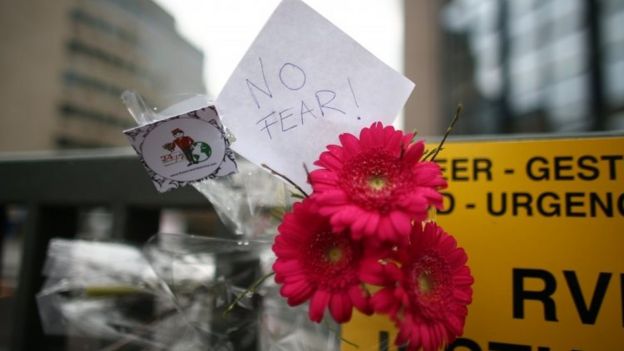
Tributes to Belgium from around the world


Brussels residents - as well as tourists from around the world - have been bringing flowers and leaving messages of support near the sites of the attacks (Getty Images)
#5825
Photos Unlimited / Re: Our Lady of the Isles
March 24, 2016, 06:45:53 PM

Our Lady of the Isles (Gaelic: Moire ro Naomh nan Eilean or Bana Thighearna nan Eilean) is a sculpture of the Virgin Mary, on South Uist in the Outer Hebrides of Scotland.

The statue is situated on the western slopes of Ruabhal, a hill near the northern end of South Uist. It is to the east of the A865 road, and a paved path runs from the road to the statue.

The statue was commissioned following proposals from the Ministry of Defence for a large missile testing range. This would have covered much of Uist, and involved construction of a military town as well as facilities for building missiles. This caused concern it would destroy much of the island's way of life, culture and language. Resistance to the proposals was led by Canon John Morrison, the local parish priest. He commissioned and raised funds for the construction of the statue. The statue was completed in 1957, and dedicated in 1958.

The statue was designed by Hew Lorimer, and sculpted from granite. In 2007 the statue was listed as a Category B listed building. (wikipedia)
#5826

Remember to Take Care of Yourself Too

Worrying over and helping out a young adult child with depression takes its toll on parents. “Parents need self-care and to draw some boundaries themselves,” says Lownes. “When you get on an airplane, they talk about putting the oxygen mask on yourself first so you can help others. That applies here too. I would also encourage parents to be in therapy or seek out help. If they have a depressed kid, they need help too. Depression is like a giant vacuum that can really suck you in.” WebMD, The Balanced Mind and Mental Health America all have online support groups, and many communities have local support groups as well.

http://mentalhealthtreatment.net/
#5827

When to Intervene

“There’s a different tolerance level for every parent,” Christensen says. “If your child is suicidal or self-harming, absolutely there’s a call for intervention. If drugs and alcohol are affecting their lives, that’s another time, as is failing out of school.”

If your child is away at college, remember that you can contact people at the school, such as resident advisers in the dorm, the college counseling center, or even the dean of students, with your concerns, says Christensen. “Accessing the counseling center is good to ask what recommendations they have. Privacy laws prevent many professionals from sharing things with you, but that doesn’t mean you as a parent can’t call and say you’ve heard suicidal ideation. They can’t acknowledge that the kid is a client, but they can always take the information. This applies to any clinic,” she says.
#5828

Unhealthy eating or sleeping patterns, including weight gain or loss. “These are physical signs of worsening depression,” Christensen says.

An increase in physical complaints. “I’ve seen with college kids lots of headaches, bathroom problems, back aches,” says Christensen. “On the extreme level, a decline in personal self-care where you can tell they’re not taking care of themselves.”

Communicating hopelessness or being fixated on past failures. “Saying they never do anything right or they fail at everything, or showing extreme sensitivity are signs of the depression getting worse as well,” notes Christensen. “Rarely do they say they want to kill themselves,” says Lownes. “They’ll usually say, ‘What’s the point?’ As it gets more serious, they may start giving away some of their favorite things and cutting off relationships.”
#5829

Warning Signs of Deepening Depression

Parents should be on the lookout for signs of depression getting worse, whether their child is at home or away at school or work, so they can intervene, if necessary. “It’s unique for every person, and different things can be red flags for different people,” says Christensen.

Dropping grades. “If you start to hear that your child’s academic performance is declining, they’re not attending classes, their motivation is low, and they’re spending lots of time in their room or coming home every weekend, those could be warning signs that the depression is getting worse,” Christensen says.

Using or increasing use of alcohol and/or drugs. “These are coping mechanisms people may use to deal with depression,” says Lownes.
#5830

Support and encourage therapy and medication, if it’s necessary, and make sure they understand that even though there can be a stigma surrounding these, there shouldn’t be, Lownes says. “Explain that if they have to take medication, so what? It’s like having heart disease or diabetes. Normalize what they’re doing and take any stigma out,” he says.

Educate yourself about what resources are available for your child, whether they are at college or at home, Christensen says. “It’s totally appropriate to ask about the services available if your child is struggling,” she says. “Then you can urge your child to access those things, if necessary.”

Advocate for outside relationships with friends and other family, as long as they are healthy, says Aronson. “If a friend is a healthy influence, invite the friend over when your child expects to feel lonely, or when the parents go out,” she says. “Anything that’s going to keep your child connected.”
#5831

“If they call you, listen to what they have to say. Try not to move right into problem-solving,” says Christensen. “Listen and acknowledge that they’re having a hard time first.”

Conversely, don’t dwell on problems with your child. “There’s a new phenomenon called ‘co-rumination,’ and it’s what happens when people focus on problems and talk about the problems and don’t solve them. It brings people closer together, but it also makes them unhappy because they focus on the negative,” Christensen says. “Sometimes parents can become that co-ruminator with their children, so they need to evaluate what’s true and eventually get into problem-solving.”

Consider role-playing or practicing for difficult life tasks, such as job interviews or dealing with peer pressure away from home, suggests Aronson. “It’s very reassuring to a young adult who is feeling vulnerable to have parents showing that they’re aware of what they’re going through and to give them some advice about mastering what could be scary situations.” Be open and honest with your child about the difficulties you notice. For instance, “if they have a fear of driving, tell them you’ll help them,” Aronson says.
#5832

How to Help Support Independence

Help your child get on a schedule and build structure into her life, Lownes says. “If my son were depressed, I’d make sure he was getting the right food, sleeping properly, exercising, that he was getting outside and taking Vitamin D, and I’d sit him down with a planner and help him structure his life so he could get his work or homework done,” he says. “Encourage them and let them know you’re there for them.”

Particularly if your child isn’t succeeding, make sure there aren’t other issues going on. “It’s not bad to get a psychological evaluation,” says Aronson. “The child may be cognitively impaired or have a psychological illness that you’re not seeing. If the child isn’t moving forward, testing can help the child and parent understand some impairment they may have that needs some kind of support.”

Be an active listener.
#5833

Potential Challenges in Transitioning into Adulthood

Loneliness and social isolation are definitely some of the biggest challenges a depressed young adult may face. “The person may be feeling depressed and unsure about themselves and getting negative feedback, so they isolate themselves. They stay in their dorm room or apartment,” says Christensen. Young adults may fail to leave the nest effectively because they are afraid of being lonely, adds Aronson.

Anxiety, lack of energy, and even turning to drugs to cope and stimulate energy are other potential pitfalls in transitioning, Lownes says. “They may cope with depression by overeating or oversleeping or not eating enough or not sleeping enough,” he says.

More severe challenges include self-harm, suicidal feelings and failing to take medication and/or go to therapy, says Christensen. “Parents should remember there is a typical adjustment to college, even for ‘normal’ kids. There’s excitement and stress, so keep that in mind. Even a child who is depressed may be just stressed by college and some of that stress is good. Parents need to tease out what’s depression and what’s typical stress,” she says.
#5834

“Transition your communication to acknowledge the adult to adult relationship,” says Christensen. “Relate to them on more of an adult level and balance advice and words of encouragement versus support versus independence.”

Resist the urge to overprotect children and bail them out of every problem. “Let them go and take responsibility for themselves. Release them and let them launch,” says Steve Lownes, a licensed marriage and family therapist at Behavioral Healthcare Agency, County of Orange, California. “They can get pretty dependent on parents, and that’s not healthy either. Give yourself a lot of grace, and your kid too, to make mistakes. Each circumstance is going to be different. You’re going to make mistakes as a parent by either holding on too tight or not tight enough, and the kid is going to make mistakes too.”

Particularly if your child is still living at home, keep a close eye on behavior and habits. “If the child’s habits have gone to pot and the child is still at home, the parent still has some power that can be exercised on behalf of the child’s best interests,” says Lisa Aronson, MSW, PhD, a clinical child psychologist and adjunct faculty at Antioch University in Santa Barbara, California. “The parent can still have rules and bed times and have the child help prepare meals or walk the dog or other things that help her become independent while in the family context.”

Encourage your child to make small changes, one step at a time, Christensen says. “Becoming independent is a big transition. Break large things up into smaller tasks. For college kids, help them see that they don’t have to make any major life decisions yet and urge them to get involved in activities or join clubs outside their dorms. They need to get comfortable in their environment.”
#5835

Helping Young Adult Children Cope With Depression


As the mother of a high school senior who has struggled with depression for nearly 10 years, I’m anxious about how I can help her adjust to life on her own without smothering her or somehow enabling failure. Knowing exactly how supportive to be, while still being somewhat hands-off, can be tricky. How involved should parents be? What can parents do to help their young adult children be independent while still remaining supportive? What warning signs of deepening depression should parents look for? When is an intervention appropriate?

Parental Involvement

How much and in what ways you help your young adult will vary according to the individual, since everyone has different needs, notes Kimberly Christensen, PsyD, a pediatric psychologist at Sartell Pediatrics in Sartell, Minnesota. “People are so worried these days about being a helicopter parent, but in my experience, it’s totally appropriate to have regular contact with your child,” Christensen says. “Regularly call or text or check in on certain days or times. Ask how things are going, how they’re eating, are they exercising, what they’re doing on weekends. Those questions can help parents who are pretty in tune with their kids tell if something is going on. Communication really shouldn’t be any different for kids that have depression.”

Make sure you treat your adult child like an adult.
#5836
Showbiz & Celebrity / Re: here comes BALANG
March 24, 2016, 04:58:36 PM

ing-ani ba sad kaha mosayaw ang TB's own BALONG. ;D
#5838

the Philippines is ranked 82nd out of 157 countries.
#5839

THE BIRTH OF ‘GROSS NATIONAL HAPPINESS’

It’s no surprise that Bhutan would come out on top, despite not being a world economic power: Its Prime Minister proposed a World Happiness Day to the United Nations in 2011 and launched this international focus on happiness.

Following in Bhutan’s footsteps, the U.N. General Assembly declared March 20 as World Happiness Day in 2012, recognizing “happiness and well-being as universal goals and aspirations in the lives of human beings around the world.”

In recent years, other countries have made happiness a public policy goal of their governments. Bhutan, Ecuador and the United Arab Emirates and Venezuela have all appointed “Minsters of Happiness” to focus on the happiness of their people.

http://www.citi.io/2016/03/18/

This feature originally appeared in CNN.
#5840

INEQUALITY OF HAPPINESS

It turns out that people are also happier in countries where there’s less inequality of well-being, the report found. And happiness inequality has increased significantly “in most countries and regions of the world,” said Helliwell, comparing 2012-15 data with 2005-11 data.

The country of Bhutan, a tiny country famous for measuring the “Gross National Happiness” of its people, ranked No. 1 in happiness equality, followed by Comoros and the Netherlands. South Sudan, Sierra Leone and Liberia had the highest happiness inequality.

A country may have really rich and really poor people, and the poor people don’t have enough money to construct a good life for themselves, he said. Or people may have money but have no social support or friends, or live in an area where there’s government corruption or lack of freedom to make their own life choices.
#5841

NOT JUST ABOUT THE MONEY

Iceland and Ireland both suffered through banking crises that dramatically affected their economies but didn’t greatly affect their happiness, according to the report. What both countries have is a high degree of social support, enough to put Iceland in third place and Ireland in 19th place this year, according to the report.

“STRICTLY FOCUSING ON FINANCIAL WELL-BEING CAN OBSCURE THE LARGER PICTURE, ACCORDING TO THE UNIVERSITY OF BRITISH COLUMBIA’S JOHN HELLIWELL.”

“In Norway, it’s quite common for people to paint each other’s houses even though they can all afford to pay to have their houses painted,” said Helliwell, a report co-editor and co-director of the Canadian Institute for Advanced Research.

“They go out of their way to help each other, and it becomes a social event, and those events are enormously supportive of well-being,” Helliwell said. “In the commercialization of activity â€" when people are more likely to buy things than to do them for themselves and each other â€" we lose something along the way.”
#5842

MEASURING HAPPINESS IS IMPORTANT

“HAPPINESS IS A BETTER MEASURE OF HUMAN WELFARE THAN MEASURING EDUCATION, HEALTH, POVERTY, INCOME AND GOOD GOVERNMENT SEPARATELY, THE REPORT’S EDITORS ARGUE.”

There are at least seven key ingredients of happiness: People who live in the happiest countries have longer life expectancies, have more social support, have more freedom to make life choices, have lower perceptions of corruption, experience more generosity, experience less inequality of happiness and have a higher gross domestic product per capita, the report shows.

“Measuring self-reported happiness and achieving well-being should be on every nation’s agenda as they begin to pursue the Sustainable Development Goals,” said Jeffrey Sachs, the report’s co-editor and director of the Earth Institute at Columbia University, in a statement.

“Indeed the goals themselves embody the very idea that human well-being should be nurtured through a holistic approach that combines economic, social and environmental objectives,” Sachs said. “Rather than taking a narrow approach focused solely on economic growth,we should promote societies that are prosperous, just, and environmentally sustainable.”
#5843


1. Denmark

After dipping to third place last year, Denmark is once again the happiest country in the world, according to the latest World Happiness Report. January temperatures hovered between zero and minus 4 degrees Celsius at the beach near Fakse Ladeplads, south of Copenhagen. That’s enough to encourage the Danish traditional of “hygge,” a sense of intimacy, community and contentment that makes for a happy country.
#5844


2. Switzerland

Switzerland can’t be that sad about slipping into second place this year. Just look at that powder residents and visitors alike can enjoy in Davos, home of one of Switzerland’s biggest ski resorts.
#5845


3. Iceland

Third-place Iceland’s Blue Lagoon, in a lava field, is the country’s most famous geothermal spa. You can also mix with the locals at their hot springs or thermal-heated swimming pools all over the country.
#5846


4. Norway

Norway is the fourth-happiest country in the world. It could be the sense of community and the hardiness of its people; some choose to surf among the ice in March near Flakstad in Lofoten archipelago. Or it could be the Michelin-starred dining options, including Maaemo (three stars), Restaurant Kontrast (one star) and Renaa: Atriet (one star).
#5847


5. Finland

Fifth-place Finland not only hosts Santa Claus every day of the year (for real). It also has glass igloos at Kakslauttanen, where (in season) you can enjoy the stunning Northern Lights.
#5848


6. Canada

Canada came in sixth place, but we’re pretty sure it would have ranked higher if Canadians had been surveyed after these adorable giant panda cubs were born. Prime Minister Justin Trudeau, who knew a good photo op when he saw one, helped unveil their names (Jia Panpan and Jia Yueyue) in March.
#5849


7. The Netherlands

When we think of the seventh-place Netherlands, stunning tulips come to mind. Keukenhof Gardens near Lisse opens March 24 for the spring season. Get there before it closes on May 16.
#5850


8. New Zealand

New Zealand’s incredible outdoors, its coffee culture and its delicious food are reason enough to visit. Wellington, the capital city, is also an excellent place to spot wildlife.
#5851


9. Australia

No one visiting ninth-place Australia should miss the Great Barrier Reef, the world’s largest collection of coral reefs. But it’s worth the effort to get to Whitehaven Beach, with waters so stunning that Sports Illustrated shot part of its 2013 swimsuit issue there.
#5852


10. Sweden

Sweden is the world’s 10th happiest country, according to the latest World Happiness Report. Already offering plenty to entertain the curious visitor, it now hosts fans of the Millennium trilogy by Swedish author Stieg Larsson. A tour gathers at Bellmansgatan 1, the supposed address of the fictional hero Mikael Blomkvist. No matter what your agenda, take a fika, a coffee break, with your new Swedish friends.
#5853

THE TOP 10 HAPPIEST COUNTRIES OF THE WORLD

18 March 2016

Fans of Denmark must be even happier than usual: Denmark has retaken the title of “world’s happiest country,” knocking Switzerland into second place.

Denmark and Switzerland were closely followed by Iceland, Norway and Switzerland, according to the World Happiness Report Update 2016, released Wednesday in Rome by the Sustainable Development Solutions Network for the United Nations.

Denmark won the title three of the four times the report has been issued, losing to Switzerland only once.

People in Burundi are the least satisfied with their lives, according to the survey of 156 countries, but residents of Benin (153rd place), Afghanistan (154), Togo (155) and Syria (156) aren’t doing much better.

The United States ranked 13th in overall happiness, lagging behind Canada (6), the Netherlands (7), New Zealand (8 ), Australia (9), Sweden (10), Israel (11) and Austria (12). Germany came in 16th place, while other superpowers â€" the United Kingdom (23), Japan (53), Russia (56) and China (83) â€" were markedly lower.

Some countries that saw drops suffered economic and political turmoil â€" including Greece, Italy and Spain â€" while Ukraine’s political trouble and violence likely caused a significant drop in happiness there.
#5854
Photos Unlimited / Re: 2016 News Images
March 22, 2016, 08:36:33 PM


Emergency personnel tend to injured people after an explosion outside Maelbeek metro station. FRANCESCO CALLEDDA/EUROPEAN PRESSPHOTO AGENCY

http://www.wsj.com/
#5855
Photos Unlimited / Re: 2016 News Images
March 22, 2016, 08:29:08 PM


Still image taken from video of emergency personnel at the scene of a blast outside a metro station in Brussels
Photograph: Reuters Tv/Reuters

http://www.theguardian.com/
#5856
Photos Unlimited / Re: 2016 News Images
March 22, 2016, 08:08:06 PM


Smoke rising from Brussels airport
Photograph: Twitter
#5857
Photos Unlimited / Re: 2016 News Images
March 22, 2016, 08:06:34 PM


Scene at Brussels airport after the explosion
Photograph: Jef Versele/PA
#5858
Photos Unlimited / Re: 2016 News Images
March 22, 2016, 08:05:05 PM


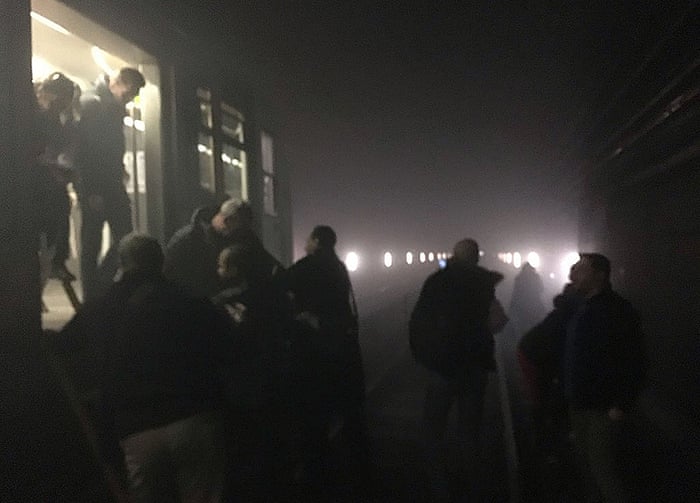
The scene in a tunnel near Maelbeek metro station in Brussels after the blast
Photograph: Evan Lamos/@evanlamos/PA
#5859
Photos Unlimited / Re: 2016 News Images
March 22, 2016, 08:03:21 PM

Police officers stand guard at the entrance of a security perimeter set up near Maelbeek metro station
Photograph: Emmanuel Dunand/AFP/Getty Images
#5860
Photos Unlimited / Re: 2016 News Images
March 22, 2016, 08:03:02 PM

A victim receives first aid by rescuers near Maelbeek metro station
Photograph: Emmanuel Dunand/AFP/Getty Images
#5861
Photos Unlimited / Re: 2016 News Images
March 22, 2016, 08:02:29 PM

People react outside Brussels airport after explosions rocked the facility
Photograph: Geert Vanden Wijngaert/AP
#5862
Photos Unlimited / Re: 2016 News Images
March 22, 2016, 08:01:59 PM

Brussels Attacks
22 March 2016

A string of explosions has hit Brussels airport and a city metro station, with reports of 23 people killed, as Belgium raised its terror threat to the maximum level. The blasts come days after the dramatic arrest in Brussels of Salah Abdeslam, the prime suspect in the Paris terror attacks that killed 130 people in November, after four months on the run.

Broken windows seen at the scene of explosions at Zaventem airport
Photograph: Francois Lenoir/Reuters
#5863

go, go, go, china!  quarrel with al your neighbors around you, from north to south and east and west.  the more enemies, the happier you will be. ;D
#5864

Indonesia is not one one of the claimants but it has boosted its defenses around the Natuna islands, which overlap with China's "nine-dash line."

China does not object to Indonesia's sovereignty of the Natuna Islands, and Jakarta doesn't claim any of the Spratly Islands or the Paracel Islands -- home to the most heated disputes.

Tensions have risen in the contested waters after China embarked on a massive land reclamation program in 2014, turning sandbars and reefs into islands equipped with ports, airstrips and lighthouses.

China has also warned U.S. warships and military aircraft approaching the islands.

http://edition.cnn.com/
#5865

"Other violations committed by the Chinese coastguard (are) breaching the sovereignty of the territorial sea of Indonesia."

China called on Indonesia to release the fishermen it detained during the standoff.

"It is hoped that the Indonesian side would bear in mind the general picture of bilateral relations and properly handle this incident," Hua said.

The South China Sea is home to a messy string of maritime disputes that pit multiple countries against each other.
#5866

China's foreign ministry spokesperson Hua Chunying said in a press briefing that the coastguard ship did not enter Indonesian territorial waters and it went to assist a fishing vessel "being attacked in traditional Chinese fishing grounds."

The Jakarta Post reported that Indonesia tried to capture a Chinese trawler it believed was illegally fishing in its waters in the disputed South China Sea Sunday when a Chinese coastguard vessel intervened, colliding with the ship to prevent it being towed away.

"We want to protest strongly and deliver a note containing the following information: first the infringement by the Chinese coastguard on Indonesian sovereign and jurisdiction rights in the Exclusive Economy Zone (EEZ) as well as in our waters," Marsudi told a news conference Monday.
#5867

South China Sea: Indonesia issues protest to China

By Katie Hunt, CNN
March 22, 2016

http://edition.cnn.com/2016/03/21/asia/indonesia-china-south-china-sea/index.html#

Story highlights

Indonesia makes formal protest over incident involving Chinese coastguard vessel

China says vessel didn't enter Indonesian territorial waters

Standoff involved a Chinese trawler that Indonesia says was fishing in its waters


Hong Kong (CNN)Indonesia has made a formal diplomatic protest to Beijing after a standoff involving a Chinese fishing vessel in disputed waters in the South China Sea.

Foreign Minister Retno Marsudi said that a Chinese coastguard vessel had infringed Indonesia's sovereign rights and he had discussed the matter with Chinese embassy representatives.
#5868
History / Re: From Tolstoy to Trump
March 22, 2016, 07:13:20 PM

And too many are easily deluded into believing that there is a simple solution to Europe’s migration crisis. Build walls. Send them all home. Stop the world, we want to get off.

The truth is that the pressure on Europe’s frontiers will continue, especially if more poor states to the south and east break down. Europeans can address this major problem of our generation only by working together to craft coherent foreign, security, economic-development, and immigration strategies, not by dismissing our neighbors and their policies. We must tackle the problem at its sources, by rebuilding failed states and giving their populations a reason to stay at home.

Neither America nor Europe should abandon their policies to the populists’ dangerous virtual reality. Theirs is not the world we live in or a world we should want to live in. It is a fictional world, but with none of the bearing on our problems that attracts generation after generation of readers to Tolstoy’s work. Project Syndicate

Chris Patten, the last British governor of Hong Kong and a former EU commissioner for external affairs, is chancellor of the University of Oxford.

http://opinion.inquirer.net/
#5869
History / Re: From Tolstoy to Trump
March 22, 2016, 07:11:48 PM

Given all this, Donald Trump’s presidential candidacy embodies dangerous fantasy at every level. For one thing, erecting walls to protect America from the world, as he advocates, could not work. More important, who would want it to work? While America’s population rises, Russia’s sinks like a stone. How many people would prefer to live in Moscow than in New York?

Trump’s agenda speaks to the big lie at the heart of the populism now roiling both America and Europe. We want our sovereignty back, people shout. We want to control our own lives and our own borders. In Britain, which in June will hold a referendum on withdrawal from the European Union, these sentiments are crudely stirred by anti-EU ministers who lie about the extent to which an allegedly dictatorial regime in Brussels interferes with the discharge of their official duties.
#5870
History / Re: From Tolstoy to Trump
March 22, 2016, 07:10:48 PM

Another reason for America’s success is that it has been a magnet for the best and brightest from around the world, who have contributed their own talents and energy to the melting pot of America’s narrative. And that process continues.

Demographers predict that the United States is the only large developed country that will experience a significant increase in population in the first half of the 21st century. Whereas most of the world’s population increase will occur in its poorest countries, America’s multilingual, multiracial and multinational population of 320 million will probably increase by around 100 million.

Fidelity to America’s motto, e pluribus unum (“out of many, one”), has made the country one of the greatest success stories in world history.
#5871
History / Re: From Tolstoy to Trump
March 22, 2016, 07:09:57 PM

So at the heart of a great country’s power is its economic might, both aggregate and in terms of the prosperity of its individual citizens. China, with the world’s largest population, may challenge America’s overall wealth, but its per capita wealth is only about one-fifth that of the United States.

What has made America so prosperous is the country’s ability to mobilize the natural resources of an entire continent, along with political stability and an extraordinarily rare combination of sensible government action and individual entrepreneurial innovation. From Alexander Hamilton on, government has helped to promote and sustain economic growth. Among the fruits of that partnership are America’s world-class research universities and the technological developments stemming from defense-related research.
#5872
History / Re: From Tolstoy to Trump
March 22, 2016, 07:09:28 PM

As for the nature of power, Tolstoy was neither an economic historian nor a demographer. When “War and Peace” was published in 1869, on the other side of the Bering Strait stood the United States, which had purchased Alaska from Russia only two years earlier for about two cents an acre.

America was just beginning to emerge as a world power during the surge of globalization in the last third of the 19th century, which coincided with the opening up of the American West. With just 4-5 percent of the world’s population, America has accounted for 20-30 percent of world output ever since the early days of steamships, railways lines, and the building of Chicago.
#5873
History / From Tolstoy to Trump
March 22, 2016, 07:08:43 PM

WORLD VIEW

From Tolstoy to Trump

By: Chris Patten
@inquirerdotnet
March 22nd, 2016

LONDONâ€"One of Leo Tolstoy’s preoccupations was the nature and limits of power. What was it that made France so formidable an enemy, particularly of Russia? This question was at the heart of his greatest novel, “War and Peace”â€"so much so that Tolstoy sometimes argued that his book was not a novel at all, but an inquiry into the philosophy of history.

On the limits of power, Tolstoy might have thought a bit more about what Britain’s World War II-era Field Marshal Bernard Law Montgomery later called the first law of warfare. “Do not march on Moscow.” Winter was a more formidable agent of reality than even the German generals who helped the Russians in their successful defense against Napoleon (a lesson of which Hitler, fortunately, took no notice).
#5874
General Topic / Re: Animal Control
March 22, 2016, 03:28:08 AM

#5875
General Topic / Re: Animal Control
March 22, 2016, 03:23:27 AM

#5876
General Topic / Re: Animal Control
March 21, 2016, 06:38:21 PM

#5877
General Topic / Re: Animal Control
March 21, 2016, 06:37:59 PM

#5878
General Topic / Re: Animal Control
March 21, 2016, 06:37:34 PM

#5879
General Topic / Re: Animal Control
March 21, 2016, 06:35:36 PM

#5880
General Topic / Re: Animal Control
March 21, 2016, 06:34:28 PM

#5881
General Topic / Re: Animal Control
March 21, 2016, 06:32:28 PM

#5882
General Topic / Re: Animal Control
March 21, 2016, 06:31:43 PM

#5883
General Topic / Re: Animal Control
March 21, 2016, 06:11:15 PM

#5884
General Topic / Re: Animal Control
March 21, 2016, 06:10:10 PM

#5885
General Topic / Re: Animal Control
March 21, 2016, 06:08:49 PM

#5886
General Topic / Re: Animal Control
March 21, 2016, 06:07:57 PM


beware the headless horse. remember, headless horsemen are safer. ;D
#5887
General Topic / Re: Animal Control
March 21, 2016, 06:04:39 PM

#5888
General Topic / Re: Animal Control
March 21, 2016, 06:03:04 PM

#5889
General Topic / Re: Animal Control
March 21, 2016, 06:01:47 PM

#5890
General Topic / Re: Animal Control
March 21, 2016, 06:00:45 PM

#5891
General Topic / Animal Control
March 21, 2016, 05:57:50 PM

#5892

The quake was felt at:

Intensity IV (moderately strong): Tagbilaran City, Danao, Talibon, San Miguel, and Trinidad, Bohol
Intensity III (Weak): Ubay and Buenavista, Bohol
Intensity II (Slightly felt): Sierra Bullones, Bohol; Lapu-Lapu City, Cebu
Intensity I (Scarcely perceptible): Cebu City, Cebu

Phivolcs said a moderately strong quake was “felt generally by people indoors and by some people outdoors, and light sleepers are awakened.”

“Vibration is felt like a passing of heavy truck. Hanging objects swing considerably. Dinner, plates, glasses, windows and doors rattle. Floors and walls of wood framed buildings creak. Standing motor cars may rock slightly. Liquids in containers are slightly disturbed. Water in containers oscillate strongly. Rumbling sound may sometimes be heard,” Phivolcs said.

However, Phivolcs said no damage or aftershocks was likely.

http://newscentral.ph/
#5893

‘Moderately strong’ quake recorded in Bohol â€" hivolcs

By Abbie Escarilla , Isabel Doria
March 21 2016  12:44 PM

A “moderately strong” quake was felt in Bohol early Monday, March 21, the Philippine Institute of Volcanology and Seismology (Phivolcs) said in a bulletin.

Phivolcs said the quake was recorded at 7:01 a.m. at magnitude 4.1, adding it was tectonic in origin.

Phivolcs said the epicenter was 5 kilometers southwest of Danao in Bohol.
#5894
Jokes and Humor / Re: Funny Signs
March 21, 2016, 08:00:37 AM