
This section allows you to view all posts made by this member. Note that you can only see posts made in areas you currently have access to.
Pages 1 2 3 4 5 6 7 8 9 10 11 12 13 14 15 16 17 18 19 20 21 22 23 24 25 26 27 28 29 30 31 32 33 34 35 36 37 38 39 40 41 42 43 44 45 46 47 48 49 50 51 52 53 54 55 56 57 58 59 60 61 62 63 64 65 66 67 68 69 70 71 72 73 74 75 76 77 78 79 80 81 82 83 84 85 86 87 88 89 90 91 92 93 94 95 96 97 98 99 100 101 102 103 104 105 106 107 108 109 110 111 112 113 114 115 116 117 118 119 120 121 122 123 124 125 126 127 128 129 130 131 132 133 134 135 136 137 138 139 140 141 142 143 144 145 146 147 148 149 150 151 152 153 154 155 156 157 158 159 160 161 162 163 164 165 166 167 168 169 170 171 172 173 174 175 176 177 178 179 180 181 182 183 184 185 186 187 188 189 190 191 192 193 194 195 196 197 198 199 200 201 202 203 204 205 206 207 208 209 210 211 212 213 214 215 216 217 218 219 220 221 222 223 224 225 226 227 228 229 230 231 232 233 234 235 236 237 238 239 240 241 242 243 244 245 246 247 248 249 250 251 252 253 254 255 256 257 258 259 260 261 262 263 264 265 266 267 268 269 270 271 272 273 274 275 276 277 278 279 280 281 282 283 284 285 286 287 288 289 290 291 292 293 294 295 296 297 298 299 300 301 302 303 304 305 306 307 308 309 310 311 312 313 314 315 316 317 318 319 320 321 322 323 324 325 326 327 328 329 330 331 332 333 334 335 336 337 338 339 340 341 342 343 344 345 346 347 348 349 350 351 352 353 354 355 356 357 358 359 360 361 362 363 364 365 366 367 368 369 370 371 372 373 374 375 376 377 378 379 380 381 382 383 384 385 386 387 388 389 390 391 392 393 394 395 396 397 398 399 400 401 402 403 404 405 406 407 408 409 410 411 412 413 414 415 416 417 418 419 420 421 422 423 424 425 426 427 428 429 430 431 432 433 434 435 436 437 438 439 440 441 442 443 444 445 446 447 448 449 450 451 452 453 454 455 456 457 458 459 460 461 462 463 464 465 466 467 468 469


#5704
World Daily News / Re: What schoolchildren in Pakistan learn about other religions
April 01, 2016, 05:53:41 PM
AP Photo/K.M. Chaudary
A Pakistani nun holds a candle during a vigil for victims of the Sunday's deadly suicide bombing in a park, Monday, March 28, 2016 in Lahore, Pakistan.
The leaders of the Jamat-ul-Ahrar, the organization that claimed responsibility for the attack on Christians in Lahore, graduated from public schools.
The spokesman of a jihadi group that claimed a recent attack on Bacha Khan University in Charsadda, a town near Peshawar, got his first education from a regular school. The attack on Jan. 20, which killed 21 students and teachers, had symbolic importance since the college is named after a Pashtun leader known for his philosophy of non-violence against British rule.
Since the Lahore attack, Pakistan's prime minister, Nawaz Sharif, has been criticized for offering no real plan to tackle militancy. On Tuesday, military and civilian leaders chose to blame India for alleged espionage in Pakistan's volatile Balochistan province.
The military has also vowed to extend a crackdown that began after the slaughter of more than 130 students in a military school in late 2014. Civil society activists point out that this approach hasn't ended militancy, even though the Army claims that it is killing thousands of radicals a year.
The original article on Christian Science Monitor. Copyright 2016.
http://www.businessinsider.com/
#5705
World Daily News / Re: What schoolchildren in Pakistan learn about other religions
April 01, 2016, 05:53:10 PMBrainwashing?
By 10th grade students learn not just that jihad is a form of internal struggle for the faithful, but that, “In Islam Jihad is very important. The person who offers his life never dies. All prayers nurture one’s passion for Jihad.â€
Some government officials and public school teachers and officials privately say these readings encourage hate and bigotry and over time act as a form of brainwashing. They say that previous social studies courses presented a diverse smorgasbord of ideas and comparative concepts comparable to those in the West and cause students to turn inward.
"These texts present a world view that has nothing to do with real studies and the real world. The texts showing up in public schools repeatedly describe Christians and Jews as enemies of Islam," Mr. Hussain says.
#5706
World Daily News / Re: What schoolchildren in Pakistan learn about other religions
April 01, 2016, 05:47:36 PM
AP Photo/K.M. Chaudary
Eric John, bottom, who survived Sunday's massive suicide bombing targeting Christians, cries during the funeral of his cousin killed, in Lahore, Pakistan, Monday, March 28, 2016.
Relations with Jews are presented in a seventh grade text in this way: “Some Jewish tribes also lived in Arabia. They lent money to workers and peasants on high rates of interest and usurped their earnings.â€
Sixth graders are taught that, “Christians and Europeans were not happy to see Muslims flourishing.â€
Seventh graders read, learn, and are tested on material from texts that teach the Crusades almost as current affairs and offer a very narrow view of Christianity without describing the nearly universal approbation against them taken later.
"These wars are called crusades because the Pope, a head of the Christians, called a council of war,†the text states. “In this meeting he declared that Jesus Christ sanctioned war against Muslims.â€
#5707
World Daily News / Re: What schoolchildren in Pakistan learn about other religions
April 01, 2016, 05:45:36 PMThe texts also adopt fundamentalist arguments that Muslim individuals are responsible for taking independent action against those who are not virtuous.
Nearly 70 percent of Pakistani students attend public schools, according to the Center of Research and Security Studies. The Islamabad-based think tank points out that government committees decide on the content in curriculums.
"The textbooks take the readers to an absolute point of view that stops students from thinking critically and takes them into isolated thinking," says Khadim Hussain, a Peshawar-based writer on militancy and the director of an educational foundation.
In a seventh-grade social studies text, students read: “History has no parallel to the extremely kind treatment of the Christians by the Muslims. Still the Christian kingdoms of Europe were constantly trying to gain control of Jerusalem.â€
#5708
World Daily News / Re: What schoolchildren in Pakistan learn about other religions
April 01, 2016, 05:44:23 PM
REUTERS/Fayaz Aziz
Girls attend their daily class at a government school in Peshawar October 29, 2014.
Stereotyped images
The books claim that Christian, Hindu, Jewish, Sikh faiths, and even minority Muslim ethnic groups are inferior if not dangerous and should be opposed. They often present stereotyped images from history â€" the crusades in the Middle Ages, unjust colonial British civil servants, Jewish moneylenders, or of marauding Sikhs warriors â€" as if these are current affairs and represent popular views in the West and India today.
The texts also adopt fundamentalist arguments that Muslim individuals are responsible for taking independent action against those who are not virtuous.
Nearly 70 percent of Pakistani students attend public schools, according to the Center of Research and Security Studies. The Islamabad-based think tank points out that government committees decide on the content in curriculums.
#5709
World Daily News / Re: What schoolchildren in Pakistan learn about other religions
April 01, 2016, 05:41:51 PMYet the toxic religious atmosphere in Pakistan can’t be blamed entirely on jihadis on the periphery of society, or on the system of religious madrassas.
In recent years in government-approved schools, students are using textbooks that teach hostility towards all forms of thought and expression â€" except orthodox Sunni Islam.
Pakistani intellectuals and secular educators argue that the texts present a steady pitter patter of negative views on other faiths, on democracy and the West, that begin at the earliest grades and continue through high school graduation.
#5710
World Daily News / What schoolchildren in Pakistan learn about other religions
April 01, 2016, 05:40:32 PMChildren in Pakistan are learning disturbing things about other religions in school
Nafees Takkar, Christian Science Monitor
01 April 2016

Getty Images/Daniel Berehulak
Children study the Koran prior to examinations at the Dar al-Haqqania Madrassa on May 11, 2009 near Peshawar, Pakistan.
The Easter bombing of civilians in a park in Lahore follows a long rise of religious extremism in Pakistan and a poisoning of public opinion towards minority faiths.
The jihadist group that claimed responsibility for Sunday's suicide bombing said they had targeted Christians, though most of the 72 killed were Muslims.
On the same day, thousands of radicals began a four-day sit-in in Islamabad over the execution of a bodyguard who killed a provincial governor who had been a voice for religious tolerance.
#5711
Philippine Business News / Re: Fire razes campsite near Mt. Apo peak
March 31, 2016, 06:42:48 PMso sorry, loll.
 is the fire as yet not extinguished? it's around 7pm now, philippine time.
#5712
Science and Research / Re: The Most Dangerous Scientist Who Ever Lived
March 31, 2016, 02:19:05 PMOne Invention Too Far

Image Source: www.mirror.co.uk
Few of the consequences of Thomas Midgley Jr.’s work were known during his lifetime, and Midgley had the satisfaction of dying a prosperous, successful scientist. Midgley racked up one patent after another, and the scientific community could hardly restrain itself from sneaking love notes into his locker. He was elected to the National Academy of Scientists, which only around ten percent of American scientists ever accomplish, and he won the prestigious Priestly Medal from the American Chemical Society, of which he would later serve as president and chairman.
Midgley’s death was every bit in keeping with his cursed life. In 1940, he contracted polio, which left him severely handicapped. Approaching his disability as he approached the issues of auto fuel and refrigerants, he set about designing something that would turn out to be lethal. Midgley devised an elaborate system of levers and pulleys to help him get out of bed unaided and had it installed in his bedroom. In 1944, the 55-year-old Thomas Midgley Jr. was found wrapped in the device’s cables, having been strangled by his own invention.
Richard Stockton is a freelance science and technology writer from Sacramento, California.
http://all-that-is-interesting.com/
#5713
Science and Research / Re: The Most Dangerous Scientist Who Ever Lived
March 31, 2016, 02:15:38 PMThe Most Dangerous Compounds On Earth

The depletion of the ozone layer (green) between 1979 and 2008. Image Source: earthobservatory.nasa.gov
The funny thing about unintended consequences is that they usually have an ironic sense of humor. The very properties that made Freon and other members of its group of compounds, chlorofluorocarbons (CFCs), useful for refrigerants and propellants (think of old-fashioned hairspray) were the properties that made them so damn dangerous that their production is now heavily restricted and criminalized around the world.
When CFCs are released into the environment, no natural chemical process breaks them down. As a result, CFCs from the hairspray Robert Smith used in 1985 are still out there, somewhere, drifting around in the atmosphere. Eventually, CFCs released at ground level waft up into the upper atmosphere, where they are bombarded with cosmic rays.
Cosmic rays are highly energeticâ€"if they had the mass of a grain of sand, each would strike the Earth with the force of a half-kiloton bombâ€"and about 100 of them strike every square meter of the Earth each second.

Nuclear Explosion Cloud
Image Source: YouTube
When a molecule of Freon gets hit, it splits open and its guts spill out. And all of the elements in Freon destroy the ozone layer. Ozone is a stable form of molecular oxygen that catches ultraviolet light from the Sun. We depend on it to live. If ozone can’t catch enough high levels of UV light, our problems go way beyond skin cancer: the UV light will induce a reaction in Earth’s soil that produces hydrogen peroxide, which effectively kills soil bacteria. Without these bacteria, plants can’t plants can’t survive and the soil will turn red with rust.
In the century or so before it’s scrubbed from the air, a single chlorine atom from a CFC can break over 100,000 ozone molecules. This is being written in 2015. As of now, the chlorine from every CFC molecule ever produced is still out there, and the last of them won’t be gone until the end of the 21st century.
#5714
Science and Research / Re: The Most Dangerous Scientist Who Ever Lived
March 31, 2016, 02:12:39 PMHow Your Refrigerator Works

Image Source: Stuff Nobody Cares About
There’s a reason your grandmother called the refrigerator an “iceboxâ€: in the 1920s, most people kept food cool by putting it inside a box under a block of ice that had to be delivered daily by a truck. Early refrigerators like Frigidaire, a GM-owned brand, used coolants and pumps to produce low temperatures without the ice.
These coolants must be volatile, inert, and cheap. Early cooling units used water, which isn’t inert and is in fact a powerful solvent; or ammonia, which is plenty volatile, but smells bad and can poison people at high exposures. By the early 1920s, GM was looking for a new chemical that would meet all three of the desired criteria.

Ideally without ending life on Earth. Image Source: Blogspot
Enter Thomas Midgley Jr. He knew that a class of compounds called alkyl halides met both of the first two criteria, so the search began for a chemical in this class that would be cheap and non-toxic. Eventually, Midgley’s team settled on dichlorodifluoromethane, which is simply a mix of truly awful chemicals. Chlorine, for example, is so toxic on its own that it was used as a weapon during World War I. Methane is highly flammable. As for fluorine, well…just have a look at what it does when it’s free to bond with iron:
https://www.youtube.com/watch?v=vtWp45Eewtw
The trick to making dichlorodifluoromethane, or “Freon,†as it conveniently became known, is to use all of the constituent elements’ most hazardous features against each other to achieve some kind of balance. It worked; the compound was safe for home use, but not at all safe for the environment.
#5715
Science and Research / Re: The Most Dangerous Scientist Who Ever Lived
March 31, 2016, 02:08:23 PMHow To Poison Children

Image Source: www.cec-environmental.com
Exposure to lead is especially harmful to children because a.) they’re more likely than adults to ingest it, b.) it’s more likely to pass into a child’s bloodstream than an adult’s, and c.) it has profound effects on neurological development that last a lifetime. And thanks to Midgley’s work, hundreds of millions of cars spent the next 50 years belching out a torrent of lead-heavy exhaust all over the world.
The tragedy about leaded gasoline is that everybody knew it was toxic, but the important playersâ€"including Midgley himselfâ€"were all making money, so nothing was done to curb lead’s destruction for half a century. Said Midgley in 1923, just before he went to Florida to convalesce: “After about a year’s work in organic lead, I find that my lungs have been affected and that it is necessary to drop all work and get a large supply of fresh air.â€
Developed countries gradually phased out leaded gasoline through the 1970s and 1980s, with final bans taking effect in the 1990s.
#5716
Science and Research / Re: The Most Dangerous Scientist Who Ever Lived
March 31, 2016, 02:06:16 PMHow Gasoline Became Gasoline

Beaver Falls, Pennsylvania. Image Source: www.silogic.com
Nothing about Midgley’s early life suggested a future filled with crimes against humanity. He grew up in a stable, happy home in Beaver Falls, Pennsylvania, and learned how to tinker with machinery in the workshop of his father, an old-fashioned American inventor and handyman. By dint of hard work, careful savingsâ€"and possibly apple pie and baseballâ€"Midgley eventually earned entrance into Cornell University, graduating with a degree in mechanical engineering in 1911.

The first GM Chevrolet model ever produced. Image Source: D Business
He then went to work for a young car company called General Motors. When Midgley joined the team, he found them at a loss over the problem of engine rattling. As it happens, a solution already existedâ€"add ethanol to the gasoline, which many are trying to get the government to subsidize nowâ€"but ethanol is produced by nature and can’t be patented. That means GM couldn’t make money off of ethanol additives, which means the engine-knocking problem was officially not fixed until something artificial and expensive could be developed.
Knowing that the knocking was a result of how the gasoline burned in the cylinders, Midgley tried adding iodine to stain the fuel red and change gasoline’s heat-absorption properties. When that didn’t work, he started working his way down through the elements, experimenting with each, until he found lead. Leaded gasolineâ€"containing GM’s proprietary ethyl lead compound, thank you very muchâ€"eliminated engine rattling and even improved mileage somewhat. Before long, virtually all gasoline used in the world contained lead.

“Yeah, Pop. Don’t be so goddamn lame!†Image Source: Rigorous Intuition
#5717
Science and Research / The Most Dangerous Scientist Who Ever Lived
March 31, 2016, 02:01:48 PMThomas Midgley Jr.: Accidentally The Most Dangerous Man Who Ever Lived
By Richard Stockton
July 9, 2015

Thomas Midgley Jr
Image Source: YouTube
We all have a legacy. Every one of us will eventually pass on, generally hoping to have left the world a slightly better place than it was when we found it. Scientists often epitomize this hope, many of them toiling for decades in obscurity as they work to find answers to humankind’s many problems.
In that sense, Thomas Midgley Jr. was a great man and a fine scientist. Working for General Motors during the early days of the automobile, Midgley earned over 100 patents and was showered with honors by the scientific community.
Unfortunately, Midgley was the most dangerous kind of man: a reverse genius. With a strong work ethic and an unyielding sense of optimism about the future of technology, Midgley displayed an absolutely uncanny instinct for doing what we now recognize as the wrong thing, and then for building those things into multimillion-dollar industries that would take generations to dismantle.
Entirely on accident, Midgley helped poison three generations of children, greatly increased the risk of skin cancer in Australia, and contributed mightily to the global warming that many of us are still pretending isn’t our fault.
#5718
Photos Unlimited / Re: Full Moon Names and Meanings
March 31, 2016, 12:54:52 PMBlue Moon is not blue, just as a Pink Moon is not pink.

A "blue moon" isn't really blue, as this artist rendering suggests. The moon can appear somewhat blue if there's been a major volcanic eruption that put tons of particles in the air, but otherwise blue moons refer to multiple full moons in certain time frames.
Credit: Dreamstime
http://www.space.com/
#5719
Photos Unlimited / Re: Full Moon Names and Meanings
March 31, 2016, 12:51:04 PMBlue Moon
The term has traditionally referred to an "extra" moon, where a year which normally has 12 moons has 13 instead. The "blue moon" reference is applied to the third moon in a season with four moons, thus correcting the timing of the last month of a season that would have otherwise been expected too early. This happens every two to three years (seven times in the Metonic cycle of 19 years).
The March 1946 issue of Sky & Telescope misinterpreted the traditional definition, which led to the modern colloquial misunderstanding that a blue moon is a second full moon in a single solar calendar month with no seasonal link.
Owing to the rarity of a blue moon, the term "blue moon" is used colloquially to mean a rare event, as in the phrase "once in a blue moon". (wikipedia)

#5721
Photos Unlimited / Re: Full Moon Names and Meanings
March 31, 2016, 12:36:50 PMBlue Moon
Note that due to the 29-day lunar cycle the exact dates of the full moon move every year. Most seasons have three full moons, but because of the variation some seasons have four full moons. The term "blue moon" was used to identify one of these extra full moons. A mistaken definition in the March 1946 edition of Sky and Telescope magazine claimed the blue moon fell on the second full moon of the calendar month. This mistake caused widespread misunderstanding until it was finally corrected in 1999.

-text from http://www.moonconnection.com/full-moon-names.phtml
(c) 2016 MoonConnection.com. All Rights Reserved.
-images from various online sources
#5722
Photos Unlimited / Re: Full Moon Names and Meanings
March 31, 2016, 12:33:31 PMDecember: The Cold Moon
Winter takes a firm hold and temperatures plummet at this time. Sometimes this moon is also called the Long Night Moon as the winter nights lengthen and the moon spends more time above the horizon opposite a low sun. The full moon name often used by Christian settlers is the "Moon before Yule".

#5723
Photos Unlimited / Re: Full Moon Names and Meanings
March 31, 2016, 12:31:24 PMNovember: The Beaver Moon
At this time of year the beavers are busy preparing for winter, and it's time to set beaver traps and secure a store of warm fur before the swamps freeze over. Some tribes called this the Frosty Moon.

#5724
Photos Unlimited / Re: Full Moon Names and Meanings
March 31, 2016, 12:29:38 PMOctober: The Hunter's Moon
After the fields have been reaped, the leaves begin to fall and the deer are fat and ready for eating. Hunters can ride easily over the fields' stubble, and the fox and other animals are more easily spotted. Some years the Harvest Moon falls in October instead of September.

#5725
Photos Unlimited / Re: Full Moon Names and Meanings
March 31, 2016, 12:26:52 PMSeptember: The Harvest Moon
Many of the Native American tribes' staple foods, such as corn, pumpkins, squash, beans, and rice, are ready for gathering at this time. The strong light of the Harvest Moon allowed European farmers to work late into the night to harvest their crops. The Harvest Moon does not always occur in September. Traditionally, the name goes to the full moon closest to the autumn equinox, which falls during October once or twice a decade. Sometimes the September full moon was called the Corn Moon.

#5726
Photos Unlimited / Re: Full Moon Names and Meanings
March 31, 2016, 12:25:01 PMAugust: The Sturgeon Moon
The sturgeon, a large fish common to the Great Lakes and other nearby bodies of water, is most easily caught during this month. The reddish appearance of the moon through the frequent sultry hazes of August also prompted a few tribes to dub it the Red Moon. Other names included the Green Corn Moon and the Grain Moon.

#5727
Photos Unlimited / Re: Full Moon Names and Meanings
March 31, 2016, 12:20:26 PMJuly: The Buck Moon
Buck deer start growing velvety hair-covered antlers in July. Frequent thunderstorms in the New England area also resulted in the name Thunder Moon. Some tribes also used Hay Moon.

#5728
Photos Unlimited / Re: Full Moon Names and Meanings
March 31, 2016, 12:17:17 PMJune: The Strawberry Moon
Strawberry-picking season reaches its peak during this time. This is one of the few names that was universal to all Algonquin tribes.

#5729
Photos Unlimited / Re: Full Moon Names and Meanings
March 31, 2016, 12:15:11 PMMay: The Flower Moon
Flowers come into full bloom and corn is ready to plant. Also called the Corn Planting Moon and the Milk Moon.

#5730
Anonymous Diary Blog / Re: Ipagawas Ang Inyung Gibati
March 31, 2016, 12:11:04 PMit's okay. i understand nga di bunyagan dayon.

#5731
Philippine Business News / Re: Fire razes campsite near Mt. Apo peak
March 31, 2016, 12:09:57 PMaguy, aguy. butane tingali sa camping stove no? i hope wa magkadako ang fire. please continue to update us.
#5732
Asia | Middle East / Re: "No one told me I was going to be interviewed by a Muslim"
March 31, 2016, 11:46:33 AMshe's the nearest thing to royalty in the context of burma, maybe that's why. to expect empathy from her for the rohingya is to expect overnight miracles.
#5733
Philippine Business News / Re: Fire razes campsite near Mt. Apo peak
March 31, 2016, 11:43:56 AMoh my, oh my. i hope by the time i read this (past 11 a.m. philippine time), the fires are out. pity those centuries-old trees and the fauna.
#5734
Anonymous Diary Blog / Re: Ipagawas Ang Inyung Gibati
March 31, 2016, 11:40:11 AMwoweeeeeeh! congratulations, loll! i'm so jealous... sigh.
names, pleeeease.
#5735
Photos Unlimited / Re: Full Moon Names and Meanings
March 30, 2016, 07:13:06 PMApril: The Pink Moon
Flowers begin to appear, including the widespread grass pink or wild ground phlox. Other variations indicate more signs of full spring, such as Sprouting Grass Moon, Egg Moon, and Fish Moon (common among coastal tribes).

(the color pink is not literal as most online photos of this moon show, which are obviously photoshopped. - islander)
#5736
Photos Unlimited / Re: Full Moon Names and Meanings
March 30, 2016, 06:59:02 PMMarch: The Worm Moon
Snow slowly begins to melt, the ground softens, and earthworms show their heads again and their castings or fecal matter can be found. Other signs of spring gave rise to other variations: the cawing of crows (the Crow Moon); the formation of crusts on the snow from repeated thawing and freezing (the Crust Moon); and the time for tapping maple trees (the Sap Moon). Christian settlers also called this the Lenten Moon and considered it the last moon of winter.

#5737
Photos Unlimited / Re: Full Moon Names and Meanings
March 30, 2016, 06:49:00 PMFebruary: The Snow Moon
Snow piles even higher in February, giving this moon its most common name. Among tribes that used this name for the January moon, the February moon was called the Hunger Moon due to the challenging hunting conditions.

#5738
Photos Unlimited / Re: Full Moon Names and Meanings
March 30, 2016, 06:46:14 PMJanuary: The Wolf Moon
In January snow gathers deep in the woods and the howling of wolves can be heard echoing in the cold still air. Some tribes called this moon the Snow Moon, but most often it was used for the next month.

#5739
Photos Unlimited / Full Moon Names and Meanings
March 30, 2016, 06:44:55 PMFull Moon Names and Meanings
Many human cultures have given names to the full moon throughout the year. Different full moon names can be found among the Chinese, Celtic, Old English, and New Guinea cultures, to name a few. In addition, Native American tribes often used moon phases and cycles to keep track of the seasons and gave a unique name to each recurring full moon. The full moon names were used to identify the entire month during which each occurred.
Although many Native American Tribes gave distinct names to the full moon, the most well known names of the full moon come from the Algonquin tribes who lived in the area of New England and westward to Lake Superior. The Algonquin tribes had perhaps the greatest effect on the early European settlers in America, and the settlers adopted the Native American habit of naming the moons. They even invented some of their own names that have been passed down through time.
The names given below aren't the only ones that have been used. Every full moon, with one exception, had variations on its name among various Algonquin tribes, not to mention other tribes throughout North America. But the names below are the most common. Some of the variations are also mentioned.
#5740
Science and Research / Re: Biohacking
March 30, 2016, 12:45:23 PMhenceforth, it would be difficult for me to believe that some are naturally smarter or more talented than others. one never knows...
#5741
Health and Food / Re: Linagpang nga turagsoy
March 30, 2016, 12:43:02 PMi thought the name was a cannibal's recipe...


#5745
Science and Research / Re: Biohacking
March 29, 2016, 11:56:58 PMBiohacking: The 3D Printer That Can Make Live Cells

Image Source: Techonomy
Eri Gentry brought biohacking into the mainstream in 2013 when the White House honored her as a Champion of Change, due to her commitment to democratizing science and science literacy for anyone willing to learn.
Like most biohackers, Gentry did not receive a formal education in biology, so she sought work in a lab that would not require her to be professionally trained. Eventually, she found a non-profit biotech lab, SENS, that took her in as a volunteer. After a colleague passed away from esophageal cancer, Gentry and the SENS Director of Research, John Schloendorn, founded a non-profit cancer research lab, Livly. Primarily located in a dingy California garage filled with tools and equipment purchased from eBay and pharmaceutical companies’ liquidation sales, their workspace was less than ideal.
Then, Gentry started holding gatherings via the DIYbio community in her home, where anyone who was curious could attend. Chemists, software developers, and even artists joined the meetings. Gentry discovered that there were many people like herâ€"untrained in the field of biologyâ€"who had a passion for science. Gentry knew their needs: access to equipment, education, and a professional lab. The idea was to develop a hackerspace solely devoted to biology. With the help of a successful Kickstarter campaign, the idea became reality.

Biohackers working in the BioCurious lab. Image Source: Meetup
Now, her 2,600-square foot BioCurious laboratory in Sunnyvale, CA is open seven days a week and stands as one of the largest DIYbio organizations in the entire world. For only $100 a month, curious artists, entrepreneurs, engineers, musicians, and anyone else interested in expanding their knowledge of biology can access the labs and the many classes available. All around, BioCurious is one of biohacking’s great success stories. The lab even developed its own Bioprinterâ€"a 3D inkjet printer that can print live cells using biological materials.

The BioCurious bioprinter. Image Source: WIRED
As the BioCurious mission statement says, “Innovations in biology should be accessible, affordable, and open to everyone.†And while, outside of California and New York, open source labs are few and far between, garage-dwelling biohackers are on the rise. In the words of PBS NewsHour special correspondent Spencer Michels, “What started as a fringe science has become almost mainstream.†Stanford University has even constructed a new lab dedicated to synthetic biology, a formal term for biohacking. Michels continued, “Biology has become a citizen sport, a place where anyone with or without training can do hands-on biology, and perhaps change the world.â€
http://all-that-is-interesting.com/
#5746
Science and Research / Re: Biohacking
March 29, 2016, 11:52:48 PMBiohacking: Pills That Make You Smarter And More Productive

Image Source: Observer
In Silicon Valley, the Nootrobox subscription service will deliver brain-enhancing supplements called nootropics right to your door every month. These “smart drugs,†which supposedly improve productivity and mental focus, have become increasingly popular among success-driven CEOs, athletes, nutritionists, and the like. The nootropics subreddit currently has over 60,000 subscribers discussing their own experimentation with these controversial drugs.

Asprey frequently attaches tracking wires to his head and body to log his brain activity, sleep cycle, and overall well-being. Image Source: PBS
Dave Asprey, author of New York Times bestseller The Bulletproof Diet and an avid biohacker, has researched and used nootropics along with his “Bulletproof Coffee†to reportedly increase his IQ by 20 points, improve quality of sleep while actually sleeping for less time, and lose weight (in his case, over 100 pounds).

Ray Kurzweil. Image Source: Singularity University
Along with Asprey, Ray Kurzweil is one of today’s most prominent nootropics advocates. Fittingly, he’s been described as both “the restless genius†and “the ultimate thinking machine.†Inventor of the first CCD flatbed scanner (basically, the kind of scanner we’re all familiar with), the first print-to-speech reading software for the blind, and the first music synthesizer capable of reproducing the sound of orchestral instruments, Kurzweilâ€"Google’s current Director of Engineeringâ€"is a hyper-productive powerhouse.
Kurzweil takes over 100 supplements every day and advocates the use of nootropics to enhance cognitive performance. Most nootropics are stacked combinations of well-known cognitive boosters like caffeine, L-theanine, creatine, and piracetam, most of which can be purchased over the counter in any nutritional supplements store.
While doctor-prescribed concentration-boosters like Adderall and Ritalin have helped many people diagnosed with ADHD, the detrimental side effects from longterm use have led many to seek out healthier and equally effective alternatives. Although nootropics users and suppliers regard these drugs as safe, the longterm effects have not been well-researched as of yet. Nevertheless, Nootrobox believes that nootropics will be “widely available in 7-11s, classrooms, and workplaces within a few years.â€
#5747
Science and Research / Re: Biohacking
March 29, 2016, 11:48:33 PMBiohacking: Fluorescent Yogurt Saves Lives

Image Source: The Guardian
“We reject the popular perception that science is only done in million-dollar university, government, or corporate labs; we assert that the right of freedom of inquiry, to do research and pursue understanding under one’s own direction, is as fundamental a right as that of free speech or freedom of religion.â€â€"An excerpt from “A Biopunk Manifesto,†written by leading biohacker Meredith L. Patterson.
Meridith L. Patterson does not hold a biology degreeâ€"she is a linguistics and computer science professional who works out of her kitchen and uses improvised household instruments. Yet, even without a high-end lab or the other trappings of professional, established researchers, Patterson is successfully working on producing a strain of the yogurt bacteria Lactobacillus acidophilus, which completes the human body’s metabolic pathway for vitamin C and thus prevents scurvy.
Patterson has already successfully created yogurt that turns fluorescent green if contaminated with the chemical melamine. This could prove to be a major breakthrough in food safety, as the highly toxic melamine can sometimes find its way into the food supply.

Image Source: Deseret News
Patterson’s role in the biohacking community extends well beyond the experiments she’s doing: She’s also regarded as one of the leaders of the movement. In “A Biopunk Manifesto,†Patterson questions where the 20th and 21st century equivalents of DIY scientists like Benjamin Franklin, Edward Jenner, or Marie Curie have gone. With the emphasis on institutionalized higher education, Patterson contends, scientific diversity has suffered. Patterson claims that biohacking can reclaim that precious lost diversity.
#5748
Science and Research / Re: Biohacking
March 29, 2016, 11:40:34 PMBiohacking: Superhuman Night Vision

Image Source: Mic
An independent group of biohackers located north of Los Angeles has taken night vision binoculars one step further: They’ve figured out how to drip night vision straight into the human eyeball.
The chemical in question, Chlorin e6 (Ce6), is actually found in nature, in deep-sea fish. The Science for the Masses biohacking group theorized that this chemical could enhance eyesight with the help of some comic book-worthy biohacking.
Of course, even DIY biologists must do their research. According to the lab’s medical officer, Jeffrey Tibbetts, there have been plenty of studies to prove both the efficacy and safety of Ce6. The chemical has been safely tested on rats and used to treat a variety of cancers in humans since the 1960s. So, why not put it in our eyes?

Image Source: Mic
Using a device akin to a turkey baster, Tibbetts dripped 50 microliters of Ce6 into the eyes of a self-volunteered guinea pig named Gabriel Licina. Within one hour, Licina started to feel the effects. With the whites of his eyes now coated an eerie black, Licina and the others went out into the field to test their science project.
It worked. It began with small shapes, about ten meters off in the distance. Soon, Licina could spot complete figures 50 meters out. Every Ce6 test subject had a 100% success rate at spotting faraway figures in very low light, whereas the control group could only do so a third of the time.
#5749
Science and Research / Biohacking
March 29, 2016, 11:37:22 PMBiohacking: How DIY Scientists Are Upgrading Their Bodies To Gain Superhuman Abilities
By Briana Jones
December 20, 2015
Eyedrops that give you superhuman night vision. Pills that raise your IQ. Thanks to biohacking, we can now practically create superheroes. But should we?

Image Source: The Plaid Zebra.com
Amateurs tinkering with human biology and genetics. Sounds dangerous, right?
Biohackingâ€"which probably sounds even more dangerousâ€"is a relatively new term that encompasses all manner of amateur experimentation now taking place outside the scientific establishment.
Today, DIY biohacking is a veritable underground movement. Biologists, CEO’s, nutritionists, anyone and everyone curious to understand the biology of the world around us have taken part in the biohacking and biopunk ideologies, which advocate for open access to scientific information and tools, and the freedom to experiment with them. The movement thus aims to increase the scope of scientific work done outside of private institutions, to reclaim experimentation for the masses, and to increase diversity in scientific research.
Of course, the scientific ethics of all this are now hotly debated. Although many are excited by the prospect of DIY biologyâ€"and the ability to give humans superpowers (read on…)â€"there are those who see great danger in the future of biohacking, those who don’t think humans (especially amateurs) should play god.
Should this wildly experimental biology be left to the pages of science fiction? Either way, there are now many prominent figures and experimental labs already churning up results. Check out some of the most extraordinary cases of biohacking and decide for yourself whether we must put a stop to it or not:

#5751
Weird and Extreme / Re: Unicorns Were Real
March 29, 2016, 01:43:04 PM
Photo courtesy of Dr. Roscoe T. Gort.
The myth is real.
The remains, which were discovered just last month at an archeological site outside of Pyramid Lake in western Nevada, appear to be those of a smaller member of the Equidae family exhibiting a formerly unheard of two toes and bony protrusion on the central cranial plate. Scientists are speculating that this may in fact be the actual remains of the animal responsible for the myth of the Unicorn.
In news that has simultaneously shocked the scientific community and vindicated the dreams of every 12-year-old girl, Dr. Roscoe T. Gort of the Nevada Archaeological Society has announced that he and his team have unearthed what very well may be proof that unicorns once roamed the Earth.
more at http://www.horsenation.com/2015/04/01/prehistoric-remains-found-in-western-nevada-thought-to-be-those-of-an-actual-unicorn/
#5752
Weird and Extreme / Re: Unicorns Were Real
March 29, 2016, 01:34:47 PMThe skull was found in the Pavlodar region of Kazakhstan, and scientists hope it will help shed light on how some members of the species apparently were able to survive as long as they did.
Before you get too excited, though, here's the catch: The Siberian unicorn really looked like more of a rhinoceros than a horse. It reportedly stood about 6 feet 6 inches tall, measured around 15 feet long, and weighed about 8,000 pounds.
As Science Alert explains, "That’s closer to woolly mammoth-sized than horse-sized."
http://www.usnews.com/
#5753
Weird and Extreme / Unicorns Were Real
March 29, 2016, 01:33:50 PMUnicorns Were Real, and a New Fossil Shows When They Lived
The well-preserved skull probably won't tell us whether their blood had magical properties, though.

The unicorn isn't just a myth â€" but it didn't look like this.
By Rachel Dicker
March 28, 2016
Dreams do come true â€" sort of.
According to a study published in the American Journal of Applied Sciences, the Siberian unicorn â€" Elasmotherium sibiricum â€" last walked the Earth about 29,000 years ago.
Scientists previously thought the creature with the partially mythical name died out about 350,000 years ago, but a newly discovered fossilized skull reveals it lived here much more recently.

#5755
Tira-Pasagad | Saksak-Sinagol / Re: Dudolf Easter Egg Search and Others
March 27, 2016, 12:54:08 AMFOR ANSWERS, or for help in finding what you didn't find, go to:
http://www.dailymail.co.uk/news/article-3510181/Now-s-Easter-egg-hunt-Latest-internet-brain-teaser-drives-viewers-mad-trying-egg-rabbits.html
#5756
Tira-Pasagad | Saksak-Sinagol / Re: Dudolf Easter Egg Search and Others
March 27, 2016, 12:52:30 AMFind the panda among the Stormtroopers

Oneste
#5757
Tira-Pasagad | Saksak-Sinagol / Re: Dudolf Easter Egg Search and Others
March 27, 2016, 12:44:24 AMFind the Oscar among the C3POs

Michael Rogalski
#5758
Tira-Pasagad | Saksak-Sinagol / Re: Dudolf Easter Egg Search and Others
March 27, 2016, 12:39:31 AMFind the cat among the owls
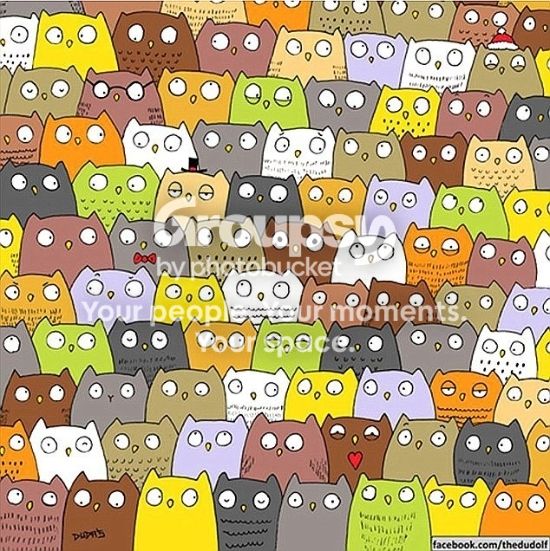
Dudolf
#5759
Tira-Pasagad | Saksak-Sinagol / Re: Dudolf Easter Egg Search and Others
March 27, 2016, 12:32:09 AMFind the panda among the snowmen

Dudolf
#5760
Tira-Pasagad | Saksak-Sinagol / Dudolf Easter Egg Search and Others
March 27, 2016, 12:20:50 AMChallenge yourself
Find the Easter Egg among the bunnies

Dudolf
#5761
Photos Unlimited / Re: Full-haired baby
March 26, 2016, 11:50:16 PM
Reddit user Mark Harper saw a hair resemblance with Wolverine. (CNN)
full text at http://edition.cnn.com/2016/03/25/health/viral-full-hair-baby/index.html
#5762
Photos Unlimited / Re: Full-haired baby
March 26, 2016, 11:49:22 PMand the memes were not far behind.

Reddit user davepollotart made the baby into a cherub. (CNN)
#5763
Photos Unlimited / Full-haired baby
March 26, 2016, 11:48:16 PM
David and Mackenzie Kaplan's daughter has gone viral for her full head of hair. (CNN)
#5764
Photos Unlimited / Re: 2016 News Images
March 26, 2016, 04:06:53 PM
Pope Francis poses for a selfie during his visit at the Castelnuovo di Porto refugees center, some 30km (18,6 miles) from Rome, Thursday, March 24, 2016.
#5765
Photos Unlimited / Re: 2016 News Images
March 26, 2016, 03:47:49 PM
“Gesture of Brotherhoodâ€: Two of the refugees in the foot-washing ceremony at Pope Francis’ Holy Thursday Mass in 2016 (mannaismayaadventure.com/)
#5766
Photos Unlimited / Re: 2016 News Images
March 26, 2016, 03:25:01 PM
Pope Francis kisses the foot of a man during the foot-washing ritual at the Castelnuovo di Porto refugees center. (L’Osservatore Romano/Pool Photo via AP)
#5767
Photos Unlimited / Re: 2016 News Images
March 26, 2016, 03:19:15 PMPope Francis washes the feet of migrants
25 March 2016

Pope Francis washes the foot of a woman during the foot-washing ritual at the Castelnuovo di Porto refugees center, some 30km (18,6 miles) from Rome, Thursday, March 24, 2016. (L'Osservatore Romano/Pool Photo via AP)
#5768
Inspiration & Hope / Re: Pope Francis washes the feet of Muslim migrants
March 26, 2016, 03:13:19 PM"You, we, all of us together, of different religions, different cultures, but children of the same Father, brothers â€" and there, those poor people, who buy weapons to wreck fraternity," Francis said Thursday. "Today, at this time, when I do the same act of Jesus washing the feet of twelve of you, let us all make a gesture of brotherhood, and let us all say: 'We are different, we are different, we have different cultures and religions, but we are brothers and we want to live in peace.'"
The Vatican said eight men and four women took part in the ritual, AP reported, including an Italian Catholic; three Eritrean Coptic Christians; four Catholics from Nigeria; three Muslims from Mali, Syria and Pakistan; and a Hindu man from India.
https://www.washingtonpost.com/
#5769
Inspiration & Hope / Re: Pope Francis washes the feet of Muslim migrants
March 26, 2016, 03:11:58 PMA massive crowd didn't turn out to participate in the ceremony or listen to the pope's homily on Thursday, though. From the Associated Press:
Francis was greeted with a banner reading “Welcome†in a variety of languages as he walked down a makeshift aisle to celebrate the Mass. But only a fraction of the 892 asylum-seekers living at the shelter attended, and many of the seats were left empty. Those who came out, though, received a personal greeting: At the end of the Mass, Francis greeted each refugee, one by one, posing for selfies and accepting notes as he moved down the rows.
Francis condemned the attack in Brussels and those behind such violence. "There are manufacturers, arms dealers who want blood, not peace; they want the war, not fraternity," the pope said.
#5770
Inspiration & Hope / Re: Pope Francis washes the feet of Muslim migrants
March 26, 2016, 03:10:20 PMThe foot-washing ritual became a part of Holy Thursday Mass in the 1950s. Jesus washed the feet of his 12 apostles at the Last Supper. The symbolic act also imitates Jesus's gesture of servitude.

Pope Francis performs the foot-washing ritual at the Castelnuovo di Porto refugee center near Rome on Holy Thursday. (Osservatore Romano/AFP via Getty)
A number of the migrants whose feet were washed by the pope had tears streaming down their faces.
Shortly after Francis became pope in 2013, he washed the feet of Muslims.
#5771
Inspiration & Hope / Pope Francis washes the feet of Muslim migrants
March 26, 2016, 03:08:30 PMWorld Views
Pope Francis washes the feet of Muslim migrants, says we are ‘children of the same God’
By Elahe Izadi March 25 at 1:05 PM
They came from Mali, Eritrea, Syria and Pakistan. They were Muslim, Hindu, Catholic and Coptic Christians. And one by one, Pope Francis knelt down before these migrants on Holy Thursday and washed their feet.
The ritual, performed in a center for asylum seekers outside of Rome, comes amid anti-immigrant sentiment in Europe and in the wake of a terrorist attack in Brussels, for which the Islamic State has claimed responsibility.
"All of us together, Muslims, Hindus, Catholics, Copts, Evangelical [Protestants] brothers and sisters â€" children of the same God â€" we want to live in peace, integrated," Francis said during his homily.
#5772
Lifestyle, Culture and Arts / Re: A color-coded map of the world’s most and least emotional countries
March 25, 2016, 06:05:34 PMQuoteThe Philippines is the world's most emotional country. It's not even close; the heavily Catholic, Southeast Asian nation, a former colony of Spain and the U.S., scores well above second-ranked El Salvador.
just to emphasize some more.

#5773
Lifestyle, Culture and Arts / Re: A color-coded map of the world’s most and least emotional countries
March 25, 2016, 06:03:54 PMThe Middle East is not happy. Gallup notes, "Negative emotions are highest in the Middle East and North Africa, with Iraq, Bahrain, and the Palestinian Territories leading the world in negative daily experiences." Still, that doesn't quite fully explain the high emotions in the Levant and on the Arabian peninsula, compared to the lower emotions in Libya, Algeria, and Morocco. Perhaps this hints at how people in these countries are being affected by the still-ongoing political turmoil of the Arab Spring.
What am I missing? Every color-coded national boundary here tells a story. Why is Haiti so bereft of emotion compared to its neighbors? Why is Angola so heavy with feeling? Leave your thoughts in the comments or reach me on social media.
washingtonpost.com
© 1996-2016 The Washington Post
#5774
Lifestyle, Culture and Arts / Re: A color-coded map of the world’s most and least emotional countries
March 25, 2016, 05:49:39 PMEnglish- and Spanish-speaking societies tend to be highly emotional and happy. Though the Anglophone nations of the world retain deep cultural links, it's not clear if Spain's emotional depth has anything to do with Latin America's. According to Gallup, "Latin America leads the world when it comes to positive emotions, with Panama, Paraguay, and Venezuela at the top of that list." Yes, even Hugo Chavez's Venezuela is apparently filled with happy people.
Africans are generally stoic, with some significant exceptions. The continent is among the world's least emotional, though there is wide variation, which serves as a non-definitive but interesting reminder of Africa's cultural diversity. Each could be its own captivating case study. It's possible that South Africa's high rating has to do with its cultural ties to Western Europe, for example, and Nigeria's may have to do with the recent protest movement in the south and sectarian violence in the north.
#5775
Lifestyle, Culture and Arts / Re: A color-coded map of the world’s most and least emotional countries
March 25, 2016, 05:48:53 PMPost-Soviet countries are consistently among the most stoic. Other than Singapore (and, for some reason, Madagascar and Nepal), the least emotional countries in the world are all former members of the Soviet Union. They are also the greatest consumers of cigarettes and alcohol. This could be what you call a chicken-or-egg problem: if the two trends are related, which one came first? Europe appears almost like a gradient here, with emotions increasing as you move West.
People in the Americas are just exuberant. Every nation on the North and South American continents ranked highly on the survey. Americans and Canadians are both among the 15 most emotional countries in the world, as well as ten Latin countries. The only non-American countries in the top 15, other than the Philippines, are the Arab nations of Oman and Bahrain, both of which rank very highly.
#5776
Lifestyle, Culture and Arts / Re: A color-coded map of the world’s most and least emotional countries
March 25, 2016, 05:47:44 PMSingapore is the least emotional country in the world. "Singaporeans recognize they have a problem," Bloomberg Businessweek writes of the country's "emotional deficit," citing a culture in which schools "discourage students from thinking of themselves as individuals." They also point to low work satisfaction, competitiveness, and the urban experience: "Staying emotionally neutral could be a way of coping with the stress of urban life in a place where 82 percent of the population lives in government-built housing."
The Philippines is the world's most emotional country. It's not even close; the heavily Catholic, Southeast Asian nation, a former colony of Spain and the U.S., scores well above second-ranked El Salvador.
#5777
Lifestyle, Culture and Arts / A color-coded map of the world’s most and least emotional countries
March 25, 2016, 05:45:52 PMWorld Views
A color-coded map of the world’s most and least emotional countries
By Max Fisher
November 28, 2012

A map of the world's countries by most and least emotional. (Max Fisher)
Since 2009, the Gallup polling firm has surveyed people in 150 countries and territories on, among other things, their daily emotional experience. Their survey asks five questions, meant to gauge whether the respondent felt significant positive or negative emotions the day prior to the survey. The more times that people answer "yes" to questions such as "Did you smile or laugh a lot yesterday?", the more emotional they're deemed to be.
Gallup has tallied up the average "yes" responses from respondents in almost every country on Earth. The results, which I've mapped out above, are as fascinating as they are indecipherable. The color-coded key in the map indicates the average percentage of people who answered "yes." Dark purple countries are the most emotional, yellow the least. Here are a few takeaways.


#5781
Bible Study / Re: When and how did the Twelve Apostles die?
March 25, 2016, 03:44:23 PMSt Paul's death: The Bible does not tell us the exact time or manner of the apostle Paul's death, and secular history has yet to provide us with any definitive information. However, evidence highly suggests the apostle Paul's death occurred after his fifth missionary journey ended in 67 A.D. Paul was likely beheaded by the Romans, under Emperor Nero, sometime around May or June of 68 A.D. Nero himself died by suicide on June 9th of the same year.
Christian tradition also has Paul being beheaded in Rome around the mid 60s A.D. during the reign of Nero. Most Bible dictionaries and some commentaries can give us details on the traditions surrounding Paul's death.

sources:
http://amazingbibletimeline.com/
http://biblenest.com/
(http://www.biography.com/
http://www.biblestudy.org/
images from other online sources
#5782
Bible Study / Re: When and how did the Twelve Apostles die?
March 25, 2016, 03:41:05 PMwith st matthias as the 13th apostle, where did st paul go?
Was St. Paul an apostle?
St. Paul is called "the Apostle to the Gentiles". However, he was not one of the original twelve apostles. He referred to himself as an apostle who was "born out of time". Unlike the other apostles, he was chosen by Jesus through a vision.
In Chapter 9 of the Acts of the Apostles it states: On his journey, as he was nearing Damascus, a light from the sky suddenly flashed around him. He fell to the ground and heard a voice saying to him: "Saul, Saul, why are you persecuting me?"
He said, "Who are you, sir?"
The reply came: "I am Jesus, whom you are persecuting. Now get up and go into the city and you will be told what you must do."
The men who were traveling with him stood speechless, for they heard the voice but could see no one. Saul got up from the ground, but when he opened his eyes he could see nothing; so they led him by the hand and brought him to Damascus. (Acts, i, 15-26)

#5783
Bible Study / Re: When and how did the Twelve Apostles die?
March 25, 2016, 03:26:31 PMMatthias replaced Judas and worked in Ethiopia. Most traditions show him as stoned to death there in Chochis. There are some who have him executed in Jerusalem by stoning, and then beheaded.

#5784
Bible Study / Re: When and how did the Twelve Apostles die?
March 25, 2016, 03:13:07 PMJudas Iscariot: Shortly after the death of Christ Judas killed himself. According to the Bible he hanged himself, (Matthew 27:5) at Aceldama, on the southern slope of the valley of Hinnom, near Jerusalem, and in the act he fell down a precipice and was dashed into pieces.
Matthew 27:3-8 and Acts 1:18 tell us what became of Judas. He betrayed Jesus, and in his despair he committed suicide. There are those that pretend there is a contradiction in these verses. There is not. The two accounts supplement each other. Judas hanged himself, and some time after his body was either cut down, or the rope or tree branch broke and his body fell to the ground and burst open.

#5785
Bible Study / Re: When and how did the Twelve Apostles die?
March 25, 2016, 02:57:10 PMJude (Thaddeus): According to tradition Jude taught in Armenia, Syria and Persia where he was martyred. Tradition also tells us that he was buried in Kara Kalisa in what is now Iran.
According to historians, Judas Thaddeus was preaching the risen Christ to those in Mesopotamia in the midst of pagan priests. He was beaten to death with sticks.

#5786
Bible Study / Re: When and how did the Twelve Apostles die?
March 25, 2016, 02:52:52 PMSimon the Canaanite: Historians tell of the many different places that Simon proclaimed the good news of Christ’s resurrection: Egypt, Cyrene, Africa, Mauritania, Britain, Lybia, and Persia. His rest finally came when he verified his testimony and went to be with Christ, being crucified by a governor in Syria. Other sources have him listed as being sawed in half in Suanir, Persia.

#5787
Bible Study / Re: When and how did the Twelve Apostles die?
March 25, 2016, 02:49:04 PMJames Alpheus: We know he lived at least five years after the death of Christ because of mentions in the Bible. According to tradition, James son of Alpheus was thrown down from the temple by the scribes and Pharisees; he was then stoned, and his brains dashed out with a fuller’s club.

#5788
Bible Study / Re: When and how did the Twelve Apostles die?
March 25, 2016, 02:46:14 PMThomas: The earlier traditions, as believed in the fourth century, say he preached in Parthia or Persia and was finally buried at Edessa. The later traditions carry him farther east. His martyrdom, whether in Persia or India, is said to have been by a lance, and is commemorated by the Latin Church on December 21, the Greek Church on October 6, and by the Native Americans on July 1.
It seems that Thomas, having once doubted the risen Lord, was in the end no doubter at all. History tells us he made a brave death as he was thrust through with pine spears, then tortured with red hot plates on his body, and finally burned alive. He would not deny the risen Christ.

#5789
Bible Study / Re: When and how did the Twelve Apostles die?
March 25, 2016, 02:42:07 PMMatthew: He must have lived many years as an apostle since he was the author of the Gospel of Matthew, which was written at least twenty years after the death of Christ. There is a reason to believe that he stayed for fifteen years at Jerusalem, after which he went as a missionary to the Persians, Parthians and Medes. There is a legend that he died a martyr in Ethiopia.
The one-time tax collector died at the end of a halberd according to Foxs’ Book of Martyrs. “The scene of his labors was Parthia, and Ethiopia, in which latter country he suffered martyrdom, being slain with a halberd in the city of Nadabah, A.D. 60.â€

#5790
Bible Study / Re: When and how did the Twelve Apostles die?
March 25, 2016, 02:30:24 PMBartholomew: Saint Bartholomew lived in the first century AD and was one of the Twelve Apostles of Jesus Christ. He was introduced to Christ through St. Philip and is also known as "Nathaniel of Cana in Galilee," notably in John's Gospel. St. Bartholomew is credited with many miracles related to the weight of objects. His was martyred in Armenia, being either decapitated or skinned alive.

#5791
Bible Study / Re: When and how did the Twelve Apostles die?
March 25, 2016, 01:57:06 PMPhilip: Again, the Bible does not say when he died nor do we have accurate information.
Philip evangelized in Phrygia where hostile Jews had him tortured and then crucified upside down. Some sources say he was stoned to death.

#5792
Bible Study / Re: When and how did the Twelve Apostles die?
March 25, 2016, 01:52:26 PMAndrew: No accurate death date given. A variety of traditions says he preached in Scythia, in Greece, in Asia Minor and Thrace. He is reported to have been crucified at Patrae in Achaia.

#5793
Bible Study / Re: When and how did the Twelve Apostles die?
March 25, 2016, 01:50:27 PMJohn: No death date given by early writers. Death date is by conjecture only and is variously assigned as being between 89 AD to 120 AD.
It seems that John alone was spared a violent death. He writes The Revelation of Jesus Christ from exile on Patmos.

#5794
Bible Study / Re: When and how did the Twelve Apostles die?
March 25, 2016, 01:27:24 PMJames the son of Zebedee: He was put to death by Herod Agrippa I shortly before the day of the Passover, in the year 44 or about 11 years after the death of Christ. From Acts 12: 1-2.

#5795
Bible Study / Re: When and how did the Twelve Apostles die?
March 25, 2016, 01:23:51 PMSimon: Called Peter by Christ, he died 33-34 years after the death of Christ. According to Smith’s Bible Dictionary, there is “satisfactory evidence that he and Paul were the founders of the church at Rome and died in that city. The time and manner of the apostle’s martyrdom are less certain. According to the early writers, he died at or about the same time as Paul, and in the Neronian persecution, A.D. 67,68. All agree that he was crucified. Origen says that Peter felt himself to be unworthy to be put to death in the same manner as his Master, and was, therefore, at his request, crucified with his head downward.â€

Caravaggio’s depiction of the crucifixion of Apostle Peter.
#5796
Bible Study / When and how did the Twelve Apostles die?
March 25, 2016, 01:17:58 PMWhen and how did the Twelve Apostles die?

Summary: The Bible only mentions the deaths of two apostles, James who was put to death by Herod Agrippa I in 44 AD and Judas Iscariot who committed suicide shortly after the death of Christ. The details of the deaths of three of the apostles (John, the Beloved, Bartholomew and Simon the Canaanite) are not known at all, either by tradition or early historians. The deaths of the other seven apostles are known by tradition or the writings of early Christian historians. According to traditions and the Bible, eight of the Apostles died as Martyrs. At least two of the Apostles, Peter and Andrew were crucified.
#5797
Talk of the Town / Re: China v the rest
March 25, 2016, 12:26:59 PMAggressors rarely see themselves as such. Indeed China accuses the United States of being the driving force behind the “militarisation†of the sea. Certainly America is responding to Chinese moves. Last year it resumed naval “freedom of navigation†operations, sending warships close to disputed features. This month it sent an aircraft-carrier strike group into the sea. American naval and marine-corps commanders have been in Vietnam to explore co-operation. Worse, from China’s viewpoint, American forces have just obtained access to five Philippine bases, including an airbase on Palawan, just opposite the Spratlys. For this, China’s official news agency accused America of “muddying the waters†and “making the Asia-Pacific a second Middle Eastâ€.
China will not be deterred, confident that America is unlikely to risk a serious crisis, let alone conflict. China’s throwing its weight around in the sea erodes America’s credibility as the pre-eminent military power in the western Pacific, but does not directly threaten it. By contrast, rather than cow China, America’s enhanced military role gives it a pretext to carry on with its build-up. There is still the danger, however, of an accidental flare-upâ€"a skirmish over illegal fishing, for example, and an ensuing escalation. Armed conflict in the South China Sea is a long way from being inevitable. But it is far from unthinkable.
http://www.economist.com/
#5798
Talk of the Town / Re: China v the rest
March 25, 2016, 12:26:15 PMThe Philippines has asked an international tribunal, the Permanent Court of Arbitration in The Hague, to rule on some of China’s claims under UNCLOS. The court is expected to announce its verdict soon. If it rules broadly in favour of the Philippines, it would have the effect of making clear that China’s nine-dash line has no legal basis. China is boycotting the case and says it will ignore the verdict. The ruling might embarrass China. But it will not stop it creating artificial islands, or indeed make it dismantle those it has already built.
It seems increasingly likely that the islands will have a military purpose. China denies that, but it is hard to see why else it needs the long airstrip it is building on the Fiery Cross reef in the Spratlys. It is in this context that the threat of building at Scarborough Shoal causes such alarm. China has controlled the whole of the Paracel chain in the north of the South China Sea since 1974, when it drove out the former South Vietnamese from part of it. It has recently installed missile batteries on Woody Island there. In the Spratlys to the south it is building what look like potential air and naval bases, complete with military-grade radars. Scarborough Shoal would complete a “strategic triangle†that would allow it to dominate the sea. China is widely expected one day to declare an “air defence identification zone†over the sea, as it has over parts of the East China Sea, including areas contested with Japan.
#5799
Talk of the Town / Re: China v the rest
March 25, 2016, 12:25:25 PM
Flaky claims, fake islands
China has declined to explain how its claims fit within UNCLOS parameters. Indeed it has a record of flouting the law and international agreements when it comes to the sea. In 2002 it signed a joint declaration with the ten-member Association of South-East Asian Nations, in which the parties undertook to “exercise self-restraint†in the South China Sea, and in particular to refrain from occupying uninhabited features such as reefs. That commitment is hard to square with the massive building spree on which China has been engaged for the past two years in the Spratly archipelago, turning seven uninhabitable rocks and reefs submerged at high tide into artificial islands. Vietnam and the Philippines, rival claimants, have naturally been outraged. And this month an American admiral has reported Chinese activity at Scarborough Shoal, north of the Spratlys, that suggests it might be the “next possible area of reclamationâ€. China bullied the Philippines away from the shoal four years ago.
#5800
Talk of the Town / Re: China v the rest
March 25, 2016, 12:24:17 PMChina explicitly acknowledges Indonesian sovereignty over the Natunas. Yet instead of apologising, China’s foreign ministry demanded the fishermen’s release, claiming that they had been carrying out “normal operations†in “traditional Chinese fishing groundsâ€. China is a party to the UN Convention on the Law of the Sea (UNCLOS), under which countries are entitled to territorial waters and EEZs. Yet the government’s implicit argument is that a self-proclaimed “tradition†trumps international law. By extension, with 5,000 years of sacred history touted ad nauseam by its Communist Party leaders, who is to deny China anything it wants?
China’s tradition-based argument also has implications for its “nine-dash line†(see map) delimiting its claim to virtually all of the South China Sea (and passing just north of the Natunas). It would suggest China believes it has rights over not just land features inside the line, and their territorial seas and EEZs, but also over all the water itselfâ€"a concept alien to UNCLOS.
Pages 1 2 3 4 5 6 7 8 9 10 11 12 13 14 15 16 17 18 19 20 21 22 23 24 25 26 27 28 29 30 31 32 33 34 35 36 37 38 39 40 41 42 43 44 45 46 47 48 49 50 51 52 53 54 55 56 57 58 59 60 61 62 63 64 65 66 67 68 69 70 71 72 73 74 75 76 77 78 79 80 81 82 83 84 85 86 87 88 89 90 91 92 93 94 95 96 97 98 99 100 101 102 103 104 105 106 107 108 109 110 111 112 113 114 115 116 117 118 119 120 121 122 123 124 125 126 127 128 129 130 131 132 133 134 135 136 137 138 139 140 141 142 143 144 145 146 147 148 149 150 151 152 153 154 155 156 157 158 159 160 161 162 163 164 165 166 167 168 169 170 171 172 173 174 175 176 177 178 179 180 181 182 183 184 185 186 187 188 189 190 191 192 193 194 195 196 197 198 199 200 201 202 203 204 205 206 207 208 209 210 211 212 213 214 215 216 217 218 219 220 221 222 223 224 225 226 227 228 229 230 231 232 233 234 235 236 237 238 239 240 241 242 243 244 245 246 247 248 249 250 251 252 253 254 255 256 257 258 259 260 261 262 263 264 265 266 267 268 269 270 271 272 273 274 275 276 277 278 279 280 281 282 283 284 285 286 287 288 289 290 291 292 293 294 295 296 297 298 299 300 301 302 303 304 305 306 307 308 309 310 311 312 313 314 315 316 317 318 319 320 321 322 323 324 325 326 327 328 329 330 331 332 333 334 335 336 337 338 339 340 341 342 343 344 345 346 347 348 349 350 351 352 353 354 355 356 357 358 359 360 361 362 363 364 365 366 367 368 369 370 371 372 373 374 375 376 377 378 379 380 381 382 383 384 385 386 387 388 389 390 391 392 393 394 395 396 397 398 399 400 401 402 403 404 405 406 407 408 409 410 411 412 413 414 415 416 417 418 419 420 421 422 423 424 425 426 427 428 429 430 431 432 433 434 435 436 437 438 439 440 441 442 443 444 445 446 447 448 449 450 451 452 453 454 455 456 457 458 459 460 461 462 463 464 465 466 467 468 469