Join MikeLigalig.com!

Why Just Read When You Can Join, Post, and Read!

Menu

Show posts

This section allows you to view all posts made by this member. Note that you can only see posts made in areas you currently have access to.

Show posts Menu

Messages - Lorenzo

#50001
Music and Video / Re: Techno/Trance Hits
December 21, 2007, 10:57:01 AM
Take You There

by Sean Kingston (Dance Mix version)

[mp3tube]ba8bf30c5c493958dff1da9c0f04f9e9[/mp3tube]
#50002
Bible Study / Re: My piece of heaven
December 21, 2007, 10:52:46 AM

The power of Faith.
#50003
Music and Video / Tattoo
December 21, 2007, 10:36:40 AM
Tattoo

by Jordin Sparks

[mp3tube]4a532db8dc3e45e03da6432968b3df59[/mp3tube]

Lyrics

oh oh oh

No matter what you say about love
I keep coming back for more
Keep my hand in the fire
Sooner or later I get what I’m asking for

No matter what you say about life
I learn every time I bleed
The truth is a stranger
Soul is in danger I gotta let my spirit be free
To admit that I’m wrong and then change my mind
Sorry but I have to move on and leave you behind

I can’t waste time so give it a moment
I realize nothings broken
No need to worry about everything I’ve done
Live every second like it was my last one
Don’t look back got a new direction
I loved you once, needed protection
You’re still a part of everything I do
You’re on my heart just like a tattoo
Just like a tattoo
I’ll always have you (I'll always have you)

Sick of playing all of these games
It’s not about taking sides
When I looked in the mirror didn’t deliver
It hurt enough to think that I could stop
Admit that I’m wrong and then change my mind
Sorry but I’ve gotta be strong and leave you behind

I can’t waste time so give it a moment
I realize nothings broken
No need to worry about everything I’ve done
Live every second like it was my last one
Don’t look back got a new direction
I loved you once, needed protection
You’re still a part of everything I do
You’re on my heart just like a tattoo
Just like a tattoo
I’ll always have you (I'll always have you)

If I live every moment
Won’t change any moment
There's still a part of me in you
I will never regret you
Still the memory of you
Marks everything I do, oh

I can’t waste time so give it a moment
I realize nothings broken (yeah)
No need to worry about everything I’ve done
Live every second like it was my last one
Don’t look back got a new direction (don't look back)
I loved you once, needed protection (no, no)
You’re still a part of everything I do
You’re on my heart just like a tattoo

I can’t waste time so give it a moment (i can't waste time)
I realized nothings broken
No need to worry about everything I’ve done (no need to worry)
Live every second like it was my last one
Don’t look back at got a new direction (don't you ever look back)
I loved you once and I needed protection
You’re still a part of everything I do
You’re on my heart just like a tattoo
Just like a tattoo
I’ll always have you
#50004
Health and Food / Re: Lower Back Pain Treatments
December 21, 2007, 10:33:33 AM
I had them crack my neck once. Feels really good, I agree.
#50005
Anonymous Diary Blog / Re: It's all about SHOES!
December 21, 2007, 10:29:50 AM
Hahaha! Ate Ging, we should go shopping someday. Fashionista jud ka uy!
Dress to impress. Very professional, yet very attractive in outfits. :)

Tell the Mr. that I said, "Style" is an expression of individualism mixed with charisma. Fashion is something that comes after style.
Rock on, Ate Ging ;)
#50006
I know that this is a terrible loss for the school, however, salamat sa Dios that no one was hurt in this incident. Thank God that the children are safe.
#50007
Music and Video / Re: Your Favorite Song
December 21, 2007, 10:16:37 AM
Forever Young

by Alphaville

[mp3tube]ad525e05c06dd1d92643fd3a2f8c3077[/mp3tube]


Lyrics

Lets dance in style, lets dance for a while
Heaven can wait were only watching the skies
Hoping for the best but expecting the worst
Are you going to drop the bomb or not?

Let us die young or let us live forever
We dont have the power but we never say never
Sitting in a sandpit, life is a short trip
The musics for the sad men

Can you imagine when this race is won
Turn our golden faces into the sun
Praising our leaders were getting in tune
The musics played by the madmen

Forever young, I want to be forever young
Do you really want to live forever, forever and ever

Some are like water, some are like the heat
Some are a melody and some are the beat
Sooner or later they all will be gone
Why dont they stay young

Its so hard to get old without a cause
I dont want to perish like a fading horse
Youth is like diamonds in the sun
And dimonds are forever

So many adventures couldnt happen today
So many songs we forgot to play
So many dreams are swinging out of the blue
We let them come true
#50008
Anonymous Diary Blog / Re: It's all about SHOES!
December 21, 2007, 10:11:24 AM
Ate, very Imeldarific! I like it tho, looks good on you :)

#50009
Fraulein Blue! Kongrats!

A big hug to you. :)
#50010
Congrats, Ms. Swakee!

May you always shine forth the beauty of the Hawaiian sun to our Tubag bohol shores.

#50011
My advice to all the 'hunting' single men in TB is:

Make sure you have a large net to capture the big fish, and go fishing at night ;)

LOL!
#50012
Quote from: C2H4 on December 19, 2007, 04:28:59 PM
korek dong, kung guapo...

kung dili gani guapo, dili pud korek

if a guapo is chasing you, it is thrilling

but if he is fanget, then it is horrifying

;D

hahaha. that is why 'te, we must chase women in the dark. Hopefully dili ma heart-attack-on ang baji. Sayang pood.

:P
#50013
Question and Answer / Re: Worst date? Tell us about it
December 21, 2007, 05:54:11 AM
Quote from: st. agnes on December 20, 2007, 10:25:25 AM
hahahaha,,,,
nextime Enzo... expect the unexpected... weeeeeh..
bitaw.. maka turn off jud nang mo kaon sad nga banha...
noh? wala bay etiquette,,nah saunz.. mao may na andan. wala tay mahimz...

Hahaha, sometimes I regret not pursuing her tho, Agnes. I will not deny that we were physical towards each other in some ways, lol. She definitely had a nice body--I will not deny her that. And a badunk-ka-dunk that could kill any man, lol.

Ah. Oh well.
#50014
World Daily News / Re: Prostitution For A Can Of Beer
December 21, 2007, 05:49:24 AM
This is too much. Conservatism needs to be manifested again..
#50015
Thank You for sharing with us, as a fellow Pinoy, I am proud and honored to meet a man such as yourself. I can only imagine your reading this out loud. It already resonates in my mind just reading it.

More power to our OFWs in Saudi and the Middle East.

You guys do so much for our beloved Bayan. God Bless you all.
#50016
Introduce Yourself / Re: How Is Your Day?
December 21, 2007, 05:41:04 AM
I'm home!!! Well actually my sister and I arrived last night (8pm), and my little baby brothers opened the door to see their Big Kuya Bran and Ate Angel. I think i almost overwhelmed them both with hugs and kisses, LOL. And of course, as I entered the house, the shrine of Santo Nino in our house was lighted and I was filled with such love and total comfort in my house. Blessed the Lord for the gift of family--to which I would be nothing without them.

As I entered the house, I could smell my mom cooking monggos. And as I entered the kitchen, I saw my Mommy. My heart was filled to just hear my mom say, "Hoy, Ondoy Bran2x! Early kaayo man mo, ka ingoon ko mo arrive mo around 9pm, wa pa human human luto ang monggos". Mommy. Dad was working last night--he didn't come back home till like 12 AM. But of course, like my dad usually does LoL, he woke me up in the middle of the night and we greeted.

Truly I mean this when I say, "There Is No Place Like Home."

:)

God Bless Everyone!
#50017
Quote from: C2H4 on December 19, 2007, 03:03:57 PM
Dodong, very well said. Maayo kaayo nimo pagka explain, dong. I've learned a lot from reading your post.

Tinuod btaw jud na nga gamay nalang karon ang mopili ug pursue nga mag doktor because they feel that it's simply not worth it anymore--doctors don't earn as much anymore, and at the same time, they are plagued more and more with medical malpractice lawsuits. Doctors are feeling more vulnerable than ever.

Mao btaw dodong, I admire you for pursuing a medical degree. It is a path that is not for the faint of heart. Becoming a doctor is not just a career decision, it is more like a vocation.


Many people that I took classes with in basic pre-med science courses (biochem, molecular bio, organic chem, microbiology, genetics and evolution, ecology, physiology etc) started of as pre-med as I did, but due to the burden of debt that is mandatory in medical school and the difficulty of the MCATs, USMLEs, many have changed their career path. Though they stayed in the medical professional field. I know two good friends (whom I would be so daring to admit they were top notch students) who decided to go into  Physical Therapy instead of Medicine, another student ( close biochemistry study buddy of mine) who proceeded to go into pharmacy instead of medicine. I dont know why he did that since he was always so smart in the pre-reqs and since freshman year always showed a high interest in going to surgery. The fact of the matter is that other medical specialty professions (physical therapy, pharmacy, optometry, dentistry, podiatry, nursing etc) are experiencing increase of applicants. The monetary standards of those professions are also increasing, which is a powerful incentive for many students. I know that I was considering to pursue Podiatry instead of Medicine Proper, only because Podiatry offered a secure and optimally rewarding career path (they average ~160-250k). But you know, money isn't really everything. Thats one thing I realized. I'd rather pursue a career that I truly am interested and in love with than something that I didn't like but only for the monetary gain. Life is too short to live by that standard.

Ate, there is a two sided coin in medicine proper.

Physicians (non-surgical doctors) are experiencing this phenomenon more so than Surgeons.
Though the medical reimbursement of primary care physicians (gastroenterologist, cardiologist, family practice, pediatrics, obstetrics, emergency med, geriatrics, urologist, general internist, nephrologist, etc) has greatly decreased, the Surgeons suffer none of that. In fact, that is one of the reason why many medical students, upon passing their national boards and licensures, proceed to a surgical residency. It's the most rewarding (monetary, and hours). The average General Surgeon makes ~300k+, a specialized surgeon such as a cardiothoracic surgeon brings in an average gross income ~500-600k+; an orthopaedic surgeon can boast an average ~800k+, and a neurosurgeon can rake in 1-5 million or more. These are the reasons why more and more medical students pursue medical subspecialties and surgical specialties. This leaves a minimal and severely lacking amount of primary care physicians. I mean the logic is: Why do something for 60-70 hours and make ~150-200k, when I can work 50+ hours and make 2-3 times more than that? Diba? This is a rather discerning problem for the medical system. Hence, that is the many reason why the United States is importing hundreds of foreign doctors for primary-care positions to augment the already-limited amount of American primary care docs.

The way the health insurance companies dictate things; makes it impossible for any room to breath for primary care docs; that is why many primary care docs are actually leaving their field of specialty and taking up surgical residencies or specialty residencies that offer more room to  breath. (Monetary increase).

In all reality, we as a nation need MORE primary care doctors than specialized doctors because of the 300 million American patient base. But there are more specialized doctors than there are primary care doctors. This can be seen in the rural countryside, where there is 1 or 2 primary care physician to every 1,000 patients (there are worse scenarios). And most of the general population cannot afford the care of specialized physicians (hence, only those with health insurance or big bucks to pay co-pay can afford to see a specialized doctor). There are 40+ million Americans who do not have any form of medical insurance (many include young children, and the elderly). We cannot solve this now and government only exacerbates the problem, as can be observed by George Bush's recent veto of a bill by Congress to provide some kind of limited health insurance for young children (Bush also is influenced by health insurance lobbyist in Congress--who are oppose such a bill).

There is a severe problem in our system. Flawed.

#50018
Introduce Yourself / Re: How Is Your Day?
December 20, 2007, 12:30:16 AM
O really? Well thats good, at least theres some kind of control.

#50019
Philippine History / Re: Happy birthday, Jun Ayag!
December 20, 2007, 12:21:54 AM
Happy Birthday, Mr. Jun Ayag.
Blessings shine upon you and your family.

God Bless.
#50020
Question and Answer / Re: Worst date? Tell us about it
December 20, 2007, 12:14:52 AM
Worst date: 2nd semester in college, I was a member of the College Republicans and flirted around with the ladies in the group. I had a chance affection towards this one girl, named Jenny Allen, so I asked her out. Casual formal. When I went to her dorm to pick her up, she dressed up in too-revealing outfit. Of course, im a very conservative guy to begin with, it was a very new experience for me, lol. So we went to Chovy's (a formal Italian restaurant over here). One thing that I immediately noticed that turned me off was her eating style. She ate with her mouth open, and its not like im not totally objected towards sharing, but she started eating from my plate without even asking. Yea. So basically the latter half of the date was me trying to be civil and polite (i had already lost all interest in her by then). I took care of everything, drove her back, gave her a nice kiss on the cheeks and said i'll see her again. I never did ask her out on a second date.


Allisa and Jenny (right)
#50021
Beautiful.
#50022
Quotable Quotes / Re: Don't waste your time on jealousy
December 19, 2007, 04:28:46 PM
Just brush things off your shoulders. Boulders are meant to be thrown and never placed on your shoulders.
#50023
Family & Parenting / Re: Married To A Maniac?
December 19, 2007, 04:25:23 PM
Sumbagi pood siya balik, pre. Pa awayaway pood mo ba. May the better (stronger) man win.
#50024
Question and Answer / Worst date? Tell us about it
December 19, 2007, 04:23:17 PM
So tell us about your worst date. Why was it bad?
#50025
Quotable Quotes / Re: When fate hands us a lemon
December 19, 2007, 04:21:52 PM
LoL!
roflmao
#50026
Quotable Quotes / Re: When fate hands us a lemon
December 19, 2007, 04:19:49 PM
**pictures ate bowing**

Hmm.
#50027
We men have a subtle charisma that can swoon a woman's heart.
I think some women like to be played with--they like the thrill of the chase.
Am I wrong ? Correct ba?

#50028
Family & Parenting / Re: Married To A Maniac?
December 19, 2007, 04:16:49 PM
Quote from: frog70 on December 19, 2007, 04:14:37 PM
pareng Lorenzo,thank you,kabalo baka na naa na sad koy gui iring iring sa tennis court? ang problema wala sya kabalo but ganahan ko kaayo sa iyaha and he likes me too but i know kutob ra mi as friends kay pugong lagi sa emotions kung mga laki na kauban nako,hehehe,basin masumbagan,ang beauty naho na human!

www.mikeyatal.com

Well man, if you like the person then pursue it. Just know that some people cant be persuaded. Some can, but others won't. Have fun in your tennis games, pre.
#50029
Hahahahahaha!
**roflmao**

I'm practicing, 'te. Uy hadloka pood na 'te kai mo lupad-lupad diay ang plato sa inyo? Kinsa man diay ang 'plato-thrower'? Hahaha! Plato-thrower, da!

This sounds like a B-rated movie. LOL
#50030
Quote from: Kyle828 on December 19, 2007, 04:04:54 PM
Thank you again to both of you
I am using the airport internet connection. We are at the ANC airprot waiting for our flight to China. We left our place 8 hrs. ago and our flight for China is at 3 am...Hay boaring! Too long it is now only 11 pm.
China? Really?

Are you guys landing in Shanghai? Beijing?
#50031
I agree ;)

'It wasn't me'
But I do admit, some women can knock some sense into men's heads.

Diba, 'te?
#50032
Family & Parenting / Re: Married To A Maniac?
December 19, 2007, 04:07:31 PM
Quote from: frog70 on December 19, 2007, 04:04:48 PM
ay sowee pare ko na carried away ko anang uban diha na motawg pod sa imuha ug dodong, o sige pre pre na ta karon bisan bug at sa akong dughan,ngek,hehehe,i meant kalisod ilitok anang mga pulunga uy,"parts"pards"

www.mikeygatal.com
Joker joker jud ka pre, uy! haha
#50033
Family & Parenting / Re: Married To A Maniac?
December 19, 2007, 04:05:25 PM
Quote from: C2H4 on December 19, 2007, 04:03:41 PM
agay! mas grabe pa man na sa 'hard' dong!

hahahaha!

sipat kang bataa ka

;D
hahaha oh but my dear Ate. I'm not a bata. I'm a full grown-buff-hungry man ;)


#50034
Family & Parenting / Re: Married To A Maniac?
December 19, 2007, 04:04:27 PM
Haha so the cookie eaters were caught stealing a cookie from the cookie jar, jud.
Ms. Blue, 'te, I bid you beautiful ladies a good adieu. Good night (or better say morning) and see you later.
Na lingaw jud ko sa aning thread.
#50035
Quote from: Bohol Bol-anon on December 19, 2007, 04:00:17 PM
Those who just own a treadmill have more to say than those who just jog on the bed. :)
LoL
#50036
haha. My lips are now sealed. :X
And I think im suffering from self-imposed amnesia. I remember nothing.


;)
#50037
Very nice, Kyle. Make sure you take alot of pictures on your adventures to Thailand and Philippines.
Give your Kuya Mike a big handshake for me, Ok?

Take care and stay safe over there, little man. :)

See you when you come back.
#50038
Family & Parenting / Re: Married To A Maniac?
December 19, 2007, 03:56:40 PM
Quote from: C2H4 on December 19, 2007, 03:50:57 PM
sus naa na pud ang word nga 'hard' oi, nanggahi na raba ning akong joints sa rayuma tungod sa katugnaw

;D

si dodong ning reklamo nga gitawag ug dodong

ahahahaha

sakita akong tiyan katawa oi

;D
hahahaha! c'mon 'te. Breathe with me. In. Out. In. Out.
lol!

#50039
hahaha mao ba??

**howls**

;)
#50040
too much tennis diay, pre? Make sure you give yourself time to rest in between your tennis rounds. :)
#50041
Quote from: BlueAngel on December 19, 2007, 03:49:21 PM
ayehhh, agoy
imbis ako gi pa slang ug cute ang translation? imo man hinoon gibundak ang "yot-i "2x ;D ;D

sorry lang, Ms. Blue. :P
#50042
Quote from: C2H4 on December 19, 2007, 03:39:15 PM
Dodong,

I am still awake because, just like your Ate Belle,

I am waiting for the right moment

to begin the process of symbiosis

;D

LOL!!!

Kuyawa pood na 'te uy! Direct jud!

Have fun in your 'hunt', 'te. ;)
#50043
Enjoy your trip, little man. :)
Where are you going, Kyle?

Have a Merry Christmas and a Happy New Year.

Always,
Kuya Bran
#50044
Family & Parenting / Re: Married To A Maniac?
December 19, 2007, 03:47:30 PM
Huy! Ngano 'dodong' naman ko? Hahaha pre-pre ra gud uy! Jati...

LOL

Thats the way to do it man. Hit those tennis balls hard. Good for your Biceps brachii, triceps brachii. Keep those brachioradialis firm and tough man.
#50045
Family & Parenting / Re: Married To A Maniac?
December 19, 2007, 03:42:41 PM
Quote from: C2H4 on December 19, 2007, 03:37:31 PM
wahehehe

dong

ning reklamo na si Ms BlueAngel

ahehehehe

pait ning tugnaw lagi kay mang gawas ang mga organisms

;D

hahaha, 'te. You know how 22 year old carabaos are, 'te. Too much energy. They need to work more basaks to loose that energy; plow more fields.

;)
#50046
Family & Parenting / Re: Married To A Maniac?
December 19, 2007, 03:39:41 PM
I think its rather beautiful. Why should we denounce these intrinsic human instincts?
Afterall, all work and no play is a dull existence.

Work Hard; Enjoy Hard, pero with moderation pood.
#50047
Jokes and Humor / Re: The Inday Adventures
December 19, 2007, 03:36:10 PM
Indeed. Very direct, yet discrete.
#50048
Jokes and Humor / Re: The Inday Adventures
December 19, 2007, 03:32:08 PM
Well said, Paul.
#50049
Family & Parenting / Re: Married To A Maniac?
December 19, 2007, 03:31:03 PM
hahaha! 'te, i think i woke my housemate up with that last joke of yours! I laugh too loud, da.
But yes. I like the way you phrased that, 'te, 'Symbiotic' pahahahahaha!
Sexual science, jud :P

Ngek!
#50050
Bored out of my wits. Just killing time. I drive for home this Wed afternoon. :)
And yourself? Hows your week?
#50051
Family & Parenting / Re: Married To A Maniac?
December 19, 2007, 03:25:44 PM
Quote from: C2H4 on December 19, 2007, 03:24:46 PM
;D


Ning agree ka nako, 'te?
Mutually beneficial man pood no?
:D
#50052
Jokes and Humor / Re: The Inday Adventures
December 19, 2007, 03:24:51 PM
hahaha ;)
#50053
Family & Parenting / Re: Married To A Maniac?
December 19, 2007, 03:23:52 PM
Nothing wrong with being a 'maniac' man. ;)
#50054
haha :(
That is why I'm trying to read as much of Mike's Balaks, 'te, so i can try to increase my literacy in Bisaya.
Day by day, I learn something new in this site, and believe me, I'll make sure I take advantage of it ;)
puahahahahaha

'te. Why are you still awake? ;)
#50055
Mao bao?
So same meaning ra pood nang 'jer-jer' sa 'i***-i***' diay?

Thanks for the translation, Ms. Blue.

Now I know.
#50056
Quote from: frog70 on December 19, 2007, 03:06:46 PM
Lorenzo,bata pa man gud ka pero pag abot nimo sa edad edaran naka,hehehe knock on wood lang gyud na di ka maparehas sa uban nila na mamugos na ug mag paugay2x for extra kuno cash

Never, man.
#50057
Good read, Ms. Orchids.
And more power to the Pinoys in Japan.
:)
#50058
You dont have to worry about that man. I'm not into that stuff. Just an average simple massage, ra.
Well I'm taking my friends to the areas where they give full body massages.
#50059
Question and Answer / Mercedes M-Class
December 19, 2007, 02:46:57 PM
Some of the beauties of the Mercedes Benz M-Class


Ml-320


Interior


GL class


Interior

#50060
Question and Answer / Re: What is sexier? ;)
December 19, 2007, 02:37:10 PM
Ate, this is my dream car

This is what I call, truly sexy.


2008 Ferrari Enzo class

My heart pounds just looking at it.  ;)
#50061
Hahahaha sealed diay, Brod Mike?

Hold up, I'll get some Vaseline. LOL!

Ate Belle, unsa'y meaning diay sa jer-jer?
#50062
hahaha, Sir David King is a party pooper.

:P
#50063
World Daily News / Re: New York Acquires Hybrid Buses
December 19, 2007, 02:27:40 PM
Sweet.
#50064
What is the meaning of jer-jer, Mike?
#50065
Introduce Yourself / Re: How Is Your Day?
December 19, 2007, 02:12:39 PM
Quote from: Angie Gulle on December 19, 2007, 01:36:46 PM
I am more on behaviour management....My responsibilities as a Special Education Assistant, ranges from preparing the instructional materials to personal care...(feeding and toileting).

Ma'am Zia Managaytay and Sir Eddie Managaytay, sila ang nag inspired nako...Naa sila centre sa La Paz, Cortes named: Bambini Child Development Centre of Bohol...didto ko na exposed sa mga batang with special needs...Salute ko sa mga parents nga very supportive sa ilang mga anak...sa HNU naa naman sila course nga :BSED-major in Special Education.

Ma'am Zia and Sir Eddie and family are now in New York. New York City Board of Education (Special Ed Teacher and Child Therapist, Ma'am Zia).

Sounds like you love your career, Ms. Ange. I'm glad for you :)
So how long have you been in your profession? From looking at your avatar, it must not be that long because you look very young. Are you a recent graduate?

PS. How many students do you care for?
#50066
Philippine Business News / Explanation
December 19, 2007, 01:55:25 PM
Dengue fever is a viral disease composed of four viral types: (DEN-1, DEN-2, DEN-3, and DEN-4). Due to the sporadic cases of Dengue in tropical environments (south east asia, caribbean, sub-saharan africa, south america, latin america, oceania and pacifica) the disease retains a highly mutative trait. Due to this mutative trait, there is little to no immunity of an infected person to the virus's symptoms. The virus is vector-based, and so long as there are mosquitoes to spread the virus to a secondary and tertiary host, there will be the manifestation of infections. There is no vaccine for Dengue, unfortunately, and the only medical treatment for those infected with it is proper diagnosis of the disease during the symptorallic period (which is between the 7 day span), hydration is a proper treatment of the disease--as one side effect of Dengue is Peurperalsis, high temperature, and eventual systemic failure.

So long as there are breeding grounds for the Aedes mosquitoes (responsible for vector transmission), and a high segment of the population (rural areas) within the mosquitoes' sphere of control, there will be, unfortunately, manifestations of Dengue fever.

The only proper way to assess this is mentioned in the article posted above. There has to be increased medical clinics with capabilities to treat emergency patients, and intensive care units to help the patient recover. An infected patient with DEN-1, DEN-2, DEN-3, and DEN-4 forms of the virus needs proper food intake, sleep, bathing, and hydration to augment the patient's natural defense (the immune system) to fight of the disease. Insofar, medical professionals can only treat the symptoms of the disease. The throbbing pain (due to joint locks) can be assessed vis-a-vis pain relief medication (Acetaminophen, codeine, pethidine{but for only sever cases})

In fighting dengue, prevention is primary. There is no way to fully exterminate Dengue, it is a viral form that has existed before the rise of the human species and one that continues to mutate; any anti-viral would be rendered ineffective as the virus has been known to completely evade the inhibitory qualities of most antiviral drugs; and would mutate to another strain. Basically, this virus mutates faster than human drug industry can study, design, litigate and sell prescription anti-virals. Additionally, Dengue not only affects homo sapiens, but all members of the animalia continuum.
#50067
Anonymous Diary Blog / Re: Snow Photos
December 19, 2007, 01:41:03 PM
Quote from: Ginger on December 19, 2007, 04:38:38 AM
and when the sun shines...


...this is how the trees looks like.

Splendid.
It looks so redolent.
#50068
Ate, what you have mentioned is the prevailing problem that continues to plague the medical industry here in the United States. As much as many doctors will not admit the fact that they are 'not in control', the contrary proves it otherwise. I have shadowed hospitalists as well as private-owned primary care clinics and have talked to many physicians about this and they all tell me the same thing "Medicine is medicine, but business is business."

The fact of the matter is that the drug industry controls the lobbying sector of the the United States, and as Health Insurance Industries take their control in the medical field, the realities of the situation is that physicians (excluding surgeons) have been suffering gradual decreases in medical reimbursements. Due to malpractice insurance cost increase, taxations, etc, physicians are forced to make their 'bread and butter' on the number of patients they treat per day. Originally, say 15 or so years ago, the medical reimbursement of physicians from the health care companies were probably 65%-75%, (this was considered the golden age of primary care), but in today's time, medical reimbursements can run as low as 45%-50%. That is a massive decrease in salary. Where primary care physicians were used to making $200,000 on relaxed 8-5 schedule, now they are forced to work double hours to even making 200-300 k (the average base salary of a primary care physician is around ~$165k, which is subpar for physician standards). I know an attending physician that works in the local hospital where I work as an ER Volunteer who complains about his student loans and debt--and the guy works 65-70 hours a week just to make 150k; 10-15 years ago, 'te, a primary care physician could make that amount by just working 40 hours a week.

The reason for this is the decreasing medical reimbursement. That is where your question comes into place. The fact of the matter that physicians are so reliant in high-patient turn-out--they are forced to establish a 'mutual' relationship with patients. Patients come to the primary doc (ped, fam prac, cardio, internist, ER med etc) for regular check up and frequent prescription refills. Some physicians, te--tho not all do this, bend backwards and will refill prescriptions for patients just for the purpose of maintaining that patient base. This is the 'business' aspect of medicine.

If it weren't for the appalling insurance situation of our health system, such kind of abuses wouldn't be present. I personally think that there needs to be some kind of revamping of the health care industry.
Less power for these drug companies and health insurance industries. They are raping physicians this way.

Ate, to answer your comment on PAs, the only reason for the rise of PA schools and Nurse practitioners is the fact that there isn't enough physicians in the United States. Our medical system is severely lacking. 300 million patient base--and there are only several thousands of doctors. PAs are there to fill in the ranks of insufficiency of doctors. The rise of Nurse practitioners is also a result of this discrepancy.

My personal remark: We need to focus more energy that invigorates the population to pursue the medical field. Increase student loans and subsidize loans for medical students. I will not deny the overbearing expense of pursuing a medical career--I myself have already accumulated $80,000 in debt just in loans for my undergraduate education, I expect to accumulate another $150k for medical school. Many students that could become great physicians simply choose not to proceed due to the difficulty in payment, loan offers, and the massive repayment; as well as the unfair medical malpractice and insurance rates that befalls on the medical student and medical resident intern.

Until the United States does something to solve and curve this problem, the problem will continue to manifest itself. To the detriment of the American people.
#50069
It is estimated that about two million people die every year from malaria. Since 1981 between 20 and 40 million people have died from the disease - this compares to about 2.5 million deaths caused by the AIDS virus in the same period. Malaria is caused by a parasite, Plasmodium falciparum, and is usually treated with quinine or quinidine. Unfortunately, it appears that P. falciparum is developing resistance to quinine making this drug less effective. Chinese scientists discovered 25 years ago that extracts from the herb qinghaosu (wormwood) are highly effective in treating malaria. These extracts have been used in China and Vietnam for several years as an alternative to quinine. Now teams of Vietnamese and Dutch researchers report that the wormwood extract artemether is as effective as quinine in treating severe malaria in adults and cerebral malaria in children. As a matter of fact, the artemether cleared the parasites from the blood quicker than did quinine and resulted in significantly lower mortality rate. So far the quinine-resistant parasites have only surfaced in Asia, but they are expected to become established in Africa within five years and at that time malaria deaths in Africa are estimated to rise to seven million a year. Dr. Piero Olliaro of the Tropical Diseases Research Program in Geneva believes that the use of artemether could avert the crisis, but that people in Africa may not be able to afford the $20 cost of the treatment that could save their lives. Dr. Olliaro goes on to say that "drug firms have been slow to develop artemether, because they cannot apply for patents on a drug that is already used in traditional Chinese medicine...."


Source:
Van Hensbroek, Michael Boele, et al. A trial of artemether or quinine in children with cerebral malaria. New England Journal of Medicine, Vol. 335, No. 2, July 11, 1996, pp. 69-75
Tinh Hien, Tran, et al. A controlled trial of artemether or quinine in Vietnamese adults with severe falciparum malaria. New England Journal of Medicine, Vol. 335, No. 2, July 11, 1996, pp. 76-83
Hoffman, Stephen L. Artemether in severe malaria - still too many deaths. New England Journal of Medicine, Vol. 335, No. 2, July 11, 1996, pp. 124-25
Day, Michael. Malaria falls to herbal remedy. New Scientist, July 13, 1996, p. 4
#50070
A team of researchers from the University of Texas and the National Institutes of Health reports that an extract of the Chinese herbal remedy Tripterygium wilfordii Hook F (TWHF) has proven effective in the treatment of severe rheumatoid arthritis. TWHF has been used for centuries in China to treat rheumatoid arthritis, ankylosing spondylitis, psoriasis, and IgA nephropathy. Preliminary studies in animals have shown that TWHF extracts have anti- inflammatory and immunosuppressive effects comparable to those of prednisone.
The researchers prepared their extract by extracting finely ground powder obtained from peeled TWHF roots with ethanol (alcohol) and ethyl acetate. The ethyl acetate extract was dried and put in capsules each containing 30 mg of the extract yielding a total of 9.9 micrograms of the active components triptolide and tripdiolide.
Thirteen patients with long standing rheumatoid arthritis participated in the trial. The initial dosage was 30 mg/day; this was gradually increased to 570 mg/day over a 12-18 month period. Nine of the patients went through the whole program. The patients all experienced marked improvement and one went into complete remission on a dose of 390 mg/day. Morning stiffness was the first symptom to improve. At baseline it lasted an average of 265 minutes. On a dose of 390 mg/day it reduced to 10 minutes. ESR (erythrocyte sedimentation rate) went from 55 mm/hour to 22 mm/hour on a dose of 480 mg/day. Sixty per cent of the patients experienced significant (more than 20 per cent) improvement on a dose of 180 mg/day. A dose of 300-480 mg/day was required for maximum benefit. This is comparable to the dosages used in China and was found to be entirely safe. The researchers are currently conducting a much larger, double- blind, controlled study to confirm the benefits of TWHF extracts.


Source: Tao, Xuelian, et al. A phase I study of ethyl acetate extract of the Chinese antirheumatic herb Tripterygium wilfordii Hook F in rheumatoid arthritis. Journal of Rheumatology, Vol. 28, October 2001, pp. 2160-67
#50071
Health and Food / Chinese Herbology- Is it Legit?
December 19, 2007, 12:56:12 PM
Chinese herbal medicine is a major aspect of traditional Chinese medicine, which focuses on restoring a balance of energy, body, and spirit to maintain health rather than treating a particular disease or medical condition. Herbs are used with the goal of restoring balance by nourishing the body.

How is it promoted for use?

Chinese herbal medicine is not based on conventional Western concepts of medical diagnosis and treatment. It treats patients’ main complaints or the patterns of their symptoms rather than the underlying causes. Practitioners attempt to prevent and treat imbalances, such as those caused by cancer and other diseases, with complex combinations of herbs, minerals, and plant extracts.

Chinese herbal medicine uses a variety of herbs, in different combinations, to restore balance to the body (Astragalus, Ginkgo, Ginseng, Green Tea, and Siberian Ginseng). Herbal preparations are said to prevent and treat hormone disturbances, infections, breathing disorders, and a vast number of other ailments and diseases. Some practitioners claim herbs have the power to prevent and treat a variety of cancers.

What does it involve?


In China, there are over 3,200 herbs, 300 mineral and animal extracts, and over 400 formulas used. Herbal formulations may consist of 4 to 12 different ingredients, to be taken in the form of teas, powders, pills, tinctures, or syrups.

Chinese herbal remedies are made up of one or two herbs that are said to have the greatest effect on major aspects of the problem being treated. The other herbs in the formula treat minor aspects of the problem, direct the formula to specific parts of the body, and help the other herbs work more efficiently.

With the increase in popularity of herbal use, many Chinese herbs are sold individually and in formulas. In the United States, Chinese herbs and herbal formulas may be purchased in health food stores, some pharmacies, and from herbal medicine practitioners.

Before choosing a mixture of herbs for a patient, the traditional Chinese practitioner will typically ask about symptoms and examine the patient, often focusing on the skin, hair, tongue, eyes, pulses, and voice, in order to detect imbalances in the body.

What is the history behind it?

Native cultures all over the world have traditionally used herbs to maintain health and treat illnesses. Chinese herbal medicine developed with Chinese culture from tribal roots. By 200 BC, traditional Chinese medicine was firmly established, and by the first century AD, a listing of medicinal herbs and herbal formulations had been developed.

The classic Chinese book on medicinal herbs was written during the Ming Dynasty (1152-1578) by Li Shi-Zhen. It listed nearly 2,000 herbs and extracts. By 1990, the latest edition of The Pharmacopoeia of the People's Republic of China listed more than 500 single herbs or extracts and nearly 300 complex formulations.

As Western conventional medicine spread to the East, some traditional Chinese medical practices began to be regarded as folklore. However, since 1949, the Chinese government has supported the use of both traditional and Western medicine. Chinese herbal medicine first came to wide-spread attention in the United States in the 1970s, when President Richard Nixon visited China. Today, at least 30 states license practitioners of Oriental medicine and more than 25 colleges of Oriental medicine exist in the United States.

What is the evidence?

Some herbs and herbal formulations have been evaluated in animal, laboratory, and human studies in both the East and the West with wide-ranging results. Research results vary widely depending on the specific herb, but several have shown activity against cancer cells in laboratory dishes and in some lab animals.

There is some evidence from randomized clinical trials that some Chinese herbs may contribute to longer survival rates, reduction of side effects, and lower risk of recurrence for some cancers, especially when combined with conventional treatment. Many of these studies, however, are published in Chinese, and some of them do not list the specific herbs that were tested. Some of these journal articles do not describe how the studies were conducted completely enough to determine whether they use methods comparable to those used in Western clinical research. However, there are some notable exceptions, such as the PC-SPES, a mixture including several Chinese herbs that has been studied in considerable detail in US clinical trials. More controlled research is needed to determine the role of Chinese herbal medicine in cancer treatment and prevention.
#50072
One thing that I feel rather content in is the FDA's requirement of physicians to provide a 'medication guide'  to their patients before receiving ESAs. One major concern that many physicians-scientists have pointed out in several articles in the New England Journal of Medicine is the rising factors of patients actually demanding medical prescription being written by their doctors.

My immediate reaction was, 'when did patients start ordering around doctors?' And what is rather sad and ubiquitous about this is that many physicians acquiesce to their patient's demands for fear of harming the  business 'aspect' of the medical profession. At least the FDA processed regulations that can now willfully legitimize a physician's rejection of a patient's demands.

Its funny, because these kinds of cases result in patients suffering fatal sideffects; usually myocardial infarction or non-reversible central neural damage. The patient's family then sues the physician, who was the one who warned the patient in the beginning.

Do you see a major discrepancy in the system? Because I sure as hell do.
#50073
Health and Food / OMTs
December 19, 2007, 12:27:01 PM

Shows a soft tissue stretching technique in which the shoulder girdle muscles are lifted and stretched. It also simultaneously allows articulation of the shoulder joint.


A direct action method, very similar to those employed by chiropractors. It involves high velocity and low amplitude in its execution. The supporting couch may have a sprung section to allow for a rebound effect.


This direct action, high velocity, low amplitude manipulation involves the precise localization of the forces required to allow correction of the particular dysfunction. This is achieved by means of rotation and sidebending of the patient's spine, followed by the adjustment.


This direct action manipulation positions the patient so that by extending, side-bending and rotating the neck a locking of joint facets is obtained which localizes the forces preparatory to the high velocity, low amplitude thrust being delivered to the appropriate vertebrae (in this case the second thoracic vertebrae. )


This direct action technique enables the practitioner to use leverage to force into its correct anatomical position a posterior subluxation of the head of the fibula.


Shows the spontaneous release technique in which the affected part (in this case the low back) is carefully positioned in an exaggerated degree of the distortion already existing. This is maintained until there is a reflex release of spasm. No active manipulation is used at this usually acute stage.

#50074
Written by: Dr. Leon Chaitow N.D., D.O., M.R.O.


One purpose of osteopathic manipulative therapy (OMT) is to restore physiological motion to areas in which there is restriction or dysfunction. By restoring or improving function in the musculo-skeletal system, it is anticipated that all connected parts will benefit, whether these are other parts of the musculo-skeletal system or areas influenced via nerve or circulatory pathways. OMT is not aimed at specific disease processes but rather at normalizing the musculo-skeletal structures with a view to benefiting overall function and thereby maximizing the body's homeostatic, self-regulating and healing activities.

There are a great variety of osteopathic manipulative methods. It is just as ridiculous to talk of manipulation, as though it is a specific entity, as it is to talk of medicine or surgery in the same terms. Just as the allopathic doctor, or surgeon, has a wide range of choice regarding medication or surgical procedure, so does the osteopathic practitioner have a wide range of choices regarding techniques and methods of manipulation.

Among the aims of manipulation are the restoration to normal of the supporting tissues such as muscle, ligaments, fascia etc. Then there is the normalization of movement and articulation, there is the use of reflex, mechanical, influence on the body as a whole. Techniques can, roughly speaking, be divided into three groups:

Soft-tissue techniques. These are varied and involve any method that is directed towards tissue other than bone. Frequently soft-tissue techniques are used diagnostically, as well as therapeutically. Soft-tissue techniques may involve stretching movements across or along the lines of the muscular fibres and deep pressure techniques, as well as stretching and separation of muscle and other soft-tissue fibres, especially where muscles originate or insert into bony structures. Much soft-tissue manipulation involves working on fascia or connective tissues. These methods usually precede manipulation of the bony structures but can frequently achieve mobilization and normalization of joint structures on their own. This can result from the improvement of rigid or tense tissues, allowing a previously restricted joint to achieve a free range of motion.

A uniquely British contribution to this end was developed by the late Stanley Lief D.O., and it is in the use of this and other soft-tissue methods that attention is usually paid to the reflex areas that might influence the patient’s condition. These might range from simple trigger points to more complex reflexes, involving internal function (Chapman's reflexes etc.). With soft-tissue techniques, diagnosis and treatment are often simultaneous. As the practitioner is palpating and assessing the tissue for signs of dysfunction, so is he treating and attempting to normalize what he finds.

Direct Techniques. In these methods the practitioner attempts to overcome limitations to normal movement by taking the joint involved towards, or through, the restrictive barrier that is preventing normal motion. This might involve thrust techniques in which, after careful positioning of the hands in relation to the joint, a high velocity, low amplitude thrusting movement forces the bony articulation to move. There would be very little movement of the hands, or of the joint in question, in such a manipulation. A matter of only a centimetre or less of actual movement might take place, but at very high speed. This might be compared to trying to move a drawer that is jammed. Pushing slowly on it, however hard, will often fail to shift it, whereas a sharp tap at the appropriate angle releases it instantaneously.

A different direct method of OMT is known as articulatory technique. In this the restricted joint may be repeatedly taken through its free range, up to the point of restriction, in an attempt to gradually force a greater range of mobility, with more freedom of movement. This type of manipulation often employs leverage to achieve its aims, and, as always, the longer the lever the greater the force that can be applied. A knee joint, for example, may be mobilized by the joint itself being stabilized, whilst the lower leg is grasped at the ankle and taken through a range of movements. The lower leg thus becomes a lever, and depending upon the skill with which the leverage is applied around the fulcrum (the knee joint) a great deal of controlled force can be brought to bear on the motion barriers, or on restricted tissues and surfaces. This is essentially a low velocity (slow moving), high amplitude, type of manipulation.

Muscle Energy Technique (MET) is a further method of applying direct action to a restricted area. With MET, however, it is the patient's own forces which produce the manipulative effort. By placing a joint in a precise position, and calling on the patient to use a muscular effort in a particular direction, against a distinctly executed counter-force from the practitioner, it is frequently possible to achieve dramatic improvements in joint mobility. The skill in such a manouevre is in creating a balance of forces which can operate precisely on the restriction. In general terms MET involves placing the joint in question at the limit of its possible motion, in the direction in which it is most restricted. This position is maintained (not exaggerated) by pressure from the practitioner and, in a controlled manner, the patient then attempts to move the joint, by sustained effort, against the practitioner's counterforce. No movement should take place during repeated short or long efforts of this type. After each such effort the joint should be reassessed, and if the range of movement has increased then the joint should be taken to this new limit before the next attempt. This method is virtually painless, and is suitable for self-use in many areas of the body (fingers or elbow, for example).

Indirect Techniques. These methods, rather than engaging and attempting (by whatever means) to overcome resistance, do the opposite. In counterstrain technique, for example, the part in question is moved by the practitioner away from the planes of restricted motion towards the planes of easier, unrestricted motion. There is a constant seeking for the position of greatest ease. At this point a mild degree of strain is introduced by the operator. This results in a reflex release of previously restricted tissues. The essence of this slowly performed technique is the introduction of the mild strain, whilst the joint is held in a position opposite to the direction in which there is a limitation of movement. It is essential that all movements are directed and controlled by the practitioner, as he eases the joint along the path of least resistance.

A further type of indirect technique is called functional technique. This also uses practitioner induced movement, whilst the area of dysfunction is constantly palpated. The joint is taken in all directions of ease (as opposed to directions of bind, which indicate irritation of tissues) gradually guiding towards the point of maximum ease. The palpating hand informs the practitioner when the affected area is least in distress. There is no further treatment at this point. The feedback from the distressed joint whilst in its state of ease is enough to begin normalization.

Spontaneous release technique is a method ideally used when an area or joint is in lesion and is distorting its normal anatomical position. Often in low back problems, or neck conditions, there will be an obvious distortion. The individual might be in a stooped position or tilted to one side, or be unable to straighten a sidebent neck. This technique gently guides the affected part further into the direction of distortion. By exaggerating the lesion and holding the area in this position for several minutes, there is often a reflex release of muscular spasm and a resolution of the problem. This is a painless method.

Many techniques employ the assistance of the respiratory movements of the patient. It is a fascinating fact that as we breathe in and out, every part of the body moves. Perhaps some of the movement is very slight indeed, but it is palpable to the trained hand. For example, as we breathe in, the arms and legs rotate slightly outwards, and all the spinal joints move. The opposite (i.e. a return to the neutral position) takes place as we breathe out. Using this knowledge an osteopath will often synchronize attempts to move a joint with the phase or the respiratory cycle that will most aid the movement.

Combinations of direct and indirect techniques, sometimes preceded or followed by soft tissue methods, are often employed. Whether one method or another or a combination is needed, will be dictated by the individual case. The wide range of techniques available (and those described are by no means all) gives the osteopathic practitioner the ability to deal with musculo-skeletal problems and their ramifications.

A further area of manipulative effort is the use of cranial technique. This will be considered more closely in Chapter 11, but it is worth mentioning, in passing, that there does exist this specialized form of treatment which incorporates the cranial structures into the overall consideration of body mechanics. Cranial osteopathy attempts to normalize the bones of the head as well as influencing the circulation and fluid movements (cerebro-spinal fluid etc.) to, from and within the cranium. It attempts to balance what is known as the cranio-sacral mechanism. What this is and what its effects are will be dealt with in the appropriate chapter. The cranial concept and the techniques employed in correcting dysfunction in this area, have opened new vistas to the osteopathic profession. Birth injuries and many previously untreatable conditions have responded to cranial methods.

All osteopathic manipulation is aimed at accomplishing specific ends. Not only must the physiology of the area being treated be understood but the overall inter-relationship between it and the body as a whole needs to be considered. At the same time the manipulative techniques being employed must take into account the individual needs of the patient. When selecting the appropriate technique the practitioner visualizes the desired end result and the way in which this is most likely to be achieved. The choice will differ from patient to patient, and even in the same patient, from one visit to another.

The oldest maxim in osteopathy is 'Find it, fix it, and leave it alone'. These are golden words.
#50075
Recap of Recent FDA Announcements and Decisions
FDA Revises Labels for Erythropoiesis-Stimulating Agents; Sales of Aprotinin Halted; FDA Oversight of Imported Drugs in “Disarray”; FDA Announces Plan To Increase Generic Drugs


The FDA has announced major revisions to the labels of erythropoiesis-stimulating agents (ESAs), anemia drugs indicated for patients with chronic kidney failure or who have cancer and are undergoing chemotherapy. The revisions, which will be applied to epoetin alfa (Procrit, Ortho Biotech; Epogen, Amgen) and darbepoetin alfa (Aranesp, Amgen), reflect evidence of increased risks for serious cardiovascular events in patients treated for chronic kidney failure and evidence of increased tumor growth and shortened survival in patients with cancer.

The anemia drugs have been at the center of a fierce debate between the drugs’ manufacturers, oncologists, the Centers for Medicare & Medicaid Services (CMS) and the FDA. One issue has been reimbursement rates for the drugs; CMS recently issued a final coverage decision that ties reimbursement for ESA initiation to hemoglobin/hematocrit levels of less than 10 g/dL/30%, and limits treatment to eight weeks following chemotherapy.

The second issue has been the safety of ESAs. The revised labels more clearly illustrate evidence that higher target hemoglobin levels lead to increased serious adverse eventsâ€"including stroke, heart attack and heart failureâ€"in patients with chronic renal failure and tumor growth in cancer patients.

Officials at the FDA emphasized that physicians need to discuss the risks with patients, and will now require that physicians provide patients with a “medication guide” before they receive ESAs.

“FDA strongly recommends that prescribers talk to their patients about the risk that ESAs might cause cancer to grow more quickly or shorten survival before they prescribe these drugs or continue ESA therapy,” said Richard Pazdur, MD, director of FDA’s Office of Oncology Drug Products.

Overall, the new labels reflect evidence from six trials illustrating that higher target hemoglobin levels increase the risk of serious adverse events, including death. All six trials targeted levels between 12 and 14 g/dL.

Because of the complex interaction between ESAs and patients’ hemoglobin response, FDA officials said they were not certain whether target hemoglobin levels or higher ESA doses were more responsible for the adverse outcomes.


Sales of the blood-sparing drug aprotinin have been halted worldwide after regulators in the United States, Canada and Germany asked Bayer to discontinue marketing the medication. Aprotinin (Trasylol) is currently approved to reduce perioperative blood loss and the need for blood transfusion in patients undergoing cardiopulmonary bypass during coronary artery bypass graft (CABG) surgery.

The regulatory action follows an analysis of preliminary data from a Canadian study, called BART (Blood conservation using Antifibrinolytics in a Randomized Trial), suggesting that the drug was causing an increased risk of all-cause mortality that had neared conventional statistical significance. The randomized, controlled trial was comparing aprotinin to two other less expensive treatments, the lysine analogs aminocaproic acid and tranexamic acid.

On Oct. 19, 2007, the BART executive committee notified the FDA of its preliminary findings and told officials that they would be halting enrollment in the study. The FDA issued a health alert a week later, but took no other action at that time.

Drug regulators in Germany were the first to suspend sales of aprotinin. The FDA quickly followed suit, issuing a “marketing suspension”â€"the drug may still be used but will no longer be soldâ€"“based on the serious nature of the outcomes suggested in the preliminary [BART] data.”

“There are not many treatment options for patients at risk for excessive bleeding during cardiac surgery,” the FDA said, so it will phase out aprotinin “in a way that does not cause shortages of other drugs used for this purpose.”

A full withdrawal of aprotinin is pending after a final review of the BART data, officials said. “Until the FDA can review the data from the terminated study, it is not possible to determine and identify a population undergoing cardiac surgery for which the benefits of [aprotinin] outweigh the risks.”

Bayer said it was working with the FDA to develop a program to distribute aprotinin to physicians who might “request and receive [aprotinin] for treatment of certain surgical patients with an established medical need.”

“Bayer believes that the totality of the available data continue to support a favorable risk-benefit profile for [aprotinin] when used according to labeling,” the statement added.


Each year, about $1.4 billion worth of pharmaceutical drugs and drug ingredients are imported into the United States from China and India. A congressional investigation launched by the House Committee on Energy and Commerce has shown that U.S. regulators charged with overseeing foreign drug manufacturers have essentially no basic information about how these companies operate.

About 80% of drug ingredients sold in the United States are manufactured abroad, according to testimony by Rep. Bart Stupak (D-Mich.), chairman of the House Committee on Veterans’ Affairs Subcommittee on Oversight and Investigations.

The investigation was prompted in part by a string of health problems associated with food products originating in China earlier this year.

“More than nine years ago, we reported that the FDA needed to make improvements in its foreign drug inspection program. Yet our preliminary work indicates that fundamental flaws we identified in the management of this program in 1998 persist,” said Marcia Crosse, director of health care for the U.S. Government Accountability Office (GAO), the division of Congress that investigates how well government agencies are performing.

A main finding of the GAO was that the FDA does not have enough information to regulate foreign drug manufacturers. Specifically, the FDA does not know how many foreign companies are subject to inspection or how many are actively shipping drug products to the United States. According to Mr. Stupak, the FDA has variously placed that number between 2,100 and 13,800 during the last three months.

“How can we have any confidence the FDA is truly managing the risk that may come from foreign-made drug products if the FDA does not know the exact number of locations of foreign drug manufacturers?” Mr. Stupak asked.

FDA officials defended their role in overseeing foreign drug imports primarily through domestic inspections. According to FDA Commissioner Andrew C. von Eschenbach, MD, the agency screens all active pharmaceutical ingredients and drug products entering the United States to “establish whether … FDA has approved the drug product or the API [active pharmaceutical ingredient] is consigned to a plant that corresponds with its designated approval.”

The FDA has unveiled a new plan to decrease the current backlog of pending generic drug applications and increase the number of generic drug approvals the agency processes each year.

Although the FDA approved a record 682 generic drugs in fiscal year 2007, there is currently a backlog of 1,300 applications. “These applications represent a vast scope of productsâ€"and over half are still protected by patents. There is no way we could approve all of these applications,” said Gary Buehler, director of the FDA’s Office of Generic Drugs.

The agency will begin by reviewing outstanding applications and expediting those products for which there are no blocking patents or exclusivity protections. The agency will also expand the number of full-time staff dedicated to reviewing generic drug applications and will encourage generic drug companies to file more application materials online.

The Generic Pharmaceutical Association (GPhA) characterized the effort as weak and called for more extensive reforms of the generic drug approval process.

“Another initiative in name only simply will not get the job done,” said Kathleen Jaeger, the CEO of GPhA, in a statement. “What consumers need is for the FDA to address the core fundamental issues that are blocking timely consumer access to affordable generics.”
#50076
Hospital Improves Antibiotic Protocol by "Hardwiring" Docs
At Temple, Compliance Is Mandatory; System Can Work at Other Hospitals, Say Researchers


Two years ago, patients treated in the surgical wards at Temple University Hospital had about a 50% to 70% chance of receiving the correct antibiotic, having it administered within an hour of surgery and being taken off the drug in a timely fashion.

Not great odds, but nothing out of the ordinary. About average for a large urban hospital.

Today, Temple University Hospital boasts one of the most effective antibiotic administration programs in the countryâ€"more than 90% of patients receive an appropriate antibiotic within one hour of surgery, and more than 85% are taken off antibiotics in a timely fashion.

“It involved a lot of work, but we managed to substantially improve physician behavior regarding antibiotic prophylaxis,” said Glenn Whitman, MD, a former professor of surgery at Temple University School of Medicine, Philadelphia, at the 2007 Clinical Congress at the American College of Surgeons.

Temple’s feat is the end result of a two-year effort by the hospital’s surgical leadership to bring the program in line with the best practices laid out by the Joint Commission (formerly JCAHO) and the Surgical Care Improvement Project. Beginning in March 2005, they studied the hospital’s statistics on the administration of prophylactic antibiotics and designed, then redesigned, policies to make the appropriate procedures stick. The surgical department heads tried multiple approaches, most with lackluster results. In the end, one tactic brought resultsâ€"“hardwiring” physiciansâ€"in other words, giving surgeons a well-laid-out protocol that mandated every step in the administration of antibiotics.

Other centers that are struggling to improve the administration of prophylactic antibiotics can learn from Temple’s experience, said Steven C. Stain, MD, Neil Lempert Professor and Chair of Surgery, Albany Medical College, Albany, N.Y.

“The data speaks for itself. Hardwiring works,” he said. “This is a very good way to encourage noncompliant physicians to adapt things that lead to better-quality care.”

In 2005, Temple, like many U.S. hospitals, struggled to meet the guidelines for the use of prophylactic antibiotics that the Joint Commission and the National Surgical Infection Prevention Project had recommended. An internal hospital analysis revealed that nearly 25% of surgical patients treated at the hospital in March 2005 received prophylactic antibiotics that were not specialty-specific. Almost half of the patients (45%) did not receive prophylaxis within an hour of surgery, and 40% were not taken off the antibiotics within an appropriate time frame.

Dr. Whitman, who has since moved to Jefferson Medical College, Philadelphia, and other surgical department chairs started to study the hospital’s statistics on antibiotic use on a month-by-month basis. In the spring of 2005, they handed staff an advisory from the National Surgical Infection Prevention Project as a guideline for choosing the right antibiotic. However, they saw few improvements during the following months. So the surgical leadership ramped up the program, and on Jan. 1, 2006, they drew up a new surgical scheduling order, required for all cases, that listed the specialty-specific antibiotic directly on the physician order form. Surgeons had to mark the form even if they did not want any antibiotic given.

The result? By June 2007, 91% of patients were getting an appropriate antibiotic, up 15% from a year and a half earlier (P<0.001).

The department chairs had more trouble coming up with a strategy that would ensure that patients received their antibiotics within an hour before incision, or two hours before if they were receiving vancomycin or a fluoroquinolone. First, the chairs mandated that physician antibiotic orders be available to preadmission testing. More patients ended up receiving timely antibiotics, but the results were inconsistent. So, the surgical heads called for all patients to receive their antibiotic in the preparation area before they were taken to the operating room. Again, the results were inconsistent. Finally, the surgical heads enlisted help from the head of the Department of Anesthesia, who agreed that anesthesia would assume responsibility for administering prophylactic antibiotics in the operating room suite itself during the universal time-out. By June 2007, 95% of surgical patients received prophylactic antibiotics within an appropriate time frame, up 40% from March 2005.

The surgical department also turned to electronic protocols to get patients off antibiotics within an appropriate time frame. They initially tried an educational campaign directed at physicians and residents, but that brought about few changes between spring 2005 and fall 2006. In September 2006, the hospital changed the electronic medical record to include a separate pathway for ordering prophylactic antibiotics. When residents or attending surgeons chose an antibiotic from the list, the order to give the antibiotic was automatically created, with the timing of discontinuation predetermined in the order. Compliance improved from 60% to 86% (P<0.001).

Doctors are more likely to comply with changes when they are forced to do so, said Dr. Whitman. The surgeons were often “emotional” about adapting to standardized procedures but became more agreeable when they recognized that the new policies improved the quality of care.

“The more rigorously we designed processes to eliminate individual physician variability, the more successful we’ve been in improving and standardizing the care we are giving,” said Dr. Whitman.

Temple’s program could be replicated at hospitals across the country, including smaller rural centers, said Dr. Stain. As hospitals adopt more protocols for procedures, measures for the administration of prophylactic antibiotics can be easily included, he said. Surgical centers have to take time to develop antibiotic protocols that can be implemented for all procedures, not just high-volume ones that are more likely to have specific protocols.

“This is absolutely the way things are going. As we shift more and more to electronic medical records, we’ll have more opportunities to protocolize things,” said Dr. Stain.

Appropriately administered antibiotics are critical to prevent surgical site infections, which extend hospital length of stay by an average of 11 days and are associated with a twofold to threefold increase in postoperative mortality (Infect Control Hosp Epidemiol 1999;20: 725-730; J Am Coll Surg 2004; 199:531-537).
#50077
Aging Surgeons overestimate Decline in Skills
Study May Provide Key Insight As Workforce Concerns Intensify


Surgeons may overestimate the decline in their cognition as they age, results of a new study suggest.

“It’s fair to say that surgeons are cautious about the effects of aging. Their self-perception of their cognitive status is unreliable,” said lead author Lazar J. Greenfield, MD, professor of surgery and chair emeritus, University of Michigan Medical School, Ann Arbor. He presented the results of the study at the 2007 Clinical Congress of the American College of Surgeons (ACS).

The report indicates that surgeons retire or cut back their practice before they become uncomfortable with their performance, regardless of whether their skills are indeed worsening.

“That’s a good thing,” said Andrew Warshaw, MD, chief of surgery, Massachusetts General Hospital, Boston.

Surgeons older than 45 years of age who voluntarily underwent cognition tests showed gradual declines in attention, reaction times, visual learning and memory as they aged. The changes were similar to what would be expected in a group of nonsurgeons, said Dr. Greenfield. However, when the surgeons were asked to subjectively assess their cognitive skills, the specialists graded themselves much worse than the test results showed.

The study provides new insights into surgeons’ perceptions of their skills as they age, an issue that has become increasingly important in recent years. Like other Americans, many surgeons today work into their senior years, leading some health care watchers, patients and physicians to suggest that mandatory cognitive skills testing be instituted for older surgeons.

Results from this study suggest that surgeons would benefit from having cognitive tests available to help them decide whether to retire or continue practicing, said Dr. Greenfield.

Dr. Greenfield and colleagues assessed 359 surgeons who volunteered for testing at ACS meetings between 2001 and 2006. The group included 330 men with a mean age of 61.4 years and 29 women with a mean age of 53 years. Of these, 62 surgeons were retired, with a mean age of 70 years.

The subjects completed three tests from the Cambridge Neuropsychological Test Automated Battery (CANTAB), which measures memory and learning, attention, planning strategy and executive function. In addition, the participants were asked about their practice status, use of technology, retirement plans and recent use of drugs and alcohol.

Overall, the surgeons fared incrementally worse on the tests as they grew older, with the worst results reported among the oldest surgeons, aged 70 and older. Surgeons’ test scores were also linked to their case volume and practice status. Performance declined steadily as surgeons reduced the volume of their workload. Those who had retired or were considering retirement within five years also had poorer memory recall and worse name recognition than did surgeons who planned to retire at a fixed age or when their skills declined, results showed.

“In some ways, this data is reassuring,” said Murray F. Brennan, MD, Benno C. Schmidt Chair in Clinical Oncology, Memorial Sloan-Kettering Cancer Center, New York City.

Younger surgeons were more likely to plan to retire at a set age, whereas older surgeons planned to retire when their skills declined or within five years, he noted. “That seems to me to be appropriate selectivity.”

He pointed out that the retired surgeons in the study do not necessarily reflect the general population of retired surgeons. The researchers surveyed a motivated group of retired surgeons who, although no longer practicing, still attended the Clinical Congress of the ACS.

Dr. Brennan, a former chair of surgery who sometimes works 14-hour days in the operating room, made light of the fact that the ACS had asked him to review the study. “Why was I being asked to do this? I am not yet retired, or at least I do not think I am. Maybe I forget,” he joked.

The study has a number of limitations. The volunteers may not represent the general population of surgeons, and the tests, although recognized as valid measures of cognitive change, have never been correlated with clinical functions and surgical outcomes. In addition, a surgeon’s decision to retire is often more complex than the study survey allowed.

Dr. Warshaw said the study does not examine several important factors that may affect surgical outcomes and clinical practice as surgeons age. The investigators could not discern whether surgeons chose to retire because their cognition was waning or their cognition was declining because they were no longer practicing. The study also does not address a surgeon’s experience, which may compensate for certain limitations in cognition, he suggested. “A young buck may do very well on cognitive tests, but judgment and experience count for something,” he said.

“It really comes down to the individual,” said Dr. Warshaw. “Some people are old at 60, others are still vibrant at 75. It’s different for everyone. We need to be wary of this when we are talking about making policy.”

The study also revealed several dissimilarities between male and female surgeons. Women performed better on tests of learning efficiency but had slower reaction and movement times. There were not enough female surgeons included in the study for the results to be conclusive.

A study published in 2006 in the Annals of Surgery showed that surgeons older than 60 years, particularly those with low procedure volumes, have higher operative mortality rates than their younger counterparts for some complex procedures. For most procedures, however, there was no link between surgeon age and operative risk (Ann Surg 2006; 244:353-362).
#50078
Health and Food / Lower Back Pain Treatments
December 19, 2007, 12:12:26 PM


With the current information available about the harmful side effects of traditional lower back pain remedies, those who are regularly affected by back pain may wonder what options are left to them. You've got to just love all those irksome aches and pins you inevitably acquire as you age. By the time you're 75, imagine what a blast it will be. Regardless of the standard pangs of aging, you definitely don't have to lie down and take it. There are ways to remedy these common afflictions. You simply have to know where to start. With the right type of joint, hip, neck, or lower back pain treatment, you can be back to your old self again. Are you ready to take action?

Many people are now turning to alternative lower back pain remedies in the hopes of getting some relief from their symptoms without the risks associated with pharmaceutical lower back pain treatment. There are a number of good herbal and/or natural choices, but for those who don't have the time or inclination to mix and match ingredients until they find the right combination, natural anti-inflammatory combinations can help your body create a more regulated natural pain response to deal with lower back pain in the long term.

There are several ways to address this situation. Since back pain seems to be the most common burden affecting humans as they age, it's well worth discussing. Probably the most popular upper and lower back pain treatment is accomplished at the local chiropractor. I'm talking about the joint and bone doctors themselves. These professionals know all about aches and pains regarding the human skeleton. And here is a friend of mine who practices as a chiropractor, tells me that many individuals, old and young are searching high and low for an ideal lower back pain treatment. He claims that so many people wake up with back pains. According to him, a lot has to do with your daily posture, the mattress you sleep on and your shoes. Hmm, makes perfect sense to me. Therefore if you can remedy those three issues, then you'll most likely be better off. Of course some folks suffer from more severe back pains caused by injuries. These may demand a more intense treatment such as surgery.

There are many different exercises and stretches you can do for lower back pain treatment and this one of the most common ailments. It doesn’t matter what age you are back pain can be a problem. Lower back pain treatment can be in the form of exercise and physical therapy or professional treatment as it all depends on the severity of the back problem. And the other one lower back pain treatment that's certainly growing in popularity is acupuncture. The back is one of the most important areas to keep healthy in order to have the ability to move around without pain. Many people are turning to the magic needles for their backaches and muscular pains. This treatment is also used for a great deal of other dilemmas. It basically comes down to which lower back pain treatment works best for your particular situation. One way to check these out is by hopping online. You can get the scoop on the latest lower back pain treatment, and possibly find out what's right for you.

Stretches is one of the most effective things you can do if you feel a bit strain in your back. By stretching your back and abdomen muscles those muscles will become stronger. When those muscles are strengthened there is less chance of the occurrence of back troubles considering the strength of the muscles to begin with. Lower back pain treatment, in terms of stretching, will also loosen the muscle up making them warm and letting the blood flow throughout the muscle. There are many different types of stretches for lower back pain treatment. You doctor will be able to suggest several that should help you.

You may consider consulting a chiropractor if stretching isn't working. any times lower back pain can be caused by different parts of the back not being aligned. By consulting a chiropractor they can tell you if everything in your back is how it should be. One of the biggest causes of back problems is your body not being aligned. Lower back pain treatment is a specialty of many chiropractors as there are so many back problems that people have.

If stretching and exercise doesn't work, the last and final option would be the surgery. Surgery for lower back pain treatment is only contemplated if there are no other option or if the other options do not work. Any type of surgery comes with risks so it’s important to be certain that it’s the only choice that is left. Lower back pain treatment is all about alleviating the discomfort you feel in the back which can be the most uncomfortable and annoying back problem. If stretching and exercising do not work something more drastic such as surgery may be your best option.

And of course, the best way to pinpoint the source of your pain is to visit your doctor for a full checkup. Anyone who has experienced severe or chronic pain knows what a drain it can be on your body both physically and emotionally. Even if you're a little skeptical at first, it's worth a try...after all, you might find relief that you never thought possible before.
#50079
Introduce Yourself / Re: How Is Your Day?
December 19, 2007, 12:04:59 PM
Quote from: Angie Gulle on December 19, 2007, 11:55:52 AM
Salamat...as of now...On call pa ko...So bisan unsa nga grade..from Grade 1 to grade 12...Mostly grade 5, grade 10, 11 and 12....Bitaw patience jud....kung dli pod magbantay usahay hapit pod masagpaan...hehehehehe...uban man gud violent...naa jud nang behaviour problems...But I love my job...I love working with children...challenging but rewarding :)

I bet. :) One of my friends who is graduating this year from Columbia University with a PhD in School Psychology is focusing primarily in mentally handicapped students. While working on her PhD, she was working part time as a teacher's aid in special education students. The stories that I've heard from Jess involves a multi-faceted array of student actions and reactions. Most of the students that she had to work with were result of mother's and methamphetamine use. Its really sad to hear of their conditions, but what is heart-warming is that there are workers out there that are aiding and fostering their growth potential. It must be a very rigorous yet rewarding work. More power to you and people in your field, Ms. Gulle.

I'd like to hear more of your personal experiences. :) Very colorful, jud.
#50080
Introduce Yourself / Re: How Is Your Day?
December 19, 2007, 11:44:52 AM
Very nice. The only reason why I asked was your inference of school and work. You are in a noble profession, Ms. Gulle.
What grades do you help teach? It takes a lot of patience and dedication to do the things you do. I salute you.  :)
#50081
Introduce Yourself / Re: How Is Your Day?
December 19, 2007, 11:36:30 AM
Ms. Angie, do you teach?
#50082
Introduce Yourself / Re: Tubag Bohol welcomes Mirabhai
December 19, 2007, 11:27:18 AM
Mirabhai, welcome to Tubag Bohol.
Your screen name brings a colorful international flare to this web forum. I like it.
So I am assuming you are into Indian-Hindu culture, my friend?

In that case, you might know the meaning of this:
Filipi-Hindi Bhai Bhai

:)

Namaste,,
#50083
Well written, Mr. Bonite. Excellent!
#50084
I dont get it. Cebu Pacific can afford to purchase almost 200 million US dollars worth of jets, but the Armed Forces cannot afford to buy 5-6 F-16s to augment our Air Force?

I see a massive discrepancy here. The military needs to really revamp its forces.
#50085
Music and Video / Re: Your Favorite Song
December 18, 2007, 06:10:45 PM
Perfect acoustics.

http://youtube.com/watch?v=kd07loOpcjw

I love this song, so much.
#50086
This weekend, I decided to take a break from final examination studies.
So I decided to walk around campus to take some pictures. It snowed almost 2 feet this weekend.
  :-X


Covered


A brisk morning


Behind Tippie-Bush Alumni Center


The path


Bentley in quiet repose. O fair Allegheny


Ford Chapel


Christine looks angry. lol. C'mon not happy to see me?  ;)


Before she threw a snowball at me.  :-[  :-X Bad girl.


:)


By the quiet halls of Allegheny, I lay down to rest

#50087
Anonymous Diary Blog / Re: Picture of the day
December 18, 2007, 05:29:06 PM
The girls decided to be emotional this weekend.
:'(

Its always hard to 'say good bye' to friends


Too festive. lol. Sometimes i wonder, pre..  :P

#50088
Mike, your response resonates in my head because it is similar to what my father said about the condition of the south--pertaining the ARMM. If this is a problem and the fact that these officials are engaged in overlordships, then why doesn't the government take action to repudiate these officials? Please tell me that the RP is not cooperating with these officials for the sake of peace? I mean, I am concerned about the people in these autonomous regions because they must be prey to propaganda that stresses alienation from Manila and the rest of the country.

The last time I had a conversation with my father and some of my Titos about the condition in the south, they mentioned the porous border with Malaysia and that islamofascist rhetoric is spreading like wildfire in the south because of that.

I really cannot help to see our country in such paralysis, Mike. Because for a nation of 91 million people, we should be powerful and strong, not beguiled like what is happening in the present.

So if the economy continues to perform the way it does, do you think that in say 10-20 years, the ARMM will be fully augmented as proper provinces? Or are these ARMMs permanent?
#50089
I will admit, chinelas. I love these things.
I wear them to class, if the professor permits.
Of course not with socks ;)
hahaha
#50090
This is what I feared, Mike.

How can we take reigns and effectively protect our porous borders from foreign powers that threaten the Republic when we cannot even silence internal rebellion.

Do you think there will ever be a time, Mike, in near or far-distant future where the south will be stabilized?
#50091
Facts and Trivia / Re: True or False
December 18, 2007, 04:49:50 PM
True. But I hope she actually picks up, lol. Long time no talk na gud mi.

The next person to post is missing his/her mommy's home cooked Filipino meals. And missing Mommy very much, as well.
#50092
I say to my fellow Fil-Ams and Filipinos to rise to the occasion and prove our superiority to these narcissistic individuals not through brute force or negative exchange of words, but through our professional achievements. Excellence precedes over ignorance.

It is a waste of our time to lower ourselves in petty word exchanges with the likes of racists and bigots. They instigate only because they are jealous of our achievements. Let them revel in their squalid stasis, and let us continue in our march forward.
#50093
Mike, are the Philippine F-5 Tiger IIs still in operation for the Philippine Air Force?
Don't we have air units in the air down there to neutralize these groups?
#50094
Facts and Trivia / Re: True or False
December 18, 2007, 04:40:07 PM
True. It is blue, navy blue to be exact. :)

The next person to post is procrastinating.
#50095
Introduce Yourself / A Brief Pause
December 18, 2007, 04:29:49 PM
It is December 18th officially, it is 2:28 AM. I am currently finishing up my last History of Medicine Paper, which happens to be a final. I just finished my independent study paper on Philippine Nationalism, which is a class I took with Dr. Wu; 31 pages (not including sources) lol. And also reviewing for a psych final this Wed, and finishing up a review report for my Biology senior composition. The only word that can best describe me this past weekend is: exhausted. Yet in a way, I have some sort of energy to reminisce the good times I had with friends this semester. Tho, I will not deny that there have been peculiar dramatics that insinuated early this year with some people, I have largely ignored and recompensed that matter. Two of my good friends, namely Don and Amber will graduate this semester--ending their chapter in Allegheny College. I approach this concept in firm conviction that they will launch themselves into full potentiality, and that I am sure of. However, despite it being a happy occasion, I cannot deny that I will truly and absolutely miss their friendship here in Allegheny College. They have been close friends since I was but a freshman, and have shared happy, sad, fortunate, trying, passionate times, all memorable, with them. The fact that I will not see them on a regular basis is rather humbling, considering the regimen of daily 'hangouts, pseudo-study nights, and the occasional and i say this obtusely--weekend fun, lol". So I end this note in cheery repose knowing that good and true friendships will last a lifetime. Thank you so much Don, for consoling me when I cried like a leper at the loss of our friend, Rob. You have been one of my pillars, my true friend. Salamat kaayo.

So thus ends my 7th semester here in Allegheny College. 1 down, and one more to go before I begin another chapter in my life. One that will be more challenging, yet hopefully as warming and invigorating as that of Allegheny,. Medical School--->

I think that is good. I think that is enough..


To Don and Amber, I Love You Guys.
#50096
How much do these masseurs cost?
#50097
The following is of the Filipino National Anthem being played in the Kingdom of Spain, in front of the Royal Spanish Palace. Played by the Royal Spanish Honor Guard in honor of the President of the Philippines, President. Gloria Macapagal-Arroyo.

This is beautiful. The proud and glorious Philippines, being hosted by Spain. And having them play our anthem, the very anthem that was played as the siege of Baler took place in 1898.

My heart rings proud after seeing this video.
Mabuhay ang Pilipinas!!

http://youtube.com/watch?v=jBaqkt7XfYs
Spanish King Juan Carlos I (the great great great great great great great great grandson of Emperor Philip II, who the Philippines was named after) and Queen Sofia de Grecia, together with President Gloria Macapagal-Arroyo and First Gentleman Jose Miguel Arroyo, stand in attention as the Philippine national anthem is played
#50098
Youtube Replay / Re: The Philippine National Anthem
December 18, 2007, 11:18:27 AM
It is very powerful, the lyrics, in its original Spanish version spews out such exceedingly fervent nationalisimo. The dichotomy utilized is similar to that used in Latin American countries' national anthem; per se in Mexico, Argentina, and Peru. The words used in our national anthem pierces through the heart and soul and brings us back to the old days, of what our ancestors fought for, for what they gave their sweat, toil and blood for. It is very humbling, so much raw passion and nationalism in the Marcha Nacional Filipina

The Spanish Version:
Tierra adorada
Hija del sol de Oriente
Su fuego ardiente en ti latiendo esta.
Patria de amores!
Del heroismo cuna,
Los invasores
No te hallaran jamas.

En tu azul cielo, en tus auras,
En tus montes y en tu mar
Esplende y late el poema
De tu amada libertad.
Tu pabellon, que en las lides
La victoria ilumino
No vera nunca apagados
Sus estrellas y su sol.

Tierra de dichas, del sol y amores,
En tu regazo dulce es vivir.
Es una gloria para tus hijos,
Cuando de ofenden, por ti morir.


English Version:
Land of the morning,
Child of the sun returning,
With fervor burning,
Thee do our souls adore.
Land dear and holy,
Cradle of noble heroes,
Ne'er shall invaders
Trample thy sacred shore.
Ever within thy skies and through thy clouds
And o'er thy hills and sea,
Do we behold the radiance, feel and throb,
Of glorious liberty.
Thy banner, dear to all our hearts,
Its sun and stars alight,
O never shall its shining field
Be dimmed by tyrant's might!
Beautiful land of love,
O land of light,
In thine embrace 'tis rapture to lie,
But it is glory ever, when thou art wronged,
For us, thy sons to suffer and die.
#50099
Ate, kaila ka ni Lolo Ricardo Salvo or ni Lola Donisia Salise Salvo? Mama ug papa na sila sa ahong Lolo Ciano. Taga Anas man na sila, sa unang panahon. Gusto na jud ko mo balik sa Valencia uy kai gi mingaw na jud ko sa ahong 'Roots' lol. Ate, kaila ba ka sa ahong inahan ug amahan? Si Liza Salvo Lucino ug si Engr. Rico E. Lucino?
#50100
Valencia - Bohol / Re: History of Valencia, Bohol
December 18, 2007, 07:13:23 AM
Quote from: babhe on June 30, 2007, 09:47:25 AM
sorry wa ko kaila ana nya nga ngalan bcn nawong ila nako,tga Poblacion Oriental na cya?naa daghan Cagulada sa Poblacion, actually ako gisak-an sa Poblacion  Occ.kaliwat Cagulada,asa dapit ila balay ???kay ilailahon nako hehehe.........knsa iya ginikanan?ug kinsa iya igsoon kababata nako bcn ila nako nila ba kaha na si Jay Cagulada imo ingun Stephen.....bytheway,mamista ta sa amo run january..........?bunjag sad ko anak dd2 lng ko pabunyag pohun,invite ta mo hehe........

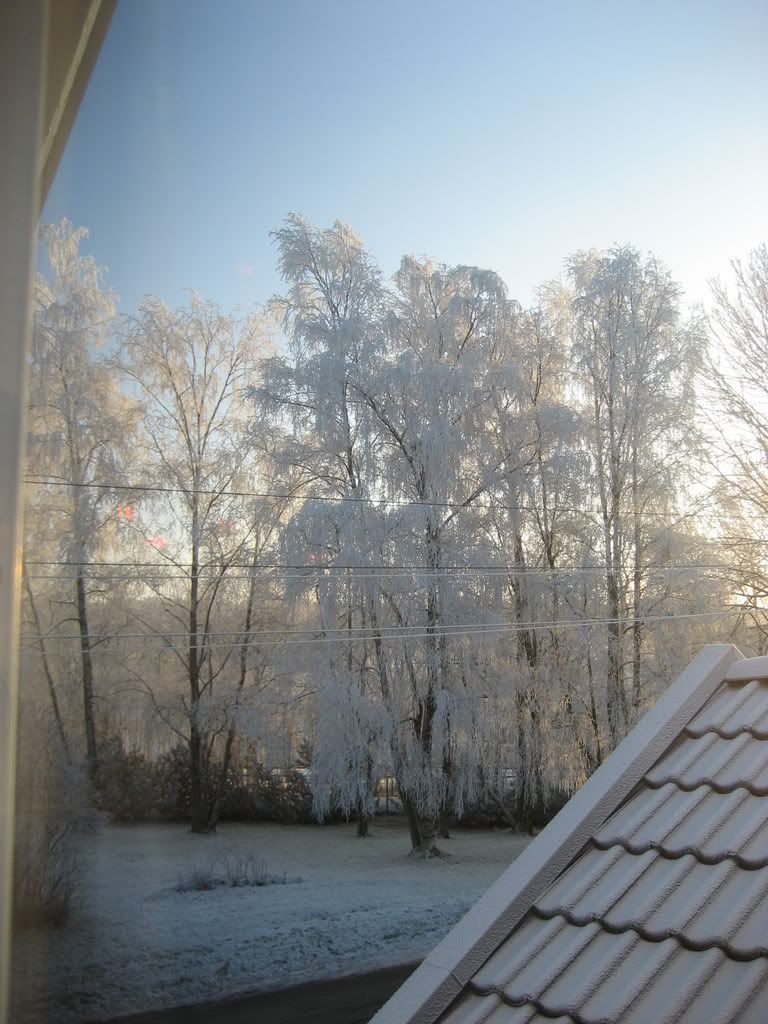
Ante, where are you at now? Kummusta naman ka dinha sa Australia??