Join MikeLigalig.com!

Why Just Read When You Can Join, Post, and Read!

Menu

Show posts

This section allows you to view all posts made by this member. Note that you can only see posts made in areas you currently have access to.

Show posts Menu

Messages - islander

#3501
Talk of the Town / Re: What is a Pastoral Letter?
February 05, 2017, 06:48:45 PM

In the Catholic Church such letters are also sent out regularly at particular ecclesiastical seasons, particularly at the beginning of fasts. In most episcopal church bodies, clerics are often required to read out pastoral letters of superior bishops to their congregations.

In the non-episcopal Protestant churches the name pastoral letter is given to any open letter addressed by a pastor to his congregation, but more especially to that customarily issued at certain seasons, for example, by the moderator of a Presbyterian assembly or the chairman of a Congregational or Baptist union.

wikipedia/
#3502
Talk of the Town / What is a Pastoral Letter?
February 05, 2017, 06:48:06 PM

A Pastoral letter, often called simply a pastoral, is an open letter addressed by a bishop to the clergy or laity of his or her diocese, or to both, containing either general admonition, instruction or consolation, or directions for behaviour in particular circumstances.
#3503
 
Let us not allow fear to reign and keep us silent. Let us put into practice not only our native inner strength but the strength that comes from our Christian faith. Our Lord Jesus promised us: “You will have affliction in this world, but take courage, I have overcome the world” (Jn. 16:33).

“What will separate us from the love of Christ? Will anguish, or distress, or persecution, or famine, or nakedness, or peril, or the sword? No, in all these things we conquer overwhelmingly through him who loved us.” (Rom. 8:35,37) Yes, indeed, “For the Spirit that is in you is more powerful than the spirit in those who belong in the world.” (1 Jn. 4:4)

As we commemorate the 100th year of the apparition of Our Lady of Fatima, let us respond to her call for prayer and repentance for the peace of our communities and of our country shrouded in the darkness of vice and death.

Mary, Mother of Perpetual Help, Pray for us.


For the Catholic Bishops’ Conference of the Philippines

Abp. Socrates B. Villegas, D.D.Archbishop of Lingayen-Dagupan
President, CBCP
January 30, 2017
#3504

7. To consent and to keep silent in front of evil is to be an accomplice to it. If we neglect the drug addicts and pushers we have become part of the drug problem. If we consent or allow the killing of suspected drug addicts, we shall also be responsible for their deaths.

We in the Church will continue to speak against evil even as we acknowledge and repent of our own shortcomings. We will do this even if it will bring persecution upon us because we are all brothers and sisters responsible for each other. We will help drug addicts so that they may be healed and start a new life. We will stand in solidarity and care for those left behind by those who have been killed and for the victims of drug addicts. Let us renew our efforts to strengthen families.

Those of us who are leaders in the Church should strive to push forward or continue programs that will uplift the poor, like livelihood, education and health programs. Above all we will live up to â€" we all will live up to â€" becoming a Church of the Poor.
#3505

4. Every person has a right to be presumed innocent until proven guilty. Society has ways and processes to catch, prove guilty and punish perpetrators of crimes. This process must be followed, especially by agents of the law.

5. Any action that harms another (seriously) is a grave sin. To push drugs is a grave sin as is killing (except in self-defense). We cannot correct a wrong by doing another wrong. A good purpose is not a justification for using evil means. It is good to remove the drug problem, but to kill in order to achieve this is also wrong.

6. The deep root of the drug problem and criminality is the poverty of the majority, the destruction of the family and corruption in society. The step we have to take is to overcome poverty, especially through the giving of permanent work and sufficient wages to workers. Let us strengthen and carry forward the unity and love of the family members. Let us not allow any law that destroys the unity of families. We must also give priority to reforming rogue policemen and corrupt judges. The excessively slow adjudication of court cases is one big reason for the spread of criminality. Often it is the poor who suffer from this system. We also call upon elected politicians to serve the common good of the people and not their own interests.
#3506

We stand for some basic teachings. These teachings are rooted in our being human, our being Filipino, and our being Christian.

1.The life of every person comes from God. It is he who gives it, and it is he alone who can take it back. Not even the government has a right to kill life because it is only God’s steward and not the owner of life.

2. The opportunity to change is never lost in every person. This is because God is merciful, as our Holy Father Pope Francis repeatedly teaches. We just finished celebrating the Jubilee Year of Mercy, and the World Apostolic Congress on Mercy. These events deepened our awareness that the Lord Jesus Christ offered his own life for sinners, to redeem them and give them anew future.

3. To destroy one’s own life and the life of another, is a grave sin and does evil to society. The use of drugs is a sign that a person no longer values his own life, and endangers the lives of others. We must all work together to solve the drug problem and work for the rehabilitation of drug addicts.
#3507


I find no pleasure in the death of anyone who dies â€" oracle of the Lord God (Ezekiel 18:32)

Beloved People of God

We, your bishops, are deeply concerned due to many deaths and killings in the campaign against prohibited drugs. This traffic in illegal drugs needs to be stopped and overcome. But the solution does not lie in the killing of suspected drug users and pushers. We are concerned not only for those who have been killed. The situation of the families of those killed is also cause for concern. Their lives have only become worse. An Additional cause of concern is the reign of terror in many places of the poor. Many are killed not because of drugs. Those who kill them are not brought to account. An even greater cause of concern is the indifference of many to this kind of wrong. It is considered as normal, and, even worse, something that (according to them) needs to be done. We are one with many of our countrymen who want change. But change must be guided by truth and justice.
#3508

hahaha! mao jud, rogamz, kay nganong kahibawo man mobendita. ;D
#3509
QuoteThe drug-related killings represent a flagrant violation of international human rights law that is legally binding on the Philippines. At their forefront is the non-derogable human right to life, which extrajudicial executions violate. Other human rights, including the right to due process, the right to health, prisoners’ right to humane treatment and the rights of victims’ family members have also been violated.

nothing is clearer than this. 
#3510

responsibility to investigate promptly, impartially and efficiently, the Commission on Human Rights and civil society organisations are trying to fill the gap, but, in addition to intimidation, confront a scarcity of resources and a system built to block progress. 

While the killings have generated headlines, the government’s violent anti-drug campaign has also undermined many people’s right to enjoy the highest attainable standard of health. “Surrender” programmes claim to be “voluntary,” but many people who use drugs say they see their choice as between surrendering or being killed. Once they surrender, they find themselves in programmes that are poorly funded and not comprehensive or evidence-based in what they offer. In many instances, community drug rehabilitation consists of Zumba fitness classes, listening to occasional lectures on drugs’ harm, and submitting oneself to perpetual surveillance. Any slip-up in using drugs can invite a police operation, with deadly consequences. On the national scale, the government has started building “mega” rehabilitation facilities inside military bases, raising additional human rights concerns. 

As the government has largely ignored a public health approach in favour of a law enforcement approach to drug use, many people who use drugs have become terrified of accessing health services that might link them to drugs. Harm reduction programmes like needle exchange have also ceased, lest they invite a government crackdown on non-governmental organisations and health providers. In places like Cebu City, people who inject drugs fear a police response if they seek out HIV testing or treatment, and now struggle to find or pay for clean needles. State authorities are therefore directly restricting the health options of people living with HIV and hepatitis C, significantly increasing the risk of transmission of blood-borne diseases.

The Philippine government needs to urgently adopt a different approach to drugs and criminality, one which promotes, respects and fulfils the human rights of all concerned. Police and judicial authorities should ensure accountability for any unlawful killing by police officers or unknown armed persons, promptly, impartially and efficiently investigating allegations and prosecuting those involved. The impunity that currently reigns has facilitated killing on a massive scale, hitting the poorest and most marginalized segments of the population in particular.

PAGE 8

note: pagination is as it appears in the whole report, of which the executive summary is a part

for the whole report, here's the link: https://www.amnesty.org/en/documents/asa35/5517/2017/en/
#3511

or during a “buy-bust” operation in which undercover police officers purchase drugs to effect an arrest, the police near-universally claim that the suspect pulled a gun and shot at them, which, the police say, forces them to return fire and kill the person. In several cases Amnesty International reviewed, the police even alleged the suspect’s gun “malfunctioned” when trying to shoot them. As of 21 January 2017, these purported “shootouts” have led to the death of 2,500 alleged drug offenders and 35 police officers.

Direct witness testimony and independent investigations present a far differentâ€"and, based on Amnesty International’s field research, far more credibleâ€"account of what happens during many drug-related police operations. Police officers routinely bust down doors in the middle of the night and then kill in cold blood unarmed people suspected of using or selling drugs. In several cases documented by Amnesty International, witnesses described alleged drug offenders yelling they would surrender, at times while on their knees or in another compliant position. They were still gunned down. To cover their tracks, police officers appear often to plant “evidence” and falsify incident reports. 

The Duterte administration’s relentless pressure on the police to deliver results in anti-drug operations has helped encourage these abusive practices. Worse, there appear to be financial incentives. A police officer with more than a decade of experience on the force, and who currently conducts operations as part of an anti-illegal drugs unit in Metro Manila, told Amnesty International that there are significant under-the-table payments for “encounters” in which alleged drug offenders are killed. He also said a racket between the police and some funeral homes leads to payments for each body brought in.

In addition to killings during police operations, there have been more than 4,100 drug-related killings by unknown armed persons. Amnesty International found strong evidence of links between state authorities and some armed persons who carry out drug-related killings. The police officer said officers sometimes disguise themselves as unknown armed persons, particularly when the target is someone whose family might bring a complaint or whose death might lead to greater suspicion; he mentioned female targets in particular. Two individuals paid to kill alleged drug offenders told Amnesty International that their boss is an active duty police officer; they reported receiving around 10,000 pesos (US $201) per killing.[3] They said that before President Duterte took office, they had around two “jobs” a month. Now, they have three to four a week. 

Victims of drug-related killings tend to have two things in common. First, they were overwhelmingly from the urban poor. Many were unemployed and lived in informal settlements or squatter communities. The killings mean further misery for already impoverished families, at times compounded by police officers stealing from them during crime scene investigations. A woman whose husband was killed said the police took goods she sold on commission, money she set aside for the electric bill, and even new shoes she bought for her child.

Second, in most cases documented by Amnesty International, there is a link to a “drug watch list” prepared by local government officials and shared with the police. Both the concept of the “watch list” itself and the way they are put together are deeply problematic. Inclusion is at times based on hearsay and community rumour or rivalry, with little to no verification. Lists are not comprised solely of persons reasonably suspected of crimesâ€"for instance, past drug use, no matter how distant, is often sufficient. And being friends with or even neighbours of someone on a “watch list” can in practice be a death sentence. Amnesty International documented several cases in which bystanders or other people not on a “watch list” were killed, because they found themselves with or near alleged drug offenders. One victim was an 8-year-old boy. All extrajudicial executions, irrespective of who the victim is, are unlawful. 

The drug-related killings represent a flagrant violation of international human rights law that is legally binding on the Philippines. At their forefront is the non-derogable human right to life, which extrajudicial executions violate. Other human rights, including the right to due process, the right to health, prisoners’ right to humane treatment and the rights of victims’ family members have also been violated. 

Amnesty International is deeply concerned that the deliberate and widespread killings of alleged drug offenders, which appear to be systematic, planned and organised by the authorities, may constitute crimes against humanity. 

In response, Philippine authorities, while claiming to investigate such killings, have failed to prosecute those responsible. No member of the police has faced criminal charges for a drug-related killing since Duterte took office. A relative of a man killed during an alleged “buy-bust” operation told Amnesty International that investigators from the National Bureau of Investigation discouraged her from pursuing a case, telling her that doing so would be “futile.” When families do fight against all odds and pursue a complaint, they are often profoundly afraid of police reprisal; several described instances of intimidation. As the state has failed in its

___________________________________________________________________
3 Throughout the report, conversions from Philippine pesos to US dollars reflect the rate from 25 January 2017.

PAGE 7 
#3512


AMNESTY
INTERNATIONAL

“IF YOU ARE POOR, YOU ARE KILLED”
EXTRAJUDICIAL EXECUTIONS IN THE PHILIPPINES’ “WAR ON DRUGS”


EXECUTIVE SUMMARY


***“I was in favour of [Duterte’s] slogan ‘Change’. All Filipinos want change. But no Filipino wants dead bodies all over the streets, and for the police killing people to become the norm.” Woman whose husband was unlawfully killed in a police operation


President Rodrigo Duterte has made no secret of how he views people linked to drugs or crime; for him, they are less than human and deserving of death. Since taking office in the Philippines on 30 June 2016, his administration’s “war on drugs”[1] has borne that out to a devastating degree. Statistics from the Philippine National Police indicate that police officers and unknown armed persons[2] collectively carried out 7,025 drug-related killings between 1 July 2016 and 21 January 2017, roughly an average of 34 per day.

In the poorest neighbourhoods of the Philippines, police officers on operation and unknown armed persons on motorcycles regularly target people with an alleged connection to drugs. Family members visit morgues to identify their loved one amongst the many other bodies that arrive each night riddled with bullet holes. The sight of bodies on the street has become commonplace; the fear of being or knowing the next victim, pervasive. Despite repeated denunciations by activists within the Philippines and by foreign governments, the relentless incitement and killings both continue unabated. 

This report examines the human rights violations associated with President Duterte’s violent campaign against drugs. It is based primarily on field research carried out in the Philippines in November and December 2016, during which Amnesty International delegates interviewed 110 people, including direct witnesses to extrajudicial executions; relatives of those killed; people who currently use drugs; police officers and paid killers involved in anti-drug operations; local authorities; and civil society activists.

Amnesty International investigated 33 incidents of drug-related killings in 20 different cities and towns, spread primarily across the National Capital Region as well as the provinces of Cebu and Cotabato. In the 33 incidents, of which 20 involved police operations and 13 involved unknown armed persons, 59 total people were killed. Based on corroborating witness statements and other credible information, the vast majority of these killings appear to have been extrajudicial executionsâ€"that is, unlawful and deliberate killings carried out by government order or with its complicity or acquiescence. 

In killings carried out during formal operations, police reports are startlingly similar from case to case. Amnesty International reviewed police incident reports for 12 of the 33 cases it documented, and, in 30 cases, examined media reports that included a police account. Whether during a raid on a suspect’s home

___________________________________________________________________
1 Throughout the report, Amnesty International uses quotation marks around “war on drugs,” a term commonly used to describe the Duterte administration’s policies and operations against alleged drug offenders. These operations do not fit the definition of an armed conflict under international law. 
2 In the Philippines, the commonly used term is “unknown gunmen.” Amnesty International uses a gender neutral term throughout the report, as women are likewise perpetrators of drug-related killings.


PAGE 6
#3513

Amnesty International is a reputable organization, with over seven million members. It was founded in the 1960s, and received the Nobel Peace Prize in 1977 and the UN Prize for Human Rights in 1978. My first introduction to AI was during martial law, when I read its report on military torture in the Philippines. It mentioned Rolando Abadilla as chief torturer and Panfilo Lacson as his assistant. Forty years later, it is talking about police torture and police killings. It is pretty accurate.

We should not kill, but in fact thank, the messenger.

http://opinion.inquirer.net/
#3514

Criminals do not belong to humanity? How then can Aguirre depend on their testimony, convicted as they are, as basis for branding Sen. Leila de Lima a drug queen? And who labeled the 7,025 who have been killed either as a result of police operations or vigilante-style murder as criminals? They did not even undergo a court trial.  They were  included in watchlists, which AI describes as prepared by local government officials where “inclusion is at times based on hearsay and community rumor or rivalry, with little or no verification.” No wonder constitutional commissioner Ed Garcia thinks Aguirre should resign. He is an embarrassment to his profession, and to the cause of justice.
#3515

The report is actually tactful. It should have added “And then you are fu**d” to the title, because it talks about bringing bodies to expensive funeral homes thought to be in cahoots with the police, who get commissions for each corpse.

In stark contrast to how the poor are treated, the report cites a $120 million drug bust, supposedly the largest in the country’s history, where all 10 people involved were arrested (including three Chinese), and no one was killed. They are now in court, defending themselves.  All nonpoor.

The report has been criticized by some (Sen. Dick Gordon, for one) as being “hearsay” and not worthy of a Senate investigation. And by Justice Secretary Vitaliano Aguirre II who has contested the finding that the Philippines might be liable for crimes against humanity, saying, “The criminals, the drug lords, drug pushers, they are not humanity. They are not humanity.”
#3516

The report of 66 pages (with 398 footnotes) is available at the AI website. The Reader can limit herself to the executive summary, but I highly recommend reading the whole report, as it provides a very good glimpse into well-researched descriptions of alleged buy-bust operations, killings in detention, and pressures and incentives that encourage police killings, planting of “evidence” and falsifying police reports, killings by vigilantes, and direct links to state authorities.

The title of the report stems from the finding that: “Victims of drug-related killings tend to have two things in common. First, they were overwhelmingly from the urban poor. Many were unemployed and lived in informal settlements or squatter communities.” Which means that “the killings mean further misery for already impoverished families, at times compounded by police officers stealing from them during crime scene investigations.” Thus the “If you are poor, you are killed” title.
#3517
   
GET REAL

Amnesty International received Nobel Peace Prize in ‘77


Solita Collas-Monsod
Philippine Daily Inquirer
February 04, 2017

I was in favor of [President Duterte’s] slogan ‘Change.’  All Filipinos want change. But no Filipino wants dead bodies all over the streets, and for the police killing people to become the norm.”

Thus begins the report of Amnesty International (AI) on extrajudicial executions in the Philippines’ “war on drugs,” titled “If you are poor, you are killed.” It is a quote from a woman whose husband was unlawfully killed in a police operation.

It is a terrific quote for two reasons: 1) It reflects what we Filipinos have in the back of our minds, no matter what our political persuasions are, and (2) it was spoken, not by an “elite,” not by a “yellowtard,” but by a “masa”â€"a 30-year-old woman who related that her house, which had a dirt floor, was wrecked during a “buy-bust operation.” She said it happened during a belated celebration of the birthday of her husband, who was killed with four celebrating friends, leaving her and an infant child.
#3518

you can say that again, judging by your senate floor performances.
#3519

Collateral damage

Mendoza said the AIDG and President Duterte’s war on drugs were collateral damage in the operation of the Korean mafia with rogue groups from the PNP, NBI and immigration bureau.

“Whether that is also intentional is worth looking into,” he said.

“The AIDG had big targets and many would get away if such a dedicated group would be dissolved,” he added.

http://newsinfo.inquirer.net/
#3520

‘Press Dumlao’

“Jee was taken to Camp Crame to be shown to Dumlao. It’s he who has initial knowledge of it and he needed Sta. Isabel because Sta. Isabel was used to the job. But to know why Jee became a target, investigators should press Dumlao,” he said.


According to Mendoza, Jee was a former vice president for human resources of Hanjin Shipping Co. in the Philippines.

Jee left Hanjin to set up his own business.

“The illegal workers at the Fontana casino of Jack Lam were not all Chinese. Some of them were Koreans, and Jee dealt with Lam,” Mendoza said.

“Everyone at Fontana knows the connection between Jee and Lam. That is also the reason why Jee was on the radar of the NBI [human trafficking unit] and through Dumlao’s wife, who is an agent in that unit, they know all the holdings about Jee and that includes information about his business rivals and who would want him killed through the Korean mafia,” he said.
#3521

“Nobody brought a complaint. The Koreans here were afraid because they knew who were behind the disappearances,” Mendoza said.

“Jee’s case is different because his wife brought a complaint,” he added.


Mendoza said Jee was most likely a person of interest to the Inter-Agency Council Against Human Trafficking, a unit of the NBI where Dumlao’s wife, a lawyer, was an officer.

Mendoza said Dumlao’s claim that SPO3 Ricky Sta. Isabel of the AIDG was the brains behind the murder of Jee was “hard to believe.”
#3522

50 Koreans missing

Making it more clear, he said the Korean mafia would identify the target, then rogue members of Philippine law enforcement agencies would carry out the “project.”

The project is almost always killing the target, and the rogue officers were paid to kill, not to kidnap, the target, he said.

“Whoever is the target, the sharing is always 60-40. The bigger share goes to the law enforcers operating with the syndicate. It’s they who do the job,” Mendoza said.

Jee was not the first victim, Mendoza said, adding that at least 50 Koreans are missing in the Philippines and all are believed deadâ€"killed without a trace.


In Jee’s case, the killers had his body cremated and the ashes flushed down a toilet.
#3523

Killings of Koreans

“If they are patient, they would learn the real motive for the killing of Jee. The real story is the intention to kill Jee. It was not about ransom,” he said.

“That big group mentioned by Dumlao, that’s true,” he added.

Mendoza said the killings of Koreans in the Philippines on orders of the Korean mafia had been going on since 2005 or 2006.

“But even earlier, there were already records of Koreans killed here,” he said.

Mendoza said the Korean mafia operated with help from rogue PNP officers, corrupt NBI and Bureau of Immigration agents.

He said an exhaustive investigation of the involvement of the NBI officials implicated by Dumlao was necessary because “the root is there.”

“They have the connection [to the Korean mafia] then they pass the job to their contacts in the PNP,” he said.
#3524

‘Ultimate intention’

“We believe that is the ultimate intention in killing Jee in Camp Crame. They wanted the AIDG dissolved and make the drug lords happy again,” the officer said, referring to the Korean mafia.

The PNP chief, Director General Ronald dela Rosa, told reporters on Friday that he had heard about the Korean mafia, which is reportedly operating in Central Luzon, and that PNP and National Bureau of Investigation probers were looking into reports about the existence of the group.

Retired Police Director Rodolfo “Boogie” Mendoza said the probe should be done by the PNP Criminal Investigation and Detection Group (CIDG) because the attack on Jee was not a kidnapping for ransom case.

“When Supt. Rafael Dumlao  (the head of the AIDG) implicated some officers and agents of [the NBI], I thought they got it,” Mendoza told the Inquirer on Friday.
#3525

Kidnappers from AIDG

President Rodrigo Duterte ordered the AIDG disbanded after its officers were found involved in the kidnapping and murder of Jee on Oct. 18 last year.

Jee was taken from his home in Angeles City, Pampanga province, transported to PNP headquarters in Camp Crame, Quezon City, and was killed there.

The killers then made Jee’s wife, Choi Kyung-jin, believe he had been kidnapped, and demanded P5 million in ransom.

Choi paid the ransom but when her husband did not come home, she asked for help from the government.

An investigation led to the discovery of the murder involving AIDG officers.

The former AIDG officer said the group was preparing to raid a big meth laboratory when the scandal broke out.
#3526

worth a read, all the way down. whether or not we have become cynics or we've been jaded by lies, there's always much more than meets the eye in anything...

Cop says ‘Korean mafia’ killed Jee

By: Arlyn dela Cruz
News Director
Philippine Daily Inquirer
February 04, 2017

A “Korean mafia” is behind the murder of South Korean businessman Jee Ick-joo, according to a police officer who served in the disbanded Philippine National Police Anti-Illegal Drugs Group (AIDG).

“The intention was to murder him, then burn him, eliminate him with no trace. The ransom demand was just an afterthought. Already paid by the mafia for the job, they still demanded ransom,” the officer said in an interview with the Inquirer.

“They have been doing it for a long time. Now all of us have been affected,” he said.

The officer was assigned to the PNP Intelligence Group (PNP-IG) before he was moved to the AIDG.

He said four of the narcs returned to the PNP-IG after the AIDG was disbanded on Monday.
#3527
Asia | Middle East / Re: Who are the Rohingya?
February 04, 2017, 04:31:43 AM


suggested additional reading:

THE WORLD’S MOST PERSECUTED MINORITY
https://fascinationhub.wordpress.com/2015/10/30/the-worlds-most-persecuted-minority/

Myanmar's Reward for Ethnic Cleansing of Rohingya
http://www.salem-news.com/articles/january052017/myanmar-ethnic-cleansing-rohingya-tk.php
#3528
Asia | Middle East / Re: Who are the Rohingya?
February 04, 2017, 04:03:44 AM

#3529
Asia | Middle East / Re: Who are the Rohingya?
February 04, 2017, 04:01:40 AM

But Atah Ullah says this power structure means their dreams of change were unrealistic.


"We had hopes that (Suu Kyi) would also justly stand up for the rights of the Rohingya people," he says.

"Now it turns out that the Myanmar military has completely controlled her. That's why we no longer have confidence in her."

"Whatever respect and love we had for her, that's all gone."

CNN's Manny Maung and Aung Naing Soe contributed reporting.
#3530
Asia | Middle East / Re: Who are the Rohingya?
February 04, 2017, 03:56:24 AM

"The State Counsellor has instructed the process to continue in areas where there's no opposition and to issue citizenship cards as soon as possible to the Muslims," Aye Aye Soe says. "These actions are a testimony of the government's seriousness to tackle this issue."

Despite these assurances, there is still huge disappointment in the new administration among Rohingyas.


Under Myanmar's constitution, which was written and approved by the military junta in 2008, Aung San Suu Kyi and her elected government share authority with top generals, who maintain control over large parts of security policy.

Aye Aye Soe insists that the government has the "full support" of the military.
#3531
Asia | Middle East / Re: Who are the Rohingya?
February 04, 2017, 03:50:53 AM

Looking to The Lady


Many Rohingya hoped Aung San Suu Kyi would put a stop to their mistreatment.

The blame for these apparent failures is partly being directed at Myanmar State Counsellor Aung San Suu Kyi, whose National League for Democracy party swept to power in a landslide victory in 2015.

The Nobel Peace Prize winner has been criticized for not doing enough to protect the Rohingyas. In response she has asked for more "time and space" to resolve the problems.

The government says Aung San Suu Kyi's creation of the Kofi Annan-led Rakhine Commission in September, and efforts to begin a new process to give citizenship rights to the Rohingya people, shows its intention to resolve the problems in the region.
#3532
Asia | Middle East / Re: Who are the Rohingya?
February 04, 2017, 03:41:43 AM

'Game changer'

As the humanitarian crisis grows on both sides of the border, there is growing concern among security analysts about the future of the nascent rebel movement.

In a lengthy report released in December, security experts at the International Crisis Group (ICG) described al-Yaqeen as a "game-changer" for Myanmar.


"The threat is not because of their military strength, it's because of what they represent, the potential of the country facing a very well organized, violent jihadi movement," Richard Horsey, the ICG's Myanmar Consultant tells CNN.

"It's clear that's not the case so far, but it seems that is what the military and government appear to be worried about."


Atah Ullah insists al-Yaqeen does not receive foreign funding and will never align with terror groups such as ISIS, but Horsey says the group "could in the future potentially be taken advantage of by global jihadist activists."

The Rohingyas have "never been a radicalized population," with the majority seeing violence as "counterproductive," Horsey says. "The fact that more people are now embracing violence reflects deep policy failures over many years rather than any sort of inevitability."
#3533
Asia | Middle East / Re: Who are the Rohingya?
February 04, 2017, 03:32:15 AM

"I think it was not a good move by al-Yaqeen," Hossain tells CNN. "Their attack on border guards was a premature step."

But, he says, the conflict has at least raised attention to their plight.


"Had they not been attacked the Myanmar police, no one would talk about the suffering of Rohingyas," Hossain says. "Now everyone knows about the crisis."

Another refugee, who did not want to be identified, said many Rohingyas are scared to disagree with al-Yaqeen for fear of reprisals.

"We can't debate with al-Yaqeen members. If someone does, they think he is taking the side of army," he says. "They might even kill people if anyone is suspected of supporting the government."

"The sad situation is that the community lives in fear of both the security forces and the violent extremists," Myanmar government spokesperson Aye Aye Soe says.
#3534
Asia | Middle East / Re: Who are the Rohingya?
February 04, 2017, 03:23:59 AM

'Not a good move'

CNN visited the Rohingya refugee camps in Bangladesh, to find out how those who have borne the brunt of the violence feel about al-Yaqeen.

"The leader is trying to give freedom to the oppressed Rohingyas in Rakhine State," says Amir Hossain, a refugee in Kutupalong Camp, Cox's Bazar.


"But they didn't have enough arms to fight against the military. That's why they could not fight back."

Pormina Begum, a refugee in the Leda refugee camp in Teknaf, supports al-Yaqeen.

"They (al-Yaqeen) are working to save our dignity," Begum says. "Maybe they have failed initially. But they will be successful in the future."

Hamid Hossain, another refugee in Teknaf, thinks the attack was a bad idea.
#3535
Asia | Middle East / Re: Who are the Rohingya?
February 04, 2017, 03:16:34 AM

Their only target, Ullah says, are government forces.

"We will continue to attack the oppressor, the government, until our citizenship is reinstated," Ullah says. "We appeal to the international community to help us in reclaiming our rights, so that we will not have to resort to bloodshed, but until we get all our basic rights back we will continue to fight."


Aye Aye Soe says there is no excuse for the group's actions.
"There should not be any justification for taking up arms against peaceful legitimate governments and the people of the country," she says.

"If they are allowed to justify the killing of police personnel ... then the sovereign government of the country has a more legitimate right and duty to protect the people, enforce law and order, maintain peace and stability and rule of law."

Atah Ullah says he feels no remorse for the fallout of the October 9 attack, saying that the Rohingya people support them because "it is their hope and aspiration for reclaiming all their rights."
#3536
Asia | Middle East / Re: Who are the Rohingya?
February 04, 2017, 03:15:20 AM

'Immediate action'

The government has acknowledged wrongdoing in one incident, after a video emerged of a Myanmar police officer kicking a Rohingya man in the face.


"The government took immediate action against the responsible police personnel for acting on emotion and against rules and regulation," Aye Aye Soe says.

Atah Ullah says the video is one of many examples of police brutality during the recent government crackdown.

"We are not embedded in Rohingya communities," he says. "But the government is using false propaganda to commit atrocities."

Atah Ullah insists that al-Yaqeen are not "terrorists," saying they will never attack civilians.

"Atrocity, violence, and injustice against any innocent civilians is not in the principles or policy of al-Yaqeen," he says. "It is not in our moral values to cause harm to innocent Burmese Buddhists or Rakhine people."
#3537
Asia | Middle East / Re: Who are the Rohingya?
February 04, 2017, 02:50:17 AM

Yanghee Lee, the UN Special Rapporteur on Human Rights, visited Myanmar last month and said she saw with her "own eyes" the burnt houses in Rakhine State.

In a news conference in Yangon at the end of the trip, she concluded that if the population felt like the new government was "addressing their situation," then "extreme elements would not have easily been able to hijack their cause."


She added that the government's response seems to be to "defend, dismiss and deny," and is "counterproductive."

In a 4,000-word written statement to CNN, Myanmar government spokesperson Aye Aye Soe denies human rights abuses.

"What is happening in Rakhine now is only security clearance sweeps being carried out with restraint and within rules and regulations against armed perpetrators," Aye Aye Soe says. "The instigators are using this situation to portray a disproportionate picture of 'genocide' and 'ethnic cleansing.'"
#3538
Asia | Middle East / Re: Who are the Rohingya?
February 04, 2017, 02:44:32 AM

Tales of misery

Many of the refugees arriving in Bangladesh, including several who spoke to CNN, have reported mass killings, rapes and burning of villages by government forces.

"The military took away my son," says Hamid Hossain, a refugee in Teknaf, Bangladesh. "The military took away 89 boys from our villages."


"The military has been torturing us since 2012. They are killing Rohingyas and raping women," he says.

CNN cannot independently verify the accounts from inside Rakhine State, because access to journalists and aid agencies is heavily restricted.

Amnesty International says the government's actions "may amount to crimes against humanity."
#3539
Asia | Middle East / Re: Who are the Rohingya?
February 04, 2017, 02:22:41 AM

"In the October 9th attack, we did not have any sophisticated weapons," Atah Ullah says. "We attacked them using our machetes, swords, and knives, and we seized their weapons to use against them."


In response, the Myanmar military launched what it calls "clearance operations" in the Rohingya villages to find the suspects involved in the attack, and to retrieve their weapons.

In early November, the military deployed helicopters which opened fire during clashes with Rohingya militants.

State media reports that in the process, more than 100 Rohingyas described as "violent attackers" have been killed, although activists tell CNN the number is far higher. Nearly 500 Rohingyas have also been arrested.

To escape the violence, at least 69,000 people have fled across the border to Bangladesh, the latest figures from the UN's Office for the Coordination of Humanitarian Affairs (UNOCHA) show.
#3540
Asia | Middle East / Re: Who are the Rohingya?
February 04, 2017, 02:19:48 AM

Fighting back

In his first ever interview with the media, the group's leader, Atah Ullah, says they decided to fight back against the government after 70 years of repression.

"We, the vulnerable and persecuted people, have asked the international community for protection against the atrocities by the government of Myanmar, but the international community turned its back on us," Atah Ullah says in an exclusive interview obtained by CNN.


"Finally, we cannot take it anymore."

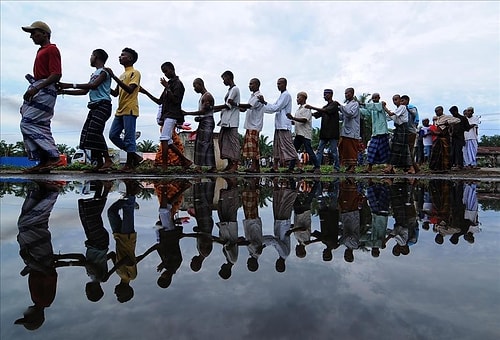
An estimated one million Muslim Rohingyas live in Rakhine State, where they are a persecuted, stateless ethnic minority in Buddhist-majority Myanmar. The government of Myanmar, also known as Burma, does not officially recognize the Rohingya, regarding them as illegal immigrants from neighboring Bangladesh, despite many being able to trace their roots back in Myanmar for generations.
#3541
Asia | Middle East / Re: Who are the Rohingya?
February 04, 2017, 02:15:32 AM

Inside the Rohingya Resistance: The rebels who provoked Myanmar's crackdown

By Rebecca Wright and Ivan Watson, CNN
February 3, 2017

Hong Kong (CNN) Walking barefoot, armed with knives, sticks and a few stolen guns, dozens of young men march through the muddy fields of Myanmar's Rakhine State.

"We will not rest, these are our fighters, come and join us," one says on the video uploaded to YouTube.

Together, they represent the first armed insurgency to emerge from the Muslim minority Rohingya in decades.

They call themselves Harakat al-Yaqeen, or "Faith Movement," and they have claimed responsibility for a deadly attack on Myanmar border posts in October, which killed nine police officers.


Smouldering debris of burned houses is seen in a village in Myanmar's Rakhine state.
#3542
Asia | Middle East / Re: Who are the Rohingya?
February 04, 2017, 02:09:40 AM

The Rohingya people are Muslim Indo-Aryan peoples from the Rakhine State, Myanmar. According to the Rohingyas and some scholars, they are indigenous to Rakhine State, while other historians claim that the group represents a mixture of precolonial and colonial immigrations.


The official stance of the Myanmar government, however, has been that the Rohingyas are mainly illegal immigrants who migrated into Arakan following Burmese independence in 1948 or after the Bangladesh liberation war in 1971.

International media and human rights organizations have often described Rohingyas as one of the most persecuted minorities in the world. According to the United Nations, the human rights violations against Rohingyas could be termed as "crimes against humanity".

wikipedia/
#3543
Asia | Middle East / Who are the Rohingya?
February 04, 2017, 02:00:42 AM

Who are the Rohingya?


***The Rohingya are a stateless Muslim minority in Myanmar's Rakhine state thought to number about one million people

***Myanmar does not recognize them as citizens or one of the 135 recognized ethnic groups living in the country

***Much of this is rooted in their heritage in East Bengal, now called Bangladesh


***Though many Rohingya have only known life in Myanmar, they are widely viewed as intruders from across the border

***According to Human Rights Watch, laws discriminate against the Rohingya, infringing on their freedom of movement, education, and employment

***They are denied land and property rights and ownership, and land on which they live can be taken away at any given time

Rohingya, pronounced  (/ˈroʊɪndÊ'É™/, /ˈroÊŠhɪndÊ'É™/, /ˈroʊɪŋjÉ™/, or /ˈroÊŠhɪŋjÉ™/)
#3544
Family & Parenting / Re: How fast time flies...
February 04, 2017, 12:42:04 AM

#3545

Unlike the other three quacks mentioned in this article, Oz is more a ringmaster than a snake-oil salesman. However, he’s not without his list of dubious stances:

###In November 2012, Dr. Oz invited Julie Hamilton, a representative of the National Association for Research and Therapy of Homosexuality, who claimed that she could heal homosexuality with gay reparative therapy. Although the show did include guests who condemned reparative therapy, Dr. Oz never weighed in on the subject, and the audience was led to believe that there were valid arguments on both sides of this issue.

###His proclamation on Oprah that resveratrol is an effective anti-aging supplement sparked a resveratrol marketing craze. Numerous fly-by-night online peddlers used his name and likeness (along with the likenesses of age-defying actresses Jennifer Aniston and Marisa Tomei) to peddle the so-called miracle supplement. But it's anyone's guess what was in those pills.

###Oz has invited a medium on his show who told selected audience members that she was communicating with their lost loved ones.

###Oz once invited a faith healer, Issam Nemeh, to “heal” sick audience members on his show. On his website, Oz bragged about the “Oz Effect”: “Dr. Nemeh has received an overwhelming response from the viewers of the Dr. Oz show. Medical office appointments with Dr. Nemeh are already filled for the next four months.”

http://www.alternet.org/
#3546

Oz often uses his show as a soapbox for the likes of Hari, Mercola and Adams. And when they’re guests on his show, they’re handled with kid gloves. Oz even describes Adams as an “activist researcher,” a “whistleblower” and a “food safety activist." Viewers then open their wallets to Adams, who is there to promote his website. A similar scenario plays out when Mercola, a frequent guest, joins Oz. Hari, for her part, does not market miracle products on her site. She does, however, seem to make money from affiliate advertising.

Oz’s great sin is that he uses his show to promote all types of modern shamanism. Critics find it mystifying that he, a medical doctor, would host and promote people on his show who are anathema to science. It’s Oz’s instant access to millions and his medical degrees and peer-reviewed research papers that have given him credibility, but critics say he loses all of it when he promotes guests who explicitly reject the tenets of reason. So, can Oz still be considered a serious scientist?
#3547

“People want to believe they can take an itty-bitty pill to push fat out of their body,” McCaskill chided the celebrity doctor. “I know you know how much power you have.”

Oz acknowledged to the subcommittee that while there’s no such thing as a “miracle” supplement, and many he touts wouldn’t pass scientific muster, he insisted he was comfortable recommending them to his fans.

“My job is to be a cheerleader for the audience,” Oz says. ”And when they don’t think they have hope, when they don’t think they can make it happen, I want to look and I do look everywhere, including alternative healing traditions, for any evidence that might be supportive to them.”

As McCaskill then pointed out, Oz was giving people false hope. Isn’t that what quacks do?
#3548

But unless you’ve been living under a rock for the last month, you probably know Dr. Oz has been exposed as a daytime-television snake oil peddler, while being shamed during testimony before a U.S. Senate subcommittee last month.

Sen. Claire McCaskill, the chairwoman of the Senate subcommittee on Consumer Protection, took Oz to task over false claims he’s made for over-the-counter weight loss cures. For example, Oz proclaims that worthless supplements such as green coffee beans have “miracle” properties.

The Missouri senator made it clear that she thinks Oz abuses his great influence. Products he endorses on his show are almost guaranteed to fly off the shelves.
#3549

4. Dr. Mehmet Oz


What do Vani Hari, Dr. Joseph Mercola and Mike Adams have in common? They’re all guest experts appearing on the Dr. Oz Show.

Dr. Oz is a media darling and cardiothoracic surgeon who first appeared on the Oprah Winfrey Show in 2004. In 2009, Oprah produced Oz's namesake show focusing on medical issues and personal health.

But before we label Oz a quack, it’s only fair that we also should note he’s a professor at the Department of Surgery at Columbia University, directs the Cardiovascular Institute and Complementary Medicine Program at New York-Presbyterian Hospital, has authored more than 400 medical research papers and holds several patents.
#3550

Some of Vani Hari’s more specious ideas about food are:

###Microwaves kill food and remove its nutrients. Also, microwaves change the chemical properties of water. She persists with this theory although it has been persistently debunked by science.

###Water, when exposed to the words “Hitler” and “Satan” changes its physical properties.

###Flu shots contain “a bunch of toxic chemicals and additives that lead to several types of Cancers and Alzheimer [sic] disease over time.” Actually, flu shots are made up mostly of proteins and preservatives that give no indication of being harmful, despite plenty of medical research.

Hari has not provided any scientific evidence to back her claims as of yet.
#3551

In response to critics who say Hari is not qualified to make hard judgments on food ingredients, Hari says, “I don’t think you need to have those degrees to be intellectually honest, to be able to research, to be able to present ideas.”

Dr. David Gorski, a cancer surgeon who writes for the website Science-Based Medicine takes offense to Hari's food campaigns:

“Her strategy is very transparent, but unfortunately it’s also very effective,” wrote Gorski. “Name a bunch of chemicals and count on the chemical illiteracy of your audience to result in fear at hearing their very names.”​

Gorski says since companies live and die by public perception, it's far easier to “give a blackmailer like Hari what she wants than to try to resist or to counter her propaganda by educating the public.”​
#3552

But Hari is really more of a fear-mongerer and conspiracy theorist than a safe-food advocate. Her campaigns are born of misinformation and anxiety. Recently, she published a petition on her website demanding that the top beer companies come clean about the ingredients in their beer. Citing a long list of creepy, chemical-sounding ingredients that are allowed in beer, she implied that the industry was flying under the radar and obscuring the additives it puts in its products.​ It turned out that the beer companies were actually using very few of the ingredients on her list, and some were only used in the production process and were not part of the finished product. When we looked further into it, we found that many of the nefarious ingredients and techniques she described were either misrepresented or entirely misunderstood by her.​

However, at Hari's request, the top two breweries in the U.S. acquiesced and listed their ingredients on their websites, and none of the ingredients would come as a real shock to beer drinkers. Still, Hari continued to insist that GMO corn and other bad ingredients were integral ingredients in beer.
#3553

3. The “Food Babe” Vani Hari


She doesn’t have a degree in nutrition, chemistry or medicine, and her work background is as a management consultant. Yet without any serious credentials, Hariâ€"the “Food Babe”â€"bills herself as a voice of consumer protection on the Internet. In just a few years, she’s assembled an army of followers who have joined her on her quest to get hard-to-pronounce ingredients banned from foods.

Hari’s acolytes see her as a muckraking reporter, saving us from nefarious chemicals, GMOs and unappetizing ingredients like beaver anus, yoga mat and fish bladder. The public and the media love her; a “food safety” campaign by the Food Babe can get thousands of signatures, countless media mentions and guest appearances on television shows such as Dr. Oz and The Doctors.
#3554

Here’s some more quackery from Adams and Natural News:

###Guns don’t kill people, medications do. Adam Lanza and Elliot Rodger committed their horrific mass murders because of the medications they were taking.

###A cold fusion device has been invented and will be a game changer for energy. It wasn't.

###Americans are constantly bombarded by lead coming from airplane chemtrails. (Actually, lead levels in blood have been falling for years.)

###Bill Gates and Microsoft are in the process of developing weaponized, ethnically targeted influenza viruses as part of a sinister eugenics plot.
#3555

Science-Based Medicine blogger Dr. Steven Novella describes Adams' site as “a crank alt-med site that promotes every sort of medical nonsense imaginable. If it is unscientific, antiscientific, conspiracy-mongering, or downright silly, Mike Adams appears to be all for it â€"whatever sells the ‘natural’ products he hawks on his site.”

What makes Adams unique is that he likes to mix far-right vitriol and conspiracy theories with his alternative medicine advice. He has come out as a climate-change denialist, 9/11 Truther, and a Birther.
#3556

Dr. David Gorski of the Science-Based Medicine website calls Natural News “a one-stop shop, a repository if you will, of virtually every quackery known to humankind, all slathered with a heaping, helping of unrelenting hostility to science-based medicine and science in general.”

Adams also considers himself a scientific researcher, but some of his claims are dubious. He has even bought himself a mass spectrometer which he uses to test various products for toxicity. He recently used this device to show that a flu vaccine containing thiomersal registered 51 parts per million of mercury. But that’s not the news in his findings: Adams went on to insist that his critics must be brain-damaged (or perhaps brainwashed) by mercury:

The only people who argue with this are those who are already mercury poisoned and thus incapable of rational thought. Mercury damages brain function, you see, which is exactly what causes some people to be tricked into thinking vaccines are safe and effective.
#3557

2. The "Health Ranger,” Mike Adams


Adams runs a website called Natural News that is dedicated to supporting alternative medicine techniques and various conspiracy theories about chemtrails, the link between vaccinations and autism, and the dangers of fluoridated drinking water. Dr. Mercola is a frequent guest blogger on his site.

Natural News, which gets an estimated 7 million unique visitors a month, primarily promotes alternative medicine, raw foods, and holistic nutrition. Adams claims he began the site after curing himself of Type II diabetes by using natural remedies.

Adams seems to revel in going against the grain. He likes to tell readers on his website that if they just exercise, eat the right foods and take the right supplements (he markets supplements on his site) infectious disease cannot harm them. Like Mercola, he is an AIDS denialist, and claims flu vaccines are totally ineffective.
#3558

Mercola has been the subject of a number of Food and Drug Administration warning letters about his activities, including marketing products as providing “exceptional countermeasures” against cancer, heart disease, diabetes, and a host of other illnesses. He also has marketed coconut oil to treat heart disease, Crohn’s disease, and Irritable Bowel Syndrome. Mercola.com also sold an infrared camera to be used as a cancer screening tool.

Some of Dr. Mercola’s wildest claims include:

###HIV may not be the cause of AIDS. Mercola believes that the manifestations of AIDS (including opportunistic infections and death) could result from "psychological stress" brought on by the belief that HIV is harmful. Mercola.com has also featured positive presentations of the claims of AIDS truthers who deny the existence of AIDS or the role HIV has in the disease.

###Mercola has said that microwave ovens emit dangerous radiation and that microwaving food alters its chemistry.

###Commercial sunscreens increase the likelihood of skin cancer, instead of protecting from it. Of course, he sells his own natural sunscreens on his website.
#3559

Many of Mercola’s musings clash â€" sometimes bitterly â€" with conventional medical wisdom. Mercola advises against immunization, water fluoridation, mammography, and the routine administration of vitamin K shots for newborns.

The medical community says Mercola is dangerous, and that he steers patients away from proven medical treatments in favor of unproven therapies and supplements.

“The information he’s putting out to the public is extremely misleading and potentially very dangerous,” says Dr. Stephen Barrett, who runs the medical watchdog site Quackwatch.org. “He exaggerates the risks and potential dangers of legitimate science-based medical care, and he promotes a lot of unsubstantiated ideas and sells [certain] products with claims that are misleading.”
#3560

1. Dr. Joseph Mercola


Mercola is not a strict medical doctor, but an osteopath who practiced in suburban Chicago (according to Chicago magazine, he gave up his practice in 2006 to focus on Internet marketing). Mercola has also written several books on health that have become bestsellers.

Mercola operates one of the Internet's largest and most trafficked health and consumer information sites. With an estimated 15.5 million unique monthly visitors, Mercola.com dwarfs even ConsumerReports.org and HealthCentral.com. The site vigorously promotes and sells dietary supplements, many of which bear Dr. Mercola’s name.

A typical article on Mercola’s site touts the wonders of yet another miracle cure or supplement. Some recent articles include "13 Amazing Health Benefits of Himalayan Crystal Salt" and "Your Flu Shot Contains a Dangerous Neurotoxin." His site has also touted Vitamin D as "The Silver Bullet for Cancer."
#3561

4 of the Biggest Quacks Plaguing America with False Claims About Science

From the Food Babe to Dr. Oz, these four are the media’s biggest fear-mongers and snake-oil peddlers.

By Cliff Weathers
July 17, 2014


Photo Credit: indiamos/Flickr

It may be easy to draw a caricature of a "quack” as a cross between the ShamWow pitchman and an alchemist, but they’re really not so easy to spot. Modern-day quacks often cherry-pick science and use what suits them as semantic backdrop to fool unsuspecting consumers. Quacks may dazzle people with fanciful research studies or scare them with intimidating warnings before trying to peddle products that make unreasonable promises. And those who use these alternative, unproven products may forego treatments that would be more likely to help them.

In short, quackery is dangerous. It promotes fear, devalues legitimate science and can destroy lives. Here are the four biggest quacks giving dubious health advice in the media and some samples of their detrimental advice.   
#3562

Hickok’s act went essentially unpunished. He stood trial for manslaughter, the greatest debate of which was who fired first. The jury absolved the case, finding Hickok’s shooting of Tutt justified, especially considering the honorable opportunities he repeatedly gave Tutt to avoid violence.


The tale of the Tutt-Hickok shootout made Hickok a household name, and he became a seminal figure of the Wild West.

Though he escaped it this time, it was at a card table that Hickok eventually met his death. Eleven years later, Hickok was shot from behind, his fingers grasping a paired poker hand of aces and 8’sâ€"a pair that is now known as the Dead Man’s Hand.

The shots that rang on the streets of Springfield that day had a literal effect on the lives of two men, but a symbolic one of the lives of thousands more. It served as the ringing start to the era of the Wild, Wild West, inviting gunmen and drifters to this new frontier. Springfield became the unofficial gate to that wily world of the West.

http://porterbriggs.com/
#3563

Tutt’s actions were particularly offensive for Hickok, not only because he snagged his most treasured asset, but also because they implied Hickok’s insolvency and indebtedness, traits that would destroy his reputation in the town and his career as a professional gambler. So when Tutt’s friends mocked Hickok and foretold visions of Tutt walking across the square, watch in full view, Hickok quietly replied, “He shouldn’t come across that square unless dead men can walk.” With that, the tone of the feud shifted. This was no longer a mere disagreementâ€"it was a battle that would end in bloodshed.


Harper’s Bazaar published a story about the shootout in 1867, propelling the Western shootout and Wild Bill Hickok into pop-culture fame.

The next morning the two men faced off in the traditional dueling stance on the main street of Springfield: bodies angled and hands resting on revolvers. In a surprising mark of gentlemanliness, the two men met in the middle and strolled into the nearest saloon, choosing a friendly drink over violence.

But peace was not long-lived. That evening, the two gunslingers met once again in the center of Springfield. They resumed their stances, eyes locked. In a burst and a flash, Tutt and Hickok fired simultaneously. Tutt’s bullet missed, flying harmlessly over Hickok’s head, but the other bullet found its mark, driving into Tutt’s chest. Minutes later, Tutt lay dead.
#3564

In petty retribution, Tutt began offering advice and funds to Hickok’s opponents, whispering and pushing pennies behind Hickok’s back. But still, the men remained relatively cordial.

But then Tutt intentionally and irrevocably overstepped his boundaries. During a game of poker in July of 1865 at the Lyon House Hotel, Tutt watched as Hickok dominated the game, collecting payments from his opponentsâ€"most of which had been funded by the fuming Tutt. Frustrated with the turn of events, Tutt reached across the table and grabbed Hickok’s most prized possessionâ€"a Waltham repeater gold pocket watchâ€"spouting claims of Hickok’s indebtedness to him for prior card game losses.


As a professional gambler and card player, Wild Bill Hickok found himself in more than one dangerous situation, eventually dying at a poker table.

Hickok remained calm and promised to pay Tutt the $25 debt, for which he had a memorandum in his pocket, but Tutt announced that the debt was for $35 and refused to return the watch until it was paid. With that he left the hotel, flanked by his cronies and the watch clenched in his palm.
#3565
Following the terminus of the Civil War, the fledgling West was a refuge for young, troubled men. Wild Bill Hickok, for example, fled to the frontier after an alcohol-induced brawl in which he mistakenly accused himself of murder. Similarly, a rough character named Davis Tutt arrived in Missouri following his family’s own civil war, the Tutt-Everett War, in which several of his brethren were killed. What Tutt and Hickok found in Springfield, Missouri, was not the peace they searched for but the violence they had tried to escape.


Wild Bill Hickock. Though Tutt was known as a better shot, it was Hickok’s bullet that found its mark on that fateful day.

When Tutt and Hickok, both professional gamblers, first met, the two ruffians formed a friendship despite inherent differences (Tutt was a former Confederate soldier, Hickok a Union scout). It wasn’t their morals or alliances that eventually broke their bond but a common agitator in friendships for centuries: women.

According to the legends surrounding the two cardsharks, both men fostered amorous feelings where perhaps they should not. Hickok was said to have had an affair (and fathered a child) with Tutt’s sister, while Tutt was supposedly seen paying his attentions to Hickok’s sweetheart, Susanna Moore. The feud between the two friends grew and festered, until Hickok refused to play in card games in which Tutt was a member.
#3566

Wild Bill Hickok and the Mother of All Shootouts

by Emily Glaser
Springfield, Missouri


It’s a scene we all recognize from John Wayne Westerns and paperback book covers. Two desperados face off in an empty street. A tumbleweed skitters across the dusted road, and wide eyes peek from between burlap-sack curtains. The two gunmen engage in a silent battle of will, their fingers poised delicately over their pistol handles. In an instant so quick it’s nearly invisible, their arms move in tandem, whipping their guns from their holsters and pulling triggers in one swift action. A reverberating shot later, a man lies, dying and bloodied, in the street. The victor growls a one-liner of wisdom and walks away, his spurs the hushed soundtrack of his departure.


Davis Tutt escaped death in his famous family’s feud, the Tutt-Everett War, in Marion County, Arkansas, but not in his shootout with Wild Bill Hickok. Pictured is a typical Marion County family of the era.

Like so many iconic and fictionalized moments, this storyline is just thatâ€"fictionalized and exaggerated. It’s a scene that rarely played out in the streets of the real West. But it is true that there was one shootout in the early days of the West that serves as inspiration for the quintessential gunfight.
#3567


During the presidential campaign, Duterte made the capacity to kill as the sine qua non for the presidency. This should have served as a forewarning of the turmoil that now engulfs the nation. It is a bitter lesson to be learned. In the future, it is to be hoped people will remember the ability to take lives is not the highest qualification for office. Rather, it is the opposite: the ability to foster life, the ability to move the nation forward socially and economically, and the ability to embrace all citizens inclusively.


-excerpts from "THE (IM)MORAL JUSTIFICATIONS OF DUTERTE’S ANTI-DRUG WAR" by Edgar Lores, September 18, 2016
https://joeam.com/2016/09/18/the-immoral-justifications-of-dutertes-anti-drug-war/
#3568

***
How long will this war last? This is anybody’s guess. Duterte has said, “We will not stop until the last drug lord… and the last pushers have surrendered or are put either behind bars or below the ground, if they so wish.”

We may be talking of a long and oppressive six years. But events are moving fast.

It has become painfully obvious that in so short a time Duterte has brought the country to a new low in the eyes of many local and international observers.
#3569

In both vigilante and police killings, there has been collateral damage. The volume of collateral deaths in cardboard justice has not been established. The friends and families of some victims have denied their loved ones were engaged in drug activities.

That the death of innocents (and other non-drug related deaths) has clearly taken place makes the anti-drug war unpalatable and unacceptable. This is an indiscriminate and brutal war that totally disregards the sanctity of human life.
#3570
 
There have been three types of killings in the anti-drug war: vigilante killings, police killings, and collateral damage.

Vigilante killings are illegal and, therefore, cannot be classified as self-defense. As of August 18, close to 900 such killings have been reported. These widespread killings have been triggered and encouraged by Duterte’s call to slaughter.

Police killings have been largely extrajudicial although the police have gone to great pains to paint the victims as “aggressors” with cheap guns and drug packets planted beside the bodies of the victims. A dozen police (and military) personnel have been killed so far as against 756 drug personalities. The lowly figure of 1.5% in police deaths belies the myth of self-defense.
#3571

Duterte: 'I will kill more to get rid of drugs'

unbelievable. can any country's president really say that? or is it that we, ordinary citizens, with any of us who may become a statistic as collateral damage (heaven forbid) don't have to take this again literally? is it time to take this statement again with a grain of salt, like using figures of speech as mind-boggling as metaphors, similes, allusions, to understand this?

he may have a potty mouth, but talking about killing?

my president has his tail between his legs with china. he does not want to go to war with china. rightly so. but waging a war against his own people?
#3572


Hell hath no fury than a social media manager scorned.

The head of Senator Alan Peter Cayetano’s social media team has demanded an explanation from the website Rappler over the animated GIF image portraying the lawmaker as a dog.

more at http://politics.com.ph/let-dogs-cayetanos-staffer-fumes-rappler-disgusting-pic/
#3573

10) Thou shalt put your phone down


We’ve all rolled out eyes at the party guest tapping away to strangers while ignoring those actually in the room. Be present, be polite and put the pesky mobile away.

http://www.telegraph.co.uk/
#3574

9) Thou shalt not be a whingebag

Cryptically vague, posts of the “Some people aren’t worthy of a place in your heart” variety. Moans about failed parcel deliveries. Rants about motorists cutting you up at the mini-roundabout. Tirades about shoddy customer service at IKEA… Save it for friends and family who will tolerate your trivial venting, rather than inflicting it on distant acquaintances who’ll just assume you’re Victor Meldrew with high blood pressure and a missing allen key.
#3575

8 ) Thou shalt not use social media as a search engine

Can anyone recommend a good hotel or tradesman? Is the train strike still on? What’s the weather going to be like this weekend? Google it.
#3576


Use Twitter for a domestic argument at your peril CREDIT: RICHARD DREW/AP

7) Thou shalt not use social media for family domestics

Sniping at your spouse on Twitter (“Busy, are we?”) or making subtle digs about your children being “too busy gallivanting to visit” on Facebook isn’t a good look. It’s also what actual talking on the telephone is for. Remember that?
#3577

6) Thou shalt beware of cut-and-paste

That way, you will avoid an Ed Balls snafu. When Balls was Shadow Chancellor and wanted to see what was being said about him on Twitter, he typed his name into the “compose” box instead of the “search” one, so accidentally sent out his own name. This Luddite bungle is still celebrated on “Ed Balls Day” every April 28th and it has taken a stint on Strictly to restore Balls’ reputation. A similar butterfingered bungle was recently made by White House Press Secretary Sean Spicer, who accidentally tweeted “n9y25ah7” which is almost certainly his password to something important. Probably involving nuclear weapons.
#3578


Use of Emoji's shows your age CREDIT: CHRIS OXENBURY/SWNS.COM

5) Thou shalt use hashtags and emojis sparingly

You’re not 12.
#3579


Check before you click on Whatsapp CREDIT: CARL COURT/GETTY

4)Thou shalt double-check the recipient list


The equivalent of accidentally hitting “Reply All” on an email. So when you’re date-wrangling over a villa-sharing holiday confirm who’s on the “To” list before you unintentionally slate someone’s husband in public for being an “officious idiot.
#3580

3) Thou shalt not be a humblebragger

Attempting to self-deprecatingly undercut your smug trip to the opera with “Thought we’d get off the sofa and swap the boxset for something more highbrow lol” doesn’t work. We know full well you’re still boasting. Don’t even get us started on the gym, running, cycling and dieting brigade.
#3581


Social media is no place for a political argument CREDIT: PETER DASILVA/EPA

2) Thou shalt not get into political arguments

Express an opinion about Trump and words like “fascist” will get flung around. Venture your Brexit views and before you’ll know it, everyone’s calling each other “Remoaners” and “racists”. You’ll never win, it could turn nasty and to the casual observer, you come over as an over-opinionated loon.
#3582


Instagram is a danger zone for food bores CREDIT: ROSIEFOODIE/INSTAGRAM

1) Thou shalt not become a food bore

Posting occasional photos of your impressive slow-cooked stew or Bake Off-worthy cake on Facebook or Instagram is fine, if a tad show-offy, especially if you’ve “accidentally” edged a Wüsthof knife or Le Creuset dish into shot. Tedious conversations with your partner about what you’re having for supper should be restricted to texts, where nobody else can see you’ve got “a glut of aubergines that need using up”
#3583

Across the Atlantic, tweet-happy President Trump and his team are also prone to social media faux pas, whether it’s failing to spell-check “unpresidented”, or agreeing with articles on satirical news site The Onion without realising they’re spoofs.


James Blunt has become a Twitter master CREDIT: JOHN RAHIM/REX/SHUTTERSTOCK

Meanwhile, the unlikely line-up of crooner James Blunt, author JK Rowling and footballer Wayne Rooney have been hailed for their witty taming of Twitter trolls.

It’s such a minefield that style bible Vogue has been moved to publish a “modern girl’s guide to social media etiquette”. However, this mainly revolves around self-promotion and the dreaded “selfie”. So here’s our own 10 commandments for us midlifers who are also having to navigate the obstacle course that is social media…
#3584

The 10 social media sins that every over 40-year old needs to avoid


It's easy to get it wrong on social media CREDIT: NA/AGENCY

Michael Hogan
30 JANUARY 2017

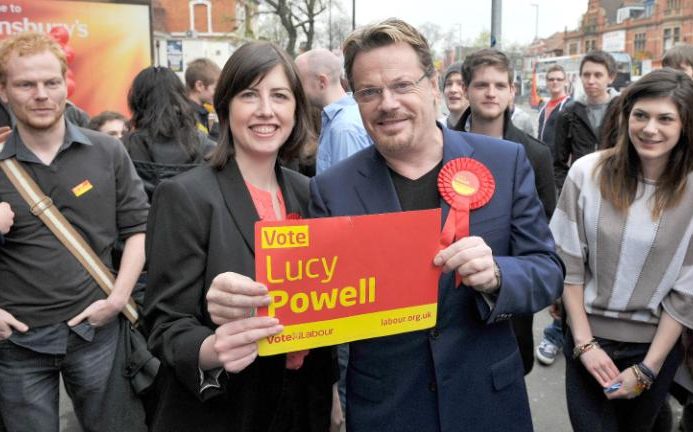
Modern technology is a life-enhancing thing. It’s also potentially a huge pain in the digital derrière. Witness MP and former frontbencher Lucy Powell’s grovelling apology after mistakenly sending an angry WhatsApp message â€" with copious sweating and criticism of fellow Labour MPs as “ludicrous” â€" to a group including those very colleagues. Oops.


Labour's Lucy Powell made a huge social media faux pas CREDIT: MARTIN RICKETT/PA
#3585
Philippine Daily News / By the numbers
February 02, 2017, 09:43:15 PM
#3586

were the 7k deaths included in the list as crimes?
#3587

kamo na lang god ang pag-gro, bai rogz ug bai hubs. daghan gyod tingali ang maghikog nga customers, hahaha!
#3588
Introduce Yourself / Re: Newbie pa jud
February 02, 2017, 09:32:15 PM

bitaw ni si bai hubs, wa lubad-lubad, bisan ug nag-second childhood na. ;D
#3589

congressmen legislate, dpwh constructs. hinaot wa na ni nga practice nga mag-apil-apil ang congressmen ug infrastructure projects. anha maungo ang funds. >:(
#3590

duda ko nga ang uban, anha ra ug mag-second childhood. ;D
#3591

sad. just sad. :(
#3592

wa bay labot sa ekj ang mga hubog nga mangihi atubangan sa nangaon uk iwisikwisik pa gyod ang iyang kinatawo? dayon taoran ug cardboard nga naay sinuwat "naghubad, pinakita at umihi. huwag tularan." sniper ra ang makaatbang ani. ;D
#3593

patuga. grrrrr!
#3594
Introduce Yourself / Re: Newbie pa jud
February 02, 2017, 03:23:12 PM

welcome back! gimaw pa more!
#3595
Photos Unlimited / Re: So how are you feeling, doggie?
February 02, 2017, 03:22:26 PM

thoughtful, thoughtful cat. :D
#3596

;)
#3597
Photos Unlimited / Re: So how are you feeling, doggie?
January 31, 2017, 09:05:33 PM

#3598
Photos Unlimited / Re: So how are you feeling, doggie?
January 31, 2017, 09:04:29 PM

#3599
Photos Unlimited / Re: So how are you feeling, doggie?
January 31, 2017, 09:02:55 PM

#3600
Photos Unlimited / Re: So how are you feeling, doggie?
January 31, 2017, 09:01:27 PM