the latest information I got from Cocobank Tagbilaran, invest One million phil pesos, it will yield 5 % monthly. The capital must be invested for 5 years and a day.
This section allows you to view all posts made by this member. Note that you can only see posts made in areas you currently have access to.
#3501
Business and Economy / Re: Unsa May Nindot Nga Investment Sa Imong Kwarta Karong Panahona?
November 03, 2010, 07:15:10 PM #3502
Inspiration & Hope / Re: Top Five Regrets of the Dying
November 03, 2010, 03:48:49 PM
Ondoy hubag, there are lots of wine better than champagne, maka borot oroy kana ug tiyan.
#3503
Inspiration & Hope / Re: Top Five Regrets of the Dying
November 03, 2010, 03:38:42 PM
Truly we could relate to this thread. At present I´m so upset that our company is working on my early retirement.I´ll turn 60 next year and they offer some separations pay. I´m not ready and quitting my job means meager pension. PIla najud ni ka semana,mora ko ug nag kondenar, ang akong youngest 17, dili pa mabiyaan. Mahimo man jud ko mo-uli na lang sa Bohol.
After reading this, I think I have a clear view and I´ll retire!!!
I could invest the small amount, be frugal and live my life in a new perspective.
After reading this, I think I have a clear view and I´ll retire!!!
I could invest the small amount, be frugal and live my life in a new perspective.
#3504
Inspiration & Hope / Top Five Regrets of the Dying
November 03, 2010, 03:02:34 PM
from Jody Navarra´s email;
My friends,
You might find this morbid but I think that we have to do something so that from
hereon we live a happier, a more full filling, and a more peaceful life. As I read
through this I have to admit that what it says is so true.
Cheers! Especially to those who choose to be genuinely happy in simple ways
with loved ones and true friends.
Top Five Regrets of the Dying
By Bronnie Ware
Platinum Quality Author
For many years I worked in palliative care. My patients were those
who had gone home to die. Some incredibly special times were shared.
I was with them for the last three to twelve weeks of their lives.
People grow a lot when they are faced with their own mortality. I learned never to underestimate some one's capacity for growth. Some changes were phenomenal. Each experienced a variety of emotions, as expected, denial, fear, anger, remorse, more denial and eventually acceptance. Every single patient found their peace before they departed though, every one of them.
When questioned about any regrets they had or anything they would
do differently, common themes surfaced again and again.
Here are the most common five:
1. I wish I'd had the courage to live a life true to myself, not the life others expected of me.
This was the most common regret of all. When people realise that
their life is almost over and look back clearly on it, it is easy to see
how many dreams have gone unfulfilled. Most people have had not
honoured even a half of their dreams and had to die knowing that it
was due to choices they had made, or not made.
It is very important to try and honour at least some of your dreams
along the way. From the moment that you lose your health, it is too
late. Health brings a freedom very few realise, until they no longer
have it.
2. I wish I didn't work so hard.
This came from every male patient that I nursed. They missed their children's youth and their partner's companionship. Women also spoke of this regret. But as most were from an older generation, many of the female patients had not been breadwinners. All of the men I nursed deeply regretted spending so much of their lives on the treadmill of a work existence.
By simplifying your lifestyle and making conscious choices along the
way, it is possible to not need the income that you think you do. And by creating more space in your life, you become happier and more open to new opportunities, ones more suited to your new lifestyle.
3. I wish I'd had the courage to express my feelings.
Many people suppressed their feelings in order to keep peace with others. As a result, they settled for a mediocre existence and never became who they were truly capable of becoming. Many developed illnesses relating to the bitterness and resentment they carried as a result.
We cannot control the reactions of others. However, although people
may initially react when you change the way you are by speaking
honestly, in the end it raises the relationship to a whole new and
healthier level. Either that or it releases the unhealthy relationship
from your life. Either way, you win.
4. I wish I had stayed in touch with my friends.
Often they would not truly realise the full benefits of old friends until their dying weeks and it was not always possible to track them down. Many had become so caught up in their own lives that they had let
golden friendships slip by over the years. There were many deep
regrets about not giving friendships the time and effort that they deserved. Everyone misses their friends when they are dying.
It is common for anyone in a busy lifestyle to let friendships slip. But
when you are faced with your approaching death, the physical details
of life fall away. People do want to get their financial affairs in order if
possible. But it is not money or status that holds the true importance
for them. They want to get things in order more for the benefit of those
they love. Usually though, they are too ill and weary to ever manage
this task. It is all comes down to love and relationships in the end. That
is all that remains in the final weeks, love and relationships.
5. I wish that I had let myself be happier.
This is a surprisingly common one. Many did not realise until the end
that happiness is a choice. They had stayed stuck in old patterns and
habits. The so-called 'comfort' of familiarity overflowed into their
emotions, as well as their physical lives. Fear of change had them
pretending to others, and to their selves, that they were content. When
deep within, they longed to laugh properly and have silliness in their
life again.
When you are on your deathbed, what others think of you is a long way
from your mind. How wonderful to be able to let go and smile again,
long before you are dying.
Life is a choice.
It is YOUR life.
Choose consciously,
choose wisely,
choose honestly.
Choose happiness.
#3505
Bible Study / Re: Saints of the Day
November 03, 2010, 02:29:56 PM
St. Martin de Porres
(1579-1639)
"Father unknown" is the cold legal phrase sometimes used on baptismal records. "Half-breed" or "war souvenir" is the cruel name inflicted by those of "pure" blood. Like many others, Martin might have grown to be a bitter man, but he did not. It was said that even as a child he gave his heart and his goods to the poor and despised.
He was the illegitimate son of a freed woman of Panama, probably black but also possibly of Native American stock, and a Spanish grandee of Lima, Peru. Martin inherited the features and dark complexion of his mother. That irked his father, who finally acknowledged his son after eight years. After the birth of a sister, the father abandoned the family. Martin was reared in poverty, locked into a low level of Lima’s society.
When he was 12, his mother apprenticed him to a barber-surgeon. He learned how to cut hair and also how to draw blood (a standard medical treatment then), care for wounds and prepare and administer medicines.
After a few years in this medical apostolate, Martin applied to the Dominicans to be a "lay helper," not feeling himself worthy to be a religious brother. After nine years, the example of his prayer and penance, charity and humility led the community to request him to make full religious profession. Many of his nights were spent in prayer and penitential practices; his days were filled with nursing the sick and caring for the poor. It was particularly impressive that he treated all people regardless of their color, race or status. He was instrumental in founding an orphanage, took care of slaves brought from Africa and managed the daily alms of the priory with practicality as well as generosity. He became the procurator for both priory and city, whether it was a matter of "blankets, shirts, candles, candy, miracles or prayers!" When his priory was in debt, he said, "I am only a poor mulatto. Sell me. I am the property of the order. Sell me."
Side by side with his daily work in the kitchen, laundry and infirmary, Martin’s life reflected God’s extraordinary gifts: ecstasies that lifted him into the air, light filling the room where he prayed, bilocation, miraculous knowledge, instantaneous cures and a remarkable rapport with animals. His charity extended to beasts of the field and even to the vermin of the kitchen. He would excuse the raids of mice and rats on the grounds that they were underfed; he kept stray cats and dogs at his sister’s house.
He became a formidable fundraiser, obtaining thousands of dollars for dowries for poor girls so that they could marry or enter a convent.
Many of his fellow religious took him as their spiritual director, but he continued to call himself a "poor slave." He was a good friend of another Dominican saint of Peru, Rose of Lima (August 23).
Comment:
Racism is a sin almost nobody confesses. Like pollution, it is a "sin of the world" that is everybody's responsibility but apparently nobody's fault. One could hardly imagine a more fitting patron of Christian forgiveness (on the part of those discriminated against) and Christian justice (on the part of reformed racists) than Martin de Porres.
Quote:
In 1962, Pope John XXIII remarked at the canonization of Martin: "He excused the faults of others. He forgave the bitterest injuries, convinced that he deserved much severer punishments on account of his own sins. He tried with all his might to redeem the guilty; lovingly he comforted the sick; he provided food, clothing and medicine for the poor; he helped, as best he could, farm laborers and Negroes, as well as mulattoes, who were looked upon at that time as akin to slaves: thus he deserved to be called by the name the people gave him: 'Martin of Charity.'"
Patron Saint of:
African-Americans
Barbers
Hairdressers
Race relations
Social justice
#3506
Talk of the Town / Re: Best Friends File 90 Million Pesos Corruption Case against Jane Cajes
November 03, 2010, 05:56:43 AM
ga usik-usik lang kana ug kwarta! Taxes from hard working people. 
#3507
Bible Study / Re: Minute Meditations
November 03, 2010, 05:39:37 AM
God-given Talents
God does not give us talents for our own pleasure and purpose, rather God gives us talents primarily to serve the world in simple and generous ways.
God does not give us talents for our own pleasure and purpose, rather God gives us talents primarily to serve the world in simple and generous ways.
#3508
Bible Study / Re: Saints of the Day
November 02, 2010, 03:24:50 PM
Feast of All Souls
The Church has encouraged prayer for the dead from the earliest times as an act of Christian charity. "If we had no care for the dead," Augustine noted, "we would not be in the habit of praying for them." Yet pre-Christian rites for the deceased retained such a strong hold on the superstitious imagination that a liturgical commemoration was not observed until the early Middle Ages, when monastic communities began to mark an annual day of prayer for the departed members.
In the middle of the 11th century, St. Odilo, abbot of Cluny (France), decreed that all Cluniac monasteries offer special prayers and sing the Office for the Dead on November 2, the day after the feast of All Saints. The custom spread from Cluny and was finally adopted throughout the Roman Church.
The theological underpinning of the feast is the acknowledgment of human frailty. Since few people achieve perfection in this life but, rather, go to the grave still scarred with traces of sinfulness, some period of purification seems necessary before a soul comes face-to-face with God. The Council of Trent affirmed this purgatory state and insisted that the prayers of the living can speed the process of purification.
Superstition easily clung to the observance. Medieval popular belief held that the souls in purgatory could appear on this day in the form of witches, toads or will-o’-the-wisps. Graveside food offerings supposedly eased the rest of the dead.
Observances of a more religious nature have survived. These include public processions or private visits to cemeteries and decorating graves with flowers and lights. This feast is observed with great fervor in Mexico.
Comment:
Whether or not one should pray for the dead is one of the great arguments which divide Christians. Appalled by the abuse of indulgences in the Church of his day, Martin Luther rejected the concept of purgatory. Yet prayer for a loved one is, for the believer, a way of erasing any distance, even death. In prayer we stand in God's presence in the company of someone we love, even if that person has gone before us into death.
Quote:
“We must not make purgatory into a flaming concentration camp on the brink of hellâ€"or even a ‘hell for a short time.’ It is blasphemous to think of it as a place where a petty God exacts the last poundâ€"or ounceâ€"of flesh.... St. Catherine of Genoa, a mystic of the 15th century, wrote that the ‘fire’ of purgatory is God’s love ‘burning’ the soul so that, at last, the soul is wholly aflame. It is the pain of wanting to be made totally worthy of One who is seen as infinitely lovable, the pain of desire for union that is now absolutely assured, but not yet fully tasted†(Leonard Foley, O.F.M., Believing in Jesus).
#3509
Bible Study / Re: Minute Meditations
November 02, 2010, 03:24:15 PM
Endless Love
Know for certain that death does not end my relationships with all those I love. We will go on loving each other beyond time and telling.
Know for certain that death does not end my relationships with all those I love. We will go on loving each other beyond time and telling.
#3510
Bible Study / Re: Saints of the Day
November 01, 2010, 04:09:15 PM
Feast of All Saints
The earliest certain observance of a feast in honor of all the saints is an early fourth-century commemoration of "all the martyrs." In the early seventh century, after successive waves of invaders plundered the catacombs, Pope Boniface IV gathered up some 28 wagonloads of bones and reinterred them beneath the Pantheon, a Roman temple dedicated to all the gods. The pope rededicated the shrine as a Christian church. According to Venerable Bede, the pope intended "that the memory of all the saints might in the future be honored in the place which had formerly been dedicated to the worship not of gods but of demons" (On the Calculation of Time).
But the rededication of the Pantheon, like the earlier commemoration of all the martyrs, occurred in May. Many Eastern Churches still honor all the saints in the spring, either during the Easter season or immediately after Pentecost.
How the Western Church came to celebrate this feast in November is a puzzle to historians. The Anglo-Saxon theologian Alcuin observed the feast on November 1 in 800, as did his friend Arno, Bishop of Salzburg. Rome finally adopted that date in the ninth century.
Comment:
This feast first honored martyrs. Later, when Christians were free to worship according to their conscience, the Church acknowledged other paths to sanctity. In the early centuries the only criterion was popular acclaim, even when the bishop's approval became the final step in placing a commemoration on the calendar. The first papal canonization occurred in 993; the lengthy process now required to prove extraordinary sanctity took form in the last 500 years. Today's feast honors the obscure as well as the famousâ€"the saints each of us have known.
Quote:
“After this I had a vision of a great multitude, which no one could count, from every nation, race, people, and tongue. They stood before the throne and before the Lamb, wearing white robes and holding palm branches in their hands.... [One of the elders] said to me, ‘These are the ones who have survived the time of great distress; they have washed their robes and made them white in the blood of the Lamb’†(Revelation 7:9,14).
#3511
Bible Study / Re: Minute Meditations
November 01, 2010, 04:08:21 PM
The Joy of Suffering
It is difficult to find a saint or a mystic whose life has not been touched significantly by disability or illness.
It is difficult to find a saint or a mystic whose life has not been touched significantly by disability or illness.
#3512
Bible Study / Indulgences for the Poor Souls Current regulations in force by Pope Benedict XVI
October 31, 2010, 07:19:08 PM
From the
Priestly Fraternity of St. Peter--
October 2005 Newsletter
Indulgences for the Poor Souls
Current regulations in force by Pope Benedict XVI
I On All Souls’ Day (Nov. 2) a plenary indulgence, applicable only to the Poor Souls, is granted to those who visit any parish church or public oratory and there recite one Our Father and one Credo.
II On all the days from November I though November 8 inclusive, a plenary indulgence, applicable only to the Poor Souls, is granted to those who visit a cemetery and pray even if only mentally for the departed.
Conditions for both indulgences:
1. Only one plenary indulgence can be granted per day.
2. It is necessary to be in the state of grace, at least by completion of the work.
3. Freedom from attachment to sin, even venial sin, is necessary; otherwise the indulgence is only partial. (By this is meant attachment to a particular sin, not sin in general.)
4. Holy Communion must be received each time the indulgence is sought.
5. Prayers must he recited for the intentions of the Holy Father on each day the indulgence is sought. (No particular prayers are prescribed. One Our Father and one Hail Mary suffice, or other suitable prayers.
6. A sacramental concession must he made within a week of completion of the prescribed work. (One confession made during the week, made with the intention of gaining all the indulgences, suffices.)
#3513
Bible Study / Re: Saints of the Day
October 31, 2010, 04:28:18 PM
St. Wolfgang of Regensburg
(c. 924-994)
Wolfgang was born in Swabia, Germany, and was educated at a school located at the abbey of Reichenau. There he encountered Henry, a young noble who went on to become Archbishop of Trier. Meanwhile, Wolfgang remained in close contact with the archbishop, teaching in his cathedral school and supporting his efforts to reform the clergy.
At the death of the archbishop, Wolfgang chose to become a Benedictine monk and moved to an abbey in Einsiedeln, now part of Switzerland. Ordained a priest, he was appointed director of the monastery school there. Later he was sent to Hungary as a missionary, though his zeal and good will yielded limited results.
Emperor Otto II appointed him Bishop of Regensburg (near Munich). He immediately initiated reform of the clergy and of religious life, preaching with vigor and effectiveness and always demonstrating special concern for the poor. He wore the habit of a monk and lived an austere life.
The draw to monastic life never left him, including the desire for a life of solitude. At one point he left his diocese so that he could devote himself to prayer, but his responsibilities as bishop called him back.
In 994 he became ill while on a journey; he died in Puppingen near Linz, Austria. His feast day is celebrated widely in much of central Europe. He was canonized in 1052.
Comment:
Wolfgang could be depicted as a man with rolled-up sleeves. He even tried retiring to solitary prayer, but taking his responsibilities seriously led him back into the service of his diocese. Doing what had to be done was his path to holinessâ€"and ours.
#3514
Bible Study / Re: Minute Meditations
October 31, 2010, 04:27:33 PM
A Chance to Start Over
Each day is a new beginning. A day to have wounds healed. A day to believe. A day to welcome home parts of ourselves that we have refused to embrace.
Each day is a new beginning. A day to have wounds healed. A day to believe. A day to welcome home parts of ourselves that we have refused to embrace.
#3515
Bible Study / Re: Saints of the Day
October 30, 2010, 05:40:18 PM
St. Alphonsus Rodriguez
(c. 1533-1617)
Tragedy and challenge beset today’s saint early in life, but Alphonsus Rodriguez found happiness and contentment through simple service and prayer.
Born in Spain in 1533, Alphonsus inherited the family textile business at 23. Within the space of three years, his wife, daughter and mother died; meanwhile, business was poor. Alphonsus stepped back and reassessed his life. He sold the business and, with his young son, moved into his sisters’ home. There he learned the discipline of prayer and meditation.
Years later, at the death of his son, Alphonsus, almost 40 by then, sought to join the Jesuits. He was not helped by his poor education. He applied twice before being admitted. For 45 years he served as doorkeeper at the Jesuits’ college in Majorca. When not at his post, he was almost always at prayer, though he often encountered difficulties and temptations.
His holiness and prayerfulness attracted many to him, including St. Peter Claver, then a Jesuit seminarian. Alphonsus’s life as doorkeeper may have been humdrum, but he caught the attention of poet and fellow-Jesuit Gerard Manley Hopkins, who made him the subject of one of his poems.
Alphonsus died in 1617. He is the patron saint of Majorca.
Comment:
We like to think that God rewards the good even in this life. But Alphonsus knew business losses, painful bereavement and periods when God seemed very distant. None of his suffering made him withdraw into a shell of self-pity or bitterness. Rather, he reached out to others who lived with pain, including enslaved blacks. Among the many notables at his funeral were the sick and poor people whose lives he had touched. May they find such a friend in us!
#3516
Bible Study / Re: Minute Meditations
October 30, 2010, 05:39:23 PM
Change For the Better
In all cases we experience some shift in consciousness, some change in the way we see the world, ourselves and God. This is the point at which an authentic change of direction may begin, a change for the better, what Christians refer to as conversion.
In all cases we experience some shift in consciousness, some change in the way we see the world, ourselves and God. This is the point at which an authentic change of direction may begin, a change for the better, what Christians refer to as conversion.
#3517
Bible Study / Re: Saints of the Day
October 29, 2010, 02:21:13 PM
St. Narcissus of Jerusalem
(d. 215)
Life in second- and third-century Jerusalem couldn’t have been easy, but St. Narcissus managed to live well beyond 100. Some even speculate he lived to 160.
Details of his life are sketchy, but there are many reports of his miracles. The miracle for which he is most remembered was turning water into oil for use in the church lamps on Holy Saturday when the deacons had forgotten to provide any.
We do know that Narcissus became bishop of Jerusalem in the late second century. He was known for his holiness, but there are hints that many people found him harsh and rigid in his efforts to impose church discipline. One of his many detractors accused Narcissus of a serious crime at one point. Though the charges against him did not hold up, he used the occasion to retire from his role as bishop and live in solitude. His disappearance was so sudden and convincing that many people assumed he had actually died.
Several successors were appointed during his years in isolation. Finally, Narcissus reappeared in Jerusalem and was persuaded to resume his duties. By then, he had reached an advanced age, so a younger bishop was brought in to assist him until his death.
#3518
Bible Study / Re: Minute Meditations
October 29, 2010, 02:20:35 PM
Sacred Moments
Giving voice to concrete intention is a way to make ourselves conscious that, with God’s companionship, we can transform ordinary activities into sacred moments.
Giving voice to concrete intention is a way to make ourselves conscious that, with God’s companionship, we can transform ordinary activities into sacred moments.
#3519
Showbiz & Celebrity / "Salon du Chocolat" chocolate fashion show in Paris
October 29, 2010, 06:09:27 AM
Der Spiegel;


Paris opened this week it´s chocolate fair with a fashion show from different designers using chocolate as accessoirs.
Paris opened this week it´s chocolate fair with a fashion show from different designers using chocolate as accessoirs.
#3520
Talk of the Town / Re: Best Friends File 90 Million Pesos Corruption Case against Jane Cajes
October 29, 2010, 04:52:19 AM
I was wondering what has SK done so far?
Here is the answer from Wikipedia;
The youth have been highly encouraged to participate in politics and governance, and the Philippine government is the only nation in the world who has a mechanism of involving the youth sector in governance. This is in response to the United Nations’ Convention on the rights of children to create an avenue wherein they are engage and represent their sector towards active participation in the affairs of the government and in the country as a whole.
Abolish SK and support solid and productive youth group from the Couples for Christ movement.
#3521
Bible Study / Re: Saints of the Day
October 28, 2010, 02:32:02 PM
Sts. Simon and Jude
Jude is so named by Luke and Acts. Matthew and Mark call him Thaddeus. He is not mentioned elsewhere in the Gospels, except, of course, where all the apostles are mentioned. Scholars hold that he is not the author of the Letter of Jude. Actually, Jude had the same name as Judas Iscariot. Evidently because of the disgrace of that name, it was shortened to "Jude" in English.
Simon is mentioned on all four lists of the apostles. On two of them he is called "the Zealot." The Zealots were a Jewish sect that represented an extreme of Jewish nationalism. For them, the messianic promise of the Old Testament meant that the Jews were to be a free and independent nation. God alone was their king, and any payment of taxes to the Romansâ€"the very domination of the Romansâ€"was a blasphemy against God. No doubt some of the Zealots were the spiritual heirs of the Maccabees, carrying on their ideals of religion and independence. But many were the counterparts of modern terrorists. They raided and killed, attacking both foreigners and "collaborating" Jews. They were chiefly responsible for the rebellion against Rome which ended in the destruction of Jerusalem in A.D. 70.
Comment:
As in the case of all the apostles except for Peter, James and John, we are faced with men who are really unknown, and we are struck by the fact that their holiness is simply taken to be a gift of Christ. He chose some unlikely people: a former Zealot, a former (crooked) tax collector, an impetuous fisherman, two "sons of thunder" and a man named Judas Iscariot.
It is a reminder that we cannot receive too often. Holiness does not depend on human merit, culture, personality, effort or achievement. It is entirely God's creation and gift. God needs no Zealots to bring about the kingdom by force. Jude, like all the saints, is the saint of the impossible: only God can create his divine life in human beings. And God wills to do so, for all of us.
Quote:
"Just as Christ was sent by the Father, so also he sent the apostles, filled with the Holy Spirit. This he did so that, by preaching the gospel to every creature (cf. Mark 16:15), they might proclaim that the Son of God, by his death and resurrection, had freed us from the power of Satan (cf. Acts 26:18) and from death, and brought us into the kingdom of his Father" (Constitution on the Sacred Liturgy).
#3522
Bible Study / Re: Minute Meditations
October 28, 2010, 02:31:01 PM
Love and Justice
A firm intention aligns us with the labor of God in God’s birthing of love and justice. God does this birthing repeatedly; we can participate and be changed in the process.
A firm intention aligns us with the labor of God in God’s birthing of love and justice. God does this birthing repeatedly; we can participate and be changed in the process.
#3523
General Topic / Re: Picture this ( Spiegel online International)
October 28, 2010, 04:11:56 AM
Fog hangs low over a field near Hopkinsville in the US state of Kentucky. A line of cattle make their way through the early morning mist. Storms passed through the area on Tuesday, bringing cooler temperatures and fog to low-lying areas. The area is famous as the site of the "Hopkinsville Goblins" UFO sighting in 1955, when locals claimed to have been visited by little green men.
#3524
Business and Economy / Re: Emerging Market: Bohol Province
October 28, 2010, 02:08:19 AM
it is an economic tactic., hopefully nobody is exploited.
#3525
Philippine Education / Re: Distance Education Opportunities: VIRTUAL LEARNING ENVIRONMENT
October 28, 2010, 02:02:04 AM
thanks for sharing Islander. 
#3526
Valencia - Bohol / Re: Nganung gikapkapan si Patrick Nambatac ni Joe Cagulada?
October 27, 2010, 06:16:16 PM
Topac is seldom heared nowadays but lo and behold full of anger! Pagtarong diha, maa-an hinoon ka nga idiotic blogger!
#3527
Philippine Education / Re: Distance Education Opportunities: VIRTUAL LEARNING ENVIRONMENT
October 27, 2010, 06:07:12 PMQuote from: Ms. V on October 27, 2010, 04:50:20 PM
Who says PINOYS are touch-based???
That's even the reason why PHILLIPPINES is the texting capital of the world....
Touch is only a matter of perception....but the real score is beyond.....
with this posting I consider this thread not worth taking seriously.
#3528
Philippine Education / Re: Distance Education Opportunities: VIRTUAL LEARNING ENVIRONMENT
October 27, 2010, 02:40:28 PM
I don´t agree with virtual learning personally. emotions plays a big role and I could imagine that e-learning systems can make the users frustrated, confused and reduce their interest in learning. Especially to us Pinoys who are touch persons and human eye contact is of great value.
#3529
World Cup Football | Fifa Soccer / Re: Meet Paul the fortuneteller
October 27, 2010, 01:51:19 PM
hubs atong ipuli ang imong baki!

#3530
Philippine Education / Re: CDU Scholarship for Japanese Descendants
October 27, 2010, 01:31:50 PM
God Bless you Ben for all your efforts.
#3531
Bible Study / Re: Saints of the Day
October 27, 2010, 01:28:21 PM
Blessed Bartholomew of Vicenza
(c. 1200-1271)
Dominicans honor one of their own today, Blessed Bartholomew of Vicenza. This was a man who used his skills as a preacher to challenge the heresies of his day.
Bartholomew was born in Vicenza around 1200. At 20 he entered the Dominicans. Following his ordination he served in various leadership positions. As a young priest he founded a military order whose purpose was to keep civil peace in towns throughout Italy.
In 1248, Bartholomew was appointed a bishop. For most men, such an appointment is an honor and a tribute to their holiness and their demonstrated leadership skills. But for Bartholomew, it was a form of exile that had been urged by an antipapal group that was only too happy to see him leave for Cyprus. Not many years later, however, Bartholomew was transferred back to Vicenza. Despite the antipapal feelings that were still evident, he worked diligentlyâ€"especially through his preachingâ€"to rebuild his diocese and strengthen the people’s loyalty to Rome.
During his years as bishop in Cyprus, Bartholomew befriended King Louis the Ninth of France, who is said to have given the holy bishop a relic of Christ’s Crown of Thorns.
Bartholomew died in 1271. He was beatified in 1793.
#3532
Bible Study / Re: Minute Meditations
October 27, 2010, 01:26:55 PM
Vessels Of Love
God needs human skin to live in the universe, vessels of passionate love. We have the capacity for God; we are made in God’s image.
God needs human skin to live in the universe, vessels of passionate love. We have the capacity for God; we are made in God’s image.
#3533
World Cup Football | Fifa Soccer / Re: Meet Paul the fortuneteller
October 27, 2010, 06:58:03 AM
Paul the Octopus, the eight-armed oracle that correctly predicted the outcome of eight World Cup matches this year, has died. Devastated staff at his aquarium in Germany say they will build a memorial to him, and they have a comforting message for a world in mourning -- Paul II is waiting in the wings.
Paul the Octopus, who gained worldwide fame this year by correctly forecasting the outcome of eight World Cup soccer matches including the final, has died peacefully of natural causes, the Sea Life Aquarium in Oberhausen said on Tuesday.
"Management and staff of the Oberhausen Sea Life Aquarium were devastated when Paul was found dead this morning," the aquarium said in a statement.
It said it would erect a memorial to the little brown octopus whose astounding predictive powers turned him into the true star of the tournament, eclipsing the likes of Lionel Messi, Wayne Rooney, Thomas Müller and Andres Iniesta. Spain, which won the tournament, embraced "Pulpo Paul" as a hero.
"In honor of Paul and in view of the worldwide interest, a memorial will be put up to him in our exhibition," said the aquarium, which is clearly adept at milking his fame. "We will show his most beautiful and moving moments on a screen. And we will also display the presents we received from all over the world, along with the two glass boxes. We will also show Paul's urn."
The fame of the creature variously dubbed "Psychic Paul," "El Pulpo Paul" and "Paul le Poulpe" grew with every correct forecast. When Spain won the final, ecstatic fans in Madrid were seen waving octopus banners. The small town of Carballino in northern Spain offered a €30,000 "transfer fee" because it wants to make Paul a mascot of its food festival, a disturbing notion. der spiegel
#3534
Philippine Education / Re: Distance Education Opportunities: VIRTUAL LEARNING ENVIRONMENT
October 27, 2010, 05:56:31 AM
Yatis ang elementary ug high school virtual learning, this is not productive for kids at this growing age. They need to inter-act to polish their socila skills. This kind of education is valid for college sector and higher, an advantage to those who are working.
I couldn´t imagine my high school spent before a monitor. Sayang ang barkadahan.
Barato tingali ni, right?
I couldn´t imagine my high school spent before a monitor. Sayang ang barkadahan.
Barato tingali ni, right?
#3535
Bible Study / Re: Saints of the Day
October 26, 2010, 02:50:31 PM
Blessed Contardo Ferrini
(1859-1902)
Contardo Ferrini was the son of a teacher who went on to become a learned man himself, one acquainted with some dozen languages. Today he is known as the patron of universities.
Born in Milan, he received a doctorate in law in Italy and then earned a scholarship that enabled him to study Roman-Byzantine law in Berlin. As a renowned legal expert, he taught in various schools of higher education until he joined the faculty of the University of Pavia, where he was considered an outstanding authority on Roman law.
Contardo was learned about the faith he lived and loved. "Our life," he said, "must reach out toward the Infinite, and from that source we must draw whatever we can expect of merit and dignity." As a scholar he studied the ancient biblical languages and read the Scriptures in them. His speeches and papers show his understanding of the relationship of faith and science. He attended daily Mass and became a lay Franciscan, faithfully observing the Third Order rule of life. He also served through membership in the Society of St. Vincent de Paul.
His death in 1902 at the age of 43 occasioned letters from his fellow professors that praised him as a saint; the people of Suna where he lived insisted that he be declared a saint. Pope Pius XII beatified Contardo in 1947.
Comment:
Thanks to people like Contardo, our Church long ago laid to rest the idea that science and faith are incompatible. We thank God for the many ways science has made our lives better. All that remains to us is to help ensure that the rest of the world, especially impoverished nations, gets to enjoy the fruits of scientific advance.
Patron Saint of:
Universities
#3536
Bible Study / Re: Saints of the Day
October 26, 2010, 06:55:20 AM
St Bean
On December 16, there is named in the Roman Martyrology and in certain Irish calendars a Saint Bean in Ireland, who had been confused with the St. Bean whose feast is still observed in the Scottish diocese of Aberdeen, but on October 26, as founder of the bishopric of Mortlach in Banff which was the forerunner of that of Aberdeen. Nothing else is known about him. The fourteenth century chronicler Fordun, states that he was made bishop by Pope Benedict VIII, at the request of Malcolm Canmore, who is said to have founded an episcopal monastery at Mortlach. If true, this would be between 1012 and 1024; but the See of Mortlach is generally said to date from 1063. St. Bean's dwelling place is supposed to have been at Balvanie, near Mortlach (Bal-beni-mor, "the dwelling of Bean the Great"). His feast day is October 26th.
On December 16, there is named in the Roman Martyrology and in certain Irish calendars a Saint Bean in Ireland, who had been confused with the St. Bean whose feast is still observed in the Scottish diocese of Aberdeen, but on October 26, as founder of the bishopric of Mortlach in Banff which was the forerunner of that of Aberdeen. Nothing else is known about him. The fourteenth century chronicler Fordun, states that he was made bishop by Pope Benedict VIII, at the request of Malcolm Canmore, who is said to have founded an episcopal monastery at Mortlach. If true, this would be between 1012 and 1024; but the See of Mortlach is generally said to date from 1063. St. Bean's dwelling place is supposed to have been at Balvanie, near Mortlach (Bal-beni-mor, "the dwelling of Bean the Great"). His feast day is October 26th.
#3537
Bible Study / Re: Minute Meditations
October 26, 2010, 06:53:45 AM
Seeing God in Others
We must bend down to see God. We will find him there in the frailty of our humanity, among the poor, the sick, the lame and the blind. Yes, God is there and will always be there until the end of time.
We must bend down to see God. We will find him there in the frailty of our humanity, among the poor, the sick, the lame and the blind. Yes, God is there and will always be there until the end of time.
#3538
Business and Economy / Re: Emerging Market: Bohol Province
October 26, 2010, 06:37:31 AM
Non bol-anons get rich capitalizing on Bohol´s natural resources.
#3539
Question and Answer / Re: What are the stereotypes of Bol-anons?
October 26, 2010, 05:32:32 AM
education is a prime factor, I could remember my aunt who saw me with my first bf; Doy pangutana, unsa man ang imong educational attaintment, makabuhi ka ug anak?
#3540
Bible Study / Re: Saints of the Day
October 25, 2010, 02:51:13 PM
St. Antônio de Sant’Anna Galvão
(1739-1822)
God’s plan in a person’s life often takes unexpected turns which become life-giving through cooperation with God’s grace.
Born in Guarantingueta near São Paulo (Brazil), Antônio attended the Jesuit seminary in Belem but later decided to become a Franciscan friar. Invested in 1760, he made final profession the following year and was ordained in 1762.
In São Paulo, he served as preacher, confessor and porter. Within a few years he was appointed confessor to the Recollects of St. Teresa, a group of nuns in that city. He and Sister Helena Maria of the Holy Spirit founded a new community of sisters under the patronage of Our Lady of the Conception of Divine Providence. Sister Helena Maria’s premature death the next year left Father Antônio responsible for the new congregation, especially for building a convent and church adequate for their growing numbers.
He served as novice master for the friars in Macacu and as guardian of St. Francis Friary in São Paulo. He founded St. Clare Friary in Sorocaba. With the permission of his provincial and the bishop, he spent his last days at the "Recolhimento de Nossa Senhora da Luz," the convent of the sisters’ congregation he had helped establish.
He was beatified in Rome on October 25, 1998, and canonized in 2007.
Comment:
Holy women and men cannot help calling our attention to God, to God’s creation and to all the people whom God loves. The lives of holy people are so oriented toward God that this has become their definition of "normal." Do people see my life or yours as a living sign of God’s steadfast love? What might have to change for that to happen?
Quote:
During the beatification homily, Pope John Paul II quoted from the Second Letter to Timothy (4:17), "The Lord stood by me and gave me strength to proclaim the word fully," and then said that Antônio "fulfilled his religious consecration by dedicating himself with love and devotion to the afflicted, the suffering and the slaves of his era in Brazil." The pope continued, "His authentically Franciscan faith, evangelically lived and apostolically spent in serving his neighbor, will be an encouragement to imitate this ‘man of peace and charity.’"
#3541
Bible Study / Re: Minute Meditations
October 25, 2010, 02:49:58 PM
Religious Practices
Religious practices give voice to spirituality, and spirituality gives meaning to our rites and rituals. Spirituality without religion is empty belief, and religion without spirituality is uninspiring.
Religious practices give voice to spirituality, and spirituality gives meaning to our rites and rituals. Spirituality without religion is empty belief, and religion without spirituality is uninspiring.
#3542
Question and Answer / Re: How did you make money when you were a kid?
October 25, 2010, 07:15:12 AM
mopalit ko ug usa ka ream nga papel ug akong ibaligya ug tinge. Mopalit pod ko ug white rabbit usa ka sopot baligya pod ug binook. Manguha ko sa una ug kamatsile akong baligya kon recess. Manabo ko sa palengke dalandan, santol, hinay hinay nakadaginot ko para sa akong mga gamit sa eskwelahan.
#3543
Travel and Tours / Re: Hofelina´s trip to Portugal 18-21 Oct.2010
October 25, 2010, 07:11:25 AM
There are lots of Pinoys from the USA and Canada, some registered themselves as US/canadian citizens and prayed in english. Inday Bambi, adunay mga catholic communities diha, ni-apil ko sa mga Italians kay maka distansya ko, kon poro Pinoy imong koyog, sabah jamo morag ga-excursions. At least 9 rami, kon gusto jud mag-meditate, mag palahi. Ako nagpasalamat sa Mahal nga Birhen sa mga grasyang nadawat.
#3544
Travel and Tours / Re: Hofelina´s trip to Portugal 18-21 Oct.2010
October 24, 2010, 04:53:28 PM
One of the most impressive town we visited was Nazaré
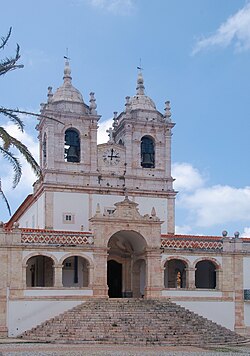
It has become a popular tourist attraction, advertising itself as a picturesque seaside village. Located on the of the Atlantic coast, it has long sandy beaches (considered by some to be among the best beaches of Portugal), crowded with tourists in the summer. The town used to be known for its traditional costumes worn by the fishermen. Their wives worn the traditional headscarf and embroidered aprons over seven flannel skirts in different colours. These dresses can still occasionally be seen.
The town consists of three sections: A Praia (along the beach), O SÃtio (an old town, on top of a cliff) and Pederneira (an old town, on a hilltop). The A Praia and O SÃtio areas are linked by the Nazaré Funicular, a funicular railway.
The original settlements were in Pederneira and in O SÃtio above the beach. They were the inhabitants' safe bases against raids by Algerian, French, English and Dutch pirates that lasted even till the beginning of the 19th century.
According to legend, the town derives its name from a small statue of the Virgin Mary, a Black Madonna, brought by a monk in the 4th century from Nazareth, Palestine to a monastery near the city of Mérida, Spain and brought to its current place in 711 by another monk accompanied by Roderic, the last Visigoth king. After their arrival at the seaside they decided to become hermits. The monk lived and died in a small already existing grotto, on top of a cliff above the sea. After his death and according to the monk wishes the king buried him in the grotto where he left, on an altar, the statue of the Black Madonna.Wikipedia
#3545
Travel and Tours / Re: Hofelina´s trip to Portugal 18-21 Oct.2010
October 24, 2010, 04:43:54 PM

Aljustrel museum where the apparitions of Mother Mary and the 3 children are documented.

Alma saying hello to our busdrivers, the guy in her left is truly gwapo!

the 3 children were baptized here.
#3546
Question and Answer / Re: How do you express your anger to your enemy?
October 24, 2010, 03:52:42 PM
I let a few days to cool down, I´m bad tempered and I could say words that are truly hurting.Then if the proper occasion comes, I confront the person.
#3547
Bible Study / Re: Nicene Creed - Profession of Faith
October 24, 2010, 03:50:58 PM
I observed that the italians prayed the Nicene Creed always, not as what we usually have in our normal Credo.
#3548
Bible Study / Re: Saints of the Day
October 24, 2010, 03:45:56 PM
St. Anthony Claret
(1807-1870)
The "spiritual father of Cuba" was a missionary, religious founder, social reformer, queen’s chaplain, writer and publisher, archbishop and refugee. He was a Spaniard whose work took him to the Canary Islands, Cuba, Madrid, Paris and to the First Vatican Council.
In his spare time as weaver and designer in the textile mills of Barcelona, he learned Latin and printing: the future priest and publisher was preparing. Ordained at 28, he was prevented by ill health from entering religious life as a Carthusian or as a Jesuit, but went on to become one of Spain’s most popular preachers.
He spent 10 years giving popular missions and retreats, always placing great emphasis on the Eucharist and devotion to the Immaculate Heart of Mary. Her rosary, it was said, was never out of his hand. At 42, beginning with five young priests, he founded a religious institute of missionaries, known today as the Claretians.
He was appointed to head the much-neglected archdiocese of Santiago in Cuba. He began its reform by almost ceaseless preaching and hearing of confessions, and suffered bitter opposition mainly for stamping out concubinage and giving instruction to black slaves. A hired assassin (whose release from prison Anthony had obtained) slashed open his face and wrist. Anthony succeeded in getting the would-be assassin’s death sentence commuted to a prison term. His solution for the misery of Cubans was family-owned farms producing a variety of foods for the family’s own needs and for the market. This invited the enmity of the vested interests who wanted everyone to work on a single cash cropâ€"sugar. Besides all his religious writings are two books he wrote in Cuba: Reflections on Agriculture and Country Delights.
He was recalled to Spain for a job he did not relishâ€"being chaplain for the queen. He went on three conditions: He would reside away from the palace, he would come only to hear the queen’s confession and instruct the children and he would be exempt from court functions. In the revolution of 1868, he fled with the queen’s party to Paris, where he preached to the Spanish colony.
All his life Anthony was interested in the Catholic press. He founded the Religious Publishing House, a major Catholic publishing venture in Spain, and wrote or published 200 books and pamphlets.
At Vatican I, where he was a staunch defender of the doctrine of infallibility, he won the admiration of his fellow bishops. Cardinal Gibbons of Baltimore remarked of him, "There goes a true saint." At the age of 63, he died in exile near the border of Spain.
Comment:
Jesus foretold that those who are truly his representatives would suffer the same persecution as he did. Besides 14 attempts on his life, Anthony had to undergo such a barrage of the ugliest slander that the very name Claret became a byword for humiliation and misfortune. The powers of evil do not easily give up their prey. No one needs to go looking for persecution. All we need to do is be sure we suffer because of our genuine faith in Christ, not for our own whims and imprudences.
Quote:
Queen Isabella II once said to Anthony, "No one tells me things as clearly and frankly as you do." Later she told her chaplain, "Everybody is always asking me for favors, but you never do. Isn't there something you would like for yourself?" He replied, "Yes, that you let me resign." The queen made no more offers.
Patron Saint of:
Savings
Weavers
#3549
Bible Study / Re: Minute Meditations
October 24, 2010, 03:43:48 PM
Finding God in Others
We are immersed in relationships and if we desire to follow the path of Jesus, we have to develop the capacity to see God in ourselves and othersâ€"all others, at all times.
We are immersed in relationships and if we desire to follow the path of Jesus, we have to develop the capacity to see God in ourselves and othersâ€"all others, at all times.
#3550
Travel and Tours / Re: Hofelina´s trip to Portugal 18-21 Oct.2010
October 24, 2010, 03:08:29 AM
donated by Hungarian immigrants


#3551
Travel and Tours / Re: Hofelina´s trip to Portugal 18-21 Oct.2010
October 24, 2010, 03:00:09 AM

We have to stop and wait since there are lots of visitors/pilgrims from other countries also.

#3552
Travel and Tours / Re: Hofelina´s trip to Portugal 18-21 Oct.2010
October 24, 2010, 02:56:46 AM
Via Sacra (Way of the Cross) Fatima, Portugal
This is also the road that leads to the homes of Jacinta and Francisco Marto and Lucia Marto.

Olive trees are everywhere

The blessed Virgin Mary appeared on this placed marked by this monument
#3553
Travel and Tours / Re: Hofelina´s trip to Portugal 18-21 Oct.2010
October 24, 2010, 02:53:29 AM
This is some view of Leira, Portugal.


telephone booth
telephone booth
#3554
Travel and Tours / Re: Hofelina´s trip to Portugal 18-21 Oct.2010
October 24, 2010, 02:51:22 AM
This site is a cultural heritage, Mosteiro Santa Maria da Vitória, more commonly known as the Batalha Monastery, is a Dominican convent in the Portuguese town of Batalha, in the District of Leiria, Portugal. It is one of the best and original examples of Late Gothic architecture in Portugal, intermingled with the Manueline style. It amazes the onlooker with its profusion of gables, spires, pinnacles and buttresses. It has become a symbol of national pride.

The convent was built to thank the Virgin Mary for the Portuguese victory over the Castilians in the battle of Aljubarrota in 1385, fulfilling a promise of King Dom João I. The battle put an end to the 1383-1385 crisis.Wikipedia.
#3555
Travel and Tours / Re: Hofelina´s trip to Portugal 18-21 Oct.2010
October 24, 2010, 02:48:23 AM
our group picture wala magkandi-mao kay ang mga italyano yabag pa kay sa mga pinoy.

we did it this time!!!

kining kadako sa courtyard mapono sa mga tawo kon adunay misa nga dako, kini ga-atubang sa krus ni Heart of Jesus monument, sa kilid adunay mga gripo sa tubig, lami im-non.
#3556
Travel and Tours / Re: Hofelina´s trip to Portugal 18-21 Oct.2010
October 24, 2010, 02:38:53 AM
There are lots of huge papal monuments who have contributed to the propagation of Fatima.

Here is a meditation center which could house 10,000 pilgrims. In the middle is an altar and a piece of stone which was a part of Jesus´tomb, donated by Israel to Fatima.


Church of the Holy Trinity
The first thing that strikes you about the Church of the Most Holy Trinity is its modern look and this immediately draws different reactions from visitors. Traditionalists and people who prefer the rich, ornate architectural styles may have problem liking this modern design.
Here is a meditation center which could house 10,000 pilgrims. In the middle is an altar and a piece of stone which was a part of Jesus´tomb, donated by Israel to Fatima.
Church of the Holy Trinity
The first thing that strikes you about the Church of the Most Holy Trinity is its modern look and this immediately draws different reactions from visitors. Traditionalists and people who prefer the rich, ornate architectural styles may have problem liking this modern design.
#3557
Travel and Tours / Re: Hofelina´s trip to Portugal 18-21 Oct.2010
October 23, 2010, 10:16:03 PM
The procession began.

Filipino pilgrims from Quezon province.

Manay lighted candles for Tubag Bohol members esp. Lorenzo, Ayessa, Matt Marginet, Bol-anon friends and families.
#3558
Travel and Tours / Re: Hofelina´s trip to Portugal 18-21 Oct.2010
October 23, 2010, 10:12:07 PM
our first dinner in our hotel served with a local portugese red wine. They have excellent wines which was brought by early settlers from Sicily. The vineyard are simple and short, not more than a meter.

human panihapon, adunay rosary sa Fatima 9.45 sa gabii unya prosesyon busa nangandam nami ug kandila.

As the rosary is being recited, it is lead by different pilgrims, in this evening the 5th mystery was recited by Fr Jerry Juarez,he is from Sariraya, Quezon, the theme of meditation is about the drug addiction of Filipino youth. This is really a pressing problem, the hard fact was that most parents are abroad to earn money and children are not well taken care of and abusing themselves with illegal drugs. After his Our Father came 10 Hail Mary´s ( a Filipino delegate from Quezon too)prayed in tagalog.
#3559
Travel and Tours / Re: Hofelina´s trip to Portugal 18-21 Oct.2010
October 23, 2010, 10:00:32 PM
nia man mi nga habog nga lugar, sa ubos ang mga kabalayan, morag sa LIbis sa Quezon City.

we are bound to go and to return to Fatima, these 2 buses are our vehicle during our stay in Portugal.
#3560
Travel and Tours / Re: Hofelina´s trip to Portugal 18-21 Oct.2010
October 23, 2010, 09:55:22 PM
Serado na pag-abot namo wala namokasolod, namalit nalang mi ug mga prutas sama sa ubas, mansanas parsimmons, ug olives.

#3561
Travel and Tours / Re: Hofelina´s trip to Portugal 18-21 Oct.2010
October 23, 2010, 09:53:08 PM

mao kini ang among destinasyon, Known by many, the warriors of Knights of Templar were controversial and very powerful. Though their oath swore them to live in poverty, many gifts and donations were bestowed upon the order and were not refused. The resources were used to build on land given to them by various people. They became extremely wealthy and so powerful that they came to demise after being accused of heresy.
The Convent of Christ in Tomar is the combination of a castle and a convent used in Knights Templar history. The convent was added later as an extension to the castle, which began construction in 1160. The history of the Convent of Christ in Tomar denotes that the land on which the castle was built and had been given to the Order of the Knights of Templar in exchange for their support against the Moors.
#3562
Travel and Tours / Re: Hofelina´s trip to Portugal 18-21 Oct.2010
October 23, 2010, 09:48:35 PM hotel
check-in and everyone wants to rest and make oneself fresh.

My room I shared with Rexie Egagamao (also Bol-anon).

This is our first field trip to castle of Christ. As you see the country is hilly and thinly populated. Fatima´s population is 140 persons in one square kilometer.
#3563
Travel and Tours / Re: Hofelina´s trip to Portugal 18-21 Oct.2010
October 23, 2010, 09:41:18 PM
after an hour trip we stopped in a restaurant for lunch, this is now in Porto, Portugal.

nanggilinyami, unya, lisod makasinabot kay ang mga waitress,dile kabalo ug ingles apan fluent ug italian.

mao kine ang akong gipili, morag arroz ala valenciana, mora pod ug paella. Ang bugas piliton, adunay smoked ham, sausage nga may dugo, chicken meat ug pepper, ang akong imnonon gikan sa apple apan tam-is jamo, angay ni siya i-binti ug kwatro kantos.
#3564
Loon - Bohol / Re: LOON MAKES HISTORY WITH GALEON ANDALUCIA
October 23, 2010, 09:22:23 PM
Palihug Doy ug litrato aron makakita mi dinhe, salamat daan!
#3565
Travel and Tours / Re: Hofelina´s trip to Portugal 18-21 Oct.2010
October 23, 2010, 05:08:13 PM
At last to Ryan Air ( Irish company for cheap flights).

Arrival in Porto International Airport one of the biggest and best in Europe.

Police is present, daghang bajeng pulis, mga gwapa apan dili mo smile.
#3566
Travel and Tours / Re: Hofelina´s trip to Portugal 18-21 Oct.2010
October 23, 2010, 05:03:06 PM

On our way for check-in, one luggage maximum 10 kilos as handcarry.

Waiting is tough since cosmetics and liquids more than 100 ml are all confiscated.

Lopena was stopped to sort out her cosmetics to be threwn in the bin.
#3567
Travel and Tours / Hofelina´s trip to Portugal 18-21 Oct.2010
October 23, 2010, 03:53:22 PM
The Italian community in Wuppertal accommodated 9 Pinoys to join the pilgrimage to Fatima, Portugal.
The trip started at 3.45 early in the morning, so most of us were not able to sleep while they came from Oberhausen (1 hour travel) and Recklinghausen (35 minutes by car). We were almost 80 persons. Kon sabaan ang mga Pinoy mas ang mga italyano namong koyog kay kasagaran mga Sicilians ang ilang kagikan.

arrival at Frankfurt/Hahn the starting point of Ryan Air.

We are all excited like kids, Manay Tess in brown jacket.
The trip started at 3.45 early in the morning, so most of us were not able to sleep while they came from Oberhausen (1 hour travel) and Recklinghausen (35 minutes by car). We were almost 80 persons. Kon sabaan ang mga Pinoy mas ang mga italyano namong koyog kay kasagaran mga Sicilians ang ilang kagikan.
arrival at Frankfurt/Hahn the starting point of Ryan Air.
We are all excited like kids, Manay Tess in brown jacket.
#3568
Travel and Tours / Re: Sleeper Bus from Isarog Lines
October 23, 2010, 03:46:45 PM
my bus in Fatima, Portugal looked like this.

#3569
Bible Study / Re: Saints of the Day
October 23, 2010, 03:42:59 PM
St. John of Capistrano
(1386-1456)
It has been said the Christian saints are the world’s greatest optimists. Not blind to the existence and consequences of evil, they base their confidence on the power of Christ’s redemption. The power of conversion through Christ extends not only to sinful people but also to calamitous events.
Imagine being born in the fourteenth century. One-third of the population and nearly 40 percent of the clergy were wiped out by the bubonic plague. The Western Schism split the Church with two or three claimants to the Holy See at one time. England and France were at war. The city-states of Italy were constantly in conflict. No wonder that gloom dominated the spirit of the culture and the times.
John Capistrano was born in 1386. His education was thorough. His talents and success were great. When he was 26 he was made governor of Perugia. Imprisoned after a battle against the Malatestas, he resolved to change his way of life completely. At the age of 30 he entered the Franciscan novitiate and was ordained a priest four years later.
His preaching attracted great throngs at a time of religious apathy and confusion. He and 12 Franciscan brethren were received in the countries of central Europe as angels of God. They were instrumental in reviving a dying faith and devotion.
The Franciscan Order itself was in turmoil over the interpretation and observance of the Rule of St. Francis. Through John’s tireless efforts and his expertise in law, the heretical Fraticelli were suppressed and the "Spirituals" were freed from interference in their stricter observance.
He helped bring about a reunion with the Greek and Armenian Churches, unfortunately only a brief arrangement.
When the Turks captured Constantinople in 1453, he was commissioned to preach a crusade for the defense of Europe. Gaining little response in Bavaria and Austria, he decided to concentrate his efforts in Hungary. He led the army to Belgrade. Under the great General John Junyadi, they gained an overwhelming victory, and the siege of Belgrade was lifted. Worn out by his superhuman efforts, Capistrano was an easy prey to the infection bred by the refuse of battle. He died October 23, 1456.
Comment:
John Hofer, a biographer of John Capistrano, recalls a Brussels organization named after the saint. Seeking to solve life problems in a fully Christian spirit, its motto was: "Initiative, Organization, Activity." These three words characterized John's life. He was not one to sit around, ever. His deep Christian optimism drove him to battle problems at all levels with the confidence engendered by a deep faith in Christ.
Quote:
On the saint's tomb in the Austrian town of Villach, the governor had this message inscribed: "This tomb holds John, by birth of Capistrano, a man worthy of all praise, defender and promoter of the faith, guardian of the Church, zealous protector of his Order, an ornament to all the world, lover of truth and religious justice, mirror of life, surest guide in doctrine; praised by countless tongues, he reigns blessed in heaven." That is a fitting epitaph for a real and successful optimist.
Patron Saint of:
Judges
#3570
Bible Study / Re: Minute Meditations
October 23, 2010, 03:42:09 PM
Inner Reflections
This is one aspect of what it means to be a body-person: I should never allow the spiritual dimension of my lifeâ€"my interior selfâ€"to be split or unhinged from my bodily actions.
This is one aspect of what it means to be a body-person: I should never allow the spiritual dimension of my lifeâ€"my interior selfâ€"to be split or unhinged from my bodily actions.
#3571
Youtube Replay / Re: One Flew Over the Cuckoo's Nest (1975)
October 22, 2010, 09:38:50 PM
This is a cult film, one of my favorites!
#3572
Help & Support / Re: Facebook "Like" Now Available in Tubag Bohol
October 22, 2010, 03:22:33 PM
Salamat Mike, abi nimo mas naka una kapa sa Facebook. We love you for your hard work to make our cyber friendship colorful.
#3573
Bible Study / Re: Saints of the Day
October 22, 2010, 03:17:39 PM
VATICAN CITY (CNS) -- Pope Benedict XVI proclaimed six new saints, including an Australian nun and a Canadian brother, calling them "shining examples" of holiness and the power of prayer.
Thousands of pilgrims from Australia applauded and waved their national flags after the pope pronounced the formula of canonization Oct. 17 in St. Peter's Square for Blessed Mother Mary MacKillop, who educated poor children in the Australian outback in the late 19th century. She became the country's first saint.
In his homily, Pope Benedict said St. MacKillop, 1842-1909, was a model of "zeal, perseverance and prayer" as she dedicated herself to the education of the poor in the difficult territory of rural Australia, inspiring other women to join her in the country's first community of religious women.
"She attended to the needs of each young person entrusted to her, without regard for station or wealth, providing both intellectual and spiritual formation," he said. Her feast day is celebrated Aug. 8.
Canadians cheered the canonization of Blessed Andre Bessette, 1845-1937, a doorman known for his devotional practices and his healing touch. He became known as the "Miracle Man of Montreal."
The pope said St. Bessette "showed boundless charity and did everything to soothe the despair of those who confided in him." Although he had little instruction, he "understood what was essential to the faith" and had an intense prayer life, the pope said.
"For him, everything spoke of God and his presence," the pope said. Thanks to this simplicity, St. Bessette led many people to God, he added.
St. Bessette "lived the beatitude of the pure of heart," the pope said. "May the example of Brother Andre inspire Canadian Christian life!"
Relics of the six saints were brought to the altar during the two-hour liturgy. Tapestry portraits of the newly canonized hung from the facade of St. Peter's Basilica behind the papal altar, and many pilgrims carried their own personal pictures of the saints.
The others canonized were:
-- St. Camilla Battista Varano, 1458-1524, the illegitimate daughter of an Italian nobleman, had to overcome her father's initial objections to enter the convent of the Poor Clares. Known for her mystical experiences during prayer, she died in an outbreak of the plague.
-- St. Stanislaw Soltys, 1433-1489, who devoted his life to caring for the poor in his native Krakow, Poland. Famed as a preacher and confessor, he was known as the "Apostle of the Eucharist" for his taking Communion to the sick and lonely.
-- St. Giulia Salzano, 1846-1929, taught catechism to schoolchildren near Naples, Italy, and later founded the Catechetical Sisters of the Sacred Heart of Jesus to continue her work, which offered religious education to children of all ages, to their mothers and to regular laborers.
-- St. Juana Cipitria Barriola, 1845-1912, was a champion of education for girls and young women in her native Spain. Known in some countries as Mother Candida Maria de Jesus, she founded the Daughters of Jesus with five other young women. She ran a special school on Sundays for girls who were employed as domestics, because Sunday was their only day off.
In his homily, the pope said the new saints exemplified the effectiveness of prayer as an expression of faith.
"Sometimes we get tired of praying, we have the impression that prayer is not very useful in life, that it is not terribly effective. So we are tempted to dedicate ourselves to activity, to using all human means to achieve our aims, and without turning to God," he said.
The canonization brought some 8,000 Australian pilgrims to Rome, where Australian flags waved in abundance during the papal liturgy.
Peter Haynes, a 26-year-old Australian living in England, came to Rome for the Mass. He studied St. MacKillop in primary school and was impressed by the fact that "she started from nothing and made something out of it. And her legacy continues today. That's something."
St. MacKillop, the oldest of eight children of Scottish immigrants to Australia, began at the age of 24 to work with a priest to provide free education to the rural poor of the country. Three years later, there were 60 sisters working in schools, orphanages and women's shelters.
The nuns were also committed to following poor farmworkers, miners and other laborers into remote areas of the country to educate their children.
Local church officials, however, disapproved of the sisters living in tiny, isolated communities--sometimes only two to a hut--frequently cut off from the sacraments in the remote Australian outback. She was even briefly excommunicated by the local bishops, who disbanded her order, the Sisters of St. Joseph of the Sacred Heart. But within a few months, the bishop lifted his censure, and a church commission cleared the sisters of all wrongdoing.
In 1901, she suffered a stroke during a trip to New Zealand, and her health declined until her death in 1909.
Canadians in the square spoke warmly of St. Bessette; some of the pilgrims even had personal connections to him.
Diane Guillemette of Montreal said that when her mother was 16 years old "she had a problem with her ear and she went to Brother Andre and he healed her." Guillemette called St. Bessette "an example of patience, humility and love of work."
One of 12 children, St. Bessette suffered from a chronic stomach ailment that kept him out of school. His father and mother died when he was young.
When he entered the Congregation of Holy Cross in 1870, his childhood parish priest, Father Andre Provencal, sent a letter to the novice master saying, "I am sending a saint to your congregation."
St. Bessette served as the doorman of Notre Dame College, the community's school in Montreal, for 40 years. His devotion to St. Joseph and his reputation for healing attracted thousands of people, and he began to be known as a miracle worker. When he died at the age of 91, a million people came to pay homage to him, and many remain dedicated to his memory today. His feast day is Jan. 6.
ps
If you notice, if this thread is opened, Blessed Bessette is the first posting, he is now canonized, hence a saint through the grace of the Lord.
#3574
Bible Study / Re: Saints of the Day
October 22, 2010, 03:14:00 PM
St. Peter of Alcantara
(1499-1562)
Peter was a contemporary of well-known 16th-century Spanish saints, including Ignatius of Loyola and John of the Cross. He served as confessor to St. Teresa of Avila. Church reform was a major issue in Peter’s day, and he directed most of his energies toward that end. His death came one year before the Council of Trent ended.
Born into a noble family (his father was the governor of Alcantara in Spain), Peter studied law at Salamanca University and, at 16, joined the so-called Observant Franciscans (also known as the discalced, or barefoot, friars). While he practiced many penances, he also demonstrated abilities which were soon recognized. He was named the superior of a new house even before his ordination as a priest; at the age of 39, he was elected provincial; he was a very successful preacher. Still, he was not above washing dishes and cutting wood for the friars. He did not seek attention; indeed, he preferred solitude.
Peter’s penitential side was evident when it came to food and clothing. It is said that he slept only 90 minutes each night. While others talked about Church reform, Peter’s reform began with himself. His patience was so great that a proverb arose: "To bear such an insult one must have the patience of Peter of Alcantara."
In 1554, Peter, having received permission, formed a group of Franciscans who followed the Rule of St. Francis with even greater rigor. These friars were known as Alcantarines. Some of the Spanish friars who came to North and South America in the 16th, 17th and 18th centuries were members of this group. At the end of the 19th century, the Alcantarines were joined with other Observant friars to form the Order of Friars Minor.
As spiritual director to St. Teresa, Peter encouraged her in promoting the Carmelite reform. His preaching brought many people to religious life, especially to the Secular Franciscan Order, the friars and the Poor Clares.
He was canonized in 1669.
Comment:
Poverty was a means and not an end for Peter. The goal was following Christ in ever greater purity of heart. Whatever obstructed that path could be eliminated with no real loss.
The philosophy of our consumer ageâ€"you are worth what you ownâ€"may find Peter of Alcantara’s approach severe. Ultimately his approach is life-giving while consumerism is deadly.
Quote:
"I do not praise poverty for poverty's sake; I praise only that poverty which we patiently endure for the love of our crucified Redeemer and I consider this far more desirable than the poverty we undertake for the sake of poverty itself; for if I thought or believed otherwise, I would not seem to be firmly grounded in faith" (Letter of Peter to Teresa of Avila).
#3575
Bible Study / Re: Minute Meditations
October 22, 2010, 03:12:01 PM
Sacraments of Persons
We are not to be afraid of, disregard, or elevate our bodies; rather we our to embrace them for what they are: “sacraments of persons." Our bodies reveal our inner life; our bodies reveal us, just as Jesus in his own incarnate body revealed himself.
We are not to be afraid of, disregard, or elevate our bodies; rather we our to embrace them for what they are: “sacraments of persons." Our bodies reveal our inner life; our bodies reveal us, just as Jesus in his own incarnate body revealed himself.
#3576
European Union EU / Re: Saudi Arabia Prince Sentenced to Life in Jail for Murder
October 22, 2010, 06:30:21 AM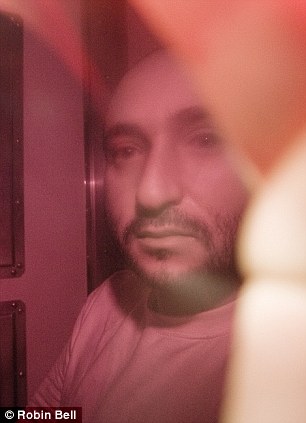
mao kini ang mananap nga b***t!
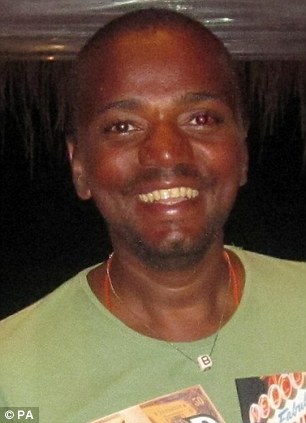
ang makalolo-oy nga biktima
daily mail photos
#3577
Bible Study / Re: Saints of the Day
October 22, 2010, 05:49:12 AM
St. Hilarion
(c. 291-371)
Despite his best efforts to live in prayer and solitude, today’s saint found it difficult to achieve his deepest desire. People were naturally drawn to Hilarion as a source of spiritual wisdom and peace. He had reached such fame by the time of his death that his body had to be secretly removed so that a shrine would not be built in his honor. Instead, he was buried in his home village.
St. Hilarion the Great, as he is sometimes called, was born in Palestine. After his conversion to Christianity he spent some time with St. Anthony of Egypt, another holy man drawn to solitude. Hilarion lived a life of hardship and simplicity in the desert, where he also experienced spiritual dryness that included temptations to despair. At the same time, miracles were attributed to him.
As his fame grew, a small group of disciples wanted to follow Hilarion. He began a series of journeys to find a place where he could live away from the world. He finally settled on Cyprus, where he died in 371 at about age 80.
Hilarion is celebrated as the founder of monasticism in Palestine. Much of his fame flows from the biography of him written by St. Jerome.
#3578
Bible Study / Re: Minute Meditations
October 22, 2010, 05:47:28 AM
The Real Man
The real man is not massively muscular and well-groomed; he is bloody and weak on a cross.
The real man is not massively muscular and well-groomed; he is bloody and weak on a cross.
#3579
Bible Study / Re: Saints of the Day
October 18, 2010, 09:01:35 AM
Luke, the writer of the Gospel and the Acts of the Apostles, has been identified with St. Paul's "Luke, the beloved physician" (Colossians 4:14). We know few other facts about Luke's life from Scripture and from early Church historians.
It is believed that Luke was born a Greek and a Gentile. In Colossians 10-14 speaks of those friends who are with him. He first mentions all those "of the circumcision" -- in other words, Jews -- and he does not include Luke in this group. Luke's gospel shows special sensitivity to evangelizing Gentiles. It is only in his gospel that we hear the parable of the Good Samaritan, that we hear Jesus praising the faith of Gentiles such as the widow of Zarephath and Naaman the Syrian (Lk.4:25-27), and that we hear the story of the one grateful leper who is a Samaritan (Lk.17:11-19). According to the early Church historian Eusebius Luke was born at Antioch in Syria.
In our day, it would be easy to assume that someone who was a doctor was rich, but scholars have argued that Luke might have been born a slave. It was not uncommon for families to educate slaves in medicine so that they would have a resident family physician. Not only do we have Paul's word, but Eusebius, Saint Jerome, Saint Irenaeus and Caius, a second-century writer, all refer to Luke as a physician.
We have to go to Acts to follow the trail of Luke's Christian ministry. We know nothing about his conversion but looking at the language of Acts we can see where he joined Saint Paul. The story of the Acts is written in the third person, as an historian recording facts, up until the sixteenth chapter. In Acts 16:8-9 we hear of Paul's company "So, passing by Mysia, they went down to Troas. During the night Paul had a vision: there stood a man of Macedonia pleading with him and saying, 'Come over to Macedonia and help us.' " Then suddenly in 16:10 "they" becomes "we": "When he had seen the vision, we immediately tried to cross over to Macedonia, being convinced that God had called us to proclaim the good news to them."
So Luke first joined Paul's company at Troas at about the year 51 and accompanied him into Macedonia where they traveled first to Samothrace, Neapolis, and finally Philippi. Luke then switches back to the third person which seems to indicate he was not thrown into prison with Paul and that when Paul left Philippi Luke stayed behind to encourage the Church there. Seven years passed before Paul returned to the area on his third missionary journey. In Acts 20:5, the switch to "we" tells us that Luke has left Philippi to rejoin Paul in Troas in 58 where they first met up. They traveled together through Miletus, Tyre, Caesarea, to Jerusalem.
Luke is the loyal comrade who stays with Paul when he is imprisoned in Rome about the year 61: "Epaphras, my fellow prisoner in Christ Jesus, sends greetings to you, and so do Mark, Aristarchus, Demas, and Luke, my fellow workers" (Philemon 24). And after everyone else deserts Paul in his final imprisonment and sufferings, it is Luke who remains with Paul to the end: "Only Luke is with me" (2 Timothy 4:11).
Luke's inspiration and information for his Gospel and Acts came from his close association with Paul and his companions as he explains in his introduction to the Gospel: "Since many have undertaken to set down an orderly account of the events that have been fulfilled among us, just as they were handed on to us by those who from the beginning were eyewitnesses and servants of the word, I too decided, after investigating everything carefully from the very first, to write an orderly account for you, most excellent Theophilus" (Luke 1:1-3).
Luke's unique perspective on Jesus can be seen in the six miracles and eighteen parables not found in the other gospels. Luke's is the gospel of the poor and of social justice. He is the one who tells the story of Lazarus and the Rich Man who ignored him. Luke is the one who uses "Blessed are the poor" instead of "Blessed are the poor in spirit" in the beatitudes. Only in Luke's gospel do we hear Mary 's Magnificat where she proclaims that God "has brought down the powerful from their thrones, and lifted up the lowly; he has filled the hungry with good things, and sent the rich away empty" (Luke 1:52-53).
Luke also has a special connection with the women in Jesus' life, especially Mary. It is only in Luke's gospel that we hear the story of the Annunciation, Mary's visit to Elizabeth including the Magnificat, the Presentation, and the story of Jesus' disappearance in Jerusalem. It is Luke that we have to thank for the Scriptural parts of the Hail Mary: "Hail Mary full of grace" spoken at the Annunciation and "Blessed are you and blessed is the fruit of your womb Jesus" spoken by her cousin Elizabeth.
Forgiveness and God's mercy to sinners is also of first importance to Luke. Only in Luke do we hear the story of the Prodigal Son welcomed back by the overjoyed father. Only in Luke do we hear the story of the forgiven woman disrupting the feast by washing Jesus' feet with her tears. Throughout Luke's gospel, Jesus takes the side of the sinner who wants to return to God's mercy.
Reading Luke's gospel gives a good idea of his character as one who loved the poor, who wanted the door to God's kingdom opened to all, who respected women, and who saw hope in God's mercy for everyone.
The reports of Luke's life after Paul's death are conflicting. Some early writers claim he was martyred, others say he lived a long life. Some say he preached in Greece, others in Gaul. The earliest tradition we have says that he died at 84 Boeotia after settling in Greece to write his Gospel.
A tradition that Luke was a painter seems to have no basis in fact. Several images of Mary appeared in later centuries claiming him as a painter but these claims were proved false. Because of this tradition, however, he is considered a patron of painters of pictures and is often portrayed as painting pictures of Mary.
He is often shown with an ox or a calf because these are the symbols of sacrifice -- the sacrifice Jesus made for all the world.
Luke is the patron of physicians and surgeons.
#3580
Bible Study / Re: Minute Meditations
October 18, 2010, 09:00:46 AM
Our Bodies are Gifts
Just as the body reveals the person, and as our bodies were made to be gifts to others by marriage or celibate virginity, so am I called to die to myself and live now completely and forever for others.
Just as the body reveals the person, and as our bodies were made to be gifts to others by marriage or celibate virginity, so am I called to die to myself and live now completely and forever for others.
#3581
Bible Study / Re: Saints of the Day
October 17, 2010, 03:33:36 PM
St. Ignatius of Antioch
(d. 107?)
Born in Syria, Ignatius converted to Christianity and eventually became bishop of Antioch. In the year 107, Emperor Trajan visited Antioch and forced the Christians there to choose between death and apostasy. Ignatius would not deny Christ and thus was condemned to be put to death in Rome.
Ignatius is well known for the seven letters he wrote on the long journey from Antioch to Rome. Five of these letters are to Churches in Asia Minor; they urge the Christians there to remain faithful to God and to obey their superiors. He warns them against heretical doctrines, providing them with the solid truths of the Christian faith.
The sixth letter was to Polycarp, bishop of Smyrna, who was later martyred for the faith. The final letter begs the Christians in Rome not to try to stop his martyrdom. "The only thing I ask of you is to allow me to offer the libation of my blood to God. I am the wheat of the Lord; may I be ground by the teeth of the beasts to become the immaculate bread of Christ."
Ignatius bravely met the lions in the Circus Maximus.
Comment:
Ignatius's great concern was for the unity and order of the Church. Even greater was his willingness to suffer martyrdom rather than deny his Lord Jesus Christ. Not to his own suffering did Ignatius draw attention, but to the love of God which strengthened him. He knew the price of commitment and would not deny Christ, even to save his own life.
Quote:
"I greet you from Smyrna together with the Churches of God present here with me. They comfort me in every way, both in body and in soul. My chains, which I carry about on me for Jesus Christ, begging that I may happily make my way to God, exhort you: persevere in your concord and in your community prayers" (Ignatius of Antioch, Letter to the Church at Tralles).
#3582
Bible Study / Re: Minute Meditations
October 17, 2010, 03:33:00 PM
Contemplation in Christ
No one has ever devoted himself to the contemplation of the face of Christ as faithfully as Mary. With Mary by my side, let me contemplate the face of Christ--in the Holy Sacrifice of the Mass, in Adoration, in every person I meet.
No one has ever devoted himself to the contemplation of the face of Christ as faithfully as Mary. With Mary by my side, let me contemplate the face of Christ--in the Holy Sacrifice of the Mass, in Adoration, in every person I meet.
#3583
Talk of the Town / Re: SMS Scam in Bohol
October 17, 2010, 03:31:38 PM
nagpapalit ko ug roaming card smart. Dayon akong gi-ingnan nga kini i-activitate bag-o ipadala nako. Pag-abot nako sa Gemany walay,rection ug ako naningkamot pag sms sa iya, bantog nga walay feedback kay gi-gatasan na diay siya. Nalipat sab si Consing ug basa sa akong email nga nagsugid ang roaming card walay epek. The money I gave her for her salary the whole year is gone. She is a very trusted person and I really pity her for being so gullible and naive. I´m sharing this expereince to you especially those who are wishing to buy roaming pack to be careful, please be warned.
#3584
Talk of the Town / SMS Scam in Bohol
October 17, 2010, 04:19:16 AM
I read an email from my housekeeper and to my amazement she was a victim of a scam. She is penniless and very confused at the moment, I don´t know how to handle the situation but I feel that everyone especially the Bol-anons be informed of this trick;
Dear bosing,
bosing dele diay ikaw ang nagpa lod na ilad diay ko kay ning ingon man god nga
mag palod ka kay imong ibaligya diha maong nitoo pod ko kay kaingon ko ug ikaw
gasogo nako .bosing kinsa man ang naa sa gawas nga imong gitagaan sa nako nimo
dere sorry god kaayo kon deli ikaw ang nagsogo ug pa lod ug roming kay nailad ko
gahapon 4,500 ang napa lod nako nga romimg card tag 300 ang usa. wala na god koy
kuarta bosing naka baylo pa gayod ako kay gi sogo man ko ug pabaylo ning sogot
lang ko kay kaingon ko ug ikaw ang nag sogo kay ni ingon man siya nga ugma
magpadal kono sa bayad.namogos man siya nga palod ug 300 gabii kay motawag kono
siya akong gibalibaran nga wala na akoy kabayloan maong nagtoo ko nga deli ikaw
akong gitxkan wala gayod mobalos.
ang iyang no; mao ni 09308295515 nagool god ko kay wala na gayod koy kuarta kay
pag uli nimo namayad ko sa akong mag utang nailad pa godko.hasta ang imong
gibilin para sa lod nimo na apil kay kaingon ko ikaw gasogo sorry god kaayo
bosing.
imong tig
conching romy
Mike Ligalig knew my housekeeper well and I warn you people there are lots of evil ideas simply to pump money out of trust.
#3585
Bible Study / Re: Saints of the Day
October 16, 2010, 07:13:38 AM
St. Gerard Majella,
religious, is the patron of expectant mothers. He was born at Muro, Italy, in 1726 and joined the Redemptorists at the age of 23, becoming a professed lay brother in 1752. He served as sacristan, gardener, porter, infirmarian, and tailor. However, because of his great piety, extraordinary wisdom, and his gift of reading consciences, he was permitted to counsel communities of religious women.
This humble servant of God also had the faculties of levitation and bi-location associated with certain mystics. His charity, obedience, and selfless service as well as his ceaseless mortification for Christ, made him the perfect model of lay brothers. He was afflicted with tuberculosis and died in 1755 at the age of twenty-nine.
This great saint is invoked as a patron of expectant mothers as a result of a miracle effected through his prayers for a woman in labor.
Prayer: O Great Saint Gerard, beloved servant of Jesus Christ, perfect imitator of your meek and humble Savior, and devoted Child of the Mother of God: enkindle within my heart one spark of that heavenly fire of charity which glowed in your heart and made you an angel of love. O glorious Saint Gerard, because when falsely accused of crime, you did bear, like your Divine master, without murmur or complaint, the calumnies of wicked men, you have been raised up by God as the Patron and Protector of expectant mothers. Preserve me from danger and from the excessive pains accompanying childbirth, and shield the child which I now carry, that it may see the light of day and receive the lustral waters of baptism through Jesus Christ our Lord. Amen.
#3586
Bible Study / Re: Minute Meditations
October 16, 2010, 07:11:17 AM
The Face of Christ
To recite the rosary is nothing other than to contemplate with Mary the face of Christ. Help me find time today, Lord, to sit in silence and contemplate your face. Mary, pray with me and for me.
To recite the rosary is nothing other than to contemplate with Mary the face of Christ. Help me find time today, Lord, to sit in silence and contemplate your face. Mary, pray with me and for me.
#3587
Anonymous Diary Blog / Re: Are You a Member of Fraternity/Sorority?
October 16, 2010, 07:09:49 AM
Alpha Sigma Phi!
#3588
Bible Study / Re: Saints of the Day
October 15, 2010, 02:40:38 PM
St. Teresa of Avila
(1515-1582)
Teresa lived in an age of exploration as well as political, social and religious upheaval. It was the 16th century, a time of turmoil and reform. She was born before the Protestant Reformation and died almost 20 years after the closing of the Council of Trent.
The gift of God to Teresa in and through which she became holy and left her mark on the Church and the world is threefold: She was a woman; she was a contemplative; she was an active reformer.
As a woman, Teresa stood on her own two feet, even in the man's world of her time. She was "her own woman," entering the Carmelites despite strong opposition from her father. She is a person wrapped not so much in silence as in mystery. Beautiful, talented, outgoing, adaptable, affectionate, courageous, enthusiastic, she was totally human. Like Jesus, she was a mystery of paradoxes: wise, yet practical; intelligent, yet much in tune with her experience; a mystic, yet an energetic reformer. A holy woman, a womanly woman.
Teresa was a woman "for God," a woman of prayer, discipline and compassion. Her heart belonged to God. Her ongoing conversion was an arduous lifelong struggle, involving ongoing purification and suffering. She was misunderstood, misjudged, opposed in her efforts at reform. Yet she struggled on, courageous and faithful; she struggled with her own mediocrity, her illness, her opposition. And in the midst of all this she clung to God in life and in prayer. Her writings on prayer and contemplation are drawn from her experience: powerful, practical and graceful. A woman of prayer; a woman for God.
Teresa was a woman "for others." Though a contemplative, she spent much of her time and energy seeking to reform herself and the Carmelites, to lead them back to the full observance of the primitive Rule. She founded over a half-dozen new monasteries. She traveled, wrote, foughtâ€"always to renew, to reform. In her self, in her prayer, in her life, in her efforts to reform, in all the people she touched, she was a woman for others, a woman who inspired and gave life.
Her writings, especially the Way of Perfection and The Interior Castle, have helped generations of believers.
In 1970, the Church gave her the title she had long held in the popular mind: doctor of the Church. She and St. Catherine of Siena were the first women so honored.
Comment:
Ours is a time of turmoil, a time of reform and a time of liberation. Modern women have in Teresa a challenging example. Promoters of renewal, promoters of prayer, all have in Teresa a woman to reckon with, one whom they can admire and imitate.
Quote:
Teresa knew well the continued presence and value of suffering (physical illness, opposition to reform, difficulties in prayer), but she grew to be able to embrace suffering, even desire it: "Lord, either to suffer or to die." Toward the end of her life she exclaimed: "Oh, my Lord! How true it is that whoever works for you is paid in troubles! And what a precious price to those who love you if we understand its value."
Patron Saint of:
Headaches
#3589
Bible Study / Re: Minute Meditations
October 15, 2010, 02:39:36 PM
Greatest Honor
To serve Mary and to be her courtier is the greatest honor one can possibly possess, for to serve the Queen of Heaven is already to reign there, and to live under her commands is more than to govern.
To serve Mary and to be her courtier is the greatest honor one can possibly possess, for to serve the Queen of Heaven is already to reign there, and to live under her commands is more than to govern.
#3590
Photos Unlimited / Big holes!
October 14, 2010, 04:57:16 PM
Kimberley Big Hole, South Africa. Apparently the largest ever hand-dug excavation inthe world.
This 1,097 meter deep mine yielded over three tons of diamonds before being closed.

Glory Hole, Monticello Dam, California. A glory hole is used when a dam is at full capacity and
water needs to be drained from the reservoir. It is the largest spillway of this type in the world. It consumes 14,400 cubic feet of water every second.

Great Blue Hole, Belize. This incredible geographical phenomenon known as a blue hole is
situated 60 miles off the mainland of Belize. There are numerous blue holes around the world,
but none as stunning as this one.

Sinkhole in Guatemala. These photos are of a sinkhole that occurred early this year in Guatemala.
The hole swallowed two dozen homes and killed at least three people.

Rat Hole, RAT HOLE. The House of Representatives Building or the Batasang Pambansa in Batasan Hills, Quezon City. It is capable of swallowing billions and billions of pesos annually. The money that falls into this hole is never heard from again. It is reputed to be filled with at least 270 ***holes.
#3591
Bible Study / Re: Saints of the Day
October 14, 2010, 02:28:37 PM
St. Callistus I
(d. 223?)
The most reliable information about this saint comes from his enemy St. Hippolytus, an early antipope, later a martyr for the Church. A negative principle is used: If some worse things had happened, Hippolytus would surely have mentioned them.
Callistus was a slave in the imperial Roman household. Put in charge of the bank by his master, he lost the money deposited, fled and was caught. After serving time for a while, he was released to make some attempt to recover the money. Apparently he carried his zeal too far, being arrested for brawling in a Jewish synagogue. This time he was condemned to work in the mines of Sardinia. He was released through the influence of the emperor's mistress and lived at Anzio (site of a famous World War II beachhead).
After winning his freedom, Callistus was made superintendent of the public Christian burial ground in Rome (still called the cemetery of St. Callistus), probably the first land owned by the Church. The pope ordained him a deacon and made him his friend and adviser.
He was elected pope by a majority vote of the clergy and laity of Rome, and thereafter was bitterly attacked by the losing candidate, St. Hippolytus, who let himself be set up as the first antipope in the history of the Church. The schism lasted about 18 years.
Hippolytus is venerated as a saint. He was banished during the persecution of 235 and was reconciled to the Church. He died from his sufferings in Sardinia. He attacked Callistus on two frontsâ€"doctrine and discipline. Hippolytus seems to have exaggerated the distinction between Father and Son (almost making two gods) possibly because theological language had not yet been refined. He also accused Callistus of being too lenient, for reasons we may find surprising: (1) Callistus admitted to Holy Communion those who had already done public penance for murder, adultery, fornication; (2) he held marriages between free women and slaves to be validâ€"contrary to Roman law; (3) he authorized the ordination of men who had been married two or three times; (4) he held that mortal sin was not a sufficient reason to depose a bishop; (5) he held to a policy of leniency toward those who had temporarily denied their faith during persecution.
Callistus was martyred during a local disturbance in Trastevere, Rome, and is the first pope (except for Peter) to be commemorated as a martyr in the earliest martyrology of the Church.
Comment:
The life of this man is another reminder that the course of Church history, like that of true love, never did run smooth. The Church had to (and still must) go through the agonizing struggle to state the mysteries of the faith in language that, at the very least, sets up definite barriers to error. On the disciplinary side, the Church had to preserve the mercy of Christ against rigorism while still upholding the gospel ideal of radical conversion and self-discipline. Every popeâ€"indeed every Christianâ€"must walk the difficult path between "reasonable" indulgence and "reasonable" rigorism.
Quote:
His contemporaries, Jesus said, were "like children who sit in marketplaces and call to one another, 'We played the flute for you, but you did not dance, we sang a dirge but you did not mourn.' For John [the Baptist] came neither eating nor drinking, and they said, 'He is possessed by a demon.' The Son of Man came eating and drinking and they said, 'Look, he is a glutton and a drunkard, a friend of tax collectors and sinners'" (Matthew 11:16b-19a).
#3592
Bible Study / Re: Minute Meditations
October 14, 2010, 02:26:49 PM
The Power of the Rosary
Some people do not like to take the medicine that would heal them, and call it nonsense. The rosary is exactly that medicine which cures an amazing deal of nonsense.
Some people do not like to take the medicine that would heal them, and call it nonsense. The rosary is exactly that medicine which cures an amazing deal of nonsense.
#3593
Business and Economy / Re: Exchange Rate Euro - Pesos
October 14, 2010, 04:55:17 AMQuote from: Scarb on September 23, 2010, 11:25:16 PM
Maghimo napod kog account didto? hagoo ra..
Dili baya, kapila nako kapadala dili kinahanglan ang bank account.
#3594
Talk of the Town / Read and be careful of a new Modus Operandi!
October 13, 2010, 02:12:55 PM
Shared by a friend and I am sharing to let everybody know. Better be safe than sorry . . . . . please read and remember . . . .
Please take note. You'll never know!!
1. While driving on a rural end of the roadway on Thursday morning, a MOTORIST saw an infant car seat on the side of the road with a blanket draped over it.
For whatever reason, he did not stop but when he got to his destination, he called the Police and they were going to check it out. But, this is what the Police advised even before they went out there to check....
"There are several things to be aware of ... gangs and thieves are now plotting different ways to get a person (mostly women) to stoptheir vehicle and get out of the car.
"There is a gang MODUS OPERANDI reported by the local Police Department where gangs are placing a car seat by the road...with a fake baby in it...waiting for a woman, of course, to stop and check on the abandoned baby.
"Note that the location of this car seat is usually beside a wooded or grassy (field) area OR ABANDONED BUILDING ;VACANT / DESERTED LOTS, and the person -- woman -- will be dragged into these areas , beaten and raped, and usually left for dead.. If it's a â€" man --, they're usually beaten and robbed and maybe left for dead, too. THEN THE CAR OF THE VICTIM WILL BE CARJACKED
DO NOT STOP FOR ANY REASON!!!INSTEAD CALL THE POLICE OR ANY EMERGENCY LINE ..
DIAL 9-1-1 ( North America )
DIAL 9-9-9 ( UK )
DIAL 1-1-7 ( Philippines )
AND REPORT WHAT YOU SAW, BUT DON'T EVEN SLOW DOWN.
2. "IF YOU ARE DRIVING AT NIGHT AND EGGS ARE THROWN AT YOUR WINDSHIELD, DO NOT
STOP TO CHECK THE CAR, DO NOT OPERATE THE WIPER AND DO NOT SPRAY ANY WATER
BECAUSE EGGS MIXED WITH WATER BECOME MILKY AND BLOCK YOUR VISION UP TO 92.5%,
AND YOU ARE THEN FORCED TO STOP BESIDE THE ROAD AND BECOME A VICTIM OF THESE
CRIMINALS.THIS IS A NEW TECHNIQUE USED BY GANGS, SO PLEASE INFORM YOUR FRIENDS AND RELATIVES.
THESE ARE DESPERATE TIMES AND THESE ARE CRIMINALS WHO WILL TAKE UNUSUAL MEASURES TO GET WHAT THEY WANT."
Please talk to your loved ones about this.
THERE MAYBE OTHER SIMILAR TACTICS
USED.
Please be safe.
Get started NOW -- SEND THIS MESSAGE TO ALL YOUR FRIENDS AND LOVED ONES TO BE
CAREFUL AND AWARE OF EVERYTHING AROUND THEM SO AS NOT TO BECOME A VICTIM.
#3595
Bible Study / Re: Saints of the Day
October 13, 2010, 01:47:36 PM
St. Margaret Mary Alacoque
(1647-1690)
Margaret Mary was chosen by Christ to arouse the Church to a realization of the love of God symbolized by the heart of Jesus.
Her early years were marked by sickness and a painful home situation. "The heaviest of my crosses was that I could do nothing to lighten the cross my mother was suffering." After considering marriage for some time, Margaret entered the Order of Visitation nuns at the age of 24.
A Visitation nun was "not to be extraordinary except by being ordinary," but the young nun was not to enjoy this anonymity. A fellow novice (shrewdest of critics) termed Margaret humble, simple and frank, but above all kind and patient under sharp criticism and correction. She could not meditate in the formal way expected, though she tried her best to give up her "prayer of simplicity." Slow, quiet and clumsy, she was assigned to help an infirmarian who was a bundle of energy.
On December 21, 1674, three years a nun, she received the first of her revelations. She felt "invested" with the presence of God, though always afraid of deceiving herself in such matters. The request of Christ was that his love for humankind be made evident through her. During the next 13 months he appeared to her at intervals. His human heart was to be the symbol of his divine-human love. By her own love she was to make up for the coldness and ingratitude of the worldâ€"by frequent and loving Holy Communion, especially on the first Friday of each month, and by an hour's vigil of prayer every Thursday night in memory of his agony and isolation in Gethsemane. He also asked that a feast of reparation be instituted.
Like all saints, Margaret had to pay for her gift of holiness. Some of her own sisters were hostile. Theologians who were called in declared her visions delusions and suggested that she eat more heartily. Later, parents of children she taught called her an impostor, an unorthodox innovator. A new confessor, Blessed Claude de la Colombiere, a Jesuit, recognized her genuineness and supported her. Against her great resistance, Christ called her to be a sacrificial victim for the shortcomings of her own sisters, and to make this known.
After serving as novice mistress and assistant superior, she died at the age of 43 while being anointed. "I need nothing but God, and to lose myself in the heart of Jesus."
Comment:
Our scientific-materialistic age cannot "prove" private revelations. Theologians, if pressed, admit that we do not have to believe in them. But it is impossible to deny the message Margaret Mary heralded: that God loves us with a passionate love. Her insistence on reparation and prayer and the reminder of final judgment should be sufficient to ward off superstition and superficiality in devotion to the Sacred Heart while preserving its deep Christian meaning.
Quote:
Christ speaks to St. Margaret Mary: "Behold this Heart which has so loved men that it has spared nothing, even to exhausting and consuming itself, in order to testify its love. In return, I receive from the greater part only ingratitude, by their irreverence and sacrileges, and by the coldness and contempt they have for me in this sacrament of love.... I come into the heart I have given you in order that through your fervor you may atone for the offenses which I have received from lukewarm and slothful hearts that dishonor me in the Blessed Sacrament" (Third apparition).
#3596
Bible Study / Re: Minute Meditations
October 13, 2010, 01:44:58 PM
Mary's Humility
By her words and her silence the Virgin Mary stands before us as a model for our pilgrim way.
By her words and her silence the Virgin Mary stands before us as a model for our pilgrim way.
#3597
General Topic / Re: hofelina in Beauring, Belgium
October 13, 2010, 07:16:41 AM
I will be travelling again this time to Fatima Portugal on 18-21 October, I´ll document my trip and will post it a new thread. If you have special wishes or offerings please pm and I´ll bring your intentions with me. God bless.
#3598
Bible Study / Re: Minute Meditations
October 12, 2010, 05:20:35 AM
The Work of the Holy Spirit
I cannot fully grasp the breathtaking work of the Holy Spirit--in Mary's life or mine. But I know that he is real; he is at work in me.
I cannot fully grasp the breathtaking work of the Holy Spirit--in Mary's life or mine. But I know that he is real; he is at work in me.
#3599
Bible Study / Re: Saints of the Day
October 12, 2010, 05:19:33 AM
October 12
Born in Northumberland in 634, St. Wilfrid was educated at Lindesfarne and then spent some time in Lyons and Rome. Returning to England, he was elected abbot of Ripon in 658 and introduced the Roman rules and practices in opposition to the celtic ways of northern England. In 664, he was the architect of the definitive victory of the Roman party at the Conference of Whitby. He was appointed Bishop of York and after some difficulty finally took possession of his See in 669. He labored zealously and founded many monasteries of the Benedictine Order, but he was obliged to appeal to Rome in order to prevent the subdivision of his diocese by St. Theodore, Archbishop of Canterbury. While waiting for the case to be decided, he was forced to go into exile, and worked hard and long to evangelize the heathen south Saxons until his recall in 686. In 691, he had to retire again to the Midlands until Rome once again vindicated him. In 703, he resigned his post and retired to his monastery at Ripon where he spent his remaining time in prayer and penitential practices, until his death in 709. St. Wilfrid was an outstanding personage of his day, extremely capable and possessed of unbounded courage, remaining firm in his convictions despite running afoul of civil and ecclesiastical authorities. He helped bring the discipline of the English Church into line with that of Rome. He was also a dedicated pastor and a zealous and skilled missionary; his brief time spent in Friesland in 678-679 was the starting point for the great English mission to the Germanic peoples of continental Europe. His feast day is October 12th.
Born in Northumberland in 634, St. Wilfrid was educated at Lindesfarne and then spent some time in Lyons and Rome. Returning to England, he was elected abbot of Ripon in 658 and introduced the Roman rules and practices in opposition to the celtic ways of northern England. In 664, he was the architect of the definitive victory of the Roman party at the Conference of Whitby. He was appointed Bishop of York and after some difficulty finally took possession of his See in 669. He labored zealously and founded many monasteries of the Benedictine Order, but he was obliged to appeal to Rome in order to prevent the subdivision of his diocese by St. Theodore, Archbishop of Canterbury. While waiting for the case to be decided, he was forced to go into exile, and worked hard and long to evangelize the heathen south Saxons until his recall in 686. In 691, he had to retire again to the Midlands until Rome once again vindicated him. In 703, he resigned his post and retired to his monastery at Ripon where he spent his remaining time in prayer and penitential practices, until his death in 709. St. Wilfrid was an outstanding personage of his day, extremely capable and possessed of unbounded courage, remaining firm in his convictions despite running afoul of civil and ecclesiastical authorities. He helped bring the discipline of the English Church into line with that of Rome. He was also a dedicated pastor and a zealous and skilled missionary; his brief time spent in Friesland in 678-679 was the starting point for the great English mission to the Germanic peoples of continental Europe. His feast day is October 12th.
#3600
Sports and Fitness / Re: World Kickboxing Champion is a Pinoy Fighter from Davao City
October 12, 2010, 03:30:56 AM
siya kini kanang na-a sa taliwala.