Join MikeLigalig.com!

Why Just Read When You Can Join, Post, and Read!

Menu

Show posts

This section allows you to view all posts made by this member. Note that you can only see posts made in areas you currently have access to.

Show posts Menu

Messages - islander

#3001
Photos Unlimited / Re: Creative Vandals
September 22, 2017, 01:10:51 AM


UFO beaming up a cow :D
#3002

As a final touch, the ventriloquist must memorize a vast quantity of horrible jokes, which are to be sprinkled strategically throughout the act. For instance:

A:  My great grandfather was killed 75 years ago in a parachute jump.

B:  They didn't have parachutes 75 years ago.

A:  I know. That's how he got killed.

The typical audience will be so appalled by this alleged witticism that any minor defects in your technique will pass unnoticed in the hail of tomatoes, beer bottles, and dead cats that will surely follow. Take it from an old trouper, kids.

â€" Cecil Adams

http://www.straightdope.com/
#3003

Having grasped the rudiments, we may then move on to the fine points, such as projecting your voice while drinking water. To do this you go out to some sleazy singles bar and get a beer stein that looks bulky but actually contains amazingly little liquid (no doubt you've come across these before). You raise the glass to your lips while concluding your spiel and pour the liquid into your mouth, making no effort to swallow. Since sound production takes place in the back and upper portions of the mouth, the liquid sloshing around your lower molars will not interfere. You time your rap in such a way that you finish at the same time you get done "drinking," whereupon you take your bow, swallow, and exit stage left. A child could do it.
#3004

The talking-without-moving-your-lips part is easier than you might think. For starters, you learn to grin like an idiot at all times. This serves the dual purpose of baffling your audience and stretching your lower jaw muscles, making it easier to keep them motionless. There are only six tough sounds--the "labials," or lip sounds, b, f, m, p, v, and w. Essentially what you do is substitute some vaguely similar sound, talk fast, and let people hear what they want to hear. For w, for instance, we substitute oo. "Where" becomes "oo-air," "twenty" becomes "too-en-tee," and so on. Eventually you learn to run the sounds together to more or less eliminate the extra syllable. For f we substitute a th as in think, making the sound barely audible and putting most of the emphasis on the rest of the word. Thus the sentence "Why is Willie feeling funny?" becomes "Oo-eye is Oo-illie theeling thunny?" You may think this sounds retarded, but we must have a positive attitude about this. There are other substitutions for other labials.
#3005

But there's more to voice-throwing than that. Ventriloquism relies on the fact that the ability of the human ear to locate the source of a sound without visual and other cues is very poor. What the ventriloquist does is supply misleading cues through the use of what we masters of deceit refer to as stagecraft and voice. Stagecraft consists of using gestures, eye movements, "patter," and so on to direct attention to wherever the voice is supposed to be coming from. Voice is the ability not only to talk without moving your lips but also to alter the pitch and cadence of your voice so as to create a second "personality," which you can then bestow on the object of your choice.
#3006

How do ventriloquists do it?

June 11, 1992

Dear Cecil:

I have long been mystified by ventriloquists. How do they do it? It seems impossible. Try to say "Sherry Lewis" with your mouth closed.

â€" Joyce K., Seattle


Cecil replies:

It's "Shari," snookums, not "Sherry." We like to be punctilious about our spelling in this column. The trick in any case is not say "Shari Lewis" with your mouth closed, but rather to say it without moving your lips, which are kept open about a quarter inch at all times.
#3007
Lifestyle, Culture and Arts / How do ventriloquists do it?
September 22, 2017, 01:02:16 AM

Ventriloquism, or ventriloquy, is an act of stagecraft in which a person (a ventriloquist) changes his or her voice so that it appears that the voice is coming from elsewhere, usually a puppeteered "dummy". The act of ventriloquism is ventriloquizing, and the ability to do so is commonly called in English the ability to "throw" one's voice. (wikipedia)

#3008
Photos Unlimited / Re: Creative Vandals
September 21, 2017, 11:21:20 PM

#3009
Photos Unlimited / Creative Vandals
September 21, 2017, 11:19:51 PM

#3010


Haack, who wasn’t involved with the new research, said in an email, “It is also important to identify whether there is a specific sleep pattern that is most dangerous for pain. For example, does sleep disruption (with frequent, intermittent awakening throughout the night) have a higher impact than a short but consolidated sleep?”

Haack and colleagues recently reported in the journal Pain that restricting sleep on weekdays and catching up on the weekends led to more pain. Furthermore, people who caught up on weekends had a tougher time dealing with pain than those who slept eight hours every night.

“In those already suffering from chronic pain, it is of critical importance to incorporate sleep improvement strategies,” Haack said. “And to have sleep specialists as part of the pain management team.”

http://www.huffingtonpost.com/
#3011


One limitation of the analysis is that the studies relied on participants to recall their own sleep patterns. Also, the studies didn’t all use the same tools to measure sleep quality and quantity.

Future studies should look at sleep patterns for different groups of people and how that affects health, Afolalu said. Her team is now analyzing data from the UK Household Longitudinal Survey to understand sleep, insomnia and health for people with arthritis.

Additional studies should also investigate how sleep deficiency leads to chronic pain disorders, said Dr. Monika Haack, who studies sleep, pain and inflammation at Harvard Medical School’s Human Sleep and Inflammatory Systems Lab in Boston.
#3012


Overall, sleep reductions led to impaired responses to bacteria, viruses and other foreign substances, more inflammation, higher levels of the stress hormone cortisol and other biomarkers related to pain, fatigue and poor health. Newly developed insomnia doubled the risk of a chronic pain disorder and hip fracture problems, the study authors wrote in the journal Sleep Medicine.

Deterioration in sleep was also associated with worse self-reported physical functioning.

At the same time, researchers didn’t find links between increased sleep and less pain or arthritis, although they did find that improvement in sleep was associated with better physical functioning.
#3013

Pain is known to interfere with sleep, she told Reuters Health by email. But the new study shows “that the impact of sleep on pain is often bigger than (the impact of) pain on sleep,” she said.

Sleep disturbances, she added, contribute to problems in the ability to process and cope with pain.

Afolalu and colleagues reviewed 16 studies involving more than 60,000 adults from 10 countries. The studies looked at how well people were sleeping at the start, and then evaluated the effects of long-term sleep changes on pain, immune function and physical health. Half the participants were tracked for at least four and a half years.
#3014

Poor Sleep Associated With Higher Risk Of Chronic Pain

A general decline in both the quantity and quality of hours slept led to a two- to three-fold increase in pain problems over time.

Carolyn Crist
09/20/2017

(Reuters Health) - People who sleep poorly may be more likely to develop a chronic pain condition and have worse physical health, a study from the UK suggests.

A general decline in both the quantity and quality of hours slept led to a two- to three-fold increase in pain problems over time, researchers found.

“Sleep and pain problems are two of the biggest health problems in today’s society,” said lead study author Esther Afolalu of the University of Warwick in Coventry.
#3015

Here is what people should think about: Why is Duterte allowed  to get away with lying when lies like he’s delivered could have driven Noynoy Aquino, Gloria Arroyo or Joseph Estrada out of Malacanang Palace?

It’s as if many Filipinos have suspended their disbelief. It reminds me very much of the hypnotic effect that a budol-budol gang seems to have on its victims as they are robbed blind.

https://www.raissarobles.com/
#3016

Earlier, he had said that when he was a Davao City prosecutor, he had “planted evidence”, which is the same as saying he made up something and offered it as a fact in a criminal case.

Listen to what he said then:

https://www.youtube.com/watch?time_continue=3&v=7o3vIAoI_eM

Has the President also been lying about the list of drug lords among mayors, governors and barangay captains? For instance, why has the President named only two congressmen on that so-called list?
#3017

If the President could lie so blatantly like that, what else has he fabricated?

How about the drug war? Has he, perhaps, been lying all along about the need for it? And the statistics he’s used to support it? Have some innocent people needlessly died because of it?

If he tells us he’s telling the truthâ€"how do we know? Maybe he’s lying again? Maybe he’ll come on TV a week later, chortling and saying he was just kidding, and he’d fooled everyone.
#3018

The elaborate prank made his propaganda aide, Mocha Uson, clap with glee. She posted on her blog that Duterte had put one over Trillanes, that the senator had been had.

Duterte’s revelation ought to give us, Filipinos, much serious pause.

The least a public can expect their President to do is tell them the truth. This one just gleefully and obscenely boasted he had lied to the nation on a serious matter.  That he had merely been play-acting and he had presented a made-up story which many â€" especially his followers â€" believed was true.
#3019

What else has President Duterte made up besides Senator Trillanes’ foreign bank account?

SEPTEMBER 19, 2017
News commentary by Raïssa Robles

Philippine President Rodrigo Duterte made a shocking revelation just now, that all along he had only made up the foreign bank account of Senator Antonio Trillanes in Singapore’s DBS Bank.

He said on state television channel TV4: “‘Yung imbento ko na numero, putang ina, akin ‘yan, galing sa utak ko ‘yan.” (The number I invented, sonofabitch, that’s mine, that came from my mind.)

He then chortled that his scheme made Trillanes jump through the hoopsâ€"Kinopya niya ang inimbento ko, anak ng patuteng ka (He copied what I invented, the fool).”
#3020
Photos Unlimited / Re: Diriyot
September 21, 2017, 03:26:33 AM

swerte ang mga awto, looy ang mga kahoy.
#3021

omg. the u.s. has a chimpanzee for president? oh, my gorilla.
#3022

I imagine myself on a boat running alongside this ship of state. I hold my breath waiting for the people on this boat, called the Filipino people and their chosen leaders, take the first step to committing suicide. All I can remember at this moment are the words of an insightful outsider -- James Fallows -- who, in a flash of insight, 30 years ago, put two words to describe this peculiar people: "Damaged Culture."

So, will the Filipino people take this path -- commit national suicide?

(The author, Dr. Segundo Joaquin E. Romero, Jr. Professorial Lecturer at the Development Studies Program of the Ateneo de Manila University)

http://verafiles.org/
#3023

Pantaleon Alvarez and his gang have decided to remove the lashings of the katig. Another group of persons, called the Senate, are in half-control of these lashings of the katig. Will they decide to remove these lashings as well?

The boat captain, Tatay Digong, is waiting. He has so far brow-beaten this small group of persons -- the Senate -- to do his bidding since the start of the voyage. His will has obviously been acted on by Alvarez and his gang.

But all the other occupants of the boat are also waiting. The Senate is their elected representative, and they are wondering, will the Senate unbind the katig, knowing that this is going to be a violation not only of the people's trust, but a violation of the Constitution itself?
#3024


Pres. Duterte and House Speaker Pantalon Alvarez. Malacañang photo.

Pantaleon Alvarez and his gang formed the House of Representatives that just decided to remove the lashings that attach the katig to the boat (or the boat to the katig). Instead of 496,000 strands, only 1000 strands will hold the boat to the katig. Clearly, this katig will no longer be able to prevent the boat from capsizing when the first big wave that comes along.

It is funny that Pantaleon Alvarez and his gang, sworn to protect the Constitution and elected by the people, are charging this katig -- the Commission on Human Rights -- for taking the side ("kinakatigan") of the ordinary people -- usually poor, vulnerable, marginalized, disadvantaged, and voiceless -- who are being stripped summarily of life, liberty, freedom, and the right to pursue happiness.

The Commission on Human Rights is among the weakest organs of the government. it does not have any enforcement powers. All it has, really, is moral suasion. It is no more than an institutional conscience speaking on behalf of the Filipino people. There is no way the ship of state can be in danger when it speaks of the human rights of even the most dangerous suspected criminals.
#3025

All these skirmishes on board the boat center not on poverty and hunger and the destination of the boat. It is about the "dregs of the boat." The war on drugs -- whether occupants who are found to have a "whiff" of drug use will be summarily thrown overboard as endangering the whole ship. These "dregs" of society have been adjudged by the boat captain as the reason why the ship of state cannot move as fast as it should. They are dragging the boat, and everyone else, down.

This flailing and shouting is already rocking the boat, and is alarming for the rest of the occupants of the boat. Then this petty officer, a certain Pantaleon Alvarez and his cohorts jump onto the railings and are now trying to loosen what is arguably the most critical katig of all -- the Commission on Human Rights. The Commission on Human Rights ensures that no matter how rambunctious the proceedings on the ship of state, no person is deprived of life, liberty, freedom, and the pursuit of happiness. That, in fact, is the foundation of the ship of state. If that condition is removed, all the nails, lashings, glues, bindings of the ship will be undone, and everything and everyone on the ship will in due time end up as flotsam on the rough seas.
#3026

The katigs allow the more political, rambunctious occupants of the state to engage in the rough and tumble of politics. This state of affairs is called "democracy." These are the House of Representatives and its members, the Senate and its members, the President and his cabinet, the mass media, the political elite, and even the hecklers and other troublemakers.

Over the past year, the occupants of this ship of state have been more spirited than usual. They elected a new leader, his supporters fondly call Tatay Digong, who promised to protect the nation. Tatay Digong seemed true to his word, although this is based on his previous captainship of a much smaller boat. Still, he appeared to be swashbuckling on the bigger boat as well.

Senator Leila De Lima, an outspoken critic of Tatay Digong, is confined below the hold (she had been feisty, but was not even inebriated!). Supreme Court Chief Justice Lourdes Sereno had been slapped on the wrist (or face?) by Tatay Digong, the boat captain himself. The Ombudsman, Conchita Morales, was similarly chastised. Is it uncanny that all three are women?
#3027

The CHR moment--forking between Duterte and the Constitution

SEGUNDO E. ROMERO, JR.
September 13, 2017


A jubilant majority of the members of the House of Representatives flash the famous clenched fist sign of Pres. Rodrigo Duterte after they approved on second reading House Bill 6215 or the 2018 General Appropriations Bill providing a P3.76 trillion national budget for 2018. They reduced the budget for the Commission on Human Rights to P1, 000. Photo from HOR website.

A vehicle like a boat requires stabilizing mechanisms. A katig (outrigger) serves this purpose. The katig prevents a boat from leaning too much on one or the other side, thus preventing the boat from capsizing. Remove the katig, and the boat may be fine in calm waters. But it will quickly capsize in rough or turbulent waters.

Sometimes, it is not the sea that is turbulent. Occupants of the boat may be involved in a heated argument, or even a fist fight. This will rock the boat, and the boat will capsize even in calm waters if there were no katig.

This is why the 1987 Constitution has added more katigs to the ship of state -- the Commission on Human Rights and the Ombudsman in addition to the traditional katigs, which were inadequate to keep stability the last time Marcos hijacked the boat. The traditional ones were the Commission on Audit, the Civil Service Commission, and the Commission on Elections.
#3028
Philippine Daily News / Re: Why we need the CHR
September 17, 2017, 10:12:19 PM

Where does the Commission on Human Rights come into the picture? The 1987 Constitution wisely mandated an independent body to which we can turn when it is the state agents themselves who violate human rights. We need the CHR, warts and all. The government is already going after the terrorist groups with full public support. And already helping their victims. There is no need for the CHR to investigate them or help their victims.

Alvarez et al. seem unable to see the difference.

http://opinion.inquirer.net/
#3029
Philippine Daily News / Re: Why we need the CHR
September 17, 2017, 10:11:58 PM

“Second, ….I would be turning my back on my duties as a Criminal Procedure instructor if I were merely to discuss within the confines of the classroom the rules and procedure without addressing the alarming rise of EJKs and the culture of impunity it leaves in its trail, not to mention 13,000 lives lost….

“ …. When the State, with its vast powers and resources available to itself, becomes the perpetrator and takes shortcuts of duly established procedure and processes, how else must we, ordinary citizens, fight back? When the protector becomes the perpetrator, whom do we turn to now?

“And this is why I organized the vigil last night Mr. Pinero. … I do not support drug addicts (or anyone else for that matter) who commit crimes. The full force of the law must be applied to them when they do. They must be prosecuted, convicted, and jailed. But when the State kills suspects, without going through the process of prosecution, conviction and sentencing, then I will stand up … against EJKs as a human being whose humanity is threatened by such actions of the State, and as an officer of the court who took an oath to uphold the Constitution and the laws…

“Peace…”
#3030
Philippine Daily News / Re: Why we need the CHR
September 17, 2017, 10:10:32 PM

Here is the reply, much abbreviated, due to space constraints:

“Dear Mr. Piñero,

“My name is Amelia Lourdes Mendoza, the one who organized the vigil last night outside of the College of Law. I teach Criminal Procedure at the law school.

“First, I want to reiterate what I said to you last night. That I am terribly sorry for what happened to your daughter and her friend….

“… Did I organize a vigil for them like I did last night? No, I did not. Not because your daughter’s and her friend’s lives don’t matter, but because we have the legal system in place to prosecute the perpetrators. I will be the first to acknowledge though that this system is flawed in so many ways but this is the system we have devised for ourselves to address criminality. …
#3031
Philippine Daily News / Re: Why we need the CHR
September 17, 2017, 10:09:59 PM

“Where [are] the human rights?

“Ang human rights ninyo ay para sa mga drug addicts, kami mga biktima walang human rights.

“THE CATHOLIC CHURCH WILL RING THEIR BELLS EVERY AFTERNOON ACCORDING TO THE CARDINAL FROM MANILA, WHICH IS ALSO SUPPORTED BY THE USELESS LP INDIVIDUALS TO SHOW THEIR SUPPORT [FOR] ALL DRUG PERSONALITIES KILLED BY THE PNP.

“SHAME ON YOU SUPPORTERS OF ILLEGAL DRUGS!!!”
#3032
Philippine Daily News / Re: Why we need the CHR
September 17, 2017, 10:09:19 PM

And Alvarez adds his own spice: Don’t the CHR members get their salaries from the government? So why are they always criticizing it? And then Rep. Rodante Marcoleta, not to be left out, chimes in: The CHR was invalidly created, anyway.

Explaining their logic is beyond me. But Sr. Helen Graham (Maryknoll) forwarded me a letter which is to me the best explanation of the issues, and answers most of the raised questions. The exchange is between two Silliman University professors that took place less than a month ago.

Prof. Nino Piñero posted in his Facebook account: “Those who were part of the vigil rally this evening and to the one who leads it, I’m cursing you all that what happened to my daughter and to her unborn child will happen to your family!

“Sana may member sa family ninyo mapatay ng drug addict….
#3033
Philippine Daily News / Why we need the CHR
September 17, 2017, 10:08:35 PM

GET REAL

Why we need the CHR


By: Solita Collas-Monsod
Philippine Daily Inquirer
September 16, 2017

President Duterte and Speaker Pantaleon Alvarez rant and rave against the Commission on Human Rights, and then go ad hominem and vent their ire on its chair, Chito Gascon.

What do they say? It goes something like this, but the Reader is invited to go to YouTube and hear their rants and raves for herself: The CHR is showing its yellow color, it protects/defends only the criminals’ human rights and can’t care less about the criminals’ victims. And it is selective. Why hasn’t it gone after the Abu Sayyaf and the Maute group, which obviously have violated so many human rights? Why concentrate on the police and military?
#3034

"We urge the remaining terrorists, especially former hostages turned fighters, to endeavor to communicate with the military and surrender while they still have time," said Armed Forces of the Philippines (AFP) Chief of Staff General Eduardo Año.

Soganub was at the Saint Mary's Parish when clashes erupted on May 23. Maute fighters attacked the Catholic church and took him along with several church staff as hostages.

A week later, on May 30, he appeared in a propaganda video where he echoed the demands of the terrorists.

The military said the priest had been helping the fighters manufacture improvised explosive devices (IEDs).

https://www.rappler.com/
#3035

Dureza said he was updated by his staff at the Office of the Presidential Adviser on the Peace Process (OPAPP) based in Iligan City.

A source on the ground also confirmed the priest's rescue to Rappler. The military has yet to issue a statement.

Fighters of the Maute local terror group were forced to abandon the historic mosque Saturday afternoon as troops continue to press forward in the battle area.

The development comes as the military launched its "final push" in the Marawi battle area after penetrating what it believes to be the final defensive stand of the enemies.
#3036

Marawi priest Chito Soganub rescued from Maute

(4th UPDATE) Marawi priest Father Teresito 'Chito' Soganub is rescued along with another hostage near Bato Mosque, one of 3 enemy strongholds that fell into government control over the past days

Carmela Fonbuena
September 17, 2017


RELEASED. Father Teresito Soganub, whose common nickname is Chito, but pictured here with a 'Sito' name tag, is freed by terrorists in Marawi City. File photo from PIA Lanao del Sur Facebook page

ILIGAN CITY, Philippines (4th UPDATE) â€" Marawi City priest Father Teresito "Chito" Soganub was rescued Saturday night, September 16, after he was held hostage inside the battle area for 117 days.

Chief presidential peace adviser Jesus Dureza shared the successful rescue of Soganub, along with another hostage who has yet to be named, on his Facebook page on Sunday morning, September 17.

In a phone interview with Rappler, Dureza said Soganub was rescued near Bato Mosque, one of the key enemy strongholds that fell into government control in the past days.
#3037
Bohol Directory / Re: The Eskaya Tribe, a Fact
September 17, 2017, 09:34:41 PM

this is a very interesting thread woven by intelligent people. thanks.
#3038
Bohol Directory / Re: The Eskaya Tribe, a Fact
September 17, 2017, 09:33:44 PM
Quote from: gwargz on September 24, 2009, 12:49:05 AM
Quote from: fdaray on March 18, 2009, 11:39:48 AM
Based on the article I posted above, the legendary hero Francisco Dogohoy,
Sikatuna and Tamblot were descendants of the Eskaya tribe. The Eskaya
tribe sailed from Sumatra to Bohol in 677 AD. From that time on, this tribe
peopled Bohol.

Hence, we Boholanos came from the Eskaya tribe.
Negative. False. Dili tanan baka sa Bohol gikan pod sa Sumatra.

ahehehehahaha! arang gajod.
#3039

region 7 congressmen who opposed the idiotic 1,000-peso chr budget:

Wilfredo Caminero (Cebu)

Raul Del Mar (Cebu)

Jocelyn Limkaichong (Negros Oriental)

Aileen Radaza (Lapu-lapu City)

Ramon Rocamora (Siquijor)

NONE FROM BOHOL! (start guessing why. >:( )
#3040

Even as I write this, I am thinking of the trolls who will attack me just because of the questions this review raises. Should I ignore, block, or delete? Or as a chapter in this book proposes, engage? Depends on whether we can find a common civil language for engagement, and safe spaces for healthy debate. The future of books like this along with all other critical research and commentary on public affairs may well depend on that as well. â€"JST, GMA News

http://www.gmanetwork.com/
#3041

Will there be an accounting for the killings after Duterte’s six years and how could that take shape? Are police officers in drug war battlegrounds worried?

And what of President Duterte’s profane and menacing language, and its effects on future national discourse and ordinary conversations of the youth?

Finally, are Filipino values changing, or in the minds of more than a few, being destroyed? Are online meanness and street killing becoming more acceptable and even normal? As haters threaten journalists and critics, is there a future for free speech?
#3042

Beyond the founder

Scholars can start looking beyond the founder of Dutertismo and begin discerning its long-term impact on society. Does liberal democracy have a future, and is this illiberal present just a speed bump on what Fukuyama would say is an endless liberal highway?

I’ve sometimes wondered what our politics would have been like if Cory Aquino did not die when she did, in August 2009, and her son Noynoy’s candidacy was not launched on a wave of emotion and 1986 nostalgia. Joseph Estrada, who placed second in the 2010 election, might have been a repeat populist president with little interest in reform, followed then by another populist. Or would the field after Estrada have been riper for a bland reformist technocrat like Mar Roxas? That’s only worth pondering in the context of a theory of seesawing political fortunes between presidential populism and reformism, the subject of Julio Teehankee’s chapter.
#3043

The Duterte Reader already cries out for a Part Two, this time perhaps with authors who have actually been embedded with Duterte followers and done focus-group discussions on why the steadfast support for what many around the world perceive as abhorrent human rights violations. Were many Duterte voters previously PNoy supporters, and why did they choose the most “un-EDSA” of the candidates?

There must also be researchers who are working on the inside story of the brilliantly unpredictable Duterte presidential campaign, the debates within on the inflammatory and surprisingly resonant messaging. Will that be a template for campaigns of the future?
#3044

Ironically, it was in the first Mindanaoan president’s first year in office that the greatest crisis in Mindanao in years broke out, the urban warfare ignited by a small armed group that still controls parts of a decimated Marawi more than three months later.

Just as significant for the future of Duterte’s illiberal experiment is what hasn’t happened â€" traffic has not abated, no peace agreement signed with the Left, the drug war has not been won after thousands of killings and may not be winnable during his term, as the President himself has remarked. The economy has not improved. The big question is how long Dutertismo can sustain its popularity without delivering on its promises, or at least the non-lethal ones.
#3045

In the meantime, even without a grassroots organization, Dutertismo is alive and well. Quimpo, Bello, and others argue that’s what the violence and threats serve to do â€" silence dissent, create fear, and enable political control. But after a year of trying to figure him out, dissenters on Facebook, in the church, and even the Senate are starting to find their voices.

Most of the articles in this book were written before the president’s first year in office lapsed, hence the tone of resignation in some of the pieces about the President’s hegemony. Some possible turning points have occurred since, including the CCTV-recorded abduction by police of 17-year-old Kian delos Santos and the nationally televised Senate hearing on shabu smuggling through the Bureau of Customs, with a special appearance by the president’s son, Paolo Duterte, vice mayor of Davao.
#3046

Style more than substance

If anything, the chapters by Carmel Veloso Abao and Anna Cristina Pertierra assert, Duterte’s populism is more a matter of style than substance, much like the Joseph Estrada presidency but with much more violence. Even one of Duterte’s most awaited populist promises, the end of labor contractualization, has been abandoned in favor of a watered down version that unions have condemned.

Duterte’s men have learned from the short-lived Estrada presidency that their guy needs a protective mass movement around him, real feet on the ground instead of hyperactive Facebook groups. That is why the ex-NPA commander and now Duterte lieutenant Jun Evasco has been tasked with setting up the Kilusang Pagbabago. Without a clear ideological glue or platform, it remains to be seen if Duterte’s charisma will be enough to keep that nascent movement viable enough to compete with more established political machines.
#3047

But Duterte’s warmth towards Donald Trump may demonstrate that his dislike for America is as much a reaction to criticism by former President Barack Obama as it was to any reading of history. Claudio and Abinales point out that Duterte does not appear that he will cut military ties to the US any time soon, a leftist priority, nor has he signaled that he will shift economic policy away from the global free trade regime that the communists despise.

Much has changed since the communist ecstasy of Duterte’s first months in office, when he was the first president in 16 years not to have his effigy burned to coincide on the day of the SONA. Emerson Sanchez traces the erosion of his alliance with the Left, which was accelerated by Duterte’s embrace of the Marcoses to the point where Duterte’s effigy is now routinely a part of street rallies, placing him in the same hall of shame with previous “counterrevolutionary” leaders.
#3048

Ronald Holmes, a De La Salle University professor and president of the polling firm Pulse Asia Research, explains that beyond the high approval ratings of Duterte, public surveys also show that many Filipinos in fact fear that someone in their family will be a future victim of an extrajudicial killing.

The disdain for liberal democracy, coupled with a strident anti-Americanism, is what really binds Duterte to communists, and not any ideological kinship, despite Duterte’s self-identification as a socialist, according to Lisandro Claudio and Patricio Abinales. As such, Duterte combines the “two extremes of authoritarian and communist nationalism.”
#3049

Targeting liberal democracy

Several of the writers in “A Duterte Reader” assert that Dutertismo’s target is really liberal democracy, with its constitutional protections for press freedom, human rights, and due process â€" hallmarks of the post-Marcos era. Hence the attacks as well on the memory of EDSA 1986, the subject of Cleve Arguelles’ essay.

All of these, including Liberal with a capital L, comprise perceived roadblocks to a political project that Bello and others say include the perpetuation of power.

Nicole Curato calls this vision of the future an “illiberal fantasy,” since Duterte is planting the seeds of his own failure. Sheila Coronel’s essay elaborates with her dissection of the police, the enforcer of Duterte’s drug war with a long notoriety as among the most corrupt and abusive institutions of government, not the ideal instrument for inspiring confidence in the new administration. Her current research reveals that enterprising policemen have used the drug war to expand their criminal activities in a variety of ways. (Disclosure: Coronel and I are long-time colleagues at the PCIJ)
#3050

Fake news is barely referenced in this chapter on trolls, but I hope that’s not an underestimation of its significance in recent political change. There are no known academic studies yet of fake news in the Philippines, which is a shame considering its crucial role now in the formation of support for the Duterte regime.

We have long known that fake news is a favorite weapon of Russia’s Vladimir Putin in influencing public opinion in his country and others that he wants to troll. A US study by Buzzfeed showed that Facebook engagement with fake news overtook mainstream news content in the weeks before the US elections, probably helping Donald Trump secure a narrow electoral-college victory over Hillary Clinton, whose followers were not as adept in this realm.

Pressure on Facebook in France to crack down on fake news led the social media giant to block 30,000 fake news sites, most of which supported the right-wing candidacy of Marine Le Pen, who lost the election. No such pressure exists in the Philippines, where free access by telcos to Facebook has encouraged tricksters of all kinds to populate news feeds with falsehoods, like blaming the Marawi crisis on the imprisoned Leila de Lima.
#3051

Rise of trolls

Perhaps analysts of electoral insurgencies, whether they occur in America or backwaters like the Philippines, do not give enough credit to â€" or do not heap enough blame on â€" the insidious effects of social media, how it enabled political machines to bypass liberal media gatekeepers of information. Facebook especially allowed fake news and false narratives to proliferate, only belatedly recognizing its responsibility as the most pervasive information platform in history.

In their chapter on “The Rise of Trolls in the Philippines,” Jason Vincent Cabañes and Jayeel Cornelio try to look at the positive side of social media trolls, how they could “deepen the quality of conversations in the public sphere,” and “sharpen public opinion.” It is a mistake, they argue, to dismiss and block trolls, a sign of moral panic by elites. Instead, we need to listen to and even engage them, at least those who are not professional trolls and bots. And they call for “a more democratic media” that reflects more diverse public opinions.

The problem with this view is real-world experience. Many social media users I know would love to engage with others with whom they have honest disagreements. But how about the amateur trolls who curse you, heap hate on you for your opinion, and threaten you and your family? There seem to be many more of those in the public sphere than the ones who are willing to debate and reason with you. The effect of that vitriol on the targets of hate, which includes almost anyone who dares to criticize the president, is to create privacy settings around your comments, forming so-called echo chambers where you hear only from your friends. I admit I am one of the guilty ones here. But should I be blamed for not wanting to be bombarded by profanity-spewing haters for what I thought were valid observations?
#3052

All of this, Bello writes, was enabled by an “electoral insurgency” powered by a disillusionment with the failed promises of EDSA, a fiasco embodied by an “elite monopoly of the electoral system” and “neoliberal economic policies.” That explanation, however, assumes that many voters actually did structural analysis, and does not account for leftist and independent voices like Bello’s being heard inside Congress as partylist representatives, even if they are small minorities. An elite oligopoly then of the electoral system?

And if true, Duterte must have pulled a fast one on voters, as he and his family have been the masters of local electoral monopoly in Davao. Whether or not all the promises of EDSA failed, its latest personification â€" Noynoy Aquino â€" ended his presidency with high approval ratings. Bello is on the mark in claiming that Dutertismo’s rise was as much an attraction to a new form of personal charisma as it was a rejection of anything.
#3053

Davao playbook

As Quimpo quotes another political scientist, “Duterte makes abundantly clear that there can be security, but only he can provide it. Security is provided according to his personal ideas of justice and adequateness. In his political symbolism, Duterte is clearly above the law.” That was written in 2009. One can discern a Davao playbook in what has been unfolding today in many cities around the country, the profanity-laced threats to kill followed by actual murders by unknown assailants.

To Quimpo, the killings are not meant to eradicate drugs, which he doubts ever reached narco-state levels in the country. Instead, projecting drugs as an existential threat to the nation has compelled much of the public to accept the violence, and see Duterte as the nation’s savior. The killings were never about drugs, but power and its preservation: “It is boss rule in pure form.”

Walden Bello, another veteran of anti-Marcos leftist politics with a doctorate, writes about Duterte as a “fascist original” with a gangster charm. Two aspects make Dutertismo unique in the annals of right-wing dictatorships â€" his alliance with communists; and the absence of hesitation in using violence from the outset, with bodies littering the streets even before his inauguration. He contrasts that with Marcos’ “creeping fascism” where the curtailment of civil liberties preceded killings. Murders then were often more subtle affairs where bodies were not displayed with signs but tucked away in unmarked graves.
#3054

Perhaps more appropriately, that aspect of Davao is left to Nathan Quimpo, who possesses a PhD in political science but whose expertise on Mindanao could be attributed as much to his long experience as a communist organizer in the region during Martial Law.

Quimpo was still in the communist movement when Davao became a bloody laboratory for urban insurgency. It was in this environment that Duterte first became mayor in 1988, and quickly imposed his will by “securitizing” illegal drugs, a term used by Quimpo to describe how narcotics were projected as a threat to society, justifying extraordinary measures to quell it.

It worked in Davao to concentrate the means of violence in one man, who was, in Quimpo’s words â€" even if no direct links could be proven â€" the “inspirational beacon and virtual godfather” of the so-called Davao Death Squad, “the country’s most murderous private army in the post-Marcos era.”
#3055

Underdog outsider

Those southern roots gave Duterte an underdog outsider’s image that propelled his candidacy across a country that apparently was tiring of “northern elites.” In their sympathetic chapter “The Mindanaoan President,” Mindanao-based scholars Jesse Angelo Altez and Kloyde Caday describe the hope that Duterte means for the neglected “tri-people of Mindanao,” with fond recollections of his kindness to Lumads and his claim of blood links to Moros without being threatening to fellow Christians with Bisayan heritage like him.

The authors’ narrative of Davao as a “progressive city in terms of human development and security” is typical of the rose-colored view by supporters, making no reference to the not-so-mysterious killings of criminal suspects in Davao that were an essential ingredient in Duterte’s local strongman rule. To what extent that brutality could explain his family’s hold on power in Mindanao’s largest city is not tackled in this chapter, and neither is its relevance to the current Dutertismo.
#3057

As Duterte maintains his high approval ratings in public surveys, he is still a puzzle to many, even to supporters who struggle to explain the contradictions, including the claim of safer streets amidst record-setting murder rates.

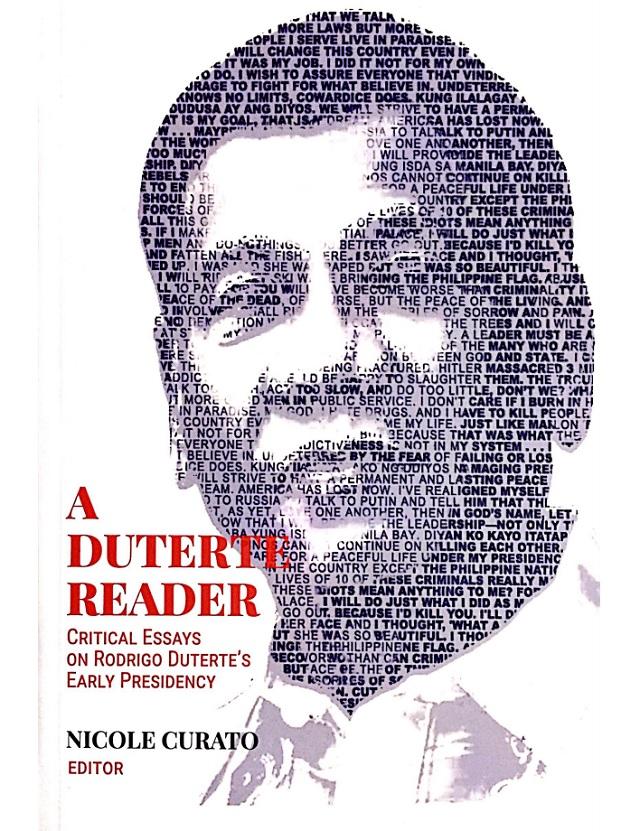
Into this vacuum of understanding enters “A Duterte Reader,” a timely volume of “critical essays on Rodrigo Duterte’s early presidency” published by the Ateneo University Press.

Edited by Nicole Curato, a sociologist and frequent explainer of current politics in the news media, this volume of short essays by varied scholars looks at the rise and early reign of what’s come to be known as “Dutertismo,” a brand of leadership that all the writers agree has elements that the country has never seen before, not the least of which is representation of Mindanao in Malacañang.
#3058

Pundits in America, most of whom were certain of a Democratic victory in 2016, are still reeling from the shock and awe of the first chaotic months of a Trump presidency.

In the Philippines, the electoral victory of Rodrigo Duterte had been more predictable because of the accuracy of public surveys, but the "winnability" of his crass message of violence branded as change had staggered observers more accustomed to candidates who spoke more politely of their intentions. Certainly, something had changed in the electorate as well.

Since then, the international community as well as many Filipinos have been stunned by the ferocity of his drug war, which was exactly what he had vowed during the election. This was one campaign promise that was kept.
#3059

OPINION

BOOK REVIEW

Scholars weigh in on a disruptive presidency

September 12, 2017

By HOWIE SEVERINO
Author


After the Soviet empire crumbled and dictatorships fell in the 1980s and early 90s, a provocatively titled book, "The End of History and the Last Man," came out, capturing the triumphalist zeitgeist of the era. The author, political philosopher Francis Fukuyama, pronounced that in the ideological battles that defined the century, Western-style liberal democracy had finally won out, and there was no turning back. The popular uprising on EDSA in 1986 that evicted the dictator Marcos was a harbinger of this global trend.

Not so fast, according to a less sanguine version of history. Before he became a CNN talking head, Fareed Zakaria was already a political thinker of note, and had warned in a famous essay in 1997 that the wave of democracy, with the power of the vote wielded by the masses, was ushering in its own form of authoritarianism. He called this political model, “illiberal democracy.”

Now here we are in 2017, with Zakaria’s grim warning playing out in elected regimes in Europe, America and the Philippines.
#3060

Singson then declared that Marcoleta's motion was approved after 119 members stood up for it.

CHR is the third agency to receive only a P1,000 from the Lower House, after the Energy Regulatory Commission and the National Commission on Indigenous Peoples.

The proposed budget for the three agencies will still be deliberated in the Senate and in the Bicameral Conference Committee before they are submitted to President Rodrigo Duterte for final approval. â€"JST/BM, GMA News:)

http://www.gmanetwork.com/
#3061

"It is the height of irony or fantasy for us to automatically release a minuscule and embarrassing budget of P1,000," he said.

"It is a minuscule, embarrassing and unconstitutional move for us to approve the motion," he added.

Pampanga Representative Juan Pablo Bondoc then moved to vote on Marcoleta's motion via viva voce, where members say "aye" of they are in favor of the motion and "nay" if not.

However, Presiding Speaker Eric Singson later asked members to register their votes by standing up as they could not determine the real winner in the viva voce voting.
#3062

Lagman, for his part, slammed Marcoleta's interpretation of the CHR's function, as he claimed the party-list lawmaker failed to determine that there is a difference between common crimes and human rights violations.

"A human rights violation is an offense committed by the state or agents by the state, not state parties like rebels, terrorists. When they commit crimes, they are sanctionable over the Revised Penal Code," he said.

"The CHR has no jurisdiction over common crimes," he added.

Lagman added that giving the body only a P1,000 budget is "embarrassing and unconstitutional."
#3063

Del Mar, Buhay party-list Representative Lito Atienza and Albay Representative Edcel Lagman registered their opposition to Marcoleta's motion.

Atienza argued that if the CHR is essentially abolished for giving it a P1,000 budget, the country will perish.

"Kapag in-abolish ito ngayon, wala nang pupuntahan ang ating bansa," he said.

Instead of providing it with a measly P1,000 budget, Atienza said the House should even give the CHR a budget of P2 billion.
#3064

He argued that Executive Order (EO) 163, which is the implementing law for the creation of the agency, was issued on May 5, 1987, at that time when the 1987 Constitution has already been ratified and the legislative powers were already not in the hands of then-President Corazon Aquino.

"EO 163, which was issued on May 5, 1987 is invalid because that that time, Mrs. Cory Aquino, the president of the Philippines has already lost her legislative powers," Marcoleta said.

"Mr. Speaker, how can we appropriate budget to an agency which has not been validly created? I move that we assign only a P1,000 budget for the CHR," he added.
#3065

"There shouldn't be a selective application. You can condemn but that is not the function of the CHR,"  he added.

Cebu City Representative Raul Del Mar, who sponsors the agency's budget, defended the CHR and said condemning human rights violations is part of their action to investigate abuses.

"They don't only condemn these human rights violations. Condemning is part of their action in investigating human rights violations whether by state authorities or non-state authorities," Del Mar said.

Marcoleta also pointed out that the CHR was "invalidly" created.
#3066

House votes to give P1,000 budget to CHR

September 12, 2017

By ERWIN COLCOL, GMA News

The House of Representatives on Tuesday approved only a P1,000 budget for the Commission on Human Rights (CHR) for 2018.

With a vote of 119 in the affirmative, 32 in the negative, the House approved 1-SAGIP party-list Representative Rodante Marcoleta's motion to reduce the agency's budget from P678 million to P1,000.

During his interpellation, Marcoleta argued that the CHR should have been investigating all human rights violations, regardless of which group an individual belongs to.

"You are supposed to investigate all human rights violations irrespective of any group, any location whether they are soldiers, policemen, NPA, members of the Maute group," Marcoleta said.
#3067

oops, no dissenter from bohol.
#3068

As of this posting, the appropriations committee has yet to explain how the budgets meant for the CHR and two other defunded agencies â€" the Energy Regulatory Commission (ERC) and the National Commission on Indigenous Peoples (NCIP) â€" would be spent.

The original 2018 budget proposed by the Department of Budget and Management was P649.48 million for the CHR, P350.9 million for ERC, and P1.13 billion for NCIP.

/atm

http://newsinfo.inquirer.net/
#3069

Meanwhile, Vice-President Leni Robredo said she was “disappointed and alarmed” about the development because it “effectively dismantles the CHR.”

“This portends the lack of respect for the Constitution and human rights â€" both of which threatens democracy,” she said.

“The CHR was established under our current Constitution because of the country’s horrific experience under the Marcos dictatorship, where the violation of human rights had been widespread,” she noted. “The existence of CHR is one of the important defenses against the return of the abusive regime in our country. It is the foundation for the dignity and rights of every Filipino.”
#3070

At least three lawmakers expressed regret that they could not attend the Tuesday session and add to the dissent.

In a Twitter post, Ifugao Rep. Teddy Baguilat said: “Disappointed we gave CHR a 1K budget. Disappointed in myself I was not around to vote against d cut. I apologize 2 d Filipinos.”

And Muntinlupa City Rep. Rozzano Rufino Biazon said: “Wasn’t present anymore when the CHR budget was voted on… I would have voted against the motion.”

In a Twitter post, actor Luis Manzano said that his celebrity mother, Lipa City Rep. Vilma Santos-Recto, was sick on the day of voting.

Manzano showed a screencap of what seemed to be a text message from his mother: “Am against cutting the budget of CHR. They have a duty to perform as mandated by Constitution. With so much crimes/EJKs [extrajudicial killings], they need more resources to these investigations.”
#3071

In a public Facebook post, legislative officer Jeff Crisostomo identified the following as the other opponents of the motion:

Rep. Bolet Banal (LP, 3rd District, Quezon City)
Rep. Emmanuel Billones (LP, 1st District, Capiz)
Rep. Gabriel Bordado (LP, 3rd District, Camarines Sur)
Rep. Wilfredo Caminero (PDP-Laban, 2nd District, Cebu)
Rep. France Castro (ACT Teachers party-list)
Rep. Bayani Fernando (PDP-Laban, 1st District, Marikina)
Rep. Mark Go (NP, Lone District, Baguio City)
Rep. Evelyn Mellana (NUP, 2nd District, Agusan del Sur)
Rep. Rosenda Ann Ocampo (PDP-Laban, 6th District, Manila)
Rep. Aileen Radaza (PDP-Laban, Lone District, Lapu-Lapu City)
Rep. Rav Rocamora (PDP-Laban, Lone District, Siquijor)
Rep. Rosanna Vergara (NPC, 3rd District, Nueva Ecija)
Rep. Tomasito Villarin (AKBAYAN party-list)
Rep. Manuel Zubiri (Bukidnon Paglaum Party, 3rd District, Bukidnon).
#3072

House plenary staff could only visually identify the following lawmakers as those who rejected Marcoleta’s motion:

Rep. Gary Alejano (Magdalo party-List)
Rep. Lito Atienza (Buhay party-List)
Rep. Kaka Bag-ao (Liberal Party, Dinagat Islands)
Rep. Kit Belmonte (LP, 6th District, Quezon City)
Rep. Arlene Brosas (Gabriela party-List)
Rep. Ariel Casilao (Anakpawis party-List)
Rep. Raul Daza (LP, 1st District, Northern Samar)
Rep. Emmi de Jesus (Gabriela party-list)
Rep. Raul del Mar (LP, 1st District, Cebu City)
Rep. Sarah Elago (Kabataan party-list)
Rep. Lawrence Fortun (Nacionalista Party, 1st District, Agusan del Norte)
Rep. Edcel Lagman (LP, 1st District, Albay)
Rep. Jocelyn Limkaichong (LP, 1st District, Negros Oriental)
Rep. Bai Sandra Sema (PDP-Laban, 1st District, Magundanao)
Rep. Antonio Tinio (ACT Teachers party-list)
Rep. Carlos Isagani Zarate (Bayan Muna party-list)
#3073

“The majority of the members of the House held their conviction in the anonymity of a voice vote,” Lagman said. “However, when the House was divided by rising, the majority of ‘nays’ dissipated because so many could not hold on to their conviction in the open against the dictates of the supermajority leadership.”

Lagman disputed Marcoleta’s argument that the CHR was invalidated created because it had no enabling law and only took effect when President Corazon Aquino issued Executive Order No. 163 during the post-Marcos revolutionary government in 1987.
#3074

Deputy Speaker Eric Singson, who presided over the Tuesday session, declared: “The ayes have it.” But minority congressmen â€" such as Rep. Lito Atienza of the duly-recognized minority bloc and Rep. Edcel Lagman of the so-called Magnificent Seven bloc â€" claimed the nays rang louder.

Because of this, the chamber was prompted to hold the vote by having the lawmakers stand up for or against the motion raised by Rep. Rodante Marcoleta of the 1-SAGIP party-list.

Fariñas said the voting was done by standing up because “the nays challenged the ruling of the chair that the ayes had it.”

But Lagman insisted that the nays really had it and that some lawmakers only backtracked during the second round of voting because they would be easier to identify if they had rejected Marcoleta’s motion.
#3075

The lawmakers voted on the CHR budget during the period of interpellations before they approved on second reading House Bill No. 6215, the lowers chamber’s version of the General Appropriations Act for 2018.

At this stage, they voted on each amendment viva voce â€" those in favor saying “aye” and those against saying “nay.”

On the other hand, nominal voting, where names are called out one by one, usually takes place when the bill is approved on third and final reading, which for the budget bill is scheduled for Sept. 21.
#3076

What happened during the voting on CHR’s budget for 2018?

By: Vince F. Nonato - Reporter
Philippine Daily Inquirer
September 13, 2017


Lawmakers raise President Duterte’s clenched fist salute after defunding the Commission on Human Rights and approving the 2018 budget bill on second reading. PHOTO courtesy of the House of Representatives.

Who were the 119 members of the House of Representatives who voted to give the Commission on Human Rights a budget of P1,000 for 2018?

Critics of the decision may want to know the names of those lawmakers, but the chamber only did a headcount, without recording their names.

As Majority Floor Leader Rodolfo Fariñas explained it: “There is no such record as voting was by ayes and nays.”
#3077

Marcos plundered to 'protect' the economy? Then beware, ordinary folk who cannot afford to open a bank account; it is now a crime to be penniless. tokhang is coming your way. :P
#3078
History / Re: History of Earthquakes
September 12, 2017, 02:25:32 AM


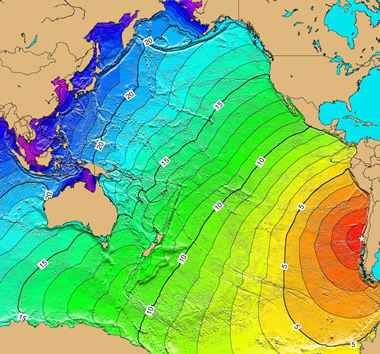
World's largest earthquake - tsunami map: The Chilean earthquake produced a powerful tsunami that traveled at a speed of about 200 miles per hour across the Pacific Ocean. The wave killed 61 people in Hawaii, 138 in Japan, and 32 in the Philippines. The star marks the location of the epicenter, and the numbers on the contour lines are travel times in hours for the wave front. Image by NOAA.

http://geology.com/records/largest-earthquake/
#3079
History / Re: History of Earthquakes
September 12, 2017, 02:24:36 AM

"The Great Chilean Earthquake"

The world's largest earthquake with an instrumentally documented magnitude occurred on May 22, 1960 near Valdivia, in southern Chile. It was assigned a magnitude of 9.5 by the United States Geological Survey. It is referred to as the "Great Chilean Earthquake" and the "1960 Valdivia Earthquake."

The United States Geological Survey reports this event as the "largest earthquake of the 20th Century." Other earthquakes in recorded history may have been larger; however, this is the largest earthquake that has occurred since accurate estimates of magnitude became possible in the early 1900s.

more at http://geology.com/records/largest-earthquake/
#3080
History / Re: History of Earthquakes
September 12, 2017, 02:14:55 AM

26 July 1963
An earthquake measuring 6.9 on the Richter scale strikes the Macedonian capital of Skopje, killing 1,000 people and leaving 100,000 homeless.

22 May 1960
The world's strongest recorded earthquake devastates Chile, with a reading of 9.5 on the Richter scale. A tsunami 30ft (10m) high eliminates entire villages. Death toll reports vary widely, but many settle on the 2,000 mark.

1 September 1923
The Great Kanto earthquake, with its epicentre just outside Tokyo, claims the lives of 142,800 people in the Japanese capital.

28 December 1908
Earthquake about 7.1 magnitude and subsequent tsunami in Italy's Messina Strait, badly affecting the cities of Messina and Reggio Calabria. Deaths estimated at 70,000-80,000.

18 April 1906
San Francisco is hit by a series of violent shocks which last up to a minute. Between 700 and 3,000 people die either from collapsing buildings or in the subsequent fire.

http://www.bbc.com/
#3081
History / Re: History of Earthquakes
September 12, 2017, 02:14:13 AM

30 September 1993
About 10,000 villagers are killed in western and southern India.

21 June 1990
About 40,000 people die in a tremor in the northern Iranian province of Gilan.

7 December 1988
An earthquake measuring 6.9 on the Richter scale devastates north-west Armenia, killing 25,000 people.

19 September 1985
Mexico City is shaken by a huge earthquake which razes buildings and kills 10,000 people.

4 March 1977
Some 1,500 people are killed in an earthquake that hit close to the Romanian capital, Bucharest.

28 July 1976
The Chinese city of Tangshan is reduced to rubble in a quake that claims at least 250,000 lives.

23 December 1972
Up to 10,000 people are killed in the Nicaraguan capital Managua by an earthquake that measures 6.5 on the Richter scale. The devastation caused by the earthquake is blamed on badly built high-rise buildings that easily collapsed.

31 May 1970
An earthquake high in the Peruvian Andes triggers a landslide, burying the town of Yungay and killing 66,000 people.
#3082
History / Re: History of Earthquakes
September 12, 2017, 02:12:02 AM

12 November 1999
About 400 people die when an earthquake measuring 7.2 on the Richter scale strikes Ducze, in north-west Turkey.

21 September 1999
Taiwan is hit by a quake measuring 7.6 that kills nearly 2,500 people and causes damage to every town on the island.

17 August 1999
A magnitude-7.4 earthquake rocks the Turkish cities of Izmit and Istanbul, leaving more than 17,000 dead and many more injured.

30 May 1998
Northern Afghanistan is hit by a major earthquake, killing 4,000 people.

May 1997
More than 1,600 are killed in Birjand, eastern Iran, in an earthquake of magnitude 7.1.

27 May 1995
The far eastern island of Sakhalin is hit by a massive earthquake measuring 7.5, which claims the lives of 1,989 Russians.

17 January 1995
The Hyogo quake hits the city of Kobe in Japan, killing 6,430 people.
#3083
History / Re: History of Earthquakes
September 12, 2017, 01:55:40 AM

26 December 2003
More than 26,000 people are killed when an earthquake destroys the historic city of Bam in southern Iran.

21 May 2003
Algeria suffers its worst earthquake in more than two decades. More than 2,000 people die and more than 8,000 are injured in a quake felt across the sea in Spain.

1 May 2003
More than 160 people are killed, including 83 children in a collapsed dormitory, in south-eastern Turkey.

24 February 2003
More than 260 people die and almost 10,000 homes are destroyed in Xinjiang region, in western China.

31 October 2002
Italy is traumatised by the loss of an entire class of children, killed in the southern village of San Giuliano di Puglia when their school building collapses on them.

26 January 2001
An earthquake measuring magnitude 7.9 devastates much of Gujarat state in north-western India, killing nearly 20,000 people and making more than a million homeless. Bhuj and Ahmedabad are among the towns worst hit.
#3084
History / Re: History of Earthquakes
September 12, 2017, 01:52:36 AM

15 August 2007
At least 519 people are killed in Peru's coastal province of Ica, as a 7.9-magnitude undersea earthquake strikes about 90 miles (145km) south-east of the capital, Lima.

17 July 2006
A 7.7-magnitude undersea earthquake triggers a tsunami that strikes a 125-mile (200km) stretch of the southern coast of Java, killing more than 650 people on the Indonesian island.

27 May 2006
More than 5,700 people die when a magnitude 6.2 quake hits the Indonesian island of Java, devastating the city of Yogyakarta and surrounding areas.

8 October 2005
An earthquake measuring 7.6 strikes northern Pakistan and the disputed Kashmir region, killing more than 73,000 people and leaving millions homeless.

28 March 2005
About 1,300 people are killed in an 8.7-magnitude quake off the coast of the Indonesian island of Nias, west of Sumatra.

22 February 2005
Hundreds die in a 6.4 magnitude quake centred in a remote area near Zarand in Iran's Kerman province.

26 December 2004
Hundreds of thousands are killed across Asia when an earthquake measuring 9.2 triggers sea surges that spread across the region.

24 February 2004
At least 500 people die in an earthquake which strikes towns on Morocco's Mediterranean coast.
#3085
History / Re: History of Earthquakes
September 12, 2017, 01:51:33 AM

14 April 2010
At least 400 people die after a magnitude 6.9 earthquake strikes western China's Qinghai province.

27 February 2010
A magnitude-8.8 earthquake hits central Chile north-east of the second city, Concepcion, killing more than 700 people.

12 January 2010
About 230,000 people die in and around the Haitian capital Port-au-Prince as a 7.0-magnitude earthquake strikes the city.

30 September 2009
More than 1,000 people die after an earthquake strikes the Indonesian island of Sumatra.

6 April 2009
An earthquake hits the historic Italian city of L'Aquila, killing 309 people.

29 October 2008
Up to 300 people are killed in the Pakistani province of Balochistan after an earthquake of 6.4 magnitude strikes 45 miles (70km) north of Quetta.

12 May 2008
Up to 87,000 people are killed or missing and as many as 370,000 injured by an earthquake in just one county in China's south-western Sichuan province. The tremor, measuring 7.8, struck 57 miles (92km) from the provincial capital Chengdu during the early afternoon.
#3086
History / Re: History of Earthquakes
September 12, 2017, 01:37:49 AM

15 October 2013
More than 200 people are reported to have died after a magnitude 7.2 earthquake strikes centrally-located Bohol and Cebu in the Philippines.

25 September 2013
More than 300 people are killed as a 7.7-magnitude quake flattens entire villages in Pakistan's remote south-western province of Balochistan, mainly in the district of Awaran.

20 April 2013
A powerful 6.6-magnitude earthquake kills at least 160 people and injured at least 5,700 in China's rural south-western Sichuan province.

11 August 2012
At least 250 people are killed and more than 2,000 injured in north-west Iran by two powerful quakes which strikes within minutes of each other near the towns of Tabriz and Ahar.

23 October 2011
More than 200 people are killed and 1,000 are injured in a powerful 7.2-magnitude earthquake which hits south-eastern Turkey; many of the victims are in the town of Ercis, where dozens of buildings collapse.

11 March 2011
A devastating magnitude-8.9 quake strikes Japan, leaving more than 20,000 people dead or missing. The tremor generates a massive tsunami along the Japanese coast and triggers the world's biggest nuclear disaster since Chernobyl in 1986.

22 February 2011
A magnitude-6.3 earthquake shatters the New Zealand city of Christchurch, killing more than 160 people and damaging some 100,000 homes.
#3087
History / Re: History of Earthquakes
September 12, 2017, 01:32:14 AM

History of deadly earthquakes

27 October 2016


GETTY IMAGES
First responders carry a victim out of the disaster zone following the earthquake in Nepal in April 2015


Earthquakes have claimed millions of lives in the last 100 years, and improvements in technology have only slightly reduced the death toll.

24 August 2016
At least 298 people are killed when a magnitude 6 earthquake strikes central Italy. Worst hit is Amatrice, where many of the town's historic buildings collapse.

16 April 2016
A powerful 7.8 magnitude earthquake strikes Ecuador's coast, killing more than 650 people. More than 16,000 people are hurt and some 7,000 buildings destroyed.

26 October 2015
Almost 400 people are killed when a magnitude 7.5 earthquake strikes north-eastern Afghanistan. Most of those killed are in Pakistan, but the quake is also felt in northern India and Tajikistan.

25 April 2015
A 7.8-magnitude earthquake kills more than 8,000 people and leaves hundreds of thousands homeless, in the worst natural disaster to strike Nepal since 1934. In some parts of the country, the quake flattens 98% of all homes in hillside villages.

3 August 2014
Approximately 600 people are killed in a 6.1-magnitude earthquake that strikes Yunnan province in China. Thousands of houses are destroyed and landslides are triggered. More than 2,400 people are injured.
#3088
History / Re: History of Earthquakes
September 12, 2017, 01:20:49 AM

31 January 2017
Ecuador, 25 km south of Esmeraldas. There were reports of damage in several houses.

22 January 2017
Papua New Guinea, 35 km west northwest of Panguna. 2017 Papua New Guinea earthquake: Damage occurred in Arawa and parts of central Bougainville, where three people died and one was injured, while a power outage occurred in Buka.

19 January 2017
Solomon Islands, 65 km west of Kirakira

18 January 2017
Italy, 8 km north northwest of Montereale

18 January 2017
Italy, 6 km west southwest of Amatrice. January 2017 Central Italy earthquakes: Four earthquakes above 5.0 Mw occurred in less than 5 hours, with new damage recorded in Amatrice and Abruzzo. Two people died in Campotosto and three in Teramo. These earthquakes may have triggered an avalanche that struck a hotel in Farindola, killing 29 people and injuring 11.

16 January 2017
Indonesia, North Sumatra, 24 km north of Kabanjahe. The quake damaged various houses and caused people in Medan to evacuate buildings in a panic.

11 January 2017
Madagascar, 41 km south southwest of Betafo. It was the strongest earthquake in the region since 1991. It caused moderate damage around the epicenter in Vakinankaratra and Betafo.

10 January 2017
Solomon Islands, 104 km west northwest of Kirakira. This was a foreshock of the 6.5 quake.

10 January 2017
Philippines offshore, 189 km south southeast of Tabialan

08 January 2017
Canada, Nunavut, 79 km east southeast of Resolute. Homes suffered light damage in Resolute. A magnitude 5.2 aftershock struck 18 hours later. The 6.0 quake was a once-in-300-years event.

06 January 2017
Iran, 54 km southwest of Jahrom. Four people were killed in Seyfabad in Khonj County. Three people were injured in the village of Chartala.

03 January 2017
Fiji offshore, 195 km southwest of Nadi. This was an aftershock of the 6.9 quake.

03 January 2017
Fiji offshore, 226 km southwest of Nadi. A tsunami warning was issued for Fiji with waves of 0.01 m reported in Suva.

03 January 2017
India, Tripura state, 20 km east northeast of Ambassa. 2017 Tripura earthquake: One person died and five others were injured in India. 50 houses were damaged due to landslides that occurred in Dhalai district in the state of Tripura. Roads were blocked after numerous trees were uprooted.[6] Two people died and three others were injured in neighboring Bangladesh.

02 January 2017
Tonga offshore, 180 km northwest of the Minerva Reefs

wikipedia/
#3089
History / Re: History of Earthquakes
September 12, 2017, 12:51:26 AM

24 February 2017
Tonga offshore, 43 km north northwest of the Minerva Reefs

24 February 2017
Zambia, 40 km east of Kaputa. Various houses were damaged in Kaputa District, leaving 11 families homeless. Five people were injured.

23 February 2017
Philippines, 3 km west southwest of Davao City. Two women were injured when a waiting shed fell on them in Davao City.

21 February 2017
Bolivia, 41 km east of Padilla

18 February 2017
Argentina, Jujuy Province, 52 km northwest of San Antonio de los Cobres

15 February 2017
Indonesia, Aceh, 15 km west northwest of Meureudu

15 February 2017
Indonesia, Aceh, 15 km southeast of Sigli. Two earthquakes hit a region of Aceh previously affected by the 2016 Aceh earthquake in rapid succession. Two houses collapsed and nine people suffered injuries.

10 February 2017
Taiwan, 18 km south of Tainan. Four people were injured in Tainan and Kaohsiung.[52] Grocery stores sustained minor damage.

10 February 2017
Philippines, 10 km north of Surigao City. 2017 Surigao earthquake: Multiple buildings were damaged in Surigao City and seven bridges collapsed, isolating San Francisco. At least eleven towns were affected, including with power outage. The airport was closed due to the damaged runway. 8 people died and 250 others were injured.

08 February 2017
China, Yunnan, 15 km northwest of Wenping. Five people were injured in Ludian County and some old houses collapsed.

07 February 2017
Pakistan, 22 km west southwest of Pasni. 60 houses collapsed in Pasni, where one girl was injured by a falling wall.

06 February 2017
India, Uttarakhand state, 36 km northwest of Pipalkoti. 2017 Uttarakhand earthquake: One person was injured, with panic scenes around the epicenter. Many cracks in buildings were reported.

06 February 2017
Colombia, 16 km east northeast of Colombia. Some damage was reported in the town of Colombia. One person was injured. Roads were blocked by falling rocks.

06 February 2017
Turkey, 23 km west northwest of Assos. Around 90 houses in eleven villages were damaged. Five people were injured.

03 February 2017
France, Martinique offshore, 59 km east northeast of Sainte-Marie. One woman was injured. Objects fell on the floor in supermarkets.
#3090
History / Re: History of Earthquakes
September 12, 2017, 12:07:23 AM
 
29 March 2017
Mexico, Sinaloa offshore, 78 km west southwest of Higuera de Zaragoza. Some buildings and schools suffered light damage in Cajeme.

29 March 2017
Russia, Kamchatka, 81 km north northeast of Ust-Kamchatsk

27 March 2017
United States, Alaska, 63 km west of Attu Station

26 March 2017
China, Yunnan, 23 km southwest of Yuhu. About 500 houses were damaged and some collapsed. One person was injured by falling tiles.

24 March 2017
Egypt, 69 km northwest of Suez. One person died and seven others were injured after a poorly-constructed building collapsed.

21 March 2017
Indonesia, Bali, 1 km southeast of Banjar Mulung. Various houses, temples, offices and schools were damaged during the quake. Four people, included three children, were injured.

19 March 2017
Solomon Islands, 70 km north of Auki

14 March 2017
India, Andaman and Nicobar Islands offshore, 230 km south southwest of Mohean

13 March 2017
Myanmar, 34 km southeast of Tharrawaddy. Some temples were damaged in Yangon and 38 people were injured. Two of them died later in the hospital.

10 March 2017
Spain, 11 km north of Olza. Cracks appeared in walls and road surfaces and some windows broke.

05 March 2017
Papua New Guinea, 32 km northwest of Kandrian.

05 March 2017
Philippines, 5 km north of Surigao City. One person died of a heart attack, 45 others were injured and some walls collapsed. This was an aftershock of the 6.5 quake.

04 March 2017
Solomon Islands, 115 km south southeast of Panguna, Papua New Guinea

02 March 2017
Turkey, 5 km northwest of Samsat. At least thirty people were injured and some buildings collapsed.
#3091
History / Re: History of Earthquakes
September 11, 2017, 11:26:42 PM

28 April 2017
Philippines, 31 km southwest of Burias. Several buildings were damaged and at least one house collapsed. Five people were injured.

24 April 2017
Chile offshore, 40 km west of Valparaiso. 2017 Valparaíso earthquake (es): Santiago International Airport suffered light damage on floors and ceilings. A car was hit by a falling rock on a service road near a highway.

23 April 2017
Chile offshore, 37 km west of Valparaiso. This was a foreshock of the 6.9 quake.

18 April 2017
Fiji, 285 km north of Ndoi Island

15 April 2017
Chile, 63 km southeast of San Pedro de Atacama

11 April 2017
Philippines, 8 km north of Osias. About 500 homes and 2 mosques were damaged in Lanao del Sur. Power failures also occurred and cracks appeared on the national highway. One person was injured.

10 April 2017
El Salvador, 3 km north of Soyapango. The earthquake damaged houses in Antiguo Cuscatlán and caused landslides as well as power failures in some areas. One person died and three others were injured when a falling rock hit their car on a highway.

08 April 2017
Philippines, 1 km north northwest of Talaga. 2017 Batangas earthquakes: Houses and buildings were damaged, landslides occurred at Mount Macolod and power outages were reported. Six people were injured. Around 14,000 people were temporarily relocated to evacuation centers.

05 April 2017
Greece, 1 km southwest of Nafpaktos. Older buildings suffered minor damage, with bricks and stones falling into the streets below. A power outage occurred in the town of Rio.

05 April 2017
Iran, 61 km north northwest of Torbat-e Jam. 40% of buildings have been ruined in four villages. Some houses and buildings were seriously damaged in Mashhad. Phone lines were disrupted. Two people were killed and 34 others injured.

04 April 2017
Philippines, 5 km west of Batangas City. 2017 Batangas earthquakes: The earthquake damaged houses in Batangas City and the Taal Basilica. Some power outages occurred in San Pascual. This was a foreshock of the 5.9 quake.

03 April 2017
Botswana, 132 km west southwest of Moiyabana. The 2017 Botswana earthquake was the strongest earthquake recorded in Botswana since 1952. Thirty-six students were injured in a stampede sparked by the quake.

03 April 2017
South Africa, 7 km south southeast of Stilfontein. Plaster fell from walls and houses were slightly damaged in Orkney and Klerksdorp.

02 April 2017
Panama, 18 km northeast of Cerro Punta. Two buildings were damaged. Some objects fell in supermarkets.
#3092
History / Re: History of Earthquakes
September 11, 2017, 10:52:33 PM

29 May 2017
Indonesia, Central Sulawesi, 28 km west northwest of Kasinguncu. Hundreds of buildings were damaged in Poso as well as surrounding villages, and some collapsed. Twenty-five people were injured, with 5 of them in a serious condition.

27 May 2017
Turkey, 10 km northwest of Gölmarmara.   Various houses were badly damaged in Manisa province. One person was also injured.

29 May 2017
Canada, British Columbia, 88 km west northwest of Skagway, United States. This pair of similarly sized quakes occurring in close proximity is an example of a doublet earthquake.

25 May 2017
Tanzania, 22 km west southwest of Misasi. Eighteen students were injured in a panic caused by the earthquake. One policeman also died of a heart attack.

24 May 2017
Indonesia, South Sulawesi, 115 km east of Malili. Dozens of houses were damaged in Morowali Regency.

24 May 2017
Albania, 8 km north northwest of Bulqizë. In Mat municipality, 7 homes and a health center suffered cracked walls while 3 schools in Bulqiza municipality suffered minor damage.

20 May 2017
Philippines, 25 km south of Alburquerque

16 May 2017
Peru, 62 km east northeast of Tambo. This earthquake caused landslides in Ayacucho region, and various schools were slightly damaged. Seven houses were damaged and two destroyed while eight people were displaced.

15 May 2017
Papua New Guinea, 39 km east northeast of Namatanai

13 May 2017
Iran, 34 km north northwest of Bojnurd. Three people were killed and more than 400 were injured near Pasandarreh. Some buildings were damaged and several roads blocked.

12 May 2017
El Salvador offshore, 78 km south southwest of Acajutla   

11 May 2017
Turkey, 13 km north northeast of AÅŸkale. Twenty-five houses were damaged in AÅŸkale.

11 May 2017
Azerbaijan, 16 km east southeast of Tel'manked. Twenty people were injured in Parsabad, Iran.

10 May 2017
South Georgia and the South Sandwich Islands offshore, 95 km east northeast of Visokoi Island.

10 May 2017
China, Xinjiang, 131 km east southeast of Murghab, Tajikistan. Eight people were killed and 29 injured. Some people were buried after their houses collapsed. In Quzgun village, the quake caused the collapse of 1,520 houses. 9,200 people have been relocated.

09 May 2017
Vanuatu, 62 km northeast of Port-Olry

09 May 2017
Japan, 111 km east southeast of Hirara, Okinawa Prefecture

08 May 2017
United States, Alaska, 34 km west southwest of Tanaga Volcano

03 May 2017
Tajikistan, 29 km north northwest of Karakenja. Two houses were partially damaged in Tajikistan. In Kyrgyzstan, a rockfall killed 110 sheep, over 100 buildings were damaged,[122] and one man was injured by a falling wall.

02 May 2017
Iran, 65 km north of Torbat-e Jam. It was an aftershock of the 6.1 quake on April 5. Two people were injured.
      
01 May 2017
Canada, British Columbia, 88 km west northwest of Skagway, United States
#3093
History / Re: History of Earthquakes
September 11, 2017, 06:49:20 PM

30 June 2017
Ecuador, 35 km north northwest of Bahía de Caráquez. One house collapsed and minor damage occurred in many areas.[182] Thirteen people were slightly injured.

29 June 2017
New Zealand offshore, 115 km west northwest of L'Esperance Rock, Kermadec Islands

28 June 2017
New Zealand offshore, 117 km south southeast of Raoul Island, Kermadec Islands. These were aftershocks of the 6.0 quake on June 15.

25 June 2017
Tonga offshore, 198 km west of Pangai

25 June 2017
Japan, 35 km west of Ina. Two people were injured, some landslides occurred and various houses were slightly damaged.

24 June 2017
Peru, 60 km southeast of Coracora. Some adobe houses collapsed in Caraveli province.

22 June 2017
Guatemala offshore, 28 km southwest of Puerto San Jose. Houses were damaged in Antigua Guatemala. San Marcos department suffered new damage after the 6.9 quake on June 14. Four people were injured during this earthquake.

21 June 2017
Nepal, Makwampur district. A labourer working at a brick factory was killed when bricks fell on him. His son also sustained injuries.

17 June 2017
Tonga offshore, 110 km west southwest of Minerva Reefs

15 June 2017
New Zealand offshore, 129 km northeast of L'Esperance Rock, Kermadec Islands

14 June 2017
Guatemala, 3 km west northwest of Malacatán. 2017 Guatemala earthquake (es): Five people died (three of heart attacks) and 19 others were injured in Guatemala. A lot of houses were damaged in San Marcos department and landslides also occurred. In Mexico, 11 people were injured in neighbouring Chiapas.

12 June 2017
Greece, 5 km south of Plomari. 2017 Lesbos earthquake: Many houses were damaged in Plomari and some collapsed. The village of Vrisa, where one woman was found dead, was almost completely destroyed. The quake left 15 people injured and displaced 800. The quake was felt across Greece, Turkey, and Bulgaria.

05 June 2017
Ecuador, 41 km east of Papayal, Peru. Some houses were damaged in Peru and Ecuador near the epicenter. Two people were injured in Piura province.

02 June 2017
United States, Alaska offshore, 200 km northwest of Attu Station.
#3094
History / Re: History of Earthquakes
September 11, 2017, 05:27:51 PM

30 July 2017   
Iran, 48 km south of Farsan. This quake damaged rural buildings and cut phone and power lines in Naghan County. 25 people were injured, nine of them seriously.

28 July 2017
Iran, 12 km east northeast of Aleshtar. Some damage was caused to buildings and 15 people were injured.

23 July 2017
Iran, 46 km east southeast of Kerman. Some buildings were damaged and cracks on walls appeared. Power lines were broken in the region.

20 July 2017
Turkey, 11 km east northeast of Kos, Greece. The 2017 Aegean Sea earthquake killed two people and injured more than 120 others on the Greek island of Kos, while at least 360 injuries were reported in Turkey. A small tsunami caused flooding and some damage along the Greek and Turkish coasts. The quake was felt as far south as Egypt and as far north as Romania.

18 July 2017
Peru, 98 km west northwest of Camana. Roads were blocked by falling rocks in Arequipa region. One truck driver was killed and nine people injured.

17 July 2017
Russia, Kamchatka offshore, 198 km east southeast of Nikol'skoye. A tsunami warning was issued, and a slight sea surge was observed in the Aleutian Islands.

17 July 2017
Russia, Kamchatka offshore, 183 km east southeast of Nikol'skoye. This was a foreshock of the 7.7 quake.

14 July 2017
Indonesia, North Sumatra, 14 km north northwest of Padangsidempuan. One person was wounded and dozens of houses were damaged.

13 July 2017
Papua New Guinea, 38 km south southeast of Taron

11 July 2017
New Zealand offshore, 204 km northwest of Auckland Island

10 July 2017
Philippines, 5 km northwest of San Pedro. It was an aftershock of the 6.5 quake on July 6. Some damage was caused and five people were injured, two of them by jumping from a hotel's window in Ormoc City.

06 July 2017
Philippines, 2 km north of Masarayao. The 2017 Leyte earthquake caused power interruption in Jaro and Tacloban City in Leyte. The quake was felt in places as far apart as Sorsogon in Luzon and Surigao del Norte in Mindanao. A commercial building collapsed in Kananga, one person died, and 20 were injured. In Ormoc City, three people died and around 100 were injured.

06 July 2017
United States, Montana, 11 km southeast of Lincoln. It was the strongest earthquake in Montana since 1975. It caused power outages in Lincoln and at least one gas leak in Helena.

03 July 2017
Macedonia, 8 km northwest of Jankovec. This quake caused a power outage in Ohrid; some supermarkets and other buildings were slightly damaged as well.

01 July 2017
Japan, 22 km east of Chitose. A woman broke her ribs when she fell during the earthquake.
#3095
History / Re: History of Earthquakes
September 11, 2017, 03:58:02 PM

31 August 2017
Indonesia, West Sumatra, 72 km northeast of Muara Siberut

30 August 2017
Venezuela, 24 km north northeast of Guatire. Two people were injured during panic movements in Caracas. Slight damage was observed in Guatire.

27 August 2017
Iran, 54 km south southeast of Ahar. Some damage was caused to buildings in Sharabian region. Thirteen people were injured.

27 August 2017
Papua New Guinea offshore, 107 km northeast of Lorengau.

23 August 2017
Iraq, 8 km east northeast of Koy Sanjaq. Damage was caused to buildings in Kurdistan region. 17 people were injured.

22 August 2017
Philippines, 8 km north-northeast of Talisayan. Two people were killed and 56 houses slightly damaged.   

21 August 2017
Italy, 4 km north of Ischia. The 2017 Ischia earthquake caused major damage in Ischia despite its moderate magnitude; several buildings and a church collapsed. Two people died and 42 were injured. Three children were trapped under the rubble.

19 August 2017   
Fiji, 254 km southeast of Labasa

18 August 2017   
United Kingdom, Ascension Island offshore, 770 km north northeast of Georgetown   

13 August 2017   
Indonesia, Bengkulu Province, 73 km west of Bengkulu. The quake caused power outages.

11 August 2017   
Peru, 89 km west northwest of Camana. This earthquake caused landslides in Arequipa region. One driver was killed by falling rocks and two others injured.

11 August 2017   
Philippines, 2 km west southwest of Tuy. Batangas earthquakes: Buildings and schools were evacuated in Manila, where the quake was felt moderately.

08 August 2017   
China, Xinjiang, 108 km south southeast of Dostyk, Kazakhstan. Due to the 2017 Jinghe earthquake, more than 1,000 houses were damaged including 142 which collapsed, and 33 people were injured.

08 August 2017
China, Sichuan, 36 km west southwest of Yongle, Jiuzhaigou County. The 2017 Jiuzhaigou earthquake killed 25 people, including numerous tourists, and 525 others were injured, with 45 of them in serious condition. Many houses were damaged and landslides occurred.

05 August 2017
Philippines, 9 km west of Little Baguio. Some houses were damaged in Bukidnon. An elderly woman was injured by falling debris.

02 August 2017
Chile, 25 km east northeast of Colina. An elderly man died of cardiac arrest in Maipú.

01 August 2017
Japan, 5 km west southwest of Kitaibaraki. A woman fell from her bed and sustained injuries in Chiba.
#3096
History / History of Earthquakes
September 11, 2017, 03:40:39 PM

08 September 2017
Chiapas earthquake, Mexico offshore, 87 km southwest of Pijijiapan. At least 61 people have been killed. This is currently the strongest and deadliest earthquake of 2017.


Mexico earthquake 2017 (CNN)

07 September 2017
Japan offshore, 243 km west northwest of Chichi shima

04 September 2017
United Kingdom, South Georgia and the South Sandwich Islands offshore, 149 km north northeast of Bristol Island
#3099

"Those were hippie days," he said. "We were apprentices from the RAE and people had a kinder attitude to us because of who we were, and in those days it was different."

Now, he says, the saucers would be treated as explosive devices and detonated - and the hoaxers could end up in jail.

"That's one of the interesting things looking back at this, 50 years on.

"The times we live in now are much harsher, and I don't think we could do it now. We would end up in trouble."

http://www.bbc.com/
#3100

The events of that day remain something of a blur for him, but he remembers trekking to a TV studio in the evening after the hoax had been exposed.

By the time the papers went to press, journalists had been told about the prank, but it didn't deter them from reporting it as an alien invasion, Mr Southall said.

It's 50 years since the great UFO hoax fooled the nation. Press cuttings from the time reveal official sources "tended to be snappy" when questioned about the hoax.

But police confirmed no action was to be taken against the pranksters, with one Bromley officer quoted as saying: "We are taking it like gentlemen."

Mr Southall admits that to put the police and Army to such an inconvenience today would have entirely different consequences.