Join MikeLigalig.com!

Why Just Read When You Can Join, Post, and Read!

Menu

Show posts

This section allows you to view all posts made by this member. Note that you can only see posts made in areas you currently have access to.

Show posts Menu

Messages - Lorenzo

#27701
hehe, if the Mayans couldn't even prevent their own civilization's own demise, how can we give serious credence to their end-of-days prophesy?

..the greatest of all hypocrisies.  :)
#27702


Eternal rest grant unto them, O Lord,
and let perpetual light shine upon them.
May they rest in peace.

Amen.
#27703
Bible Study / Re: Daily Scriptural Verse
October 20, 2010, 12:53:36 PM
As a son honors his father, so too must he honor the LORD


"A son honors his father, and a servant his master. If I am a father, where is the honor due me? If I am a master, where is the respect due me?" says the LORD Almighty."

-Malachi 1:6
#27704
Bible Study / Re: Daily Scriptural Verse
October 20, 2010, 12:50:43 PM
Respect the elderly


"Rise in the presence of the aged, show respect for the elderly and revere your God. I am the LORD."

-Leviticus 19:32

#27705
Quote from: Ms. V on October 13, 2010, 11:39:48 AM
Hi folks!

The DepEd's budget is short by 140,000 classrooms and can only build 14,000 units next year. This shortage is clearly emphasizing the innovation of education as fast and as hard in as many public schools as possible.

HOW??? The government failed to tell us how to do it!!!

Distance Education is the KEY!

Finish your elementary, high school and college courses without the burden of going to school everyday, without the burden of thinking what to give BAUN to your kids everyday if you are a parent!

Thanks for sharing this with all of us here in Tubag Bohol Dot Com, Ms. V.

Keep it up!
#27706
Valid point, Ms. V. Here in the United States there is a plenitude of online schools that focus on degrees such as MBAs, MAs, MSs, Psy.D, Ph.Ds etc.

Stereotyping Filipino people is ,in my point of view, a nihilistic and infantile characteristic. Stereotyping, in general, is a sign of narrow mindedness and thus should be evaded if one wants to work in a multidisciplinary professional work place effectively.


:)
#27707
Bible Study / Re: The Most Beautiful Psalm: Psalm 40
October 20, 2010, 12:39:59 PM
Quote from: tagalomanoy on March 23, 2009, 03:57:09 PM
Mine is Psalm 23, wherever I am, in travel, walking and even going to bed and rising in the morning I see to it that I have to mumble  the first verse until the last.  Yes, it is just like sipping the first  hot cup of coffee in the early morning.  Yes, I would like sharing it. Here it is:

The Lord is My Shepherd

The Lord is my shepherd
I have everything I need
He lets  me rest in the field of green grass
And leads me to quite pool of fresh water

He gives me new strength
He guides me to the right path as He has promised
Even if I go to the deepest darkness]
I will not be afraid
Lord because you are with me


Your shepherds rod and staff protect me
You prepare a banquet for me where my enemies can see me
You invited me as an honored guest
And fill my cup to the brim

I know your goodness and love Lord
Will be with me all of my life
And your house will be my home
As long as I live.


Brother, this is a great psalm. Thanks for sharing this one.
#27708
Bible Study / Re: The Most Beautiful Psalm: Psalm 40
October 20, 2010, 12:37:55 PM
Psalm 25


To you, O Lord, I lift up my soul.
2 O my God, in you I trust;
let me not be put to shame;
let not my enemies exult over me.
3 Indeed, none who wait for you shall be put to shame;
they shall be ashamed who are wantonly treacherous.

4 Make me to know your ways, O Lord;
teach me your paths.
5 Lead me in your truth and teach me,
for you are the God of my salvation;
for you I wait all the day long.

6 Remember your mercy, O Lord, and your steadfast love,
for they have been from of old.
7 Remember not the sins of my youth or my transgressions;
according to your steadfast love remember me,
for the sake of your goodness, O Lord!

8 Good and upright is the Lord;
therefore he instructs sinners in the way.
9 He leads the humble in what is right,
and teaches the humble his way.
10 All the paths of the Lord are steadfast love and faithfulness,
for those who keep his covenant and his testimonies.

11 For your name's sake, O Lord,
pardon my guilt, for it is great.
12 Who is the man who fears the Lord?
Him will he instruct in the way that he should choose.
13 His soul shall abide in well-being,
and his offspring shall inherit the land.
14 The friendship [2] of the Lord is for those who fear him,
and he makes known to them his covenant.
15 My eyes are ever toward the Lord,
for he will pluck my feet out of the net.

16 Turn to me and be gracious to me,
for I am lonely and afflicted.
17 The troubles of my heart are enlarged;
bring me out of my distresses.
18 Consider my affliction and my trouble,
and forgive all my sins.

19 Consider how many are my foes,
and with what violent hatred they hate me.
20 Oh, guard my soul, and deliver me!
Let me not be put to shame, for I take refuge in you.
21 May integrity and uprightness preserve me,
for I wait for you.

22 Redeem Israel, O God,
out of all his troubles.
#27709
Bible Study / Re: Mary Did You Know
October 20, 2010, 12:35:36 PM
Quote from: chicogon on October 20, 2010, 12:05:27 AM
Amen to that!!! Alleluia!!!  :D

Di pa naman huli... galing kay daghang manghilak ani... ehehehe  ;D


haha, Father, mo second ko sa imong exclamation! Alleluia to the Lord God!

#27710
Bible Study / Re: Mary Did You Know
October 20, 2010, 12:34:07 PM
Quote from: luckybelle on October 19, 2010, 10:43:13 PM
So nice... have you not been a doctor bagay sayo maging priest  ;)

hehe :)
#27711
Bible Study / Re: The Most Beautiful Psalm: Psalm 40
October 20, 2010, 12:28:49 PM
Psalm 20

May the Lord answer you in the day of trouble!
May the name of the God of Jacob protect you!
2 May he send you help from the sanctuary
and give you support from Zion!
3 May he remember all your offerings
and regard with favor your burnt sacrifices! Selah

4 May he grant you your heart's desire
and fulfill all your plans!
5 May we shout for joy over your salvation,
and in the name of our God set up our banners!
May the Lord fulfill all your petitions!

6 Now I know that the Lord saves his anointed;
he will answer him from his holy heaven
with the saving might of his right hand.
7 Some trust in chariots and some in horses,
but we trust in the name of the Lord our God.
8 They collapse and fall,
but we rise and stand upright.

9 O Lord, save the king!
May he answer us when we call.
#27712
Love Talk / Re: Lack of Decent Men?
October 19, 2010, 09:58:41 PM
Ah, eastern European beauty. :)

Ukrayina, Ruskaya, Polaski, da Bulgarski..
#27713
Quote from: islander on October 19, 2010, 12:28:32 PM
ewokian guinevere here speaketh.  do kindly extend my warmest wishes to the jedi master whose lightsaber i had invoked and had thus swallowed, compleat, hark, with the bleeding drops of red.  where goest my lord of charing?  i see him not.  he is but the shadow of his old draconian self, the dragon that became a crocodile, the crocodile that became a lizard, and for the lizard to take on wings and turn into a misty dragonfly. 

do i miss my master yoda.  though i hold his ears at the moment, where, oh where, is the rest of him?  sing me a song!  start the piano tunes as skin touches ebony and ivory when they hammer the chords.  alas, i shall not rest till the dawn is day. ??? ::)

the sorrowful heart of,

h.r.h guinevere d'islander
queen of the tb netherworld


dear ewokian guinevere le damsel ,

Shall I compare thee to a summer's day? for thou hast shown the livid temprance when thou has engaged old king arthur , yet amused thyself with the likes of lancelot , unbenownst to old king arthur, that man who wears the crown of thy ewokian kingdom. Ah, dost thy not know there shall be beguile and recluse upon thy house when thy lover ewokilancelot finds the sword of arthur within his belly? Cry havoc! and let slip the dogs of war!

Pray i have no understanding in thy friend, the lord of charing, perhaps he whom you talkest about takes court in your house?

So it was thee who killed old master yoda that day, no wonderst why he had in him only one ear and the other half bitten with green lipstick about. ah, go to bed then, madam.   To sleep: perchance to dream: ay, there's the rub...


Kind sir lorenz,
;)
#27714
Bible Study / Re: Mary Did You Know
October 19, 2010, 11:46:11 AM
Imagine the kind soft kisses that Mary our Mother shared with Baby Jesus.
The suckling baby Jesus that Mary took care of since a newborn babe.
To know that this beautiful babe sleeping next to her, who would cry out to her, 'Mama, Mama' was...The Great I AM.

Beautiful...Beautiful...

Truly, she is the Mother of God. Jesus Christ....
#27715
Quote from: islander on October 19, 2010, 10:22:50 AM
the size of the exoskeletal brain  ??? is inversely proportional to the head.  i suppose no biological record carries this kind of alien invasion despite the revenge of the sith and the umpire strikes back at the shortstop.  kind sirs hubag and lorenz, leave me not in darkness over the mysteries of the universe, and do return to me posthaste or emailhaste the lord of charing.  i bow down in humility as i carry me back to old virginy, oye como va. ;D ::)

lol, to my little ewokian queen,

the sith lords of old have met their untimely fate by the cleansing blade that is of the jedi's lightsaber. Avast, the good, er..old emperor has been thrown to the pit of no return by the evil..er..good darth vader. the wretched vile sith lord who once was a jedi, turned sith, turned jedi. In the words of old master yoda, "Study must you to conquer the fear. study you must not try, but do must."

who is this lord of charing tho speakest of? is it thee? or is it thy special secret melody?

i shall wait with piano on side, and musical notes to mind.


Kind sir lorenz,
knight of the tubag bohol order of geeks.
#27716
the laurel crown springs forth a large brain. :)

intelligence is your award, you seem to imply, kind sir?
#27717
Poems and Poets / Blow, blow, thou winter wind
October 19, 2010, 09:55:09 AM
Blow, blow, thou winter wind
Thou art not so unkind
As man's ingratitude;
Thy tooth is not so keen,
Because thou art not seen,
Although thy breath be rude.

Heigh-ho! sing, heigh-ho! unto the green holly:
Most freindship if feigning, most loving mere folly:
Then heigh-ho, the holly!
This life is most jolly.

Freeze, freeze thou bitter sky,
That does not bite so nigh
As benefits forgot:
Though thou the waters warp,
Thy sting is not so sharp
As a friend remembered not.
Heigh-ho! sing, heigh-ho! unto the green holly:
Most freindship if feigning, most loving mere folly:
Then heigh-ho, the holly!
This life is most jolly.

-William Shakespeare
#27718
Soviet Monument to the Russian & Soviet Casualties during the Great Liberation War ,
Lvov Oblast Region.
2006


#27719
Allegheny College Student Experimental Exchange Program to,
Kiev Academy of Law and Sciences, The Ukraine
2006

Being selected to attend was a life-changing experience.
Interacting with Ukrainian students, as well as using/testing my Russian & Ukrainian language skills (intermediate) was epic.

Some pictures,


Kossacks Rock! Zdraste Wvjidya!


#27720
i graduated as S.C.L, honors in biology , honors in history, allegheny trustees scholar (scholarship of $30,000), allegheny accel student representative to study in Kiev Academy of Law and Science , Ukraine (Summer 2006). Phi Alpha Theta Allegheny Chapter, Beta Beta Beta Allegheny chapter.

-president of the allegheny college international club (2006-2007), treasurer of allegheny college international club (2005-2006)
-vice president of the allegheny association for asian and asian-american awareness (2006-2007), secretary (2007)

Fun times. Challenging times.
#27721
Business and Economy / Re: Exchange Rate Euro - Pesos
October 19, 2010, 06:11:10 AM
Withdrawing money at the PNB in Bohol was horrendous; I never knew how much the dollar has fallen since I was last home in 1998. I remember a time when the US dollar was worth 55 Philippine pesos. Se la vie.

Everything is in a cycle, or so it seems.
#27722
Bible Study / Re: Your Favorite Biblical Figures?
October 19, 2010, 03:45:55 AM
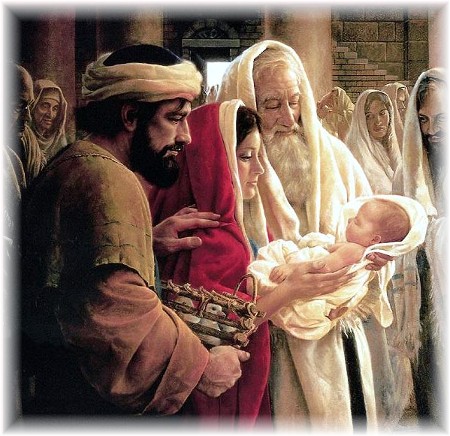
Simeon


Now there was a man in Jerusalem whose name was Simeon. This man was righteous and devout, awaiting the consolation of Israel, and the Holy Spirit was upon him.

It had been revealed to him by the Holy Spirit that he should not see death before he had seen the Messiah of the Lord.

He came in the Spirit into the temple; and when the parents brought in the child Jesus to perform the custom of the law in regard to him,

he took him into his arms and blessed God, saying:

    "Now, Master, you may let your servant go in peace, according to your word,
    for my eyes have seen your salvation,
    which you prepared in sight of all the peoples,
    a light for revelation to the Gentiles, and glory for your people Israel."


The child's father and mother were amazed at what was said about him;
and Simeon blessed them and said to Mary his mother,

   "Behold, this child is destined for the fall and rise of many in Israel, and to be a sign that will be contradicted
    (and you yourself a sword will pierce)  so that the thoughts of many hearts may be revealed."


-Luke 2: 26-35
#27723
Bible Study / Re: Mary Did You Know
October 19, 2010, 03:35:21 AM
Its one that makes me cry, every time I hear this song & see this video.
#27725
Bible Study / Re: Jesus Walks On Water, Peter Follows..
October 19, 2010, 01:14:38 AM
My remark:


Peter, filled with the joyous exaltation of Christ and the Holy Spirit, declared to walk with Christ. He walked on water because he saw Christ, was inspired to be with Christ, yet, when the winds and the storms blew all the stronger, began to loose faith. And began to sink. It is important to note that the lake, as the object being walked on, is the symbolism of the journey of faith. Christ, being Salvation and the Goal. The winds and the storms represents the world. The world is against faith, and will try its best to counter the faith in Christ, will test your faith, and will do its best to deceive those who believe. Since the world belongs to satan, may God rebuke him, it will always counter and try to counter the message of Christ and Salvation.

Peter, as a sinner, as a man, begins to doubt when troubles were around him. As a man, he was attacked by the devils. But his faith perfected what his mortality limited. He cried out, "Lord, Save Me!"

This, this very action, is the testimony and manifestation of fortitude, wisdom, piety, and knowledge. This request, nullifies the very instances of worldly attacks. For it manifests the believer's trust in Christ. In God. You see, Christ knew that Peter would doubt, He knows everything. He is the Alpha and the Omega. But despite Peter's lacking and questioning faith, Christ saved him. Matthew Chapter 14 verse 31 declares, "Immediately Jesus reached out his hand and caught him!". Christ also reminds Peter, "Oh you of little faith! Why do you doubt?"

When Christ tells Peter this, He tells all of us this. You see, Christ told Peter to 'Come to Me'. It is a command. When he told Peter this, He promises protection, counsel, and most of all His unquestioning Love and Care. Peter doubted , and because of this, resulted in his sinking. It is a sign to us that even the apostles, even Peter, the first pope, even himself doubted. But Christ reminds us in this that it is human to doubt, and reminds us to shear away from doubt if possible, and instead, trust in Him.

Peter, in this case, is the proto-Christian. An individual who yearns to be with Jesus, but is tempted, attacked by the world, but Christ's Word and Promise, and Action declares and Re-Assures us that He will be there to save us.

When Christ tells Peter, "Oh you of little faith! Why do you doubt!", He is also telling us this. And He reminds us, to believe in Him.

Just as he saved Peter from the waters, so will He save us....if we trust and call out to Him.


Blessings of Jesus Christ Our Lord be to you my brothers and sisters,
Lorenzo
#27726
Bible Study / Jesus Walks On Water, Peter Follows..
October 19, 2010, 01:01:36 AM
Matthew 14:22-33

22Immediately Jesus made the disciples get into the boat and go on ahead of him to the other side, while he dismissed the crowd. 23After he had dismissed them, he went up on a mountainside by himself to pray. When evening came, he was there alone, 24but the boat was already a considerable distance[a] from land, buffeted by the waves because the wind was against it.

25During the fourth watch of the night Jesus went out to them, walking on the lake. 26When the disciples saw him walking on the lake, they were terrified. "It's a ghost," they said, and cried out in fear.

27But Jesus immediately said to them: "Take courage! It is I. Don't be afraid."

28"Lord, if it's you," Peter replied, "tell me to come to you on the water."

29"Come," he said.

  Then Peter got down out of the boat, walked on the water and came toward Jesus. 30But when he saw the wind, he was afraid and, beginning to sink, cried out, "Lord, save me!"

31Immediately Jesus reached out his hand and caught him. "You of little faith," he said, "why did you doubt?"

32And when they climbed into the boat, the wind died down. 33Then those who were in the boat worshiped him, saying, "Truly you are the Son of God."


#27727
Bible Study / Re: Who Are The Archangels?
October 19, 2010, 12:50:09 AM
It is important to note that he who is now known as satan, was once named Lucifer. He was a Seraphim, one of the highest orders of Angels in the Celestial Heavens. This , of course, was before his fall. He who dared to be like God.

He was cast down as with a third of all the angels in heaven into Sheol (Hell). An everlasting punishment.
#27728
Bible Study / Who Are The Archangels?
October 19, 2010, 12:45:17 AM
Answer: The word angel means 'messenger' and describes the occupation of the angels. Archangels are head angels. According to St. Gregory the Great, there are 9 orders of angels, which St. Thomas, in his Summa Theologia, divides into 3 groups:

  1. Seraphim, Cherubim, and Thrones;
  2. The Dominations, Virtues, and Powers;
  3. The Principalities, Archangels, and Angels.

The apocryphal 1Enoch 20 lists the archangels as:

These are the names of the angels who watch.

Uriel, one of the holy angels, who presides over clamor and terror.

Raphael, one of the holy angels, who presides over the spirits of men.

Raguel, one of the holy angels, who inflicts punishment on the world and the luminaries.

Michael, one of the holy angels, who, presiding over human virtue, commands the nations.

Sarakiel, one of the holy angels, who presides over the spirits of the children of men that transgress.

Gabriel, one of the holy angels, who presides over Ikisat,  over paradise, and over the cherubim.
#27729
Bible Study / Re: Oratio Ad Sactum Michaelem
October 19, 2010, 12:39:56 AM
Sancte Michael Archangele, defende nos in proelio; contra nequitiam et insidias diaboli esto praesidium. Imperat illi Deus; supplices deprecamur: tuque, Princeps militiae coelestis, Satanam aliosque spiritus malignos, qui ad perditionem animarum pervagantur in mundo, divina virtute in infernum detrude. Amen
#27730
This article reminds us of the aspects of the intergenerational solidarity theory, especially on affectional solidarity and consensual solidarity. Family members require a feel and the dealing of affection toward each other in order to increase the parenteral relationship.

Its a good reminder and message for all.
#27731
Bible Study / Re: Your Favorite Biblical Figures?
October 19, 2010, 12:11:37 AM
St. Stephen the Martyr


St. Stephen , empowered with the gift of Fortitude, died for his faith...


Stephen, full of grace and power, did great wonders and signs among the people. Then some of those who belonged to the synagogue of the Freedmen (as it was called), Cyrenians, Alexandrians, and others of those from Cilicia and Asia, stood up and argued with Stephen. But they could not withstand the wisdom and the Spirit with which he spoke. Then they secretly instigated some men to say, "We have heard him speak blasphemous words against Moses and God." They stirred up the people as well as the elders and the scribes; then they suddenly confronted him, seized him, and brought him before the council. They set up false witnesses who said, "This man never stops saying things against this holy place and the law; for we have heard him say that this Jesus of Nazareth will destroy this place and will change the customs that Moses handed on to us." And all who sat in the council looked intently at him, and they saw that his face was like the face of an angel.

Then the high priest asked him, "Are these things so?"

And Stephen replied: "Brothers and fathers, listen to me. You are forever opposing the Holy Spirit, just as your ancestors used to do. Which of the prophets did your ancestors not persecute? They killed those who foretold the coming of the Righteous One, and now you have become his betrayers and murderers. You are the ones that received the law as ordained by angels, and yet you have not kept it."

When they heard these things, they became enraged and ground their teeth at Stephen. But filled with the Holy Spirit, he gazed into heaven and saw the glory of God and Jesus standing at the right hand of God. "Look," he said, "I see the heavens opened and the Son of Man standing at the right hand of God!" But they covered their ears, and with a loud shout all rushed together against him. Then they dragged him out of the city and began to stone him; and the witnesses laid their coats at the feet of a young man named Saul. While they were stoning Stephen, he prayed, "Lord Jesus, receive my spirit." Then he knelt down and cried out in a loud voice, "Lord, do not hold this sin against them." When he had said this, he died.


-Acts 6:8-7:2a,51c-60
#27732
This is quite touching, Anne.
#27733
Love Talk / Re: Define a great relationship?
October 18, 2010, 11:44:34 PM
In the world of taste and subtleties , this is a great relationship:


A glass of Spanish rioja , with strawberries and chocolate.

;)
#27734
Bible Study / Re: The Writings of St. Albert The Great
October 18, 2010, 10:16:12 PM
Now it must be asked if we can comprehend why comets signify the death of magnates and coming wars, for writers of philosophy say so. The reason is not apparent, since vapor no more rises in a land where a pauper lives than where a rich man resides, whether he be king or someone else. Furthermore, it is evident that a comet has a natural cause not dependent on anything else; so it seems that it has no relation to someone's death or to war. For if it be said that it does relate to war or someone's death, either it does so as a cause or effect or sign.

â€" Saint Magnus Albertus
De Cometis (On Comets) [before 1280], trans. Lynn Thorndike, from ed. Borgnet, IV, 499-508, quoted in Lynn Thorndike (ed.), Latin Treatises on Comets between 1238 and 1368 A.D. (1950), 75.


My remark: I love how he destroys the notion of superstition with God's heavenly creations. Beautiful. Wisdom and Fortitude is expressed here.
#27735
Bible Study / Re: The Writings of St. Albert The Great
October 18, 2010, 10:10:33 PM
It seems wonderful to everyone that sometimes stones are found that have figures of animals inside and outside. For outside they have an outline, and when they are broken open, the shapes of the internal organs are found inside. And Avicenna says that the cause of this is that animals, just as they are, are sometimes changed into stones, and especially [salty] stones. For he says that just as the Earth and Water are material for stones, so animals, too, are material for stones. And in places where a petrifying force is exhaling, they change into their elements and are attacked by the properties of the qualities [hot, cold, moist, dry] which are present in those places, and in the elements in the bodies of such animals are changed into the dominant element, namely Earth mixed with Water; and then the mineralizing power converts [the mixture] into stone, and the parts of the body retain their shape, inside and outside, just as they were before. There are also stones of this sort that are [salty] and frequently not hard; for it must be a strong power which thus transmutes the bodies of animals, and it slightly burns the Earth in the moisture, so it produces a taste of salt.

â€" Saint Magnus Albertus
De Mineralibus (On Minerals) [c.1261/63], Book I, tract 2, chapter 8, trans. D. Wyckoff (1967), 52-53.


my remark:

His understanding of ecology, paleontology, and paleo-limnology is wonderfully expressed. His understanding of molecular biology and biochemical pathways is unprecedented. Despite the time he lived in, despite the lack of modern spectroscopy machines that could have taught him this. God Is Great! Truly the Holy Spirit is unprecedented in His Gifts..
#27736
Bible Study / Re: The Writings of St. Albert The Great
October 18, 2010, 10:09:42 PM
This man of the church was truly endowed with the gift of knowledge, and wisdom, by the Holy Spirit.


Evidence of this [transformation of animals into fossils] is that parts of aquatic animals and perhaps of naval gear are found in rock in hollows on mountains, which water no doubt deposited there enveloped in sticky mud, and which were prevented by coldness and dryness of the stone from petrifying completely. Very striking evidence of this kind is found in the stones of Paris, in which one very often meets round shells the shape of the moon.

â€" Saint Magnus Albertus
De Causis Proprietatum Elementorum (On the Causes of the Properties of the Elements) [before 1280], Book II, tract 3, chapter 5, quoted in A. C. Crombie,
#27737
Bible Study / The Writings of St. Albert The Great
October 18, 2010, 10:04:41 PM
Writings of St. Albert the Great


Albertus Magnus was born around 1200 in Lauingen, Bavaria, Germany. Magnus is the Latin form of his family name, de Groot or the Great. Most of his education was at Padua, Italy in Aristotle's writings. The major portion of Albertus Magnus's writings show his love and understanding of philosophy. Based on Aristotle's work, he prepared a philosophical encyclopedia that he worked on most of his life. He was the first person who applied Aristotle's work to the Christian world of Western Europe.

He believed that the natural order did not conflict with religion. Along with his famous student, Thomas Aquinas, he wrote that Aristotle's natural philosophy was no obstacle to a Christian philosophical ideal of the natural order. He studied Aristotle's method of elucidating natural philosophy. He used inductive and deductive logic and concluded that the two domains, the natural world and Christian theology, were totally distinct from each other and one could be pursued without compromising the other.

In 1899 his writings were collected into 38 volumes. They contain his knowledge which is based on logic and observation of theology, astronomy, geography, mineralogy, zoology, chemistry, phrenology, physiology and more. He was not only the most widely read writer of his time, today he is considered Germany's greatest philosopher and theologian of the Middle Ages. Of the works of Aristotle available to him, he produced paraphrases as well as filling any gaps he felt were left by Aristotle.

Albertus's studies in logic led him to try to distinguish between universals that exist in themselves and are free from contamination and change and universals that exist only in the mind. In Metaphysics he wrote that the Good is the final cause of the order of the beings in the universe. He wrote that beings exist because God is good and they are good because they exist. He believed in the angelic orders and the intelligences and that they move the cosmic spheres and enlighten the human soul.

He wrote that human souls were joined to bodies but did not depend on bodies for their existence. He believed that the intellect was at once individual and universal. The human intellect is dependant on the senses and the soul is the cause of the passions and animation of the body. Under the humans came animals, plants, minerals and the elements.

Albertus understood human freedom to be the expression of free will, and the ability to weigh options and make an informed choice that will have a desired outcome. This is the door to ethics which, based on Aristotle, could be considered a theoretical deductive science, because it involves necessary and universal principles. According to him, animals operate only on instinct without any choice.

Albertus Magnus took holy orders and became a member of the Dominican Order in 1223. He was canonized in 1931 by Pope Pius XI and is a Doctor of the Church of which there are only 33 men and women who have received that honor.


http://www.albertthegreat.com/writings-of-albertus-magnus.html
#27738
Sacrament of Extremeunction or Anointing of the Sick


As to Anointing by conferring the Holy Spirit completes the sacrament of baptism, so extreme unction is the complement and completion of penance. Penance restores the justification lost by sin, extreme unction takes away the infirmity left by sin; it 'removes that state which might be an obstacle to the clothing with glory of the resurrection'; and, as every sacrament makes us men in some respect like Christ, 'so we become by extreme unction like the risen Christ because it will be given to the dying as a sign of the glory to come in which everything mortal will be stripped from the elect' (Albertus Magnus). According to the teaching of great theologians, the holy anointing makes the man who stands at the threshold of eternity and loyally cooperates with the grace of the sacrament ready to enter directly upon the Beatific Vision.

That this sacrament was provided for the sick to strengthen them and prepare them for a happy passage to the hereafter was for centuries an undisputed part of tradition. The ancient prayers accompanying the anointing of the sick are evidence of this. The Church only had to concern herself officially with the doctrinal side of it when particular questions cropped up or errors appeared. For this reason the earliest documents deal more with the question of the minister and the external rites. It was not until the Reformation denied the sacramentality of extreme unction and its institution by Christ that a more exact exposition was demanded of the Council of Trent.

THE CHURCH TEACHES:

Extreme Unction is a true sacrament instituted by Christ and proclaimed by St. James. It is administered by anointing with blessed oil accompanied by prayer. Only a priest can validly administer it. It can be received by any baptized person who has reached the age of reason and is on account of sickness or age in danger of death. Its effect is the strengthening of the soul, often of the body as well, and in the necessary conditions remission of sins.
#27739
The Sacrament of Holy Orders


As to Orders. The supreme task which Christ had to fulfill was his priestly work of atonement which he completed as mediator between God and man. By the union in himself of humanity and divinity Christ is by nature the mediator. As a man from among men, Christ is our mediator with the Father; yet he is also capable of offering a worthy sacrifice to God because, by virtue of the union of his human nature with the Second Person of the Godhead, his human actions have in infinite value. In this fullest sense, the priesthood belongs to Christ alone.

But if Christ wished to live on and continue his work in the Church, the first thing he had to do was to provide for the continuance of his sacerdotal and mediatory function. Above all, if Christ wished to renew the sacrifice of the Cross throughout the ages and all over the world as the sacrifice of the New Law in the Holy Mass, he had to allow other men to share in his priesthood. For if there is to be a true sacrifice, there must be a priesthood ordained and authorized by God from whose hands God will accept the sacrifice.

All attacks on the priesthood of the Catholic Church thus go back to denial that the Holy Mass is a true sacrifice, entrusted by Christ to his Church, and ultimately to denial of any visible Church to which Christ entrusted his work as mediator and redeemer. So the attacks of Wycliffe, the Reformers and the "liberal" historians regarded the setting up of an official priesthood as the result of the evolution of Christian life in the early Christian communities.

The priesthood is ordained in the first place for the offering of sacrifice and therefore for the solemnization of the Church's formal worship. The arrangements for these celebrations demand also a corresponding ministry and thus graded ministers to the altar. This grading of the ministry goes in part back to direct institution by Christ, but in part was introduced by the Church.

The degrees of order - the four minor and three major orders with the highest of all, that of Bishop - signify an order of rank in the mediation of grace. It must be distinguished from the other order of rank which concerns jurisdiction, magisterium and pastorate. The latter are not essentially linked with the powers of mediation of grace, but in the concrete order established by God there are close relationships between the two kinds of power. For example, the fact that the power of forgiving sins exists in the Church does not, in itself, say anything about who has this power. But in the divine order, only a priest can have it.

Besides the conflict about the fact of the sacrament of order, its institution by Christ and its hierarchical structure, it has always been a principal concern of the Church to raise the priesthood to the high moral level suitable to its sublime duties. In the West, a most important stem in this direction was the insistence on celibacy. But as we are concerned here solely with doctrinal matters, documents on this are not given.

THE CHURCH THUS TEACHES:

Order is a true sacrament instituted by Christ who ordained the Apostles at the Last Supper. It is administered by the laying on of hands and the key phrases of the ordination preface. Only a Bishop can validly ordain. Order is a purely ecclesiastical concern. The effect of the sacrament of order is to impart the Holy Spirit and to impress an indelible character, which permanently distinguishes those in orders from the laity. The laity also has a part in Christ's priesthood, but in another manner. The office of Bishop is above the priesthood (which in turn is above the diaconate) and gives special powers of consecration. To the priesthood belong the celebration of Holy Mass and the power of forgiving sins. The subdiaconate belongs to the priesthood and diaconate to the 'major orders.' In addition, the four 'minor orders' were instituted by the Church. Conditions for the valid reception of order are baptism and being of the male sex.
#27740
The Sacrament of Matrimony


Matrimony is the marriage contract between Christians raised by Christ to the dignity of a sacrament. The theological and dogmatic treatment of this sacrament does not look very much to its main features of unity and indissolubility which are basic characteristics of all marriage in natural ethics; they are rather premisses, though of course they attain greater significance and depth and stability in marriage as a sacrament. The fact, then, that these features take up a considerable amount of space in Church documents must not be allowed to hid the theological content of this sacrament which comes to us from revelation and belongs to the supernatural order. As a sacrament matrimony is entirely oriented on man's supernatural goal. Matrimony and order are the two sacraments which not only serve the individual in reaching this goal but are there for the benefit of the community. Matrimony is there for the mutual help of the spouses and the increase of the people of God. Devotion to his twofold end is the way of salvation for married couples, a way sanctified by the sacrament. 'Yet she shall be saved through childbearing; if she continue in faith, and love, and sanctification, with sobriety' (1 Tim:2:15).

The mutual sacrifice and devotion of husband and wife is a true picture of Christ's sanctifying sacrifice and devotion to His Church. 'Matrimony has its significance in the first place from Christ who took the Church as his bride at the price of his own blood. And also because when he offered his life as the price of her ransom, he stretched our his arms in an embrace of supreme love. And thirdly: as Eve was formed from the side of Adam while he slept, so the Church was formed from the side of the dying and dead Christ, as the two chief sacraments poured from his side - the blood of redemption and the water of absolution' (Albertus Magnus).

It is only from this point of view that one can understand the Church's unceasing struggle against any attempt to see marriage as something unholy or something merely profane, of no concern to religion. The campaign began with those countless rigorist or dualist sects in early times and in the Middle Ages; if defended the religious nature of marriage against the Reformers for whom it was just a civil affair; it represented the demands of the Church in matter of matrimonial legislation in various countries and defended the indissolubility of the marriage contract and the sacrament in the encyclicals of Leo XIII and Pius XI.

Since marriage is also of the greatest civic significance, jurisdiction in matrimonial matters was one of the commonest causes of differences between Church and state. Since this is solely a question of dogmatic view- points, the relevant documents are omitted. For the same reason Church documents dealing mainly with matrimonial morality are omitted.

The Church Thus Teaches: Marriage is willed by God and was raised to a sacrament by Christ. It is therefore good but may not be put before the state of virginity. The sacrament of matrimony consist of the marriage contract, so that for Christians the contract and the sacrament are inseparable. Therefore marriage comes into the legal competence of the Church. The Church may establish impediments, including diriment impediments which invalidate a marriage and forbidding impediments which make marriage illegal. She may determine the form and rite to be observed. Matrimonial Causes fall to ecclesiastical courts. The purpose of marriage is the increase of the people of God and mutual help for the partners in loyalty and love. The sacrament gives married people a claim on the graces necessary to their state.

Only monogamy is valid. A new marriage is allowed after the death of one party. Marriage is indissoluble, even in cases of adultery. An unconsummated marriage can in certain circumstances be dissolved by the Church. Once it is consummated, a separation only is possible; the marriage bond cannot be dissolved.
#27741
The Sacrament of Confirmation


The sacrament of confirmation completes the sacrament of baptism. If baptism is the sacrament of re-birth to a new and supernatural life, confir- mation is the sacrament of maturity and coming of age. The real confession of Christ consist in this 'that the whole man submits himself to Truth, in the judgment of his understanding, in the submission of his will and in the consecration of his whole power of love . . . To do this, poor-spirited man is only able when he has been confirmed by God's grace'

This confirmation in the power of the Holy Spirit leading to a firm profession of faith has always been the particular effect which Catholic tradition has ascribed to the sacrament. It is effect which complements and completes that of baptism.

THE CHURCH TEACHES:

Confirmation is a true sacrament instituted by Christ and different from baptism. It is administered by laying-on of hands and anointing with chrism accompanied by prayer. The chrism is blessed by the bishop and the bishop administers the sacrament. All baptized persons can and should be confirmed. The effect of the sacrament of confirmation is to give strength in faith and for the confession of faith and to impress an indelible character.
#27742
The Sacrament of the Holy Eucharist


The doctrine of the Holy Eucharist consist of that of the Eucharist sacrifice, the sacrificial meal, and the sacrificial food, or to express it otherwise, it consists of the doctrine of the Mass, of Communion, and of the Real Presence. There is no presence of Christ in the Blessed Sacrament that is not meant first and foremost as food for the faithful people, and there is no sacramental union with Christ in Holy Communion that is not to be thought of as a sacrificial meal: 'For as often as you shall eat this bread, and drink the chalice, you shall show the death of the Lord, until he come' (1 Corinthians 11:26). The Eucharistic meal can only be prepared in the sacrifice of the Mass.

Thus the mystery of the Eucharist summarizes the whole mystery of our redemption. There are two fundamental relationships in which Christ stands to us. First, he is our priestly mediator with God, and offers him atonement for our sins. Bust Christ is not a stranger to us, who merely represents us as a propitiator before God. He comes to us in the second relationship by being the mediator of the grace which God gives us on account of his sacrifice. That is the mystery of our union with Christ who is the source of all grace for us. 'And of his fullness we have all received, grace for grace' (John 1:16).

This second community is realized only in the sacrifice of the Cross, by his giving his life for his Church which he had to ransom from himself. Only in death did Christ seal the deep covenant with the Church whereby she is purified and sanctified and which according to the teaching of St. Paul is the image of the most intimate union of human being in marriage: 'Husbands, love your wives, as Christ also loved the Church and delivered himself up for it; that he might sanctify it, cleansing it by the laver of water in the word of life' (Eph. 5:25). From the opened side of our crucified Savior the Church was first born, as Eve was taken from Adam's side. That is the most ancient way of expressing this truth.

This twofold relationship, then, in which Christ stands to us men, as our mediator before God and the bringer of all graces from God, lives on in the mystery of the Eucharist. The Holy Mass is the renewing of the sacrifice which Christ offered for us, of the sacrifice of atonement for our sins; but the sacrifice is also at the same time the preparation of the Eucharistic meal, the sacrament of our union with Christ in grace.

We should not be surprised if the doctrine of the real presence of Christ in the Blessed Sacrament occurs more than most doctrines in the documents of the Church. There are few mysteries of the faith where the mystery is so evident and therefore so exposed to the attacks of heresy and unbelief. However, the militant position of the Church should not prevent us from seeing the Real Presence in the context of the whole Eucharistic mystery.

THE CHURCH TEACHES:

The doctrine of the Holy Eucharist is thus made up of:

1. Doctrine about the Eucharistic sacrifice. Holy Mass is a real sacrifice, instituted by Christ at the Last Supper. It represents Christ's sacrifice of the Cross, but in an unbloody manner. Priest and victim are both Christ, who offers himself through the priest. The laity also offers the sacrifice, but does not have the power to transubstantiate. The Eucharistic sacrifice is offered to God in praise, thanksgiving, petition and atonement, for the living and the dead. Saints may also be commemorated in honor and petition. The Church has the responsibility of determining the rites and prayers to be observed. The liturgy as a whole is the public worship by the mystical Body of Christ. In every liturgical activity Christ is present, in a manner that must be properly interpreted.

2. Doctrine about the Eucharistic sacrament, sacrificial meal and sacrificial food: The Holy Eucharist is a true sacrament, instituted by Christ. Christ is really present in the Holy Eucharist, even when not being received. It is therefore to be honored and adored. The whole Christ is present in either kind and is received by the communicant. For the wheat bread and grape wine are transubstantiated by the ordained priest into the flesh and blood of Christ so that only the appearance of bread and wine remains.

The sacrament effects union with Christ; it is nourishment for the soul, gives increase in grace and remits venial sin and punishment.
#27743
The Sacrament of Reconciliation / Penance


As to Penance. If the Church is to fulfill in its entirely her task of saving mankind she needs the power to forgive sins. It is a power essentially different from her mission to preach the Gospel and baptize. In baptism, indeed all sins and the punishment due to them are remitted. Baptism is the first justification. But the first justification is also the first entry into the realm of the supernatural which works entirely by God's grace and which asks of the person baptized no more than that he turn away from sin and turn in faith to Christ.

Penance is something different. A baptized person who sins again, sins against God to whom, since his baptism in the name of the Most Holy Trinity, he belongs. He also betrays the Church of which he is now a member. Thus, the new atonement assumes the character of a legal trial, with accusation, sentence and satisfaction.

The practice of penance has varied considerably down the centuries. In very early days satisfaction, usually in the form of public penance, was very much to the fore. Re-acceptance into the Church community normally took place only after completion of the penance imposed. More and more, however, penance has withdrawn from the public domain and today only the private administration of the sacrament is still in use.

The development of the system of confession shows that misunderstanding easily arises above the nature of penance. In the face of all attacks - by Wycliffe, the Reformers, liberal dogmatic historians and modernists - the Church has always maintained the judicial character of the sacrament of penance and drawn the necessary conclusion.

THE CHURCH THUS TEACHES:

The Church has the power to forgive all sins. This forgiveness of sins is a true sacrament instituted by Christ, different from baptism, particularly on account of its judicial form. Sins are forgiven only by the sacrament of penance. Sins are forgiven by absolution which can only be given by an authorized priest. It is a real judicial pardon. The Church has the power to reserve certain cases.

On the part of the sinner contrition, confession and satisfaction are required. Contrition is aversion to the sins committed. Perfect contrition remits sin even before confession if it is joined with the intention to confess. Imperfect contrition (attrition) is sufficient if there is confession, and is a good and salutary thing.

Confession must cover all mortal sins committed since baptism and not previously confessed. Venial sins, and sins already confessed can validly be confessed. And satisfaction. The effect of the sacrament is recon- ciliation with God, that is, the remission of sins and the eternal punishment but not all the temporal punishment.
#27744
The Sacrament of Baptism


Baptism’s Biblical Roots

by Carolyn Thomas, S.C.N.

The practice of baptism was a common rite of initiation in many religious expressions in the ancient Mediterranean world. From the time of Jesus, Christianity also expressed through water baptism freedom from sin, union with Jesus Christ and all other baptized persons, our participation in the salvific death and resurrection of Jesus and our new life in the Spirit.

St. Paul, the first great theologian of baptism, expressed its meaning in terms of a break with the old and beginning of new life in Christ. He understood well the reality of the relationship that baptism establishes between us and God and his Son Jesus. The New Testament provides the basis and focal point for the Church’s understanding of baptism.

Baptism in the Gospels

Jesus’ own baptism, to which all four Gospels make reference (John less directly than the other three), provides a starting point for any serious study of the sacrament.

Contrary to some writers’ opinions, Jesus’ baptism was not simply an affirmation of his messiahship, but rather a proclamation of his relationship as Son to the Father. In the baptismal scene in the Gospel of Mark, for example, God speaks directly to Jesus: "You are my Son, the Beloved; with you I am well pleased" (Mark 1:11). In Matthew, the voice addresses the crowd: "This is my Son, the Beloved, with whom I am well pleased" (Matthew 3:17). In Luke, again the voice is directed to Jesus: "You are my Son, the Beloved; with you I am well pleased" (Luke 3:22).

Here we find the basis for the meaning of baptism as the ritual in which one becomes a child of God. Just as Jesus is God’s Son, so also the baptized person is a daughter or son of God and is called by God to take on the family resemblance in living and loving as Jesus did.

In the Fourth Gospel, John the Baptist witnesses to Jesus’ identity as God’s Son: "And I myself have seen and have testified that this is the Son of God" (John 1:34). His sonship is affirmed by the Spirit who rests on him (John 1:32). John the Baptist proclaims him to be the "Lamb of God" who destroys the world’s sin through his death and resurrection. John thus affirms that the action of choosing is of God. St. Paul speaks of God’s choosing us before the foundation of the world (Ephesians 1:4). Hence baptism is not our choice or our achievement but an election by God.

The role of the Spirit in baptism is attested by all three Synoptic Gospels. The Spirit is the greatest gift of Jesus in baptism. John declares, "I have baptized you with water; but he will baptize you with the Holy Spirit" (Mark 1:8; see also Matthew 3:11; Luke 3:16).

Two passages concerning the waters of baptism stand out in the Gospel according to John. The first is a statement by Jesus to Nicodemus: "Very truly, I tell you, no one can enter the kingdom of God without being born of water and the Spirit" (John 3:5). The other is the story of the man born blind in John 9:1-41. Jesus tells the man to go and wash in the pool of Siloam, and the evangelist tells us that "Siloam" means "the one sent." In other words, the blind man is to wash himself in the person of Jesus who was sent by the Father.

Baptism in Acts

Acts of the Apostles adds to our understanding of baptism with references to belief in Jesus, which is the heart and basis for baptism. Paul’s account of his conversion in Acts is a good example.

Ananias says to Paul, "Brother Saul, regain your sight!" Paul tells us, "In that very hour I regained my sight and saw him. Then he said, ‘The God of our ancestors has chosen you to know his will, to see the Righteous One and to hear his own voice; for you will be his witness to all the world of what you have seen and heard. And now why do you delay? Get up, be baptized, and have your sins washed away, calling on his name’" (Acts 22:13-16).

Thus Acts of the Apostles associates baptism with the Holy Spirit and his gifts of salvation, belief in Jesus and God, preaching the Good News and repentance of sin. Clearly, both in the Gospels and in Acts, baptism is never simply a private matter. Baptism is always between Jesus and the person baptized, but at the same time, it is an act of the Church with Jesus as its center.

Baptism in Paul

In Paul’s letters, we find a more developed theological understanding of baptism, even though it is generally agreed that Paul’s letters preceded the writing of the Gospels. However, the sources used by the evangelists concerning the baptism of Jesus predate Paul’s letters and hence would reflect an earlier understanding on which Paul himself built.

Paul speaks of the transformation through the power of the Spirit that occurs in baptism: "And this is what some of you used to be. But you were washed, you were sanctified, you were justified in the name of the Lord Jesus Christ and in the Spirit of our God" (1 Corinthians 6:11). Thus Paul emphasizes the dignity to which a person rises in baptism: "Or do you not know that your body is a temple of the Holy Spirit within you, which you have from God, and that you are not your own?" (1 Corinthians 6:19). Baptism, therefore, raises the person to a dignity that God will never deny; once a chosen child of God, one always remains God’s dearly loved child.

St. Paul tells us that the baptized person is one with the Lord: "But anyone united to the Lord becomes one spirit with him" (1 Corinthians 6:17). So intimate is this union with the risen Lord, Paul says, that "if we have been united with him in a death like his, we will certainly be united with him in a resurrection like his" (Romans 6:5). The Greek word for "united," symphytos, is a horticulture word that means "grafted." In other words, Paul is saying that like a grafted shoot, the baptized person is so closely united with Christ that he or she derives life from Jesus Christ himself. Thus baptism marks the end of the power of sin for the baptized, so that the believer lives a new kind of life for God in Christ, to whom he or she is intimately united. Baptism communicates to the believer the life-giving power of the risen Lord.

That union with Christ, however, is not individualistic but rather a corporate one, for the Christian is one with all other believers: "[L]ead a life worthy of the calling to which you have been called, ... making every effort to maintain the unity of the Spirit in the bond of peace. There is one body and one Spirit, ... one Lord, one faith, one baptism, one God and Father of all" (Ephesians 4:1-4).

Paul states that in baptism, "f you belong to Christ, then you are Abraham’s offspring, heirs according to the promise" (Galatians 3:29). By the waters of baptism, the Christian enters into the fullness of salvation history. Merely by belonging to Christ, one becomes an heir of the promises made to Abraham. "n Christ Jesus you are all children of God through faith. As many of you as were baptized into Christ have clothed yourselves with Christ. There is no longer Jew or Greek, there is no longer slave or free, there is no longer male and female; for all of you are one in Christ Jesus" (Galatians 3:26).

That which happened to Christ in his death and resurrection is transferred to the believer in baptism: "Do you not know that all of us who have been baptized into Christ Jesus were baptized into his death? Therefore we have been buried with him by baptism into death, so that, just as Christ was raised from the dead by the glory of the Father, so we too might walk in newness of life" (Romans 6:3-4).

The Waters of Baptism

Water as a symbol of baptism is rich and meaningful. Water refreshes, cleanses and gives life. Many adults remember that as children receiving religious instruction, the emphasis in the study of baptism was on the removal of original sin.

A frequently asked question was, "How can God punish me for something I did not do?" When speaking of original sin, we are not referring to personal fault but rather to an inclination to evil, a deprivation of holiness and likeness to our Creator. This deprived condition, which we call original sin, is the result of Adam and Eve's loss of their gift of holiness and friendship with God. Like their first parents, all human beings share this loss and are subject to suffering, death and ignorance.

Christ, however, conquered the power of Satan by his death and resurrection. St. Paul says, "Just as one man's trespass led to condemnation for all, so one man's act of righteousness leads to justification and life for all" (Romans 5:18).

In baptism, we are reoriented toward God; the life of grace overcomes the power of evil and enables the baptized to believe in God and to engage, under the power of the Holy Spirit, in the struggle against Satan and the power of death.

Water also has the power to take away life. In baptism, the person dies to all that is not of Christ and rises to new life with him: "Therefore we have been buried with him by baptism into death, so that, just as Christ was raised from the dead by the glory of the Father, so we too might walk in newness of life" (Romans 6:4).

Baptism and the Church

Out of God’s revealed word, the Church has developed a theology of baptism that takes into account the lived experience of the Church throughout its history, its liturgical life and its theological developments.

The notion of baptism as a sacrament dates back to the early centuries of Christianity. The word "sacrament" is borrowed from the Latin, sacramentum, which in Roman times referred to an initiation rite in which soldiers promised their fidelity to their commander. In teaching Gentiles, the Church used the word sacramentum to explain the rite of Christian initiation in which the initiates would commit themselves to the service of God. When Christianity supplanted polytheism in the empire, the Roman sense was dropped, and the word was expanded to any symbol that represented one’s relationship to God.

By the fifth century, St. Augustine referred to a sacramentum as anything that was "a sign of a sacred reality." By the twelfth century, the word was restricted to the seven rituals of the Church which Catholics refer to as the seven sacraments.

In the first century, however, the word "baptism" was not specifically a Christian designation for a sacrament. The ancient mystery religions made use of initiation rites which had similarities to Jewish and Christian baptisms. Hebrews 6:1-2 speaks of "baptisms" that were practiced by the Jews before the resurrection of Jesus. These baptisms were largely purification rites. By the second century A.D., these Jewish rituals had developed into initiatory rites for proselytes and included instruction, circumcision and water baths. They were initiatory rites that made Gentiles Jews by purifying them from their state of uncleanness and admitting them into the covenant life of Judaism, which in turn was culminated by the offering of sacrifice.

The Church’s baptismal tradition has shaped the rite as we know it in the Catholic Church today. From the Church’s expression of corporate faith in the early Church, through conversion and a ritual that was aimed at sustaining one in the faith in the face of persecution and death, to its present ritual form, baptism continues to unite the baptized individual with Christ and his body, the Church.


Praying With Scriptures

Baptism is more than a single momentary event. The rite of baptism plunges the newly baptized person into a new relationship with God and others. Spend some time reflecting on the meaning of your relationship with the risen Jesus and other people in Ephesians 4:25-32.
#27745
Bible Study / Re: The Seven Gifts of The Holy Spirit
October 18, 2010, 09:33:05 PM
Isles, we can only pray for those who have passed from this life unto the next. And pray that the mercy and judgment of the Lord Jesus Christ, who knows no corruption nor can be maligned, and can see past through all defenses, be observed for those who  have passed. God rest their souls.
#27746
Bible Study / Re: The Seven Gifts of The Holy Spirit
October 18, 2010, 09:30:43 PM
It is in silence and in personal reflection , that a brother and sister in Christ can fully discern what the Lord wants us to do. And in accomplishing His Will, we reflect and rely on these seven gifts of the Holy Spirit. I say that it is in silence and personal reflection that one can accomplish this because it is in silent and private prayer that one can really hear the Lord. By opening our Hearts to Him, can we listen beyond our ears, but by the ears of faith. It is in silence and in secluded prayer that one can see beyond the eyes, but through the eyes of the spirit.

These seven gifts of the Holy Spirit, which are endowed to all of us through baptism, and communion with the Lord, allows us to get through every day. The strength and the power to understand right from wrong and act accordingly not by what the world thinks is right, but what is right in the eyes of God.

And understanding these seven gifts, one comprehends that indeed it isn't so difficult to be Christian in this world. For we are strengthened and empowered through the Grace of God.

#27747
Music and Video / Re: -Here I Am, Lord-
October 18, 2010, 12:14:45 PM
Beautiful, Beautiful, Beautiful, Beautiful!


Hymn - "Here I Am Lord", Choir, Congregation, Pipe Organ
#27748
Music and Video / -Here I Am, Lord-
October 18, 2010, 12:12:15 PM
A beautiful Catholic Mass Hymnal.


♫ "Here I Am, Lord" (very solemn hymn)
#27749
Music and Video / It is Well with my Soul
October 18, 2010, 12:02:51 PM
This is a really soul-touching Worship Song. Beautiful..

It is Well with my Soul
#27750
Music and Video / Jeremy Camp: Mighty To Save
October 18, 2010, 12:00:23 PM
In my opinion, one of the best versions of this song.

A truly great Worship Song.


Jeremy Camp "Mighty To Save"
#27751
Quotable Quotes / Re: Love Quote of the Day
October 18, 2010, 11:57:24 AM
Quote from: jorgeanna on October 17, 2010, 02:21:53 AM
"If enduring pain, braving shame, despising one's self for the sake of affection and accepting misery without question is the definition of love - then, I LOVE YOU."


Anne, this is beautiful. It touches my heart. I will save this and share this.
#27752
Bible Study / Re: The Seven Gifts of The Holy Spirit
October 18, 2010, 11:54:28 AM
The Final Gift of the Holy Spirit:

Confirming the Virtue of Hope:

The gift of the fear of the Lord, Fr. John A. Hardon notes in his Modern Catholic Dictionary, confirms the virtue of hope. We often think of hope and fear as mutually exclusive, but the fear of the Lord is the desire not to offend Him, and the certainty that He will give us the grace necessary to keep from doing so. It is that certainty that gives us hope.

The fear of the Lord is like the respect we have for our parents. We do not wish to offend them, but we also do not live in fear of them, in the sense of being frightened.

What the Fear of the Lord Is Not:

In the same way, Father Hardon notes, "The fear of the Lord is not servile but filial." In other words, it is not a fear of punishment, but a desire not to offend God that parallels our desire not to offend our parents.

Even so, many people misunderstand the fear of the Lord. Recalling the verse that "The fear of the Lord is the beginning of wisdom," they think that the fear of the Lord is something that is good to have when you first start out as a Christian, but that you should grow beyond it. That is not the case; rather, the fear of the Lord is the beginning of wisdom because it is one of the foundations of our religious life, just as the desire to do what our parents wish us to do should remain with us our entire lives.
#27753
Bible Study / Re: The Seven Gifts of The Holy Spirit
October 18, 2010, 11:51:09 AM
One of the Gifts of the Holy Spirit:

The Perfection of Religion:

Perhaps in none of the gifts of the Holy Spirit is this instinctual response more obvious than in piety. While wisdom and knowledge perfect the theological virtue of faith, piety perfects religion, which, as Fr. John A. Hardon, S.J., notes in his Modern Catholic Dictionary, is "The moral virtue by which a person is disposed to render to God the worship and service he deserves." Far from being a drudgery, worship should be an act of love, and piety is the instinctive affection for God that makes us desire to render worship to Him, just as we voluntarily honor our parents.

Piety in Practice:

Piety, Father Hardon notes, arises "not so much from a studied effort or acquired habit as from a supernatural communication conferred by the Holy Spirit." People sometimes say that "piety demands it," which usually means that they feel compelled to do something that they don't want to do. But true piety makes no such demands but instills in us a desire always to do that which is pleasing to God (and, by extension, that which is pleasing to those who serve God in their own lives).
#27754
Bible Study / Re: The Seven Gifts of The Holy Spirit
October 18, 2010, 11:47:32 AM
The Fifth Gift of the Holy Spirit:


The Perfection of Faith:

Like wisdom, knowledge perfects the theological virtue of faith. The aims of knowledge and wisdom are different, however. Whereas wisdom helps us to penetrate divine truth and prepares us to judge all things according to that truth, knowledge gives us that ability to judge. As Fr. John A. Hardon, S.J., writes in his Modern Catholic Dictionary, "The object of this gift is the whole spectrum of created things insofar as they lead one to God."

The Application of Knowledge:

Knowledge allows us to see the circumstances of our life as God sees them, albeit in a more limited way, since we are limited by our human nature. Through the exercise of knowledge, we can ascertain God's purpose in our lives and His reason for placing us in our particular circumstances. As Father Hardon notes, knowledge is sometimes called "the science of the saints," because "it enables those who have the gift to discern easily and effectively between the impulses of temptation and the inspirations of grace." Judging all things in the light of divine truth, we can more easily distinguish between the promptings of God and the subtle wiles of the devil.
#27755
Bible Study / Re: The Seven Gifts of The Holy Spirit
October 18, 2010, 11:44:32 AM
One of the Four Cardinal Virtues:

Fortitude is one of the four cardinal virtues. As such, it can be practiced by anyone, since, unlike the theological virtues, the cardinal virtues are not, in themselves, the gifts of God through grace but the outgrowth of habit.

Fortitude is commonly called courage, but it is different from what much of what we think of as courage today. Fortitude is always reasoned and reasonable; the person exercising fortitude is willing to put himself in danger if necessary, but he does not seek danger for danger's sake.

The Third of the Cardinal Virtues:

St. Thomas Aquinas ranked fortitude as the third of the cardinal virtues, because it serves prudence and justice, the higher virtues. Fortitude is the virtue that allows us to overcome fear and to remain steady in our will in the face of obstacles. Prudence and justice are the virtues through which we decide what needs to be done; fortitude gives us the strength to do it.

What Fortitude Is Not:

Fortitude is not foolhardiness or rashness, "rushing in where angels fear to tread." Indeed, part of the virtue of fortitude, as Fr. John A. Hardon, S.J., notes in his Modern Catholic Dictionary, is the "curbing of recklessness." Putting our bodies or lives in danger when it is not necessary is not fortitude but foolishness.

A Gift of the Holy Spirit:

Sometimes, however, the ultimate sacrifice is necessary, in order to stand up for what is right and to save our souls. Fortitude is the virtue of the martyrs, who are willing to give their lives rather than to renounce their faith. That sacrifice may be passiveâ€"Christian martyrs do not actively seek martyrdomâ€"but it is nonetheless determined and resolute.

It is in martyrdom that we see the best example of fortitude rising above a mere cardinal virtue (able to be practiced by anyone) into a supernatural gift of the Holy Spirit. But it also shows itself, as the Catholic Encyclopedia notes, "in moral courage against the evil spirit of the times, against improper fashions, against human respect, against the common tendency to seek at least the comfortable, if not the voluptuous."

Fortitude, as a gift of the Holy Spirit, also allows us to cope with poverty and loss, and to cultivate the Christian virtues that allow us to rise above the basic requirements of Christianity. The saints, in their love for God and their fellow man and their determination to do what is right, exhibit fortitude as a supernatural gift of the Holy Spirit, and not merely as a cardinal virtue.
#27756
Bible Study / Re: The Seven Gifts of The Holy Spirit
October 18, 2010, 11:41:16 AM
The Third Gift of the Holy Spirit:

Counsel is the perfection of the cardinal virtue of prudence. While prudence, like all the cardinal virtues, can be practiced by anyone, whether in a state of grace or not, it can take on a supernatural dimension through sanctifying grace. Counsel is the fruit of this supernatural prudence.

Like prudence, counsel allows us to judge rightly what we should do in a particular circumstance. It goes beyond prudence, though, in allowing such judgments to be made promptly, "as by a sort of supernatural intuition," as Fr. John A. Hardon writes in his Modern Catholic Dictionary.


Counsel in Practice:

Counsel builds on both wisdom, which allows us to judge the things of the world in light of our final end, and understanding, which helps us to penetrate to the very core of the mysteries of our faith.

"With the gift of counsel, the Holy Spirit speaks, as it were, to the heart and in an instant enlightens a person what to do," writes Father Hardon. It is the gift that allows us as Christians to be assured that we will act correctly in times of trouble and trial. Through counsel, we can speak without fear in defense of the Christian Faith. Thus, the Catholic Encyclopedia notes, counsel "enables us to see and choose correctly what will help most to the glory of God and our own salvation."
#27757
Bible Study / Re: The Seven Gifts of The Holy Spirit
October 18, 2010, 11:38:27 AM
The Second Gift of the Holy Spirit:

Understanding is the second gift of the Holy Spirit, behind only wisdom. It differs from wisdom in that wisdom is the desire to contemplate the things of God, while understanding allows us, as Fr. John A. Hardon writes in his Modern Catholic Dictionary, to "penetrate to the very core of revealed truths." This doesn't mean that we can come to understand, say, the Trinity the way that we might a mathematical equation, but that we become certain of the truth of the doctrine of the Trinity. Such certitude moves beyond faith, which "merely assents to what God has revealed."


Understanding in Practice:

Once we become convinced through understanding of the truths of the Faith, we can also draw conclusions from those truths and arrive at a further understanding of man's relation to God and his role in the world. Understanding rises above natural reason, which is concerned only with the things we can sense in the world around us. Thus, understanding is both speculativeâ€"concerned with intellectual knowledgeâ€"and practical, because it can help us to order the actions of our lives toward our final end, which is God. Through understanding, we see the world and our life within it in the larger context of the eternal law and the relation of our souls to God.
#27758
Bible Study / Re: The Seven Gifts of The Holy Spirit
October 18, 2010, 11:36:19 AM
The First and Highest Gift of the Holy Spirit:

Wisdom is the perfection of faith. As Fr. John A. Hardon, S.J., notes in his Modern Catholic Dictionary, "Where faith is a simple knowledge of the articles of Christian belief, wisdom goes on to a certain divine penetration of the truths themselves." The better we understand those truths, the more we value them properly. Thus wisdom, the Catholic Encyclopedia notes, "by detaching us from the world, makes us relish and love only the things of heaven." Through wisdom, we judge the things of the world in light of the highest end of manâ€"the contemplation of God.

The Application of Wisdom:

Such detachment, however, is not the same as renunciation of the worldâ€"far from it. Rather, wisdom helps us to love the world properly, as the creation of God, rather than for its own sake. The material world, though fallen as a result of the sin of Adam and Eve, is still worthy of our love; we simply need to see it in the proper light, and wisdom allows us to do so.

Knowing the proper ordering of the material and spiritual worlds through wisdom, we can more easily bear the burdens of this life and respond to our fellow man with charity and patience.
#27759
Your request has been honored, sister.
#27760
Bible Study / The Seven Gifts of The Holy Spirit
October 18, 2010, 11:26:45 AM
The seven gifts of the Holy Spirit are enumerated in Isaiah 11:2-3:

2 The Spirit of the LORD will rest on himâ€"
      the Spirit of wisdom and of understanding,
      the Spirit of counsel and of power,
      the Spirit of knowledge and of the fear of the LORD -

3 and he will delight in the fear of the LORD.
      He will not judge by what he sees with his eyes,
      or decide by what he hears with his ears;


They are present in their fullness in Jesus Christ but are found in all Christians who are in a state of grace. We receive them when we are infused with sanctifying grace, the life of God within usâ€"as, for example, when we receive a sacrament  worthily. As the current Catechism of the Catholic Church notes, "They complete and perfect the virtues of those who receive them." Infused with His gifts, we respond to the promptings of the Holy Spirit as if by instinct, the way Christ Himself would.


1. Wisdom

Wisdom is the first and highest gift of the Holy Spirit, because it is the perfection of faith. Through wisdom, we come to value properly those things which we believe through faith. The truths of Christian belief are more important than the things of this world, and wisdom helps us to order our relationship to the created world properly, loving Creation for the sake of God, rather than for its own sake.

2. Understanding

Understanding is the second gift of the Holy Spirit, and people sometimes have a hard time understanding (no pun intended) how it differs from wisdom. While wisdom is the desire to contemplate the things of God, understanding allows us grasp, at least in a limited way, the very essence of the truths of the Catholic Faith. Through understanding, we gain a certitude about our beliefs that moves beyond faith.

3. Counsel

Counsel, the third gift of the Holy Spirit, is the perfection of the cardinal virtue of prudence. Prudence can be practiced by anyone, but counsel is supernatural. Through this gift of the Holy Spirit, we are able to judge how best to act almost by intuition. Because of the gift of counsel, Christians need not fear to stand up for the truths of the Faith, because the Holy Spirit will guide us in defending those truths.

4. Fortitude

While counsel is the perfection of a cardinal virtue, fortitude is both a gift of the Holy Spirit and a cardinal virtue. Fortitude is ranked as the fourth gift of the Holy Spirit because it gives us the strength to follow through on the actions suggested by the gift of counsel. While fortitude is sometimes called courage, it goes beyond what we normally think of as courage. Fortitude is the virtue of the martyrs that allows them to suffer death rather than to renounce the Christian Faith.

5. Knowledge

The fifth gift of the Holy Spirit, knowledge, is often confused with both wisdom and understanding. Like wisdom, knowledge is the perfection of faith, but whereas wisdom gives us the desire to judge all things according to the truths of the Catholic Faith, knowledge is the actual ability to do so. Like counsel, it is aimed at our actions in this life. In a limited way, knowledge allows us to see the circumstances of our life the way that God sees them. Through this gift of the Holy Spirit, we can determine God's purpose for our lives and live them accordingly.

6. Piety

Piety, the sixth gift of the Holy Spirit, is the perfection of the virtue of religion. While we tend to think of religion today as the external elements of our faith, it really means the willingness to worship and to serve God. Piety takes that willingness beyond a sense of duty, so that we desire to worship God and to serve Him out of love, the way that we desire to honor our parents and do what they wish.

7. Fear of the Lord

The seventh and final gift of the Holy Spirit is the fear of the Lord, and perhaps no other gift of the Holy Spirit is so misunderstood. We think of fear and hope as opposites, but the fear of the Lord confirms the theological virtue of hope. This gift of the Holy Spirit gives us the desire not to offend God, as well as the certainty that God will supply us the grace that we need in order to keep from offending Him. Our desire not to offend God is more than simply a sense of duty; like piety, the fear of the Lord arises out of love.

#27761
Bible Study / Re: Hail Holy Queen Enthroned Above
October 18, 2010, 11:21:57 AM
I love to sing this song after Wednesday morning mass. I love the sound of the celebrants of the morning mass singing this song as well, incidentally they are older women.

Mother Mary, pray for us sinners here in this valley of tears, pray for us who have recourse to you.
Amen.
#27762
Bible Study / Hail Holy Queen Enthroned Above
October 18, 2010, 10:18:07 AM
Hail Holy Queen Enthroned Above May Crowning Song


Hail, holy Queen enthroned above, O Maria.
Hail, Queen of mercy and of love, O Maria.
Triumph, all ye cherubim, Sing with us, ye seraphim,
Heaven and earth resound the hymn:
Salve, salve, salve Regina!

The cause of joy to men below, O Maria.
The spring through which all graces flow, O Maria.
Angels, all your praises bring, Earth and heaven, with us sing,
All creation echoing:
Salve, salve, salve Regina!
#27763
Bible Study / Salve Regina
October 18, 2010, 10:08:13 AM
This is the Latin chant "Salve Regina" (or Hail, Holy Queen, which is a common Catholic prayer) performed by the monks of the Abbey of Notre Dame.


Gregorian Chant - "Salve Regina"


Mary, Holy Mother of God, Pray for Us who have recourse to you.
Amen.
#27764
The Sacrament of Baptism:

The Sacrament of Baptism, the first of the three sacraments of initiation, is also the first of the seven sacraments in the Roman Catholic Church. It removes the guilt and effects of Original Sin and incorporates the baptized into the Church, the Mystical Body of Christ on earth.

The Sacrament of Confirmation:

The Sacrament of Confirmation is the second of the three sacraments of initiation because, historically, it was administered immediately after the Sacrament of Baptism. Confirmation perfects our baptism and brings us the graces of the Holy Spirit that were granted to the Apostles on Pentecost Sunday.

The Sacrament of Holy Communion:

While Catholics in the West today normally make their First Communion before they receive the Sacrament of Confirmation, the Sacrament of Holy Communion, the reception of Christ's Body and Blood, was historically the third of the three sacraments of initiation. This sacrament is the source of great graces that sanctify us and help us grow in the likeness of Jesus Christ.

The Sacrament of Confession:

The Sacrament of Confession is one of the least understood, and least utilized, sacraments in the Catholic Church. In reconciling us to God, it is a great source of grace, and Catholics are encouraged to take advantage of it often, even if they are not aware of having committed a mortal sin

The Sacrament of Marriage:

Marriage, a lifelong union between a man and a woman for procreation and mutual support, is a natural institution, but it is also one of the seven sacraments of the Catholic Church. It reflects the union of Jesus Christ and His Church.

The Sacrament of Holy Orders:

The Sacrament of Holy Orders is the continuation of Christ's priesthood, which He bestowed upon His Apostles. There are three levels to this sacrament: the episcopate, the priesthood, and the diaconate.

The Sacrament of the Anointing of the Sick:

Traditionally referred to as Extreme Unction or Last Rites, the Sacrament of the Anointing of the Sick is administered both to the dying and to those who are gravely ill or are about to undergo a serious operation, for the recovery of their health and for spiritual strength.
#27765
The seven sacramentsâ€"Baptism, Confirmation, Holy Communion, Confession, Marriage, Holy Orders, and the Anointing of the Sickâ€"are the life of the Catholic Church. Each sacrament is an outward sign of an inward grace. When we participate in them worthily, each provides us with gracesâ€"with the life of God in our soul. In worship, we give to God that which we owe Him; in the sacraments, He gives us the graces necessary to live a truly human life.

The first three sacramentsâ€"Baptism, Confirmation, and Holy Communionâ€"are called the sacraments of initiation, because the rest of our life as a Christian depends on them.


#27766
Bible Study / Re: The Lamb of God
October 18, 2010, 09:58:00 AM
"They asked him, "Then why are you baptizing, if you are neither the Christ, nor Elijah, nor the prophet?"

"John answered them, "I baptize with water; but among you stands one Whom you do not know, even He Who comes after me, the thong of Whose sandal I am not worthy to untie."

"This took place in Bethany beyond the Jordan, where John was baptizing."

"The next day he saw Jesus coming toward him, and said, "Behold, the Lamb of God, Who takes away the sin of the world!"


--John 1:25-29
#27767
Bible Study / The Lamb of God
October 18, 2010, 09:54:57 AM
One of the characteristics of the writings of the Old Testament is the predictions of things to come in the future. In his many revelations to the men of old God continuously revealed what would happen in times to come. This is known as prophecy and it was through the prophets that God gave these revelations. As he said to the Prophet Isaiah :


      "I declared them to you from of old, before they came to pass I announced them to you." (Isaiah 48.5).


#27768
Poems and Poets / Secrets
October 18, 2010, 03:11:17 AM
Mother Mary, will you listen
  To the things I wish to say?
How your sweet eyes used to glisten
  As you watched Him at His play!

And when He'd creep up to your knee,
  And when He'd pause for rest,
You'd lift Him, O so tenderly,
  And clasp Him to your breast.

Baby lips would lisp their secrets-
  Precious words into your ear.
And you held Him tight and listened,
         listened
    While you wiped away a tear.

Mother Mary, I've been playing,
  And I've come to you for rest.
Lift me up as you did Jesus-
     Clasp me safely to your breast.

I will whisper all my secrets-
  Halting words into your ear.

Though they're not as sweet as His were,
  Mother Mary, won't you hear?
#27769
Poems and Poets / Mary, Sweet Mary
October 18, 2010, 03:09:04 AM
by: Linda Ann Henry

Mary, sweet Mary
You are pure and divine
Your baby was Jesus
God's child your own
May the angels sing you're praises
Then give them to you

Mary, sweet Mary
So kind and gentle
The bright star above you
A dove sitting on hay
Dear Jesus was put in your arms today

Mary, sweet Mary
You watched as Jesus grew
Joseph make Our Lord a carpenter too
Blessed are you who God chose himself
A virgin through The Holy Ghost

Mary, sweet Mary
When Jesus walked
He carried His cross
The love of your life
Was taking my place
So all my sins could be erase

Mary, sweet Mary
A Blessed Mother you are
In the month of May
We praise the glory of you
Pink flowers I put in my hair
The rosey, you love
Around my hands I wear

You are my comfort, My Queen
Mary, sweet Mary
I say a prayer to bless everyone
Wherever I go and whoever I see
I thank you for loving
The very soul of me
#27770
Bible Study / Re: Your Favorite Biblical Figures?
October 18, 2010, 03:02:06 AM
Zacchaeus the Tax Collector


Why? :
Because tho he was a sinner, found justification and forgiveness in Jesus Christ. And Christ Loved him..

He entered and was passing through Jericho. There was a man named Zacchaeus. He was a chief tax collector, and he was rich. He was trying to see who Jesus was, and couldn't because of the crowd, because he was short. He ran on ahead, and climbed up into a sycamore tree to see him, for he was to pass that way. When Jesus came to the place, he looked up and saw him, and said to him, "Zacchaeus, hurry and come down, for today I must stay at your house." He hurried, came down, and received him joyfully. When they saw it, they all murmured, saying, "He has gone in to lodge with a man who is a sinner."
Zacchaeus stood and said to the Lord, "Behold, Lord, half of my goods I give to the poor. If I have wrongfully exacted anything of anyone, I restore four times as much."

Jesus said to him, "Today, salvation has come to this house, because he also is a son of Abraham. For the Son of Man came to seek and to save that which was lost."


--Luke 19:1-10
#27771
Bible Study / Christ's Love --That Cannot Be Compared
October 18, 2010, 02:53:12 AM
The disciples were with Jesus on that day. They saw what Jesus saw. The whole crowd was out on the dry barren wilderness intently listening to the teachings of Jesus. The teachings were important. They were life-changing. We know this by the fact that they went without food the majority of the time. They camped out overnight so they wouldn't miss a thing. Jesus' words captivated their attention. But Jesus knew this grand time had come to an end. He was thinking about their needs. He was no doubt tired from passionately teaching God's Word to the people for three days, but He thought of their physical needs.


"In those days again, when there was a great multitude and they had nothing to eat, He called His disciples and said to them, "I feel compassion for the multitude  because they have remained with Me now three days, and have nothing to eat; and if I send them away hungry to their home, they will faint on the way; and some of them have come from a distance."

And His disciples answered Him, "Where will anyone be able to find enough to satisfy these men with bread here in a desolate place?" And He was asking them, "How many loaves do you have?" And they said, "Seven." And He directed the multitude to sit down on the ground; and taking the seven loaves, He gave thanks and broke them, and started giving them to His disciples to serve to them, and they served them to the multitude. 7 They also had a few small fish; and after He had blessed them, He ordered these to be served as well. And they ate and were satisfied; and they picked up seven large baskets full of what was left over of the broken pieces. And about four thousand were there; and He sent them away."      


Mark 8:1-9
#27772
Bible Study / -Growing Confidence In Jesus Christ-
October 18, 2010, 02:47:29 AM
An encounter with Jesus was a life-changing experience. This wasn't just for the disciples. It is apparent that no matter how much Jesus told the crowd to be quiet about what He had done, they had to tell someone. Jesus' instructions were incompatible with their soul's joy. Jesus was being practical and humble. But they were astonished, liberated and exhilarated. They just couldn't stay quiet. So what was the big commotion over this time? Let's take a look at what happened.


31 And again He went out from the region of Tyre, and came through Sidon to the Sea of Galilee, within the region of Decapolis. 32 And they brought to Him one who was deaf and spoke with difficulty, and they entreated Him to lay His hand upon him. 33 And He took him aside from the multitude by himself, and put His fingers into his ears, and after spitting, He touched his tongue with the saliva; 34 and looking up to heaven with a deep sigh, He *said to him, "Ephphatha!" that is, "Be opened!" 35 And his ears were opened, and the impediment of his tongue was removed, and he began speaking plainly. 36 And He gave them orders not to tell anyone; but the more He ordered them, the more widely they continued to proclaim it. 37 And they were utterly astonished, saying, "He has done all things well; He makes even the deaf to hear, and the dumb to speak."

-Mark 7:31-37


So , Brother and Sister, Be Confident in Jesus Christ. Bring His Word to Others. Bless and be Blessed!

#27773
Bible Study / Re: Daily Scriptural Verse
October 18, 2010, 02:42:01 AM
Brothers and Sisters, don't you know that tho we sin, we are forgiven by the Grace of Jesus Christ on the Cross? His most precious blood that was shed on that cross, yes, that crucifix on Calgary, was for us? The most precious blood of Jesus Christ was shed for my sins, your sins, all of our sins. So that you and I, dear brother and sister, who trust in Him, are washed clean. Purified by the most precious and Divine Blood of Jesus Christ.

So those who turn to the Compassion and Strength of Jesus Christ the Risen Savior Lord, are not in vain, nor are they in transgression. For it is written that those who Trust in the Lord and put faith in Christ are redeemed.

His shame and death on the Cross was the path and sanctification of our sins. Through his shame and death, we have access to Salvation.
------


“In Him we have redemption through His blood, the forgiveness of sins, according to the riches of His grace.”

-Ephesians 1:7
#27774
Bible Study / Re: Daily Scriptural Verse
October 18, 2010, 02:34:18 AM
Will God Forgive Us Our Trespasses?

Of Course! Repentance requires your own personal choice. To ask forgiveness Is Our Duty, To Forgive Is His...


And Jesus said unto them, "Come to me, all you who labor and are heavy laden, and I will give you rest. Take My yoke upon you and learn from Me, for I am gentle and lowly in heart, and you will find rest for your souls. For My yoke is easy and My burden is light.”

-Matthew 11:28


again, He reminds us in the Old Testament,

“I, even I, am He who blots out your transgressions for My own sake; and I will not remember your sins. Put Me in remembrance; let us contend together; state your case, that you may be acquitted.”

-Isaiah 43:25-26
#27775
Condolences.. :-[
#27776
Quote from: islander on October 17, 2010, 11:22:36 PM
yep.  if i start growing a beard, i better prepare for the circus.  

OT:  you were absent yesterday.  or was it the other day?  

hehe, busy with work, Isles. I missed you guys too.
#27777
Quote from: jorgeanna on October 17, 2010, 07:56:26 AM
i guess physically......... my hubby and i are always ask kung igsoon ba mi.....

haha, talk about chameleon characteristics, Anna! :P
#27778
lol, mao ba, Isles?
#27779
Music and Video / Re: Summer of '69
October 17, 2010, 09:39:13 PM
I remember when I was still a young buck ; still a high school football player. After practices, driving back home I would have this song playing in my car. It is still quite nostalgic to think that time has passed so fast, many good friends have gone in their own separate ways. One realizes as we walk in this pilgrimage that is life, we trend our own paths, strengthened in the realization that all experiences are for the better, for the strengthening of the spirit and the body. This song inspired me then, it still inspires me now.

#27780
Music and Video / Re: Summer of '69
October 17, 2010, 11:54:06 AM
Another great acoustic cover,


Summer of 69 (acoustic)
#27781
Music and Video / Re: Summer of '69
October 17, 2010, 11:51:58 AM
Acoustic Version.


Summer of 69 (Acoustic)
#27782
Music and Video / Summer of '69
October 17, 2010, 11:44:10 AM
#27783
Music and Video / Re: Have you ever loved a woman?
October 17, 2010, 11:40:26 AM
To really love a woman
To understand her - you gotta know it deep inside
Hear every thought - see every dream
N' give her wings - when she wants to fly
Then when you find yourself lyin' helpless in her arms
You know you really love a woman

When you love a woman you tell her
that she's really wanted
When you love a woman you tell her that she's the one
she needs somebody to tell her
that it's gonna last forever
So tell me have you ever really
- really really ever loved a woman?

To really love a woman
Let her hold you -
til ya know how she needs to be touched
You've gotta breathe her - really taste her
Til you can feel her in your blood
N' when you can see your unborn children in her eyes
You know you really love a woman

When you love a woman
you tell her that she's really wanted
When you love a woman you tell her that she's the one
she needs somebody to tell her
that you'll always be together
So tell me have you ever really -
really really ever loved a woman?

You got to give her some faith - hold her tight
A little tenderness - gotta treat her right
She will be there for you, takin' good care of you
Ya really gotta love your woman...

Then when you find yourself lyin' helpless in her arms
You know you really love a woman
When you love a woman you tell her
that she's really wanted
When you love a woman you tell her that she's the one
she needs somebody to tell her
that it's gonna last forever
So tell me have you ever really
- really really ever loved a woman?

Just tell me have you ever really,
really, really, ever loved a woman? You got to tell me
Just tell me have you ever really,
really, really, ever loved a woman?

#27785
Music and Video / Vanilla Twilight: Acoustic
October 17, 2010, 11:22:48 AM
#27786
Music and Video / Re: Awesome God
October 17, 2010, 10:19:58 AM
Let's try the piano instrumental version of this wonderful worship song.


Awesome God - Piano Improvisation
#27787
Anonymous Diary Blog / Re: What Did You Do Today?
October 17, 2010, 10:12:56 AM
Quote from: chicogon on October 15, 2010, 06:04:43 AM
Online dayon pagkahibaw naay free wifi... cholerang Paris mahal jamog internet, morag Singapore. Just arrived in Lourdes after a 10-hour trip from Paris. Gikan ni attrend ug "live rosary" procession around the Basilica. Tugnaw jamo deri karon. We will be here for 2 days... then Barcelona on Saturday.  Makalagot Facebook dili ko makasulod kay "very suspicious" daw origin sa akong internet connection; nakasud baya ko ganina. huhuhu.  ???

Father, please grace us with the pictures when you return. Advanced Thanks!

#27788
Anonymous Diary Blog / Re: What Did You Do Today?
October 17, 2010, 10:11:49 AM
Quote from: chicogon on October 09, 2010, 11:01:59 AM
Just finished packing... I'm set to go. Leaving early tomorrow. Will be gone for 9 days... mag laroy2x sa kadalanan (mag Thanksgiving pilgrimage sa yutang natawhan sa among patron, San Genoveva).  :)

Please pray for a safe trip... high alert ra ba karon sa akong adtoan, huhuhu. Semi kulba!!! Iampo sad ta mo while I'm there...  ;)


Enjoy your pilgrimage adventure, Father. I will be praying for you and all that are there. Kindly include me in your prayers during the pilgrimage.

Yours in Christ,
Bran
#27789
Love Talk / Re: Define a great relationship?
October 17, 2010, 10:06:43 AM
Question: What defines a great relationship?


My Answer: Contrary to popular media and from society's prejudices , a good relationship between lovers requires a third entity. This third entity is not family, not friends, none of these are essential, perhaps they might play a minor role, but they are minimal. The third entity that cements a good, faithful, and loving union of two lovers is the presence of God in their lives. The role of the Lord is essential in the marination of love, faith, trust, understanding, and in cases, even forgiveness. All of these factors plays an essential role in the survival and the blossoming of any relationship, hence, the importance of God as the definitive seal between two lovers. I would suggest others to read Solomon's Book of Songs as a contemplative source in answering this thought-provoking, soul-searching of a question.


Best of Luck to all the lovers in the world.
To love..is the greatest gift and act of all.
#27790
Inspiration & Hope / Re: A Thought For Today
October 17, 2010, 09:51:08 AM
Quote from: fdaray on October 17, 2010, 07:08:03 AM
" Life may not always be as good as it should be, but it's never as bad as it could be!"
Written in 2006 by Jerome Smalls --- Florida

Well said, Mr. Daray.

If I may also add a verse from Matthew , which utters the same message.

Matthew 6:25-30,
"Therefore I tell you, do not worry about your life, what you will eat or drink; or about your body, what you will wear. Is not life more important than food, and the body more important than clothes? Look at the birds of the air; they do not sow or reap or store away in barns, and yet your heavenly Father feeds them. Are you not much more valuable than they?  Who of you by worrying can add a single hour to his life?
#27791
Love Talk / Re: Define a great relationship?
October 17, 2010, 09:37:05 AM
Quote from: www.tubagbohol.com on September 29, 2010, 05:28:23 AM
Define a great relationship?

What makes the Great great.
They are willing to be different from those around them. Friends and family may tell you to give up or that you are trying too hard. They may suggest games that incite a sense of jealousy. Whatever the case may be, you must decide whose calling the shots. You have to live with the decisions and the actions that you make. Make sure that this is done to the best of your ability.

Direction comes a lot easier when you have a model of how you want to be. When I am not sure how to model myself as a great partner in a particular situation I like to ask the question, "How would the partner I'd like to be do the thing I want to do?" Often, I get an immediate answer and proceed from there. Where you are right now in life is the result of the kind of questions that you ask. Make sure that you ask questions that promote a positive direction not only for yourself but also especially for the future of your relationship. Another example is "What can I do to have a wonderful relationship?"

Greatness as a partner demands that you expand your ability to love. Growing a better relationship will be in direct proportion to your ability to love. Strive to consistently love in all that you do. Be consistent in love with the words that you speak and especially in the words that you do not speak. Love requires sacrifice. It means doing things that you do not feel like doing and listening to the same complaint over and over again. Partner focused relationships are synonymous with love. Only through these sacrifices of love will you ever achieve greatness.

Maturity takes time. Some skills are harder to learn than others. Keep this in mind as you are suffering with new concepts like listening techniques. Advancement comes through hard work. You would never go to your supervisor and say, "Give me a raise and I'll work harder." Instead, you would make sure that your performance is top notch and if it is, then you probably will not have to ask for the raise. Promotion will be inevitable. Always be willing to go the extra mile. Your partner deserves it.

Do not compare your efforts to those of others who complain. Those who whine and complain never achieve the mature levels of greatness. They end up divorced and alone. Fear will be your biggest obstacle on your path towards greatness. Fear creates countless reasons why you should forget you ever thought about being a Great partner. Perhaps you could save yourself the embarrassment of failure and rejection if you just pretend that you have never heard the difference between good partners and great ones. Maybe you could blend in with the others who exist in a dead end relationship. It is normal to doubt your ability to transform into a great partner but do not surrender to this fear. It is a lie. I have transformed. I have seen hundreds of men and women transform. You can too!
Commit yourself to be GREAT.

Read more: http://www.articlesbase.com/marriage-articles/what-makes-a-great-relationship-great-84798.html#ixzz12ZlS6GNC
Under Creative Commons License: Attribution
#27792
Love Talk / Re: Define a great relationship?
October 17, 2010, 08:26:07 AM
Quote from: gwargz on October 16, 2010, 11:17:40 PM
..... God-centered.

Two thumbs up, Brother!

:)
#27793
Poems and Poets / a poem
October 17, 2010, 05:52:29 AM
by: J. Staten

deep in the heart of autumn
were silent spaces for fifty
of the ones that need no name

from this celestial bough
all but one did fall into
the pitiless fires of reach

a soldier's ignominy
to have dreamt while brothers bled

but oh, for the rest of us
his shame was our salvation
#27794
Music and Video / Re: Awesome God
October 17, 2010, 03:37:29 AM
ning angay pood ko !
#27795
Music and Video / Re: The Heart of Worship
October 17, 2010, 03:36:34 AM
hehe, share share lang pood ta, Vincent. Bitaw , maajo bitaw ning kantaha. I love Michael's voice.
#27796
Bible Study / Re: Do not take advantage of a brother
October 17, 2010, 03:32:55 AM
"He who oppresses the poor shows contempt for their Maker, but whoever is kind to the needy honors God." 

Proverbs 14:31
#27797
Bible Study / Re: Do not take advantage of a brother
October 17, 2010, 03:28:49 AM
"Do not take advantage  of a hired man who is poor and needy, whether he is a brother Israelite or an alien living in one of your towns."

Deuteronomy 24:14
#27798
Bible Study / Re: Daily Scriptural Verse
October 17, 2010, 03:21:18 AM
Let your life be an example of God's Mercy


"Be merciful, just as your Father is merciful.

-Luke 6:36

#27799
Bible Study / Re: Daily Scriptural Verse
October 17, 2010, 03:19:30 AM
Mercy Triumphs Over Judgment


So speak and so act, as those who are to be judged by the law of liberty. For judgment will be merciless to one who has shown no mercy; mercy triumphs over judgment.

-James 2:12-13
#27800
Bible Study / Re: Daily Scriptural Verse
October 17, 2010, 03:17:05 AM
Father God's Saving Grace


'Can't you see that he has been waiting all this time without punishing you, to give you time to turn from your sin? His kindness is meant to lead you to repentance.'


-Romans 2:4