Join MikeLigalig.com!

Why Just Read When You Can Join, Post, and Read!

Menu

Show posts

This section allows you to view all posts made by this member. Note that you can only see posts made in areas you currently have access to.

Show posts Menu

Messages - islander

#2701

Dr. Mangahas talked about holding a grudge against Marcos.

But what about keeping a historical truth constant? Making sure the truth survives generations?

By 2011, Ferdinand Marcos had made a remarkable comeback in public consciousness. When SWS asked respondents to identify their “top three most identified Filipino heroes,” Jose Rizal, Andres Bonifacio and Ninoy Aquino topped the list in that order.

However, Marcos even made the list â€" cited by 5.1% of respondents. One could say that is the loyal Ilocano vote at work. However, he even bested Ramon Magsaysay and Lapu-Lapu.
#2702

Remember the cultural norm, do not speak ill of the dead?

In 1998, SWS’ Dr. Mahar Mangahas wrote about “a remarkable softening of public opinion towards Ferdinand Marcos”.

Mangahas gave two reasons.

He said,

“Part of the softening towards Marcos is simply due to demographics. The old pass away, and the youth take their places.”

He added that:

“Another part, in my view, was due to the fact that in 1986 Marcos was still alive and unrepentant in exile, whereas in 1995 he was already dead.” He added that the survey results were “not about the character of Marcos but about the character of the Filipino people. Not many of us would care to hold a grudge against someone long dead, not even someone like Ferdinand Marcos.”
#2703

How attitude to the Marcoses have changed

The Social Weather Stations has tried tracking public sentiment regarding Ferdinand Marcos. By 1998, 12 years after he was booted out, SWS took a poll and compared it with previous similar polls it had taken.

SWS said it found the following:

1. On the statement that Marcos was a “thief of the nation’s wealth”, public opinion “shifted from unfavorable in 1986 to neutral in 1995 and 1998.”

2. On the statement that he was a “brutal and oppressive president”, public sentiment shifted “from a split opinion in 1986 to a favorable opinion in 1995 and 1998.”

3. On the statement that Imelda Marcos was definitely guilty or not guilty of graft, SWS found that half thought she was “definitely guilty” and only 14% said she wasn’t.
#2704

Imee Marcos held a “Little Macoy and Imelda sing-alike”, a “Marcos quiz”, a “Marcos heritage trail free tour.”

In 2012, the family published a book on the arts and culture of the Marcos era.

And of course there is the year-round exhibit of Marcos’ waxed figure as well as a museum of remembrance.

All these are intended to project the Marcos version of history. Before Facebook and Twitter came about, such goings-on would have been confined in Ilocos. But not anymore.

The Marcoses are now using Facebook and YouTube to project their father as the greatest president this country ever had.
#2705

Understandably, the dictator’s children are trying to reinstate their father politically.

But they are doing it with our tax money.


For instance, many key activities of Governor Imee Marcos for Ilocos Norte is intended to praise her father Ferdinand Marcos. Last year, she held the:

1. “President Marcos cup” for practical shooting;
2. A rock concert called “DaReal Makoy Concert 2”;
3. A “Marcos fiesta 2013 Flash Mob Full” which details the life of
   Marcos in dance; and
4. “The First Ferdinand Marcos Sirib Intercollegiate debates 2013.”
   September 11, Marcos’ birthday, was dubbed “Marcos Day”.
#2706

In February 2011, I was lucky enough to be seated at the same luncheon table as Senator Bongbong Marcos during a press conference of the Foreign Correspondents Association of the Philippines. I was also able to ask him questions.

In answer to my questions, he told me he would continue to pursue a compromise settlement with the government on the Marcos cases and frozen assets. But he refused to confirm that he was named a beneficiary in the Swiss accounts.

Here is a direct quote of what he said when I asked him to confirm that he was a named beneficiary of multi-million dollar accounts in Switzerland:

“I cannot confirm because I haven’t seen or read them. We â€" I don’t know. I cannot â€" I cannot say that I know. Definitely the Swiss money were there. Or are there now. It’s for us â€" again this constant â€" that people are saying â€" more and more participating in that â€"”

Poor boy, he hasn’t read them. And yet I have read copies of those documents which his father forgot in Malacanang Palace as they left in haste in February 1986.
#2707

The fourth cultural norm has very serious implications for the country’s future. And this is â€" Do not bring the sins of the father on his children.

Even the left-wing activist, former Congressman Satur Ocampo, justified Bayan Muna’s strange political alliance with Bongbong Marcos in 2010 using this very argument. Ocampo said, “We are not collecting from the son.”

But the son has long been in cahoots with his father and mother. He early on tried to get someone to withdraw the stash from Switzerland. In fact the son is now the legal executor of his father’s estate. And long before that, the son was one of the named beneficiaries of the US$356 million Swiss bank accounts.

You see, the Marcoses’ secret Swiss accounts were all under pseudonyms. But the Marcos couple had to sign separate documents saying they owned these accounts. They also had to sign another set of papers naming their beneficiaries in case they died.
#2708

The third cultural norm that Marcos lovers throw at critics is â€" Forgive your enemies.

A person who does not forgive his enemies is often labeled vindictive. And if he’s a politician, he’s called politically vindictive.

I remember that during the presidency of Corazon Aquino, the board of censors chief Manoling Morato said the public should stop demonizing Marcos in the spirit of reconciliation.

We are now reaping the consequences of that advice. Marcos’ children and his wife to this day insist their father did no wrong; there were no human rights abuses; and he is the country’s greatest president.
#2709

When Ferdinand Marcos died in 1989, his family and supporters exploited a second cultural norm: Do not speak ill of the dead.

This one goes against the very writing of history. I understand that the history major in UP is now an endangered specie. This is crazy. This is sad. This is pathetic. A nation cannot move forward without drawing lessons from its past.

I salute those who continue writing history despite financial challenges.
#2710

One of the things I vividly remember the day after the Marcoses fled was my visit inside Malacanang Palace. As a political reporter for Business Day newspaper, I was able to get inside the palace and I could go anywhere.

Bea Zobel, wife of Jaime Zobel and and her friend Mercy Tuazon were both inside helping to tally up the goods that had been left behind.

“Have you seen Rustan’s”, I remember one of them telling me. “No,” I said.

They led me to a room beneath Imelda’s room. All her shoes were there. Plus stacks and stacks of underwear and brassieres. But one thing that struck me was inside her bathroom. It was a HUGE bottle of branded perfume which was nearly as tall as I am and which was nearly full. I don’t think you could have finished it by spraying it in one lifetime unless you bathed in it.

I also remember that every room had bunches of wilting flowers. Imelda Marcos spent a princely sum on imported flowers, according to PCGG findings.
#2711

TWO â€" Another reason why we have this serious memory gap about the Marcoses’ evil deeds is that they and their supporters are exploiting certain cultural norms and Filipino values to help them propagate their own version of reality.

Here are four such norms:

The first norm is â€" Respect your elder.

Ferdinand Marcos exploited this by calling himself “Apo” , which in Ilocano means “elder person in authority.”

And Imelda Marcos, no matter how foolish she sounds and how much in debt she sunk the Philippine treasury because of her wanton shopping sprees, is still accorded similar respect because she’s old.
#2712

For Marcos lovers like Irene Vinluan, such displays of corrupt practices apparently does not matter. She wrote on the Facebook page of Marcos’ daughter, Imee:

“I love the Marcoses! During the time of his Presidency, despite of his corruption, at the same time, he also did good for the country, the streets was cleaner, not much street crimes, the Philippines was one of the richest in Asia.”

Let’s replace the word “Marcos” with Hitler; and use Germany instead of the Philippines, and see how that reads:

“I love Hitler! During the time of his Chancellorship, despite of his corruption, at the same time, he also did good for the country, the streets was cleaner, not much street crimes, Germany was one of the richest in Europe.”

Unfair?

Not at all. Marcos himself disclosed that one of the things he studied in preparation for declaring Martial Law was how Hitler took control of Germany.

By the way, it is not true that no Marcos was ever criminally convicted. Imelda Marcos was convicted of corruption on September 24, 1993 and sentenced up to 24 years in jail. But President Fidel Ramos’ solicitor general inexplicably â€" some would say explicably â€" threw the case away by telling the Supreme Court it was wrong to accuse her.
#2713

That would be a gross mistake. The jewelry belongs to the Filipino people. It was acquired with the blood of human rights victims, and the shattered promise of a better future. It is part of our process of remembering as a people the grand-scale plunder and corruption that took place during the dictatorship, and that should never ever happen again.

Do you know that I tried to obtain photos of the jewelry from PCGG and I was told not yet because this is under litigation? But do you know that the same pieces of contested jewelry have been published in a coffee-table book called “Thoroughly Imeldific”?

The public does remember Imelda Marcos’ jewelry but in the wrong context. The jewelry projects her as a patroness of the arts and a lover of “the true, the good, and the beautiful.” It does not remember her as the shopaholic who diverted for her own pleasure the tax money that should have helped the poor.
#2714

He also said a curious thing last week â€" he said Pres. Benigno Aquino should apologize for the botched rescue of Hongkongers who were taken hostage in a tourist bus in 2010. He said, “the refusal to apologize I find hard to understand.”

Bongbong Marcos and his family have never apologized to the human rights victims. They don’t exist as far as they’re concerned.

This raises serious questions why Bongbong Marcos wants to be president in the first place. Is it to quash all pending cases against the Marcos family and to retrieve the assets?

The government has hinted it will auction off the jewelry.
#2715

On top of that, there is the grinding poverty symbolized by Manila’s Smokey Mountain and the export of Filipinos as slave labor to the Middle East.

Please consider this: According to the 2003 judgment issued by former Supreme Court chief Justice Renato Corona on Civil Case 0141 or the civil forfeiture case against the Marcoses’ Net Worth was US$957,487.75 or under ONE MILLION DOLLARS when they fled in 1986.

So how do the Marcoses even account for the US$356 million which the Swiss government unilaterally froze in 1986 and later gave back to the Philippine government with interest?

In addition, how does Imelda Marcos account for her three jewelry collections worth a combined US$4 million? Last month, one collection was awarded to the Philippine government. But last week, Senator Bongbong Marcos submitted an appeal to have the decision reversed, saying the government never specified this particular collection in its forfeiture suit.
#2716

But those who love him never talk about the foreign debt his government left behind. Nor do they talk about one other key achievement of his governance â€" the substantial devaluation of the Philippine peso.

When Marcos was elected in 1965 on the promise that “This nation will be great again”, the value of the peso was P3.90 to the dollar.

When he proclaimed Martial Law in order to build a New Society in 1972, the peso had sunk to P6.77 per dollar. When Senator Benigno Ninoy Aquino was assassinated in 1983, the peso plummeted to P11 per dollar. And when the Marcoses fled in 1986, it was P20 per dollar.

Those are the real achievements of Marcos â€" a US$25 billion increase in foreign debt; a nosediving peso from P3.90 to P20; and possibly US$20 billion in payoffs.
#2717

Let me go now to Marcos’ “achievements” during Martial Law. It is true that he built those buildings and that bridge in the 20 years he was in power â€" from December 30, 1965 to February 25, 1986.

But at what cost? And how much was his commission? His tongpats?

When he became president in 1965, the Philippine foreign debt was less than US$1 billion. By the time he and his family fled, this had ballooned to US$27 billion â€" a nearly US$26 billion increase. That’s over US$1 billion per year.

The Presidential Commission on Good Government that was formed in 1986 estimated that the Marcoses had managed to loot up to US$10 billion. That’s 40% of what his regime borrowed.
#2718

The Marcos-Romualdez-controlled media did not show the true extent of the Mindanao wars â€" the wars when Nur Misuari, Hashim Salamat and Murad Ebrahim fought as one under the banner of the Moro National Liberation Front.

An estimated 60,000 to 80,000 civilians and rebels died in Mindanao between 1972 and 1976. Over one million residents fled.

Marcos redrew the southern Philippine map, wrenched Palawan away from Mindanao, partitioned the south, and gave these to his various military commanders to govern.

Marcos’ actions in Mindanao and the ignorance of the people of Luzon about these, would fuel mistrust between the two populations and add to the misunderstanding of why the Muslim south wants autonomy.
#2719

The BIR kept hounding him for high tax payments. In desperation, my mother turned to a neighbor employed at the BIR. He told her that the assessment for that year would be settled provided she paid something “for the boys”.

Every time that happened, my mother had to take it out of our food budget. I remember there were times that we were able to eat only because a customer of my mom, who sewed dresses, would suddenly pay her.

And so, even though I wasn’t an activist, I knew first-hand the consequences of dissent against Marcos.

And that’s not all. Marcos and his in-laws, the Romualdezes, had nearly total control of Philippine media â€" the TV, Radio and newspapers.
#2720

Trajano was later found dead. Investigators claimed he died in a frat rumble.

Trajano’s mother filed a lawsuit in the US against Imee Marcos. The mother won the lawsuit.

Although I was never an activist I knew arrests were going on, because my father, who was a UP Law Professor, played a role in getting some of them out of jail. One was Gerry Barican. I’m not sure if another was Herminio Sonny Coloma. Another was someone who I believe would have made my father turn in his grave today. His name was Gary Olivar â€" President Gloria Arroyo’s propagandist.

This is interesting. All three became presidential spokesmen.

I can laugh about this now. But at that time, my father’s actions had serious consequences for my family. The Bureau of Internal Revenue suddenly told my father they could not believe he was that poor. If only the BIR had conducted a home visit, it would clarify what they thought was his unexplained poverty.
#2721

It was really only after the Marcoses fell that Filipinos got to know the full horror of his New Society. There were at least 10,000 human rights victims who were killed, or were tortured and survived.

Just to give a rough calculation of how bad the human rights situation was and the extent of dissent against his New Society â€" for every month that Marcos held on as a dictator while his wife, Human Settlements Minister Imelda Marcos, indulged in shopping sprees abroad, 700 human rights victims would be added to the roster.

Or for each day he was in power as dictator, there were 23 new victims. Or almost every hour of the 14 years he remained a dictator, nearly one citizen was killed or tortured.

Even the beautiful Governor of Ilocos Norte, Imee Marcos, has blood on her hands. A student from Mapua named Archimedes Trajano once questioned her â€" whether the daughter of the President had to head the Kabataang Barangay.
#2722

Marcos called his regime a “benevolent dictatorship”, a “smiling Martial Law”. The reality was that fear prevailed throughout the country and the smile was grotesque.

In the Catholic school which I attended, a directive came down from the nuns after Martial Law was declared. Henceforth, during lunchtime, we were banned from eating three or more to a table. Because that would be a form of “illegal assembly.”

What do girls not even in their teens know about subversion? I had no idea what it meant at that time.

But that was how much Marcos controlled the population.

The military and the police could also pick up anybody at will on the street or right in their homes.

And one had to be very careful about making jokes about the Marcoses and the “New Society” in public.
#2723

In the absence of an extensive history covering the Marcos regime, the Marcos family was able to hawk the following myths to new voters:

1.That Martial law was a “benevolent dictatorship”

2.That there were no human rights abuses during the period. As Senator Bongbong Marcos said, the alleged victims are only after money.

3.That the economy boomed under Marcos

4.That Marcos was the greatest president since he built the most number of infrastructure, notably the Cultural Center, Folk Arts Theater, Film Center, Heart Center, Kidney Center, Lung Center and San Juanico Bridge. You can see this particular claim all over the social networking sites Facebook and Youtube.

I’ll take these up now one by one.
#2724

Consequently, the succeeding generations really have no idea why si Malakas at si Maganda â€" the Powerful and the Beautiful â€" that was the myth propagated by the Marcos couple about themselves â€" are really si Marahas at si Mapurot.

In Waray, “mapurot” means ugly and undesirable.

Part of the reason is that many intellectuals who could have written about that era were co-opted by the dictatorship to become propagandists or to turn out think tank reports. They are therefore ashamed to reveal what they did during Martial Law.

The building where the UP Asian Center used to be was the seat of Marcos’ think tank. It was called the Philippine Center for Advanced Studies or PCAS. Its head was Col. Joe Almonte. Whatever study Marcos wanted, it churned out.

I know because as a young graduate, I was hired to do radio scripts for its Kasaysayan ng Lahing Pilipino series. I quit before the series touched on Marcos.
#2725

ONE â€" The foremost reason is that the generation that overthrew the Marcos conjugal dictatorship thought that the regime was so brutal and so greedy in its accumulation of wealth and power, that people did not need further reminding of it.

The People Power generation forgot to document all these for future generations.

Sure, Nick Joaquin came out with the book Quarter of the Tiger Moon. And there was that coffee table book on People Power.

But to this day, the History of the Filipino People written by UP historians Teodoro Agoncillo and Milagros Guerrero â€" which a lot of schools continue to use as their history textbooks â€" has not been updated to include the Marcos years and the years afterward.
#2726

It’s a key lesson to all grafters: Steal small, you end up in jail. You’ve got to steal big like the Marcoses.

I use the word “steal” without equivocation because the Swiss Federal Court itself described in its 2003 landmark ruling that returned close to US$1 billion dollars of what the Marcos loot had become â€" that all that money was â€" and I quote â€" “of criminal origin.”

If that is the case, why is no Marcos in jail? In fact, why are three of them in positions of power?

Let me offer two three reasons.
#2727

Today, the Marcoses are back, and behaving as if the 1986 Edsa People Power Revolution never happened.

A growing number of Filipinos â€" many of them born after EDSA â€" are even hoping to put Senator Ferdinand “Bongbong” Marcos in Malacañang Palace two years from now.

Let me try to deconstruct how Ferdinand Marcos, a brutal, murderous and greedy dictator, could even be considered a hero by a number of Filipinos 25 years after his death and 28 years after his tyrannical rule.

Let me try to deconstruct how his widow Imelda and their three children are now back in the highest rungs of society. And much admired.
#2728

Stopping the Marcoses from erasing their crimes from history

[Text of Speech] By Raïssa Robles


Good morning. Before I begin, let me tell you a personal story.

This building, once upon a time, was where I first met Imee Marcos. She was the main actor in a Tagalog version of Animal Farm directed by Prof. Jonas Sebastian. And I was the play’s stage manager.


I recall that Jonas had to change some of her lines because these would hit too close to home. Because Animal Farm was about a revolution that went bad. Just like what was then happening with Marcos’ “Revolution from the Center.”

Well, Marcos was overthrown. And slowly, succeeding governments turned into versions of Animal Farm.
#2729

#30 Teeth Of The Sea


Patrice Carré
#2730

#30 Teeth Of The Sea


Patrice Carré
#2731

#29 These Dogs Blend Right In


jamaicanmekaseyXoXo
#2732

#28 Antarctica, 4 Shades Of Blue


David Burdeny
#2733

#27 Methane Bubbles, Abraham Lake


Emmanuel Coupe-Kalomiris
#2734

#26 A Crack In The Earth


ClosingDownSummer
#2735

#25 Found This Chili With A Perfect "Mild To Hot" Gradient


petriomelony
#2736

#24 1,400 Year Old Ginkgo Tree Drops A Carpet Of Golden Leaves Within The Walls Of The Gu Guanyin Buddhist Temple In The Zhongnan Mountains In China


KermitTheSnail
#2737

#23 Shining Mountain


Jim Pankey
#2738
 
#22 Devil's Bridge, Germany


hinklefinkledinkledo
#2739

#21 Under A Wave


TRON-ALIVE
#2740

someone's always different. :P
#2741

Caguioa also noted that Velasco himself pointed out in voting to grant Revilla’s bail petition, which the tribunal had denied, to respect the “right of every person from the inconvenience, expense, ignominy and stress of defending [themselves] in the course of a formal trial.”

“Why is [Velasco] not according petitioner here the same treatment?” he asked.

“Instead of seizing this golden opportunity, and bravely asserting its role as guardian, the court, speaking through the majority, has chosen to, once again, retreat and find refuge in technical and procedural niceties, totally brushing aside the paramount constitutional significance of this case,” he said.

http://newsinfo.inquirer.net/
#2742

Citing the high court’s previous rulings, Caguioa maintained that the rules on the hierarchy of courts, forum shopping and verification were set by the court to “facilitate rather than frustrate the ends of justice.”

Actually, he said, the court had previously recognized the extent of a certiorari petition when it granted Arroyo’s demurrer to evidence despite the rule “denying a demurrer shall not be reviewable by appeal or certiorari before judgment.”

“Why could not [De Lima], in this case, be allowed to avail [herself] of the comprehensive and useful certiorari action even if she did not comply strictly with the procedural rules? Why is she being treated differently?” he asked.
#2743

Highly lamentable

“It is highly lamentable that the majority of the members of the court have put their imprimatur to this insidious manner of phrasing an information concerning illegal drug offenses to detain an unsuspecting individual,” Caguioa said.

“The Constitution affords the individual basic universal rights that must be safeguarded, protected and upheld before [they are] detained to face trial for a crime or offense leveled against [them] in an information or complaint,” he added.

He assailed how the majority emphasized the questions of technicalities in De Lima’s petition, which were raised by Solicitor General Jose Calida during the oral arguments, instead of resolving constitutional issues raised by the senator.
#2744

“The real concern is this: If this can be done to a sitting senator of the Republic of the Philippines, then this can be done to any citizen,” he added.

Caguioa explained why the complaint filed by DOJ prosecutors was flawed and should have been dismissed outright for its failure to comply with the requirements set by Republic Act No. 9165, or the Comprehensive Dangerous Drugs Act of 2002, in prosecuting drug cases.

As pointed out by De Lima’s lead lawyer, former Solicitor General Florin Hilbay, Caguioa said, the complaint did not identify what kind of illegal drugs the senator supposedly traded and who were the buyers and sellers.
#2745

Danger to ordinary citizens

Caguioa warned that the ruling would only result in injustice and unwarranted detention of ordinary citizens over frivolous and unsubstantiated drug charges.

He pointed out that De Lima, a fierce critic of President Rodrigo Duterte’s brutal drug war, was deprived of her right to due process when she was ordered arrested by Guerrero on Feb. 24 over a “fatally defective” complaint.

“The essence of due process is, after all, the right to be heard before one is deprived of [one’s] right to liberty. And [De Lima], being an accused, is no exception even if she is an avowed critic of the incumbent President,” Caguioa said.
#2746

Justice Caguioa assails SC ruling on De Lima

Marlon Ramos
Reporter, Philippine Daily Inquirer
October 17, 2017


Alfredo Benjamin Caguioa

Why did the majority of Supreme Court justices treat detained Sen. Leila de Lima differently from two plunder suspectsâ€"former President and currently Pampanga Rep. Gloria Macapagal-Arroyo and former Sen. Ramon “Bong” Revilla Jr.?

Associate Justice Alfredo Benjamin Caguioa posed this question as he criticized nine of his colleagues on the Supreme Court who voted to ditch De Lima’s petition seeking her release from detention and the junking of the drug trafficking charges brought against her by the Department of Justice (DOJ).

Caguioa, who succeeded De Lima as justice secretary in 2015, wrote a strongly worded dissent to the majority decision written by Associate Justice Presbitero Velasco Jr.

Voting 9-6, the 15-member tribunal held that De Lima’s petition for certiorari lacked merit and that Presiding Judge Juanita Guerrero of Muntinlupa City Regional Trial Court Branch 204 did not commit grave abuse of discretion in ordering the senator’s arrest.
#2747

#20 Boat Looks Like It's Floating In The Air
Boat Looks Like It's Floating In The Air


Domenico Formichella
#2748

#19 Cool Ice Effect After Flood


Willyyz
#2749

#18 Rare Cloud Phenomenon Over Eastern Victoria, Australia


reddit
#2750

#17 Yosemite Firefall. It's Actually Not Lava But A Ray Of Sunlight. This Only Happens For 1-2 Weeks Near The End Of February If There Is Enough Snow And Semi Clear Sunset. It Only Last For 10mins Or Less


rayophotography13
#2751

#16 A Rock Created Bird Shaped Window Art On My Car


AshlynnMartell
#2752

#15 Glowing Base Of Tree Made By Arranging Leaves


Noerdy
#2753

#14 Out Of Body Experience


olin_2
#2754

#13 Took This Shot Through The Windshield Of My Car (At A Stop Sign) But I Had To Get This Picture!


fortheloveofglen
#2755

#12 This Sunflower Doesn't Want To Face East


EnjoyOslo
#2756

#11 Every 10,000 Miles Of Driving Or So, I Get To See Something Like This


chakalakasp
#2757

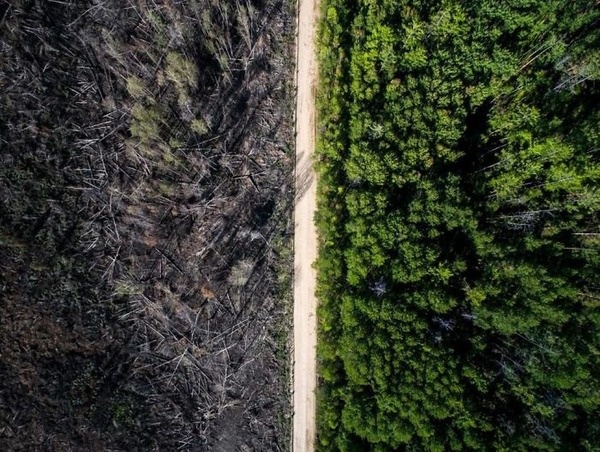
#10 The Road That Stopped The Fire


Evgeniy Green
#2758

#9 Confusing Perspective


ArkadiusBear
#2759

#8 A Man Feeding Swans In The Snow

#2760

#7 This Picture Of Sutro Tower In San Francisco Makes It Look Like The Top Of The Flying Dutchman's Floating Ship


imgur
#2761

#6 Lava That Formed To Look Like A Pile Of Bodies Being Sucked Into The Fiery Void Of Hell


Reddit__PI
#2762

#5 Wheat Field Next To A Lavender Field


sivribiber
#2763

#4 This Is A Single Photo


Gulo_gulo_
#2764

#3 Amazing Photograph Of A Plane


Stéphane
#2765

#2 Levels Of Sunset


Gabriel Puyana
#2766

#1 The Thousandth Of A Second


Ger Kelliher
#2767

10+ Incredible Photos You Won’t Believe Are Not Photoshopped

By​ Julija Nėjė

Digital manipulation can do amazing things to your photographs, but sometimes the most stunning images are the ones that haven't been Photoshopped. Take a look at the pictures below to see what we mean.

Compiled by Bored Panda, the list showcases some of the finest unaltered photographs we could find. Some of them are surreal, some are creepy, and some will positively blow your mind, and all of them serve to remind us that a good picture has nothing to do with your computer skills and everything to do with timing, location, and a keen eye for detail.
#2768

ahak. i cannot afford a motorcycle... ;D
#2769

RULE NO. 7: STOP ASKING QUESTIONS

We realize that your schooling taught that journalism involves the asking of questions. But this is no longer responsible. In this instance, Andanar has really become the model for the rest of the country. He is certainly a journalist that is no longer asking any questions. He’s just taking it as it comes.

RULE NO. 8: SHOW NO OPINION WHATSOEVER, UNLESS IT’S “THE PRESIDENT IS GREAT!”

As we all know, showing any shred of displeasure at any of the actions of our president makes you a colonel in the Yellow army. This is unacceptable. The freedom of expression may be guaranteed in our constitution, but…I don’t know how to finish this sentence.

RULE NO. 9: STOP, JUST STOP

You know what? We give up. Just stop journalists. In Andanar’s world, this seems to be the only way to truly be responsible.

http://rogue.ph/
#2770

RULE NO. 4: YOU ARE NOT ALLOWED TO BE OFFENDED BY ANYTHING THE PRESIDENT SAYS, BECAUSE HE’S JOKING

You just don’t get Bisaya humor. It doesn’t matter if you’re actually from the Visayas, and grew up surrounded by Bisaya people who didn’t, for instance, make off-color comments about a woman who was raped and murdered. You just don’t get Bisaya humor.

RULE NO. 5: LEAVE MOCHA USON ALONE!

Leave her alone!

RULE NO. 6: PUBLISH OUR PRESS RELEASES VERBATIM, BUT IF PEOPLE REACT POORLY, THAT’S YOUR FAULT

It also isn’t enough to defer to the government’s official statements. As journalists, you should have the good judgment to know when the administration has inadvertently written something that might paint their glorious efforts to better this country in a bad light.
#2771

CULTURE

The Martin Andanar Guide to Responsible Journalism

Rules to protect the delicate sensibilities of the chief presidential defender

BY ROGUE


Art by Lazir Caluya

Secretary Martin Andanar has once again chastised the media for deigning to publish things that the president has said, this time referring to his statements concerning martial law. For fear for further aggravating the presidential mouthpiece and professional Mocha Uson fan, we here at Rogue have attempted to put together a handy guide for journalists so that they may avoid the perils of their professional irresponsibilty.

RULE NO. 1: DO NOT ABUSE YOUR POWER.

As members of the press, as professionals with a platform, you are granted a modicum of power. As we’ve all learned from Spider-Man, with great power comes great responsibility. You do not have the right to abuse your power. It’s only the administration that has the right to do that.

RULE NO. 2: DO NOT ATTEMPT TO INTERPRET WHAT THE PRESIDENT IS SAYING

President Rodrigo Duterte is a man capable of complex expression, and the average journalist, in spite of years of study and experience in the parsing of language, is not equipped to figure out what it is that our glorious leader wants to say. Leave the interpreting to us.

RULE NO. 3: DO NOT JUST PUBLISH THE THINGS THAT THE PRESIDENT IS SAYING

It is also not right to simply post an unadorned transcript of our president’s public statements. Without the help of official interpreters like Andanar, the president may be misinterpreted. Like when he says that nothing can stop him from imposing martial law, he is not actually saying that nothing can stop him from imposing martial law. Andanar has made that very clear, you dummies.
#2772

According to Iain Overton, the "almost taboo level of rejection" of guns in Japan means that the country is "edging towards a perfect place" - though he points out that Iceland also achieves a very low rate of gun crime, despite a much higher level of gun ownership.

Henrietta Moore of the Institute for Global Prosperity at University College London applauds the Japanese for not viewing gun ownership as "a civil liberty", and rejecting the idea of firearms as "something you use to defend your property against others".

But for Japanese gangsters the tight gun control laws are a problem. Yakuza gun crime has sharply declined in the last 15 years, but those who continue to carry firearms have to find ingenious ways of smuggling them into the country.

"The criminals pack the guns inside of a tuna so it looks like a frozen tuna," says retired police officer Tahei Ogawa. "But we have discovered cases where they have actually hidden a gun inside."

http://www.bbc.com/
#2773

There is no clamour in Japan for gun regulations to be relaxed, says Berteaux. "A lot of it stems from this post-war sentiment of pacifism that the war was horrible and we can never have that again," he explains.


There are a limited number of longstanding rifle owners in Japan - when they die their heirs must hand the rifles in

"People assume that peace is always going to exist and when you have a culture like that you don't really feel the need to arm yourself or have an object that disrupts that peace."

In fact, moves to expand the role of Japan's self-defence forces in foreign peacekeeping operations have caused concern in some quarters.

"It is unknown territory," says political science professor Koichi Nakano. "Maybe the government will try to normalise occasional death in the self-defence force and perhaps even try to glorify the exercise of weapons?"
#2774


To underline the taboo attached to inappropriate use of weapons, an officer who used his gun to kill himself was charged posthumously with a criminal offence. He carried out the act while on duty - policemen never carry weapons off-duty, leaving them at the station when they finish their shift.

The care police take with firearms is mirrored in the self-defence forces.

Journalist Jake Adelstein once attended a shooting practice, which ended with the gathering up of the bullet casings - and there was great concern when one turned out to be missing.

"One bullet shell was unaccounted for - one shell had fallen behind one of the targets - and nobody was allowed to leave the facilities until they found the shell," he says.
#2775

Japanese police officers rarely use guns and put much greater emphasis on martial arts - all are expected to become a black belt in judo. They spend more time practising kendo (fighting with bamboo swords) than learning how to use firearms.

"The response to violence is never violence, it's always to de-escalate it. Only six shots were fired by Japanese police nationwide [in 2015]," says journalist Anthony Berteaux. "What most Japanese police will do is get huge futons and essentially roll up a person who is being violent or drunk into a little burrito and carry them back to the station to calm them down."


Japanese police practise martial arts every week and avoid using weapons whenever they can

Overton contrasts this with the American model, which he says has been "to militarise the police".

"If you have too many police pulling out guns at the first instance of crime, you lead to a miniature arms race between police and criminals," he says.
#2776

"They are the first nation to impose gun laws in the whole world and I think it laid down a bedrock saying that guns really don't play a part in civilian society."

People were being rewarded for giving up firearms as far back as 1685, a policy Overton describes as "perhaps the first ever gun buyback initiative".

The result is a very low level of gun ownership - 0.6 guns per 100 people in 2007, according to the Small Arms Survey, compared to 6.2 in England and Wales and 88.8 in the US.

"The moment you have guns in society, you will have gun violence but I think it's about the quantity," says Overton. "If you have very few guns in society, you will almost inevitably have low levels of violence."
#2777

The law restricts the number of gun shops. In most of Japan's 40 or so prefectures there can be no more than three, and you can only buy fresh cartridges by returning the spent cartridges you bought on your last visit.


ALAMY
A photo posed by models - even Japanese gangsters rarely use guns these days


Police must be notified where the gun and the ammunition are stored - and they must be stored separately under lock and key. Police will also inspect guns once a year. And after three years your licence runs out, at which point you have to attend the course and pass the tests again.
This helps explain why mass shootings in Japan are extremely rare. When mass killings occur, the killer most often wields a knife.

The current gun control law was introduced in 1958, but the idea behind the policy dates back centuries.

"Ever since guns entered the country, Japan has always had strict gun laws," says Iain Overton, executive director of Action on Armed Violence and the author of Gun Baby Gun.
#2778

How Japan has almost eradicated gun crime

By Harry Low
BBC World Service
6 January 2017


RONALD GRANT
Shotguns and air rifles are the only firearms you can legally buy in Japan


Japan has one of the lowest rates of gun crime in the world. In 2014 there were just six gun deaths, compared to 33,599 in the US. What is the secret?

If you want to buy a gun in Japan you need patience and determination. You have to attend an all-day class, take a written exam and pass a shooting-range test with a mark of at least 95%.

There are also mental health and drugs tests. Your criminal record is checked and police look for links to extremist groups. Then they check your relatives too - and even your work colleagues. And as well as having the power to deny gun licences, police also have sweeping powers to search and seize weapons.

That's not all. Handguns are banned outright. Only shotguns and air rifles are allowed.
#2779

http://edition.cnn.com/2016/11/15/health/yoyo-dieting-harms-hearts/index.html

Another ongoing area of research explores not only how weight variability might be linked to extra weight gain but how it's associated with overall health and potential problems, said Michael Lowe, a professor of psychology at Drexel University and co-author of the new study. Feig was his graduate student while conducting the new study.

A separate study that was presented at the American Heart Association's Scientific Sessions last year suggests that intentional weight variability, known as "yo-yo dieting," may increase the risk of sudden cardiac death and coronary heart disease mortality in post-menopausal women.

"Those individuals who have a health problem, very often this is a cardiovascular kind of health problem, who also show more variation in their weight overtime, tend to have their health problems worsened," Lowe said.

http://edition.cnn.com/
#2780

http://edition.cnn.com/videos/living/2016/03/04/simple-weight-loss-is-a-good-way-to-prevent-diabetes-.cnn

Still, the new study came with some limitations. For instance, 81% of the participating adults were women, so more research is needed to determine whether similar results would be found in a nationally representative sample of adults.

Additionally, "the study was correlational, so we cannot conclude that weight variability causes changes in long-term weight control," Feig said.
#2781

"They found predictive value as early as six weeks. In the shorthand, it says past performance predicts future performance, but it's kind of interesting that they're able to see it that early," said Morton, who was not involved in the new research.

"The other thing I see here is that weight loss doesn't occur in a straight line. You lose weight for a while, then it plateaus, and then you lose weight again," he said. "If you're responding to diet, that's generally how it works."

As for why some people consistently lose weight while others see fluctuations, "I think that that question is still out there" to be answered, Morton said.
#2782

"Whatever we do for those people to lose weight, if they can do it consistently, that means that particular plan not only physiologically fits the patient (and) that particular individual's body but also is feasible (and) practical for ... a day-to-day life," Li said.

"So, if we now know someone is struggling from the beginning, we need to adjust," she said. "That can be diet; that can be a lifestyle change. Because we know that if we don't do an adjustment, they're going to fail. That's what this study is really showing."

http://edition.cnn.com/videos/health/2015/04/09/cnn-orig-living-to-100-stop-mindless-eating.cnn

Dr. John Morton, chief of bariatric and minimally invasive surgery at Stanford Health Care, said there were two findings of interest in the new study.
#2783

Feig said that more research is needed to determine just how significant the link may be between weight variability and long-term weight control. However, studies have showed that the total amount of weight loss in the first few weeks of a program can predict how people do much later on, she said.

http://edition.cnn.com/videos/health/2015/04/17/top-plans-for-lasting-weight-loss-solutions.cnn

"This study goes even further in supporting the importance of early weight changes by showing that weekly variability in weight, above and beyond how much weight is lost, predicts weight loss maintenance up to two years later," she said. "So it seems that both success and consistency in weight loss at the beginning of a program is important for long-term success."

Dr. Zhaoping Li, director at the University of California, Los Angeles' Center for Human Nutrition, who was not involved in the new study, said the findings are consistent with what has been seen in scientific literature.
#2784

The study involved 183 overweight or obese adults, mostly white women, living near Philadelphia. For one year, they participated in a weight-loss program in which they were counseled on their diet and exercise.
From the start of the program, their weight was tracked, measured and analyzed weekly. The adults also attended assessment meetings at six, 12 and 24 months.

http://edition.cnn.com/2017/02/20/health/weight-loss-maintenance-tips-study/index.html

The researchers found that weight variability each week among the adults, measured at the first six and 12 weeks of the program, was positively associated with less subsequent weight loss at 12 and 24 months.

In other words, higher weight variability measured early in the program predicted which patients would continue to struggle with controlling their weight by the end of the program and one year later, according to the study findings.
#2785

http://edition.cnn.com/2017/02/20/health/weight-loss-maintenance-tips-study/index.html

"We don't know yet what it is about weight variability that's problematic. It could be reflective of trouble following a diet and exercise plan consistently. But it's also possible that physiologically, some people tend to lose weight more consistently than others, regardless of how closely they are following a diet," said Feig, who conducted the study as a doctoral student at Drexel University.

"My best recommendation for patients, based on this research, is to try to keep their eating pretty similar day to day," she said. "Things like planning ahead, prepping food for the week on Sunday and reducing frequency of eating at restaurants can help with this, since they reduce the chance of making impulsive decisions about what to eat. Building a habit of healthy, consistent eating can help patients reduce weight variability and lose weight more consistently, even if it's at a slow pace."
#2786

Consistency is key for weight loss, study says

By Jacqueline Howard, CNN
August 28, 2017

Story highlights

Want to lose weight once and for all? Do it consistently, a new study suggests

Keep your eating habits similar and try to plan ahead, researcher advises


http://edition.cnn.com/videos/living/2017/03/31/weight-loss-tips.cnn

(CNN)To achieve your weight loss goals, be consistent.

A new study suggests that slowly but steadily shedding pounds each week can be more beneficial for long-term weight loss than seeing your weight drastically drop, only to rise again.

Developing a stable schedule of healthy eating and exercise can help with keeping your weight management consistent, said Emily Feig, lead author of the study and a postdoctoral fellow at Massachusetts General Hospital. The study was published Monday in the journal Obesity.
#2787
Quote from: islander on October 09, 2017, 03:03:30 PM

Possible scenarios, sanctions

Asked about the sanctions that could be imposed on the country if the killings continued, Fisher enumerated the points below.

1. The general assembly of the United Nations Human Rights Council can expel the Philippines from membership if it regularly violates its international human rights obligations.

2. As many states have spoken out against the killings, they may take this into account in their bilateral relations with the Philippines â€" including their economic relations. The Philippines enjoys zero duties for many of its exports under the European Union’s GSP+ scheme, and the condition for these trade perks is the Philippines’ practice of 27 international conventions, many of which revolve around human rights.

3. The UN may launch an independent investigation.

4. If violations are widespread and systematic, they can amount to crimes against humanity. This means those responsible, “including at the very top levels, can be held to account before bodies such as the International Criminal Court.”


it's no joke; no parsing of terminologies and their meanings and interpretations is necessary. :(
#2788

Possible scenarios, sanctions

Asked about the sanctions that could be imposed on the country if the killings continued, Fisher enumerated the points below.

1. The general assembly of the United Nations Human Rights Council can expel the Philippines from membership if it regularly violates its international human rights obligations.

2. As many states have spoken out against the killings, they may take this into account in their bilateral relations with the Philippines â€" including their economic relations. The Philippines enjoys zero duties for many of its exports under the European Union’s GSP+ scheme, and the condition for these trade perks is the Philippines’ practice of 27 international conventions, many of which revolve around human rights.

3. The UN may launch an independent investigation.

4. If violations are widespread and systematic, they can amount to crimes against humanity. This means those responsible, “including at the very top levels, can be held to account before bodies such as the International Criminal Court.”

“International law is there for everybody, and human rights are universal,” Fisher concluded. “Before the government says, ‘Well, these can’t be crimes against humanity because people who associate with drugs, they’re not humanity,’ well, you don’t get to strip people’s humanity away like that.”

http://www.interaksyon.com/
#2789

Labels can’t justify killing sans due process

Asked if the administration’s war on drugs was synonymous with extrajudicial killings, Fisher replied, “Regardless of the label that’s used â€" and obviously the government has used the label ‘war on drugs’ just to try and justify excesses of police authority or lack of due process â€" no label that you attach to it can justify killing people without due process.”

He added, “The right to life is one of the most basic rights in international human rights law. Without the judicial process, there is no way of being sure that the people who are being targeted are in fact drug dealers, users of drugs, or even associated with the war on drugs or with drug use. Even if they were, it doesn’t justify killing people without due process.”

He was also concerned about threats against journalists and human rights defenders.
#2790

According to the Presidential Communications Operations Office, 3,906 “drug personalities” were killed in anti-drug operations from July 1, 2016 to September 26, 2017. Fisher compared this to Human Rights Watch’s report in the beginning of 2017, where it said 7,000 killings “seemed to have occurred in an extrajudicial fashion.”

He believed that the “staggering death toll” was just the tip of the iceberg, as there were probably many more deaths that weren’t being reported by the victims’ families to the authorities whom they saw as the perpetrators of the crime.
#2791

Fisher continued, “When the killing happens extrajudicially, it’s because the police or others take matters into their own hands and just kill a suspect without any of that. So those protections, those legal safeguards that give everyone the reassurance that the police are doing their jobs without exposing others to unnecessary risk” are lost.

In the case of the deaths in the Philippines, he claimed, there hadn’t been a judicial process, an attempt to bring it before a court, or a conviction.

“As there are thousands of deaths and more reported on a regular basis, the government can’t just define those bodies out of existence,” Fisher stressed. “They have to address the problem.”
#2792

Fisher said this statement simply did not conform with the facts and the international definition of extrajudicial killings, especially since the PNP itself reported that there had been thousands of people killed during the conduct of the war on drugs.

He explained that extrajudicial killings are those done without a judicial or legal process.

“In any normal judicial process, there are arrest warrants, there’s a trial, a person we presume innocent until found guilty if there’s a conviction, there’s a sentence, and hearing, and a whole series of steps that can give all of us confidence that what’s happening is in conformity with the legal process, the judicial process,” he said.
#2793

“Obviously, those pulling the trigger or wielding a knife can be held personally responsible and accountable for their acts,” he said. “And there is the concept of command responsibility, where those who are issuing orders are also responsible for what’s taken place on their watch.”

Fisher continued, “If President (Rodrigo Duterte) is found to be inciting violence, to have knowledge of the campaign, to be inciting the campaign, to be giving orders or assurances of impunity, then of course he has responsibility for that. I mean, he’s the President of the country, he oversees the armed forces and police service, and his public statements have been very, very clear that he feels that those who are somehow associated with drug use or otherwise can and should be killed. He’s given assurances that there will be impunity for those who perpetrate these acts.”

The Philippine National Police claimed last week that there had been only one extrajudicial killing in the Phillippines since Duterte assumed office, then revised the number to zero.
#2794

4 things that can happen to make Duterte govt accountable for continued killings

By Tricia Aquino, InterAksyon | Faith del Mundo, News5
October 9, 2017 


The body of a victim of an extra-judicial killing is seen dumped on a street. (Reuters)

MANILA â€" “The President is very clearly responsible for what’s happening on his watch.” That much was asserted by Human Rights Watch-Geneva Director John Fisher, who flew into the Philippines to see for himself the situation in the country, and to talk to families of victims of extrajudicial killings. He also listed four possible scenarios on how the Duterte administration might be pressed to be accountable for allowing the killings to spiral further.

In an interview with News5’s Faith del Mundo on Sunday, he explained that accountability takes place on a number of levels.
#2795

Likewise, Drilon also cautioned the government about the continued depreciation of the peso.

He said that the peso depreciated by an average of 6.5 percent from January to August. He also cited a forecast by some analysts that local unit could weaken to P52.50 :$1 by the end of 2017 and P53.54:$1 by 2018.

“These are facts that are developing that we do hope can be addressed by the economic planners in the best way we can in order not to harm our economy,” Drilon said. â€" MDM, GMA News
#2796

The senator took note of the current political climate in the country as among the possible “stumbling blocks” that discourage foreign investors.

During the Senate hearing, Senate Committee on Finance chair Loren Legarda relayed NEDA’s explanation that the drop in new foreign investments was caused by some restrictions.

Legarda, however, admitted that she does not agree with it.

“I am told that it is because of certain restrictions. I do not agree with that answer because these restrictions were already there when there was an increase... I cannot create answers if I am not supplied the justification for the decline in the foreign direct investment," Legarda said.
#2797

For June alone, FDI expanded by 182.7 percent to $674 million from $238 million a year earlier.

Drilon also cited the 2018 ASEAN Business Outlook Survey by the American Chamber of Commerce in Singapore and the US Chamber of Commerce which revealed that only 22 percent chose the Philippines as a possible expansion location, with Vietnam topping the list at 34 percent.

The Philippines ranked sixth, lagging behind Vietnam, Myanmar at 29 percent, Indonesia at 29 percent, Thailand at 26 percent, and Cambodia at 23 percent.

Drilon said that foreign direct investments would be critical to the country’s economic growth and contributes in providing job and business opportunities.
#2798

Sought for comment, Socioeconomic Planning and NEDA Secretary Ernesto Pernia said Drilon's notion is different from international standards.

"He has a different notion of FDI that excludes reinvestment, which should be included according to international definition," Pernia said.

"If so, drop is 14 percent... and the year is not over yet," the country's chief economist said.

Data from the BSP showed that the net inflows of FDI from January to June declined by 14 percent at $3.6 billion from $4.2 billion in the same period last year.
#2799

“We note from the reports that there is a deceleration in new investment. This is very alarming. Why such a huge drop? Is this an indication of anything?” Drilon said in a statement on Saturday.

“If we are to attract new foreign investment, then it is about time that we take a serious look at how things are going on in our country, because new investment would not come in unless we are able to raise the investors’ confidence level on our country,” the opposition senator added.

The senator raised the issue during the Senate hearing on the proposed budget of the National Economic Development Authority (NEDA).
#2800

Drilon concerned about decline in new foreign investment, cites ‘stumbling blocks’

October 7, 2017
By TED CORDERO, GMA News

Liberal Party stalwart Senate Minority Leader Franklin Drilon expressed "serious" concerns over the capability of the government to attract new foreign investments.

Citing the latest foreign direct investiment data from the Bangko Sentral ng Pilipinas, Drilon said foreign equity placements other than reinvestments of earnings or new foreign investments decreased by 90.3 percent during the first six months of the year at $141 million from $1.448 billion a year earlier.