Join MikeLigalig.com!

Why Just Read When You Can Join, Post, and Read!

Menu

Show posts

This section allows you to view all posts made by this member. Note that you can only see posts made in areas you currently have access to.

Show posts Menu

Messages - islander

#2101

2. We as a society create mental health and addiction.

There have been numerous studies that have exposed the fact that trauma as a child leads to neural chemistry changes in your brain. Childhood trauma has been called the smoking of mental health. The same way smoking can cause or invoke many physical diseases, childhood trauma and maltreatment does the equivalent for mental health and addiction.

There are higher relapse rates for hypertension and heart disease than there are for addiction and mental health. However, we often treat the addict like they are a bad person or making bad choices. So we are taking someone who has been traumatized and often did not receive treatment for their trauma and we punish them by locking them up. This creates more shame, exasperating the trauma and causing the cycle to repeat itself. Additionally, the patient is not going to be readily willing to seek help in the first place due to the aforementioned shame.

What if we had a cancer drug that works 10-percent of the time and made people sicker? We would throw the drug away! However if a treatment center has a 10-percent success rate for addiction or mental health they're considered successful. What other business could be 10-percent successful and would continue to exist?
#2102

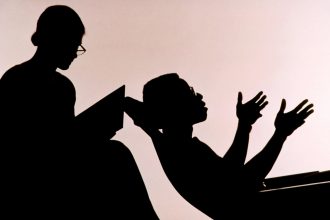
Other people's labels of you are just that — other people's labels. It is out of fear and ignorance. Do not adapt to other people's expectations. The world needs people of all sorts. We need diversity.

If you closely take a look at the criteria for someone who is gifted versus someone who has ADHD, Bipolar, Aspergers, and many other mental health diagnosis you will see that they are almost identical. So whether you are called bipolar or gifted doesn't depend on you, but rather on the so-called expert assessing your life. It is all about perception and none of it matters. All that matters is that you are your most authentic and true version of yourself.
#2103

Solomon Asch tested human's conformity in an experiment in 1951. Over the 12 critical trials approximately 75% of participants conformed at least once; and 25% of participants never conformed. In the control condition, the participants were asked to write down the correct match between the lines without sharing their answers with the group. The results showed that the participants were very accurate, giving the correct answers 98-percent of the time. This is one of many studies that show most people will go along with a crowd, even if it is not what they believe. So what happens if the tribe has decided that there is something "wrong" with you? Science will show that most of us will go along with that.

However this is a mistake. Take a look at the bell curve, which is used to show "normality distribution." The bell curve is used in many areas of life and can be used here. In many bell curves, you see that 95-percent are within two deviations from the mean, or average. On the very end you will always see 5-percent of people. They are at the extreme end and do not fall inside the box of "normal." It doesn't make you bad to be outside the norm, and it also doesn't make you crazy or sick. In fact, I would argue that those on the extreme ends are the ones that have changed the world.

For example, Mahatma Gandhi did not fit inside that box. The "norm" of his time was to accept the British imperialism in his home country of India. He saw the injustices and spent his life trying to free his people from oppression. He was imprisoned and survived many assassination attempts (although one finally killed him). Likewise, Martin Luther King Jr. also saw the injustices of African-Americans were facing in the United States and stood up to the oppression. They both went against the norms, were labeled, judged, and eventually lost their lives for speaking against the status quo. They both ended up dead, but years later we realized they were speaking the truth against an insane society.
#2104

1. If you are naturally different than the majority, you will be labeled.

It is our nature to want to try to fit in with the tribe. It can be lonely when you feel like you are different from other people. When you are not like the majority, others will notice this and try to get you to fit in to this box of normality. But defining "normal" is an impossible task. It is defined as conforming to a standard. However, this standard changes with different cultures and time periods. What was once normal, is now insane. Today we clearly live in an insane society – one in which we favor materialism over that of our fellow man; one in which there is more public uproar over a sporting event than the humanitarian crisis in Aleppo. To be "normal" in this type of society would actually make one insane. Yet, when you don't follow the mold of a brainwashed culture you get labeled as different.

This can be quite destructive as Erich Fromm points out in his 1941 book "Escape from Freedom" as he highlights how people are drawn to authority as it is safer to go along with the pack than to think independently.

We go along with the societal norms for harmony, acceptance, and belonging – which are also innate human desires. Each human has a desire to feel a sense of community and purpose. However, when we go along with the group – even when it is violates our personal beliefs just for acceptance – it causes us to believe that something is wrong with us for thinking differently.
#2105

10 Life Lessons I Learned as a Psychiatric Nurse – and Patient

By Cortland Pfeffer
Contributing writer for Wake Up World


Over the past 25 years, I have been immersed in the mental health and addiction system as a patient, later as staff, as a Registered Nurse (RN), and eventually as a supervisor. My time in the mental health system officially began at age 17 when I was first hospitalized in a psychiatric unit. This preceded further hospitalizations, a number of treatment episodes for alcoholism/addiction, along with multiple stints of incarceration in jails. Eventually, through this experience, I was able to embrace recovery and ultimately gain employment at some of these same facilities in which I was treated.

Often I am asked about how I went from being a psychiatric patient and homeless drug addict to being a registered nurse and a supervisor at some of these facilities. While there is no magical answer to that question, there certainly have been some valuable life lessons learned along the way. These are 10 of the life lessons I have learned over time, which allowed me to continue on this journey.
#2106
Health and Food / Great Medical Advice
February 22, 2018, 12:42:22 AM

#2107
Jokes and Humor / The Fourth Ape
February 20, 2018, 11:22:37 PM

#2108
Quotable Quotes / Re: Quote For The Day
February 20, 2018, 01:47:08 PM

wow! :)
#2110

What can you do? First, get more sleep


Make sure you're getting enough sleep. | iStock.com/AntonioGuillem

You can blame it on late-night TV binges or the overwhelming workload you have at the office, but either way, daytime sleepiness plagues millions of people each year. Most of us can pinpoint why we're tired — maybe we're not really putting in the eight hours of rest we need. But what if you are?

A study from the journal Circulation: Cardiovascular Quality and Outcomes showed the participants who reported "significant daytime dozing" had a higher risk of stroke compared to those who reported some dozing or no sleeping at all. Researchers aren't sure of the direct correlation between stroke and tiredness, but there's surely a relationship between disturbances in sleep and vascular disorders. To protect your heart and your brain, make sure you're getting quality rest each night. It's the easiest, and perhaps one of the most effective, things you can do.

https://www.cheatsheet.com/
#2111

You can have a stroke without even realizing it


Not every stroke is severe. | iStock.com/alex-mit

As scary as a stroke sounds, some people have one and never even know it. Ted Lowenkopf, M.D., tells Providence Health & Services if you have a stroke that is either very small or that damages tissue with no critical function, then you may have no symptoms at all. It's possible to have a minor stroke in your sleep, too. While this may not wake you, it's important to note any strange symptoms you may have if you do wake up in the middle of the night for seemingly no reason.

Having a mild stroke may not cause you any problems, but it should serve as a warning. You could be at risk for having a more severe episode in a few hours, days, or weeks, so be sure to report any of your unusual symptoms.
#2112

Possible complications


Therapy can help stroke survivors with any symptoms of depression they may have. | iStock.com

Strokes can certainly be deadly, and even survivors don't always get  away unscathed. The American Stroke Association explains brain swelling, pneumonia, urinary tract infections and loss of bladder control, seizures, and depression can all occur in the aftermath. Depending on how your mobility is affected from the stroke, you may also get bedsores, blood clots in the legs, or pain in the limbs.

Luckily, there are a lot of options for stroke survivors. Physical therapy can assist in restoring range of motion and preventing problems in the blood vessels, and deep breathing exercises can help decrease pneumonia risk. Counseling is also useful for those dealing with the emotional effects.
#2113

What women need to know


High blood pressure during pregnancy is something to watch for. | iStock.com/tamaravidmar

Ladies, listen up — out of every 10 strokes that kill, six occur in women. While this disease mostly affects older adults, there's an increasing number of women under 45 who are having them. Younger women are also more likely to experience vertigo and headaches as symptoms, so it's important to pay attention to your body when it's acting abnormally.

High blood pressure is a risk factor for both genders, but women need to pay particular attention to their blood pressure during pregnancy. If it rises to unsafe levels and you're with child, this can certainly raise your risks for stroke. Also, if you're on birth control, ask your doctor if it could be increasing your chances of an attack in the future. Some types of the pill raise your risk even higher if you have high blood pressure or smoke.
#2114

Stroke risk factors


Having diabetes increases your risk. | iStock.com

Maintaining a healthy lifestyle doesn't just give you the physique you've always wanted — it protects your brain, too. Unfortunately, if you've already had one stroke, severe or not, you're already at a higher risk of having another one, the Centers for Disease Control and Prevention explains. Having high blood pressure, high cholesterol, or diabetes makes you more susceptible as well.

Heart disease and stroke are linked pretty closely, too. Coronary artery disease occurs from plaque buildup in the heart. This can then block the flow of blood to the brain, causing a stroke. If you don't have heart disease but you're still smoking, eating a poor diet, and refusing to hop on the treadmill every once in awhile, know you're putting yourself at unnecessary stroke risk.
#2115

9. Seizure


Seek medical care immediately after a seizure. | David McNew/Getty Images

A minor stroke will not cause a seizure, but something more severe could. The New York Times explains a hemorrhagic stroke occurs when there's bleeding in the brain. A blood vessel bursts, causing the bleeding which can then result in brain swelling, pressure in the head, and damage to the surrounding tissue. In short, these strokes are as serious as they come. These strokes can quickly threaten your life — don't hesitate to seek help.
#2116

8. Fainting


Feeling light-headed? Pay attention to any other symptoms of a stroke you may have. | iStock.com/AntonioGuillem

Strokes and fainting can often look the same, but usually, they're unrelated. Fainting is a brief loss of consciousness because of a lack of oxygen to the brain. A stroke, on the other hand, occurs when blood flow to the brain is cut off. Because it only affects one part of the organ, people don't usually faint before having a stroke, Merck Manual says.

There is a situation where fainting is a sign of stroke, and that's if the part of the brain affected by the lack of blood flow is the area that helps keep you awake and aware. If you've fainted after a dizzy spell and you're feeling a little less coordinated than usual, it may signal something serious.
#2117

7. Pain in the arms or face


Unexplainable pain should be checked by you doctor. | iStock.com

When you have arm pain, you probably fear an incoming heart attack. It also signals a stroke, though. Carolyn Brockington, M.D., tells Everyday Health this is a symptom women should definitely be aware of. It's not that women are more likely to experience pain prior to a stroke — it's that they are more likely to think strokes primarily affect men, the elderly, or those in poor health, and therefore may ignore this sign.

If your upper body pain is accompanied by feelings of weakness or an inability to move that specific side, or any of the other symptoms here, seek medical attention.
#2118

6. Hiccups


Painful hiccups could mean a stroke is on its way. | iStock.com

We've all been there — you're starving and ready to scoff down your dinner when in the middle of another quick forkful of food, the hiccups start. Most of us think of the hiccups as a mild annoyance that disappear just as quickly as they start. There are instances, however, when this irritating bodily function could signal a stroke.

Neurologist Diana Greene-Chandos tells Prevention these aren't your average, run-of-the-mill hiccups. They'll be painful, constant, and extremely severe. It's also likely you'll notice numbness and blurry vision at the same time. If your hiccups are unrelenting and accompany other symptoms, head to the ER and suggest this possible cause to the doctors — stroke may not be the first diagnosis on their mind, either.
#2119

5. Sudden hoarseness


Hoarseness, along with other symptoms, could be a sign. | iStock.com

Your voice typically isn't the first thing affected by a stroke — you'll probably notice weakness in your limbs or bad coordination before this one — but it's a symptom to be aware of. The Voice Foundation explains the strength of your voice box can be affected by many neurological diseases, such as Parkinson's, multiple sclerosis, and, you guessed it, stroke.

Loss of blood flow to the brain stem can cause a hoarse or breathy voice from the vocal muscles being paralyzed on one side. It's also possible to completely lose the ability to speak when the side of the brain that's more dominant is affected. If your once beautiful singing voice is now nothing more than a whisper, be wary.
#2120

4. Blurry vision


Sudden blurriness in your vision isn't normal. | iStock.com

Your carotid arteries are located on the sides of your neck, and they have the ever-important job of supplying blood to your brain, neck, and face. The New York Times explains strokes commonly happen in this area, which can result in some strange changes to your vision. As oxygen is reduced in this part of your brain, you may experience poor night vision or feel as if a shade has been pulled down over your eyes.

If you have a stroke that's occurring in the arteries along the base of the skull, you'll also see changes in your eyesight. You may even experience a complete loss of vision.

#2121

3. Loss of coordination


Having trouble walking? Watch for this. | iStock.com

If a stroke is on its way, you may suddenly feel as if your arms and legs aren't working the way they should. This may mean you're having difficulty walking because you're off balance, or your limbs are suddenly weak. You might also find yourself stumbling more than usual or having a hard time picking up objects, eMedicineHealth explains.

Droopiness in the face is a symptom most people look for when they consider a stroke (it's part of F.A.S.T., after all), but know this limp feeling can happen anywhere in the body. Whether it's a sign of something serious or not, it's never normal to feel sudden weakness in your body.
#2122

2. Trouble speaking


Pay attention to changes in speech. | iStock.com

Depending on what part of the brain is affected, an incoming stroke can cause speech troubles in some. This is part of the F.A.S.T. acronym as stated before, but this symptom can manifest in a few ways. U.S. News & World Report explains someone who is about to have a stroke could experience difficulty speaking sentences that make sense, or they can also have trouble understanding complex conversations.

This symptom usually indicates that the area of the brain that controls language isn't getting the blood supply it needs. If you can't keep up with your friend's riveting story no matter how hard you concentrate, this is a definite sign of a stroke.
#2123

As for the not-so-common symptoms, here they are.

1. Sudden and severe headache


A sudden headache is a sign. | iStock.com/gpointstudio

We all get that annoying pain in our skulls from time to time — maybe work has us stressed or we had too much to drink the night before. While the occasional headache usually isn't something to worry about, you should be wary if your headache comes on without any warning and is cripplingly painful. These are called thunderclap headaches, and they can signal bleeding in the brain, says Everyday Health.

If you're over 50 and suddenly have the worst headache of your life or you notice you're getting them more often than usual, contact your doctor immediately. This could be a sign of a stroke or another neurological problem.
#2124

Learn to act F.A.S.T.

Before we delve into some stroke symptoms you may not be aware of, it's important to know the basics. There's an easy way to detect the most common signs with this acronym: F.A.S.T.

"F" stands for face: Is your face drooping? Try to smile while looking in the mirror to see if one side of your face looks as if it's being pulled down.

"A" stands for arms: Raise your arms. If one arm drifts downward, this is a sign.

"S" stands for speech: Are you slurring your words?

"T" stands for time: If a stroke is on its way, your time is limited. Act quickly and seek emergency care if any of these symptoms occur, as an attack could be well on its way.

#2125

9 Unexpected Stroke Symptoms You Need to Know

Lauren Weiler
February 17, 2018

While many of us are eating and getting our diets right to prevent a future heart attack, we can't forget about how deadly a brain attack — otherwise known as a stroke — could be. The National Stroke Association reminds us it's the fifth leading cause of death in the U.S. and strikes someone every 40 seconds. While it's possible to make a full recovery when you have a stroke, most people do not. In fact, more than two-thirds of survivors have some kind of disability associated with the attack.

Much like a heart attack, strokes can happen anywhere, any time, and it all starts when blood flow is cut off from an area of your brain. From here, your oxygen-deprived brain cells start to die, which then causes issues elsewhere or even death. There is good news for us all, however — most strokes can be prevented, and there are plenty of symptoms to warn you when this condition is about to strike.

#2126

Again, unlike in the Philippines where prosecutors are passive, the OTP is "proactive" in gathering documents and in contacting witnesses on its own initiative.

However, while the OTP can initiate a "preliminary examination," it does not have absolute discretion to proceed to a "preliminary investigation." Under Art. 15 of the Rome Statute, it must, as a countercheck, first secure the approval of the ICC's Pre-Trial Chamber. This process takes years.

https://opinion.inquirer.net/
#2127

The video announcement of Bensouda did not specifically mention the Sabio "complaint." Neither did she say that President Duterte or anyone else was being probed. All she announced was: "Following a careful, independent and impartial review of a number of communications and reports documenting alleged crimes potentially falling within the jurisdiction of the ICC, I have decided to open a preliminary examination ... of the situation in the Philippines."

Moreover, Bensouda "emphasize[d] that a preliminary examination is ... but a process of examining the information available in order to reach a fully informed determination on whether there is a reasonable basis" to conduct later what is roughly the equivalent of a preliminary investigation in the Philippines.

Unlike here, cases in the ICC are not commenced by "complaints." Affidavits and documents submitted to the OTP are at best "inputs" which the OTP may or may not take into account in its examination.
#2128

To begin with, under the "Rome Statute," the treaty that created the ICC, the ICC's Office of the Prosecutor (OTP) headed by Chief Prosecutor Fatou Bensouda may initiate a "preliminary examination" only upon the request of 1) a member-state, 2) the Security Council of the United Nations, or 3) motu proprio the OTP itself.

Obviously, the initiative did not come from the Philippines as a member-state or from the UN Security Council. Clearly, it was initiated motu proprio by the OTP.

Not triggered by. Inaccurate, therefore, are the media reports saying that the OTP's "preliminary examination" of the war on drugs in the Philippines was "triggered by" or "was the result of the 77-page complaint filed by Jude Sabio, a lawyer for confessed Davao Death Squad hitman Edgar Matobato against President Duterte and 11 senior officials."
#2129
Philippine Government / Making sense of the ICC brouhaha
February 18, 2018, 11:37:44 AM

WITH DUE RESPECT

Making sense of the ICC brouhaha

By: Artemio V. Panganiban 
Philippine Daily Inquirer
February 18, 2018

Presidential spokesperson Harry L. Roque Jr. has the distinction of being the only Filipino allowed to practice as a defense counsel in the International Criminal Court (ICC).

Only three ways. And Dr. Raul C. Pangalangan, his former professor and dean at the UP College of Law who recruited him to the UP law faculty after he became a lawyer, is the only Filipino now sitting as an ICC judge (ICC magistrates are called "judges," not "justices").

With such a singular distinction, Secretary Roque can speak authoritatively on the ICC. With his leave, however, may I humbly clarify a few inaccuracies that have appeared in the local newspapers on the recent ICC brouhaha so our people can make a correct sense of its context?

#2130
Jokes and Humor / Kung Hei Fat Choi!
February 16, 2018, 02:29:59 PM

#2132

"For gun control, in other words, the problem is not constitutional law but political will," the New Yorker's legal expert Jeffrey Toobin wrote after the June 2016 Orlando night club shooting that left 49 people dead.

"Many states and localities have taken advantage of the gaps left by Heller to make serious efforts to limit gun violence. But because most guns are easily portable over state and jurisdictional lines, there is only so much that can be done without action by the federal government. And Congress, especially with the House of Representatives in Republican hands, seems implacably opposed to any sort of gun restrictions."

http://www.independent.co.uk/
#2133

At the same time, although congress vowed to ban the so-called bump stock, the device that renamed Paddock to shoot his weapon as if it were an automatic, no such national restriction has been passed, even though some states, such as Massachusetts, have passed bans.

The NRA initially said it supported making the purchase of such devices more difficult. But when a bipartisan group of politicians presented federal legislation to ban them, the NRA voiced opposition, saying it was an infringement on second amendment rights. The legislation, spearheaded by Democratic Senator Dianne Feinstein of California, has since stalled.

The NRA and gun rights activists took heart from a 2008 Supreme Court decision – District of Columbia v. Heller – which for the which for the first time said the second amendment guaranteed an individual's right to own guns. Yet, the ruling also allowed for gun control.
#2134

"The right of self-defence doesn't stop at the end of your driveway," said one of his campaign's policy documents. "That's why I have a concealed carry permit and why tens of millions of Americans do too. That permit should be valid in all 50 states."

Activists say in addition to that measure, Mr Trump and the Republican Party have backed moves to make it easier to buy silencers, blocked an Obama-era rule that would have made it harder for the mentally ill to buy weapons, made it easier for people labelled "fugitives" to get guns, loosened gun restrictions on federal land and ignored an undertaking to set up a select committee on gun violence.

Finally, New York magazine reported, Mr Trump has proposed cutting millions of dollars from the budgets of the organisations that carry out background checks.

There are an awful lot of guns in America: up to 265 million at the last count. Sales always go up after mass shootings as people fear the imposition of new regulations. After the Las Vegas mass shooting in October in which Stephen Paddock killed 58 people, the stock prices of gun companies increased.
#2135

On Wednesday, Bess Kalb, a writer for Jimmy Kimmel Live, drew attention to the NRA's influence by responding to legislators tweeting message of condolence, by listing how much money they have received from the organisation.

Today, it is estimated that the NRA spends about $250m per year, far more than all the country's gun control advocacy groups put together. In 2016, it endorsed Mr Trump's presidential run and provided his campaign with up to $30m. Shortly after he took office, Mr Trump attended the NRA's national convention in Atlanta.

"Only one candidate in the general election came to speak to you, and that candidate is now the president of the United States, standing before you," he said. "You came through for me, and I am going to come through for you."

Since then, Mr Trump has been a vocal supporter of gun rights. He supports a Republican bill pending before the Senate that the NRA considers its legislative priority and which would establish a nationwide right to carry a concealed weapon – even in those states and cities opposed to such laws.
#2136

Ms Brown said the NRA, which was founded in 1871 as a recreational group designed to "promote and encourage rifle shooting on a scientific basis", today got most of its funding from gun manufacturers.

Its role as a lobbying group took off after 1977 when it formed its own Political Action Committee (PAC), to channel funds to legislators at state and local level. It even issues a rating to politicians, scoring them on how supportive they are of NRA policies.

Mitch McConnell, the Republican leader in the Senate who received $1.3m (£920,000) up to 2016 from the NRA, currently has an "A+". Republican House Speaker Paul Ryan, who received $171,977 in 2016 also has an "A+". Senator Jeff Sessions, who is now the Attorney General, has an A.

By contrast, the NRA has scored Democratic senators Chuck Schumer of New York and Florida's Bill Nelson both with an "F".
#2137

A poll by Quinnipiac University last November, found 94 per cent of Americans believe there should be background checks for all gun purchases, 79 per cent believe there should be a mandatory waiting period for purchases, 64 per cent support banning assault-style weapons and 64 per cent support banning the sale of magazines that carry more than 10 rounds. Tellingly, 63 per cent said it was possible to make new gun laws without interfering with gun rights as afforded by the US Constitution.

"You cannot find an issue on which there is more agreement," Kristin Brown, co-president of the Brady Campaign to Prevent Gun Violence, told The Independent.

"The trouble is, we have a stalemate in congress. Too many lawmakers get their funding from the NRA (National Rifle Association) and they block changes that would help stop this. Instead, they tweet about praying for the families."

She added: "Everyone approves of greater gun regulation. The only people who don't want this are the people who want to sell more guns."
#2138


School shootings are all too common in a country unable to pass gun legislation (Getty)

Six years later – a period in which at least 400 people have been shot in more than 200 school shootings, and in which 590 individuals died in 346 mass shootings in 2017 alone – another US president is making another speech after yet another mass fatality incident takes its turn to dominate the headlines for a day or two.

Donald Trump called on Americans to "answer hate with love, answer cruelty with kindness" and said he would work to find ways to tackle the problem of mental health. He did not name the suspect, 19-year-old Nikolas Cruz, or mention the word guns. He certainly did not mention the AR-15 semi-assault profile – the so-called "civilian version" of the fully automatic M-16 model used by the military.

Gun control campaigners say it is bewildering that after so many incidents of gun violence, politicians remain seemingly unwilling to act to control guns, especially when the American public supports regulation.
#2139

Why is America unable to halt this epidemic of deadly gun violence?

It was the 18th incident of gun violence at a US school in 2018


Andrew Buncombe
New York
February 16, 2018

Barack Obama used to say it was the part of the job he hated the most – speaking in the aftermath of mass shootings and trying somehow to act as consoler-in-chief.

He had plenty of practice – Orlando, Kalamazoo, San Bernardino, Charleston and Aurora. He spoke after each, and wondered aloud why the US had succumbed to a pattern of mass shootings "that has no parallel anywhere else in the world".

Perhaps the toughest speech he had to deliver was in December 2012, when 20 children and six adults were killed at Sandy Hook Elementary School in Connecticut. Four years later, appearing in the Oval Office with some of the parents of those youngsters who lives were stolen, and appealing for support for gun control measures, he wiped tears from his eyes. "Every time I think about those kids, it gets me mad," he said.
#2140

Dismissal of PM, dissolution of Federal Assembly

PDP-Laban's draft charter borrows a feature from other parliaments where the Prime Minister could be removed, and the President would appoint a new one. The Federal Assembly could also be dissolved; however, the Senate would still continue to function.

PDP-Laban

Section 10. In case of dissolution of the Federal Assembly, the Senate shall not be dissolved and the Senators shall continue their terms of office in accordance with the Constitution and prevailing laws.

[...] Section 35. (1) The Federal Assembly may express a vote of no confidence on the incumbent Prime Minister through a majority vote of all its members and a motion requesting the President to dismiss the Prime Minister. The President shall then dismiss the incumbent Prime Minister and appoint a new Prime Minister in accordance with section 24 of Article VII of the Constitution.

(2) The Prime Minister may advise the President in writing to dissolve the Federal Assembly based on a vote of no confidence on the government by a majority of all the members of the Federal Assembly, in which case, the President shall dissolve the Federal Assembly and call for a new election for the positions of the members of the Federal Assembly. The President shall dissolve the Federal Assembly not earlier than five (5) days nor later than ten (10) days from his receipt of the advice of the Prime Minister.

(3) In all cases of dissolution of the Federal Assembly, the President shall call for an election on a date which shall not be earlier than forty-five (45) days nor later than sixty (60) days from the date of such dissolution.

(4) The President may also dissolve the Federal Assembly for failure of parliament to pass a budget for two successive plenary votes or for two successive majority votes of no confidence on the Prime Minister as set under paragraph 1 of this section.

(5) No dissolution of the Federal Assembly shall take place in any of the following: (a) During times of war or a state of emergency declared by the President unless lifted by a majority vote of the members of the Senate present in a session where there is a quorum; (b) Within six (6) months immediately preceding or immediately following any election for members of the Federal Assembly; (c) Within twelve (12) months immediately following a dissolution of the Federal Assembly; (d) During the pendency of impeachment proceedings against the President; (e) Successive dissolution for the same reason

(6) In case of dissolution of the Federal Assembly or the termination of regular term of office of its members, every seat for the position of the members of the Federal Assembly shall become vacant but the incumbent Prime Minister and the cabinet shall continue to conduct the affairs of government until the new Federal Assembly has been elected and a new Prime Minister has been chosen in accordance with the Constitution.
#2141

PDP-Laban/House proposal: The Federal Assembly

In PDP-Laban's draft charter and based on the House proposal, the current House of Representatives would be transformed into the Federal Assembly, which would be the sole body initiating legislation. (In PDP-Laban's version, assemblymen could be elected to two 5-year terms, from the current 3 3-year terms.)

But there are differences between the two proposals. Among others, the Federal Assembly's membership would be capped to 400 (in the PDP-Laban's draft) or 300 (in the House proposal). Sectoral representation would come from either a political party or the current party-list system. They also differ as to how many voters a city should have for a seat in the Assembly.

PDP-Laban

Section 2. (1) The Federal Assembly shall be composed of not more than four hundred (400) members unless otherwise provided for by law.

(2) Sixty per centum (60%) of the members of the Federal Assembly shall be elected by plurality votes where each single member legislative electoral district shall have one (1) seat in the Federal Assembly.

(3) The remaining forty per centum (40%) of the members of the Federal Assembly shall be elected by proportional representation by region where the registered voters within each region shall be allowed to cast a vote for a political party with a closed-list of nominees. Proportional representation shall mean that a political party's closed list of nominees shall be entitled to the number of seats in the Federal Assembly equivalent to the percentage of the number of votes received by the political party in proportion to the total number of votes cast for all political parties within a region. The political party or parties that won seats in each region shall be allowed to fill the seats with its nominees as members of the Federal Assembly in accordance with the order of the names in the list.

(4) Single member legislative districts shall be apportioned among the provinces, cities, and the Metropolitan Manila area in accordance with the number of their respective inhabitants on the basis of a uniform progressive ratio as may be provided by federal law.

(5) Each single member legislative district shall comprise, as far as practicable, contiguous, compact, and adjacent territory. Each city with a population of at least two hundred fifty thousand (250,000) voters, or each province, shall have at least one member of the Federal Assembly.
[/color]

[...] Section 4. The Members of the Federal Assembly shall be elected for a term of five (5) years which shall begin, unless otherwise provided by law, at noon on the thirtieth of June next following their election. No Member of the Federal Assembly shall serve for more than two (2) consecutive terms. [...]

[...] Section 27. (1) The Federal Assembly shall be vested with primary legislative power. Every bill shall be initiated and passed by the Federal Assembly. [...]

House subcommittee

-The Federal Assembly shall be composed of not more than 300 members unless otherwise provided by law.
-80 percent of the members shall be elected from legislative electoral districts, while 20 percent shall be elected through a party list system of registered federal or sectoral parties or organizations.
-Each city with a population of at least 350,000 voters, or each province, shall have at least one member of the Federal Assembly.
#2142
Tira-Pasagad | Saksak-Sinagol / Re: Geniuses at work
February 13, 2018, 07:54:24 PM

When Laziness And Sharp-mindedness Come Together


http://giggag.com/
#2143
Tira-Pasagad | Saksak-Sinagol / Re: Geniuses at work
February 13, 2018, 07:49:35 PM

This Gigantic Roller Helps To stamp Concrete.

#2144
Tira-Pasagad | Saksak-Sinagol / Re: Geniuses at work
February 13, 2018, 07:46:34 PM

It's Not A window.

#2145
Tira-Pasagad | Saksak-Sinagol / Re: Geniuses at work
February 13, 2018, 07:44:55 PM

Here's A simple Solution To a difficult Problem.

#2146
Tira-Pasagad | Saksak-Sinagol / Re: Geniuses at work
February 13, 2018, 07:43:13 PM

Smoking In ads Is banned, But We already Made The Poster.

#2147
Tira-Pasagad | Saksak-Sinagol / Re: Geniuses at work
February 13, 2018, 07:39:52 PM

When You Don't Have A ladder Around, You Have to...

#2148
Tira-Pasagad | Saksak-Sinagol / Re: Geniuses at work
February 13, 2018, 07:37:54 PM

Everything Genius Is simple.

#2149
Tira-Pasagad | Saksak-Sinagol / Re: Geniuses at work
February 13, 2018, 07:35:53 PM

Why Change Tires? You Can Just Buy A marker!


#2150
Tira-Pasagad | Saksak-Sinagol / Re: Geniuses at work
February 13, 2018, 07:06:22 PM

This Is how Sidewalk Tiles Are Born!

#2151
Tira-Pasagad | Saksak-Sinagol / Re: Geniuses at work
February 13, 2018, 07:01:46 PM

When You Want To save Some Money On electricity

#2152
Tira-Pasagad | Saksak-Sinagol / Re: Geniuses at work
February 13, 2018, 06:52:41 PM

Sharp-mindedness Makes Any Work Way Easier.

https://www.youtube.com/watch?time_continue=28&v=YtVeME6qRwQ
#2153
Tira-Pasagad | Saksak-Sinagol / Re: Geniuses at work
February 13, 2018, 06:49:05 PM

Practice Is a difficult Matter...

#2154
Tira-Pasagad | Saksak-Sinagol / Re: Geniuses at work
February 13, 2018, 06:42:04 PM

These Movers Are Geniuses!

#2155
Tira-Pasagad | Saksak-Sinagol / Re: Geniuses at work
February 13, 2018, 06:38:28 PM

If it looks Stupid But Works, It's Not Stupid.

#2156
Tira-Pasagad | Saksak-Sinagol / Re: Geniuses at work
February 13, 2018, 06:36:02 PM

A sharp Mind Helps To warm Hands Up when It's Cold Inside Your Home.


#2157
Tira-Pasagad | Saksak-Sinagol / Re: Geniuses at work
February 13, 2018, 06:15:48 PM

This Is the Work Of an engineering Genius.

#2158
Tira-Pasagad | Saksak-Sinagol / Re: Geniuses at work
February 13, 2018, 06:10:57 PM

Who Needs Movers?

#2159
Tira-Pasagad | Saksak-Sinagol / Re: Geniuses at work
February 13, 2018, 06:08:08 PM

Because Clearing The Driveway With A plain Shovel Is too Boring.

#2160
Tira-Pasagad | Saksak-Sinagol / Geniuses at work
February 13, 2018, 06:06:16 PM

23 Pictures That Are The Pure Embodiment Of Genius

13 February 2018
Julieta

When we don't really want to do something, we can sometimes find a way to give as little effort as possible. People say that laziness is the engine of progress, and there is a reason for that. By the way, the resourcefulness and sharpness of mind of people in such cases are beyond all expectations.

GIGGAG collected 23 photographs that prove this idea.
#2161

RBH 8 proposal: House of Representatives retained

This draft constitution does not set a maximum number of district congressmen, unlike the current charter, which sets a limit of up to 250. (In the current 17th Congress, there are 238 legislative districts.) Thus, redistricting should be monitored if this provision would pass.

The period for possible reapportionment of districts would also be reduced to within one year following a census. The 250,000 population requirement for the creation of a district would remain, as well as the 20% seat allocation for party-list representatives.

The current Party List Law would become the constitutional basis for the election of representatives from marginalized sectors, until it is replaced by a new law.

RBH 8

Section 5. (1) The House of Representatives shall be composed of one elective District Representative from each of the Legislative Districts apportioned by law among the provinces, highly-urbanized independent cities, independent component cities, component cities and municipalities in each Region in accordance with the number of their respective inhabitants, and on the basis of a uniform and progressive ratio, and Party-List Representatives who, as provided by law, shall be elected through a party-list system of registered national, regional, and sectoral parties or organizations.

(2) Party-list representatives shall constitute twenty per centum (20%) of the total number of representatives including those under the party list. Until otherwise provided by a subsequent law, the seats allocated to party-list representatives shall be filled by election in accordance with Republic Act No. 7941 or the Party-List System.

(3) Each legislative district in all Regions shall comprise, as far as practicable, contiguous, compact and adjacent territory. A province, highly-urbanized independent city, independent component city, component city and municipality in a Region or a combination thereof, with a population of at least 250,000, shall be apportioned as one Legislative District.

(4) No Legislative District may be reapportioned except pursuant to a national census. Within one year after every national census, the House of Representatives may propose a reapportionment of Legislative Districts in all Regions based on the standards provided in this section.
#2162

Article VI: The Legislative Department

In all proposals, Congress would remain bicameral. In RBH 8, both houses would still be known by their current names, with almost the same roles.

But in PDP-Laban's draft charter and as proposed in the House, Congress would be called the Parliament, composed of the Senate and the Federal Assembly. The Prime Minister, head of the Federal Assembly, would have considerably bigger powers as head of government.

The Senate

In RBH 8, up to 6 senators may represent each of the 18 regions, based on their population. Their terms will remain to be for 6 years, but the lowest vote-getter in each region in the first election under a new Constitution would only serve for 3 years.

In PDP-Laban's draft charter and as proposed by a House subcommittee, 3 senators would represent each region, with a term of 5 years each.

In their executive summary, PDP-Laban said the Senate's powers "shall be limited to the review of bills passed by the Federal Assembly."

RBH 8

Section 1. Except for powers reserved to each Region and to the people by the provision on initiative and referendum, the legislative power shall be vested in the Congress of the Federal Republic of the Philippines which shall consist of a Senate and a House of Representatives.

Section 2. The Senate shall be composed of at least two up to a maximum of six Senators from each Region who shall be elected at large by the qualified voters of each Region. A region with more than 5 million, 6 million, 7 million and 8 million inhabitants shall have an additional of one, two, three, and four Senators, respectively. Each Senator shall have one vote.

Section 3. No person shall be a Senator unless he is a natural-born citizen of the Philippines, and, on the day of the election, is at least thirty-five years of age, able to read and write, a registered voter in the Region in which he shall be elected, and a resident thereof for a period of not less than two years immediately preceding the day of the election.

Section 4. The term of office of the Senators shall be six years and shall commence, unless otherwise provided by law, at noon on the thirtieth day of June next following their election. No Senator shall serve for more than two consecutive terms. Voluntary renunciation of the office for any length of time shall not be considered as an interruption in the continuity of his service for the full term for which he was elected.

In the first elections after the ratification of this Constitution, the Senators who obtained the lowest number of votes in their respective regions shall serve for three years only and the rest for the full term of six years. In the succeeding elections, Senators elected at large by the qualified voters of each Region shall serve for six years.

PDP-Laban

Section 1. The legislative power shall be vested in the Parliament of the Federal Republic of the Philippines which shall consist of two houses: the Federal Assembly, as the national legislative department, and the Senate, as the legislative body representative of the regions, except to the extent reserved to the people by the provision on initiative and referendum.

[...] Section 5. Each region shall have three (3) seats in the Senate. The Senators receiving the three highest number of direct votes by registered voters in a region shall represent their region in the Senate.

Section 6. No person shall be a Senator unless he is a natural-born citizen of the Philippines, and, on the day of the election, is at least thirty-five years of age, able to read and write, and a registered voter and a resident of the region in which he was elected as Senator for not less than two years immediately preceding the day of the election.

Section 7. The term of office of the Senators shall be five (5) years and shall commence, unless otherwise provided by law, at noon on the thirtieth day of June next following their election. No Senator shall serve for more than two consecutive terms. Voluntary renunciation of the office for any length of time shall not be considered as an interruption in the continuity of his service for the full term for which he was elected.

A person who has served as a Senator without interruption for a period of more than three (3) years within the five (5) year term shall be considered to have served a term as a Senator. No person who has served one term as a Senator who has served a second consecutive term as such without interruption for more than three (3) years shall be qualified for election for a third consecutive term.

[...] Section 27. [...] (4) Every bill passed by the Federal Assembly shall be submitted for the concurrence of the Senate unless otherwise provided in this paragraph. [...]
(5) The Senate shall primarily represent the regions in the federal government and in the Parliament. The Senate shall not initiate legislation. [...]


House subcommittee

Each State shall have a minimum of 3 seats in the Senate. The senators receiving the three highest number of direct votes by registered voters in a region shall represent their region in the Senate.
#2163

Article V: Suffrage

The participation of overseas absentee voters is emphasized. In RBH 8, Congress/Parliament would also be tasked to prioritize, not just design, a law that would provide for a procedure where the disabled and the illiterate can vote without assistance.

Absentee voting is already provided for in Republic Act 9189. Meanwhile, Republic Act 10366 allows senior citizens and persons with disabilities to be assisted by relatives or poll officers.

RBH 8

Section 1. Suffrage may be exercised by all citizens of the Philippines not otherwise disqualified by law, who are at least eighteen years of age, and, except for qualified Filipinos abroad under a system for absentee voting as may be provided by law, who shall have resided in the Philippines for at least one year and in the place wherein they propose to vote for at least six months immediately preceding the election. No literacy, property, or other substantive requirement shall be imposed on the exercise of suffrage.

Section 2. The Federal Congress shall provide a system for securing the secrecy and sanctity of the ballot as well as a system for absentee voting by qualified Filipinos abroad.

The Federal Congress shall prioritize the passage of a law specifying the procedure for the disabled and the illiterates to vote without the assistance of other persons. Until then, they shall be allowed to vote under existing laws and such rules as the Commission on Elections may promulgate to protect the secrecy of the ballot.

PDP-Laban

Section 1. Suffrage may be exercised by all citizens of the Philippines not otherwise disqualified by law, who are at least eighteen years of age, and who shall have resided in the Philippines for at least one year and in the place wherein they propose to vote for at least six months immediately preceding the election. No literacy, property, or other substantive requirement shall be imposed on the exercise of suffrage. The residency requirement mentioned herein shall not apply to qualified voters residing or working overseas. The residency requirement of such citizens is defined by law.

Section 2. The Parliament shall provide a system for securing the secrecy and sanctity of the ballot as well as a system for absentee voting by qualified Filipinos abroad.

The Parliament shall also design a procedure for the disabled and the illiterates to vote without the assistance of other persons. Until then, they shall be allowed to vote under existing laws and such rules as the Commission on Elections may promulgate to protect the secrecy of the ballot.

House subcommittee

The phrase "except for qualified Filipinos abroad under a system for absentee voting as may be provided by law" would be inserted.
#2164

Article III: Bill of Rights

The Bill of Rights would largely be retained, except for changes in certain sections as introduced in RBH 8 (on freedom of movement between regions) and in a House proposal to limit the protection for freedom of speech..

RBH 8

Section 6. The liberty of abode and of changing the same within the limits prescribed by law shall not be impaired except upon lawful order of the court. Neither shall the right to travel be impaired except in the interest of national security, public safety, or public health, as may be provided by law. All Filipinos shall have the right to move freely throughout the Federal State, from one Region to another.

House subcommittee

Section 4 would be amended as follows:
-No law shall be passed abridging the responsible exercise of the freedom of speech, of expression, or of the press, or the right of the people peaceably to assemble and petition the government for redress of grievances.
#2165

New, revised principles, policies

In RBH 8, a new section in Article II declares the federal state's commitment to take care of natural resources and ensure international order. Another mentions the intent to make the State "a drug-free country".

Meanwhile, many state principles and policies are revised in PDP-Laban's version and in the House subcommittee proposals. Among them: leaving out the phrase where the State should develop a national economy "effectively controlled by Filipinos".

RBH 8

Section 5. Civilian authority is, at all times, supreme over the military. The Armed Forces of the Philippines is the protector of the people and the Federal State. Its goal is to secure the sovereignty of the Federal State and the integrity of the national territory and the Regions comprising it.

[...] Section 8. The Federal State is committed to the long term preservation of natural resources and to a just and peaceful international order.

[...] Section 15. The Federal State and all its regions shall be a drug-free country.

[...] Section 23. The Federal State shall develop a self-reliant and independent national economy effectively controlled by Filipinos.

[...] Section 25. The Federal State shall promote comprehensive rural development and agrarian reform.

Section 26. The Federal State recognizes and promotes the rights of indigenous cultural communities within the framework of unity and development at the national and regional level.

Section 27. The Federal State shall encourage non-governmental, community-based, or sectoral organizations that promote the welfare of the nation.

Section 28. The Federal State recognizes the vital role of communication and information in nation-building.

Section 29. The Federal State shall ensure the autonomy of local governments.

PDP-Laban

Section 3. Civilian authority is, at all times, supreme over the military. The Government of the Philippines is the protector of the people and the State. The goal of the Armed Forces is to secure the sovereignty of the Federal Republic and the integrity of the national territory.

[...] Section 19. The State shall promote the development of a dynamic and productive economy where opportunities, income and wealth are equitably distributed.

[...] Section 21. The State shall promote rural development, higher agricultural productivity, and equitable land ownership arrangements.

Section 22. The State recognizes and promotes the rights of indigenous peoples and cultural communities within the framework of national unity and development.

Section 23. The State shall empower civil society through its non-governmental, community-based, or sectoral organizations and its professional and civic associations and foundations that promote the welfare of the nation.

Section 24. The State recognizes the vital role of learning and communication and information in nation-building and promotes the joint development of the national language and culture and the regional languages and cultures, to enrich and enliven the people's lives and strengthen national unity in diversity.

Section 25. The State shall ensure the autonomy and promote the economic viability of the regions and their constituent local governments. The Parliament shall provide a program of partnership aid to the various regions in support of their development programs and the basic needs of poor and needy constituents.

House subcommittee

-The federal government is the protector of the people and the Federal Republic. The goal of the Armed Forces of the Philippines is to secure the sovereignty of the Federal Republic and the integrity of the national territory and the regions comprising it.
-The Federal Republic is committed to the long-term preservation of natural resources and to a just and peaceful international order.
-The Federal Republic shall promote the development of a dynamic and productive economy where opportunities, income and wealth are equitably distributed. (The sentence "The State shall develop a self-reliant and independent national economy effectively controlled by Filipinos." would be deleted.)
-The Federal Republic shall promote rural development, higher agricultural productivity, and equitable land ownership arrangements. (The sentence "The State shall promote comprehensive rural development and agrarian reform." would be deleted. This is similar to the proposal of PDP-Laban, which explained that policies for these are "better left to the Parliament.")
(The rest of the changes are the same as Sections 22 to 25 of PDP-Laban's draft charter.)
#2166

Anti-dynasty law

The draft charter in RBH 8 and a House subcommittee's notes would instruct the first Congress under the Federal State to immediately enact a law banning political dynasties.

PDP-Laban's charter has the same provision for dynasties as in the 1987 Constitution, but the institute proposes a rewording "to make [the provision] self-executory." Provisions under the section for the Federal Commission on Elections would prohibit members of political dynasties to hold federal government positions.

The 1987 Constitution left it to Congress to craft such law, but none has been passed over the last 3 decades.

RBH 8

Section 30. The Federal State shall guarantee equal access to opportunities for public service, and prohibit political dynasties as shall be defined by law to be immediately passed by the first Federal Congress under this Constitution.

PDP-Laban

Section 26. The State shall guarantee equal access to opportunities for public service, and prohibit political dynasties.

* The PDP-Laban Federalism Institute said this part would be "for rewording to make it self-executory".

House subcommittee

-The Federal Republic shall guarantee equal access to opportunities for public service, and prohibit political dynasties as shall be defined by law to be immediately passed by the first Federal Parliament.
#2167

Law and order, anti-terrorism

Besides renouncing war as national (or regional) policy, the proposed Federal State would explicitly denounce terrorism in the draft charter in RBH 8 and in the notes of the House subcommittee, which also stress law and order.

All drafts promote additional items crucial to Filipinos' enjoyment of democracy.

RBH 8

Section 4. The Federal State abhors any act of terrorism and renounces war as an instrument of national or regional policy, adopts the generally accepted principles of international law as part of the law of the land and adheres to the policy of peace, equality, justice, freedom, cooperation, and amity with all nations.

[...] Section 7. The maintenance of law and order and equal opportunity among its citizens, the protection of life, liberty, and property, and the promotion of the general welfare, sustainable development, internal cohesion and cultural diversity of the country are essential for the enjoyment by all the people of the blessings of democracy.

PDP-Laban

Section 2. The Philippines renounces war as an instrument of national policy, adopts the generally accepted principles of international law as part of the law of the land and adheres to the policy of peace, equality, justice, freedom, cooperation, and amity with all nations.

[...] Section 5. The maintenance of peace and order, the protection of life, liberty, and property, and the promotion of economic growth and efficiency, and the enhancement of the people's well-being and general welfare are essential for the enjoyment by all the people of the blessings of democracy.

House subcommittee

-The phrase "abhors any act of terrorism" is added.
-The phrase "and adheres to the policy of peace, equality, justice, freedom, cooperation, and amity with all nations" would be deleted, because the subcommittee says it has "no legal or constitutional significance and it prevents the country from laying aggressive claim over Sabah."
-The phrase "The maintenance of law, peace and order" is used.
-The phrase "equal opportunity among Filipino citizens" is added, while "the promotion of economic growth and efficiency, the enhancement of the people's well-being and general welfare, sustainable development, internal cohesion and cultural diversity of the country" is used.
#2168

Article II: Declaration of Principles and State Policies

Type of state

RBH 8 borrows the word "indivisible" from the constitutions of Mexico and France to further classify the type of federal state that the Philippines will be. PDP-Laban's draft uses "democratic federal republic", while the House subcommittee's notes use a similar phrase as in RBH 8.

RBH 8

Section 1. The Philippines is an indivisible, democratic, republican and federal State. Sovereignty resides in the people through suffrage and all government authority, whether federal or regional, emanates from them.

PDP-Laban

Section 1. The Philippines is a democratic federal republic. Sovereignty resides in the people and all government authority emanates from them. As a federal republic, regional autonomy towards federalism shall be recognized within the framework of a national unity and the Constitution.

House subcommittee

-The phrase "democratic, republican, indivisible and federal state" is used.
-This sentence is listed: "As a federal republic, regional autonomy towards federalism shall be recognized within the framework of a national unity and the Constitution."
#2169

Article I: National Territory

All proposals emphasize our maritime claims, citing the United Nations Convention on the Law of the Sea that sets the rights and economic zones of its signatory countries.

This is to assert our country's rights over contested waters in the West Philippine Sea or South China Sea. In July 2016, the Philippines won the arbitral case at the Permanent Court of Arbitration over China's controversial "9-dash line".

RBH 8

The national territory over which the Federal Republic of the Philippines exercises sovereignty comprises the total land area of all Regions of the Philippine archipelago, its internal and archipelagic waters and territorial sea, including the air space, seabed, subsoil, and resources within its territorial boundaries. All other territories over which the Philippines has claimed sovereignty or jurisdiction are also included.

The sovereignty over the territorial sea as well as the rights, jurisdiction and duties over the contiguous zone and the exclusive economic zone shall be exercised subject to the United Nations Convention on the Law of the Sea and other rules of international law.

PDP-Laban

The national territory comprises the Philippine archipelago, with all the islands and waters embraced therein, and all other territories over which the Philippines has sovereignty or jurisdiction, consisting of its terrestrial, fluvial, and aerial domains, including its territorial sea, the seabed, the subsoil, the insular shelves, and other submarine areas. The waters around, between, and connecting the islands of the archipelago, regardless of their breadth and dimensions, form part of the internal waters of the Philippines.

The national territory shall likewise include all islands and territorial waters occupied or claimed by the Philippines out of historical title, by discovery or other means recognized under international laws and conventions including its exclusive economic zone as defined by the United Nations Convention on the Law of the Sea.

House subcommittee

-The phrases "sovereign rights" and "maritime domains", based on definitions under the UNCLOS, are used.
-The phrase "which shall include all territorial island, waters, and air space allowed or recognized under our domestic laws and international laws and conventions" is inserted.
#2170

Preamble

In RBH 8, the phrase "more perfect society" would be replacing "a just and humane society." The new phrase is similar to that of the United States Constitution, where "more perfect Union" is used.

RBH 8

We, the sovereign Filipino people, imploring the aid of Almighty God, in order to build a more perfect society and establish a federal form of Government that shall embody our ideals and aspirations, promote the common good, conserve and develop our patrimony, and secure to ourselves and our posterity the blessings of independence and democracy under the rule of law and a regime of truth, justice, freedom, love, equality, and peace, do ordain and promulgate this Constitution of the Federal Republic of the Philippines.

PDP-Laban

We, the sovereign Filipino people, imploring the aid of Almighty God, in order to build a just and humane society and establish a Government that shall embody our ideals and aspirations, promote the common good, conserve and develop our patrimony, and secure to ourselves and our posterity the blessings of independence and democracy under the rule of law and a regime of truth, justice, freedom, love, equality, and peace, do ordain and promulgate this Constitution of the Federal Republic of the Philippines.

House subcommittee

-The word "love" is removed, "because it has no place in a Constitution."
-"Federal Republic of the Philippines" is used.
-The phrase "competent and reliable federal form of Government" is inserted.
#2171

This page will be updated as further changes come in.

Not listed below are minor revisions, such as the addition of the word "Federal" (as in "Federal Congress" or "Federal Supreme Court," or variants of the phrase "Federal State and/or the Regions."

Phrases highlighted in light orange (blue letters here in TB) are the portions of the 1987 Constitution that are eyed for amendments, while those in yellow (red letters here in TB) are new phrases or sections inserted in a draft charter. Texts in bold and italics are changes proposed by the House subcommittees, pending the release of a final version of the House's draft constitution.

So far, only the entirety of Article IV (or constitutional provisions on citizenship) is left untouched in all proposals.
#2172

The House committee on constitutional amendments, split into 4 subcommittees, considered these inputs and presented summaries or salient features of its own proposals in mid-January 2018.

Meanwhile, President Rodrigo Duterte has set up a 19-member consultative body tasked to review the Constitution.

Here's a comparison of key proposed revisions to the 1987 Constitution so far, based on RBH 8, PDP-Laban's draft, and the House subcommittee summaries.

This serves only as a tracker of proposed changes, and should not be seen as the final version of a revised Constitution.
#2173
Philippine Government / CHARTER CHANGE: So Far (Series 1)
February 07, 2018, 02:52:07 PM

Changing the Constitution: What are being proposed so far

We track the proposed revisions to the 1987 Constitution, based on draft constitutions and proposed changes by the House of Representatives

By MICHAEL BUEZA
February 03, 2018

MANILA, Philippines - More than 3 decades since its ratification, the 1987 Constitution seems poised for an overhaul.

Efforts are currently underway in Congress to revise the current Constitution, mainly to set up a federal form of government.

Proposed revisions have been reflected in the following documents:

#Resolution of Both Houses (RBH) Number 8, which was consolidated in House Concurrent Resolution (HCR) Number 9

#Proposed Constitution by the PDP-Laban Federalism Institute (FI)
#2174

"I'll leave that to the lawyers. But we all know that he's merely acting for and in behalf of the President," Tinio said.

Fajardo declined to comment because ethics cases against lawyers are processed by the IBP.

Asked whether it can lead to a constitutional crisis, Fajardo said: "Not really because the SC ruling was clear. [The] Ombudsman argued that Executive Secretary Salvador Medialdea [who issued the order] was wrong in entertaining the complaint when he had no jurisdiction." – Rappler.com
#2175

"Then it becomes a turf war," Fajardo said.

ACT-Teachers Representative Antonio Tinio said Malacañang demonstrated "an utter contempt for the Judiciary and the rule of law that the President is mandated to uphold."

Aside from administrative cases, can an ethics or a disbarment complaint be filed against, for example, Executive Secretary Salvador Medialdea for issuing the suspension order?
#2176

'Turf war'

Fajardo said that if and when Ombudsman Conchita Carpio Morales refuses to enforce the suspension order, then Malacañang can go to the SC.

"If [the] Ombudsman defies it and allows Carandang to continue working on the ground that the order is patently illegal, [Malacañang] might have to seek [an] SC writ to enforce it," Fajardo said.

Another recourse is to file administrative cases against Malacañang officials for enforcing an unconstitutional provision. But that would have to be filed before the Office of the Ombudsman, because they exercise jurisdiction over public officials.
#2177

Who can discipline Ombudsman execs?

The main question is: if not the President, then who can discipline officials from the Office of the Ombudsman?

"To me, the one who can discipline them is the Ombudsman, not the President," Mendoza said.

Mendoza added that he personally believes the 2014 SC ruling is correct in that "the Office of the Ombudsman is an independent agency."

Calida, citing Carpio's dissenting opinion then, said that "the independence of the Office of the Ombudsman is not the same as the independence provided to other governmental bodies such as the Judiciary."
#2178

In the event that the SC decides to put it to a vote, there's uncertainty for Carandang.

The vote in 2014 was 8-7. Of the 8 votes, only Associate Justices Presbitero Velasco, Teresita Leonardo-de Castro, Lucas Bersamin, and Marvic Leonen are sitting justices.

Of the 7 dissenting votes, Chief Justice Maria Lourdes Sereno, Senior Associate Justice Antonio Carpio, and Associate Justices Diosdado Peralta, Mariano del Castillo, and Estela Perlas-Bernabe remain in the SC.
#2179

Though he personally believes the 2014 ruling is correct, Mendoza said the High Court can always reconsider.

Mendoza said, however, that it is wrong to brand it as a reversal.

"You do not reverse because the SC is the last of a hierarchy, there's no other place to appeal but the SC. If the decision is already final, you cannot ask to reverse it," he said.

Mendoza added, "In another case, and the same question is raised, the party in the second case can ask SC to reconsider its ruling."
#2180

Reverse?

Can the SC reverse its ruling?

Integrated Bar of the Philippines (IBP) national president Abdiel Dan Fajardo believes that it can't.

For Fajardo, the doctrine of stare decisis applies. It is a Latin phrase that means to "stand by decided matters."

"Article VIII of the Constitution doesn't even grant SC the power to be an appellate court of its own decision. SC decision when final becomes part of the law of the land per civil code. So being law already, SC may not usurp legislative power by simply reversing it," Fajardo said.
#2181

"OP (Office of the President) wants to revisit that ruling...OP [is] confident it can reverse anew," Roque said on Monday.

"It will have to be Carandang [who files a case], because he's the one suspended," Mendoza said in a phone interview with Rappler.

Carandang may even apply for a temporary restraining order (TRO) at this point.

"My office is ready to defend the action of the Office of the President in suspending Carandang. We are confident that the Supreme Court will reverse its 2014 ruling," Solicitor General Jose Calida said on Tuesday, January 30.

Carandang was suspended for alleged illegal disclosure of bank details of President Rodrigo Duterte and the first family. Carandang leads the Ombudsman's investigation into Duterte's alleged ill-gotten wealth.
#2182

EXPLAINER: Can SC reverse ruling on deputy ombudsman?

Overall Deputy Ombudsman Melchor Arthur Carandang can now challenge the suspension order before the Supreme Court

Lian Buan
January 30, 2018


SUSPENDED. Overall Deputy Ombudsman Melchor Arthur Carandang is suspended by  Malacañang for 90 days. Can he challenge it?   

MANILA, Philippines (UPDATED) – After Malacañang issued a 90-day suspension order against him, Overall Deputy Ombudsman Melchor Arthur Carandang can now go to the Supreme Court (SC) and challenge it.

Carandang may challenge it on the ground that a 2014 SC ruling declared unconstitutional the power of the President to discipline or remove the Ombudsman or her deputies.

Retired Supreme Court justice Vicente Mendoza said that it is Carandang, as the aggrieved party, who can go to the SC and not Malacañang as earlier implied by Presidential Spokesperson Harry Roque.
#2183

he knows whereof he speaks. remember his father?
#2184

praying, crossing my fingers, that where i am would be cloudless tonight. i just want to see the super moon, please. i don't have to go to the moon.
#2185

Bottom line: Vinegar can be beneficial in several ways, but it isn't a magical cure-all and doesn't replace common sense behaviors like eating a healthy, balanced diet, notes Taub-Dix. Plus, vinegar is an acid, so going overboard with it or not rinsing out your mouth after consuming it can erode tooth enamel over time.

http://www.doctoroz.com/
#2186

Substituting in vinegar can help you lose weight. The condiment can easily replace unhealthy fats — namely, in commercial salad dressing. "What I love to do is take a favorite dressing, even blue cheese, which is rich and high in calories, and I dilute it down with vinegar," suggests Taub-Dix, who splits commercial dressing into two bottles and fills up the remaining half with vinegar. "The vinegar adds a delicious flavor and cuts calories in half. Or I make my own dressing at home with balsamic or champagne vinegar."

It kills bacteria. Vinegar is thought to have antibacterial properties that can help fight the infection behind a sore throat. The acidity decreases the pH of tissue, which helps prevent bacteria from growing on its surface. In addition, a 2014 study even found that vinegar's ingredient, acetic acid, which gives vinegar its tart flavor and strong odor, acts as a non-toxic disinfectant against drug-resistant tuberculosis (TB) bacteria.

Vinegar may help reduce the risk of cancer. Vinegars are a rich source of polyphenols, compounds synthesized by plants to fight oxidative stress. According to 2006 research, consuming polyphenols enhances antioxidant protection and reduces cancer risk.
#2187

So we did some digging and found some valid, science-backed benefits to vinegar that are worth sharing. In fact, research shows that vinegars contain antioxidants, which slow premature aging and reduce the risk of cancer, for example.

Here are a few more ways vinegar can give your health a boost:

Vinegar improves blood sugar levels. Drinking apple cider vinegar before a high-carbohydrate meal improves insulin sensitivity — slowing the rate of blood sugar levels rising — in people who are insulin resistant (a prediabetes condition) or have type 2 diabetes, according to a 2004 study. The researchers note that vinegar may possess physiological effects similar to the anti-diabetes medications acarbose and metformin.

It protects your heart health. Balsamic vinegar prevents the oxidation of low-density lipoprotein (LDL), which is believed to contribute to atherosclerosis—a condition in which plaque builds up in the arteries, blocking blood flow and in some cases, eventually leading to a heart attack or stroke, according to a 2010 study.
#2188

People Are Drinking Vinegar. Should You?

From apple cider vinegar lowering blood sugar to balsamic improving heart health, here are science-backed ways that vinegar is good for you.

By Rachel Grumman Bender
8/07/2014

Unless you've been living under a rock, chances are you've heard about the much-touted health benefits of vinegar — in particular, apple cider vinegar. The ancient condiment — the earliest known use of vinegar dates back more than 10,000 years and has been used as both food and medicine — is enjoying a real resurgence lately. "Cleansing diets and juicing have become so popular, and I think that's created the recent buzz around vinegar," says Bonnie Taub-Dix, registered dietitian and author of Read It Before You Eat It.

As with any trend, it's easy to get lost in the hype and start believing that vinegar is a miracle medicine (it isn't). In fact, one of the most popular claims — that drinking a small amount of apple cider vinegar before a meal helps curb appetite and burn fat — has little scientific support, according to the Mayo Clinic.
#2189

Quote from: islander on January 27, 2018, 07:35:34 PM
The senator also pointed to "a pattern of periodic credits/deposits" in the Duterte accounts every March and October which he said coincided with the "periodic encashment of checks" during those months of about P10 million each by Sara, Paolo, Sebastian and Avancena from Uy's account. "It also means that the money in the Duterte accounts is also from Cang Sammy Uy," he said.

who is Cang Sammy Uy?

A word on Uy. He is a crony of Duterte, a businessman with interests in companies that had contracts with government offices in Davao, the Philippine Center for Investigative Journalism reported.

He studied agriculture at Xavier-Ateneo de Cagayan and is from Davao City. He also went to Ateneo de Manila and Ateneo de Davao for his education, got married in 2011 and has one daughter and a son.

Uy contributed P30 million to the campaign coffers of Duterte and is associated with Davao Farms, DIMDI (Davao Import Distributors Incorporated), described as the "# 1 egg-producing farm in the whole area of Mindanao, Philippines." (more at https://www.rappler.com/newsbreak/inside-track/156159-rodrigo-duterte-shinzo-abe-summit-samuel-uyRappler)


(pcij photo)


(pcij photo)
#2190

Over the years, the Office of the Ombudsman has dismissed other government officials and employees and barred them from holding public office for misdeclaring their net worth. It has also filed criminal cases against them before the Sandiganbayan, charging them with grave misconduct, serious dishonesty or falsification of public documents, among others.

The Supreme Court, meanwhile, has affirmed the dismissal from service and forfeiture of retirement benefits of several officials for omissions in their SALN, including a court interpreter and a court sheriff.

Citing RA 6713, the high tribunal said any violation of the SALN provision proven in a proper administrative proceeding is sufficient cause to remove or dismiss a public official or employee, even if no criminal prosecution is instituted against him or her.

Malacanang previously said Duterte is immune from suits while he is president.

http://verafiles.org/
#2191

Penalty for omissions in SALN

The penalties for violating the SALN provisions in RA 6713 are imprisonment of up to five years, a fine of up to P5,000 or dismissal from the service.

In 2012, the Senate, sitting as an impeachment court, convicted then Supreme Court Chief Justice Renato Corona, ruling that "his deliberate act of excluding substantial assets from his sworn Statement of Assets, Liabilities and Net Worth constitutes a culpable violation of the Constitution."

The Office of the Ombudsman in 2014 filed criminal and civil cases against Corona before the Sandiganbayan, charging him with perjury and violation of RA 6713 for misdeclarations in his SALN from 2004 to 2010.

The cases were dismissed following his death in 2016.
#2192

Trillanes' P2.2B allegations

Trillanes told VERA Files in a letter dated Jan. 16 that the P2.2 billion he alleged was in the Duterte accounts "was the total credits/deposits in various bank accounts of President Duterte from September 2006 to December 2015."

He said several bankers and accountants reviewed the AMLC documents and observed that credits/deposits exceeding P50 million were made 13 times and those involving P40 million to P50 million were made 21 times. Trillanes' office computed these at more than P1.5 billion.

Of the P80 million insurance Duterte bought for his four children all on April 1, 2014, Trillanes said, "A person who claims to have only P100 million will not spend almost all of his money for insurance."

The senator also pointed to "a pattern of periodic credits/deposits" in the Duterte accounts every March and October which he said coincided with the "periodic encashment of checks" during those months of about P10 million each by Sara, Paolo, Sebastian and Avancena from Uy's account. "It also means that the money in the Duterte accounts is also from Cang Sammy Uy," he said.
#2193

Dollar deposit

Duterte and his daughter's joint account No. 0200231000000003104018962 at BPI Greenhills-EDSA held their dollar deposits and investments that stood at $212,077.98 in 2006 and grew to $224,459.80 in 2010.

It was withdrawn that year and transferred also to BPI Julia Vargas (ST0200224300000002434015971) until it was eventually withdrawn over the counter on April 8, 2013.

Dollar Investment

#2194

The fifth transaction on March 28, 2014 involved the same-bank transfer of P16.85 million to an investment. Records show the sum was still intact as of Dec. 1, 2015.

P16.85M Investment
#2195

Insurance Policies (B = Beneficiary | I = Issuer)

Duterte's declarations for 2014 did not include the four insurance policies he owned at the time. He only listed P13.85 million in cash and P3.8 million in investments that year.

The SALN guidelines require government employees to declare their insurance policies. Duterte seems to be aware of the rule. His 2008 SALN declared P3.65 million in investments, including P1.3 million in private insurance.

Duterte's elder son, Paolo, who was elected Davao City's vice mayor in 2014, also omitted to include the P20 million insurance policy in his SALN that year. His SALN stated he had P6 million in cash and P850,000 in investments.

The former vice mayor did not respond to VERA Files' request for his side on this issue.

(Three years earlier, one of Sara's individual accounts showed a deposit of $1 million—P43.42 million at the time—after she sold her life insurance policy with BPI-Philam Life Assurance Corp. Her SALN for 2011 reflected no such proceeds from the sale of the policy; it only showed P3.93 million in cash and P2.67 million in investment.)
#2196

All the policies declared Duterte as the issuer, or owner, as well as the beneficiary, according to the records.

The issuer or owner gets back his or her investment with interest after the policy matures. Should he or she die, the person under whose name the policy was made becomes the beneficiary.

The records do not show a payout of these policies.
#2197

Life with investment insurance

The last recorded entry for the two placements in Duterte and Sara's joint account ST0200124300000002433069539 at BPI Julia Vargas was on March 28, 2014. They added up to P96.85 million.

That day, five same-bank inter-account transfers, which go by the code CTRIA, were reported: four of them each in the amount of P20 million and one in the amount of P16.85 million.

Four days later, on April 1, bank records show the purchase in cash of four life with investment insurance policies from BPI-Philam Life Assurance Corp, each valued at P20 million. Sara, her brothers Paolo and Sebastian and their half-sister Veronica were each issued a policy under their name.
#2198

Duterte and Sara's Greenhills account reflected a P40 million deposit on Jan. 9, 2009. Over the next five years, they would start investing this in either time deposits or other instruments, similar to what they did with the other placement. They were again characterized by same-day transactions. By March 2014, the placement stood at P41.72 million.

P41.72M Investment


It was in 2011 that the Dutertes began putting both their P55 million and P41 million not in time deposits but in other types of investment where the yields were not included in the principal amounts (P55 million and P41 million) when the placements were terminated. Because the earnings were deposited separately, this explains why the principal amounts appeared stagnant.

Apparently out of convenience, for the Dutertes or the bank, the two placements would be invested or would be terminated on the same dates since they were transferred to the Julia Vargas branch: Jan. 22, 2010; March 9, 2011; Oct. 20, 2011; April 19, 2012; Oct. 17, 2012; April 8, 2013; and Oct. 7, 2013.
#2199

P55.13M Investment


Reading AMLC's Transaction Codes
#2200

The same-day transactions would become the pattern for this sum until 2014, even after the Dutertes moved their deposits from Greenhills to Julia Vargas in 2010, an election year. By 2014, this placement had grown to P55.13 million.

The time deposits can be distinguished by their account numbers; they differ from Account No. 0200131000000003103367386 and Account No. ST0200124300000002433069539.

Unlike time deposits, however, other types of investments are not assigned account numbers and thus explains why they do not appear in Trillanes' documents, according to bankers interviewed for this report.

Banks own subsidiaries or firms that offer a range of investment and insurance products. The unit investment trust fund or UITF is one such product. The bank transfers the client's money out of his or her savings or checking account to its subsidiary to invest in this instrument (hence, no account number for the investment). The money, or the principal amount, is then deposited back to the client's bank account when the investment is terminated. The earnings from UITF are deposited separately from the principal amount to the client's bank account.