3. “The most Holy Roman Church firmly believes, professes and preaches that none of those existing outside the Catholic Church, not only pagans, but also Jews and heretics and schismatics, can have a share in life eternal; but that they will go into the eternal fire which was prepared for the devil and his angels, unless before death they are joined with Her; and that so important is the unity of this ecclesiastical body that only those remaining within this unity can profit by the sacraments of the Church unto salvation, and they alone can receive an eternal recompense for their fasts, their almsgivings, their other works of Christian piety and the duties of a Christian soldier. No one, let his almsgiving be as great as it may, no one, even if he pour out his blood for the Name of Christ, can be saved, unless he remain within the bosom and the unity of the Catholic Church.†(Pope Eugene IV, the Bull Cantate Domino, 1441.)
This section allows you to view all posts made by this member. Note that you can only see posts made in areas you currently have access to.
Pages 1 2 3 4 5 6 7 8 9 10 11 12 13 14 15 16 17 18 19 20 21 22 23 24 25 26 27 28 29 30 31 32 33 34 35 36 37 38 39 40 41 42 43 44 45 46 47 48 49 50 51 52 53 54 55 56 57 58 59 60 61 62 63 64 65 66 67 68 69 70 71 72 73 74 75 76 77 78 79 80 81 82 83 84 85 86 87 88 89 90 91 92 93 94 95 96 97 98 99 100 101 102 103 104 105 106 107 108 109 110 111 112 113 114 115 116 117 118 119 120 121 122 123 124 125 126 127 128 129 130 131 132 133 134 135 136 137 138 139 140 141 142 143 144 145 146 147 148 149 150 151 152 153 154 155 156 157 158 159 160 161 162 163 164 165 166 167 168 169 170 171 172 173 174 175 176 177 178 179 180 181 182 183 184 185 186 187 188 189 190 191 192 193 194 195 196 197 198 199 200 201 202 203 204 205 206 207 208 209 210 211 212 213 214 215 216 217 218 219 220 221 222 223 224 225 226 227 228 229 230 231 232 233 234 235 236 237 238 239 240 241 242 243 244 245 246 247 248 249 250 251 252 253 254 255 256 257 258 259 260 261 262 263 264 265 266 267 268 269 270 271 272 273 274 275 276 277 278 279 280 281 282 283 284 285 286 287 288 289 290 291 292 293 294 295 296 297 298 299 300 301 302 303 304 305 306 307 308 309 310 311 312 313 314 315 316 317 318 319 320 321 322 323 324 325 326 327 328 329 330 331 332 333 334 335 336 337 338 339 340 341 342 343 344 345 346 347 348 349 350 351 352 353 354 355 356 357 358 359 360 361 362 363 364 365 366 367 368 369 370 371 372 373 374 375 376 377 378 379 380 381 382 383 384 385 386 387 388 389 390 391 392 393 394 395 396 397 398 399 400 401 402 403 404 405 406 407 408 409 410 411 412 413 414 415 416 417 418 419 420 421 422 423 424 425 426 427 428 429 430 431 432 433 434 435 436 437 438 439 440 441 442 443 444 445 446 447 448 449 450 451 452 453 454 455 456 457 458 459 460 461 462 463 464 465 466 467 468 469 470 471 472 473 474 475 476 477 478 479 480 481 482 483 484 485 486 487 488 489 490 491 492 493 494 495 496 497 498 499 500 501 502 503 504 505 506 507 508 509 510 511 512 513 514 515 516 517 518 519 520 521 522 523 524 525 526 527 528 529 530 531 532 533 534 535 536 537 538 539
#19601
Bible Study / Re: Roman Catholic Doctrine : Extra Ecclesiam Nulla Salus
August 24, 2011, 04:56:21 AM #19602
Bible Study / Re: Roman Catholic Doctrine : Extra Ecclesiam Nulla Salus
August 24, 2011, 04:56:06 AM
2. “We declare, say, define, and pronounce that it is absolutely necessary for the salvation of every human creature to be subject to the Roman Pontiff.†(Pope Boniface VIII, the Bull Unam Sanctam, 1302.)
#19603
Bible Study / Re: Roman Catholic Doctrine : Extra Ecclesiam Nulla Salus
August 24, 2011, 04:55:51 AM
1. “There is but one universal Church of the faithful, outside which no one at all is saved.†(Pope Innocent III, Fourth Lateran Council, 1215.)
#19604
Bible Study / Roman Catholic Doctrine : Extra Ecclesiam Nulla Salus
August 24, 2011, 04:55:29 AM
Outside the Church there is no Salvation (Extra Ecclesiam Nulla Salus)
“Outside the Church there is no salvation†(extra ecclesiam nulla salus) is a doctrine of the Catholic Faith that was taught By Jesus Christ to His Apostles, preached by the Fathers, defined by popes and councils and piously believed by the faithful in every age of the Church. Here is how the Popes defined it:
“Outside the Church there is no salvation†(extra ecclesiam nulla salus) is a doctrine of the Catholic Faith that was taught By Jesus Christ to His Apostles, preached by the Fathers, defined by popes and councils and piously believed by the faithful in every age of the Church. Here is how the Popes defined it:
#19605
Philippine Photo Gallery / Re: Pope John Paul II Visits Iloilo City (1981)
August 24, 2011, 04:43:35 AMQuote from: BolBuhol on August 23, 2011, 08:31:48 PM
what a lucky baby
Lucky lucky gid sang baby ! ehehe! Ilonggo gid.

#19606
Travel and Tours / Re: Konigsberg, East Prussia (Kaliningrad Oblast)
August 23, 2011, 02:11:26 PM
Present: Kaliningrad , Kaliningrad Oblast (Russia)

#19607
Travel and Tours / Konigsberg, East Prussia (Kaliningrad Oblast)
August 23, 2011, 02:07:36 PM
Then : Konigsberg, East Prussia

#19608
Travel and Tours / Re: Munich, Germany
August 23, 2011, 02:05:43 PM
The architecture is amazing.
#19609
Travel and Tours / Re: Munich, Germany
August 23, 2011, 02:04:59 PM
The beautiful city of Munich...

#19611
Travel and Tours / Re: Frankfurt, Germany
August 23, 2011, 02:03:15 PM
hehehe, maayo kai naka labay ka, Fr. Roel. Ako, wa gayud ko kalabay, naka fly over ra ko.
gusto ko mo bisita diri pohon, kuyaw bitaw ning syudad'a.
gusto ko mo bisita diri pohon, kuyaw bitaw ning syudad'a.
#19612
Bible Study / Re: The song of Gabriel in sweet melody
August 23, 2011, 01:53:38 PM
Hail Mary full of grace, Virgin mother unwedded, the Lord is with thee....
#19613
Bible Study / Re: The song of Gabriel in sweet melody
August 23, 2011, 01:52:06 PM
Reference: Vesper for August 20; Eastern Catholic Rite Celebration of the Dormition of the Holy Mother of God and Her Assumption
#19614
Bible Study / The song of Gabriel in sweet melody
August 23, 2011, 01:51:05 PMAT the time of thy deathless falling asleep, O Birth-giver of God, mother of Life, the clouds were snatching up the Apostles in the air; though scattered abroad in the world, they stood beside thy immaculate body, and while they fulfilled the funeral offices with reverence, they raised the song of Gabriel in sweet melody,
Hail full of grace, Virgin mother unwedded, the Lord is with thee.
Together with them, as he is thy son and our God, plead with him that he save our souls.
Hail full of grace, Virgin mother unwedded, the Lord is with thee.
Together with them, as he is thy son and our God, plead with him that he save our souls.
Male Choir "Accordance": Rejoice, o Virgin (6)
Hail full of grace, Virgin mother unwedded, the Lord is with thee.
Together with them, as he is thy son and our God, plead with him that he save our souls.
Together with them, as he is thy son and our God, plead with him that he save our souls.
#19615
Bible Study / Re: Virgin Mother Mary's Final Mystery
August 23, 2011, 01:46:10 PM
The Assumption of the Virgin - by Domenico PIOLA - Church of Saint John the Baptist, Chiavari (Genoa)
#19616
Bible Study / Re: Virgin Mother Mary's Final Mystery
August 23, 2011, 01:43:44 PM
The Assumption of Holy Mother of God
#19617
Bible Study / Re: Virgin Mother Mary's Final Mystery
August 23, 2011, 01:40:23 PM
IT was right for the eyewitnesses and serving men of the Word, and of his mother according to the flesh, to keep watch upon her Falling Asleep, being her final mystery, so that they might not only see the ascension of the Saviour from the earth, but also bear witness to the crossing-over of her that bare him.
Wherefore, carried across from every place by divine power, they light upon Sion, and send her forth who is above the Cherubim, urged on to heaven; whom we also venerate together with them, for she is an advocate for our souls’ sake.
At Vespers for August 22.
Wherefore, carried across from every place by divine power, they light upon Sion, and send her forth who is above the Cherubim, urged on to heaven; whom we also venerate together with them, for she is an advocate for our souls’ sake.
At Vespers for August 22.
#19618
Bible Study / Virgin Mother Mary's Final Mystery
August 23, 2011, 01:39:37 PM
An icon of the Dormition of the Mother of God.
“Let eagerly perform, among the Bodiless powers,
the funeral offices of her that bore the Maker of the creation.â€
#19619
Bible Study / Re: Angel Gabriel's Message
August 23, 2011, 01:34:56 PM‘YE APOSTLES, from the uttermost bounds
Brought hither, as one,
Within the girdle of Gethsemane:
Perform the funeral offices upon my body;
And do thou, O my son and my God, receive my spirit.’
[/i]
Brought hither, as one,
Within the girdle of Gethsemane:
Perform the funeral offices upon my body;
And do thou, O my son and my God, receive my spirit.’
#19620
Bible Study / Angel Gabriel's Message
August 23, 2011, 01:33:35 PMGabriel’s Message, “Hail, Scent of Christ's fragrance, Redemption of the tears of Eve”
ΚαβαÏνόÏ, ΠαναγιώÏ,,ηÏ, ~ Î'πόσÏ,,ολοι εκ πεÏάÏ,,ων
#19621
Bible Study / On Keeping the Principal Virtue
August 23, 2011, 01:30:47 PM
By: St. John Cassian
What we gain from fasting does not compensate for what we lose through anger. Our profit from scriptural reading in no way equals the damage we cause ourselves by showing contempt for a brother. We must practice fasting, vigils, withdrawal, and the meditation of Scripture as activities which are subordinate to our main objective, purity of heart, that is to say, love, and we must never disturb this principal virtue for the sake of those others. If this virtue remains whole and unharmed within us nothing can injure us, not even if we are forced to omit any of those other subordinate virtues. Nor will it be of any use to have practiced all these latter if there is missing in us that principal objective for the sake of which all else is undertaken.
St. John Cassian (Conferences, Conf. One sect. 7; Paulist Press pg. 42)
#19622
Bible Study / Re: The Divine Knowledge of God
August 23, 2011, 01:28:14 PM
On the other hand He cannot be understood, words cannot contain Him, and no name can lay hold of Him. He is not one of the things that are and He is no thing among things. He is known to all from all things and He is known to no one from anything… the most divine knowledge of God, that which comes through unknowing, is achieved in a union far beyond mind, when mind turns away from all things, even from itself, and when it is made one with the dazzling rays, being then and there enlightened by the inscrutable depth of Wisdom.
St. Dionysius (The Divine Names, Chapter Seven sect. 3, Pseudo-Dionysius: The Complete Works; Paulist Press pgs. 108-109).
St. Dionysius (The Divine Names, Chapter Seven sect. 3, Pseudo-Dionysius: The Complete Works; Paulist Press pgs. 108-109).
#19623
Bible Study / Re: The Divine Knowledge of God
August 23, 2011, 01:27:47 PM
We therefore approach that which is beyond all as far as our capacities allow us and we pass by way of the denial and the transcendence of all things and by way of the cause of all things. God is therefore known in all things and as distinct from all things. He is known through knowledge and through unknowing. Of Him there is conception, reason, understanding, touch, perception, opinion, imagination, name, and many other things.
#19624
Bible Study / The Divine Knowledge of God
August 23, 2011, 01:27:32 PM
Mosaic of Christ , Ravenna (6th Century A.D.)
We cannot know God in His nature, since this is unknowable and beyond the reach of mind or of reason. But we know Him from the arrangement of everything, because everything is, in a sense, projected out from Him, and this order possesses certain images and semblances of His divine paradigms.
#19625
Bible Study / On Not Living for Your Own Pleasure
August 23, 2011, 01:25:37 PM
By: Fr. Thomas Merton
You cannot live for your own pleasure and your own convenience without inevitably hurting and injuring the feelings and the interests of practically everybody else you meet…most people more or less live for themselves and for their own interests and pleasures or for those of their own family or group, and therefore they are constantly interfering with one another’s aims, and hurting one another and injuring one another, whether they mean it or not.
Exerpt taken from the book- The Seven Storey Mountain, by: Fr. Thomas Merton
#19626
Bible Study / Re: Orthdox Church: Iconostasis
August 23, 2011, 01:21:07 PM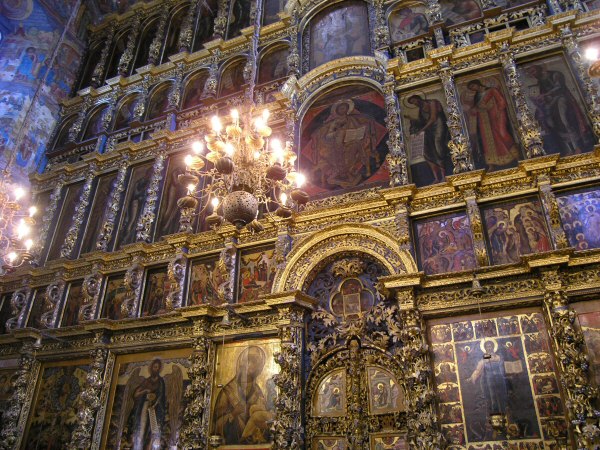
The wall that separates two worlds in an iconostasis. One might mean by the iconostasis the boards or the bricks or the stones. In actuality, the iconostasis is a boundary between the visible and invisible worlds, and it functions as a boundary by being an obstacle to our seeing the altar, thereby making it accessible to our consciousness by means of its unified row of saints (i.e., by its cloud of witnesses) that surround the altar where God is, the sphere where heavenly glory dwells, thus proclaiming the Mystery. Iconostasis is vision. Iconostasis is manifestation of saints and angels- angelophania- a manifest appearance of heavenly witnesses that includes, first of all, the Mother of God and Christ Himself in the flesh, witnesses who proclaim that which is from the other side of mortal flesh. Iconostasis is the saints themselves. If everyone praying in a temple were wholly spiritualized, if everyone praying were truly to see, then there would be no iconostasis other than standing before God Himself, witnessing to Him by their holy countenances and proclaiming His terrifying glory by their sacred words.
But because our sight is weak and our prayers are feeble, the Church, in Her care for us, gave us visual strength for our spiritual brokenness: the heavenly visions on the iconostasis, vivid, precise, and illumined, that articulate, materially cohere, an image into fixed colors. But this spiritual prop, this material iconostasis, does not conceal from the believer (as someone in ignorant self-absorption might imagine) some sharp mystery; on the contrary, the iconostasis points out to the half-blind the Mysteries of the altar, opens for them an entrance into a world closed to them by their own struckness, cries into their deaf ears the voice of the Heavenly Kingdom, a voice made deafening to them by their having failed to take in the speech of ordinary voices. This heavenly cry is therefore stripped, of course, of all the subtly rich expressiveness of ordinary speech: but who commits the act of such stripping when it is we who fail to appreciate the heavenly cry because we failed first to recognize it in ordinary speech: what can be left except a deafening cry? Destroy the material iconostasis and the altar itself will, as such, wholly vanish from our consciousness as if covered over by an essentially impenetrable wall. But the material iconostasis does not, in itself, take the place of the living witnesses, existing instead of them; rather, it points toward them, concentrating the attention of those who pray upon them- a concentration speak figuratively, then, a temple without a material iconostasis opens windows in this wall, through whose glass we see (those of us who can see) what is permanently occurring beyond: the living witnesses to God. To destroy icons thus means to block up the windows; it means smearing the glass and weakening the spiritual light for those of us who otherwise could see it directly, who could (we could figuratively say) behold it in a transparent space free of earthly air, a space where we could learn to breathe the pure ethereal air and to live in the light of God’s glory: and when this happens, the material iconostasis will self-destruct in that vast obliteration which will destroy the whole image of this world- and which will even destroy faith and hope- and then we contemplate, in pure love, the immortal glory of God.
Exerpt taken from the book:
Iconostasis, by: Pavel Florensky.
#19627
Bible Study / Re: Orthdox Church: Iconostasis
August 23, 2011, 01:17:42 PM
The Deisis
The word 'Deisis' comes from a Greek word meaning 'prayer' or 'intercession'. In iconographic language it represents a group of three persons: Christ, seated in majesty in the center, with his Mother to his right and John the Forerunner to his left. The persons are slightly bowed while raising their hands in a gesture of humbly asking.

Holy Mother Mary and St. John the Baptist bowing before the Seated Jesus Christ The Righteous King
The word 'Deisis' comes from a Greek word meaning 'prayer' or 'intercession'. In iconographic language it represents a group of three persons: Christ, seated in majesty in the center, with his Mother to his right and John the Forerunner to his left. The persons are slightly bowed while raising their hands in a gesture of humbly asking.
Holy Mother Mary and St. John the Baptist bowing before the Seated Jesus Christ The Righteous King
#19628
Bible Study / Re: Orthdox Church: Iconostasis
August 23, 2011, 01:14:30 PM
The Iconostasis and the Deisis
The Iconostasis is the most prominent feature of an Orthodox Church. It separates the Sanctuary from the nave. The Sanctuary is where the Eucharist is celebrated, which symbolizes the Divine world. The nave is the part reserved for the believers and symbolizes the human world.

Iconostasis 11.20 x 12.88 m.
Made by Palekh, Russia.

Iconostasis 'Nikitniki'.
Made by Kinovar, Russia.
The Iconostasis is the most prominent feature of an Orthodox Church. It separates the Sanctuary from the nave. The Sanctuary is where the Eucharist is celebrated, which symbolizes the Divine world. The nave is the part reserved for the believers and symbolizes the human world.
Iconostasis 11.20 x 12.88 m.
Made by Palekh, Russia.
Iconostasis 'Nikitniki'.
Made by Kinovar, Russia.
#19629
Bible Study / Re: Orthdox Church: Iconostasis
August 23, 2011, 01:10:24 PM
Many centuries elapsed before there was any approach towards making the solid partition which we find in the Greek churches of today. But gradually the demand for greater adornment grew, and to satisfy it pictures were placed over the entire iconostasis, and so it began to assume somewhat the present form. After the Council of Florence (1438) when the last conciliar attempt at reunion of the Churches failed, the Greek clergy took great pleasure in building and adorning their church as little like the Latin ones as possible, and from then on the iconostasis assumed the form of the wall-like barrier which it has at present. As its present form is merely a matter of development of Church architecture suitable and adapted to the Greek Rite , the iconostasis was continuously used by the Catholics as well as by the Orthodox.
Reference:
Catholic Encyclopedia
http://www.catholic.org/encyclopedia/view.php?id=6021
Reference:
Catholic Encyclopedia
http://www.catholic.org/encyclopedia/view.php?id=6021
#19630
Bible Study / Re: Orthdox Church: Iconostasis
August 23, 2011, 01:10:10 PM
In the early Greek churches there was a slight barrier about waist high, or even lower, dividing the altar from the people. This was variously known as kigklis , grating, dryphakta , fence, diastyla , a barrier made of columns, according to the manner in which it was constructed. Very often pictures of the saints were affixed to the tops of the columns. When Justinian constructed the "great" church, St. Sophia, in Constantinople, he adorned it with twelve high columns (in memory of the twelve Apostles ) in order to make the barrier or chancel, and over the tops of these columns he placed an architrave which ran the entire width of the sanctuary. On this architrave or crossbeam large disks or shields were placed containing the pictures of the saints, and this arrangement was called templon (templum), either from its fancied resemblance to the front of the old temples or as expressing the Christian idea of the shrine where God was worshiped. Every church of the Byzantine Rite eventually imitated the "great" church and so this open templon form of iconostasis began to be adopted among the churches of the East, and the name itself was used to designate what is now the iconostasis.
#19631
Bible Study / Re: Orthdox Church: Iconostasis
August 23, 2011, 01:09:53 PM
The iconostasis is really an Oriental development in adorning the holy place about the Christian altar. Originally the altar stood out plain and severe in both the Oriental and Latin Rites. But in the Western European churches and cathedrals the Gothic church builders put a magnificent wall, the reredos, immediately behind the altar and heaped ornamentation, figures, and carvings upon it until it became resplendent with beauty. In the East, however, the Greeks turned their attention to the barrier or partition dividing the altar and sanctuary from the rest of the church and commenced to adorn and beautify that, and thus gradually made it higher and covered it with pictures of the Apostles, Prophets, and saints. Thus the Greek Church put its ornamentation of the holy place in front of the altar instead of behind it as in the Latin churches. In its present form in the churches of the Byzantine (and also the Coptic) Rite the iconostasis comparatively modern, not older than the sixteenth or seventeenth centuries. It was never used in the Roman churches or any of the Latin churches of the West, and was unknown to the early Church. The modern chancel rail of the Latin Rite correctly represents the primitive barrier separating the altar from the people. In the great Gothic cathedrals the choir screen or rood screen may be said in a way to be the analogue of the iconostasis, but that is the nearest approach to it in the Western Church . None of the historians or liturgical writers of the early or middle Greek Church ever mention the iconostasis. Indeed the name today is chiefly in Russian usage, for the meaning of the Greek work is not restricted merely to the altar screen, but is applied to any object supporting a picture. The word is first mentioned in Russian annals in 1528 when one was built by Macarius, Metropolitan of Novgorod.
#19632
Bible Study / Re: Orthdox Church: Iconostasis
August 23, 2011, 01:09:33 PM
Where the iconostasis is very lofty, as among the Slavonic nationalities, whether Orthodox or Catholic, the pictures upon it are arranged in tiers or rows across its entire length. Those on the lower ground tier have already been described; the first tier above that is a row of pictures commemorating the chief feasts of the Church, such as the Nativity, Annunciation, Transfiguration, etc.; above them a tier containing the Prophets of the Old Law ; and lastly the very top of the iconostasis. These pictures are usually painted in the stiff Byzantine manner, although in many Russian churches they have begun to use modern art; the Temple of the Saviour in Moscow is a notable example. The iconostasis in the Greek (Hellenic) churches have never been so lofty and as full of paintings as those in Russian and other countries. A curious form of adornment of the icons or pictures has grown up in Russia and is also found in other parts of the East. Since the Orthodox Church would not admit sculptured figures on the inside of churches (although they often have numerous statues upon the outside) they imitated an effect of sculpture in the pictures placed upon the iconostasis which produces an incongruous effect upon the Western mind. The icon, which is generally painted upon wood, is covered except as to the face and hands with a relief of silver, gold, or seed pearls showing all the details and curves of the drapery, clothing and halo: thus giving a crude cameo-like effect around the flat painted face and hands of the icon.
#19633
Bible Study / Re: Orthdox Church: Iconostasis
August 23, 2011, 01:09:17 PM
Two pictures or icons must appear upon every iconostasis, no matter how humble, in the Greek church ; the picture of Our Lord on the right of the Royal door, and that of Our Lady upon the left. But in the finer churches of Russia, Greece, Turkey, and the East the iconostasis has a wealth of paintings lavished upon it. Besides the two absolutely necessary pictures, the whole screen is covered with them. On the royal door there is always the Annunciation and often the four Evangelists. On each of the other doors there are St. Michael and St. Gabriel. Beyond the deacon's door there is usually the saint to whom the church is dedicated, while at the opposite end there is either St. Nicholas of Myra or St. John the Baptist . Directly above the royal door is a picture of the Last Supper, and above that is often a large picture ( deisus ) of Our Lord sitting crowned upon a throne, clothed in priestly raiment, as King and High-priest. At the very top of the iconostasis is a large cross (often a crucifix in bas-relief ), the source of our salvation, and on either side of it are the pictures of Our Lady and of St. John.
#19634
Bible Study / Re: Orthdox Church: Iconostasis
August 23, 2011, 01:09:00 PM
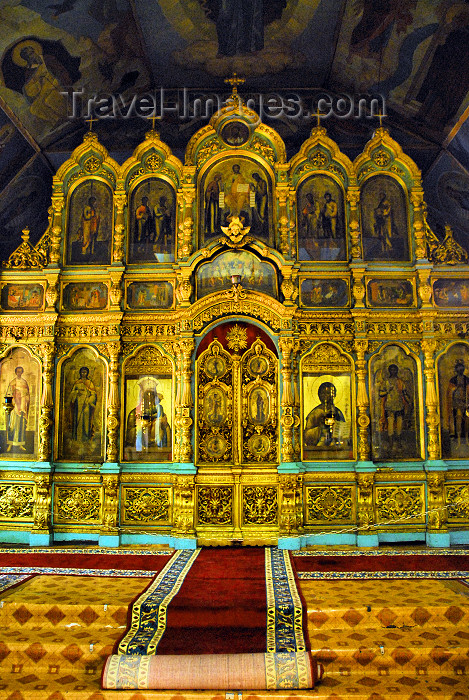
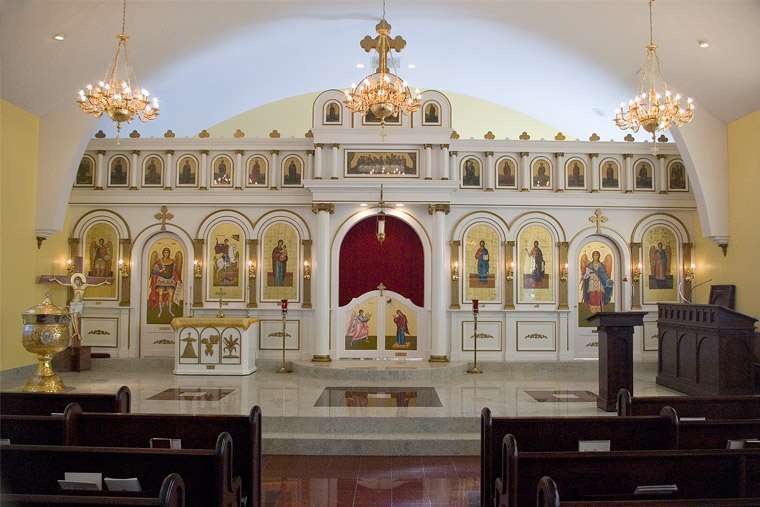
Iconostasis
(Gr. eikonostasion, eidonostasis , picture screen, from eikon , image, picture, and histemi , place), the chief and most distinctive feature in all Greek churches, whether Catholic or Orthodox. It may be said to differentiate the Greek church completely from the Roman in its interior arrangement. It consists of a great screen or partition running from side to side of the apse or across the entire end of the church, which divides the sanctuary from the body of the church, and is built of solid materials such as stone, metal, or wood, and which reaches often (as in Russia ) to the very ceiling of the church, thus completely shutting off the altar and the sanctuary from the worshipper. It has three doors: the great royal door in the middle (so called because it leads directly to the altar upon which the King of kings is sacrificed ), the deacon's door to the right, and the door of the proskomide (preparation for Liturgy ) upon the left, when viewing the structure from the standpoint of a worshipper in the body of the church.
(Gr. eikonostasion, eidonostasis , picture screen, from eikon , image, picture, and histemi , place), the chief and most distinctive feature in all Greek churches, whether Catholic or Orthodox. It may be said to differentiate the Greek church completely from the Roman in its interior arrangement. It consists of a great screen or partition running from side to side of the apse or across the entire end of the church, which divides the sanctuary from the body of the church, and is built of solid materials such as stone, metal, or wood, and which reaches often (as in Russia ) to the very ceiling of the church, thus completely shutting off the altar and the sanctuary from the worshipper. It has three doors: the great royal door in the middle (so called because it leads directly to the altar upon which the King of kings is sacrificed ), the deacon's door to the right, and the door of the proskomide (preparation for Liturgy ) upon the left, when viewing the structure from the standpoint of a worshipper in the body of the church.
#19635
Bible Study / Re: The Roman Catholic Western Europe Meets The Orthodox Eastern Europe
August 23, 2011, 12:43:08 AM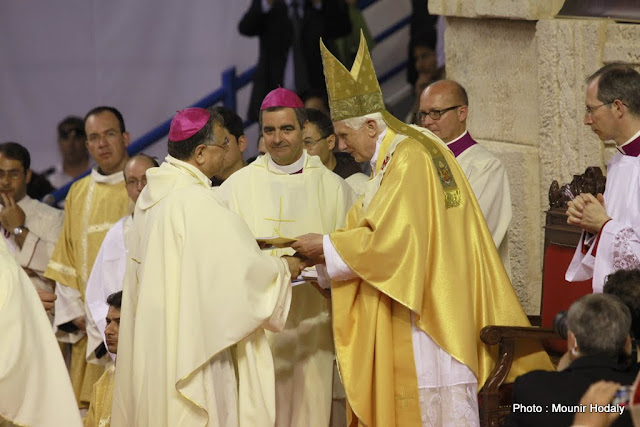
Latin Patriarch of Jerusalem Fouad Twal
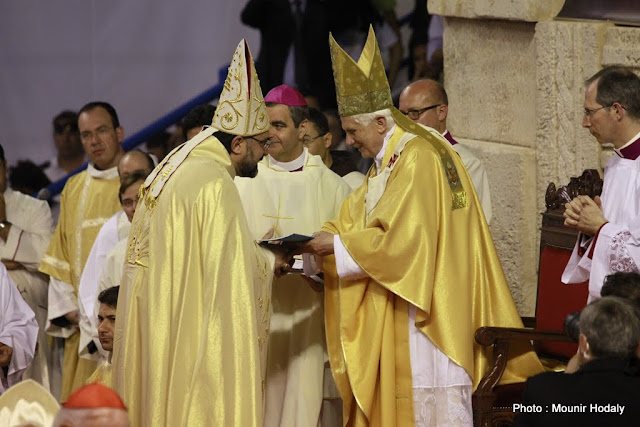
Maronite Archbishop of Cyprus Joseph Soueif
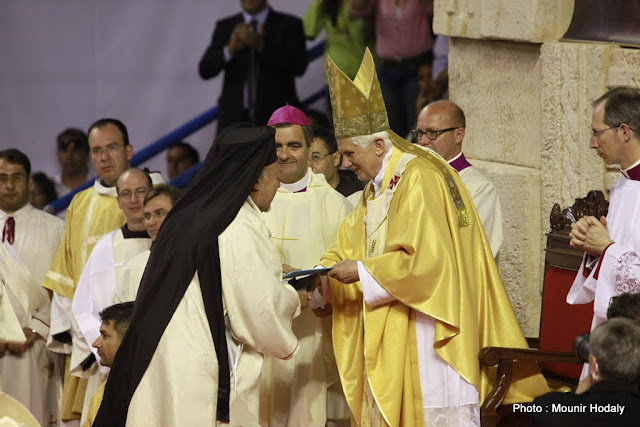
Melkite Patriarchal vicar for Jerusalem and West Bank Archbishop Joseph Jules Zerey


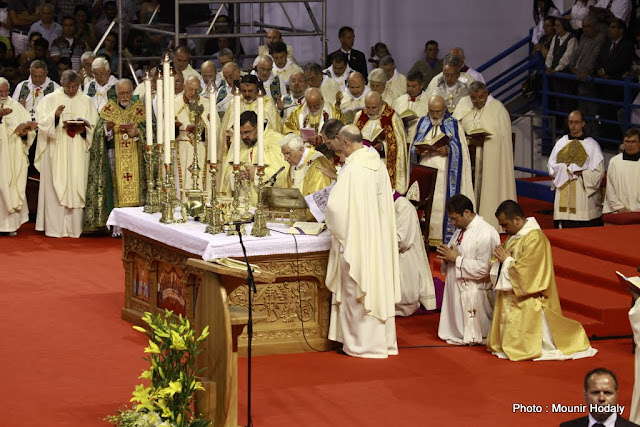
The Spleandor of Catholica Ecclesia. The One Holy Catholic And Apostolic Church.
#19636
Bible Study / East meets West. Heads of Eastern Catholic Rites with the Holy Father
August 23, 2011, 12:40:10 AM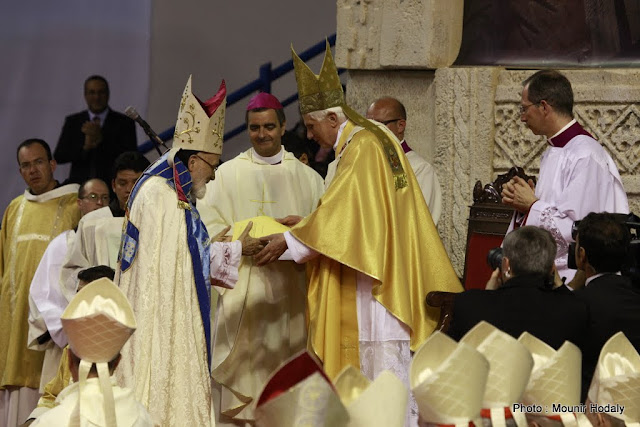
Maronite Catholic Patriarch Mar Nasrallah Boutros Sfeir
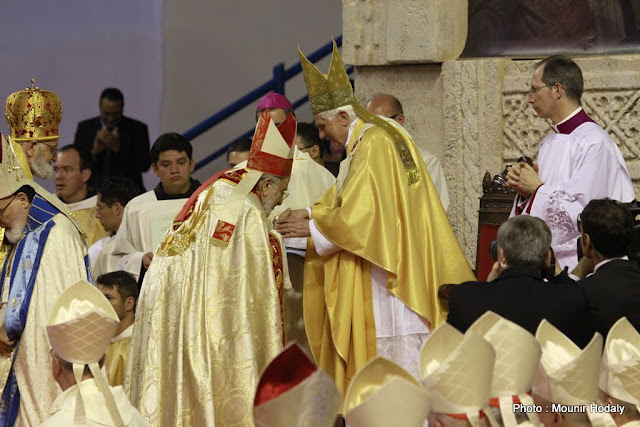
Chaldean Catholic Patriarch Mar Emmanuel III Delly
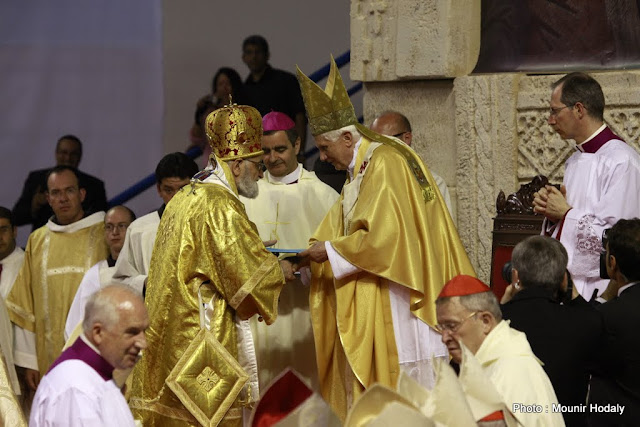
Melkite Catholic Patriarch Gregorios III Laham
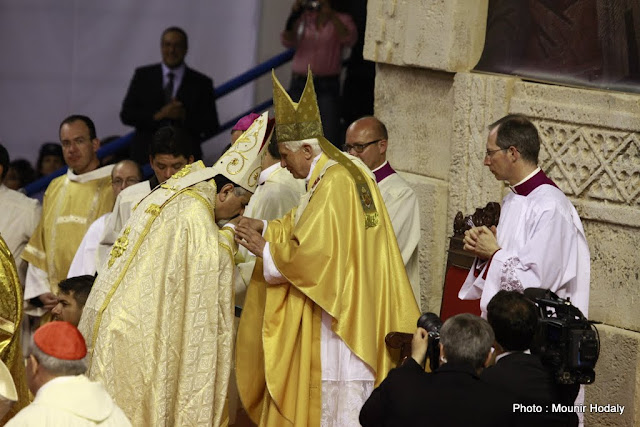
Syriac Catholic Patriach Mar Ignace Yousef III Younan
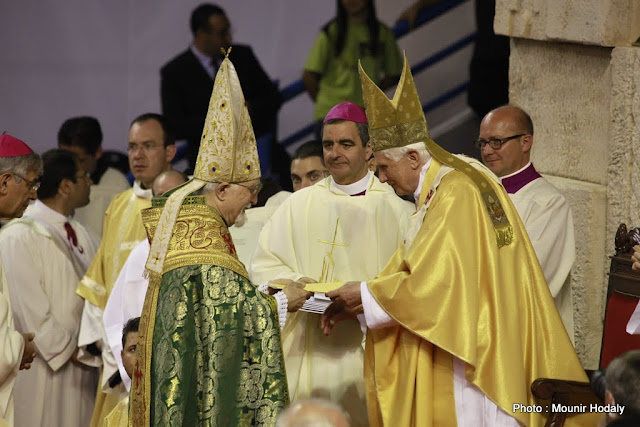
Armenian Catholic Patriarch Nersеs Bеdros XIX Tarmouni
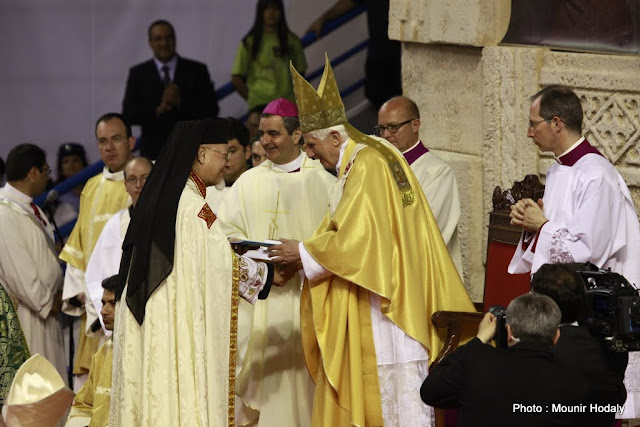
Coptic Catholic Patriarch Antonios Naguib
#19637
Bible Study / Re: The Roman Catholic Western Europe Meets The Orthodox Eastern Europe
August 23, 2011, 12:35:38 AM
The spiritual heritage of the Byzantine Catholic Church is the same given to us by the Apostles and which matured in the Christian East, during the period of the Byzantine Empire. This heritage includes the doctrines, liturgical practices and underlying theology and spirituality which come to us from the Christian Church of the Byzantine Empire. This heritage is shared among all of the Christian peoples, regardless of ethnicity or nationality, who trace their spiritual roots to the Great Church of Constantinople, and the Byzantine religious culture which grew from that Church. From the First Millennium, Christians of the Byzantine tradition have referred to themselves as "Orthodox Christians". Byzantine Catholics are Orthodox Christians who embrace full communion with the Church of Rome and its primate, Pope Benedict XVI, the successor of St. Peter, the first among the Apostles. Sadly, however, the break in communion between the Orthodox East and the Catholic West of 1054 still affects us today, as our communion with Rome means we are not in full communion with our mother Orthodox Church. We pray for the day when the Churches will again be one.
#19638
Bible Study / Re: The Roman Catholic Western Europe Meets The Orthodox Eastern Europe
August 23, 2011, 12:34:50 AM
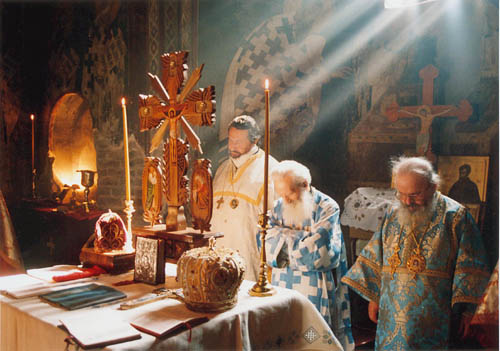
Eastern Catholic Celebration of HOLY MASS
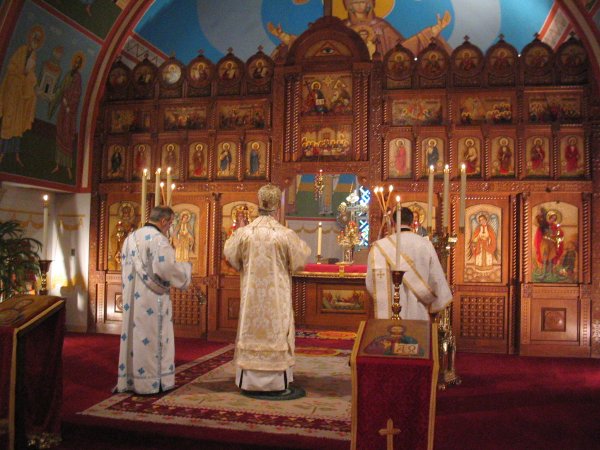
Priests facing the Iconostasis and directing prayer to Heaven.
Priests facing the Iconostasis and directing prayer to Heaven.
#19639
Bible Study / Re: The Roman Catholic Western Europe Meets The Orthodox Eastern Europe
August 23, 2011, 12:29:05 AMQuote from: buwadsanga on August 22, 2011, 03:30:30 PM
Dong, I think Jesus second coming is near. The unification of the churches is a testament to it. These unification is a vain and impossible to achieve 30 to 40yrs ago. Pope John Paul II started it all. Evil cannot defeat nor destroy the church created by Jesus and entrusted to Simon for administration whon He called Peter "The Rock" it was last Sunday's gospel reading....St. Paul first problem during the early christians was also their division but the apostoles were able to unite them. It happen again 1000 yrs ago and in modern times....you really can see how the devil is working to mislead it's members and conquer the catholic church!!!
Maayong trabahante bitaw to si Santo Papa John Paul II. Dili lang kai ning reach out siya sa Orthodox Church, pero ning reach out pood siya sa mga Hudeo sa Roma og didto sa Israel. Kadtong taw nag ni-try to assassinate niya, gi tagaan siya og pasaylo ni Santo Papa. In fact, the two eventually became good friends. Kuyaw no? Buutan og maayo gayud to siya nga tawhana. Mao na Blessed na siya, hapit na ma himo og Santo. Maayo siya kai gi RE-IGNITE niya ang evangelismo sa Simbahan Katoliko.
Tinuod ka, bro, dili gayud ka guba ang mga satanas sa Simbahan Katoliko. Ngano man? Kai ning ingon good ang Ginoong Hesus Kristo ni Peter,
"Ikaw mao si Pedro, ug sa ibabaw niining bato pagatukoron ko ang akong iglesia, ug ang mga gahum sa kamatayon dili gayud makabuntog kaniya. Ug hatagan ko ikaw sa mga yawi sa gingharian sa langit, ug bisan unsay imong pagabugkoson dinhi sa yuta, didto sa langit pagailhon kini nga binugkos; ug bisan unsay imong pagaluagan dinhi sa yuta, didto sa langit pagailhon kini nga linuagan.
-MATEO 16: 18-19
As we speak, there are more and more Christian Orthodox who are joining the Catholic Church; with that many Orthodox Churches that are reunifying with CATHOLICA ECCLESIA. Praise be to God and Holy Mother Church!
#19640
Bible Study / Re: The Roman Catholic Western Europe Meets The Orthodox Eastern Europe
August 23, 2011, 12:19:20 AMQuote from: buwadsanga on August 22, 2011, 03:30:30 PM
Dong, I think Jesus second coming is near. The unification of the churches is a testament to it. These unification is a vain and impossible to achieve 30 to 40yrs ago. Pope John Paul II started it all. Evil cannot defeat nor destroy the church created by Jesus and entrusted to Simon for administration whon He called Peter "The Rock" it was last Sunday's gospel reading....St. Paul first problem during the early christians was also their division but the apostoles were able to unite them. It happen again 1000 yrs ago and in modern times....you really can see how the devil is working to mislead it's members and conquer the catholic church!!!
Hapit na bitaw mo balik ang Ginoong Hesus Kristo, bro. Mo huwat na lang ta pero mag buutan ta nga trabahante sa iyang hacienda. hehehe! Mo ingon ang Ginoo sa mga buutan nga trabahante:
Ug miingon kaniya ang iyang agalon, `Maayong pagkabuhat, maayo ug kasaligan nga ulipon; sa diyutay kasaligan ka diay, sa daghan pagapiyalan ko ikaw; dumuyog ka sa kalipay sa imong agalon.`
-Mateo 25:23
#19641
Bible Study / Re: Spiritual Aridity
August 23, 2011, 12:04:13 AM
Why does St. Francis de Sales say that? By definition spiritual aridity is a want of interest of feeling; insensibility; dryness of style or feeling; spiritual drought. So why is it that a single act done with aridity of spirit worth more than many done with feelings of devotion?
It is in spiritual aridity that we feel almost broken, feel difficult to pray, feel difficult to communicate with God because of the attacks of the enemy. But if we pray and give praise to God despite spiritual aridity, then all the more precious the prayer. It is liken to a man carrying a very heavy, painful, thorn-filled cross with our Lord Jesus Christ. If someone experiences spiritual aridity, and still glorifies the Lord despite the wicked tricks of the devil to make him feel worthless and hopeless and questioning of the faith, then the Lord sympathizes. This is an example of a person of the faith who fights not only by the word, by faith. Believing in the Faith and in the Savior Jesus Christ when everything seems lost or when things don't go according to plan. That, my friends, my family of Christian brothers and sisters, is an example of fighting and speaking and doing the Word of Jesus Christ who Is Lord.
This reminds me of the spiritual life of Blessed Mother Theresa. There were times where she could not pray, found it difficult to pray, and had a feeling of dryness. But she prayed and gave glory to God in Jesus Christ.
It is very common that those who are faithful to God may be attacked by the enemy. But pray and have faith we must...Jesus Calls us to it.
The world is fast and fading. The Eternal Kingdom in Heaven IS the glorious reward...
Pax Vobis In Nominae Dominae Iesus Christus .
[Peace Be With You In The Name of the Lord Jesus Christ]
#19642
Bible Study / Re: Spiritual Aridity
August 22, 2011, 11:54:44 PM
To quote St. Francis de Sales, "One single act done with aridity of spirit is worth more than many done with feelings of devotion."
#19643
Bible Study / Re: Spiritual Aridity
August 22, 2011, 11:39:00 PMQuote from: hubag bohol on August 22, 2011, 04:44:52 PM
Saint Francis de Sales, Letter 764 to Saint Jane de Chantal: "It is the Height of Holy Disinterestedness to be Content with Naked, Dry, and Insensible Acts carried out in the Higher Will alone. You have told me well about your Suffering, and there is nothing to do to help it but what you are doing: Affirming to our Lord, sometimes out loud and sometimes in song, that you even Will to Live and to eat as the Dead do, without Taste, Feeling or Knowledge. In the End, the Savior wants us to be His so Perfectly that nothing else is left for us, and to abandon ourselves entirely to the Mercy of His Providence without Reservation".
Amen.
#19644
Bible Study / Re: Spiritual Aridity
August 22, 2011, 03:12:18 PM
John Paul II in St. Peter's Square on Sunday Feb 12, 1984 said:
"Every liturgical action. . . is an
occasion of communion. . . and in a particular way with Mary. Because the
Liturgy is the action of Christ and of the Church. . . she is inseparable
from one and the other. . . . . Mary is present in the memorial - the
liturgical action - because she was present at the saving event, faithful
with her whole being to the Father's plan, at the historical salvific
occasion of Christ's death." Her will is still united with His, the flesh and
blood on the altar came from her."
http://www.ewtn.com/library/SCRIPTUR/ARIDITY.TXT
#19645
Bible Study / Re: The Roman Catholic Western Europe Meets The Orthodox Eastern Europe
August 22, 2011, 02:41:56 PM
The reader will sense some give-and-take here on both sides, but the end result would truly be a cause for celebration all-around:
The Pope and the Orthodox Primates could invite all the faithful under their jurisdiction to recognize each other’s Churches as ‘sister Churches’ that fully realize the Apostolic faith in doctrine, sacraments, and ecclesial life, despite the historically different forms in which our liturgy is celebrated, our doctrine taught, and our community life structured.
The fact that consultation members have reached the stage where they are concretely imagining it means that full communion between the Latin, Eastern Catholic and Eastern Orthodox Churches is closer than it has ever been before.
That is ample reason for us to join our hearts and voices to those around the world in the Week of Prayer for Christian Unity and throughout the year.
[Paulist Fr. Thomas Ryan directs the Paulist North American Office for Ecumenical and Interfaith Relations in Washington.]
#19646
Bible Study / Re: The Roman Catholic Western Europe Meets The Orthodox Eastern Europe
August 22, 2011, 02:41:40 PM
What is encouraging about the Consultation’s statement is that they have reached the stage where they are imagining in concrete terms what it would look like to be in full communion with one another. Some of their observations and imaginings:
* The bishop of Rome’s “relationship to the Eastern Churches and their bishops would have to be substantially different from the relationship now accepted in the Latin Church…. The leadership of the pope would always be realized by way of a serious and practical commitment to synodality and collegiality.â€
* The bishop of Rome would be seen as a member as well as head of the college of bishops, the senior patriarch among the primates of the churches. His fundamental worldwide ministry would be to promote the communion of all the local churches.
* There would also be some implications for the way the Roman curia presently functions. Its relationship to local bishops and episcopal conferences in the Latin Church “would become less centralized: bishops, for instance, would have more control over the agenda and the final documents of synods, and the selection of bishops would again normally become a local process.â€
#19647
Bible Study / Re: The Roman Catholic Western Europe Meets The Orthodox Eastern Europe
August 22, 2011, 02:41:22 PM
At the heart of our differences, they note, is the way each of our traditions understands the proper exercise of the primacy in the leadership of the Church, not only within Christianity as a whole but also within the various regions of the Christian world.
In the Christian East, “primacy†has a less supra-national character than it has acquired in the Latin Church. The underlying pattern among the Eastern churches was what is called “autocephaly†-- ecclesiastical independence correlative to the emerging nation-state, with the head of the church in a given nation (the patriarch) seen as exercising primacy.
In the Christian East, “primacy†has a less supra-national character than it has acquired in the Latin Church. The underlying pattern among the Eastern churches was what is called “autocephaly†-- ecclesiastical independence correlative to the emerging nation-state, with the head of the church in a given nation (the patriarch) seen as exercising primacy.
#19648
Bible Study / Re: The Roman Catholic Western Europe Meets The Orthodox Eastern Europe
August 22, 2011, 02:41:06 PM
After 950 years of division between us, the language is now that “it is urgent†to put an end to this. One might say that, thanks to prayer, local action, and the work of commissions like this, there’s been a sea change!
Consultation members do not shy from addressing the hard issues head-on and recognize that this cannot be achieved without “new, better harmonized structures of leadership on both sides: new conceptions of both synodality and primacy in the universal Church, new approaches to the way authority and primacy are exercised in both our communions.â€
Consultation members do not shy from addressing the hard issues head-on and recognize that this cannot be achieved without “new, better harmonized structures of leadership on both sides: new conceptions of both synodality and primacy in the universal Church, new approaches to the way authority and primacy are exercised in both our communions.â€
#19649
Bible Study / Re: The Roman Catholic Western Europe Meets The Orthodox Eastern Europe
August 22, 2011, 02:40:51 PM
All of which pushes the commission members to state:
It is urgent that Orthodox and Catholic Christians find an effective way to realize our common tradition of faith together, and to present the world with a unified testimony to the Lordship of Jesus. To be what we are called to be, we need each other…. To become what we are…we cannot stop short of re-establishing full Eucharistic communion among ourselves.
It is urgent that Orthodox and Catholic Christians find an effective way to realize our common tradition of faith together, and to present the world with a unified testimony to the Lordship of Jesus. To be what we are called to be, we need each other…. To become what we are…we cannot stop short of re-establishing full Eucharistic communion among ourselves.
#19650
Bible Study / Re: The Roman Catholic Western Europe Meets The Orthodox Eastern Europe
August 22, 2011, 02:40:32 PM
Their listing of what we share is substantive and long. In short: We believe our life as churches to be centered on the Divine Liturgy, the Word of God, and the sacraments from baptism to marriage.
Both churches recognize each other’s bishops as legitimately ordained into the apostolic succession. Both venerate Mary, the Mother of God, and a whole range of holy men and women from every age, many of them common to both our traditions. Both our churches cherish ancient practices that help the faithful grow in holiness, such as reverencing sacred images, fasting, the monastic life, and various forms of contemplative prayer.
Both churches recognize each other’s bishops as legitimately ordained into the apostolic succession. Both venerate Mary, the Mother of God, and a whole range of holy men and women from every age, many of them common to both our traditions. Both our churches cherish ancient practices that help the faithful grow in holiness, such as reverencing sacred images, fasting, the monastic life, and various forms of contemplative prayer.
#19651
Bible Study / Re: The Roman Catholic Western Europe Meets The Orthodox Eastern Europe
August 22, 2011, 02:40:15 PM
One noteworthy sign of this was the statement by the North American Orthodox-Catholic Theological Consultation last October.
For the past forty-five years they have been sifting through the pastoral and doctrinal issues that historically have prevented our churches from sharing a single life of faith, sacraments and witness before the world. But in this document, as indicated by its title, they are getting down to brass tacks: “Steps Towards A Reunited Church: A Sketch of an Orthodox-Catholic Vision for the Future.â€
For the past forty-five years they have been sifting through the pastoral and doctrinal issues that historically have prevented our churches from sharing a single life of faith, sacraments and witness before the world. But in this document, as indicated by its title, they are getting down to brass tacks: “Steps Towards A Reunited Church: A Sketch of an Orthodox-Catholic Vision for the Future.â€
#19652
Bible Study / Re: The Roman Catholic Western Europe Meets The Orthodox Eastern Europe
August 22, 2011, 02:39:51 PM
Catholic and Orthodox Unity: Close Enough to Imagine
Jan. 18, 2011
By Fr. Thomas Ryan
As we celebrate another Week of Prayer for Christianity, what is there to fuel our hope that this isn’t all just an exercise in futility? What’s to celebrate?
Signals are there that this movement called “ecumenical†does in fact move, that reflection as we go along on an increasing degree of “life together†is shaping our perception of the future in positive ways.
#19653
Bible Study / Re: Spiritual Aridity
August 22, 2011, 02:36:38 PM
Thanks for posting this, Hubag.
This is a very wonderful message from EWTN:
http://www.ewtn.com/library/SCRIPTUR/ARIDITY.TXT
This is a very wonderful message from EWTN:
http://www.ewtn.com/library/SCRIPTUR/ARIDITY.TXT
#19654
Bible Study / Re: Spiritual Aridity
August 22, 2011, 02:34:58 PMQuote from: Lorenzo on August 22, 2011, 02:29:39 PM
One saint who had aridity, but profited from it was St. Frances de Sales:
St. Francis de Sales, Letter 764 to St. Jane de Chantal:"It is the height
of holy disinterestedness to be content with naked, dry, and insensible acts
carried out in the higher will alone. You have told me well about your
suffering and there is nothing to do to help it but what you are doing:
affirming to our Lord, sometimes out loud and sometimes in song, that you
even will to live and to eat as the dead do, without taste, feeling or
knowledge. In the end, the Savior wants us to be His so perfectly that
nothing else is left for us, and to abandon ourselves entirely to the mercy
of His providence without reservation."
http://www.ewtn.com/library/SCRIPTUR/ARIDITY.TXT
Very poignant and very stark of St. Francis, but his message reminds us of the Jew who asked The Savior Jesus Christ how to become perfect. When Christ told him to sell all his belongings, and give up all pleasures of life to follow him....
Tinuod baya. The wisdom of St. Francis de Sales , through the workings of the Holy Spirit....
#19655
Bible Study / Re: Spiritual Aridity
August 22, 2011, 02:29:39 PM
One saint who had aridity, but profited from it was St. Frances de Sales:
St. Francis de Sales, Letter 764 to St. Jane de Chantal:"It is the height
of holy disinterestedness to be content with naked, dry, and insensible acts
carried out in the higher will alone. You have told me well about your
suffering and there is nothing to do to help it but what you are doing:
affirming to our Lord, sometimes out loud and sometimes in song, that you
even will to live and to eat as the dead do, without taste, feeling or
knowledge. In the end, the Savior wants us to be His so perfectly that
nothing else is left for us, and to abandon ourselves entirely to the mercy
of His providence without reservation."
http://www.ewtn.com/library/SCRIPTUR/ARIDITY.TXT
#19656
Bible Study / Re: The Roman Catholic Western Europe Meets The Orthodox Eastern Europe
August 22, 2011, 01:55:49 PM
Eastern Rite Catholic Priest administering the Blood of Jesus Christ to a believer.
#19657
Bible Study / Re: The Roman Catholic Western Europe Meets The Orthodox Eastern Europe
August 22, 2011, 01:53:23 PM
Eastern Catholic Rite

#19661
Bible Study / Orthdox Church: Iconostasis
August 22, 2011, 12:52:26 PM
Iconostasis: The iconostasis is an altar screen or wall which, in an Orthodox church, separates the Sanctuary from the nave. The Sanctuary is where the Eucharist is celebrated, which symbolizes the Divine world. It is separated from the nave which is the part reserved for the believers and symbolizes the human world. The iconostasis is the most distinctive feature of an Orthodox church. It is richly decorated with icons, and usually consists of four or more rows or registers.
In the iconostasis, the row with the Deisis, usually the second row from below, is the most important. The word 'Deisis' comes from a Greek word meaning 'prayer' or 'intercession'. In iconographic language it represents a group of three persons: Christ, seated in majesty in the center, with his Mother to his right and John the Forerunner to his left. The persons are slightly bowed while raising their hands in a gesture of humbly asking.
The Deisis, and with it the iconostasis, played an important role in the development of iconography. As mentioned above, it was limited to the group of three persons, in its early form. In later years Theophanes the Greek profoundly changed this structure. He thereby replaced the figures, which were traditionally showing the upperbody only, with the entire person, on foot, with the total length of the persons over two meters tall. Furthermore, he increased the number of persons in the composition of the Deisis by adding Archangels, Apostles, Church Fathers and Martyrs. It can be easily understood that an iconostasis with this larger array of angels and saints is only seen in large churches.
http://www.iconsexplained.com/iec/iec_iconostasis.htm
#19662
Bible Study / Re: The Roman Catholic Western Europe Meets The Orthodox Eastern Europe
August 22, 2011, 12:19:42 PM
Praise be To The Lord Jesus Christ! He who directs the fold , His sheep, into the pasture of His Kingdom through the Holy Roman Catholic Church.
The Primacy of Alexandria , a Coptic Orthodox Church, is now a Coptic Catholic Orthodox. Part of the Eastern Rite of the Holy Roman Catholic Church.
The Primacy of Alexandria , a Coptic Orthodox Church, is now a Coptic Catholic Orthodox. Part of the Eastern Rite of the Holy Roman Catholic Church.
#19663
Bible Study / Re: The Roman Catholic Western Europe Meets The Orthodox Eastern Europe
August 22, 2011, 12:17:33 PM
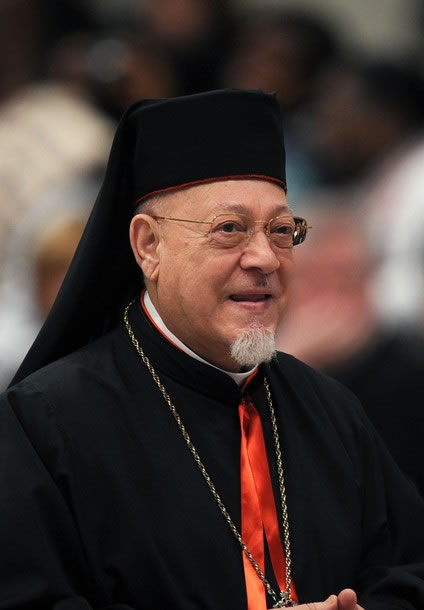
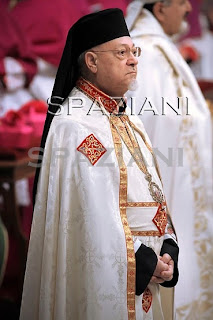
By the mercy and grace of Jesus Christ Lord and Creator of All Things, He makes it known that the faith of the converts can lead His Church. Many of our fellow Filipino priests are serving the Eastern Catholic Rite. The Patriarch of Alexandria: HIS BEATITUDE CARDINAL ANTONIOS NAGUIB

#19664
Bible Study / Re: The Roman Catholic Western Europe Meets The Orthodox Eastern Europe
August 22, 2011, 12:12:21 PM
As we speak, brother, naa na poy mga Greek Catholic Churches , naa na pod mga Orthodox Churches na ning merge na pood sa Catholica Ecclesia. Maluuy ang Ginoo, ma reunificate na pood ning duhang Churches.
#19665
Bible Study / Re: The Roman Catholic Western Europe Meets The Orthodox Eastern Europe
August 22, 2011, 12:09:15 PMQuote from: buwadsanga on August 22, 2011, 11:50:38 AM
This is a nice gesture from the two but one church of Jesus Christ where St. Peter was the first leader! Nice! Its almost 1000yrs of division. Hope magka hiusa ug usab ang east and west for the Glory of God...... lets conquer evil....
Hehehe yes you're right Buwad! There is only One Church of Jesus Christ, and that Church was established by St. Peter the First Pope. And that Church is the One Holy Apostolic Catholic Church.
#19666
Philippine Photo Gallery / Pope John Paul II Visits Manila, Philippines (1995)
August 22, 2011, 11:40:47 AM
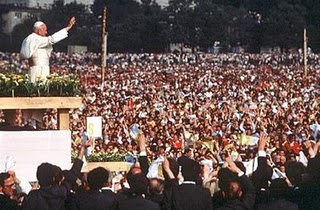
Pope John Paul II praying in Rizal Park, Manila during his visit on January 11 â€" January 21, 1995

John Paul with Filipino Political Leaders in the Philippines.
#19667
Philippine Photo Gallery / Pope John Paul II Visits Iloilo City (1981)
August 22, 2011, 11:33:38 AM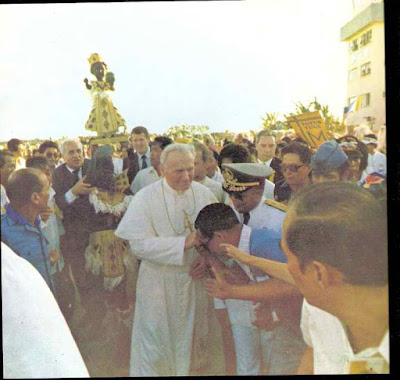
Pope John Paul receives the mano po by many Ilonggo leaders
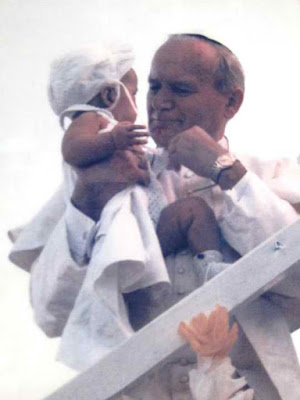
Holy Father holding a baby boy during his visit to Iloilo City, Philippines.
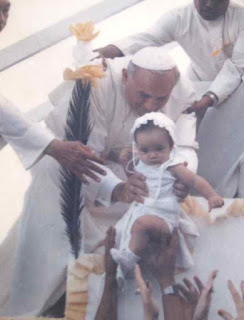
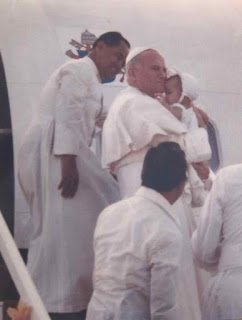
#19668
Philippine Photo Gallery / Re: Pope John Paul II Visits Cebu, Philippines (1981)
August 22, 2011, 11:28:17 AM
19 Feb 1981, Cebu, Philippines --- Crowds gather in the streets of Cebu, amid very high temperatures, to see Pope John Paul II during his visit to the Philippines. --- Image by © Henri Bureau/CORBIS SYGMA
#19669
Philippine Photo Gallery / Re: Pope John Paul II Visits Cebu, Philippines (1981)
August 22, 2011, 11:27:32 AM
Pope John Paul II is dear to the hearts of Filipinos, especially Cebuanos, said Msgr. Achilles Dakay, media liaison officer of the Archdiocese of Cebu. “He came here for all of us,†Dakay said in reference to the pope’s visit to Cebu in 1981.
From the Mactan Cebu International Airport, Dakay recounted that the pope proceeded to the Sacred Heart School for Boys along Mango Avenue in Cebu City where he spoke to the local clergy, nuns, religious and seminarians.
Afterwards the pope went to the Archbishop’s Residence where he prayed for sometime before he took lunch. He rested for a while and joined the parade along Jones Avenue, stopping near the Basilica Minore del Sto. Niño where the centuries-old image of the Holy Child Jesus is housed. Dakay said the pope was supposed to listen to children who prepared a song for him. However, there were rumors that a “sharp shooter†was going after Pope John Paul II so the parade went on towards the “templete†or the old Lahug Airport.
At 5 p.m., Dakay said the pope led the Mass along with then Cebu Archbishop Julio Cardinal Rosales. The chair where the pope sat during the Eucharistic celebration can be found beside the chapel of St. Joseph at the Archbishop's Residence. Some of the vestments used by the Pope during the Mass is placed at the Cebu Metropolitan Cathedral Museum.
The pope's homily centered on the sanctity of human life, Dakay said. After the Mass, Dakay said the pope went back to the Archbishop's Residence and addressed a huge number of young people. The pope slept in one of the rooms at the Archbishop's Residence before he left for Davao in the morning of Feb. 20, 1981.
http://globalnation.inquirer.net/cebudailynews/news/view/20110501-333982/Cebu-world-witness-JP-IIs-beatification-today
#19670
Philippine Photo Gallery / Pope John Paul II Visits Cebu, Philippines (1981)
August 22, 2011, 11:25:56 AM
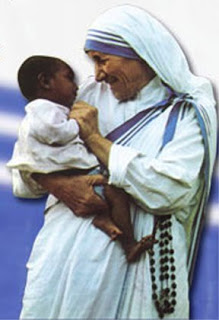
#19672
Philippine Business News / Re: Fastcraft from Tubigon, Bohol Caught Fire, 3 Dead
August 22, 2011, 11:18:46 AM
Luoy pood ang mga tawo nga namatay. May God have mercy on their souls, and may God comfort the afflicted families.
Amen.
Amen.
#19673
Music and Video / Mighty To Save by Laura Story
August 22, 2011, 11:16:31 AM #19674
Music and Video / Re: Mighty To Save ( Reggae Version )
August 22, 2011, 11:14:47 AM
Wow! This is, truly, a powerful worship song. Praise be to God!
#19675
Music and Video / Mighty To Save ( Reggae Version )
August 22, 2011, 11:13:12 AM


#19679
Bible Study / A Good Shepherd Prays
August 22, 2011, 10:59:12 AM
Pope John Paul visits the Great Wall in Jerusalem and prays before the Holy Place, the original structure and location of God's Temple in Israel.
#19680
Bible Study / Re: The Roman Catholic Western Europe Meets The Orthodox Eastern Europe
August 22, 2011, 10:55:47 AM
#19681
Bible Study / Re: The Roman Catholic Western Europe Meets The Orthodox Eastern Europe
August 22, 2011, 10:55:24 AM
#19682
Bible Study / Re: The Roman Catholic Western Europe Meets The Orthodox Eastern Europe
August 22, 2011, 10:53:04 AM
His Holiness Pope Benedict XVI heads the Holy Roman Catholic Church , the Oldest Christian Church in all Christendom. And such, His Holiness is the Vicar of Jesus Christ in Earth.
Patriarch Kirill is the Patriarch of the Russian Primacy and functions as a Supreme Bishop of the Russian Orthodox Church.
Patriarch Kirill is the Patriarch of the Russian Primacy and functions as a Supreme Bishop of the Russian Orthodox Church.
#19683
Bible Study / The Roman Catholic Western Europe Meets The Orthodox Eastern Europe
August 22, 2011, 10:46:25 AM
Holy Father Pope Benedict XVI Greets Patriarch Kirill of The Russian Primacy.
#19684
Travel and Tours / Re: Christ The Savior Church, Moscow, Russia
August 22, 2011, 10:44:17 AM

His Holiness, Patriarch Kirill, Patriarch of Moscow and All of Russia, celebrating Holy Mass at Christ The Savior Church.


#19687
Bible Study / Give to Caesar what belongs to Caesar and Give to God what belongs to God
August 22, 2011, 08:42:28 AM
And Jesus answering, said to them: Render therefore to Caesar the things that are Caesar's and to God the things that are God's. And they marveled at him.
-Mark 12:17
-Mark 12:17
#19688
Bible Study / The builders reject the cornerstone
August 22, 2011, 08:39:28 AM
And have you not read this scripture, The stone which the builders rejected, the same is made the head of the corner: By the Lord has this been done, and it is wonderful in our eyes.
-Mark 12:11
-Mark 12:11
#19689
Bible Study / Re: Blessed are the merciful
August 22, 2011, 08:37:40 AMQuote from: Lorenzo on August 22, 2011, 08:37:27 AM
Beati misericordes quia ipsi misericordiam consequentur.
-Matthew 5:7
Blessed are the merciful: for they shall obtain mercy.
#19690
Bible Study / Blessed are the merciful
August 22, 2011, 08:37:27 AM
Beati misericordes quia ipsi misericordiam consequentur.
-Matthew 5:7
-Matthew 5:7
#19691
Bible Study / Re: Blessed are the poor
August 22, 2011, 08:36:18 AM
Blessed are the poor in spirit: for theirs is the kingdom of heaven.
-Matthew 5:3
-Matthew 5:3
#19692
Bible Study / Blessed are the poor
August 22, 2011, 08:35:52 AM
Beati pauperes spiritu quoniam ipsorum est regnum caelorum.
-Matthew 5:3
-Matthew 5:3
#19693
Music and Video / Cyndi Lauper - Time after Time 1984
August 22, 2011, 08:21:18 AM #19694
Music and Video / Pat Benatar - We Belong
August 22, 2011, 08:19:26 AM #19695
Music and Video / Re: Bob Marley - One Love
August 22, 2011, 06:31:45 AM
One love, one heart
Let's get together and feel all right
Hear the children crying (One love)
Hear the children crying (One heart)
Sayin', "Give thanks and praise to the Lord and I will feel all right."
Sayin', "Let's get together and feel all right."
Whoa, whoa, whoa, whoa
Let them all pass all their dirty remarks (One love)
There is one question I'd really love to ask (One heart)
Is there a place for the hopeless sinner
Who has hurt all mankind just to save his own?
Believe me
One love, one heart
Let's get together and feel all right
As it was in the beginning (One love)
So shall it be in the end (One heart)
Alright, "Give thanks and praise to the Lord and I will feel all right."
"Let's get together and feel all right."
One more thing
Let's get together to fight this Holy Armageddon (One love)
So when the Man comes there will be no, no doom (One song)
Have pity on those whose chances grow thinner
There ain't no hiding place from the Father of Creation
Sayin', "One love, one heart
Let's get together and feel all right."
I'm pleading to mankind (One love)
Oh, Lord (One heart) Whoa.
"Give thanks and praise to the Lord and I will feel all right."
Let's get together and feel all right.
(Repeat)
Let's get together and feel all right
Hear the children crying (One love)
Hear the children crying (One heart)
Sayin', "Give thanks and praise to the Lord and I will feel all right."
Sayin', "Let's get together and feel all right."
Whoa, whoa, whoa, whoa
Let them all pass all their dirty remarks (One love)
There is one question I'd really love to ask (One heart)
Is there a place for the hopeless sinner
Who has hurt all mankind just to save his own?
Believe me
One love, one heart
Let's get together and feel all right
As it was in the beginning (One love)
So shall it be in the end (One heart)
Alright, "Give thanks and praise to the Lord and I will feel all right."
"Let's get together and feel all right."
One more thing
Let's get together to fight this Holy Armageddon (One love)
So when the Man comes there will be no, no doom (One song)
Have pity on those whose chances grow thinner
There ain't no hiding place from the Father of Creation
Sayin', "One love, one heart
Let's get together and feel all right."
I'm pleading to mankind (One love)
Oh, Lord (One heart) Whoa.
"Give thanks and praise to the Lord and I will feel all right."
Let's get together and feel all right.
(Repeat)
#19697
Music and Video / Re: For tohnichi007 : Wonderful Tonight
August 22, 2011, 06:30:22 AMQuote from: tohnichi007 on August 19, 2011, 06:20:19 AM
;-) wish wish wish....hehehe
Wish wish upon a star, diay? haha!

#19699
Philippine Daily News / Re: Farewell Edith Tiempo
August 22, 2011, 06:00:31 AM
Requiem In Pacem, Ma'am...
#19700
Philippine Daily News / Re: Philippines may soon own vast gas-rich area
August 22, 2011, 05:56:40 AM
Interesting.
Pages 1 2 3 4 5 6 7 8 9 10 11 12 13 14 15 16 17 18 19 20 21 22 23 24 25 26 27 28 29 30 31 32 33 34 35 36 37 38 39 40 41 42 43 44 45 46 47 48 49 50 51 52 53 54 55 56 57 58 59 60 61 62 63 64 65 66 67 68 69 70 71 72 73 74 75 76 77 78 79 80 81 82 83 84 85 86 87 88 89 90 91 92 93 94 95 96 97 98 99 100 101 102 103 104 105 106 107 108 109 110 111 112 113 114 115 116 117 118 119 120 121 122 123 124 125 126 127 128 129 130 131 132 133 134 135 136 137 138 139 140 141 142 143 144 145 146 147 148 149 150 151 152 153 154 155 156 157 158 159 160 161 162 163 164 165 166 167 168 169 170 171 172 173 174 175 176 177 178 179 180 181 182 183 184 185 186 187 188 189 190 191 192 193 194 195 196 197 198 199 200 201 202 203 204 205 206 207 208 209 210 211 212 213 214 215 216 217 218 219 220 221 222 223 224 225 226 227 228 229 230 231 232 233 234 235 236 237 238 239 240 241 242 243 244 245 246 247 248 249 250 251 252 253 254 255 256 257 258 259 260 261 262 263 264 265 266 267 268 269 270 271 272 273 274 275 276 277 278 279 280 281 282 283 284 285 286 287 288 289 290 291 292 293 294 295 296 297 298 299 300 301 302 303 304 305 306 307 308 309 310 311 312 313 314 315 316 317 318 319 320 321 322 323 324 325 326 327 328 329 330 331 332 333 334 335 336 337 338 339 340 341 342 343 344 345 346 347 348 349 350 351 352 353 354 355 356 357 358 359 360 361 362 363 364 365 366 367 368 369 370 371 372 373 374 375 376 377 378 379 380 381 382 383 384 385 386 387 388 389 390 391 392 393 394 395 396 397 398 399 400 401 402 403 404 405 406 407 408 409 410 411 412 413 414 415 416 417 418 419 420 421 422 423 424 425 426 427 428 429 430 431 432 433 434 435 436 437 438 439 440 441 442 443 444 445 446 447 448 449 450 451 452 453 454 455 456 457 458 459 460 461 462 463 464 465 466 467 468 469 470 471 472 473 474 475 476 477 478 479 480 481 482 483 484 485 486 487 488 489 490 491 492 493 494 495 496 497 498 499 500 501 502 503 504 505 506 507 508 509 510 511 512 513 514 515 516 517 518 519 520 521 522 523 524 525 526 527 528 529 530 531 532 533 534 535 536 537 538 539