Join MikeLigalig.com!

Why Just Read When You Can Join, Post, and Read!

Menu

Show posts

This section allows you to view all posts made by this member. Note that you can only see posts made in areas you currently have access to.

Show posts Menu

Messages - Lorenzo

#17801
Bible Study / Re: Daily Scriptural Verse
January 02, 2012, 02:15:35 PM


Behold, these are but the outskirts of his ways,
and how small a whisper do we hear of him!
But the thunder of his power who can understand?”

Job 26:14
#17804
Anonymous Diary Blog / Re: What Did You Do Today?
December 25, 2011, 12:49:02 AM
The family is preparing for Christmas Eve Dinner. My aunt, uncle, cousin, will be joining our family tonight for Christmas Eve Dinner and I am quite thrilled to being with them this Christmas.

I wish everyone a Merry Christmas!
#17805
Quote from: chriswise on December 20, 2011, 06:41:21 PM
kinsa mani si Mike?

Mike Cumbie was a former Protestant Minister (Pentecostal Born-Again) who , by the Grace of God, found Truth and Salvation through the Roman Catholic Church. He is a new convert to Holy Roman Catholic Church.

#17806
Bible Study / Re: Daily Scriptural Verse
December 24, 2011, 08:03:32 AM
When the angels went away from them into heaven, the shepherds said to one another, “Let us go over to Bethlehem and see this thing that has happened, which the Lord has made known to us.”And they went with haste and found Mary and Joseph, and the baby lying in a manger.

Luke 2:15-16
#17807
Bible Study / Re: Daily Scriptural Verse
December 24, 2011, 08:02:04 AM
For to us a child is born, to us a son is given; and the government shall be upon his shoulder, and his name shall be called Wonderful Counselor, Mighty God, Everlasting Father, Prince of Peace.

-Isaiah 9:6


#17808
Anonymous Diary Blog / Re: What Did You Do Today?
December 20, 2011, 06:41:31 AM
We will be driving back home to New Jersey tonight. On the way, I'll be stopping by to visit my old Alma Mater, Allegheny College and then towards back home. To all those who will be traveling back home for Christmas, I wish you all a safe, happy, and blessed journey.

A Merry Christmas to everyone!


Always,
Lorenzo
#17809
By: A. Lorenzo Lucino Jr, M.D-Ph.Dc


Abstract:


The United States has a rather dynamic history that has witnessed landmark social revolutions that has changed the traditional American society that the original European colonists helped establish to the current and modern American society. The result in this article indicates that the employees in United States Federal Agencies still will react negatively to diversity without an active and functional diversity management, whilst employees in agencies with effective and active diversity management will react positive towards increased diversity. The fact that diversity management has an influential role indicates its importance in private and public organizational culture.


---


       The United States has a rather dynamic history that has witnessed landmark social revolutions that has changed the traditional American society that the original European colonists helped establish to the current and modern American society. In the past two centuries, the United States has experienced social changes such as the independence from British suzerainty in 1776. Within a span of less than a century, the United States’ social structure changed definitely with the emancipation of the American Slaves during the American Civil War. The political and the social privileges of African-Americans remained dramatically restrained due to the proliferation of the Jim Crowe Laws that effectively limited African-American involvement in politics, in governmental positions, and interaction with other Americans in society as a whole. The land mark social revolution that manifested in the 1960s Civil Rights Movement established precedent by effectively eliminating state sponsored segregation and racial discrimination in public and private sectors.


   In consideration of the dynamics of American history in regards to cultural and diversity integration, one way to examine the current situation of diversity management in the United States is via an analysis of the United States Government and subsidiary Federal agencies. The article that I chose was written by Sungjoo Choi and Hal G. Rainey titled Managing Diversity in US Federal Agencies: Effects of Diversity & Diversity Management on Employee Perception of Organizational Performance. The article was published in 2010 by the Public Administration Review. Modern day theorists in support of work force diversity claim that diversity enhances organizational effectiveness and productivity. Diversity improves performance by allowing a heterogeneous work force to contribute to higher quality decisions (Chin, 2010). The heterogeneous work force is able to take advantage of broad range of alternatives and new ideas. The article also claimed that work teams in specialized organizations that are composed of people of different racial, ethnic, and religious backgrounds are able to share more information, thus leading to better performance and problem-solving capability than more traditional homogenous teams (Choi and Rainey, 2010).


   The article also noted some of the current barriers to diversity in the work place. These barriers were the innate tendency of homogenous groups’ resistance towards integration, coordination and motivation and conflict management (Choi and Rainey, 2010). This may be due to some lingering prejudice and racial feelings some members of the homogenous work group might harbor towards minority populations. These said barriers are the lingering effects of racial and prejudicial perceptions of members of the majority population towards members of the minority (Bucher, 2010).


   The article acknowledges that effective diversity management will increase organizational performance. The article reiterates that diversity management in the work place will moderate the impact of diversity on organizational performance. The agencies that have more effective diversity management, higher levels of diversity will increase perceived organizational performance. In contrast, the agencies that have ineffective diversity management will experience decreased confidence of performance if diversity increases (Choi and Rainey, 2010). The article pooled thousands of federal employees with varying backgrounds and the result from the data was conclusive. The results of the data indicates that the effects of diversity management can actually enhance or even reverse the main impacts of diversity in a particular organizational culture, in this case, United States Federal Agencies. The results show that when an agency’s employees perceived that leaders managed racial diversity effectively, higher levels of diversity resulted in a dramatic improvement in perceived organizational performance. Federal agencies that had inefficient diversity management resulted in decreased perceptions of agency performance (Choi and Rainey, 2010).


   The article is didactic to me in that it provides the readers with the knowledge of how diversity management can influence employee performance and confidence. Given how there are pockets in American society that still hold on to biased generalizations, it is important that the United States Government and United States private sector implementing diversity initiatives (Bucher, 2010). The article really illustrates to me how much more the American society has to progress in order to precipitate cultural and multiethnic awareness between non-minority groups. The instances of bias, ethnocentrism and racism is probably one of the reasons why performance and reaction to diversity in a work place is met with negative reaction without the presence of a functional diversity management team


      The United States has definitely progressed since the foundation of the country in the 18th century, since the emancipation of the slaves, since the abolition of the segregation laws. The immigration of many people into the United States has definitely created a society that is a melting pot of cultures (De Vos, 1975). However, the force of prejudice and discrimination seems to be a lingering effect in society. The result in this article indicates that the employees in United States Federal Agencies still will react negatively to diversity without an active and functional diversity management, whilst employees in agencies with effective and active diversity management will react positive towards increased diversity. The fact that diversity management has an influential role indicates its importance in private and public organizational culture.
#17810
Inspiration & Hope / Re: Inspiring Christmas quotes
December 20, 2011, 06:31:11 AM
At Christmas, all roads lead home.  ~Marjorie Holmes

:D
#17811
Inspiration & Hope / Re: Inspiring Christmas quotes
December 20, 2011, 06:30:09 AM
There has been only one Christmas - the rest are anniversaries.  ~W.J. Cameron

#17812
Inspiration & Hope / Re: Inspiring Christmas quotes
December 20, 2011, 06:09:24 AM
Quote from: hubag bohol on December 19, 2011, 11:44:25 AM
I will honor Christmas in my heart, and try to keep it all the year. --Charles Dickens


Hubag,


I wish for you to have a Merry Christmas, filled and abundant with all of God's blessings, and God's Grace.

:)

#17813
Inspiration & Hope / Re: Inspiring Christmas quotes
December 20, 2011, 06:07:40 AM
Quote from: chicogon on December 20, 2011, 06:01:14 AM
Pasko na naman! ^_^  :P


Merry Christmas to you, Father. And may the Lord God continue to bless  you, anoint you continually, and fill you with His Grace.
#17814
Inspiration & Hope / Re: Inspiring Christmas quotes
December 20, 2011, 06:04:44 AM
Christmas is not about the materialistic exchange, not the advancing of gifts, giving or receiving. Nay, all of that is merely secondary, tertiary, and Quaternary.

The Primary reason why Christmas is special, abundant in Grace, is because it is the day that our Lord and Savior Jesus Christ came into the world. For the forgiveness of all sins...

That is why all believers are overrun in joyous exultation during this most splendid season: to celebrate Christ's Mass....

:)

#17815
I am the bread of life
You who come to Me shall not hunger
and who believes in Me shall not thirst
No one can come to Me
Unless the Father beckons

And I will raise you up
And I will raise you up on the last day

The bread that I will give
Is My flesh for the life of the world
And if you eat of this bread
You shall live for ever

Unless you eat
Of the flesh of the Son of Man
And drink of His blood
You shall not have life within you

I am the resurrection
I am the life
You who believe in Me
Even if you die
You shall live for ever

Yes, Lord, we believe
That You are the Christ
The Son of God
Who has come
Into the world
#17820
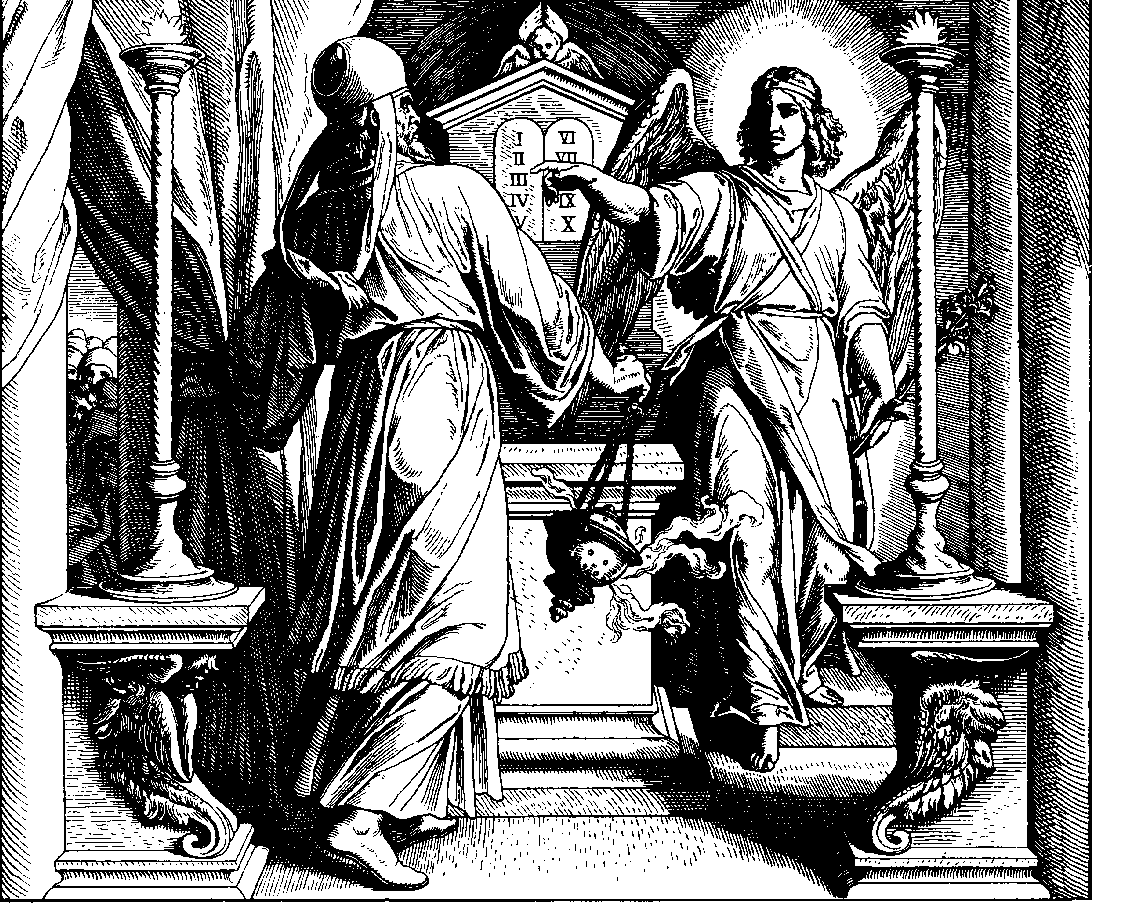
The Blessed Archangel Gabriel Visits the Jewish Priest , Zachariah, the father of John the Baptist and Uncle of Jesus Christ


ONE DAY, AN OLD PRIEST NAMED ZACHARIAS was leading the service of worship in the Temple. He was standing in front of the golden altar of incense, in the Holy Place, and was holding in his hand a censer or cup full of burning coals and incense; while all the people were worshipping in the court of the Temple, outside the court of the priests, where the great altar of burnt-offering stood.

Suddenly Zacharias saw an angel from the Lord, standing on the right side of the altar of incense. He felt a great fear when he saw this strange being, with shining face; but the angel said to him:

"Do not be afraid, Zacharias; for I have come from the Lord to bring you good news. Your wife Elizabeth shall have a son, and you shall name him John. You shall be made glad, for your son John shall bring joy and gladness to many. He shall be great in the sight of the Lord; and he shall never taste wine nor strong drink as long as he lives; but he shall be filled with God's Holy Spirit. He shall lead many of the people of Israel to the Lord, for he shall go before the Lord in the power of Elijah the prophet, as was promised by Malachi, the last of the old prophets. He shall turn the hearts of the fathers to the children, and those who are disobeying the Lord to do his will."


As Zacharias heard these words, he was filled with wonder, and could hardly believe them true. He was now an old man, and his wife Elizabeth was also old; so that they could not expect to have a child. He said to the angel, "How shall I know that your words are true, for I am an old man, and my wife is old?"

"I am Gabriel,  who stands in the presence of God," said the angel, "and I was sent from the Lord to speak to you, and to bring you this good news. But because you did not believe my words, you shall become dumb, and shall not be able to speak until this which I have said comes to pass."

All this time, the people outside, in the court, were wondering why the priest stayed so long in the Temple. When at last he came out, they found that he could not speak a word; but he made signs to them, to tell them that he had seen a vision in the Temple.

After the days of his service were over, Zacharias went to his own home, which was near Hebron, a city of the priests, among the mountains in the south of Judea. When his wife Elizabeth found that God was soon to give her a child, she was very happy, and praised the Lord.

As the angel had said, to the aged woman Elizabeth was given a son. They were going to name him Zacharias, after his father. But his mother said, "No, his name shall be John."
"Why," they said, " none of your family have ever been named John." They asked his father Zacharias, by signs, what name he wished to be given to the child. He asked for something to write upon; and when they brought it, he wrote, "His name is John."

Then all at once the power to hear and to speak came back to Zacharias. He spoke, praising and blessing God; and he sang a song of thanks to God, in which he said, "You, O child, shall be called a prophet of the Most High; to go before the Lord, and to make ready his ways."

When John was growing up, they sent him out into the desert on the south of the land, and there he stayed until the time come for him to preach to the people, for this child became the great prophet John the Baptist.

Luke 1:5-45


#17821
May God bless the souls of the deceased, and give strength and courage to those who are grieving the loss of loved ones.

God the Father have mercy
God the Son, Jesus Christ have mercy
God the Holy Spirit who proceeds from the Father and the Son, have mercy...
#17822
5 In the days of King Herod of Judaea there lived a priest called Zechariah who belonged to the Abijah section of the priesthood, and he had a wife, Elizabeth by name, who was a descendant of Aaron.

6 Both were upright in the sight of God and impeccably carried out all the commandments and observances of the Lord.

7 But they were childless: Elizabeth was barren and they were both advanced in years.

8 Now it happened that it was the turn of his section to serve, and he was exercising his priestly office before God

9 when it fell to him by lot, as the priestly custom was, to enter the Lord's sanctuary and burn incense there.

10 And at the hour of incense all the people were outside, praying.

11 Then there appeared to him the angel of the Lord, standing on the right of the altar of incense.

12 The sight disturbed Zechariah and he was overcome with fear.

13 But the angel said to him, 'Zechariah, do not be afraid, for your prayer has been heard. Your wife Elizabeth is to bear you a son and you shall name him John.

14 He will be your joy and delight and many will rejoice at his birth,

15 for he will be great in the sight of the Lord; he must drink no wine, no strong drink; even from his mother's womb he will be filled with the Holy Spirit,

16 and he will bring back many of the Israelites to the Lord their God.

17 With the spirit and power of Elijah, he will go before him to reconcile fathers to their children and the disobedient to the good sense of the upright, preparing for the Lord a people fit for him.'

18 Zechariah said to the angel, 'How can I know this? I am an old man and my wife is getting on in years.'

19 The angel replied, 'I am Gabriel, who stand in God's presence, and I have been sent to speak to you and bring you this good news.

20 Look! Since you did not believe my words, which will come true at their appointed time, you will be silenced and have no power of speech until this has happened.'

21 Meanwhile the people were waiting for Zechariah and were surprised that he stayed in the sanctuary so long.

22 When he came out he could not speak to them, and they realised that he had seen a vision in the sanctuary. But he could only make signs to them and remained dumb.

23 When his time of service came to an end he returned home.

24 Some time later his wife Elizabeth conceived and for five months she kept to herself, saying,

25 'The Lord has done this for me, now that it has pleased him to take away the humiliation I suffered in public.'


-LUKE 1:5-25
#17824


#17825
Chicago  is the largest city in the US state of Illinois. With nearly 2.7 million residents, it is the most populous city in the Midwestern United States and the third most populous in the US, after New York City and Los Angeles. Its metropolitan area, sometimes called "Chicagoland," is the third largest in the United States, the largest in the Great Lakes Megalopolis, and the 27th most populous urban agglomeration in the world, with an estimated 9.8 million people in the three US states of Illinois, Wisconsin, and Indiana.Chicago is the county seat of Cook County, the second most populous county in the United States, after Los Angeles County, California.

Reference: Wikipedia


#17826
Photos Unlimited / Re: Chicago's Flowers
December 18, 2011, 07:51:23 PM
#17827
Photos Unlimited / Re: Chicago's Flowers
December 18, 2011, 07:50:32 PM
#17828
Photos Unlimited / Chicago's Flowers
December 18, 2011, 07:49:44 PM
Summer flowers in Chicago.

#17829
By: A. Lorenzo Lucino Jr, M.D-Ph.Dc


        Passive aggressive behavior is a psychological trait in individuals who show disinterest, dissatisfaction towards a particular profession, individual, and social responsibilities that an individual is required to uphold. Individuals who are passive aggressive may even acquiesce to the responsibilities required of them; sometimes even accepting their roles with a smile or positive effect, however, deep inside are antagonistic to it. Their internal objection to the outward acceptance is indirectly shown by different ways (Hall-Flavin, 2009). A specific example of this would be an individual named Henry who works in a home health agency, whose role is the Chief Financial Officer and Office Manager, a role that he has earned through his effective creation of the business with business partners. He completes his job and professional duties, however, always manages to be late and never on time during tax season as well as during presentation for Medicare Auditors, who inspect every single aspect of the business from billing, to patient care, to clinical rotations, to the site to site dispersion of medication by the clinical registered nurses.


   Henry has for years performed her duties as the Chief Financial Officer and Office Manager for the firm because of necessity, the basis for this was so that he could help his mother start a home health care agency, and thus, had to put her plans on continuing with medical studies on hold. Despite her successful tenure as a businessman, his passion was to work on the floor as a physician. Recently though, it has been apparent to him that he has exhibited some symptoms that are classic signs of passive aggressive personality, one in which he has been denying for quite some time.


        These symptoms include resentment and opposition to the demands of others, complaining about feeling underappreciated or cheated, procrastination, stubbornness, inefficiency, memory lapses, sullenness, irritability, as well as cynical attitude (Hall-Flavin, 2009). During the past month, while attending a conference with other home health care agency recruiters, marketers, and physicians, while giving a lecture about his firm’s goals and aspirations, he kept on thinking about physically leaving the room and driving home. The very thought of it continued to replay in his mind up until he finished her presentation. These thoughts have affected not only her ability to perform task and direct the staff, rises in abrupt cancellation of business meetings, constant tardiness to work and abrupt arguments with his mother, the company CEO, as well as with other staff. It was evident that he exhibited not only passive aggressive behavior, but at times, when uncontrolled, exhibited violent aggressive behavior when his patience was wearied thin (Merecz et al, 2009).


   Henry’s behavior had begun to affect not only the Executive CEO, whose patience was wearied thin by his inability to function his executive tasks, as well as overview the financial responsibilities of the company and acquisition of Medicare, and Medicaid reimbursements. As a result of this, the company was suffering financially, considering that most of the workers were Registered Nurses, Nurse Assistants, Physical Therapists and non-skilled aides, all of whom were salaried and paid based on the hour. However, due Henry’s recent failure in acquiring funds and properly billing patients, the company was lacking in funds to pay all of the staff. This is an example of an indirect effect on staff, colleagues in the work place due to passive-aggressive personality behavior. As a result, a number of staff began to complain about Henry’s performance, the performance and the trustworthiness of the company; some of whom filed lawsuits against the company for failure to pay workers and paychecks bouncing in the banks. These are all examples of what Thomas and Hersen mentioned as a negative effect of Passive Aggressive Behavior in the work place (Thomas and Hersen, 2002).


         It is evident that Henry’s performance as an executive, professional and social life was being affected by this psychopathology and the acceptance of it is an important aspect. Acknowledgement of the psychopathology is necessary so as to find new ways to solve the problem. By acknowledging the problem, Henry can enact methods and procedures so as to evade the negative results that she has, unfortunately, been exhibiting in the professional field as well as in his personal social life.


       The proper way in handling this situation after proper acknowledgment would be to seek counseling and a psychotherapist/psychiatrist to find out the reason for the passive-aggression, locating the catalyst and then implementing changes (Cook et al, 2003). In Henry's case, it would probably be the acknowledging of his yearning to go back to medical school and pursuing medical studies that he  has always dreamt of accomplishing. For the colleagues that were affected by his actions, they should also react by making it known to Henry as well as higher officials of her actions and how it has negatively affected them as professionals (Thomas and Hersen, 2002)
#17830
By: A. Lorenzo Lucino Jr, M.D-Ph.Dc


      In today’s medical corporate world, there has to be a sense of cooperation between the medical corporate heads of the company and to the medical regional managers and down to the medical general managers , who are then responsible for coordinating and directing the day to day operations of the store by implementing procedures, and action plan for the employees. We are reminded o the four classical functions of management. Management, in particular, is defined as “the process of working with people and resources to accomplish organizational goals.” (Bateman and  Snell, 2011, p. 14). The four functions of management that allow it to effectively coordinate with staff is through the effectively utilization of planning, organizing, leading, and controlling (Bateman and Snell,  2011, p. 14-15). Organizations range from real estate corporations, electric manufacturers, health care insurance providers, to collegiate institutions all have the common aspect of being multileveled. And as such, the larger the organization then there will be more levels in that particular organizations, and thus, more managers. Strong managerial and leadership skills are imperative and may include abilities such as technical knowhow, conceptualization of ideas and plans, decision making abilities, interpersonal skills, effective communication ability and the combination of these abilities.


   Leadership is essential to a successful managerial role. Leadership is an individual who influences others to attain goals. Leaders are able to orchestrate change, set direction, and motivate people to overcome obstacles and move the organization towards its ideal future (Bateman and Snell, 2011, p. 419). In addition to these qualities, what makes leaders outstanding and beyond compare to others is their broadminded vision. Vision is the mental image that goes beyond the ordinary and perhaps beyond what others thought possible. The vision provides the direction in which the leaders want the organization to move (Bateman and Snell, 2011, p. 419-420). Managers have these strengths and thus it is important that at all levels of operation of a company for a manger to be able to think strategically, and to take into consideration the organization he is working for and the people being managed. Leadership is dependent on the manager’s ability to influence other people in the organization. Managerial power can influence the ability to accomplish goals despite the antagonistic factors.


   There are roles held by top level, middle level and frontline level managers as well as the roles of managers with responsibilities that covers more than one level. Top level roles, otherwise known as strategic planning management, is rather intensive in the fact that it “requires constant shifting back and forth between long run and short run thinking (Des and Miller, 1993). Strategic management roles apply basic process at the highest levels of the organization to plan out the direction of the said company. This is important because companies that have a sense of direction, via the strategic planning done by managers at the top level, have the ability to ensure that the company can have an impact throughout the business industry in its immediate to long future (Rue and Byars, 1995). Middle level management roles , which emphasize on tactical planning, focuses on the specific actions that are implemented during the strategic planning (Brydson, 2010). Strategic planners are the managers that are responsible for deciding on what is to be done, what the order is, what tools will be used and what types of employees will be employed. Tactical planners, which are below the strategic planners, must be able to understand and to effectively decipher the strategic goals and then determine what course of action will be used to achieve those goals (Brydon, 2010). Frontline level managers are managers that are directly responsible for the production of goods, services, as well directly supervising clerical staff and shop floor employees. Mangers whose roles have broad responsibilities in more than one level of management are responsible for the implementation of strategic planning with the tactical planning to make sure that both coalesce.


   Strategic, tactical and operational planning compliments one another. Strategic planning is in the echelon of the management level as it is responsible for the creation of procedures in making a decision based on the company’s long term strategic goals. The tactical planning aspect focuses on translating the broad strategic goals into relevant and specific portions of the company. An example of this is the delegation of functional roles for the human resources department, marketing department etc. Operational planning focuses primarily in the specific procedures and processes that are required in the operation and functions in the lower level (Bateman and Shell, 2011, p. 14-20). The strategic planning provides direction for operational planning. Strategic planning is quantifiable through results achieved from implementations from operational planning. Tactical planning makes sure that the aspects of operational planning and strategic planning will complement each other , thus , effectively manifesting the efficiency and the operational ability of the organization.


   Bateman and Snell delve into the importance of power. Power is essential to being an effective leader and effective manager in all levels of an organization. Power is the ability of one person influencing the behavior and the attitudes of others (Bateman and Snell, 2011, p. 422-423). Company leaders use power to be able to accomplish tasks and goals as well as to strengthen their positions as managers and leaders. Leadership is the process of using power to obtain interpersonal influence. An example of this would be the head of strategic planning who is three days from the due date of the procedure book. The head of strategic management will use his power to tell those under him to work hard and to commit extra hours to make sure that all procedural steps are outlined, addressed, and printed. This is an example of how a manager uses power (Michelson) . Another example of how a manager can use power would be the general manager of a particular company firing an employee who was found stealing from the store. The power and authority the general manager has , which was given to him by the regional manager, is used to terminate employment (Zenger et al, 2009, p. 6-7).


   Executive decision making influence managers in that it is the executives who determine strategic management, who set up goals in the long term or short term, which are then sent down the level. The lower level managers then take the goals and strategic plans of the executives and then discern what to do in terms of function. It is the lower level managers that implement plans in the day to day functions of the employees, the payroll of employees, the creation of new resources as in hiring new employees that can make sure the strategic plans made by the executives are realized (Bateman and Snell, 2011, p. 14-16).


   Teams are identified as the structural building blocks of the organization’s foundation. Power is the ability one person can persuade and motivate a group of people do doing a job. A manager’s ability to motivate, influence, and direct those whom he manages is directly related to how much power and persuasion he or she has. Zenger et al discuss about the 10 actions that gets results: Courage and the willingness to take on risk, Confidence to get team members to embrace a reality, Involvement to raise the bar, Making sure that your lofty goal is realistic, Following through, Benchmarking high performers, Identify peak performers, Utilize team dynamics and support to achieve stretch goals, Improve processes and remove bureaucracy, and Celebrate the rewards. Leadership styles differ, however, one universal similarity is that power and persuasion helps a leader dictate. One leadership style that I was drawn to, which also implemented power and persuasion to effect change was the Espresso-style Leadership. This type of leadership utilized power and persuasion in such a way that this type of leader was seen as strong and direct with high energy. This type of leader controls both how work flows and distribution of employee responsibility ; dictating  the type of work to be done, who will do the work, and how they will do the work. Power, influence and close supervision is utilized to get things done (Zenger et al, 2009, p. 2).
#17831
By: A. Lorenzo Lucino Jr, M.D-Ph.Dc


In the field of counseling psychology there is a plethora of situations that may affect a psychologist and is in the grounds of ethical and professional violation. It is quite common in any professional setting in which relationships occur when it should not be occurring for the sake of professionalism and in the interest of the organization of both parties. This also holds true in the field of psychology where it is inevitable that clinicians will face situations where clients initiate a discussion or interaction that could lead to multiple relationships or boundary issues in general. Two of the most commonly encountered situations are the issue regarding termination and sexual relationships (Fisher, 2009).


It is important to note that the ethics code of Psychology has addressed the issue of potential for crossing boundaries and the exploitation of clients when here is dual or multiple relationships occurring. It is important to note what is the meaning of dual and multiple relationship, it is actually when a professional has two or more roles at the same time or sequentially occurring within a client (Corey et al, 2011).


This may include assuming more than one professional role or blending of a professional and non-professional role relationship. It is important for us in the field of mental health to effectively and ethically manage multiple relationships, including dealing with the power differential that is a basic part of most professional relationships, managing boundary issues and striving to avoid the misuse of power. Sometimes it is best for us to take into consideration the ethical standards for dual and multiple relationships as proscribed by the APA, which states:  In many communities and situations, it may not be feasible or reasonable for psychologists to avoid social or other nonprofessional contacts with persons such as patients, clients, students, supervisees, or research participants. Psychologists must always be sensitive to the potential harmful effects of other contacts on their work and on those persons with whom they deal (American Psychology). A psychologist refrains from entering into or promising another personal, scientific, professional, financial or other relationship with such persons if it appears likely that such a relationship reasonably might impair the psychologist’s objectivity or otherwise interfere with the psychologist’s effectively performing his or her functions as a psychologist, or might harm or exploit the other party (Corey et al, 2011).


In the case of a patient who is terminating a professional relationship with me and that she informs me that she would like to begin some form of social relationship with me after the termination, there would be some issues that I would have to take into consideration namely the ethical, legal and personal aspect. It is reasonable to note that as a practitioner , it would be my imperative to monitor myself and to set up professional boundaries. It is prohibited that a counselor to have any sexual relations with a patient, the termination of the therapeutic relationship does not excuse professionals from engaging sexual relationships with former clients, in my honest opinion (Sadock and Sadock, 2000).


One has to take into consideration that transference, countertransference can occur during the therapeutic relationship and as clinicians it is our duty to safeguard the patient from entangling themselves, as well as our own duty as professionals (Fisher, 2009). If a patient terminated the therapeutic relationship with me then I would maintain only a distant relationship in a non-professional setting. In my opinion it is very unprofessional to become friends with patients, there should be boundaries implemented. In my opinion, business and pleasure should never mix. However, it is important to note that Corey et al points out how practitioners have an obligation to evaluate the risk and to act responsibly. The therapeutic relationship must encourage trust and flexibility as well as boundaries and when this relationship is already broken, it is important to maintain cordiality and a professional conduct that is befitting a therapist (Corey et al, 2011). As clinicians we must be aware of our own motivations, as well as the motivations of the clients, and they must objectively assess the impact a social relationship might have on the client-therapist relationship.


It is important to note that though some therapists would like to take the position of socializing with current clients; this is ethically and clinically problematic. In dealing with the issue of counselors , including myself, having feelings of sexual attraction to clients , the feelings that addressed include surprise, startle, shock, guilt, anxiety about unresolved personal problems, fear of losing control, fear or being criticized, frustration at not being able to speak openly-or at not being able to make sexual contact, confusion about tasks, confusion about boundaries and roles, confusion about actions, anger at the client’s sexuality as well as fear or discomfort at frustrating the client’s demands (Corey et al, 2011).


In case that I do feel sexual attraction to a patient who also has sexual attraction to me, I would maintain my composure and do my best to evade any sexual relationship. The ways that I can do this would be to acknowledge the feelings of attraction, explore the reasons why I am attracted to a client as well ask if there is something about this person that meets one of my needs, never act out feelings of attraction and be careful of actions that might foster the attraction, such as sitting close to the client, hugging the client or prolonging the sessions(Sadock and Sadock, 2009).


Other ways would be to seek out experienced colleague, supervisor or personal therapist who might be able to help me decide on a course of action. Importantly, I must monitor boundaries by setting clear limits on physical contact, self disclosure and client requests for personal information. If I feel that I still am physically and sexually attracted to the patient despite other efforts then it would be advisable that I terminate the professional relationship and refer the client to another therapist (Sadock and Sadock, 2009). It is important to note that having any sexual relationship with a current client is prohibited by the APA Code of Ethics (Fisher, 2009) and would and could result in a legal proceeding that could warrant one’s loss of license and sexual harassment charges. It is advisable that one always maintains a strict professional relationship and thus evade entangling one in any social or sexual relationship with patients.


#17832
By: A. Lorenzo Lucino Jr, M.D-Ph.Dc


The codes of ethics fulfills the three major objectives of educating professionals about sound ethical conduct, to provide a mechanism for professional accountability and to be a catalyst for improving practice. The code of ethics are not only a guidance for businesses and professional counselors in the work setting, but is also a depository, in a sense, for social issues. The code of ethics also provides a basis for businesses to delineate proper procedures to determine if one violated an ethical code, and if one did violate an ethical code, what can be done to correct the situation. 


   The American Medical Association Ethics Code is composed of the preamble, the five general principles and ethical standards. The five general principles, which are considered the pillars and the foundations of the AMA Ethics Code are Beneficence and Nonmaleficence, Fidelity and Responsibility, Integrity, Justice an Respect for People’s Rights and Dignity (Corey et al, 2011).


    The principle of Beneficence and Nonmaleficence states that physicians must strive to benefit those with whom they work and take care to do no harm. It is the responsibility of psychiatrists to safeguard the welfare and rights of those with whom they interact professionally and other affected persons, and the welfare of animal subjects of research. The Principle of Fidelity and Responsibility states that psychiatrists must establish relationships of trust with those with whom they work. They are aware of their professional and scientific responsibilities to society and to the specific communities in which they work. This principle stresses that professionals must uphold professional standards of conduct, clarify their professional roles and obligations, accept appropriate responsibility for their behavior. The Principle of Integrity stresses that psychologists and counselors seek to promote accuracy, honesty, and truthfulness in the science, teaching, and practice of psychological activities. This principle stresses that as professionals, physicians evade in stealing , cheating or engaging in fraudulent activity, subterfuge or intentional misrepresentation of fact.


      The principle of Justice stresses that physicians must recognize that fairness and justice entitle all persons access to and benefit from the contributions of psychology and to equal quality in the processes, procedures, and services being conducted by psychologists. With this there is emphasis in exercising reasonable judgment and to take precautionary measures to ensure that potential bias and to evade in unjust practices. The principle of Respect for People’s Rights and Dignity espouses on the respect for the dignity and worth of all people, and rights of individuals to privacy, confidentiality and self-determination. These special safeguards are necessary to protect the rights and welfare of persons or communities whose vulnerabilities impair autonomous decision making (American Medical Association, 2011).


   The AMA Ethics Code fulfills the objectives of education, mechanism for accountability and catalyst for improvement; and as such, are also influenced by legislation. If one refers to the AMA Code of Ethics, it addresses the situation where the conflicts between ethics and law, regulatons, or governing legal authority can impede a health professional’s work(Corey et al, 2011). In such a case, if the psychologist’s ethical responsibilities conflicts with law, regulation, legislation or other extra-governing legal authority, then it is the responsibility of the psychologist to clarify the nature of the conflict, make known their commitment to the ethics code, and take reasonable steps to resolve the conflict consistent with AMA Ethics Code (Fisher, 2009).    


   In my personal opinion, I believe that legislation and ethical codes can affect my future professional practice by dictating what I can do and what I cannot do for my patients and their counseling needs. It provides and sets boundaries that have to be set in place to protect our professional rights and also provides a defense purpose for the clients. Legislation concerning psychiatrists and patients of psychiatrists dictates what practices are deemed ‘unethical’ and ‘ethical’. An example of this would be seen in the Jackson vs. Indiana, where Theon Jackson, a deaf mute who could not read or write or communicate in any form was judged incompetent to stand trial and the court committed Jackson for an indefinite period (Jackson vs. Indiana). The said commitment was ended when he was deemed competent to stand trial. When Jackson’s request for a new trial was denied, he took the case to the Supreme Court, which reversed the original verdict and decided that courts cannot constitutionally place the petitioner in indefinite commitment based solely on the fact he is cited as being incompetent.


   As future practicing professionals, we have to be considerate of our patient’s religious, cultural as well as linguistic preferences and background. As health professionals with the goal of treating underlying cognitive and behavioral abnormality, we should not bring our own personal belief systems and impose them on them. We see what can happen when professional settings and educational centers impose their belief systems on people and it results in Landmark Cases that affects the established ethical conduct. The 1947 case of Everson v. Board of Education had ruled that imposing religious education on minorities is unethical and should be revoked (Niose, 2011). This case led to the Engel v. Vitale case, which resulted in the banning of official school prayer and then the 1963 landmark case of Abington School District v. Schempp, which resulted in the ending of school-sponsored Bible study and numerous others. We notice that in this case, as medical care providers, we have to be considerate of our patient’s belief systems and in trying to implement things for them.
   

#17833
Example 6:

In a visit to Loon last year, an overseer at the local fish sanctuary told me of a local stream that receives cold water from the mountains. I asked this person to take me to the local pool and was quite amazed at seeing the avaricious eutrophication of the local pool -- it was filled to the brim with water weeds that darkened the pool to dark green color.

I bent down to touch the water and was rather surprised how cold it was. The caretaker then told me, "Bantay ana, sir, kai di ka gusto ma hagbong sa tubig..."

I was amused. I asked him, "Ngano man diay?"

He replied back, "Naay diwata sa sud, sir."

I was yet again amazed. So i inquired about the history of the pool and apparently there were some drownings that occurred there, as told to me by the guide. The term he used garnered my interest because he used the word "diwata" to refer to unseen spirits in the water. I then found out that the word "diwata" is an old Filipino that means "gods, deities." This is an example of retained native Filipino superstition that is definitely pre-hispanic, pre-christian.

It is amazing that despite almost half a millenia of Christian conversion in the Philippines, there are still some people who believe in the presence of these so called "diwatas, encantos."

#17834
In Mexico, it is also very common for the native Mexicans do do the same. It is interesting that these two people share this superstition despite their distance. This is definitely not a Spanish practice because the Spanish Audencia actively tried to suppress these superstitious actions during the Inquisition in Nueva Espana. It failed, of course.
#17835
Example 5:

When people visit a cemetery, it is common for Filipinos to light a small fire and walk over it on their way out of the cemetery. The reasoning for this is that it keeps spirits of the dead from following them.
#17836
Quote from: Lorenzo on December 18, 2011, 04:30:52 PM
Example 2:


It is also a common superstition that a woman should wear diamond when going to a new town or province to deflect negative energy.

This is a woman's excuse / reasoning for her husband to spend money on a diamond ring.  :P
#17837
Example 4:

It is not good to expose oneself to electric fan or ac because of fears of "ma igo ka sa panuhot".


#17838
Example 3:


If a person eats too much, one cannot go to sleep immediately because of fears of "ma buhi siya".
#17839
Example 2:


It is also a common superstition that a woman should wear diamond when going to a new town or province to deflect negative energy.
#17840
An iconic example of retained Filipino superstition is the usage of "Pwera Bujag". Many superstitious Filipinos in the Visayas, particularly in the central visayas, say "pwera bujag" to ward off negative effects of people who have "black tongue/ itom dila".

Women of the older generation in Bohol will say "Pwera bujag" after every positive remark given to them by people in hopes of deflecting some kind of negative energy.

Here is an example of this superstition in action:

There are two old people in church waiting for the start of mass. One old woman named Rosario is ecstatic to hear that her old friend Dionisia's son passed the Law Bar. The conversation proceeds as follows:

Rosario: Hoy, Hoy, Nisya! Naka dungog ko sa imong igsoon nga naka pasar intawn si Ondoy Rogelio sa Bar!

Dionisia: Awww, mao lagi, naka pasar intawn si ondoy...

Rosario: Naka pasar kai bright jamo lagi si ondoy! Pariho lagi nimo!

Dionisia: PWERA BUJAG!

Rosario: (na sakitan ang dughan...)

#17841
It is also interesting to note that during this time, Las Islas Filipinas (The Philippines), was an administrative division within the Viceroyalty of New Spain and thus, many Roman Catholic Priests were sent to the Philippines to quell instances of witchcraft and heresies antagonistic to Catholic doctrine.

Was it successful? No, I don't think so. Even to this day, the superstitions of the Filipinos remain, the same goes for the native Mexicans who also retained their pre-colonial superstitions.

#17842
Religious Discourse In Colonial Mexico: A Comparative Between the Spanish Inquisition and the Inquisition in Colonial Mexico


by: A. Lorenzo Lucino Jr.
Allegheny College, Department of History
Spring, 2007


During the process of researching the religious establishments in colonial New Spain and the other viceroyalties in the south, I came across the topic of the Inquisition in the New World as a tool to control the inhabitants of the Spanish dominions. From prior knowledge through my research in my original topic, I became rather interested in the religious discourse of Colonial New Spain and the reasons why the Spanish throne and the Catholic Church utilized the Tribunal of the Holy Office of the Inquisition. This in its own right led me to study the Spanish Inquisition itself in the Peninsula through primary as well as secondary sources and compare the institution of the Inquisition in Spain proper during the late 15th to 16th centuries to the Inquisition in Colonial New Spain, particularly present day Mexico during the 17th to 19th centuries.


The Inquisition in both Spain and Colonial Mexico, targeted those who were of different religious backgrounds, those who practiced customs deemed heretical by the Roman Catholic Ecclesiarchy through the blessings of Rome. The Inquisition also targeted not only non-Catholics, but those who were of a different ethnicity who challenged the authority of the ‘Catholic Spanish Kingdom’. In Spain, immediately after the Reconquista, it was the Moors as well as the Jews who were specifically targeted by the Holy Office of the Inquisition; and in New Spain respectively, non-catholic Indians, Mulattoes as well as Jews who fled Spain to the new world were targeted during the early 16th to the 17th centuries by the Episcopal Inquisition. From the 18th to the early 19th centuries, the Holy Office of the Inquisition targeted mostly Mestizoes, mulattoes and some Indians who continued to utilize idolatry as well as mystic and paganistic rituals aside from the Spanish-patronized Roman Catholicism. Indeed there was evidently religious discourse in New Spain, but to fully understand the religious discourse in Spain and New Spain, one has to define and understand the meaning of ‘Inquisition’, which in the Latin “Inquisitos” means to inquire and understand.


The Inquisition was a Roman Catholic tribunal for discovery and punishment of heresy, which was marked by the severity of questioning and punishment and lack of rights afforded to the accused. Initially a tribunal would open at a location and an edict of grace would be published calling upon those who are conscious of heresy to confess; after a period of grace, the tribunal officers could make accusations. Those accused of heresy were sentenced at an auto-da-fe, Act of Faith. Clergyman would sit at the proceedings and would deliver the punishments. Punishments included confinement to dungeons, physical abuse and torture. Those who reconciled with the church were still punished and many had their property confiscated, as well as were banished from public life. Those who never confessed were burned at the stake without strangulation; those who did confess were strangled first. There is a historical reason for the inquisition in Europe, primarily due to the rampant heretical cults during the dark ages and the ever looming threat of Islam.


An example of this is when the Turks in 1480 attacked the south Italian city of Otranto. 12,000 people were killed, the rest made slaves. The Turks killed every cleric in the city and sawed the archbishop in two. So Queen Isabella sent a fleet to Italy. In September of 1480, when it was clear the Turks might do the same to any coastal city, King Ferdinand V and Queen Isabella established the Inquisition. During this period, the West was in danger of following the fate of Constantinople and falling under the sword of Islam. It was under this threat that the Pope Sixtus IV authorized the Spanish Inquisition in 1478 if it should be needed. The kings of Spain, Isabella and Ferdinand, instituted it two years later. The establishment of the Spanish Inquisition led to the forced conversion of Jews and Muslims to Christianity. These so called new converts or in Spanish, Conversos (Secret Jews) and New Christians were targeted because of their close relations to the Jewish community, many of whom were Jews in all but their name.


It was the fear of Jewish influence that led Queen Isabella and King Ferdinand to write a petition to the Pope asking permission to start an Inquisition in Spain. In 1483 Tomas de Torquemada became the inquisitor-general for most of Spain, he set tribunals in many cities. Also heading the Inquisition in Spain were two Dominican monks, Miguel de Morillo and Juan de San Martin. It should also be noted that during the span of the Spanish inquisition, more than 13,000 Conversos were put on trial during the first 12 years of the Spanish Inquisition. Hoping to eliminate ties between the Jewish community and Conversos, the Jews of Spain were expelled in 1492, many fleeing to Eastern Europe, to Portugal and others fleeing to the New World. An estimated 31,912 heretics were burned at the stake, 17,659 were burned in effigy and 291,450 made reconciliations in the Spanish Inquisition. In Portugal, about 40,000 cases were tried, although only 1,800 were burned, the rest made penance.


The Inquisition in Colonial New Spain in a way is an extension of the Spanish Inquisition in that many of the targeted people by the Episcopal Inquisition were Jews or Conversos who were thought to have been secretly maintaining the Jewish lifestyle. Such a large wave of Conversos migrated to the new world that triggered the attention of the Holy Office; Due to the shortage of secular clergy in the New World, the pope issued the Bull Omnimoda in 1522, and granted special permission to the prelates of the monastic orders in the New World to perform, in the absence of bishops in the vicinity, all Episcopal functions except ordination. Torquemada's organizational and administrative abilities and his zeal for the preservation of the faith set the course of the Spanish Inquisition for the 341 years of its existence.


As the activities of the Holy Office expanded, it became necessary to establish branches throughout Spain and the New World with the Suprema as the head office. The need of a tribunal of the Holy Office in Mexico was expressed as early as 1532. In fact, the first auto de fé in Mexico was held in October 1528, with Fray Vicente de Santa Maria presiding. Two Jews were burned at the stake, and two others were reconciled. On January 25, 1569, Philip II decreed the establishment of the first two formal Dominican tribunals in the New World, one for New Spain (Mexico) and one for Peru. They were known by the full title of "El Tribunal del Santo Oficio de la Inquisición". Clearly it is evident that throughout the existence of El Tribunal del Santo Oficio de la Inquisicion, the 16th and 17th centuries focused primarily in the pin pointing of Jews who hid under the banner of Catholicism such as the Carvajal family. Luis de Carvajal y de la Cueva, known as "el Conquistador", governor of the New Kingdom of León in northern Mexico, was arrested at the behest of the Inquisition and by personal order of the viceroy of New Spain. Carvajal and his wife Guiomar were of partial New Christian descent. Personally, Carvajal was the devoutest of Catholics. Unknown to him, his wife was a secret Jewess; his sister Francisca and her husband, Francisco Rodríguez de Matos, both of whom he had brought to Mexico, were committed judaizers. Examples like these indicates the ‘completeness’ of the Inquisition in New Spain in weeding out not only Judaizers, but those who were related to Jews and or sympathized that faith.


Unlike the Spanish inquisition that took place in the peninsula, the Inquisition in Colonial Mexico had two phases that clearly defines the religious discourse in society. The first phase of the Colonial Inquisition revolved around the targeting of members of jewery, which subsided in extremity in the 18th century. The second phase of the Inquisition was on the contrary race-practice based in that the Inquisition targeted blacks, mulattoes as well as Indios for the most part during the late 18th to the early 19th centuries. In the racially mixed Mexican society of the first part of the 18th century Mulattoes and Blacks stood out as the object of most acts of repression on the part of the civil and ecclesiastical authorities. For an idea of the attitudes generated by those in power towards Blacks and Mulattoes in Mexican colonial society, one has to take into account the interrelation of religion, politics, and the concept of social order in Mexican colonial society. Viceroy Marqués de Mancera requested the collaboration of the Inquisition in 1660 to suppress Black slave insurrectionary moves. Blacks and Mulattoes, both free and slave, were the object of Inquisitorial persecutions right after periods of anti-Conversos (i.e. anti-Portuguese) trials. In reference to the notice given to the Tribunal about the incident in 1665 of a group of Blacks who had toasted "a nuestra salud, y a que el año que viene, governemos este Reyno," a directive of Viceroy Mancera orders the officials of the Inquisition to use their powers of secrecy to preempt any attempt of rebellion.


Unfortunately for the indigenous natives of Colonial Mexico, they too were targeted by the Holy Office of the Inquisition in Colonial New Spain. The Holy Office of the Inquisition that had tried Indians focused primarily on grounds of recurrent idolatry, and religious syncretism. During the remainder of the colonial period and until 1818, the Holy Office continued to investigate Indian transgressions against orthodoxy and to provide the modern researcher with unique documentation for the study of mixture of religious beliefs. Though countless numbers of indios were tried and given punishment in accordance to religious orthodoxy; punishing those of chanting old pagan prayers for good agriculture, sodomy activity, sorcery as well as superstition.


An example of this was in the 17th century when the Inquisition charged the daughter of an Indian Governor of Tlaltelolco, of sorcery and dispensing superstitious rites. Such examples of Indian and mestizo religious discourse permeated throughout the Colonial Mexico and exists to this day. To this day, the Catholic rituals are linked with clearly paganistic idolatry and superstitious beliefs upheld by the indios and Mestizoes; surviving the threat of the Inquisition through the centuries. The same can also be said about the Inquisition in Spain. Though the Inquisitorial staff in Spain targeted people active in the Jewish faith, and dispensed punishment against such, the faith remained strong on some people and resisted the actions of inquisition; many converting to Christianity but secretly practicing the faith.

It is evident that the Inquisition in Spain and in Colonial Mexico were utilized to strengthen the catholic identity of the kingdom as well as to strengthen the power of the state; the inquisition in a way proved as a political tool to silence those who would have subverted the power of the Spanish monarchy and correct those who would not convert to Catholicism. Both inquisitions targeted those who were considered subverters and led to the forced conversion of masses, both inquisitions targeted the threat of Judaism and as an effect to both inquisitions, religious discourse and religious resistance took effect and formed pockets of resistance to the ecclesiarchy (Converts who still practiced Judaism in Spain; Indians who practiced Catholicism yet maintained indigenous pagan idolatry, prayers and mysticism.


The main difference that can be noted is that it was the Inquisition in New Spain that had multiple phases targeting Jews at first, then mulattoes, negroes as well as Indians and Mestizoes as society progressed whereas the Inquisition in Spain primarily targeted heretics who were practicing Muslims and Jews, which eventually died off in the 18th and 19th centuries when the Enlightenment took effect. The Inquisition in New Spain retained its importance as a matter of controlling the population, and became a political tool until independence. One can say that the dualist nature of Mexican Roman Catholicism within the Indian communities as well as most Mexicans is a product of the Inquisition’s effect in religious discourse.
#17843
Help & Support / Merry Christmas, Tubag Bohol Dot Com!
December 18, 2011, 03:03:58 PM


Tubag Bohol Dot Com,

I wish you a Blessed Merry Christmas! May you all enjoy the comfort and warmth of family, friends, surrounded and filled with the Spirit of The Lord God in celebrating the birth of the Lord Jesus Christ. May The Lord Bless you, keep you, and strengthen you and all your loved ones.

Merry Christmas, Malipayang Pasko !!

May God Bless all of Us !


Always,
Bran Lorenzo
#17844
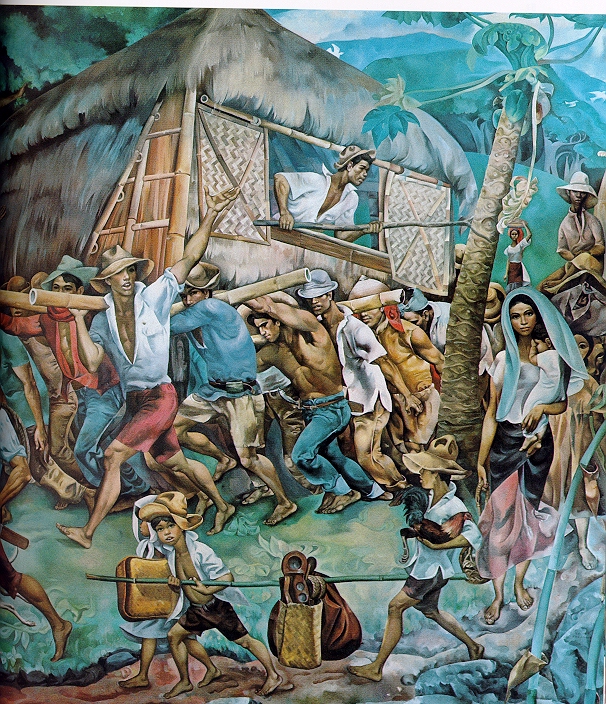
Anonymous Diary Blog / Re: A Filipino Trait: BAYANIHAN
December 18, 2011, 02:59:21 PM
This is the noblest trait of the Filipino Character. The BAYANIHAN attitude.
#17845
For no man can lay a foundation other than the one which is laid, which is Jesus Christ. Now if any man builds upon the foundation with gold, silver, precious stones, wood, hay, straw, each man's work will become evident; for the day will show it, because it is to be revealed with fire; and the fire itself will test the quality of each man's work. If any man's work which he has built upon it remains, he shall receive a reward. If any man's work is burned up, he shall suffer loss; but he himself shall be saved, yet so as through fire.

-1 Corinthians 3:11-15
#17846
"For the Son of Man is going to come in the glory of His Father with His angels; and will then recompense every man according to his deeds."

-Matthew 16:27
#17847
Quote from: hubag bohol on December 12, 2011, 07:45:35 PM
Hmm, lainlain diay ang gidak-on sa reward sa mga tawo nga mahipunta sa langit, Bay Vits? Naa diay uban nga barely passing ra ang grado?


Quote from: Vito Andoline on December 13, 2011, 12:00:39 AM
Mao mana ang giingon sa bibliya bai.

Really? Brother Vito, I would like to recommend you to read Matthew Chapter 20.

------------------

"For the Kingdom of Heaven is like a landowner who went out early in the morning to hire laborers for his vineyard. When he had agreed with the laborers for a denarius for the day, he sent them into his vineyard.

And he went out about the third hour and saw others standing idle in the market place; and to those he said, 'You also go into the vineyard, and whatever is right I will give you.' And so they went. Again he went out about the sixth and the ninth hour, and did the same thing. And about the eleventh hour he went out and found others standing around; and he said to them, 'Why have you been standing here idle all day long?' They said to him, 'Because no one hired us.' He said to them, 'You go into the vineyard too.'

When evening came, the owner of the vineyard said to his foreman, 'Call the laborers and pay them their wages, beginning with the last group to the first.' When those hired about the eleventh hour came, each one received a denarius. When those hired first came, they thought that they would receive more; but each of them also received a denarius. When they received it, they grumbled at the landowner, saying, 'These last men have worked only one hour, and you have made them equal to us who have borne the burden and the scorching heat of the day.'

But he answered and said to one of them, 'Friend, I am doing you no wrong; did you not agree with me for a denarius? Take what is yours and go, but I wish to give to this last man the same as to you. Is it not lawful for me to do what I wish with what is my own? Or is your eye envious because I am generous?"


-Matthew 20: 1-15
#17851
A Layman,

I would like to recommend this video by Dr. J. Eric Ahlskog, M.D. He describes the etiology of Parkinson's Disease and the treatment for it:


Parkinson's Disease Treatment -- Mayo Clinic
#17852
That is great, Mr. Daray. Intellectual stimulation has been proven to delay neurological degradation. In a medical study, cognitive stimulation via intellectual activities can actually delay dementia, Alzheimer's disease etc.


For those who are interested, I recommend the following articles:

http://www.medscape.com/viewarticle/577373

http://www.futuremedicine.com/doi/pdf/10.2217/1745509X.1.1.107
#17853
Higala,

What was your favorite subject in college?
#17854
Question and Answer / What does Christmas mean for you?
December 18, 2011, 12:45:30 PM
Higala,

What does Christmas mean for you?
#17855
Procession of the Holy Ghost


The Son proceeds from the Father; the Holy Ghost proceeds from the Father and the Son.


(a) The Holy Ghost is called the Spirit of Christ (Romans 8:9), the Spirit of the Son (Galatians 4:6), the Spirit of Jesus (Acts 16:7). These terms imply a relation of the Spirit to the Son, which can only be a relation of origin. This conclusion is so much the more indisputable as all admit the similar argument to explain why the Holy Ghost is called the Spirit of the Father. Thus St. Augustine argues (Tractate 99 on the Gospel of John, nos. 6-7): "You hear the Lord himself declare: 'It is not you that speak, but the Spirit of your Father that speaketh in you'. Likewise you hear the Apostle declare: 'God hath sent the Spirit of His Son into your hearts. Could there then be two spirits, one the spirit of the Father, the other the spirit of the Son? Certainly not. Just as there is only one Father, just as there is only one Lord or one Son, so there is only one Spirit, Who is, consequently, the Spirit of both. . . Why then should you refuse to believe that He proceeds also from the Son, since He is also the Spirit of the Son? If He did not proceed from Him, Jesus, when He appeared to His disciples after His Resurrection, would not have breathed on them, saying: 'Receive ye the Holy Ghost'. What, indeed, does this breathing signify, but that the Spirit proceeds also from Him?" St. Athanasius had argued in exactly the same way (De Trinit. et Spir. S., n. 19, in P.G., XXVI, 1212), and concluded: "We say that the Son of God is also the source of the Spirit."
(b) The Holy Ghost receives from the Son, according to John 16:13-15: "When he, the Spirit of truth, is come he will teach you all truth. For he shall not speak of himself; but what things soever he shall hear, he shall speak; and the things that are to come, he shall shew you. He shall glorify me; because he shall receive of mine, and shall shew it to you. All things whatsoever the Father hath, are mine. Therefore I said, that he shall receive of mine, and shew it to you." Now, one Divine Person can receive from another only by Procession, being related to that other as to a principle. What the Paraclete will receive from the Son is immanent knowledge, which He will afterwards manifest exteriorly. But this immanent knowledge is the very essence of the Holy Ghost. The latter, therefore, has His origin in the Son, the Holy Ghost proceeds from the Son. "He shall not speak of Himself", says St. Augustine (Tractate 99 on the Gospel of John, no. 4), "because He is not from Himself, but He shall tell you all He shall have heard. He shall hear from him from whom He proceeds. In His case, to hear is to know, and to know is to be. He derives His knowledge from Him from Whom He derives His essence." St. Cyril of Alexandria remarks that the words: "He shall receive of mine" signify "the nature" which the Holy Ghost has from the Son, as the Son has His from the Father (De Trinit., dialog. vi, in P.G., LXXV, 1011). Besides, Jesus gives this reason of His assertion: "He shall receive of mine": "All things whatsoever the Father hath, are mine Now, since the Father has with regard to the Holy Ghost the relation we term Active Spiration, the Son has it also; and in the Holy Ghost there exists, consequently, with regard to both, Passive Spiration or Procession.


This fact is undisputed as far as the Western Fathers are concerned; but the Greeks deny it in the case of the Easterns. We will cite, therefore, a few witnesses from among the latter. The testimony of St. Athanasius has been quoted above, to the effect that "the Son is the source of the Spirit", and the statement of Cyril of Alexandria that the Holy Ghost has His "nature" from the Son. The latter saint further asserts (Thesaur., assert. xxxiv in P.G., LXXV, 585); "When the Holy Ghost comes into our hearts, He makes us like to God, because He proceeds from the Father and the Son"; and again (Epist., xvii, Ad Nestorium, De excommunicatione in P.G., LXXVII, 117): "The Holy Ghost is not unconnected with the Son, for He is called the Spirit of Truth, and Christ is the Truth; so He proceeds from Him as well as from God the Father." St. Basil (On the Holy Spirit 18) wishes us not to depart from the traditional order in mentioning the Three Divine Persons, because "as the Son is to the Father, so is the Spirit to the Son, in accordance with the ancient order of the names in the formula of baptism". St. Epiphanius writes (Ancor., viii, in P.G., XLIII, 29, 30) that the Paraclete "is not to be considered as unconnected with the Father and the Son, for He is with Them one in substance and divinity", and states that "He is from the Father and the Son"; a little further, he adds (op. cit., xi, in P.G., XLIII, 35): "No one knows the Spirit, besides the Father, except the Son, from Whom He proceeds and of Whom He receives." Lastly, a council held at Seleucia in 410 proclaims its faith "in the Holy Living Spirit, the Holy Living Paraclete, Who proceeds from the Father and the Son" (Lamy, "Concilium Seleuciæ", Louvain, 1868).
However, when we compare the Latin writers, as a body, with the Eastern writers, we notice a difference in language: while the former almost unanimously affirm that the Holy Ghost proceeds from the Father and from the Son, the latter generally say that He proceeds from the Father through the Son. In reality the thought expressed by both Greeks and Latins is one and the same, only the manner of expressing it is slightly different: the Greek formula ek tou patros dia tou ouiou expresses directly the order according to which the Father and the Son are the principle of the Holy Ghost, and implies their equality as principle; the Latin formula expresses directly this equality, and implies the order. As the Son Himself proceeds from the Father, it is from the Father that He receives, with everything else, the virtue that makes Him the principle of the Holy Ghost. Thus, the Father alone is principium absque principio, aitia anarchos prokatarktike, and, comparatively, the Son is an intermediate principle. The distinct use of the two prepositions, ek (from) and dia (through), implies nothing else. In the thirteenth and fourteenth centuries, the Greek theologians Blemmidus, Beccus, Calecas, and Bessarion called attention to this, explaining that the two particles have the same signification, but that from is better suited to the First Person, Who is the source of the others, and through to the Second Person, Who comes from the Father. Long before their time St. Basil had written (On the Holy Spirit 8.21): "The expression di ou expresses acknowledgment of the primordial principle [ tes prokatarktikes aitias]"; and St. Chrysostom (Homily 5 on the Gospel of John, no. 2): "If it be said through Him, it is said solely in order that no one may imagine that the Son is not generated": It may be added that the terminology used by the Eastern and Western writers, respectively, to express the idea is far from being invariable. Just as Cyril, Epiphanius, and other Greeks affirm the Procession ex utroque, so several Latin writers did not consider they were departing from the teaching of their Church in expressing themselves like the Greeks. Thus Tertullian (Against Praxeas 4): "Spiritum non aliunde puto quam a Patre per Filium"; and St. Hilary (On the Holy Trinity XII.57), addressing himself to the Father, protests that he wishes to adore, with Him and the Son "Thy Holy Spirit, Who comes from Thee through thy only Son". And yet the same writer had said, a little higher (op. cit., lib. II, 29, in P.L., X, 69), "that we must confess the Holy Ghost coming from the Father and the Son", a clear proof that the two formulæ were regarded as substantially equivalent.

Proceeding both from the Father and the Son, the Holy Ghost, nevertheless, proceeds from Them as from a single principle. This truth is, at the very least insinuated in the passage of John 16:15 (cited above), where Christ establishes a necessary connection between His own sharing in all the Father has and the Procession of the Holy Ghost. Hence it follows, indeed, that the Holy Ghost proceeds from the two other Persons, not in so far as They are distinct, but inasmuch as Their Divine perfection is numerically one. Besides, such is the explicit teaching of ecclesiastical tradition, which is concisely put by St. Augustine (On the Holy Trinity V.14): "As the Father and the Son are only one God and, relatively to the creature, only one Creator and one Lord, so, relatively to the Holy Ghost, They are only one principle." This doctrine was defined in the following words by the Second Ecumenical Council of Lyons [Denzinger, "Enchiridion" (1908), n. 460]: "We confess that the Holy Ghost proceeds eternally from the Father and the Son, not as from two principles, but as from one principle, not by two spirations, but by one single spiration." The teaching was again laid down by the Council of Florence (ibid., n. 691), and by Eugene IV in his Bull "Cantate Domino" (ibid., n. 703 sq.).


Reference: The Roman Catholic Church
http://www.newadvent.org/cathen/07409a.htm
#17856
The doctrine of the Catholic Church concerning the Holy Ghost forms an integral part of her teaching on the mystery of the Holy Trinity, of which St. Augustine (On the Holy Trinity I.3.5), speaking with diffidence, says: "In no other subject is the danger of erring so great, or the progress so difficult, or the fruit of a careful study so appreciable". The essential points of the dogma may be resumed in the following propositions:

1) The Holy Ghost is the Third Person of the Blessed Trinity.

2) Though really distinct, as a Person, from the Father and the Son, He is consubstantial with Them; being God like Them, He possesses with Them one and the same Divine Essence or Nature.

3) He proceeds, not by way of generation, but by way of spiration, from the Father and the Son together, as from a single principle.


Source: The Roman Catholic Church
#17857
Come, let us sing to the Lord
and shout with joy to the Rock who saves us.
Let us approach him with praise and thanksgiving
and sing joyful songs to the Lord.

Ant.

The Lord is God, the mighty God,
the great king over all the gods.
He holds in his hands the depths of the earth
and the highest mountains as well
He made the sea; it belongs to him,
the dry land, too, for it was formed by his hands.

Ant.

Come, then, let us bow down and worship,
bending the knee before the Lord, our maker,
For he is our God and we are his people,
the flock he shepherds.

Ant.

Today, listen to the voice of the Lord:
Do not grow stubborn, as your fathers did
in the wilderness,
when at Meriba and Massah
they challenged me and provoked me,
Although they had seen all of my works.

Ant.

Forty years I endured that generation.
I said, “They are a people whose hearts go astray
and they do not know my ways.”
So I swore in my anger,
“They shall not enter into my rest.”

Ant.

Glory to the Father, and to the Son,
and to the Holy Spirit:
as it was in the beginning, is now,
and will be for ever. Amen.

Ant. The Lord is close at hand; come let us worship him.
#17858
Lord, open my lips.
â€" And my mouth will proclaim your praise.

Ant. The Lord is close at hand; come let us worship him.

Psalm 95
#17859
Quote from: Lorenzo on December 13, 2011, 03:53:50 PM
Vito,

Who wrote, compiled, and proclaimed Holy Scripture (The Holy Bible)?

Vito,

It was the One, Holy, Apostolic, Roman Catholic Church that wrote and compiled the entire Holy Bible. Including all the 7 books that protestant bible versions have erased. Take care to read the full, unaltered, unadulterated version of Holy Scripture (the Holy Bible) that the early church fathers prepared to go hand to hand with Holy Tradition. Not the version where Martin Luther omitted 7 entire books from (the reason why he omitted it was because the 7 books that he omitted made scriptural verses to support Church Tradition, and not surprisingly, went against his protestant ideologies).

Holy Tradition in conjunction with Holy Scripture equates to revealed Divine Truth. Remember that.


Yours in Christ,
Lorenzo
#17860
Bible Study / Re: Stand by me
December 18, 2011, 12:04:33 PM
When the night has come, and the land is dark
And the moon is the only light we will see
No, I won't be afraid, oh, I won't be afraid
Just as long as you stand, stand by me
So darlin', darlin' stand by me
Oh stand by me
Oh stand, stand by me, stand by me

If the sky that we look upon should tumble and fall
Or the mountain should crumble to the sea
I won't cry, I won't cry, no, I won't shed a tear
Just as long as you stand, stand by me
And darlin', darlin' stand by me
Oh stand by me
Whoa stand now, stand by me, stand by me
*Solo*

And darlin', darlin' stand by me
Oh stand by me
Oh stand now, stand by me, stand by me

If the sky that we look upon should tumble and fall
Or the mountain should crumble to the sea
I won't cry, I won't cry, no, I won't shed a tear
Just as long as you stand, stand by me
And darlin', darlin' stand by me
Oh stand by me
Whoa stand now, stand by me, stand by me
So darlin', darlin' stand by me
Oh stand by me
Oh stand now, stand by me, stand by me
Whenever you're in trouble won't you stand by me
Oh stand by me
Whoa stand now, oh stand, stand by me...
#17861
Bible Study / Stand by me
December 18, 2011, 12:04:08 PM
#17863
Music and Video / Mariah Carey: Dream Lover
December 18, 2011, 11:53:59 AM
#17865
Nindot bitaw :)
#17866
General Topic / Re: Fr Suarez, do you believe in him?
December 17, 2011, 11:41:39 PM
Quote from: ms da binsi on September 27, 2008, 12:50:36 PM
Who could ever heal a person who is suffering  BACTERIA and VIRUS?

ONLy ANTIBIOTIC! walay healer maka tabang ana...got my point?

I want Dodong Insoy's opinion to this being a spiritual medical student...

Generally, if a person has bacterial infection, we would treat them with appropriate antibiotics. If a person is suffering from a diseases that is caused by a virus, then the proper mode of treatment would be via specific anti-virals. However, one has to take into consideration that there are diseases out there (bacterial, viral, mycotic) that are resistant to current modes of treatment. One very common disease that plagues many hospitals is MRSA (methicillin resistant staphylococcus aureus), which responds poorly to antibiotics that we do have. There is actually a new strand called VRSA (vancomycin resistant staph aureus), which is a prolific killer of many immunosuppressed patients.

#17867
General Topic / Re: Fr Suarez, do you believe in him?
December 17, 2011, 11:26:21 PM
Quote from: ms da binsi on September 30, 2008, 09:20:39 AM
re:When a person is sick, when an individual is suffering from a severe cold, a viral attack or infection, Providence has already given them the means to fight their condition.


Dodong, you can never say these things to your soon to be American Patients, specially when you will be practicing in the big cities.

Actually,

In the medical field, you see a lot of patients who ask you as a medical intern / physician to pray over them. One must try to do one's best to uplift and reassure the patient of recovery.

There was actually a research done by medical scientists on the effect of prayers prior to surgery. The result concluded that there was a positive correlation between successful surgery, successful recovery with prayer and or spiritual activity. The article was written by Dr. Robert Shmerling, MD, a Professor of Medicine at Harvard University, USA.


http://health.msn.com/health-topics/can-prayer-heal-the-sick

#17868
Seek ye first the kingdom of God
And His righteousness,
And all these things shall be added unto you.
Hallelu! Hallelujah!

Man shall not live by bread alone,
But by every word
That proceeds from the mouth of God.
Hallelu! hallelujah!

Ask and it shall be given unto you.
Seel and ye shall find.
Knock and the door shall be opened unto you.
Hallelu! hallelujah!
#17870
Bible Study / Re: Daily Scriptural Verse
December 17, 2011, 11:12:00 PM
But seek first his kingdom and his righteousness, and all these things will be given to you as well.

-Matthew 6:33
#17871
If you do not mate, and do not produce offspring, when you die, it is not only you who dies, but the entire genetic line of your ancestors who lived before you. Their genes die with you. They perish with you.

It is important to produce offspring. Species preservation. :)
#17872
A father or grandfather may die, but so long as his children mate and have children of their own ...then they will never really die. They live on through the genetic DNA. They literally are part of their grandchildren, great grandchildren, great great grandchildren, great great great grandchildren etc etc.

Our ancestors exist within us. They are literally there in our nucleotides, nucleosides, in each chromosomal arm: p and q.

They are immortalized through their descendants.
#17873
Right on ! It would be unbecoming for mankind to evade instinct. It is a natural drive for all humans who are able to reproduce to do exactly that...to reproduce.

Why does man go to school? To get an education. Why does man need to get an education? To be able to find a job. Why does man need a job? To be able to provide resources and attract a mate. What is the underlying reason for a job and to save money? To buy a home, a place to establish a nest. Why does man need to buy a home? To raise children in.

The education acquired allows man to find a stable profession that pays well in order to provide the resources to raise his or her child in an environment that will facilitate their growth and success in life. Higher resources and a stable environment for the offspring will provide a higher probability for the offspring to succeed in life. If the offspring succeeds and mates , this will assure genetic preservation.

This, in essence, continues the genetic fingerprint of the offspring's forebears. For all time.
#17874
Inspiration & Hope / Re: A Happy Man
December 16, 2011, 07:19:22 AM
Quote from: Panda on December 15, 2011, 11:44:24 AM
hope they are happy to live, and government and all people take more care about them.

Yes, it is a very thoughtful wish. The child is part of the 'untouchable' caste in India's archaic caste system. I do hope that she will enjoy the resources that are available to people of India and not forgotten.
#17875
Quote from: A Layman on December 10, 2011, 10:05:21 PM
Life is always governed by the function of time like the non-living things. Oftentimes we want to defy time for many unreasonable reasons. Beating time is like beating red light in traffic that makes us worry about submissions of unfinished works or works undone. Often, we act like grounded electric connections harming others as well us ourselves. At times like this, we need to call an Electrician to fix the trouble and provide a lifeline to save us from harm and further damage.

I really like your comparison of human tendency to harm one another, as you put it, "like grounded electric connections".
This is an example of figurative language mixing with physics/ electrical engineering. Am I wrong to assume that you are a Professional Engineer, A Layman?

#17877
Lyrics:
all the leaves are brown
and the sky is grey
I've been for a walk
on a winter's day

I'd be safe and warm
if I was in L.A
California Dreamin'
on such a winter's day

stopped into a church
I passed along the way
well, I got down on my knees
and I pretend to pray

you know the preacher likes the cold
he knows I'm gonna stay
California Dreamin'
on such a winter's day

all the leaves are brown
and the sky is grey
I've been for a walk
on a winter's day

if I didn't tell her
I could leave today
California Dreamin'
on such a winter's day x3
#17879
He should have just paid for the permit, sayang lang iyang negosyo...tsk tsk.

ay...intawn..
#17880
Photos Unlimited / Re: Iro nga liwat sa tag-iya, Part 2
December 15, 2011, 11:51:34 AM


Oy! Abi ko German Shepherd , kuan man diay ni siya...German Shepasurgeon?

:P
#17881
Photos Unlimited / Re: Iro nga liwat sa tag-iya, Part 2
December 15, 2011, 11:49:02 AM
hahaha so cute. :)
#17882
Nindot bitaw, Mr. Daray ;D
#17883
This is totally unbelievable how ultra conservative jews are treating Christians and Christian missionaries in the Holy Land.

Messianic Jews Persecuted - CBN.com
#17885
This is how jewish people treat Christian missionaries in The Holy Land. This is unbelievable.
#17887
Bible Study / Re: Daily Scriptural Verse
December 15, 2011, 09:03:54 AM
"And we have known and believed the love that God has for us. God IS Love, and he who abides in love abides in God, and God in him."

-1 John 4:16


#17888
Bible Study / Re: Daily Scriptural Verse
December 15, 2011, 09:00:15 AM
"And the peace of God, which passeth all understanding, shall keep your hearts and minds through Christ Jesus.

Finally, brethren, whatsoever things are true, whatsoever things are honest, whatsoever things are just, whatsoever things are pure, whatsoever things are lovely, whatsoever things are of good report; if there be any virtue, and if there be any praise, think on these things."

- Philippians 4:7-8
#17891
Philippine Showcase / Re: Philippine Culture & Tradition
December 15, 2011, 08:47:26 AM
Guwapo gayod ang kulturang Pinoy! May we always stay true to our culture and our traditions!
#17892
Photos Unlimited / Re: Bayanihan
December 15, 2011, 08:42:52 AM
#17893
Photos Unlimited / Re: Bayanihan
December 15, 2011, 08:40:19 AM
#17894
Photos Unlimited / Bayanihan
December 15, 2011, 08:39:32 AM
#17895
Anonymous Diary Blog / Re: A Filipino Trait: BAYANIHAN
December 15, 2011, 08:35:32 AM
#17896
Anonymous Diary Blog / A Filipino Trait: BAYANIHAN
December 15, 2011, 08:35:05 AM
BAYANIHAN:

Pronounced like "buy-uh-nee-hun," bayanihan is a Filipino word derived from the word bayan meaning town, nation, or community in general. "Bayanihan" literally means, "being a bayan," and is thus used to refer to a spirit of communal unity and cooperation.

Although bayanihan can manifest itself in many forms, it is probably most clearly and impressively displayed in the old tradition of neighbors helping a relocating family by getting enough volunteers to carry the whole house, and literally moving it to its new location. They do this by placing long bamboo poles length-wise and cross-wise under the house (traditional Filipino houses were built on stilts), and then carrying the house using this bamboo frame. It takes a fairly large number of people -- often 20 or more -- working together to carry the entire house. All this is done in a happy and festive mood. At the end of the day, the moving family expresses their gratitude by hosting a small fiesta for everyone.


Reference:
http://groups.csail.mit.edu/cag/bayanihan/bayanword.html
#17898
Poems and Poets / Re: Ang Baji Diri (Visayan Poem)
December 14, 2011, 06:05:17 PM
Doctora Baji,
Ka ingon ko mo estudiar ka sa gabii
Ako, naa ko diri ning estudiar, pero asa man ka?
Wala man ko kakita nimo diri sa lamesa
Asa man imohang libro beh?
Ka kita lang ko sa ahong neurology nga libro og clinical vignettes
pero imong libro sa cardiology naa man sa shelf.

Asa man diay ka, doctorang baji?
Intawn, nag tulog diay ka?
Ingon ka dili ka mo tulog kai daghan pa imohang i-estudiar og entender

Na ahak! Nag tulug man diay ka!


#17899
Anonymous Diary Blog / Re: What Did You Do Today?
December 14, 2011, 05:57:15 PM
Quote from: beyotch on December 14, 2011, 04:43:06 PM
been a while since i last visited our precious site...merry xmas to all and happy new year....

Welcome back, Bey! A Merry Christmas to you and a Happy New Year :)
#17900
Facts and Trivia / Re: Would You Rather...
December 14, 2011, 05:49:30 PM
Quote from: janjan on May 01, 2009, 02:54:43 AM

tea kay kn coffe samot di ko ka tug

boing 747 or boing 777?

boeing 777 lang


would you rather be in bohol or cebu?