Join MikeLigalig.com!

Why Just Read When You Can Join, Post, and Read!

Menu

Show posts

This section allows you to view all posts made by this member. Note that you can only see posts made in areas you currently have access to.

Show posts Menu

Messages - islander

#13001
18. Senator Ramon “Bong” Revilla Jr

Agent: Richard Cambe

Napoles detailed 5 transactions involving Revilla’s PDAF (total of P275 million). In some cases, she personally handed money to Revilla, while in others, his staff Richard Cambe acted as agent. She gave details about the transactions for each SARO.

The NLDC was the sole implementing agency in all 5 transactions.

Napoles said the division of kickbacks was Revilla (40%), Cambe (5%), and NLDC’s Sevidal (5% “less tax”).

Napoles said she personally handed Revilla P8 million in his home in 114 Sarangani St., Ayala Alabang Village, Muntinlupa in January 2009.

For the other transactions, Cambe would pick up commissions from her Discovery Suites office and bring the SARO there. She said that in May 2009, “Senator Revilla called and told me that Atty Cambe will pick up the cash in my office.” After giving Cambe the cash, Napoles said she “confirmed with Senator Revilla over the phone before he left.” She said in another instance in May 2009, “Senator Revilla acknowledged the receipt” via phone.

Napoles said Revilla and Cambe sometimes requested for the full commission, instead of getting it in two tranches, because they needed cash.

(Editor's note: Cambe was formerly a senior staff of former senator Ramon Revilla Sr, who chaired the public works committee in the Senate. He first worked for the senior Revilla in 1993 and was retained by the son when he won as senator. He has denied being the bagman of the younger Revilla.)

#13002
17. Senator Cynthia Villar
(former Las Piñas Representative)

Agent: Arman Padilla

Napoles said she transacted with Villar for the 2004 DOTC project of the Congress minority block. The project was worth P3.74 million for the delivery of computers.

“Arman Padilla facilitated all papers and asked the congressmen to sign and bring the papers to DOTC. I was the only one who delivered products. He also got rebates of 30% for the congressmen in the minority bloc.

(Editor’s note: Villar previously said her constituents accepted the computers from the DOTC in good faith, and she did not know where these came from.)
#13003
16. Senator Francis Escudero

No agent

Napoles said former Agusan del Sur Representative Ompong Plaza introduced her to Escudero in a private room in Edsa Shangri-la hotel in 2010.

“There, I was convinced to financially support his presidential bid. I gave him financial help on that day. The next time we met was in the restaurant Taste of LA, a few months after the election and when he was sitting senator. We talked about the project that he could give me. I again gave him money that afternoon but no project pushed through.”
#13004
15. Senator Lito Lapid

Agent: Zenaida Ducut, chairperson of the Energy Regulatory Commission and former Pampanga representative

Napoles wrote: “A project worth P5 million from the Commission on Appointment (sic) that was a fund implemented by the DA.”
#13005
14. Senator Alan Peter Cayetano

Agent: A certain Tito Boy, whom Napoles described as Cayetano’s uncle

Napoles said Cayetano’s uncle “Boy” became an agent for a DOTC project when Cayetano was still a congressman. “The project did not push through because we did not reach an agreement about the rebate.”

“The rebate they were asking for was bigger than what I could give so the advanced money that was given to Tito Boy was returned. When I got the money returned, it was not complete.”

In a separate list under “no agents,” Napoles said she gave money for the campaign of Cayetano in the last election. “We met in Slice restaurant in Bonifacio Global City. I personally handed the money to him.”

(Editor’s note: Cayetano has said said he never dealt with Napoles or her NGOs.)
#13006
13. Senator Jinggoy Estrada

Agents: Ruby Tuason and Pauline Labayen, Estrada’s former appointments secretary

Napoles detailed 7 transactions involving Estrada’s PDAF (total of P306.35 million). In some cases, she personally handed money to Estrada while in others, Tuason and Estrada's staff Pauline Labayen acted as agents. She gave details about the transactions for each SARO.

Nabcor and NLDC were the implementing agencies.

Napoles said the division of kickbacks was Estrada (45% but later went up to 55%), agent Tuason (10%) or Labayen (5%), and agency officials Javellana (10%), Mendoza (5%) for Nabcor, or Sevidal (5% or 5% after tax) for NLDC.

Napoles said she personally handed Estrada P13.337 million in his office in #82 Lt Artiaga San Juan around October 2009. She met Estrada after Labayen called her. “She told me Senator Estrada wanted to talk to me, and I did …. He instructed me to bring the agreed amount at his office.”

For the other transactions, Tuason would get the commissions by picking them up or having them picked up from Napoles’ office. In some instances, Napoles or her staff made deliveries to Tuason. Labayen also picked up cash from Napoles’ office. Napoles also made a cash delivery to Labayen’s “Tips and Toes” in Wilson St, Greenhills in October 2009.

(Editor's note: Labayen was former appointments secretary of Estrada. She resigned mid-July 2013.)
#13007
12. Former Senator Ramon Magsaysay

Agents: Patricia “Gay” Agana Tan

Napoles said, “Gay Agana Tan went to me to get a cash advance of 50% of the project implemented through DA-NAFC.” NAFC stands for National Agricultural and Fishery Council.

(Editor’s note: Magsaysay has said he never dealt with Napoles or her NGOs.)
#13008
11. Former Senator Aquilino “Nene” Pimentel Jr

Agent: Mon Arcenas

Napoles said she did not know Pimentel personally but talked only to Arcenas. “He was the one who brought the SARO, had the papers signed, and got rebates of the project.”

Napoles said she recalls projects implemented through local government units in 2003 worth P14 million. “Mon got the rebate of 45%.”
#13009
10. Senator Juan Ponce Enrile

Agents: Ruby Tuason and Lucila “Gigi” Reyes, Enrile’s former chief of staff

In her May 12 affidavit, Napoles detailed 9 transactions involving Enrile’s PDAF (totaling P345 million). She gave details about the transactions for each SARO. She did not mention meeting Enrile.

The implementing agencies were the Technology and Livelihood Resource Center (TLRC), National Agribusiness Corporation (Nabcor) and NLDC.

Napoles said the division of kickbacks was Enrile (45% less tax), Tuason (10% less tax), and the following agency officials: Antonio Ortiz (10% less tax) and Dennis Cunanan (5% less tax) for TLRC, Alan Javellana (10% less tax) and Rhoda Mendoza (5% less tax) for Nabcor, and Alexis Sevidal (5% less tax) for NLDC. In the one transaction where Napoles listed Reyes, she said Reyes got 5% less tax.

Napoles said the “commission” of Enrile and Tuason was either:

    -picked up by Tuason or her driver "Al” in Napoles’ office in Discovery Suites or in Napoles’ unit in Pacific Plaza

    -brought by Napoles to Tuason’s Dasmariñas Village home in Makati

(Editor's note: Reyes has pointed to Enrile's deputy chief of staff, Jose Antonio Evangelista, as being the one who signed reviewed and endorsed documents relating to project proposals.)
#13010
9. Senator Aquilino “Koko” Pimentel III

Agent: Jewel Pimentel

Napoles said, “Louie Cruz (another agent) gave money to Jewel Pimentel worth P4M advance for a project amounting to P10 million.”

(Editor’s note: Jewel Lobaton is Pimentel’s estranged wife. Pimentel has denied transacting with Napoles, and has refused to comment on the involvement of his ex-wife.)
#13011
8. Former Senate President Manuel “Manny” Villar Jr

Agent: Jun Adriano

Napoles said Candaba, Pampanga Mayor Rene Maglanque introduced Adriano to her for a project in the Department of Transportation and Communications (DOTC). “Jun in turn introduced me to Sen Manny Villar. I gave money to Sen. Villar for the elections because he asked for it. We met in Shaw Boulevard.”

(Editor’s note: Villar has denied having any dealings with Napoles and her NGOs.)
#13012
7. Senator Vicente Sotto III

Agent: Jennifer “Jen” Corpuz

Napoles said before Sotto ran for senator (she did not say when), Corpuz brought a Special Allotment Release Order (SARO) worth P200 million for the Department of Agrarian Reform. She said Corpuz got the “rebate” from her office worth P100 million.

Napoles then detailed 7 amounts totaling P225 million channeled through the NLDC from 2010 to 2012. “In all these transactions, the sole person I talked to was Jeniffer (sic) Corpuz.”

“At one point, she asked me for a Hyundai Starex that she said will be given on the birthday of Senator Sotto’s wife.” Sotto is married to actress Helen Gamboa.

She said in all transactions, Corpuz asked for 40% for Sotto, and 10% for herself.
#13013
6. Senator Ferdinand Marcos Jr

Agent: Catherine Mae “Maya” Santos

Napoles said Santos approached her to offer projects from Marcos’ office. “I did not directly talk to or know Senator Marcos.”

Napoles said according to Santos, she (Santos) was the one tasked to oversee the senator’s projects and funds. Santos supposedly asked for 50% for each project she could give Napoles.

“Minsan niyang sinabi na pinag-iinitan siya ng mga tao sa opisina dahil nagdududa na sila na kumikita siya ng malaki sa mga pondong kanyang hawak.” (She at one point said the people in their office had started suspecting her of earning a lot from the funds she handles.)

Napoles added that Santos asked her help to buy a lot for a house. Santos also supposedly asked her for money to pay a contractor of a house because Santos did not want the ownership of the house to be traced. The house and lot were supposedly under the name of Santos’ children.

“Aside from this, Santos also said she has various properties like a vast land in Tanay and a house in San Diego, California that she named under her child.”

(Editor’s note: Marcos has denied any involvement in the scam but has yet to respond to Napoles’ affidavit.)
#13014
5. Senator Loren Legarda

Agent: Catherine Mae “Maya” Santos

Napoles said Santos acted as agent for Legarda’s project worth P24 million. “The other project was P50,000,000 and P5,000,000 implemented through NLDC.”

Napoles said Santos got 50% of the project cost as rebate but she did not know how much Santos gave Legarda.

“[It was Santos] I talked to because I do not know Senator Loren. She was the one offering, processing papers, and having the documents for the projects signed. In my estimate, she got almost P39,500,000 just for this project.”

(Editor’s note: Santos was former undersecretary at the National Anti-Poverty Commission and became assistant secretary and undersecretary at the Department of Agriculture during the Arroyo administration. She also served as project coordinator of Senators Marcos and Legarda, according to one of the pork barrel scam whistleblowers, Marina Sula. In a statement on Monday night, however, Legarda again denied having dealings with Napoles or her group. “I have never dealt with them and have never even heard of their foundations. Above all, I have never received monetary or any form of illegal benefit from my PDAF or its equivalent at any time.”)
#13015
4. Former Senator Tessie Aquino-Oreta

Agent: Carlos “Caloy” Reyes

Napoles said Reyes got a “rebate” of 4% from her office. She said many of Oreta’s projects were implemented through local government units, the agriculture department, and others.

Of Oreta, she said, “I did not know or see her. The one I was in touch with was Caloy Reyes until Brian Yamsuan was introduced to me.”

(Editor's note: Yamsuan was a former consultant to Executive Secretary Paquito Ochoa Jr and a Palace undersecretary under the Estrada adminstration. It was he who reportedly arranged Napoles' interview with the Philippine Daily Inquirer.)
#13016
3. Former Senator Loi Estrada

Agent: Carlos “Butch,” Tuason, and Lyn and Mat Ranillo.

(Editor’s note: Tuason is the late husband of self-confessed bagman Ruby Tuason. Ruby is the former social secretary of former President Joseph Estrada. Mat Ranillo III is a former actor originally from Cebu who later moved to the US.)

Other agents: Ruby Tuason, Tet De Joya, Alfredo Villamor

Napoles said the Tuason couple, De Joya, and Villamor brought her projects of former Senator Estrada. She said the projects were coursed through the Department of Agriculture in the CARAGA administrative region in Mindanao.

“I remember I even issued a check in the name of Butch Tuason worth P8M,” Napoles said.

As for the Ranillo couple, Napoles said an Alice Villanueva or Lourdes “Baby” Villanueva Reyes introduced her to the Ranillos. The Ranillos allegedly asked her for money for Mat’s congressional bid in Dipolog. “After Mat Ranillo lost, he offered to give me projects of Senator Estrada in exchange for the help I gave him.”

Mat Ranillo supposedly brought Napoles a SARO he got from a certain Jake Acuna.

(Editor's note: Atty Alfredo Villamor had been previously identified as a lawyer of the Napoles family and of Napoles' flagship company, JLN Corporation. He had been identified in the affidavits of whistleblowers as being present during key moments during Benhur Luy's supposed illegal detention.)
#13017
2. Former Senator Rodolfo Biazon

Agent: A certain “Bernard”

Napoles wrote: “Bernard is the staff of Cong Biazon who went to us, and brought the funds of Cong Biazon that was implemented by NLDC.” It was a reference to the National Livelihood Development Corporation.
#13018
1. Senator Gregorio “Gringo” Honasan II

Agent: “Atty. Danny” (staff in Honasan’s office)

Napoles wrote in Filipino: “I did not meet or talk to Sen. Gringo Honasan. Only Atty “Danny” got P3,750,000 for one project.”
#13019
Napoles submitted two affidavits to the Senate: one dated May 12th detailed transactions with lawmakers who were part of the first batch of individuals charged over the scam; the second dated May 26, which was expanded to include other officials.

Napoles classified her transactions according to agents who, she said, approached her to offer lawmakers’ projects, and who asked for kickbacks in exchange.

Here's a summary of the details of the deals Napoles claimed to have had with 20 former and incumbent senators, based on her May 12 and May 26 affidavits:
#13020
In the two Napoles affidavits Justice Secretary Leila de Lima submitted to the Senate on Monday, May 26, Napoles, who wants to turn state witness, detailed how the lawmakers supposedly got their kickbacks. She also provided information about the agents who connected her to them.

Napoles faces plunder charges for allegedly conniving with top lawmakers and executive officials to siphon off pork barrel to her bogus non-governmental organizations in exchange for rebates.
#13021
Napoles details ‘transactions’ with 20 senators

From working with agents to directly handing senators' money, Napoles details her alleged dealings with 20 former and current senators

Ayee Macaraig
May 27, 2014


DEALINGS, RELATIONSHIPS. Janet Lim-Napoles, left (standing), rubs elbows with senators Jinggoy Estrada and Bong Revilla in this photo taken during a party in Estrada's favorite hangout in San Juan. The man second from right is businessman Jaime Dichaves, who has owned to the Jose Velarde account initially linked to former President Joseph Estrada.

MANILA, Philippines â€" Alleged pork barrel scam mastermind Janet Lim Napoles provided details on her supposed transactions with the officials she implicated in the country’s biggest corruption scandal in recent history.
#13022
China can be that hero. But it has to learn, it has  to listen, it has to show empathy. The ideal we must set - under the present global conditions - is that the more friends we have today, the lesser potential enemies we have tomorrow.


We cannot alone survive and thrive at the expense of others. Ultimately, what matters most is not who wins the race, but how many of us will finish the race.

http://cbholganzablog.wordpress.com/
#13023
Contemporary wars have changed dramatically over the last few decades. Wars nowadays can no longer be won solely by conventional military might. Victory, in order to be sustainable, must be achieved by building rather than destroying, by connecting rather than dividing, and by caring as opposed to discriminating. The heroes of today are no longer the guys who win the race, but the guys who can bring in as many other runners across the finish line.
#13024
But what China's leadership fails to see is that by behaving like a spoiled brat, it is actually losing friends. Not just in South East Asia, but across the globe. Friendship cannot be bought. Neither can it be forced. The image China portrays by insisting that it has sole right over the entire South China Sea negates the goodwill it has painstakingly tried to develop. And the negativity this draws will haunt China in that it can no longer find a true and permanent friend it can trust. True, there will be those who will bow to the economic giant, but when push comes to shove, expect these same characters to be the first to jump ship.


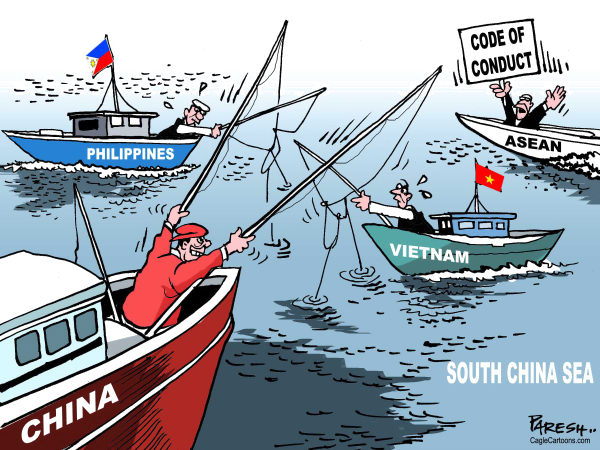
A clear and present danger lurks in the South China Sea. (Source: eagle.com)
#13025
China is clearly building structures and facilities in the shoals, reefs and other land mass it seizes in the contested territory. The objective is to ensure that they have a strong physical presence in the islands and reefs so that it will be difficult for the international courts to make a decision against them in the future. China is prepared to invest men and resources, just so they can seize the rumored oil and gas in the area. They have the luxury of time, they have a  huge manpower and resource base, and their economy is expected to grow even bigger in the future. These intimidating actions are certainly not consistent with their claims of being bullied.


Building structures, a creeping campaign to seize the entire South China Sea. (From saudigazette.com)
#13026
As we speak, China is now conducting reclamation in Mabini (Johnson South) Reef, despite being a signatory of the Declaration on the Code of Conduct of Parties in the South China Sea. The declaration clearly stipulates that claimants will not do anything that could complicate the territorial row like building structures in disputed areas.


(Source: DFA)
#13027
At the Ayungin Shoal, Chinese ships stand guard at a permanent Philippine installation, the BRP Sierra Madre. This ship was deliberately placed in Ayungin in response to China's creeping occupation of nearby Mischief Reef. Ayungin is just 194 kms west of Palawan, while it is 821 kms from Hainan.


Scarborough to Zambales - 219 kms; to Hainan - 857 kms. Spratly to Palawan - 232 kms; to Hainan - 895 kms. (Source: defenseforumindia.com)
#13028
Last April 2012, Chinese ships occupied Panatag Shoal (Scarborough Shoal). Panatag is just 219 kms away from the shores of Zambales, well within our EEZ. In contrast, it is 857 kms away from Hainan Province in China. The Philippine Navy arrested a fishing vessel and found giant clams, corals and live sharks in its hold. Chinese maritime surveillance ships came to the rescue of the other fishing vessels, causing a dangerous stand-off. An agreement to withdraw was reached, but as the Philippine vessel left, the Chinese did not comply with it, and instead, constructed a barrier at the entrance of the shoal.
#13029
China's efforts to slowly grab our territories started in the mid-90s, when Chinese-built structures on stilts were discovered in Mischief Reef (Panganiban Shoal), only 155 nautical miles from Palawan. The Philippine protested, but this was simply rejected by China. Since then, China has slowly but surely been occupying islets and reefs well within the Philippine-occupied 8-island chain on the Spratlys. Developments have shown that China has built new structures surreptitiously in Kagitingan Reef (also known as Fiery Cross); Calderon Reef (or Cuarteron); Gaven Reef; Zamora Reef (or Subi); and Chigua Reef (or Dong Men Jiao Reef), all of which are found dangerously close to the eight islands that the Philippines claims are part of Palawan province in the southwestern Philippines.


'Peaceful' incursions. (Courtesy of toonpool.com)
#13030
China recently established a large military base camp in Yongxing Island, some 300 kms southeast of Hainan. The military camp will necessitate a bigger legislative entity that will provide Beijing the opportunity to “exercise sovereignty over all land features inside the South China Sea,” including more than 40 islands that it claims are now occupied illegally by Vietnam, the Philippines and Malaysia.


Yongxing Island, with its large military base. (Courtesy of panoramio.com)
#13031
Last March, after years of trying to exhaust all political and diplomatic avenues for a peaceful negotiated settlement of its maritime dispute with China, the Philippines formally submitted a case to an arbitration tribunal in The Hague, challenging China’s claims to the South China Sea. It was the first time Beijing has been subjected to international legal scrutiny over the waters, a clear affront that has embarrassed them no end. With the case, China's image as a benevolent and peace-loving neighbor has been totally disproved. With Vietnam's violent reactions to the China's oil rig exploration, the Chinese have been exposed for what they truly are: as the arrogant bullies trying to snatch the whole South China Sea for themselves.


So who's bullying who? (Courtesy of philstar.com)
#13032
As a result, anti-Chinese violence flared in Vietnam last week, with scores of casualties prompting China to send planes and ships to evacuate members of the Chinese community working in Vietnam. Vietnamese Prime Minister Nguyen Tan Dung, in a strongly-worded statement on the breakdown of ties with Beijing, said that Vietnam had sought to use dialogue to settle the situation, but the response from China had been an increase in force and intimidation. “Vietnam is considering various defense options, including legal actions in accordance with international law,” Dung said. “I wish to underscore that Vietnam will resolutely defend its sovereignty and legitimate interests because territorial sovereignty, including sovereignty of its maritime zones and islands, is sacred,” he said.

scs11

Vietnamese anti-Chinese sentiment is growing. (Source: The Asian Correspondent)
#13033
Recently, following the deployment of a Chinese oil rig to waters 240 kms off its coast in the South China Sea, Vietnam sent its Coastguard in an attempt to dissuade China from proceeding with its exploration. Water cannon fights and 'boat bumps' were resorted to, but the Chinese rig, protected by more than a hundred military ships, planes and fishing vessels, have remained.


The location of the Chinese oil rig. (Source: Washington Post)
#13034
China claims about 90 percent of the potentially oil and gas-rich South China Sea, while the Philippines and Vietnam as well as Brunei, Malaysia and Taiwan have overlapping claims. The past years, China has steadily increased its pressure, blocking other countries' attempts to provide supplies for the people in their islands, and sending patrol ships to intimidate their fishermen.


Claimant states include Brunei, China, Malaysia, Philippines, Taiwan and Vietnam. (From johnib.wordpress.com)
#13035
China would like the world to sympathize with them, claiming that they alone are the rightful claimants to the South China Sea. Chinese propagandists insist that the concept of ‘historic waters’ empowers their government to legitimately claim broad control over the South China Sea, deliberately ignoring the fact that fisherfolks from the Philippines, Vietnam and Borneo have long been sharing the same fishing grounds peacefully, and have explored the same islands, rocks and reefs for centuries. And for that matter, long before the Chinese seafarers learned to stretch their sea legs, Malay ships were already plying these seas, even bringing Chinese merchants and pilgrims to places as far as India in the 5th century. (For more on China's historical evidence, pls read "Historical Fiction: China's South China Sea Claims".)(also posted here at tbland, http://tubagbohol.mikeligalig.com/index.php?topic=78394.0#.U4UIt3aZkqA)


China's 9-dash line extends to waters clearly closer to the land territories of Philippines, Malaysia, Brunei and Vietnam. (Source: UNCLOS)
#13036
Can the Philippines Really Bully China?

by cbholganza

It is time to call a spade a spade. In a recent China Daily editorial, Chinese propagandists have branded the Philippines as a country that is trying to bully China. The state-run China Daily wants to make the Chinese people - as well as the world - believe that the Philippines, together with Vietnam and Japan, are driving tensions in the Asia-Pacific region by ganging up on it. The article accuses Tokyo, Manila and Hanoi of being “cronies” of an “outside instigator,” which it refused to name. China further blamed the Philippines, Vietnam and Japan of "reneging on their claims of a shared commitment to peace and the peaceful resolution of the disputes through their words and deeds". Really now? Is it really possible for the Philippines to bully a superpower like China?
#13037
Quote from: islander on May 27, 2014, 09:32:51 AM“Vietnam's latest show of solidarity with the Philippines on fault-finding should serve as a wake-up call to Beijing that solving disputes through peaceful consultations may well be one-sided wishful thinking,” the paper said.

Quote from: islander on May 27, 2014, 09:33:19 AM
“Hanoi's unapologetic attitude after the fatal anti-China riots in Vietnam, as well as its assumption of an openly confrontational approach indicate it wishes to confront China while benefiting from Chinese investments and markets,” it added.

wa kilati.  kun tawo pa ni nga silingan, tipi na tungod sa pagkabintahuso.  namuyboy pa kintahay nga nakatabang man tawon sa ilang pagdato ang ilang investments sa ubang nasod.
#13038
“I believe continued cooperation between the Philippines and Vietnam will enable us to better protect our maritime resources, as we pursue strategies that will redound to the growth of our respective peoples and of our region,” Aquino said.

The two countries also urged the international community to “strongly condemn” China and demand that Beijing end its violations and fully, strictly observe international law.

http://www.philstar.com/
#13039
“Hanoi's unapologetic attitude after the fatal anti-China riots in Vietnam, as well as its assumption of an openly confrontational approach indicate it wishes to confront China while benefiting from Chinese investments and markets,” it added

Last Thursday, the Philippines and Vietnam scored China’s aggressive behavior in the West Philippine Sea and have bared plans to form a “strategic partnership.”

In a joint press conference held after their meeting in Malacanang, visiting Vietnamese Prime Minister Nguyen Tan Dung and President Aquino expressed “deep concerns” over the “extremely dangerous situation” caused by China’s actions that violate international law.
#13040
Vietnamese authorities claimed the incident damaged many of its vessels and left six of their sailors wounded.

China Daily also chided Vietnam’s recent efforts to form a partnership Philippines and called for a “comprehensive review” of Beijing’s relationship with Hanoi.

“Vietnam's latest show of solidarity with the Philippines on fault-finding should serve as a wake-up call to Beijing that solving disputes through peaceful consultations may well be one-sided wishful thinking,” the paper said.
#13041
It is also conducting reclamation in Mabini (Johnson South) Reef despite being a signatory of the Declaration on the Code of Conduct of Parties in the South China Sea.

The declaration bars claimants from performing acts that could complicate the territorial row like building structures in disputed areas.

Tensions between China and Vietnam simmered recently after Chinese ships reportedly rammed and fired water cannons at Vietnamese vessels in disputed waters.
#13042
China claims about 90 percent of the potentially oil and gas-rich West Philippine Sea (South China Sea) while the Philippines and Vietnam as well as Brunei, Malaysia and Taiwan have overlapping claims.

It is also claiming the Senkaku Islands in East China Sea, an area that Japan considers as part of its territory.

China is shoring up its presence in areas within Philippine territory including the Ayungin (Second Thomas) Shoal, Panatag (Scarborough) Shoal, Panganiban (Mishief) Reef and Zamora (Subi) Reef.
#13043
“A tall tree catches the wind, and China's international profile has risen in such a manner that some countries are worried and even fearful of it,” the editorial read.

“And even though the tree craves calm, the wind won't abate. Proceeding from their own instincts, these countries have moved to bully China,” it added.

The editorial came amid criticisms against China’s aggressive efforts to assert its territorial claims in the region, which include areas that the Philippines, Vietnam and Japan regard as part of their territories.
#13044
Chinese paper: Vietnam, Japan, Philippines bullying China

By Alexis Romero (philstar.com)
May 23, 2014


MANILA, Philippines - A Chinese newspaper on Friday accused the Philippines, Vietnam and Japan of bullying China and claimed that solving disputes through peaceful consultations could be “wishful thinking.”

An editorial by state-run China Daily said tensions in Asia Pacific have “taken a dangerous turn” as China is being ganged up by “cronies” of an “outside instigator,” whom it did not name.

The paper claimed the words and deeds of Tokyo, Manila, and Hanoi have disproved their claims of a shared commitment to peace and the peaceful resolution of the disputes.
#13045
Tennis / Re: Tennis star Djokovic is no divo
May 27, 2014, 08:05:00 AM
#13046
Tennis / Re: Tennis star Djokovic is no divo
May 27, 2014, 08:04:30 AM
During his opening round match at the French Open, play was suspended because of rain, and Djokovic, who was up 6-1, 5-2 on Joao Sousa, sat down while one of the ball boys stood over him with an umbrella.

Novak quickly made room for the young man, having him take a seat and even hold his racquet while Novak took command of the umbrella.

It was a fun moment during a bit of a bummer as rain was causing play to be put on hold, and shows once more the kind of guy Djokovic is when he's just having a bit of fun with a kid that won't soon forget this moment from the 2014 French Open.

http://sports.yahoo.com/
#13047
Tennis / Tennis star Djokovic is no divo
May 27, 2014, 08:00:20 AM
Novak Djokovic invites a ball boy to have a seat with him during French Open rain delay

Shane Bacon
27 May 2014


When a match is taking place, Novak Djokovic is far from a sweet soul. He's the type of champion that wants to beat you, and beat you bad, and when he's between those lines it seems he's as unrelenting as anyone in the game.

But the moment he turns off the professional tennis mentality, the guy is just downright fun. He's been known to do incredible impersonation of just about everyone past or present in tennis, and usually has fun with fans and such when he isn't trying to win points.
#13048
i like him, truly.  but i'm afraid we shall have become a nation of vigilantes.  so please, let's have him as a senator.  we can be sure he'll never touch pdaf.  we can look forward too to having him as a replacement for miriam in entertainment value.
#13049
History / Re: Musashi vs. Kojiro
May 26, 2014, 11:42:30 PM
kinsa man na sila?  inyong silingan nga nalisoan sama atong latest news sa imong favorite nga banat newspaper sa cebu nga nalisoan nagdagandagan nga gahukas kay wa kadaog ug lotto? ;D
#13050
English Dictionary / Re: Meaning of Largesse
May 26, 2014, 11:39:46 PM
then i must apologize to you kay nakatikdol ko nimo nga wa tujoa. :P
#13051
Empires and kingdoms never exercised sovereignty. If historical claims had any validity then Mongolia could claim all of Asia simply because it once conquered the lands of the continent. There is absolutely no historical basis to support either of the dash-line claims, especially considering that the territories of Chinese empires were never as carefully delimited as nation-states, but rather existed as zones of influence tapering away from a civilized center. This is the position contemporary China took starting in the 1960s, while negotiating its land boundaries with several of its neighboring countries. But this is not the position it takes today in the cartographic, diplomatic, and low-intensity military skirmishes to define its maritime borders. The continued reinterpretation of history to advance contemporary political, territorial, and maritime claims, coupled with the Communist leadership’s ability to turn “nationalistic eruptions” on and off like a tap during moments of tension with the United States, Japan, South Korea, India, Vietnam, and the Philippines, makes it difficult for Beijing to reassure neighbors that its “peaceful rise” is wholly peaceful. Since there are six claimants to various atolls, islands, rocks, and oil deposits in the South China Sea, the Spratly Islands disputes are, by definition, multilateral disputes requiring international arbitration. But Beijing has insisted that these disputes are bilateral in order to place its opponents between the anvil of its revisionist history and the hammer of its growing military power.


A powder keg of a sea. (Courtesy of blog.thomsonreuters.com)

http://cbholganzablog.wordpress.com/
http://www.worldaffairsjournal.org/
#13052
One reason Southeast Asians find it difficult to accept Chinese territorial claims is that they carry with them an assertion of Han racial superiority over other Asian races and empires. Says Jay Batongbacal of the University of the Philippines law school: “Intuitively, acceptance of the nine-dash line is a corresponding denial of the very identity and history of the ancestors of the Vietnamese, Filipinos, and Malays; it is practically a modern revival of China’s denigration of non-Chinese as ‘barbarians’ not entitled to equal respect and dignity as peoples.”


China’s 9-dash Line, a cause for concern.
#13053
Since the end of the Second World War, China has been redrawing its maps, redefining borders, manufacturing historical evidence, using force to create new territorial realities, renaming islands, and seeking to impose its version of history on the waters of the region. The passage of domestic legislation in 1992, “Law on the Territorial Waters and Their Contiguous Areas,” which claimed four-fifths of the South China Sea, was followed by armed skirmishes with the Philippines and Vietnamese navies throughout the 1990s. More recently, the dispatch of large numbers of Chinese fishing boats and maritime surveillance vessels to the disputed waters in what is tantamount to a “people’s war on the high seas” has further heightened tensions. To quote commentator Sujit Dutta, “China’s unmitigated irredentism [is] based on the . . . theory that the periphery must be occupied in order to secure the core. [This] is an essentially imperial notion that was internalized by the Chinese nationalistsâ€"both Kuomintang and Communist. The [current] regime’s attempts to reach its imagined geographical frontiers often with little historical basis have had and continue to have highly destabilizing strategic consequences.”
#13054
And finally, China’s so-called “historic claims” to the South China Sea are actually not “centuries old.” They only go back to 1947, when Chiang Kai-shek’s nationalist government drew the so-called “eleven-dash line” on Chinese maps of the South China Sea, enclosing the Spratly Islands and other chains that the ruling Kuomintang party declared were now under Chinese sovereignty. Chiang himself, saying he saw German fascism as a model for China, was fascinated by the Nazi concept of an expanded Lebensraum (“living space”) for the Chinese nation. He did not have the opportunity to be expansionist himself because the Japanese put him on the defensive, but cartographers of the nationalist regime drew the U-shape of eleven dashes in an attempt to enlarge China’s “living space” in the South China Sea. Following the victory of the Chinese Communist Party in the civil war in 1949, the People’s Republic of China adopted this cartographic coup, revising Chiang’s notion into a “nine-dash line” after erasing two dashes in the Gulf of Tonkin in 1953.
#13055
China’s claims in the South China Sea are also a major shift from its longstanding geopolitical orientation to continental power. In claiming a strong maritime tradition, China makes much of the early-fifteenth-century expeditions of Zheng He to the Indian Ocean and Africa. But, as Bowring points out, “Chinese were actually latecomers to navigation beyond coastal waters. For centuries, the masters of the oceans were the Malayo-Polynesian peoples who colonized much of the world, from Taiwan to New Zealand and Hawaii to the south and east, and to Madagascar in the west. Bronze vessels were being traded with Palawan, just south of Scarborough, at the time of Confucius. When Chinese Buddhist pilgrims like Faxian went to Sri Lanka and India in the fifth century, they went in ships owned and operated by Malay peoples. Ships from what is now the Philippines traded with Funan, a state in what is now southern Vietnam, a thousand years before the Yuan dynasty.”
#13056
If China’s claims are justified on the basis of history, then so are the historical claims of Vietnamese and Filipinos based on their histories. Students of Asian history know, for instance, that Malay peoples related to today’s Filipinos have a better claim to Taiwan than Beijing does. Taiwan was originally settled by people of Malay-Polynesian descentâ€"ancestors of the present-day aborigine groupsâ€"who populated the low-lying coastal plains. In the words of noted Asia-watcher Philip Bowring, writing last year in the South China Morning Post, “The fact that China has a long record of written history does not invalidate other nations’ histories as illustrated by artifacts, language, lineage and genetic affinities, the evidence of trade and travel.” Unless one subscribes to the notion of Chinese exceptionalism, imperial China’s “historical claims” are as valid as those of other kingdoms and empires in Southeast and South Asia. China laying claim to the Mongol and Manchu empires’ colonial possessions would be equivalent to India laying claim to Afghanistan, Bangladesh, Burma, Malaysia (Srivijaya), Nepal, Pakistan, and Sri Lanka on the grounds that they were all parts of either the Maurya, Chola, or the Moghul and the British Indian empires.


Laying claim to one of hundreds of rocks, reefs and atolls in the Spratlys. (From: csmonitor.com)
#13057
Ancient empires either won control over territories through aggression, annexation, or assimilation or lost them to rivals who possessed superior firepower or statecraft. Territorial expansion and contraction was the norm, determined by the strength or weakness of a kingdom or empire. The very idea of “sacred lands” is ahistorical because control of territory was based on who grabbed or stole what last from whom. The frontiers of the Qin, Han, Tang, Song, and Ming dynasties waxed and waned throughout history. A strong and powerful imperial China, much like czarist Russia, was expansionist in Inner Asia and Indochina as opportunity arose and strength allowed. The gradual expansion over the centuries under the non-Chinese Mongol and Manchu dynasties extended imperial China’s control over Tibet and parts of Central Asia (now Xinjiang), Taiwan, and Southeast Asia. Modern China is, in fact, an “empire-state” masquerading as a nation-state.
#13058
If the idea of national sovereignty goes back to seventeenth-century Europe and the system that originated with the Treaty of Westphalia, the idea of maritime sovereignty is largely a mid-twentieth-century American concoction China has seized upon to extend its maritime frontiers. As Jacques notes, “The idea of maritime sovereignty is a relatively recent invention, dating from 1945 when the United States declared that it intended to exercise sovereignty over its territorial waters.” In fact, the UN’s Law of the Sea agreement represented the most prominent international effort to apply the land-based notion of sovereignty to the maritime domain worldwideâ€"although, importantly, it rejects the idea of justification by historical right. Thus although Beijing claims around eighty percent of the South China Sea as its “historic waters” (and is now seeking to elevate this claim to a “core interest” akin with its claims on Taiwan and Tibet), China has, historically speaking, about as much right to claim the South China Sea as Mexico has to claim the Gulf of Mexico for its exclusive use, or Iran the Persian Gulf, or India the Indian Ocean.


Maritime sovereignty, and the need for a strong navy to back you up. (Courtesy of Thechinawatch.com)
#13059
China uses folklore, myths, and legends, as well as history, to bolster greater territorial and maritime claims. Chinese textbooks preach the notion of the Middle Kingdom as being the oldest and most advanced civilization that was at the very center of the universe, surrounded by lesser, partially Sinicized states in East and Southeast Asia that must constantly bow and pay their respects. China’s version of history often deliberately blurs the distinction between what was no more than hegemonic influence, tributary relationships, suzerainty, and actual control. Subscribing to the notion that those who have mastered the past control their present and chart their own futures, Beijing has always placed a very high value on “the history card” (often a revisionist interpretation of history) in its diplomatic efforts to achieve foreign policy objectives, especially to extract territorial and diplomatic concessions from other countries. Almost every contiguous state has, at one time or another, felt the force of Chinese armsâ€"Mongolia, Tibet, Burma, Korea, Russia, India, Vietnam, the Philippines, and Taiwanâ€"and been a subject of China’s revisionist history. As Martin Jacques notes in When China Rules the World, “Imperial Sinocentrism shapes and underpins modern Chinese nationalism.”
#13060
Such writing and rewriting of history from a nationalistic perspective to promote national unity and regime legitimacy has been accorded the highest priority by China’s rulers, both Nationalists and Communists. The Chinese Communist Party leadership consciously conducts itself as the heir to China’s imperial legacy, often employing the symbolism and rhetoric of empire. From primary-school textbooks to television historical dramas, the state-controlled information system has force-fed generations of Chinese a diet of imperial China’s grandeur. As the Australian Sinologist Geremie Barmé points out, “For decades Chinese education and propaganda have emphasized the role of history in the fate of the Chinese nation-state . . . While Marxism-Leninism and Mao Thought have been abandoned in all but name, the role of history in China’s future remains steadfast.” So much so that history has been refined as an instrument of statecraft (also known as “cartographic aggression”) by state-controlled research institutions, media, and education bodies.
#13061
China’s present borders largely reflect the frontiers established during the spectacular episode of eighteenth-century Qing (Manchu) expansionism, which over time hardened into fixed national boundaries following the imposition of the Westphalian nation-state system over Asia in the nineteenth and twentieth centuries. Official Chinese history today often distorts this complex history, however, claiming that Mongols, Tibetans, Manchus, and Hans were all Chinese, when in fact the Great Wall was built by the Chinese dynasties to keep out the northern Mongol and Manchu tribes that repeatedly overran Han China; the wall actually represented the Han Chinese empire’s outer security perimeter. While most historians see the onslaught of the Mongol hordes led by Genghis Khan in the early 1200s as an apocalyptic event that threatened the very survival of ancient civilizations in India, Persia, and other nations (China chief among them), the Chinese have consciously promoted the myth that he was actually “Chinese,” and therefore all areas that the Mongols (the Yuan dynasty) had once occupied or conquered (such as Tibet and much of Central and Inner Asia) belong to China. China’s claims on Taiwan and in the South China Sea are also based on the grounds that both were parts of the Manchu empire. (Actually, in the Manchu or Qing dynasty maps, it is Hainan Island, not the Paracel and Spratly Islands, that is depicted as China’s southern-most border.) In this version of history, any territory conquered by “Chinese” in the past remains immutably so, no matter when the conquest may have occurred.
#13062
China’s claim to the Spratlys on the basis of history runs aground on the fact that the region’s past empires did not exercise sovereignty. In pre-modern Asia, empires were characterized by undefined, unprotected, and often changing frontiers. The notion of suzerainty prevailed. Unlike a nation-state, the frontiers of Chinese empires were neither carefully drawn nor policed but were more like circles or zones, tapering off from the center of civilization to the undefined periphery of alien barbarians. More importantly, in its territorial disputes with neighboring India, Burma, and Vietnam, Beijing always took the position that its land boundaries were never defined, demarcated, and delimited. But now, when it comes to islands, shoals, and reefs in the South China Sea, Beijing claims otherwise. In other words, China’s claim that its land boundaries were historically never defined and delimited stands in sharp contrast with the stance that China’s maritime boundaries were always clearly defined and delimited. Herein lies a basic contradiction in the Chinese stand on land and maritime boundaries which is untenable. Actually, it is the mid-twentieth-century attempts to convert the undefined frontiers of ancient civilizations and kingdoms enjoying suzerainty into clearly defined, delimited, and demarcated boundaries of modern nation-states exercising sovereignty that lie at the center of China’s territorial and maritime disputes with neighboring countries. Put simply, sovereignty is a post-imperial notion ascribed to nation-states, not ancient empires.
#13063
As far as the “jurisprudence evidence” is concerned, the vast majority of international legal experts have concluded that China’s claim to historic title over the South China Sea, implying full sovereign authority and consent for other states to transit, is invalid. The historical evidence, if anything, is even less persuasive. There are several contradictions in China’s use of history to justify its claims to islands and reefs in the South China Sea, not least of which is its polemical assertion of parallels with imperialist expansion by the United States and European powers in the eighteenth and nineteenth centuries. Justifying China’s attempts to expand its maritime frontiers by claiming islands and reefs far from its shores, Jia Qingguo, professor at Beijing University’s School of International Studies, argues that China is merely following the example set by the West. “The United States has Guam in Asia which is very far away from the US and the French have islands in the South Pacific, so it is nothing new,” Jia told AFP recently.
#13064
Historical Fiction: China’s South China Sea Claims

By: Mr Mohan Malik
May 24, 2014


(Mohan Malik is a professor in Asian security at Asia-Pacific Center for Security Studies, in Honolulu. The views expressed are his own. His most recent book is China and India: Great Power Rivals. This article was published in World Affairs, May/June 2013 issue.)

The Spratly Islandsâ€"not so long ago known primarily as a rich fishing groundâ€"have turned into an international flashpoint as Chinese leaders insist with increasing truculence that the islands, rocks, and reefs have been, in the words of Premier Wen Jiabao, “China’s historical territory since ancient times.” Normally, the overlapping territorial claims to sovereignty and maritime boundaries ought to be resolved through a combination of customary international law, adjudication before the International Court of Justice or the International Tribunal for the Law of the Sea, or arbitration under Annex VII of the United Nations Convention on the Law of the Sea (UNCLOS). While China has ratified UNCLOS, the treaty by and large rejects “historically based” claims, which are precisely the type Beijing periodically asserts. On September 4, 2012, China’s foreign minister, Yang Jiechi, told US Secretary of State Hillary Clinton that there is “plenty of historical and jurisprudence evidence to show that China has sovereignty over the islands in the South China Sea and the adjacent waters.”


The disputed territories. (Source: India Today)
#13065
nia ra man diay ning sayon nga girdle, hihihi. ;D
#13066
give me a dozen, please. ;D
#13067
English Dictionary / Re: Meaning of Largesse
May 26, 2014, 07:34:30 PM
please, at my age i'm far from being a millionaire.  yet.  please, ajaw sugdi ug tikdol. ;D :P
#13068
English Dictionary / Re: Meaning of Largesse
May 26, 2014, 06:26:31 PM
bagesse - a naughty boholano of largesse and even hugesse proportions (also spelled bagis)
#13069


#OhNoSheDidnt

Holy bling! This bystander's OMG reaction at the Never Land 5k Run at Disney World takes the crown. Photo Credit: Larry Rhodes/RunDisney via ABC

http://www.huffingtonpost.com/
#13070


"In The Way" Guy

After this proposal photobomb from Disney World was submitted to Reddit in July 2013, it was such a big hit that viewers nicknamed him "In The Way" Guy, and he became the source of endless Photoshopped memes. Photo Credit: SpnkyHappy on Reddit
#13071
eek!  china, get off the philippines!
#13072
Technology / Re: Selfie Before Smartphones
May 26, 2014, 06:14:15 PM
kan-a na lang.  eat, don't bother looking. ;D
#13073


Interrupt Much?

Relaxing at the table only to have someone tap you on the shoulder, begging you to get up and dance? Yep, we've all been there. Photo Credit: Bre Thurston Photography
#13074


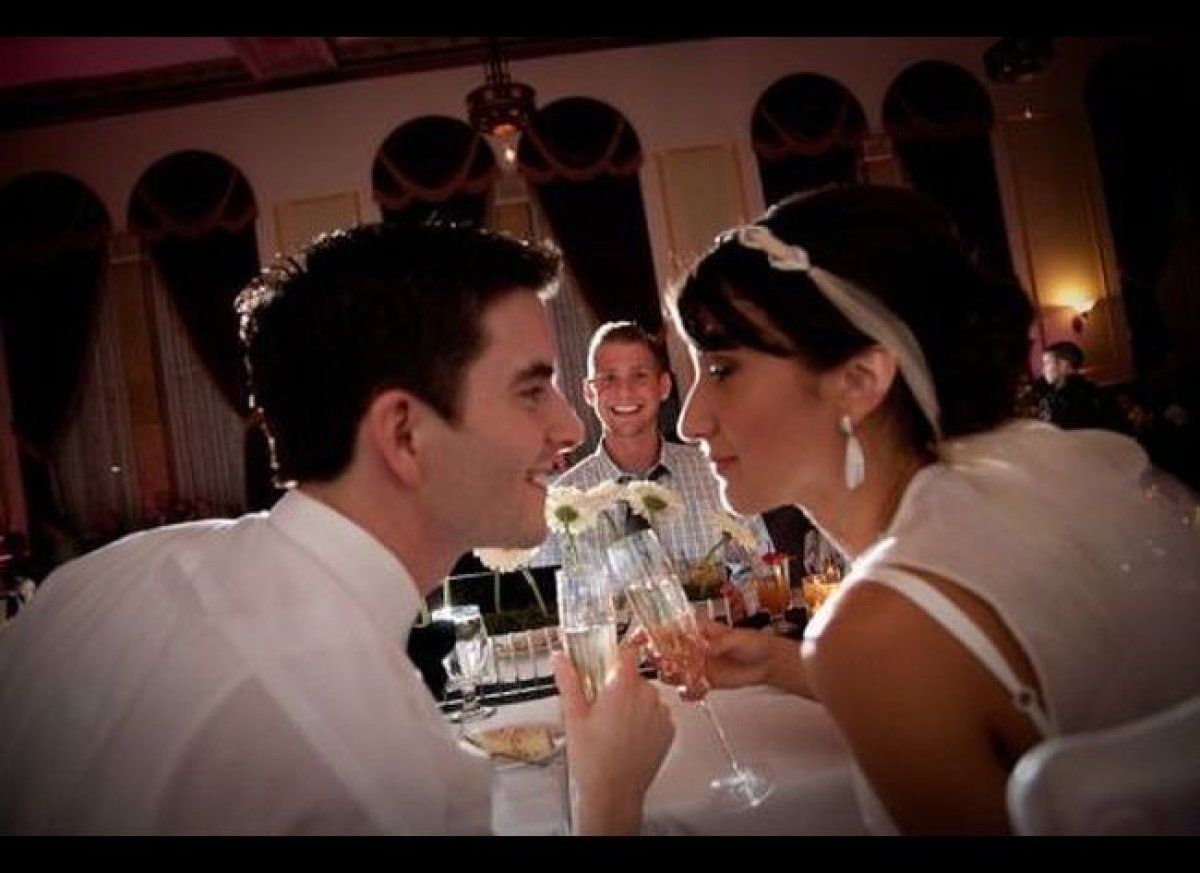
Watching You Watching Me

What could be more romantic than clinking champagne glasses and lovingly gazing into your new spouse's eyes...whoa! Well hello there â€" can we enjoy just two bites alone in peace? (The answer is "no," obviously; that's what the honeymoon is for.) Photo via Wee Do Weddings
#13075


Reel 'Em In

Catch of the day! A photobomb is a small price to pay for having locally-sourced seafood on your wedding menu. Photo Credit: del Sol Photography
#13076


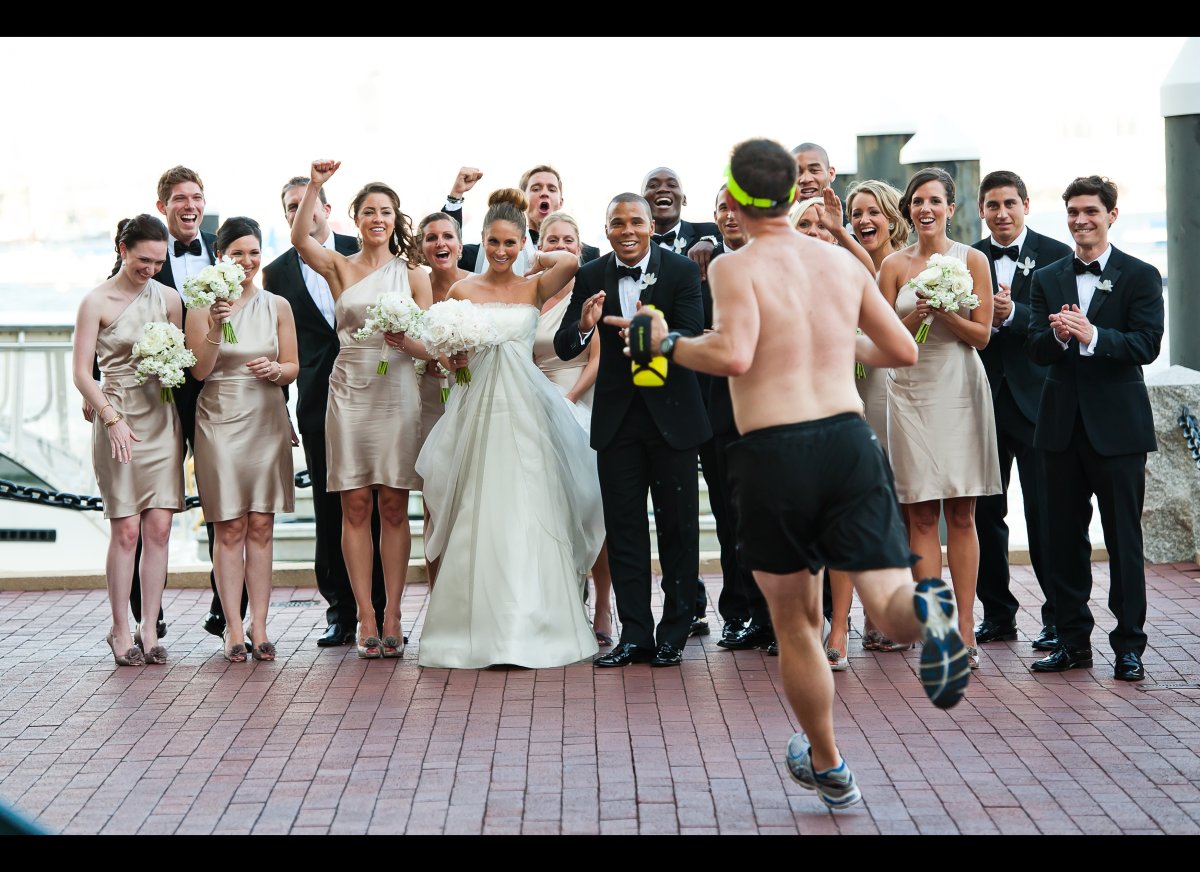
Off And Running

Talk about runner's high: This stranger got a standing ovation! Photo Credit: Sarah Bastille Photography
#13077


The Kiss-Off

As if kissing in front of 150 of your closest friends and family members wasn't nerve-wracking enough, then you've got this lady. Photo Credit: Carlo Carletti
#13078


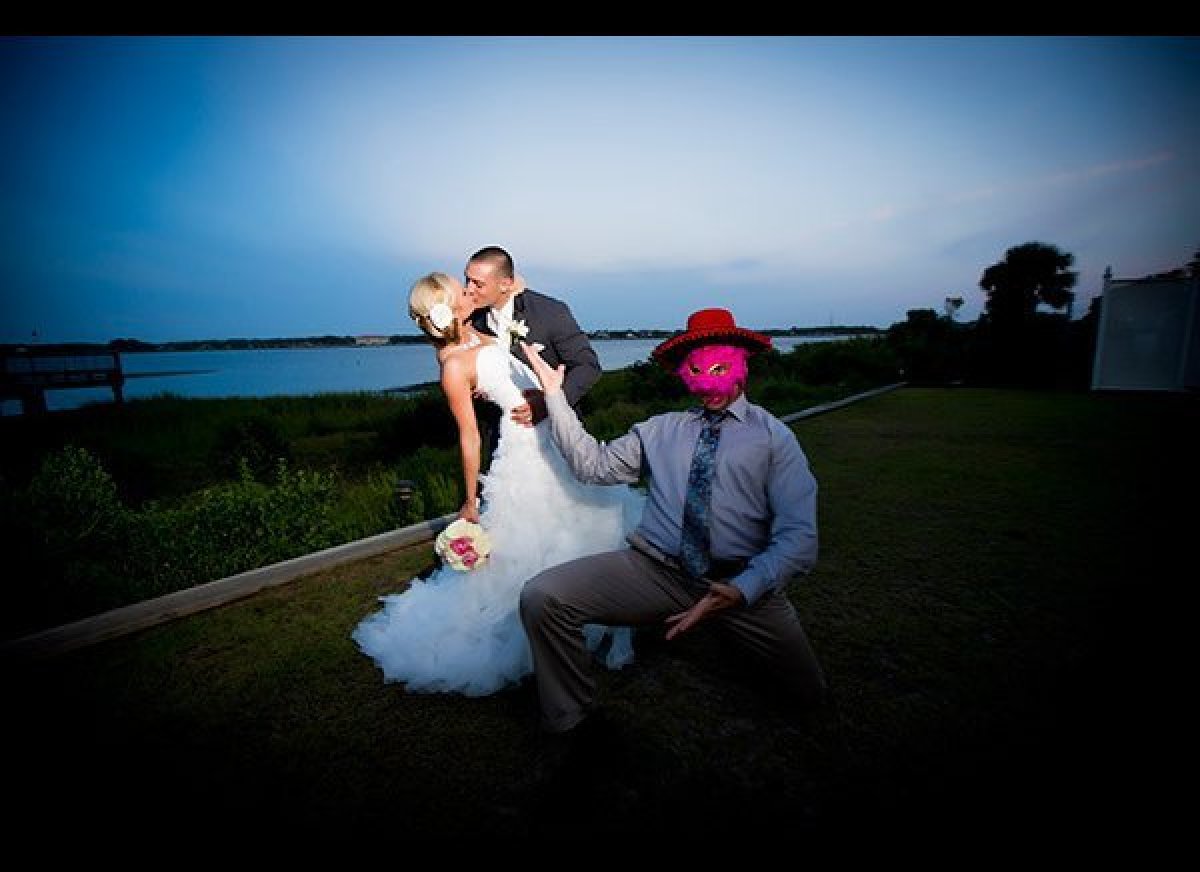
El Sombrero

Remember that "do not play" music list you and your fiancé were asked to fill out? This is what happens when you forget to hand one in ("Hey, Macarena!"). Photo Credit: Tonya Beaver
#13079


Man Overboard

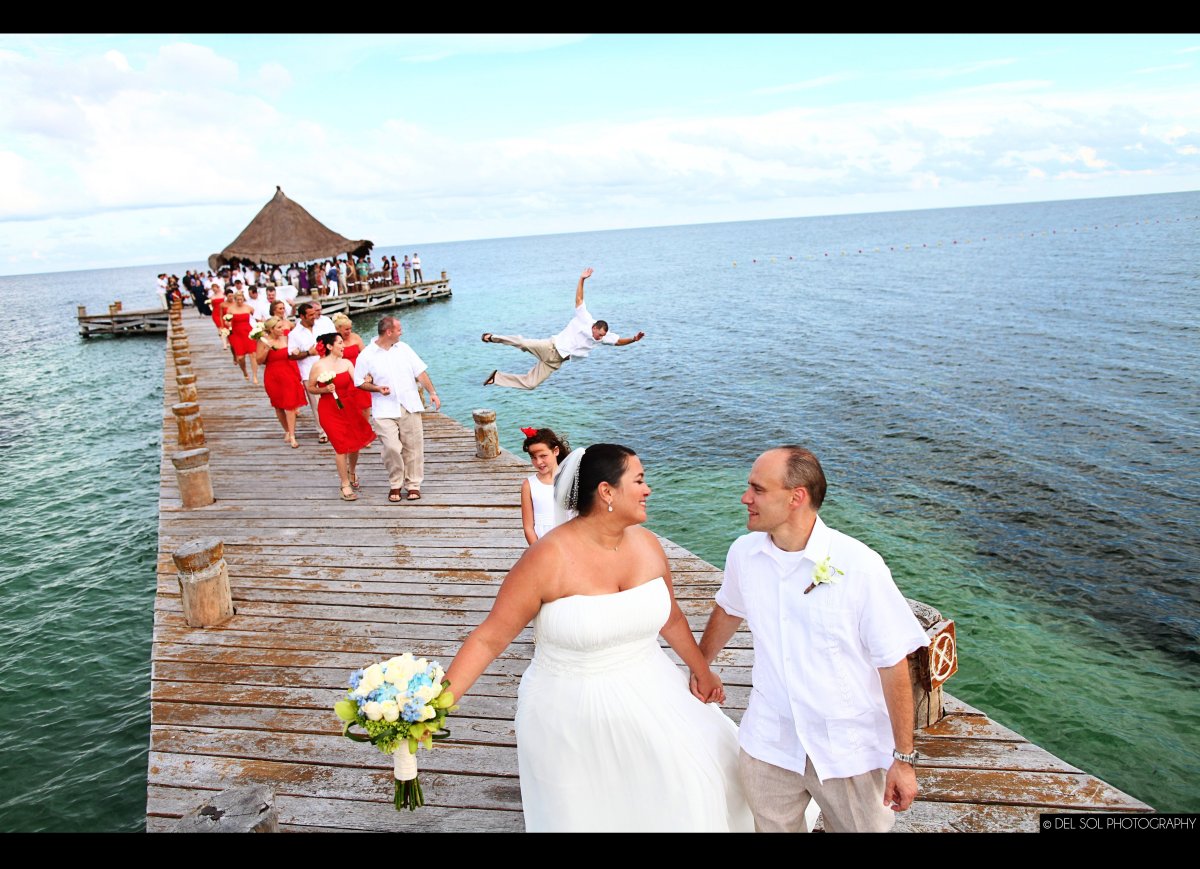
What can we say? It was a really hot day. Photo Credit: del Sol Photography
#13080


Don't Blow Things Out Of Proportion

...then, some guy decided to blow raspberries on the window. Sometimes you just need to shrug off any wedding day mishaps and laugh! Photo Credit: Ashley Durham Studios
#13081


Look A Gift Horse In The Mouth

These lovely newlyweds were subjected to not one, but two epic photobombs at their big day. First, a horse stepped into the frame and neighed, scaring the daylights out of their photographer... Photo Credit: Ashley Durham Studios
#13082


Get Your Ducks In A Row

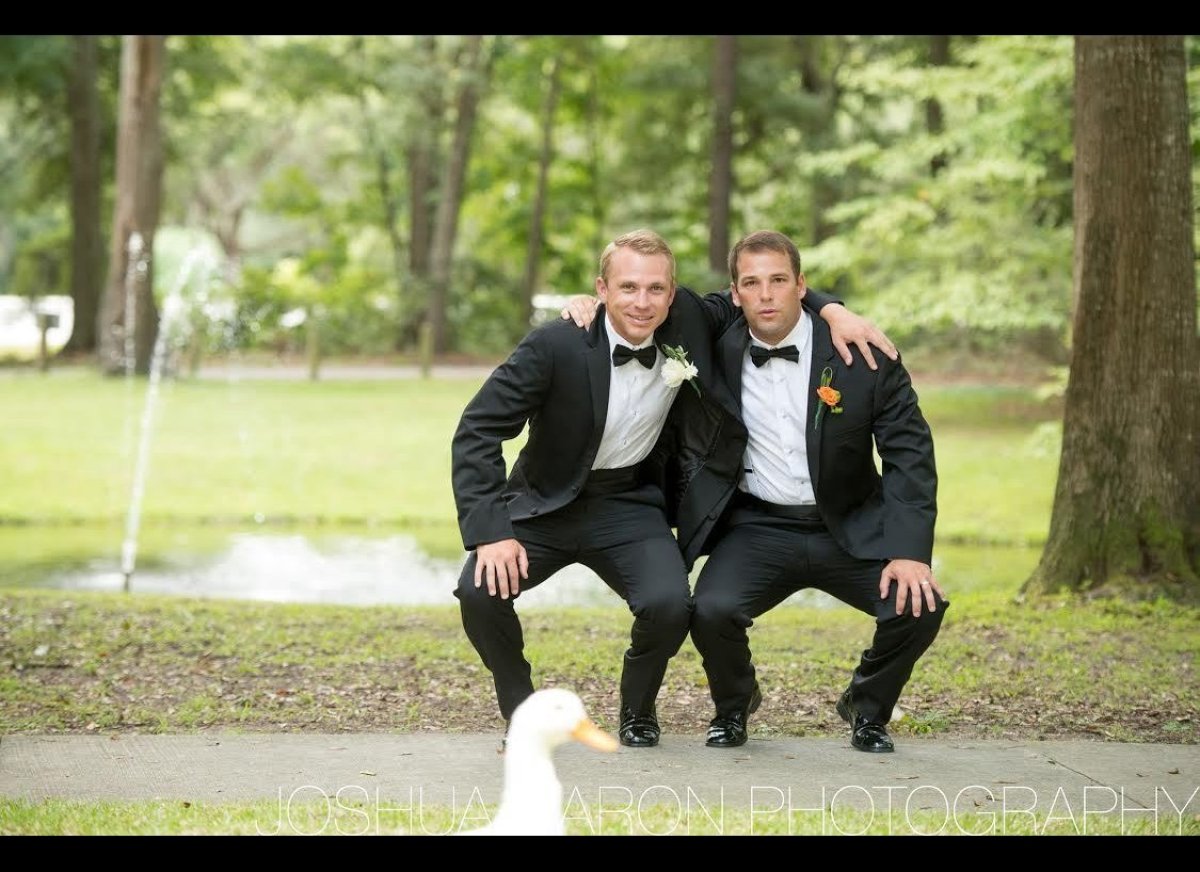
What a quack. Photo Credit: Joshua Aaron Photography
#13083


Flip The Bird

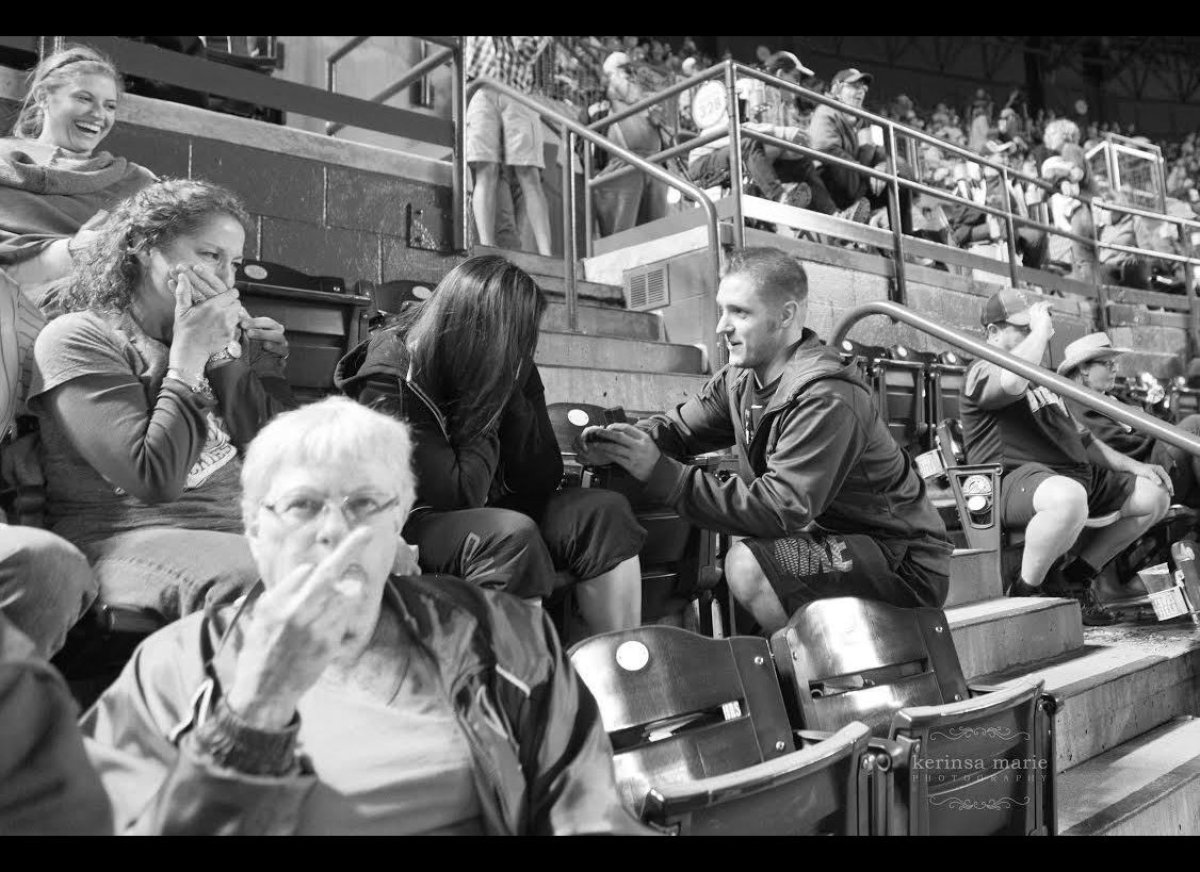
Ah, the cynic. In the immortal words of Father of the Bride, "Every party has a pooper. That's why we invited you!" Photo Credit: Kerinsa Marie Photography
#13084


The Cat's Meow

These ladies were having too much fun to notice that a secret admirer was in their midst. Photo Credit: Brette Loves Elle Photography
#13085


One Of These Things Is Not Like The Others

Take it from this mini schnauzer: It's important to stop and smell the flowers, even on your wedding day! Photo Credit: Hoffer Photography
#13086


Every Dog Has Its Day

The only thing cuter than a corgi? A corgi who's so excited about his owners' wedding that he runs around in circles and promptly passes out during the "I dos." Photo Credit: cameronsetttokill on Imgur
#13087


Llama Drama

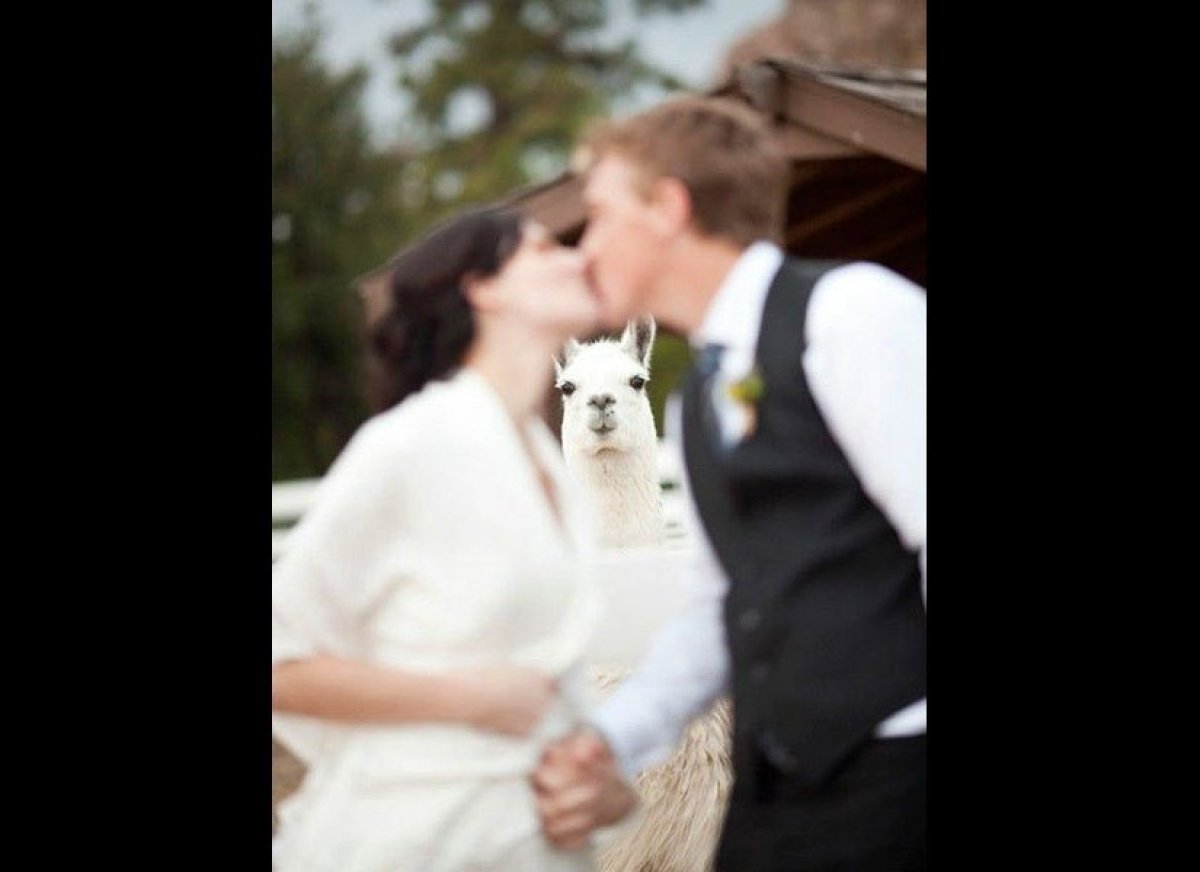
Llamas instantly make everything better. Exhibit A: This adorable snapshot Photo Credit: Caroline Tran
#13088


Meerkat Manor

This couple was going for a "woodland fantasy" look and a furry party-crasher got the memo. Photo Credit: Mike Cook Photography
#13089


Double Take

Forget acrobatic flips and other tricks â€" this dolphin duo stole our heart by popping up to watch this couple's just-married kiss. Photo Credit: Sarah & Ben Photography
#13090


Have a Whale of a Time

Cheese! This cheerful Beluga, Juno, was more than happy to oblige. Photo Credit: Keckster on Reddit
#13091


The Uninvited Plus-One

Even this guest's beautiful high bun couldn't block out this third wheel. Photo Credit: Brideside
#13092


Speedo Scene

Someone's really amped that this couple chose to have a destination wedding. Photo by Jennifer C. on EllenTV
#13093


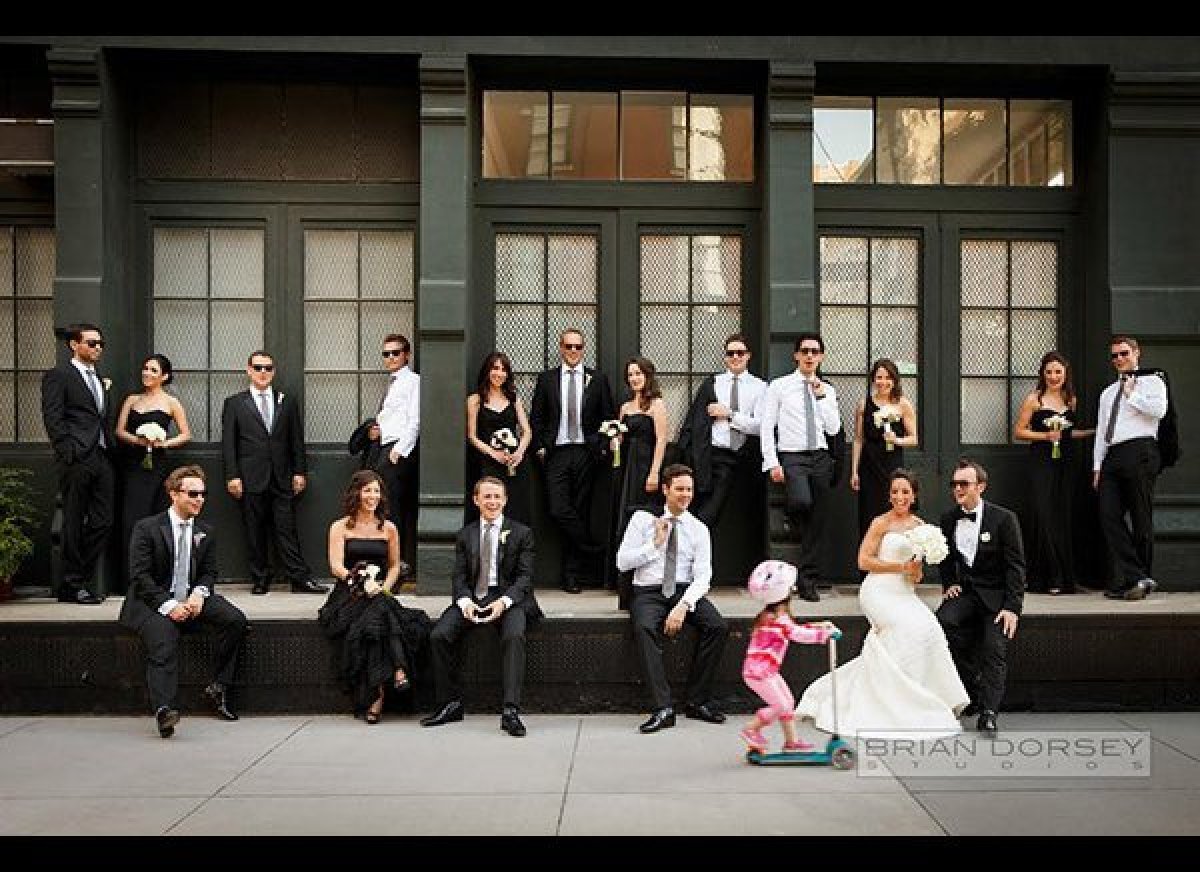
Scoot Over

Let's face it â€" bridal party portraits can get exhausting. There's nothing like an adorable tyke to put a huge grin on your face, even if your muscles are tired from smiling! Photo Credit: Brian Dorsey Studios
#13094
aguy, supercute to the max. :)
#13095
viva, kitty!
#13096
Technology / Re: Selfie Before Smartphones
May 26, 2014, 04:35:54 PM
Quote from: hubag bohol on May 26, 2014, 03:09:34 PM
above: parmigiano, young
below: parmigiano, old

#13097


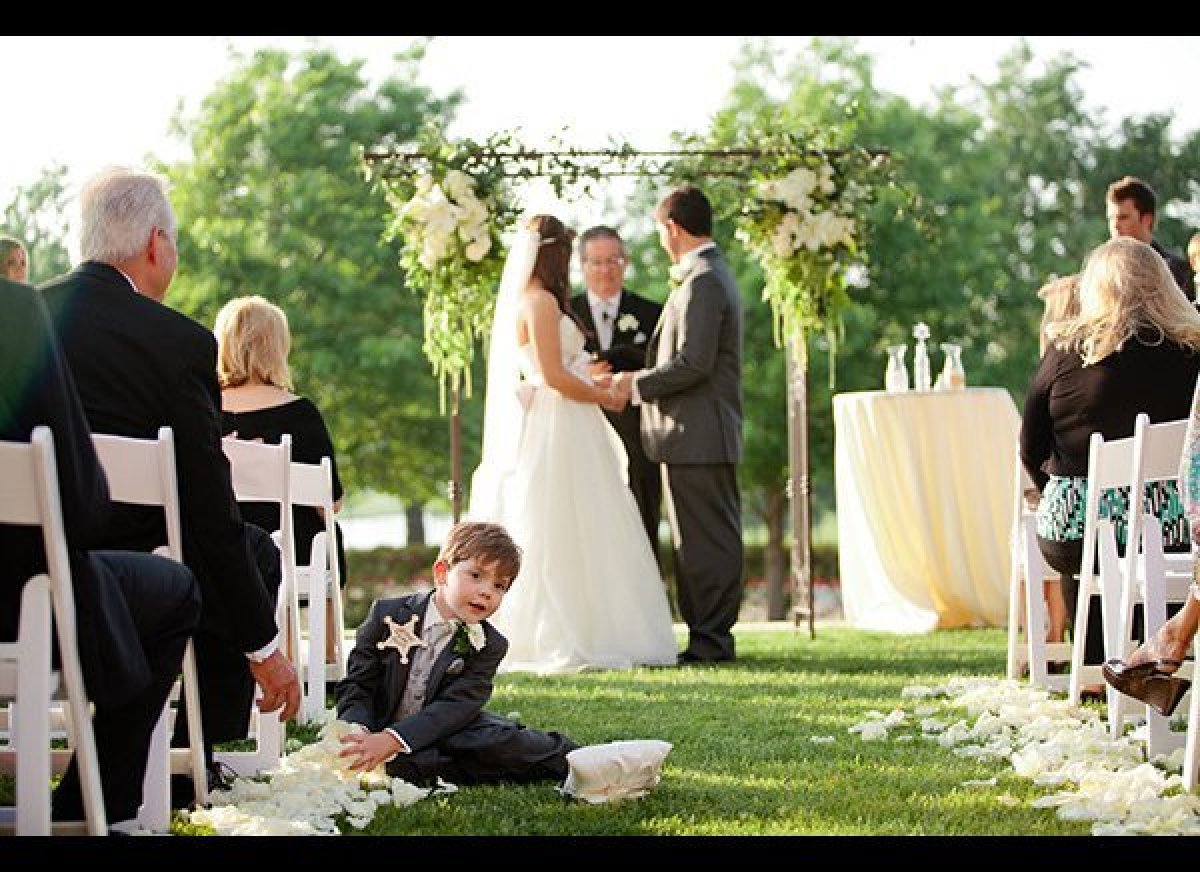
Rolling In The Aisles

As hard as they may try, tots just can't sit through an entire wedding, but we give them a gold star for effort. Photo Credit: Jennefer Wilson Photography
#13098


Where The Action Is

This dapper little guest wanted a front-row seat to the action and wouldn't accept "no" for an answer. Photo Credit: del Sol Photography
#13099


Doth Protest Too Much

Ceremony taking too long? This toddler found another way to keep his eyes open. Photo Credit: Dory L.Tuohey Photography
#13100


The Miley Cyrus

No caption necessary! Photo Credit: Ron Soliman