hadlok'a man ni uy!
This section allows you to view all posts made by this member. Note that you can only see posts made in areas you currently have access to.
Pages 1 2 3 4 5 6 7 8 9 10 11 12 13 14 15 16 17 18 19 20 21 22 23 24 25 26 27 28 29 30 31 32 33 34 35 36 37 38 39 40 41 42 43 44 45 46 47 48 49 50 51 52 53 54 55 56 57 58 59 60 61 62 63 64 65 66 67 68 69 70 71 72 73 74 75 76 77 78 79 80 81 82 83 84 85 86 87 88 89 90 91 92 93 94 95 96 97 98 99 100 101 102 103 104 105 106 107 108 109 110 111 112 113 114 115 116 117 118 119 120 121 122 123 124 125 126 127 128 129 130 131 132 133 134 135 136 137 138 139 140 141 142 143 144 145 146 147 148 149 150 151 152 153 154 155 156 157 158 159 160 161 162 163 164 165 166 167 168 169 170 171 172 173 174 175 176 177 178 179 180 181 182 183 184 185 186 187 188 189 190 191 192 193 194 195 196 197 198 199 200 201 202 203 204 205 206 207 208 209 210 211 212 213 214 215 216 217 218 219 220 221 222 223 224 225 226 227 228 229 230 231 232 233 234 235 236 237 238 239 240 241 242 243 244 245 246 247 248 249 250 251 252 253 254 255 256 257 258 259 260 261 262 263 264 265 266 267 268 269 270 271 272 273 274 275 276 277 278 279 280 281 282 283 284 285 286 287 288 289 290 291 292 293 294 295 296 297 298 299 300 301 302 303 304 305 306 307 308 309 310 311 312 313 314 315 316 317 318 319 320 321 322 323 324 325 326 327 328 329 330 331 332 333 334 335 336 337 338 339 340 341 342 343 344 345 346 347 348 349 350 351 352 353 354 355 356 357 358 359 360 361 362 363 364 365 366 367 368 369 370 371 372 373 374 375 376 377 378 379 380 381 382 383 384 385 386 387 388 389 390 391 392 393 394 395 396 397 398 399 400 401 402 403 404 405 406 407 408 409 410 411 412 413 414 415 416 417 418 419 420 421 422 423 424 425 426 427 428 429 430 431 432 433 434 435 436 437 438 439 440 441 442 443 444 445 446 447 448 449 450 451 452 453 454 455 456 457 458 459 460 461 462 463 464 465 466 467 468 469 470 471 472 473 474 475 476 477 478 479 480 481 482 483 484 485 486 487 488 489 490 491 492 493 494 495 496 497 498 499 500 501 502 503 504 505 506 507 508 509 510 511 512 513 514 515 516 517 518 519 520 521 522 523 524 525 526 527 528 529 530 531 532 533 534 535 536 537 538 539

#12003
Music and Video / Enya - One By One
July 23, 2012, 01:37:21 AM

#12006
Inspiration & Hope / Walking in His strength
July 23, 2012, 01:22:51 AM
"God is so good to me. I (Columba Marmion) live now
on my daily Communion. All the morning I walk
in the strength of that divine food, and from the
afternoon I live on the thought of the following
Communion, for It strengthens us according to
our desires and preparations. Our Lord has
promised that 'he who eateth Me shall live by Me.'
His life becomes ours, the source of all our activity. "
Excerpt from - Abbot Columba Marmion
by Fr Raymond Thibaut
#12007
Bible Study / Re: The pelican and Christ
July 23, 2012, 01:17:09 AM
GODHEAD HERE IN HIDING /ADORO TE DEVOTE
6th stanza - Words: St Thomas Aquinas, Translation: Gerard Manley Hopkins S.J.
Bring the tender tale true of the Pelican;
Bathe me, Jesu Lord, in what Thy bosom ran
Blood whereof a single drop has power to win
All the world forgiveness of its world of sin.
6th stanza - Words: St Thomas Aquinas, Translation: Gerard Manley Hopkins S.J.
Bring the tender tale true of the Pelican;
Bathe me, Jesu Lord, in what Thy bosom ran
Blood whereof a single drop has power to win
All the world forgiveness of its world of sin.


#12010
Bible Study / The pelican and Christ
July 23, 2012, 01:14:41 AM
"The symbolism of the mother pelican feeding her little baby pelicans
is rooted in an ancient legend which preceded Christianity. The legend
was that in time of famine, the mother pelican wounded herself,
striking her breast with the beak to feed her young with her blood
to prevent starvation. Another version of the legend was that the
mother fed her dying young with her blood to revive them from death,
but in turn lost her own life.
Given this tradition, one can easily see why the early Christians adapted
it to symbolize our Lord, Jesus Christ. The pelican symbolizes Jesus
our Redeemer who gave His life for our redemption and the atonement
He made through His passion and death. We were dead to sin and have
found new life through the Blood of Christ. Moreover, Jesus continues
to feed us with His body and blood in the holy Eucharist. ...
Therefore, the image of the pelican is a strong reminder of our Lord,
who suffered and died for us to give us eternal life and who nourishes
us on our pilgrim way with the Holy Eucharist. May that image move
us to show the same charity and self-giving love toward all."
-Saunders, Rev. William. "The Symbolism of the Pelican."
Arlington Catholic Herald.
#12011
Inspiration & Hope / Re: Certus sum enim quia neque mors..
July 23, 2012, 01:09:56 AM
An excerpt from the book entitled, Lift Up Your Hearts:
"It is estimated that in every second of the day and night four
elevations of the host take place. I never cease to wonder at this,
or to rejoice in the knowledge that there is never a second of one's
life in which one cannot lift up one's heart to God in the heart of
Christ lifted up in the host. ...
Think of all the places where Mass is being celebrated at this present moment, ... all the cathedrals and all the churches of the world,
all the tin huts and mud huts and make-shifts that are the best man
can do in many mission fields and in English villages, robbed by the reformation of their little Saxon churches. In ships out on the deep seas,
on battlefields and camps, in prisons and hospital wards, in the desert
and the jungle, in the great cities of the world, in the cottages of the
faithful peasants in persecuted countries, and under the tall trees
of lonely forests of exile.
Think too how everywhere where Christ is lifted up men are bowed
down in adoration, soldiers, sailors, airmen, fishermen, men of every country, men of every colour, rich men and poor men, free men and prisoners, old men and young men, men of every craft and trade and profession, all adoring God, all in communion with one another, all in communion with the Holy Father, all in communion with you and me."
#12012
Inspiration & Hope / Re: Certus sum enim quia neque mors..
July 23, 2012, 01:07:54 AM
The Holy Eucharist being offered to Allied soldiers during WWI
"'And I, if I be lifted up, will draw all men to Me'."
#12013
Inspiration & Hope / Re: Certus sum enim quia neque mors..
July 23, 2012, 01:06:04 AM
Catholic Chaplain celebrating Holy Mass with Federal soldiers before battle;
American Civil War.
#12014
Music and Video / Hans Zimmer - Chevaliers de Sangreal
July 22, 2012, 02:52:15 PM #12015
Music and Video / 1492 Conquest of Paradise
July 22, 2012, 02:47:42 PM #12016
Inspiration & Hope / Certus sum enim quia neque mors..
July 22, 2012, 02:37:13 PM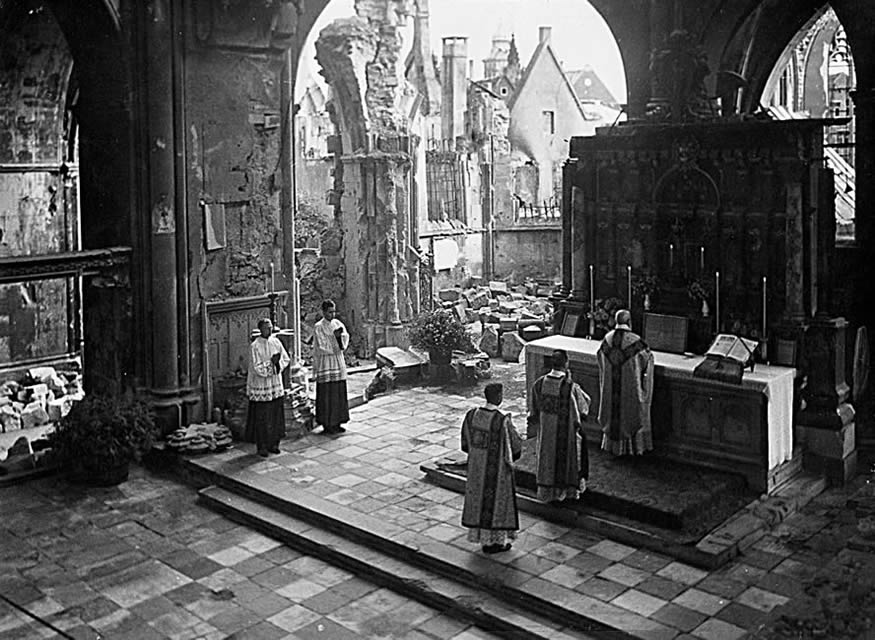
For I am sure that neither death, nor life, nor angels, nor principalities, nor powers, nor things present, nor things to come, nor might, Nor height, nor depth, nor any other creature, shall be able to separate us from the love of God, which is in Christ Jesus our Lord.
(St Paul's Epistle to the Romans 8.38,39)
#12017
Bible Study / Re: What is Extreme Unction?
July 22, 2012, 02:33:01 PM #12018
Bible Study / Re: What is Extreme Unction?
July 22, 2012, 02:32:42 PM
Effects
The decree of Eugene IV for the Armenians describes the effects of extreme unction briefly as "the healing of the mind and, so far as it is expedient, of the body also" (Denzinger, no. 700--old no. 595). In Sess. XIV, can. ii, De Extr. Unct., the Council of Trent mentions the conferring of grace, the remission of sins, and the alleviation of the sick, and in the corresponding chapter explains as follows the effects of the unction:
"This effect is the grace of the Holy Ghost, whose unction blots out sins, if any remain to be expiated, and the consequences [reliquias] of sin, and alleviates and strengthens the soul of the sick person, by exciting in him a great confidence in the Divine mercy, sustained by which [confidence] he bears more lightly the troubles and sufferings of disease, and more easily resists the temptations of the demon lying in wait for his heel, and sometimes, when it is expedient for his soul's salvation, recovers bodily health."
The remission of sins, as we have seen, is explicitly mentioned by St. James, and the other spiritual effects specified by the Council of Trent are implicitly contained, side by side with bodily healing, in what the Apostle describes as the saving and raising up of the sick man.
(1) It is therefore a doctrine of Catholic faith that sins are remitted by extreme unction, and, since neither St. James nor Catholic tradition nor the Council of Trent limits this effect to venial sins, it is quite certain that it applies to mortal sins also. But according to Catholic teaching there is per se a grave obligation imposed by Divine law of confessing all mortal sins committed after baptism and obtaining absolution from them; from which it follows that one guilty of mortal sin is bound per se to receive the Sacrament of Penance before receiving extreme unction. Whether he is further bound, in case penance cannot be received, to prepare himself for extreme unction by an act of perfect contrition is not so clear; but the affirmative opinion is more commonly held by the theologians, on the ground that extreme unction is primarily a sacrament of the living, i.e. intended for those in the state of grace, and that every effort should be made by the subject to possess this primary disposition.
Extreme unction likewise remits venial sins provided the subject has at least habitual attrition for them; and, following the analogy of penance, which with attrition remits mortal sins, for the remission of which outside the sacrament perfect contrition would be required, theologians hold that with extreme unction a less perfect attrition suffices for the remission of venial sins than would suffice without the sacrament. But besides thus directly remitting venial sins, extreme unction also excites dispositions which procure their remission ex opere operantis.
#12019
Bible Study / Re: What is Extreme Unction?
July 22, 2012, 02:30:23 PM
Sacramental efficacy of the rite
The Council of Trent (Sess. XIV, cap. i, De Extr. Unct.) teaches that "this sacred unction of the sick was instituted by Christ Our Lord as a sacrament of the New Testament, truly and properly so called, being insinuated indeed in Mark [6:13] but commended to the faithful and promulgated" by James [Ep., v, 14, 15]; and the corresponding canon (can. i, De Extr. Unct.) anathematizes anyone who would say "that extreme unction is not truly and properly a sacrament instituted by Christ Our Lord, and promulgated by the blessed Apostle James, but merely a rite received from the fathers, or a human invention".
The text of St. James reads: "Is any man sick among you? Let him bring in the priests of the Church, and let them pray over him, anointing him with oil in the name of the Lord. And the prayer of faith shall save [sosei] the sick man: and the Lord shall raise him up [egerei]: and if he be in sins, they shall be forgiven him." It is not seriously disputed that there is question here of those who are physically ill, and of them alone; and that the sickness is supposed to be grave is conveyed by the word kamnonta and by the injunction to have the priests called in; presumably the sick person cannot go to them. That by "the priests of the church" are meant the hierarchical clergy, and not merely elders in the sense of those of mature age, is also abundantly clear. The expression tous presbyterous, even if used alone, would naturally admit no other meaning, in accordance with the usage of the Acts, Pastoral Epistles, and 1 Peter 5; but the addition of tes ekklesias excludes the possibility of doubt (cf. Acts 20:17). The priests are to pray over the sick man, anointing him with oil. Here we have the physical elements necessary to constitute a sacrament in the strict sense: oil as remote matter, like water in baptism; the anointing as proximate matter, like immersion or infusion in baptism; and the accompanying prayer as form. This rite will therefore be a true sacrament if it has the sanction of Christ's authority, and is intended by its own operation to confer grace on the sick person, to work for his spiritual benefit. But the words "in the name of the Lord" here mean "by the power and authority of Christ", which is the same as to say that St. James clearly implies the Divine institution of the rite he enjoins. To take these words as referring to a mere invocation of Christ's name--which is the only alternative interpretation--would be to see in them a needless and confusing repetition of the injunction "let them pray over him". But is this rite recommended by St. James as an operative sign of grace? It may be admitted that the words "the prayer of faith shall save the sick man; and the Lord shall raise him up", taken by themselves and apart from the context, might possibly be applied to mere bodily healing; but the words that follow, "and if he be in sins, they shall be forgiven him", speak expressly of a spiritual effect involving the bestowal of grace. This being so, and it being further assumed that the remission of sins is given by St. James as an effect of the prayer-unction, nothing is more reasonable than to hold that St. James is thinking of spiritual as well as of bodily effects when he speaks of the sick man being "saved" and "raised up".
#12020
Bible Study / Re: What is Extreme Unction?
July 22, 2012, 02:27:32 PM
Actual rite of administration
As administered in the Western Church today according to the rite of the Roman Ritual, the sacrament consists (apart from certain non-essential prayers) in the unction with oil, specially blessed by the bishop, of the organs of the five external senses (eyes, ears, nostrils, lips, hands), of the feet, and, for men (where the custom exists and the condition of the patient permits of his being moved), of the loins or reins; and in the following form repeated at each unction with mention of the corresponding sense or faculty:
"Through this holy unction and His own most tender mercy may the Lord pardon thee whatever sins or faults thou hast committed [quidquid deliquisti] by sight [by hearing, smell, taste, touch, walking, carnal delectation]".
The unction of the loins is generally, if not universally, omitted in English-speaking countries, and it is of course everywhere forbidden in case of women. To perform this rite fully takes an appreciable time, but in cases of urgent necessity, when death is likely to occur before it can be completed, it is sufficient to employ a single unction (on the forehead, for instance) with the general form: "Through this holy unction may the Lord pardon thee whatever sins or faults thou hast committed." By the decree of 25 April, 1906, the Holy Office has expressly approved of this form for cases of urgent necessity.
#12021
Bible Study / What is Extreme Unction?
July 22, 2012, 02:26:04 PM
A sacrament of the New Law instituted by Christ to give spiritual aid and comfort and perfect spiritual health, including, if need be, the remission of sins, and also, conditionally, to restore bodily health, to Christians who are seriously ill; it consists essentially in the unction by a priest of the body of the sick person, accompanied by a suitable form of words.
#12022
Photos Unlimited / Re: The effect of blessings
July 22, 2012, 02:24:37 PM
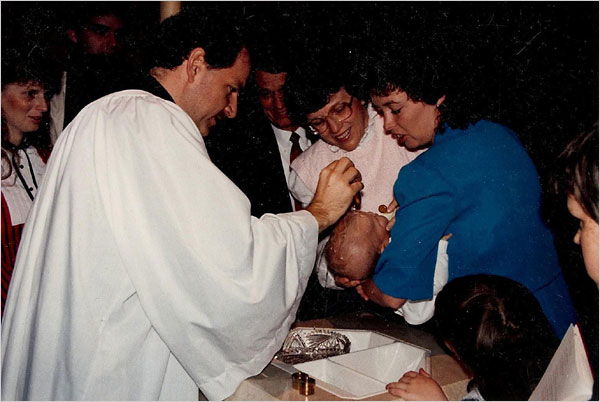
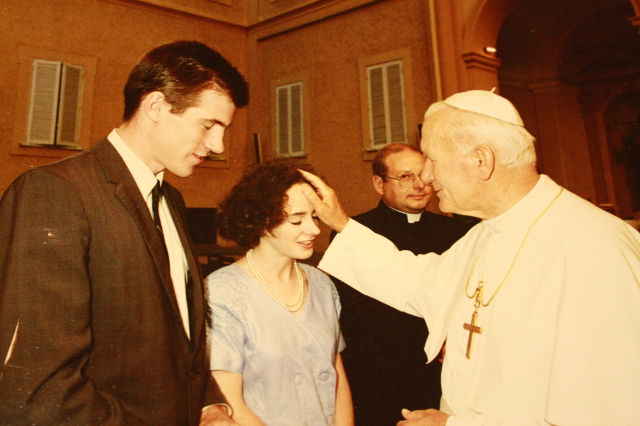
Blessing during Extreme Unction


#12027
Inspiration & Hope / Re: The meaning behind burning Incense in Holy Mass
July 22, 2012, 02:12:35 PM
#12028
Inspiration & Hope / Re: The meaning behind burning Incense in Holy Mass
July 22, 2012, 02:11:18 PM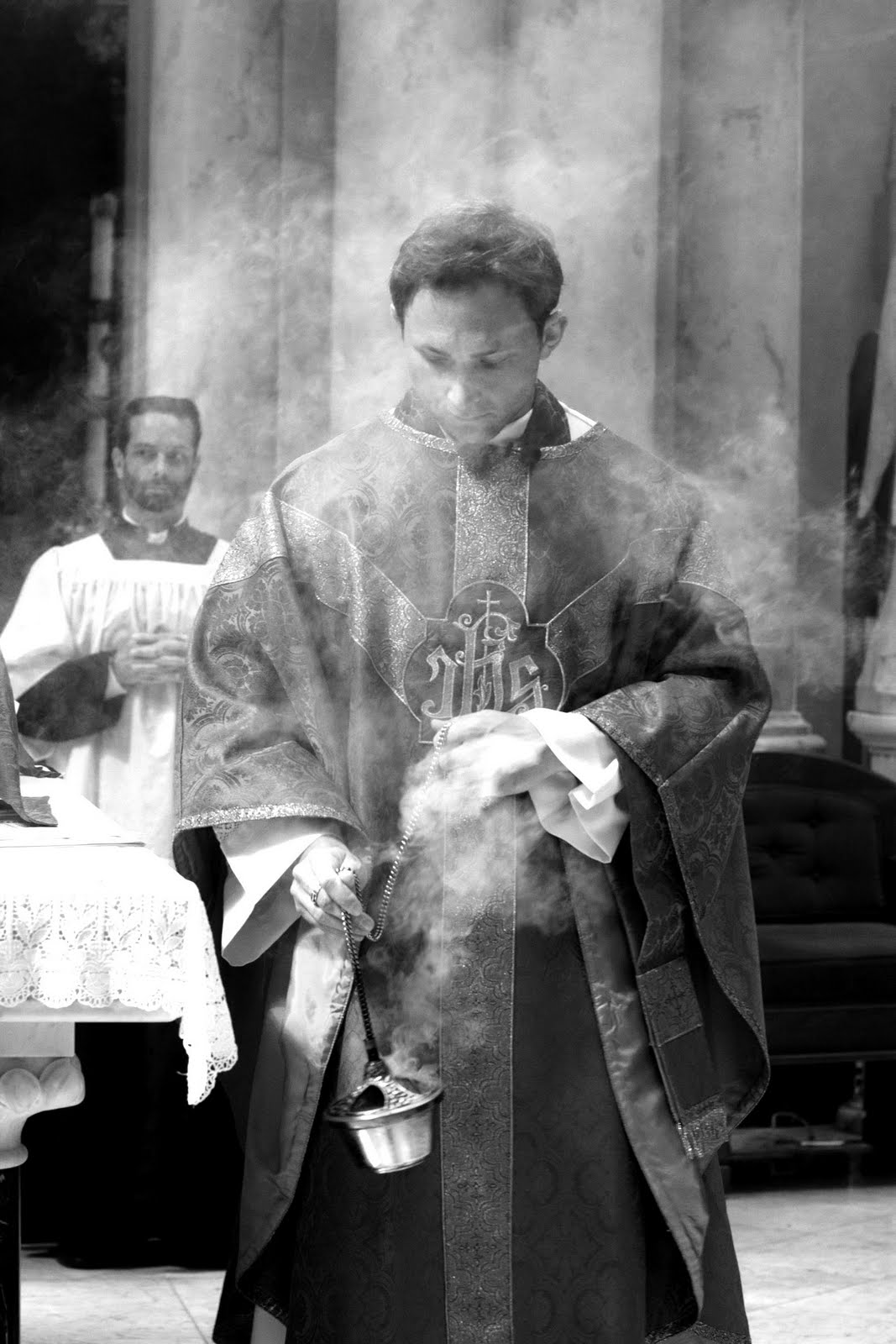
#12029
Inspiration & Hope / Re: The meaning behind burning Incense in Holy Mass
July 22, 2012, 02:09:03 PM
The Symbolic Meaning of Incense:
The use of incense goes far back in time. The reference books tell us that incense was in common use in Near East countries, burnt for its perfume. Are they suggesting incense was an ancient kind of air freshener? From a secular use it passed into religious service. Pagans employed it in worship of their gods. According to one source, at a fete in honor of Baal the Babylonians burned 1,000 talents of frankincense. Incense also played a part in honor given to kings and the Roman emperor.
And among the gifts of the Magi was frankincense--a gift worthy of a king. Illustrations of altars of incense can be found in the St. Joseph edition of the New American Bible.
Already in the Book of Exodus there is reference to incense. In Chapter 30, Moses is told to make an altar of acacia wood for the burning of incense and Aaron is to burn incense morning and evening. Also, in Exodus 30:34-38 Moses is given a formula for incense to be used solely in the worship of Yahweh. It is to be made of equal parts of storax, onycha, galbanum and frankincense, blended and ground into fine dust. The incense is to be placed before the Commandments in the meeting tent. Elsewhere in the Old Testament incense was often burnt in connection with the burnt offerings of animals.
The sweet smell of incense and its rising smoke gave it a kind of natural symbolism. It became the image of something pleasing to God. The rising smoke came to symbolize a person's or people's prayers rising up to God. So in Psalm 141 we have the plea, "Let my prayer come like incense before you."
Early Christians also found symbolic meaning in the use of incense. In the Book of Revelation, for instance, John has a vision of heaven and a kind of heavenly liturgy where the 24 elders worship the lamb that was slain. The elders hold harps and gold bowls filled with incense, "which are the prayers of the holy ones" (5:8 ). In Revelation 8:3-4 an angel holding a gold censer is given a great quantity of incense to offer and the smoke of the incense goes up before God with prayers.
So, among Christians today, incense has ritual and symbolic meaning. Its sweet aroma symbolizes something pleasing and acceptable being offered to God.
Burning incense is also a sign of reverence and dedication. Incensing the body at a funeral Mass is a sign of reverence for the body that was once the temple of God. In a more solemn liturgy, incensing the Book of Gospels indicates reverence for the word of God and Christ himself who is the Word Incarnate. Incensing the altar shows respect for Christ whom the altar represents and his sacrifice made present upon the altar. Incensing the Easter candle is, again, a sign of reverence for Christ who is the light of the world. Incensing the Blessed Sacrament at Benediction is a sign of adoration and worship given to Christ, truly present upon the altar. It becomes a sign of our prayers rising to heaven.
http://www.americancatholic.org/messenger/jan1997/wiseman.asp#F1
#12030
Sevilla - Bohol / Re: Kaila mo ani nila taga Sevilla?
July 22, 2012, 02:06:15 PM
They should be apprehended immediately. Be careful in giving money to anyone. There are many wolves who appear in sheep's clothing.
#12032
Sevilla - Bohol / Re: Kaila mo ani nila taga Sevilla?
July 22, 2012, 06:36:49 AM
What are their names? Please share their names here so that we might forward them to the proper authorities in Bohol.
#12033
Inspiration & Hope / Success begins with entrusting all your plans to GOD
July 22, 2012, 01:15:31 AM
Trust in the Lord with all thine heart; and lean not unto thine own understanding. In all thy ways acknowledge him, and he shall direct thy paths. Be not wise in thine own eyes: fear the Lord, and depart from evil. It shall be health to thy navel, and marrow to thy bones. Honour the Lord with thy substance, and with the firstfruits of all thine increase: So shall thy barns be filled with plenty, and thy presses shall burst out with new wine.
-Proverbs 3: 5-10
-Proverbs 3: 5-10
#12034
Inspiration & Hope / Re: How Do You Define Success?
July 22, 2012, 01:13:00 AM
1 Blessed is the man
Who walks not in the counsel of the ungodly,
Nor stands in the path of sinners,
Nor sits in the seat of the scornful;
2 But his delight is in the law of the LORD,
And in His law he meditates day and night.
3 He shall be like a tree.
Planted by the rivers of water,
That brings forth its fruit in its season,
Whose leaf also shall not wither;
And whatever he does shall prosper
-PSALM 1: 1-3
#12035
Music and Video / Gladiator Soundtrack: Now We Are Free
July 22, 2012, 01:11:52 AM #12036
Music and Video / Re: Last of the Mohicans
July 22, 2012, 01:09:37 AMQuote from: Ching on July 21, 2012, 06:41:25 PM
paborito ni naho nga movieambot kapila na ni naho nakita. ug ang music diha nga "I will find you" by Enya Clannad
Tita Ching,
If you like the works of Enya, I'm sure you will like her song entitled, "Wild Child". I first found this melody when I was walking the streets of Kiev, Ukraine as I was looking at some rural crafts the people were selling. A seller had this song playing - I fell in love with it immediately. At the spur of the moment, I decided to buy the CD. I have loved the works of Enya ever since.
http://www.youtube.com/watch?v=7nTGHMOuV8A#ws
#12037
Music and Video / Re: Last of the Mohicans
July 22, 2012, 01:01:12 AM
This is also one of my favorite movies. I remember watching this movie the first time when I first arrived to the United States. The setting, which captures the pristine virgin forests of the Appalachian mountains and the Catskills Mountain ranges of upper New York State, truly visualizes the natural beauty of the American heartland. As a child growing up, I had never seen such vast sways of virgin trees in such magnanimous numbers. It would be much later, in my college years, that I would be able to hike these said mountain ranges.
I was awed at the antagonist, Mogwa, who was so ruthless in his attacks. His hatred illustrates how blind , unforgiving anger can truly change a man externally as well as internally. His death illustrates the victory of good over evil. One scene that always sends a chill down my spine was the sacrificial death of Major Duncan Heyward.
I was awed at the antagonist, Mogwa, who was so ruthless in his attacks. His hatred illustrates how blind , unforgiving anger can truly change a man externally as well as internally. His death illustrates the victory of good over evil. One scene that always sends a chill down my spine was the sacrificial death of Major Duncan Heyward.
#12038
World Daily News / Re: Mugshot of James E. Holmes
July 22, 2012, 12:53:54 AMQuote from: Mike Ortega Ligalig on July 21, 2012, 06:19:13 AM
Dylan Klebold and Eric Harris
Flashback 1999: The killers behind Columbine High School Massacre. Just 13 miles from the "Dark Knight Rises" massacre at the theater.

I remember this just as if it was like yesterday. I was still in Middle School (the 6th grade) when the Columbine shooting occurred. I was in Mrs. Heidmark's English class when this occurred and remember listening to the details from watching the TV. Our school also had a moment of silence after the event and the very next day we had a 5 minute moment of prayer to reflect the people who died.
After that event, it was different growing up here. It was common to hear in the news of bomb scares in schools, students coming in with guns, and the ramifications of such incidents.
I wonder if things like these ever happen in the Philippines. I hope and pray not.
#12039
Inspiration & Hope / Re: The meaning behind burning Incense in Holy Mass
July 22, 2012, 12:48:17 AMQuote from: Vistabel on July 22, 2012, 12:25:05 AM
it is a bad odor remover. As I notice right these days some people are using incense at their house as an airfreshner or a bad odor remover. The prehistoric people had no cleaning reagents like Sabon that's why some of theme had bad odor and imagine if those odorous prehistoric people were met all together in a closed room, how bad atmosphere they had.
that is a good hypothesis, vistabel. id like to read more into this and i'll give you my opinion later on.
and yes, welcome back to tubag bohol.
#12040
World Daily News / Re: Mugshot of James E. Holmes
July 22, 2012, 12:47:07 AMQuote from: Mike Ortega Ligalig on July 21, 2012, 06:06:46 AM
he killed 13 persons and wounded 59. what has happened to america?
To imagine that this man was a 24 year old Ph.D student in Neuroscience. The very field he studied dealt with the functions of the brain; the pathologies of neural function , which can lead to psychosis, violent schizophrenia and the like. It is almost a paradox that a man who studies the brain and the pathologies of the brain was responsible for killing so many innocent people himself.
I pray for the souls of those who died that night.
#12041
World Daily News / Re: Mugshot of James E. Holmes
July 22, 2012, 12:44:09 AMQuote from: Mike Ortega Ligalig on July 21, 2012, 06:06:46 AM
he killed 13 persons and wounded 59. what has happened to america?
This is what happens when the people in this country have put away the importance of prayer, of bible studies, and has instead placed importance of hedonism and all things that are an affront to the eyes of God. America is being punished for turning its back on prayer, defense of human life; just as how God punished Israel for her hedonism and unrighteousness -- and unleashed Babylon, Assyria on her.
#12042
World Daily News / Re: Mugshot of James E. Holmes
July 22, 2012, 12:40:33 AM
How truly sad. And he had a bright future ahead of him as a Ph.D student in Neuroscience. He threw that away when he decided to massacre 12 people and injure some 38 people in a movie theater. May the victims who perished that night rest in peace.
#12043
Bible Study / Re: Daily Scriptural Verse
July 21, 2012, 01:37:23 PM
Do not repay evil with evil or insult with insult, but with blessing, because to this you were called so that you may inherit a blessing.
1 Peter 3: 9
1 Peter 3: 9
#12044
Bible Study / Re: Daily Scriptural Verse
July 21, 2012, 01:34:34 PM
And those he predestined, he also called; those he called, he also justified; those he justified, he also glorified.
Romans 8: 30
Romans 8: 30
#12045
Music and Video / Maroon 5 - Payphone
July 21, 2012, 01:32:26 PM #12046
Bible Study / Re: Daily Scriptural Verse
July 21, 2012, 01:29:37 PM
Above all, keep loving one another earnestly, since love covers a multitude of sins. Show hospitality to one another without grumbling. As each has received a gift, use it to serve one another, as good stewards of God's varied grace.
1 Peter 4:8-10
1 Peter 4:8-10
#12047
Bible Study / Re: Daily Scriptural Verse
July 21, 2012, 01:27:59 PM
And let us consider how we may spur one another on toward love and good deeds, not giving up meeting together, as some are in the habit of doing, but encouraging one anotherâ€"and all the more as you see the Day approaching.
Hebrews 10:24-25
Hebrews 10:24-25
#12048
Talk of the Town / Do you think there will be a war between the Philippines and China?
July 21, 2012, 01:24:38 PM
Do you think there will be a war between the Philippines and China? Explain your reasoning.

#12049
Philippine Photo Gallery / Re: Evidence of Strong Population Growth
July 21, 2012, 01:18:14 PM
The population of the Philippines is now at 102 Million. Still 1/13th that of China's population of a whopping 1.3 Billion.
#12050
History / Re: The History of the Philippine Scouts (Philippine Army)
July 21, 2012, 01:13:23 PM
Really? I bet he had a lot of amazing stories to share of his experiences there eh?
#12051
Philippine Business News / Re: New Dengue Strain May Attack Undetected
July 21, 2012, 01:11:04 PM
Yes, superwoman, that is right.
#12052
Photos Unlimited / Re: Young Japanese Beauty
July 21, 2012, 01:09:53 PM
She is Japanese? She could be mistaken for a Filipina. She has morena beauty.
#12053
Science and Research / Re: Deinstitutionalization of the Mentally Ill
July 21, 2012, 01:07:40 PM
Thanks for reading , Father Roel. One of the many problems we have now (in the present) are the instances of homeless people who are uncared for and are living in the fringes of society. Many of them are actually mentally ill people who were forced out of the state run mental institutions through the deinstitutionalization process. Now, many of them remain in the streets in major urban cities.
In Chicago we have an issue of homeless people who live in the streets, many of them being abused and uncared for by social services sectors. I believe that the federal government should really intervene and assess these people. I believe that more resources should be allocated for human services agencies that specialize in providing housing and much needed psychiatric counseling for this underprivileged at-risk population group.
In Chicago we have an issue of homeless people who live in the streets, many of them being abused and uncared for by social services sectors. I believe that the federal government should really intervene and assess these people. I believe that more resources should be allocated for human services agencies that specialize in providing housing and much needed psychiatric counseling for this underprivileged at-risk population group.
#12054
Weird and Extreme / Re: They eat their best friend
July 21, 2012, 01:03:17 PM
There is a Chinese saying, "if it moves a Zhonguoren will eat it." 
#12055
Photos Unlimited / Re: Testing 1, 2, 3
July 21, 2012, 01:01:23 PMQuote from: chicogon on July 21, 2012, 06:22:28 AM
St. Joseph and Jesus

He he he! St. Joseph and Senyor Santo Nino....
#12056
Music and Video / Be my Everything
July 20, 2012, 04:37:53 PM #12057
Jokes and Humor / Re: Sumbagay Ta Bi!
July 20, 2012, 04:33:17 PM
Hahahaha! pariho ra pod diay sa baje.
#12058
Health and Food / Re: Why one should own a pet
July 20, 2012, 04:32:19 PMQuote from: islander on July 20, 2012, 11:16:21 AM
Ice breaker
Pets have been described as a social lubricant. Attending dog training classes, visiting the vet and walking in the park all provide opportunities to meet and talk to other people. Studies have shown that people walking a dog have far more positive encounters with others than those out walking alone, with the pet often providing a topic of conversation.a different tale of a tail all together


Dili icebreaker, kuan ni sija, show-off.
#12059
Health and Food / Re: Why one should own a pet
July 20, 2012, 04:29:58 PMQuote from: taga tigbao on July 20, 2012, 04:21:30 PM
Church me away! Hahahaha. Usahay kay masuko na ang baje kay mas hapjuron pa kono nahos Budinggit kaysa nija. Hahaha.
That's how women are, Vince, they always require your absolute , total attention.
Whatever she may say, just remember these two words, "Yes Dear."
#12060
Jokes and Humor / Re: Sumbagay Ta Bi!
July 20, 2012, 04:28:30 PM
he he he! hilig diay si budinggit sa nap time, eh?
#12061
Bible Study / Re: Daily Scriptural Verse
July 20, 2012, 02:47:50 PM
Wise words bring many benefits, and hard work brings rewards.
Proverbs 12:14
Proverbs 12:14
#12062
Bible Study / Re: Daily Scriptural Verse
July 20, 2012, 02:45:50 PM
Cast your bread upon the waters, for after many days you will find it again.
-Ecclesiastes 11:1
-Ecclesiastes 11:1

#12064
Music and Video / Tracy Chapman - Fast Car
July 20, 2012, 02:41:15 PM #12065
History / Re: Burke & Hare
July 20, 2012, 02:38:37 PM
University of Edinburgh, College of Medicine


#12068
History / Re: Burke & Hare
July 20, 2012, 02:30:26 PM
Aftermath & Justice
The evidence against the pair was not overwhelming, so Lord Advocate Sir William Rae offered Hare immunity from prosecution if he confessed and agreed to testify against Burke. Hare's testimony led to Burke's death sentence in December 1828. He was hanged on 28 January 1829, after which he was publicly dissected at the Edinburgh Medical College.
The dissecting professor, Alexander Monro, dipped his quill pen into Burke's blood and wrote "This is written with the blood of Wm Burke, who was hanged at Edinburgh. This blood was taken from his head."
#12069
History / Re: Burke & Hare
July 20, 2012, 02:28:05 PM
Burke and Hare
Burke (1792 â€" 28 January 1829) was born in Urney, near Strabane, in the very west of County Tyrone, part of the Province of Ulster in the north of Ireland. Urney, a small district where the village of Clady is located, lies on the eastern bank of the River Finn, just across from County Donegal. After trying his hand at a variety of trades and serving as an officer's servant in the Donegal Militia, he left his wife and two children in Ireland and emigrated to Scotland about 1817, working as a navvy for the Union Canal. There he met Helen McDougal. Burke afterwards worked as a labourer, weaver, baker and a cobbler.
Hare's (born 1792 or 1804) birthplace is variously given as Poyntzpass near Newry, or Derry, both of which are also in the Province of Ulster in Ireland. Like Burke, he emigrated to Scotland and worked as a Union Canal labourer. He then moved to Edinburgh, where he met a man named Logue, who ran a lodging-house in the West Port. When Logue died in 1826, Hare married Margaret Laird, Logue's widow. Margaret Hare continued to run the lodging house, and Hare worked on the canal.
#12070
History / Re: Burke & Hare
July 20, 2012, 02:26:30 PM
Historical background
Before 1832, there were insufficient cadavers legitimately available for the study and teaching of anatomy in British medical schools. The University of Edinburgh was an institution universally renowned for medical sciences. As medical science began to flourish in the early nineteenth century, demand rose sharply, but at the same time, the only legal supply of cadaversâ€"the bodies of executed criminalsâ€"had fallen due to a sharp reduction in the execution rate in the early nineteenth century, brought about by the repeal of the Bloody Code. Only about two or three corpses per year were available for a large number of students. This situation attracted criminal elements who were willing to obtain specimens by any means. The activities of body-snatchers (also called resurrectionists) gave rise to particular public fear and revulsion. It was a short step from grave-robbing to anatomy murder.
Before 1832, there were insufficient cadavers legitimately available for the study and teaching of anatomy in British medical schools. The University of Edinburgh was an institution universally renowned for medical sciences. As medical science began to flourish in the early nineteenth century, demand rose sharply, but at the same time, the only legal supply of cadaversâ€"the bodies of executed criminalsâ€"had fallen due to a sharp reduction in the execution rate in the early nineteenth century, brought about by the repeal of the Bloody Code. Only about two or three corpses per year were available for a large number of students. This situation attracted criminal elements who were willing to obtain specimens by any means. The activities of body-snatchers (also called resurrectionists) gave rise to particular public fear and revulsion. It was a short step from grave-robbing to anatomy murder.
#12071
History / Burke & Hare
July 20, 2012, 02:26:07 PM
The Burke and Hare murders (nickname West Port murders) were serial murders perpetrated in Edinburgh, Scotland, from November 1827 to October 31, 1828. The killings were attributed to Irish immigrants William Burke and William Hare, who sold the corpses of their 17 victims to provide material for dissection. Their purchaser was Doctor Robert Knox, a private anatomy lecturer whose students were drawn from Edinburgh Medical College. Their accomplices included Burke's mistress, Helen McDougal, and Hare's wife, Margaret Laird.
#12072
Music and Video / Last of the Mohicans
July 20, 2012, 02:23:05 PM #12073
Science and Research / Re: Deinstitutionalization of the Mentally Ill
July 20, 2012, 02:17:37 PM
One segment of the American population that is of great concern for the human services and health services profession are those who are suffering from a form of mental illness. There are various forms of mental illness that range from schizophrenia, bipolar disorder, schizoid personality, acute psychosis, catatonic schizophrenic (Mental Illness and homelessness, 2009). These types of medical conditions were the basis and the catalyst for placing an individual in state regulated and state run mental hospitals during the 18th, 19th and early 20th centuries in the United States (Martin, 2011).
The institutionalization of mentally ill patients was a practice that originated from Europe, which in turn was brought to the colonial new world (Martin, 2011). However, during the 1950’s, with the advent of new drugs to treat psychiatric conditions, there was a rise in psychopharmacology, which correlated with the decrease in the importance of psychosurgery, which placed emphasis on medical lobotomies, which were the preferred mode of treatment for aggressive mentally ill patients that were housed in mental hospitals (Krieg, 2001). With the advent of new drugs such as haloperidol, fluoxetine, lithium, valproic acid, and methyldopa, the conditions that used to prevent psychiatric patients from operating in society were not the case. Incidentally, with the creation and use of this revolutionary anti-psychotic medication, more and more groups in society were calling for a change in how mental health was to be run. This led to the birth of the deinstitutionalization movement (Grob, 1995).
Deinstitutionalization is a long term trend when fewer people reside as patients in mental hospitals and fewer mental health treatments are delivered in public hospitals. Deinstitutionalization is due in part to the process of closing the publically operated mental hospitals, which facilitated the need to transport these patients to community based mental services; enabling wider geographic access (Martin, 2011). The movement grew great acclaim and was supported during the1960’s and 1970’s, illustrating the change in the structure, practice, experience and purpose of mental health hospitals from providing total care for mentally ill patients, to transferring these former responsibilities to local community facilities that were given federal aid ( Curtis, 2008).
One of the main driving factors to adopt deinstitutionalization was the consensus that the process might improve the quality of life for the mentally ill patients. There was a consensus that liberty was linked to increased quality of life to these mentally ill patients that were institutionalized at state run mental hospitals (Curtis, 2008). Quality of life is a term used to evaluate an individual’s general well-being in his setting in society. There are nine factors that determine quality of life and they include healthcare, family life, community life, material well-being, political stability, climate & geography, job security, political freedom and gender equality.
Some of the proponents of deinstitutionalization indicate that the process have secured the mentally ill have gained an increased measure of liberty. Richard Lamb, who was a proponent of the medical change stated, “There is often a tendency to underestimate the value & humanizing effects for former hospital patients of simply having their liberty to the extent that they can handle it and of being able to move freely in the community,†(Curtis, 2008). Another positive effect that deinstitutionalization created was that it allowed for mentally ill patients to live in community based rehabilitation facilities. While living in said facilities, these patients were able to care for themselves, attend school, and work a job and to maintain a sense of independence like any other American citizen (Curtis, 2008).
There are negative views concerning deinstitutionalization of the mentally ill. One of the views claims that the concept of deinstitutionalization has taken the mentally ill out of hospitals and placed them into prisons due to their inability to live within societal norms and misunderstanding of mental illness. A second view states that many homeless pave mental illness and have been forced out into the streets ( because of the deinstitutionalization program that was promulgated with the passing of the Aid to the Disabled Act, and the Mental Retardation Facilities & Community Mental Health Centers Construction Act (Netto, 2006). Many homeless shelters do not have the resources as well as the capacity to care for said homeless patients with mental illness. Another point is that there is a stigmatic association of mental illness and crime such as sexual activity, panhandling activity, drug proliferation as well as violence committed by schizophrenic homeless individuals (Curtis, 2008).
It is noted that the deinstitutionalization program have had positive and negative effects on the community as a whole and on the mentally ill person who was forced out of the mental health hospitals. In large urban cities like New York, Philadelphia, Chicago, Los Angeles, Atlanta, Houston etc, there is a considerable homeless population and a great many of these individuals have mental illness. Due to the limitations of the community services agencies, they are unable to assist all the mentally ill patients who were forced out of the state owned hospitals. The resources of these said communities are limited and as a result, these individuals who are forced to live in the streets are not given proper medical care, food, housing, and thus affects their quality of life. One can say that given the current situation, the deinstitutionalization process has actually exacerbated the homeless population in the United States and has influenced the negative stigma that homeless are mentally ill.
#12074
Science and Research / Deinstitutionalization of the Mentally Ill
July 20, 2012, 02:16:35 PM
by: A. Lorenzo Lucino Jr.
[Doctoral Paper]
Abstract
Mental illness is a condition seen a lot of homeless people living in the United States. The surge of homelessness and homeless people with mental illness was influenced by the deinstitutionalization program, which was widely accepted during the 1960’s and the 1970’s. The promulgation of the deinstitutionalization program was supported by the public and the medical community to try to increase the quality of institutionalized hospital patients when the advent of psychopharmacology proved that old mental disorders did not need constant hospital care. The current society stigma and vices associated with mentally ill homeless are an effect of the deinstitutionalization program of the late mid-20th century.  
#12075
Science and Research / Re: Current Issue on Aging
July 20, 2012, 02:11:58 PM
The term aging is regarded as the accumulation of changes that occurs on the human body as well as the human mind as a result of time (Martin, 2011), which affects an individual’s motor, memory and musculoskeletal movement. As the human body experiences senescence, there are specific diseases that manifest accordingly and are seen quite ubiquitously in certain age groups, the elderly patient population are more prone to diseases than the younger population group (Bjorklund & Bee, 2008). Some specific diseases that are quite commonly seen in elderly patients include coronary artery disease, atherosclerosis, arteriosclerosis, osteoporosis, myocardial infarction, cerebrovascular accidents, as well as age-related cognitive deficits such as dementia, memory loss, and Alzheimer’s disease (Bjorklund, 2008). One specific type of disease that is quite common in elderly populations and has presented itself as a concern for health care providers are cognitive deficits associated with elderly is dementia (Henkel & Rajaram, 2011). Considering the lapses in memory and the ever changing mental status of elderly people with cognitive deficits, they require help from social care services personnel.
One article that addressed this particular issue is entitled How acute care managers can support patients with dementia, which was written by June Andrews. The American Psychiatric Society defines dementia as the progressive, degenerative illnesses experienced by old age, which results in the impairment of brain function and cognitive ability (Martin, 2011). The human services personnel works directly with patients with dementia if they work in a practice setting that serves the elderly community; and they are either come in the form of registered nurses, nurse managers, psychiatrists, clinical psychologists or patient technicians. Andrews (2012) reveals that not all hospitals have proper training in dementia care, which should be a mandatory training program considering the fact that the number of dementia patients is expected to double in the next 20 years (Andrews, 2012). An important tool in the preparation of the hospital staff as well as the training of newly recruited registered nurses, licensed practical nurses, physical therapists, and patient care technicians is through the guidance and supervision of acute care managers (Andrews, 2012).
One of the key points that the article expounds on is the importance of knowing one’s patient, and pivotal to this processes is by making sure that the personnel in the hospital’s admission wing screen and identify patients who have dementia from the moment of admission or immediately afterwards. By doing so, the charge nurses, or otherwise known as acute nurse managers, will be ready to assess the situation and to make the necessary action in asking for an attending psychiatrist during the care of the patient (Andrews, 2012). The development of social services for senior citizens with age-related conditions was aided through the ratification of the Older Americans Act, which was signed into federal law in 1965. This law led to the creation of the Administration on Aging, which was responsible for funding grants to the 50 consecutive states for purposes of community and human services programs and for the development of the Area Agencies on Aging (Martin, 2011). These said programs operate on the local level and disseminate information to professions dealing with such conditions, health care facilities and social services facilities , shedding light on the numerous issues affecting the American elderly population, in particular is dementia. This said relationship will eventually allow the nursing staff to establish rapport with the patient. It must be noted that a nurse’s ability to develop a rapport with patients is an important part in managing dementia patients. Andrews (2012) establishes a strong point by affirming how important it is for a nurse to be engaging with his or her patient , especially dementia patients, so as to create an air of intimacy and trust , which is essential for the care of dementia patients.
Contrary to popular belief, the relatives of elderly patients who are suffering from mild dementia or severe dementia actually care for their relatives and this care was the catalyst for their turning over of care to hospital staff. The family carers and service personnel who look after said patients have to make sure to communicate with each other so that the hospital staff knows what kinds of preferences in food, in sleeping provisions as well as in social opportunity the patient prefers and this knowledge is usually given by the family caregivers (Andrews, 2012). So there is this essential codependency on acute nurse managers who communicate with family care givers so to dispense proper information to the nursing staff to better meet the specific needs of the dementia patient.
The roles of the human services personnel in regards to the caring for dementia patients is one that is varied and eclectic, yet pivotal for the patient’s health. Human services professionals are the psychiatrists, clinical psychologists, acute nurse managers, registered nurses, patient care technicians, transport specialists, social workers, as well as the family caregiver. The family caregiver is usually the wife or husband of the patient, the son or daughter or even the grandson or granddaughter of the patient with dementia, and has been trained in provision of activities of daily living, which enables them to care for their relatives at home to a significant degree (Martin, 2011). It is the family caregivers who aid in the physical activity of the patients, which increases the health and the immune system of affected patients (Baker, Meisner, Logan, Kungl & Weir, 2009). The acute nurse managers are the personnel who train the nursing staff, the patient technical staff , the hospital transportation specialists in how to communicate and deal with dementia patients in the best possible way. This dissemination of knowledge and expertise comes handy because this will allow the nursing staff to communicate properly with the patients as well as the patient care providers in regards the patient’s preferences in food, in routes of formulation as well as living conditions. The psychiatrist, who is a licensed medical doctor, is also another human service professional who delegates information and medical orders and treatment plan to the nursing staff and counsels the patient as well as the patient’s caregivers. The clinical psychologists also functions in a similar way by counseling the patient as well as the care givers on dementia-related issue (Andrews, 2012).
One way to increase social welfare programs that can assist the elderly , especially the elderly who require moderate to constant management by health professionals is to invest in social business. Social business represents as a possibility for opportunity to develop the infrastructure for social services that can help the senior citizens. Social business is a new form of organization in the social services sector that combines both profit and social interests. The United States can do well and may benefit from adopting this concept of social business, which has been employed in many countries in Europe, in particular Lithuania (Cepinskis &Kanisauskaite, 2010).
The United States can also do well to further increasing social services sector funding by appropriating more funds for social services, which will enable the government to better care for persons that are vulnerable (Baker et al, 2009). The article indicated the main problem as the lack of education in regards to dementia patients and the best way to solve this situation is by increasing funding for training of nurses, physicians, and allied health staff in how to deal with dementia patients through increased social services programs (Andrews, 2012). One way in which care managers can address the situation is by properly identifying vulnerable patients, engaging the support of carers and establishing a sense of trust between the caregivers and the hospital staff, and improving the nurse’s ability to engage with dementia patients in a engaging and positive manner thereby establishing a healthy rapport.
#12076
Science and Research / Current Issue on Aging
July 20, 2012, 02:11:19 PM
by: A. Lorenzo Lucino Jr.
[Doctoral Paper]
Abstract
Dementia is defined as the progressive, degenerative illness experienced during old age that results in the impairment of major brain function and cognitive ability. Dementia presents itself in the form of severe memory loss and the most common causes of dementia are Alzheimer’s disease and multi-infarct dementia. Dementia remains to be an issue for human services personnel because major hospital systems still do not have proper training in how to deal with patients with dementia, placing the emphasis on the importance of the acute nurse manager in training the nursing staff in how to identify vulnerable patients and how to develop an effective and health rapport with dementia patients. The issue of dementia still needs to be properly disseminated in the human services field, which requires more governmental funding.
#12077
Anonymous Diary Blog / Re: Motoo Ba mog Ghost..
July 20, 2012, 02:02:31 PM
ghost ba ni sila or perhaps a film error?
#12078
Anonymous Diary Blog / Re: What Did You Do Today?
July 20, 2012, 02:00:29 PM
For dinner we stopped by a middle eastern restaurant. Beef kebob ahoang order. Lamb shank ang order ni Jibril.
Very good service, and the food was sublime.
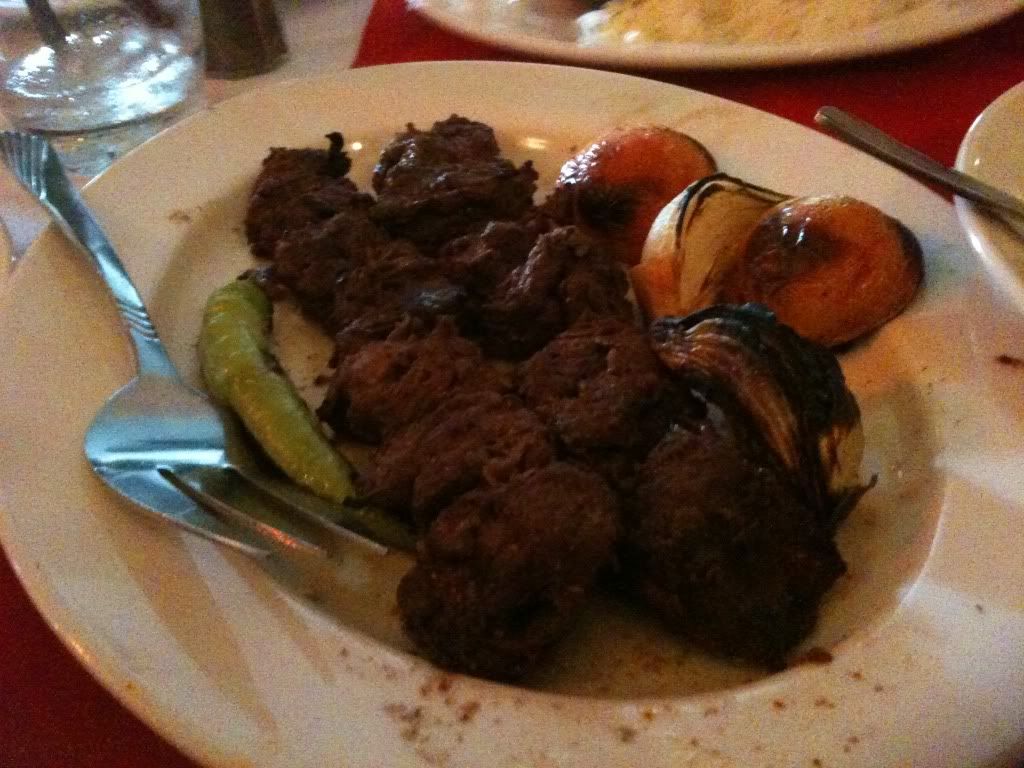
Very good service, and the food was sublime.

#12080
Anonymous Diary Blog / Re: What Did You Do Today?
July 20, 2012, 01:54:35 PM
Today, I decided to buy new shoes. Jibril and I stopped by to get new dress shoes. I purchased black Salvatore Ferragamo shoes (Cabo style). It was on sale today for $450. Originally it was $650. Lipay pod ko. I bought new dress pants and dress shirts for work. Sometimes, its good to treat oneself out.

my new work shoes.
my new work shoes.
#12081
Anonymous Diary Blog / Re: What Did You Do Today?
July 20, 2012, 01:44:38 PM
Today I attended a medical conference discussing Advanced Cardiac Recitative Efforts, effectively another ACLS class that is required by all medical interns. A good friend of mine, Jibril, whom I met back in Newark during our Board Reviews, was also present in the conference. Truly a small world. We decided to get a picture taken. Afterwards , we decided to go to the mall , incidentally, the conference was held in meeting hall in the mall.
I decided to take some pictures.

Dr. Jibril and I.

My dream car. Porsche Panamera Turbo S


I decided to take some pictures.
Dr. Jibril and I.
My dream car. Porsche Panamera Turbo S
#12082
Photos Unlimited / Re: Testing 1, 2, 3
July 20, 2012, 01:32:32 PM
he he he he! i like this thread!
#12083
Science and Research / Re: Principles of Emergency Medicine
July 20, 2012, 04:11:37 AM
Good article !
#12084
History / Re: The Hukbalahap : Hukbong Bayan Laban sa mga Hapon
July 20, 2012, 04:02:33 AM
Ramon Magsaysay
#12085
History / Re: The Hukbalahap : Hukbong Bayan Laban sa mga Hapon
July 20, 2012, 04:00:16 AM
reference: wiki
#12086
History / Re: The Hukbalahap : Hukbong Bayan Laban sa mga Hapon
July 20, 2012, 04:00:08 AM
President Ramon Magsaysay, the Bane of the Hukbalahap, effectively crushed the HUK Rebellion.
#12087
History / The Hukbalahap : Hukbong Bayan Laban sa mga Hapon
July 20, 2012, 03:57:47 AM
The Hukbalahap (Filipino: Hukbong Bayan Laban sa mga Hapon), was the military arm of the Communist Party of the Philippines (Partido Komunista ng Pilipinas; PKP for short), formed in 1942 to fight the Japanese Empire's occupation of the Philippines during World War II. It fought a second war from 1946 to 1954 against the pro-Western leaders of their newly independent country. The term is a contraction of the Filipino term "Hukbong Bayan Laban sa mga Hapon", which means "People's Army Against the Japanese." The group was commonly known as "Huks".
The Huks instigated the Hukbalahap Rebellion, a communist insurgency that lasted from 1946 to 1954, against the Philippine government. The insurgency was finally put down through a series of reforms and military victories by Filipino President Ramon Magsaysay.
The Huks instigated the Hukbalahap Rebellion, a communist insurgency that lasted from 1946 to 1954, against the Philippine government. The insurgency was finally put down through a series of reforms and military victories by Filipino President Ramon Magsaysay.
#12088
History / Re: The History of the Philippine Scouts (Philippine Army)
July 20, 2012, 03:55:30 AM
reference: wikipedia
#12089
History / Re: The History of the Philippine Scouts (Philippine Army)
July 20, 2012, 03:54:57 AMThe Philippine Scouts, the heroes of Corregidor
#12090
History / Re: The History of the Philippine Scouts (Philippine Army)
July 20, 2012, 03:53:53 AM
Philippine Scouts during Bolo hand-to-hand combat drill
#12091
History / Re: The History of the Philippine Scouts (Philippine Army)
July 20, 2012, 03:53:16 AM
#12092
History / Re: The History of the Philippine Scouts (Philippine Army)
July 20, 2012, 03:52:08 AM
Philippine Scouts at Fort McKinley firing a 37mm anti-tank gun in training.
#12093
History / Re: The History of the Philippine Scouts (Philippine Army)
July 20, 2012, 03:51:38 AM
A formation of Philippine Scouts in 1905
#12094
History / Re: The History of the Philippine Scouts (Philippine Army)
July 20, 2012, 03:51:13 AM
26th Cavalry moving into Pozorrubio pass
#12095
History / Re: The History of the Philippine Scouts (Philippine Army)
July 20, 2012, 03:50:37 AM
Philippine Scouts In WWII
On December 7, 1941 Imperial Japanese forces attacked the U.S. Navy’s Pacific Fleet at Pearl Harbor, bombed the U.S. Army’s Far East Air Force at Clark Field in the Philippines, attacked British Hong Kong, and landed troops on the shores of British Malaya, simultaneously. Over the next three months the Japanese Army marched through Southeast Asia, and by March 1942 the Japanese had completely overrun every country and island in the western Pacificâ€"except the Philippines.
On the Bataan Peninsula of Luzon Island, the Philippine Scouts, a few U.S Army National Guard units, and ten divisions of poorly equipped, almost untrained Philippine Army soldiers held out against the Japanese. Survivors of the Battle of Bataan, to a man, describe the Philippine Scouts as the backbone of the American defense there. President Franklin Roosevelt awarded the U.S. Army’s first three Medals of Honor of World War II to Philippine Scouts: to Sergeant Jose Calugas for action at Culis, Bataan on January 6, 1942, to Lieutenant Alexander R. Nininger for action near Abucay, Bataan on January 12, and to Lieutenant Willibald C. Bianchi for action near Bagac, Bataan on February 3, 1942.
#12096
History / The History of the Philippine Scouts (Philippine Army)
July 20, 2012, 03:48:26 AM
The Philippine Scouts was a military organization of the United States Army from 1901 until the end of World War II. Made up of native Filipinos assigned to the United States Army Philippine Department, these troops were generally enlisted and under the command of American officers, however, a handful of Filipinos received commissions from the United States Military Academy. Philippine Scout units were given a suffix of (PS), to distinguish them from other U.S. Army units.
The first Scout companies were organized by the US in 1901 to combat the Philippine Revolution led at that time by General Emilio Aguinaldo. In 1919-20, the PS companies were grouped into regiments as part of the US Army and redesignated the 43d, 45th, and 57th Infantry Regiments, plus the 24th and 25th Field Artillery Regiments, the 26th Cavalry Regiment (PS) and the 91st and 92nd Coast Artillery Regiments. Service and support formations were also organized as engineer, medical, quartermaster and military police units. The infantry and field artillery regiments were grouped together with the U.S. 31st Infantry Regiment to form the U.S. Army’s Philippine Division. At this point, the Scouts became the U.S. Army’s front line troops in the Pacific.
The Philippine Department assigned the Scouts to subdue the fierce and warlike Moro tribes on the island of Mindanao (see Moro rebellion), and to establish tranquility throughout the islands. In the 1930s, Philippine Scouts, along with the 31st Infantry Regiment, saw action at Jolo, Palawan.
Philippine Scout regiments became some of the first United States Army units to be in combat during World War II, until the surrender of USAFFE in May 1942. Even after that some individual soldiers and units refused to surrender and become beginning elements of the resistance to the Japanese occupation. Later paroled POWs would also join the resistance.
#12097
History / Re: The Classical States of the Philippines
July 20, 2012, 03:43:22 AM
Puro muslim man diay atong ancestors. Rajah Kulambo of Leyte was a muslim, Rajah Sikatuna of Bohol was a muslim, Rajah Humabon of Cebu was a muslim.
Had not Spain come to take over the Philippines and enforced a radical Hispanification (and also Christianization), the Philippines would have remained predominantly muslim. We would have been like Indonesia and Malaysia. Muslim Malays.
Had not Spain come to take over the Philippines and enforced a radical Hispanification (and also Christianization), the Philippines would have remained predominantly muslim. We would have been like Indonesia and Malaysia. Muslim Malays.
#12098
History / Re: The Classical States of the Philippines
July 20, 2012, 03:42:10 AM
The Rajanate of Leyte
The Rajanate of Leyte was a pre-historic Philippine state that controlled what is now modern day Leyte and southern Samar. On March 28, 1521, Ferdinand Magellan, a Portuguese navigator in the service of the Spanish crown, found the Leyte gateway. Soon after, he reached Limasawa, a 5-square-mile island at the southern tip of Leyte mainland. Here Magellan met the native ruler, Rajah Kolambu, and his brother, Rajah Siagu, chieftain of ButuIn this little island, the first recorded blood compact of treaty of friendship between Magellan and Rajah Kolambu took place, the first mass was celebrated, and Magellan, after planting a cross on a hilltop, took possession of the territory in the name of Spain.
The Rajanate of Leyte was a pre-historic Philippine state that controlled what is now modern day Leyte and southern Samar. On March 28, 1521, Ferdinand Magellan, a Portuguese navigator in the service of the Spanish crown, found the Leyte gateway. Soon after, he reached Limasawa, a 5-square-mile island at the southern tip of Leyte mainland. Here Magellan met the native ruler, Rajah Kolambu, and his brother, Rajah Siagu, chieftain of ButuIn this little island, the first recorded blood compact of treaty of friendship between Magellan and Rajah Kolambu took place, the first mass was celebrated, and Magellan, after planting a cross on a hilltop, took possession of the territory in the name of Spain.
#12099
History / Re: The Classical States of the Philippines
July 20, 2012, 03:36:37 AM
Reference: wikipedia
#12100
History / Re: The Classical States of the Philippines
July 20, 2012, 03:36:19 AM
The Royal Sultanate of Maguindanao
The Sultanate of Maguindanao was a Bangsamoro state that ruled parts of the island of Mindanao, in southern Philippines.
Its known historical influence stretches from the peninsula of Zamboanga to the bay of Sarangani. At its peak, the sultanate covered the entire island of Mindanao, and ruled over the smaller neighboring islands near and around Mindanao.
Shariff Mohammed Kabungsuwan of Johor introduced Islam in the area at the end of the 16th century and established himself as Sultan seated in Malabang-Lanao. He exiled some of his people who deviated from the Islamic faith to Cotabato. He subsequently married dayang-dayang (princess) Paramisuli of the Maguinadanao family ruling class in Dulawan and established the Sultanate of Maguindanao seated in Dulawan and virtually as Sultan of the whole island of the so-called Mindanao. The sultanate was usually centered in the valley of Cotabato.
Asraf Mohamad Samalan Dipatuan Qudratullah Fahar'uddin Nasiruddin, popularly known as Qudarat and whose name as a youth was Ullah Untong, was one of the greatest known sultans who controlled Mindanao. In His island sanctuary in Sulu, he was known as Sultan Nasiruddin and was the Sultan of that Island recognized by the Sulu Sultan and his grave still stands there.
Abd al-Rahman, his grandson, continued increasing the Sultanate's power and influence.
During the Spanish colonial period, the Sultanate of Maguindanao was able to defend their territory, preventing the Spaniards from colonizing the entire Mindanao and ceding the island of Palawan to the Spanish government in 1705. The island priory ceded to him by Sulu Sultan Sahabuddin. This was to have help dissuaded Spanish encroachments into the island of Maguinadanao.
Pages 1 2 3 4 5 6 7 8 9 10 11 12 13 14 15 16 17 18 19 20 21 22 23 24 25 26 27 28 29 30 31 32 33 34 35 36 37 38 39 40 41 42 43 44 45 46 47 48 49 50 51 52 53 54 55 56 57 58 59 60 61 62 63 64 65 66 67 68 69 70 71 72 73 74 75 76 77 78 79 80 81 82 83 84 85 86 87 88 89 90 91 92 93 94 95 96 97 98 99 100 101 102 103 104 105 106 107 108 109 110 111 112 113 114 115 116 117 118 119 120 121 122 123 124 125 126 127 128 129 130 131 132 133 134 135 136 137 138 139 140 141 142 143 144 145 146 147 148 149 150 151 152 153 154 155 156 157 158 159 160 161 162 163 164 165 166 167 168 169 170 171 172 173 174 175 176 177 178 179 180 181 182 183 184 185 186 187 188 189 190 191 192 193 194 195 196 197 198 199 200 201 202 203 204 205 206 207 208 209 210 211 212 213 214 215 216 217 218 219 220 221 222 223 224 225 226 227 228 229 230 231 232 233 234 235 236 237 238 239 240 241 242 243 244 245 246 247 248 249 250 251 252 253 254 255 256 257 258 259 260 261 262 263 264 265 266 267 268 269 270 271 272 273 274 275 276 277 278 279 280 281 282 283 284 285 286 287 288 289 290 291 292 293 294 295 296 297 298 299 300 301 302 303 304 305 306 307 308 309 310 311 312 313 314 315 316 317 318 319 320 321 322 323 324 325 326 327 328 329 330 331 332 333 334 335 336 337 338 339 340 341 342 343 344 345 346 347 348 349 350 351 352 353 354 355 356 357 358 359 360 361 362 363 364 365 366 367 368 369 370 371 372 373 374 375 376 377 378 379 380 381 382 383 384 385 386 387 388 389 390 391 392 393 394 395 396 397 398 399 400 401 402 403 404 405 406 407 408 409 410 411 412 413 414 415 416 417 418 419 420 421 422 423 424 425 426 427 428 429 430 431 432 433 434 435 436 437 438 439 440 441 442 443 444 445 446 447 448 449 450 451 452 453 454 455 456 457 458 459 460 461 462 463 464 465 466 467 468 469 470 471 472 473 474 475 476 477 478 479 480 481 482 483 484 485 486 487 488 489 490 491 492 493 494 495 496 497 498 499 500 501 502 503 504 505 506 507 508 509 510 511 512 513 514 515 516 517 518 519 520 521 522 523 524 525 526 527 528 529 530 531 532 533 534 535 536 537 538 539