"... If you can't think because you can't chew, try a banana", 2000. Lee was responding to a BBC reporter who suggested that Singapore's draconian laws (including the ban on chewing gum) could stifle the people's creativity.
This section allows you to view all posts made by this member. Note that you can only see posts made in areas you currently have access to.
Pages 1 2 3 4 5 6 7 8 9 10 11 12 13 14 15 16 17 18 19 20 21 22 23 24 25 26 27 28 29 30 31 32 33 34 35 36 37 38 39 40 41 42 43 44 45 46 47 48 49 50 51 52 53 54 55 56 57 58 59 60 61 62 63 64 65 66 67 68 69 70 71 72 73 74 75 76 77 78 79 80 81 82 83 84 85 86 87 88 89 90 91 92 93 94 95 96 97 98 99 100 101 102 103 104 105 106 107 108 109 110 111 112 113 114 115 116 117 118 119 120 121 122 123 124 125 126 127 128 129 130 131 132 133 134 135 136 137 138 139 140 141 142 143 144 145 146 147 148 149 150 151 152 153 154 155 156 157 158 159 160 161 162 163 164 165 166 167 168 169 170 171 172 173 174 175 176 177 178 179 180 181 182 183 184 185 186 187 188 189 190 191 192 193 194 195 196 197 198 199 200 201 202 203 204 205 206 207 208 209 210 211 212 213 214 215 216 217 218 219 220 221 222 223 224 225 226 227 228 229 230 231 232 233 234 235 236 237 238 239 240 241 242 243 244 245 246 247 248 249 250 251 252 253 254 255 256 257 258 259 260 261 262 263 264 265 266 267 268 269 270 271 272 273 274 275 276 277 278 279 280 281 282 283 284 285 286 287 288 289 290 291 292 293 294 295 296 297 298 299 300 301 302 303 304 305 306 307 308 309 310 311 312 313 314 315 316 317 318 319 320 321 322 323 324 325 326 327 328 329 330 331 332 333 334 335 336 337 338 339 340 341 342 343 344 345 346 347 348 349 350 351 352 353 354 355 356 357 358 359 360 361 362 363 364 365 366 367 368 369 370 371 372 373 374 375 376 377 378 379 380 381 382 383 384 385 386 387 388 389 390 391 392 393 394 395 396 397 398 399 400 401 402 403 404 405 406 407 408 409 410 411 412 413 414 415 416 417 418 419 420 421 422 423 424 425 426 427 428 429 430 431 432 433 434 435 436 437 438 439 440 441 442 443 444 445 446 447 448 449 450 451 452 453 454 455 456 457 458 459 460 461 462 463 464 465 466 467 468 469
#10601
World Daily News / Re: Lee Kuan Yew, Founding Father and First Premier of Singapore, Dies at 91
March 26, 2015, 02:38:09 AM"... If you can't think because you can't chew, try a banana", 2000. Lee was responding to a BBC reporter who suggested that Singapore's draconian laws (including the ban on chewing gum) could stifle the people's creativity.
#10602
World Daily News / Re: Lee Kuan Yew, Founding Father and First Premier of Singapore, Dies at 91
March 26, 2015, 02:36:58 AM"Supposing Catherine Lim was writing about me and not the prime minister...She would not dare, right? Because my posture, my response has been such that nobody doubts that if you take me on, I will put on knuckle-dusters and catch you in a cul de sac...Anybody who decides to take me on needs to put on knuckle dusters. If you think you can hurt me more than I can hurt you, try. There is no other way you can govern a Chinese society."
#10603
World Daily News / Re: Lee Kuan Yew, Founding Father and First Premier of Singapore, Dies at 91
March 26, 2015, 02:36:24 AM"Between being loved and being feared, I have always believed Machiavelli was right. If nobody is afraid of me, I’m meaningless.â€
#10604
World Daily News / Re: Lee Kuan Yew, Founding Father and First Premier of Singapore, Dies at 91
March 26, 2015, 02:35:55 AMBEST QUOTES FROM
LEE KUAN YEW LEADERSHIP
“Even from my sick bed, even if you are going to lower me into the grave and I feel something is going wrong, I will get up.â€
#10605
World Daily News / Re: Lee Kuan Yew, Founding Father and First Premier of Singapore, Dies at 91
March 26, 2015, 02:33:18 AM3. The power of tenacity
Lee had gone through his toughest period when Malaysia chose to separate itself from Singapore. Him shedding tears on public television marked one of the most historic moments in Singapore history.
However, he never gave up, strengthened his resolve and continued to believe that he could develop Singapore into what he envisioned it to be.
A leader must have this resolve to just press on no matter how difficult the circumstances. In fact, it is this quality that separates the good from the excellent. Everyone can lead well when circumstances are favorable, but it is the times of adversity that distinguishes you as an excellent leader.
Moreover, when you choose to press on, you will develop a tenacity and persistence that will carry you through your leadership journey.
#10606
World Daily News / Re: Lee Kuan Yew, Founding Father and First Premier of Singapore, Dies at 91
March 26, 2015, 02:29:23 AM2. Plan your leadership succession
Lee planned for the people that will take over him years before he actually stepped down as Prime Minister. He saw the importance of raising up the next generation of leaders to lead the nation.
The saying goes, there is no success without a successor. To be successful as a leader, your organization must transcend you and you must be humble enough to acknowledge that.
If you are indispensable to your organization, then your organization will not last after you're gone. You need to strive to build an organization centered around a mission or purpose rather than an organization centered around you.
#10607
World Daily News / Re: Lee Kuan Yew, Founding Father and First Premier of Singapore, Dies at 91
March 26, 2015, 02:27:57 AMLEE KUAN YEW
LEADERSHIP LESSONS
1. Say it as it is
One of Lee’s most obvious qualities is that he is a frank and straightforward talker that minces no words. He is not afraid to be blunt about certain truths and he sometimes gets on people’s nerves for doing so.
However, you cannot argue that his approach has yielded results.
The best thing you can do for your team is to acknowledge and speak the truth. It might hurt a few people, ruffle a few feathers, but to frame things as they are and allowing your team to face the truth is probably the best favor you can do for them.
Although some might be offended or feel uncomfortable, you will gain a lot of respect for doing so. People know that they can trust you.
#10608
Health and Food / Re: Best and Worst Foods for Sleep
March 22, 2015, 10:47:32 PMIndian curry

Worst
It’s not Indian food per se but the heavy spices which can keep you awake at night.
One study conducted in Australia found that young men who poured Tabasco sauce and mustard on their dinner had more trouble falling asleep and experienced less deep sleep than men who ate blander suppers. Spices can also cause heartburn.
So definitely don’t do spicy and high-fat in the same late-day meal. It’s a potential sleep-wrecking recipe.
#10609
Health and Food / Re: Best and Worst Foods for Sleep
March 22, 2015, 10:42:28 PMSweet potato

Best
Sweet potatoes are a sleeper’s dream. Not only do they provide sleep-promoting complex carbohydrates, they also contain that muscle-relaxant potassium.
Other good sources of potassium include regular potatoes (baked and keep the skin on), lima beans, and papaya.
#10610
Health and Food / Re: Best and Worst Foods for Sleep
March 22, 2015, 10:34:39 PMMountain Dew

Worst
Mountain Dew MDX along with jolt Cola and Vault contain 71 milligrams of caffeine per 12-ounce serving. That’s the upper limit of what the U.S. Food and Drug Administration allows.
Other sodas aren’t much better. Also, typical soda drinks like Pepsi and Coke contain citrus as well as sodium benzoate and other chemicals which can aggravate the gastrointestinal tract and promote acid reflux, not a recipe for a good night’s sleep.
#10611
Health and Food / Re: Best and Worst Foods for Sleep
March 22, 2015, 10:29:24 PMTurkey

Best
Like milk, turkey contains tryptophan, a chemical that can make people doze off in front of the TV after Thanksgiving dinner. But if you’re a die-hard insomniac, a meal’s worth of turkey (or a glass of milk) isn’t likely to help you.
“You’d have to drink a lot of milk or turkey to have a major effect,†says Rosenberg. “[But] if you need a little bit of a push in the right direction [it might help].â€
#10612
Health and Food / Re: Best and Worst Foods for Sleep
March 22, 2015, 10:27:45 PMRed Bull

Worst
Yup, the culprit here again is caffeine, and it’s present in spades. An eight-ounce Red Bull energy drink contains about 80 milligrams of caffeine or equivalent to a one-ounce Starbucks espresso.
Five-Hour Energy packs 200 milligrams of caffeine into just two ounces, which means you might as well be imbibing 16 ounces of regular coffee.
With this much caffeine, you might do well to avoid energy drinks even earlier in the day. “In some people caffeine can take up to eight hours to wear off,†says Gans.
#10613
Health and Food / Re: Best and Worst Foods for Sleep
March 22, 2015, 10:27:22 PMBananas

Best
Bananas help promote sleep because they contain the natural muscle-relaxants magnesium and potassium, says Gans. They’re also carbs which will help make you sleepy as well.
In fact, bananas are a win-win situation in general. “They’re overall health promoters,†says Rosenberg. “We need potassium for cardiovascular health and cognitive functioning.â€
#10614
Health and Food / Re: Best and Worst Foods for Sleep
March 22, 2015, 10:19:17 PMDark chocolate

Worst
Chocolate contains not only calories, but caffeine, especially dark chocolate.
A 1.55-ounce Hershey’s milk chocolate bar, for instance, contains about 12 milligrams of caffeine, or the same amount as three cups of decaffeinated coffee.
A Hershey’s special-dark bar has 20 milligrams of caffeine, about the same as half an ounce of espresso. Chocolate also contains theobromine, another stimulant that can increase heart rate and sleeplessness.
#10615
Health and Food / Re: Best and Worst Foods for Sleep
March 22, 2015, 10:16:00 PMFortified cereal

Best
Carbs in general are good for sleep but it’s not a great idea to binge on a box of cookies before bedtime (or anytime).
Instead, try a bowl of Kashi or shredded wheat which contain “good†or complex carbs. Even better, cereal goes well with milk which has its own sleep-promoting qualities. “That’s two for the price of one,†Rosenberg says.
Other complex carbs are quinoa, barley, and buckwheat.
#10616
Health and Food / Re: Best and Worst Foods for Sleep
March 22, 2015, 10:09:56 PMCoffee

Worst
Coffee contains caffeine, which is a central nervous stimulant. Translation: Drinking Java too close to bedtime will keep you up at night.
Of course, people differ in their sensitivity to caffeine and that’s usually based on how much caffeine you’re accustomed to consuming, says Timothy Roehrs, Ph.D., a senior scientist with Henry Ford Sleep Disorder and Research Center in Detroit.
If you don’t know your tolerance, skip the java, especially late in the day.
#10617
Health and Food / Re: Best and Worst Foods for Sleep
March 22, 2015, 10:06:47 PMJasmine rice

Best
Jasmine rice ranks high on the glycemic index, meaning the body digests it slowly, releasing glucose gradually into the bloodstream.
A 2007 study in the American Journal of Clinical Nutrition found that consuming jasmine rice four hours before bedtime cut the amount of time it took to fall asleep in half when compared with eating a high-glycemic-index meal at the same time interval.
The authors speculate that high-glycemic-index meals may up the production of tryptophan.
#10618
Health and Food / Re: Best and Worst Foods for Sleep
March 22, 2015, 10:03:34 PMWine

Worst
Alcohol of any kind is “terrible†for sleep, says Rosenberg. Why? It metabolizes quickly in your system and causes you to wake up multiple times during the night.
One study found that a glass of bourbon or vodka mixed with caffeine-free soda at bedtime increased the amount of time women spent awake during the night by 15 minutes. It also reduced nightly sleep time by 19 minutes and diminished quality of sleep.
If you don’t refrain from alcohol for our own benefit, do it for your mate. “Alcohol makes snoring worse so it will impact you and your potential bed partner,†said Rosenberg.
#10619
Health and Food / Re: Best and Worst Foods for Sleep
March 22, 2015, 10:01:36 PMMilk

Best
You may have fond memories of your mother or grandmother making you a glass of warm milk to help you fall asleep.
This may not be just an old wives’ tale. Milk contains the amino acid tryptophan, a precursor to the brain chemical serotonin.
Although the topic is a controversial one, some people believe that tryptophan and serotonin might make it easier to sleep. Or maybe a simple glass of milk brings back soothing childhood memories, which help you drift off.
#10620
Health and Food / Re: Best and Worst Foods for Sleep
March 22, 2015, 09:59:26 PMBacon cheeseburger

Worst
The stratospheric fat content of this particular fast food is guaranteed to be a sleep killer.
Fat stimulates the production of acid in the stomach, which can spill up into your esophagus, causing heartburn. Fatty foods can also loosen the lower esophageal sphincter, the barrier between the stomach and the esophagus, making it even easier for acid to get in all the wrong places.
In fact, there’s almost nothing to recommend this kind of high-fat, salt-laden indulgence if you want to preserve your health, including the quality of your sleep.
#10621
Health and Food / Best and Worst Foods for Sleep
March 22, 2015, 09:57:38 PM
Best and Worst Foods for Sleep
Cherries

Best
Cherries are one of the few natural foods to contain melatonin, the chemical that helps control our body’s internal clock, says Keri Gans, a registered dietician in New York City and author of The Small Change Diet.
One studyâ€"albeit a small oneâ€"found that drinking tart cherry juice resulted in small improvements in sleep duration and quality in adults who suffered from chronic insomnia. (And travelers often take melatonin capsules to combat jet lag).
Why not a few cherries, tart or otherwise, to promote sleep?
Cherries
Best
Cherries are one of the few natural foods to contain melatonin, the chemical that helps control our body’s internal clock, says Keri Gans, a registered dietician in New York City and author of The Small Change Diet.
One studyâ€"albeit a small oneâ€"found that drinking tart cherry juice resulted in small improvements in sleep duration and quality in adults who suffered from chronic insomnia. (And travelers often take melatonin capsules to combat jet lag).
Why not a few cherries, tart or otherwise, to promote sleep?
#10622
General Topic / Re: 17 Mind-Blowing Facts About Russia
March 22, 2015, 12:47:20 PMRussia sold Alaska to the U.S. for $7.2 million in 1867.

REUTERS/Oscar Avellaneda-Cruz
The U.S. paid less than 2 cents an acre for almost 600,000 square miles.
Source: National Archives
http://www.businessinsider.com/
#10623
General Topic / Re: 17 Mind-Blowing Facts About Russia
March 22, 2015, 12:44:24 PMFifty-six journalists have been killed in Russia since 1992, and 64% of those were murdered.

REUTERS/Gleb Garanich
Protesters hold a portrait of Russian political journalist Oleg Kashin who was beaten into a coma by two men.
Russia is the fifth-deadliest place to be a journalist.
Source: Committee to Protect Journalists
#10624
General Topic / Re: 17 Mind-Blowing Facts About Russia
March 22, 2015, 12:42:31 PM
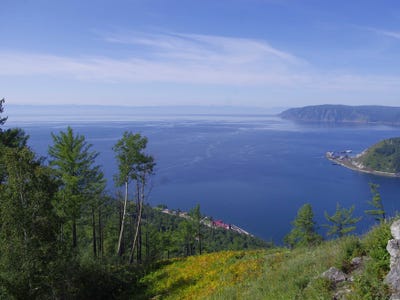
Russia's Lake Baikal holds one-fifth of the world's fresh water.
Wikimedia Commons
Lake Baikal is only half as big as Lake Michigan, but it is the world's deepest lake at 5,387 feet.
Source: Chicago Tribune
Wikimedia Commons
Lake Baikal is only half as big as Lake Michigan, but it is the world's deepest lake at 5,387 feet.
Source: Chicago Tribune
#10625
General Topic / Re: 17 Mind-Blowing Facts About Russia
March 22, 2015, 12:41:02 PMRussians drink six times more tea per year than Americans.

REUTERS/Eduard Korniyenko
Russians drink 3.051 pounds of tea per person per year, compared with 0.503 pounds in the U.S.
Source: Euromonitor
#10626
General Topic / Re: 17 Mind-Blowing Facts About Russia
March 22, 2015, 12:39:20 PMRussia's 20 richest people have a combined net worth of over $227 billion, which is larger than Pakistan's GDP.

REUTERS/Maxim Shemetov
Russia's richest man, Alisher Usmanov.
Pakistan has a nominal GDP of $215 billion.
Source: Bloomberg
#10627
General Topic / Re: 17 Mind-Blowing Facts About Russia
March 22, 2015, 12:37:29 PMStanding on the shore of Russia's Lake Karachay would give you 600 roentgens of radiation per hour, enough to kill a human.

Google Maps
The lake is located in one of Russia's largest nuclear facilities, which was kept a secret until 1990. "The Techa river, which provided water to nearby villages, was so contaminated that up to 65 percent of locals fell ill with radiation sickness â€" which the doctors termed “special disease,†because as long as the facility was secret, they weren’t allowed to mention radiation in their diagnoses," writes Jess Zimmerman at the Grist.
Source: Grist
#10628
General Topic / Re: 17 Mind-Blowing Facts About Russia
March 22, 2015, 12:35:53 PMRussians drink nearly twice as many shots a week as Americans.

REUTERS/Kai Pfaffenbach
Russians drink 6.3 shots of liquor a week on average, compared with 3.3 in the U.S. But South Korea tops the list with 13.7 shots of liquor per week.
Source: Euromonitor
#10629
General Topic / Re: 17 Mind-Blowing Facts About Russia
March 22, 2015, 12:34:31 PMRussia's homicide rate is twice as bad as America's.

REUTERS/Sergei Karpukhin
Russia has a homicide rate of 9.7 per 100,000, compared with 4.7 per 100,000 in the U.S. Russia's total count of 13,826 is however lower than 14,612 in the U.S.
Source: UNODC
#10630
General Topic / Re: 17 Mind-Blowing Facts About Russia
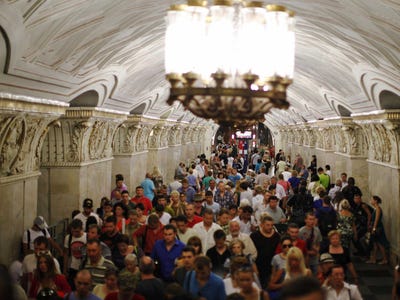
March 22, 2015, 12:32:50 PMNine million commuters are said to ride the Moscow Metro every day. That's more than London and New York combined.
REUTERS/Lucy Nicholson
The Park Pobedy (Victory Park) station is probably the deepest of Moscow's subway system, going 85 meters underground. And Vykhino is the busiest station in the Moscow Metro.
Source: Reuters
#10631
General Topic / Re: 17 Mind-Blowing Facts About Russia
March 22, 2015, 12:31:15 PMRussia has 87 billion barrels of proven oil reserves; enough to last it another 75 years.

REUTERS/Ilya Naymushin
Russia consumed about 3.2 million barrels of oil per day in 2012. At that pace it would take another 75 years to exhaust its reserves.
Source: British Petroleum
#10632
Lifestyle, Culture and Arts / Re: Body Language Around the World
March 22, 2015, 11:29:37 AM
#10633
Lifestyle, Culture and Arts / Body Language Around the World
March 22, 2015, 11:28:41 AM
The body speaks volumes.
But what it says depends on the culture you're in. Facial expressions, gestures, mannerisms, and degree of eye contact vary greatly across countries.
For example, "Arms, which are used little by Nordics during conversation, are an indispensable element in one's communicative weaponry in Italy, Spain, and South America," writes Richard Lewis in "When Cultures Collide: Leading Across Cultures."
The cultural differences in body language are vast â€" there are entire books dedicated exclusively to hand gestures â€" but we've selected a few to create a simple, body-language etiquette guide that highlights some surprising differences, thanks to information from Lewis' book and the National Academic Advising Association (NACADA):
#10634
General Topic / Re: 17 Mind-Blowing Facts About Russia
March 22, 2015, 03:14:09 AMRussia has nine contiguous time zones, more than any other country.

Wikimedia Commons
Russia used to have 11 time zones but cut it down to nine in 2010. "The less fractional division of the country will enable us to resolve a number of transport and communications issues, will increase its manageability and strengthen the position of Russia as an important chain in the world's global infrastructure," President Dmitry Medvedev said at the time.
Source: The Economist
#10635
General Topic / Re: 17 Mind-Blowing Facts About Russia
March 22, 2015, 03:11:40 AMRussia's natural gas reserves are equivalent to about 13.2 billion Olympic size swimming pools.

REUTERS/Tim Wimborne
At 1,163 trillion cubic feet, Russia has the world's second largest natural gas reserves. An Olympic-size swimming pool reportedly has a volume of 88,000 cubic feet.
Source: British Petroleum
#10636
General Topic / Re: 17 Mind-Blowing Facts About Russia
March 22, 2015, 03:08:08 AMThe Adlerâ€"Krasnaya Polyana road would have cost less to build if it was paved entirely with foie gras.
Wikimedia Commons
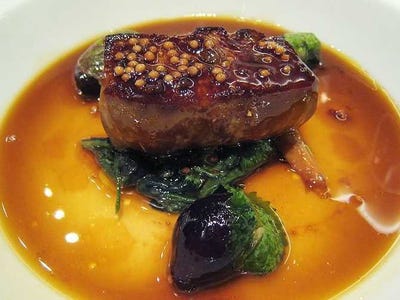
Foie gras with mustard.
It cost Russia $8.6 billion to pave the Adlerâ€"Krasnaya Polyana road that was about 30 miles long. Krasnaya Polyana was host to many of the events at the Sochi Winter Olympics.
"The same road paved entirely with foie gras, for example, would be 8.6 inches thick, from airport to halfpipe," reports Ben Collins. This is based on the price of foie gras in Carrefour: $88 per kilogram.
Source: Esquire
#10637
General Topic / Re: 17 Mind-Blowing Facts About Russia
March 22, 2015, 02:29:28 AMRussia's population has fallen by 6.6 million since 1993. That's the equivalent of Massachusetts.

REUTERS/Vasily Fedosenko
Russia's population was 141.9 million in 2010 and is projected to fall 10.7% to 126.6 million by 2050.
Source: Bloomberg Businessweek
#10638
General Topic / Re: 17 Mind-Blowing Facts About Russia
March 22, 2015, 02:24:47 AM
Russia accounts for half the global stockpile of highly enriched uranium (HEU).

REUTERS/Gleb Garanich
A device used for measuring radiation levels is seen in front of a container with spent highly-enriched uranium at a nuclear research facility in Kiev
Russia has 695 tons of highly enriched uranium (HEU), the most of any country in the world. The US has the world's second-largest stockpile at 604 tonnes.
Source: International Panel on Fissile Materials
#10639
General Topic / Re: 17 Mind-Blowing Facts About Russia
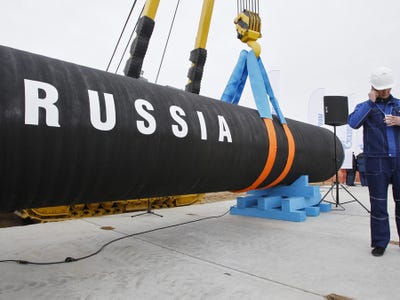
March 22, 2015, 01:31:08 AMRussia's pipelines could loop around Earth more than six times.
AP
Russia's pipelines, including condensate, gas, liquid petroleum gas, oil water, and refined products, are 259,913 kilometers long. The Earth, meanwhile, is 40,075 kilometers in circumference.
Source: The World Fact Book
#10640
General Topic / Re: 17 Mind-Blowing Facts About Russia
March 22, 2015, 01:28:56 AMRussia has the same surface area as Pluto.

Wikimedia Commons
Russia has a surface area of 17 million km2, compared with 16.6 million km2 for Pluto.
Source: UniverseToday
#10641
General Topic / 17 Mind-Blowing Facts About Russia
March 22, 2015, 01:25:07 AM17 Mind-Blowing Facts About Russia
Mamta Badkar
Mar. 10, 2014

REUTERS/Maxim Shemetov
A man with mannequins wearing masks similar to the ones used by members of the female punk band Pussy Riot, during the "March of Millions" protest rally in Moscow, on Sept. 15, 2012.
Russia has been all over the headlines recently.
Earlier this year, it was for the Sochi Winter Olympics. More recently, it's because President Vladimir Putin has been flexing his muscles again, this time in Ukraine.
As the world's eighth-largest economy, Russia can't be ignored.
The sheer scale of the country's pipelines, for instance, its stockpile of highly enriched uranium, or its population decline are mind-boggling.
We put together some key facts about Russia.
#10642
LGU Philippines / Re: A zombie presidency?
March 22, 2015, 01:17:00 AMand is this bello guy running away like a rat from a sinking ship? sometimes, it's called opportunism.


#10645
History / Re: Blast from the past: Scott's Emulsion
March 21, 2015, 06:15:35 PMwa intawon. maru man kuno ko kay akong itutho dayon sa nawong sa tigtingal...

#10646
Weird and Extreme / Re: Chess Wiz
March 21, 2015, 06:37:21 AM
Reshevsky in 1968
Samuel "Sammy" Herman Reshevsky (born Szmul Rzeszewski; November 26, 1911 â€" April 4, 1992) was a Polish chess prodigy and later a leading American chess grandmaster. He was a strong contender for the World Chess Championship from the mid-1930s to the mid-1960s: he came equal third in the 1948 World Chess Championship tournament, and equal second in the 1953 Candidates Tournament. He was an eight-time winner of the U.S. Chess Championship. An outstanding match player throughout his career, Reshevsky excelled at positional play, and could be a brilliant tactician when required. He took a long time over his opening moves, and often found himself under time pressure â€" but this sometimes unsettled his opponent more than it did Reshevsky.
He was an accountant by profession, and a well-regarded chess writer.
wikipedia/
#10647
Weird and Extreme / Chess Wiz
March 21, 2015, 06:29:14 AM
Samuel Reshevsky, age 8, defeating several chess masters at once in France, 1920
#10648
Photos Unlimited / Re: Winston the Dog
March 21, 2015, 06:24:11 AMarang gajod, hahaha! bitaw, mas daghan lang ug fruits and vegetables si cute dog mayno, but he looks bored, unlike winston nga feel na feel...
#10649
History / Re: The Armenian Genocide
March 21, 2015, 06:14:41 AM
Turkish soldiers posing with Armenian dead
#10650
History / Re: The Armenian Genocide
March 21, 2015, 06:12:56 AM
Armenian refugees taken in the streets of Malatya waiting to be deported. Nearly all were killed. Washington Times (1918)
#10651
History / Re: The Armenian Genocide
March 21, 2015, 06:10:20 AM
Armenian refugee children near Athens, 1923, after the Population exchange between Greece and Turkey
#10652
History / Re: The Armenian Genocide
March 21, 2015, 06:05:33 AM
After the 1918 Armistice, Armenians who were massacred on February 28, 1919 in Aleppo, were laid out in front of the Armenian Relief Hospital. (The Independent, March 27, 1920)
#10653
History / Re: The Armenian Genocide
March 21, 2015, 05:59:58 AM
Turkish official teasing starved Armenian children by showing bread during the Armenian Genocide, 1915
#10654
History / Re: The Armenian Genocide
March 21, 2015, 05:58:39 AMTHE ARMENIAN GENOCIDE TODAY
After the Ottomans surrendered in 1918, the leaders of the Young Turks fled to Germany, which promised not to prosecute them for the genocide. (However, a group of Armenian nationalists devised a plan, known as Operation Nemesis, to track down and assassinate the leaders of the genocide.) Ever since then, the Turkish government has denied that a genocide took place. The Armenians were an enemy force, they argue, and their slaughter was a necessary war measure. Today, Turkey is an important ally of the U.S. and other Western nations, and so their governments have likewise been reluctant to condemn the long-ago killings. In March 2010, a U.S. Congressional panel at last voted to recognize the genocide.
more details at http://www.history.com/topics/armenian-genocide
#10655
History / Re: The Armenian Genocide
March 21, 2015, 05:57:51 AMDriven forward by military escorts, the deportees were deprived of food and water and subjected to periodic robbery, rape, and massacre. Other indigenous and Christian ethnic groups such as the Assyrians and the Ottoman Greeks were similarly targeted for extermination by the Ottoman government, and their treatment is considered by many historians to be part of the same genocidal policy. The majority of Armenian diaspora communities around the world came into being as a direct result of the genocide. (wikipedia)

Picture showing Armenians killed during the Armenian Genocide. Image taken from Ambassador Morgenthau's Story, written by Henry Morgenthau, Sr. and published in 1918. Original description: "THOSE WHO FELL BY THE WAYSIDE. Scenes like this were common all over the Armenian provinces, in the spring and summer months of 1915. Death in its several forms---massacre, starvation, exhaustion---destroyed the larger part of the refugees. The Turkish policy was that of extermination under the guise of deportation."
#10656
History / Re: The Armenian Genocide
March 21, 2015, 05:54:19 AMThe starting date is conventionally held to be 24 April 1915, the day Ottoman authorities rounded up and arrested some 250 Armenian intellectuals and community leaders in Constantinople. The genocide was carried out during and after World War I and implemented in two phases: the wholesale killing of the able-bodied male population through massacre and subjection of army conscripts to forced labour, followed by the deportation of women, children, the elderly and infirm on death marches leading to the Syrian desert. (wikipedia)

An Armenian woman kneeling beside a dead child in field "within sight of help and safety at Aleppo", an Ottoman city.
#10657
History / Re: The Armenian Genocide
March 21, 2015, 05:51:23 AM
The Armenian Genocide, also known as the Armenian Holocaust, the Armenian Massacres and, traditionally by Armenians was the Ottoman government's systematic extermination of its minority Armenian subjects from their historic homeland within the territory constituting the present-day Republic of Turkey. The total number of people killed as a result has been estimated at between 1 and 1.5 million. (wikipedia)

Armenians defending the walls of Van in the spring of 1915. Scanned from the Soviet Armenian Encyclopedia Article on the Defense of Van (vol. 11, p. 273)/wikipedia
Armenians defending the walls of Van in the spring of 1915. Scanned from the Soviet Armenian Encyclopedia Article on the Defense of Van (vol. 11, p. 273)/wikipedia
#10658
History / The Armenian Genocide
March 21, 2015, 05:33:34 AMIn 1915, leaders of the Turkish government set in motion a plan to expel and massacre Armenians living in the Ottoman Empire. Though reports vary, most sources agree that there were about 2 million Armenians in the Ottoman Empire at the time of the massacre. By the early 1920s, when the massacres and deportations finally ended, some 1.5 million of Turkey’s Armenians were dead, with many more forcibly removed from the country. Today, most historians call this event a genocideâ€"a premeditated and systematic campaign to exterminate an entire people. However, the Turkish government does not acknowledge the enormity or scope of these events. Despite pressure from Armenians and social justice advocates throughout the world, it is still illegal in Turkey to talk about what happened to Armenians during this era.
more details at http://www.history.com/topics/armenian-genocide

Armenians are marched to a nearby prison in Mezireh by armed Turkish soldiers. Kharpert, Armenia, Ottoman Empire, April, 1915 (by anonymous German traveler - Project SAVE)/wikipedia
#10659
Asia | Middle East / Re: Latest News on Group of MPs in France prepare bill on "Armenian genocide"
March 21, 2015, 04:59:46 AM
The denial of the Armenian Genocide is the assertion that the Armenian Genocide did not occur in the manner or to the extent described by scholarship. Denial of the Armenian Genocide may be either forbidden or enforced in some countries. The Armenian Genocide is widely acknowledged by genocide scholars to have been one of the first modern, systematic genocides, as many sources point to the sheer scale of the death toll as evidence for a systematic, organized plan to eliminate the Armenians.
The governments of Turkey and Azerbaijan deny that the Ottoman authorities attempted to exterminate the Armenian people. The Turkish government acknowledges that during World War I many Armenians died, but counters that Muslim Turks died as well, and claims that the number of Armenian victims has been inflated, and that massacres were committed by both sides as a result of inter-ethnic violence and the wider conflict of World War I.
The denial of the Armenian Genocide is officially outlawed in Switzerland, Slovakia, and Greece.
wikipedia/
#10660
Tira-Pasagad | Saksak-Sinagol / Re: Trabaho ni Botoy? Tigtugpo og ayroplano
March 21, 2015, 04:48:51 AMdakoa tingali nimog sweldo ani sa? ug dako pod ang insurance sa imong ulo, wa na lang ta sa dako gyod tingali kag ulo.


#10662
History / Re: Blast from the past: Scott's Emulsion
March 21, 2015, 04:45:41 AMin other words, the benefits of scott's emulsion may still be had with the newfangled omega-3 capsules.

#10663
History / Re: Blast from the past: Scott's Emulsion
March 21, 2015, 04:38:04 AMToday, vitamins are synthesized and available in relatively tasteless tablets or added to other foods such as in vitamin D fortified milk. However, due to recent medical research extolling the benefits of the omega-3 fatty acids, oils from cod and other fish are again a very popular health product. (http://www.theatlantic.com/)
(underscoring mine)
#10664
History / Re: Blast from the past: Scott's Emulsion
March 21, 2015, 04:37:18 AMYet the problem with cod liver oil remained its vile, nauseating, oily quality and taste. Throughout its history, alongside any mention of its medicinal virtues one can find numerous, ingenious suggestions for how to get a patient to take it and keep it down. Scott and Bowne partly solved the problem by producing an emulsion -- a mixture of 50 percent oil with sweet glycerin and other ingredients. They advertised their product with the slogan "as palatable as milk." (http://www.theatlantic.com/)
#10665
History / Re: Blast from the past: Scott's Emulsion
March 21, 2015, 04:34:25 AM
Cod liver oil has a long history of use as a medicine and health product, a history that is still going on today. Its popularity has waxed and waned with changing medical knowledge and cultural preferences, but it has survived -- Scott's Emulsion is available today in nearly its original formula (although you will need to order it from Indonesia).
When Scott and Bowne began marketing their emulsion in the 1870s it was widely used for "consumption" and all "Wasting Diseases," which would have included tuberculosis, a leading cause of death at the time. In the early 20th century the marketing changed dramatically, after the discovery of vitamins and the role they play in promoting healthy growth and preventing diseases such as rickets (caused by a deficiency of vitamin D). Cod liver oil is one of the best natural sources of vitamins A and D. Soon every mother was admonished to give her children a daily dose of the oil -- a practice that began in the 1920s and continued well into the 1950s... (http://www.theatlantic.com/)
(underscoring mine)
#10666
History / Re: Blast from the past: Scott's Emulsion
March 21, 2015, 04:19:56 AMThe man with a fish on his back was also reproduced on advertising trade cards and booklets, and printed on the packaging and embossed on the bottles of Scott's Emulsion. Prolific advertising made Scott's Emulsion one of the most successful patent medicines of the late 19th and early 20th century, and made its manufacturers, Alfred Scott and Samuel Bowne, very wealthy men. (http://www.theatlantic.com/)
#10667
History / Re: Nine Kings in One Photo
March 21, 2015, 03:58:16 AMThe German Kaiser, the Austrian Emperor, and the Russian Tsar were all forced to abdicate after losing the war. The Tsar and his family were killed by the Bolsheviks after Britain and her king refused to rescue them (fearing a revolution at home). Another losing combatant of the WWI, Ferdinand of Bulgaria abdicated in order to save the throne for his son Boris. The kingdom Âtottered on in a weakened state until the Second World War. ÂAlfonso of Spain fled his country when the Second Spanish Republic was proclaimed in 1931; his descendants still rule the country after the monarchy was reinstated in 1975.
https://iconicphotos.wordpress.com/
#10668
History / Re: Nine Kings in One Photo
March 21, 2015, 03:57:51 AMThe decorated and mustachioed men of the above photo was taken by the Royal Warrant holders, W. & D. Downey, did not know it yet, but tumult was just a few months away for some of them. A revolution overthrew the Portuguese king just five months later. George of Greece had been assassinated in 1913 and his son abdicated in 1922.
#10669
History / Re: Nine Kings in One Photo
March 21, 2015, 03:57:02 AMThis grand royal family gathered in late May is for Edward’s funeral. There were twelve crowned heads and forty-seven imperial, royal, apostolic, or serene highnesses. A lone commoner was the former president Teddy Roosevelt representing the United States, who was allocated almost to the last of the procession. Preceding him was the largest gathering of the European royals, but this was their last hurrah. Austria-Hungary was represented at the funeral by Archduke Franz Ferdinand, who assassination four years later would precipitate a world war which would sweep away many monarchies.
#10670
History / Re: Nine Kings in One Photo
March 21, 2015, 03:54:57 AMA fortnight earlier, on May 6, 1910, the 68-year-old King Edward VII had died after a nine-year reign. Known invariably as Edward the Caresser or Edward the Peacemaker, he had been “Uncle of Europe†â€" the German Kaiser, the Russian Tsar, the Norwegian King, and the Dukes of Hesse, Saxe-Coburg and Gotha, and Brunswick were his nephews; his sisters married the kings of Hellenes and Denmark respectively. Kings of Belgium, Portugal and Bulgaria were his second cousins.
#10671
History / Nine Kings in One Photo
March 21, 2015, 03:52:48 AM
Nine Kings at Buckingham Palace

Back row, l. to r.: Haakon VII of Norway, Ferdinand I of Bulgaria, Manuel II of Portugal, Wilhelm II of Germany, George I of Greece and Albert I of Belgium; front row: Alphonso XIII of Spain, George V of the United Kingdom, and Frederick VIII of Denmark.
Back row, l. to r.: Haakon VII of Norway, Ferdinand I of Bulgaria, Manuel II of Portugal, Wilhelm II of Germany, George I of Greece and Albert I of Belgium; front row: Alphonso XIII of Spain, George V of the United Kingdom, and Frederick VIII of Denmark.
#10672
Photos Unlimited / Re: The World's Most Colorful Landscapes
March 21, 2015, 03:04:16 AMQuote from: islander on March 21, 2015, 02:12:40 AM
Danxia Landform, Zhangye, China
Beautifully striped rock formations define the Danxia Landform near Zhangye in China's Gansu province. The rich, earthy, colors are the result of sandstone and minerals deposited millions of years ago.
unfortunately, this image is the result of some manipulation to make the rock formations more colorful. (http://www.hoaxorfact.com/Science/unbelievable-rainbow-mountains-in-china-s-danxia-landform-facts.html)
these may hew closer to the real thing:


#10673
Photos Unlimited / Re: The World's Most Colorful Landscapes
March 21, 2015, 02:39:43 AM
Fly Geyser, Nevada
This colorful curiosity on private property in the Black Rock Desert in Washoe County, Nevada, is largely unknown because it's not open to the public. But the owners do offer occasional tours, and it's visible from the road. Evidently a man-made accident, this odd formation grew and evolved after a hole drilled in the earth began to spew geothermally heated water. The resulting buildup is this fantastic fountain.
http://edition.cnn.com/
#10674
Photos Unlimited / Re: The World's Most Colorful Landscapes
March 21, 2015, 02:36:49 AM
White Mountains, New Hampshire
Deciduous trees in the Northeastern United States create a tapestry of rich colors in the fall. While familiar to U.S. travelers, the colorful leaves never fail to draw hordes of autumn "leaf peepers".
#10675
Photos Unlimited / Re: The World's Most Colorful Landscapes
March 21, 2015, 02:31:39 AM
Tulip fields, Lisse, Netherlands
Visitors flock to the Netherlands each spring to wade in knee-deep fields of tulips. From mid-March to the end of May, saturated fields of flowers dot the landscape. Mid-April is considered the peak of the flowering season.
#10676
Photos Unlimited / Re: The World's Most Colorful Landscapes
March 21, 2015, 02:30:20 AM
Red Beach, Panjin, China
In the Liaohe River delta outside Panjin, China, in Liaoning province, Red Beach gets its name from seaweed that flourishes in the saline-alkali soil. The plant turns a vibrant red in the fall.
#10677
Photos Unlimited / Re: The World's Most Colorful Landscapes
March 21, 2015, 02:28:41 AM
Lake Baikal ice, Siberia, Russia
With a maximum depth of about 5,250 feet (more than 1,600 meters), Lake Baikal in Siberia is the world's deepest lake. It also contains nearly 20% of the globe's unfrozen freshwater reserve. The lake produces a mesmerizing clear turquoise ice when it does freeze.
#10678
Photos Unlimited / Re: The World's Most Colorful Landscapes
March 21, 2015, 02:26:51 AM
Antelope Canyon, Page, Arizona
Some landscapes spring to life with light. The oranges, pinks and purples of Antelope Canyon near Page, Arizona, are amplified and muted by the changing sunlight filtering down from above, with the most intense colors emerging during the summer months. Antelope Canyon is the Southwest's most photographed slot canyon, formed by water slicing through a mesa. The sandstone canyon is on Navajo land, and guided tours are available.
#10679
Photos Unlimited / Re: The World's Most Colorful Landscapes
March 21, 2015, 02:24:45 AM
Lake Natron, Tanzania
This caustic lake along the Great Rift Valley in Tanzania is extremely salty, hot and inhospitable to most plants and animals. However, flamingos and other wetland birds thrive here alongside a species of alkaline tilapia and the salt-loving microorganisms that give the water an otherworldly red hue.
#10680
Photos Unlimited / Re: The World's Most Colorful Landscapes
March 21, 2015, 02:22:59 AM
Flower fields, Hokkaido, Japan
Blooming flowers bring swaths of color to Hokkaido, the least developed of Japan's four main islands. The island's summers are usually sunny and clear, attracting tourists looking to camp and hike in the wide-open spaces. Lavender and tulips are among the flowers cultivated on the hills from spring to fall.
#10681
Photos Unlimited / Re: The World's Most Colorful Landscapes
March 21, 2015, 02:20:23 AM
Luoping Basin, Qujing Prefecture, China
Neon-yellow canola flowers blanket China's Luoping Basin in March. Each spring a festival celebrates the bright sea of golden flowers.ar, attracting tourists looking to camp and hike in the wide-open spaces.
#10682
Photos Unlimited / Re: The World's Most Colorful Landscapes
March 21, 2015, 02:17:12 AM
Grand Prismatic Spring, Yellowstone National Park, Wyoming
The largest hot spring in Yellowstone, Grand Prismatic Spring is about 300 feet (90 meters) across and 165 feet (50 meters) deep. At 188 degrees Fahrenheit, the bright blue water at the center of the pool is too hot to support life, but bacteria and algae thrive along the edges. The heat-loving bacteria produce orange, yellow and red pigments as a natural sunscreen, creating the spring's psychedelic look.
#10683
Photos Unlimited / Re: The World's Most Colorful Landscapes
March 21, 2015, 02:14:23 AM
Terraced rice fields, Yuanyang County, China
The mirrorlike pools of Yuanyang County's flooded rice terraces in China's Yunnan province allow for an array of intense visual effects. Ancestors of the Hani people crafted the terraces by hand more than 1,000 years ago to irrigate the red rice crop. The terraces change with the seasons; in the winter and spring, flooded paddies create reflective pools, which give way to rippling ribbons of bold green in the summer growing season.
#10684
Photos Unlimited / Re: The World's Most Colorful Landscapes
March 21, 2015, 02:12:40 AM
Danxia Landform, Zhangye, China
Beautifully striped rock formations define the Danxia Landform near Zhangye in China's Gansu province. The rich, earthy, colors are the result of sandstone and minerals deposited millions of years ago.
#10685
Photos Unlimited / Re: The World's Most Colorful Landscapes
March 21, 2015, 02:09:41 AM
Caño Cristales River, Colombia
Called "The Liquid Rainbow" and "The River of Five Colors," Colombia's Caño Cristales River puts on a splashy show each year between July and November. An eruption of colorful algae brings a predominantly blood red color to the river when the water levels are right. Guides offer tours of the area, which is part of the national park Sierra de La Macarena in the department of Meta.
#10686
Photos Unlimited / Re: The World's Most Colorful Landscapes
March 21, 2015, 02:07:57 AM
Lake Hillier, Australia
Bubblegum-pink Lake Hillier is a nearly 2,000-foot-wide lake on Middle Island, the largest of the Recherche island chain in the state of Western Australia. The remote lake is accessible via plane or boat excursion from nearby Esperance. The cause of the Lake Hillier's color isn't fully known. A high level of salinity and dye-producing bacteria are possible sources of the distinctive hue.
#10687
Photos Unlimited / The World's Most Colorful Landscapes
March 21, 2015, 01:54:47 AM
15 of the world's most colorful landscapes
By Marnie Hunter, CNN
January 4, 2015
Mother Nature is not afraid to go technicolor for the right effect. These eye-catching landscapes are among the world's most vivid. Some are completely natural, while others have been helped along by humans. It's no easy feat to reach many of these spots, but they're all worth a closer look.

Dallol, Ethiopia
The Dallol hydrothermal field is northeast of the Erta Ale Range in one of the lowest and hottest areas of the desolate Danakil Depression in Ethiopia. The Dallol craters are the Earth's lowest known subaerial volcanic vents. Salty hot springs featuring a rich palette of colors dot the area. There are hot yellow sulphur fields among the white salt beds.
By Marnie Hunter, CNN
January 4, 2015
Mother Nature is not afraid to go technicolor for the right effect. These eye-catching landscapes are among the world's most vivid. Some are completely natural, while others have been helped along by humans. It's no easy feat to reach many of these spots, but they're all worth a closer look.
Dallol, Ethiopia
The Dallol hydrothermal field is northeast of the Erta Ale Range in one of the lowest and hottest areas of the desolate Danakil Depression in Ethiopia. The Dallol craters are the Earth's lowest known subaerial volcanic vents. Salty hot springs featuring a rich palette of colors dot the area. There are hot yellow sulphur fields among the white salt beds.
#10688
Science and Research / Re: Total Solar Eclipse, 20 March 2015
March 21, 2015, 01:31:46 AM
Where the eclipse could be seen
It's a Total Solar Eclipse in the Faroe Islands and Svalbard (Norway), and a Partial Solar Eclipse in Europe, northern and eastern Asia and northern and western Africa. The eclipse starts at 07:41 UTC and ends at 11:50 UTC.
Regions that saw at least a partial eclipse: Europe, North/East Asia, North/West Africa, West in North America, Atlantic, Arctic.
http://www.timeanddate.com/
#10689
Science and Research / Re: Total Solar Eclipse, 20 March 2015
March 21, 2015, 01:19:32 AM
The total solar eclipse seen from Svalbard, Norway
Photograph: Haakon Mosvold Larsen/AP
http://www.theguardian.com/
#10690
Science and Research / Re: Total Solar Eclipse, 20 March 2015
March 21, 2015, 01:19:07 AM
The view from Bridgwater, south-west England
Photograph: Toby Melville/Reuters
http://www.theguardian.com/

#10692
Science and Research / Re: Total Solar Eclipse, 20 March 2015
March 21, 2015, 01:12:25 AM
The eclipse begins over the Eden Project near St Austell, England
Photograph: Ben Birchall/PA
http://www.theguardian.com/
#10693
Science and Research / Total Solar Eclipse, 20 March 2015
March 21, 2015, 01:06:51 AM
A total solar eclipse occurred on Friday March 20, 2015. A solar eclipse occurs when the Moon passes between Earth and the Sun, thereby totally or partly obscuring the image of the Sun for a viewer on Earth. A total solar eclipse occurs when the Moon's apparent diameter is larger than the Sun's, blocking all direct sunlight, turning day into darkness. Totality occurs in a narrow path across Earth's surface, with the partial solar eclipse visible over a surrounding region thousands of kilometres wide.
It had a magnitude of 1.045. The longest duration of totality was 2 minutes 47 seconds off the coast of the Faroe Islands. It is the last total solar eclipse visible in Europe until the eclipse of August 12, 2026.
At the end of its path, the shadow of the Moon rose from Earth's surface to space at the north pole. As March 20 was the Northward equinox, the eclipse occurred as the Sun rose at the North Pole after six months.
The only populated places reachable by public travel where the totality could be seen were the Faroe Islands and Svalbard. (wikipedia)


wikipedia/
It had a magnitude of 1.045. The longest duration of totality was 2 minutes 47 seconds off the coast of the Faroe Islands. It is the last total solar eclipse visible in Europe until the eclipse of August 12, 2026.
At the end of its path, the shadow of the Moon rose from Earth's surface to space at the north pole. As March 20 was the Northward equinox, the eclipse occurred as the Sun rose at the North Pole after six months.
The only populated places reachable by public travel where the totality could be seen were the Faroe Islands and Svalbard. (wikipedia)
wikipedia/
#10694
Photos Unlimited / Re: Baobabs
March 21, 2015, 12:37:45 AM
Baobab is the common name for each of the nine species of tree in the genus Adansonia. The generic name honours Michel Adanson, the French naturalist and explorer who described Adansonia digitata.
Of the nine species, six are native to Madagascar, two are native to mainland Africa and the Arabian Peninsula, and one is native to Australia. One of the mainland African species also occurs on Madagascar, but it is not a native of that island. It was introduced in ancient times to south Asia and during the colonial era to the Caribbean. It is also present in the island of Cape Verde. The ninth species was described in 2012, and is found in upland populations of southern and eastern Africa. (wikipedia)
more at http://en.wikipedia.org/wiki/Adansonia
#10695
Photos Unlimited / Re: Baobabs
March 21, 2015, 12:31:24 AMbeautiful! i will always remember baobabs since i first read the word in exupery's 'the little prince' book ages ago.

#10696
Jokes and Humor / Re: Kasilyas nga hamugaway
March 21, 2015, 12:29:36 AMang tungaw uroy? hamugaway ba?
#10697
Philippine Provinces / Re: Sa gironda nga bodega giutingkay sa NBI ang ukay-ukay nga gikan sa Korea
March 21, 2015, 12:28:49 AMahat ba nga illegal diay ni. kun saligan natog palit ang mga sinena sa malls, maayo rag makapalit tag tulo sa usa ka tuig. ang 3 thousand pesos sa mall makuha rag 150 pesos sa ukay-ukay, hands down.
#10698
General Topic / Re: Why are white people expats when the rest of us are immigrants?
March 19, 2015, 02:29:52 AMMost white people deny that they enjoy the privileges of a racist system. And why not? But our responsibility is to point out and to deny them these privileges, directly related to an outdated supremacist ideology. If you see those “expats†in Africa, call them immigrants like everyone else. If that hurts their white superiority, they can jump in the air and stay there. The political deconstruction of this outdated worldview must continue.
http://www.theguardian.com/
#10699
General Topic / Re: Why are white people expats when the rest of us are immigrants?
March 19, 2015, 02:28:04 AMThe reality is the same in Africa and Europe. Top African professionals going to work in Europe are not considered expats. They are immigrants. Period. “I work for multinational organisations both in the private and public sectors. And being black or coloured doesn’t gain me the term “expatâ€. I’m a highly qualified immigrant, as they call me, to be politically correct,†says an African migrant worker.
#10700
General Topic / Re: Why are white people expats when the rest of us are immigrants?
March 19, 2015, 02:27:19 AMDon’t take my word for it. The Wall Street Journal, the leading financial information magazine in the world, has a blog dedicated to the life of expats and recently they featured a story ‘Who is an expat, anyway?’. Here are the main conclusions: “Some arrivals are described as expats; others as immigrants; and some simply as migrants. It depends on social class, country of origin and economic status. It’s strange to hear some people in Hong Kong described as expats, but not others. Anyone with roots in a western country is considered an expat … Filipino domestic helpers are just guests, even if they’ve been here for decades. Mandarin-speaking mainland Chinese are rarely regarded as expats … It’s a double standard woven into official policy.â€
(underscoring mine)
Pages 1 2 3 4 5 6 7 8 9 10 11 12 13 14 15 16 17 18 19 20 21 22 23 24 25 26 27 28 29 30 31 32 33 34 35 36 37 38 39 40 41 42 43 44 45 46 47 48 49 50 51 52 53 54 55 56 57 58 59 60 61 62 63 64 65 66 67 68 69 70 71 72 73 74 75 76 77 78 79 80 81 82 83 84 85 86 87 88 89 90 91 92 93 94 95 96 97 98 99 100 101 102 103 104 105 106 107 108 109 110 111 112 113 114 115 116 117 118 119 120 121 122 123 124 125 126 127 128 129 130 131 132 133 134 135 136 137 138 139 140 141 142 143 144 145 146 147 148 149 150 151 152 153 154 155 156 157 158 159 160 161 162 163 164 165 166 167 168 169 170 171 172 173 174 175 176 177 178 179 180 181 182 183 184 185 186 187 188 189 190 191 192 193 194 195 196 197 198 199 200 201 202 203 204 205 206 207 208 209 210 211 212 213 214 215 216 217 218 219 220 221 222 223 224 225 226 227 228 229 230 231 232 233 234 235 236 237 238 239 240 241 242 243 244 245 246 247 248 249 250 251 252 253 254 255 256 257 258 259 260 261 262 263 264 265 266 267 268 269 270 271 272 273 274 275 276 277 278 279 280 281 282 283 284 285 286 287 288 289 290 291 292 293 294 295 296 297 298 299 300 301 302 303 304 305 306 307 308 309 310 311 312 313 314 315 316 317 318 319 320 321 322 323 324 325 326 327 328 329 330 331 332 333 334 335 336 337 338 339 340 341 342 343 344 345 346 347 348 349 350 351 352 353 354 355 356 357 358 359 360 361 362 363 364 365 366 367 368 369 370 371 372 373 374 375 376 377 378 379 380 381 382 383 384 385 386 387 388 389 390 391 392 393 394 395 396 397 398 399 400 401 402 403 404 405 406 407 408 409 410 411 412 413 414 415 416 417 418 419 420 421 422 423 424 425 426 427 428 429 430 431 432 433 434 435 436 437 438 439 440 441 442 443 444 445 446 447 448 449 450 451 452 453 454 455 456 457 458 459 460 461 462 463 464 465 466 467 468 469