Join MikeLigalig.com!

Why Just Read When You Can Join, Post, and Read!

Menu

Show posts

This section allows you to view all posts made by this member. Note that you can only see posts made in areas you currently have access to.

Show posts Menu

Messages - Lorenzo

#10301
Bible Study / Dying Brain Theory
October 11, 2012, 11:48:14 AM
Dying Brain Theory


This theory is one that has been popularized by Dr, Susan Blackmore in her book Dying To Live. One of the greatest strengths of the afterlife theory and the argument that NDEs are real is also one of its greatest weaknesses. The fact that all those who had NDEs follow the same path toward the light, going through similar stages on the way, makes a powerful case for the whole thing being a profound spiritual journey to an afterlife where everyone, from all ages and cultures, is welcome. But that same case, the "sameness" evidence, is also a fundamental part of the argument that NDEs are not real experiences, not spiritual voyages, but a function of the dying brain. All brains, regardless of where in the world they come from, die in the same way, say the skeptics. And that is why all NDEs have essential core elements which are the same. It is not because the dying person is traveling toward a beautiful afterlife, but because the neurotransmitters in the brain are shutting down and creating the same lovely illusions for all who are near-death.

But why? Why should the dying brain do this, if it is just a highly sophisticated lump of tissue? That question is one of the most fundamental questions in the whole of human thinking. It boils down to asking, are we individuals with "personalities" and "souls" and "minds" that are exclusive to us? Or are we simply bodies controlled by very clever computers, or brains, each of which works a little differently from the rest, thus making each of us unique, just as an Apple computer is different from an IBM, although there are far more similarities between them than there are differences?

Scientists and researchers are divided. There are some who want to reduce NDEs to nothing more than a series of brain reactions. Others, who accept the realness and validity of NDEs, are nonetheless quite happy to see it put into a scientific context. In other words, they are not frightened of researching the experience rigorously, of finding out everything that we possibly can about it, perhaps even being able to explain aspects of it. But they can happily let that scientific aspect sit alongside the deeply personal, life-enhancing evidence of those who have actually been there.

There are very few people around, even among the skeptics, who would deny that people have NDEs, and that they are deeply affected by them because so many obviously sane and well-balanced people have now come forward and talked about what happened to them. What they do dispute is what causes a NDE and what it means. There are two main strands of research: one takes the psychological approach, which looks for reasons for human beings to behave the way they do, and to think and possibly to hallucinate the way they do. The other is the straightforward physiological approach, which is searching for that part of the brain which malfunctions and causes a NDE. Increasingly, as in all brain research, not just that connected with NDEs, the two approaches overlap.

The ruthless, depersonalized argument - that a NDE is just the result of the brain beginning to die - is not acceptable to the vast majority of people who had a NDE. To reduce what was a profound and transforming experience to nothing more than a set of neurotransmitters going on the blink is a bit like seeing Michelangelo's statue of David as nothing more than several tons of marble.

If there is no afterlife, and NDEs are just the last throw of a fevered and dying brain, why does it bother? If everything, including the soul and personality, is going to dust and ashes, why does the brain lay on this last wonderful floor show for people near-death, or facing actual death, who relax into peacefulness and describe their wonderful visions?

If NDEs are just a hallucination, why do a great many people report being told, "Your mission has not been completed," or, "The time for your death is not yet," during their NDE? If NDEs are just hallucinations, how can so many people be told the same thing in their hallucinations? Isn't it odd that so many people are being told the same thing? Are they all hallucinating identical responses? For many people, it is easier to believe that NDEs are a real afterlife experience and not mass hallucination.


http://near-death.com/experiences/experts01.html#theory1
#10302
Bible Study / Re: Patients Draw Near-Death Experiences
October 11, 2012, 11:44:43 AM
A variety of explanations might also account for reports by those dying of meeting the deceased. Parkinson's disease patients, for example, have reported visions of ghosts, even monsters. The explanation? Parkinson's involves abnormal functioning of dopamine, a neurotransmitter that can evoke hallucinations. And when it comes to the common experience of reliving moments from one's life, one culprit might be the locus coeruleus, a midbrain region that releases noradrenaline, a stress hormone one would expect to be released in high levels during trauma. The locus coeruleus is highly connected with brain regions that mediate emotion and memory, such as the amygdala and hypothalamus.

In addition, research now shows that a number of medicinal and recreational drugs can mirror the euphoria often felt in near-death experiences, such as the anesthetic ketamine, which can also trigger out-of-body experiences and hallucinations. Ketamine affects the brain's opioid system, which can naturally become active even without drugs when animals are under attack, suggesting trauma might set off this aspect of near-death experiences, Mobbs explains.

Finally, one of the most famous aspects of near-death hallucinations is moving through a tunnel toward a bright light. Although the specific causes of this part of near-death experiences remain unclear, tunnel vision can occur when blood and oxygen flow is depleted to the eye, as can happen with the extreme fear and oxygen loss that are both common to dying.

Altogether, scientific evidence suggests that all features of the near-death experience have some basis in normal brain function gone awry. Moreover, the very knowledge of the lore regarding near-death episodes might play a crucial role in experiencing themâ€"a self-fulfilling prophecy. Such findings "provide scientific evidence for something that has always been in the realm of paranormality," Mobbs says. "I personally believe that understanding the process of dying can help us come to terms with this inevitable part of life."


http://www.livescience.com/16019-death-experiences-explained.html
#10303
Bible Study / Re: Patients Draw Near-Death Experiences
October 11, 2012, 11:38:50 AM
Surges in brain activity just before death were seen in a study of seven patients.


A study of seven terminally ill patients found identical surges in brain activity moments before death, providing what may be physiological evidence of "out of body" experiences reported by people who survive near-death ordeals.

Doctors at George Washington University Medical Faculty Associates recorded brain activity of people dying from critical illnesses, such as cancer or heart attacks.

Moments before death, the patients experienced a burst in brain wave activity, with the spikes occurring at the same time before death and at comparable intensity and duration.

Writing in the October issue of the Journal of Palliative Medicine, the doctors theorize that the brain surges may be tied to widely reported near-death experiences which typically involve spiritual or religious attributes.

At first, doctors thought the electrical surges picked up by electroencephalographs were caused by other machines or cell phones in the rooms of dying patients, lead author Lakhmir Chawla told Discovery News.

The EECs were being used to monitor patients' level of consciousness as doctors and families wrestle with end-of-life issues.

"We did it when patients want to withdraw life support, to make sure patients are comfortable, as we withdraw care," Chawla said.

The medical staff kept seeing spikes in patients' brain waves just before death.

"We thought 'Hey, that was odd. What was that?'" Chawla said. "We thought there was a cell phone or a machine on in the room that created this anomaly. But then we started removing things, turning off cell phones and machines, and we saw it was still happening."

The doctors believe they are seeing the brain's neurons discharge as they lose oxygen from lack of blood pressure.

"All the neurons are connected together and when they lose oxygen, their ability to maintain electrical potential goes away," Chawla said. "I think when people lose all their blood flow, their neurons all fire in very close proximity and you get a big domino effect. We think this could explain the spike."

It's possible a cutoff of oxygen would trigger a similar but recoverable event that becomes seared into memory.

"Not everyone reports this light sort of business. What you hear most often reported (in near-death experiences) is just a vivid memory," Chawla said.

Brain researcher Kevin Nelson at the University of Kentucky, who studies near-death experiences, said it's well known that when the brain is abruptly deprived of blood flow it gives off a burst of high voltage energy.

"It's unlikely with conventional brain wave recordings during death that they're going to see something that hasn't been seen already," Nelson said.

Chawla and colleagues would like to follow up their case study with a larger pool of patients outfitted with more sophisticated brain activity sensors.


http://news.discovery.com/human/near-death-brain.html
#10304
Bible Study / Re: Patients Draw Near-Death Experiences
October 11, 2012, 11:37:44 AM
A new article published in Trends in Cognitive Sciences by neuroscientist Dean Mobbs, of the University of Cambridge's Medical Research Council Cognition and Brain Sciences Unit, and Caroline Watt, of the University of Edinburgh, finds that "contrary to popular belief, research suggests that there is nothing paranormal about these experiences. Instead, near-death experiences are the manifestation of normal brain function gone awry, during a traumatic, and sometimes harmless, event."

http://news.discovery.com/human/-neuroscience-explains-near-death-110923.html
#10305
Tira-Pasagad | Saksak-Sinagol / Re: Her Favorite Pet
October 10, 2012, 01:16:12 PM
Quote from: bugsay on October 10, 2012, 01:14:05 PM
nindot pod ang smile aning bayhana...gwapa pod.. :-*

cute ang smile bitaw.
#10306
Photos Unlimited / Re: Mo angay ba ka ani?
October 10, 2012, 01:13:51 PM
ha ha ha! kahibalo ka, naa koy amigo sa trabaho nga he takes his gf to a cabin in the woods sa winter time. ingon sija kono maayo kono kai maka express emotions kono. ingon pod ko, "how do you express yourselves in a cabin in the woods? by screaming at night?"

nag bahakhak raba sija. :P
#10307
Photos Unlimited / Re: Mo angay ba ka ani?
October 10, 2012, 01:11:08 PM
Quote from: Pikoy on October 10, 2012, 01:09:49 PM
haha angay jud ko ani doc very romantic place bisag mosyagit pakag kusog y makadungog..heheeh...pwd pod himoong tulganan sa mga mananagat.. :D :D

hahaha! poydi bitaw mo syaget si wifey ani sa sexercise. ang isda ra maka dungog. :P

#10308
Photos Unlimited / Re: Mo angay ba ka ani?
October 10, 2012, 01:09:56 PM
hahaha ! okay ra kai mag sexercise bitaw... :)
#10309
Photos Unlimited / Re: Black Tiger
October 10, 2012, 01:09:17 PM
Panther?
#10310
tsk tsk tsk!
#10311
Photos Unlimited / Re: Mo angay ba ka ani?
October 10, 2012, 01:06:32 PM
bai bugs, you can take your gf here at night. :)

romantik pod ba. he he he...
#10312
Photos Unlimited / Re: Traditional American House
October 10, 2012, 01:04:02 PM
Quote from: bugsay on October 10, 2012, 01:02:39 PM
Iglesia ni Pikoy?.. ;D

hahaha! imbes INC, kuan diay...INP ! toinks.
#10313
Photos Unlimited / Re: Traditional American House
October 10, 2012, 01:03:09 PM
Quote from: bugsay on October 10, 2012, 12:52:10 PM
ok sab ni...pero di lang butangan ug garage kay wa koy sakyanan....aw pwede pud parkingan sa wave runner... ;D

pariho ing ani? ;D ;)


#10314
Photos Unlimited / Re: Mo angay ba ka ani?
October 10, 2012, 01:00:10 PM
delikado ni kai ma buhi-on ta ani. ;D

#10315
Photos Unlimited / Mo angay ba ka ani?
October 10, 2012, 12:58:54 PM
#10316
Photos Unlimited / Re: Traditional American House
October 10, 2012, 12:55:52 PM
Quote from: Pikoy on October 10, 2012, 12:52:43 PM

kini nindot himoong barangay hall, anhi na unya pa puy-on ni cap si sexytari...:D ;D

Hahaha! :P
#10317
Photos Unlimited / Re: Traditional American House
October 10, 2012, 12:54:53 PM
Quote from: bugsay on October 10, 2012, 12:52:10 PM
ok sab ni...pero di lang butangan ug garage kay wa koy sakyanan....aw pwede pud parkingan sa wave runner... ;D

oo, ug di ka gusto garahe, i-convert lang na sa living room or family room ba. hehe, poydi mo tulug si bai hubag ani. after he gets his massage , of course. ;D
#10318
Photos Unlimited / Re: Traditional American House
October 10, 2012, 12:51:32 PM
Quote from: hubag bohol on October 10, 2012, 12:50:47 PM
Pwede himoong discohan o kaha imnanan ang right side...

Puydi pod! mag gama pod ta'g sari sari store pod. ;)
#10319
Photos Unlimited / Re: Traditional American House
October 10, 2012, 12:50:51 PM
hahaha. bai bugsay, just hire some personal masseuse for bai hubag. sure ko mo tulug sija dali afterwards. ;D

#10320
Photos Unlimited / Re: Traditional American House
October 10, 2012, 12:48:53 PM
Puydi pod ni. Guapo pod.

#10321
Photos Unlimited / Re: Traditional American House
October 10, 2012, 12:46:29 PM
he he he, guapo pod btaw noh? simple ra ba.
#10322
Quote from: Pikoy on October 10, 2012, 12:42:03 PM
"Thank u & come again" :D ;D

ha ha ha! murag diay jollybee diay kon maohon. ;D
#10323
Quote from: hubag bohol on October 10, 2012, 12:27:23 PM
He he, a la Douglas MacArthur ang gipaabot... ;D

Kuan diay, "I shall return...."

:P
#10324
Photos Unlimited / Re: Traditional American House
October 10, 2012, 12:43:03 PM
#10325
Photos Unlimited / Re: Traditional American House
October 10, 2012, 12:40:53 PM
Ug mo gama ko'g balay sa Valencia, sigoro ing aning style-a. Dili pod dako kaayo, di pod gamay. Just right ra pod ba. ;)

#10326
Photos Unlimited / Re: Traditional American House
October 10, 2012, 12:39:13 PM
Quote from: bugsay on October 10, 2012, 12:38:00 PM
alimuot man tan-awon dok, american ra kaayo....gusto nako nga mo fit sa atong lugar....tropical ba....hurot atong kwarta sa aircon aning kalakiha..


Kaya na nimo uy! Himoa na, bai bugsay, mo bisita ko sa imong mansyon pohon ha?
#10327
Photos Unlimited / Re: Traditional American House
October 10, 2012, 12:38:07 PM
Quote from: bugsay on October 10, 2012, 12:34:12 PM
maayo ni ang himoon nakong extension....para sa powder room ug cr.....hmmm guest room pod para sa taga tb nga moduaw ba.. ;D

Guapo bitaw ni. If you build this in Valencia, bai bugsay, sure ko pwede ka ma kandidato sa mayor sa Valencia. ;)
#10328
Photos Unlimited / Re: Traditional American House
October 10, 2012, 12:36:20 PM

A comfy house
;D
#10329
Photos Unlimited / Re: Traditional American House
October 10, 2012, 12:32:33 PM

The American "dream" house
:)
#10330
Love Talk / Re: Friendship with Crocodile
October 10, 2012, 12:28:40 PM
Very touching. :)
#10331
Bible Study / Re: Daily Scriptural Verse
October 10, 2012, 12:19:55 PM
“Be ye not many masters, my brethren, knowing that you receive the greater judgment. For in many things we all offend. If any man offend not in word, the same is a perfect man. He is able also with a bridle to lead about the whole body. For if we put bits into the mouths of horses, that they may obey us: and we turn about their whole body. Behold also ships, whereas they are great and are driven by strong winds, yet are they turned about with a small helm, whithersoever the force of the governor willeth. Even so the tongue is indeed a little member and boasteth great things. Behold how small a fire kindleth a great wood. And the tongue is a fire, a world of iniquity. The tongue is placed among our members, which defileth the whole body and inflameth the wheel of our nativity, being set on fire by hell.”

-James 3: 1-6
#10332
Bible Study / Re: Daily Scriptural Verse
October 10, 2012, 12:17:22 PM
“Peace I bequeath to you, my own peace I give you, a peace which the world cannot give, this is my gift to you. Do not let your hearts be troubled or afraid.”

John 14:27
#10333
Bible Study / Re: Daily Scriptural Verse
October 10, 2012, 12:14:26 PM
How can you believe, who receive glory one from another: and the glory which is from God alone, you do not seek?

John 5:44
#10335
Isles, if you like the story of Hachiko, then I suggest you watch the movie "Balto" :)
#10336
Talk of the Town / Re: man dies after eating cockroach
October 10, 2012, 12:49:26 AM
Quote from: balong on October 09, 2012, 09:03:25 PM
MIAMI (AP) â€" The winner of a roach-eating contest in South Florida died shortly after downing dozens of the live bugs as well as worms, authorities said Monday.
About 30 contestants ate the insects during Friday night's contest at Ben Siegel Reptile Store in Deerfield Beach about 40 miles north of Miami. The grand prize was a python.
Edward Archbold, 32, of West Palm Beach became ill shortly after the contest ended and collapsed in front of the store, according to a Broward Sheriff's Office statement released Monday. He was taken to the hospital where he was pronounced dead. Authorities were waiting for results of an autopsy to determine a cause of death.
"Unless the roaches were contaminated with some bacteria or other pathogens, I don't think that cockroaches would be unsafe to eat," said Michael Adams, professor of entomology at the University of California at Riverside, who added that he has never heard of someone dying after consuming roaches. "Some people do have allergies to roaches," he said, "but there are no toxins in roaches or related insects."
None of the other contestants became ill, the sheriff's office said.
There was no updated phone number listed for Archbold in West Palm Beach.
"We feel terribly awful," said store owner Ben Siegel, who added that Archbold did not appear to be sick before the contest. "He looked like he just wanted to show off and was very nice," Siegel said, adding that Archbold was "the life of the party."
Siegel said Archbold was selling the exotic prize to a friend who took him to the contest.
The Miami Herald reported the grand prize has been put aside in Archbold's name and will be given to his estate.
A statement from Siegel's attorney said all the participants signed waivers "accepting responsibility for their participation in this unique and unorthodox contest."
The bugs consumed were from an inventory of insects "that are safely and domestically raised in a controlled environment as food for reptiles."


Delikado ni. It is probable that one of the cockroaches, perhaps even most of the one that he had the unfortunate experience of eating, had staphyoloccus areus bacteria in its gut--which could have released anaphylotoxins that lead to this individual's acute death.

Ngano mo kaon man og ok-ok when naa may ka laming baka, manok, isda, og baboy. Sayang kai bata pa siya, 32 pa oroy.

The irony of the situation. The man ate bugs to death, now the worms will eat him ...in the ground. tsk!

#10337
Our prayers for her and for her bereaved family. May she be welcomed into the Kingdom of God.
#10340
Bible Study / Re: Unam Sanctum
October 09, 2012, 12:48:15 PM
The Catechism of the Holy Roman Catholic Church addresses these issues, and there is a more inclusive tone as manifested through the 2 Vatican Council. Truly, there is Wisdom in Holy Mother Church. The readings of the many encyclical writings by the Vicars of Christ truly gives us a appreciation of the authority of the Magesterium.
#10341
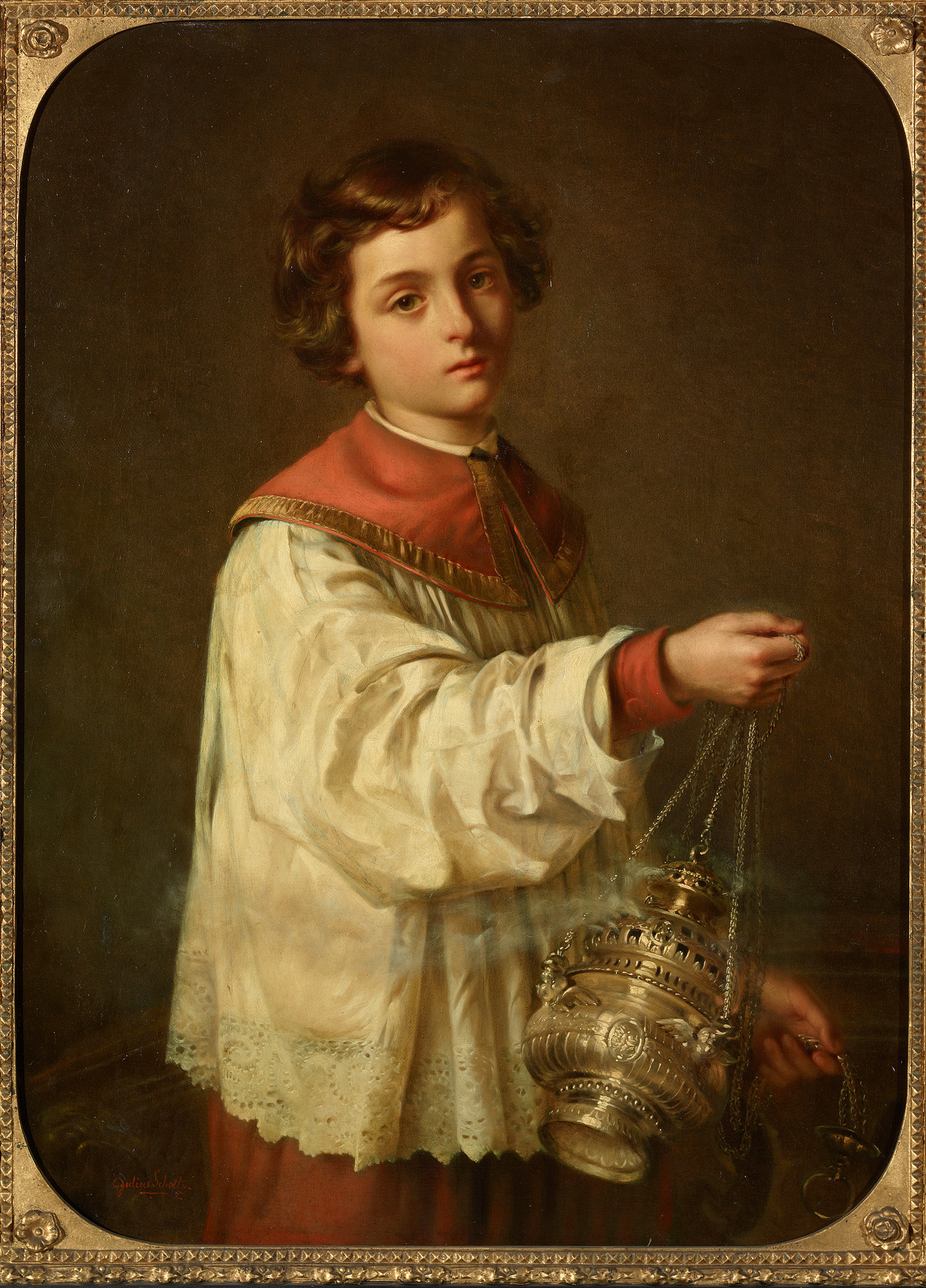
Photos Unlimited / Re: Et Incensum Surget Ad Te
October 09, 2012, 12:37:25 PM
#10342
Photos Unlimited / Re: Et Incensum Surget Ad Te
October 09, 2012, 12:35:13 PM
#10343
Photos Unlimited / Et Incensum Surget Ad Te
October 09, 2012, 12:33:54 PM

#10344
Bible Study / Encyclical Summo Jugiter Studio
October 09, 2012, 12:22:34 PM
His Holiness Pope Pope Gregory XVI writes in his encyclical, "Summo Jugiter Studio":


"You know how zealously Our predecessors taught that very article of faith which these dare to deny, namely the necessity of the Catholic faith and of unity for salvation. The words of that celebrated disciple of the Apostles, martyred Saint Ignatius, in his letter to the Philadelphians are relevant to this matter: 'Be not deceived, my brother; if anyone follows a schismatic, he will not attain the inheritance of the kingdom of God.' Moreover, Saint Augustine and the other African bishops who met in the Council of Cirta in the year 412 explained the same thing at greater length: 'Whoever has separated himself from the Catholic Church, no matter how laudably he lives, will not have eternal life, but has earned the anger of God because of this one crime: that he abandoned his union with Christ' (Epsitle 141). Omitting other appropriate passages which are almost numberless in the writings of the Fathers, We shall praise Saint Gregory the Great, who expressly testifies that this is indeed the teaching of the Catholic Church. He says: 'The holy universal Church teaches that it is not possible to worship God truly except in her and asserts that all who are outside of her will not be saved' (Moral. in Job, 16.5). Official acts of the Church proclaim the same dogma. Thus, in the decree on faith which Innocent III published with the synod of the Lateran IV, these things are written: 'There is one universal Church of the faithful outside of which no one at all is saved.' Finally, the same dogma is expressly mentioned in the profession of faith proposed by the Apostolic See, not only that which all Latin churches use (Creed of the Council of Trent), but also that which the Greek Orthodox Church uses (cf. Gregory XIII, Profession 'Sanctissimus') and that which other Eastern Catholics use (cf. Benedict XIV, Profession 'Nuper ad Nos')… We are so concerned about this serious and well known dogma, which has been attacked with such remarkable audacity, that We could not restrain Our pen from reinforcing this truth with many testimonies."


Reference:
http://www.ewtn.com/faith/teachings/churmenu.htm
#10345
Bible Study / Re: Unam Sanctum
October 09, 2012, 12:16:01 PM
His Holiness Pope Leo XII writes in his Encyclical "Ubi Primum":


"It is impossible for the most true God, who is Truth Itself, the best, the wisest Provider, and rewarder of good men, to approve all sects who profess false teachings which are often inconsistent with one another and contradictory, and to confer eternal rewards on their members. For we have a surer word of the prophet, and in writing to you We speak wisdom among the perfect; not the wisdom of this world but the wisdom of God in a mystery. By it we are taught, and by divine faith we hold, one Lord, one faith, one baptism, and that no other name under heaven is given to men except the name of Jesus Christ of Nazareth in which we must be saved. This is why we profess that there is no salvation outside the Church… For the Church is the pillar and ground of the truth. With reference to those words Augustine says: 'If any man be outside the Church he will be excluded from the number of sons, and will not have God for Father since he has not the Church for mother.'"


Reference:
http://www.ewtn.com/faith/teachings/churmenu.htm
#10346
Bible Study / Cantate Domino
October 09, 2012, 12:10:32 PM
His Holiness Pope Eugene IV writes in "Cantate Domino":


"The most Holy Roman Church firmly believes, professes and preaches that none of those existing outside the Catholic Church, not only pagans, but also Jews and heretics and schismatics, can have a share in life eternal; but that they will go into the "eternal fire which was prepared for the devil and his angels" (Matthew 25:41), unless before death they are joined with Her; and that so important is the unity of this ecclesiastical body that only those remaining within this unity can profit by the sacraments of the Church unto salvation, and they alone can receive an eternal recompense for their fasts, their almsgivings, their other works of Christian piety and the duties of a Christian soldier. No one, let his almsgiving be as great as it may, no one, even if he pour out his blood for the Name of Christ, can be saved, unless he remain within the bosom and the unity of the Catholic Church."


Reference:
http://www.ewtn.com/faith/teachings/churmenu.htm

#10347
Bible Study / Unam Sanctum
October 09, 2012, 12:05:01 PM
His Holiness Pope Boniface VIII's Papal Bull "Unam Sanctum" states:

"We are compelled in virtue of our faith to believe and maintain that there is only one holy Catholic Church, and that one is apostolic. This we firmly believe and profess without qualification. Outside this Church there is no salvation and no remission of sins, the Spouse in the Canticle proclaiming: 'One is my dove, my perfect one. One is she of her mother, the chosen of her that bore her' (Canticle of Canticles 6:8 ); which represents the one mystical body whose head is Christ, of Christ indeed, as God. And in this, 'one Lord, one faith, one baptism' (Ephesians 4:5). Certainly Noah had one ark at the time of the flood, prefiguring one Church which perfect to one cubit having one ruler and guide, namely Noah, outside of which we read all living things were destroyed… We declare, say, define, and pronounce that it is absolutely necessary for the salvation of every human creature to be subject to the Roman Pontiff."


Reference:
http://www.ewtn.com/faith/teachings/churmenu.htm

#10348
When anyone achieves a modicum of success in life, we tend to think we have worked hard to achieve ‘great things, important things, valuable things’ and paid such a price in doing so that we are entitled to some special rewards.  At such a time I have seen men and women sort of “forget God”, and indulge themselves with some out of bounds “reward” that they would never have done while they were working so hard to get the job done.  Maybe that is why the story was told in the movie Patton that “when the Roman conquerors returned to Rome and were celebrated with a parade with their Legions through the adoring crowds to the Senate building, a man was appointed to ride on the victorious leader’s chariot holding over his head the victor’s wreath and whispering in his ear: ‘remember thou art but mortal, and all glory is fleeting’”.


Lest we forget, we must keep our eyes focused on Jesus, His two great commandments, and His calling on our lives! “For from Him and through Him and to Him are all things.  To Him be the glory forever” (Romans 11:36).
#10349
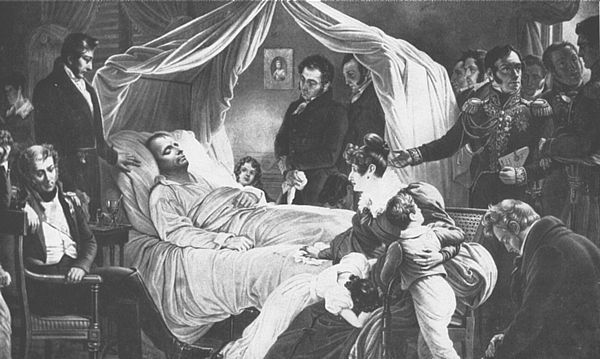
Napoleon Bonaparte, Emperor of the 1st French Empire, in full splendor and glory


....25 years later


The glorious Emperor lies dead. As a doornail.
#10350
The assassination of Julius Caesar, who was full of glory

#10351
Inspiration & Hope / O quam cito transit gloria mundi
October 09, 2012, 10:21:35 AM
O quam cito transit gloria mundi = How quickly the glory of the world passes away


#10352
Anonymous Diary Blog / Re: What Did You Do Today?
October 09, 2012, 10:14:04 AM
God our Father,
Your power brings us to birth,
Your providence guides our lives,
and by Your command we return to dust.

Lord, those who die still live in Your presence,
their lives change but do not end.
I pray in hope for my family,
relatives and friends,
and for all the dead known to You alone.

In company with Christ,
Who died and now lives,
may they rejoice in Your kingdom,
where all our tears are wiped away.
Unite us together again in one family,
to sing Your praise forever and ever.

Amen.
#10353
Anonymous Diary Blog / Re: What Did You Do Today?
October 09, 2012, 10:10:17 AM
There is something very deep and profound when one hears the attending physician intervene all efforts, despite one's reluctance, to cease all efforts.

As I stood back, and looked at my patient on the hospital bed, I saw the nurses, terminate the external defibrillator machine. I remember standing there, looking at him, with the IV line still inside, with all the tubes still there.

A sense of loss, a deep sense of loss. Having to write the time of death, recording it as some kind of permanence, the very moment of his death, the moment where he exited this world.

Having assisted the attending MD report the news to the patient's family was truly an experience. But what was quite surreal was after going back to the room where my patient lay, found him not. He had already been removed and sent to the morgue.

I sat in my office for a good 20 minutes thinking about the situation. How truly insignificant and delicate we are, as human beings. One moment one is alive, the next, one is pronounced dead and being prepared for funeral.

We truly are but mere dusts in time.

#10354
Anonymous Diary Blog / Re: What Did You Do Today?
October 09, 2012, 09:55:51 AM
Today we had a patient code on us. Bata pa intawn. We tried to resuscitate him, pero, wala. It is so sad to see young kids getting involved in car accidents. Patient sustained massive blood loss, despite every effort to resuscitate him and to replenish blood, the patient went into v-tach. We gave him 2 boluses of epi and performed acls procedures. 8 minutes we tried to bring him back, wa gehapon.

I assisted the attending physician in reporting the news to the parents, and family members. The patient's mother reacted in such a way that I almost cried.

I am so sad that we could not save her son. I am so sorry... :(

I dedicate a poem that I wrote during my shift this afternoon to that young man who passed:


Lying in silence

written by: A.L.L. Jr.

There by blue tables, I lie still
They work hard around me, pumping, reloading
Tho energy pushes forward, it is not my destiny

Parents, loved ones, focused on true repose
Love, care, youth, all are but fading eloquence
For death cares not what age thou art

When it is time , it is time to depart
There by blue tables, I lie still
They work hard around me, pumping, reloading
Yet, I lie still, for death has claimed me.

Life has faded, the curtain fell.
#10355
Quotable Quotes / Re: Quote For The Day
October 09, 2012, 09:46:18 AM
"I've been in love with since the first day I met you."The first time, darling, you took my heart. Completely"

#10356
Quotable Quotes / Re: Quote For The Day
October 09, 2012, 09:44:52 AM
Quote from: Lollapalooza on October 08, 2012, 04:40:39 PM
"I know you've heard it a thousand times before. But it's true -- hard work pays off. If you want to be good, you have to practice, practice, practice. If you don't love something, then don't do it."-- Ray Bradbury  --

Profound.
#10357
Question and Answer / Re: What is your pet of choice?
October 08, 2012, 10:38:27 AM
Our German Shepherd , Kaiser. He is now 8 years old. :)

#10358
Question and Answer / Re: What is your pet of choice?
October 08, 2012, 10:32:15 AM
This July 2012, my entire family drove to Yellowstone National Park. My dad, and my mom brought along our two dogs. It was, truly, a family event. lol. So we drove 1500 miles from Chicago to Yellowstone Park in Wyoming. Init kaayo sa gawas--the temperature was around 100 degrees Fahrenheit. So while I was driving, my younger brother, si Andre, took a picture of Pippa Anne, who was sleeping on top of the cooler. hahaha! She was deep in sleep and my younger brother also put a comforter on top of her. Cute kaayo.


:)   :D
#10359
Anonymous Diary Blog / Re: What Did You Do Today?
October 08, 2012, 10:30:29 AM
Getting ready again for a new week.
#10360
Question and Answer / Re: What is your pet of choice?
October 08, 2012, 10:23:44 AM
Quote from: islander on October 08, 2012, 10:20:14 AM
how nice, lorenz.  congratulations!  :D

he he he, she's 17 months na, isles. Spoiled kaayo ni si Pippa. Daddy's girl gajud. :)

But she is a darling, when I come home, she comes to me and never wants to leave my side. When I'm at my desk typing or writing notes, she will cuddle up in a ball by my feet.
#10361
Question and Answer / Re: What is your pet of choice?
October 08, 2012, 10:23:05 AM
Pippa Anne. Now she's 17 months old. Big girl na. :)


#10362
Question and Answer / Re: What is your pet of choice?
October 08, 2012, 10:14:18 AM
Pippa and I, on her first day home, after I adopted her. She was only 12 weeks old. ;D

#10363
Question and Answer / Re: What is your pet of choice?
October 08, 2012, 10:13:04 AM
My puppy girl, si Pippa Anne. :)

#10364
Question and Answer / Re: What is your pet of choice?
October 08, 2012, 10:10:32 AM
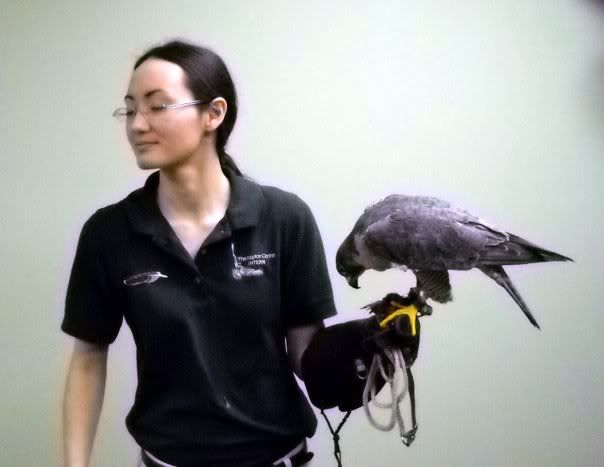
For my xgf from college, her pet of choice was a falcon. lol. :P


Katie and her falcon, taken at a bird sanctuary. Photographer: me
#10365
Anonymous Diary Blog / Re: Unsay Akong Gikaon Karon?
October 08, 2012, 09:58:08 AM
This evening, I opened a bottle of Medoc. Exquisite ! It was a very affordable bottle, only $45.50!

8)


#10366
Anonymous Diary Blog / Re: Unsay Akong Gikaon Karon?
October 08, 2012, 09:56:18 AM
For lunch, I went to a Vietnamese restaurant called "Pho Tai Gan Sach" in downtown Chicago. It was a perfect choice for a very cold/ chilly Chicago afternoon.

;D

#10367
Anonymous Diary Blog / Re: What Did You Do Today?
October 08, 2012, 09:52:32 AM
My sunday was good. I went to meet up with my sister and had lunch with her. Afterwards, went to Starbucks and ordered an iced coffee as I did some medical board reviews -- GASTROENTEROLOGY!


Nice iced coffee w/ cream and a teaspoon of sugar. A Physician's best friend. ;D
#10368
Music and Video / Let me Love you Tonight
October 08, 2012, 09:47:50 AM
This song was a favorite back in my teenage years. A high school anthem. 2002, to be exact. ;D


http://www.youtube.com/watch?v=E83eY5GJtvI#
#10371
Inspiration & Hope / Daily Mass Readings
October 07, 2012, 09:34:40 PM
Sunday, October 07, 2012
Twenty-Seventh Sunday in Ordinary Time


1st Reading

Genesis 2: 18 - 24


18   Then the LORD God said, "It is not good that the man should be alone; I will make him a helper fit for him."
19   So out of the ground the LORD God formed every beast of the field and every bird of the air, and brought them to the man to see what he would call them; and whatever the man called every living creature, that was its name.
20   The man gave names to all cattle, and to the birds of the air, and to every beast of the field; but for the man there was not found a helper fit for him.
21   So the LORD God caused a deep sleep to fall upon the man, and while he slept took one of his ribs and closed up its place with flesh;
22   and the rib which the LORD God had taken from the man he made into a woman and brought her to the man.
23   Then the man said, "This at last is bone of my bones and flesh of my flesh; she shall be called Woman, because she was taken out of Man."
24   Therefore a man leaves his father and his mother and cleaves to his wife, and they become one flesh.


Psalms 128: 1 - 6


1   Blessed is every one who fears the LORD, who walks in his ways!
2   You shall eat the fruit of the labor of your hands; you shall be happy, and it shall be well with you.
3   Your wife will be like a fruitful vine within your house; your children will be like olive shoots around your table.
4   Lo, thus shall the man be blessed who fears the LORD.
5   The LORD bless you from Zion! May you see the prosperity of Jerusalem all the days of your life!
6   May you see your children's children! Peace be upon Israel!


2nd Reading


Hebrews 2: 9 - 11

9   But we see Jesus, who for a little while was made lower than the angels, crowned with glory and honor because of the suffering of death, so that by the grace of God he might taste death for every one.
10   For it was fitting that he, for whom and by whom all things exist, in bringing many sons to glory, should make the pioneer of their salvation perfect through suffering.
11   For he who sanctifies and those who are sanctified have all one origin. That is why he is not ashamed to call them brethren,


Gospel Reading


Mark 10: 2 - 16

2   And Pharisees came up and in order to test him asked, "Is it lawful for a man to divorce his wife?"
3   He answered them, "What did Moses command you?"
4   They said, "Moses allowed a man to write a certificate of divorce, and to put her away."
5   But Jesus said to them, "For your hardness of heart he wrote you this commandment.
6   But from the beginning of creation, `God made them male and female.'
7   `For this reason a man shall leave his father and mother and be joined to his wife,
8   and the two shall become one flesh.' So they are no longer two but one flesh.
9   What therefore God has joined together, let not man put asunder."
10   And in the house the disciples asked him again about this matter.
11   And he said to them, "Whoever divorces his wife and marries another, commits adultery against her;
12   and if she divorces her husband and marries another, she commits adultery."
13   And they were bringing children to him, that he might touch them; and the disciples rebuked them.
14   But when Jesus saw it he was indignant, and said to them, "Let the children come to me, do not hinder them; for to such belongs the kingdom of God.
15   Truly, I say to you, whoever does not receive the kingdom of God like a child shall not enter it."
16   And he took them in his arms and blessed them, laying his hands upon them.
#10372
Bible Study / Questions about Holy Communion
October 07, 2012, 09:17:42 PM
Questions about Holy Communion

366. What is Holy Communion?

Holy Communion is the receiving of Jesus Christ in the sacrament of the Holy Eucharist.

(a) Just as it is necessary to nourish our bodies with material food, so also it is necessary to nourish our souls with spiritual food. Our Divine Savior so loved us that He gave us Himself in the sacrament of the Holy Eucharist; He gave us His own body and blood as food for our souls.

(b) It is not necessary that we receive Our Lord's body and blood under the appearances of both bread and wine. Christ is entirely present under the appearances of bread, and also entirely present under the appearances of wine. Therefore, we receive Him whole and entire under the appearances of bread alone or of wine alone.

(c) In some Eastern Churches the faithful receive Holy Communion under the appearances of both bread and wine. In the Western Church the faithful receive Communion most commonly under the appearances of bread, with the Precious Blood generally reserved by law to special feasts or other particular circumstances.

367. What is necessary to receive Holy Communion worthily?

To receive Holy Communion worthily it is necessary to be free from mortal sin, to have a right intention and to obey the Church's laws on the fast required before Holy Communion out of reverence for the body and blood of Our Divine Lord. However, these are some cases in which Holy Communion may be received without fasting.

(a) Venial sin does not make us unworthy of receiving Holy Communion; but it does prevent us from receiving the more abundant graces and blessings which we would otherwise receive from Holy Communion.

368. Does he who knowingly receives Holy Communion in mortal sin receive the body and blood of Christ and His graces?

He who knowingly receives Holy Communion in mortal sin receives the body and blood of Christ, but he does not receive His graces and commits a grave sin of sacrilege.

(a) To receive Holy Communion unworthily is a serious abuse of the sacred body and blood of the Lord, and therefore a sacrilege.

369. What should we do to receive more abundantly the graces of Holy Communion?

To receive more abundantly the graces of Holy Communion we should strive to be most fervent and to free ourselves from deliberate venial sin.

370, What are the current rules for fasting before Holy Communion?

(a) For many centuries the Church commanded a strict fast from midnight before one could receive Holy Communion. However, in the 1950's Pope Pius XII introduced a much more lenient form of fasting before Holy Communion in order to give Catholics an opportunity to receive Holy Communion more frequently.

(b) Pope Pius XII also allowed the celebration of afternoon and evening Masses every day, when the spiritual good of a considerable number of the faithful requires it. It is the right of the bishop of each diocese to decide when such Masses may be offered in his diocese.

(c) Paul VI further reduced the fasting requirement after the Second Vatican Council, requiring only a one hour fast from all food and drink (excluding water). This may be reduced to 15 minutes for those who are sick or for other important reasons. This is the practice currently in force.

371. When may Holy Communion be received without fasting?

Holy Communion may be received without fasting when one is in danger of death, or when it is necessary to save the Blessed Sacrament from insult or injury.

(a) Ordinarily the danger of death comes from sickness or injury. But it is not necessary that a person be in danger of death from sickness in order to receive Holy Communion without fasting. The danger of death may come from some other cause. A soldier, for example, who is about to go into battle or a person about to be executed may receive Holy Communion without fasting.

373. How should we prepare ourselves for Holy Communion?

We should prepare ourselves for Holy Communion by thinking of Our Divine Redeemer whom we are about to receive, and by making fervent acts of faith, hope, love, and contrition.

(a) We should be neat, clean, and modest in our appearance, and respectful and reverent in our manner.

(b) Each time we receive Holy Communion we should try to be as devout and fervent as if it were the only Communion of our lives.

374. What should we do after Holy Communion?

After Holy Communion we should spend some time adoring Our Lord, thanking Him, renewing our promises of love and of obedience to Him, and asking Him for blessings for ourselves and others.

375. What are the chief effects of a worthy Holy Communion?

The chief effects of a worthy Holy Communion are:

first, a closer union with Our Lord and a more fervent love of God and of our neighbor;

second, an increase of sanctifying grace;

third, preservation from mortal sin the and remission of venial sin;

fourth, the lessening of our inclinations to sin and the help to practice good works.

376. When are we obliged to receive Holy Communion?

We are obliged to receive Holy Communion during Easter time each year and when in danger of death.

377. Why is it well to receive Holy Communion often, even daily?

It is well to receive Holy Communion often, even daily, because this intimate union with Jesus Christ, the Source of all holiness and the Giver of all graces, is the greatest aid to holy life.

378. How should we show our gratitude to Our Lord for remaining always on our altars in the Holy Eucharist?

We should show our gratitude to Our Lord for remaining always on our altars in the Holy Eucharist, by visiting Him often, by reverence in church, by assisting every day at Mass when this is possible, by attending parish devotions, and by being present at Benediction of the Blessed Sacrament.

(a) Benediction of the Blessed Sacrament is a ceremony in which the sacred host is exposed for a time on the altar, usually in the monstrance. During Benediction the priest blesses the people with the sacred host.

(b) The monstrance, or ostensorium, is a large vessel in which the host is exposed to view through a glass-covered opening in the center.

(c) The long cloak-like vestment worn by the priest at Benediction of the Blessed Sacrament is called a cope. The humeral veil is placed over the priest's shoulders before he gives the blessing.


http://www.ewtn.com/faith/teachings/euchb2a.htm
#10373
Questions on the Sacrifice of the Mass

357. What is the Mass?

The Mass is the Sacrifice of the New Law in which Christ, through the ministry of the priest, offers Himself to God in an unbloody manner under the appearances of bread and wine.

(a) The name "Mass" comes from the Latin word Missa meaning dismissal. In the early days of the Church the catechumens were asked to leave after the gospel and sermon were finished. The faithful, however, remained until they were dismissed after the sacrifice was completed. Then, as now, this was done by saying or singing Ite Missa Est. In the course of time the word Missa, or dismissal, was used to designate the entire sacrifice.

358. What is a sacrifice?

A sacrifice is the offering of a victim by a priest to God alone, and the destruction of it in some way to acknowledge that He is the Creator of all things.

(a) By his very nature man wants to adore and thank his Creator. Men mistaken at times about the nature of the true God have offered false worship; but they have always recognized the obligation of adoring the Supreme Being. As far back as the history of man is recorded, there is evidence that men acknowledged their dependence on the Supreme Being by offering sacrifices to Him. (b) Before the coming of Christ, sacrifices were offered to God in many different ways. The patriarchs and Jewish priests at the command of God offered fruits, wine, or animals as victims. Cain, for example, offered fruits; Abel offered some sheep of his flock; Melchisedech offered bread and wine. The destruction of these offerings removed them from man's use and thereby signified that God is the Supreme Lord and Master of the entire created universe and that man is wholly dependent upon Him for everything. Sacrifice, therefore, is the most perfect way for man to worship God.

(c) All these different sacrifices of the Old Law were only figures of the sacrifice which Christ was to make of Himself. His offering of Himself on the cross was the greatest sacrifice ever offered to God. All the sacrifices of the Old Law derived their efficacy, or value, from the sacrifice which Christ was to offer on the cross.

359. Who is the principal priest in every Mass?

The principal priest in every Mass is Jesus Christ, who offers to His heavenly Father, through the ministry of His ordained priest, His body and blood which were sacrificed on the cross.

(a) The Mass is the same sacrifice as the sacrifice of the cross. It is now in the New Law, the sacrifice that is acceptable to God.

360. Why is the Mass the same sacrifice as the sacrifice of the cross?

The Mass is the same sacrifice as the sacrifice of the cross because in the Mass the victim is the same, and the principal priest is the same, Jesus Christ.

(a) Christ, though invisible, is the principal minister, offering Himself in the Mass. The priest is the visible and secondary minister, offering Christ in the Mass.

(b) The most important part of the Mass is the Consecration. In the Consecration bread and wine are changed into the body and blood of Christ who then is really present on the altar. Through the priest He offers Himself to God in commemoration of His death on the cross.

(c) The other most important parts of the Mass are the Offertory and the Communion. In the Offertory the priest offers to God the bread and wine that will be changed into the body and blood of Christ. In the Communion the priest and the people receive the body and blood of Our Lord under the appearances of bread and wine.

361. What are the purposes for which the Mass is offered?

The purposes for which the Mass is offered are: first, to adore God as our Creator and Lord; second, to thank God for His many favors; third, to ask God to bestow His blessings on all men; fourth, to satisfy the justice of God for the sins committed against Him.

(a) In every Mass adoration, praise, and thanksgiving are given to God, and reparation is made to Him.

(b) Besides the purpose for which the Mass is offered and the effects that it produces, there are also special fruits of the Mass. The fruits Of the Mass are the blessings that God bestows through the Mass upon the celebrant, upon those who serve or assist at it, upon the person or persons for whom it is offered, and also upon all mankind, especially the members of the Church and the souls in purgatory.

(c) The measure of these blessings depends especially on the dispositions of those to whom they are given.

362. Is there any difference between the sacrifice of the cross and the Sacrifice of the Mass?

The manner in which the sacrifice is offered is different. On the cross Christ physically shed His blood and was physically slain, while in the Mass there is no physical shedding of blood nor physical death, because Christ can die no more; on the cross Christ gained merit and satisfied for us, while in the Mass He applies to us the merits and satisfaction of His death on the cross.

(a) On the cross Christ was offered in a bloody manner; in the Mass He is offered in an unbloody manner. On the cross Christ alone offered Himself directly; in the Mass He offers Himself through the priest, who is the secondary but true minister, dependent upon Christ.

(b) On the cross Christ suffered and died; in the Mass He can no longer suffer or die. On the cross He paid the price of our redemption; in the Mass He applies to us the merits of His Sacrifice on the cross.

(c) There are various kinds of Masses:

first, a Solemn Mass, which is celebrated by a priest who is immediately assisted by a deacon and a sub-deacon; second, a High Mass, in which the celebrating priest sings certain parts of the Mass; third, a Low Mass, in which the priest reads all the parts of the Mass: fourth, a Pontifical Mass, which is celebrated by a bishop and by certain other prelates.

Any of these kinds of Masses can be a Requiem Mass, which is one offered for the dead. In a Requiem Mass the celebrating priest wears black vestments and reads or chants special prayers for the dead.

(d) Some prayers make up the "Ordinary" of the Mass and are practically always the same; others make up the "Proper" of the Mass and differ according to the seasons and the feasts of the ecclesiastical calendar.

(e) Ordinarily Mass must be offered on an altar stone consecrated by a bishop or by his delegate.

(f) The priest wears the following vestments during Mass:

an alb, a long white linen garment covering the body;
an amice, a white linen cloth placed over the shoulders and about the neck (as needed);
a cincture, a cord tied about the waist (as needed);
the stole, a long narrow band of cloth worn over the shoulders; and
the chasuble, an outer garment covering the greater part of the body.

These vestments have an ancient origin, and most of them resemble the garments worn by the apostles.

(g) The colors of the outer vestments worn during Mass are: white, which signifies purity of soul and holiness, red, which signifies the shedding of blood and burning love; green, which signifies hope; violet, which signifies penance; black, which signifies mourning; rose, which signifies joy in the midst of penance; and gold, which is used on solemn occasions in place of white, red, or green vestments.

White vestments are worn on feasts of Our Lord, the Blessed Virgin, saints who were not martyrs, and during the Easter season; red is used on the feasts of the Holy Ghost, the passion of Our Lord, and martyrs; green is used on the Sundays outside of Advent, Lent, and the Christmas and Easter season; violet is worn in Lent, Advent, and on penitential days, black is worn in Masses for the dead; rose may be used instead of violet on the third Sunday of Advent and on the fourth Sunday of Lent.

(h) Some of the important articles used during Mass are: the chalice, a gold-lined or other precious cup, in which the wine is consecrated; the paten, a gold-covered or other precious plate, on which the host is placed; the purificator, or cloth, for wiping the chalice, the pall, or linen-covered card, used to cover the chalice; the corporal, or square linen cloth, on which the host is placed; the missal, or book, from which the priest reads the prayers of the Mass; the candles, usually of beeswax; the crucifix over the altar; and the three linen cloths that cover the altar.

363. How should we assist at Mass?

We should assist at Mass with reverence, attention, and devotion.

(a) There are different ways of assisting at Mass devoutly: using the missal to follow the priest, saying the Mass prayers as found in a prayer book; singing hymns; and the like.

364. What is the best method of assisting at Mass?

The best method of assisting at Mass is to unite with the priest in offering the Holy Sacrifice, and to receive Holy Communion.

(a) It is evident from the words of the priest himself that we do unite with him in offering up the Holy Sacrifice. After the Offertory he turns to the people and says: "Pray, brethren, that my sacrifice and yours may be acceptable to God the Father Almighty." In the second commemoration of the Canon of the Mass he says: "Remember, O Lord, Thy servants . . . for whom we offer, or who offer up to Thee, this sacrifice of praise . . . "

365. Who said the first Mass?

Our divine Savior said the first Mass, at the Last Supper, the night before He died.


http://www.ewtn.com/faith/teachings/euchb1a.htm
#10374
The Sacrifice of the Mass


by Fr. William G. Most

The Council of Trent taught that the Mass is the same as Calvary, "only the manner of offering being changed" from bloody to unbloody. Similarly Vatican II (On the Liturgy #10) said that the Mass is the renewal of the new covenant.

A sacrifice as Catholics understand it (in contrast to some pagan concepts) has two elements: the outward sign and the interior dispositions. The outward sign is there to express and perhaps promote the interior. Without the interior it would be worthless. Hence God once complained through Isaiah 29:13: "This people honors me with their lips, but their heart is far from me." We need to take care that we too do not descend into mere externalism, thinking it enough to just make the responses and sing etc.

At the Last Supper, the outward sign was the seeming separation of body and blood, with the two species. This was a dramatized way of saying to the Father: "I know the command you have given me, I am to die tomorrow. Very good, I turn myself over to death - expressed by the seeming separation - I accept, I obey." On the next day He did as He pledged, but then the outward sign was the physical separation of body and blood, while the interior remained the same. In the Mass, by the agency of a human priest who acts "in the person of Christ" (Vatican II, LG # 10) Christ continues and repeats His offering. The external sign is multiplied as many times as there are Masses. But the interior disposition of Christ is not multiplied, it is continued from that with which He died. For death makes permanent the attitude of will with which one leaves this world.

Since the Mass has the same external sign, and the same interior dispositions on the part of Christ, we rightly call it a sacrifice, the continuation of Calvary. It does not need to earn redemption all over - that was done once for all (Hebrews 9:28) by His death. But since the Holiness of God loves everything that is good, and in good order, it pleases Him to have titles or reasons in place for what He will give (cf. Summa I. 19. 5. c). So it pleases Him to have the Mass provide the title for the distribution of what was once for all earned on Calvary.

Catechists often like to use a memory word ACTS to express the dispositions: adoration, contrition, thanksgiving, and supplication. This is not wrong, but it leaves out the essential disposition, obedience to the Father (Cf. Romans 5:19 and LG #3).

At the Last Supper He ordered, "Do this in memory of me". Since we were not there, He wants us to join our dispositions to His. The great Liturgy Encyclical of Pius XII, Mediator Dei, explains well that the people can be said to exercise their royal priesthood, to offer the Mass with the priest: first, "from the fact that the priest at the altar in offering a sacrifice in the name of all His members, does so in the person of Christ," whose members they are. (Since only the ordained priest acts "in the person of Christ" Vatican II says [LG #10] that the ordained priesthood differs from that of the laity in essence, and not only in degree).

Secondly the people can be said to offer since: "The people join their hearts in praise, petition, expiation and thanksgiving with the prayers or intention of the priest, in fact, of the High Priest Himself, so that in the one and same of offering of the Victim... they may be presented to God the Father "(Acta Apostolicae Sedis, 39:556). Vatican II explains (LG # 10) that this is what it means for them to "offer spiritual sacrifices".

These spiritual sacrifices consist of their obedience to the will of the Father, already carried out, and planned for the future (Cf. LG #34). This includes their works, their bearing the troubles of life, their prayers, their apostolic efforts, their living out the duties of their state in life, even their relaxation of body and mind if all these things are done as part of the Father's plan, to enable them to serve Him better. Jesus Himself spent about 30 out of 33 years in family life, to show how greatly the Father values this if done precisely because it part of His plan. No wonder Paul VI, on Feb. 12, 1966, told the 13th National Congress of the Italian Feminine Center that "marriage is a long road towards sanctification", that is, if one takes everything in it as part of the Father's plan. (To be explained more fully in our section on the Sacrament of Matrimony).

We can call this a royal priesthood, since to live this way is to reign, instead of being a slave to vices ( 2 Peter 2:19). St. Augustine explains this well in his exegesis of Revelation/Apocalypse 20:5-6 (City of God 20:7-9) which tells how the holy ones rise from sin - which is the first resurrection, and reign, by being their own masters, by not consenting to the works of the Beast, the Antichrist and his minions, "but they will be priests of God and of Christ, and will reign with Him for that thousand years", i.e., all the time from His ascension to His return at the end.

It would be good to take a moment before each Mass to see what one has to join with the obedience of Christ, soon to be offered on the altar. Then Mass cannot be without meaning; rather, it dominates all of life, for we should bring our past obediences, and look ahead to the obedience of the near future.

We can see easily how Vatican II could call the Mass the renewal of the new covenant: in the making of that new covenant, the essential condition which gave it all its value was obedience, the obedience of Jesus, which is to be re-presented again on the altar, so we may join with it.

It is good to recall too that His Mother shared in this sacrifice by her obedience (cf. our comments on the Third Article of the Creed) on Calvary, and now, as John Paul II taught (Angelus Homily of Feb. 12, 1984) she "is at every altar" because "she was present at the original sacrifice", sharing in it, and now from heaven, she still joins her will to His, as He offers the flesh and blood He received from her.

The graces of the Mass are communicated in accord with how often the Mass is offered for a certain intention, the dispositions of the priest, the dispositions of the faithful who join with him, the dispositions of those for whom it is offered, and God's Providence.

We say we offer the Mass in honor of Our Lady, the angels, particular Saints. In it we thank God for what He has done for them, and for us through them. But we offer the Mass to God alone.

The chief liturgical divisions of the Mass are: the penitential rite, the liturgy of the word, the liturgy of the eucharist, the communion rite, and the concluding rite. For the sacrifice as such, only the double consecration is essential. Hence Pius XII taught, "When the consecration of the bread and wine is validly brought about, the whole action of Christ is actually accomplished. Even if all that remains could not be completed, still, nothing essential would be lacking to the Lord's offering" (Vous nous avez, To the Liturgical Conference of Assisi Sept 22, 1956). Hence the Great Amen is not the offering, it is a sort of extension, to give us further opportunity to join with Christ. The Communion follows up, giving us a share in the Divine Victim as He has commanded.

The Mass brings forgiveness for venial sins for which there is sorrow, and for temporal punishment commonly left over after forgiveness of sins.

Mass may be offered for the living or the dead. Its general benefits go to the whole Church, living and dead. Special benefits are for the priest who offers, and those for whom a Mass is specially offered, and for those who actively participate at the Mass.

In it we recall not only His death, but also His Resurrection, as the Eucharistic Prayer I reminds us.

Even with the changes in the laws, Mass on Sundays and Holyday of Obligation remains an obligation binding under grave sin each time.


http://www.ewtn.com/faith/teachings/euchb1.htm
#10375
Questions about The Holy Eucharist

343. What is the Holy Eucharist?

The Holy Eucharist is a sacrament and a sacrifice. In the Holy Eucharist, under the appearances of bread and wine, the Lord Christ is contained, offered, and received.

(a) The whole Christ is really, truly, and substantially present in the Holy Eucharist. We use the words "really, truly, and substantially" to describe Christ's presence in the Holy Eucharist in order to distinguish Our Lord's teaching from that of mere men who falsely teach that the Holy Eucharist is only a sign or figure of Christ, or that He is present only by His power.

(b) All Christians, with but few minor exceptions, held the true doctrine of the Real Presence from the time of Christ until the Protestant Revolution in the sixteenth century.

(c) The word "Eucharist" means "Thanksgiving."

344. When did Christ institute the Holy Eucharist?

Christ instituted the Holy Eucharist at the Last Supper, the night before He died.

(a) About a year before the Last Supper Our Lord promised to give us the Holy Eucharist. This promise is related in the sixth chapter of the Gospel according to Saint John. The fulfillment of this promise took place at the Last Supper.

345. Who were present when Our Lord instituted the Holy Eucharist?

When Our Lord instituted the Holy Eucharist the apostles were present.

346. How did Christ institute the Holy Eucharist?

Christ instituted the Holy Eucharist in this way: He took bread, blessed and broke it, and giving it to His apostles, said: "Take and eat; this is My body;" then He took a cup of wine, blessed it, and giving it to them, said: "All of you drink of this; for this is My blood of the new covenant which is being shed for many unto the forgiveness of sins;" finally, He gave His apostles the commission: "Do this in remembrance of Me."

347. What happened when Our Lord said: "This is My body . . . this is My blood"?

When Our Lord said, "This is My body," the entire substance of the bread was changed into His body; and when He said, "This is My blood," the entire substance of the wine was changed into His blood.

(a) Christ could not have used clearer, more explicit words than "This is My body." He did not say, "This is a sign of My body," or "This represents My body," but, "This is My body." Catholics take Christ at His word because He is the omnipotent God. On His word they know that the Holy Eucharist is the body and blood of Christ.

348. Did anything of the bread and wine remain after their substance had been changed into Our Lord's body and blood?

After the substance of the bread and wine had been changed into Our Lord's body and blood, there remained only the appearances of bread and wine.

(a) Because the appearances of bread and wine remain in the Holy Eucharist, we cannot see Christ with our bodily eyes in this sacrament. We do see Him, however, with the eyes of faith. Our bodily eyes, moreover, do not deceive us when they see the appearances of bread and wine for these appearances really remain after the Consecration of the Mass.

349. What do we mean by the appearances of bread and wine?

By the appearances of bread and wine we mean their color, taste, weight, shape, and whatever else appears to the senses.

350. What is the change of the entire substance of the bread and wine into the body and blood of Christ called?

The change of the entire substance of the bread and wine into the body and blood of Christ is called Transubstantiation.

351. Is Jesus Christ whole and entire both under the appearances of bread and under the appearances of wine?

Jesus Christ is whole and entire both under the appearances of bread and under the appearances of wine.

(a) We know that Christ is whole and entire under both appearances because, "Christ having risen from the dead, dies now no more" (Romans 6:9). Because Christ cannot die, His blood must remain united always to His body, and His soul to both. The divinity of Christ, moreover, always remains united to His body and blood and soul because He is God made man.

(b) The whole Christ is present under each part of the sacred appearances and remains present as long as the sacred appearances remain.

352. How was Our Lord able to change bread and wine into His body and blood?

Our Lord was able to change bread and wine into His body and blood by His almighty power.

(a) God, who created all things from nothing, who fed the five thousand with five loaves, who changed water into wine instantaneously, who raised the dead to life, can change bread and wine into the body and blood of Christ. Although the Holy Eucharist is a great mystery, and consequently beyond human understanding, the principles of sound reason can show that this great gift is not impossible by the power of God.

353. Does this change of bread and wine into the body and blood of Christ continue to be made in the Church?

This change of bread and wine into the body and blood of Christ continues to be made in the Church by Jesus Christ, through the ministry of His priests.

(a) Only ordained priests have the power of changing bread and wine into the body and blood of Christ. When they consecrate, they act in the person of Christ, through the power received in the sacrament of Holy Orders.

354. When did Christ give His priests the power to change bread and wine into His body and blood?

Christ gave His priests the power to change bread and wine into His body and blood when He made the apostles priests at the Last Supper by saying to them: "Do this in remembrance of Me."

355. How do priests exercise their power to change bread and wine into the body and blood of Christ?

Priests exercise their power to change bread and wine into the body and blood of Christ by repeating at the Consecration of the Mass the words of Christ: "This is My body . . . this is the Cup of My blood."

356. Why does Christ give us His own body and blood in the Holy Eucharist?

Christ gives us His own body and blood in the Holy Eucharist: first, to be offered as a sacrifice commemorating and renewing for all time the sacrifice of the cross; second, to be received by the faithful in Holy Communion; third, to remain ever on our altars as the proof of His love for us, and to be worshipped by us.


http://www.ewtn.com/faith/teachings/eucha1a.htm
#10376
THE EUCHARIST GIVES US JESUS CHRIST


by Fr. William G. Most

The other Sacraments give us grace, the Holy Eucharist gives us not only grace but the Author of all grace, Jesus, God and Man. It is the center of all else the Church has and does.

As St. Mark records that, at the Last Supper, Jesus "took bread, blessed and broke it and gave it to them: "Take this, this is my Body" (Mk 14:22). That word blessed in Greek is eucharistesas, from which the Eucharist derives its name.

Three of the four Gospels record the institution of the Holy Eucharist: Matthew 26:25-29; Mark 14:22-25; Luke 22:19-23. St. Paul also records it in First Corinthians 11:23-25. St. John's Gospels does not report this, presumably because he intended chiefly to fill in what the others had not written, for he wrote probably between 90 and 100 A.D. There are small variations in the words, but the essentials are the same in all accounts: This is my body... this is my blood.

In John 6:53 Jesus said: "Unless you eat the flesh of the Son of Man and drink His blood you will not have life in you." Of course, He did not mean to cut off salvation from those who through no fault of their own do not know or grasp this truth. It is like the case of Baptism: one must receive it if one knows.

The form, that is the words required for the Eucharist, are of course the words of institution. The matter is wheat bread (white or whole wheat) for the host, and natural wine (mixed with a very little water) for the chalice. Addition of a notable amount of other matter would make the material invalid.

Jesus is present wherever the appearances (species) of bread and wine are found after the consecration. Hence He is found even when the host is divided. The substance of bread and wine is gone, only the appearances remain. The Church calls this change transubstantiation: change of substance.

In John 6:47-67 Jesus did not soften His words about His presence even when so many no longer went with Him: had He meant only that bread and wine would signify Him, He could have so easily explained that, and they would not have left.

The Church has always understood a Real Presence. For example, St. Ignatius of Antioch, who was eaten by the beasts in Rome around 107 A.D., wrote: "The Eucharist is the flesh of our Savior Jesus Christ" (To Smyrna 7:1). St. Justin the martyr wrote around 145 A. D: "We have been taught that the food is the flesh and blood of that Jesus who was made flesh" (Apology 1. 66. 2). The Council of Trent in 1551 defined that Jesus is really present in the Eucharist, body and blood, soul and divinity.

Obviously, this divine presence deserves our worship. Really, someone who believes in it should be much inclined to come before the tabernacle often. Benediction with the Blessed Sacrament seems to have started in the 15th century. The Church also promotes Forty Hours devotion. In some places there is perpetual adoration.

We can correctly speak of other kinds of presence of Jesus. (On this see our discussion on the Ascension in the sixth article of the Creed, and Vatican II, On the Liturgy #7). But none of them compare to that in the Holy Eucharist.


http://www.ewtn.com/faith/teachings/eucha1.htm
#10377
The Dignity of the Body


Attributed to St. Justin Martyr

But following our order, we must now speak with respect to those who think meanly of the flesh, and say that it is not worthy of the resurrection nor of the heavenly economy, because, first, its substance is earth; and besides, because it is full of all wickedness, so that it forces the soul to sin along with it. But these persons seem to be ignorant of the whole work of God, both of the genesis and formation of man at the first, and why the things in the world were made. For does not the word say, "Let Us make man in our image, and after our likeness?" What kind of man? Manifestly He means fleshly man, For the word says, "And God took dust of the earth, and made man." It is evident, therefore, that man made in the image of God was of flesh. Is it not, then, absurd to say, that the flesh made by God in His own image is contemptible, and worth nothing? But that the flesh is with God a precious possession is manifest, first from its being formed by Him, if at least the image is valuable to the former and artist; and besides, its value can be gathered from the creation of the rest of the world. For that on account of which the rest is made, is the most precious of all to the maker.

Quite true, say they; yet the flesh is a sinner, so much so, that it forces the soul to sin along with it. And thus they vainly accuse it, and lay to its charge alone the sins of both. But in what instance can the flesh possibly sin by itself, if it have not the soul going before it and inciting it? For as in the case of a yoke of oxen, if one or other is loosed from the yoke, neither of them can plough alone; so neither can soul or body alone effect anything, if they be unyoked from their communion. And if it is the flesh that is the sinner, then on its account alone did the Saviour come, as He says, "I am not come to call the righteous, but sinners to repentance." Since, then, the flesh has been proved to be valuable in the sight of God, and glorious above all His works, it would very justly be saved by Him.


http://www.ewtn.com/faith/teachings/rbodb2.htm
#10378
Anonymous Diary Blog / Re: What Did You Do Today?
October 07, 2012, 08:48:26 PM
Quote from: Lollapalooza on October 07, 2012, 11:35:55 AM
Madayaw mga TB dokdokers... nagbaklay baklay ko ganina dire sa amo-a... i smell one thing ra gyud.... sinugbang baboy.... heheheheh

Maayong Buntag Jenneth,

I hope that you have a great week! Hoping you have a blessed Sunday. Peace and Blessings of Jesus Christ be with you. And to all.


#10380
Very beautiful gayod ang Pinay beauty. :)
#10383
Music and Video / Re: Vanilla Twilight
October 07, 2012, 11:01:19 AM
I love this song, Jenneth. Hehehe! Have you tried the instrumental renditions? :)
#10385
Music and Video / Re: HOSEA [Come Back To Me]
October 07, 2012, 10:58:56 AM
[HOSEA] Come Back To Me


Come back to me with all your heart,
don't let fear keep us apart.
Trees do bend, tho' straight and tall;
so must we to others' call.

Long have I waited for your coming
home to me and living deeply our new life.

The wilderness will lead you
to your heart where I will speak.
Integrity and justice
with tenderness you shall know.

Long have I waited for your coming
home to me and living deeply our new life.

You shall sleep secure with peace;
faithfulness will be your joy.

Long have I waited for your coming
home to me and living deeply our new life.
#10386
Music and Video / Re: HOSEA [Come Back To Me]
October 07, 2012, 10:58:01 AM
This is a very well known celebratory Roman Catholic Hymnal of praise. It brings great joy to many, myself included, in hearing this song.... :)
#10388
Quote from: islander on October 07, 2012, 10:30:07 AM
when a door closes, SHE opens the windows so we could still come in. 

If our Blessed Mother Mary was able to ask her Divine Son , Jesus Christ, to turn water into wine for a wedding in Cana, imagine what she can do for us if we ask her to intercede on our behalf before the Glorious Throne of Jesus Christ, True God True Man.

Even now, those who implore her and to ask her to pray for us to her Divine Son, Jesus Christ, will be rewarded spiritual graces from Heaven.


#10389
Wise words, Madam Senator from Iloilo!
#10390
176. What is meant by "the resurrection of the body?"

By "the resurrection of the body" is meant that at the end of the world the bodies of all men will rise from the earth and be united again to their souls, nevermore to be separated.

(a) No man knows when the world will end. The signs preceding the destruction of the world, as given in Scripture, are: wars, famine, pestilence, the coming of Antichrist, the darkening of the sun and moon, and the appearance of the cross in heaven.

177. Why will the bodies of the just rise?

The bodies of the just will rise to share forever in the glory of their souls.

(a) During their earthly life the bodies of the just were the temples of the Holy Ghost, they were the instruments of the good acts by which the souls of the just merited eternal life. Respect should be shown for the bodies of the faithful departed; special burial places should be set aside for them, and their graves should be blessed.

(b) After the resurrection the bodies of the just will be in a glorified state. There will then be no need for food and drink to preserve the body, which will be endowed with qualities it did not possess in this life.

179. Why will the bodies of the damned also rise?

The bodies of the damned will also rise to share in the eternal punishment of their souls.

(a) Since the body is the instrument of the soul in committing sin, it is just that the body also share in eternal punishment.

178. Has the body of any human person ever been glorified and taken into heaven?

By the special privilege of her Assumption, the body of the Blessed Virgin Mary, united to her immaculate soul, was glorified and taken into heaven.

(a) This question emphasizes human person because the Divine Person Jesus Christ, in His human nature has risen from the dead, glorious and immortal, and ascended into heaven (question 98).

(b) Since she was free from all sin, both original and actual, it was most fitting that the Blessed Virgin Mary should be preserved from the consequences of sin; the corruption of death and the deferment of glory until the last day. Moreover, since the Son of God took His flesh and blood from the chaste body of Mary, it was most appropriate that her body shall be glorified as soon as her earthly life was ended. From the early centuries, the doctrine of Mary's bodily glorification and assumption was accepted by the Church as contained in Christian Tradition. It was declared a doctrine of divine-catholic faith by Pope Pius XII on November 1, 1950. The Feast of the Assumption is celebrated on August 15.

(c) It is not certain whether the Blessed Virgin Mary first died and was shortly afterward taken into heaven, in body and soul, or was preserved from death and taken immediately to heavenly glory when her life on earth was ended. Pope Pius XII refrained from making a decision on this question when he issued his solemn definition of the Assumption of the Blessed Virgin.


http://www.ewtn.com/faith/teachings/rboda1a.htm
#10391
The Resurrection of the Body


Death entered into this world by sin (Romans 5:12). So all will die, with the exception that those who are alive at the return of Christ at the end, will never die (First Thessalonians 4:13-17). In verse 17: "Then [at His return, and after the resurrection of the dead] we the living, will be taken together with them [the risen dead] in the clouds to meet the Lord" (Cf. 1 Cor 15:51).

There will be a resurrection of all, as St. Paul explains in First Corinthians chapter 15. Those who have been faithful to Christ will rise glorious, their bodies transformed on the model of the risen body of Christ, who could travel instantly at will, could ignore closed doors and come through anyway, but yet had real flesh. St. Paul says the risen body is "spiritual " (15:44). It is still flesh, but such that the flesh is completely dominated by the soul, so that it can no longer suffer or die.

St. Paul insists that because Christ our Head rose, those who are members of Him must also rise. So, to deny the general resurrection would imply a denial of Christ's resurrection (1 Cor 15:13).

After the resurrection, each of person will have the same body (except for imperfections) that he had in this life. If this involves having the same matter, this is surely within God's power. No matter what happens to the body after death, He can recall and rebuild the material of the body. In fact, we now know that because of metabolism--in which every cell is constantly being torn down and rebuilt--in a normal life span a person has the material for many bodies.

We will, of course be the same persons after the resurrection as we were before death.


http://www.ewtn.com/faith/teachings/rboda1.htm
#10392
Bible Study / Judgment and the Laws of the Universe
October 07, 2012, 10:13:20 AM
Judgment and the Laws of the Universe


What happens after death--the Judgment--is in a certain sense previewed and acted out in an obscure symbolic way in things that happen now. To put this in another way: every day we experience "judgments," only we do not call them that; nor do we realize that that is what they are: judgments on the way we act and think and like.

Consider this analogy. Suppose a man were waiting for his turn to come down in an elevator. In a burst of intellectual freedom he says, "This is ridiculous! I refuse to accept the indignity of subjecting myself to a law of gravitation that that fool, Isaac Newton, thought up and imposed on the rest of us. I am going to be free." He proceeds to jump out the window. For a few seconds, or a few moments depending on the height, he seems to have proved his point. He is getting down faster. He is having an exhilarating experience, free fall and all the rest of it, until he hits the ground. A smashed body is the "judgment" that the law of gravitation passes on all who try to flout it.

This is the first way to try to understand the judgment. The Lord has made the world in such a way that we always get what we choose . . . ultimately. If I choose to jump from the top of a high building, I will get injury or death. That is the judgment the universe God has made passes on me. If I refuse to learn, I will get ignorance and all the painful things that go with ignorance. That is judgment. If I choose to hurt and humiliate others out of envy, I will get darkness of soul and all that goes with that, the impulse to tear down what is good. That is my judgment. The Judgment is not so much something the Lord confronts us with in the world to come as it is the law of the universe that operates now and in everything. The ways in which Judgment appears, the smashed body, ignorance, failure, darkness of the mind are previews of the final confrontation with the reality of what we have chosen to become.

There is one difference between the judgment that God exacts through the physical universe and the judgment that He exacts through the spiritual. In the judgment of the physical order there is no appeal and no mercy but in the judgment of the spiritual order there is. Suppose that this man we spoke of jumped from the 80th floor but as he hurled past Floor Number 35, he had a change of heart. He cried out, "Oh, great and mysterious Law of Gravitation, I was foolish to think that I would defy you and get away with it. Forgive me!" If he were to receive an answer the Law of Gravitation would say, "I do not forgive. This is what you chose and this is what you are going to get . . . your judgment." What is impossible in the physical order (apart from a miracle) happens all the time in the spiritual. The Lord reaches out and snatches us from what we are falling to.

The moral laws are laws, that is to say, they are statements of the reality of things. Here, for example are statements of the real universe in which we live: "Thou shalt not take arsenic with thy coffee. Thou shalt not use gun powder as tobacco. Thou shalt study for thy exams . . . or else." These are laws. We cannot really break them--we can only break ourselves against them.

In exactly the same way the following statements are statements of the real universe too. "Thou shalt not commit adultery. Thou shalt not steal. Thou shalt not bear false witness against thy neighbor." These are laws too. We cannot break these either. We can only break ourselves against them. If I try to defy the law of gravitation, I begin to fall to my ruin. If I try to defy the law of morals, I also begin to fall to my ruin--unless, and until, the Lord reaches out, snatches me out of mid air in my fall, sets me down gently and says, "Your sins are forgiven you. Go and sin no more." In the judgment of the physical order, there is no mercy, no appeal. In the judgment of the spiritual order, there is. That is the difference. But in both cases, there is Judgment.

Suppose a man were invited to a party and he acted in a very rude way; he was critical and abusive towards his host and fellow guests. If he were to complain afterwards, "they avoid me" you would say to him, would you not, "What do you expect?" If you were in a philosophical mood, you might go on:

"We live in a cosmos, not in a chaos. If we choose disorder, disorder we shall have. If we choose to hurt others and tear at them, we enter into a spiritual darkness in which we no longer see good as good, but as evil. In that darkness we have chosen to enter we are poisoned with aversion from good. We are filled with bitterness, frustration and hate. If we encounter Honesty in our place of work we do not admire it, we fear it. If we meet Integrity we feel threatened by it. That is our Judgment."

The Lord takes us seriously. He lets us have our own way. We get what we choose. We go to our own place. If we betray the Lord, as Judas did, we get up and leave His company; we go out into the night. The Judgment is not so much something that God decrees as it is the Lord Who allows our free-will to run its course--unless He intervenes to save us from ourselves. This is what He does, again and again. If we begin to fall to our ruin the Lord sees us; He takes pity on us and reaches out and grasps us in mid-air (so to speak) and changes the course we have chosen by our folly and our sin. The mercy of God is His endless miracle of saving sinners who are bent on destroying themselves.


http://www.ewtn.com/faith/teachings/judgb1.htm
#10393
180. What is the judgment called which will be passed on all men immediately after the general resurrection?

The judgment which will be passed on all men immediately after the general resurrection is called the general judgment.

(a) The general judgment was described by Our Saviour Himself.

(b) Every deliberate thought, word, deed, and omission of every person's entire life will be manifested at the general judgment.

(c) The Lord Christ will be the judge.

182. If everyone is judged immediately after death, why will there be a general judgment?

Although everyone is judged immediately after death, it is fitting that there be a general judgment in order that the justice, wisdom, and mercy of God may be glorified in the presence of all.

(a) Man is a social being as well as an individual. The general judgment will manifest God's Providence, the majesty of Christ, and the glory of the elect.


http://www.ewtn.com/faith/teachings/judga2a.htm
#10394
The Second Coming of the Lord and the Last Judgment


As Catholics, we are mindful and profess in our Creed that Christ will come again to judge the living and the dead. The Second Vatican Council's "Dogmatic Constitution on the Church" states, "Already the final age of the world is with us and the renewal of the world is irrevocably under way; it is even now anticipated in a certain real way, for the Church on earth is endowed already with a sanctity that is real though imperfect" (No. 48). To try to grasp the when, what and how of this Second Coming and last judgment, we really need to glean the various passages in Sacred Scripture to see how our Church has interpreted them. They are united in one drama.

Our Lord in the Gospel spoke of His second coming. He indicated that various signs would mark the event. Mankind would suffer from famine, pestilence and natural disasters. False prophets who claim to be the Messiah will deceive and mislead people. Nations will wage war against each other. The Church will endure persecution. Worse yet, the faith of many will grow cold and they will abandon the faith, even betraying and hating one another. (Confer Mt. 24:4-14; Lk 17:22-37) St. Paul describes a "mass apostasy" before the Second Coming, which will be led by the "son of perdition," the "Man of Lawlessness," the "adversary who exalts himself above every so-called god proposed for worship." This "lawless one" is part of the work of Satan, and with power, signs, wonders and seductions will bring to ruin those who have turned from the truth. However, "the Lord Jesus will destroy him with the breath of His mouth and annihilate him by manifesting His own presence." (Cf. 2 Thes 2:3-12) The Catechism affirms, "God's triumph over the revolt of evil will take the form of the last judgment after the final cosmic upheaval of this passing world" (No. 667). Our Lord will come suddenly. "The Son of Man in His day will be like the lightening that flashes from one end of the sky to the other" (Lk 17:24). St. Peter predicts, "The day of the Lord will come like a thief and on that day the heavens will vanish with a roar; the elements will be destroyed by fire and the earth and all its deeds will be made manifest" (2 Pt 3:10).

Death will be no more. The dead shall rise and those souls who have died will be united again to their bodies. All will have a glorious, transformed, spiritualized body as St. Paul said, "He will give a new form to this lowly body of ours and remake it according to the pattern of His glorified body..." (Phil 3:21).

At this time, the final, or general judgment will occur. Jesus said, "Those who have done right shall rise to life; the evildoers shall rise to be damned" (Jn 5:29). Our Lord described this judgment as follows: "When the Son of Man comes in His glory, escorted by all the angels of heaven, He will sit upon His royal throne and all the nations will be assembled before Him. Then He will separate them into two groups, as a shepherd separated sheep from goats" (Mt 25:31-32).

Here each person will have to account for his conduct and the deepest secrets of his soul will come to light. How well each person has responded to the prompting of God's grace will be made clear. Our attitude and actions toward our neighbor will reflect how well we have loved our Lord. "As often as you did it for one of My least brothers, you did it for Me" (Mt 25:41).

Our Lord will judge us accordingly. For those who have died and already have faced the particular judgment, their judgment will stand. Those living at the time of the Second Coming will receive judgment. Those who have rejected the Lord in this life, who have sinned mortally,, who have no remorse for sin and do not seek forgiveness, will have condemned themselves to hell for all eternity. "By rejecting grace in this life, one already judges oneself, receives according to one's works and can even condemn oneself for all eternity by rejecting the Spirit of love (Catechism, No. 678). The souls of the righteous will enter heavenly glory and enjoy the beatific vision and those who need purification will undergo it.

We do not know when the Second Coming will occur. Jesus said, "As to the exact day or hour, no one knows it, neither the angels in heaven nor even the Son, but only the Father. Be constantly on the watch! Stay awake! You do not know when the appointed time will come" (Mk 13:32-33).


http://www.ewtn.com/faith/teachings/judga2.htm
#10395
181. What is the judgment called which will be passed on each one of us immediately after death?

The judgment which will be passed on each one of us immediately after death is called the particular judgment.

(a) The existence of the particular judgment is apparent from the parable of Lazarus and Dives, which shows that one soul was rewarded and another punished immediately after death. Reward or punishment follows the sentence of judgment.

(b) The sentence of this judgment is final and will not be reversed.

(c) The particular judgment will be given immediately after the soul leaves the body. The soul will go at once either to its reward in heaven or to its punishment in purgatory or hell.

183. What are the rewards or punishments appointed for men after the particular judgment?

The rewards or punishments appointed for men after the particular judgment are heaven, purgatory, or hell.


http://www.ewtn.com/faith/teachings/judga1a.htm
#10396
Jesus will come at the end of time to judge all human beings. This is called the parousia, His second coming. It was foretold by the angels as He ascended: "This Jesus who is taken up from you to heaven, will come in the way in which you saw Him going into heaven" (Acts 1:11).

However, those who die before the parousia will be judged immediately at their deaths. This is known as the particular judgment. The Epistle to the Hebrews says (9:27): " It is appointed to men to die once, and after that comes the judgment". Then, "Each one will receive his pay, according to his works" (1 Cor 3:8 ).

There are three possible outcomes to the particular judgment. Those whose love for God has been perfected in this life are taken straight to heaven, where they enjoy endless happiness in the face to face vision of God. Those who die in God's love but still love Him imperfectly must be purifed in the intermediate state of purgatory. Those, however, who reject God's love by mortal sin and die without repenting are condemned to the everlasting torments of hell. The general judgment at the end of time simply solemnly confirms the particular judgments of each one, with the difference that then the body as well as the soul will receive what is due it. And all God's judgments will be revealed as most just.

http://www.ewtn.com/faith/teachings/judga1.htm
#10397
Death Welcome to the Christian


Written by Cyprian of Carthage

We ought to remember that we should do not our own will, but God's, in accordance with what our Lord has bidden us daily to pray. How preposterous and absurd it is, that while we ask that the will of God should be done, yet when God calls and summons us from this world, we should not at once obey the command of His will! We struggle and resist, and after the manner of froward servants we are dragged to the presence of the Lord with sadness and grief, departing hence under the bondage of necessity, not with the obedience of free will; and we wish to be honoured with heavenly rewards by Him to whom we come unwillingly. Why, then, do we pray and ask that the kingdom of heaven may come, if the captivity of earth delights us? Why with frequently repeated prayers do we entreat and beg that the day of His kingdom may hasten, if our greater desires and stronger wishes are to obey the devil here, rather than to reign with Christ? . . . .

Finally, the Apostle Paul reproaches, and rebukes, and blames any who are in sorrow at the departure of their friends. "I would not," says he, have you ignorant, brethren, concerning them which are asleep, that ye sorrow not, even as others which have no hope. For if we believe that Jesus died and rose again, even so them which are asleep in Jesus will God bring with Him." He says that those have sorrow in the departure of their friends who have no hope. But we who live in hope, and believe in God, and trust that Christ suffered for us and rose again, abiding in Christ, and through Him and in Him rising again, why either are we ourselves unwilling to depart hence from this life, or do we bewail and grieve for our friends when they depart as if they were lost, when Christ Himself, our Lord and God, encourages us and says, "I am the resurrection and the life: he that believeth in me, though he die, yet shall live; and whosoever liveth and believeth in me shall not die eternally?" If we believe in Christ, let us have faith in His words and promises; and since we shall not die eternally, let us come with a glad security unto Christ, with whom we are both to conquer and to reign for ever.

That in the meantime we die, we are passing over to immortality by death; nor can eternal life follow, unless it should befall us to depart from this life. That is not an ending, but a transit, and, this journey of time being traversed, a passage to eternity. Who would not hasten to better things? Who would not crave to be changed and renewed into the likeness of Christ, and to arrive more quickly to the dignity of heavenly glory, since Paul the apostle announces and says, "For our conversation is in heaven, from whence also we look for the Lord Jesus Christ; who shall change the body of our humiliation, and conform it to the body of His glory?" Christ the Lord also promises that we shall be such, when, that we may be with Him, and that we may live with Him in eternal mansions, and may rejoice in heavenly kingdoms, He prays the Father for us, saying, "Father, I will that they also whom Thou hast given me be with me where I am, and may see the glory which Thou hast given me before the world was made." He who is to attain to the throne of Christ, to the glory of the heavenly kingdoms, ought not to mourn nor lament, but rather, in accordance with the Lord's promise, in accordance with his faith in the truth, to rejoice in this his departure and translation.


http://www.ewtn.com/faith/teachings/deathb1.htm
#10398
Christ Conquers the Evil of Death


by Pope John Paul II

It is the same when we deal with death. It is often awaited even as a liberation from the suffering of this life. At the same time, it is not possible to ignore the fact that it constitutes as it were a definitive summing-up of the destructive work both in the bodily organism and in the psyche. But death primarily involves the dissolution of the entire psychophysical personality of man. The soul survives and subsists separated from the body, while the body is subjected to gradual decomposition according to the words of the Lord God, pronounced after the sin committed by man at the beginning of his earthly history: "You are dust and to dust you shall return." Therefore, even if death is not a form of suffering in the temporal sense of the word, even if in a certain way it is beyond all forms of suffering, at the same time the evil which the human being experiences in death has a definitive and total character. By His salvific work, the only-begotten Son liberates man from sin and death. First of all He blots out from human history the dominion of sin, which took root under the influence of the evil spirit beginning with original sin, and then He gives man the possibility of living in sanctifying grace. In the wake of His victory over sin, He also takes away the dominion of death, by His resurrection beginning the process of the future resurrection of the body. Both are essential conditions of "eternal life," that is, of man's definitive happiness in union with God; this means, for the saved, that in the eschatological perspective suffering is totally blotted out.

http://www.ewtn.com/faith/teachings/deatha1.htm
#10399
(continued)


11. Pius XII, Encyclical, Fulgens corona, Sept. 8, 1953. AAS 45. 583.

... she was joined with her Only-begotten Son in the struggle against the most wicked infernal serpent.

12. Pius XII, Encyclical, Ad Caeli Reginam, Oct. 11, 1954. AAS 46. 634-35.

In accomplishing this work of the redemption, the Most Blessed Virgin Mary was certainly closely joined with Christ ... was associated with Jesus Christ, the very principle of salvation, by divine plan, and indeed in a way similar to that in which Eve was associated with Adam, the principle of death, so that we can say that the work of our salvation was accomplished according to a certain recapitulation ... and if she was joined with her Son, even on Golgotha, [and] she offered Him, together with the holocaust of her Mother's rights and love, like a New Eve, for all the sons of Adam, defiled by his wretched fall, as a result, beyond doubt, it is right to conclude that just as Christ, the New Adam should be called King not only because He is the Son of God, but also because He is our Redeemer, so by a certain analogy, the most Blessed Virgin is Queen, not only because she is the Mother of God, but also because as the New Eve she was associated with the New Adam

COMMENT: Mary acted in a way parallel to that of Eve, who did not receive a sin from Adam [as the German Mariology would imply] but in an effective and active way generated sin. Therefore Mary's work was not active receptivity , as the Germans assert, but an effective and active cooperation in generating the title for the Redemption.

13. John XXIII, Radiomessage to Eucharistic Congress of Italy at Catana, Sept. 13, 1959. AAS 51. 714.

We trust that they will imitate in her the most perfect model of union with Jesus, our Head; we trust that they will join Mary in the offering of the divine Victim....

14. John XXIII, Homily for the Canonization of St. Peter Julian Eymard. Dec. 9, 1962. AAS 65. 10.

Intimately associated in the Redemption in the eternal plans of the Most High, Our Lady, as Severianus of Gabala sang, is the mother of salvation, the fountain of light made visible.

15. Vatican II, Constitution on the Church, #58, #61.

So also the Blessed Virgin advance in her pilgrimage of faith, and faithfully bore with her union with her Son even to the cross, where, in accord with the divine plan, she stood, vehemently grieved with her Only-Begotten, and joined herself to His Sacrifice with a motherly heart, lovingly consenting to the immolation of the victim born of her.

In conceiving Christ, in giving birth to Him, in feeding Him, in presenting Him to the Father in the Temple, in suffering with Him, as He died on the cross, she cooperated in the work of the Savior in an altogether singular way, by obedience, faith, hope and burning love, to restore supernatural life to souls.

COMMENT: Her cooperation was by way of obedience, which was the covenant condition. She cooperated officially "in accord with the divine plan": as the New Eve. She was made interiorly apt for this by the Immaculate Conception. Such a cooperation is clearly active, in generating the title for redemption.

16. John Paul II. Encyclical, Redemptoris Mater, March 25, 1987. AAS 79. 382. 83. Vatican Press Translation.

How great, how heroic then is the obedience of faith shown by Mary in the face of God's 'unsearchable judgments'! How completely she 'abandons herself to God without reserve, 'offering the full assent of the intellect and the will' to him whose 'ways are inscrutable.... Through this faith Mary is perfectly united with Christ in his self- emptying.... At the foot of the Cross Mary shares through faith in the shocking mystery of this self-emptying. This is perhaps the deepest 'kenosis'of faith in human history. Through faith the Mother shares in the death of her Son, in his redeeming death.... as a sharing in the sacrifice of Christ--the new Adam--it becomes in a certain sense the counterpoise to the disobedience and disbelief embodied in the sin of our first parents. Thus teach the Fathers of the Church and especially St. Irenaeus, quoted by the Constitution Lumen gentium: 'The knot of Eve's disobedience was untied by Mary's obedience; what the virgin Eve bound through her unbelief, the Virgin Mary loosened by her faith.'

COMMENT: In his Apostolic Exhortation Redemptoris Custos, the same Pope said that in Redemptoris Mater, he intended to deepen the teaching of Vatican II on Mary's faith.

17. John Paul II, Allocution at the Sanctuary of Our Lady of Guayaquil, given on Jan 31, 1985, reported in L'Osservatore Romano Supplement of Feb. 2, 1985 and in English L'Osservatore Romano, March 11, 1985, p. 7.

Crucified spiritually with her crucified Son (cf. Gal 2:20), she contemplated with heroic love the death of her God, she 'lovingly consented to the immolation of this Victim which she herself had brought forth' (Lumen gentium #58) ... as she was in a special way close to the Cross of her Son, she also had to have a privileged experience of his Resurrection. In fact, Mary's role as co-redemptrix did not cease with the glorification of her Son.


http://www.ewtn.com/faith/teachings/marya3a.htm
#10400
Church Teaching on Mary's Cooperation in the Redemption of Mankind


1. Leo XIII, Encyclical, Iucunda Semper, Sept 8, 1884. ASS 27. 178.

For when she presented herself to God as a handmaid for the role of Mother, or when she totally dedicated herself with her Son in the temple, from each of these she was already then a sharer in the laborious expiation for the human race. Hence we cannot doubt that she greatly grieved in soul in the most harsh anguishes and torments of her Son. Further, that divine sacrifice had to be completed with her present and looking on, for which she had generously nourished the victim from herself. Finally this is more tearfully observed in the same mysteries: There stood by the Cross of Jesus, Mary His Mother ... of her own accord she offered her Son to the divine justice, dying with Him in her heart, transfixed with the sword of sorrow.

2. Leo XIII, Encyclical, Adiutricem populi, Sept. 5, 1895. ASS 28. 130-31.

For thereafter, by the divine plan, she so began to watch over the Church, so to be present to us and to favor us as Mother, that she who had been the minister of accomplishing the mystery of human redemption, would be likewise the minister of the dispensation of that grace, practically limitless power being given to her.

3. St. Pius X, Encyclical, Ad diem illum, Feb. 2, 1904, ASS 36. 453-55.

Hence that never disassociated manner of life and labors.... But when the final hour of her Son came, His Mother stood by the cross of Jesus, not just occupied in seeing the dread spectacle, but actually rejoicing that her Only-Begotten was being offered for the salvation of the human race. ... from this common sharing of sufferings and will, she merited to become most worthily the reparatrix of the lost world, and so the dispensatrix of all the gifts which were gained for us by the death and blood of Jesus. ... She ... since she was ahead of all in holiness and union with Christ, and was taken up by Christ into the work of human salvation, she merited congruously, as they say, what Christ merited condignly, and is the chief minister of the dispensation of graces.

4. Benedict XV, Epistle, Admodum probatur, June 20, 1917. AAS 10. 182.

With her suffering and dying Son she suffered and almost died, so did she surrender her mother's rights over her Son for the salvation of human beings, and to appease the justice of God, so far as pertained to her, she immolated her Son, so that it can be rightly said, that she together with Christ has redeemed the human race.

5. Pius XI, Apostolic Letter, Explorata res est. Feb. 2, 1923. AAS 15. 104.

... the sorrowful Virgin shared in the work of redemption with Jesus Christ.... COMMENT: The word "sorrowful" shows this was a cooperation on Calvary, not just in the annunciation.

6. Pius XI, Encyclical, Miserentissimus Redemptor, May 8, 1928. AAS 20. 178.

May the kindly Virgin Mother of God be present and smile on these our prayers and undertakings, who, since she brought forth Jesus the Redeemer, fed Him, offered Him as a victim at the cross, by her hidden union with Christ, and an altogether singular grace from Him, was likewise the Reparatrix, and is devoutly called that.

7. Pius XI, Radiomessage to Lourdes, April 28, 1935. Osservatore Romano, April 29, 1935.

O Mother of piety and mercy, who as Coredemptrix stood by your most sweet Son suffering with Him when He consummated the redemption of the human race on the altar of the cross ... preserve in us, we beg, day by day, the precious fruits of the Redemption and of your compassion.

8. Pius XII, Encyclical, On the Mystical Body, June 29, 1943. AAS 35. 247.

She it was who, as the New Eve, free from every stain of original or personal sin, always most closely joined with her Son, offered Him to the Eternal Father together with the holocaust of her motherly rights and motherly love, for all the sons of Adam, defiled by his miserable fall.

9. Pius XII, Radiomessage to Fatima, May13, 1946, AAS 38. 266.

Jesus is King of the Eternal Ages by nature and by right of conquest; through Him, with Him, and subordinate to Him, Mary is Queen by grace, by divine relationship, by right of conquest, and by singular choice [of the Father].

COMMENT: The same title by right of conquest, is given for both Jesus and Mary. A triple subordination is carefully expressed, therefore there should be no other reservation thought to be understood. Hence, with subordination, the title applies in the same way to each.

10. Pius XII, Apostolic Constitution, Munificentissimus Deus, Nov. 1, 1950. AAS 42. 768.

We must especially remember this, that starting in the second century, the Virgin Mary is presented by the holy Fathers as the New Eve, who, although subject to the New Adam, was most closely joined with Him in that struggle against the infernal enemy , which, as was foretold in the Protoevangelium, was to come to the most full victory over sin and death, which are always joined together in the writings of the Apostle of the Gentiles. Hence, just as the glorious resurrection of Christ was an essential part and final sign of this victory, so that struggle of the Blessed Virgin in common with her Son, had to be closed by the glorification of her virginal body."

COMMENT: In spite of the fears of some scholars, such as Altaner, the Pope found the Assumption in the sources of revelation in the New Eve theme, and more precisely, in her cooperation on Calvary, which was most close, to such an extent that the Pope even could speak of a struggle that was "common to the Blessed Virgin and her Son".